Blog

  • Choosing Between Shelf Baskets and Open Shelves for a Functional Pantry

    Open-shelf order is always temporary. A freshly organized pantry almost dares you to disturb it—crisp lines, everything visible, each category in its place. But real life rips through any system that relies on “just put it back where it goes.” By Wednesday, good intentions are buried under the chaos of daily use: you’re stretching around a leaning cereal box to grab pasta, fishing for snack bars behind collapsing chip bags, and stacking backup cans wherever there’s a gap. The divide between “baking,” “breakfast,” and “dinner” becomes blurred until you’re staring at a shelf that’s familiar, but not functional.

    Open Shelves: The Fast Road to Shelf-Crowded Frustration

    The fantasy is clear sightlines—no digging, just grab and go. But open shelves in busy kitchens or closets rarely deliver that promise for long. A shelf that starts the week neat and inviting becomes a battleground of sliding bags and toppling stacks. You reach for a jar at the back, and suddenly three snack packets spill forward. Small items—tea bags, seasoning packets, twist-ties—begin inching into every “empty” space, making every next reach riskier and messier.

    Resets only get slower. After a big grocery trip, you’re not simply topping off categories—you’re moving piles and reshuffling stacks just to fit new stuff in. Soon, the system adapts to your schedule: when rush wins out, “just stick it anywhere” becomes the rule, and you stop trusting the shelf to behave. The more open the shelf, the faster it loses its structure.

    Shelf Baskets: Structure Where You Need It Most

    Baskets don’t just gather loose items—they impose needed boundaries that open shelves can’t enforce. Assigning a basket to snacks, to pasta, or to bottles keeps everything from drifting until the lines between categories disappear. That physical barrier may feel less “open concept” but makes the shelf sturdier under repeated use: snacks don’t spill into condiments, and oversized jars don’t swallow the breakfast shelf by Thursday.

    Midweek Shelf Stress, Solved

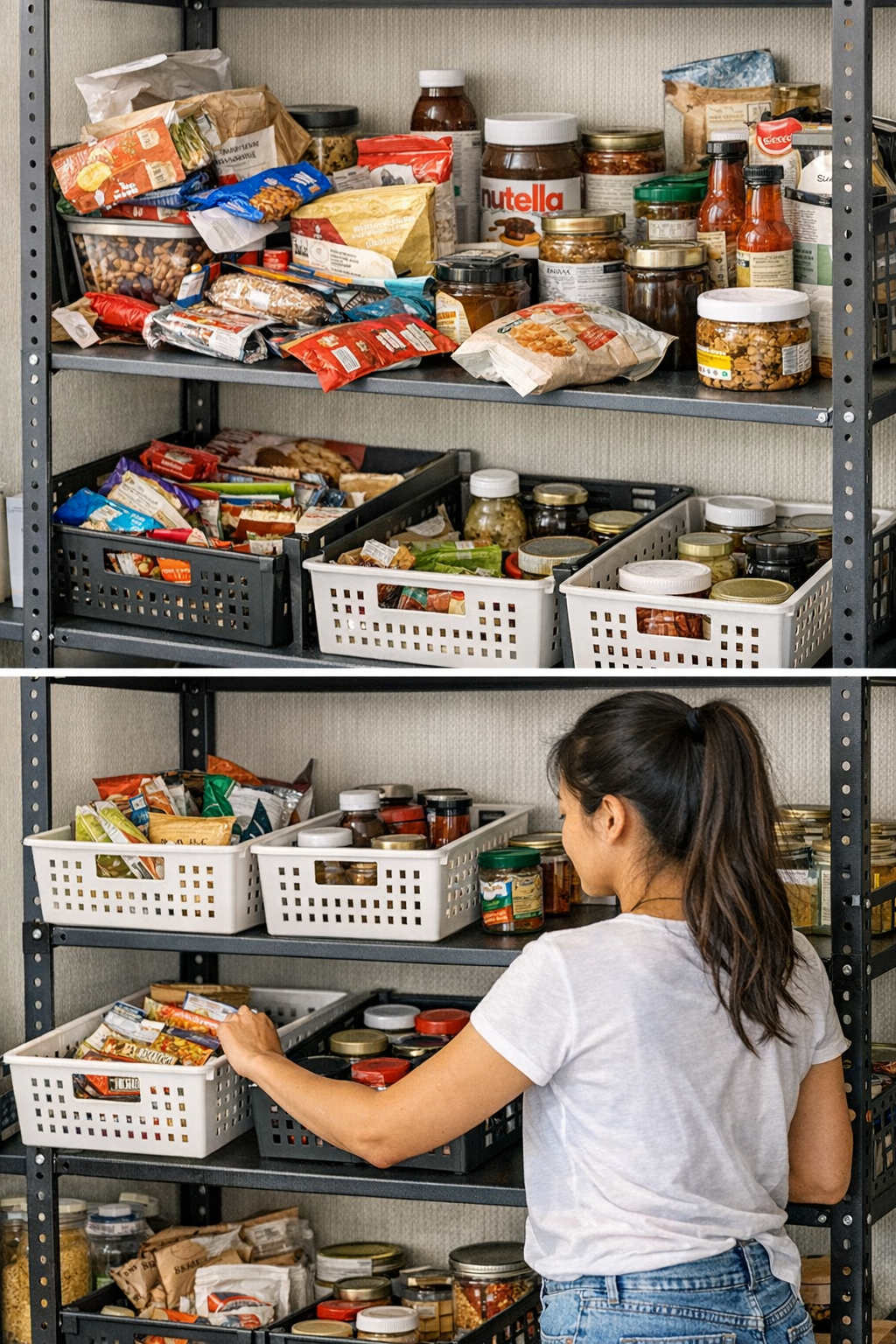
    Visualize the actual mess: foil-wrapped bars strewn beside collapsing bread, condiment packs stuck in oatmeals, everything askew. Now, slip in solid-sided bins: one for bars, a second for bread, a third for loose packets. Suddenly, you’re not dodging piles—you’re pulling a basket, grabbing what you need, returning the rest untouched. Packets stay together, no food lost in the back, and putting away a new box of crackers feels like a single smooth step, not a shelf-wide reshuffle. The shelf lasts through the week, lines hold, and resets feel manageable again.

    Why Category Boundaries Prevent Chaos

    Shelves with no boundaries breed mess. The challenge isn’t limited to pantries. Look at an entryway cubby: shoes migrate into bag territory, hats drape over mail, and each “zone” dissolves as things pile up. The same in the laundry room, where stray bottles and single socks roll from shelf to shelf. Introducing baskets puts walls between the categories that need to stay separate—for hoodies and hats, for sports gear, for those bottles that otherwise threaten to roll into the mop bucket. Awkward-shaped or round items finally have a “zone” instead of looming on a tilt into the next pile.

    Faster, Less Painful Shelf Resets

    The cost of losing boundaries is measured in wasted time and repeated frustration. Without baskets, you’re constantly restacking, shifting one stack to save another, rescuing tiny packets from under big jars. Baskets change the workflow: pull out, restock, slide back, all at once. The shelf resets in a single move, not five. The difference isn’t about looking neater—it’s about shaving minutes off the process, every single week.

    Balancing Visibility and Real Access

    It’s tempting to want every item visible, but a scattering of “see everything” means handling more chaos, not less. Clear or mesh bins work perfectly for snacks, small packets, or anything you need at a glance. Use these where grab-and-go speed matters—packing up lunches, prepping after work. Opaque, deeper baskets can hide bulk extras and backup supplies you check less often. Especially on high shelves, baskets save you from blind fishing: instead of reaching behind a row of bottles, you grab the basket and everything comes with it—no more awkward one-handed rescues.

    Beyond Pantries: The Open-Shelf Challenge Everywhere

    It’s not just a pantry problem. Anywhere you trust an open shelf to maintain order—closet sections, laundry rooms, wide entryway cubbies—the same drift happens. Shoes collect in entry corners, folded stacks lose their shape after a few days of quick grabs, and cleaning supplies scatter after just one shopping trip. Decorative baskets aren’t the answer—functional categories are. A shelf system that survives the week is one that expects the repeated, careless chaos of everyday life and has boundaries strong enough to push back.

    Details That Strengthen Shelf Systems

    • Pick mid-depth baskets—deep enough to contain, shallow enough to see inside and slide out quickly.
    • Label for real-life use—not just “pasta” or “cans,” but “lunch prep” or “quick snacks” so family knows what goes where and random stashing slows down.
    • Save opaque bins for rare-use or backup items—everyday categories belong in containers where you can confirm the contents in a flash.

    What Actually Makes Storage Useful?

    The best storage isn’t about picture-perfect stillness after a big reset—it’s about surviving weeks of real use without dissolving into a free-for-all. Open shelves only work if you’re willing to constantly rearrange. Baskets and dividers give categories a fighting chance, catch the stuff that naturally migrates, and mean you spend less time correcting the same shelf mistakes over and over. If your shelves keep losing shape within days, it’s the structure, not you, that needs fixing. Add barriers and boundaries that actually work for your routine—your future self will spend less time cleaning and more time just getting what you need, fast.

    Shop practical storage solutions at ClosetWorks

  • How Thoughtful Car Organization Enhances Daily Driving Efficiency

    The truth about “organized” cars: looking tidy after a deep clean rarely survives the realities of daily driving. That appearance fades the moment regular life returns—morning commutes, round after round of errands, quick charger grabs, wet gym bags tossed into the footwell. The real test isn’t how your setup photographs, but how it handles another week of re-entries, cord pulls, stray snacks, and items that always seem to end up just out of reach. Anyone can make a car look set in place for a day; it’s what that setup does after five days of rush-hour stops and door slams that matters for actual use.

    When Neat Turns Into Never-Ending Adjustments

    An organized start—clean dash, mats aligned, cables tucked—barely lasts against normal use. By Friday, your quick-access charger is buried under to-go napkins and shopping bags, so you dig and fumble for a simple plug-in. Cables that once ran along the console now creep toward the seat edge, snagging your bag or your coat every time you scoot in. Floor liners that seemed snug inch away from the door frame, exposing the strip your heel grinds into, collecting new grit and crumbs right where you step.

    “Clean” isn’t the same as useable. When you have to hold your coffee in one hand and untangle a cord with the other just to charge your phone, or when pulling out wipes for a spill means digging past papers that have drifted across the center console, the system breaks down. Each workaround—another minute, another double-check—starts to pile up. Especially when you’re cycling through multiple stops in a tight window, or managing a backseat loaded with school gear and the day’s groceries.

    The Hidden Cost of Surface Order

    A car that looks uncluttered can still interrupt your routine. Hidden storage means keys stuffed in a too-tight bin or charger cords dropped out of sight—so when you finally need them fast, you’re stuck stretching for awkwardly placed gear or scraping through semi-blocked door pockets half-filled with receipts.

    These setups don’t collapse—they just chip away at your speed and convenience. A charger routed tightly under mat edges looks clean, but becomes an extra task every time it comes loose from moving a seat—so now you’re re-threading cable instead of getting moving. A cargo divider promising neatness can mean groceries wedge into deep, stiff sections you can’t unload without reaching far under the hatch—slowing your exit and turning rain or mud into a bigger nuisance.

    Repeated-Use Fatigue: Noticing the Slowdown

    No crisis—just accumulating friction. Door-pocket wipes slide backward after every bump, so a spill means you stop and reach. Floor protectors migrate from their starting spot, so cleaning up after soccer practice turns into scraping sticky grime from corners, not the liner. “Put away” often means “out of reach”—so the charger, the wipes, the keys become routine interruptions. Every buttoned-up solution that blocks direct access adds a pause where you used to move right through.

    That’s the catch: what appears organized at first just moves the hassle into smaller, more frequent steps. Instead of one obvious mess, you get dozens of tiny slowdowns—each one draining time and focus during tasks that should be automatic, like parking and peeling out for another pickup.

    Designing for Real Driving: Where Your Hand Actually Lands

    The measure of car organization shows up when routines get tested, not during a final wipe-down. Consider:

    • Sliding into the driver’s seat with a handful of items—can you connect your phone in one motion, or does the charger hide under a tangle, forcing a search every time?
    • Mid-traffic spill—are wipes squeezed behind paperwork or clipped open at seat level for one-handed grabbing?
    • Quick stop after the dog park—can muddy leashes and towels air out in a reachable spot, or are they buried in a trunk bin that turns unloading into a multi-step hassle?
    • Loading groceries in bad weather—does a tight trunk organizer slow down the dump-and-go rush, or does an open section let you finish fast and get out of the rain?

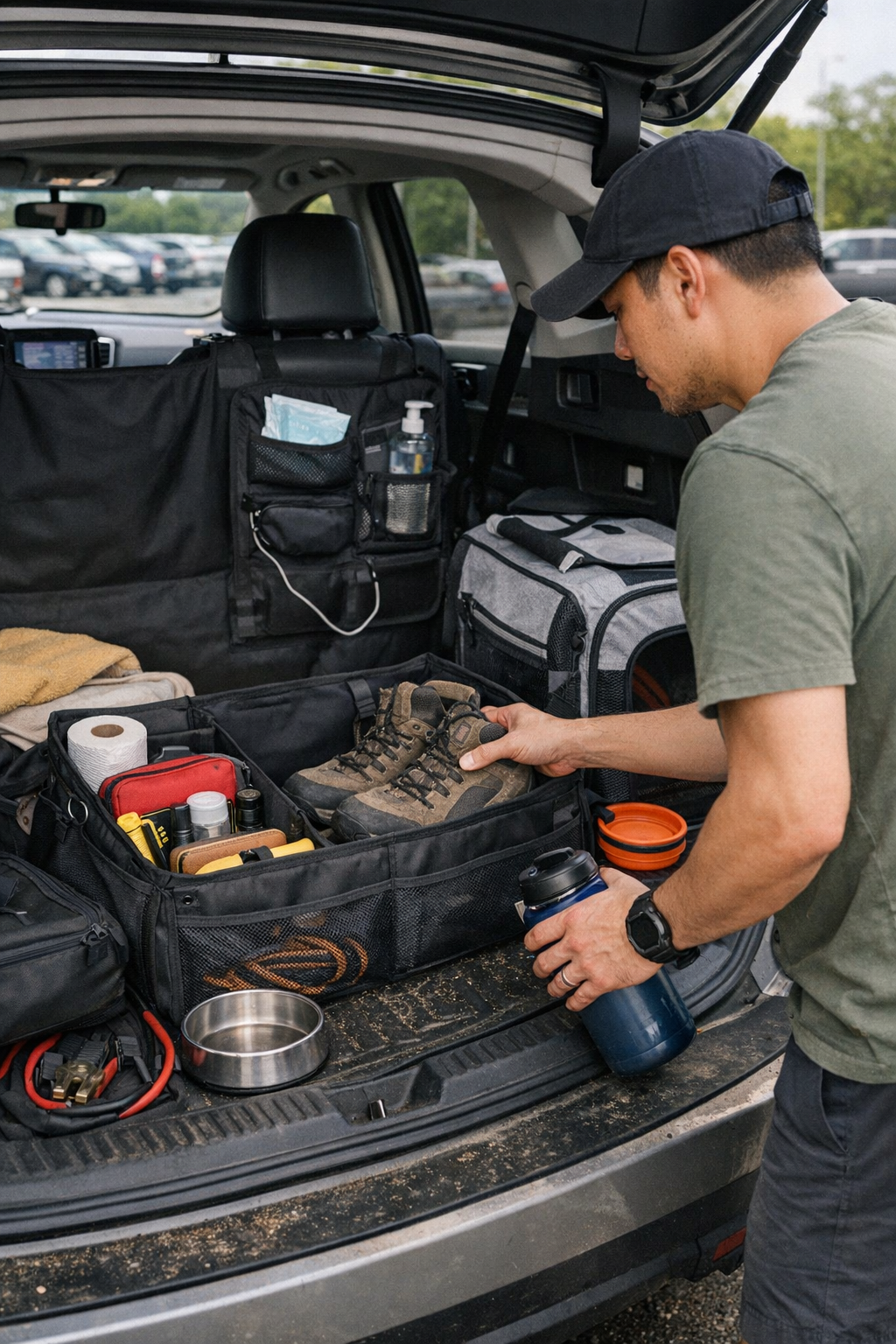
    Small decisions multiply over the week. Seat-level pouches trump hidden cubbies for fast-access items—phone, wipes, or sanitizer. Cables routed along the edge of the console stay grab-ready, never lost in deep bins, so plug-ins happen in one move even when you’re juggling bags or a restless kid. Proper floor covers lock under the seat to stay stable—no liner drift, no uncovered carpet, and no double cleanup after a run in wet shoes.

    Shifting the Focus: Visible Access vs. Hidden Storage

    Trying to hide every tool or cable forces miniature searches at the worst moments. Chargers or keys in zipped bins mean disassembling your setup just to get rolling. When you stage essentials where your hand lands—door pouches for scrubbing wipes, organizers at seat base for chargers—the rhythm of daily use keeps flowing. The difference isn’t just aesthetic: it’s fewer “where did that go” pauses and more reliable grab-and-go in real routines.

    Smart Storage for Traffic Moments

    Clip the wipes pack near your seat, not inside a cluttered door pocket. After dog walks or grocery loops, you reach over, grab a wipe without breaking stride—no need to pull over or sort through layers of paperwork when cleaning up on the fly actually matters.

    Guided Cables Over Buried Lines

    Run your main charging line along the visible console edge. With direct routing—never under mats, never loose in the footwell—your cord stays accessible for single-hand plug and unplug. This is what survives the week: fewer cable drops, fewer tangles wrapped around shoe or groceries, less extra cleanup from wires collecting dirt and gunk near the floor.

    The Real Payoff: A Car That Works With You (Not Against You)

    Enough weeks of chasing chargers, digging out wipes, or fighting trunk pockets and you see it: surface “order” by itself just shifts annoyances into routine use. Small structure tweaks—especially in charger guides, seat-side organizers, resilient floor protection—deliver actual payoff every drive, not just after Sunday cleaning. The setups that last make repeated tasks automatic: cables where you need them, wipes always on hand, loading and unloading that’s as quick in real weather as it seemed in your plan.

    Function beats appearance—every time—when real driving and real messes hit. A car that fits how your week really works means cleaning up less, not just hiding corners for later. That’s the difference you keep noticing on the third school-night commute or the next muddy errand run: setup that keeps up with you, not the other way around.

    Find practical car-use solutions at DriveWellSupply.

  • How One Elevated Cat Perch Transforms Multi-Cat Indoor Spaces

    The weak spot in a shared cat room isn’t obvious—until you trip over it twice in a day. At first, laying out food bowls, water, mats, and toys for two indoor cats looks handled. But fast-forward through a week of actual living—feeding, quick refills, hurried cleanup—and what started as order is now a crowded strip of cross-traffic. Bowls slide out into the walkway. Mats curl at the edges. Toys wedge behind a table leg. “Tidy” mutates into a persistent, low-level obstacle course. The difference between a cat room that looks ready and a room that actually works isn’t where you put things, but how the setup holds up against the grind of repeated resets, rushed cleanups, and—every single day—short tempers and slowdowns for both you and the cats.

    How Crowding on the Floor Builds Up—And Where It Shows First

    Everything claims its space on day one. Set up bowls, a litter mat, a few toys—fine. But with two cats, the friction builds quietly:

    • Bowls nudge further into crossing paths after each rushed refill.
    • Mats that don’t sit flush let litter escape further every “reset.”
    • Toys slide under furniture and disappear—out of reach right when cleanup is needed.
    • The rare sun patch kicks off silent turf wars: one cat sprawls, the other sticks to doorways, detouring around feeding and water just to get through.

    Tidy starts losing to utility. Any “set and forget” idea dissolves as the week spins forward. The crowding doesn’t announce itself—it just keeps eating up space and time until every step in the room is bumping into something—or someone.

    The Unseen Cost: Reset Fatigue and Rising Cat Tension

    Routine exposes flawed setups fast. After a few cycles of sidestepping puddles, scooping litter with one hand and toeing a curled mat straight, or fishing a lost toy out from behind the couch again, the reset strain piles up. Not just more picking up—longer detours, more time spent just trying to reclaim the original layout, more friction at every transition. The result isn’t just clutter; it’s slower routines, missed windows to clean, and cats growing unsettled from having their routes blocked or comfort corners taken over by a food bowl that won’t stay put.

    One cat starts to avoid favorite patches. The other keeps rerouting, never certain the path won’t cross another bowl or a scattered mat. Skipped or delayed resets build up: a little more mess, a bit less comfort, and a definite dose of tension, both feline and human.

    Flat Arrangements: Why “Set” Isn’t Always “Stable”

    At a glance, lined-up bowls and squared mats look organized enough. In a real shared cat space, though, first impressions haze over problems that repeat. The flaw isn’t aesthetic, it’s functional:

    • A water bowl jutting past a mat edge means someone trips—cat or human.
    • The single sunlit spot vanishes under feeding gear and sudden clutter.
    • Cats leap over, skirt around, or pause, unwilling to cut through a muddle of “neutral zone” objects.

    Give it three days: bowls wander off-line, mats wrinkle, toys sneak out of sight. Organization doesn’t survive rush hour—reaching for water means negotiating past mats and spilled litter. “Looks set” gives way to “works until next feeding, then falls apart.”

    Maintenance Creep: When Every Reset Gets Slower

    The ghost cost in any cat setup is upkeep. It’s not about tomorrow’s deep clean; it’s the endless string of fast corrections: ducking down for a toy you just knocked loose, nudging a drifting bowl back with one foot, or brushing a chunk of loose fur from a mat that’s become the day’s detritus collector. Over time, these resets demand more mental bandwidth—little tasks that gum up routines.

    A window shelf meant for lounging turns into limbo: half human storage, half a persistent cat holding pattern. The tighter the space, the more everyone crowds and reroutes. What should be “shared” space becomes a series of small territorial treaties—each reset less effective, each attempt to tidy up requiring more reshuffling than the last.

    Adding a Higher Perch: A Small Change With Real Payoff

    One higher perch is a pressure valve for the entire setup—function, not flair. Screw a simple shelf above an unused radiator, and suddenly traffic shifts: bowls stay anchored, mats stop trapping as much fur, both cats claim their own territory instead of coiling around each other. The payoff isn’t just visual; it’s structural relief. Sweeping fur takes half the time. Resetting bowls and mats stops being a full-room negotiation. One cat vanishes upstairs for a nap. The other settles low, out of anyone’s path. Repeat-maintenance time drops off—less daily rearranging, fewer accidental bowl bumps, faster rebounds after each cycle. The space doesn’t just look different. It works better by not asking you and the cats to maneuver around the same obstacles every day.

    Why Perches Work: Vertical Space Offloads the Floor

    Cats are built to use vertical as well as horizontal space. When feeding setups, water bowls, litter mats, and toys all brawl for the same patch of floor, gridlock follows. Just one stable perch higher up:

    • Draws feline foot traffic off crammed walkways.
    • Lets cats observe, retreat, or rest from non-overlapping zones.
    • Contains bowl and toy spread—fewer “creeping clutter” problems with each reset.

    Small rooms see the largest difference—especially when two cats need real separation to relax, and baseline congestion keeps tripping routines. It won’t fix every bottleneck, but there’s less crowding, fewer mid-day resets, and the room feels easier to breathe in, hour by hour.

    Separating the Perch From Essentials: Guarding the Traffic Lines

    Perch placement is make-or-break for actual relief. Mounting it straight over feeding or litter only moves the jam upward. The smart move: put the perch away from all key zones—opposite, ideally, or diagonally from food, water, and main sleep mats. This splits vertical from ground traffic, allowing cats to move freely: one up, one down, neither negotiating for passage after every meal or reset.

    Your reward: resets shrink to fewer steps, the accidental bump or fur pile happens less, and cleaning or refilling bowls no longer means evicting a sleeping cat or dodging tangled gear.

    Is One Perch Enough?

    For two cats and a moderate sprawl of daily gear, a single high, steady perch—attached to a wall or above a radiator—takes most of the friction out of the daily shuffle. Once a third cat, or more floor clutter, enters the mix, a second perch often becomes the needed circuit breaker, spreading out pressure before it morphs into another daily annoyance.

    No need to overhaul the entire room. The point is to find where crowding repeats—at feeding, during play, after cleaning—and let a basic vertical divide do the hidden labor instead of expecting every reset to “fix” the same problem over and over.

    What Changes After a Week: Practical Gains in Real Use

    With better room flow—one reliable perch, smarter zoning—the upgrades become obvious within days:

    • Bowls stay where you put them, with fewer after-meal tweaks
    • Fur doesn’t blanket ground mats as completely
    • Each cat finds a reliable rest zone (and stays there)
    • Resets become quick sweeps, not all-hands-overhauls each time
    • You stop needing mid-day “fixes” just to walk across the floor

    The payoff is practical: less awkward stretching, less chasing scattered toys, less shoving things back in place while running late. Litter stops invading every walkway. The slow, steady pressure of constant resets eases up—noticeably.

    The Ongoing Reset: When Setups Stop Stealing Extra Work

    The difference between “looks fine” and “lives fine” isn’t obvious day one—but after a week, with a higher perch and a split setup, you’re not perpetually behind. Bowls stay lined up. Mats uncurl with a flick. Walkways clear. Both cats know their spots. The real test? Not one big fix, but those small, repeated resets: when the setup holds under feeding, cleaning, play, and rest, the room finally stops sapping your time (or patience) just to keep up.

    Explore indoor cat setups and practical solutions at StillWhisker

  • How Isolation Pads Cut Compressor Noise and Improve Workshop Precision

    If you’ve spent any real time on a shop floor, you know the dull pulse of an air compressor isn’t just background noise. At first, it fades beneath the shriek of saws or the punch of a brad nailer. But by midday—after hours of trimming, fastening, and sanding—the throb turns intrusive. It creeps through the concrete, shakes your bench when the compressor cycles, and before you realize it, small details start to slip: that mitre line never quite closes, dust drifts back across a finish you just wiped, and glued joints quietly shift out of square the moment you reach for a clamp. What’s behind these tiny headaches? Nine times out of ten, it’s the stubborn, silent transfer of vibration every time the compressor kicks on—especially if it’s planted bare on concrete instead of padded feet.

    How Compressor Vibration Disrupts Real Work

    The trouble doesn’t stop at the compressor. With every cycle, vibration radiates straight into the floor slab. If your compressor is unpadded, that steady pulse travels out and upwards—straight into benches, tool stands, and assembly tables. Over a typical shift, those invisible tremors multiply. They shake clamps just enough to loosen alignment, coax fine dust from cracks into wet finishes, and force you to recut a board because your stop block shimmied while drilling for hardware. The difference isn’t dramatic, but it’s everywhere—just enough to slow you down and nudge jobs off track.

    While a hammer drop or router startup is obvious, compressor vibration is the slow leak in shop accuracy. One pass, maybe it’s harmless. But when you’re cutting a dozen cabinet rails, mortising for hinges, or batch-sanding trim, the margin for error shrinks—and suddenly you’re chasing problems that shouldn’t exist. Out-of-square assemblies, hinge holes drifting just off mark, joints that won’t pull tight and hold. That persistent “just barely” wrongness eats at both precision and patience.

    Isolation Pads: The Quick Fix That Holds Your Accuracy

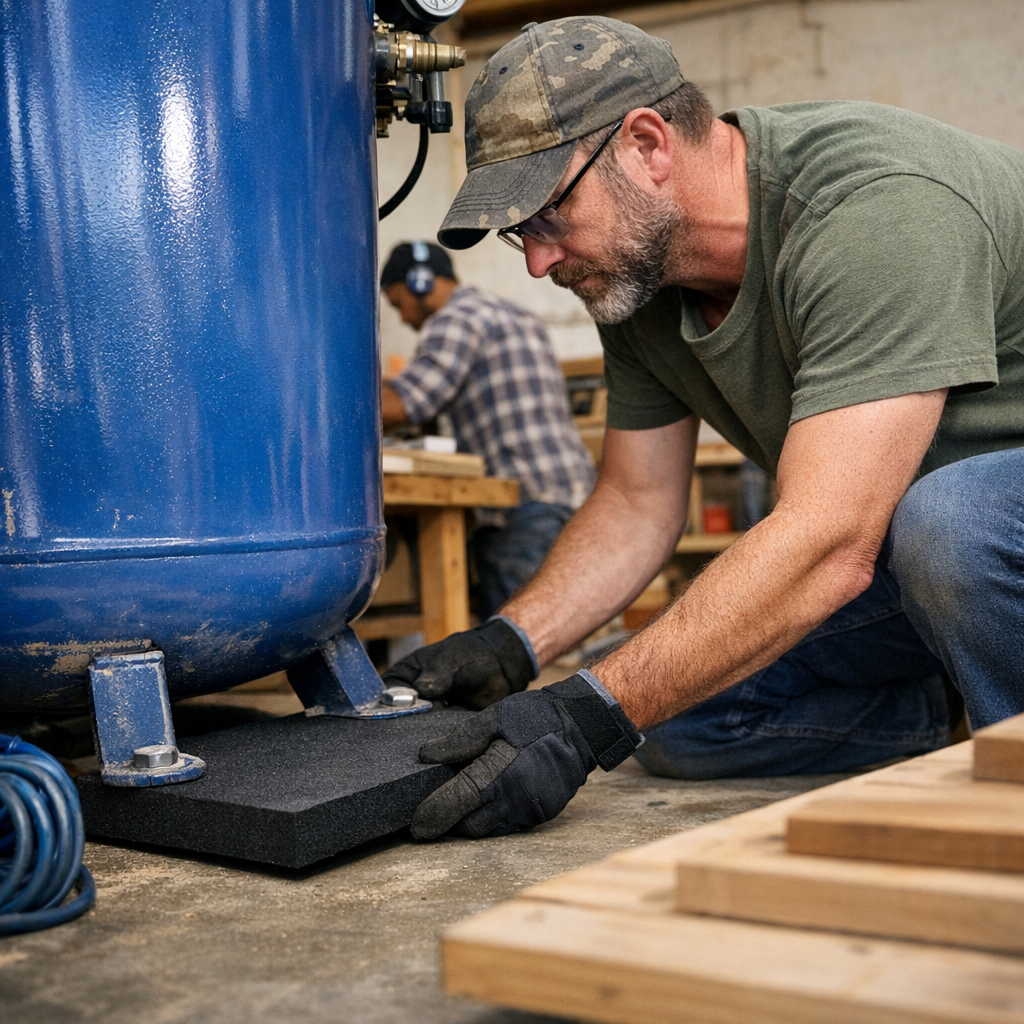
    Most shops treat compressor pads as an afterthought—until the work starts to suffer. Dense neoprene or heavy-duty rubber pads, properly placed, do more than just make the shop a touch quieter. They block much of the vibration at the source, guarding your bench and your work from the compounding, invisible shake. The difference is measured not in decibels, but in boards that don’t need recutting and finishes that don’t need a second pass.

    Real Example: Compounding Problems in a Fast Shop

    Take a typical Wednesday in a busy trim shop: cabinet doors lined up for glue, clamps closing in, and the compressor whirring to life every few minutes as drivers fire. Things look smooth—until you spot one door frame just slightly out of line and dust sticking to a finish you know you wiped. So you tighten clamps, re-square the frames, brush, and vacuum again. Next cycle, the dance repeats. What changed? In this case, cheap closed-cell foam pads under the compressor feet were already mashed flat and useless. Swapping them for 15mm neoprene pads stopped the micro-shake instantly. Suddenly, clamps gripped tight, frames stayed flush, and that finish went on smooth. The tools did their job; this time, the setup let them.

    Where Pads Solve the Most Headaches

    Not every tool is sensitive to a shaking slab, but when it matters—it really matters. You’ll spot the payoff (or feel the frustration) in these routine jobs:

    • Sanding and finishing work: Table vibration shakes grit loose, ruining a just-laid coat and forcing you to sand and refinish the patch—again.
    • Precision drilling: Micro-movement shifts jigs, nudging holes out of true. Just a millimeter off is enough to ruin hardware alignment in doors or cabinetry.
    • Long glue-ups and clamping: Persistent low-level shake pushes boards just out of plan, leading to open seams or edges that require extra sanding and adjustment post-clamp.
    • Fastening and assembly: Repeat vibration ramps up fatigue and makes it tough to keep nails, screws, or pocket holes perfectly flush—especially over a run of pieces.

    Let the unseen vibration slip back in, and you’ll feel it in wasted material, double-checks, and tool fatigue—not to mention the slow drag on morale by late afternoon.

    Material Matters: The Downside of Makeshift Padding

    It’s tempting to reach for that foam scrap or flattened packing rubber under the bench. But these fixes fail fast—compressing into uselessness and letting vibration return before you know it. You’re stuck thinking you’ve solved the problem, but the accuracy issues sneak back in anyway.

    Quality pads—thick neoprene, specialty rubber—spring back and survive repeat compressor cycles for the long haul. That resilience means consistent vibration control, no matter how many times the compressor fires. Each foot should have its own equal, level support; a single thin pad, or one corner that sags, is all it takes for vibration to find its path again.

    Shop-Tested Advice: Watch for Pad Fatigue

    If you find vibration creeping back after a few months, don’t just blame the tool. Get low and check for permanent compression or splits in the pads. Replace as soon as you spot it—results are immediate, with sharper cuts, steadier glue-ups, and smoother sanding from the first job on.

    Skipping Pads? Know When It’s Safe—and When It’s Not

    If your compressor fires up just for the odd brad nail or the stray tire, you might get away with bare-floor mounting. But as soon as your workflow chains benches, carts, or racks together on the same concrete, that gamble vanishes. Stability is the goal: a work surface that holds all through flush cuts, careful drilling, or a marathon clamping run. When precision matters—like installing hardware in hardwood, setting hinges, or getting face frames perfectly level—the cost of vibration is real, and chasing accuracy after the fact simply wastes time and energy.

    Don’t Let “Almost Right” Turn Into Costly Corrections

    The most common frustration in the shop isn’t the major blowout—it’s the slow bleed of tiny, repeating misses. You shouldn’t have to sand away a rough glue line three times, or re-drill because vibration shifted your template. Yet that’s exactly what creeps up when the setup isn’t stable. Batteries drain, blades dull, hands tire—controlling what you can early means the rest of your workflow stays smooth. Starting with the compressor feet isn’t glamorous, but it protects the effort you pour into each piece. It’s not about perfect conditions, just giving your tools a stable platform to perform at their best—one cycle after another.

    Discover tools and site solutions built for straightforward, repeatable results at Gumboll.

  • Keeping Small Yards Open with Smart Storage Solutions

    The real yard test isn’t what it looks like right after a big cleanup—it’s how it works, day after day, with shoes cutting new paths and hands grabbing tools in a rush. One floor bin might buy you forty-eight hours of calm, but by next weekend the setup starts to show its cracks: space that felt open enough now crowds your ankles, and the old “organized look” quietly turns chaotic in the edges you actually use. The most visible difference in small yards isn’t the brand of box you buy, but whether the layout stands up to real routines—especially the ones that never go perfectly, and never have enough room.

    The Disappearing Path: When “Fits” Doesn’t Mean Functional

    In theory, a storage box squeezed into the patio corner should solve everything. But practical outdoor use is a rolling contest between cleared zones and constant, unplanned returns. The “best fit” on move-in day turns questionable the third time someone leaves soccer shoes in front of the bin, or you have to nudge two bikes aside just to swing the lid. Before you know it, the walkway that traced a clean arc after Sunday’s reset now pinches shut, and each trip outside requires side-stepping a spill of tools, sports gear, and half-folded tarps. It doesn’t take long for “everything in its place” to morph into an obstacle course, one minor detour at a time.

    One Bin, Competing Habits

    Small yards rarely get used one way. Monday: someone runs out the back for a hose nozzle. By Friday: the way back is blocked by a loose bag of potting soil and a stack of muddy gloves nobody wants to touch. A single ground bin turns microscopic habits into micro-obstacles. Grab-and-go turns into scoot-and-bump, where a watering can lands on top of hand tools, and every “quick return” makes it less likely you’ll find open ground next time. Most “organized” outdoor corners leak convenience the instant you stop policing them.

    Wall Storage: Freeing the Floor, Clearing the Routine

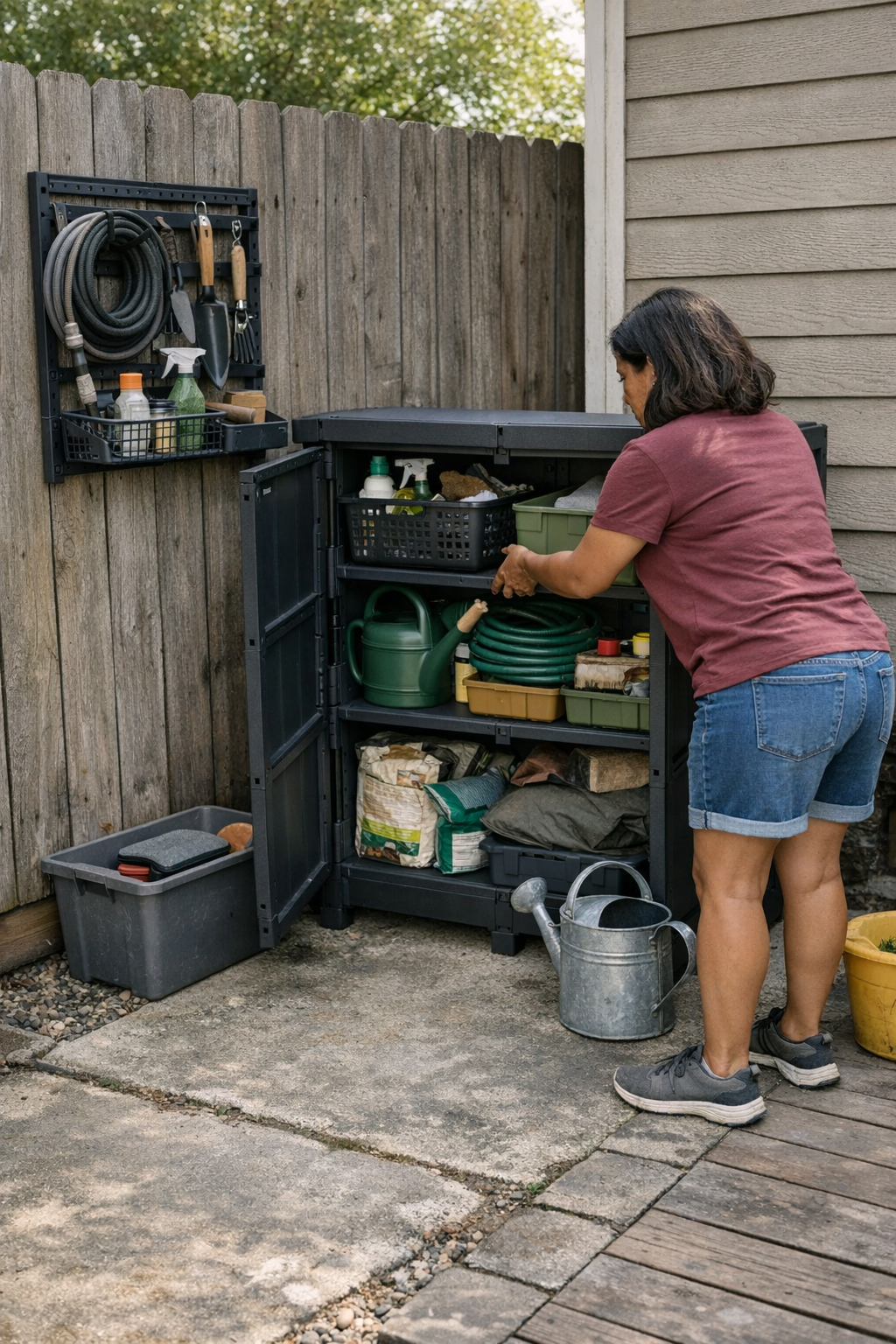
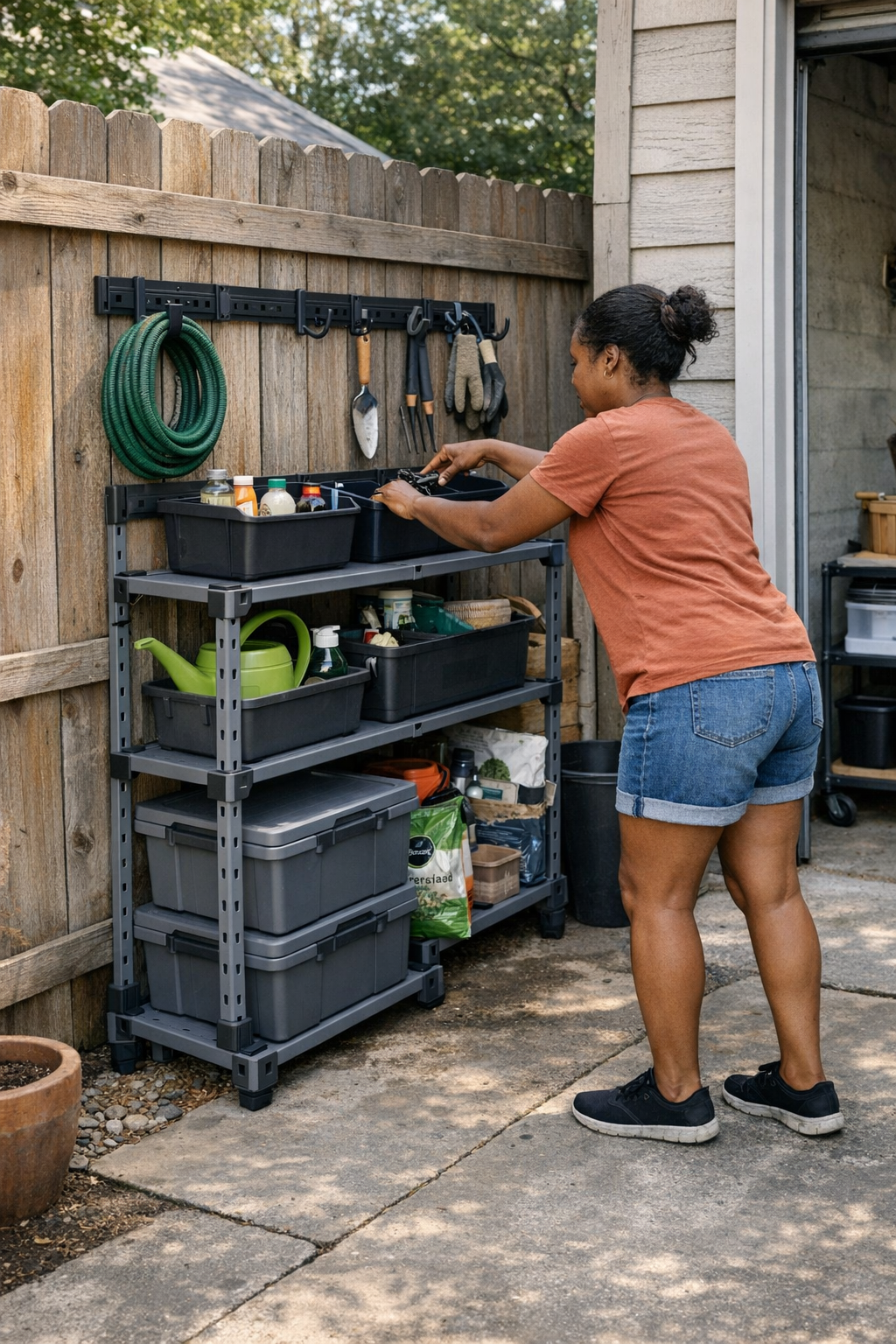
    Raised, wall-mounted storage changes the game—not by holding more, but by staying out of the way. Shift your default drop zone up and off the ground: suddenly, movement lines return. Instead of shuffling chairs or stepping around bins, you walk in and spot what you need at eye level. Paths don’t silently narrow, and small, high-frequency items find a spot that isn’t instantly buried or knocked over during the week.

    High Traffic: Less Shuffle, Faster Reset

    The fence line closest to your back step is the pressure point. That’s where a floor box turns messy fast: the hose drapes over the lid, mulch gets tracked right in front, and by midweek the spot is part mud, part dumping ground. Opening the bin becomes a squat-and-dodge maneuver, often abandoned mid-task. With wall-mounted racks or grids, high-use items hang clear above the splash zone, and nobody has to move three things just to get one. That invisible drag—untangling, relocating, restacking—shrinks to a quick grab, even after the most chaotic weekday.

    Overflow Zones: The Slow Trap of Floor Storage

    Every ground unit starts with bright intentions, but almost all of them magnetize overflow: a week’s worth of leaves, the soccer ball thumped out of reach, the project bucket that never finds a home. As the physical footprint seeps further, returning anything means finding new space in what used to be a walkway. A single crowded bin along a narrow side path quietly transforms that route into a dead end, or forces a lopsided detour you barely notice—until someone trips, or simply stops using that exit entirely.

    “Looks Organized” vs. “Works in Motion”

    The true gap is between the appearance of order and the stubborn reality of repeated use. That sleek deck box against the fence looks right, until clutching a pair of dirty sneakers means juggling what’s already in the way. In three weeks, if you’re spending more time repositioning gear—or dreading the shuffle—you know the design only works on paper, not in motion. Wall racks that keep tools visible and off the ground help kill this return sprawl, making it obvious when something’s missing and painless to keep main routes open for actual movement.

    Small Adjustments, Real Relief: A Working Example

    Last season, a TidyYard setup shifted two go-to storage bins off a narrow paver path and onto a modular wall rail in a 30-inch squeeze of side yard. That one move cut out stooping, sidestepping, and half the weekly chore of re-sorting outdoor gear. Suddenly a shovel was always at hand—no digging behind a chair, no stepping into wet dirt for the nozzle. Resetting the space wasn’t a half-hour event; it became a glance-and-go process. Family members who never bothered before started using the wall by default, because it took less effort and didn’t require making piles just to return something at the end of the day.

    Ground Storage: Setting Limits That Stick

    If you’re stuck with one floor unit, treat it like a strictly controlled zone: wedge it deep against a low-traffic edge, keep the lid or front clear, and set a hard limit on what gets stashed. Lose those boundaries, and even one bin can recapture your open ground within days. Choose the lowest profile possible, and check that it doesn’t cut off access to anything you need more than once a week. The point isn’t perfect order—it’s fighting the sprawl that steals usable space right under your nose.

    Reset Routines: Less Work, Fewer Repeats

    The real advantage isn’t in how fast you can tidy up, but in how little you need to. A setup with stronger structure—especially one that keeps frequent-use items off the floor and in plain sight—means less touching, less moving, and less invisible energy poured into a daily game of outdoor Tetris. In most homes, nobody returns things perfectly every time; setups that make it physically easier to drop something back without blocking the path turn “reset” from a daily grind into rare, low-effort maintenance.

    Quick Win: Make Returns Obvious

    Don’t bank on everyone learning a new routine. Instead, carve out one visible, shared wall spot as the obvious return zone. Open baskets, mounted rails—anything that makes it clear what goes where and reveals when an item is left elsewhere. When that return flow is unmistakable, even the messiest user follows along, and floor clutter is cut off before it starts multiplying.

    The Long Game: Setups That Hold?

    Open ground and clear movement aren’t the work of a single cleanup—they’re a side effect of structure that outsmarts daily friction and the constant, imperfect return flow of real life. Wall systems, rail setups, and tightly enforced floor limits keep outdoor areas usable, even when nobody is paying full attention. The big difference isn’t only in how the yard looks days after the cleanup, but in how much easier it feels to keep using—and resetting—the space through the rough-and-tumble of the week.

    http://tidyyard.myshopify.com

  • Why Your Carry-On Feels Heavier During Long Travel Days and How to Fix It

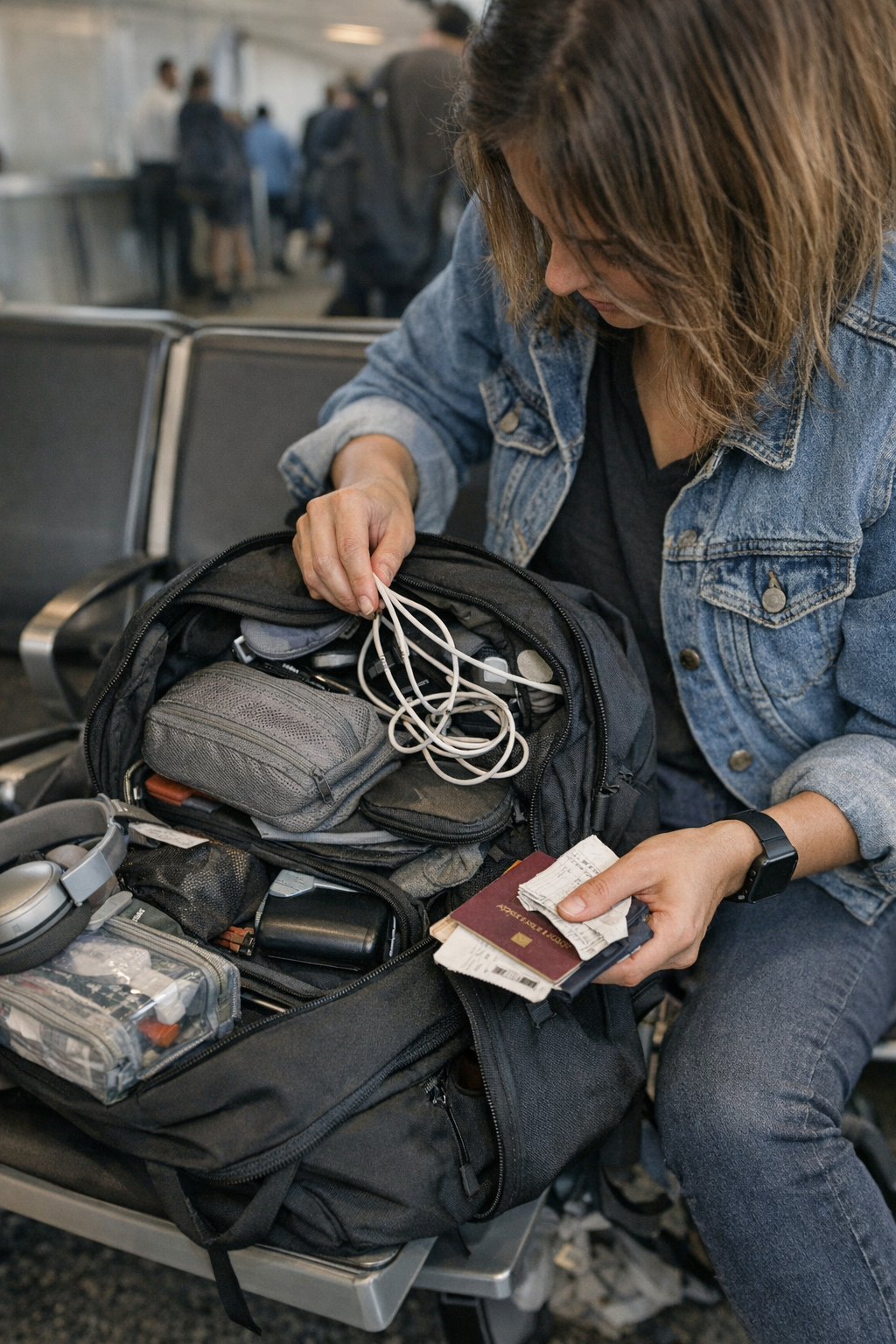
    A carry-on bag that looks perfectly organized at home can turn frustratingly slow the moment you hit your first airport checkpoint. Compartments line up, every cable and document has its place—but once you start moving through security, boarding, and in-flight routines, the promise of “neat” quickly wears thin. What seemed streamlined on your hotel bed becomes a hunt for buried passports or tangled chargers by the third reach-in at the gate.

    When “Order” Collapses Under Repeated Access

    Few travelers realize how quickly a tidy carry-on starts working against you. The system makes sense until you have to retrieve your passport twice in ten minutes or dig through a swelling outer pocket packed with both travel snacks and loose cords. Pouches that nested neatly at first now catch on zipper teeth, refusing to land back in the same spot. Each time you need something, you touch three other things—and every return feels less certain. “Organized chaos” is no metaphor when you’re stuck unzipping layers just to check a boarding pass at the gate.

    Most friction builds quietly. There’s no dramatic bag explosion, just a steady increase in fumbled items and misplaced papers every time you reach in. Every two-second search for a sanitizer or cable adds up, magnified by lines, tray transfers, and last-minute boarding calls. By your third gate change, the effort to keep things sorted becomes heavier than the bag itself.

    Hidden Costs: Micro-Delays and Unexpected Effort

    Travel fatigue rarely comes just from walking or carrying weight—it’s the strain of repeated digging, constant repacking, and access blocked by your own design. Real stress hits in moments like pulling your laptop for security, only to find it wedged under an organizer you haven’t touched since packing. Or hunting for a phone that’s migrated beneath a magazine after a quick retrieval. Overhead-bin lifts turn risky when a bottle starts sliding out because the layout has shifted after every tray checkpoint. Each of these moments turns your bag’s structure from “done” to “undone”—not by mess, but by unpredictable access.

    How Compartment Systems Backfire in Live Use

    Rows of zippered organizers, stacked pouches, and tech sleeves promise order on paper—but the minute you use them repeatedly, the cost is revealed. The logic of dividing cords, documents, and chargers into separate containers breaks down when reaching your passport means disturbing half your layout. After the second gate check, you’re guessing: Is the ticket in the front pocket or buried between pouches? Cords that started coiled drift into the wrong zone. Now, every security tray is a hurried shuffle, with scattered contents and missed items forcing you to mentally retrace your packing choices mid-line.

    Security: Where Setup Decisions Fall Apart

    Airport screening strips away the illusion that your system will stay intact. Suddenly, every pouch that promised efficiency demands unstacking, partial emptying, and a risky re-balance. Resealing toiletries or trying to return your phone to its original slot becomes impossible with the next person staring you down at the X-ray belt. The idea of “putting everything back” turns into “good enough, for now,” setting up the next round of confusion at the very next checkpoint.

    Boarding, Aisles, and the Blocked-Access Test

    The moment you step onto a crowded plane, your bag’s “neat” layout reveals new flaws. Retrieving a laptop from a zippered sleeve becomes an awkward spectacle if it means exposing toiletries, snacks, or hidden cables to everyone behind you. When a bag forces you to open the main compartment in a cramped aisle—risking spills or slowdowns—quick access is gone. The pressure to speed up means papers fall, pouches shift, and now you’re repacking in half-light as the queue moves. What started as disciplined order unravels once fast retrieval is required, not just visual neatness.

    When More Compartments Become New Obstacles

    More dividers do not mean more efficiency. Every extra pouch or section is another check-point for your memory and another interruption for your flow. Instead of gaining control, you’re juggling micro-tasks: opening layered sections for basics, re-nesting pouches after each scan, or struggling to remember where the snacks landed after your last shuffle. Structure that looked “final” on a hotel desk now multiplies motion and makes quick routines—like passport retrieval or cable grab—awkwardly slow.

    The core problem: a segmented bag doesn’t guarantee you’ll move faster—it often adds invisible resistance at every step where you need actual speed.

    Reworking for Real: Fewer Barriers, True Quick Access

    The biggest relief comes from moving your highest-use essentials—passport, phone, sanitizer, boarding pass, main cable—into a single direct-access sleeve or one main zipper pocket. Eliminating layered retrieval makes action near-automatic: at each checkpoint, everything returns to a known place, with no layers to second-guess. The bag may not win a packing photo contest, but real travel becomes faster and less draining. You don’t just pass security once—you repeat it through each line and reboarding, so the payoff multiplies.

    The shift is physically noticeable. After security, restocking is instant—close one zipper and move. Instead of juggling pouches and recalculating order, you keep moving with less pause, and less travel “math” running in your head.

    Why Bags Drag More by the End

    Your carry-on doesn’t get heavier during a long trip, but the penalty for awkward structure does. Each awkward zip, misplaced pouch, or blocked pocket saps comfort as the day drags on. The setup made to look precise blindsides you by eroding patience mile by mile, not in one dramatic failure but through steady, low-grade obstruction that grows with every repeated use and small disruption.

    Choosing Structure That Outlasts Repetition

    Packing for aesthetics is easy. Packing for real, repeated access is what saves you at every choke point—from security trays to seat pockets to terminal lines. The test isn’t how tidy your bag looks when zipped, but whether you can grab anything without interrupting your own flow. If every action triggers a ritual of unzipping and balancing, it’s time for a structural adjustment—not another accessory or organizer.

    The only setup that works is the one tuned to your real in-transit habits. Start with what you grab most, then shape the rest around that flow—not the other way around. Every checkpoint and seat shift either exposes slow access or rewards a better-placed pocket—your comfort rides on that difference, not just on how “finished” your bag seems at the start.

    Shop CarryOnSupply for practical carry-on travel organizers and tools.

  • Creating a Cat Room That Supports Daily Care and Curiosity Seamlessly

    Why a Neat Pet Room Often Fails During Real Daily Care

    An organized pet room—bowls in a corner, bed lined up, toys in a basket—looks ready for anything. But after just a day or two, small daily care friction shows up: refilling the water becomes a hunt for a misplaced bottle, a trail of fur leads to a brush that somehow migrates out of reach, or a basic towel is always in another room after a sudden mess. Each gap turns a quick task into another loop across the house. A space that seems calm at first starts piling up new chores and interruptions. The setup promises order, but routine care keeps splintering as missing basics, delayed wipe-downs, and blocked access make it feel like upkeep never really ends. CalmPetSupply setups are meant to cut these breakdowns—not just hide them under surface neatness.

    The Difference Between Looking Ready and Running Smoothly

    Any pet area can look the part: bowls lined up, bedding by the window, supplies tucked out of sight. Under real use, though, the cracks show fast. Does every brush, cloth, and treat stay within easy reach, or do you keep shuffling between rooms looking for what you need? A missing cleaning cloth can turn a one-minute job into a roundtrip. One refill bottle left out of place means water resets now spiral into a sidetracked cleanup. Even a set of treats or a bag of liners in the wrong drawer makes feeding and reset time longer, not quicker.

    Typical scene: mid-morning, you rinse the food bowl. The refill jug isn’t in its spot—now you’re searching the kitchen while your pet waits. Next, you notice fur on the cushions, but the brush is missing from the console. Each of these isn’t a crisis, but together? They slow everything, disrupt your routine, and throw off your pet’s day.

    Everyday Care Breaks Down When Supplies Drift Out of Place

    Repeated care routines only feel simple if every tool stays where it belongs, every time. But with daily use, items drift—a bowl inches behind the counter after a rush, towels travel to another floor after one “temporary” move. That drifting piles up: clutter creeps back in, the dog starts pawing for attention longer, and your reset steps multiply. Meals, water, and cleanup get tangled together as the area gets disjointed. Each lost item or delayed refill is a tiny stop that stacks up across the week.

    Repeated Use Reveals Weak Points

    After a long day, you plan a quick check-in: scan the feeding area, refill water, maybe a fast wipe-down. But the spot isn’t clear. A pet bowl sits trapped behind mail, or a cleaning cloth is missing after three days of “I’ll return it later.” Night routines that should be fast are suddenly full of extra steps. These weak links don’t vanish after a big tidy—if daily-use tools scatter or get blocked, small hang-ups keep returning. Actual calm isn’t a visually clean reset; it’s when daily resets get easier, not just neater, as setup choices either remove resistance or quietly add to it.

    Visible Tidy vs. Working Comfort: Where Setups Fall Short

    You might sweep clutter into bins or clear off the feeding mat and call it progress, but real comfort breaks down when basics end up less accessible. Toys no longer underfoot may just mean food liners wind up in an out-of-reach drawer, or a treat bin ends up by the door instead of under the prep area. So, you keep circling the house for one more supply—and jobs get skipped rather than finished. Clean edges don’t guarantee quick resets when it matters most.

    Recurring Routines, Repeated Interruptions

    Every pet owner feels the drag: after feeding, you reach for the cleaning cloth—and realize it’s still damp, forgotten in a pile. Grooming tools are “put away” but now require a stepstool after too many reorganizations. “Technically there” is never the same as “ready at hand.” This reset friction creeps in with each awkward reach, missing supply, or extra trip. The routine doesn’t break, but it keeps getting slower, more scattered, and oddly exhausting.

    After-lunch grooming is a classic stumble: the brush lives on a shelf just high enough to skip returning it after use. Next time, you can’t find it, so shed fur sticks around longer. Routine drag snowballs every time a step is anything but seamless.

    Small Changes Make Lasting Ease

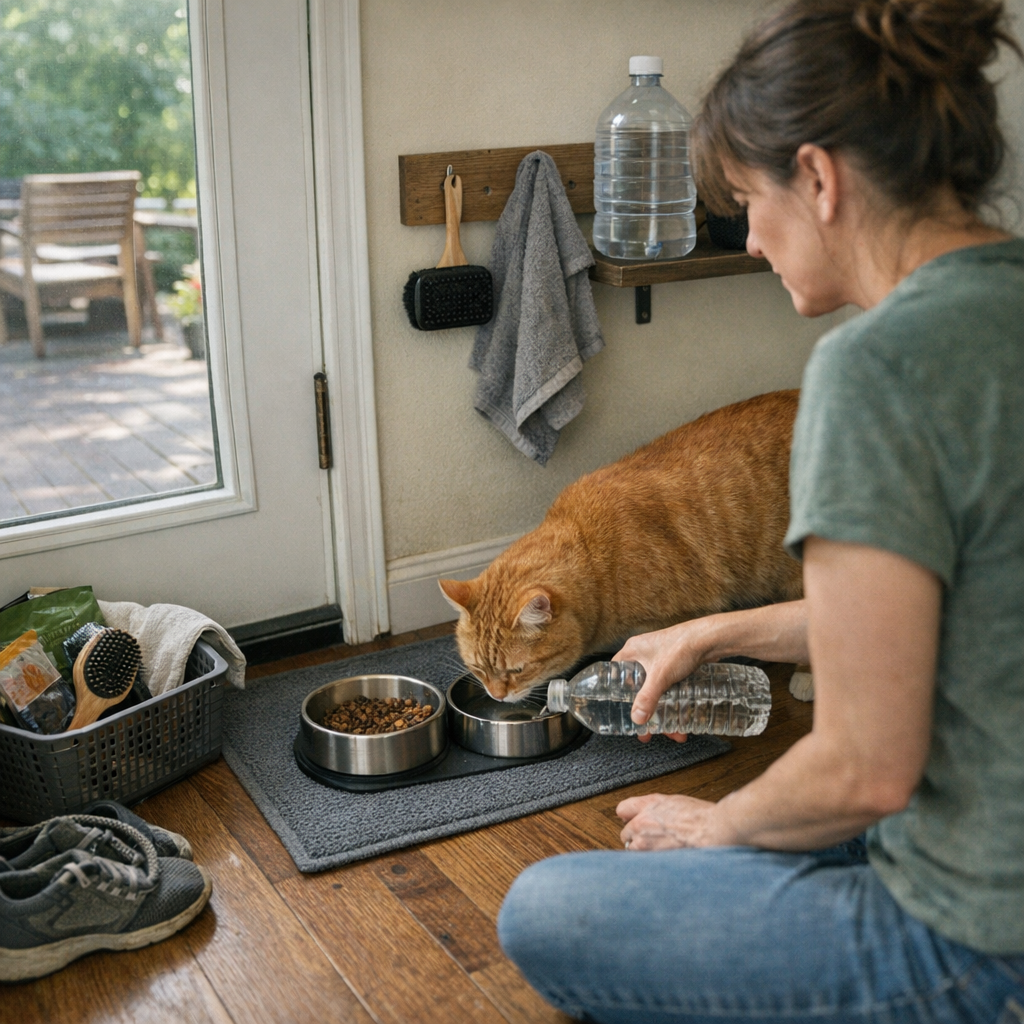
    Real improvement comes from shifting the basics—closer and easier, not prettier. Move the water refill bottle directly above or beside the bowls: no more cross-room hikes. Hang the cleaning cloth on a visible hook, not buried in a drawer. Keep treats and liners in an open bin right below the care area, so restocking or resetting is one motion, not a scavenger hunt. This isn’t about extra gear—it’s about linking every care move to a single, accessible zone and preemptively cutting delays before they multiply.

    Habits for Ongoing Calm and Real Care

    Let your care area reset automatically by small, intentional placements. Put down a washable mat under every bowl. Hang a cleaning cloth within direct sight and reach—don’t fold it away. Gather brushes, wipes, and treats in an open basket in the pet’s main zone. Swap out or refresh placements every few days to match reality, not just when messes force your hand. These habits reduce reset time and keep interruption cycles from reappearing.

    Real Calm: Less Correction Needed, More Daily Ease

    A calm-feeling pet area isn’t about how neat it looks after a weekend sweep. It’s about how little chasing, hunting, and extra resetting you do while caring for your pet—during meals, after walks, in late-night check-ins. When every essential is visible, reachable, and always ready, the routine finally flows. Clutter stops rebounding, chores shrink, pets settle sooner, and you spend less time fixing small setbacks that shouldn’t exist in the first place. The right setup turns surface order into real daily ease—practical calm that endures, not just appears after a tidy.

    Try a setup that actually fits your routine at CalmPetSupply.

  • How Thoughtful Corridor Lighting Transforms Long Spaces Into Seamless Paths

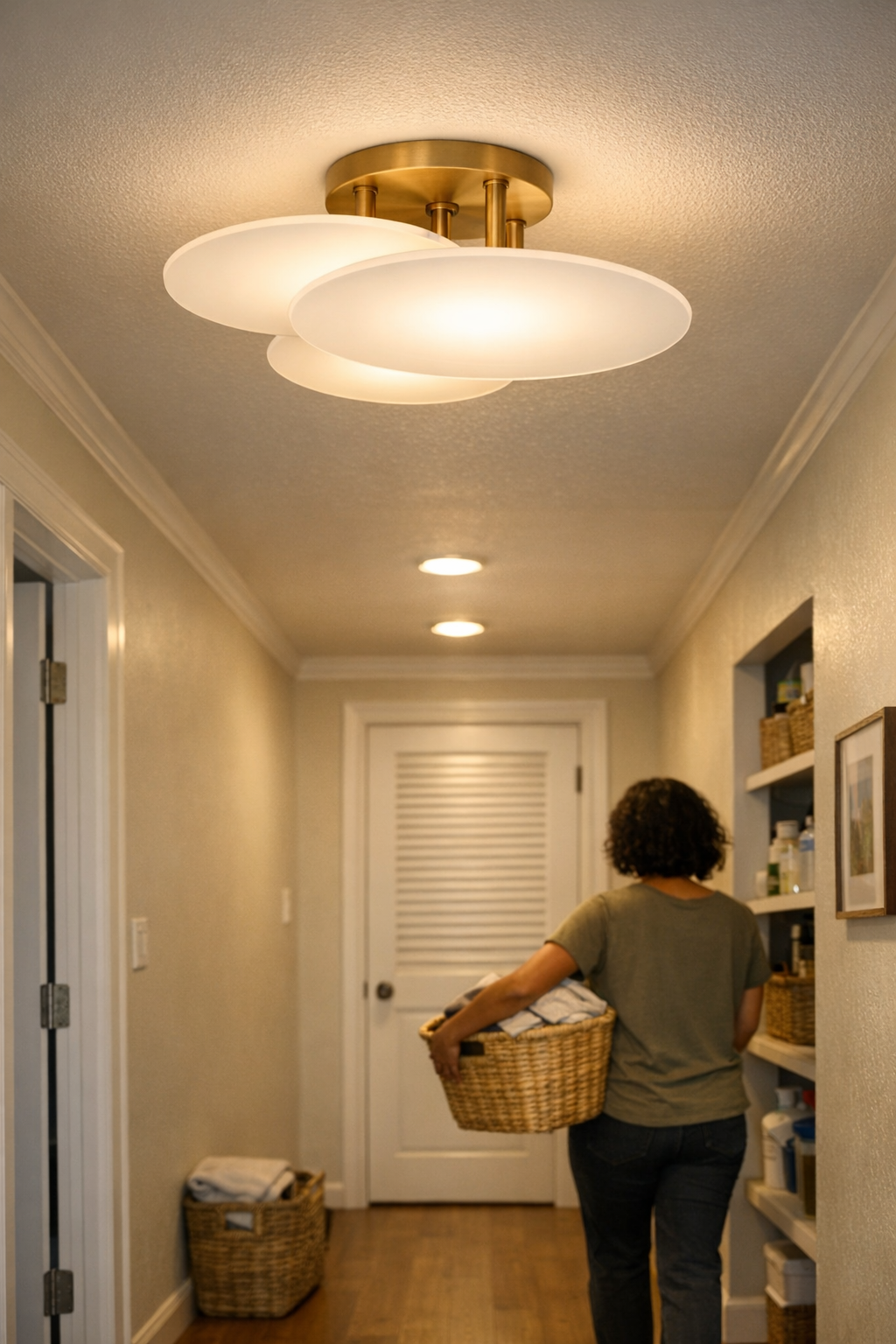
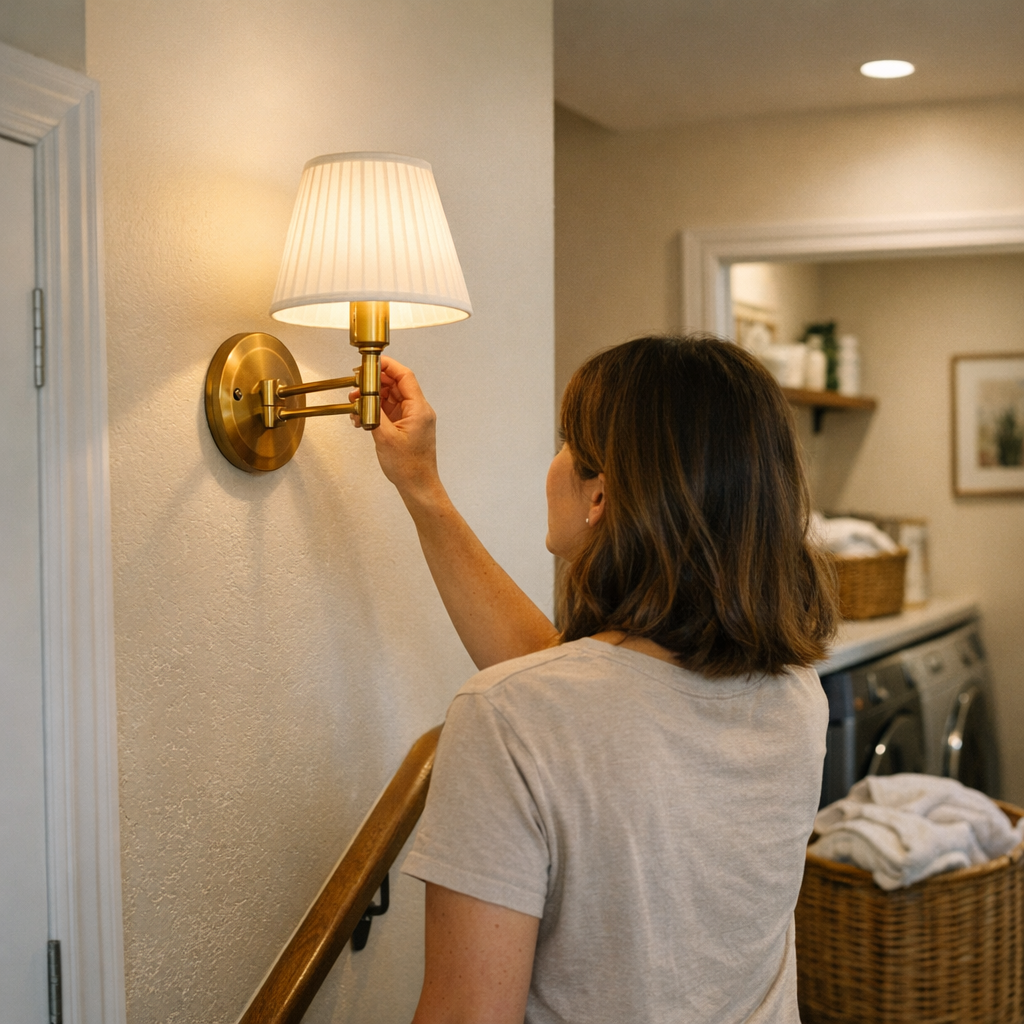
    Corridor lighting rarely fails the day you put it in; it fails every week after, whenever daily movement exposes the cracks the install hid. The moment a cable sags in your sightline, or you find yourself squinting past glare just to carry laundry through a shallow stretch, it’s clear: a corridor that looks “done” can still act unfinished. One misplaced bracket or a too-neat line of fixtures can turn a hallway into a slow obstacle course—hesitating at the alcove, shifting your footing near an unlit edge, or hunting for a switch when your hands are full. These small breakdowns add friction to a space you cross ten times a day, making the difference between a corridor you trust and one you brace for.

    When “Tidy” Lighting Fails Real Routines

    Walk into any newly lit corridor and at first glance, it seems resolved—a perfect run of slim ceiling lights, matched sconces, cables aligned and flush. That order collapses once real use begins: arms loaded, night trips with awkward reach, the split-second need to see a threshold clearly. Suddenly, flaws you never noticed become routine detours:

    • Shadowy gaps where a ceiling light falls short of the next doorway—you hesitate without meaning to
    • Polished floor glare bouncing off the first step, just where you turn toward the entry
    • A pocket of darkness beside the closet, never fully caught by any beam, making you fumble every single time
    • Cables that sag just enough to grab your attention—or your shoulder—before the space itself even registers

    The trouble rarely kicks in while you’re standing still. It finds you in all those small, moving moments: stepping between rooms, guiding a visitor, or just following the same path each night only to run into the same weak spots.

    Why Even Symmetrical Setups Let You Down

    Corridors often get installed by the rule: panels spaced even, brackets centered, symmetry enforced. Yet symmetry means nothing if it puts the gap right where traffic flows—doorway, closet, bend. The lighting looks organized from a distance, but as you walk, it splits reality: the “perfect” grid maps directly onto awkward seams. Brackets that disappear at first start to crowd your line of sight, or leave enough slack for cables to dip into reach. Glare isn’t always a bright spot on a wall—it can be a shifting distortion over tiles that breaks the space up, even though the fixtures themselves look “correct.”

    Invisible Until You’re Moving

    Lighting issues in a corridor almost never announce themselves at first. They emerge in the flow:

    • Slowing instinctively by the supply closet because the shelf and switch are too dim
    • Trying to shift a bulky box, only to pause at a dark line the fixture never covers
    • Adjusting a cable for the fourth time because a bracket wasn’t placed where people really pass by

    What appeared settled on day one becomes a source of delay and low-level annoyance—every single trip down the hall.

    The Cost of Weak Transitions

    The real trouble in corridor lighting starts at the edges—the handoff points between rooms, corners, and doorways. Near the kitchen junction or laundry turn, you notice yourself hesitating. Missing overlap around alcoves, closets, or even tight switch zones forces daily “stop-and-check” moments. Instead of a clear run, you’re squinting for illumination or waiting for a spill of light from another room. This isn’t headline drama—it’s that steady, background stress that repeats a dozen times a day, for every person using the hall.

    Setup Decisions That Actually Make a Difference

    Tweaking support and placement—rather than piling on more light—is the shift that actually dissolves friction. The difference comes from:

    • Overlapping beams: Positioning fixtures so their coverage meets and slightly overlaps at critical points—by doors, switches, corners—blocks shadow seams and makes thresholds instantly visible.
    • Support at high-traffic lines: Shifting a bracket off the “visual center” so it actually anchors a fixture over the corridor’s real walk path, ending sag and blank spots where people move most.
    • Cable and mounting discipline: Swapping out a loose surface mount for a flush cable holder or bracket ensures cords stay out of view and don’t drift into the area you reach and move through every day.

    Real fixes might mean taking down one continuous light bar and installing two overlapping ceiling panels to target the midpoint—or moving a wall fixture to finally throw coverage across each closet door. It’s rarely about adding volume; it’s about correcting for where the original install ignored human patterns.

    One Small Adjustment, Big Day-to-Day Relief

    After replacing a single run with overlapping ceiling panels and pulling a mounting bracket directly over the supply closet’s path, the old “hang” at the dim corner vanished. The corridor stopped dictating movement. In daily use—crossing with groceries or organizing shelves—there was no need for route-workarounds, no pausing for eyes to adjust. The far end of the hallway finally linked to the rest, blending smoothly instead of feeling like a separate, awkward zone.

    What Actually Fixes Broken Corridor Lighting?

    The real solution isn’t in maximizing output—it’s in reading the space. Watch for:

    • The spot where people naturally hesitate or take extra care—often it’s not where the main beam lands
    • Repeated workarounds: detour around cable slack, always reaching for a patch of usable light, nudging a fixture back into place
    • Glare lines making reflection zones harsh, while the next step is left dim

    By overlapping light at key points, bracketing for real movement, and keeping cable paths fixed and flush, you resolve the friction points. What you get isn’t just a cleaner look—it’s a corridor that disappears as an obstacle. Whether it’s shared apartment traffic or a work-from-home hallway, the effect is less resistance, more automatic movement, with fewer “corrections” demanded by the space itself.

    Small Details, Repeated Impact

    Corridor lighting rarely fails in dramatic ways. The discomfort is cumulative: a sagging support, a persistent dark patch at a junction, a cable that starts to snag. Maybe you lose only a second here and there, but across hundreds of trips, these seconds add up to a drag on focus and comfort. The fix is rarely more light; it’s shifting a bracket, nudging overlap, or locking down cable runs right where the routine breaks down.

    The real difference: a corridor that doesn’t just look finished but feels natural to use again and again—ditch the visual friction, erase the hesitation, and let the setup finally serve the routine.

    See practical solutions, accessories, and support for real corridor lighting at LightSupport.

  • Why Prioritizing Shelf Height Improves Garage Organization Efficiency

    The garage was perfect—at least for a day. Shelves set by the level, bins snapped into their assigned places. Everything snapped into its new home, neat as a product photo. But within a week, that hard-won order starts undermining itself. Familiar tools pile up on the bench, a set of screws gets dumped on the cart, and you’re ducking, twisting, or reaching just to grab what you use daily. Suddenly, the setup that felt finished now won’t keep pace with your routine.

    When Looks Win—but Use Loses

    The promise of a modular wall is seductive: crisp lines, nothing out of place, every stud supporting some storage miracle. In reality, though, a layout designed for the empty room almost never survives your first week of full use. Returning the drill case means an awkward crouch to a bin set too low. The shelf set “just so” for visual balance is half a foot out of easy reach, so screws and tape measures accumulate on whatever surface is closest mid-task. Your hands search out shortcuts, and makeshift clusters—cordless tools on stools, hardware on carts—start threatening the whole zone’s flow. That “organized” look becomes an obstacle course the minute you try to work at your pace.

    The Trap of Perfect Grids

    The tighter the grid, the easier it is to create friction that lingers. Lower shelves turn into catch-alls: half-used tubes of caulk, a cracked flashlight, backup fluids, and all the ragtag “later” items. Bins at mid-level—chosen for symmetry—demand constant bending or twisting for basics. Every round of work nudges these annoyances further: dead corners go untouched, a rolling cart keeps drifting just to clear wall access, and you invent more temporary homes for the things you use most. Overflow piles creep in: sandpaper mountains on the bench, random bits tossed on an open cart because putting them away isn’t quick or comfortable.

    Even the act of moving slows. The modular cabinet near the door needs a cart scooted aside before you can reach inside. One awkward shelf cuts off part of your wall zone—a foot of wasted space you can see, but never quite use. These small, repeated inconveniences chip away at the satisfaction of having “everything in its place.”

    Where Friction Builds, Order Breaks

    The real breakdown isn’t overnight—it’s the tenth cycle where each step gets slower. A tool chest must be dragged out just to reach a side drawer. The cabinet that initially looked “flush” now traps your movement, forcing sidesteps or pauses between work areas. You catch yourself organizing the same five tools every evening, not because you’re messy, but because their supposed “home” isn’t where your hands naturally land.

    Resetting takes too long. You hesitate, knowing each cleanup will mean more bending and shuffling. “Order” becomes something you do at the end of the day instead of something that helps you get through it.

    One Real Adjustment Changes Everything

    Try shifting a shelf just six inches higher—or reworking one row of bins so your must-haves sit right between hip and chest height. The shift is subtle, but the result lands hard: drills, bits, and hardware fall into your hand at full arm’s reach. You return tools as you move, instead of staging them for a bigger cleanup later. The system runs at your speed, not against it. Overflow disappears as clutter stays in motion, never lingering on the bench or the path in front of drawers.

    The route between zones almost clears itself. No more rerouting the cart just to reach a bin. Resetting feels less like a ritual and more like a reflex—one less reason to procrastinate putting things back.

    Finding Your True Reach Zone

    Aesthetics fade during actual use—practical reach stands the test. In garages and workspaces, the “zone of least effort” usually sits from hip to chest height (about 34–48 inches up). Bins or shelves below that line gather things you don’t need now—or things you toss “for now.” Anything much higher is only worth using for gear you rarely grab or for lightweight items with no daily urgency.

    Instead of chasing symmetry when laying out your wall, chase routine. Act out your five most common tool grabs. Where does your free hand go? Where does your body turn or pause mid-step? That spot you keep returning to is your true storage zone—everything else can settle in above, below, or out of the way.

    Space That Works—Not Just Space That’s Filled

    It’s tempting to “finish” a wall when it’s empty, spacing everything for the look, not for use. But the moment your setup faces daily tasks, every misplacement exposes itself: a blocked corner when you bring in a ladder, a step stool always within arm’s reach, but in the path. One cart gets too close to the door. Behind a floor bin, a foot-wide dead spot collects dust and forgotten odds and ends.

    Active zones—whether a workbench or an entire garage—should clear as easily as they fill. If you find yourself hesitating to clean up because it means bending or moving things just to restore order, your system is already losing. The more a layout caters to your movement, the more likely it is to stay organized after the twentieth task—not just on setup day.

    If the Reset Is Smooth, the System Lasts

    The best setups feel almost magnetic—it’s easier to put something back than to drop it mid-stride. Tools settle into place as a part of your walk through the area. You roll a cart or twist a chest and everything is instantly accessible, no reshuffling required.

    If the path from “used” to “put away” feels natural, your storage holds up. If not, the overflow builds—until surfaces vanish and the wall grid is just a showpiece above the clutter.

    Spot-Test Your Setup’s Weak Spots

    Think your system’s dialed in? Take ten of your most common items and run through the real routine—return them in sequence, with gloves on or pushing a cart. Where do you pause, reroute, or put something down for “later”? That’s exactly where your arrangement needs a tweak. Sometimes a single shelf move or a cart rolled back by a foot turns frustration into flow.

    The setups that actually last don’t just look tidy—they feel easy, over and over. Build for reach, not appearance, and your space will work with you, not against you, no matter how many times you fill it.

    Find practical storage solutions at StackNest.

  • How Locking Wheels Transform Entryway Carts Into Stable Storage Solutions

    Mobile carts promise entryway order, but in real transition spaces—where traffic repeats, hands are full, and routines collide—the wrong wheels turn that promise into constant frustration. The minute a cart can’t hold its ground, mobility stops helping: instead of flexibly shifting out of the way, it drifts back into paths, clogs the drop zone, and interrupts the flow that makes crossings manageable. The tidy look vanishes the second daily use begins—and every uncontrolled shift eats into time, space, and patience.

    When a Rolling Cart Slides from Solution to Obstacle

    Every return builds tension at the threshold. Shoes multiply in the same band of floor. Bags and coats land in a pile that redraws the edge between the clear path and lived-in chaos. A mobile cart looks like relief, but as soon as its wheels won’t stay put—especially when nudged during real traffic—it becomes an active problem. Push it aside while juggling groceries, and it rolls back just enough to block the shoe lineup or slice the walkway. The inconvenience repeats:

    • Drop a bag, and the cart edges toward the utility bench, narrowing the route and splitting the zone.
    • Sit to tug off boots, only to find the cart drifted, turning the shoe row into a two-deep mess you need to tidy again before leaving.
    • Mail, keys, and stray gear layer up, the cart sabotaging whatever boundary you meant to hold—creeping into door swing or taking over a previously cleared corner.

    Initial neatness collapses into slow, repeated resets—quietly turning flexibility into a cycle of backtracking and blocked movement every time the entry fills up.

    Why Locking Wheels Aren’t Optional in Transition Spaces

    Drop zones are where movement pressure and storage needs collide. Storage has to shift for sweeping, but when everyone arrives together—or routines stack up—mobile furniture without anchored wheels can’t control the flow. Each small nudge or accidental bump sends the cart off course, demanding correction just to keep the walkway clear or recover lost shoe space.

    Wheel locks redraw this outcome. A cart you can push into place and anchor with a foot tap becomes a reliable wall: it marks a stable edge, lets you drop bags or align shoes, and holds up even as the threshold crowds. Flexibility still exists—the cart moves when you want—but only on your terms. When the wheels lock, temporary placement stops and stable order holds.

    Scenes Where Wheel Locks Make All the Difference

    Most failed setups don’t look failed—until the threshold fills. Picture a wet evening, hands full of mail, everyone dropping gear:

    • Drifting creates pile-ups: As you unload, the cart slides forward under the weight. Shoes start spilling beyond their intended line, and the clear zone collapses into a slow squeeze for the next person.
    • Overnight migration: An unanchored cart slides past tile lines, quietly inching into household space, blocking the swing of the door or making the entry bench unusable until someone shoves everything back.
    • Locking wheels hold the border: When locks work, the cart absorbs as much daily pressure as needed but stands firm. Bags stack, gear drops, but the organization holds. Real use stays visible—rows don’t collapse, and there’s no guessing whether the cart will drift mid-routine.

    The Hidden Cost of Unanchored Carts: Constant Resets

    A mobile cart that can’t anchor signals its failure in the daily shuffle: its placement slips a little farther out of line with every use, and the gap between entry order and threshold reality grows. Bags block the bench instead of resting beside it. Shoes start mixing with hallway traffic. The entry looks controlled for a day or two, then deteriorates to semi-permanent pileup. Every reset takes longer—first you find the cart, then you clear the blockage, then you can actually tidy up.

    With locking wheels, this cycle shrinks. Entry gear lands in predictable places, and restoring order means sliding a shoe or shifting a bag—not undoing a week’s worth of scatter. Walkways stay clear; drop zones remain functional. The real value is felt in not having to fix the same chaos repeatedly.

    Testing for Genuine Stability: A Quick Routine

    True mobility works only if it doesn’t turn into drift. A practical check: roll the cart to a visual marker (tile line, floorboard edge), engage the locks, and nudge it sideways or forward with your foot—hands-free, like during an unplanned entry. If it shifts, the hardware is weak. Strong wheel locks hold under real entryway pressure, letting the cart remain where you set it, resisting even those distracted bumps that mark real routine use.

    Practical Tip: Maintenance for Reliability

    Wheel locks only work when free from grit. Small gravel and dust build up, undermining even the best lock. Every few weeks, run a quick check: pop the locks on and off, wipe away any debris. This simple habit keeps the cart’s anchors effective and the reset cycle shorter, directly protecting the flow of your drop zone.

    When Are Locking Wheels Essential, and When Can You Skip Them?

    If your cart stays parked at the edge of a zone and rarely enters the main traffic path, standard wheels may be enough. But once a cart becomes central to daily unloading—especially in narrow thresholds or high-rotation entries—locking wheels become non-negotiable. They decide whether you have order or end up with clutter that outpaces every tidy-up. When mobility cannot be controlled, flexible storage turns into permanent inconvenience—a frustration visible in every blocked path and every delayed reset.

    Order, Flow, and the Unseen Work of Threshold Storage

    The true job of mobile entryway storage isn’t just containing shoes and bags—it’s about holding a line against drift, supporting clear passage, and keeping the drop zone resilient under daily use. Wheel locks look like a minor feature, but under threshold pressure, they’re the difference between living in a reset loop and keeping order in a space that never stops moving. In real routines, storage that stays put when it matters most gives you back time, clarity, and lasting calm in the busiest two square meters of your home.

    See more threshold storage designed for real entryway routines at Betweenry.