Blog

  • How Structured Treat Times Restore Calm in Your Dog’s Daily Routine

    After a walk, you set down the leash and expect quiet. But before you’re even settled with a book or a cup in hand, your dog is orbiting: pacing between you and the treat spot by the door, standing exactly where you’ll trip over them, keeping that intent stare fixed on your hands. This isn’t just anticipation—it’s a setup problem you feel every time you try to reset. What’s designed to be a smooth routine starts to feel like a cycle of silent interruptions. Even when the house looks tidy, your downtime is getting chipped away by a dog whose rest never quite clicks in.

    When Treats Drift into Downtime

    Treats usually start as a transition reward: a signal that the walk or the cleanup is done, that the routine has a defined end. But fast-forward a few weeks and your dog’s expectation shifts: now, the line between “done” and “still waiting” blurs. You sit down to read or finish chores, and instead of truly relaxing, you’re fielding silent requests—circling by the treat bin, lurking near wherever you rest, or nudging a knee with a practiced paw.

    The problem isn’t chaos; it’s discomfort that goes mostly unsaid. Small signals—hovering near the treat jar, shifting between resting spots, steady eye contact—end up breaking what should be real pause. Instead of downtime, you get a loop: a dog scanning for the sound of a drawer, you glancing up just in case. Calm is possible, but the routine doesn’t allow it to land.

    How Treat Timing Shapes Your Routine

    Treat-giving habits sneak into daily flow. Maybe it started when you offered a biscuit during a quiet minute; now, every pause—yours or your dog’s—feels like an excuse to give another snack. Where your dog once flopped in the corner after a walk, now they’re on high alert, watching for any hint you might deliver another treat. You stretch. They stare. You stand. They follow.

    The friction multiplies: each time you break for what should be true rest, you get a subtle interruption—a nose nudge, a shift toward the kitchen, another long look. The outcome isn’t dramatic but the cost stacks up. The moment you try to unwind, you’re back negotiating instead of resting.

    The Subtle Signals That Replace Real Rest

    This isn’t misbehavior; it’s a signal of a routine losing shape. Instead of treats wrapping up an active moment, treats now leak into every pause. Quiet time gets recast as waiting time, and the signals grow: restless circling, gentle nudges, that persistent stare. Downtime dissolves into fragments, each broken by the hope of another treat, and neither of you fully resets.

    What a Treat Routine Looks Like Up Close

    A typical afternoon shows all the cracks:

    • Back from a walk, you towel paws by the door. Your dog expects—and gets—a treat from the bin by the mat. The transition is crisp, the area functional.
    • Later, you tidy up or work. Your dog shadows you: drifting to the treat station, watching every movement, pressing just close enough to be in the way. The ask is silent: a shift, an extra stare, a subtle hover whenever you look up.
    • Night falls. You’re reading or ready to wind down. The dog appears—supposedly settled—but soon they’re up again, prowling for the next unearned snack, just in case the routine resets have blurred again.

    These aren’t explosive disruptions—just enough interruption, repeated, to break the rhythm. Pauses shrink into short windows before anticipation takes over and the dog resumes their “just-in-case” circuit.

    When Treats Fill the Gaps: The Erosion of Calm

    This becomes a loop faster than you expect. Respond once or twice—offering treats just because—and your downtime is replaced by a routine of near-constant signaling. It’s rarely a mess, never outright chaos, but it’s always an undercurrent: dog circling, you pausing to “just check” the treat bin, rest never quite achievable. The room might look uncluttered, but the routine is quietly out of sync. Mini-interruptions fill your afternoon, and your dog’s supposed rest time? Gone, replaced with patient watchfulness.

    One Weak Point, Many Repeated Interruptions

    Here’s the true friction point: when “looking organized” and “actually working” part ways. Treats stashed in every drawer or bin create the illusion of control but offer endless opportunities for repeat signaling and interruption. If treats are always visible or within reach, downtime never really starts; you’re resetting, but the pattern pulls you back to the same friction. The setup isn’t failing explosively—just enough that ordinary moments are harder than they should be.

    Why Structure Matters: Seeing the Change

    Treats need boundaries, just like routines do. Link them strictly to transitions after activity—not to downtime, not to silent looks. Try stashing treats only by the main door, away from living zones. Instantly, every reward marks the end of something real—walks, play, grooming—never a vague pause. Move them off the end table and out of sight during chill time, and the orbit dies down fast: less pacing, fewer stares, and rest becomes possible again—not just for your dog, but for you. The change is nearly invisible, but the effect is unmistakable: routine clears, silent cues drain away, and the friction’s off the hook.

    • One treat spot, clearly linked to activity, not rest.
    • No more treats slipped mid-read or during kitchen passes—only after you’re truly done with a task.
    • Your core downtime—reading, after dinner, focus work—reclaims its full length and quality.

    The Real Use Challenge: Setting Boundaries in Busy Spaces

    No setup is perfect, and the demands pile up. You want treats handy for after walks—but you also need to defend rest spaces from becoming free-for-all treat stations. In most homes, the dog zone and people zone blur: bins creep toward the sofa, and before long, you’re dodging toys and stray treat bags on your way out. What felt efficient on day one quickly feels like an obstacle course by week two: wipes buried under leashes, treats too close to the living room, and “tidy” setups that still trip you mid-flow. Open access—treats everywhere, routines nowhere—ensures the same weak points return until you set hard limits and stick to them.

    Routine Example: How One Adjustment Changes Daily Flow

    Before: Treats scattered around—near the kitchen, by the couch, at the door. Any glance or sigh from you gets answered with a snack. Dog learns to ask in every lull. Downtime is sliced up, and cleanup feels constantly behind. The room is neat, but the routine keeps grinding at you.

    After: Treats only by the main entry. Given only after walks, post-groom, or at real transition points. Rest spaces—couch, workspace, bedroom—are clear. The dog’s idle requests taper off, the orbit shrinks, and interruptions fade. You don’t notice the absence of mess; you notice real stretches of calm. A single shift—where and when you give treats—is all it takes.

    What Repeated Experience Reveals

    The difference shows up in cycles. At first, it seems harmless—even rewarding—to hand out treats during any quiet moment. But with time, even the most organized setups spiral into silent negotiation. The background tension grows unignorable. With just one structured tweak—tying treats to real transitions—the soft chaos stops: your dog actually settles, you stop scanning for signals, and downtime can finally exist. The home looks nearly the same, but living in it feels entirely different: less interruption, less negotiation, and friction quietly gone from the daily flow.

    Smoother Routines, Better Days

    Treats aren’t best when rare—they’re best when reliable and clear. Marking transitions with a treat trains everyone to rest the rest of the time. Your dog learns this pattern overnight: once treats stop spilling into the quiet, the asking stops. Margins return to your own routine too. An after-walk treat, then real rest—no more wandering to every bin, no more gentle nudge for attention when you’re half-way to relaxing. The best setup is simple: keep reward moments and rest zones separate, with just one or two treat access points. The result isn’t just less mess—it’s less friction every single day.

    Key Reminders for Real Dog-Life Treat Setups

    • If your dog starts tailing you as soon as you pause, treats are drifting into downtime—you’ll feel it in every room.
    • Connect treats to moments with a finish—walks, grooming, post-cleanup—not just quiet periods or “why not?” breaks.
    • Store treats in one spot, out of sight and reach during rest, easy to grab only after activity resets.
    • Check your setup when interruptions creep back: a system that looks organized but feels awkward still carries the same
  • How Hidden Power Boxes Transform Desk Cleaning and Workspace Efficiency

    Some desks look organized—cables looped tight, surfaces spotless, nothing obviously out of place—yet every routine still hits the same invisible wall. Wiping the desk means working around cords that snag, collect dust, and drag chargers and adapters back into sight. Brush crumbs toward the rear, and they settle in cable nests. One day it’s just minor clutter; by week’s end it’s a series of tiny slowdowns: a sleeve catching on a cable, an adapter shifting out, crumbs wedged behind cords. Fixes like cable clips or tucking wires behind monitors can make things look contained for one or two resets. But by midweek, the friction returns. The big, overlooked variable: when you hide power and cables in an under-desk box, does cleaning and swapping really get easier—or do you just trade one hassle for another the moment you need a device switched out?

    When a Clean Desk Isn’t Actually Easy to Clean

    A clear desktop is only half the story. Cables exposed anywhere—snaking behind the keyboard, crowding the desk edge, or trailing down toward the floor—magnetize dust and slow every cleaning cycle. What starts as a three-minute wipe turns into a full shuffle—lifting keyboards, shifting notepads, angling around tangled chargers. Power strips tucked to the underside or along the side give the illusion of order, but you’re still forced to reset your movement with every sweep. Workspace “tidy” too often means creating lines that look neat but leave constant obstacles for basic tasks like reaching for a notebook or clearing space for quick work beside the main monitor.

    Hidden cable boxes actually shift what you can do, not just how the desk looks. Anchoring cables in a slim under-desk container, tight to the rear edge but reachable, removes most of the drag from routine cleaning. Crumbs wipe off in one swipe. There’s no juggling adapters, no threading wipes between wires and the desk’s back edge. Surface clears, corners stop collecting debris, and the “reset” feels like a true return to zero—unless, of course, you’ve forced all your access requirements out of reach in pursuit of cleanliness.

    The Real Tradeoff: Clean Lines vs. Easy Swaps

    Hiding cables isn’t always a win. If your work is the same every day—one monitor, a laptop, a fixed lamp—anchoring everything out of sight mostly pays off. But if you swap in a different charger every afternoon, run alternating devices, or jump between ports mid-session, under-desk hiding turns quick plugs into multi-step interruptions. Now, grabbing a new cable means sliding under the desk, unhooking a box, and hoping you grasp the right cord by touch. It’s less friction during resets, but can be a hands-and-knees hassle if your workflow is in constant motion.

    Bundling vs. Concealing: Real Routine Differences

    Bundling cables with ties or channeling them in trays can look strategic—until a week’s worth of dust highlights every exposed seam. Every clean is slowed by minor obstacles, and the learning curve never really ends. Push everything into a hidden box and cleaning gets easier; cable clutter moves out of the way. But you sacrifice rapid access. When a charger dies, or a new device appears, what was a two-second swap can now drag into an awkward, contorted pause mid-project. The cost isn’t visible until that first day when your flow is broken by fumbling under the desk.

    Practical Scenes: How Cable Choice Shows Up in Real Work

    Rolling Back Your Chair—and Catching on Something Every Time

    You can organize everything within sight, but power strips or adapters that dangle or jut from under-desk organizers still catch feet and the chair base. Especially in setups with limited width or depth, every centimeter under the desktop impacts leg movement. One misplaced cable box eats knee room, forcing small posture shifts that only register after an hour—or when you realize you’re sitting farther from your screen than intended. Instead of a clear path, your legs navigate a low-level obstacle course every time you settle in or roll away.

    When Routine Device Swaps Become a Chore

    If your device list barely changes, hidden boxes fade into the background—until client work demands a tablet, phone, or second laptop. Every midweek change pulls you from flow: crawling underneath, opening the box, untangling cords by feel, hoping not to disconnect the wrong one. Quick device refreshes stall as the hidden organization becomes an extra step rather than a convenience. Where exactly you mount your cable box shifts this calculation—out of sight keeps the appearance tidy, but out of reach means slowdowns at the exact moment you need agility.

    Subtle Shifts That Change the Weekly Reset

    Location is everything. After multiple iterations, shifting my own cable box just forward of the rear desktop edge—leaving a 2–3cm overhang—redirected cables tightly down the wall and freed up the cleaning path. Result: dusty pockets where wire tangles used to collect disappeared, wiping the desk was no longer a dance around cords, and each end-of-day reset shrank from five minutes to just one. Pushed too far back, though, and every cable swap becomes a struggle—practically out of reach as soon as you’re seated. The sweet spot keeps the box visible enough to grab but invisible enough to keep the work surface clear and fast to reset.

    Small Details, Big Shifts in Comfort

    Set-and-forget under-desk cable management always risks tradeoffs. A bulkier box, an extra organizer rail, or drawer unit may help with cable mess but silently eats into foot clearance. Hours later, you realize your chair’s been off-center, or your knees squeeze around yet another “solution,” changing posture and energy in a way you only notice at the end of the day. You fix cables to declutter—but a poorly positioned storage accessory subtly adds new friction, rarely obvious during setup but persistent after a full week of work.

    Quick FAQ: The Moments That Matter

    How exactly do hidden power boxes make cleaning easier?
    They anchor mess out of reach, opening up full desk-surface wipes and speeding up debris removal. No cables to work around means the reset actually stays quick, instead of dragging into mini reorganizations every time you clean.

    Most common mistake with hidden power boxes?
    Mounting too far from reach, or squeezing them below drawer trays—forcing awkward, blind plug swaps when you need to adjust devices mid-session. Every port adjustment turns from a quick reach into a hunt under the desk.

    Does cable management really impact comfort?
    Absolutely. Bad placement eats legroom or blocks natural chair movement, causing posture shifts that sneak up hour by hour. What fixes mess visually can slowly take a toll physically—affecting how you settle at your desk or how drained you feel after a longer session.

    Design for Ready-Use, Not Just Looks

    Hiding cables inside a power box isn’t just about surface tidiness—it remaps how you reset the space, swap in new devices, or transition from notes to screens to chargers without hesitation. The win isn’t just cleaner photos; it’s a desk that can actually return to “ready” for work in seconds, not minutes or hours. A good setup makes fast cleaning and movement possible while keeping access possible for your real, repeated device habits. Ignore the balance, and your cable fix trades visual order for new friction. Get it right, and tidiness feels like a side effect of genuine usability.

    Explore the full WorkBasic collection

  • How Thoughtful Pet Travel Bags Keep Every Stop Smooth and Stress-Free

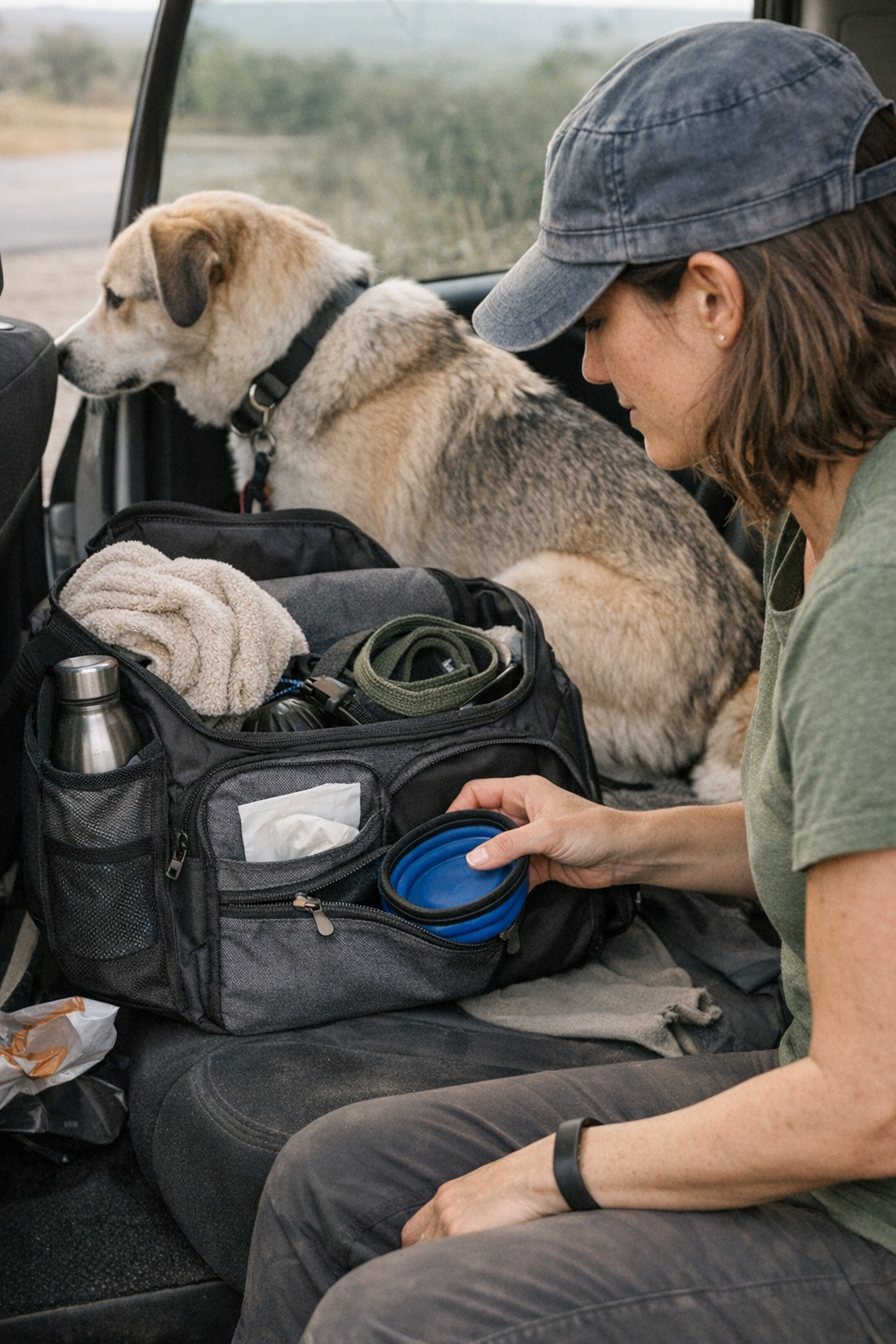
    The difference between a pet bag that looks organized and one that actually works—every stop, every time—shows up fast when you’re on the move. The first scheduled pause: reach for wipes, and suddenly you’re peeling back blankets, unhooking a bowl, and watching your dog tangle himself in his own leash while you dig. Even the best-packed bag at home becomes a source of irritation when the real trip starts: what was “all set” becomes “not quite there” after the first turn off, one hand still on the leash, the other stuck between the cleanup kit and a shifting water bowl. The PawGoTravel world is built around this constant, repeated friction—the pressure point between appearing ready and actually functioning in motion.

    When Organization Doesn’t Survive the First Stop

    Most pet-travel kits start out photo-perfect: pockets lined up, leashes rolled, wipes sealed somewhere logical. But real travel—a dozen small stops, seat-to-sidewalk-to-seat and back—quickly reveals how that setup cracks under repeated pressure. With every pause, items shift: wipes that seemed handy are now blocked by a comfort blanket, the bowl you need slips beneath a tangle of straps, and just getting a hand on essentials means unlearning your “system.” Each scramble slows the next. Dog grows restless; you get visibly more impatient with each recovery.

    You see it as soon as you have to reach for wipes in a hurry—the leash is on top, but the only thing coming up is the edge of a towel, while somewhere a bowl slides out only if you take out half the bag first. These aren’t disasters, but the flow breaks down. The small, repeated chase for the right pocket saps attention and patience—each disruption tightening both leash and nerves, and leaving you worse off the next time you stop.

    A Bag That Looks Ready but Drags in Use

    Initial neatness tricks the eye. Freshly organized, some bags open flat, show everything, and convince you the setup is locked in. But by the second or third pause, you reach for wipes and catch a toy instead; the cleanup kit is now behind two layers. Smooth seat-side handling, in practice, means awkward dig-and-close, items threatening to tumble, and the sense that “well-organized” at home doesn’t hold up to start-and-stop travel. Comfort items help your dog—but in blocking faster wipe access, they slow you down where it matters most.

    The main issue isn’t lack of pockets—it’s how repeated, quick access keeps failing once movement and unpredictable stops are real. A single delay: fine. Three or four stops in, now you’re dealing with jammed zippers, half-open pouches, reshuffling gear. More interruptions. Each “small mess” forces another reset. The longer the trip, the more you brace for the next breakdown in flow.

    Where Interruptions Stack Up: The Real Travel Pattern

    Trips with pets bend around variables you can’t schedule—a busy gas station, an anxious dog at the curb, unexpected bathroom sprints. These transitions expose bag weaknesses: when your wipe pocket locks behind an awkward zipper or your water bowl slips under everything else, short breaks drag out and your pet’s patience wears thin. Every extra minute wrangling gear means another tail tangle or car-door standoff.

    A routine pattern: you squeeze in a walk stop, leash in hand, but can’t spot the cleanup pouch you packed on top just an hour ago. Bowls get doubled under towels, wipes vanish behind chews, so every retrieval turns into a minor hunt. Each run-through blurs original order, leaving both you and your pet a little less ready for the next round.

    Overlaps That Don’t Seem Like a Problem—Until They Are

    Packing less won’t solve it if the essentials still overlap. A trim bag with bad pocket placement means basic items—bowls, wipes, leash—overlap and switch places with every movement. Efficient on paper, but in motion the “system” becomes a repeating trial: grab one thing, displace another, reset after each stop. The problem isn’t too much stuff; it’s the wrong things always blocking quick reach.

    The Shift: Structure That Absorbs Constant Use

    What changes everything is structure—quick-access design that matches seat-side urgency, not just shelf appeal. Switching to a bag with an exterior wipe pocket, or a fixed bowl slot you can open one-handed, means less unzipping and less rearranging. You keep your eye on the dog, grab gear in one motion, and don’t have to brace the whole setup against a car seat just to avoid a spill.

    The real shift is visible: dog waits calmly while you grab the right item the first time; pockets aren’t left half-dangling open in the rush; restocking between stops takes seconds, not another round of folding and stuffing on a crowded curb. The bag’s layout stops being a hidden opponent and starts supporting the rhythm of repeated, real stops—not just looking neat parked at home.

    Identifying the Persistent Weak Spot

    If you regularly find yourself pushing aside items to reach basics, fighting blocked zippers, or dreading the next bag opening, your setup is outmatched by your actual travel habits. Notice these tells—a brief pause before each retrieval, a sigh before opening a “neat” compartment, the drained expression when you realize reset time is creeping up. The weak spot isn’t hypothetical; it’s slowing you every cycle.

    Sometimes, structure is the fix—a marked external pocket for wipes, a side-zip bowl access, or dedicated slot for the leash. The bag won’t make travel clean, but it can remove a constant interruption. Ease of access does more to settle both you and your pet than any perfect fold or detailed organizational chart. It’s the interruptions, not a subtle mess, that break real travel flow.

    A Bag That Holds Up to Real-World Movement

    Genuine calm on the road comes from a travel bag that won’t set off a new scramble at each stop. What matters, trip after trip, is not the look of the starting layout, but how the bag responds when every piece gets put to the test. You want a structure that holds access open: effortless reach, no hidden dig, and a reset so automatic that the movement from seat to curb to seat again flows without hesitation. With the right structure, each handling moment becomes manageable—not because everything stayed neat, but because you never have to pause, unpack, or rethink mid-trip.

    Find travel setups designed for repeated movement, not just first-glance neatness, at PawGoTravel.

  • How a Non-Contact Tester Transforms Safety in Complex Lighting Jobs

    The moment you flip the light switch and the room still feels uncertain, the problem is immediate—and common. In entryways, awkward stair turns, cramped laundry corners, or overbright bathrooms, safe movement collides with the limits of your indoor lighting. Flush mounts and sconces may fill the space with light, but the setup can still fail you right when it matters: hesitating at the top of the stairs, reaching blind behind a mirror, tracing wires through a laundry ceiling and guessing which fixture is really powered down. Here, lighting isn’t just about brightness—it’s about knowing for sure if it’s actually safe to reach, touch, or repair what’s overhead. Every time the fixture looks “off” but the wiring tells another story, risk hides behind routine, and what seemed like just another lighting job becomes a quiet walk through uncertainty.

    Real Lighting Friction: When Safe Access Isn’t Obvious

    Even in well-lit rooms, weak points reveal themselves as soon as you try to swap, clean, or fix a fixture. That flush mount in the laundry seems bright—until you find yourself up on a stool fighting reflected glare and guessing which of three cables is really dead at the switch. Stair sconces set up an even trickier problem: two wall switches, odd wiring colors, and an uncomfortable moment spent wondering if both the landing and hall circuits are truly off. In tight bathrooms, a “simple” vanity upgrade becomes a tangle of shadow, condensation, and hidden feeder lines—where looks deceive and a supposedly dead light stays quietly live. These are the places most likely to trip you up, especially when standard brightness and switch logic mask the gaps.

    When spaces like these see repeated use, the routines you trust—flipping the breaker, testing the switch, relying on your memory—break down. That laundry gets awkward when another switch somewhere else controls a feed you didn’t expect. Visual cues fail exactly where you want clear, reliable knowledge of what’s live and safe.

    The Non-Contact Voltage Tester: Cutting Through Guesswork

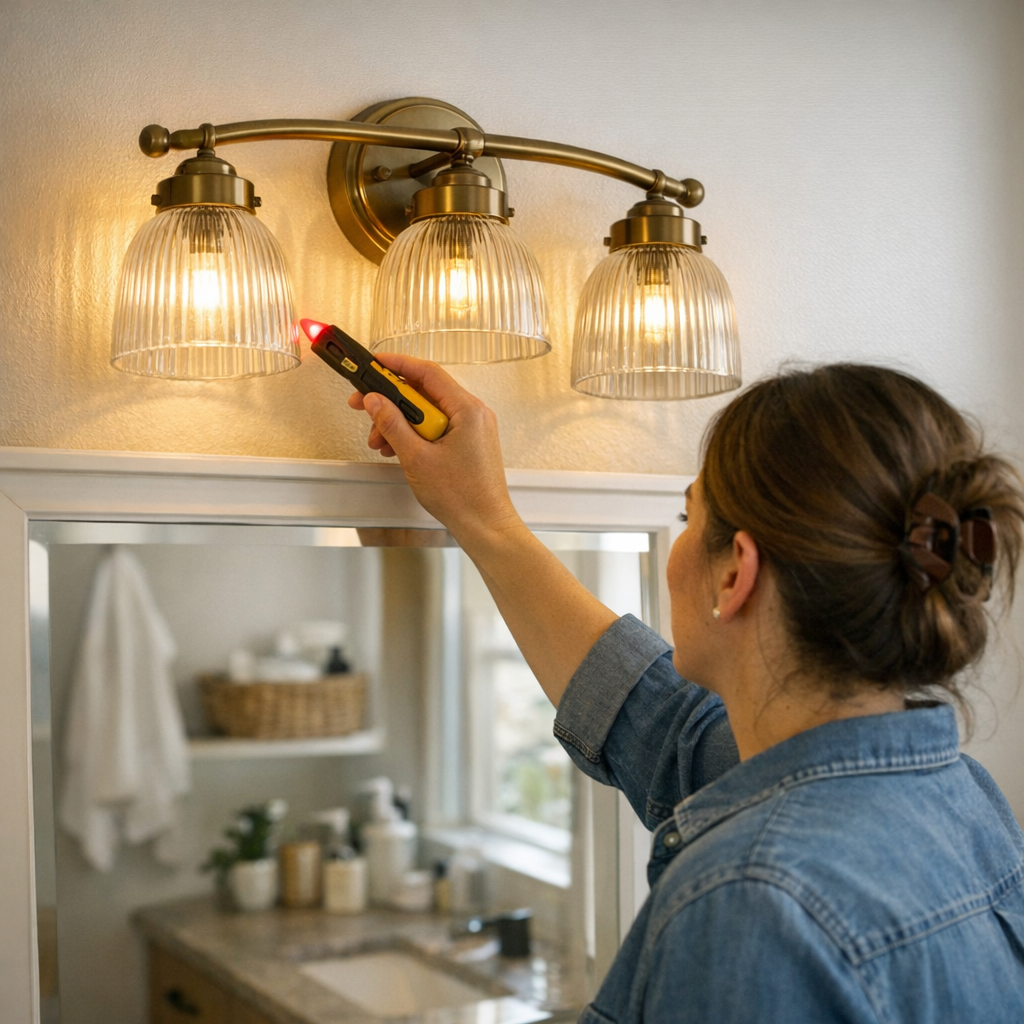
    A non-contact voltage tester turns that moment of hesitation—hand hovering, uncertain—into a clear yes-or-no. Especially where lighting logic is a mess: multi-way stair switches, overlapping bathroom circuits, shared feeds across laundry and hall. Instead of trusting that the switch position means safety, the tester gives you an answer the wiring can’t fake. The difference isn’t just peace of mind—it’s concrete: no gamble, no burning time dragging out a spare bulb or toggling random switches, no risking a live touch because you’re sure you killed the right breaker. One quick check, and you know for sure before you move.

    But the simple existence of a tester isn’t enough. The real change is in making it always accessible: clipped to your shirt, on your tool belt, or beside your stepladder—never buried under spackle knives or lost in a junk drawer. The urge to skip this step comes fast when you’re tired or hurrying. Friction wins any time safety gear isn’t instantly there, and in the pressure of real work, forgetting the tester is when mistakes multiply.

    Everyday Trouble Spots Where This Matters

    • At a stair setback: Ceiling and wall lights look “off,” but a third switch at the base might power a stray circuit—one fast test calms the nerves, especially in shadowed corners where the visual logic breaks down.
    • Reaching behind a bathroom mirror: Damp patches and erratic shadows unsettle your routine—the “off” illusion means nothing if the tester buzzes behind the vanity.
    • Under an overhead cabinet run: Clean surfaces, then a sudden dark band cast by undercabinet lighting—a touch test is only safe if the wiring doesn’t stay mysteriously hot, even when the room feels silent.

    Where Standard Lighting Habits Fail to Deliver Safety

    Ceiling fixtures, wall sconces, and even new LED flush mounts rarely account for bad wiring, extra feeds, or half-labeled breaker boxes. A missed side-feed in the hallway, or an old ceiling junction in the bathroom, quietly wreck the assumption that “dark” equals “safe.” That’s why jobs that feel routine—replacing a warm-glow bulb or untangling a cover plate—still force you to slow down, fumble with your phone flashlight, and wonder if you’re missing something. The risk compounds as you move faster: glare from a semi-flush, shadow across the edge of a wall light, bright but poorly directed light that distracts from real wiring paths. Every shortcut around safety is a chance for the wiring under ‘finished’ ceilings to fight back.

    The Added Risk in Damp and Utility Spaces

    In bathrooms, laundry nooks, and entry alcoves—where flush ceiling lights are closest and air stays humid—access is tight and footing less certain. Condensation beads on covers, and standing on a stool in a haze of steam, small wiring flaws blend into the background. Shared circuits, unexpected splices, and “just-in-case” feed runs amplify the confusion in ways bright bulbs can’t resolve. Flipping breakers becomes a guessing game, especially when a single circuit feeds both lights and a hidden outlet. Every attempt at “just trusting it” pulls you closer to a real mistake.

    Making the Safety Step Unmissable

    The game changes not when you buy a tester, but when you make it part of your automatic reach: clipped inside your tool apron, living next to your driver bit, or always on the tray with your stepladder. The habit doesn’t just save time—it rewires the sequence. Before you loosen a sconce, pop a mirror, or twist a flush-mount, the quick check becomes reflex. No guessing, no charting out which breaker probably matches the kitchen. One touch, confirm, move on. Over time, this shift becomes as normal as grabbing your screwdriver—removing doubt and freeing you to work faster and safer every time you face unpredictable home wiring.

    Frequently Noticed Questions in Real Use

    Can looks or switch position ever guarantee the wire is safe?

    Not reliably. Fixtures may look dark but still carry current, especially with multi-way switches and overlapping feeds. Only direct testing proves a wire is dead—never let visual cues replace a real check.

    What makes damp-rated zones uniquely risky?

    Moisture blurs the boundaries. Humidity increases both wiring risk and access difficulty, turning small mistakes or lazy checks into real hazards—condensation plus poor footing means you get only one chance to check right.

    Do all testers work equally on LEDs, dimmers, and tight fixture spaces?

    Most quality testers can detect standard voltage whether you’re working around dimmable LEDs, compact ceiling panels, or crowded wall boxes. In dense setups, slow down: a thorough pass with the tester is worth a few extra seconds for certainty.

    Better Lighting Habits Start With One Small Shift

    Real indoor-lighting safety isn’t about endlessly upgrading fixtures or maxing out wattage—it’s about repeated routines shaped by clear, fast checks. With a non-contact voltage tester within actual reach, even the trickiest setups—mirror lighting, stair turns, narrow laundry runs, entryway semi-flush—become less a guessing game and more a series of controlled, predictable steps. Instead of pausing for uncertainty or assuming the wiring follows the look of the switch, you move with confidence in spaces that may look bright but still behave unpredictably. That’s the quiet line between rooms that just look good and ones you can trust, week after week for every real-world job.

    http://www.lighthelper.myshopify.com

  • How Internal Structure Transforms Narrow Console Cabinets for Daily Use

    Open the door and the promise is clear: a slim console cabinet, meant to corral keys, chargers, and mail right where the routine needs them. But beneath that clean surface, hidden storage often becomes daily friction. The cabinet works until you need to grab the spare key, find yesterday’s charger, or sort out which piece of mail can’t wait—only to dig through a tangle that looks organized but feels slow the moment you reach inside.

    When the Right Inside Matters More Than the Outside

    A sleek cabinet looks settled from the outside: doors shut, clutter disappears. But in practice, it’s what happens after a week of real use that makes or breaks it. Unsegmented deep compartments turn every retrieval into a hunt—mail slides behind chargers, keys settle wherever there’s space, and “just put it back” gets overridden by “just get out the door.” On busy days, the interior becomes a turbulent drop zone. Mail piles blend, the charger ends up under envelopes, and the spare key drifts until it’s forgotten where it landed.

    The problem is rarely a lack of effort; it’s speed versus structure. A single compartment can’t keep up when everyone dumps, grabs, or shuffles through the same small space. After only days, you start noticing: is this today’s mail, or the leftovers from the week before? Why does every retrieval feel like a micro-search?

    The Anatomy of Routine Friction

    Real frustration starts the moment you open that slim cabinet, especially after some use:

    • Items vanish in plain sight. A charger slides beneath receipts, forcing you to dig past layers.
    • Piles form and stick. Today’s documents stack above yesterday’s, with no natural stop point.
    • Categories blur. Keys get sandwiched under cords, and what should be a quick drop-off becomes a slow shuffle.

    Visually, the cabinet keeps things clean. Functionally, it absorbs time—a scramble when late, an extra search step before leaving the house. The front edge can only hold so much before things crowd, making every next retrieval or return slower.

    How a Promising Setup Slows Down

    Freshly installed, the cabinet handles the first cycle: clear surface, contained storage. But by the second week, the routine fights back. The cabinet’s doors stay half-open as you pause, deciding whether to reshuffle again or toss one more thing in without sorting. As categories blend—mail drifting into a “paper” heap, chargers disappearing under the pile—movement logic fails. The cabinet starts to look organized, but its insides slow you down.

    Clear Boundaries: The Invisible Difference

    Durable setups rely on internal boundaries that match real behavior.

    Segmented trays and shallow dividers flip the daily experience. When each group—mail, chargers, keys—has its spot, the hunt vanishes. Imperfection is tolerable; visible access counts more than cosmetic neatness. Reach in for keys—they’re at the front, not swallowed by spillover. Need your charger? It sits separately, no digging required.

    Even a simple divider can turn a confusing space into something watchable—a front slot for new mail, a rear bin for chargers—cutting retrieval and reset time to near zero. Upkeep shifts from “another project to tackle” to a quick check as you walk by.

    Why Deep, Open Space Fails in Daily Use

    The logic is tempting: a deep, open space means more storage—until reality pushes back. Unsplit interiors become soft dumping grounds. Unlock the door, toss inside, and next week the bottom is out of sight. Every walkthrough means quick piles become stable chaos, sorting is constant, and only the first few inches are ever “organized.” Deep zones reward the last drop, not the next grab.

    Real-World Tips That Change the Daily Flow

    What shakes out with repeated use:

    • Make boundaries visible before bad habits return. Place trays or dividers on day one; prevent pileup and category drift before it becomes routine.
    • Fewer categories, better flow. Limit internal zones to just what needs to be grabbed daily—too many types, and the system collapses.
    • Placement affects use. If the cabinet blocks movement or drawers can’t open fully, overflow gathers by default. Make access easy or risk slowdowns and edge clutter.
    • Hidden charging isn’t automatic. If cable pathways and airflow aren’t built in, cords will reappear outside or block access inside—undermining both appearance and routine.

    A Cabinet That Works Quietly in the Background

    Even the cleanest surface won’t fix a setup fighting its own interior. The real win is when structure handles the routine: boundaries that make reset so fast it happens almost unnoticed, divisions that mean one-touch return and retrieval. If every week ends with a mini-reorganization session, the storage itself—not just your habit—needs better logic.

    Every lived-in room faces repeated pressure. Each tweak—dividers at the drop point, zone limits, clear return flows—shifts the daily routine from repeating the same search to moving smoothly through the space. The right system doesn’t just hide things; it supports real use, speeds return, and keeps the focus on life, not the next reset.

    Find practical storage solutions designed for how you actually live at Gridry.

  • How Smart Tool Placement Transforms Your Car Routine in Bad Weather

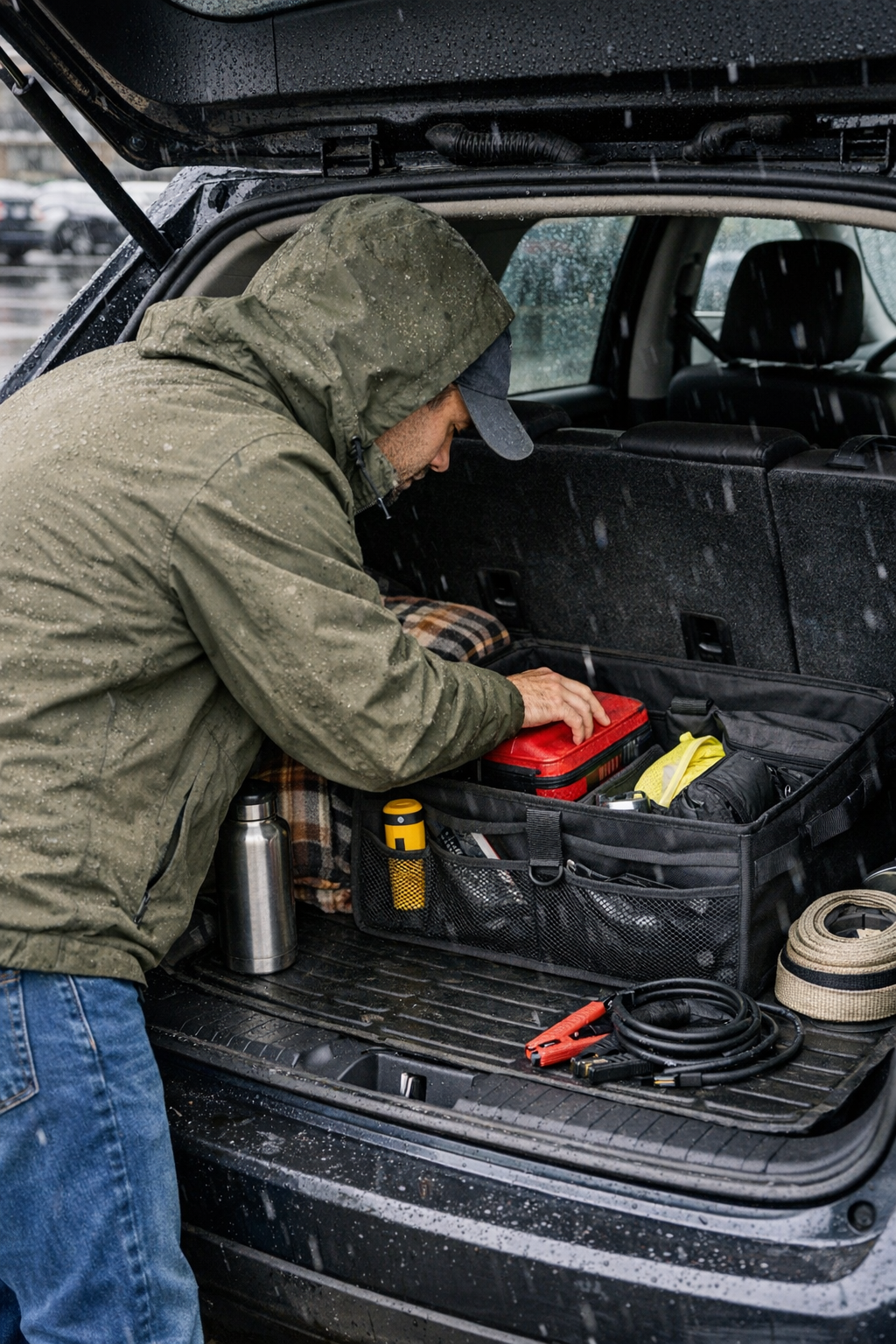
    Nothing exposes weak car organization like a cold-weather return—when a “tidy” setup turns clumsy the moment you need speed, not another hassle. That trunk divider looked clever last Saturday, but now you’re hunched against freezing rain, door cracked, feeling for a buried scraper or a stubborn tangled charger. The glovebox shuts smoothly when parked, but at night, rummaging for a flashlight becomes another round of dropped papers and swearing under your breath. The real friction isn’t about mess; it’s that every so-called system either fuels easy returns or forces you back into the same slow shuffle—each time you actually use the car, especially when conditions turn rough.

    When “Neat” Systems Fall Apart in Bad Weather

    The “in-control” feeling of a clean console fades fast after a few stops and shakes. Monday: cords looped, scraper upright, coffee receipts stacked. By Thursday: registration buried under napkins, the cord knotted around a pen, and the scraper vanished somewhere behind a kid’s glove. The car looks settled at a glance, but touch anything and it collapses—you grab blindly, knock a bottle off the floor, or dump half the console just to find an ice scraper you thought was easy to reach. Order unravels where you expect consistency: repeated driving, quick departures, the same gear always needed fast, now missing in action.

    The Real Cost of Buried Tools

    It’s not until the temperature drops and time runs short that you feel the design failing. You slide into the driver’s seat after work—wipers barely holding off sleet—and try to snag the scraper. It’s either behind a bag you left last week, or worse, jammed under cargo in the trunk. You stretch, cold air knifes in, water hits the upholstery, and frustration compounds. The “clean” setup drags out every move, multiplying delay right when you want one-hand, one-motion access—and anything less is just another routine breakdown.

    Glovebox and Trunk Storage: Actually Helpful or Just Out of Sight?

    “Organized” often means “buried and awkward.” A glovebox swallows insurance cards and napkins until the rare tool you need—mini flashlight, spare cable, ice scraper—gets lost behind the weekly buildup. Quick stops shift stacks, and the must-haves slide out of sight without you noticing. Urgency uncovers the reality: what seemed at-hand now demands emptying the whole compartment with one cold arm in the dark—never safer in bad weather, never quicker with impatient passengers crowding the entry.

    Trunk bins and cargo organizers tame appearance, but real routines rewrite their promise. One grocery restock and a gym bag later, the neat bin turns into a game of “find the handle.” Frozen lock? That emergency kit is under two sacks of groceries and a box of windshield fluid. The more packed the car, the more organized solutions become barriers: a clean layout for someone standing still, not someone bracing against wind, trying not to drop groceries on soggy mats. When a setup makes you unload to reach daily tools, it’s working against actual use—just neater while still slower.

    The Truth About Charging Chaos

    Even the most promising cable layout unravels under daily use. Too many chargers, or just one too long, and you’re fishing cords from under the seat, untangling loops from the handbrake, or dealing with a wire wedged into the cupholder—again. Grab your phone before a call or get ready to charge after errands, and it’s another mini-wrestle with the cord that was “put away” this morning. Every sharp turn or quick grab lets cables migrate, snag, or block the one thing you need—smooth return and easy access—proving neatness alone can’t outsmart daily motion in the car.

    Organization That Survives Routine Re-Entry

    So what actually works in cars that get used, storm after storm? Not the “picture ready” layout, but real systems that cut friction in the heat of daily use. True car organization keeps every essential reachable in one motion, even after your setup slips, bags slide, or time is tight. It’s not about achieving a magazine layout—it’s about not fumbling at your most rushed moments. What matters is shortcutting delay again and again, no matter how many times your gear drifts or routines change on the fly.

    Where Real Friction Builds: Return After Return

    After a week of rain or snow, setups that worked on day one reveal their cracks. Kids’ bags migrate, the umbrella gets pinned under a shopping tote, chargers vanish beneath yesterday’s haul—or last night’s pizza run shoves a window scraper out of reach again. Even after a full reset, real use scatters carefully arranged gear within days. This isn’t failure; it’s the reality of everyday driving. Unless your tools are stored for one-handed, seat-stable reach, cleanup and access collapse by midweek. Any system that ignores the churn of routines is built to disappoint.

    Small Upgrades, Big Return: Converting Setup to Real Access

    Veteran drivers fix it quietly—by shifting key tools to where their hands land during real weather. That means:

    • Scraper and flashlight in the driver’s door pocket or wedged under the front seat—reachable without shifting your weight or digging through layers.
    • A single, loosely-looped charging cable resting beside the center console—not buried, never more than an easy grab away. Limit to one active cord to keep interference low.
    • Emergency poncho or towel stowed flat, not wadded with gear or in trunk exile. If you can’t grab it blindfolded, it’s too buried.
    • Trade “hidden” for “cleanly visible”—tools present, not scattered, but never so concealed you need to unpack half the car for access.

    After a week of bad weather, these simple changes show real payoff: faster re-entry, less soaked upholstery, fewer delays getting back on the road. The car starts feeling organized because it moves at your speed, not just because the surface looks tamed. The setup isn’t just neat; it behaves like it was built for quick, repeated use—even when the drive home or pick-up run is at its worst.

    Access vs. Tidiness: What Actually Wins in Real Car Use

    Appearance means less than performance once the car leaves perfect stillness. An “organized” trunk or console isn’t much help if it swallows what you need in your next weather test. The real reward for practical car setup: each return is less of a scramble, fewer armfuls dumped on the seat, less sifting and more moving forward—especially in the split moments when time, weather, and routines put systems to the test. Delayed access isn’t just annoying; it invites repeat stress and forces workarounds you shouldn’t have to invent every week.

    If your car still leaves you searching and shoving items around whenever the forecast turns rough, it’s not just an inconvenience—it’s a sign the setup needs to change. Real readiness isn’t another organizer, but a rethink of where, and how, basics are kept for the way driving actually happens. The difference is simple: “neat but slow” can’t keep up with the demands of real use—“ready on return” does the heavy lifting, through any week the road throws at you.

    Find car gear and solutions that match how you actually use your car at DriveWellSupply.

  • How Clear Dividers Transform Everyday Storage Into Premium Spaces

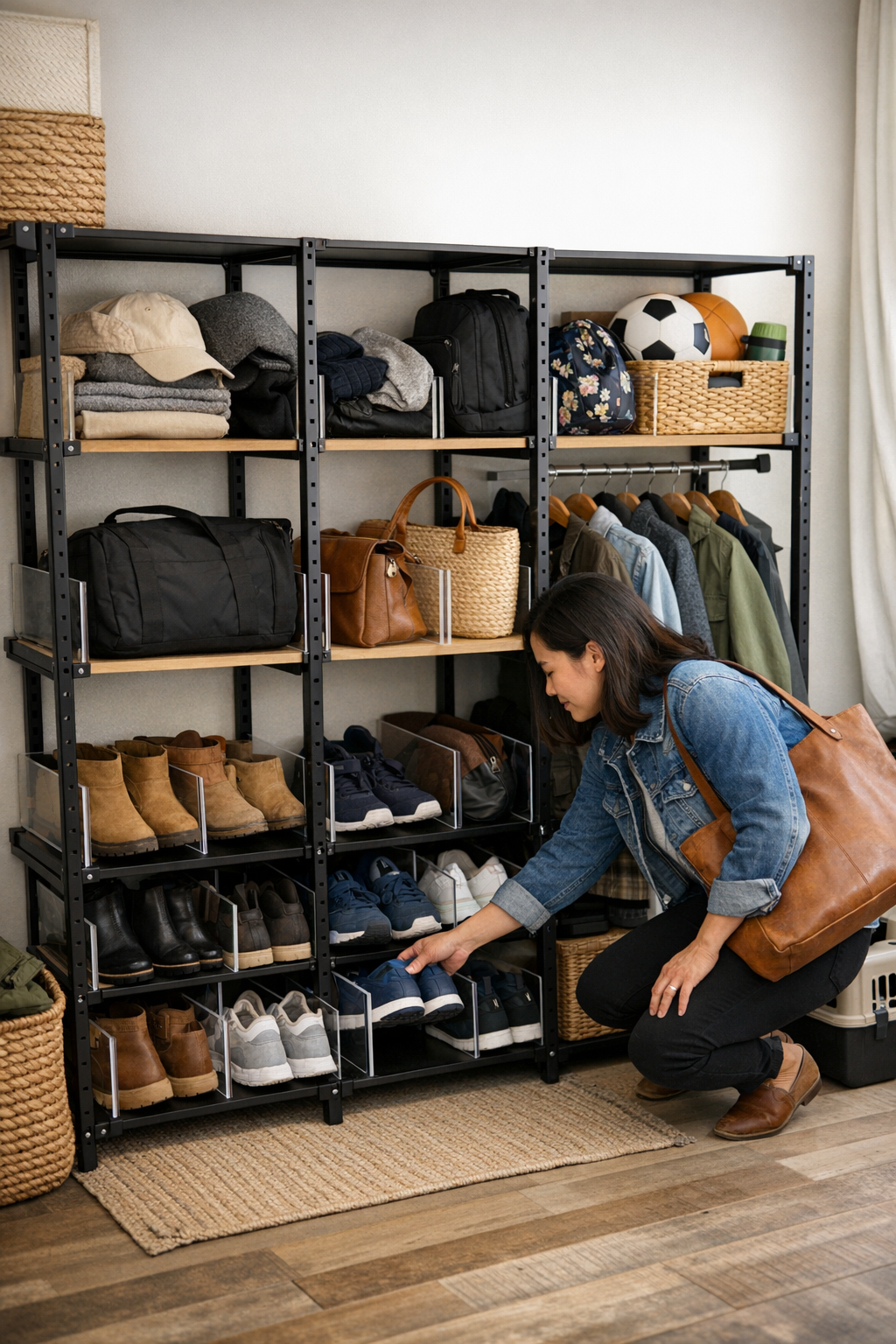
    Every closet and entry starts out looking orderly—but daily routines have a way of shredding that order until the baskets and bins meant to “organize” end up hiding a slow, silent mess. Shared spaces are the worst offenders: shoes pushing into backpack zones, scarves curling up with hats, sports gear wedged wherever there’s an inch to spare. That first-day, photo-ready calm rarely survives a single frantic school morning. What works for show rarely works for life.

    Baskets: The Surface Fix That Quickly Falls Apart

    Woven bins line shelves, everything tucked away and labeled. It’s satisfying—but only if no one actually uses it. Give it three busy days and the story changes. Socks land in the shoe bin “just this once,” hats end up buried under reusable bags, and soon a single item buried in the wrong bin is left there, because fishing it out means dumping half a basket onto the floor. The more people use the space, the faster the categories collapse. What felt tidy starts to feel like digging through lost-and-found every time you need something.

    The Quick Unravel: How Order Disappears

    Consider a real entry closet: day one, you have boots in a shoe bin, hats each in their own labeled basket, gloves paired up and visible. But by midweek—after rushed mornings, muddy shoes, surprise detours, and no time to gently sort—a single shelf becomes a tangle. You’re stacking hats on top of shoes, cramming library books next to the pet leash, and pretty soon, just grabbing what you need means shoving stacks aside. The “organized” space turns into a daily shuffle, slower and more annoying with every use.

    Boundaries Over Baskets: Why Clarity Wins

    Open baskets look nice—until you need to find something fast, or put it away without thinking. Spaces with real, physical boundaries—fixed dividers, built-in cubbies, clearly marked shelves—offer something soft-sided bins can’t: clarity that lasts past day one. Instead of hoping family members will police themselves, you give every item a landing zone too obvious to ignore. Shoes have a shelf, not just a pile. Gloves get a slot that never fills with scarves by accident. It’s these simple dividers that quietly enforce habits, preventing chaos from leaking everywhere.

    The Cost of Constant Reshuffling

    Without boundaries, baskets turn into blending grounds. A week in, you’re wrist-deep in mixed-up gear, reaching through a pile just to grab the second mitten, always nudging aside what doesn’t belong. Every reset becomes a full-blown sorting session instead of a two-minute tidy. It isn’t that baskets are bad; it’s that daily use inevitably shuffles them into entropy unless the shape of the storage does the sorting for you.

    Fixed Dividers: What Actually Survives Real Life

    The real stress test for any organizing system isn’t day one—it’s what the closet looks like after five days of use. Fixed cubbies or vertical dividers absorb the strain of routines. When someone tosses the wrong item in the wrong spot, the boundaries keep that mistake from spreading. Even during the busiest weeks, everything still lives in roughly the same spot, and grabbing something is a direct reach, not a scavenger hunt. You reset by moving a single thing, not by restacking or digging.

    Reset Speed: The Hidden Metric

    Picture this: arms full of groceries, dripping umbrella in tow. With baskets, you end up stuffing things “temporarily” wherever they fit, vowing to reorganize later. Later never comes, and the disorder grows. With fixed sections—slots for shoes, a marked hook for umbrellas, a cubby just deep enough for hats—putting something away takes a second, not a sigh. The faster and easier it is to return things, the less likely you’ll face a collapsing system by the week’s end.

    When Neatness Isn’t Enough: Choosing Order That Lasts

    It’s easy to fake order with a few matching containers, but only physical boundaries truly tame clutter. When the closet mirrors your actual routines—with a shelf for each kid’s shoes, a no-skid divider for gym bags, space for “everyday” and “once-in-a-while” gear—your storage survives rush hour and resets almost on autopilot. The energy you used to spend reshuffling baskets or re-folding stacks goes somewhere else. You get a closet that’s more than “presentable”—it’s just plain usable, day in and day out.

    Small Fixes, Noticeable Relief

    You don’t need a renovation—sometimes a strategically-placed divider changes everything. One new shelf gives shoes vertical room to breathe. A slim cubby for mail and keys keeps every morning less frantic. Labels on shelves stop the cycle of “whose gloves are these?” Sharing a closet means you need rules the space itself enforces. Tiny, clear boundaries make resets faster, prevent categories from blending together, and cut clutter before it starts spreading.

    Living the Difference: Storage That Works With You

    The real success isn’t in how perfect things look after a major cleanup, but in the moments where you reach for a bag, a hat, or your sneakers and find them—right where you expect, nothing to move, nothing in the way. It’s when you actually use your space and end the week with the closet still working, not overrun. That’s the mark of a storage system built for your real routines—and it’s the moment you stop managing chaos and start trusting your space to keep up with you.

    Find practical storage solutions built for the way you actually live at ClosetWorks.

  • Creating Personal Corners for Cats Cuts Daily Maintenance Hassles

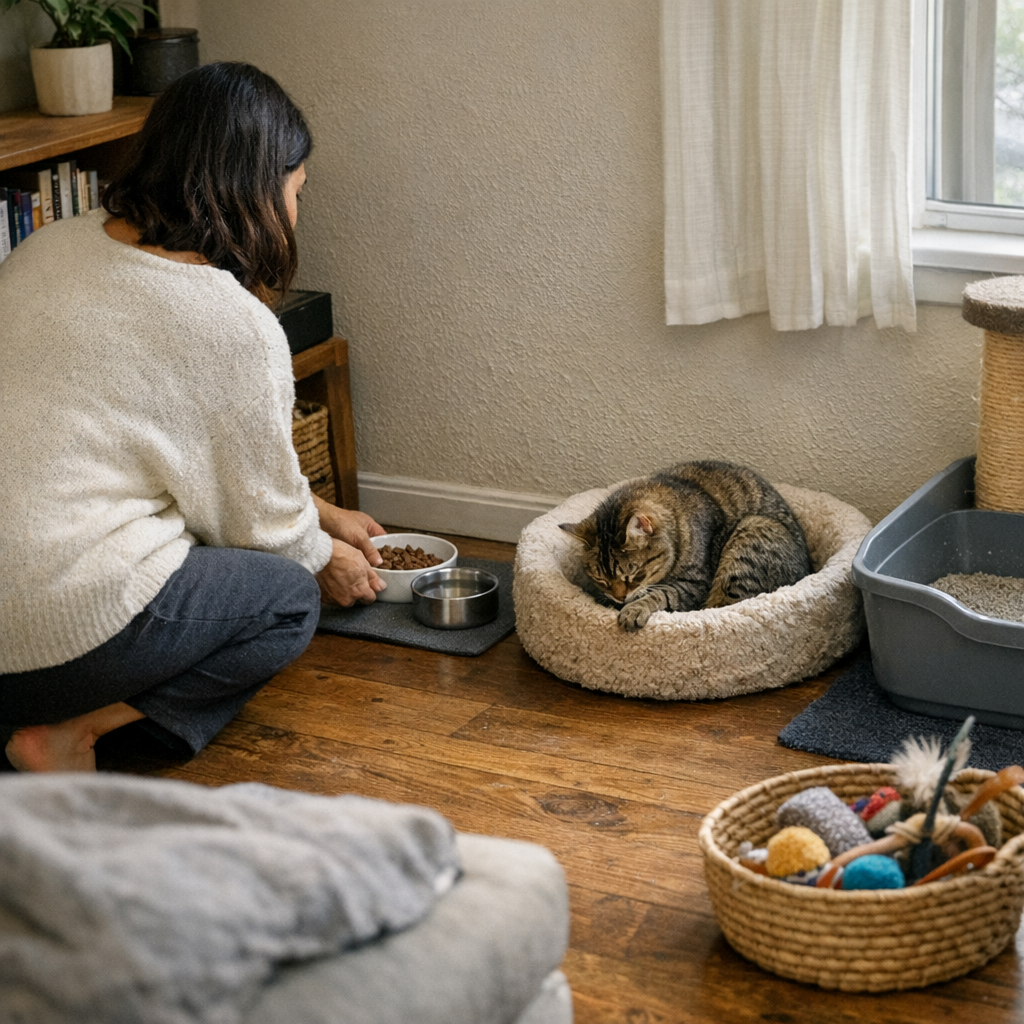
    If you’ve ever set up a shared feeding or litter area for two or more indoor cats, you know the mess doesn’t come from chaos—it’s the daily pattern of having to fix what keeps sliding out of place. Twin bowls lined up neatly on a single mat? By noon, one cat is crowding the other’s dish and dry food trails off the mat. Water seeps to the mat’s edge, then under, merging with yesterday’s spill. Toys you corralled overnight have already made their silent reappearance in the walkway. No matter how often you wipe the floor or nudge bowls back, the same friction zones keep returning—right where you most need predictable order. The StillWhisker world starts here: not with perfect organization, but by surfacing the reality that setups which seem space-saving often turn into repeat work, undermining calm with endless small fixes.

    The Hidden Cost of Overlapping Setups

    In apartments or smaller homes, combining cat gear looks clever until daily life exposes new annoyances. One “double” feeding mat doesn’t stop one cat from inching another out—now you’re watching a constant nudge for position and sweep for crumbs. Water bowls too close together mean splashes run together, and damp spots stay unnoticed until you step through them. Side-by-side litter trays, pitched as a space saver, guarantee both cats crowd the same tray—their scatter crosses the intended boundary, and you catch yourself chasing litter into the living area just as you’re trying to leave for work. With every “shared” arrangement, you’re not just repeating effort—you’re always forced to react at the moments you least have patience or time.

    Why “Looks Organized” Isn’t Always “Stays Manageable”

    You can line up bowls, tuck in a toy bin, and smooth a mat to get a guest-ready cat corner—but that surface order evaporates fast under real routines. By midweek, the wipe-down spot returns around the mat, the toys creep out of containment, and you’re picking stray litter off the same patch of rug as yesterday. The neat line between “looks fine” and “works in practice” only becomes visible in repeated, boring resets that erode both the plan and your nerves. The tidier it starts, the more frustrating it is when invisible maintenance multiplies underneath.

    Crowded Corners: Where Repeated Friction Builds

    Cat routines ignore your storage logic. Morning rush? Both bowls get claimed at once—expect scattered food, shared splashes, and bowls pushed out toward the hallway. Relocated toys roll back into human paths even if picked up the night before. Litter grains escape, caught in corners where two trays blend into one big cleanup zone. Trying to conserve room by overlapping items only moves the problem: now your own movements (sidestepping a rolled toy at the fridge, straightening a mat slipping off a baseboard) get just as interrupted as the cats’. Reshuffling cat spaces adds to your own detours—and none of them stay solved for long.

    The Day-by-Day Reality of Shared Zones

    The strain shows up during normal routines. Reaching in for a quick bowl refill? One hand bumps the extra dish, or you have to lean awkwardly over the “wall side” while a cat crowds you. Mats seem absorbent until water seeps below, binding up stray kibble for next clean up. Pulling one litter tray for cleaning shifts the other, sticks both mats together, or leaves tools wedged where your hand can’t reach cleanly. Each fix feels small, yet the time lost compounds—and the visible order does little to prevent the hidden scramble.

    Even rest zones betray the promise of simplicity. One blanket-topped nook feels minimal until both cats wedge in—fur clumps quickly, corners lift, and what started as a “contained” cushion transforms into another daily straightening job. Morning neatness is undone by evening, and the cycle reboots without relief.

    Assigning True Personal Corners: A Small Change with Big Impact

    The difference comes from separation, not just spacing—distinct feeding, litter, and rest zones for each cat, mapped to actual room flow rather than a single shared corner. Over a few days, you’ll notice: refills become quick tasks, not a cluster of interventions. Instead of a single battle for food at each meal, there’s a staggered routine—fewer head-bumps, fewer spills to mop in a hurry, and no synchronized rush right before you want a moment of calm.

    Mapping Out the Space to Cut Repeated Resets

    Actual shifts are blunt: move one feeding mat to a quiet window, tuck the other by a bookshelf, and place litter trays at opposite ends of the room, not pressed together. Each with its own small mat. At first, nothing seems to change—until the routine repeats. One cat claims her window-side bowl, the other takes the bookcase; meal traffic divides naturally. The daily “mess zone” mat stays almost where it started, needing less than half the sweeping. The point isn’t instant perfection, but noticing that the interruptions stop stacking—less urgent cleanup, more invisible prevention, and room flow that feels lighter by the end of the week.

    The Difference: Fewer Traffic Jams, Less Work

    What actually shifts: the count of interruptions you make in a week. In a split setup, your paper towel stays put, the scoop doesn’t need daily relocation, and you stop dodging a cat at the exact moment you’re trying to pour kibble. Litter resets stop crossing into each other’s patch—no more fused mats, no more double-track dust to sweep up later. Toys, released from one launch point, end up dispersed rather than concentrated underfoot. What fades is the background noise of tiny fixes—a strong sign the structure is finally serving you, and not just appearing more organized for show.

    The Subtle Frictions You’ll Actually Notice Over Time

    Problems stack slowly, but they become visible as repeated strain. With overlapped setups, even basic chores lag: refilling a dish means nudging another aside; quick litter dumpers become clumsy, with grains hopping mats and crossing boundaries. If comfort setups share the same favored spot, you’ll find yourself untangling blankets twice as often—a single “best” rest zone is now a magnet for fur, mess, and minor annoyances. A plush mat that feels like an upgrade can, in a shared rush, become just one more slow-reset corner.

    Cleanup Supplies: Present, But Are They Handily Placed?

    Tools at hand don’t help if they’re all jammed together. One hook, one caddy for wipes and scoops in a single spot might save wall space—but it guarantees that, like the cats, you get stuck navigating your own gear traffic jam. Assign a cleanup bin or hook to each cat’s corner—those seconds reclaimed matter across dozens of daily micro-cleanups, erasing extra trips and reducing the impulse to put off a quick wipe or sweep. Setup and convenience rise together only when access isn’t blocked by the very organization meant to simplify things.

    Smooth Transitions: Making the Switch Without Upsetting Cats

    Cats notice change, but resistance fades faster if each new zone feels familiar. Re-anchor with a favorite mat or basket, hold scent by using towels that already smell right, and give a few days for adjustment—some trial returns to the old spot are normal before the new corner “sticks.” So long as placements don’t keep shifting, both cats and people settle into the new structure, and the most visible change is a quiet drop in interruptions, not a showy shift in cat behavior.

    Less Overlap, More Calm: How the Room Actually Changes

    No setup is frictionless, but split zones do one crucial thing: they flatten the intensity of fixes and spread the work into gentler, more optional tweaks. Daily wipe-downs shrink. Toy clearing shrinks to a quick spot-sweep, not an apartment-wide chase. Litter frays out in small, manageable arcs—not a trail across the room. Even if the surface order is less than Instagram-tidy, the reduction in recurring interruption makes the room truly easier to inhabit, both for humans and cats. The StillWhisker approach doesn’t sell perfect calm—but it does anchor daily routine in structure that bends with how cats and people really collide, reset, and move through each day.

    Visit StillWhisker for practical cat-life arranging tools and setups designed for real shared homes.

  • Recognizing Hidden Wear: Effective Safety Gear Replacement Strategies

    Step onto any active jobsite and you’ll spot PPE that’s walking a thin line—helmets that look spotless but shift the second you tilt up a saw, gloves that “almost” flex but slow your fingers when you reach for a grinder, visors that grew hazy right where you watch for sparks. The real hazard? Not gear that’s falling apart, but protection that quietly loses its edge. One shift, everything feels fine—the next, a slipped grip, a fogged shield, and suddenly your routine’s broken, productivity drops, and you’re one mistake from an injury that should have been avoidable.

    Why Old PPE Lingers—And Sabotages Workflow

    Every fast-paced crew knows the cycle: deadlines stack up, parts start to lag, and last week’s “still good enough” gloves limp into yet another day. If a hard hat doesn’t show cracks, if gloves don’t gape at the seams, it’s tempting to keep them in rotation. But there’s a world of difference between what passes inspection and what stands up to the demands of a twelve-hour overhaul or a marathon sanding session.

    Most PPE doesn’t fail in dramatic ways—it erodes in the smallest moments that matter:

    • Gloves that twist in your palm as you torque a stuck bolt
    • A helmet that shifts off-center while drilling overhead—forcing you to pause, readjust, and burn time
    • Stiff gloves that clench your hand until your fingers fatigue after hours of sanding or fastening
    • A face shield that mists the second you lean over a spinning blade or lose your line of sight to a flaring spark

    This isn’t about dramatic failures—these are the overlooked slips, fumbles, and re-positionings that add risk, slow every cut, and make a simple battery swap suddenly clumsy. It’s usually during hard, late shifts—long runs of drilling, second rounds of cutting through dense board, desperately trying to keep pace—that worn gear finally reveals its limits. And once that performance slides, control and safety start eroding together.

    How Decline Shows Up in Real Work

    The Telltale Signs: Not Just What You See in the Locker

    The breakdown rarely jumps out at lineup. It’s the feel of the task that alerts you, more than what you see on the shelf. You grip a fresh drill bit, and realize your wrist aches more than it should—the “anti-slip” coating on your gloves hardened under sweat and solvent weeks ago. Or you’re hauling MDF onto an overtaxed saw and your helmet jolts loose as you look up, forcing you to pause mid-move, losing time and focus.

    Ask anyone on the tools long enough and the stories pile up: gloves that start sliding when you least expect it; palms that should feel textured but suddenly let go of a fastener; a supposed “secure” helmet that drifts forward every time you change drilling positions or crawl in to change a battery. Everything looks passable at clock-in, until a slip or twist in the thick of the job exposes just how much performance you’ve given up by not swapping gear sooner.

    On the Floor: Gear Failing When You Need It Most

    Picture a team rushing to replace coolant lines before lockout. Gloves that should grip tools now slip out of tired hands, visors are streaked where you need to see tight clearances, helmets don’t stay in place while reaching into low machinery. These gloves aren’t ancient—barely a month in, but hammered by overtime and chemical cleaners. Then, as a worker hefts a valve into place, the grip fails for a split second. Nobody’s injured this time, but you know: visible wear is a poor measure. Under pressure and repetition, protection goes soft long before it looks like it should.

    Building Smarter Routines: PPE That Keeps Pace With the Work

    Use-Based Replacement Beats “Wait-and-See”

    Instead of chasing “better” gear, the smartest shops anchor their safety routines to strict, use-driven replacement cycles. Take gloves: switch them every four months of actual field time, not just when they tear, and label them with a start date so no one’s guessing. Throw a five-second flex test into the weekly tool-up—workers catch stiffness or lost grip before it slows their work or risks a tool fumble. No more guessing: the result is less hand cramping mid-task, fewer dropped drill bits, and smoother, faster battery changes when those long days roll in.

    Hands-On Checks: Real Inspections in Action

    A quick visual once-over in the locker just isn’t enough. Instead, put gear on and actually run your routine: squeeze that helmet, bend those gloves, flick a wrench or snap a blade in and out. If movement feels off, or if a tool twists in your grip, it’s time to swap. The body spots trouble before the eye does—hands feel hidden fatigue, palms sense micro-slips, and headgear pressure tells you more than any checklist.

    Know Your Triggers: When to Retire PPE

    • Flex or Fit Drops: Helmets that shift when you reach up, gloves that stay rigid, visors that won’t sit flush
    • Surface Feels Change: Palms turn slick, shields cloud at eye level, liners flatten in the spots you sweat most
    • Outliving Service Time: Set a clear end-date—no gloves past four months of site work, even if they “look fine”
    • Follow the Manufacturer—Don’t Wait for Disaster: Replace helmets and visors on timeline, not when flaws finally show

    Ignore the “still looks good” trap: Solvent splashes, repeat washings, and dusty hands disguise wear. The only signal that matters is how the gear responds—in the middle of real work, not fresh off the peg.

    When Small Problems Cost Big

    PPE doesn’t quit in one leap—it slips away in slower grip, creeping hand aches, forgotten forehead bruises when gear slips mid-cut. Letting worn gear hang on until it fails means trading small, familiar problems for a bigger one—missed cuts, lost pace, preventable injuries. Spot the wear before it’s obvious—in that fatigue after a day of sanding, the pause when the drill handle just feels wrong—and you’re working safer, sharper, and faster across the board.

    For more on gear that keeps the job moving safely, visit Gumboll.

  • How Modular Wall Storage Transforms Yard Usability and Reduces Clutter

    If you’ve ever stepped into an outdoor zone that was supposed to be “organized,” only to nudge a bin with your shin and sidestep a crate creeping into your walk path, you already know: storage that doesn’t match your real routine drags every reset into a grind. Most of the friction comes from what’s meant to help—bulk bins, crates, ground-level chests—sprawling into the space you actually need just to get through the day. Small outdoor zones, narrow side strips, patio edges: these setups turn “putting things away” into an endless loop of shifting and stepping around, until even a fast pick-up feels like a chore. It’s not laziness that lets chaos creep in. It’s a system that loses the plot every time gear drifts, tools get buried, and movement stalls against a wall of best-intentioned storage.

    Where Ground-Level Storage Trips You Up

    A weatherproof bin looks like an outdoor win—until the first busy week. Gear comes out, random tools drift in, and with every round you’re reaching over a new pile or dragging a crate that feels welded to the paving stones. By Saturday, the “organized” setup blocks your path to the gate or forces you along tight detours between bins that were never meant to stay put but somehow always do.

    It’s not about careless habits. The layout itself creates mini choke points. Floor setups in family yards, garage thresholds, and shared side paths build up silent pressure: you think you have a clear run, but every use cycle re-scatters what you just fixed. What fits on paper crowds out movement in practice—especially when gear always winds up in the least convenient corner or right in front of where you need to go.

    When Floor Setups Become Spillover Zones

    Want the quickest reality check? Try walking your outdoor setup at the end of a busy week. If your walk is a zig-zag nudge-past—bins tight to the fence, tools splayed across paving stones, and “temporary” crates turning permanent—you’re living the cycle. The layout doesn’t push gear out of the way; it collects overflow into whatever live space you can’t avoid. Routine use just multiplies the shuffle. Nobody dumps debris into the walking line on purpose—it happens because the system only half works, pushing stuff out when it should be pulling it in.

    Nothing sabotages tidy efforts faster than a system that breeds friction faster than you can clear it. See it all the time in side strips jammed with toys and hoses, patio corners where bins form a wall, or garage entries so thick with “storage” that every return trip means another awkward shuffle.

    The Shift: Storage That Gets Out of Your Way

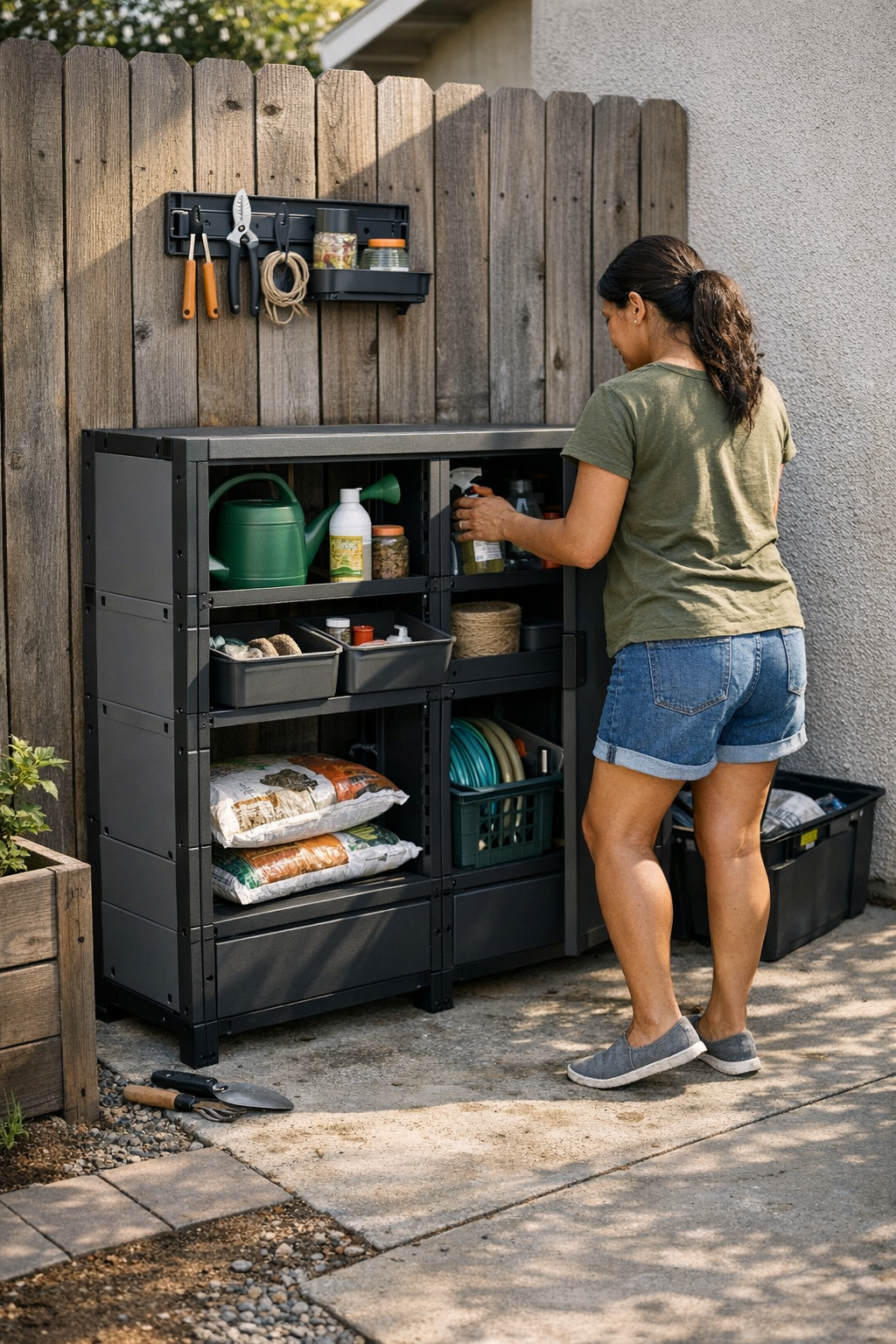
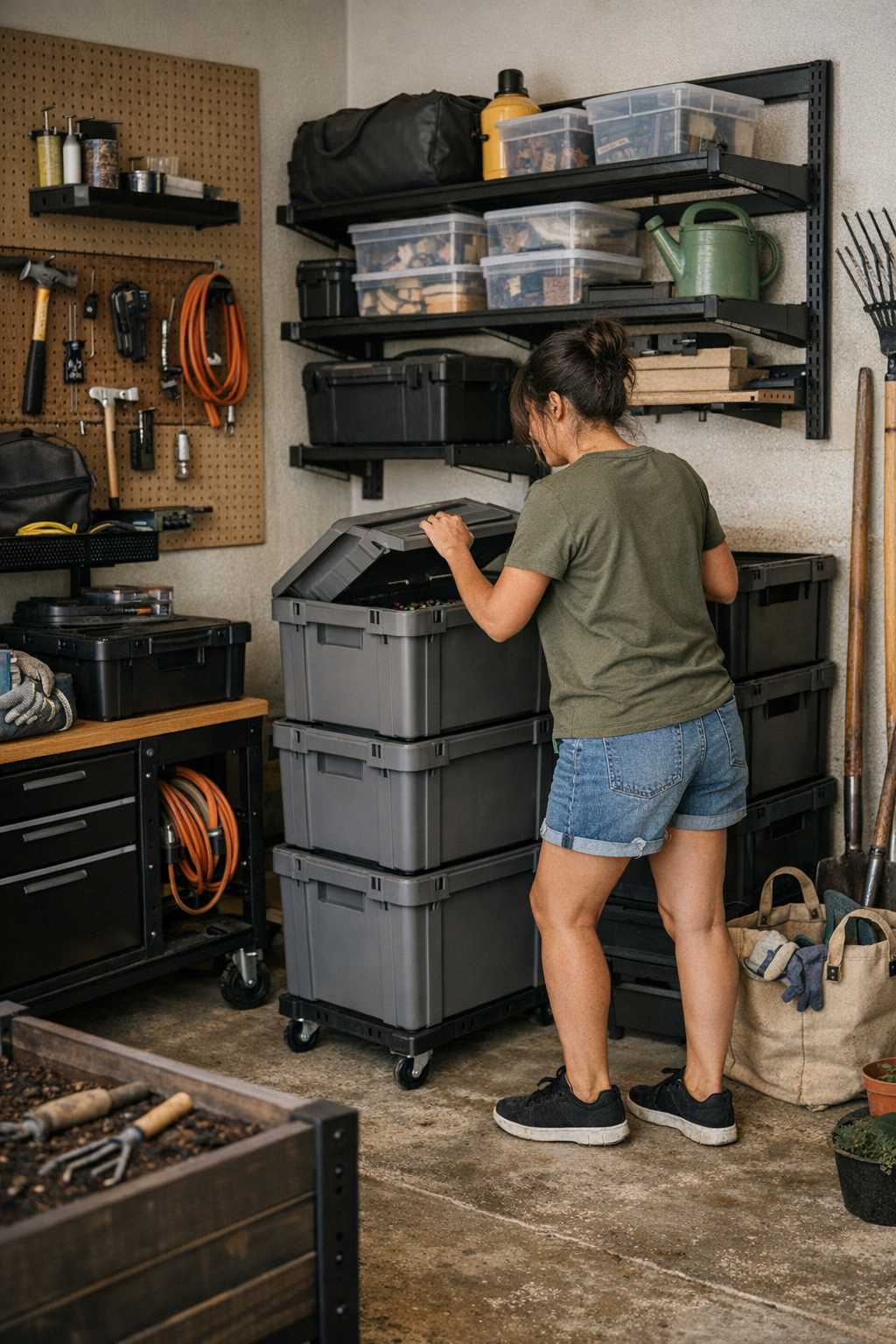
    This is where wall-mounted racks and modular shelves reset the story. Take storage off the ground and you don’t just reclaim square footage—you fix the pattern. Hanging gear isn’t just neater; it controls the return flow. Suddenly, there’s an obvious hook for pruners, a visible spot for gloves, one quick reach for the soccer ball. No fumbling past piles. No guessing where things go when energy is low or the rush is on.

    Seen in real use: a side yard used for dog gear, garden tools, and pool toys was a bottleneck of crates after every busy weekend. Swapping those bins for a mounted rail and baskets along the fence turned the walk from an obstacle course into a straight line. Now, the shovel always returns to its hook, the leash basket greets you at the gate, and even after a chaotic day, the reset takes a quick sweep—not a full reshuffle. It’s not about “spotless.” It’s about never needing to fight your setup just to find the walk path clear again.

    Wall Systems: Real Boundaries, Less Drift

    The temptation is to think you’re just pushing the mess higher. But when a wall storage system fits your actual flow, it draws a bright line: if there’s a hook and a bin right where you finish an outdoor job, stuff goes up—not down. You don’t have to think twice; gear has a visible home. Wall racks along the central path, shelves at the edge of a patio, or a vertical gear zone by the back door—all anchor their areas and suppress that creeping migration of stuff back into the middle of your path.

    Setups That Don’t Collapse Under Pressure

    Ground bins break down when routines get wild. Busy Saturdays mean everyone’s grabbing balls, hoses, yard tools—no one’s pausing to restack the pile each round. By late afternoon, the footprint of your “contained” storage has doubled and nothing is where it started. The work comes back on you: reset turns into a search party and a pile-juggle just to get back to baseline.

    Systems that build in minimum pathways—rails that border, not block; shelves that only take as much wall as you can spare—reduce spillover by architecture, not wishful thinking. No more accidental piles resting by the side gate. After a high-traffic day, each zone keeps its shape because the system doesn’t let “just for now” storage clog your movement tomorrow.

    Mobile Units: Flexible or Just in the Way?

    Rolling crates or portable bins sound clever but often turn rogue—unless there’s a defined “dock” and a habit of returning them, they end up clogging the last good corner. It’s a classic pivot: you move the tote to “clear the path,” forget it, then spend the next week detouring around your own flexibility. Mobility works when the reset is as frictionless as the use. Otherwise, you’re just rolling your problem from one corner to the next.

    Real Patterns Show What Works

    It’s easy to be fooled by a perfectly-staged yard right after a weekend reset. The test comes after four or five rounds—are you resetting again and again just to get paths clear? Does some cluster always dodge organization, no matter how many bins or hooks you add? Durable systems do a few things differently:

    • Return points are unmistakable: you don’t have to think about where anything goes back.
    • Walkways are protected by the layout itself, not just the hope that people will step carefully.
    • Wall space isn’t just filled, but solves an actual zone need, not just looking “busy.”
    • Overflow zones are contained, not allowed to become the new status quo.

    Try this real-world check: measure and enforce a minimum walk path—in tight yards, 32 inches is often the make-or-break width for unblocked movement. Mark it if you have to. If you find yourself stepping around a bin or letting “just for now” gear drift into the path, that’s your system failing under real pressure—the kind that builds every week, not just when you’re watching.

    The Difference Between Looking Organized and Working Cleanly

    A setup is working—not when it’s photo-ready, but when you can walk your path at day’s end and nothing needs explaining or re-stacking. “Home” for gear feels obvious, and resets are a matter of two minutes, not entire afternoons. The real improvement isn’t pristine surfaces; it’s a routine you don’t have to fight, even when the week throws some chaos your way. That’s the shift: moving from storage you manage to storage that manages itself, even after a rush, a storm, or a half-dozen passes by different people. If the space flows, the system works.

    For more practical ideas on making outdoor spaces easier to live with and reset, visit TidyYard.