
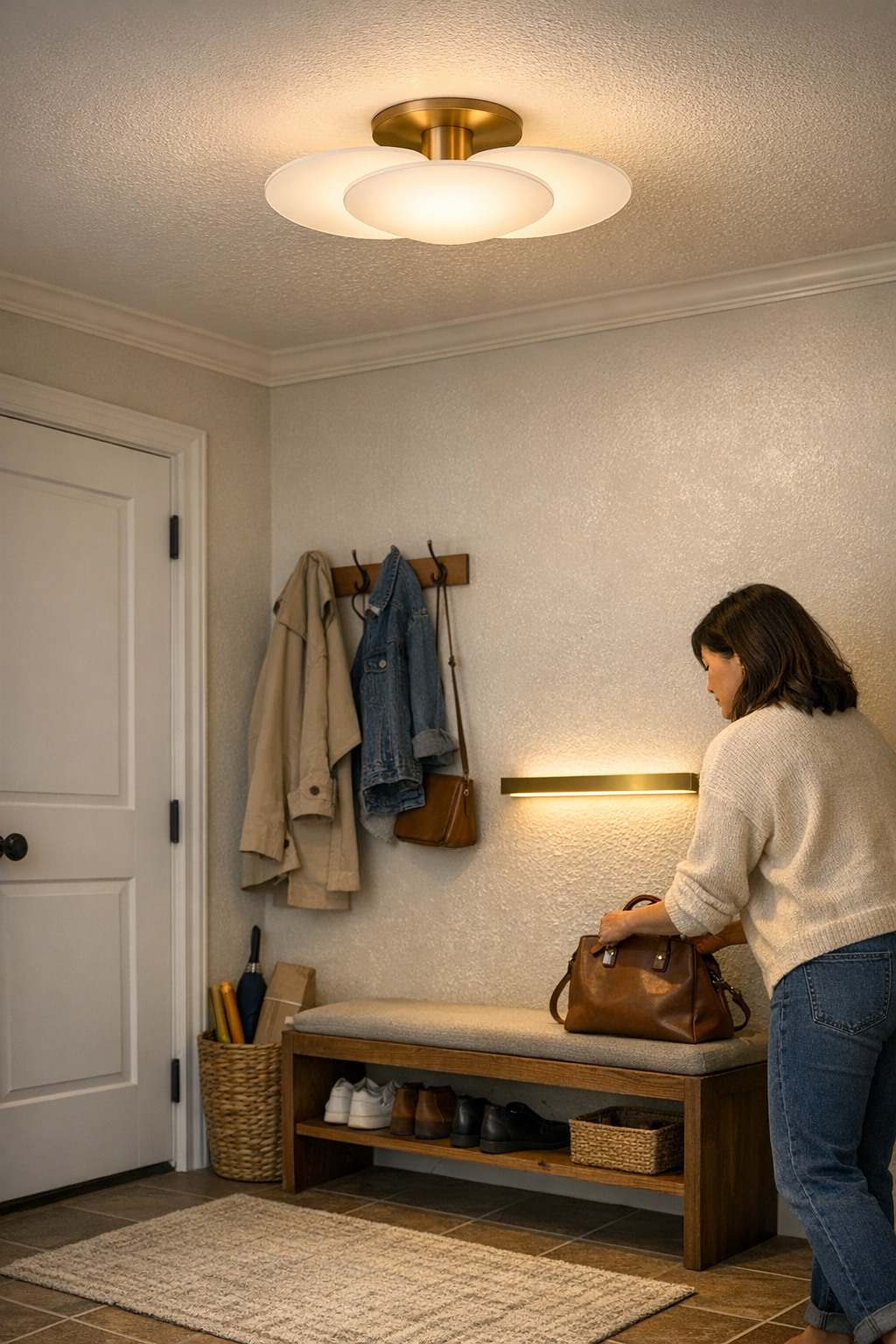
Entryway lighting isn’t just a design choice—it’s a test you feel every single time your hand juggles keys, bags, or bootlaces as you pass the threshold. The friction isn’t stylish or subtle. It’s a hard shadow where you set down groceries, glare bouncing off tile into your line of sight, or a cable you step over twice daily that only looked tidy on install day. Entryways punish shortcuts: lights that miss the edges, exposed cords snaking along baseboards, hardware that blocks more than it reveals. These aren’t background annoyances; they accumulate, turning what seemed “done” into a minor obstacle each morning and night—and they keeping proving it, one routine at a time, until you finally notice which part breaks first.
Where Entryway Lighting Fails: Friction You Live With Daily
At first glance, the entry feels finished—light overhead, walls freshly painted, cords tucked (for now). But as habits set in, every shortcut exposes a flaw: the light that doesn’t reach where shoes actually land, the fixture set high but blinding at eye level, cords bent around every bench and shelf but never staying put. Movement exposes the failure points—muddy boots reroute around a glare zone, an armful of groceries bumps into a poorly placed sconce, shoe racks carve shadows that hide keys just when you’re in a hurry.
- Bright in the wrong spot, dim where you need it. Overhead fixtures turn tile glossy at the door, but closet corners and bench zones stay murky and awkward to use.
- Cables that refuse to stay hidden. What looked “neat” during setup becomes a tripping hazard or distraction, especially when pets, kids, or bags join the scene.
- Low-profile fixtures that disrupt anyway. Sconces at the wrong height create blinding glare, or end up mostly blocked by coats, making entry less safe than before.
Repeated Use Exposes the Weak Points
The lure of minimal fixtures or simple installation almost always backfires in motion. That single ceiling light creates an artificial “bright spot” while everything that matters—coat racks, storage shelves, pet zones—sits in partial shadow. Invite someone over after dark, and both of you are crouched in the unlit edge, searching for dropped keys nowhere near the actual glow. It’s not just about appearance; after a week of real use, it’s the small hassles that grind: surface clutter, elbowing for space by the bench, tripping on plugs or lines meant to be temporary fixes but now permanent annoyances.
- Trying to find a mask or hat by a shelf the lighting never reaches, you realize how much area is just “out of bounds” after sunset.
- The overhead fixture flattens the room with glare but misses dust lines, dropped gloves, or the actual entry functions you use.
- You detour around an exposed extension cord, or find a package in shadow you nearly squashed with the door.
Shared Spaces, Shared Headaches
When everyone’s routines overlap, poor lighting and messy cable management multiply frustration. The stroller parked by a backlit wall blocks what little visibility you have. Shoe racks or baskets shift shadows, and what was once a clear routine starts including surprise obstacle courses. The promise of a “hidden” cord or tidy wire vanishes after a week—revealing biting hazards for pets, tangle traps for kids, or another reason to crawl on cold tile just to reset a boot-dryer or misplaced adapter.
Visible Solutions, Hidden Obstacles
Swapping fixtures is tempting—flush-mount LEDs, slim sconces, and strip lighting promise more coverage. But without planning cable runs, mounting, and real usage paths, every upgrade risks introducing a new annoyance. Plug-in strips above a bench spill light—until the cord stretched across the trim defeats the point. A wall bracket promises tidiness, but a few inches too low and everyone is squinting or bumping their shoulder. The gap between “clean look” and “practical install” only closes when cables, mounting logic, and use habits match up in real time—not just in empty-room photos.
Placement and path matter as much as style. Mount a fixture a palm’s length above reach, and suddenly the cables stay clear, and the glare lifts. Drop it close to arm’s height, and users pay for it every single pass-through.
Why Cable Management Makes or Breaks the Setup
Even premium fixtures are undermined by exposed or unruly cords. Good cable channels—painted to match trim, tight in corners, or designed for one-handed install—quietly solve problems you’d rather not notice twice. The difference turns up after just a few days: no more accidental tugs, no pet chewing, no “temporary” masking tape solutions, less distraction every time you open the door. Smart management isn’t about over-designing, but about preventing those persistent, avoidable friction points once people (and pets and furniture) actually use the entry the way they always do.
Real Examples: How Everyday Fixes Shift the Experience
Settling for “good enough” lights and cords lasts until the routine exposes real blind spots. Replacing a dated dome with a flush-mount LED finally pushed light into the storage and coat zones, ending the ritual of feeling your way across a dim bench each morning. A small, low-glare wall bracket above the shoe area killed the worst shadows, letting the floor stay visible—without blinding anyone pulling on boots.
The biggest shift? Trapping the plug-in cord inside a paint-matched, snap-in channel: a tiny project that kept the floor clear and banished the cable loop you used to dodge. Suddenly, the switch was where you needed it, clutter stopped breeding in the corners, and the routine got back its rhythm—no more pet-level tangles or morning fumbles near the door.
It’s rarely about sheer brightness. The change happens when lights and supports track with behavior—guiding, not fighting, your routines.
Tips from Repeated Entryway Frustrations
- Audit the space by routine, not by design. Mark where shadows hit when you grab shoes or toss a bag—this is where lighting and clutter problems reveal themselves.
- Position wall fixtures above common reach—this keeps both glare and cables above pet, bag, or kid level, and out of traffic paths.
- Install cable channels before you fill the room. Don’t trust “tuck behind furniture” methods—they’ll fail with the first furniture move or deep clean.
- Test fixture placement using real objects: hang coats, leave bags by the entry, stage a package drop-off—then adjust height and angle so light follows actual movement, not just blank walls.
Making Entryways Feel Ready, Not Just Finished
True progress in entryway lighting and support shows up when what’s invisible stays that way: no cables waiting to trip, no glare zones you sidestep, no corners hiding clutter or hazards just out of view. It’s not about a staged “after” shot—it’s about proving, daily, that the mix of fixture, placement, and support hardware stands up to real movement and the friction of routines. Your entry isn’t done until the last workaround is gone and the space recedes into comfort, not complaint.
If your entry still finds ways to interrupt your day, the problem likely isn’t the paint or the furniture—it’s a mismatch of light, hardware, and habit. Addressing those isn’t about a new style; it’s about finally building around the way the space is actually used. www.lightsupport.myshopify.com