Blog

  • Prevent Saw Motor Overload with the Right Blade for Wet Lumber

    Every crew knows the moment: stacks of wet lumber waiting at dawn, and a saw that should cut cleanly—but doesn’t. You line up for the first few cuts and watch the morning’s optimism drain away. That blade you trusted yesterday now stutters, grabs, and smears, turning what should be a straightforward job into a battle for every board.

    Feel the Drag Before You See It

    The frustration arrives before you even name it. At first, the saw chews through a plank or two. But then something shifts—the blade sags, the motor groans, and the familiar buzz of sawdust turns to silence except for chunks of damp waste sticking everywhere. Every pass demands more muscle, and you start to notice:

    • cuts are rough and splintered,
    • edges show dark burn marks,
    • sanding stations pile up with “fix-it” boards,
    • tool overload lights flicker more often, forcing unwanted breaks.

    None of this is random. The culprit isn’t just the soaked wood. It’s the wrong blade dictating the pace—making a hard job harder than it needs to be.

    Why General-Purpose Blades Stall Out in Wet Stock

    The “combination” blade seems like a safe bet—enough teeth for fine plywood, compact gullets for cleaner trims. But these same features choke when the job turns messy. Moisture transforms sawdust into paste, filling small gullets and jamming the teeth. By halfway through a stack, you’re not just working harder—you’re risking tool damage and spending twice as long to finish the same number of boards.

    Most job sites have watched someone force a smooth-sheet blade through green pine or sodden framing, feeling the saw shudder on every pass. The wood resists, the saw heats, and boards exit rough—if they make it out straight at all. Meanwhile, tool cycles get shorter. Sandpaper wears thin, and even batteries seem to drain faster as the tool draws more power to compensate.

    The Right Blade Does the Heavy Lifting

    This is where a true framing blade proves its worth. With a lower tooth count—typically 24—and deep gullets, these blades are engineered for pace, not polish. Each revolution tosses wet sawdust clear, which means the motor keeps its rhythm and the operator keeps control. Fewer stoppages; noticeably less arm fatigue; and best of all, a line of finished boards that just need a quick check, not a rescue mission with the sander.

    Recall any time your circular saw just quit mid-cut—not because the wood was too thick, but because the blade loaded with debris and overheated the system. Framing blades sidestep that pain. Instead of pushing through friction, you move through the work. You even notice the difference in battery changes and corded motor cycles—no more feeling like your saw is waging war on your shoulder or back.

    After the Rain: Jobsite Reality Check

    Picture a real morning post-storm: sodden deck planks line a temporary work table. The first worker rips into them with a combo blade—the motor stalls; the teeth stall, and every cut leaves burn and tearout. The next worker swaps in a 24-tooth framing blade. Suddenly the saw dusts clear, lines stay true, and nobody’s wasting ten minutes on every “rescued” plank. Instead of frustration, there’s a rhythm to the work—steady progress, less mess, a crew that actually finishes what they started.

    Catch the Early Warning Signs

    Small changes signal big coming slowdowns. Watch for these trouble cues:

    • saws straining and slowing mid-cut,
    • warm handles or smoking blades,
    • thick clusters of paste instead of sawdust,
    • redo piles growing by the minute.

    Ignore these and you risk more than the schedule—now you’re gambling on a burnt-out tool or blown circuit. One jammed cut echoes through the whole workflow, setting up lost time and extra labor long after the saw is off.

    One Small Change, Tangible Jobsite Gains

    A blade swap isn’t just about the tool—it’s about the people using it. Framing blades clear debris, hold speed, and avoid jam-ups, giving you back real control. Over hours, the payback is obvious: less downtime, fewer grip-and-push struggles, and a jobsite that moves more like a system, less like a slog.

    Battle-Tested Tips for Better Cuts

    • Start sharp, stay sharp: After a wet day, take 30 seconds to wipe and inspect both blade and guard—debris builds fast and sticks longer than you think.
    • Trust your instincts: If the saw’s sound dulls or the cut feels heavy, don’t wait—swap in a framing blade before you lose your stride.

    The difference isn’t magic—it’s just experience. Fewer resets, calmer workflow, surfaces that really are ready for the next step. The saw works for you, not against you.

    When the forecast turns sour and the boards are damp, that one simple switch can keep your build day from spiraling. Save your tools. Protect your pacing. End the day with fuel in the tank, not stuck at the sanding bench.

    http://gumboll.myshopify.com

  • Why Practical Shelving Outperforms Decorative Options in Everyday Use

    The trouble with many modern shelves isn’t how they look—it’s how quickly they stop working under actual daily pressure. Step into any entryway or hallway, and the surface often seems organized: keys in a bowl, chargers tucked behind a planter, mail stacked neatly. But after a few days, the cracks show. Each rushed exit means digging behind a frame for your keys, shifting mail to avoid the spillover, and risking a pile-up at the edges. Visual calm lingers just long enough to hide the underlying mess growing below the surface. The mismatch is clear: the shelf stays photo-ready, but daily life starts knocking items out of place. 

    The Trouble with Picture-Perfect Shelves

    Many shelves look flawless in catalogs—slim, spare, barely structured. But shelves optimized for a perfect first impression usually sacrifice practical barrier and depth. Without a raised edge, shallow lip, or enough grab space, a single new item nudges everything closer to chaos. Stacks slide, categories mix, and one new charger sends your sunglasses pile tumbling. By Thursday, you’re straightening something every time you walk by—and by Sunday, that “minimal” arrangement is now a crowded shuffle every morning.

    This is where function splits from appearance. A shelf that masks its weak structure behind tidy staging leads to stalled exits, repeat hunting, and arbitrary switching of zones. Each missed category or slow return flow costs real minutes, even if you barely notice the shift from “organized” to “always managing a spill.” The time drain isn’t dramatic, but it adds up with every week the wrong shelf stays in place.

    When Shelving Gets in the Way of the Routine

    Any zone used by more than one person—entryways, hallway drop zones, busy living room corners—quickly exposes a shelf’s design flaws. Real problems show up as:

    • Double-reaching for essentials: Keys slip behind a decorative object, or your wallet slides to the far edge. You’re moving two things just to grab one.
    • Relentless reshuffling: Each added mail piece, cord, or pair of sunglasses pushes older items to an awkward edge. Instead of running smoothly, every reset becomes an annoying ritual, not a quick glance-and-go.
    • Broken return flow: In real use, items land wherever there’s open space. Structure-free surfaces erase categories—mail bleeds into cords, wallets mingle with outgoing forms—so finding anything means wrestling the whole zone.
    • Invisible accumulation: Back rows and corners quietly hoard what you can’t see until you need it—and by then, digging through the pile costs you time you didn’t plan for.

    Most days don’t call for a full overhaul. They call for shelving that defends against entropy with built-in structure, letting you keep order without daily negotiation.

    What Changes with Practical Structure

    The fix for chronic shelf drift isn’t decorative—it’s physical. Swap an open, flat shelf for one with a subtle lip or backstop and the difference appears in use:

    • Edge containment stops small slides: Mail and wallets won’t slip away, even in a rush. Retrieval and return speed up, especially during busy exits.
    • Extra depth buffers overflow: Deeper surfaces cushion the brief chaos—one forgotten keyring or an extra charger doesn’t trigger a domino effect of items falling off.
    • Quicker, simpler resets: You can scan everything at once, and resetting takes seconds, not a ritual of pushing and shuffling.

    After a week, the payoff isn’t in how untouched the shelf looks—it’s in how friction-free your routine runs. The right structural details keep you in control, not always reaching for a fix.

    Recognizing the Signs of a Decorative-First Shelf

    If your shelf causes these pains, looks are winning over use:

    • Returning something always feels like a balance act
    • The surface fills alarmingly fast, even when you’re “keeping it minimal”
    • You’re routinely fishing for things nudged out of reach
    • Every reset turns into rearranging, not just straightening
    • Any sense of organized categories fades a few days in

    Shelves that skip practical features—edged sidings, real depth, basic dividers—force the user to compensate. Over time, visual order alone becomes a maintenance headache.

    Where Weak Shelving Creates Real Friction

    This gap isn’t limited to first-look spaces. Throughout the house, these failures repeat in familiar forms:

    • Pantry shelves: Cans and boxes tumble backwards and get buried as new groceries arrive. Retrieval gets slower the fuller the shelf gets.
    • Closet shelving: Folds collapse, and stacks lose shape after a week of daily pulls—because nothing physically guides or corrals each category.
    • Bathroom shelves: Shift happens fast—bottles topple at a glance, makeup makes a break for the nearest ledge, and morning routines stall over tiny messes.
    • Hidden storage: Instead of freeing you, it slows you: opaque bins bury must-find items, so “tidy” means extended hunting.

    What links these scenes isn’t mess—it’s the mismatch between storage that looks sorted and storage that actually absorbs your routine’s real pace and pressure.

    Picking Storage That Stays Useful

    It’s easy to misjudge how much friction a busy shelf zone absorbs. Before setting up—or resetting—a high-traffic area, press test against these criteria:

    • Structure at the edges: Lips, ledges, or backings prevent objects from wandering, so categories survive each week’s additions.
    • Sufficient usable depth: Accommodates both intended storage and inevitable overflow without defaulting to a crowded pile.
    • Unobstructed retrieval: If you’re forced to move items more than once a week just to reach something, the setup isn’t holding up.

    When these basics are skipped, “clutter” is often just a product of poor setup. Good storage isn’t about perfect tidiness on day one—it’s about compressing reset time and making routine use consistently smoother.

    Practical Tips for Staying Organized Through Real Life

    Tame the reset with intent, not effort. Sort the highest-use items—keys, mail, chargers—to the most accessible zone. Shallow trays or quick dividers keep roles clear and retrieval fast. Watch what accumulates, then shift layout or structure (not just contents) to plug emerging pain points.

    Test by speed, not just by sight. After seven days, has the shelf’s shape held—or are you back to daily shuffling? Track what moves, what lingers, and which spots repeatedly bog down your flow.

    Your habits will highlight whether your setup solves real friction or simply recycles it.

    Long-Term Order Is Built Into the Setup, Not Just the First Look

    Visual calm is a start, but long-term order lives in unglamorous details: edge guards, real depth, and usable categories that survive Monday through Sunday. The best shelf isn’t flawless; it just quietly resists drift, collapse, and category blur every week. If you’re spending less time rescuing lost items and resetting crowded zones, your storage fits your real life—not just the showroom snapshot.

    See more ways Gridry builds usable inside-storage for real indoor life.

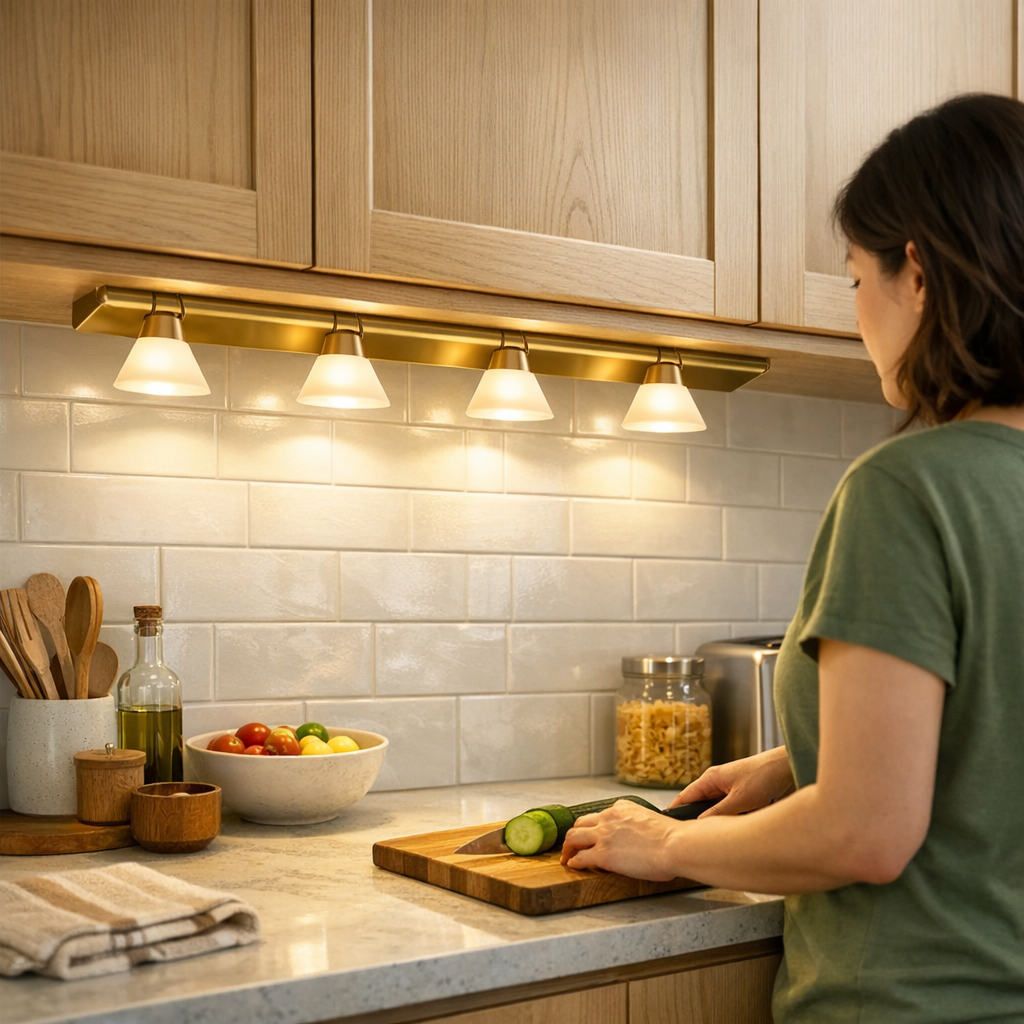
  • Solving Shadowed Counters with Smart Under-Cabinet Lighting Solutions

    Ceiling lights promise room-wide clarity but rarely deliver where it counts. Counters, desks, and shelves look finished under bright fixtures—until you reach for anything at the far edge and find your hand working in shadow. Glare flashes off steel, crumbs build in the dim back strip, and every day you adjust your routine or your body just to see what you’re doing. If you’re shifting cutting boards, dragging paperwork forward, or squinting to catch a lost USB cable behind a monitor, your lighting setup is probably more “finished” in appearance than in function.

    When Bright Overhead Isn’t Enough

    Step into any kitchen or shared workspace after dark. The overhead light softens the whole room on first glance—but when you move closer, the back of the counter or shelf fades out. Shoulders or a cabinet edge cast live shadows, swallowing whatever you try to clean, fix, or prep in that zone. Routine tasks—reading small print, spotting grit, untangling cables—turn into back-and-forth shuffling for every patch of working light, while the rear edge keeps refusing to cooperate.

    This isn’t a style flaw; it’s a persistent setup drag. As days go by, shadowed zones quietly shape your habits: kitchen gear migrates to the front edge, sticky spots get missed, and you wind up working in awkward positions. The “clean” look of the main room contrasts with the frustration of missing details, unfinished cleanups, or blind grabs for the right tool.

    The Repeated Friction of Dim or “Solved” Setups

    Patterns repeat. A kitchen counter scrubbed spotless still collects debris along the dim rear. A workspace feels organized—yet as soon as you push bills or chargers toward the back, you lose sight of them. Decorative sconces glow after dusk, but a reading nook stays one lamp short unless you shift it for the fifth time. The friction isn’t about age, trend, or fixture cost; it’s about how light actually lands after months of use, not in catalog photos.

    The problem isn’t how the fixture looks overhead, but whether every regular movement is met with clear, usable light—or with old workarounds and new annoyances.

    Why Under-Cabinet and Shelf Lighting Changes the Daily Equation

    Filling the gap means putting light where the action is: under-shelf or under-cabinet strips and compact task fixtures that bathe the working edge directly. The difference is immediate. You stop skimming a cutting board forward just to stay out of shade. Slivers of clutter—coffee grinds, stray screws—actually stand out for quick cleaning. Pulling items from the back isn’t a test of memory or manual dexterity.

    • No more shadow fights: the rear surface is just as visible as the front.
    • Mess can’t hide, so less builds up behind toasters or beneath monitors.
    • Routine tasks keep flowing, instead of stalling when light fails to keep up.

    Installed right, even cleaning at midnight feels simple: every patch, from backsplash to appliance edge, finally stays in plain view instead of hiding mistakes until daylight.

    Seeing the Flaws: Placement, Glare, and Cable Distraction

    But pushing more light under shelves is only an upgrade when it fixes more than it complicates. Poor placement creates a new band of glare straight at your eyes, while exposed cables dangle into awareness every time you plug in or wipe down. Support hardware that seemed subtle easily transforms into an everyday nuisance: a bracket edge catches your sleeve, adhesive peels, or you’re forever rerouting a cord that breaks the clean line. A “solution” that draws your focus to its cables or blind spots is simply a new problem, not a hidden helper.

    The real mark of good under-cabinet lighting is forgetting it exists—because every work surface, spill zone, and tool drop is already visible, with nothing pulling you out of the task at hand.

    Real-World Setup: Day-to-Day Improvement (Without Extra Fuss)

    Consider a straightforward switch: a slim LED strip, anchored just behind the midpoint beneath an upper shelf using discreet brackets. The cable routes cleanly along the cabinet’s run. The result? No cold spot along the backsplash, no dangling cord to brush, no glare lines to shift around. Every inch stays lit, and that final inch—where pots or chargers love to disappear—finally becomes part of the workspace instead of an awkward blind zone.

    After a week, your routines shift quietly. You clean thoroughly the first time, stop repositioning lamps, and kitchen gear doesn’t migrate to the bright front edge out of habit. Even late-night cleanups find the last crumb, not just the easy ones. This kind of setup doesn’t just tidy the room visually—it removes the pause and fidget from familiar everyday motions.

    Small structural calls—using diffusers for softer light, mounting with real brackets instead of adhesive, tucking cables behind existing lines—separate persistent clarity from setups you’re always tinkering with to fix yesterday’s shadow.

    Common Under-Cabinet Lighting Questions Answered

    How do I avoid glare with under-cabinet lighting?

    Aim the strip or fixture at the backsplash, not out toward you. Use built-in diffusers to soften edges, especially where countertops are glossy or reflective. Before committing, stand at your usual work position and watch for harsh reflection—not just from the light, but off utensils, tiles, or your own wrist.

    What’s the most common mistake with shelf or counter lighting?

    Placing the fixture at the shelf’s front, which creates harsh highlights and persistent rear shadows. For even coverage, mount slightly behind the midpoint so both the work area and rear wall get clear, balanced light without glare bouncing back at you.

    Can I install under-cabinet lighting without an electrician?

    Most new plug-in LED strips attach with brackets or adhesive and don’t require hardwiring. But skipping proper cable management turns a crisp setup into something you notice for the wrong reasons—loose, snag-prone cords breaking up an otherwise clean line, or leaving small safety risks where bags, pans, or papers cross by.

    Edge-to-Edge Visibility Trumps Looks-Only Solutions

    Lighting the surface is not about dazzling the room—it’s about removing weak spots where routines stumble and clutter hides. The real payoff is cumulative: chores move faster, cleaning is complete on the first pass, and you stop working around the same dim zones day after day. The difference isn’t just visual; it appears in every task that finally runs smoothly instead of being interrupted by gaps, glare, or flickers of setup regret.

    When you build lighting and support to fit your actual daily movements—countless routines at the edge of counters, the back of shared desks, the strip beneath shelves—you finally close the gap between how a space looks and how it truly works.

    Find practical lighting and support options at LightSupport.

  • How Small Adjustments Can Simplify Your Cat’s Daily Care Routine

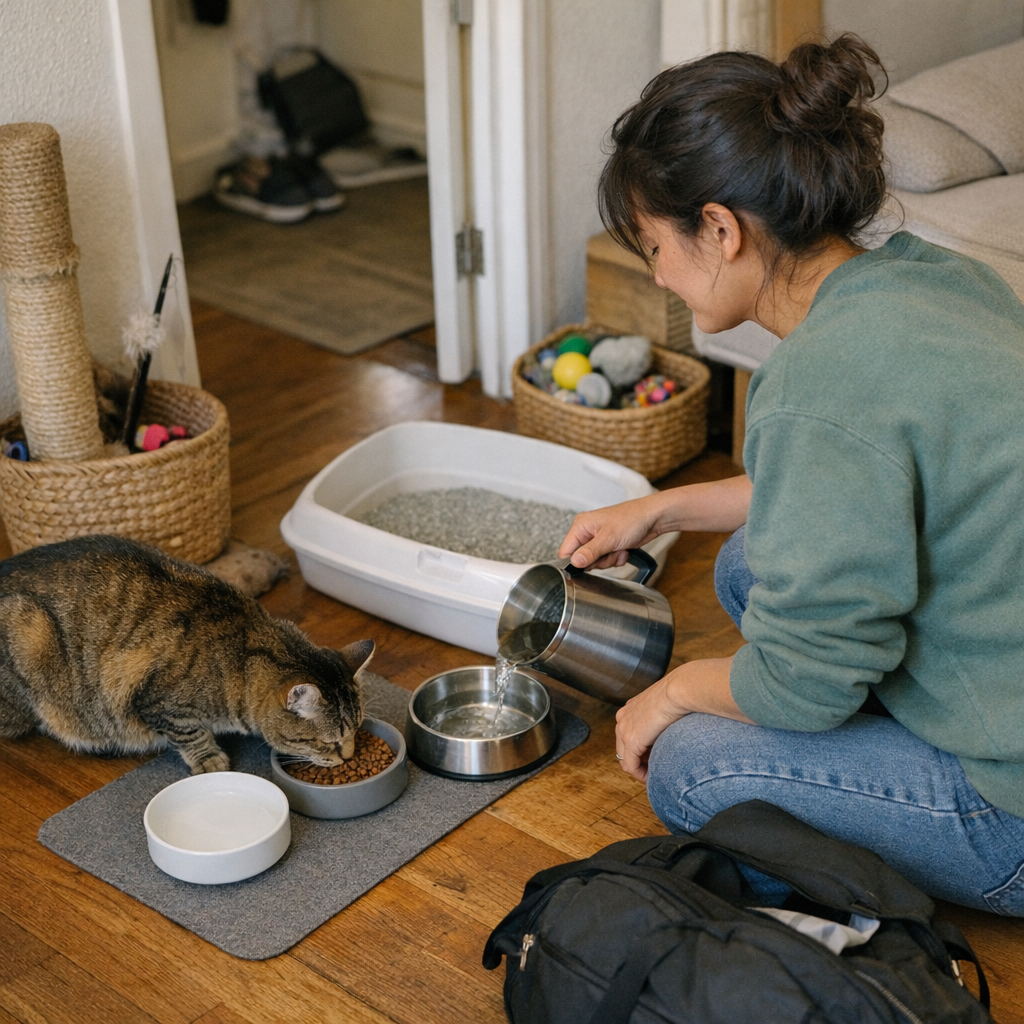
    Most daily pet care setups look manageable—until you repeat them ten, twenty, or fifty times. Your cat circles the feeding spot, watching as you swap out the water and slide the bowl back in place. But under the calm surface, a quiet pattern forms: a wipe missing at the key moment, a brush left in the next room, yesterday’s crumbs dried to the mat. Every round, you find yourself pausing—not for the pets, but for small resets, interruptions, and misplaced tools. CalmPetSupply understands: calm only lasts if the setup keeps up, not just the appearance.

    How Repeated Routines Reveal Weak Spots

    The cracks open in the third or fourth round. You expect a quick reset—swap food, top up water, done. But now a thick line of dried pate stubbornly clings to the bowl’s edge. Crunchy crumbs run along the mat and you notice the wipes are missing, probably still by the couch after last night’s grooming sprint. Suddenly, you’re hunting for a brush before feeding, reshuffling treat bags to reach the water bottle, or just giving up on a wipe to stay on schedule. It doesn’t feel like one big problem, just an invisible drag every time you start.

    One delayed cleanup, one tool left in the wrong place—that small choice adds up. At first, the care zone looks okay, but the routine slows: clutter sidesteps back in, and essentials keep drifting out of reach. A supposedly tidy area turns into a daily scavenger hunt, with cleaning and caring never quite in sync. The drag isn’t dramatic—but it’s real, and it sets in faster than anyone expects when small resets keep getting pushed off.

    When Supplies Hide Instead of Help

    Picture the feeding session: you reach for wipes—nothing. They’re under the sink, never returned from a last-minute cleanup. Do you stop and fetch them or skip it and let grime stick around? Or maybe you go to brush off stray fur, but the grooming tool’s on another shelf altogether. Each time a needed item isn’t right there, you absorb one extra, annoying step. Over days, the habit grows—wipes get skipped more often, small spills dry in place, and the “organized” setup demands more interruptions.

    Tools stored a step too far away make you think twice about every minor job. Bins look neat, but if getting a towel or scoop means lifting a lid or crossing the room, the tool stays missing when needed. What’s marketed as clutter-free can easily become function-light—cleanups delayed, water bowls ignored until buildup shows, and the routine built for pets becomes a routine of hunting for basics.

    Calm Pets, But Hidden Cleanup

    Most cats and dogs ignore mess entirely; they don’t care about spot-checks or wet patches building around the mat. So, the peace you see is just the start. By week’s end, you’re dealing with gritty mats underfoot, a stray bowl edging into the kitchen walkway, or a grooming brush lost on the laundry shelf. The calm gets fractured by broken flow—pauses to step over pet gear, stops to fetch a scoop, or a surprise search for a towel that’s wandered off again.

    Shared spaces blur routines: scoops get parked by the washer, towels are used in the hallway, feeding gear ends up stashed on side tables. Interruptions aren’t dramatic, but they keep cropping up: a feeding slowed because the food scoop is nowhere nearby, or a groom gone undone since the brush moved to another room. What seemed streamlined in the morning now feels jagged as the day wears on.

    Surface Tidy vs. Actual Function

    Looking organized and working smoothly are different things. Put away pet gear in deep bins or stack containers, and essentials fade out of daily reach—clean in appearance, but awkward to use. You might clean the bowl, but the mat’s still gritty from yesterday’s missed wipe-down. Food containers block access to the refill bottle, forcing you to shuffle things around just to get water for the next round. These routines work “well enough” for a few days, until the friction returns and the resets get longer.

    The feeding zone that once felt low-maintenance now takes real effort. There’s always one thing out of place—the towel missing when you need it, a scoop relocated, brush out of reach. These small disconnects aren’t random; they’re the result of setups that hide the mess without actually reducing it. By midweek, it’s clear: an area that looks tidy isn’t always functional when the routine gets busy.

    Small Shifts Make Routines Smoother

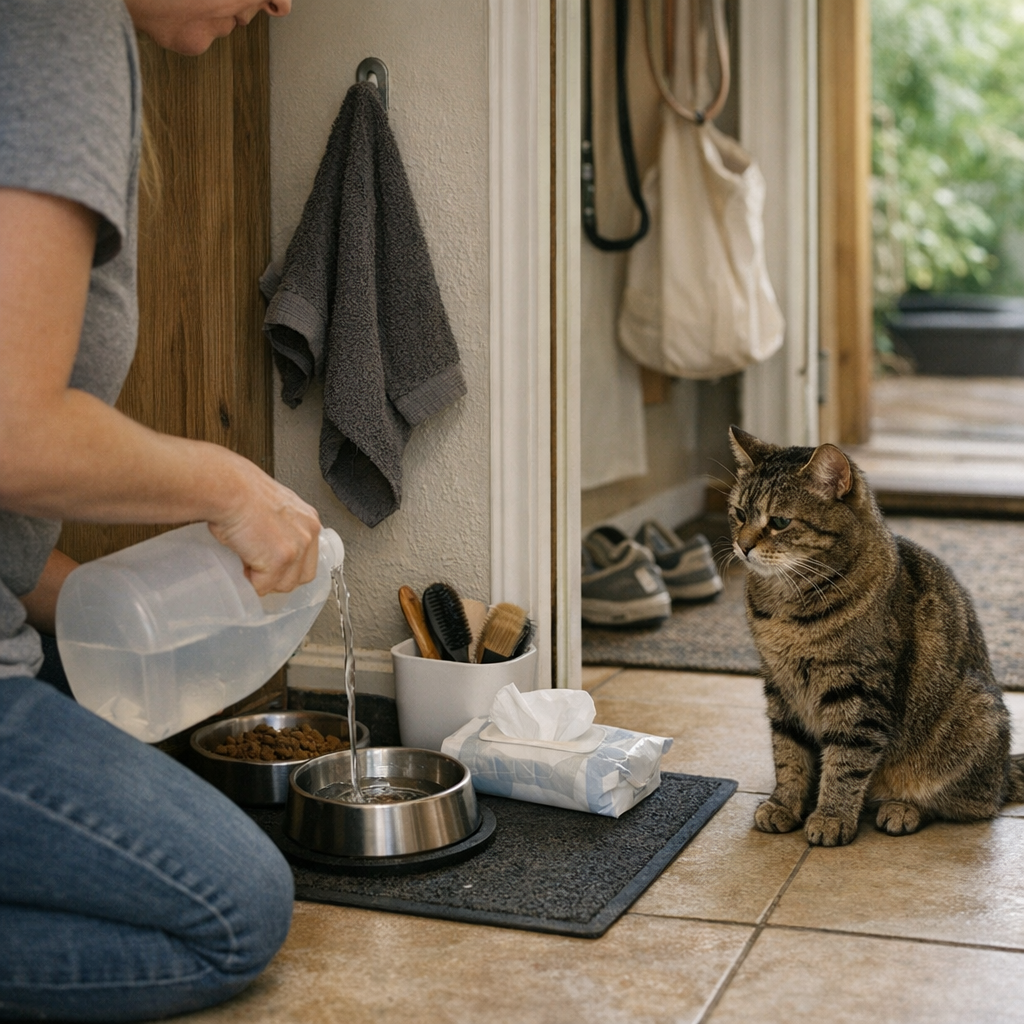
    The fix isn’t more storage—it’s smarter, closer placement. Move a pack of wipes to the feeding area instead of the cleaning shelf. Put the grooming brush on a dedicated hook instead of wherever’s open. Hang towels within arm’s reach, so wipe-downs aren’t delayed. Instead of extra organization projects, shift your basics physically close to the action. Messes get handled immediately, brushes come back to the right place the moment you’re done, and the routine runs smoother—not because you worked harder, but because you didn’t need to pause and reset.

    With daily-use tools anchored nearby, you spend less energy fetching, shuffling, or playing catch-up. Every feeding or grooming round flows faster. Instead of friction compounding over days, the simple act of having wipes or towels ready breaks the reset loop and reclaims time for actual pet care, not for cleanup and recovery.

    Routine Maintenance, Not Reactive Cleanups

    The real difference: proactive handling beats reactive scrubbing. Quick checks and wipe-downs—right after feeding, not after stains set in—keep the pet care zone manageable without sudden deep cleans. Even calm pets don’t signal hidden drips or crumbs; you have to spot and reset, every round.

    Use open baskets, wall hooks, and bins at pet height, so return and grab are automatic—never several steps away. That means the brush always lands beside the food zone, wipes don’t travel rooms, and towels are there the moment a splash appears. With less friction, routines feel less like work and more like daily maintenance.

    Daily Calm That Lasts Beyond the Surface

    A genuinely calm pet care routine isn’t about one reset—it’s how well it holds up by the tenth or fiftieth round. If reset pressure always returns, appearances don’t matter; what counts is whether the daily flow actually gets easier. Anchor your basics near the action and keep cleanup friction down. The result: calm that lasts, routines that stay manageable, and more time with your pets, not spent circling the same old clutter.

    See how a small shift in setup can keep daily routines running smoother at CalmPetSupply.

  • Maintaining Carry-On Organization Through Small Daily Adjustments

    Your carry-on might look perfectly packed on your bed. Walk it through one airport, and the cracks start to show. Zippers catch on pouches that barely fit. Outer pockets bulge with snacks, a power bank, and the “quickly accessible” passport now trapped beneath loose receipts. By the time you reach security, the setup that seemed precise at home demands awkward digging and repacking—right when you need to move fast. Each boarding line, tray scan, and seat entry adds another layer of interruption, so what felt organized turns into a series of repeated slowdowns. If you’ve ever fumbled for a charger at the gate while boarding groups close in, you know: organization on paper often fails in motion.

    How Order Breaks Down When Your Bag Starts Moving

    No one rehearses airport routines in their living room. At home, every pouch has its place. But the first real test comes at security: is your tech organizer easy to repeatedly open? Does your outer sleeve become a black hole by the second document check, forcing you to sift through things you swore you’d sorted? The calm of home doesn’t survive contact with conveyor belts, moving lines, and unexpected document demands. Each pass exposes flaws your trial packing never caught. Neat doesn’t mean ready.

    Worse, these aren’t rare moments. Each stop—security trays, boarding lines, tight seats—reshuffles your setup. Main zippers start to resist. Pouches intended for “just cables” pick up gum wrappers and pens. Five minutes after your first checkpoint, the clean geometry you trusted seems to have doubled its chaos with every quick grab and slow return.

    Tiny Friction that Multiplies

    You may think: just one overstuffed pocket, just one receipt left loose. But the next time you reach for your boarding pass, a tangle of odds and ends forces a mini repack with impatient travelers behind you. A gateway jam with charger cords isn’t a one-off—it’s the first round of a repeated hassle that eats up every unplanned second.

    Why Most Carry-On Setups Don’t Survive Real Airport Life

    Checkpoints are brutal truth-tellers.

    • The outer pocket spill: You grab for your passport, but chargers, tissues, and pens pour out first. Pressure builds as the line keeps moving. Now you’re hurrying to re-stuff everything, knowing you’ll need that passport again just past the next rope barrier.
    • Pouch pile-up: Initial neat stacks slide during the walk to your gate. Suddenly, the zipper path is blocked; you’re forced to dig out a toiletries pouch that wedged itself sideways right as you need to slide a laptop for the tray. Every extra second drags under fluorescent lights.
    • Essentials swallowed whole: A compact setup hides a critical item—your headphones, a travel pen, the one cord you need. You’re stuck, hunched over, elbow-to-elbow with strangers, digging into a pouch that seemed organized—until now.

    Individually, these look minor. In real use, friction stacks up. After a few cycles, your “smart” packing method starts to block the same essentials you designed it to deliver. Each carry-on shuffle leaves you one step behind the flow of airport life.

    Repeat Adjustments—the Real Difference Between Packing and Traveling

    The promise that a tidy setup at home will stay efficient is the most expensive illusion in travel. It’s not the initial arrangement that counts; it’s whether your layout supports rapid, one-handed grabs and quick returns, over and over. Travel exposes shortcuts: pouches that make sense on your kitchen table create hidden delays in overhead bins, in-seat cubbies, and at every checkpoint. When you catch yourself hesitating before unzipping for the fourth time, you see the difference between a bag that’s packed neatly and one that’s actually built to be used under pressure.

    Small Realignments Prevent Messes from Spreading

    The only setups that keep working are the ones you repeatedly reset. Slip the passport straight back after every check. Keep a single cord in a marked pouch, not wherever it fits in the moment. Take thirty seconds before boarding to clear out used tissues or slipped receipts. Otherwise, the first moment you rush, your “system” becomes another catch-all—and your search times double when you least have time.

    The Breaking Point Always Comes Mid-Trip

    Problems aren’t obvious until something finally snags. Maybe you watch another traveler breeze through security while you’re stuck wrangling a tangled badge or blocked zipper. Maybe you already lost a minute on each return to your seat. By the halfway mark, what “looked” organized at first now interrupts you at every access point, showing the difference between real structure and home trial.

    Proving Out What Keeps a Carry-On Useful—Scene by Scene

    Switching from a loose pouch system to a segmented, enforced-structure organizer instantly shifted how airport movement felt. Security checks became faster: each item could be pulled in a single move, with nothing sliding or hiding underneath, and the outer pocket, finally able to keep essentials separate, avoided the bulging free-for-all of earlier trips. The most noticeable gain? The time from reclaiming items at the tray to zipping up and moving on dropped by half—not because of more gear, but because the packing setup forced routine, small resets instead of letting friction accumulate.

    Track the Signs—Your Setup Is Slipping If…

    When you feel your zipper path getting tougher, or document retrieval slows after just a few repeats, take note. The drag always starts with small lapses—items not returned to their spot, chargers mixing with random snacks, a boarding pass “just for a moment” shuffled deep. Quick intervention—putting things back, unmixing pouches—restores the order you relied on, and keeps the flow moving instead of inching along.

    The punchline: Real carry-on efficiency is alive to repeated use. Ignore creeping clutter and even the best setup collapses under minor but multiplying slowdowns. Notice the patterns—each new snag, each access point that stalls—and your bag becomes less drag, more built-for-motion. A carry-on that works doesn’t just survive the first checkpoint—it handles every repeated interruption the airport throws at it.

    Find carry-on travel structure that lasts at CarryOnSupply.

  • How Hiding Power Cords Under Your Desk Transforms Workspace Efficiency

    Every organized desk promises clarity: cables tracing the edge, nothing dangling, paper pile trimmed. But within the first hour—rushing to connect a charger, shifting your notebook, unplugging something for a call—it cracks. The neat cable path drags across your notes; a USB cord tugs the edge of your laptop; the “tidy” setup drops a plug just enough to tip a mug. If you work at the same spot all day, or switch devices more than once, these frictions become routine. The surface stays clean—sort of—but the workflow stutters. What looked organized from a distance is, up close, just another reason to untangle, nudge, reset, and lose focus. A desk that photographs well won’t stop a cable from slipping back over your reach path, or keep a charger from rearranging your papers every time you move.

    Why Visible Cable “Organization” Isn’t Enough

    Visible cable order is fragile if you actually use your desk. The line of clipped cords, the single sweep of “minimal” wires—they’re set for stillness, not for a session where you swap a keyboard for a tablet or slide your chair to jot notes. Real routines break the illusion. Every unplug means feeling blindly for a dropped end. Any device shuffle brings another obstacle: a phone cable trailing where your mouse should go, a sketchpad snagging on a power brick, a monitor riser crowded by looping USB lines. These aren’t messes—they’re micro-disruptions. Most users end up nudging a cable off the mouse pad half a dozen times a day, then moving the charger again to make room for a new device. Looking neat doesn’t keep the work pace smooth when your connections keep reverting to the same tangled annoyances.

    This is motion friction, not mess. Enough drag and delay, and the desk stops feeling like a tool—it starts feeling like a staging area you have to fix after every task. Even expensive cable clips aren’t enough; the daily tide of chargers and adapters turns the primary workspace into a rerouting zone. Clearing the surface just restarts the slow creep of usable space being taken back by cord spillover and plug pileup.

    How Hiding the Power Area Changes Actual Desk Use

    Moving cables beneath the desk eliminates routine interruptions you stop noticing—until they’re gone. Installing a cable tray or power box under the surface isn’t just about hiding clutter: it removes the hand-threading, the cable chase, the accidental coffee knocks, and gives you back actual surface to work on. This change is most dramatic on cramped desks, but even with plenty of room, separating cord traffic from active workspace divides friction from flow.

    Instead of always working around a cable looped near your notebook or dodging a laptop plug where your elbow should pass, you reach just under the desk edge: chargers and adapters are out of view and out of the way. Device swaps become a single down-and-up motion. Your desk—finally—stops blending task space and infrastructure. More notably, it disrupts the old clean-up-reset-fidget cycle that used to follow even short sessions.

    Frequent Charging Is No Longer a Disruption

    Multiple devices demand frequent connections—a laptop, a phone, hard drives, headphones, a lamp—but shuffling cords shouldn’t interrupt flow. With power routes tucked below, you stop re-routing cables over your keyboard or risking a cable heap falling into your lap. Outlet access is smoother (not buried), cable slack stays contained, and the small but constant friction from surface-routed chargers disappears. Momentum doesn’t reset every time you change a device or run out of power—the upgrade is visible in flow, not just appearance.

    Choosing the Right Under-Desk Setup—Details That Matter in Practice

    The key is concealment that remains tactile and reachable, not buried. Position the under-desk cable tray close enough to reach without awkward stretching, but not pushing into knee or leg movement. Mounting a tray about 8cm from the desk’s rear edge means you can touch and swap cables without crawling underneath or overstretching wires. This becomes the difference between “hidden and functional” and “hidden and forgotten.”

    At the end of the day, clearing cords stops being its own task. The main plugs you use stay put, isolated from paper shuffles or chair slides. The tray absorbs unwanted slack, so cords loop downward instead of snaking across the desk or straining device ports every time you shift your setup. The daily reset is shorter because most problems never surface in the first place.

    Desk Depth and Movement—What Changes

    Shallow desks amplify every spot lost. When you move chargers and strips below, all your depth is usable for work, not as a holding strip for adapters or tangled cables. Drawer pulls, monitor slides, and quick chair adjustments become easier—you aren’t snagging anything vital or pausing to wonder what might pop loose. There’s less “accidental unplug,” fewer times you hesitate before tugging on a cord, and far fewer micro-delays between tasks. Only after repeated use does the difference click—the surface stays prepared, and the reset routine nearly vanishes.

    Real-World Improvements: Not Just Cleaner, Actually Easier

    The real value shows up quietly: the morning where nothing falls across your notebook, the day you swap devices mid-meeting and don’t have a tangle to fix, or the end-of-shift “quick tidy” that’s truly quick for once. Cables out of sight—but never out of reach—mean your desk function is ready for shifting priorities. No more chasing a rogue cord off the edge or spotting a stray plug distracting in the corner of your eye. This isn’t cosmetic. It removes enough daily interruptions that work feels noticeably less fragmented.

    Working with Change—Is a Hidden Power Zone Always Practical?

    If you’re constantly changing hardware, sharing space, or shifting layouts, choose trays or boxes you can open quickly and that allow generous slack for transitions. Don’t force concealment so deep that you lose everyday access or make maintenance a chore. Swap and check connections with a quick glance to prevent cables from wearing, detaching, or silently overloading below the surface—concealed isn’t invincible, and periodic checks matter in setups with moving parts.

    Quick FAQ for Desk Clarity in Heavy Use

    How do I keep the desk clear without losing charging access?

    Mount key chargers and the main strip under the desk, within seated reach. This keeps the work surface completely clear but lets you plug or swap devices in seconds—no need to tighten or reroute cords in the middle of a task.

    Will hiding cables make it harder to move things around?

    Use flexible trays or cable boxes that allow enough slack and easy reach. The right tray lets cords move with you, minimizes crawling, and turns cable swap into a minor reach, not a chore. Don’t trade concealment for access.

    Is there a downside to keeping my power area hidden?

    The desk looks neater, but “out of sight” risks out of mind: chargers overheat, wear accumulates, or a crowded strip gets overlooked. A periodic under-desk check prevents the hidden zone from turning into a blind spot for problems.

    The Real Gap: From “Looking Tidy” to “Working Easily”

    Hiding cables below the desk does more than create a photo-ready backdrop: it shifts daily effort from constant re-adjustment into predictable, unbroken use. The key difference isn’t cosmetic, and it isn’t just for show. A well-separated power zone is what keeps session after session flowing—ready when demands shift, not just neat when you walk in the room.

    Explore the full WorkBasic collection

  • Managing Dog Walks When New Streets Disrupt Routine Flow

    Here’s where most dog walks get derailed: you reach for the leash, a pile of bags or yesterday’s jacket blocks your hand, and by the time you nudge everything aside, the rhythm’s off before you even open the door. Out on the block—especially if it’s one you rarely walk—routine dissolves fast. You expect a steady, ten-minute loop, but a new scent, stray mailbox, or untamed hedge turns the walk into a constant reset: a leash tightens, your dog plants their feet, and you’re stuck juggling keys, treats, and a dog suddenly bent on investigating every inch of the unfamiliar street. It’s not chaos, but the stop-and-go churn chips away at any routine you thought you had. And the more it happens, the less you trust your own setup.

    The Hidden Friction of Unfamiliar Streets

    Most owners blame chaos on flukes—a racing squirrel, a delivery truck roaring by. But the real drag comes from small, predictable snags that only show up under repeat pressure. A dog that breezes down your usual block turns into an amateur detective just one street over. You see it immediately: on an unfamiliar route, every new smell, fence, or curbside distraction spawns a sudden stop or unexpected sideways pull. These micro-interruptions eat away at the pace you rely on back home.

    Over a few days, the pattern locks in: the same weird corner triggers a nose dive, the same yard earns another delay. Your planned ten-minute walk now drags to fifteen. You feel this most in mornings—when time is tight—or evenings, when the next routine is waiting. Soon, you don’t just lose minutes; you start avoiding any route that’s not perfectly familiar, shrinking your dog’s world and your own patience.

    Where Daily Walk Structure Cracks

    No routine stays solid when small frictions pile up. You think you’re ready—leash in hand, bags tucked in a pocket. Yet a “quick” walk collapses into a mess of leash tangles, toy spillover blocking the entryway, or muddy paws tracked across the hall because the towel wasn’t where you needed it. Even when the gear is organized, the walk jams up on what’s missing: wipes just out of reach after a muddy patch, or a rest mat that blocks the crate right when you need to rush your dog back in from the rain.

    It’s not just about new territory or distraction. The basic truth is that no system—no matter how neatly arranged—stays smooth if the walking pattern itself is fragile. The more unfamiliar blocks you test, the clearer it gets: when your leash hangs behind a coat or wipes are buried under toys, you feel the cost with every delayed cleanup or misfired reset. No amount of visual order fixes the breakdown when an awkward reach or misplaced item stalls you at the exact wrong moment.

    Repeated Weak Points Surface

    Friction exposes itself through repetition, not drama. The leash is ready, but wipes aren’t nearby when paws need cleaning; toys clog the walkway right as you rush out, forcing a shuffle; towels hang on a doorknob you can’t reach with your hands full. Each minor slowdown builds until you start feeling the weight every single outing. A single missed setup—a bowl placed where you always kick it, a treat pouch that slides behind the coats—turns what should be routine into a stumbling block you face again and again.

    It’s not a mess problem—it’s a rhythm problem. The setup can look neat, but if the flow keeps breaking where you need it most, the routine never quite feels solid. Every pause at a new spot, every awkward grab for missing supplies, reminds you function outpaces form on real walk days.

    The Accumulation of Small Delays

    Count how many “quick” walks get bogged down by surprise: the dog halts at a mystery bush, a neighbor’s barking triggers a session of sniff-detective work, or a skipped wipe means muddy paws across your entryway. Each moment feels minor, but together, they erode your margin for keeping the rest of the day moving.

    Owner habits collide with dog instinct. Telling your dog to “move along” or yanking the leash rarely solves anything—instead, the tension just sticks around and leaks into the next outing. Shortcuts backfire: the more you rush, the more stubbornly your dog resists. One missed reset leads to another—soon, you’re locked into a fight with the routine instead of flowing through it cleanly.

    Busy Mornings, Thinner Margins

    Nowhere does this snap more than on busy mornings. The leash tugs, your arms already full—bags in one pocket, keys in another—just as your dog hunkers down to investigate a new gate or unearths something in the grass. Every lost second negotiating a distraction stacks up, making the post-walk dash to cleanup or the next task even choppier. Instead of a reliable reset, it’s another piece of your schedule that runs off course.

    Testing and Resetting Walk Structure

    If you want your walks back on track, quit aiming for zero pauses. Instead, structure when the first pause happens. Let a new block or unfamiliar intersection serve as the designated “check it out” zone.

    This isn’t just a theory—it changes how the routine feels. Enter the new stretch of street at the very start of the walk. Give your dog a single, focused minute to take in the scene. One planned investigation right away means less scattershot stopping later. Moving on after this first window (firm but fair) signals that curiosity is allowed—but only right here and now. Every block along the way isn’t another opportunity to restart the sniff cycle.

    From Scatter to Predictable Flow

    A seeded pause transforms the walk. Instead of random slowdowns tripping both of you up, there’s a clear pattern: “We pause here. Then we walk.” Fewer drawn-out tugs. More fluid progress. The push-pull tension between dog curiosity and owner schedule thins out. Within a few days, you get back a routine that feels smooth under repeat pressure—not flawless, but reliable enough to hold up even on offbeat routes or in rushed moments.

    Adapting to New Routes Without Losing Rhythm

    Sticking to the same loop solves nothing long-term—dogs need occasional novelty to stay engaged and flexible. But the real trick is not letting fresh ground wreck the rest of your routine. Letting one new stretch kick things off, setting a specific discovery slot, then snapping back to business removes the uncontrolled slowdowns that otherwise ripple through every “special” walk.

    Planned structure protects both sides: your schedule gets a reset that doesn’t drag, and your dog’s curiosity stays satisfied without hijacking the whole outing. It helps your dog handle changes. It keeps you from dreading new blocks or post-walk cleanup. Once the pattern sticks, you stop shrinking your routes and start regaining control—even amid unpredictability.

    Actual Routine Shifts, Not Perfection

    Stick with the new front-loaded pause for a week—same total walk time, less scattered delay—and the improvement is obvious. Where a winding, unfamiliar block once spelled chaos, now it fits into the rhythm without swallowing the rest of the day. The flow won’t always be perfect: surprising distractions still pop up. But you gain a setup that bounces back instead of breaking down, and a walk that supports, rather than controls, the pace of daily life.

    Why Flow Matters More Than Appearance

    Neat rows of leashes, bags, and towels look good in photos. But routine tests don’t happen on camera. The difference shows after a storm: can you grab a towel one-handed to wipe muddy paws before your dog leaps into the hall? Do your bags run out without warning, forcing a scavenger hunt mid-walk? Has that entryway rest mat shifted so it’s now in the way instead of a help? In the real world, it’s not about looking organized—it’s about eliminating what keeps slowing you down, wherever it happens to pop up next week.

    A walk that looks smooth means nothing if it keeps failing under new conditions. Functional setups let you handle the unknown—leash fast off the hook, wipes always visible at the door, bowls that never block your exit path. Every item’s placement, every habit’s structure, counts twice as much on repeat. If something seems just “okay” at first and then wears thin, that’s the spot to watch. The test is not if the entry looks clear but if your setup keeps friction out of your routine when the environment throws you a curve.

    Resetting the Repeated Weak Points

    Fixing the walk’s flow is only half the battle. As soon as you shore up one problem, another minor friction creeps into view—a treat pouch hiding underneath jackets, shoes blocking the entry, wipes migrated just out of reach. Every dog routine collects these traps: they’re not headline failures, just daily annoyances that add up. The real solution isn’t aiming for total perfection. It’s seeing the spot that keeps tripping you—and adjusting, again, before it becomes the norm.

    Some friction never disappears, but a structure that works under pressure keeps making your routine easier, not harder,

  • How Smart Pet Travel Setup Reduces Friction and Keeps Trips Smooth

    Most pet owners know the letdown of a “prepared” pet travel bag that lets them down within the first few stops. At home, every item seems perfectly packed—leash at the top, wipes zipped, snacks lined up—so you leave believing the setup will work. But as the trip unfolds, cracks show fast: wipes are stuck under a bowl just as your dog noses the window, the leash is tangled in a snack pouch, and what looked streamlined leaves you stalling at every minor interruption. Organization that photographs well on your kitchen counter folds under actual repeated use, especially when a real-life stop demands action in seconds, not minutes.

    Looks Ready, Acts Delayed: The Hidden Weakness of “Organized” Bags

    It’s easy to believe a carrier packed by category or a newly purchased organizer means the hard part’s over. At home, stacking bowls on bedding or tucking wipes “in their place” feels orderly. Then comes the road: you brake for a rest stop and instantly pay the price for buried essentials. To get wipes out, you dislodge the bowl, which blocks the leash, which sends your pet squirming and resets the order you just built. A setup that works in one moment falls apart when you need repeat, rapid access—exposing how the appearance of neatness hides its own traps.

    Every repeated slowdown stacks up. It’s not a missing item that ruins the flow, but the seconds lost clawing under layers or guessing which zip holds what. Your pet senses each pause—jumping, whining, twisting the leash—while you dig to find the one thing you actually need. Over even a short journey, these micro-delays pile up, leading to unsettled energy, interrupted routines, and a travel experience that gets rougher with every stop, not smoother. The bag isn’t broken, but the logic behind its setup is: what calms you at packing time becomes the very thing that slows you when you’re seat-side and rushed.

    Recognizing the Real Travel Scenario: What Actually Happens at Each Stop

    Visualize a typical break: your dog’s energy spikes as you reach your stop. In theory, wipes and leash should come first—spot-clean, then control. Instead, your hand lands on a half-zipped pocket, and the leash is threaded through a web of snacks and treats. The moment’s urgency turns a neat organizer into an obstacle course. Every second spent tugging on the wrong item is one more moment your pet is out of sync, tugging or circling as you fumble. Not a lack of preparation, but a setup that blocks you once real movement starts.

    Spills aren’t rare: water sloshes, a snack rips, or muddy paws land after a run. The wipes you know you packed are technically “there”—but just out of useful reach. Retrieving them dislodges bedding and toys, so a “quick reset” isn’t quick. Sometimes you even skip the cleanup step rather than pull the whole kit apart. The problem reveals itself not in missing supplies but in every slow, clumsy, one-handed rummage.

    Comfort in One Area, Slowdown in Another

    One classic pitfall: comfort items packed for calm end up orphaning speed. That favorite blanket? Perfect for car naps, but shove it over a treat pouch and now you’re folding, shifting, and nudging half the kit around every time you need a reward. Routine becomes a trade-off. That’s the backbone frustration for many: soothing your pet in one way off-balances the flow everywhere else—resetting the bag, stopping mid-motion, or handling agitation you weren’t planning for.

    Seat-side Access and the Real Difference Maker

    The practical fix isn’t just more pouches or tighter stacking. It’s moving the most-used items to where the action actually happens: at arm’s reach, right at the seat. Think exterior side pockets holding wipes and leashes, quick-release hooks, seat-side loops—designs that let you repeat any basic action without shuffling layers or unpacking half the bag.

    A setup that puts routine items in fixed exterior positions does more than save seconds—it resets the entire tempo of a trip. You’re able to wipe down paws or swap leashes with one reach. Cleanup after a park run takes half as long. You’re not fighting the bag, you’re simply moving: grab, use, return, move. The interior stays stable, your dog learns the rhythm, and you get to respond to movement, not keep troubleshooting the basics. That’s the actual difference between “packed well” and “handles well.”

    Signs Your Current Setup Is Adding Friction

    • You always need both hands for one basic task—one restraints the pet, one digs under bedding or snacks.
    • You routinely open the wrong pouch before landing on the right one, especially in a rush.
    • The wipes or leash are present, but consistently never at true quick-grab points.
    • Each restart is slow, turning a small pause into a tense standoff as your pet’s energy rises.
    • Comfort items block essentials, demanding a reshuffle every time you stop.
    • Owner and pet items mix just enough to cause repeat backtracking for keys, treats, or bags.

    These aren’t one-time annoyances. They’re repeated friction points that show up at every pit stop, adding up to a distracted, less enjoyable trip for both human and pet.

    How the Right Adjustment Removes the Lag

    The breakthrough isn’t about more gear, but smarter placement built around repeated actions. For instance: move wipes and a leash clip to an exterior, seat-side pocket. Now you no longer dig, dump, or break the packing logic just for one needed grab. Your pet waits less. Cleanup, leash swaps, snack delivery—each become their own immediate cycle, not a cascade of logistic work.

    What changes isn’t only speed, but the temperature of the whole trip: your stress levels drop, your dog doesn’t start circling from boredom or uncertainty, and your own flow—grab, act, move—remains intact. You’ll still deal with mess now and then, but the pattern shifts from chaotic interruption to repeatable, barely-noticed steps. The improvement isn’t flawless, but it’s the difference between bracing for every stop and letting the routine work for you.

    Making the Setup Work for You: Simple Checks and Tweaks

    Spot the friction first. On your next drive, notice which items generate the most repeat stops or force the most awkward reach. Is the leash over-buried? Are wipes always in the last place you’d check? Do you have to dump comfort gear just to get the treat pouch?

    The fix usually isn’t extra packing; it’s rearrangement for reality. Prioritize grabs that match your actual stop pattern: wipes in a true exterior pocket, leash clipped in direct seat-side reach, bowl hanging (not buried) for quick fill-ups. Small tweaks play out big over several stops, letting you keep focus on movement and interaction, not reorganizing at every turn.

    When Appearance Isn’t Enough

    The stress-test for pet travel setups isn’t the first photo or even the first ride—it’s whether your system still works once interruptions become the new normal. If your bag looks sharp but delivers slow, awkward pauses during real use, the structure—not the packing—needs the makeover. Setup decisions that guarantee quick, predictable access during repeated stops will peel away most of the silent friction that interrupts otherwise good trips.

    For practical organizers, pet travel bags, seat-side essentials, and repeat-use travel setups designed to actually make movement easier, check out PawGoTravel.

  • How Fixed Task Lighting Transforms Everyday Work Surfaces Without Extra Brightness

    Why does a room that shines at first glance fall apart in real use? You step into a kitchen or bathroom lit by fresh overhead fixtures—everything “looks” bright. But the moment you slice at the counter or check your face in the mirror, the catch becomes obvious: the lighting doesn’t land where you actually need it. A kitchen looks crisp until your hands disappear in your own shadow mid-chop. A bathroom mirror glows, but step in close and one side of your face blurs into darkness, the other caught in glare. General ceiling lights fill the volume but miss the working zone, forcing your routine to bend around the lighting instead of the other way around. These aren’t rare hiccups—they are everyday friction, making ordinary routines feel more annoying, uneven, or slow, no matter how “bright” the room appears.

    The Friction Behind “Well-Lit” but Poorly-Working Rooms

    Most lighting problems aren’t about wattage—they’re about direction, placement, and what happens after a week of real use. In kitchens, every time you lean over a prep surface, the line between overhead light and your reach creates a shifting shadow. You adjust your stance, tilt the board, or pause to check what’s been missed. In the bathroom, even an upgraded ceiling fixture still leaves one cheek in gloom once you step closer, making detailed routines—shaving, skin care, makeup—awkward and slow.

    The pattern repeats in laundry rooms and work corners. Spaces seem bright until you spot the patchy shadows creeping along the back wall or across the folding surface. Suddenly you’re squinting for stains or tracing a stubborn crease that only shows in the right angle. The consequence is always the same: extra moves, uncertain details, small moments lost to chasing clarity. It’s not just distraction; it’s time and effort eaten up by a setup that calls itself finished but keeps falling short where routines actually happen.

    How Fixed Task Lighting Delivers Real Clarity

    Task lighting changes the entire dynamic by putting light exactly where it counts. Under-cabinet strips, wall sconces, or vertical mirrors-side fixtures don’t just add brightness; they cure the shadow lines and glare points that slow you down. With focused task light aimed at the true work zone, you stop strategizing around the gloom and start using your space as intended.

    What Actually Shifts Day to Day?

    • Cooking and prepping: Every inch of your counter is evenly lit. No more awkward reach, no more food hiding in dim patches or hands swallowed by your own silhouette. Tasks move faster because visibility stops being a variable.
    • Mirror routines: Side or wraparound vanity lights balance your reflection, so every detail is there without squinting for contrast or fighting a line of glare. You lean in and see what’s actually there first try—no spins or double-checks required.
    • Laundry, workbenches, utility spaces: Directed lighting over folding, sorting, or cleaning spots eliminates the dull fade that slows you down. Stains and creases are visible the first pass, not only after a second hunt under a brighter bulb.

    When Overhead “Brightness” Backfires

    Too often, the instinct is to upgrade to “brighter” or larger ceiling fixtures, thinking the problem is total illumination. But high-wattage flush and semi-flush mounts flood the room while leaving the real work zones largely unchanged—or worse, produce more glare and sharper shadow boundaries. Mirrors stay uneven, corners remain dim, and work surfaces depend on your angle not to fall into a blind spot. The more you chase brightness from the ceiling alone, the more you notice yourself side-stepping, tilting, or hunting for the actionable patch of light every time you need to focus.

    Spotting the Red Flags

    • You habitually lean or twist to catch extra light at counters, sinks, or mirrors.
    • Shadows jump across your hands and tools with nearly every movement.
    • Cabinet edges, corners, or one side of a hallway never reach full clarity, even after swapping bulbs.
    • Half your face drops into murk at the mirror, despite the room looking “well-lit” overall.

    These patterns aren’t quirks—they’re direct signals your current setup is outmatched by your real routines.

    What Steady, Directed Task Lights Actually Change

    Replacing a single stretch of overhead lighting with a focused under-cabinet or vanity fixture can change daily workflow overnight. By sending clear, shadow-free coverage right onto the work surface or mirror edge, routines become faster and noticeably less strained. The task stops being dictated by glare, and the room finally works at your pace. Over sink or stair, a properly placed sconce or flush-mount keeps every step in sight, each fold and cut straightforward—no more pause, tilt, or squint required.

    Even hallway or stair turns change: well-placed ceiling or wall lights can eliminate the fading edge, preventing one side from falling away as you pass in low light. It’s not about visual drama or decorative appeal—it’s about the space actually holding up after dozens of real repetitions, not just the first impression.

    Pinpointing Friction: A Practical Test

    In any task zone, mark where the shadow or glare always breaks your flow—the line where overhead light consistently fails. That’s your target for fixed, directional lighting: an under-cabinet run, an angled wall sconce, or a vanity bar precisely placed to catch your reflection without diffusing into the ceiling. Skip the urge to blanket the whole room in overhead glow; solve for the spots where friction repeats. That’s where task lighting matters most and pays off every day.

    The Real Price of Shadow and Glare

    Every ignored patch of shadow or slice of glare quietly increases your daily load. The fight for visibility wears you down, even if you don’t notice at first—lost minutes adding up as you check for missed spots, redo tasks, or simply move slower to avoid mistakes. General ceiling light may flatter the room, but when the gear is wrong, routines stay clumsy and repetitive. Task lighting isn’t a luxury or a visual upgrade for showrooms—it’s the fix that recovers control, pace, and reliability after months of repeated use.

    Leaving a room “bright” but structurally mismatched means you trade the space’s full comfort for a string of minor slowdowns, double-work, and perpetual second-guessing. Get the layers and the direction right, and suddenly your routines don’t just run—they snap back into focus, again and again, without you even noticing.

    Explore practical indoor lighting solutions at LightHelper.

  • Why Open Car Organizers Beat Hidden Storage for Daily Convenience

    Organizing your car feels satisfying—right up until the first real drive exposes its weak spots. The setup looks perfect; then daily routines unravel it: a cable snakes off the seat and lands in the footwell, charging adapters drift just out of reach, a disinfecting wipe slides under the center console. Even before things look messy again, small friction points return: slow-downs, misplaced chargers, awkward stretches. Tidy at first, the car starts requiring “mini-resets”—until the very improvements you installed become new problems to fix.

    What Looks Organized Isn’t Always Ready for Daily Use

    An organized car is only as good as the way it holds up under actual driving routines. Most organizers and dividers are built for clean lines and hidden storage, but not for how people really move: you come back from an errand with arms full, phone already in hand, and suddenly you’re patting around for the charger that slipped under a folder, or you’re leaning over to fish a dropped cable from the passenger-side gap. What seems “clean” rarely survives two work commutes or weekend kid-drop-offs without something shifting out of range.

    Every one of these little pauses—each recovery gesture or search—creates invisible resistance. Instead of staying ahead, you end up restoring order after every use. Those seconds build up, making the very act of getting in, charging up, or grabbing a wipe feel like more effort than it should be.

    The Tidy-Car Trap: When Neatness Creates New Obstacles

    Any organizer that only works in showroom-perfect conditions will lose the fight with real-world habits fast. Covered cable tunnels, deep floor bins, or close-lidded pockets look polished, but in daily driving they create new layers of friction. Hurried re-entry, quick phone grabs at a light, cleanups on the fly—these are moments where clever storage stops helping and starts slowing you down. That deep pocket for wipes is a reach across the car every time you spill; that hidden cable wrap means a two-hand extraction when you only have one free.

    Bin-based cargo organizers control clutter, but if you have to stack bags precisely after shopping, you’re more likely to toss them in the wrong spot the moment you’re rushed—undoing all the supposed containment. The more “perfect” the system, the faster it’s broken by ordinary movement and real-life pressure.

    The Return-to-Car Test: Where Organization Gets Exposed

    The most telling signals show up when you climb back into the car post-errand. Try unlocking with bags, opening the door with your elbow, then hitting the seat: whatever interferes now is your weak link. Essentials sink to the bottom of bins, cables catch on groceries, phone mounts choke under receipts or reveal themselves slightly crooked—but the real cost is interruption. Instead of a fast reset, you’re forced to rearrange, fish out, or re-route just to get driving again.

    Each loss—ten seconds shuffling for a charger, a minute spent straightening after grocery unloading—is minor alone. Let it repeat and the setup starts feeling high-maintenance. The “organized” car slides toward feeling cluttered not because it’s visibly messy, but because its systems multiply the steps needed to actually use them.

    Trade-Offs: Perfection vs. Function Under Pressure

    Every system that prizes untouched neatness extracts a cost in ongoing effort. A cable organizer that keeps wires hidden might demand that you wind and tuck every single time—a demand that breaks down whenever you’re rushing between two stops. By week’s end, trays or simple holders that allow open access—leaving cables ready and essentials visible—are performing better, mess and all. You stop missing calls and stop hitting battery panic simply because everything is always right where your hands expect to find it. Any extra seconds you no longer spend correcting the setup add up fast.

    Frustration Patterns: How Setups Fail Once You Really Use Them

    Pattern recognition shows the gap: setups that look right in a magazine fall apart in motion. A slip-resistant mat bunches by the pedals after four exits; a “universal” phone mount drifts, forcing you to readjust one-handed at every stoplight. Loose items corralled in a bin turn into a treasure hunt as they shuffle with every drive. The car appears “in order” on a static inspection, but drive it for a day and the cycle starts: untangle, reposition, retrieve—and repeat, even before visible mess returns.

    This is when it clicks: a visually-organized interior isn’t necessarily a functional one. What starts out as the solution for clutter becomes, through ordinary use, an obstacle that forces more cleanup or reconfiguration than before.

    Spotting What Actually Works: The Feel of Real Organization

    Effortless setups don’t beg to be redone every time you start the car. The charger stays docked where you expect it, the cable lies within easy reach, the wipes aren’t buried, and nothing blocks your instinctive grab. Instead of hiding clutter, these arrangements keep your everyday anchors visible and accessible—minimizing slowdowns, sidestepping the reset chore, and protecting your interior from new mess. There’s nothing fussy to maintain. The organization adapts to living use, not the other way around.

    Shifting to What Actually Helps: Choose Usability Over Perfection

    The fix is rarely complicated. Swap a deep side pocket for a shallow tray beside the shifter—now your cable is ready every time. Ditch rigid cargo dividers in favor of a drop-and-go trunk bin that lets you pile groceries fast without a Tetris game. The point isn’t to erase every sign of life, but to design zones that don’t break down after three errands. A setup that endures mid-drive phone swaps, quick charger grabs, dropped snack wrappers, and casual tosses—without forcing you to restore showroom order—supports your driving, instead of policing it.

    It’s about getting back in, grabbing what matters, and heading out again—without the sinking feeling that you’ll spend yet another minute coaxing the car “back together” after each stop.

    The Bottom Line: Flow Outperforms Form

    The best car setups deliver smooth movement and access, not untouched perfection. Open layouts for daily-use items, cable runs that never hide what you reach for on every drive, and flexible compartments tuned to your actual loading rhythm are what keep the car usable. If your system erases micro-hassles and makes resetting trivial, you’ll stick with it. But if it demands vigilance to preserve its look, it’s more barrier than benefit.

    Routine car use exposes organization that doesn’t adapt—whether that’s in charging, loading, or cleaning. Spot the friction points, adjust for flow, and you’ll find setups that make driving easier without adding hidden costs. The difference isn’t just what stays tidy; it’s what stays useful after real-world pressure.

    DriveWellSupply