
Ceiling lights promise room-wide clarity but rarely deliver where it counts. Counters, desks, and shelves look finished under bright fixtures—until you reach for anything at the far edge and find your hand working in shadow. Glare flashes off steel, crumbs build in the dim back strip, and every day you adjust your routine or your body just to see what you’re doing. If you’re shifting cutting boards, dragging paperwork forward, or squinting to catch a lost USB cable behind a monitor, your lighting setup is probably more “finished” in appearance than in function.
When Bright Overhead Isn’t Enough
Step into any kitchen or shared workspace after dark. The overhead light softens the whole room on first glance—but when you move closer, the back of the counter or shelf fades out. Shoulders or a cabinet edge cast live shadows, swallowing whatever you try to clean, fix, or prep in that zone. Routine tasks—reading small print, spotting grit, untangling cables—turn into back-and-forth shuffling for every patch of working light, while the rear edge keeps refusing to cooperate.
This isn’t a style flaw; it’s a persistent setup drag. As days go by, shadowed zones quietly shape your habits: kitchen gear migrates to the front edge, sticky spots get missed, and you wind up working in awkward positions. The “clean” look of the main room contrasts with the frustration of missing details, unfinished cleanups, or blind grabs for the right tool.
The Repeated Friction of Dim or “Solved” Setups
Patterns repeat. A kitchen counter scrubbed spotless still collects debris along the dim rear. A workspace feels organized—yet as soon as you push bills or chargers toward the back, you lose sight of them. Decorative sconces glow after dusk, but a reading nook stays one lamp short unless you shift it for the fifth time. The friction isn’t about age, trend, or fixture cost; it’s about how light actually lands after months of use, not in catalog photos.
The problem isn’t how the fixture looks overhead, but whether every regular movement is met with clear, usable light—or with old workarounds and new annoyances.
Why Under-Cabinet and Shelf Lighting Changes the Daily Equation
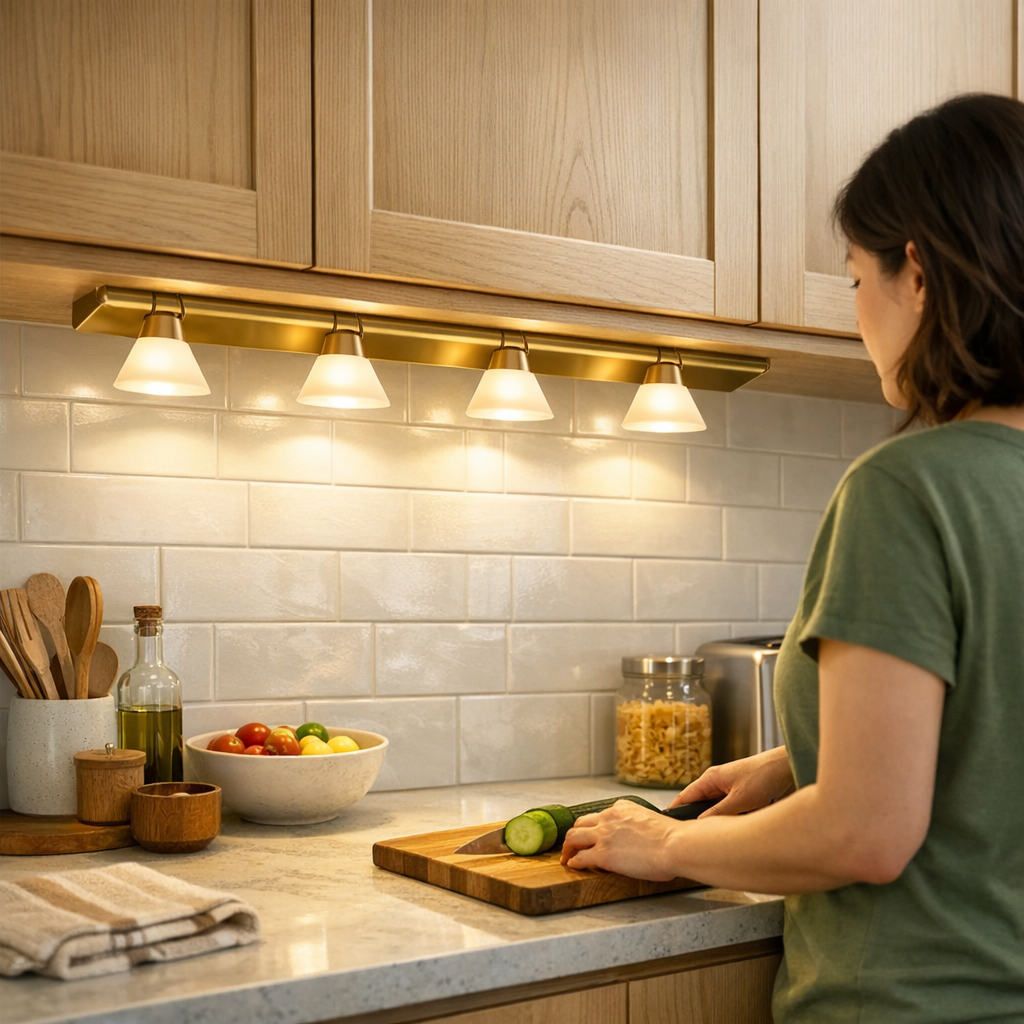
Filling the gap means putting light where the action is: under-shelf or under-cabinet strips and compact task fixtures that bathe the working edge directly. The difference is immediate. You stop skimming a cutting board forward just to stay out of shade. Slivers of clutter—coffee grinds, stray screws—actually stand out for quick cleaning. Pulling items from the back isn’t a test of memory or manual dexterity.
- No more shadow fights: the rear surface is just as visible as the front.
- Mess can’t hide, so less builds up behind toasters or beneath monitors.
- Routine tasks keep flowing, instead of stalling when light fails to keep up.
Installed right, even cleaning at midnight feels simple: every patch, from backsplash to appliance edge, finally stays in plain view instead of hiding mistakes until daylight.
Seeing the Flaws: Placement, Glare, and Cable Distraction
But pushing more light under shelves is only an upgrade when it fixes more than it complicates. Poor placement creates a new band of glare straight at your eyes, while exposed cables dangle into awareness every time you plug in or wipe down. Support hardware that seemed subtle easily transforms into an everyday nuisance: a bracket edge catches your sleeve, adhesive peels, or you’re forever rerouting a cord that breaks the clean line. A “solution” that draws your focus to its cables or blind spots is simply a new problem, not a hidden helper.
The real mark of good under-cabinet lighting is forgetting it exists—because every work surface, spill zone, and tool drop is already visible, with nothing pulling you out of the task at hand.
Real-World Setup: Day-to-Day Improvement (Without Extra Fuss)
Consider a straightforward switch: a slim LED strip, anchored just behind the midpoint beneath an upper shelf using discreet brackets. The cable routes cleanly along the cabinet’s run. The result? No cold spot along the backsplash, no dangling cord to brush, no glare lines to shift around. Every inch stays lit, and that final inch—where pots or chargers love to disappear—finally becomes part of the workspace instead of an awkward blind zone.
After a week, your routines shift quietly. You clean thoroughly the first time, stop repositioning lamps, and kitchen gear doesn’t migrate to the bright front edge out of habit. Even late-night cleanups find the last crumb, not just the easy ones. This kind of setup doesn’t just tidy the room visually—it removes the pause and fidget from familiar everyday motions.
Small structural calls—using diffusers for softer light, mounting with real brackets instead of adhesive, tucking cables behind existing lines—separate persistent clarity from setups you’re always tinkering with to fix yesterday’s shadow.
Common Under-Cabinet Lighting Questions Answered
How do I avoid glare with under-cabinet lighting?
Aim the strip or fixture at the backsplash, not out toward you. Use built-in diffusers to soften edges, especially where countertops are glossy or reflective. Before committing, stand at your usual work position and watch for harsh reflection—not just from the light, but off utensils, tiles, or your own wrist.
What’s the most common mistake with shelf or counter lighting?
Placing the fixture at the shelf’s front, which creates harsh highlights and persistent rear shadows. For even coverage, mount slightly behind the midpoint so both the work area and rear wall get clear, balanced light without glare bouncing back at you.
Can I install under-cabinet lighting without an electrician?
Most new plug-in LED strips attach with brackets or adhesive and don’t require hardwiring. But skipping proper cable management turns a crisp setup into something you notice for the wrong reasons—loose, snag-prone cords breaking up an otherwise clean line, or leaving small safety risks where bags, pans, or papers cross by.
Edge-to-Edge Visibility Trumps Looks-Only Solutions
Lighting the surface is not about dazzling the room—it’s about removing weak spots where routines stumble and clutter hides. The real payoff is cumulative: chores move faster, cleaning is complete on the first pass, and you stop working around the same dim zones day after day. The difference isn’t just visual; it appears in every task that finally runs smoothly instead of being interrupted by gaps, glare, or flickers of setup regret.
When you build lighting and support to fit your actual daily movements—countless routines at the edge of counters, the back of shared desks, the strip beneath shelves—you finally close the gap between how a space looks and how it truly works.
Find practical lighting and support options at LightSupport.