Blog

  • Balancing Desk Tidiness and Efficiency with Power Brick Placement

    The invisible power brick trap is easy to miss—until it turns your “organized” desk into an obstacle course. A perfectly clear desktop looks finished: power bricks gone, adapters hidden, stray cords finally out of sight. For a day or two, the order feels like progress. But as you cycle through a normal routine—charging a laptop between meetings, switching devices, resetting after a focus block—smoothness evaporates. Surface clarity exposes a different kind of friction: what used to be one quick plug now means shifting your chair, reaching past storage drawers, or feeling blindly behind the desk’s edge just to change a line. The mess is gone, but every reset costs you extra movement and micro-interruptions that add up. The clean look starts to feel like a slow trap rather than a true upgrade.

    When tidy setups cost you more movement than mess did

    Order is only effortless on paper. Picture two desks: both spotless up top, both with a monitor and keyboard in the same place. But on the first, the charging brick is pinned inside a cable box at floor level, zip-tied under drawers. On the second, it’s in a shallow tray just beneath the wrist rest. When your phone battery dips mid-notetaking, the difference sharpens: Do you squat and twist for the connection, or reach down without pausing your workflow? The more you change devices, the more each hidden brick shows up as an extra stretch—one quick bend multiplied by dozens of cycles per week.

    Every bonus movement adds up fast. On busy days, where devices rotate and breaks are rare, each crouch or reach drags on your pace. The illusion of order becomes a friction tax—paid in scrambled posture, broken focus, and lost momentum that never quite gets noticed until the next reset is already late.

    Desk clarity versus daily friction: Where misplaced neatness backfires

    The logic is simple: surface tidiness looks neat, but the space under and behind your desk drives your real workflow. Maybe you invested in a dual monitor arm to clear the desk, lifting the screens for extra room. Below, you go all-in with a deep cable box anchored to the floor, everything tucked away. But when it’s time to swap a laptop or plug in a power bank, you’re on one knee, moving a storage drawer, squeezing between cables you can’t quite reach. That “out of sight” feeling becomes real-world interruption—especially if you’re rotating devices repeatedly through the day.

    The silent penalty is momentum. Team desktops, shared benches, and hot-deskers feel it first. What starts as pride in a clean aesthetic quietly flips into annoyance when a cable swap means hunting under the desk, moving gear, or dodging tray corners. Too often, visual neatness gets prioritized over the far more important need for fast, consistent access.

    How small setup tweaks restore rhythm and reduce interruption

    The right fix rarely means adding more organizers—it means rethinking access. Shift power bricks from a hidden floor box to a slim under-desk tray, mounted just behind the main desk edge. Not visible from a seated position, never crowding knees, but always reachable in an arm’s normal range. Now every reset becomes a small, tidy reach instead of a body-shifting pause. No more crouching or chair scooting just to plug in a second device.

    The payoff is visible in repetition. After a few cycles, you notice the reset points fading. Hands flick cables without searching, device swaps don’t stall your next block of work, and the desktop still looks composed. The workspace doesn’t just look streamlined—it lets you move through tasks without the drag of hidden obstacles, keeping the rhythm of your day steady.

    Practical use scenes: Recognizing where desk setups help—or get in the way

    Cable management is about flow, not just appearance. On any normal workday—switching between a laptop, a tablet, backup earbuds—it’s never just the device you’re moving, but everything in the way: power cords, monitor arms, sometimes the storage drawer you bump every hour. If cable access is “out of sight,” it fast becomes “out of patience.” Repeat offenders show up in real use:

    • Pushing aside a notebook only to find the charging cord tangled between a riser and the monitor arm
    • Wanting to plug in a second device mid-call, but hesitating because the adapter is two trays away, blocked by under-desk clutter
    • Dislodging a cable from a brick while adjusting leg position, then hesitating to crawl under and re-connect until the next break
    • Losing the first moments of focus after a task switch, detangling or re-routing charging lines before the real work resumes

    The core friction: a setup that hides clutter but also blocks routine movements, making reliability and speed pay the price for surface order.

    Finding the balance: What “out of sight, but not out of reach” means in practice

    The strongest workstations don’t just hide mess—they keep your daily reset points open. Bricks and adapters should vanish from sightlines, but not drift beyond regular reach. Mount a shallow tray just under the front desk edge, let your most-used cables clip flush underneath, and routine swaps shrink to a single, repeatable motion. In setups where space matters—shared benches, narrow surfaces, under-desk storage—this balance saves more time in use than hours spent tidying ever will.

    There’s always a tradeoff: between clean looks, functional access, and what truly needs to be arm’s-length for your workflow. But the cost of friction is visible in how often you avoid plugging in, delay switching tools, or lose flow to tiny physical interruptions. The quickest-looking desk isn’t the one with nothing in view—it’s the one that lets you move, charge, and reset without breaking stride.

    Quick answers for power brick placement dilemmas

    How can I hide power bricks but still reach them easily?
    Install a slim under-desk tray or cable channel within easy arms-reach of your work position. Cables stay hidden, but a quick hand movement lets you swap, adjust, or unplug with no need to slide your chair or break posture every session.

    What’s better: floor cable box or under-desk tray?
    If you swap devices or work flexibly, under-desk trays almost always outperform floor cable boxes. They eliminate knee-bending and back-twisting, making every connection and swap faster. Floor boxes may look cleaner at a glance, but their price is constant interruptions every time you touch a cable.

    What’s the tradeoff with fully hidden power bricks?
    Total concealment usually means bigger workflow interruptions. You’ll break seating position, stretch awkwardly, or even kneel below the desk for routine swaps. Across a week, those tiny slowdowns build up, undermining even the cleanest setup.

    Making your desk setup easy to trust—shift after shift

    Many desks look organized. Only a few feel smooth in real use. The difference is access: having every tool and plug where the routine happens, not one step removed. In fast-paced or high-use setups, the desk that balances hidden clutter with visible, reachable connections always outlasts the “perfect” look. The best proof isn’t in appearance—it’s in noticing that your next reset, swap, or charge takes no thought at all. The power brick problem disappears the moment your setup stops slowing you down, and the work reclaims your full attention.

    Explore the full WorkBasic collection

  • How Consistent Bedtime Habits Transform Your Dog’s Daily Routine

    Every night, the signals start stacking up: Your dog circles, noses the bedding, shifts, waits—then tries another corner. One restless evening seems harmless, until you notice the fallout creeping into the next day. Suddenly, you’re reaching for the leash and bumping into the dog bed, tripping over a stray toy, or pausing mid-routine to scoop up towels that never seem close enough when paws are muddy. Routines drag, not from chaos but from the slow-tearing edges—feeding delayed by distraction, walks slowed by hesitation, and the reset that never fully resets. If your setup looks organized but still interrupts you at every turn, the real problem may not be your dog’s quirks—it’s the friction you haven’t spotted yet.

    How Evening Restlessness Becomes Tomorrow’s Sticking Point

    It’s tempting to dismiss the extra bed circling or hesitating as just another harmless quirk at bedtime. But bedtime friction rarely stays isolated. Restless settling always sends a ripple forward: the next morning, feeding takes twice as long, walks start with two reminders instead of one, and your dog shadows you, waiting for cues instead of moving with you. If you’re restaging the leash or nudging a bed out of the walking path in the rush to get out the door, last night’s setup is slowing everything down before the day even begins.

    Invisible Patterns, Visible Consequences

    The drag shows up everywhere—an extra step as you reach for the bowl blocked by scattered toys, a slow pause by the door as the bed partially blocks your exit, or a cleaning towel that’s never quite where you need it when you’re wiping muddy paws. What looks like “just a slow morning” often starts with missed bedtime cues and the wrong layout lingering into daylight. Routines are built (or broken) by these friction points that keep stacking up until the day starts late, runs slow, or feels out of sync from the very first step.

    What Repeated Bedtime Circling Is Really Telling You

    You see it: your dog circles the bed, noses an edge, then shifts to the hallway—over and over, night after night. Maybe you chalk it up to normal dog behavior, but repetition is a signal. The causes are rarely mysterious: a drafty door, a bed squeezed next to the food setup, a spot with too much movement during cleanup, or a spot in the walking path that keeps your dog on alert. A routine that works “on paper” often betrays itself in practice, especially when the dog refuses to settle until you intervene or shift the bed—again.

    Recognizing Reliable Signals of Setup Friction

    If you’re constantly moving around pet gear to clear a path, or if your own movement through the room gets blocked by a clumsy bed placement, the message is clear: something in the layout is off. Circled beds, repeated shifting, or a dog abandoning one rest spot for another isn’t random—it’s field data about where your setup keeps failing you both.

    Daytime Fallout: When the Night’s Friction Doesn’t Reset

    The worst part isn’t dramatic. Instead, small frictions add up: a feeding zone with cleanup wipes across the room instead of at hand, a walk delayed while you restage the leash caught on a poorly placed blanket, a slower reset after play because toy-stash “solutions” keep spilling into walking space. And your dog picks up on every shuffle. The slowdowns accumulate—focus wavers, transitions stutter, and you start the day already a step behind because you spent the night ignoring small but real setup mistakes.

    Some days, the effect is subtle: more correction, slower flow, a routine that technically “works” but demands constant interruption. This isn’t about lazy mornings—it’s about small, stubborn misalignments that drag at every transition.

    Real-Life Example: When Setup Works Against You

    You wedge a plush bed near the main door—out of traffic, you think. But every night, your dog circles three times, leaves the spot, and only settles after you rearrange the bedding again. Next morning, the leash snags on the corner of the bed as you try to exit; you remind your dog to wait, twice, as you squeeze past. Cleanup wipes are across the room, so muddy paws trail spots through the kitchen before you get there. The layout looked neat, but every repeated use exposes the slow drag: setup that blocks movement, resets that take too long, and a “clean” corner that still interrupts the flow of your day.

    Spot the Weak Points: Not All Calm Setups Are Created Equal

    A rest corner can appear perfect—until you realize you’re shifting beds for every evening, or stepping over dog gear that never quite stays out of the way. The difference isn’t polish, it’s function: a pretty setup that slows you down isn’t working. If you’re re-placing beds, nudging bowls, or dodging toy piles, these are hard signals that your home’s rhythm keeps hitting the same old snag.

    When Comfort and Convenience Collide

    The fluffiest bed doesn’t solve much if it blocks a walkway, sits underfoot, or creates a mess zone that demands extra cleaning after every walk or meal. You hesitate to cross one part of the room, avoid stepping near the rest spot, or waste time grabbing towels stashed across the apartment. Comfort in the wrong place feeds friction everywhere else. Each decision—bed placement, toy storage, bowl position—offers relief in one area but creates drag somewhere else. The real test is whether resetting the routine gets easier with use, not just neater in photos.

    What Actually Changes When You Get the Bed Placement Right

    The fixes aren’t dramatic and that’s the point. Find the right spot—a foot or two away from busy paths, clear of drafts, just outside the door’s main traffic—and the dog settles without making an event of it. You stop having to move the bed or restage the wipes in a hurry. Night settling happens in half the time. Post-walk cleanup is direct, not improvised. Routines begin to feel less like a negotiation and more like a flow. It’s not a perfect scene. It’s just less stuck, less slow—more movement, less friction, night after night.

    From Three Circles to One: Reliable Signs of Success

    The shift is visible: fewer restless circles, less hesitation at bedtime, setup that’s ready when you are—no scramble, no reshuffling. Within days, feeding prep shrinks; walks start on time; you spend less effort reaching for the right towel or leash. The routine stops fighting itself, and both you and your dog settle faster—often without even noticing why.

    Routines That Actually Hold Up—Even When Mornings Get Busy

    The best rest setups are the ones you barely notice. Not the tidiest, not the most visually “finished”—the ones that stay out of the way, even when you’re juggling breakfast, cleanup, or a dog who wants out now. Maybe it means swapping corners or sacrificing prime visual real estate for a spot that actually keeps you moving on the busiest mornings. Long-term, what holds up isn’t perfection but a quiet consistency: you’re not dragging beds, dodging clutter, or pausing routines to fix the same old pinch point.

    Every evening that your dog settles smoothly, you’re investing in the next day’s flow. Fewer abrupt corrections, less wasted motion, setups that support—not sabotage—your daily reset. Bedtime calm isn’t found in the perfect look, but in setups that erase the signals of friction you keep running into.

    Small Adjustments, Big Payoff: The Bedtime Setup Checklist

    If night routines still feel clunky, scan for these friction points:

    • Is your dog circling, shifting, or abandoning the bed before finally settling most nights?
    • Does bed or bowl placement keep your dog on alert—watching the door, sniffing the air, or tracking your movements down a hallway?
    • Are you stepping over, around, or past the same obstacle every morning?
    • Do you reach for cleanup supplies, towels, or the leash and find them blocked or too far when most needed?
    • Does morning require corrections that disappear when setup finally matches your real routine?

    Often, one adjustment—choosing a spot that actually avoids the pinch points—fixes several lingering issues at once.

    Noticeable Differences, One Night at a Time

    When placement snaps into place, you notice it in small ways: feeding flows without an extra nudge, the leash is in reach without dodging dog gear, muddy paws get wiped without trailing spots through the house, and the morning reset loses its friction. There’s less to fix, less to repeat—just a pattern that actually holds up when days get busy or stretched. The changes don’t feel showy, but the reduced interruption piles up, especially if your routines keep landing on the same snag week after week.

    This isn’t about asking your dog to adapt or training away daily slowdowns. It’s about setting

  • How Clear Separation Transforms Pet Travel Rest Stops Efficiently

    The moment of truth for any pet travel bag isn’t how organized it looks at home—it’s what happens after your third pit stop on the road. Early confidence—zipped pockets, tidy compartments—collides with reality the first time you need a wipe and find it wedged behind a water bowl, or realize a leash has managed to knot itself around your own snacks. What started out as prepared quickly slips into an untidy tangle, exposing every overlooked weakness in your setup. At that point, every rest stop isn’t just a pause, but a minor reset that keeps stealing attention and momentum.

    From Calm Organization to Chaotic Pause: The Real Travel Test

    Every pet owner recognizes the pattern: hour one, you reach for treats and they’re right where you expect. By hour three, seat-side space is cluttered, essentials compete for the same pocket, and cleanup supplies vanish behind collapsed bowls or your travel mug. Now, it takes both hands and three guesses—often while your dog tugs at the leash—to get to a basic item like wipes. Each break becomes slower, less restorative, and more like untangling a closet than a quick reset for you and your pet.

    Instead of refreshing the trip, these interruptions repeat. You squeeze a bowl past loose snacks. You chase a single wipe lost under your phone charger. You fumble for a leash clip with your pet nosing for treats. Suddenly, the bag’s so-called “organization” just means more moments lost and more seat-side clutter piling up after every stop.

    Why the Right Structure Matters—Especially After the First Few Stops

    Some travel bags look ready on day one but fall apart when the trip heats up. Every quick stop adds another layer of overlap: you dig for a waste bag, but it slides under a toy; grab a treat, only to push comfort items deeper inside. Repeated motion exposes what wasn’t separated. It’s not a minor annoyance—every small friction builds, until simple grabs require full-blown reshuffling, and cleanup becomes a one-handed scramble while containing both your pet and a mounting mess.

    These little delays bleed momentum from the drive. A bag promising all-in-one access often turns on you as repeated use piles on friction. Visual order at the start becomes functional chaos in practice, and you realize you’re re-solving problems you thought packing had already fixed.

    Separating Function: How to Build a Bag That Works Repeatedly

    Most pet travel setups fall short not from a lack of pouches, but from a lack of smart boundaries. It isn’t about the total pocket count or bag size—it’s about what’s sharing space. As soon as high-use items like wipes, bags, and sanitizer overlap with snacks, bowls, or personal items, every stop becomes slower. Even a slightly expanded pouch crowds out what you need, pushing must-grab items deeper each time you move.

    The effect is immediate: urgent items get buried; every extra second you dig, your pet gets more restless; your own routine loses pace. Interruptions compound—few of them major, all of them stealing attention and crowding your seat-side reset. The right structure replaces this friction with reliable muscle memory: high-frequency wipes and bags in one pocket, treats in another, no overlap. You know exactly where to reach, even mid-chaos.

    What Actually Happens in Real Use: Scenes from the Road

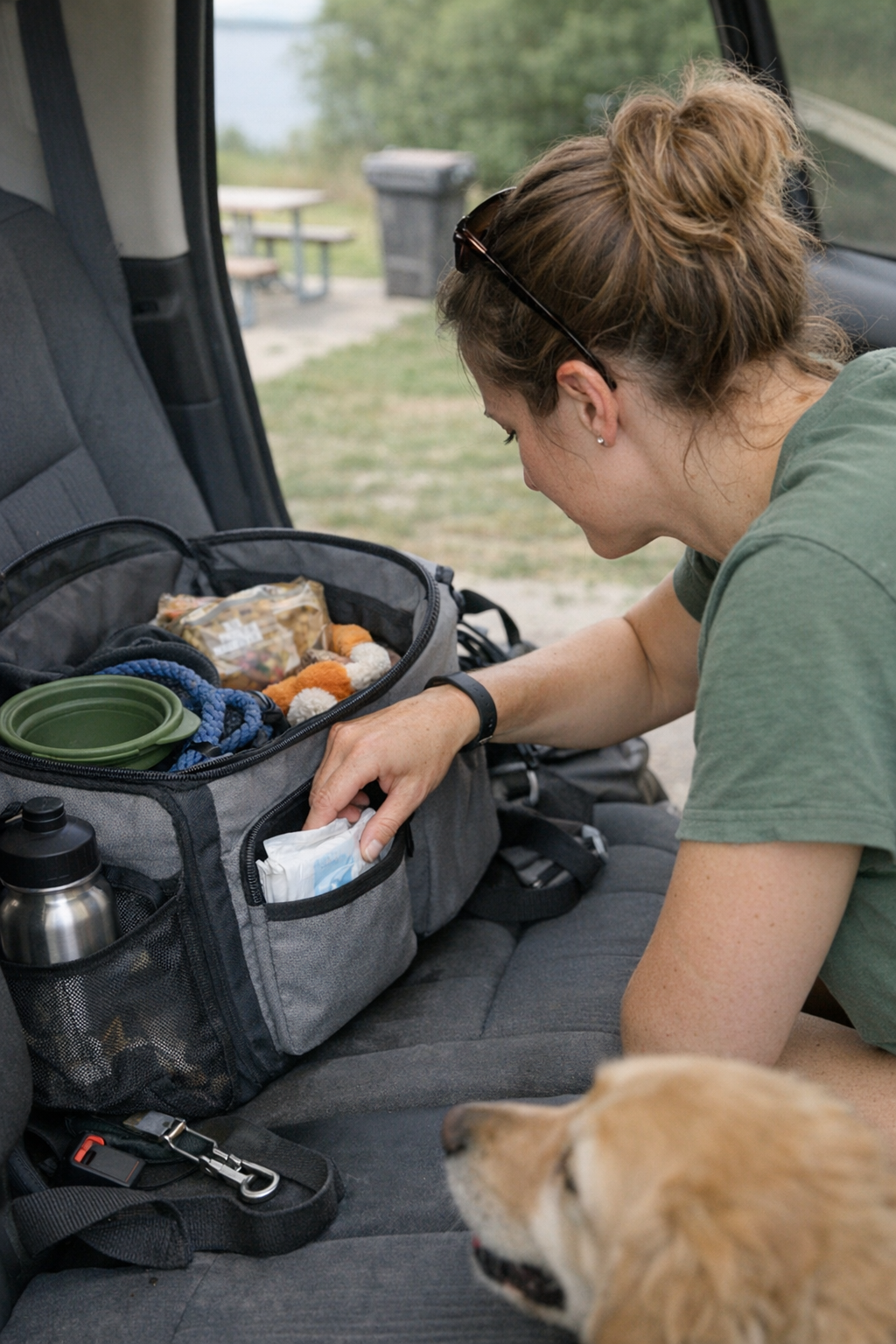
    Picture a typical highway pull-off. Your dog presses against the seat, you one-hand the leash out, and reach for a wipe—only to find it trapped under a folded bowl and yesterday’s treat bag. Cleanup turns into a shuffle-and-search operation. Every second, your pet gets jumpier. Your bag gets more disordered. Compare that with a separated setup: wipes in a stand-alone quick-grab pocket, one motion away. Clean up, leash reset, and back on the road—no buildup, no spillover, no wasted time or energy.

    Spotting Red Flags: When “Organized” Doesn’t Mean “Usable”

    Repeated use exposes patterns the pack-and-go test never reveals. Early warning signs are easy to miss—until you notice these in action:

    • Needing to move one item to reach another—bowls blocking wipes, or your phone buried under snack bags
    • Struggling to open zippers or fling open a pocket with one hand balancing both the leash and the bag
    • Comfort accessories, meant to smooth travel, actually wedging essentials away from fast access
    • Pet and owner items in the same section, so you hesitate or mentally track what’s mixed together every time you stop

    These friction points don’t go away—they multiply. At each stop, a tidy section at departure becomes an obstacle course, making every grab or reset a little slower. As the trip goes on, the cost isn’t just inconvenience, but routine interruptions that break up travel flow and increase cleanup after each pause.

    Practical Solutions: Structure That Actually Survives Travel

    What actually works for real-world, repeated stops? Not more space or flashy compartments, but single-function pockets for high-frequency items. When wipes, bags, and sanitizer never overlap with treats or comfort gear, each stop is faster, with less accidental spillover. The travel kit’s flow hinges on clear separation—not just for looks, but because it controls the chaos that repeats with every interruption. Less time spent untangling; more quick resets and easier seat-side movement—by the fourth stop, this difference is obvious every single time.

    Real-World Tweaks That Make a Difference

    • Test your setup at home: simulate a roadside pause. Can you reliably grab wipes or waste bags one-handed while holding the leash?
    • Spot pocket overlap before leaving: do urgent items sit with toys or comfort things that will get in the way as soon as you move repeatedly?
    • After each trip, notice which pocket or zone was always out of order—the spot you kept needing to fix is the first to streamline for next time.

    Travel Calm That Actually Endures

    Every pet travel setup looks put-together when zipped at home. Only repeated stops reveal what really works: the bag that gives you exactly what you need, every single time, without slowing down or dragging your attention away. Real calm is built in the friction—the spaces where a smartly structured carrier turns a messy pause into a true reset, and lets you get straight back to moving. That’s the split: an organized bag vs. one that reliably streamlines the scramble of seat-side travel again and again.

    Ready to build a setup that survives actual travel, not just the packing phase? Find practical travel-tested carriers and organizers at PawGoTravel.

  • How Magnetic Trays Improve Visibility and Efficiency in Work Zones

    Bright ceiling and wall lights rarely fix what actually goes wrong during real tasks. In laundry nooks, utility counters, or entry shelves, rooms can look fully lit but still sabotage small jobs: dropping a screw while changing hardware, then watching it vanish at the exact moment both hands are busy. The pressure isn’t just dimness—it’s that fasteners, washers, or fuses reach the edge of the counter, escape the strongest beam, and drop straight into shadow right when you need them most. It’s a problem that doesn’t show up in walkthroughs—it reveals itself every time you lose track of something crucial mid-routine, no matter how many fixtures you switch on.

    Day-to-Day Frustrations: When Light Isn’t Enough

    Picture a laundry area with a flush-mount ceiling light and under-cabinet LEDs flooding the surface—a textbook “well-lit” setup. But start a quick repair, and small parts tell the real story. A screw slips. In one blink, it leaves the central pool of light, picks up a dense shadow at the counter’s edge, and drops out of sight. Every routine brings this pattern: the room glows but safe, clear grabbing distance fizzles away the moment a piece bounces or slides. The illusion of plenty falls apart in seconds as you lean, search, or trace your hand around the border, interrupting flow and patience.

    Stair landings, mirrored vanities, even long hallway shelves repeat the same disguise. Floors and counters look bright yet leave edges unpredictable and awkward: screws hide along uneven light, batteries roll to corners, and you find yourself lunging or twisting, breaking rhythm for something that should have stayed easy. Most lighting solutions leave these blind spots untested—until the friction builds with every routine task.

    How Shadows and Glare Create “Lost Zones”

    No matter how well ceiling lights promise broad coverage, in real rooms, shadows cling to seams—under shelves, at wall junctions, behind faucet necks, along deep counter edges. Even flush and semi-flush mounts with impressive specs let light fade too soon at sidewalls or where the work surface meets a tall item. Small under-cabinet strips often streak glare into your eyes but leave a gap near the front lip where the action happens. The net effect: hardware drifts or bounces once, and vanishes out of the visible zone, while glare makes seeing detail harder, not easier.

    Every lost minute is a repeatable problem, not a fluke. You don’t notice it on a product label—but you feel it on your third tilt of a lamp, or fourth time sweeping a hand along the edge to recover something barely out of reach. These aren’t “bad” lighting plans; they’re setups that weren’t forced to answer to hands-on, edge-of-counter tasks or moments when storage and visibility need to work the same beat.

    The Role of Magnetic Trays: Anchoring Visibility and Flow

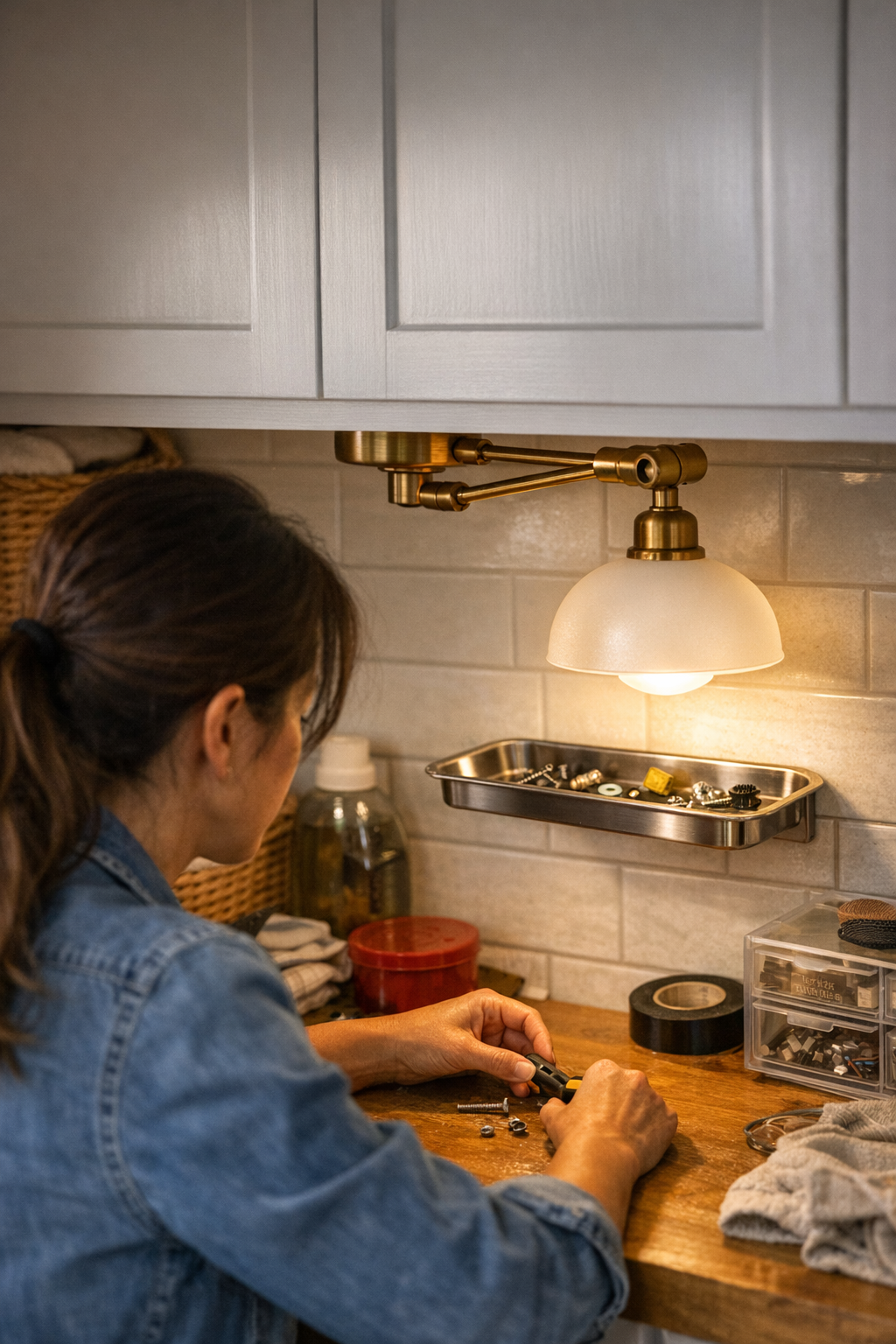
    Enter one stealthy fix—a slim magnetic tray snapped under the task beam or under-cabinet glow. It isn’t just storage. It is an anchor: fasteners and electrical bits stick where the real light falls, not wherever a shelf happens to be clear. The friction vanishes—no more fingers fumbling into shadow, no more routine broken by another round of hide-and-seek with rolling washers. Every retrieval is clean, not a rescue.

    Example: on a three-foot counter, a single tray placed dead center under ceiling task light stopped the worst pattern. Dropped hardware stayed inside view; no more switching on your phone’s flashlight to spot a missing nut, no more crawling to scan underneath detergent bottles. The upgrade is not about new brightness—it’s about ending constant detours from the usable zone.

    Where Placement Makes the Real Difference

    Most setups fail on this point: mounting the tray out of the main beam. Off to the side, and each part still disappears; the glare-free sweet spot is missed. Place it directly within the task light—under a wall sconce, centered beneath strips, or in the clear footprint of a flush mount—and you take away the edge zone where parts vanish.

    Real example: Setting the tray immediately to the right of the washer, directly inside the hardwired task light, kept screws visible during a shelf repair. Before: hardware rolled under containers, gone for days. After: everything locked in reach, no surprises even after a clumsy drop. Placement, not the tray itself, changed the routine.

    “Looks Good” vs. Actually Works: Lighting That Supports Repeated Use

    Upgrading to brighter flush mounts, semi-flushes, or contemporary linear panels promises relief, but for detailed tasks, the shadow trap lingers. Edges still go dark, especially at night or when the angle shifts. The room feels “done,” but you still break stride to hunt for lost bits. It’s the oldest trap in household lighting: the appearance of brightness replaces functional clarity at the margins. Until a tray or anchor gets placed under true working light, the surface stays unreliable.

    This is the real split: a space that looks completed versus one that quietly eliminates the old interruption. When the anchor supports your actual hands-on routine, you move without hesitating—no more squinting into corners or shaking containers hoping for the missing screw. The difference? No slow decline in mood, no break in pace, and nothing “just out of reach.”

    Quick, Concrete Tips for Better Setup

    • Test at night, not just midday: Drop a washer or screw during after-dinner chores. Notice where it lands; keep adjusting tray and light until nothing slips into the dark edge zone.
    • Go slim for tight counters: On shallow shelves and laundry surfaces, low-profile trays avoid blocking movement or crowding the beam—crucial for real working space.
    • Declutter before you trouble-shoot lighting: Even a perfectly-lit tray fails if surrounded by old batteries or tangled cords. Only clear edges turn brightness into true usability.

    From Repeated Frustration to Reliable Routine

    The difference between high-spec fixtures and truly usable rooms appears in the routine—not the catalog photo. Hallways, laundry corners, stair turns, and repair counters prove lighting setups by how well they handle constant, boring, invisible problems. One tray, anchored right in the task-zone lighting, quietly ends endless side-searching and momentum-killing interruptions. The “polished” look matters less than daily reliability where your hands move most.

    Forget glamorous pivots—dependable fixes come from matching the placement of every anchor to where task light and movement meet, not just where a fixture lands. That gap, overlooked by nearly every walkthrough, is what turns “well-lit” spaces into rooms you can actually use—no more fight with edges, shadows, or vanishing hardware.

    http://www.lighthelper.myshopify.com

  • How to Create a Car Setup That Handles Frequent Waiting Smoothly

    Even a car that looks organized can add minutes of small hassles to every errand. The surfaces are clear, the cables are coiled, and there’s not a stray wrapper in sight—but ten minutes later, you’re prying your phone from between the seat and console, or stretching for a charger that’s awkwardly out of reach. What slows you down isn’t dramatic: it’s that curbside pickup running late while your phone slides across a “tidy” tray, or the back-to-back stops where every re-entry means fishing out items that slipped out of sight. When all your car’s cleanup hides friction instead of fixing it, the gap between looking under control and actually working smoothly gets obvious—right at the exact moments you need fast access or a clean hand-off.

    When “Tidy Enough” Falls Short on Usability

    A spotless center console doesn’t help if your charger only reaches by leaning over the seat edge, or if one bump sends your phone onto the floor. Pre-coiled cords look good—until you need them mid-wait and end up untangling with one hand while holding coffee with the other. That snack you prepped? It’s just slipped out of reach, forced against the side cushion by a quick stop. The result is a pattern: organized in theory, clumsy in action. If every time you come back to the car you’re shifting, adjusting, or searching, then what seemed like good structure just adds new steps to every stop-and-go.

    The Real Cost of “Out of Sight, Out of Mind”

    Pushing mess out of view feels like a solution—until you need something fast. Loose phones wedge under seat rails, wrappers vanish into pockets, cords snake around the shifter. “Clean” by appearance doubles back as frustration when familiar rushes hit. After two errands, your cable’s knotted, and the sanitizer meant for easy grab is now buried. You lose time untangling and searching because the system only hides what you need, forcing fresher mess every week.

    This is where setups built for order start failing real routines. Your hand expects a charger but finds only empty space or a caught line. The area that looked clear after reorganizing quickly becomes a trap for clutter, rerouting your motion and focus—again and again, after every quick run or wait.

    Where Car Setups Crack Under Pressure

    Most driving issues aren’t dramatic—they’re the mounting, everyday interruptions that signal flawed structure:

    • The charger cable needs a full lean forward, or you jam your knee trying to get the phone to reach, turning every recharge into a posture tweak.
    • A phone mount blocks the cupholder, so coffee and device battle for the same space—and neither is anchored.
    • Trying to open a snack in the seat without a flat spot results in wrappers that drift just out of reach, napkins wedged deep in the door pocket.
    • Cables you “hid” reappear, snaking across your lap when you top off a device, or drooping onto pedals when you pull them loose too quickly.

    The first impression of order counts for almost nothing if every trip replays the same shuffle: grab, slide, tuck, and adjust before you even start moving. The wrong setup makes car organization a cycle of recovering from small failures instead of preventing them.

    Repeat Offenders: Predictable Sources of Friction

    With routine use, the same pain points reemerge in most setups:

    • Cable traps: Chargers that catch on seat seams or tangle under the shifter, impossible to free without a second hand.
    • Access blocks: Essentials like wallet or sanitizer migrate from quick-grab zones to “somewhere around here,” slowing every pause and exit.
    • Sliding clutter: Pens, receipts, and snacks that start secured end up pooled near floor mats, only visible when you finally clear out the car.

    Each minor breakdown builds up. Tidy surfaces can’t stop lost time, fumbled gear, or creeping mess. After a few full days of real use, “out of sight” turns into “out of control,” chipping away at the usefulness of supposed improvement.

    Redesigning for Flow, Not Just Looks

    It’s not about showroom shine. It’s about setups that stay friction-free after multiple errands, waits, and on-the-fly meal breaks—not just right after cleaning. Small, practical changes make a bigger difference than any superficial reorganizing:

    • Using a center tray with a fixed slot for your cable prevents mid-drive tangling, keeping the line usable without extra reach or re-coiling.
    • Choosing an organizer broad enough for both a phone and drink keeps everything anchored—no guessing where to set something when you park or grab-and-go.
    • Putting bins or pockets directly along your habitual routes—center zone, seat edge, or door reach—gives you one-motion access, not another shuffle or blind grab.

    In practice, replacing a generic catch-all tray with one that routed cables and created a real phone landing spot stopped cable drag and kept snacks off the floor. Over a week, I needed to re-pack less, my phone wasn’t trapped behind the seat, and there was no random cable crossing the shifter. It highlighted that a small, targeted tweak can dodge the endless pattern of reorganize-and-repeat.

    The Real Test: Lasting Through the Whole Week

    A fresh setup always feels satisfying at first. But what counts is how it holds up through the fourth or fifth stop in a row, a rainy pickup, or a week’s worth of errands. If wrappers and cables start slipping out of control after that, the setup never really worked. Durable structure means thinking in routines—about where hands reach, how cables get used, and what returns to the same spot, stop after stop.

    Bottom line: Car setup is about keeping dozens of tiny interruptions from building into a bigger drag. Even one sharper change—like a well-placed organizer or cable runner—turns the pattern of unblock-and-reblock into mostly forgettable steps. Not perfect, but noticeably less hassle every time you get behind the wheel.

    Find more practical gear and solutions for real-world car routines at DriveWellSupply.

  • Creating a Closet System That Stays Organized Through Daily Use

    Most closets start organized, but real routines put every setup to the test. After a week, “neat” turns into shuffling past overloaded stacks, digging through foggy bins, or watching piles slump and blend together until you’re right back in the muddle you tried to avoid. That quick morning grab for a favorite tee? Now it means disturbing three other items just to reach it. When the fix for one small frustration ripples through the rest of your space, the difference between a photo-ready closet and one that actually works becomes impossible to ignore.

    The Compound Effect of Everyday Storage Choices

    Choosing between a new bin or shelf divider seems trivial—until everyday use exposes the flaw. Three shirts neatly stacked on Monday quickly become a slouching, lopsided blend by Thursday. What started as clear rows slip sideways, merge, and force you to rebuild the whole stack just for one item. And once you add that fifth sweater or a new gym top, the boundaries vanish entirely.

    Each grab, each return, creates a ripple. The more you interact with your space, the faster weak systems reveal themselves: time spent straightening, guessing where something moved, or re-establishing “zones” that looked obvious before. Instead of a five-second pick-and-go, you’re mired in micro-adjustments that crawl into every morning routine.

    How Clutter Slowly Spreads—And Drags You Into It

    The small signs don’t take long to surface:

    • Shelves packed edge-to-edge by midweek, turning “visible storage” into a solid wall
    • Stacks drooping, folding over onto neighbors, or spilling just enough to erase any sense of order
    • Bins that started as category allies morph into black holes—socks vanishing under scarves, accessories slipping out of sight
    • Sliding one item out triggers a domino effect: three things shift, two items get buried, nothing feels easy anymore

    These aren’t just cosmetic annoyances. Each slip or merger adds friction, slows you down, and chips away at the idea that “organized” means effortless. Instead, every minor retrieval becomes a decision point—or a little sigh—about how much clutter you can ignore for another day.

    What Actually Keeps Your Closet Calm

    Closet systems that work in real life aren’t defined by how many racks or bins you squeeze in. They’re about stopping the spread, keeping lines visible, and ensuring every category has a fighting chance of staying put. Shallow, open bins prevent items from layering out of sight. Mid-shelf dividers nip pile drift before it starts. If categories start invading each other, your setup needs an edit.

    More hanging space isn’t always helpful if it forces tight reaches or stacks clothing too closely. The true upgrade is clarity—visible divisions, just enough structure—so each retrieval isn’t a balancing act or a hunt. Systems that are easy to reset in 30 seconds are the ones that actually survive a full week’s activity.

    Instagram Closets vs. Midweek Reality

    Perfectly staged closet photos look crisp only on day one. Tall bins and double-stacked rods might work until you actually need something from the bottom—or until stacks wobble and turn the “shirts” section into a crash site for mismatched gym gear. By Wednesday, carefully sorted areas blend together, and the act of keeping up starts to feel like another chore.

    The only test that matters: will you find things where you expect, without first rebuilding the shelf? If every row, bin, or section keeps its shape, your weekday rhythm flows. If not, even a small addition or quick grab leads to clutter that sticks around much longer.

    Real Mornings, Real Obstacles

    Imagine your normal routine:

    • Pulling out a shirt from the middle of a pile—then spending two minutes half-folding the rest just so the stack doesn’t topple
    • Hunting for a scarf that’s now MIA inside a bin mixed up with hats, gloves, and yesterday’s loose belt
    • Watching carefully sorted shirts start to tip, edge closer, and finally blend into a single, unruly heap by the end of the week
    • Each quick move leaves the shelf just a bit messier, until resets feel inevitable and exhausting

    When you need both hands for what should be a one-hand pull, or you hesitate to return something because it might set off a collapse, the system has become another small obstacle—one that builds stress with every round.

    The Power of Clear Visibility and Smooth Reach

    It wasn’t a major overhaul that fixed my own closet, just targeted changes that smoothed the pain points:

    • Shallow, open trays took the place of oversized, sagging bins. Now I see everything at a glance—nothing gets buried, nothing forgotten.
    • Eye-level dividers stopped rows from blending. A gentle boundary, easy to adjust, that keeps shirts from sliding into jeans or workout gear territory.
    • Lowering stack height added a feedback loop. When a pile started to grow, the visual cue was immediate—time for a quick reset before the chaos even started.

    With less stacking and more surface visibility, retrievals became frictionless. Returns stopped feeling like a gamble. Most telling: I didn’t have to “get organized” again a week later.

    Is It Time for a System Reset?

    If you’re sliding aside piles, untangling mixed categories, or regularly forgetting what’s at the back, your setup isn’t working with you. Long reset times, frequent straightening, and lost items are the system’s way of signaling it’s out of sync with real habits. Deep bins and broad, open shelves create hiding spots and encourage lazy piling—if you haven’t seen an item in weeks, it’s buried for a reason.

    The simplest correction is often the most powerful: insert shelf dividers or swap out deep bins for lower, shallower trays. The immediate visibility boost makes new messes—and missing items—impossible to ignore. Small, obvious cues let you act before clutter takes over.

    A Closet That Works for the Week—Not Just the Weekend

    The real value of organizing is measured in weekday flow, not the afterglow of a big cleanup. A good setup answers to the real demands: grab, go, replace, repeat—without slowdowns or silent sprawl.

    The right tweaks—bin height, divider spacing, and visibility—reduce the need for full resets. When you can see what’s there and put things back in a split second, order holds without effort. Instead of battling your closet, you use it—and move on, knowing it’ll hold steady until you’re ready for the next round.

    Shop storage solutions that are designed to handle real-life routines at ClosetWorks.

  • Why Mobile Tool Storage Transforms Workshop Efficiency and Flow

    Every garage or workshop looks organized—until you actually try to use it. The problem isn’t always clutter or neglect. It’s standing there, staring at a perfect grid of labeled drawers and wall racks, only to trip over the same blocked path, squeeze past a cabinet that always seems in the way, or shuffle tools in and out every time your project spills beyond that one perfect wall. What’s supposed to be an upgrade—the “everything in its place” system—becomes a stop-and-start obstacle. You find yourself dodging fixed shelves, retracing steps for forgotten tools, or improvising makeshift piles in open corners just to keep moving.

    Stationary Setups: Where Organization Stops and Frustration Starts

    Most setups start the same: fill the main wall with shelving, pegboards, or a bank of deep drawers. For a little while, everything looks under control. But start a real project—installing shelves outside, swapping tires in the driveway, just cleaning up yard tools—and the stationary system quickly betrays its limits:

    • Making three separate trips because the next socket or screwdriver is back on the wall, past the bikes, around the lawnmower.
    • Edging your way past a low bench only to find both sides blocked by deep cabinets—no good angle, nowhere for your knees.
    • Stacking the “overflow” tools into floor corners, because the wall rack is full but there’s never enough truly usable space.
    • Shoving open a cabinet door for the hundredth time, just to squeeze out the same wrench you always need, and fighting the door as you pivot through a narrow walkway.

    It’s not chaos, but it’s not flow, either. With every trip, work gets incrementally slower. Corners fill with odds and ends. You know where everything lives, but getting to it—actually putting it to work—becomes a tactical scramble more than a routine.

    Mobility Breaks the Pattern

    This is where mobile storage—rolling carts, compact chests, or modular cabinets—quietly shifts everything. The benefit isn’t just squeezing in “more storage.” It’s the ability to bring what you need to where the real work is happening, not the other way around.

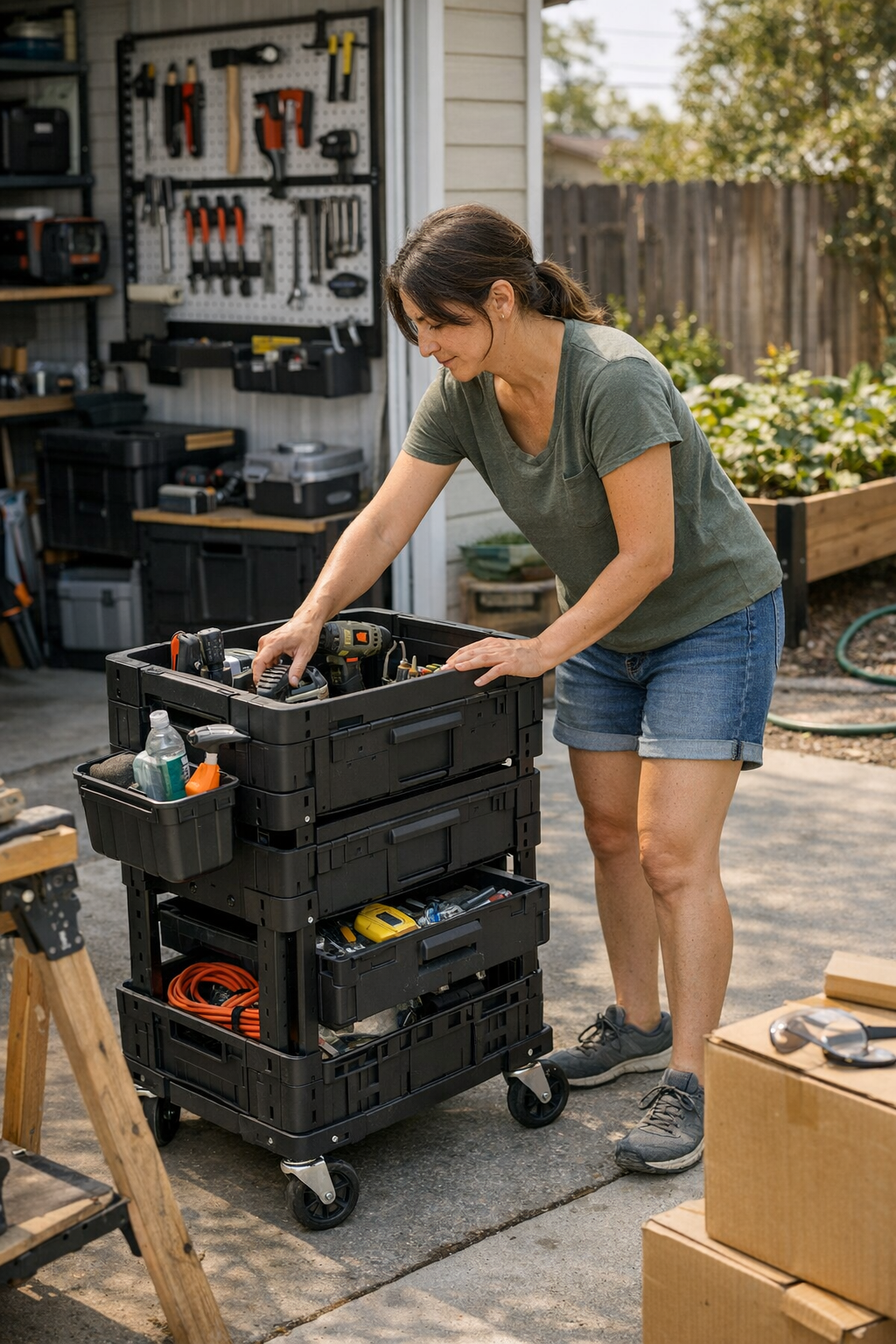
    On a Saturday tune-up, instead of filling your arms with everything you think you’ll need (and inevitably missing something), you load key tools into a cart and roll them to the driveway. The setup moves with you—against the workbench, outside near the project, or down the line as you shift between tools. Every transition that used to mean starting over or stepping awkwardly around barriers now becomes a single, consistent flow.

    Real World Scenarios: How Static Storage Trips You Up

    Think back to assembling outdoor furniture last summer. The storage cabinet looked tidy, but the moment you needed a clamp or swapped out a bit, your hands were already full and your path was blocked by the same old stack of bins. Every unplanned step back to the wall cost you time and broke your rhythm. The corners became holding zones for whatever didn’t fit. At the end, it felt like you spent as much time resetting your workspace as working.

    Now, picture a cart loaded with just your essentials parked beside the job. No more juggling bits and running laps; no more fishing behind storage that looked great but never actually cleared your path. The cart slides with you, pivots where you need it, and parks out of the way when you’re done. You see the change in the rhythm: less time resetting, more time actually building, repairing, doing.

    Daily Friction: Where Static Setups Cost Time

    The same story plays out in daily routines. It isn’t just big projects—small repairs or quick tune-ups stumble over the old traps. Running to the yard with a single tool, then doubling back because the rest are anchored inside. Piling gloves, fasteners, or cleaners on the nearest flat surface because the shelves are full but never quite flexible enough. Your attention fragments, and little jobs sprawl out longer than they have to.

    With a mobile cart, a third of your daily-use gear follows you. Suddenly:

    • The blocked passage clears as you spin the cart, not your entire body, around fixed shelves.
    • No more reaching blindly behind the same cabinet for a tape measure you use daily.
    • The overflow stops accumulating in the same corner, because your storage flexes with project demands.
    • End-of-day resets shrink to seconds; just wheel the cart aside, instead of sorting scattered piles by hand.
    • Lock the wheels once—your gear stays put even on uneven ground, and you stay focused.

    It’s not a showroom transformation, but it’s a real relief. The difference isn’t dramatic at a glance—but over a week or a month, the space actually fits your routine, not the other way around.

    More Than Looks: Spaces That Work, Not Just Impress

    You know the difference the first time you don’t hesitate before starting a new task. Static wall systems impress with perfect rows, but if every little change in your workflow means more reshuffling, their rigid “order” just slows you down. Mobile systems don’t always win beauty pageants, but they keep pace with the unpredictable mess of real projects:

    • You set up faster—and clean up with a single push, not a dozen little cleanups.
    • Blocked zones and dead corners stay empty, not filled with the same old cast-offs.
    • Walking space and work surfaces stay clear—ready, not cluttered with what you “might” need next.
    • Wall racks finally become supporting players, not dead weight; the cart does the heavy lifting where it counts.

    No setup is flawless, but the old grind—reshuffling, dodging, backtracking—fades. The place feels like it’s finally working for you, not the other way around.

    Small Changes, Noticeable Results

    You don’t need a full overhaul. Shifting even a handful of your top-used tools—pliers, driver, tape, gloves—onto a mobile cart can unstick your flow instantly. A cart with locking wheels, or one that tucks under the bench without blocking aisles, turns the space from “arranged” to genuinely usable. These aren’t prestige upgrades; they’re practical, lived-in changes that stop the little frictions from stacking up day after day.

    If dust keeps building on one wall rack or the path past a cabinet never feels clear, pay attention—that’s your setup speaking. When your routine moves, your storage should follow. Make your organization work the way you do, not just the way it looks in an empty room.

    http://stacknest.myshopify.com

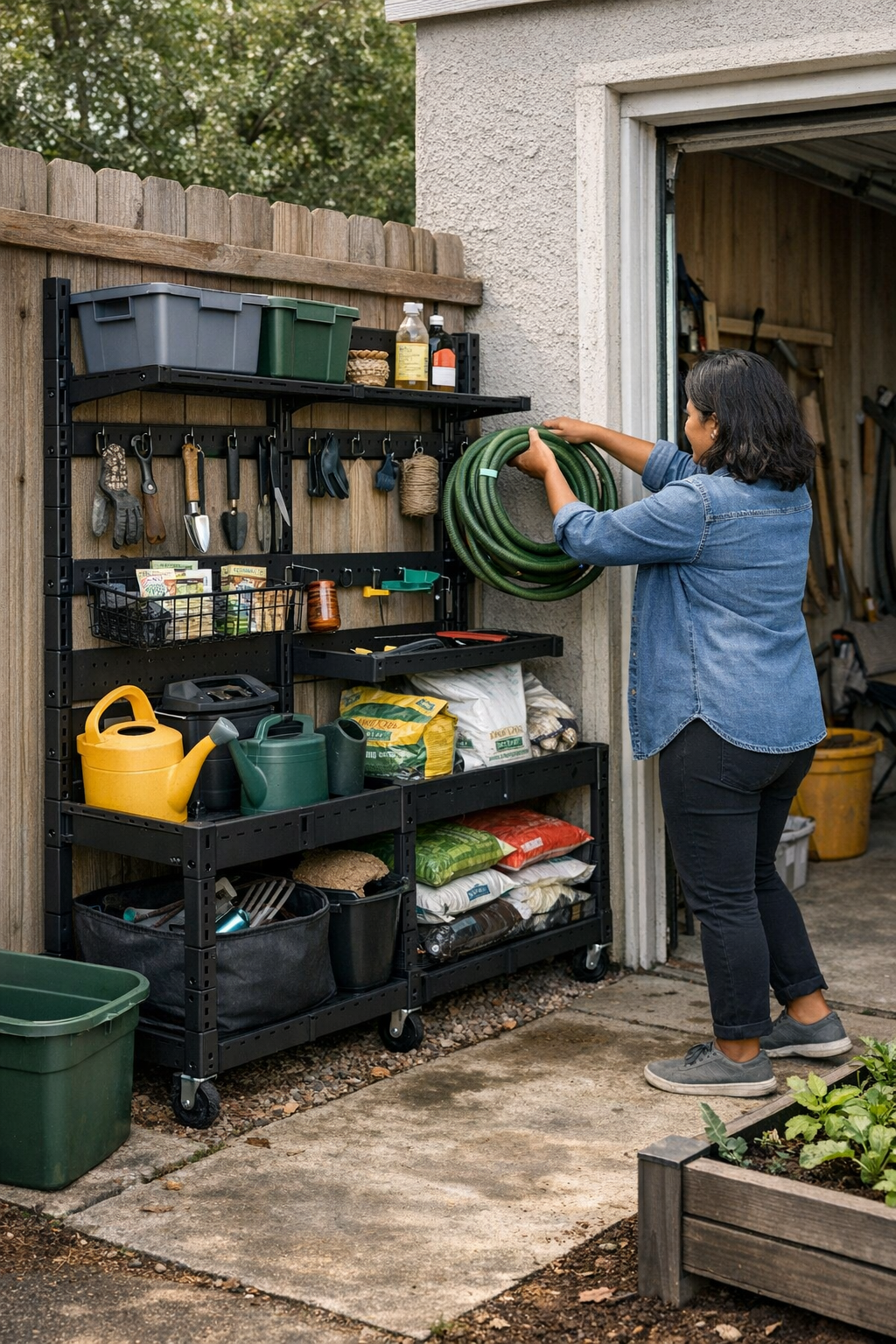
  • How Outdoor Storage That Matches Your Routine Keeps Clutter Away

    The frustration starts quietly— a tidy row of bins along the gate, a rack wedged next to the side-yard fence, or plastic containers stacked by the back door. The setup looks “done,” at least for a day or two. But by Sunday night, the path narrows as gear seeps back into walkways. A stray deflated ball takes up a gap “just for now.” That handy tote from the hardware store ends up blocking half the steps. Every quick outside trip turns into a shuffle—sidestepping bins, shifting lids, finding there’s always one thing in your way. What looked organized becomes a new kind of clutter, hiding beneath the surface of the routine and making every reset harder.

    Why Floor Storage Quietly Takes Over

    Most side-yard, patio edge, and backyard setups begin with floor-based storage—a big bin, a low container, a basket of tools. It seems efficient until you’re actually using the space day to day:

    • You toss in one extra toy for now; later, you’re digging through a pile just to find the garden shears buried at the bottom.
    • Overflow isn’t contained—shoes, hoses, and kicked-off gear land in the open zone beside the bin, slowly blocking the main walkway.
    • The “keep it handy” logic backfires as essentials collect at the edges, forcing you to move something nearly every time you pass.

    What started as a clear route devolves into a hopscotch of blockages and messy pause points. Every item you put back seems to push something else into the path. The reset after use—meant to be one quick sweep—turns into a series of small disruptions that add up.

    Wall Racks Fix More Than They Promise

    Mounting storage on the wall doesn’t look flashy in a cramped patio corner—but the daily difference is obvious. As soon as the gear is off the floor:

    • Walking lanes reappear, making even a skinny side passage or garage edge usable again.
    • Zones stay clear, separating sharp tools from chalk and balls, rain boots from rakes—a visual structure for what goes where.
    • The “drop it anywhere” habit breaks, replaced by a direct path back to the right hook or slot every time the gear returns.

    The early resets feel easier: instead of digging or rearranging, you return an item and move on. The rack’s slots cut down on double work—fewer “Who left this out?” moments, fewer things stranded in the wrong corner. Suddenly, even kids and guests know where things go. Overflow has fewer places to hide.

    Setup Reality: One Shared Yard, Two Kinds of Chaos

    Picture a yard split between kid chaos and garden chores. On Monday, a bulk floor bin means picking your way past loose tools, tangled hoses, or a soccer ball blocking the gate. The main storage doesn’t stop the mess—it just pushes the pile closer to the busiest route. That so-called “solution” creates a new reset tax after every use.

    Switch to a divided wall rack and the week feels different. Chalk and balls get hooked up and out of the trample zone. Gloves and spades aren’t stranded near the steps. Saturday’s clean-up takes ten calm minutes instead of a thirty-minute hunt. The equipment flows back where it belongs, not where it’s easiest to drop. The workload shifts from panic-clearing to minor upkeep. The point was never more storage. It’s less block-and-reshuffle, fewer sighs, and less wasted time staring down another reset spiral.

    Open Racks Won’t Save You Without Real Boundaries

    Open racks and stacking towers advertise easy access. In practice? They turn into a category-jumble. Pool noodles wedge into a pruning tools slot. The sports shelf gets taken over by last season’s garden stakes. Stack too high, and every time you grab something, gear slides off and the “organized” look collapses. The wall fills up, but so does the floor beneath. One shelf is always overflowing, and the “convenient” rack becomes just another landing pad for new overflow cycles.

    The Difference Is Zoning, Not Just Storage

    Clear zones stop the spread. Without real separation, mixed-use corners devolve into everything-piles—no matter the bin, shelf, or rack. When each group (kids, tools, seasonal items) has its own slot or section, things actually get returned, and scatter drops off. Mobile bins are only an upgrade if the inside’s divided. If not, you’re just pushing yesterday’s clutter around on wheels.

    How Every Reset Reveals the Setup’s Weakest Link

    A setup’s real value appears three weeks in, not day one. Look for:

    • A walkway shrinking as the weeks pass, squeezed by gear that never quite makes it back.
    • “Rest stops” like the fence corner or the patch behind the recycling bin, where things pause because returning them is too much work.
    • A reset that still drains you—or just gets postponed until guests visit.

    No amount of clever design matters if the system doesn’t keep up with actual routines. Lasting setups cut out the need to constantly reshuffle and let you keep moving, not sidestepping every loose bin or rogue “temporary” pile.

    Outdoor Storage Questions That Don’t Go Away

    Does wall-mounted storage really help in shared spaces?

    Yes—especially where toys and tools cross paths. Wall slots keep floor lanes open and signal where gear should go. The only catch is keeping an eye on the zone below for those classic “out of sight, out of mind” piles that try to return.

    How do I avoid constant spillover with kids in the mix?

    Give every user group a defined, visible spot. Forget catch-all bins; the key is no fuzzy borders. If it’s obvious where every item goes, you spend less time tracking down lost gear and more time just walking through clean, clear space.

    Will moving bins around really help with changing setups?

    Mobile or rolling storage only works if what’s inside stays sorted. Otherwise, bins-on-wheels just roll the mess from path to path. Choose models with clear dividers, or plan to chase migrating piles until you finally replace the whole setup.

    One Small Change That Actually Unlocks the Space

    Take out a big floor bin, add a segmented wall rack, and something practical shifts: Reset time drops. The entry path stays open. Instead of tossing sports gear “for now,” you put it away in seconds. The new routine is lighter: fewer blockers, no buried tools, and a space that actually feels ready the next time you want to use it. None of this feels impressive until you realize you’re no longer treating every weekend tidy as a rescue mission.

    • No clearing a path just to start a project.
    • No rediscovering last week’s pile buried under unrelated gear.
    • No settling for a layout that only looks neat when unused.

    The floor under the rack is finally just… floor again, not overflow storage in disguise.

    Keep Your Outdoor Setup Working, Not Just Looking Organized

    • Audit every “drop zone” after a busy week: If one area keeps collecting random gear, the current system is inviting clutter—not preventing it.
    • Divide the space by real use: Separate shelves or racks for garden tools, kids’ gear, and seasonal oddballs. Fewer mix-ups, fewer excuses to leave something out.
    • Get things off the ground—even partway: Lifting essentials at least a foot up clears the path and makes every return more likely to stick.

    The best outdoor setups aren’t the ones that impress for a day—they’re the ones that still work when a regular week leaves mud on the boots, chalk in the cracks, and three people running in and out. When your storage fits the way you really use the space, resets get easier, not longer—and the yard or patio finally works the way you wish it would.

    Visit TidyYard to explore practical setups for outdoor organization.

  • Creating a Calm Home with a Single Cat Corner Boundary

    What actually slows down indoor-cat living isn’t cat hair or obvious mess—it’s the small shifts that keep breaking your routine. Reaching for the coffee maker, you find a tipped bowl edging into the kitchen, forcing a detour. Crossing the hall, a rest mat bunches against your ankle for the third time this week. Toys scatter past their bin, bedding drifts into walkways, and water puddles linger where you least expect. It’s not one big disaster—it’s a string of tiny slowdowns that never fully reset. The surface is clean, but the setup keeps undermining your day.

    Where Cat Supplies Start—and How They End Up Everywhere

    Setting up for an indoor cat usually means careful placement: bowls hugged to a corner, a mat neat underfoot, toys binned by the wall, maybe the bed tucked for easy napping. But order dissolves under real use. Water bowls wander, nudged off mats by a paw that doesn’t care about your boundaries. Toys break free, rolling behind chair legs you’ll curse later. Even bedding slides along the floor, blocking your path just when you’re balancing a full laundry basket. What looks tidy one hour becomes a reminder: the arrangement isn’t holding if every reset turns into another round of reshuffling, sweeping, and correcting what’s just slipped out of place.

    This isn’t only about visible pet mess—it’s about how cat supplies creep into your everyday routine. Bowls, toys, and mats don’t respect the line between “cat zone” and “human walkway.” You find yourself nudging bowls aside to clean, stooping to fish toys from hard-to-reach corners, or detouring around bedding that’s encroached on your living space. Even effective-looking storage falls apart when items migrate across invisible borders, disrupting your day in dozens of micro-moments you rarely plan for, but always have to fix.

    A Surface Tidy Isn’t Enough

    Apparent order doesn’t last. By midday, the careful setup is visibly unraveling: food bowls inch off mats after each meal, water spills where a rug edge now curls, and toys form a widening arc between play space and walkway. “Cleanup” fixes the look, but not the flow. Even if you restack and reorganize, daily motion—yours and your cat’s—sends things adrift again, pushing you into an endless loop of minor resets that quietly add up to a bigger drain than the occasional deep clean.

    The Repeated Reset Loop

    The friction is everywhere. Grabbing the broom? There’s a toy jammed so deep in the bristles that you stop, dig it out, and lose your momentum. Refilling water? The bowl isn’t where you left it, and the mat has folded into the threshold, delaying a simple task. Night comes, and the bedding that started in the corner is now an obstacle between you and sleep. Even after weekend “overhauls,” these annoyances return—so the claimed tidy zone stays in constant flux, missing any sense of lasting fix.

    The Hidden Cost: Disrupted Living Flow

    Every overlap between cat setup and daily living costs something. Bowls edge into the food-prep zone, so you clear a path with one hand while managing ingredients with the other. Water dishes scoot ever closer to the fridge, leaving puddles exactly where you step out for coffee. Grooming supplies, optimistically stored beside bedding, inevitably wander, breaking up quick wipe-downs into a scavenger hunt. The result? Shared space boundaries fail, so routines jam up: reaching, readjusting, and negotiating with cat gear from breakfast rush to bedtime drag—all while never quite feeling at ease in your own space.

    The breakdown shows up by late morning: toys gathered like obstacles under the coffee table, kibble scattered far from its intended zone, a mat wedged open in high-traffic walkway. The place isn’t a disaster, but friction lingers—resetting, bending, and checking that repeat annoyances haven’t spread further. No single cleanup handles it for long. Space that was meant to be “calm and ready” is always halfway undone.

    The Core Fix: Establishing a Real Boundary

    A physical boundary isn’t a decorating tip—it’s a practical shield. Marking a clear edge for cat items—whether you use a sturdy mat, a tray with a low lip, or a furniture-aligned corner—gives both you and your cat a visible, repeatable rule. “This side is for cat gear; nothing drifts beyond this line, no matter how the day goes.” Now, when something crosses, you spot it at a glance—no more wondering what’s off. The standard is automatic and binary, so regretful negotiation (should I fix it now or later?) fades for both sides.

    Making Boundaries Work in Daily Use

    Effective boundaries stop the creep. A weighted tray ensures bowls can’t skate across the floor. Mounting toy bins tight against a corner makes their reset location obvious and stable. Rest mats anchored to a seam or baseboard highlight immediately if bedding gets out of place—it’s visible and easily corrected during routine passes, not left for a “big fix” much later. Instead of letting hidden mess build up, a physical edge curbs it before it spreads, cutting down the number of moves, detours, and second glances you have to invest all day long.

    Containment isn’t the full story—it’s about making the return loop frictionless. Visible boundaries mean you address out-of-bounds items now, not hours later. After meals, everything cycles back inside the edge, so spilled kibble doesn’t travel into walkways. Toy bins return to their anchored spot, so strays don’t linger out in open paths. Over time, this routine runs on autopilot: toys spotted instantly and returned, water bowls unshifted, bedding back in its zone before it interrupts a rush to the door.

    The Difference After a Week—And Why It Stays That Way

    Brief, direct resets preserve your space. Instead of fighting through scattered buildup every weekend, you reroute items as part of daily movements—after a meal, on the way to work, during an evening straightening. Setting the expectation with physical lines makes these adjustments automatic, taking seconds to handle and barely registering as separate chores. The result? Less time on hands-and-knees, less frustration in high-traffic moments, and a routine that stays tight without constant worry or hunting for missing pieces.

    Real structure accepts that mats will flip or toys will escape—but every slip is now obvious and quick to remedy. Setup gets easier to maintain: bowls sit tight, bedding doesn’t block the hallway, and toys don’t become invisible tripping hazards. Instead of masking minor chaos, a clear boundary cuts down the time and stress needed to keep living spaces usable.

    Scenes from an Ordinary Day: Where Setup Makes Life Easier (or Doesn’t)

    Refill, Return, and Reset in Real Time

    Morning feeding: The bowl is where you actually left it—anchored by the mat’s rim, not edging into open space. Refilling becomes a pause, not an obstacle course; there’s no mystery puddle to mop up before making your own breakfast.

    Water change midafternoon: Because the water bowl sits firm inside a defined tray, the area’s dry and the mat lines up as expected. Any shift is visible, so a quick adjustment resets the whole setup, not just the bowl.

    After-play wipe-down: Grooming tools, wipes, and small accessories stay grouped instead of scattering with every burst of activity. You reach once—no frantic scavenging through shifted piles or stray bedding—so cleanup finishes while the moment still matters.

    Evening reset: Scan, correct, done. The visible boundary makes out-of-place supplies obvious, so nothing gets left until frustration forces action. Five seconds spent means one less annoyance tomorrow.

    Small Frustrations Removed, Room by Room

    Keeping boundaries visible changes shared space routines. The kitchen is for cooking, not hunting for rogue toys underfoot. Hallways become passable, not tangled with bedding. Litter-adjacent areas avoid the slow spread of tracked debris, since mats and trays contain what the cat brings out. You stop dreading the “what did I miss this time?” issue—spot checks actually work, instead of revealing new errands. Cats settle too, because predictable zones support their routines instead of forcing another nap interruption for a last-minute cleanup.

    What Makes a Boundary Work—And When It Breaks Down

    Not every boundary holds in real life. Mats that slide, loosely defined “cat areas,” and decorative solutions quickly blur or get overrun after days of normal cleaning and movement. When edges aren’t visible and tangible, you’re resetting again—and frustration seeps in unnoticed. Solutions that survive real use are those that stand out (visually and physically), hold their position, and leave little room for daily drift. It doesn’t take weeks to feel the shift: once boundaries are set, you spend less effort and reclaim your space—but the only way it sticks is by reinforcing, not hinting, at where things should—and shouldn’t—go.

    Find the structures that fit your routine and hold up against daily cat logic—not

  • Why Accessible Entryway Storage Beats Hard-to-Reach Bins Every Time

    If your entryway looks organized in the morning but collapses by evening, you’re seeing the real cost of mismatched storage—not lack of effort. Shoes start aligned; backpacks and jackets disappear into bins, but by the end of the day, the edge of the zone sprawls with gear that’s slipped out of rotation. Pathways get narrower, temporary piles turn permanent, and what seemed like “good organization” becomes a slow-motion clog that resets itself every time daily life comes through the door. The problem isn’t just mess—it’s the gap between how people move and where storage actually fits along the threshold.

    When Storage Slows You Down Instead of Speeding You Up

    You try to kick off boots and drop bags when you come in—but actually using the arranged storage means bending, pulling out bins, or shifting yesterday’s pile just to reach what you need. The smallest logjam—mail dropped on the bench, gloves tossed by the door—blocks everyone else, and daily gear ends up shuttled to the nearest available surface. Resetting the space is no longer a five-second sweep; it’s a series of small obstacles that eat at routines. What looks tidy in a photo falls apart in use, especially during a busy re-entry with full hands or a family rush.

    Blocked Flow: The Hidden Cost of Stack-Based Setups

    Stacked bins and low cubbies look efficient only until people actually use them. Need something from the bottom of a stack, or sprint to return gear while others try to come in? The whole system seizes up—bins left unstacked, overflow dumped wherever there’s space, and by the third day of rain or after one after-school rush, the planned “places” are buried in layers of gear no one wants to sort. Temporary piles fill the bench, and storage on the floor becomes another obstacle to step around, not through.

    The Real-World Impact: From Controlled Appearance to Daily Headache

    Stack-based systems trade actual usability for theoretical capacity. They work on paper, but punish any household that creates regular churn—families, shared living, guests, routines with different start times. Actual warning signs are easy to spot:

    • Bench buried under overflow: When getting into bins feels awkward, bags and hats collapse onto the nearest surface, turning the bench into off-limits storage instead of seating—until someone does a cleanup sprint that never seems to last.
    • Shoe rows spill outward: With real shoes too hard to slot neatly, they cluster along the wall, stretching wider every day until the entry path squeezes to a single-person track.
    • Resets drag out: Instead of a quick scan and tidy, you face mystery bins and partial stacks, each reset a puzzle where things moved and multiplied under their own steam.
    • Drop zone gets hijacked: The threshold, meant for quick returns, becomes a permanent landing zone—muddy boots, backpacks, and mail sit in the last available space until you either trip on them or block the door.

    Inaccessible Bins: The Clutter Multiplier

    Storage that buries items might disguise clutter briefly, but can’t handle the speed or unpredictability of real-life entryways. During morning chaos, muddy drops, or guest arrivals, hidden bins slow everyone down—items stack up in new, unplanned places, and out-of-sight storage means today’s mittens get forgotten or last month’s umbrella lingers far past its use. Over time, the so-called “organized” area is just a bottleneck waiting to overflow.

    Contrasting Approaches: Hidden Versus Reachable Storage

    Compare two setups in actual use. One: a fortress of closed bins lined up along the wall, hiding everything but blocking access. Two: open shelf cubbies or wall-mounted compartments at the same height as the bench, each slot visible as you pass by. Both look calm before the first muddy day. The difference emerges when you try to live with them.

    Scenario 1: Bin Stack Breakdown

    After a rainy practice, a child tries shoving wet cleats into a bin at the bottom of the stack—can’t reach it, gives up, and leaves them leaning against the wall. A backpack slides out across the floor; to make space, you move yesterday’s pile onto the seat. Guests stepping in do a double-take, unsure where to put their things. By Sunday, the original bin system looks untouched except for the growing heap it can’t contain.

    Scenario 2: Open Cubbies Make Returns Easy

    Now, every bag and shoe has an open, named slot at arm’s reach. Kids can drop gear on their own; adults don’t have to hunt or unstack—one motion in, one out. Guests see the routine and follow it without instruction. The bench stays open for sitting, not as more overflow. End-of-day reset becomes a glance-and-swipe, not an archaeological dig.

    Why Bench-Height Wall Storage Changes the Game

    Wall-mounted storage at bench height matches how people move, not just where things go. Instead of crouching or unstacking when you’re in a hurry, you simply reach across and place or retrieve what’s needed. Each household member, even a guest, finds a spot in plain view—no blocked routes, no double handling. Wet gloves or bags don’t turn into slippery obstacles; hats have a home that isn’t the seat. The space feels less chore-bound, and clutter has fewer places to hide or gather by accident.

    Less Bending, More Flow

    Accessible wall units mean gear lands in its proper zone the first time. Even on hectic days, the bench stays free for sitting—a sign the overflow is under control. Tall, narrow cubbies keep gloves and headgear easy to spot but off the floor, while mobile baskets or vertical racks at the periphery stop the gradual creep of temporary piles. The entry stays clear for passing through, not negotiating bottlenecks or re-shuffling mixed bags and boots.

    Tips for Making Threshold Storage Work—Not Just Look Good

    • Watch the real movement flow. If bins are abandoned or resets stall, the storage isn’t fitting actual drop-and-go habits—try open slots or wall cubbies at hand level.
    • Prioritize grab-and-return simplicity. Place daily shoes, bags, and jackets at standing or sitting height; deep or high bins should only hold off-season or rarely-used items.
    • Optimize for five-second resets. If tidying up after normal traffic takes more than a glance and a push, reorganize to eliminate blockages and pinch points.
    • Block pileups at the source. Wall-mounted compartments with dedicated slots stop “temporary” drops from sprawling across the floor and eating away at shared space.

    From Clean Appearance to Working Entry: Noticing the Difference

    A functional entryway isn’t measured by surface calm, but by whether daily gear lands where it should—instantly, and with minimal fuss. The right storage intercepts chaos before it spreads: shoes don’t invade the path, benches stay usable, and routines run on rails instead of resets. The real difference isn’t better hiding; it’s storage that tightly fits the way your household actually comes and goes, so clutter barely gets the chance to start.

    For more practical transition-space storage options, visit Betweenry.