
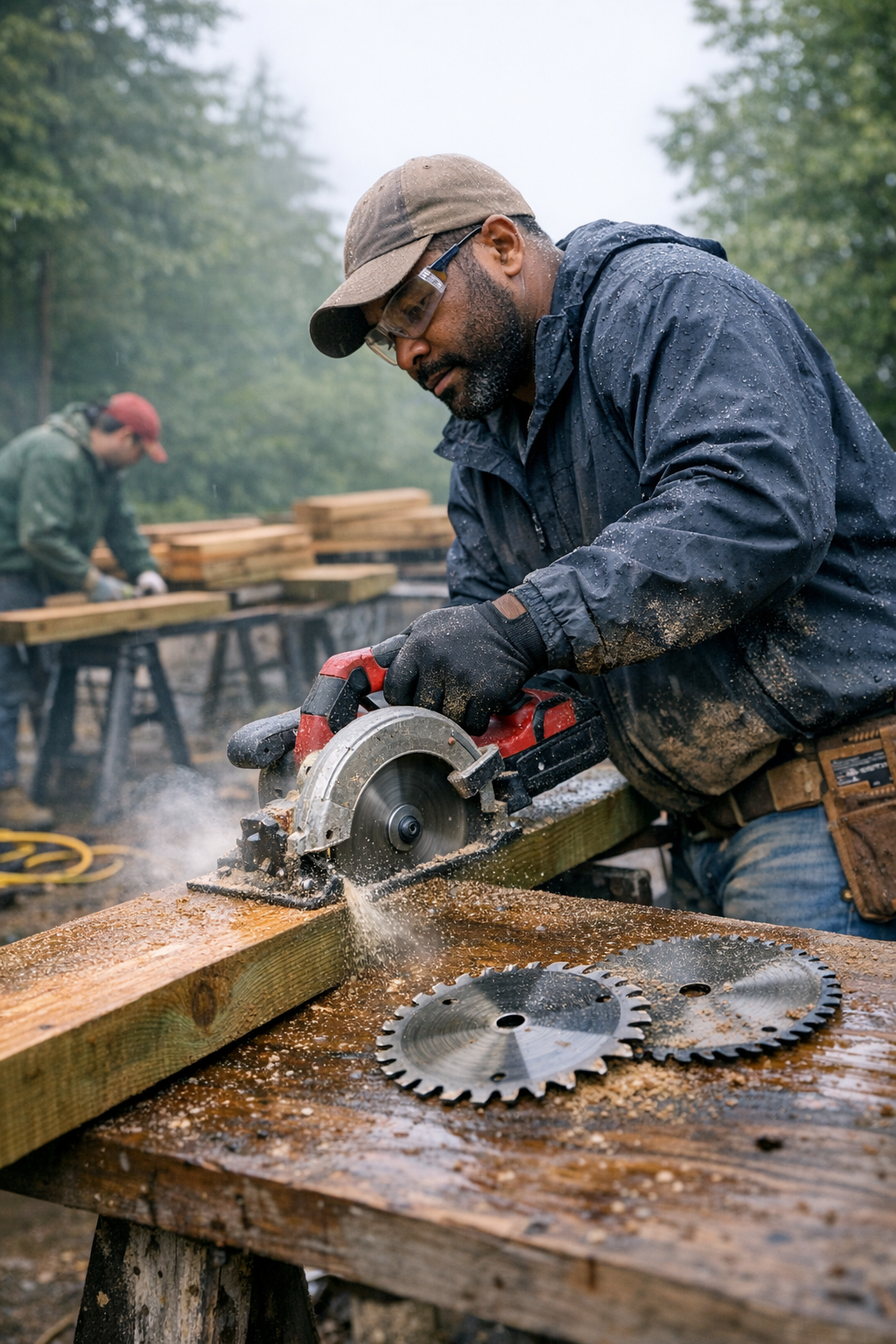
Every crew knows the moment: stacks of wet lumber waiting at dawn, and a saw that should cut cleanly—but doesn’t. You line up for the first few cuts and watch the morning’s optimism drain away. That blade you trusted yesterday now stutters, grabs, and smears, turning what should be a straightforward job into a battle for every board.
Feel the Drag Before You See It
The frustration arrives before you even name it. At first, the saw chews through a plank or two. But then something shifts—the blade sags, the motor groans, and the familiar buzz of sawdust turns to silence except for chunks of damp waste sticking everywhere. Every pass demands more muscle, and you start to notice:
- cuts are rough and splintered,
- edges show dark burn marks,
- sanding stations pile up with “fix-it” boards,
- tool overload lights flicker more often, forcing unwanted breaks.
None of this is random. The culprit isn’t just the soaked wood. It’s the wrong blade dictating the pace—making a hard job harder than it needs to be.
Why General-Purpose Blades Stall Out in Wet Stock
The “combination” blade seems like a safe bet—enough teeth for fine plywood, compact gullets for cleaner trims. But these same features choke when the job turns messy. Moisture transforms sawdust into paste, filling small gullets and jamming the teeth. By halfway through a stack, you’re not just working harder—you’re risking tool damage and spending twice as long to finish the same number of boards.
Most job sites have watched someone force a smooth-sheet blade through green pine or sodden framing, feeling the saw shudder on every pass. The wood resists, the saw heats, and boards exit rough—if they make it out straight at all. Meanwhile, tool cycles get shorter. Sandpaper wears thin, and even batteries seem to drain faster as the tool draws more power to compensate.
The Right Blade Does the Heavy Lifting
This is where a true framing blade proves its worth. With a lower tooth count—typically 24—and deep gullets, these blades are engineered for pace, not polish. Each revolution tosses wet sawdust clear, which means the motor keeps its rhythm and the operator keeps control. Fewer stoppages; noticeably less arm fatigue; and best of all, a line of finished boards that just need a quick check, not a rescue mission with the sander.
Recall any time your circular saw just quit mid-cut—not because the wood was too thick, but because the blade loaded with debris and overheated the system. Framing blades sidestep that pain. Instead of pushing through friction, you move through the work. You even notice the difference in battery changes and corded motor cycles—no more feeling like your saw is waging war on your shoulder or back.
After the Rain: Jobsite Reality Check
Picture a real morning post-storm: sodden deck planks line a temporary work table. The first worker rips into them with a combo blade—the motor stalls; the teeth stall, and every cut leaves burn and tearout. The next worker swaps in a 24-tooth framing blade. Suddenly the saw dusts clear, lines stay true, and nobody’s wasting ten minutes on every “rescued” plank. Instead of frustration, there’s a rhythm to the work—steady progress, less mess, a crew that actually finishes what they started.
Catch the Early Warning Signs
Small changes signal big coming slowdowns. Watch for these trouble cues:
- saws straining and slowing mid-cut,
- warm handles or smoking blades,
- thick clusters of paste instead of sawdust,
- redo piles growing by the minute.
Ignore these and you risk more than the schedule—now you’re gambling on a burnt-out tool or blown circuit. One jammed cut echoes through the whole workflow, setting up lost time and extra labor long after the saw is off.
One Small Change, Tangible Jobsite Gains
A blade swap isn’t just about the tool—it’s about the people using it. Framing blades clear debris, hold speed, and avoid jam-ups, giving you back real control. Over hours, the payback is obvious: less downtime, fewer grip-and-push struggles, and a jobsite that moves more like a system, less like a slog.
Battle-Tested Tips for Better Cuts
- Start sharp, stay sharp: After a wet day, take 30 seconds to wipe and inspect both blade and guard—debris builds fast and sticks longer than you think.
- Trust your instincts: If the saw’s sound dulls or the cut feels heavy, don’t wait—swap in a framing blade before you lose your stride.
The difference isn’t magic—it’s just experience. Fewer resets, calmer workflow, surfaces that really are ready for the next step. The saw works for you, not against you.
When the forecast turns sour and the boards are damp, that one simple switch can keep your build day from spiraling. Save your tools. Protect your pacing. End the day with fuel in the tank, not stuck at the sanding bench.