
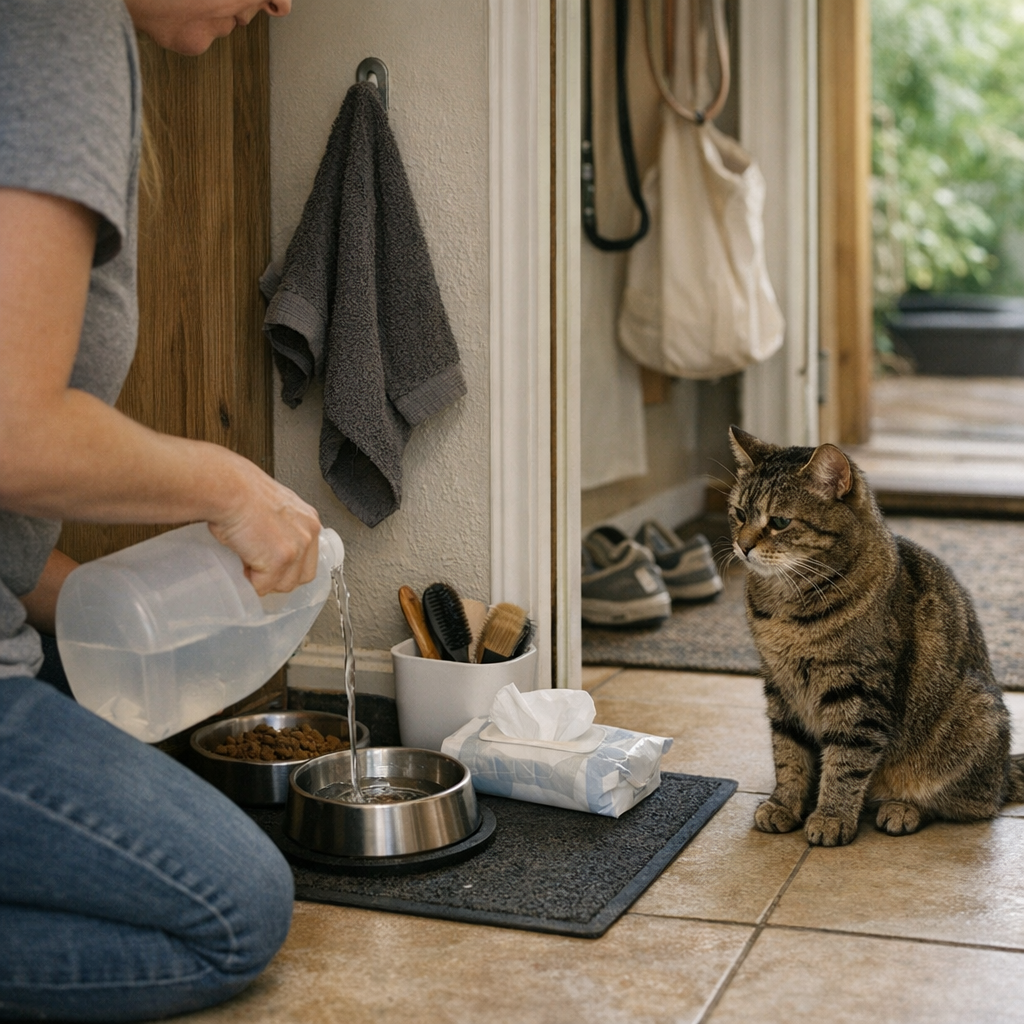
Most daily pet care setups look manageable—until you repeat them ten, twenty, or fifty times. Your cat circles the feeding spot, watching as you swap out the water and slide the bowl back in place. But under the calm surface, a quiet pattern forms: a wipe missing at the key moment, a brush left in the next room, yesterday’s crumbs dried to the mat. Every round, you find yourself pausing—not for the pets, but for small resets, interruptions, and misplaced tools. CalmPetSupply understands: calm only lasts if the setup keeps up, not just the appearance.
How Repeated Routines Reveal Weak Spots
The cracks open in the third or fourth round. You expect a quick reset—swap food, top up water, done. But now a thick line of dried pate stubbornly clings to the bowl’s edge. Crunchy crumbs run along the mat and you notice the wipes are missing, probably still by the couch after last night’s grooming sprint. Suddenly, you’re hunting for a brush before feeding, reshuffling treat bags to reach the water bottle, or just giving up on a wipe to stay on schedule. It doesn’t feel like one big problem, just an invisible drag every time you start.
One delayed cleanup, one tool left in the wrong place—that small choice adds up. At first, the care zone looks okay, but the routine slows: clutter sidesteps back in, and essentials keep drifting out of reach. A supposedly tidy area turns into a daily scavenger hunt, with cleaning and caring never quite in sync. The drag isn’t dramatic—but it’s real, and it sets in faster than anyone expects when small resets keep getting pushed off.
When Supplies Hide Instead of Help
Picture the feeding session: you reach for wipes—nothing. They’re under the sink, never returned from a last-minute cleanup. Do you stop and fetch them or skip it and let grime stick around? Or maybe you go to brush off stray fur, but the grooming tool’s on another shelf altogether. Each time a needed item isn’t right there, you absorb one extra, annoying step. Over days, the habit grows—wipes get skipped more often, small spills dry in place, and the “organized” setup demands more interruptions.
Tools stored a step too far away make you think twice about every minor job. Bins look neat, but if getting a towel or scoop means lifting a lid or crossing the room, the tool stays missing when needed. What’s marketed as clutter-free can easily become function-light—cleanups delayed, water bowls ignored until buildup shows, and the routine built for pets becomes a routine of hunting for basics.
Calm Pets, But Hidden Cleanup
Most cats and dogs ignore mess entirely; they don’t care about spot-checks or wet patches building around the mat. So, the peace you see is just the start. By week’s end, you’re dealing with gritty mats underfoot, a stray bowl edging into the kitchen walkway, or a grooming brush lost on the laundry shelf. The calm gets fractured by broken flow—pauses to step over pet gear, stops to fetch a scoop, or a surprise search for a towel that’s wandered off again.
Shared spaces blur routines: scoops get parked by the washer, towels are used in the hallway, feeding gear ends up stashed on side tables. Interruptions aren’t dramatic, but they keep cropping up: a feeding slowed because the food scoop is nowhere nearby, or a groom gone undone since the brush moved to another room. What seemed streamlined in the morning now feels jagged as the day wears on.
Surface Tidy vs. Actual Function
Looking organized and working smoothly are different things. Put away pet gear in deep bins or stack containers, and essentials fade out of daily reach—clean in appearance, but awkward to use. You might clean the bowl, but the mat’s still gritty from yesterday’s missed wipe-down. Food containers block access to the refill bottle, forcing you to shuffle things around just to get water for the next round. These routines work “well enough” for a few days, until the friction returns and the resets get longer.
The feeding zone that once felt low-maintenance now takes real effort. There’s always one thing out of place—the towel missing when you need it, a scoop relocated, brush out of reach. These small disconnects aren’t random; they’re the result of setups that hide the mess without actually reducing it. By midweek, it’s clear: an area that looks tidy isn’t always functional when the routine gets busy.
Small Shifts Make Routines Smoother
The fix isn’t more storage—it’s smarter, closer placement. Move a pack of wipes to the feeding area instead of the cleaning shelf. Put the grooming brush on a dedicated hook instead of wherever’s open. Hang towels within arm’s reach, so wipe-downs aren’t delayed. Instead of extra organization projects, shift your basics physically close to the action. Messes get handled immediately, brushes come back to the right place the moment you’re done, and the routine runs smoother—not because you worked harder, but because you didn’t need to pause and reset.
With daily-use tools anchored nearby, you spend less energy fetching, shuffling, or playing catch-up. Every feeding or grooming round flows faster. Instead of friction compounding over days, the simple act of having wipes or towels ready breaks the reset loop and reclaims time for actual pet care, not for cleanup and recovery.
Routine Maintenance, Not Reactive Cleanups
The real difference: proactive handling beats reactive scrubbing. Quick checks and wipe-downs—right after feeding, not after stains set in—keep the pet care zone manageable without sudden deep cleans. Even calm pets don’t signal hidden drips or crumbs; you have to spot and reset, every round.
Use open baskets, wall hooks, and bins at pet height, so return and grab are automatic—never several steps away. That means the brush always lands beside the food zone, wipes don’t travel rooms, and towels are there the moment a splash appears. With less friction, routines feel less like work and more like daily maintenance.
Daily Calm That Lasts Beyond the Surface
A genuinely calm pet care routine isn’t about one reset—it’s how well it holds up by the tenth or fiftieth round. If reset pressure always returns, appearances don’t matter; what counts is whether the daily flow actually gets easier. Anchor your basics near the action and keep cleanup friction down. The result: calm that lasts, routines that stay manageable, and more time with your pets, not spent circling the same old clutter.
See how a small shift in setup can keep daily routines running smoother at CalmPetSupply.