
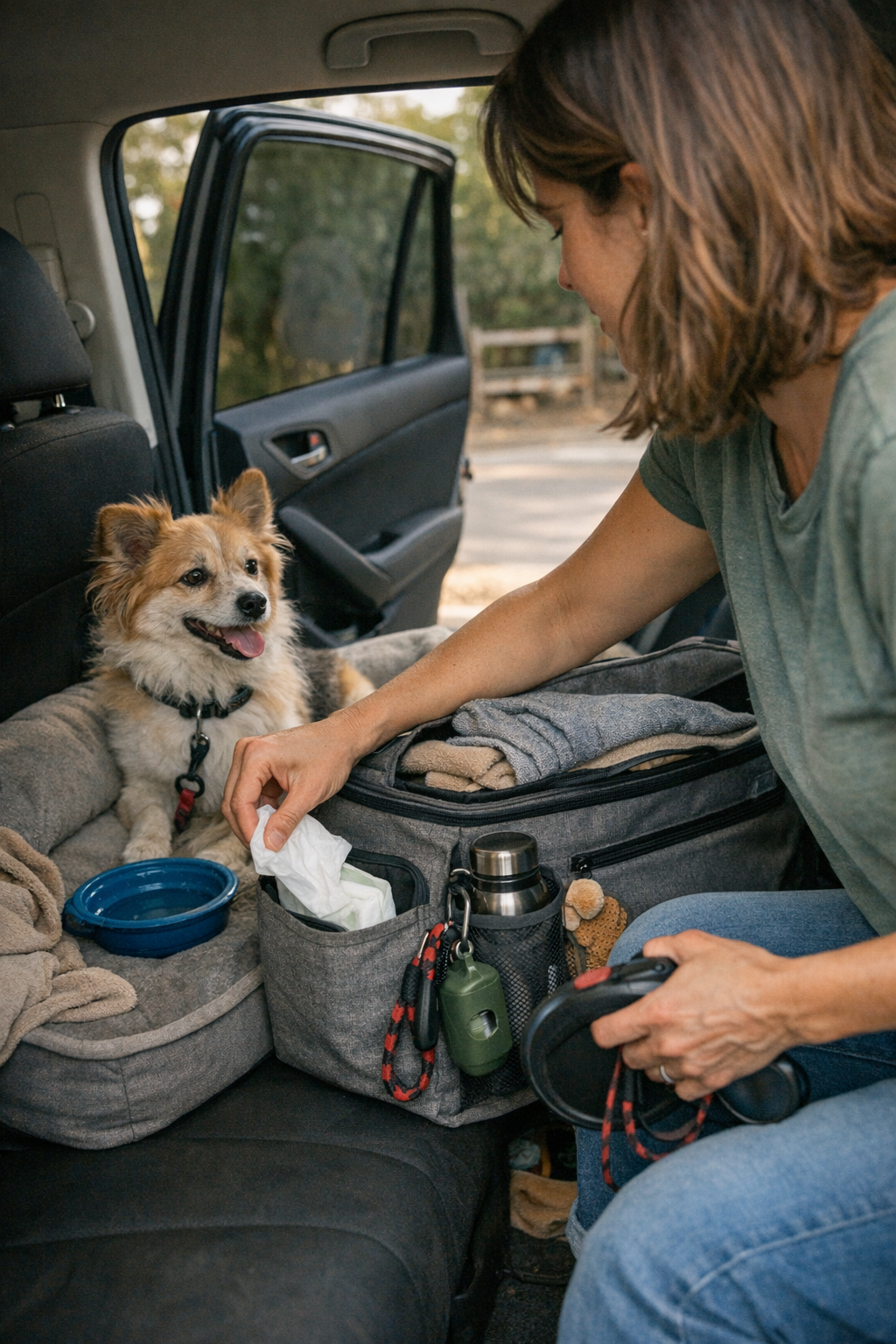
Most pet owners know the letdown of a “prepared” pet travel bag that lets them down within the first few stops. At home, every item seems perfectly packed—leash at the top, wipes zipped, snacks lined up—so you leave believing the setup will work. But as the trip unfolds, cracks show fast: wipes are stuck under a bowl just as your dog noses the window, the leash is tangled in a snack pouch, and what looked streamlined leaves you stalling at every minor interruption. Organization that photographs well on your kitchen counter folds under actual repeated use, especially when a real-life stop demands action in seconds, not minutes.
Looks Ready, Acts Delayed: The Hidden Weakness of “Organized” Bags
It’s easy to believe a carrier packed by category or a newly purchased organizer means the hard part’s over. At home, stacking bowls on bedding or tucking wipes “in their place” feels orderly. Then comes the road: you brake for a rest stop and instantly pay the price for buried essentials. To get wipes out, you dislodge the bowl, which blocks the leash, which sends your pet squirming and resets the order you just built. A setup that works in one moment falls apart when you need repeat, rapid access—exposing how the appearance of neatness hides its own traps.
Every repeated slowdown stacks up. It’s not a missing item that ruins the flow, but the seconds lost clawing under layers or guessing which zip holds what. Your pet senses each pause—jumping, whining, twisting the leash—while you dig to find the one thing you actually need. Over even a short journey, these micro-delays pile up, leading to unsettled energy, interrupted routines, and a travel experience that gets rougher with every stop, not smoother. The bag isn’t broken, but the logic behind its setup is: what calms you at packing time becomes the very thing that slows you when you’re seat-side and rushed.
Recognizing the Real Travel Scenario: What Actually Happens at Each Stop
Visualize a typical break: your dog’s energy spikes as you reach your stop. In theory, wipes and leash should come first—spot-clean, then control. Instead, your hand lands on a half-zipped pocket, and the leash is threaded through a web of snacks and treats. The moment’s urgency turns a neat organizer into an obstacle course. Every second spent tugging on the wrong item is one more moment your pet is out of sync, tugging or circling as you fumble. Not a lack of preparation, but a setup that blocks you once real movement starts.
Spills aren’t rare: water sloshes, a snack rips, or muddy paws land after a run. The wipes you know you packed are technically “there”—but just out of useful reach. Retrieving them dislodges bedding and toys, so a “quick reset” isn’t quick. Sometimes you even skip the cleanup step rather than pull the whole kit apart. The problem reveals itself not in missing supplies but in every slow, clumsy, one-handed rummage.
Comfort in One Area, Slowdown in Another
One classic pitfall: comfort items packed for calm end up orphaning speed. That favorite blanket? Perfect for car naps, but shove it over a treat pouch and now you’re folding, shifting, and nudging half the kit around every time you need a reward. Routine becomes a trade-off. That’s the backbone frustration for many: soothing your pet in one way off-balances the flow everywhere else—resetting the bag, stopping mid-motion, or handling agitation you weren’t planning for.
Seat-side Access and the Real Difference Maker
The practical fix isn’t just more pouches or tighter stacking. It’s moving the most-used items to where the action actually happens: at arm’s reach, right at the seat. Think exterior side pockets holding wipes and leashes, quick-release hooks, seat-side loops—designs that let you repeat any basic action without shuffling layers or unpacking half the bag.
A setup that puts routine items in fixed exterior positions does more than save seconds—it resets the entire tempo of a trip. You’re able to wipe down paws or swap leashes with one reach. Cleanup after a park run takes half as long. You’re not fighting the bag, you’re simply moving: grab, use, return, move. The interior stays stable, your dog learns the rhythm, and you get to respond to movement, not keep troubleshooting the basics. That’s the actual difference between “packed well” and “handles well.”
Signs Your Current Setup Is Adding Friction
- You always need both hands for one basic task—one restraints the pet, one digs under bedding or snacks.
- You routinely open the wrong pouch before landing on the right one, especially in a rush.
- The wipes or leash are present, but consistently never at true quick-grab points.
- Each restart is slow, turning a small pause into a tense standoff as your pet’s energy rises.
- Comfort items block essentials, demanding a reshuffle every time you stop.
- Owner and pet items mix just enough to cause repeat backtracking for keys, treats, or bags.
These aren’t one-time annoyances. They’re repeated friction points that show up at every pit stop, adding up to a distracted, less enjoyable trip for both human and pet.
How the Right Adjustment Removes the Lag
The breakthrough isn’t about more gear, but smarter placement built around repeated actions. For instance: move wipes and a leash clip to an exterior, seat-side pocket. Now you no longer dig, dump, or break the packing logic just for one needed grab. Your pet waits less. Cleanup, leash swaps, snack delivery—each become their own immediate cycle, not a cascade of logistic work.
What changes isn’t only speed, but the temperature of the whole trip: your stress levels drop, your dog doesn’t start circling from boredom or uncertainty, and your own flow—grab, act, move—remains intact. You’ll still deal with mess now and then, but the pattern shifts from chaotic interruption to repeatable, barely-noticed steps. The improvement isn’t flawless, but it’s the difference between bracing for every stop and letting the routine work for you.
Making the Setup Work for You: Simple Checks and Tweaks
Spot the friction first. On your next drive, notice which items generate the most repeat stops or force the most awkward reach. Is the leash over-buried? Are wipes always in the last place you’d check? Do you have to dump comfort gear just to get the treat pouch?
The fix usually isn’t extra packing; it’s rearrangement for reality. Prioritize grabs that match your actual stop pattern: wipes in a true exterior pocket, leash clipped in direct seat-side reach, bowl hanging (not buried) for quick fill-ups. Small tweaks play out big over several stops, letting you keep focus on movement and interaction, not reorganizing at every turn.
When Appearance Isn’t Enough
The stress-test for pet travel setups isn’t the first photo or even the first ride—it’s whether your system still works once interruptions become the new normal. If your bag looks sharp but delivers slow, awkward pauses during real use, the structure—not the packing—needs the makeover. Setup decisions that guarantee quick, predictable access during repeated stops will peel away most of the silent friction that interrupts otherwise good trips.
For practical organizers, pet travel bags, seat-side essentials, and repeat-use travel setups designed to actually make movement easier, check out PawGoTravel.