Blog

  • Creating a Structured Car Setup to Avoid Daily Clutter and Hassles

    A car interior might look organized for a day, but real use exposes weak spots fast. By Tuesday, that tidy center console turns into a mess of drifting chargers, lost wipes, and another parking-lot shuffle to find your essentials. The difference between “looks organized” and “actually works” is obvious in the seconds you lose: knuckles scraping beneath seats, cables wedged beneath floor mats, and the uneven reach-arounds everyone swears they’ll fix next week. If you’ve ever started Monday with everything in place, only to spend Thursday morning wrestling a phone from under the seat or fishing out receipts that block your wipes, you’ve met the problem head-on. The result? Every errand, re-entry, or quick stop reveals how quickly surface order gives way to silent disorder—and how small inconveniences stack up trip after trip.

    The Trouble with “Looks Organized” vs. “Works Organized”

    A car can appear under control, but a few commutes and quick stops strip the illusion bare. Tune your setup for a photo and it’s fine—until daily routines start to rattle everything loose. Phone cables just long enough to migrate into the footwell, wipes slipped into a door pocket but buried by the end of the week, “organized” essentials scattered after a hard brake or a grocery run. Visual neatness often does little for repeated, high-friction use—every trip reveals new delays or lost items. The trade-off isn’t just aesthetics; it’s time wasted and focus broken, again and again.

    The real gap is cumulative: a sanitizer bottle that always tumbles, emergency tools locked away by your own cargo, a phone charger you have to untangle before driving off. Instead of a car that helps you move, you’re caught in resets and recoveries—seconds lost every time you load up, park, or try to start moving again.

    Scenes from Real Routines: Where Order Falls Apart

    The Phone-and-Charger Cycle

    Start with your phone and cable placed near the center console—looks good, feels accessible. By errand three, the phone’s bounced into the passenger footwell; the cord is half-pinched under the seat, half dangling somewhere you can’t reach while buckled. Pull into the coffee drive-thru, and those missing 30 seconds untangling the cable happen every time. Visual tidiness slips fast when cables and gadgets aren’t truly anchored—what seems like a small nuisance becomes a pattern of repeated, avoidable slowdowns.

    Everyday Entry and the Glove Trap

    After a cold-morning walk, you quickly toss your gloves into the door pocket. By midweek, they’re walled in by receipts, napkins, and last week’s parking stubs. When you reach for them, it’s a minor excavation project—a setup failure repeated daily. The more you try to “restack” the pocket, the deeper the pocket traps whatever you’re actually trying to use, turning convenience into a time capsule of buried stuff and micro-delays.

    Cargo Corners and Blocked Access

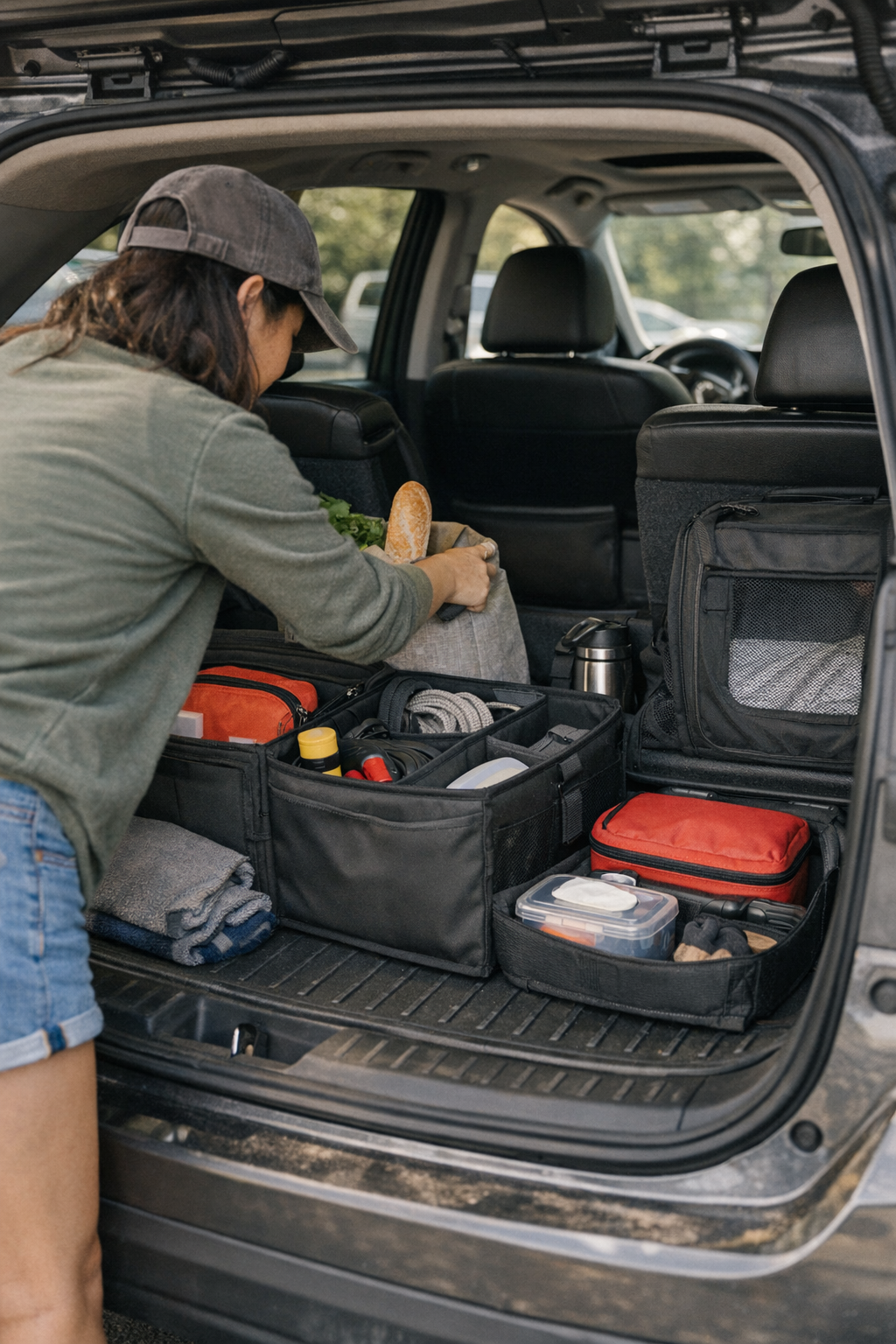
    Suppose you place your emergency kit in the trunk’s rear corner, neatly alongside a reusable grocery bag and some returns. Fast-forward two stops: the groceries shift, the returns topple, and your kit is blocked just when you need it. Now unloading means shifting heavy bags just to reach what matters—a well-meant organizer creating its own obstacle course. The cargo might look tidy at a glance, but functional access grinds to a halt under real loading pressure.

    Why Assigned Spots Outperform Every “Good Enough” Fix

    True improvement comes from giving each must-use item a fixed home that stands up to movement, not just looking sorted at rest. No more improvising—each charger, wipe, or tool belongs in a dedicated, repeatable slot designed for actual driving, not just display. This is where the right organizers matter: structure survives what the commutes, re-entries, and cargo-shifts throw at it.

    • Dedicated cable organizers near the shifter prevent charger lines from tangling in the footwell or losing reach between stops. No more downtime untangling at each light.
    • Rigid seat-side pockets for wipes or sanitizer stop small items from slipping out of reach or jamming into seat creases that steal precious seconds.
    • Hard console organizers give daily-use items like keys or extra masks visible, repeatable access without letting them shuffle under wrappers or stray receipts.
    • Built-in trunk bins for emergency gear keep your critical items reachable, even when new groceries or team sports bags pile in unexpectedly.

    Some fixes make a difference instantly—no more kneeling to retrieve a cable. Others reveal their value over a week: less mid-trip sorting, fewer forgotten supplies, and a routine that does not bottleneck when you’re running late or your hands are full. Organization that moves with you, not just sits pretty.

    Where Clutter Hides: Pinch Points That Hurt Your Flow

    Clutter rarely piles where you expect. Instead, it wedges into seat gaps, packs itself into cupholders, or disappears under the center-console edge—right where you need access. The “organized” cupholder on Monday becomes, by Thursday, a tangled pile of coins, wrappers, and an immobile charging cable. Each rescue attempt takes longer, raising the friction with every drive. Real organization lives and dies by these choke points—the difference between smooth reach and constant fumble.

    It isn’t just a minor annoyance: every micro-delay nudges your attention from driving to problem-solving. Over a handful of days, each failed reach compounds, turning your organized setup into an invisible source of stress and wasted time.

    One Setup Shift: From Acceptable to Actually Smooth

    The single most reliable change? Don’t settle for “good enough” arrangements—demand a dedicated spot for each high-use item, and stick to it. For many, installing a fixed pocket by the passenger seat for your charger and cable means no more hunting or cable drag—every time you reach, the item is there, not lost to the seat gap. Give disinfectant wipes their own rigid upright slot, instead of hoping a door pocket will hold. Put the “daily” essentials in a hard-sided or zipped organizer, so nothing drifts beneath receipts or slips under trash. Even in the busiest week, these upgrades mean fewer resets, smoother transitions, and far fewer “Where did it go?” moments when it’s time to move.

    Making Organization Work Across a Full Week

    The real difference shows across a mixed week: stressful commutes, unexpected stops, fast errand loops, and the daily routine of loading and unloading. In this pressure, every shortcut—cramming a cable somewhere “for now,” tossing a mask in the cupholder—unravels what little order you had. Only stable, specific homes for each recurring item keep your hands free, cleanup light, and access immediate. Setups that stand up to the messy, real pace of life spare you the drag of midweek resets and the creeping frustration of minor, repeated mishaps.

    It isn’t just that the car looks better—it moves with you, resists clutter drift, and hands over your essentials on the first reach, not after a mini search party. The right setup doesn’t just match day-one order: it holds against the week’s chaos, supports your flow, and makes actual use feel easier every single time.

    Discover practical organizers and setup solutions at DriveWellSupply.
  • Why Pet Travel Organizers Fail After Multiple Stops and How to Fix It

    The first time you pull up with a pet travel bag that looks “ready,” it’s nearly always the illusion that breaks first. Sure, the zippers close, pouches line up, wipes and treats sit where you packed them. But the moment your dog gets antsy at the curb and you reach for wipes, you can’t get past a tangled leash, a jammed-in bowl, or an owner item that’s migrated on top. That’s when the gap between looking organized and actually functioning hits hard—especially when you’re trying not to lose your grip on the leash or your pet’s patience. Real weakness in a pet travel setup reveals itself not at home, but after a few repeated stops. Visual order might hold for the first load-up, but friction multiplies with every curbside reach, one-handed grab, or seat-side scramble.

    Where “Organized” Fails: Spotting the Hidden Friction

    On a surface level, an organized bag calms the nerves—like everything’s under control. But trips rarely happen in a vacuum. The bowl that looked so accessible ends up wedged behind wipes the second your pet shifts gear in the carrier. Treats that sat on top at the start have slid under a leash by the second stop, still visible, now blocked by other items. The structure that seemed so intentional at home morphs into a loose tangle by lunchtime, with essentials orbiting just out of easy reach every time you try to grab something fast.

    This friction doesn’t shout; it accumulates. A few stretches down the highway and you forget. But at the next rest area, when muddy paws need wipes and you find them buried, the failure is instant. Owner and pet gear mingling in the same pocket turns simple retrieval into an awkward sort: water bottle shifting over waste bags, bulkier supplies settling sideways. The more you move, the less the bag says “organized”—and the more it says, “wait your turn.” Any pocket that loses shape or collapses under its own weight ensures that one quick access becomes a messy sequence you repeat after every stop.

    The Slow Unravel: How Weak Points Multiply on the Road

    First stop, quick leash snap—your pet’s energy spikes, but your supplies don’t cooperate. The water bowl you planned to grab is blocked by owner snacks or tangled with a waste bag. Wipes, crucial since the first puddle, live somewhere at the bottom now. Each snag—pausing to dig, reshuffling, a second spent searching—doesn’t reset to zero with each stop; it piles on, straining both your rhythm and the dog’s patience. By stop three, your “organized” system has become an obstacle course. Car lineups, pet shifting on the seat, and that slow thought: “This is working against me.”

    One tidy compartment can lose all value when it becomes one more thing in the way. Every return to the car rearranges your setup for you—wipes slide, treats drift, bowls wedge up behind something less urgent. The so-called “structure” you trusted creates new jams if compartments overlap or lose their shape in motion. Organizers with stacked sections often hide, not help, after a few cycles of movement and handling. The bag looks contained, but quick access erodes trip by trip.

    Why “Quick Access” Isn’t Just a Feature—It’s the Heart of Travel Flow

    Most breakdowns aren’t dramatic; they’re routine. You plan for a 5-minute stop but end up wrestling with a collapsed pouch to fish out wipes, buying yourself only seconds while your dog strains for an exit. The bag that looked photo-ready on the kitchen counter now demands both hands and a distraction-resisting stretch to get even a simple item.

    The irritation is cumulative and practical. When a comfort toy or blanket works its way beneath cleanup supplies, it helps your pet settle but means your next reset is no faster—likely slower. “Handy” pouches sag under larger gear, turning cleanup into a disrupted task right when you need calm. Once the path to essentials gets blocked—by even an inch or two—travel shifts from routine to a stop-and-go test of patience.

    Real Change Comes from Physical Separation—Not Just More Pockets

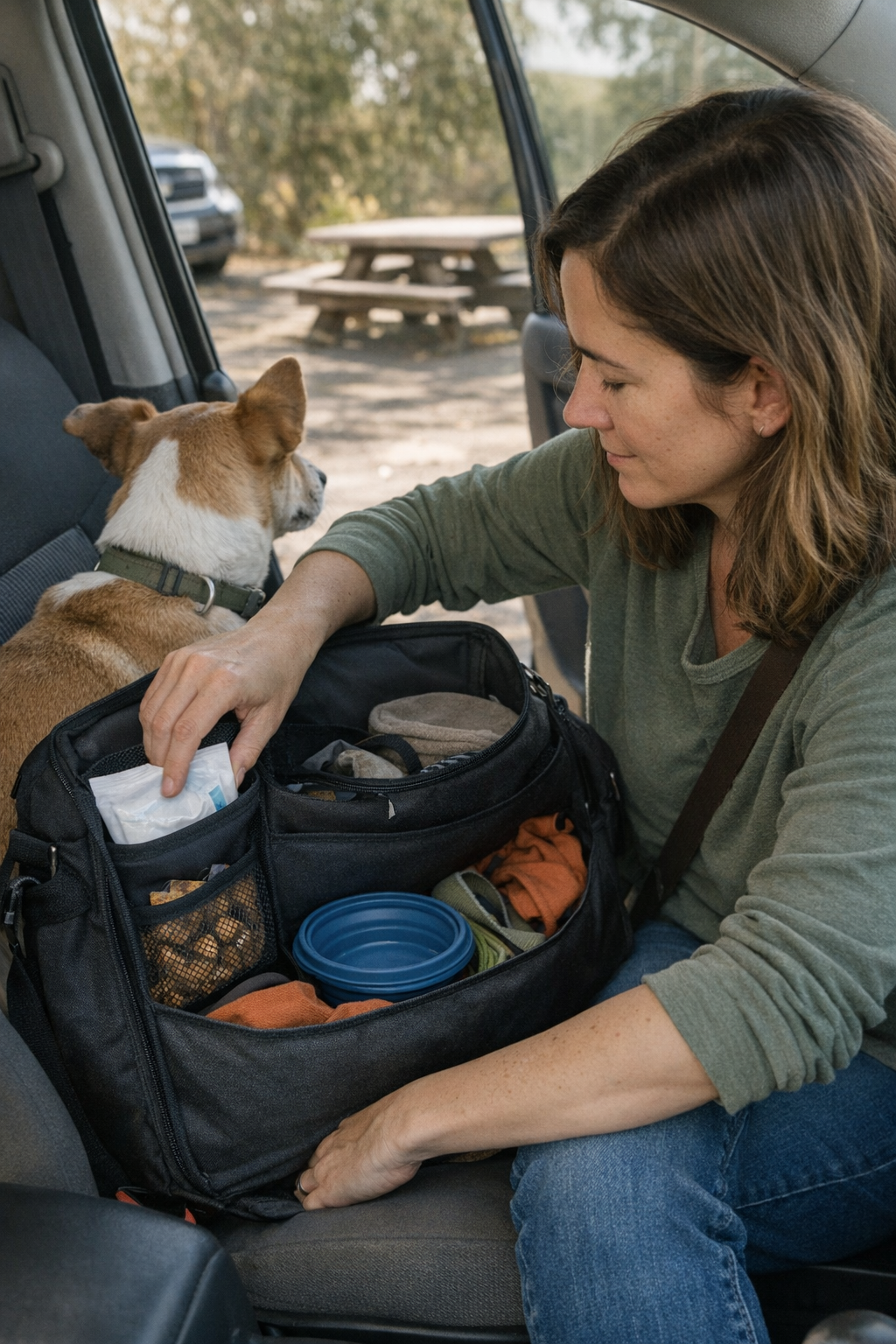
    The real fix isn’t dumping in extra pockets or pouches. It’s designating a rigid or semi-rigid side compartment purely for wipes and treats—true fast-grab items. Small? Yes. But when that side pocket doesn’t collapse mid-trip, the improvement is obvious by stop number four: you reach once, with one hand, no strategic shuffling. The essentials don’t rotate or mix with bulkier gear. No more tipping the whole bag forward to chase loose contents—the result is not tidier, but faster and less stressful every single time you restart with an impatient traveler in tow.

    What looks minor during packing becomes critical in repeated use. That side compartment holds its shape when the rest of the setup sags. You no longer unload water bottles or switch hands just to deliver one treat at the right moment. Structurally separating fast-access items from everything else doesn’t just solve one problem—it stops the entire cycle of reluctant, two-handed retrievals that have defined “organized” travel bags for too long.

    Every Return Exposes the Weak Points—Here’s How to Spot Them

    Want to know where your setup will fail? Try retrieving each travel essential with one hand—just as you would while steadying a restless dog. If that test forces you to pause, dig, or reopen sections, you’ve identified the friction that will nag at every curbside and every cranky return. The trouble isn’t in what you packed or how tidy it looks, but where access gets choked. Especially in bags where your phone or water bottle shares space with pet items, even a well-packed kit creates speed bumps by the third stop, multiplying slowdowns exactly when mobility matters.

    Many setups hide their weakness behind a “contained” look—repeating the same blockages every trip. Less mess doesn’t equal fewer interruptions. Each new puzzle—of shifting, blocked, or hidden items—adds a step and burns time when it should be buyback.

    Smoother Trips Start with Repeated-Use Structure, Not Just Initial Order

    The travel setups that survive the long trip don’t hide mess; they remove friction. Real improvement shows up when you can grab high-demand items predictably, single-handed, even after days of back-and-forth. Friction isn’t just theoretical: it turns neat beginnings into restless delays, adding stress for you and your pet with each unplanned stop.

    A structure built around repeat, one-handed access is what changes travel—not more dividers or pouches. Clean travel isn’t about keeping it picture-perfect after the first hour. It’s about always reaching exactly what you need when the routine falls apart, the seat’s a mess, and you’re halfway through a trip that already outlasted your patience. That’s the difference a lived-through setup provides. Anything less is just a pretty delay.

    For pet travel gear and setups tested for real movement, visit PawGoTravel.

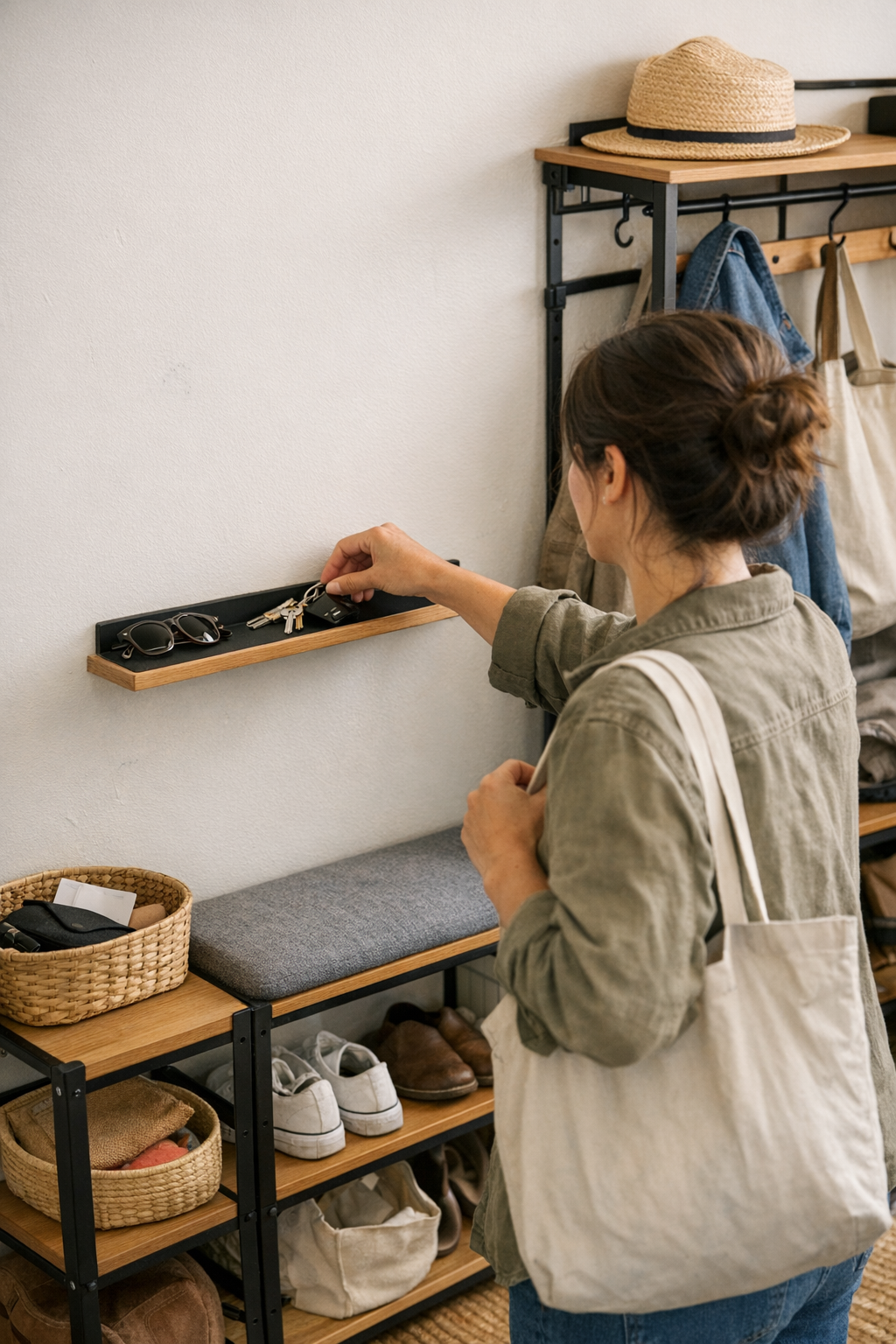
  • How a Shallow Shelf Transforms Entryway Organization and Key Management

    The entryway key shelf is where the daily difference between order and low-grade chaos is decided—often before you realize it. In real homes, the absence of a visible, single-purpose spot for keys means every threshold crossing invites a new delay. One day it’s keys vanished under a jacket on the bench, the next it’s another detour—searching pockets or rifling inside a catch-all bowl stuffed with mail, earbuds, and coins. As these tiny disruptions repeat, the whole area shifts: benches swallow overflow, shoes break formation and sprawl toward the hallway, and the reset zone—the space where you should walk straight in or out—clogs up. Failure isn’t dramatic; it’s a slow, stubborn spread, one misplaced key at a time.

    Why Do Keys Go Rogue? Recognizing the Real Trouble Spots

    Lost keys are just the first domino—entryway friction quickly multiplies if the storage setup is wrong. Baskets and deep trays look like solutions, but in repeated use, they breed confusion. Drop your key, and by morning it’s under old receipts or tangled with a dog leash. The surface that’s meant to clear clutter turns into a black hole where categories blur. What seemed tidy is now a sorting project every time you leave. Each search adds another reset, stalling your flow when you least want it—rushing out the door, already late. The mess isn’t just visual; it interrupts how the whole entry moves and recovers between uses.

    Threshold Turbulence: How Clutter Starts to Spread

    Here’s the pattern: you set your bag on the bench “just for tonight.” Next, the shoes you lined up last weekend drift sideways, the mail pile creeps along the wall, and your keys vanish beneath the lot. The entryway’s clear lane narrows after each rushed drop or short-term fix. Temporary placements—bags perched on benches, packages balanced on shoes—stick around, gradually jamming the path. Each person adds a fresh layer, and resets get slower, not easier. Instead of a smooth exit, you end up dodging obstacles and shuffling piles just to get through. The threshold stops being a passage and becomes a recurring headache.

    The Shallow Shelf Advantage: Simplicity in Repeated Use

    The best entryway storage isn’t about maximum capacity—it’s about never having to think twice. Deep trays and bowls hide your keys; a slim, wall-mounted shelf gives you a single visible target. No guessing, digging, or late-night pocket checks. The action changes: open the door, drop the keys, done—every time. The shelf edge becomes a built-in warning: if something else crowds your keys off, you notice fast, before it becomes a reset problem. The boundary is clear. Overflow can’t sneak in for days before anyone reacts. Instead, the shelf signals when it’s full—and makes fixing it instantaneous instead of another delaying task.

    Real-World Reset: What Changes After Installation

    Picture the actual rush: your hands are full, the dog’s leaping, phone buzzing in your bag. If there’s no shelf, keys get dumped wherever—banister, kitchen counter, balanced on a stack of mail. Each improvisation invents a new reset step for tomorrow’s routine. But a wall-mounted, shallow shelf stops drift cold. Now, there’s only one drop zone. The return flow clears up: you walk in, drop keys, move on—no reshuffling, no search detour. Even if the bench picks up overflow, the shelf doesn’t. Its only job never gets diluted. The weakest link—key access—is solved, so everything else gets less jammed, no matter how busy the week gets.

    Invisible Efficiency: The Difference Between Looking Neat and Working Well

    Entry setups that “look” organized—rows of baskets, deep communal trays—hide their downsides until the first crowded morning. Any deep container turns into a shuffle box. Wide trays become clutter magnets for everyone’s stuff. A narrow ledge with a visible stopping point—a 40 cm shelf right by the door—cuts through that. Keys are always out front, never pushed under mail or sunglasses. Even after five returns in a day, you see what’s crowding the edge and clear it on impulse instead of making a weekend project out of it. The shelf resets fast, stays predictable, and gives you a safety net when every other surface collects overflow. In a well-used entry, that difference becomes visible—and felt—by the end of the week.

    Shared Space, Fewer Headaches

    In families, shared apartments, or high-traffic entryways, one missing key can throw off everyone’s timing. The open shelf changes the dynamic: its position makes the routine obvious. No need to explain, nag, or retrain anyone—put keys here, pick them up here. The wrong setup—a communal drawer or deep tray—spreads blame and scavenger hunts. The visible shelf contains confusion before it starts: everyone adapts, and fewer resets are needed just to keep the threshold moving.

    Keeping the Entryway in Motion

    Swapping out that over-stuffed bowl or generic tray for a dedicated shallow shelf changes more than the look—it shifts the entryway’s entire rhythm. Bags no longer sprawl, because the shelf marks where the landing zone ends. Shoes don’t take over the walkway while you hunt for keys. Instead of constant micro-fixes, the area forms a flow that fits natural daily movement. It’s not about perfection—it’s about repeatable access. Once the shelf sets the rule, the entire transition space gets easier to re-enter and restore, day after day—even when the routine is at its busiest.

    One Quick, Useful Habit Tip

    Keep the shelf’s edge sharp: pair your reset with a regular action such as hanging your coat or opening the mail. That extra second to clear a receipt or stray glove prevents the shelf from dissolving back into random surface territory. Make the reset automatic, and clutter never gets a foothold.

    Small, honest tweaks in the entryway do more than cut lost-key drama—they build a routine you can actually keep pace with. Nail access and return flow right at the threshold, and the entire zone stops fighting your movements, no matter how many times you come and go.

    Betweenry Entryway and Transition-Space Storage

  • Why Lift Top Storage Benches Need Dividers to Stay Organized Long Term

    A lift-top storage bench looks like a shortcut to order—just drop clutter under the lid, close it, and the mess disappears. But that clean surface is a trap if the inside turns into a mixed pile the moment real life resumes. The first time you stash blankets, board games, or chargers, the room feels under control. But within days, finding a single missing remote or tomorrow’s shoes means digging through a jumbled tangle, lid banging open and shut as you hunt. What seemed like instant calm quickly reveals a slower, hidden chaos—the bench gives the appearance of organization while quietly reshuffling the mess into a new, less visible problem. In a high-traffic living room, narrow entryway, or any spot that sees repeat use, poorly organized storage benches start costing extra time almost immediately.

    Where the Easy Win Turns into Hidden Work

    A storage bench promises fast resets—much faster than open shelves that constantly attract surface clutter. But when the interior is one undivided zone, “tidy” becomes “concealed,” not organized. By week’s end, shoes are jammed against bundled cords, game boxes vanish beneath sweaters, and the next retrieval triggers a miniature excavation. From the outside, it looks neat; from the inside, it’s a single undifferentiated drift. Every time you need something, you’re slowed down. Every time someone else adds or pulls out an item, categories blur further, making return flow and next-use even clumsier.

    This isn’t a minor inconvenience: if pulling out a charger or a bedtime book takes shifting half the contents, the bench has traded surface clutter for chronic retrieval work. What looked like a solution turns into a shift in where—and how often—you wrestle with disorder. The friction doesn’t go away; it just gets buried one layer deeper.

    Living with Unstructured Storage: Recognizing the Real-Life Patterns

    Unstructured storage breaks down by habit, not accident. The signs are measurable and familiar:

    • Opening the bench lid twice to fetch the same thing, because it’s slipped beneath heavier or bulkier items—especially in mixed-use areas.
    • Shifting through blankets or bags just to reach the small-but-essential daily objects, like remotes or headphones, now wedged somewhere underneath.
    • Watching one “overflow” corner collect everything light or loose, since each opening and closing shifts items unpredictably, pooling category run-off in random pockets.

    This cycle shows up fastest in spaces that carry mixed categories—entryways where backpacks, shoes, and keys pile up; living rooms serving both entertainment and storage; kids’ rooms where toys and clothes rotate daily. The real cost is a chronic, shifting reset: just as things settle, a single chaotic search unravels the “tidy” system.

    Fast Tidy-Ups vs. Long-Term Friction

    For quick company cleanups, a bench is unbeatable—everything out of sight in seconds. But those “fast resets” keep pushing clutter deeper. The next routine retrieval—a favorite book, phone charger, or that one missing shoe—now drags out, blocked by layers of mixed stuff the bench collected in a rush. In a shared home, this becomes a loop: the more people use the bench, the more its core flaw compounds. Saturday night looks spotless; by Sunday morning, it’s an awkward, time-wasting search, driving everyone back to old surface piles or open shelving just to escape the buried mess.

    Why Open Interiors Create Category Drift

    This is category drift in action: every undivided bin is one step away from chaos. Lighter objects slide to the edge, small things gather in unplanned corners, and “set down” zones quietly collapse. Instead of solving the friction of clutter, the bench just shifts it behind a hinged disguise. You still spend just as much time moving stuff around—the only difference is that now you’re working blind, and the mess is more frustrating to undo. The bench stops you from seeing clutter, but not from living with it.

    Breaking Up the Compartment: How Dividers Make the Difference

    The fix isn’t complex, but it is structural: internal divisions. Add adjustable dividers, small baskets, or soft bins set to actual use patterns—not just to look tidy, but to enforce concrete boundaries.

    • Blankets and throws drop into one deep section—no more tangling with tech gear as people dig and drop throughout the week.
    • Remotes, paperback books, or chargers go into a shallow, easy-access spot rather than vanishing under bulkier items.
    • Shoes and fast-grab gear each get their defined corridor; instead of fishing, you lift and go without disturbing the rest.

    This setup transforms the bench from “anything goes” into a tool for routine. Reset is still one action, but retrieval is sharper, and items land back where they belong, not wherever there’s space. The difference isn’t always visible outside—but fewer lost items, faster daily flow, and no more bottomless pile syndrome make it quietly decisive over time.

    Choosing the Right Bench for Real Routines

    Bench shopping by size alone is a mistake. Go too deep (past 12 inches) and you build a graveyard for small things—lost until the next dump-out. Instead, match the internal structure to your main use: a bit less volume with better compartments is nearly always more practical than a giant undivided trough. Configuration costs more to ignore than capacity ever will.

    How Setup Impacts Movement and Flow

    Footprint and location shape daily use far more than catalog photos show. A bulky bench in a narrow hall fixes paper clutter by creating a new path problem—it blocks fast movement, creates bottlenecks, and exposes the flaw of a single shared bin. With internal dividers, two people can grab shoes or gear side by side. Without them, it’s one slow turn at a time, and the area turns into a choke point that everyone avoids.

    Practical Tips: Optimize for Reset, Not Just for Looks

    • Integrate dividers or baskets right away, even if you start with a simple open bin. Establish the boundary before drift sets in.
    • Audit monthly, because no setup stays sorted by accident. Pull everything out, reset category edges, and clear mix-ups before they harden into habit.
    • Reserve a front-facing segment for grab-and-go stuff—whatever comes in and out daily should be quickest to reach, not buried even for five minutes.

    Does Your Storage Bench Really Work for You?

    An under-lid bench can keep mixed-use zones functional, clear, and calm—but only if the interior is built for how you actually live. Without internal boundaries, it’s one step above a closet floor: clutter traded for harder retrieval, not less work. Compartmentalizing doesn’t just tidy what you see; it prevents daily resets from multiplying into hidden messes. Every lid lift is less of a gamble, and routines flow instead of stall.

    Explore more practical storage solutions and setup ideas at Gridry.

  • How Guided Cable Paths Keep Your Desk Organized and Efficient

    A desk can look uncluttered at 9am, but by noon, you’re dodging cables with every move—dragging a charger across your wrist while reaching for notes, snagging your chair on a cord that slipped just out of view, or kicking at a tangle underfoot. What starts as clean order quickly unravels when your workflow relies on unplugging, plugging in, and shifting your setup all day. Cable management that only hides wires for the first hour falls apart fast: each new device, every laptop dock or phone recharge, turns simple movements into time-wasting resets that chip away at your focus. If you find yourself clearing your notebook or keyboard just to make room for cords (again), the problem isn’t just visual clutter—it’s a structure that can’t keep up with real work.

    Why “clean at a glance” doesn’t survive a busy day

    A desk with cables pushed behind or loosely tucked away will always look tidy for the first few minutes, but as soon as you start switching devices, sliding your keyboard forward, or pulling up closer in your chair, those neat bundles loosen. Cords creep back into the zones you use—next to your mouse, beneath your writing hand, or right where you try to roll your chair. The supposedly organized surface turns into a slow obstacle course.

    Small frictions add up: tilt your screen to fit a second device, and a charging cable flops across your workspace; reach for a notepad and meet resistance or drag; re-center your monitor and dislodge a hidden power cord. Every interruption costs more energy than it seems, especially as the day stretches on. By afternoon, you’re not just losing workspace—you’re losing focus to the workarounds.

    Guided cable paths change the reset cycle

    The real difference: a cable “route” you improvise vs. a cable path that holds steady no matter what moves. Clips, trays, or sleeves aren’t about tidiness—they’re structural. Clipped or guided cables run in controlled lines under the desk, instead of spreading wherever the last movement sent them. Every cord has a corridor, not a guess or a loose sweep, and it stays put even if you swap devices half a dozen times.

    This structure flips the reset routine. Switching out a laptop, charging your phone from a new spot, or angling a monitor arm stops being a slow process of untangling and reclearing space. Cables flex just where a tray or clip allows, but disappear from your work area the rest of the time. The desk feels available: hand, chair, and device movement happens without repeated cable drag or the creeping sense your clean surface is once again being claimed by wires.

    Daily routines that expose weak cable decisions

    Real-world test: sit at a desk with a keyboard, notebook, charging phone, headphones, and a monitor all in play. Without true cable direction, every plug-in or device shift sows confusion—a charger falls to the floor just as you roll in, a mouse wire finds its way underneath your elbow, and the next focus session starts with fishing for the right line. Desk depth shrinks a little every cycle as the mess grows back.

    Add even a modest set of under-desk clips or a well-placed cable tray, and the tone changes. Cables keep to the desk perimeter, never crossing where your hands land or blocking chair access. Peripheral swaps stop requiring big clearing gestures, and clutter doesn’t snap back between every meeting. The benefit is not just tidier surfaces—it’s a workflow that doesn’t have to negotiate cables at every turn.

    One change that made resets faster and fewer cables in my way

    In my own setup, cables landed right where I slid my chair—a daily obstacle in the only open gap. Tracing device traffic, I added three flat cable clips just under the work surface, past the main zone. Suddenly, the room under the desk was open again. I could drop in a laptop, swap out a mouse, or charge in a new spot without hunting wires off the floor.

    Big organizers or trays didn’t solve what those few clips fixed: the path that matters is the one you repeat, not the one you plan on day one. Device moves stopped feeling like chores. Routine resets went from a tangle on the floor to a second’s work—and I stopped wasting effort on a problem I used to redo daily.

    Real workspace questions: cable clips, desk types, and smarter adjustment

    How many cable clips do most setups actually take?

    Three or four, spaced along the key cable run, usually does it for a 3–5 device workstation. It’s enough to guide cables and block sagging, without making updates a hassle. More than that, and you can’t adapt quickly; fewer, and slack returns right into your working grip or spills behind your drawers and storage.

    Do clips work for height-adjustable desks?

    Yes—with the right allowance. Make sure there’s slack for vertical movement, or raised desktops yank wires tight and may even disconnect gear. Place clips where cables can flex in both directions, so sit-stand cycles don’t turn into wire-check routines or accidental unplugging mid-shift.

    The most common cable management misstep?

    Clipping only at the ends, leaving the center free. Looks intentional for the first day, but within a few cable swaps or device changes, the sag sneaks back into your knee space or across the desk face. Use clips along the whole line—not just the edges—to keep the cable path out of the danger zone all day.

    Visible order vs. true usability: what actually changes for workflow

    Cable guidance transforms more than just desk looks—it turns daily device cycles into frictionless movements. The improvement isn’t just seeing less mess; it’s the end of rolled chairs fighting dangling wires, hands snagging on random chargers, or missing power cords derailing a quick reset. Work doesn’t slow for cleanup, and your main work area is always reachable, not crowded.

    No single cable solution fits every workspace—layouts and tech change—but the logic is constant: define the cable path to follow behavior, not just appearance. Adjust as new devices appear; reset as routines shift. The outcome is clear every hour you don’t wrestle cables out of the way or re-clear the surface just to work. Structural cable management—trays, clips, and guides—doesn’t just look better. It’s what makes the clean desk actually feel like less work to use.

    Explore the full WorkBasic collection

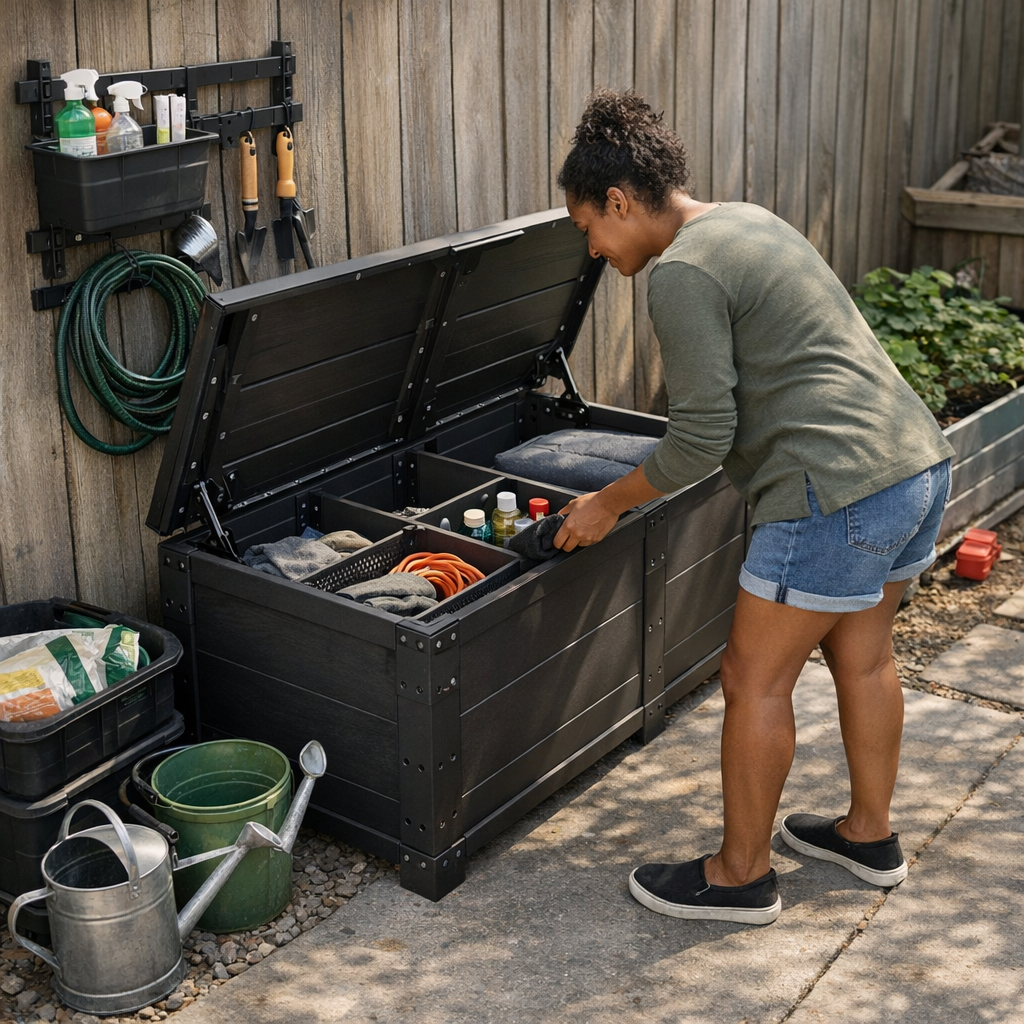
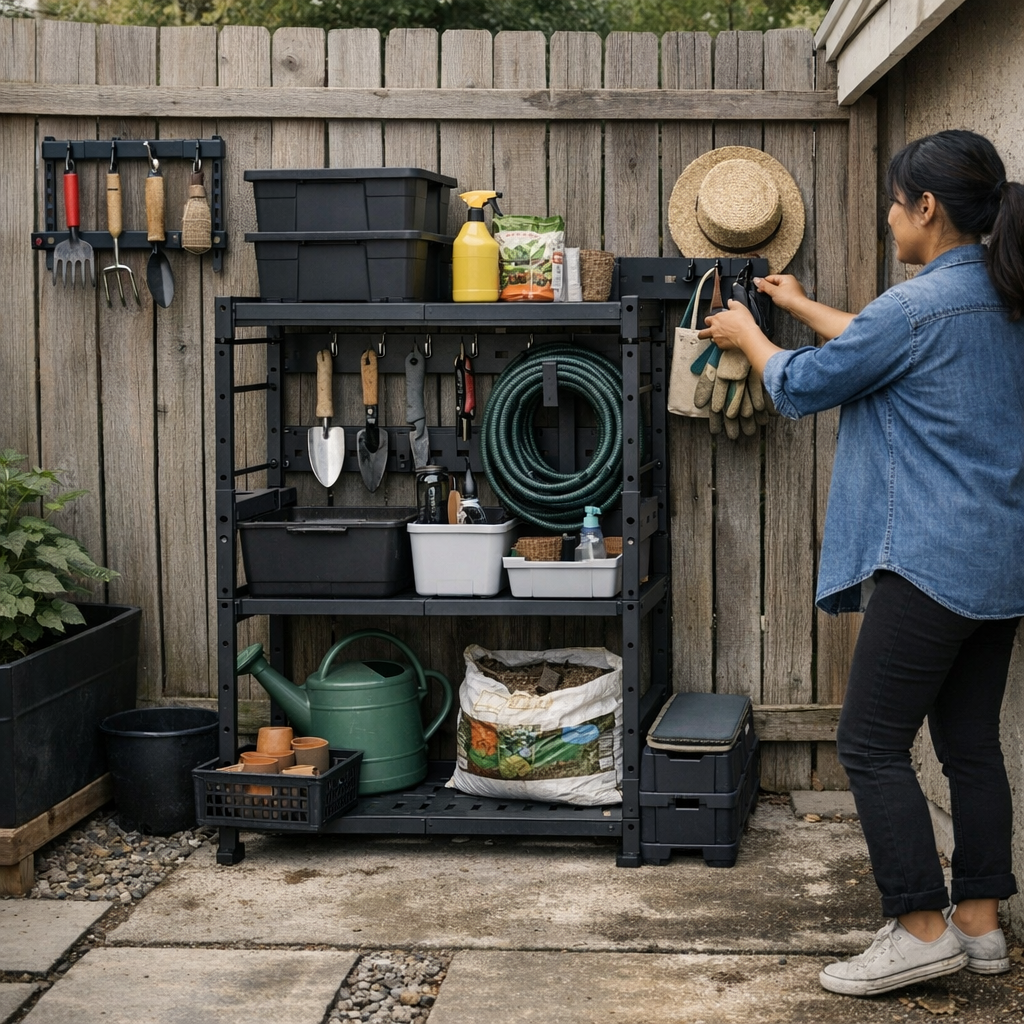
  • Designing Outdoor Storage for Effortless Daily Returns and Less Clutter

    Most backyard storage fails in the same spot: not when you run out of room, but right after you put the tools down and walk away. That perfect “reset” you did on Sunday slips the moment returning gloves or a hose means navigating around jumbled bins or sidestepping stray gear. If tossing tools on the nearest flat surface feels faster than actually putting them away, that “organized” zone turns into a daily obstacle course that slows you down and builds new clutter almost instantly. Every parted pile or blocked path quietly signals: this setup isn’t helping—resetting is just one more task, not part of the flow.

    Why Does the System Start Slipping?

    Freshly cleaned corners and crisp bin rows look good for a single morning. But step back into real use: ten minutes clearing leaves, then carting grass clippings with muddy gloves, distracted by a neighbor or chasing a restless kid. Suddenly, that line of baskets along the fence is already breaking down. One item dropped “just for now,” then another left balanced on top—and by the middle of the week, the bins are a jumble, the paths are blocked, and the Sunday order is gone.

    The problem isn’t lack of space—it’s the gap between neat storage and how the area gets used. A row of bins, shelves, or patio cabinets lasts exactly as long as nobody’s in a hurry, and everyone’s hands are clean. During real days—with surprise rain, rushed afternoons, or too many hands searching for the same trowel—there’s no patience for careful returns. The spot made for easy access becomes inconvenient just when you need it most.

    The Return Flow Breakdown

    Outdoor organization doesn’t collapse in a dramatic mess—it quietly unravels every time a return is just a little too annoying. If getting the hose back in its bin means dragging past soccer balls or shifting a pile of rakes, “back where it came from” turns into “anywhere for now.” Blocked walkways, jammed entryways, and junked-up corners multiply in places where the return path takes too much thought or too many steps. These friction points feed small, persistent messes: that dead patch between house and fence, the side of the garage door where brooms pile up, or the end of the wall rack you can’t reach without moving a planter.

    Picture this: You push through the side yard, already loaded down, only to find the secateurs wedged under someone else’s boots. You don’t fetch them; you grab the hand fork that’s loose on the shelf instead. When wrapping up, you skip finding any bin at all—just drop the tool on top of the nearest pile, promising yourself you’ll “fix it later.” By Friday, fixing anything feels pointless; the routine break has become the new routine.

    Invisible Bottlenecks and Overflow Traps

    The worst clutter magnets aren’t designed—they just happen:

    • The footpath from back door to gate, always snagging jackets, boots, or yard toys nobody wants to wrangle back inside.
    • A corner where a rolling cart should make things easier, but now can’t budge because it’s boxed in by soil bags and buckets holding “project leftovers.”
    • The fence line loaded with hooks, yet half of them hang empty because returning tools there means detouring behind a stack of planters or tripping over a hose.

    These aren’t storage shortages; they’re weak return routes and awkward movement paths. Even when there’s empty wall and floor, people dodge the setup instead of using it. “Visible” organization means nothing if there’s a step, shuffle, or squeeze before every return. Clutter always collects first in the places where the walking route gets blocked.

    Movement Before Measurement

    Most outdoor storage looks like it fits—until you use it. The setup that squeezed three bins into the side yard now means sidestepping with a rake or garden bag, and reopening the lid means moving something else first. Modular cabinets along the garage wall seem perfect—but only when the path is empty. As soon as a bike gets leaned against them or a week of rain throws gear everywhere, opening a cabinet feels like restaging the whole yard.

    Try the after-rain reset: soggy gloves, muddy trowels, and scattered dog toys dumped “for now” onto the closest lid, or wedged at the gate. Every extra movement—lifting a bin, shifting a planter, reaching around a tarp for a hook—makes the return more likely to get skipped. These aren’t big failures, just small, repeated delays that add up to rooms and corners filling with spillover before the week is half over.

    What Actually Changes the Flow?—The Side Yard Example

    Visualize the no-man’s-land between your house and the fence. Early on, you lined the ground with storage cubes and, for good measure, installed shelves above head height. But after two weekends, the cubes are jammed with mixed tools, the shelves hold old flower pots, and the ground itself is half-blocked by a weed trimmer and hose. The flaw: nothing you use daily has a quick, visible landing spot—returns get jammed into whatever happens to be loose space.

    Replace the floor cubes with a row of wall hooks, all at shoulder height and right next to the gate. Now, there’s no bending, no sorting, no guessing where things go. Gloves, pruners, and the trimmer hang in plain sight. Returning them takes a single, obvious motion—not an act of willpower. If an item doesn’t make it back, it stands out, easy to fix. The shift isn’t in looks—it’s in the rhythm: returns are almost automatic instead of awkward, and resets never pile up.

    Setup Tweaks That Shift the Routine

    The right change is usually small, but targeted:

    • Single-purpose, visible “homes” for the most-used gear: Wall hooks, mini racks, or labeled cubbies at arm’s reach. If you use it every day, it should have a dedicated spot you see from where you stand when you finish.
    • Closed, consolidated storage for rarely-moved items: Cabinets or chests belong in the background, not as the main return path. Daily essentials need to be as open as possible—no lids to lift, no doors to open, no stacks to sort.
    • Short and direct return zones: Place return spots no more than a couple of steps from the work zone—inside the gate, beside the path, at the patio edge. Anything further encourages the “just drop it” habit.
    • No reshuffling needed: Avoid setups that force you to lift or move one thing to put away another. Make sure nothing “blocks” the daily flow—if you find yourself shuffling pieces after any normal use, it’s a sign the layout isn’t matching the rhythm.

    Real Setup, Real Difference

    Outdoor areas work best when storage follows movement, not just measurement. Systems that support quick, in-passing returns beat anything that looks tidy but interrupts use. When the setup makes the most-used path obvious, resets shrink from a dedicated chore to a 10-second habit, no matter how hectic or muddy the day gets. Even on the messiest afternoon, you’re only one or two small moves away from “ready to go” again, not a full reorganization.

    This isn’t about showroom looks or perfect lines. The win is in a storage corner, garage edge, or fence zone that shrugs off resets and never needs a round-two cleanout. Place what you use most right where you naturally walk. If movement feels easier, if returns happen without afterthought, the setup is doing its job—spare yourself the slow returns, constant reshuffling, and those nagging overflow piles.

    See real outdoor storage built around how your space actually works at TidyYard.

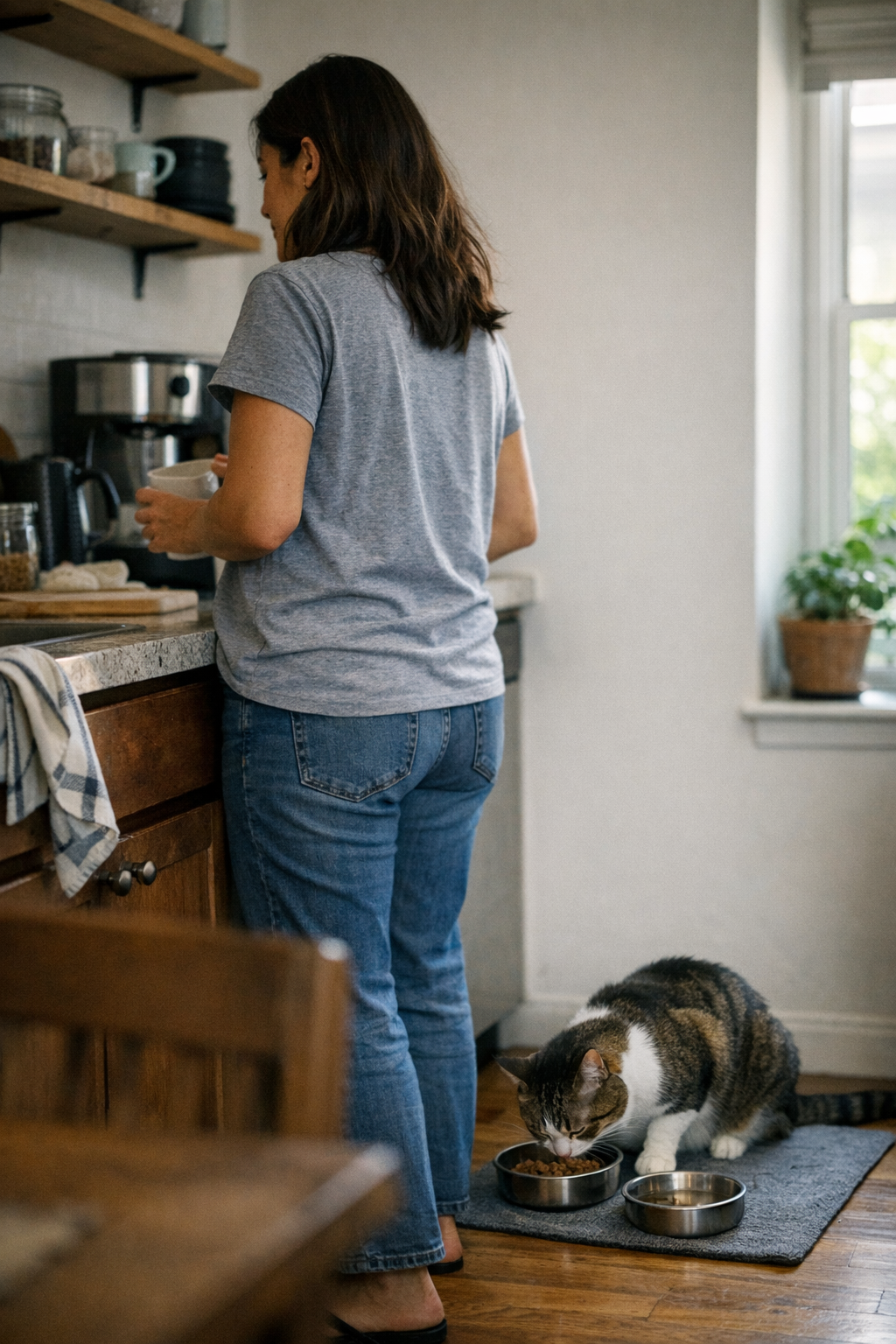
  • How Hidden Cat Treat Storage Transforms Your Kitchen Routine

    Visible cat treats on the kitchen counter aren’t just a cute convenience—they’re a repeated disruption waiting to happen. By day three, the shortcut of leaving treats within reach backfires: reaching for your bowl means nudging past a determined cat, and wiping a counter is delayed by paws perched in the way. Treat containers left out fuel a constant low-grade interruption—where every meal, refill, or cleanup gets tangled with a hopeful feline and a kitchen that never quite feels reset. It’s not mess you see, but friction you feel, and it doesn’t level out. The room starts working for your cat’s routine, not yours—revealing the overlooked cost behind a setup that seemed harmless on day one. StillWhisker setups exist for exactly this kind of lived, repeated kitchen struggle.

    How visible treats rewrite your kitchen routine

    An open treat jar looks innocent, but it quietly rewires your space. Forget the idea of quick coffee or a one-move meal prep: every entry into the kitchen announces a reward, shifting your cat’s “patrol zone” to your highest-traffic spots. Feeding resets mingle with distracted paw traffic, and every clink of dishes triggers an expectant sit, a stretch to the counter, or a blockade near the cabinet you need. “Cat time” no longer waits for meal cues—it’s blended with every door swing and every second you walk past the treats. Practical surfaces become contested zones by midweek, and what started as “just a few seconds saved” turns into a loop of sidesteps, repeated pauses, and minor reroutes just to keep the flow going.

    Routine disruption snowballs. During the breakfast rush, you’re grabbing the kettle while a cat hovers near the treat box, making you work around a living obstacle. Instead of one quick wipe-down, you’re picking fur or prints off places you didn’t expect. Surfaces feel busy before the day even starts, and “counter time” changes—no longer yours, and impossible to keep predictable.

    The friction between looking tidy and feeling smooth

    Open treat containers might look neat, but the real mess is invisible. The “tidy” setup means less debris, but more body traffic: each time you reach for a utensil or close a drawer, there’s a small but real negotiation to move a cat just to finish the task. Clean-looking doesn’t equal workable. The smooth routine you imagined wears down as you’re resetting after paws edge into the very spots you wiped down ten minutes earlier. The difference shows not in crumbs but in time lost walking around the problem that shouldn’t even be there.

    You start noticing cleanup drag: more time spent circling that smudge at the counter edge, or tracking down wipes because prints—cat or human—keep reappearing at the treat zone. The pattern isn’t about visible debris, but about one misplaced signal making every simple task a multi-step process.

    Where convenience becomes a maintenance headache

    What seemed smart at first—treats in plain sight for quick handouts—turns on you as days pass. Instead of a streamlined routine, you’re managing a kitchen that can’t stay clear. Each treat break ensures your cat shows up for the next round, lingering in the room instead of roaming. Meal prep gets layered with shifting bowls, blocking paws, and reset supplies, putting your own flow permanently second to the cat’s curiosity. Clearing the counter is no longer one-and-done: now it’s checking for crumbs, brushing fur away, and grabbing an extra towel when the handout leaves residue or a surprise pawprint.

    By the weekend, with more family traffic and kitchen use, the pattern worsens. The area looks tidy—at first glance—but it’s actually a zone of constant negotiation. Setup that started as “convenient” doubles back, adding layers of minor friction at every transition between your tasks and your cat’s expectation.

    Moving treats out of sight: what really changes?

    Shift treats to a closed cabinet or high pantry shelf, and the most obvious benefit—clearer surfaces—is only the beginning. Your kitchen regains its intended function: without a visible reward, cats disengage from the routine and stop blocking off paths or camping near the fridge at the sound of bags or containers. Cleanup speeds up. There’s less “extra” wiping, fewer paw-prints materializing at the counter’s edge, and a return to surfaces that actually stay reset after you use them. Mornings become what they’re supposed to be—direct, no rerouting or cat-dodging for simple prep. Evening routines quiet down, too: you’re not answering a meow with a reflexive treat, and you aren’t delaying tasks to clear feline patrols from the path.

    The shift isn’t just for visual order—it rewrites the rhythm. The only cat signal left is the actual feeding mat, not a lingering question mark at every countertop.

    What stays convenient, and what genuinely improves

    Pushing the treat jar out of sight isn’t about forgetting treats entirely—it’s about deciding when a reward actually happens. Some owners worry they’ll skip the treat altogether, but the half-life of that worry is short. Now the reward is on your timing. It’s a choice during feeding, or a deliberate break—not a default response to every step into the room. Impulsive requests drop, and you’re no longer stuck predicting a cat’s next move just to finish basic prep. The kitchen feels less like a negotiation, and both you and your cat settle into more reliable habits.

    Repeated interruptions: noise that never quite disappears

    Most indoor-cat households know the difference between “looks organized” and “feels livable” arrives in tiny, aggravating bursts. If you’ve ever walked away from your tea, found it cold because you lost ten minutes maneuvering around the treat zone, or cleaned the counters only to find new prints hours later, you’ve met the real cost: a pattern that keeps resetting itself as long as the visual signal remains. Even attractive new containers or matching baskets can’t fix the loop if the reward stays in constant view. What slows you down isn’t a style issue, but persistent, low-level interference—a cycle you spot only after living through it day after day.

    The only way to truly break the cycle is to move the treat signal out of the flow zone. Not all resistance is visible—but when you finally clear the pattern, you notice fewer stops, fewer double-cleanups, and a kitchen that serves human routines first again.

    Practical tips for smoother kitchen routines

    • Move treats to a closed cabinet or high shelf that isn’t part of your daily-use path. Keeping the signal distant means the area functions for prep and cleaning, not repeat reward breaks.
    • Keep cleaning tools within easy reach—a nearby closed drawer with towels or wipes ensures you aren’t stopped cold by new prints at an awkward moment.
    • Reserve counter “prime space” for items in permanent use. Don’t let a convenient treat jar gradually claim real estate needed for mixing, storage, or everyday tasks.
    • Watch for shifting patterns. If your cat starts waiting in a new part of the kitchen, adjust placements before paw traffic reclaims a surface you need most.

    Takeaway: the gap between “looks ready” and “feels ready”

    The hardest truth about indoor cat setups is that what looks settled can still feel slow, cluttered, or inconvenient in repeated use. Something as minor as a visible treat jar can quietly rewrite your entire daily flow—turning easy resets into multi-step interruptions and a tidy surface into a repeatedly contested zone. Retreating the treat signal isn’t a cosmetic move—it’s the key to getting your kitchen function back, restoring smoother movement, fewer delays, and mornings and nights that finally work for you first, not the cat’s next reward loop.

    For tools and setups designed with real, repeated indoor-cat routines in mind, visit StillWhisker.

  • Simplifying Cabinet Categories for Easier Maintenance and Faster Access

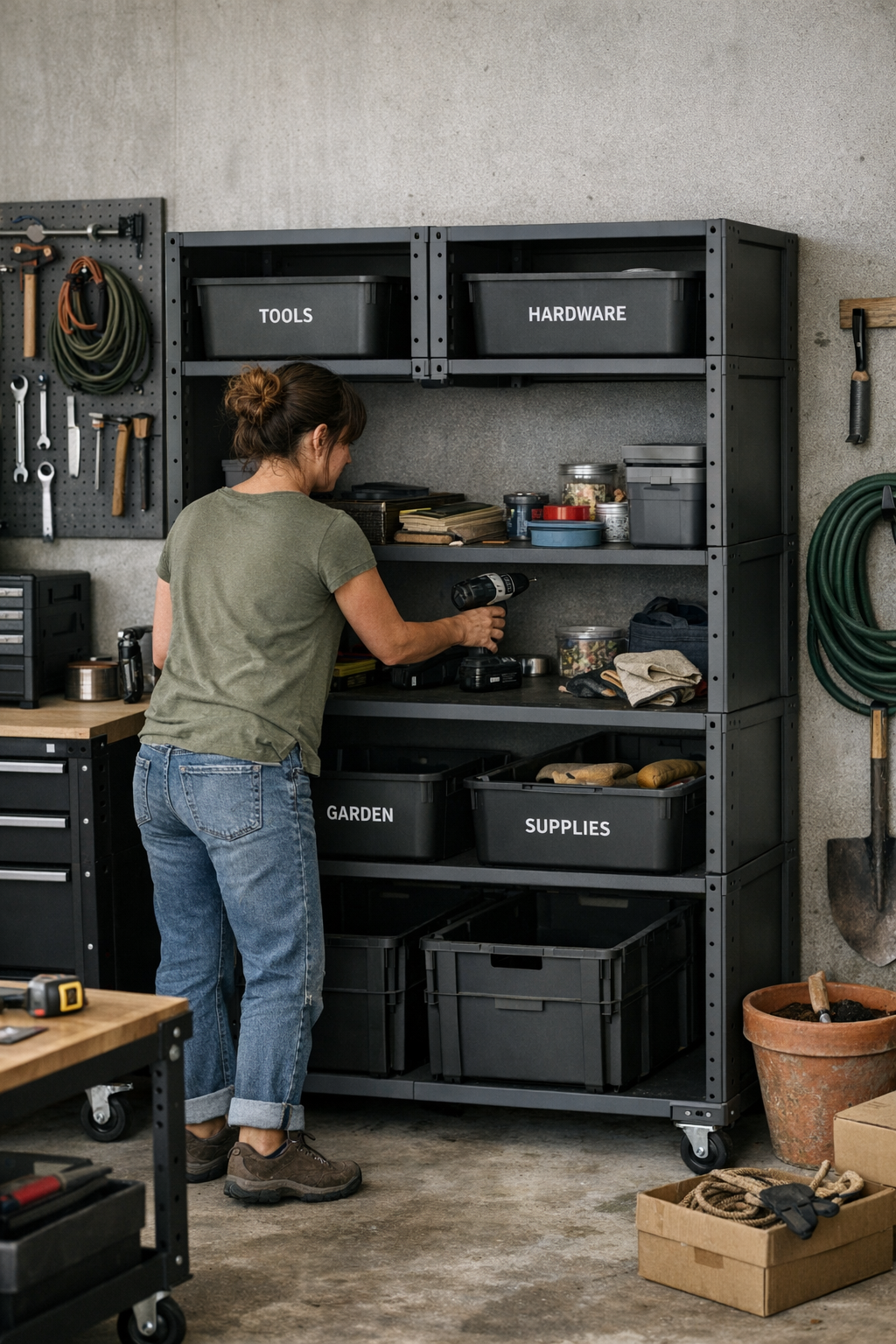
    The freshly organized cabinet always looks convincing—bins lined up, every shelf accounted for, labels sharp enough to impress any guest. But that first wave of satisfaction crashes fast. By day three, you’re prying a cartel of containers out of the way just to get to your favorite wrench. Your arm snakes past the “Garden” bin because the pruners never made it back after the last project, and somehow there’s a loose pile of drill bits wedged into the nearest open nook. The cabinet isn’t backing you up; it’s calling your bluff.

    When an Organized Cabinet Turns into a Speed Bump

    Garages and workspaces aren’t showrooms—they’re built for motion. On launch day, every shelf shines under its new labels: “Painting,” “Garden,” “Electrical.” Fast-forward one busy week, and those same bins become roadblocks. Picture yourself halfway through a project: Do you really stop to analyze where a paintbrush belongs, or do you shove it where there’s room and move on? Instead of streamlining your moves, the system quietly inserts extra steps—a slow creep of shelf nudging, bin swiveling, and diagonal slides as you sidestep whatever cart is hogging open floor.

    It’s more than inconvenience: with every trip, you negotiate old decisions. That promising wall unit holds tools hostage behind a curtain of containers, and “modular” means swapping bins until your pathway closes in. What looked tidy now feels like a maze. Your walking line, once clear, is blocked by boxes of overflow or that awkwardly-placed cabinet edge you keep skimming with your hip. Meanwhile, dead corners become havens for cast-offs, and resets only restore the look—not the real flow.

    When Organizing Gets in Its Own Way

    It’s easy to over-categorize—tiny bins for every size screw, a tote for each half-finished project, a cord basket for cables you haven’t used in months. But the busy reality is rarely granular. Most action lives in just a few sections: the “everyday” bin, the catch-all shelf, the space near the door. The rest sits half-empty or fills randomly with overflow. Each trip from the yard or bench turns into a guessing game: Do I force this gear into an overstuffed box, or do I leave it in a growing pile?

    This is when small annoyances compound. Floor space begins to vanish under “temporary” stashes. The drill lives with the garden stakes—just until next weekend, you promise—and anything odd-sized lands on top of whatever’s closest. Resetting doesn’t feel like organizing anymore; it feels like you’re hunting for loopholes in your own system. Over weeks, the search time grows, while the supposed order falls behind the pace of your real work.

    Stop Micro-Sorting—Try Flexible, Broad Categories

    You don’t need an index—just a handful of smart, broad zones that absorb real-life mess. Three to five big categories per standard cabinet clear out daily gridlock. A sturdy “Hardware” bin eats up what once clogged three separate boxes. A “General Tools” catchall means the stray wrench actually has a home, not a pile between micro-bins. The more your setup flexes by day, the less you find yourself stuck reshuffling by night.

    This works especially well for modular units you want to keep adapting. Today it’s a bike tune-up, tomorrow it’s soil mixing for a planter box—gear changes, routines zigzag. Fewer bins to open, fewer decisions to make. When overflow hits, it slows you down less: you can actually find space without raiding the floor or playing cabinet Tetris. Movement through the garage stays quick, not clogged by the choreography of micro-containers.

    Keep One Shelf Open—Your Setup’s Pressure Valve

    Deliberately leave one shelf empty and unassigned—a true landing zone with no questions asked. Finish a job, dump those awkward extras here. By morning, a single glance resets the area—nothing buried, nothing trapped, just a quick sweep and you’re back to ready. You sidestep the classic frustration: no standing around re-labeling bins, no reorganizing three containers because you picked up a new part or tool. This one decision absorbs the flux that otherwise floods your floors and eats your energy every reset.

    Telltale Signs Your System is Failing Your Routine

    You know your storage plan needs help if you spot these patterns:

    • The same shelves are overrun while others gather dust.
    • Every session means shifting bins just to retrieve regular-use tools.
    • Gear collects near doorways or on benches because there’s nowhere that “makes sense” for them.
    • Piles mushroom in corners you rarely visit—overflow that never gets properly put away.

    When these inefficiencies show up, resets drag, and you lose momentum every session, the routine has started serving the system—not the other way around. Over a season, wasted steps and constant negotiating with your cabinet decisions become a drain that makes every project less inviting.

    Design for Recovery, Not Just Display

    The real payoff isn’t that “brand new” look after a deep clean. It’s how little thinking and shuffling you do after a jam-packed weekend. Build your setup for quick recovery: broad categories, a visible landing zone, open movement. Walls and floors stay clear enough to move without detouring. That awkward dead zone—the one that eats all the stuff you’d rather forget—finally empties out. Resetting the space stops being a second job. What you gain isn’t perfect storage; it’s a garage or shop that makes the next day easier to jump into, with your routine flowing instead of fighting back.

    For more practical storage ideas and modular setups that fit the reality of garage work, visit StackNest.

  • How Proper Lighting Accessories Prevent Daily Workspace Disruptions

    Most indoor lighting setups unravel the moment you start living with them. That neat run of cables pinned flush against your desk? It only takes one early-morning reach for a pen to bump a lamp or pull a cord into your workspace. A bracket looks steady until the third time you slide your laptop across, and suddenly your power cable is dangling where your arm needs to go. What looked clean on day one turns into a series of quick fixes—small, persistent annoyances that grind into your daily routine. It’s more than a visual slip: when the lighting and supports don’t fit real movement and habits, the setup interrupts your work, not the other way around.

    Tidy on the Surface, But Unsupportive in Practice

    Surface order misleads. Cables appear hidden, brackets sit tight, a lamp beams brightly—yet the real test begins as soon as you start using the space. Underneath that crisp appearance, friction builds fast:

    • A lamp’s base slides inch by inch as you adjust your chair, dragging its cable back out where your hand lands.
    • Cable guides corral wires, but one loop escapes and traps your backpack as you leave in a rush.
    • Shelf-mounted lighting, routed neatly at first, droops or kinks as you reshuffle books or plug in another device—by midweek, the “organized” look is gone.

    These aren’t one-off fails. They repeat: a task light drifting out of reach; surface clutter regrowing every morning; the sharp snap of a plug pulled loose for the second time that week. A supposedly “done” setup keeps leaking discomfort right into tomorrow’s tasks.

    Where Most Setups Falter: The “Almost” Factor

    Most lighting weak points remain invisible until daily life shakes them loose. A new clamp feels sturdy—until you brush past and it tilts, or a wall light seems sleek until a cord starts blocking the walkway. The gap between design and use widens in ordinary moments:

    • Desk edges: A single reach knocks a cable loose, the lamp wobbles, and now you’re nudging everything back just to clear workspace for your hands.
    • Shared rooms: Wall-mounted fixtures keep cords out of view—until foot traffic or a tossed bag presses them into awkward, high-traffic spots where they catch or get crimped.
    • Shelves: LED strip lights and panel lights lose their alignment as everyday items nudge past them. Cords slip, lines bend, and the illusion of “trim” vanishes with each routine grab for a book or charger.
    • Glare zones: A lamp positioned so carefully during setup throws mean, unmovable glare onto your monitor—or lays a bright bar across your notebook—after you adjust your seat just once.

    The split between “looks finished” and “actually works” isn’t subtle—it shows up every time a lamp or bracket forces you out of the flow of work.

    The Subtle Toll of Repeated Friction

    Glare. Edge misalignment. Cables creeping back into play. These problems don’t burst onto the scene—they seep in, chipping away at comfort and focus:

    • Work stalls easily: Tiny pauses add up as you untangle wires, readjust a drifting lamp, or push a bracket back into place. Minutes are lost in pieces.
    • Lighting misses its mark: That handy bright spot on your keyboard or at the table edge slips out of reach, so you find yourself reaching, twisting, or shifting position—again and again.
    • Attention scatters: You’re caught maintaining the setup instead of using it—resetting cables, checking glare, propping up brackets—rather than staying on task.

    These small breaks feel trivial in isolation. In reality, they form a slow, constant undermining pressure—a reminder that something about the setup isn’t matched to how you actually move and work. Most often, it’s a section of cable support, a bracket, or a plug housing that was chosen for appearance or general fit, not for your routine’s real friction points.

    Real-World Scenes: The “Almost” Setup Revealed

    A Desk That Resets Itself—But Not For You

    Imagine two LED task lamps. One sits on a standard clamp, cable trailing behind. For a day, the look is crisp. But by Friday, the clamp is loose from a few careless nudges, and the cord snakes back onto your workspace—just as your sleeve skims past or you drop your phone. You’re fixing, not focusing. The lamp with a snug, surface-level bracket tells a different story: its cable slips close behind your desk edge, out of hand’s reach. After a week, it hasn’t moved. You’ve barely noticed it at all—because you haven’t had to.

    Shelf Lighting: When the Fix is More Than Visual

    Mounting a slim LED panel beneath a shallow shelf feels solved until your daily habits return. A book slides off, jostling the fixture. Power cords inch forward as chargers get swapped. Glare suddenly hits in places you never saw coming, and light lines lose their edge. Only after anchoring a cable guide precisely at the shelf’s rear does the fate of that tidy zone change—no more cord drift, no more edge shadow, no more need for nightly realignment. Function overtakes appearance, cutting out routine frustration at the source instead of just hiding it for photos.

    Why Minor Lighting Accessories Make Major Differences

    Under-rated accessories solve underrated problems. The effect isn’t visible on install—it shows up after dozens of quiet tugs, side-shuffles, and cable catches. A rigid bracket behind your work zone holds the lamp steady through weeks of motion. Low-profile cable anchors along edge lines prevent cords from crawling back out into sight. Even a single well-placed support can hold an entire setup together, putting an end to a pattern of slips and resets you’d otherwise accept as normal. The difference is noticed not on setup day, but on day ten, when you realize you haven’t reached to adjust a thing.

    How to target real trouble spots in your lighting setup:

    • Test real movement before mounting: Lean in, slide your chair, reach under a shelf, jostle the cable path—anything you do in a normal day. You’ll spot where cables will get knocked loose or where glare might find a new angle.
    • Secure the cable’s last inch: The moment a power cord leaves its light or bracket and bends toward a plug, friction begins. One well-placed bracket or support right at the cable’s endpoint can prevent the constant drift, loop, or grab that pulls your focus—without requiring you to rethink the entire setup.

    When a Tidy Setup Isn’t a Stable One

    Plenty of cable organizers or lamp brackets promise a cleaner look, but stable function is rarer. If you catch yourself making the same cable adjustment or fixing the same angle twice a week, that’s a red flag: the support is wrong for your habits. The nearly-correct setup is the quiet thief, steadily eroding comfort, and making a desk or shared surface feel like an obstacle course more than a workspace.

    The smallest, best-placed lighting accessory delivers the most invisible win: you simply stop noticing what used to annoy you. Not because you gave in, but because the setup works with how you actually move, rest things, and use light along each crowded edge. What holds up isn’t the prettiest or the most minimal—it’s the cable guide, bracket, or mounting point that prevents drift, stops glare, and keeps your hands free to get things done without interruption. In real living, setup stability always outlasts surface tidiness.

    Find lighting accessories, cable supports, and mounting brackets that hold up to repeated indoor use at LightSupport.

  • How Organizing Storage by Routine Transforms Daily Efficiency

    The thrill of a freshly organized closet—the rows of crisp bins, every label perfectly matched to its contents—rarely survives your first busy week. Socks stay with socks, for a day or two. But by Thursday morning, it’s no longer a question of where things theoretically “live”—it’s how much you have to shuffle, dig, or restack to actually grab what you need. Storage systems that look sorted on paper quickly reveal friction points nobody advertises: stacks collapsing, shelves giving way to scattered overflow, and daily essentials somehow always a step too far away.

    Why Category-Only Storage Doesn’t Last

    At the outset, sorting by category feels foolproof. Labeled bins for hats, scarves, notebooks; a plan where nothing ever mingles out of turn. But reality creeps in fast: getting today’s tie means removing two bins and a loose winter hat first. Your notebook slips under a heap of off-season gloves. The promised “grab and go” deteriorates into a maze of small obstacles—a routine of moving piles for one tiny thing, then not quite returning everything to its rightful home. Each extra shuffle slows you down just enough to spawn shortcuts: the umbrella stays on the shoe rack, keys migrate to an open shelf “for now,” and soon, the system flatlines under fresh clutter.

    It’s a pattern as old as busy mornings: You need three items—umbrella, keys, dog leash. All technically sorted, all in different bins, some up high, some behind another. You lose seconds at each stop, and the cost is cumulative. After a few days, bins stand half-open, stacks start to lean, and the “labeled order” is masked by drifting items and new overflow zones. Surfaces that started as blank are now default drop spots for whatever was too much hassle to put away “correctly.”

    When Visual Order Masks Daily Chaos

    The disconnect worsens as space gets tighter—entryway closets, overfilled bathroom shelves, the infamous “utility” rack. On paper, every item has a place. In practice, grabbing gloves means pulling out rain pants, because both are crammed in one awkward bin. The label says “gloves,” but you haven’t seen a matching pair in a week. Folded shirts mulch into wrinkled piles. By Friday, everything looks orderly at a glance but works against you in motion.

    Change the Flow: Organize for Movement, Not Just Match

    The most useful tweak is almost never about getting more containers—it’s about arranging for how you actually move. Effective storage fits your real routines—not just your inventory. Instead of splitting everything by type, cluster what you need together for your common sequences, right where your hand lands.

    An Entryway Closet in Real-Time

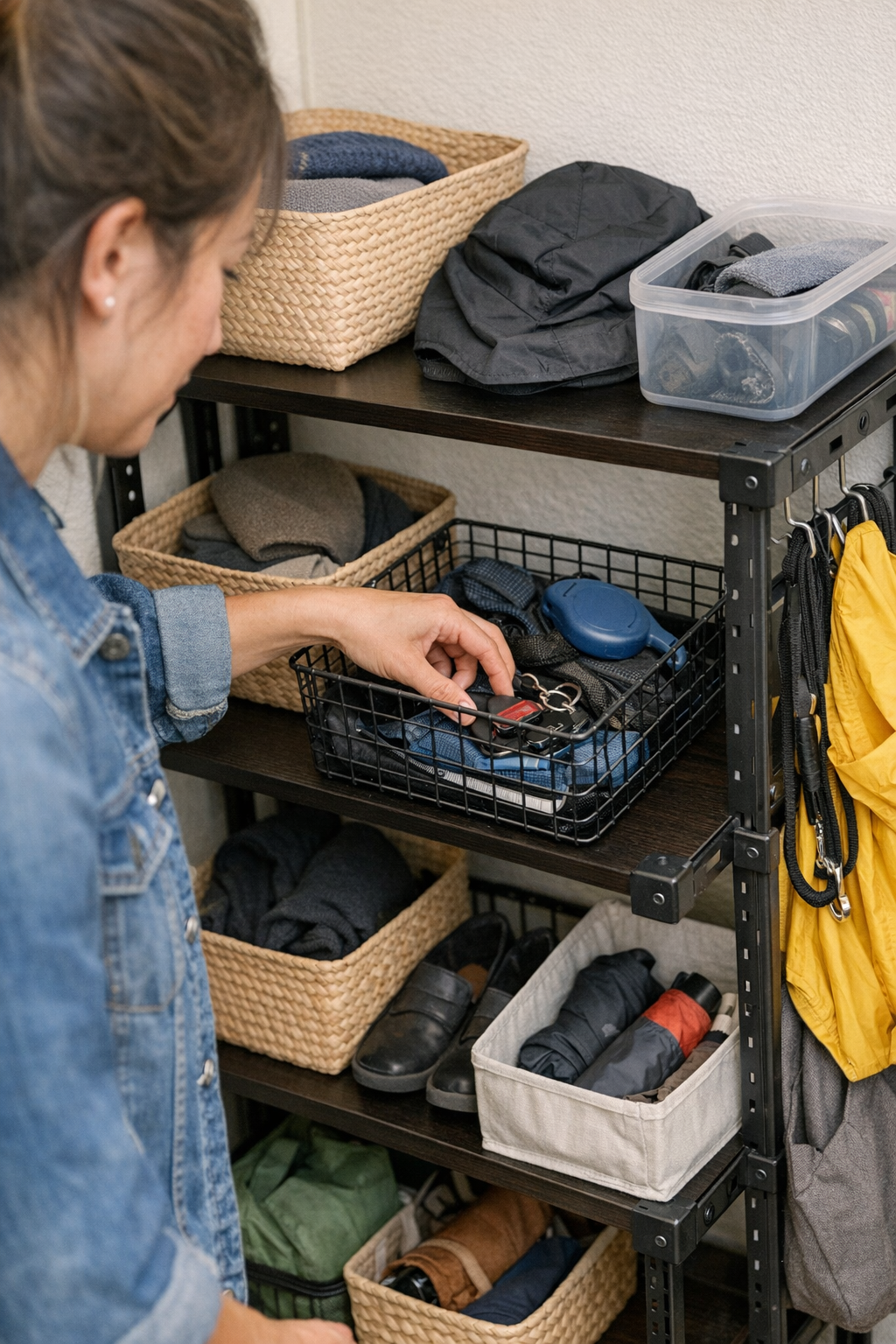
    Picture a front hall closet: if every dash out the door means hunting for keys, badge, umbrella, or dog leash, scattering them across several bins only ensures more searching and more mess. Instead, a single “heading out” bin—mid-shelf, always open—means one scoop gathers everything. No more crawling to the floor for fallen keys, no more guessing which basket you used last week. Return home, toss essentials back in, and move on. The routine tightens, surface clutter recedes, and the shelf resets itself with almost no effort because the flow matches the habit.

    Bedroom storage is no different. The magazine-perfect vision is rows of labeled stacks. But every day, you reach for what’s on repeat—jeans, a favorite tee, socks—not the special-occasion accessories. The taller and neater the pile, the more likely you’ll disrupt it or start improvising (folded shirts on top of the dresser, socks mixed in with workout gear) just to avoid the time sink of perfect sorting. Photos look great; real life, less so.

    Families and Shared Spaces: The Friction Multiplies

    In spaces everyone uses—family bathrooms, shared mudrooms, kids’ toy shelves—category-based order breaks down even faster. Labels help, but quick retrieval wins. A bin that gathers all bath-time supplies for the baby, or every hat and glove for school mornings, can save six separate digs every week. Open containers, by-the-door hooks, and grouped routine kits let anyone reset the zone in seconds. No more family scavenger hunts, no more secret piles tucked “out of sight.”

    Smart Tweaks for Storage That Keeps Up

    Disorder isn’t solved at a single sweep—it’s managed by real, repeatable tweaks:

    • Slide seasonal or occasional-use bins up and away, opening front-and-center spots for items you touch daily.
    • Replace many small bins with a single “action” bin—group the essentials together at one reachable level for the smoothest morning exit or evening wind-down.
    • Prioritize open baskets, trays, and bins for what comes and goes multiple times a day. Reserve closed or deep bins for true long-term storage.
    • Continuously adjust “prime real estate.” As routines shift—say, summer running replaces winter gear—swap contents between shelves so fresh habits have a front-row seat and old routines get demoted without a full overhaul.

    How You Know Your Storage Works (or Doesn’t)

    You’ll spot a system working when:

    • Stray gloves, keys, and charging cables stop drifting to every flat surface
    • Random piles rarely appear except during brief transitions
    • Resetting the main area after a busy day is a two-minute job
    • Any visitor (or family member) can find and return essentials without a walkthrough

    This isn’t about a picture-perfect, showroom feel. Storage that actually works survives week after week of messy exits, returns, and schedule pivots—without constant tweaking or frustration. It keeps you moving, not managing.

    If It Keeps Breaking Down, Try This

    If clutter keeps re-forming, or you constantly reshuffle bins to get at daily items, stop and scan—does your storage actually match how you move through the space, or just how things “should” be grouped? Reduce how high you stack, relocate your most-used items to where your hand naturally goes, and bring routines to the center of your layout—not the back row.

    One direct adjustment—like centering a “grab-and-go” bin for essentials—can change how the whole closet works within 24 hours. Suddenly, you do less work, surfaces stay clearer, and even at peak chaos, the gap between action-based and category-based setups becomes painfully obvious.

    For honest, practical tools to design storage that bends to your day—instead of adding another obstacle—find more at ClosetWorks.