
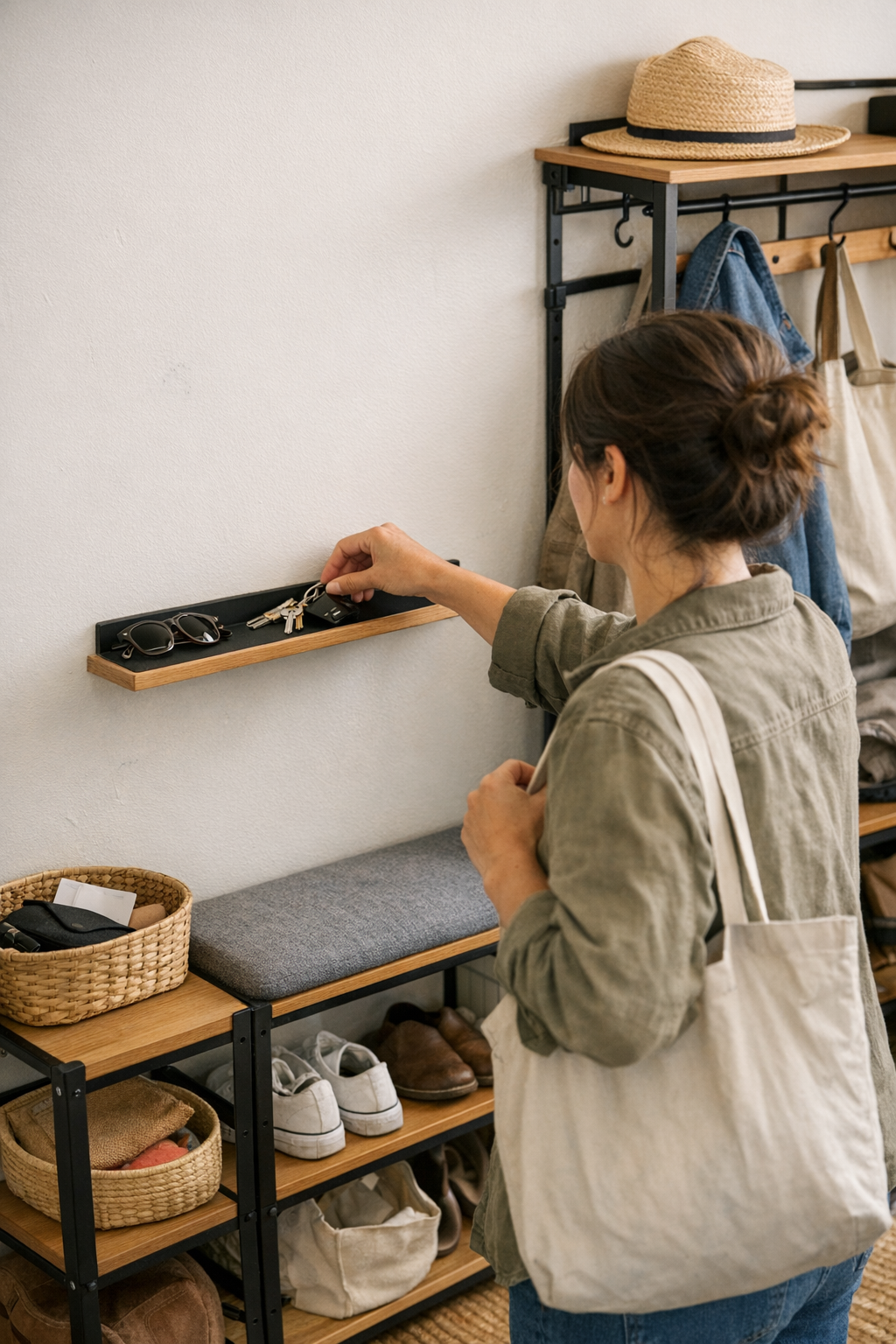
The entryway key shelf is where the daily difference between order and low-grade chaos is decided—often before you realize it. In real homes, the absence of a visible, single-purpose spot for keys means every threshold crossing invites a new delay. One day it’s keys vanished under a jacket on the bench, the next it’s another detour—searching pockets or rifling inside a catch-all bowl stuffed with mail, earbuds, and coins. As these tiny disruptions repeat, the whole area shifts: benches swallow overflow, shoes break formation and sprawl toward the hallway, and the reset zone—the space where you should walk straight in or out—clogs up. Failure isn’t dramatic; it’s a slow, stubborn spread, one misplaced key at a time.
Why Do Keys Go Rogue? Recognizing the Real Trouble Spots
Lost keys are just the first domino—entryway friction quickly multiplies if the storage setup is wrong. Baskets and deep trays look like solutions, but in repeated use, they breed confusion. Drop your key, and by morning it’s under old receipts or tangled with a dog leash. The surface that’s meant to clear clutter turns into a black hole where categories blur. What seemed tidy is now a sorting project every time you leave. Each search adds another reset, stalling your flow when you least want it—rushing out the door, already late. The mess isn’t just visual; it interrupts how the whole entry moves and recovers between uses.
Threshold Turbulence: How Clutter Starts to Spread
Here’s the pattern: you set your bag on the bench “just for tonight.” Next, the shoes you lined up last weekend drift sideways, the mail pile creeps along the wall, and your keys vanish beneath the lot. The entryway’s clear lane narrows after each rushed drop or short-term fix. Temporary placements—bags perched on benches, packages balanced on shoes—stick around, gradually jamming the path. Each person adds a fresh layer, and resets get slower, not easier. Instead of a smooth exit, you end up dodging obstacles and shuffling piles just to get through. The threshold stops being a passage and becomes a recurring headache.
The Shallow Shelf Advantage: Simplicity in Repeated Use
The best entryway storage isn’t about maximum capacity—it’s about never having to think twice. Deep trays and bowls hide your keys; a slim, wall-mounted shelf gives you a single visible target. No guessing, digging, or late-night pocket checks. The action changes: open the door, drop the keys, done—every time. The shelf edge becomes a built-in warning: if something else crowds your keys off, you notice fast, before it becomes a reset problem. The boundary is clear. Overflow can’t sneak in for days before anyone reacts. Instead, the shelf signals when it’s full—and makes fixing it instantaneous instead of another delaying task.
Real-World Reset: What Changes After Installation
Picture the actual rush: your hands are full, the dog’s leaping, phone buzzing in your bag. If there’s no shelf, keys get dumped wherever—banister, kitchen counter, balanced on a stack of mail. Each improvisation invents a new reset step for tomorrow’s routine. But a wall-mounted, shallow shelf stops drift cold. Now, there’s only one drop zone. The return flow clears up: you walk in, drop keys, move on—no reshuffling, no search detour. Even if the bench picks up overflow, the shelf doesn’t. Its only job never gets diluted. The weakest link—key access—is solved, so everything else gets less jammed, no matter how busy the week gets.
Invisible Efficiency: The Difference Between Looking Neat and Working Well
Entry setups that “look” organized—rows of baskets, deep communal trays—hide their downsides until the first crowded morning. Any deep container turns into a shuffle box. Wide trays become clutter magnets for everyone’s stuff. A narrow ledge with a visible stopping point—a 40 cm shelf right by the door—cuts through that. Keys are always out front, never pushed under mail or sunglasses. Even after five returns in a day, you see what’s crowding the edge and clear it on impulse instead of making a weekend project out of it. The shelf resets fast, stays predictable, and gives you a safety net when every other surface collects overflow. In a well-used entry, that difference becomes visible—and felt—by the end of the week.
Shared Space, Fewer Headaches
In families, shared apartments, or high-traffic entryways, one missing key can throw off everyone’s timing. The open shelf changes the dynamic: its position makes the routine obvious. No need to explain, nag, or retrain anyone—put keys here, pick them up here. The wrong setup—a communal drawer or deep tray—spreads blame and scavenger hunts. The visible shelf contains confusion before it starts: everyone adapts, and fewer resets are needed just to keep the threshold moving.
Keeping the Entryway in Motion
Swapping out that over-stuffed bowl or generic tray for a dedicated shallow shelf changes more than the look—it shifts the entryway’s entire rhythm. Bags no longer sprawl, because the shelf marks where the landing zone ends. Shoes don’t take over the walkway while you hunt for keys. Instead of constant micro-fixes, the area forms a flow that fits natural daily movement. It’s not about perfection—it’s about repeatable access. Once the shelf sets the rule, the entire transition space gets easier to re-enter and restore, day after day—even when the routine is at its busiest.
One Quick, Useful Habit Tip
Keep the shelf’s edge sharp: pair your reset with a regular action such as hanging your coat or opening the mail. That extra second to clear a receipt or stray glove prevents the shelf from dissolving back into random surface territory. Make the reset automatic, and clutter never gets a foothold.
Small, honest tweaks in the entryway do more than cut lost-key drama—they build a routine you can actually keep pace with. Nail access and return flow right at the threshold, and the entire zone stops fighting your movements, no matter how many times you come and go.