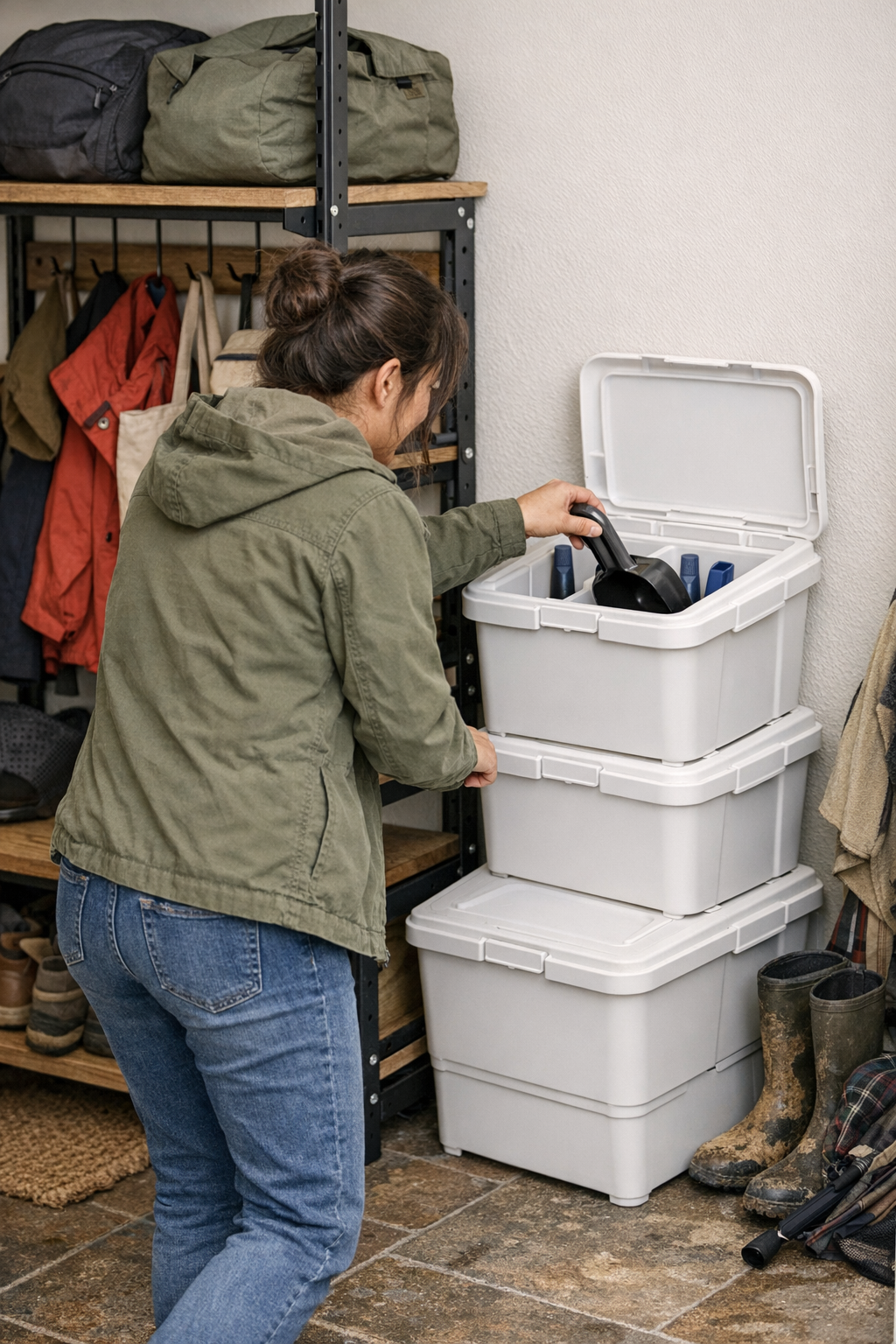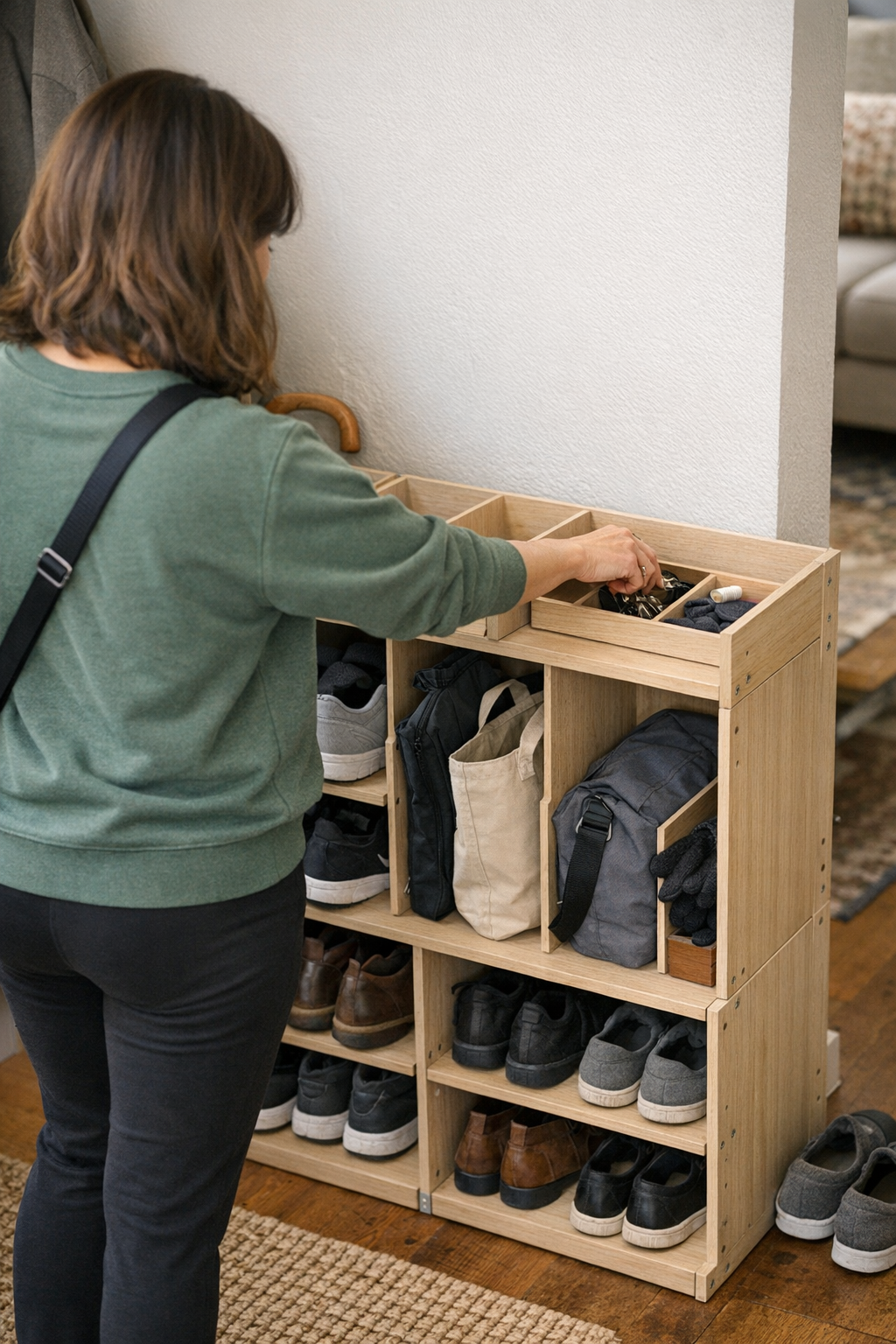
If your lint brush keeps disappearing, it’s not forgetfulness—it’s your entryway setup breaking down right where daily routines hinge. At first, it’s a small interruption: you reach for the lint brush and it isn’t there. But in a high-traffic threshold—where laundry baskets, bags, and shoes pile up—this single missing tool signals a larger problem. Visual order lasts until actual living starts. As soon as the morning shuffle begins, neatness gives way to drift: the brush slips behind a bag, gets wedged under the bench, or ends up hidden after one distracted reset. Each absence wears down your default reset—turning a two-minute filter clean into a slow, uncertain hunt at exactly the wrong time.
The Real Cost of a Hidden Tool in Transition Zones
Transition spaces—entryways, laundry corners, utility walls—aren’t designed for idle beauty. They have to survive dropped bags, scattered shoes, and whatever doesn’t claim a fixed, visible place. The lint brush is the first casualty. Out of sight, it becomes lost in overlapping routines: one person empties the dryer, another tosses in a messenger bag, someone else piles sports gear by the door. Miss one reset and the brush winds up blocked or buried. At first, you hardly notice. By week’s end, you’re brushing lint out of the dryer with your hand, skipping filter cleans, and watching tasks stack up because one tool is always “somewhere else.” Small absences turn routine resets into avoidable backtracking.
Invisible Calm, Lasting Disruption
Spaces that appear uncluttered only hide the real friction. Each trip through the zone now triggers another minor delay. Filter cleaning gets postponed for “later,” lint begins to build, and resets require hunting through the overflowed bench or the cabinet nobody ever opens. Outward order masks mounting inconvenience. Dryer performance lags quietly; chores stretch out. Hiding tools doesn’t just cost minutes—it chips away at the reliability of your routine and lets batch tasks multiply. The more hidden the brush, the more likely laundry gets neglected or fumbled under pressure, especially as returns and drop-offs overlap.
Why a Visible Slot Makes All the Difference
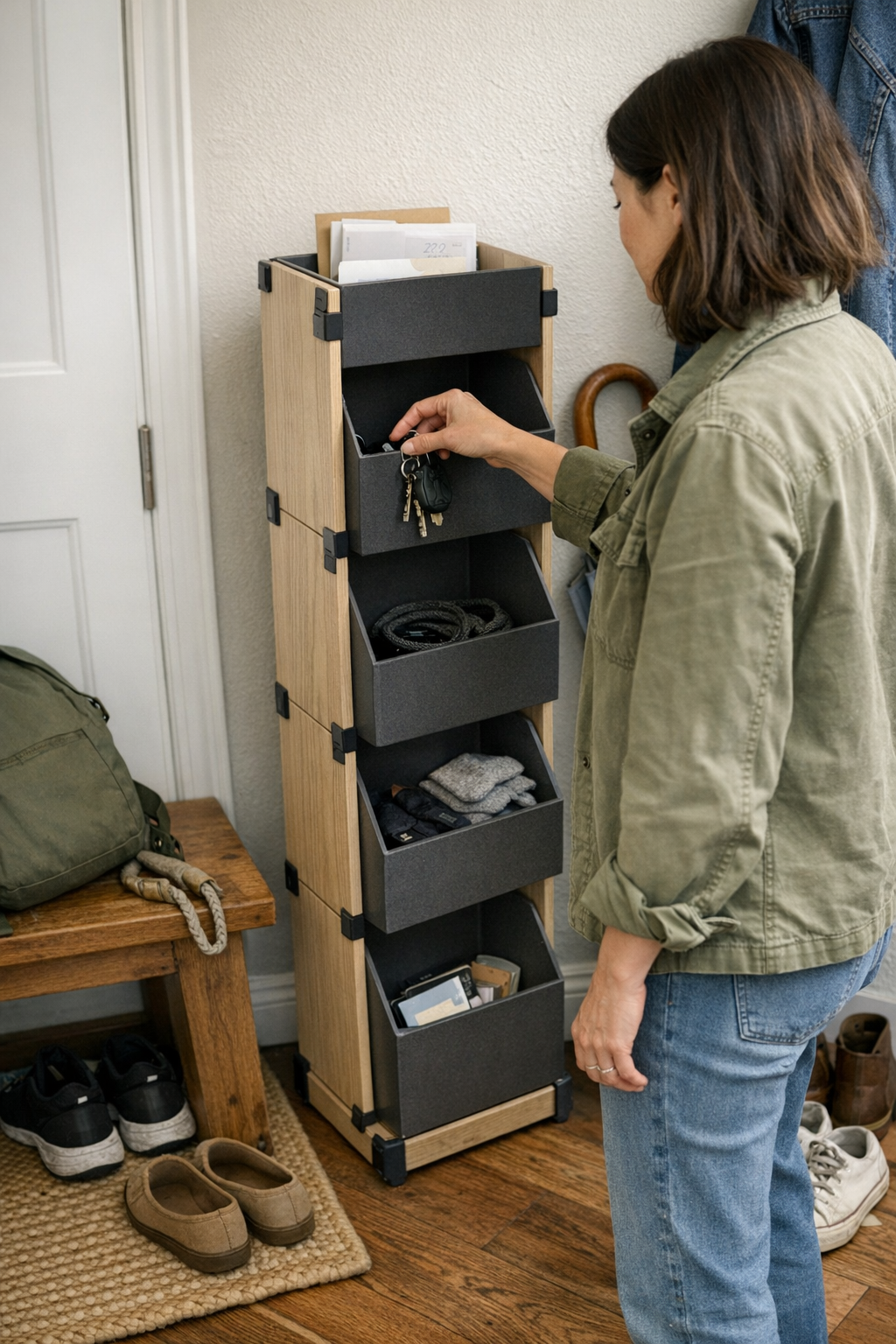
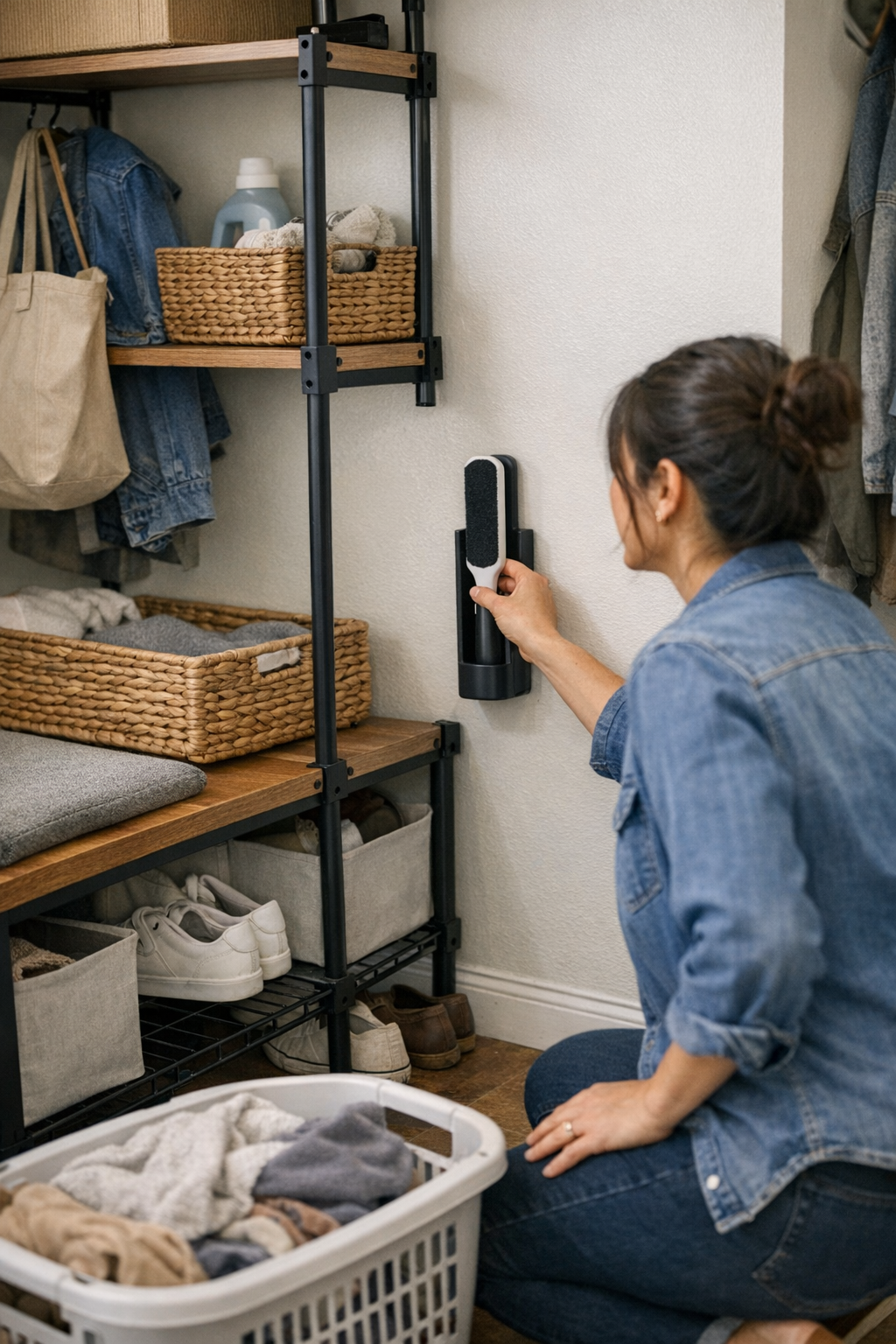
Visibility anchors the routine right at the threshold. Adding a visible lint brush slot—shoulder height, just inside the main entry or beside the laundry pass—breaks the drift pattern. The tool is always where your hand expects it, whether you’re hauling in a basket, dropping off shoes, or handling surprise guest traffic. Instantly visible and upright, the brush becomes a checkpoint, not an afterthought. The reset now fits the movement flow: you step in, brush in easy reach, filter gets cleaned without extra detour. No fighting cabinet doors, no stooping, no scavenging among half-packed bags or shoe rows widening across the threshold. When the setup answers real movement, not just visual order, every return runs smoother, even on the busiest days.
Open Access Beats Hidden Order
It’s tempting to hide everything behind doors or inside bins for a cleaner look. But hidden storage slows down real routines. In multi-use spaces, cabinet doors stick, bins collect stray charger cords, and friction spikes when the needed tool isn’t in direct line of sight. Every extra step—opening, rummaging, shifting overflow—invites avoidance or a “just this once” skip. A visible wall-mounted holder trims the process to one motion: finish, return the brush, move on. Every family member, guest, or tired parent sees the tool instantly—and the act of filter cleaning keeps happening, regardless of the morning’s chaos.
The Drift Scenario: Where the Setup Breaks
No setup survives untouched. Picture the threshold by evening: baskets pushing into walk space, two pairs of shoes edging wider, the bench overrun by loose mail and a zipped backpack. The lint brush, last used after Tuesday’s late load, has vanished without a trace. You come in holding laundry, spend a minute sifting through a busy cabinet, then skip the filter entirely because the search interrupts your path forward. Tasks pile up, dryer runs get inefficient, and next time you’re even less likely to bother. The zone that should support repeated resets becomes a bottleneck, all because a tool is “put away” somewhere nobody checks on the way through.
Visible Slot, Stable Routine
Swap out the delay. Install a wall slot or upright bracket at arm’s height, next to the everyday return path. Returning home, you drop the basket, spot the brush, and—without pausing to think—clean the filter. No bending down, no guessing game. Even at peak overlap—guests coming in, kids passing through—the brush remains visible, the flow unbroken. With deliberate placement, the reset cycle is self-maintaining and resistant to drift, not reliant on memory or luck.
Making the Space Work, Not Just Look Organized
Looking organized fades fast in shared thresholds. Hidden tools or deep storage bins hold briefly, but real routines break down in a matter of days, not months. Here’s how so-called “organized” setups crumble under use pressure:
- Bench surfaces intended for seating end up buried by overflow items
- Wall racks get swallowed by bags and jackets, not just gear
- Shoes fan out, mixing with tools and making retrieval awkward
- “Temporary” lint brush parking becomes the unplanned long-term spot
- Blockages emerge whenever one person misplaces an item, disrupting everyone’s motion
- Constant shuffling every time someone needs access, slowing every threshold pass
Visible lint brush storage solves for flow, not just appearance. A dedicated upright slot means filter cleaning happens automatically, even during household rush hour. The real test isn’t whether the space looks tidy for a photo—it’s whether the routine endures a week of normal use without breaking down or demanding constant resets.
Targeted Tweaks, Tangible Results
Effective setups cut out extra motion at the busiest point. A visible, shoulder-height slot doesn’t just save your knees or free up the bench—it removes half the mental excuses for skipping the task. When the brush always sits just where you move, the reset shrinks to a reflex. Those seconds saved add up: no one needs to debate where to look, and lost tools quit interrupting the rest of the routine. In small spaces or multi-person households, a single wall slot prevents the entire zone from turning into a holding pen for things nobody wants to deal with. The ongoing difference is immediate and cumulative.
Quick Tips for a Reliable Lint Brush Setup
- Placement determines success: Anchor the slot just inside your busiest transition area—high enough to reach, clear of foot traffic, and visible from the main walk path.
- Use upright, mount for one: Mount a wall bracket built for a single brush. Minimized clutter means the tool stays obvious and resets never become a pileup project.
- Keep it seen, not at risk: Choose a spot that avoids collisions—out of the path of swinging doors and away from where bags usually drop.
- Make return automatic: Integrate returning the brush into the natural flow after each reset—until it feels as inevitable as parking your shoes or setting down the mail.
The Payoff: A Routine That Doesn’t Slide
Adopting a visible lint brush slot is less about “tidiness” and more about making your transition space hold up under repeated pressure. It helps your setup work without added reminders, costly habits, or cleaning sprints every weekend. When laundry, gear, and people all share the same path and reset cycles, a visible slot is a safeguard—not a cosmetic fix. It trades fragile, photo-friendly order for lived-in, lasting function—reset after reset, with less drift and far fewer missing tools.