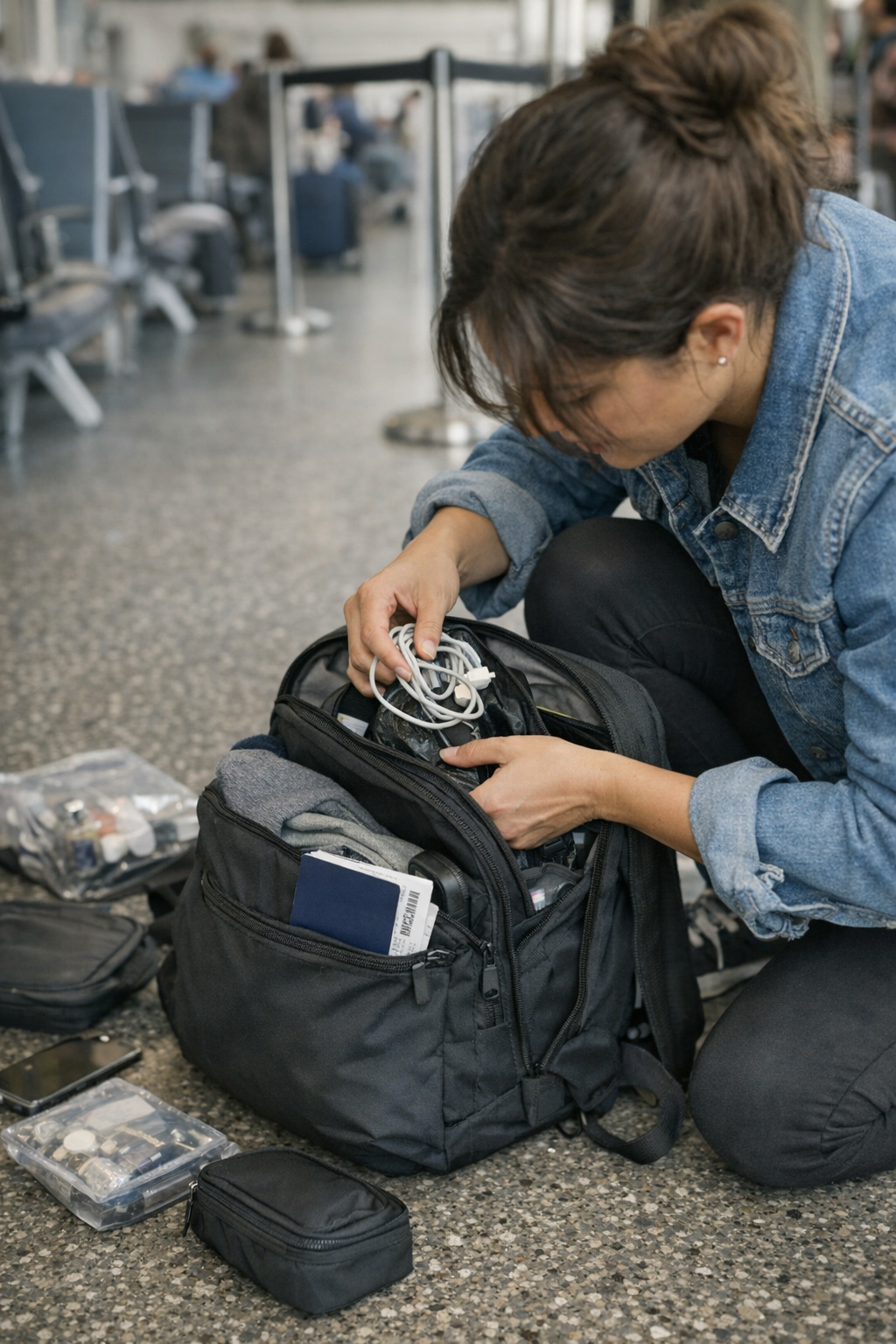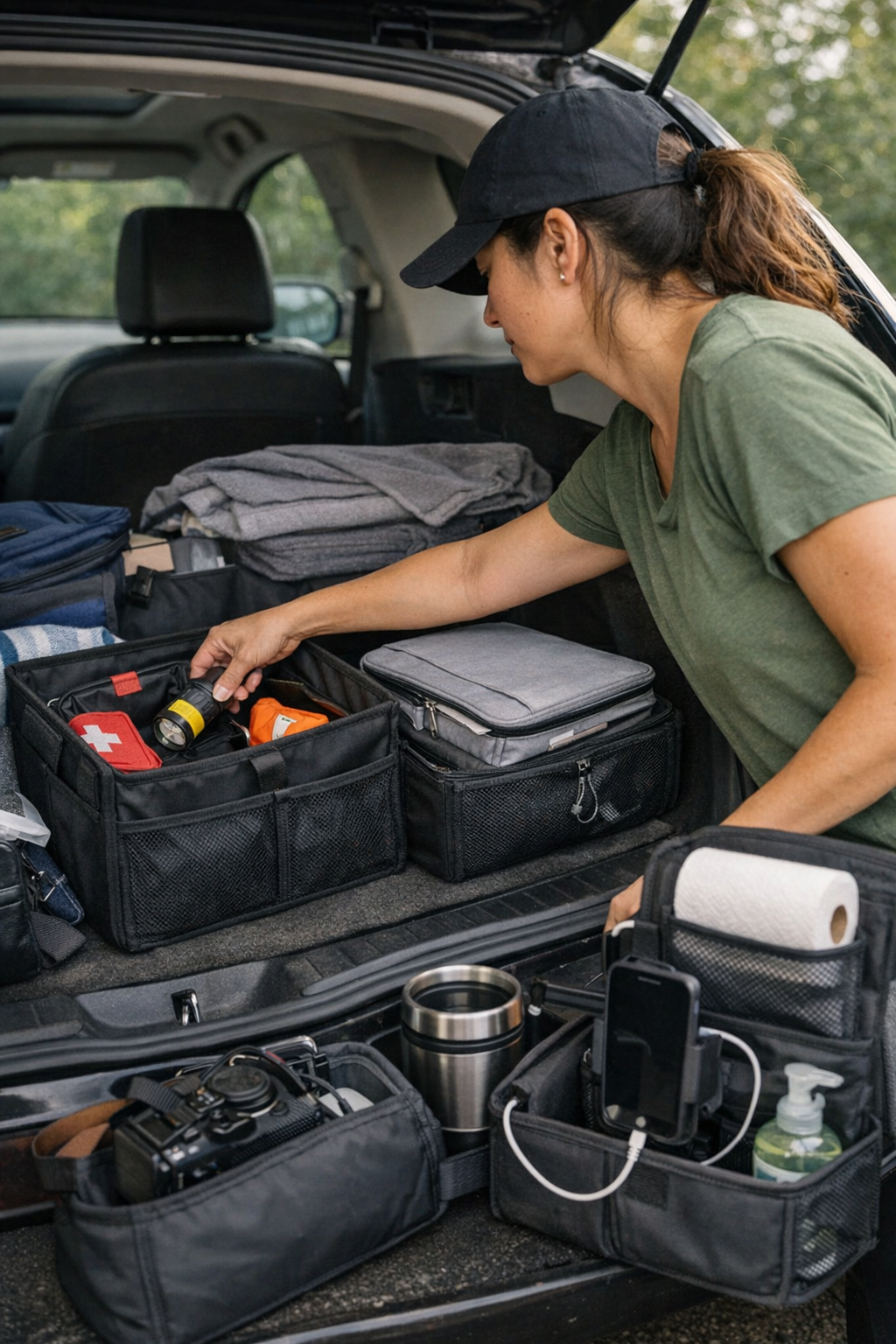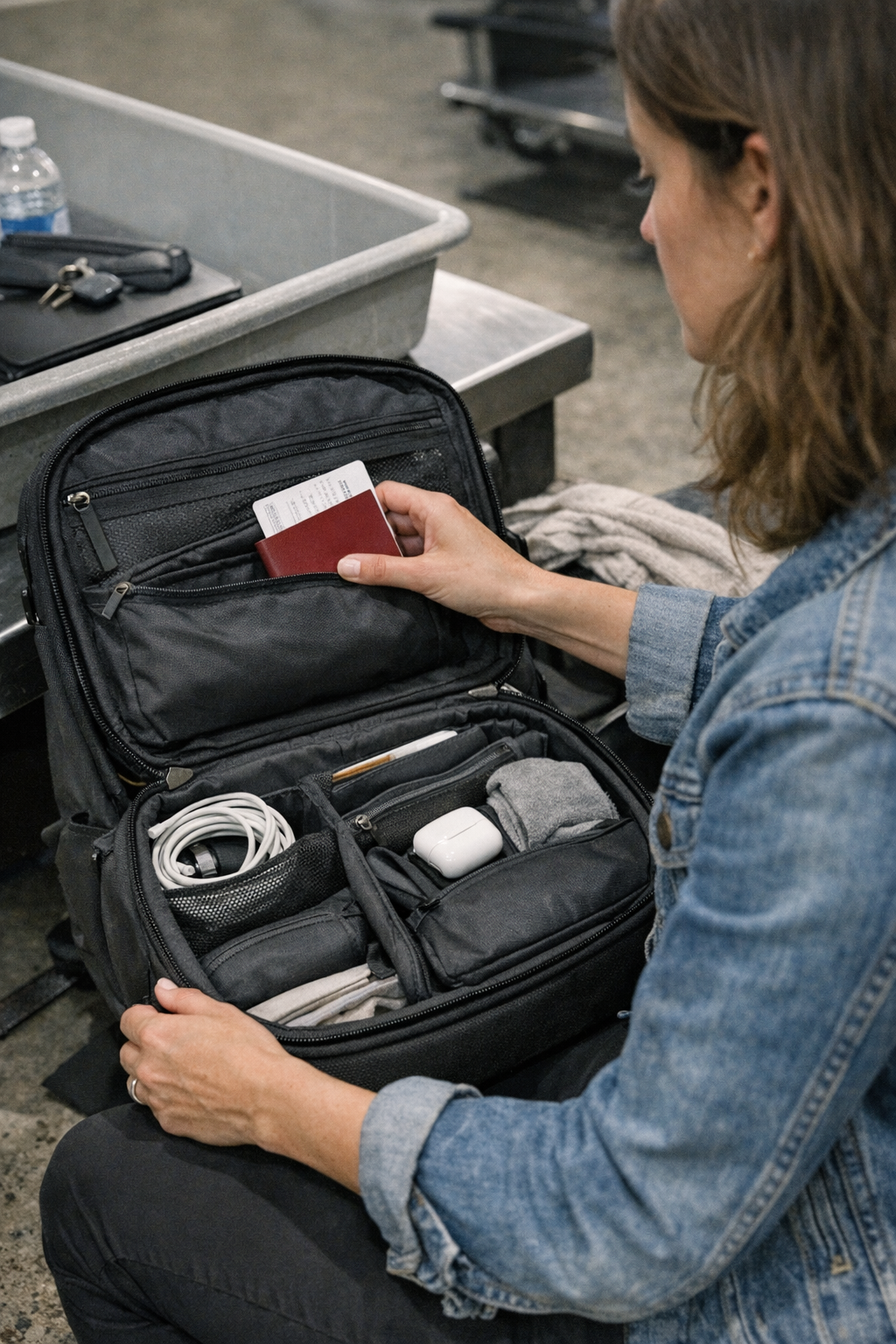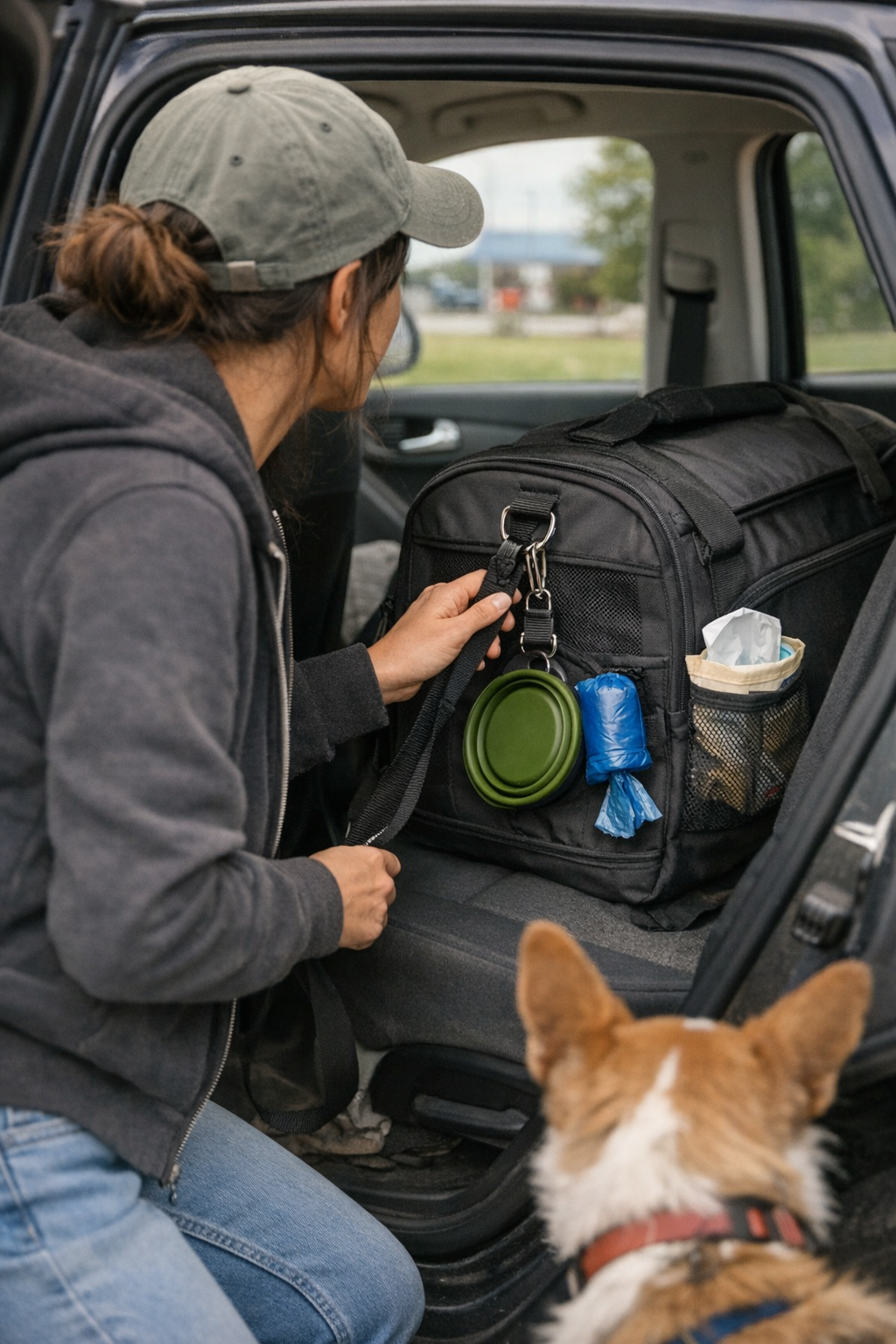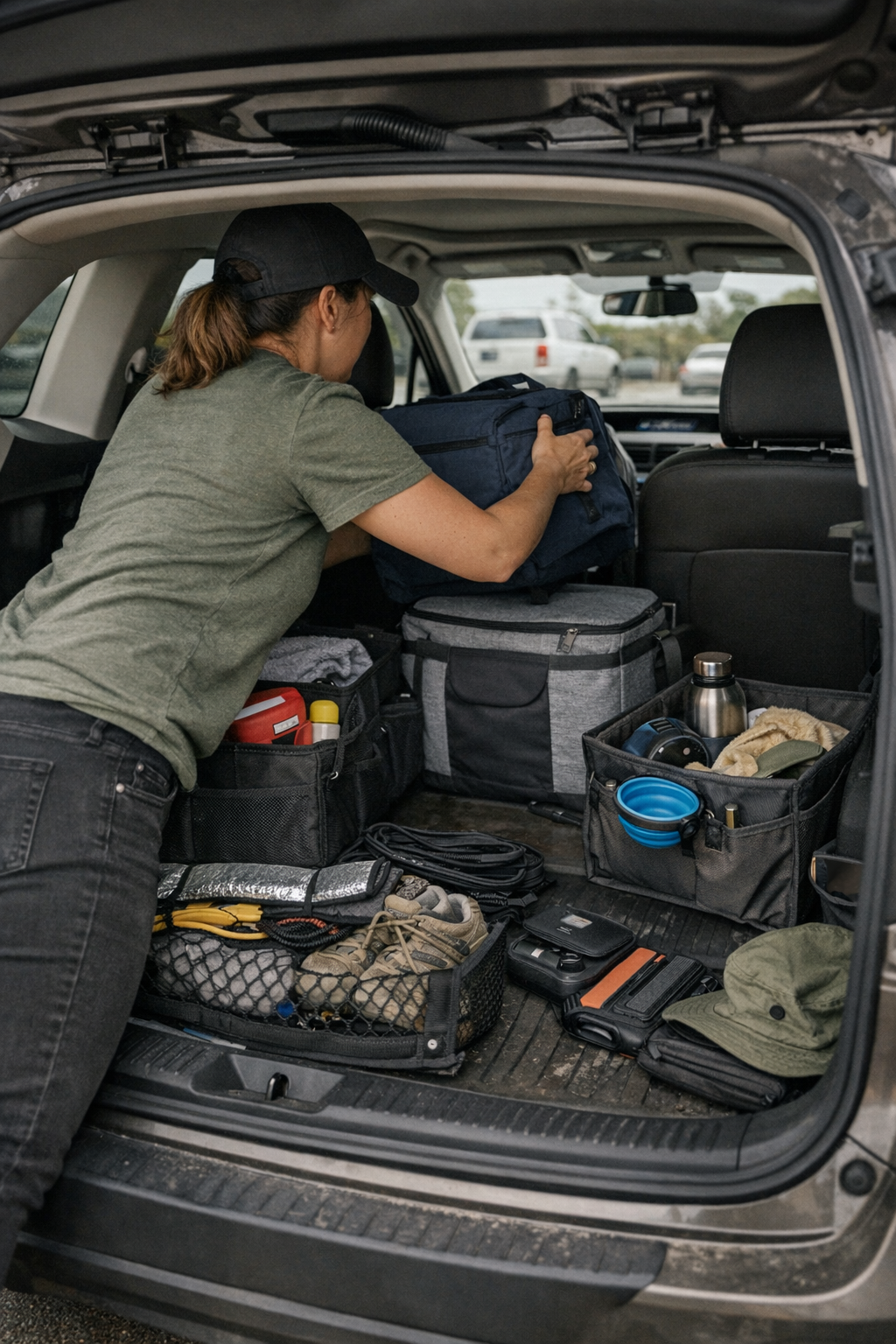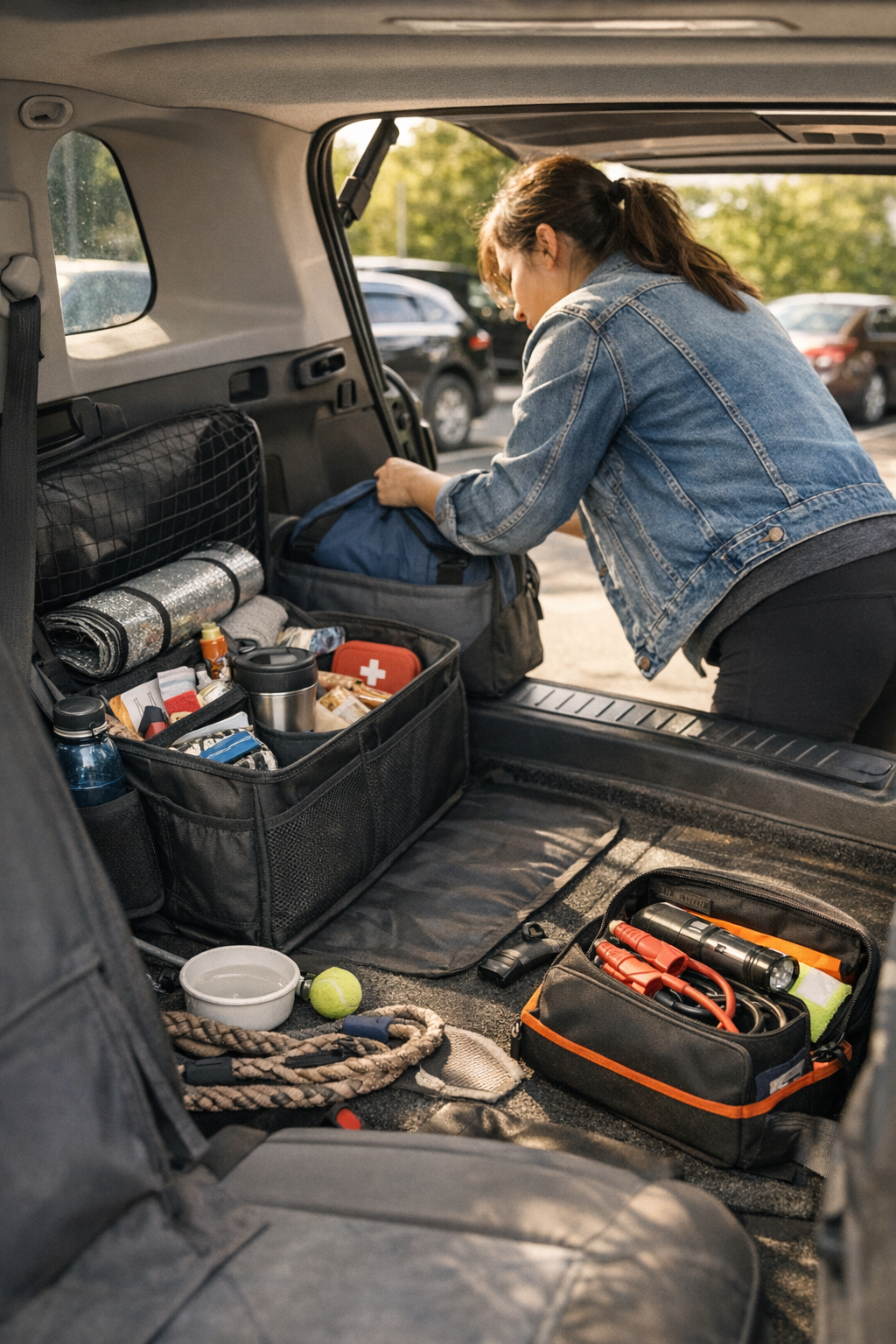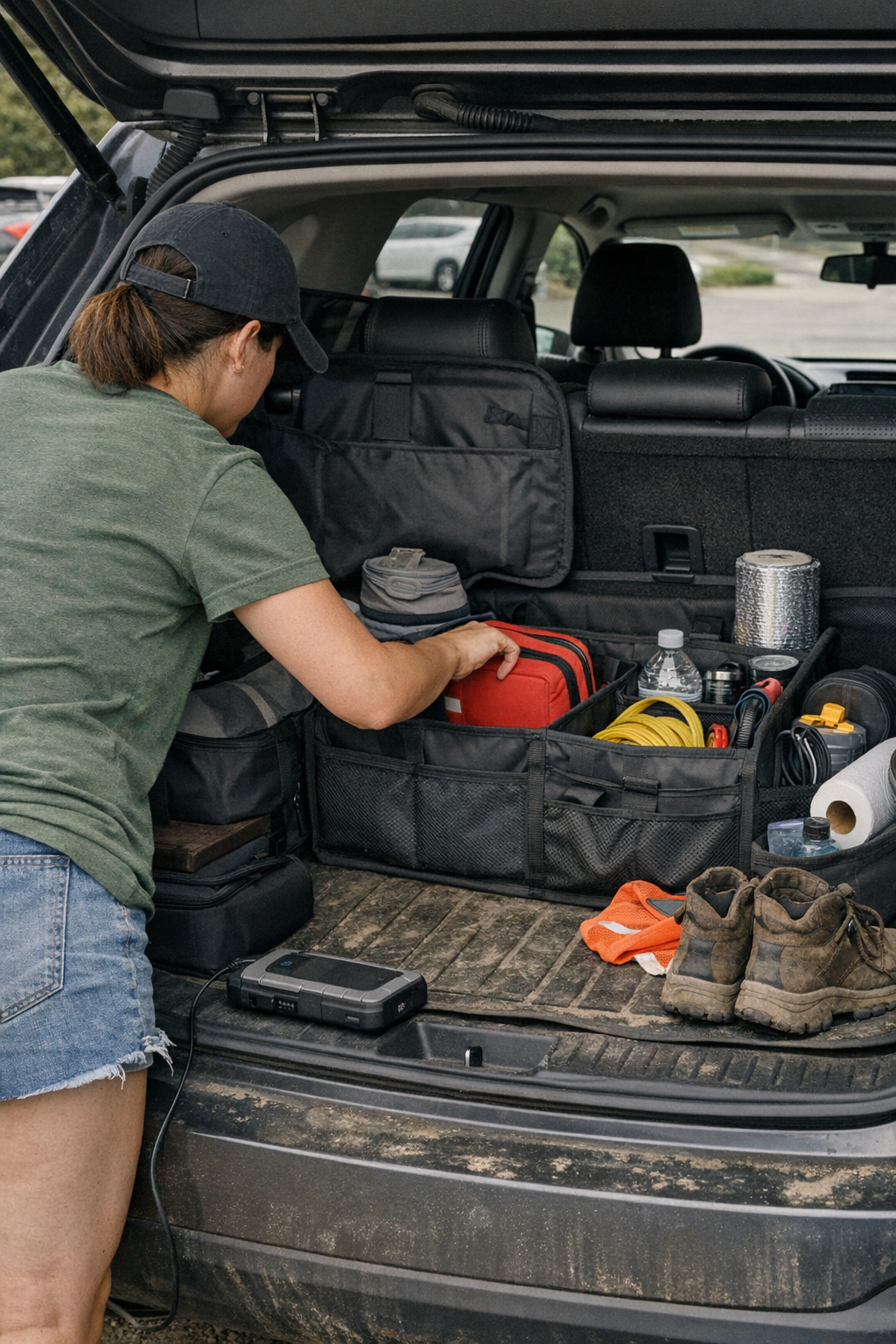
You don’t notice daily car clutter at first. But the moment you reach for a charger and find it tangled—or slide into the seat and have to nudge yesterday’s “just in case” gear out of the way—every extra item suddenly matters. What promised to keep you ready becomes a source of split-second slowdowns: cables jammed under hand wipes, door pockets that hide what you need, or backup gear that turns arm’s-reach access into a scramble at the worst time. Under repeated use, even harmless additions drag down every return, every re-entry, every drive.
Where “Just in Case” Turns Into Everyday Friction
Most drivers start with a plan: a spot for your phone mount, a pouch for essentials, a spare charger just in case. Then come commutes, grocery stops, back-to-back errands. In real routines, those reasonable extras—one more cable, an emergency snack, spare wipes—begin to layer up until trays and pockets fill and overlap. The first signal isn’t visible mess. It’s the micro-interruption when you’re blocked from simply plugging in, or when your seatbelt jams because a “temporary” item migrated back into your space.
Friction announces itself as a pause, not chaos. Suddenly you’re shifting napkins, searching for water bottles, or fixing cables that have slipped below last week’s shopping bags. These are the moments that never make a mess obvious but quietly erode the speed of every routine drive.
How Clutter Hides Before It’s a Mess
A car that looks sorted still hides snags. A charger blocked at the stoplight. A door pocket that eats napkins until sanitizer, snacks, and receipts crowd essentials out of reach. Bin systems that seemed smart now require a shuffle: the real need—quick plug-in, grab-and-go items—gets buried under stuff that’s just along “for later.”
This is the real cycle: items for “next time” go unused, but make every next time slower: shifting, untangling, double-checking for what’s buried below. Clean surfaces distract from access problems that repeat every drive.
A Real-World Example: The Surprise Roadblock
Picture the reality: a brief stop mid-commute, back to the car to charge your phone. Instead of plugging in, the backup battery has covered your main cable. Suddenly your drive means pulling out low-use gear just to get power when traffic is building. Or a pen slides under the driver’s pedals, forcing a reach-and-retrieve move in work clothes, squeezing against the seat edge just to keep moving. “Prepared” becomes a routine of unnecessary steps, not peace of mind.
Every “Just in Case” Is a Test for Quick Access
Readiness isn’t about neatness; it’s whether you get what you need the first time, every time. If keeping backup gear means blocking door-pocket grab, cable reach, or seatbelt sockets, every drive pays a penalty in tiny but constant interruptions: nudging items from the step zone, pausing to check if your must-have gear is buried, or angling around “temporary” extras at every entry.
Delays compound fast. Shifting things just to buckle in—again—or clearing a console before replugging, adds up dozens of times in a week. Every glance to check if something’s in place is a cost you keep repaying, especially in high-frequency driving: school runs, errand loops, or the seat-side swing on a rushed departure. The setup you thought supported you now trips you up when you least want it to.
Why Organizers Aren’t Always Solutions
Baskets, bins, and compartments promise order, but their biggest test is under pressure. Unless high-frequency items keep clear, catch-all organizers inflame the cycle: the “maybe” pile creeps up, hiding everyday needs as backup gear migrates to the top. Each trip means working around the box, not with it.
Poor slot definition lets clutter drift. Receipts swamp the space beside your mount, cables burrow under wipes, and the quick-grab zone becomes a search operation. What looked like a stable fix fails at the pinch points—before a meeting, a fast unload, or parking on a packed side street.
Cleanup Is a Test—Not Just for Neatness, But Speed
A true car setup isn’t measured by how little you clean, but by how rarely you have to undo your own organization. If post-errand tidying means scooping up bins, coiling up cords, or training floating items back to their corners after every few trips, you’re fighting your own system. The cleanup “tax” grows, especially for anyone in constant routine: back-and-forth work drives, grocery stops, or carpool pick-ups. The best solution is something you hardly touch, because every item already stays put and out of the way—every time.
The Difference Between Looking Organized and Feeling Ready
It’s easy to snap the car back to visual order, even after a binge clean. What’s harder: maintaining unblocked access in day-to-day shuffles. Over time, visual tidiness masks functional awkwardness. Door pockets fill, seatbelt sockets get crowded by multipurpose gear, and the only slot you actually use for your charging cable is buried mid-pile. The shift you need isn’t minimalism—it’s ruthless daily-use filtering. If you don’t touch it three days in a row, it stays out. Fast charging: one cable, clipped clear. Door bins: only current essentials. It’s not about forced “declutter;” it’s trimming drag where it hides most.
The real win is in the drive—not in the photo. If your car looks controlled but daily tasks still force a workaround, the setup is signaling where to trim. Every second you save on the return, quick plug-in, or buckling up is the sign that your system finally matches the speed of your routines.
When “Maybe” Items Become a Source of Real Risk
There’s a safety edge to clutter that isn’t visible until it matters. Small extras can slide to cover an emergency kit, crowd a seatbelt buckle, or lodge in the footwell where a hard brake could send items rolling. If a fast grab for your jumper, emergency tool, or charger becomes a fumble, readiness has turned into a risk. The car’s supposed backup gear blocks you in crunch moments—not because you lacked gear, but because it escaped control.
Seeing (and Fixing) the Cycle of Daily Clutter
Watch for tells: batting aside mounts, untangling the same cable twice, bumping organizers with your hip at every entry, double-tapping the door pocket for missing items. If those moves repeat, the system needs a reset. You want a setup where moving through your routine—loading, plugging in, grabbing gear—takes seconds, not a recurring detour. The fastest fix: drop anything unproven for daily use. Shift to weekly check-ins, keep cables clear of the path, and test whether your layout actually matches real commutes and returns. Most “just in case” isn’t earning its keep—it’s just slowing you down.
Explore practical car-ready gear at DriveWellSupply.