Category: Travel & Drive

  • How Rainy Walks Reveal Flaws in Pet Travel Bag Organization

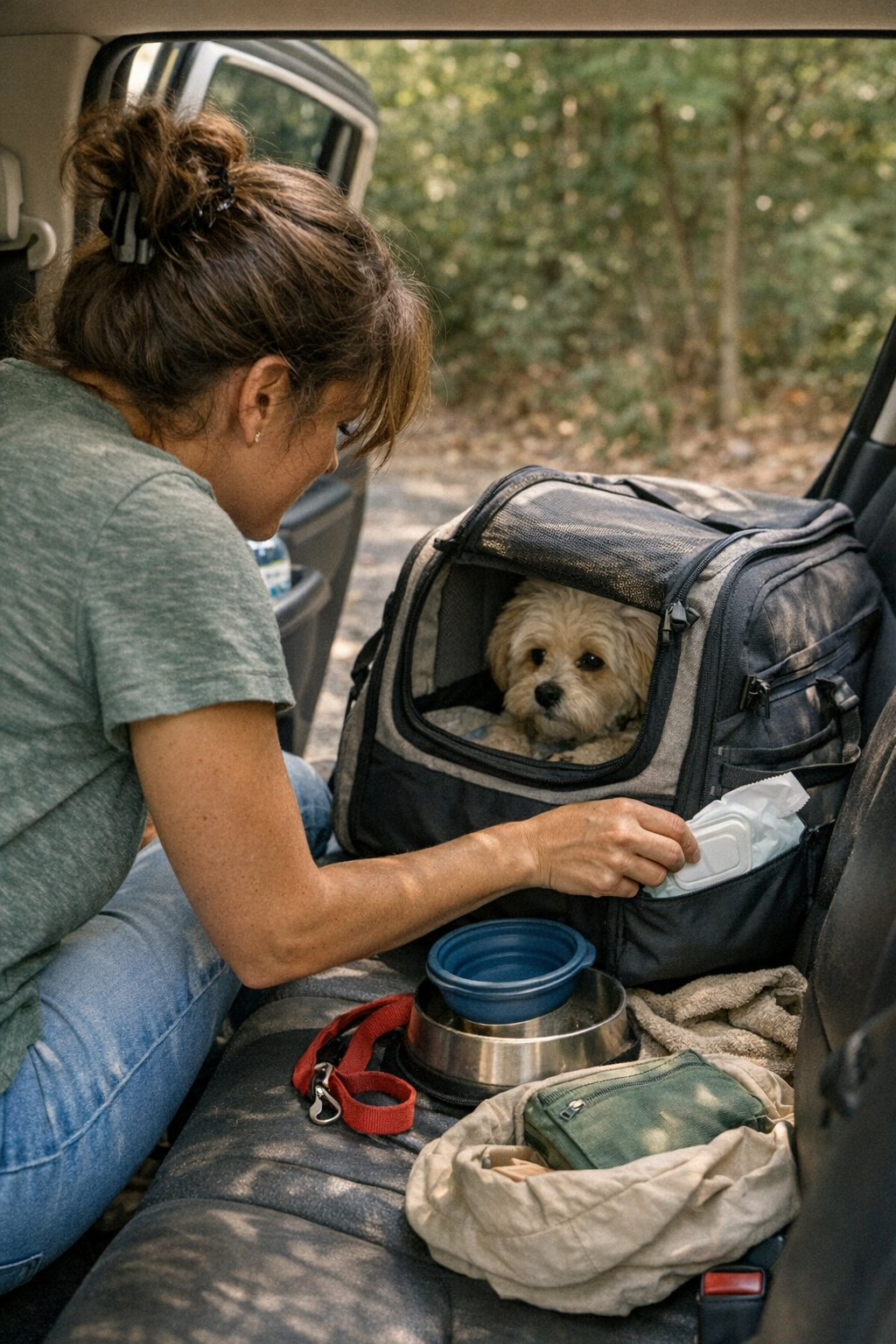
    The real stress test for any pet travel bag isn’t how clean it looks in your living room—it’s what happens when you step outside and the weather changes. On a wet morning, even a neatly prepped carrier starts to fall apart: the leash in one hand, the bag slipping off your shoulder, wipes buried under a water bowl that’s slick with rain. Every pause on a walk becomes a scramble for the right pocket, your dog pulling ahead while you dig past tangled treats and soaked towels. At that point, it’s not about how organized things looked at home, but how fast you can actually reach critical supplies once chaos hits. That’s the difference most pet owners only notice after a few messy stops—real access vanishes, and your “order” gets drowned out by small, repeated friction. This is the moment PawGoTravel setups draw their lines: what survives the field, and what just looks tidy indoors.

    When “Order” Fades Fast: The Hidden Gaps of Wet Walks

    The confidence in a sorted setup—wipes, treats, leash, towel all nested in separate sections—rarely survives the first rainy stroll. Step outside and the familiar bag turns unpredictable. Need a wipe mid-walk? Suddenly, that pocket is blocked by a bowl that slid loose during the last stop. The towel you folded? It’s no longer flat, and now sprawls across cleanup gear. With the leash jerking one arm and rain blurring your vision, your “organized” bag becomes a jumble of wet surfaces and unreachable essentials. Every attempt to clean muddy paws or grab a towel risks dropping other gear, turning a supposed quick-fix into a stop that only drags out the mess.

    Access gets muffled fast. Travel bags that hide key items under another layer create urgent stop-and-search routines instead of smooth movement. Instead of one quick motion, you’re forced to hold up progress—dog waiting, hands full, gear shifting further out of order after every reach. By the second pause, the structure that felt disciplined indoors now works against you outside.

    Repeated Use Reveals the Weak Spots

    Rain doesn’t just dampen your route—it exposes every design flaw you’d barely notice in clear weather. Early in the walk, you’re patient; after the second wet stop, you’re making tradeoffs just to move forward. A pouch that started out holding wipes now pinches them behind a looped leash, while refilling a treat stash ends with those pouches forcing wipes or towels down into harder-to-reach corners. Each pause means more reshuffling. It’s not the number of slots that matters, but whether you can find—without stopping everything—the one thing you actually need.

    Concrete mess points:

    • Muddy paws appear, but the wipes pocket sits under a treat pouch and can’t be fished out with one hand.
    • You unzip the section labeled for leash access and discover bowls and bags now tangled together.
    • Wet wipes settle to the bag’s core, forcing you to dig through by feel while your pet tugs and the bag slips.
    • After the third stop, towels are heavier, gear reshuffles take longer, and the routine resets stall your walk.

    The Slippery Line Between “Looks Prepared” and “Works Fast”

    Each time you stop mid-walk, the hidden conflicts inside your gear show up: a slick towel blocking the waste bag slot, treat zones colliding with messy cleanup spots, and the frustrating question—how did a color-coded setup get so hard to use? Repeated repacks force zipper-after-zipper open, while your pet’s patience fades. Every layer stacked “just right” at home becomes a roadblock in wet, real-world motion. That’s when the actual test starts: do you reach and reset quickly, or waste your walk anxiously hunting for a wipe or leash? At this point, the supply you buried for tidiness now costs you time, speed, and a calmer trip.

    One Adjustment That Actually Helps: Predictable, One-Handed Access

    You don’t need a carrier that stays flawless through chaos—few will. But a single, deliberate choice transforms how your routine feels: dedicate one outer pocket, every walk, to the one thing you reach for most often (usually cleanup wipes or a towel), and refuse to bury it, even if that makes the bag asymmetrical. It doesn’t matter if your carrier’s front looks less tidy, or if one corner stays a bit crammed. Predictable, one-handed access to that pocket means you never have to pause, drop gear, or repack just to clean a paw or wipe off damp hands. When rain or movement rearranges everything else, that “lookup slot” for essentials is what keeps the rest of your setup usable in real time—not just photo-ready before you leave.

    Overlapping Needs: When Pet and Owner Items Keep Interrupting Each Other

    This overlap—the collision of pet gear and your own travel needs—is where most routines actually fall apart. One morning, your water bottle shoves a towel deeper than planned; another, a bag of treats jams the leash clip slot. Every shared carrier is subject to this problem: the more pockets in play, the more likely something you need gets swallowed by something else. Organizers with perfect-looking patches become fumble-zones if a comfort toy or human snack spills into the emergency access area. Even a thoughtful division, like separating treat space from cleanup gear, breaks down if movement and weather keep redistributing what’s inside.

    The reality: a “settle-down” comfort accessory sometimes makes it easier for your pet to wait, but also turns a pit-stop into a low-key hunt for wipes or leads. The friction isn’t solved by more pockets—it’s solved by structuring the bag so you know exactly what never moves, even mid-walk. Prioritizing routine access over surface-level order cuts down the constant resets that drag every outing into another gear-shuffling chore.

    After the Third Stop: Where the Setup Really Gets Tested

    The first walk with a new setup? You might breeze through. By the third repetition—wet gear, overlapped items, essentials sliding deeper, your dog ready to bolt—the structure collapses. “Prepared” dissolves into stops filled with pocket-rummaging and out-of-sequence handoffs. The failure isn’t dramatic, just costly each time: you lose tempo, increase stray mess, and feel momentum slip as basic access gets harder. This moment exposes setups created for looks, not real stop-and-go pressure. Owners who return with muddy hands and soaked towels after a simple loop know it: the gap between looking ready and working smoothly yawns wider with each reuse.

    That’s why durable access always beats perfect appearance. Give up the fantasy of pristine symmetry for a bag where you always know: “cleanup gear is here.” A carrier that trades a matching color block for a predictable, weather-proof pocket isn’t more stylish—it’s just not hiding the real problem when conditions turn rough. What works isn’t the look, but the map you build by using it over and over in the field.

    Smoother Restarts, Less Friction, Better Walks

    Wet walks don’t just test your nerves—they tell you whether your travel gear helps speed up the loop. Integrated, reachable essentials transform stop-start routines, while systems built for home-order trap you in slow restarts and blocked motion. Every time a wipe is too deep, or a leash jammed beneath gear meant for comfort, the walk itself drags, frustration builds, and cleanup gets skipped or delayed. There’s no “perfect” organizer for every trip, but a reality-checked setup lets you reset, reach, and get moving again, no matter how many times you stop—or which hand is free. Ultimately, being able to keep pace under repeated friction is the real advantage, not the pristine look you started with.

    Your travel setup doesn’t have to be flawless. A single, reachable pocket, a stubbornly separated wipe pouch, or a soft-sided carrier with predictable seat-side access—these tweaks earn their keep every wet morning when you’re tested again. Next time you pack, focus on what you can reliably grab in the mess, not how neat things look at the start. That’s what survives the rain, the extra stops, and the slow creep of disorganization. Explore smarter pet travel setups at PawGoTravel
  • Streamline Your Carry-On for Faster Airport Navigation and More Quiet Time

    Every carry-on traveler gets blindsided by the same hidden problem: your bag looks streamlined and organized before you leave, but friction piles up fast in real airport movement. On the hotel bed, it’s all zipped pouches and color schemes—until you hit security, boarding, or a cramped aisle and realize “organized” doesn’t mean “fast.” The downside isn’t visible mess. It’s the repeated delays, the blocked quick grabs, and the misplaced essentials that stall your flow from the first checkpoint to the plane seat—no matter how neat your system looked at home. The most common overlooked flaw? The gear you use over and over gets buried just when you need it most.

    When Visible Order Breaks Down: Overlapping Paths and Everyday Friction

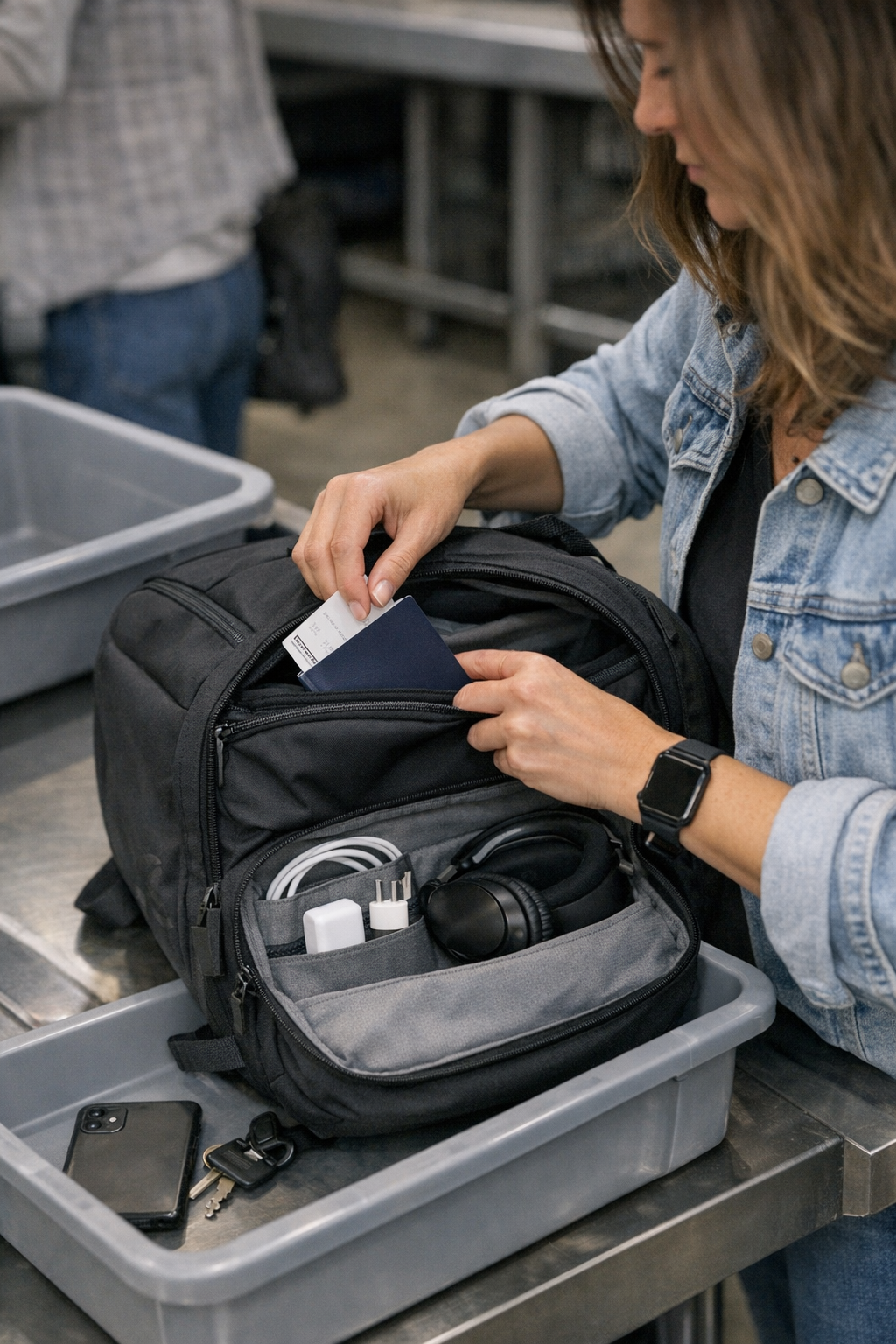
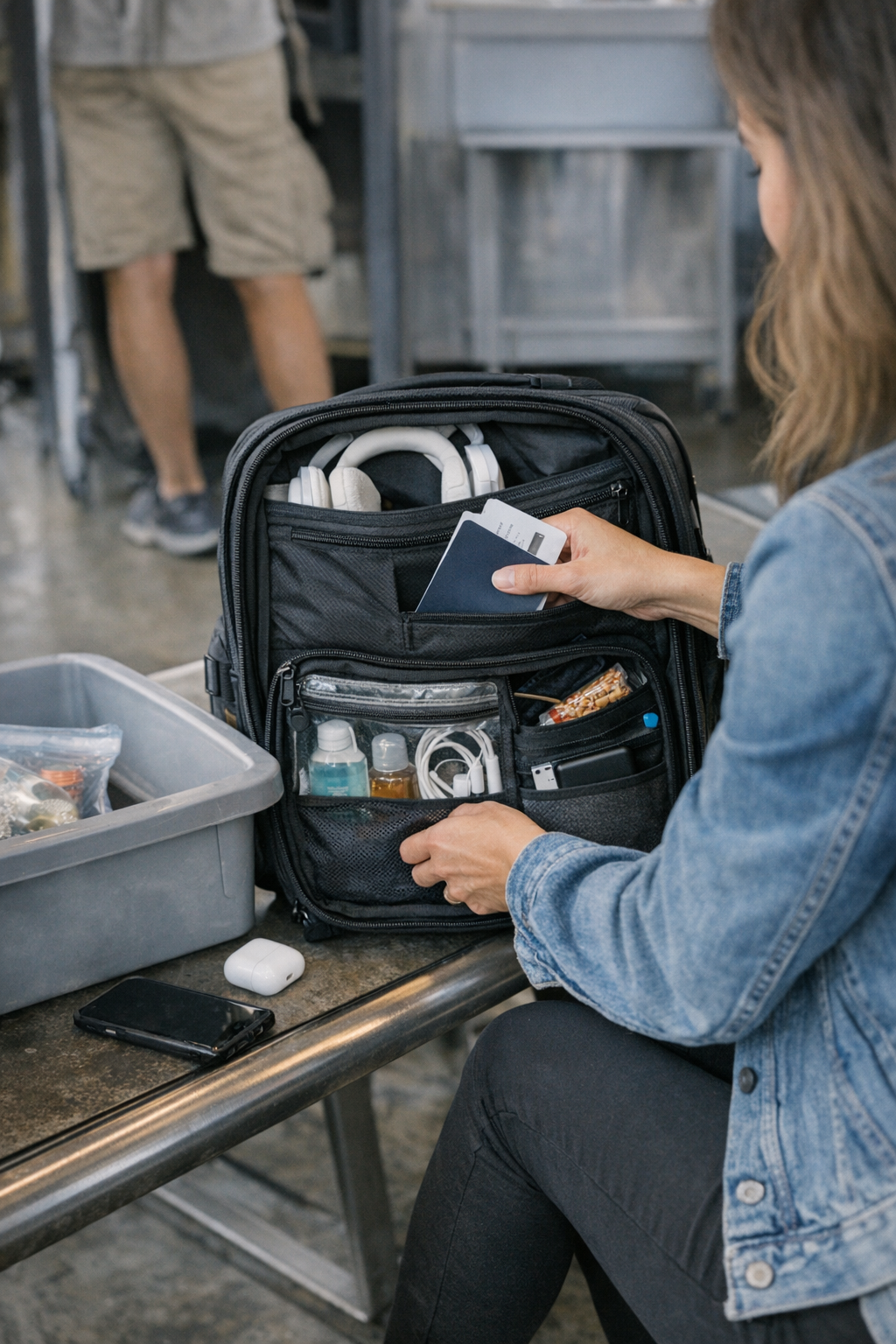
    A bag full of packing cubes, tech organizers, and light pouches feels like a win—until real travel starts. The trouble usually reveals itself at the first airport hand-off or security tray: a charger tangled with headphones, toiletries sharing space with your passport, and boarding documents buried under a snack pouch. That “quick access” pocket you packed so intentionally? It becomes a bottleneck the second you try to pull your ID. Banishing clutter visually doesn’t protect against the friction caused by overlapping paths—hands double-backing, shuffling, and digging for single items, while lines move and time compresses.

    Every traveler recognizes this: you reach into what should be an easy-access spot only to find three categories of item jammed together. What started as organized structure at rest collapses into repeated, distracted searches on the move. Quick access pockets get crowded with the wrong mix, and the penalty is paid every time you have to dig sideways to get what you need.

    The Cost of Repeated Interruptions: Micro-Delays Compound

    Each “one-second” search adds a ripple of interruption. Miss your passport on the first reach at security and you stuff it back into any convenient gap—meaning next time, it’s buried deeper. By the gate, your careful visual order is already a memory; now you’re forced to rummage, swap, and restore, introducing small but persistent slowdowns. Each unzipped layer or pouch moved isn’t just a single hassle—it’s cumulative friction, turning every checkpoint and repacking moment into a minor choreography problem that gnaws at your focus, energy, and time.

    The Retrieval Spiral: Where Systems Fail Under Movement

    Picture yourself shuffling up in a boarding line. You reach for your boarding pass and fumble through a cable pouch, loose hand cream, and headphones stacked right above your doc wallet. Instead of a one-motion grab, you’re running a step-by-step obstacle course: unzip, move, lift, shuffle, dig, restore, rezip—while the line surges forward and your “order” gets shakier. It doesn’t stop at documents, either. Whether you’re pulling snacks, pens, or earplugs, every extra layer adds drag. If you’ve ever found yourself repacking mid-aisle, or apologizing to a stranger for blocking the bin, you know the design failed the moment friction repeated itself under speed.

    Beyond Looks: Packing for Real Airport Movement

    There’s a real gap between a carry-on that looks sharp and one that stays usable with every flight segment. Pouches, cubes, and organizers create great order when laid out flat—but once you start reaching for high-frequency items (passport, headphones, pen) on the go, even a single extra layer becomes a time tax. A system that looks perfect sitting still often forces you into mini-searches and awkward repacking during live travel flow.

    The real cost isn’t just looking for things; it’s the travel fatigue from stacking tiny tasks. Every time you restore a “system” after a rushed search—putting cords back, re-zipping every pouch, flattening stray documents—the unnecessary work eats into what should be your smoothest moments. If you can’t reliably return to a single, predictable path for repeats like document checks or seat entry, you end up improvising every cycle, burning energy on things that should be frictionless.

    Where Setup Fails: Security, Boarding, Arrival, and the Overlap Trap

    The tension spikes at live pressure points. Security moves fast: trays stack up, people hurry, and your system has to work instinctively. If your passport and headphones fight for the same pocket, you risk dropping something or holding up the line—everyday overlap at its most visible. Even after security, the pattern repeats at the boarding gate and aisle: searching a crowded access pocket for snacks or paperwork means slower entry and more stress, not just for you but everyone behind. Seat entry gets awkward too if your single “catch-all” pouch blocks the way in a cramped row, or if a tight outer pocket needs a wrestling match to produce headphones.

    The overhead bin sums this up. Real travel exposes that a perfectly compressed bag—zipped tidy, color-matched—can still be a failure if grabbing one essential means lowering the whole bag, opening the main compartment again, and repacking half your stuff. Chasing visual neatness above practical access turns movement into a chore the moment reality kicks in.

    Better Setup: Isolation Beats Perfection

    The essential fix: don’t chase visual perfection—separate essentials for true access.

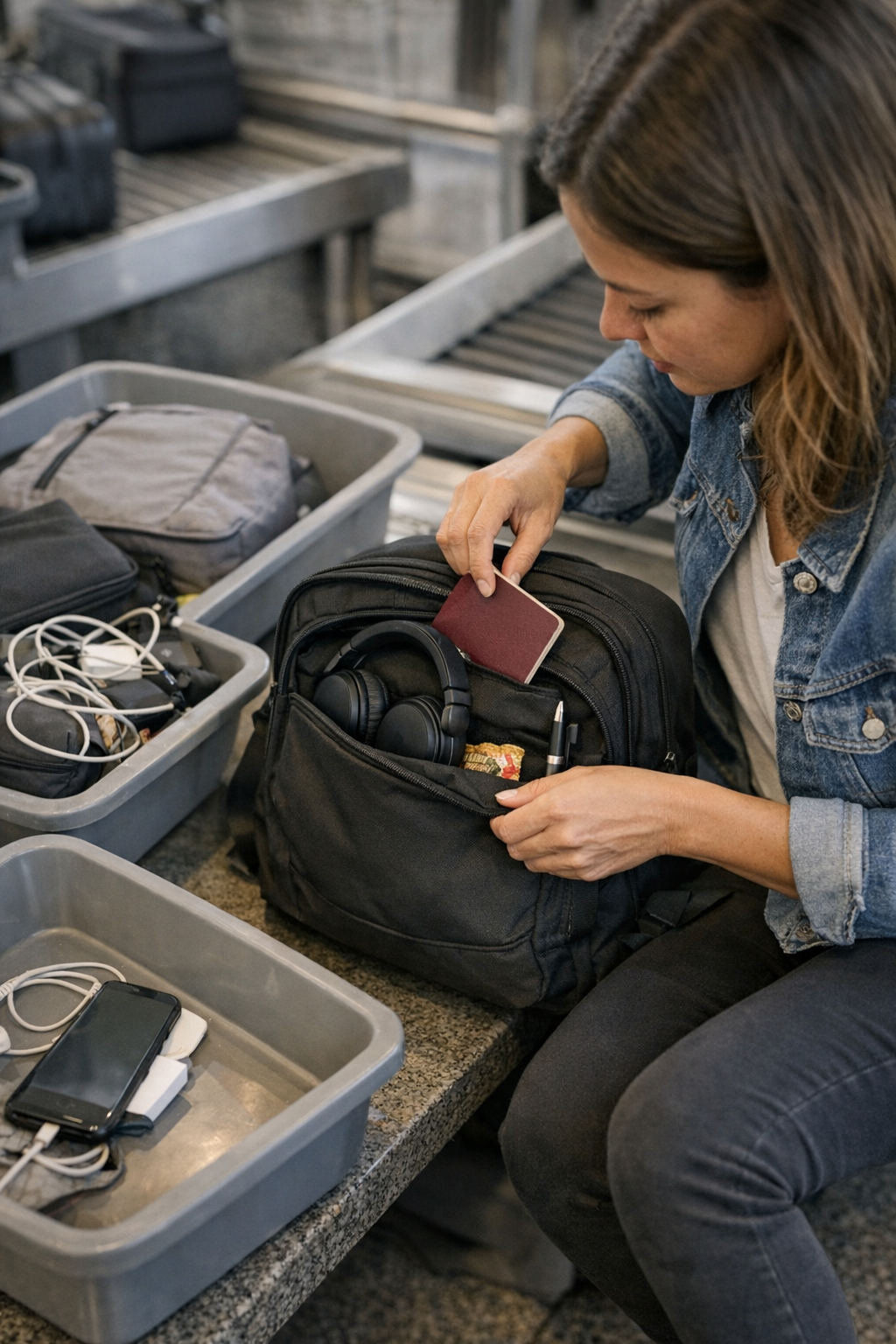
    Dedicate a single pocket or slim pouch for the short-list items: passport, headphones, pen, and snacks. Not mixed with chargers, toiletries, or anything you only use once per flight. This structure—one predictable path for routine retrieval—means you never have to guess or double-back, and your main compartment actually stays closed, reducing chaos with every use. You won’t eliminate all friction, but you strip out the unnecessary steps that do the most damage to your travel rhythm.

    It’s not about stacking more organizers. Selective separation kills the problem at its root. Any setup that demands repeated cross-searches for essentials is working against you. When frequent-reach items get their own zone, the time saved is immediate and the improvement doubles over longer, more demanding itineraries. Predictable motion—one zipper, one grab, one return—spreads calm through the whole trip.

    One Small Change, Real Flow Gains

    After just a couple flights, the pattern is inescapable: single-motion access for high-use items is the real test. Each layer you eliminate gives you back seconds, and the effect is tangible when fatigue builds at the end of a multi-leg day. Real carry-on effectiveness isn’t about the tightest packing at departure; it’s about whether you’re still moving smoothly after six or eight retrievals on a crowded travel day, with every step demanding new access.

    Smoother security flow, faster gates, stress-free seat entry—these aren’t soft wins. They’re the byproducts of a packing logic built for repeated, live use, not for a tidy Instagram shot. If you want a carry-on routine that actually holds up under pressure, trade appearance for access where it counts.

    Carrying Choices That Survive Repeated Use

    The recurring solution breaks down to two rules:

    • Essentials—documents, headphones, snacks—need their own dedicated pocket or pouch. Mixing them with once-per-trip items kills repeat access.
    • Don’t let single pockets become grab-bags for every category. Blending chargers, pens, and snacks forces overlap, multiplying slowdowns during every live retrieval—security, boarding, mid-flight, arrival.

    If you’re restoring order more than moving through it, your setup isn’t meeting the demands of real trip flow. You should be able to reach, retrieve, and return essentials in a single motion at every point—not just at the start, but through every cycle of the travel day. Once you’ve adjusted for true repeated use, the entire carry-on process moves quieter, smoother, and with fewer built-in delays—no visual trickery required.

    For practical carry-on travel tools designed for repeated access and low-friction movement, visit CarryOnSupply.

  • Why Vertical Storage Transforms Your Car’s Daily Organization Routine

    Your car can look perfectly organized and still trip you up—every single day. You set everything in its place, stow the clutter, run cables under the console, close bins, slide keys out of sight. But one normal week and the illusion cracks: charger cable now tangled near the pedals, phone slips into a hard-to-reach gap, and every return to the driver’s seat means a fresh round of searching, shifting, or prying an item loose. It’s not a question of neatness—it’s friction in the routine: the same slow-downs, even after you’ve “tidied up.” This is where DriveWellSupply products start making sense—not for a showroom finish, but to disrupt the hidden hassles behind your next commute or errand loop.

    The Trouble With “Organized” That Slows You Down

    Visual order fools you—flat trays, tucked bins, and slim pockets work right after a reset, but they rarely hold up to the wear of weekday use. Mornings start fresh, but after the third stop your setup starts giving itself away: pens jammed beneath the seat adjuster, cleaning cloths wedged against loose receipts, charger cables snaking out from beneath a floor mat. Real organization that buries or stacks your essentials is the enemy of speed. This is the tension: a tidy appearance that breaks your rhythm every time you grab and go. Each extra motion—uncurling a cable, retrieving keys from a pile, lifting a jacket to reach your wallet—builds up, turning “clean” into cumbersome.

    Why Vertical Storage Changes Everyday Car Use

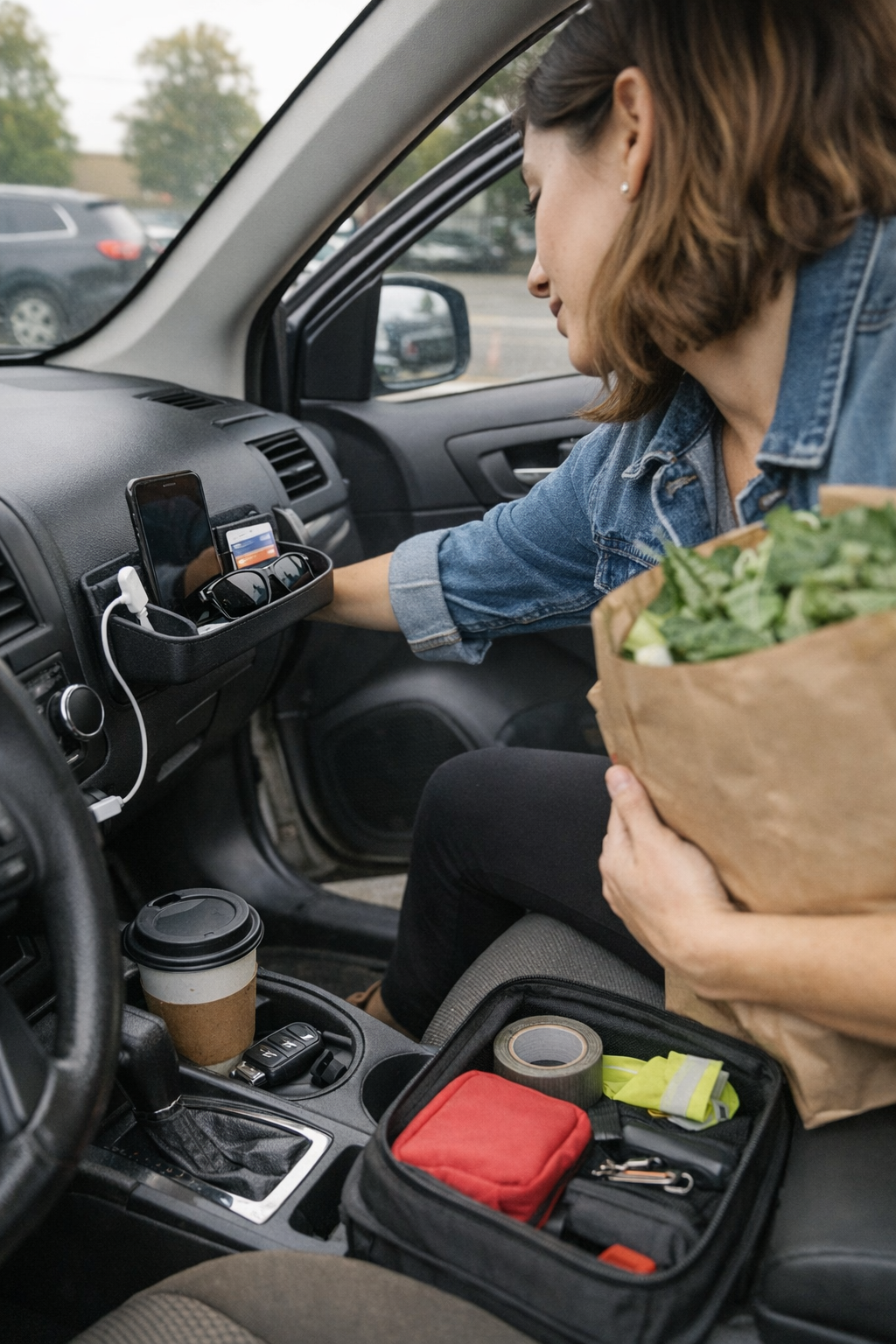
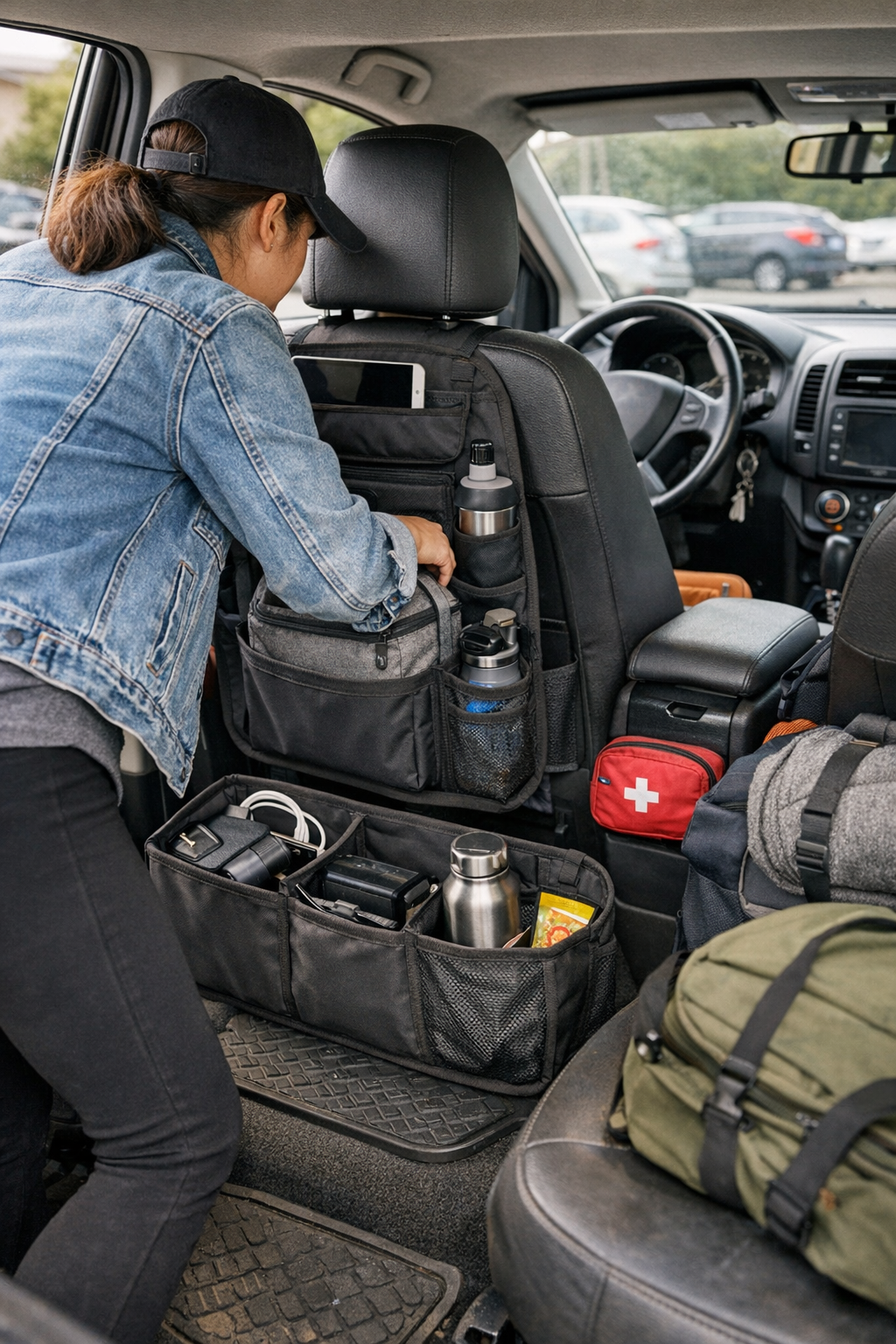
    Vertical storage flips the routine by keeping critical items upright and exposed, instead of buried or drifting loose. The change isn’t theoretical—it’s felt on the third parking-lot dash of the day. Your phone sits at hand, not lost in a tray. The charger stays slotted, not on the floor. The wallet is grabbable, not trapped under a reusable bag. With vertical slots, you see and snatch what you need in a beat—no pile-shuffling, no slow-down. It’s the jump from “organized for display” to “organized for speed”—what looks slightly odd at first, but immediately removes that hunted feeling from every quick return.

    Flat bins show their weakness fast: by Tuesday, a few errands and the careful placement is gone—chargers intertwined with loose change, headphones under a notepad, receipts blending with napkins. Vertical organizers, by contrast, give every item its lane—so the charger, the pen, the wipes, they don’t trip over each other. You move faster because nothing is concealed or trapped at the wrong moment.

    Real-World Scene: The Repeated Return

    Picture the double-back routine: you run into the pharmacy, arms full on the return. Drop into the seat, no spare hand to dig, but you sweep phone, wallet, and cable straight into their vertical slots along the console. Next stop, nothing has merged into a new pile; everything is upright, visible, ready to grab. The “before” is fresher than we admit—phone wedge in the seat gap, charger tangled near the pedals, delayed entry as you bend and reach, again. Small detail, but multiplied over a week, these seconds and interruptions make a tidy car feel anything but effortless.

    How the Wrong Structure Creates Quiet Friction

    Every regular drive uncovers the real flaws in your current setup. The right organizer seems to work—until bags, rain, or rushed mornings test it. Gloves and cables slip out of sight inside low bins, floor organizers trap what you actually need at the curb, and those hidden catch-alls make you cross and double-back for items that should just be there. A cable placed out of view on Monday is now a trip hazard below your shoe by Friday. The frustration repeats: you think “organized” should mean frictionless but, under real pressure, these solutions quietly fail.

    The truer test isn’t a clean start or a photo after detailing—it’s the Thursday morning chaos, groceries rolling, phone charging while you reach for wipes and all the “designed” solutions revealing their cracks. If every quick exit or entry means one more adjustment or search, it’s structural, not behavioral. The convenience you hoped for gets eaten by micro-delays and reacharounds that keep stacking up.

    Access Patterns: The Underestimated Design Flaw

    “Organized” is easy to sell, but day-to-day car use isn’t about stacked storage—it’s about reach, speed, and not fighting your own setup. If your routines involve kids, regular stops, or quick pickups, organizers that require multiple steps (unzipping, shifting, sliding trays) lose their appeal fast. The biggest flag: if you need both hands, a twist, and a rummage just to grab your charger or mask, your setup is working against you—and the slowdown will keep returning with every busy stretch.

    Vertical Organizers in Practice: The Subtle Upgrade

    It isn’t a remodel; it’s a targeted shift. Swap a floor bin for a lean vertical pouch at the seat edge and the “missing phone” pause disappears. No more retangling a cable fallen under the mat, no more circling for the right cupholder. When every item stands upright and separated, you cut the overlap and stop redoing the same motion. This becomes obvious on high-pressure days—groceries shifting, umbrellas damp by the door, or a burst of receipts after back-to-back errands. Vertical channels means every object returns to its zone, so the next drive doesn’t begin with reclaiming order from scratch.

    The difference is structural: tidy does not always mean accessible, but upright storage makes access the default. Instead of finding systems vulnerable to entropy, you’re working with compartments that resist the usual slide, bunch, and cover-up. The little wins add up—less seat-edge scrabble, fewer cables underfoot, less cleanup borne by the end of a routine week.

    What to Watch for: Fit and Placement

    Not all “solutions” help; some organizers frustrate with bulk or awkward sizing. A well-designed vertical slot should hug the seat edge and still allow seat movement or legroom. Oversized bins or stiff pouches create their own intrusions—jammed adjustment controls, knees bumping edges—just exchanging one problem for another. You want near-invisible setups: solid enough for stability, close enough for blind retrieval, never hiding what you actually need mid-commute. The wrong fit gets noticed fast and, if you’re honest, might make you abandon the system altogether.

    From Appearances to Usability: Real Gains Over Time

    After cycling through real commutes, errand runs, and parking-lot rushes, the differences sharpen. The back-seat clutter pile stops forming; the same three items never go missing after a week. Charger cables no longer trip your shoes, and the end-of-week cleanup shrinks to a couple of steps—just the unavoidable, not the built-up chaos. Each drive recovers seconds, and re-entry flows without stutter. A neat look is secondary; what counts is usable calm: structure that handles daily pressure instead of folding after a day or two.

    No organizer erases friction entirely—different cars and routines always find new pressure points. But vertical storage, when chosen to fit your space (and not block it), pays for itself quietly every time you return in a rush or reload before a drive. The gains are real: not for impressing passengers, but for reclaiming effortless movement in the moments that usually slow you down.

    For practical storage solutions designed to improve real repeated car use, visit DriveWellSupply.

  • How Pet Travel Gear Design Impacts Noise and Handling Efficiency

    The illusion of a “ready to go” pet carrier collapses the first time you fumble for wipes after a bathroom break—with your dog getting restless and the cleanup kit buried at the bottom. What feels organized at home can turn clumsy in the car or at a rest stop: bowls that disappear under a seat, leashes clipped awkwardly out of reach, or essentials wedged beneath a pile of comfort toys. Each stop, each shuffle, and each attempt to grab the right item on the first try exposes friction points that a tidy setup can’t hide once you’re actually moving. If you’ve ever reloaded a pet carrier in a parking lot and wondered why it feels messier than it looks, you’re already living the PawGoTravel problem.

    Where “Organized” Looks Can’t Keep Up: Real Travel, Real Friction

    Tidy means nothing if it’s not workable under pressure. You leave the driveway with every zip closed and every item stacked, but that neatness unravels during real movement—pulling the bag out quickly for a leash, or grabbing wipes without waking your pet. It’s always the same flaws: gear sliding, pockets blocked, the item you want trapped by the ones you don’t need yet. What starts as orderly becomes a scramble with every fast exit or seat-side reach—a setup that defies its own design once real stops begin.

    Repeated Stops Expose the Same Weak Points

    Pet travel isn’t a single stretch. It’s a pattern of short drives, quick breaks, rushed errands, and pauses that stack up. The same snags keep coming back: digging for a snack under tangled straps, flipping the carrier for wipes that migrated to the bottom, or fighting with a clasp that gets caught at an angle—again. Each pause turns into a mini obstacle course instead of a quick “grab and go,” and the routine never gets easier until the friction point is finally fixed.

    Reaching That One Item—Again and Again

    If the cleanup gear takes two hands and a full bag shuffle every single time, “being prepared” just means repeating the same drag. Wipes deep in the corner always cost you time and patience; a bowl wedged under a layer of toys means your pet waits while you dig—and the sense of having “just what you need” doesn’t survive more than one stop. Repetition reveals real usability, not first-glance order.

    Seat-Side Moments: When Access Matters Most

    Your pet’s calm travels with your flow—or breaks with your fumbling. A smooth rhythm is undone when you have to dig under owner wallets or shift a tight compartment for basic gear. These small, silent frictions—gear that blocks instead of helps; a storage trick that seems clever until it slows you down—add up. Restarting motion after a pause is when good setups prove themselves, and cluttered ones make you start over, each time less smoothly.

    Cleanup Gear: Present but Out of Reach

    No one forgets wipes or bags. The real problem is when everyday solutions vanish behind layers: wipes sunken behind soft gear, cleanup pouches wedged just out of reach. Instead of saving the day, your “well-packed” kit becomes a tangle—forcing you into awkward stretching, upending half the carrier just to fix a minor mess. A setup aimed at less visible clutter can still trade speed for neatness, and the cost shows during every routine stop.

    Comfort Items: Help and Hindrance

    Travel blankets, chews, or favorite plushies offer comfort—and instantly block access when stacked on top. That item calming your pet for the drive can slow your every reach, as you carefully move it off seat-side essentials. The same soft touch that keeps a pet settled often becomes your next hurdle, repeating with every stop-and-go and quietly interrupting what should be a quick restart.

    Why Small Setup Tweaks Change the Trip

    Switching from “most organized” to “most reachable” is where pet travel feels different in real use. Move a wipes pouch out of a deep pocket and into a zippered side slot, and every cleanup turns into a barely-noticed motion—three seconds, no searching, no reshuffling. The gear didn’t change. The placement and access pattern did—and that’s what cuts repeat friction. The ugliest bag can outperform a “showroom” carrier if you can actually reach what you want on the first try, at every pause.

    Experience Teaches What Looks Don’t Show

    Any setup that survives the first trip can still fall apart on the second and third. Treats end up under heavy items, the leash toggles in a spot that made sense only when you weren’t in a rush, and essential wipes wind up buried again. Noticing a single repeat snag—then fixing it—has a bigger impact than buying a flashier carrier. Real travel rewards those tiny, practical changes that pay off after multiple stops, not just on launch day.

    Repeated Movement, Less Disruption: Seeking the Right Balance

    There’s no perfect setup, but small, friction-cutting improvements save minutes and headaches. Better travel gear isn’t about max storage—it’s about smart splits: stable storage for what you won’t need until arrival; easy-access slots for the things you’ll reach for again and again. You know it’s working when you stop pausing, sighing, or shuffling gear mid-trip—and your pet feels that steadier, calmer transition too.

    The difference is blunt: Less fiddling, more moving. The calm comes from setups that shrink repeated tension, not ones that just hide clutter for one photo. Every tweak—moving a pouch, untangling a section, or choosing a layout that matches real stops—converts daily travel from “nearly works” to “actually fits.”

    Get more practical solutions for real-world pet travel at PawGoTravel.

  • Streamlining Travel: How Minimal Carry-Ons Can Hinder Your Focus

    Minimalist carry-on setups rarely survive real travel pressure without exposing new problems. A bag that looks streamlined at check-in starts to falter the moment you need your passport at security and your charger in the boarding lane. What feels sleek on the hotel bed—one compartment, two slim pouches—becomes friction in motion: cables tangled over passports, travel documents buried under headphones, repeated fumbles just to get through a checkpoint. The supposed clarity of “all-in-one” packing quickly turns against you during airport transitions, where every delay is magnified by a moving line, a crowded tray, or the pressure to clear the aisle quickly. Instead of efficiency, you get repeat interruptions—proving that a minimalist approach can quietly undo itself when the pace of travel speeds up and access demands become constant. Welcome to the overlooked world of everyday carry-on overlap, where CarryOnSupply products are built to target exactly this kind of real-in-use snag.

    The Problem with Minimalism in Motion

    One main pocket can’t separate your needs when it counts. Minimal packing looks orderly until you’re forced to access something mid-transit. After a single round of security-to-gate and boarding-to-seat, the promise of “less to sort” backfires. Every reach disturbs the whole setup: retrieving a passport tugs a USB cable loose, grabbing a charger shifts your boarding pass, returning your ID means you have to shuffle tech aside first. In fast-moving scenarios—security lines, impatient boarding groups, or the press of passengers behind you—each access becomes its own interruption, stacking invisible delays right when the pressure is highest.

    Real-World Delays Exposed

    The illusion of control breaks down fast in the security line. Open that “minimal” carry-on, and suddenly you’re balancing a phone, charger, cables, and passport in one hand while digging for a boarding pass that slid beneath the headphone pouch. There’s no solid surface. You’re juggling everything midair, hoping not to drop a travel document in front of tired strangers or security staff. Even when you zip your bag shut and it looks smooth again, you know the next move will mean repeating that awkward scramble—order outside, chaos underneath. No matter how well you started, the rhythm of repeated use exposes the gaps.

    Invisible Overlaps: When Simple Packing Loses Its Edge

    Slim setups hide messy trade-offs instead of removing them. As soon as the real trip begins, neat compartments blur—chargers slip into the document sleeve, paper edges stick to tech, and what started as two tidy pouches merges into one lumpy blend. That shallow at-home document pocket now folds under the thick reality of stamps, larger passports, extra passes. Reach for your ID and it drags out a cable, slow or silent but visibly annoying. Each movement becomes a micro-correction, chasing after a moment of order that looked achievable but keeps slipping under repeated shift and retrieval.

    Where “Order” Fails Under Real Pressure

    Boarding exposes every shortcut. As the line shuffles forward, you’re pressed to produce documents, headphones, and your phone in a space barely wide enough for a single bag. Suddenly, you need two hands and both elbows to get your ID or gate pass out without dropping something. Pockets overlap and items shift; what looked efficient now demands awkward maneuvers in front of an impatient crowd. Instead of flowing easily, you’re pausing in the aisle, hands full, bag slipping from your shoulder, grip slipping from your routine.

    Every Minute Counts: Where Bottlenecks Become Visible

    Between security and boarding, you might have less than two minutes to put your bag and yourself back in order. This is when small inefficiencies spread: pulling your phone from a shared sleeve tugs a charging cable free, picking out a boarding pass scatters headphones you didn’t intend to move. You look packed and organized, but real retrieval is always a step slower—or an extra shuffle deeper. With no spare surface and no privacy, there’s no easy repack until you reach your seat, so each tiny delay builds. By the aisle, three unnecessary steps now stand between you and your headphones, all thanks to a setup that was supposed to save time.

    Repeat-Use Weak Points Everyone Feels

    The test is never in that first clean pack. It’s halfway through the aisle, bent sideways as another passenger waits, fishing for a charger that’s slid beneath your passport. You pull one and the other comes, suddenly holding both in view of a full row—or worse, dropping them just as you squeeze past. Supposed minimalism has now turned basic access into a public juggling act, making every retrieval slower, messier, and harder to hide.

    What Actually Changes When You Split Essentials

    Layered separation isn’t more bulk—it’s less noise, fewer mid-journey resets. The first real fix isn’t a bag full of accessories; it’s separating core essentials by access task. Move your passport and boarding passes into a dedicated outer zip pocket—one you never share with tech. Group all chargers, cables, batteries into their own sealed pouch away from documents. The result: what you need appears in a single move, by muscle memory, with nothing else in the way. No more digging, no more items sliding out with every reach, no more juggling three tools to access the fourth. Even during quick tray dumps or cramped seat entries, the right thing comes to hand immediately, and everything returns to place without a repack routine.

    Streamlined on the Outside, Predictably Functional Inside

    You still keep that clean outside. But now, every repeated touch becomes direct—no friction, no mid-aisle struggle, no accidental repacking effort. That promise of minimalism is finally realized in function, not just form: no silent time leaks, no overlooked steps, no awkward trade-off between tidy and usable. Travel rhythm is restored. The smile is internal, but the flow is real—the moment where your setup actually makes movement easier, not just better looking.

    Find carry-on travel solutions that work the way you actually move at CarryOnSupply.

  • Why Eye-Level Storage Transforms Your Car’s Daily Organization

    Pop your car door open after a long day and the interior looks organized—until you’re actually moving. Suddenly, you’re back to stretching for a charger cable that’s vanished under the seat, nudging an “out-of-the-way” sunglasses case that’s slid into a gap, or digging in the console for an access card wedged too deep to reach. The dashboard might pass the clean test, but in everyday driving—the short errands, the fast returns—you keep hitting the same snags. “Organization” looks good on a static car, but friction shows up the moment you need something on the fly.

    When “Neat” Storage Creates Hidden Hassles

    Most car setups fail in the same, stubborn ways: you come back carrying coffee, groceries, and your phone, only to realize the charger cable—used minutes ago—has slipped to the floor again. One-handed, you’re forced into the knee-on-seat twist to recover it. That dipping, feeling around, re-routing the cable: each break in your flow chips away at your actual readiness. What seemed like a minor annoyance is now routine—especially on busy commutes, rainy mornings, or backseat drop-offs. “Tidy” rarely means “reachable”—and most days, you end up repeating recovery motions just to stay on schedule.

    The Problem with Below-Eye-Level Storage

    Those deep bins, wide glove boxes, and center console pockets promise a clutter-free look but multiply daily interruptions. Anything that can roll or slip finds its way out of reach on a sharp turn; phone cables snake under floor mats; cards wedge below armrests. Mid-drive, the illusion of control breaks: an item bumps loose because it never had a reliable drop zone. If you’re on errands with quick stops, every return means resetting fallen or shifted gear. The feeling isn’t chaos—it’s wasted seconds and constantly breaking stride, over and over, no matter how many times you “fix” it after cleaning.

    Eye-Level Storage: The True “Drop Zone”

    The friction flips when your high-touch items—charger, phone, sunglasses, access cards—are set into trays or mounts at eye or hand level. Now, even in a rush, you park, grab, and return gear in a single motion, never hunting underneath seats or fumbling for cables. It stands out most on days with passengers or back-to-back errands: keys live in their spot, glasses stay visible, no one has to ask or search. The movement becomes smoother, less interrupted—especially once you’ve had enough of “organizing” just to have it unravel after two trips.

    How It Feels in Real Use

    Picture the common squeeze: the school run, raining, your arms full. You open the door only to realize the cable is now pressed so far under the cupholder your knuckles barely fit. Or, swinging in with takeout, the consoles “stuffed” look means you end up prodding aside a tangle before driving. These moments multiply whenever storage choices force you to pause, search, or dig at exactly the wrong time. Raised, visible trays and holders shorten every reach—and quietly remove those little, cumulative aggravations.

    Why Storage Needs to Support Your Actual Pace

    Real usability is measured not by how things look after a full clean, but by how every return-to-car, quick plug-in, or handoff goes throughout the week. The right structure does more than declutter—it adapts to the pace of errands, rushes, and shared use. Consider:

    • Cables resting in a shallow tray—grab-and-go—versus repeatedly snagging under the seat.
    • Cards tossed into a side-mount on entry instead of lost in the depths of a glove box.
    • Glasses consistently in a dash-level holder, not lost under shopping bags or seat covers.

    Setup differences aren’t just cosmetic—they either relieve or intensify daily friction. With open trays, you sacrifice a bit of invisible “tidiness” for genuine speed. For most people, seeing gear in predictable places is worth never crawling around for a stranded cord or misplaced card right before work.

    Handling Trade-Offs: Visibility vs. Visual Clutter

    Open, eye-level trays might disrupt the showroom line of your dashboard. That’s function winning against empty aesthetics. But this isn’t an all-or-nothing move: slim, low-profile trays and mounts fine-tune the balance. The best setups match what you grab most—not what you might store if you had all day. For some, that’s a slim tray by the steering wheel; for others, a discrete mount beside the cupholder. Overfill it, and you trade one kind of clutter for another, so stick to what actually rotates through your daily hand.

    Small Adjustments, Big Real-World Payback

    Experience in real cars shows that even an extra inch on a tray’s edge will keep cables from sneaking onto the floor and sunglasses from vanishing. Open designs always beat deep pockets for efficient, one-handed returns—especially during in-and-out routines or when sharing a vehicle. Once you raise your repeat-use essentials onto a tray or visibly mounted organizer, the bending, fishing, and “where did it go?” routine is cut to almost zero. The car doesn’t just look ready; it acts ready.

    Practical Tweaks That Make a Difference

    • Anchor cables above seat gaps for painless, tangle-free charging—even when you’re rushed.
    • Pick trays or mounts that work around dash vents and controls—sideline, never in the way.
    • Keep storage shallow and visual for instant checks on what’s missing or needs a recharge.

    With a better setup, re-entry is smooth: no more time lost to chasing after small gear or realigning the interior with every stop. Minor changes to storage position mean fewer interruptions, faster starts, and less wear on patience after repeated use.

    The Shift from “Stowed” to “Ready”

    Hiding every accessory creates tidy lines but slow reactions. A week of actual trips—the drop-offs, the quick errands, the shared drives—exposes the real cost of “out of sight”: wasted time, missed essentials, sudden delays. Order that survives real use depends on storage that serves your movement—not just the appearance of control. What matters is not wiping down the dashboard, but knowing your gear is always exactly where your routine demands it—visible, reachable, and ready in motion.

    Find car interior tools, organizers, and mounts that are made for daily routines at DriveWellSupply.

  • Streamlining Pet Travel: How Smart Organizer Design Eases Repeated Check-Ins

    Most pet travel bags fail during the second stop, not the first. The problem isn’t that you forgot supplies—it’s how every “organized” bag starts breaking down as soon as you’re forced to work out of it on the move. At home, that bag looks calm and squared away. But the moment you hit a hotel lobby, airport check-in, or rest stop, tidy pockets get blocked by a shifted bowl, wipes wedge under a leash, and suddenly, reaching for paperwork mid-line means an awkward shuffle while your pet tugs and the minutes drag. If you’ve ever fumbled for wipes with a nervous dog underfoot or tried to fish out health documents only to pull out snacks instead, you’ve already seen how surface order barely survives three real-world uses. This is the moment the PawGoTravel world begins—not with what to pack, but what actually works once you start moving, stopping, and reaching over and over.

    The Real Slowdown: When Bags Stop Working for You

    A “ready” carrier looks fine before you leave—zipped, stacked, nothing visibly out of place. The real trouble starts after you’ve had to grab something quickly, set the bag down, picked it back up, and started the next leg. That original setup is now scrambled in small ways by every move.

    Repeated stops expose every flaw in your structure. At the airport, by the car, or at a cramped waiting bench, the first access feels smooth enough. But after boarding, waiting, detouring for a pet break, then rushing to your gate, familiar friction points keep derailing your flow:

    • Cleanup wipes buried or sliding against the leash clip
    • Essential paperwork tangled with a bowl or spillover comfort toy
    • Treats sinking under bulkier items, impossible to grab when you need to calm your pet
    • Pouches blending together so you crack open the wrong section first—and have to reshuffle again on the fly

    These delays feel trivial in isolation. But each minor snag—an interrupted reach, a misplaced wipe—breaks your routine and lets handling get more scattered. The more “organized” your kit looks, the more aggravating it becomes when you still lose rhythm at every handoff.

    Packing for Movement, Not Just Order

    Most bags are built to look ready standing still. Movement exposes their limits. You can lay out every pouch at home, but real travel means lifting the carrier, threading through crowds, setting it down, reaching in with one hand while your pet shifts. That perfect setup becomes a collection of slowdowns: wipes blocked by a rolled blanket, bowls tipped sideways under health forms, treats now underneath the leash handle.

    Think crowded security lines: you’re balancing your pet, your bag, and a boarding pass. Snacks are supposed to keep things calm, wipes to catch a surprise spill. But reaching for either means fighting through papers and tilting compartments just to get to the right section. Seconds stretch while the line grows. From home, the design looked smart—after two stops, each reach gets slower. This is where “good on paper” becomes a real problem under pressure.

    Why Tidiness Fails When You Need Speed

    Zipped pockets and stackable pouches promise order, not true access. Travel isn’t about how things look when they’re slotted into place—it’s about how fast you recover, how easily you grab what matters with one hand while nudging your pet with the other. Bags that only chase tidiness fall apart in transit. Over repeated cycles—pick up, set down, reach in—the items you need most are the ones that wind up buried, blocked, or tangled. What worked in your living room can’t keep up with real stop-and-go travel.

    Speed Access and the Power of Separation

    The difference isn’t just more pockets—it’s how fast you can actually grab, reset, and move. Organizers that separate “grab-now” items (wipes, collapsible bowl, key treats) from deeper storage for spare leashes or backup gear instantly change how you handle every interruption. A single cavernous pouch means everything gets jumbled—one urgent search and your neat order collapses. Then the next mess takes even longer to fix.

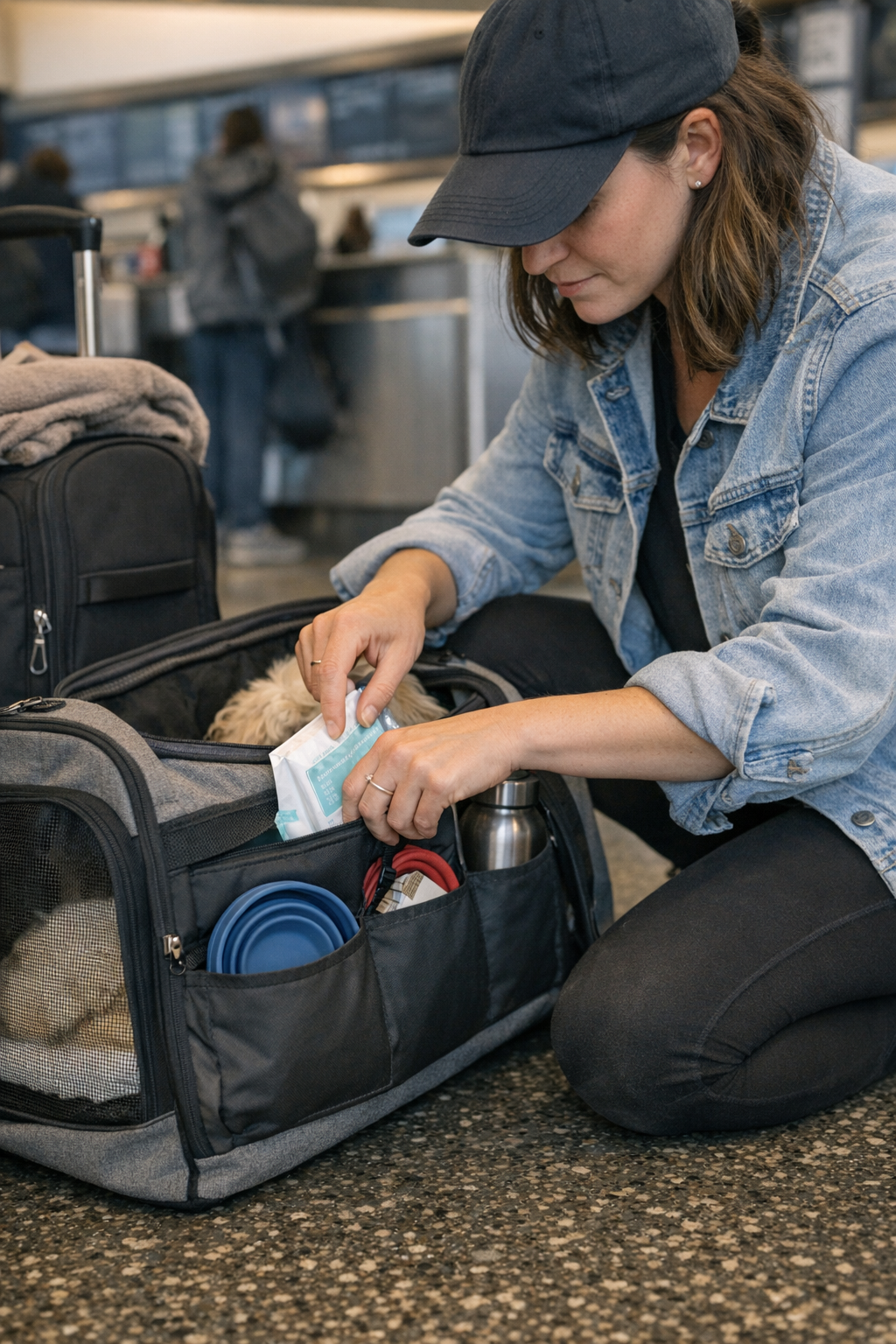
    Adding a small, quick-access side pocket or seat-edge sleeve resets this dynamic. When you kneel mid-wait to calm your pet or scramble for a spill fix at a stranger’s feet, you reach straight for wipes or snack—no digging, no tilting. Suddenly, each transition blurs less. Your setup isn’t just packed—it’s actually ready to move again, fast.

    Real-Use Test: The Shallow Seat Pocket Shift

    An early morning dash—airport, pet in tow, fluids tight, nerves high. Moving just two essentials (wipes and a bowl) to a seat-edge pocket cut the friction out of every stop. Those items stopped slipping under other gear—they were always upright, always in reach. When a spill hit or a meltdown started, the fix was now one-hand, one-motion. No two-handed digging or spill risk. This kind of structural tweak—one clear division, not just another compartment—reduces handling time at every checkpoint and makes each restart less stressful to manage.

    Comfort Versus Agility: How One Fix Can Cause New Friction

    Better organization isn’t a magic bullet. Adding comfort matters: a soft blanket or calming toy can make a wait bearable for your pet. But too often, those extras migrate to wherever you’ve made fastest access—blocking wipes, swallowing paperwork, slowing your hand just when you need to act fast. The trick is not simply to add calming gear, but to question where it lives: if it helps your pet but creates a new block for you, it needs a new home in your structure.

    Access Over Aesthetics: What Survives Repeated Use

    The biggest upgrade isn’t in expense—it’s in structure that still works after the third or fourth transition. A pet travel setup that survives repeated, seat-side, one-hand access beats one that’s still “neat” after three checkpoints but constantly forces you to reorganize. The weak spot isn’t always obvious at first glance: sometimes it’s a too-deep pocket, sometimes a bottle wedged just where you need to grab treats. Finding and fixing those repeat offenders—however minor—does more for smooth travel than any gear “upgrade” alone.

    Routine Problems, Small Fixes, and the Real Decline of Friction

    The awkwardness of pet travel rarely explodes in big errors—most pain comes from microscopic, sharp-edged slowdowns: a wipe out of reach, a tangled leash, a second delay that breaks your flow. Move your fast-use items to clearly separated, stable spots. Keep comfort and cleanup zones split. The bag might never feel perfect, but each simple, repeated-use tweak brings the friction down and the confidence up—each restart less clumsy, each mess easier to handle without a reset.

    In real pet travel, what matters isn’t how “packed” you look—it’s how your setup behaves after three stops and five quick-access cycles. If your bag keeps forcing you to pause, shuffle, or restart, it’s time to rethink not your checklist, but your structure.

    Find more practical setups at PawGoTravel.

  • How Smart Carry-On Organization Eases Airport Stress and Saves Time

    A carry-on bag that looks organized in your bedroom can turn into a series of stop-and-go hassles by the time you reach your fourth airport checkpoint. The real weakness in most so-called “organized” setups isn’t visible until you’re actually moving: lines forming behind you, a zip that snags, a boarding pass hiding under your snacks. At home, stacking cubes and lined-up pouches feel satisfying. On the ground—when you need to grab documents, shift trays at security, or pull out headphones with one hand—those same setups become slow, awkward, and frustrating. The gap between looking neat and moving smoothly costs real time, especially as pressure builds at boarding, security, or forced repack moments. This is where most “organized” bags start breaking down, no matter how carefully you packed.

    When an Organized Layout Breaks Under Pressure

    Order falls apart fast when your bag’s structure creates hidden jams. You know the pattern: you set every item in its place, cables looped, pockets zipped, convinced you’re ready. Then the first tray at security sends you pawing through a jumble of “organized” pouches, because your toiletries are behind chargers or a hard-to-move jacket. You planned ahead, but now your boarding pass is bent between tissues and granola bars, sliding further out of reach each time you drop your bag to the floor. Suddenly, what felt efficient at home shows its real friction at every small retrieval on the move.

    Every access becomes a mini-reset, not a quick action. When the only way to grab your passport or a charger is to shift cubes or reroute a zipper path, the hidden drag builds rapidly. It’s not the first or second reach that exposes the flaw—it’s after you’ve walked half the terminal, when repacking for the third time becomes a slow-motion scramble. A visually “perfect” structure rarely survives five cycles of real airport flow without costing you time, attention, or both.

    The Real Slowdown: Repetition That Wears You Down

    Airport routines don’t reward decorative neatness—they punish access friction. No one times you repacking at home. But at security, at a crowded boarding gate, or after a red-eye, you start to see which decisions hold up. Most carry-on slowdowns aren’t about messy bags; they come from setups that force you to repeat the same clumsy sequence—unzipping, shifting, reshuffling—each time you need something that should be simple to grab.

    True-to-Life Carry-On Headaches

    • Security tray, round one: Your tablet is under a jacket and snaked cables. Dismantle half the stack, try not to drop loose items, reload while others stare—repeat on the return side a few moments later.
    • Boarding bottleneck: Scan for your pass, find it wedged with wet wipes and a snack bar. One-hand shuffle, lose your spot, get rushed before you even clear the threshold.
    • Seat squeeze: Go to grab noise-cancelling headphones for takeoff; realize they’re hemmed in by yesterday’s snack pouch and a roll of chargers. Everything comes out, aisle traffic waiting, order must be rebuilt just to sit down.
    • Mid-flight drift: Reach for a charger: it’s buried bottom layer, requires moving toiletries, then repacking, then squeezing the pouch back into a now-misaligned pocket. Each repeat drags out longer, no matter how well you packed the first time.

    Why “Looking Organized” Doesn’t Mean “Moves Smoothly”

    The biggest drag isn’t visual—it’s functional. Packing cubes and color-coordinated pouches might hide the disorder, but they can quietly encourage overlap. When your sanitizer and passport compete for the same cramped pocket or your cables live with high-turnover snacks, you’re forced to perform a mini-excavation every time you need a single item. Neat lines at home become a slow cascade of rearrangements at every point of use.

    This drag isn’t just about seconds lost; it’s a compounding series of tiny slowdowns that chip away at your focus. The carry-on that needs constant reshuffling, or makes every retrieval a multi-step interruption, becomes a silent stress source—especially when you’re already navigating crowds, tray transfers, or tight seat changes. If your layout breaks the airport rhythm, your “order” is costing more than it saves.

    What Actually Changes Repeated Use: Direct Access Structure

    The biggest improvement comes not from carrying fewer things, but from building direct, repeated access into your bag’s structure. Instead of stacking everything to look tidy, reshape your layout around how—and how often—you reach for certain items. Priority goes to the high-frequency, high-pressure needs: fast document checks, electronics at security, grab-and-go snacks, and quick sanitizer pulls.

    How Real, Use-First Structure Shows Up

    • Boarding pass & ID: Alone, slotted in an outer or side-access pocket—never buried or pressed in with “occasionally needed” extras.
    • Chargers & headphones: Top-layered in a dedicated zone or travel tech pouch, with a single, frictionless zipper path—not squeezed under a book or double-packed behind clothing.
    • Clear-view toiletries: In their own grab-and-slide case, sitting directly inside the main opening; ready for instant X-ray tray transfer, with nothing to move first.
    • Snacks & sanitizer: Isolated in flippable pockets or side sleeves—never bundled with cables or deep within storage cubes.

    This setup eliminates forced interruptions. The crucial detail: “one move, one item.” No stopping to repack or reshuffle because high-use things stay separated from low-frequency bulk. The speed difference is real: instead of adding hesitation at every gate or tray, the structure vanishes from your attention—the ultimate test in repeated use.

    The Subtle Trap: Overlap Creeps Back In

    The friction returns when boundaries blur again. You tell yourself it’s fine to toss boarding documents alongside cables for speed—or that stacking chargers and snacks conserves space. But once you’re en route, the same pouch gets emptied, dumped, re-zipped, and repositioned with every reach. Overlap pulls you back into the loop: one use, many moves, and a mounting risk of leaving something half-unpacked or out of place.

    The real sign of a functional carry-on? You can retrieve anything after five or ten cycles without disrupting the rest of your layout. In daily practice, this means:

    • No pocket-rummaging for the same docs throughout the day
    • No cascade of items to reload after a simple access
    • No digging at the overhead bin for tech, or stalling the aisle because of a buried water bottle

    If you’re repeatedly resetting the bag after simple, routine moments, “home neatness” has failed to translate to in-transit usability. Durable order is shown by how little you have to think about your bag when your attention is elsewhere—or when time is tight.

    Security vs. Speed: Access That Matches the Real World

    Should outer pockets hold valuables? Only if you’re absolutely tracking every access point. In real travel movement, outer-access pockets work best for low-risk, constant-use items—tissues, snack bars, wipes—while your passport, wallet, and key electronics demand zipped, less-obvious but still rapid access. Create a setup where you lose less time at every checkpoint but don’t tempt a quick grab by a passerby. The sweet spot: speed for the replaceable, better-sealed layers for what you can’t risk losing.

    Subtle Upgrades: The Fastest Payoff

    You don’t need a packing overhaul—just one structural shift can make every checkpoint and aisle squeeze smoother. For most travelers, switching from all-in-cubes or flat-pouch stacks to distinct vertical or slot-based sections instantly cuts down on overlap. This isn’t only about a crisper-looking bag; it’s about fewer repacks, faster “hand-to-item” outcomes, and less low-level stress. The physical sensation of not having to search builds relief into the routine—you stop thinking about the bag and start actually moving through the airport as if the setup is finally working with you, not against you.

    That’s the hidden difference: a carry-on that seems perfect on the floor doesn’t matter if it crumbles in line. The proof comes from quick retrieval, silent access at clutch moments, and a flow that holds up after every repeated-use stretch. Structure beats neatness—especially once travel rhythm takes over.

    For realistic tools and clever solutions designed to make repeated carry-on travel easier, visit CarryOnSupply.

  • How Back Seat Zones Transform Car Organization and Ease Daily Routines

    Most car back seats are a trap—organized for five minutes, inconvenient by day two. You climb in thinking a recent cleanup means less work ahead. But what looks under control quickly turns useless in actual use: phone chargers snake across seat gaps, water bottles wedge under the driver’s feet, and gym bags or jackets migrate into corners and block seat buckles. The “tidy” appearance fools you—for a while. By midweek, every stop means shifting something, untangling cables, and digging for whatever’s slid out of reach. What seemed fine after cleaning spirals into a chore you’re repeating every drive.

    Appearing Tidy Isn’t the Same as Working Smoothly

    If you shuttle kids, run carpools, or just have a busy week, the cycle shows itself fast. After a quick reset the back seat looks ready, but your routine never matches the clean slate: by the third or fourth drive, friction returns. A cable loops over the seat edge, making even a quick phone grab awkward. Bottles tuck themselves next to buckles so seatbelts become a two-handed job. A backup hoodie you tossed in is suddenly buried under a backpack and a half-empty snack bag. These aren’t dramatic messes—they’re interruptions that add seconds and stress, until you’re hunting for lost items every re-entry.

    The Real Problem: No Assigned Zones

    The issue isn’t just clutter—it’s the absence of assigned zones. No pocket for chargers, no upright holder for bottles, nothing for snack packs or spare masks. Without dividers, every item migrates, turning the cleanest seat into a jumble when real life hits. You can drive carefully, keep your crew on alert, and still end up untangling a cable from under the seat in the rain, or scrambling for your keys while bags fight for floor space. The visual “reset” has zero staying power when there’s nothing stopping gear from slipping, bunching, or blocking access in a moving car.

    Repeated-Use Friction—Why Setup Matters More Than Ever

    The cost of a weak setup isn’t about looks—it’s about everything that requires extra effort after multiple uses. Real routines stress-test your back seat: reaching for charging cables while parked, dropping a gym bag after work, keeping space for a passenger or kid in a hurry. Patterns show up fast:

    • Cables loop, tangle, and cross seat spaces, dragging hands off routine actions just to fix them again.
    • Bottles and cups roll into footwells, requiring blind sweeps under the seat for simple hydration.
    • Seat access gets blocked by last-trip leftovers, forcing shifting—and sometimes frustration—before you can even sit down.
    • Cleanup becomes a running task: each drive, you reset the same mess, feeling a little more annoyed every time.

    These aren’t one-time hassles. What really wears on you is the repetition—the moment you reach for something and realize the system broke again after a single turn or brake tap.

    False Sense of Order: Why Resets Only Work Once

    A fresh clean might feel like a fix: bags lined up, cables coiled, drinks stowed. But the first unscheduled turn or braking in traffic, and the order goes sideways. Every drive without real zones is just clutter on a timer. Nothing stays put, and you find yourself pulling items from under seats or re-buckling seatbelts around gear that shouldn’t be there. The cost isn’t in the size of the mess—it’s in breaking your own routine each time something slides, wedges, or hides again.

    Hidden Chaos vs. True Order

    If you’ve fished a bottle from under the seat more than once this week, or if your charger’s been trapped between cushions mid-errand, you know: clean visuals don’t survive repeated use. The difference is simple boundaries—a pocket that holds, a groove that keeps bottles upright, a divider that stops a gym bag from creeping across the seat. Without these, every drive means repeat: stash, slide, search, reset. The frustration isn’t dramatic, but the time-loss is real.

    When Routines Stack Up: The Real Cost of Unzoned Interiors

    Busy weeks stress-test any setup. A sudden rainstorm, a bag of groceries dumped in the back, extra passengers—these expose every gap in structure. Picture it: you jump in, arms full, and a cable catches your boot, your work backpack slides down, and seat access is blocked until you reshuffle everything. No one’s pausing to re-sort after each errand. So by week’s end, improvised piles fill every pocket and corner. “Orderly” becomes a joke—now every stop means re-clearing space just to move.

    Why Repeated Friction Stays Under the Radar

    Most people dismiss these as minor annoyances. But when every quick trip steals another minute to reset, the system itself drags you down. The pain isn’t just finding a mess—it’s having to play cleanup crew after each ordinary drive. The wrong setup multiplies micro-annoyances. Only a system with real, stable zones keeps up.

    How Simple Zones Restore Car Usability

    Add basic order—split seatback organizers, upright bottle pockets, bag hooks—and the grind changes fast. A week with real zones, and you notice it: less energy lost on cleanup, less time untangling, more reach-and-go flow. The lost bottle now lands in a fixed slot. Chargers stay coiled, not tangled around bags or under feet. With each drive, you spend less time fighting the interior and more time moving ahead. The car doesn’t have to look “showroom ready”—it finally works the way you thought it would.

    Noticeable Change After the First Few Drives

    The payoff isn’t in pristine surfaces—it’s in not having to think about what’s drifting, blocking, or missing. Fewer “where did I put that?” moments. Fewer pause-and-shift routines before dropping in groceries or grabbing a charger. The car interior finally matches your daily rhythm, making access quicker and return-to-car smoother. Cleanup is lighter, almost automatic, instead of a recurring task list.

    Choosing Zones Over “Just Tidy” – What Actually Changes?

    • Access beats appearances: Items with a set “home” don’t wander. You reach, you find, you go.
    • Cleanup becomes a snap: Less untangling, less lost time, because everything has a place—and stays there drive after drive.
    • Routine feels less interrupted: Every trip is more predictable, with fewer last-second scrambles or blocked seats.
    • Shared rides stop the cycle of chaos: Passengers actually know where to put things, and the gear you need remains findable after they leave.

    Recognizing and Fixing a Common Mistake

    Most drivers repeat the same error: thinking a tidy reset is enough for real life. If there’s no solid boundary—no pocket, hook, or slot—whatever order you impose in the morning will unravel by afternoon. Keeping things separated, stable, and reachable is what breaks the cycle of always restoring order. A seat pocket here, a cable holder there, an upright bottle slot—that’s what stops the drain from small, repeated blockages. The result isn’t perfection; it’s that your setup actually helps you, instead of fighting you, as car use stacks up.

    Find practical, real-world back seat organization solutions at DriveWellSupply.

  • How Smart Mat Storage Transforms Pet Travel Comfort and Flow

    A pet travel bag can look perfectly organized until you actually move with it—then the friction shows up fast. Step out for a quick trip with your dog, and every stop turns “neat compartments” into a test of reach and patience. The first setup flaw doesn’t appear parked in your driveway; it surfaces when you reach curbside, your dog shifting on cold or uneven pavement, and you’re stuck scrambling for that buried comfort mat, blocked by stray treats or tangled wipes. One overlooked pocket turns every transition into another physical shuffle—while your dog’s paws remind you every second that you’re still not ready to go.

    Where the Setup Breaks Down: The Exit-and-Entry Grind

    Leaving the house, everything looks sharp: leash clipped, bottles stashed, carrier zipped tight. But the smooth start shreds as soon as you hit the first stop, then the second, then a third. Each pause is a repeated snag—digging past a bowl to reach the mat, yanking wipes that caught on a zipper, juggling leash and gear in one hand while your dog waits. Suddenly, even a well-packed bag becomes a source of mounting interruption, not relief. This is not a rare annoyance—it’s built in, and it repeats. The pet is waiting, you’re fumbling, and the flow of every errand gets a little more ragged with each new stop.

    One Small Change, Noticeable Difference: The Instantly Reachable Mat

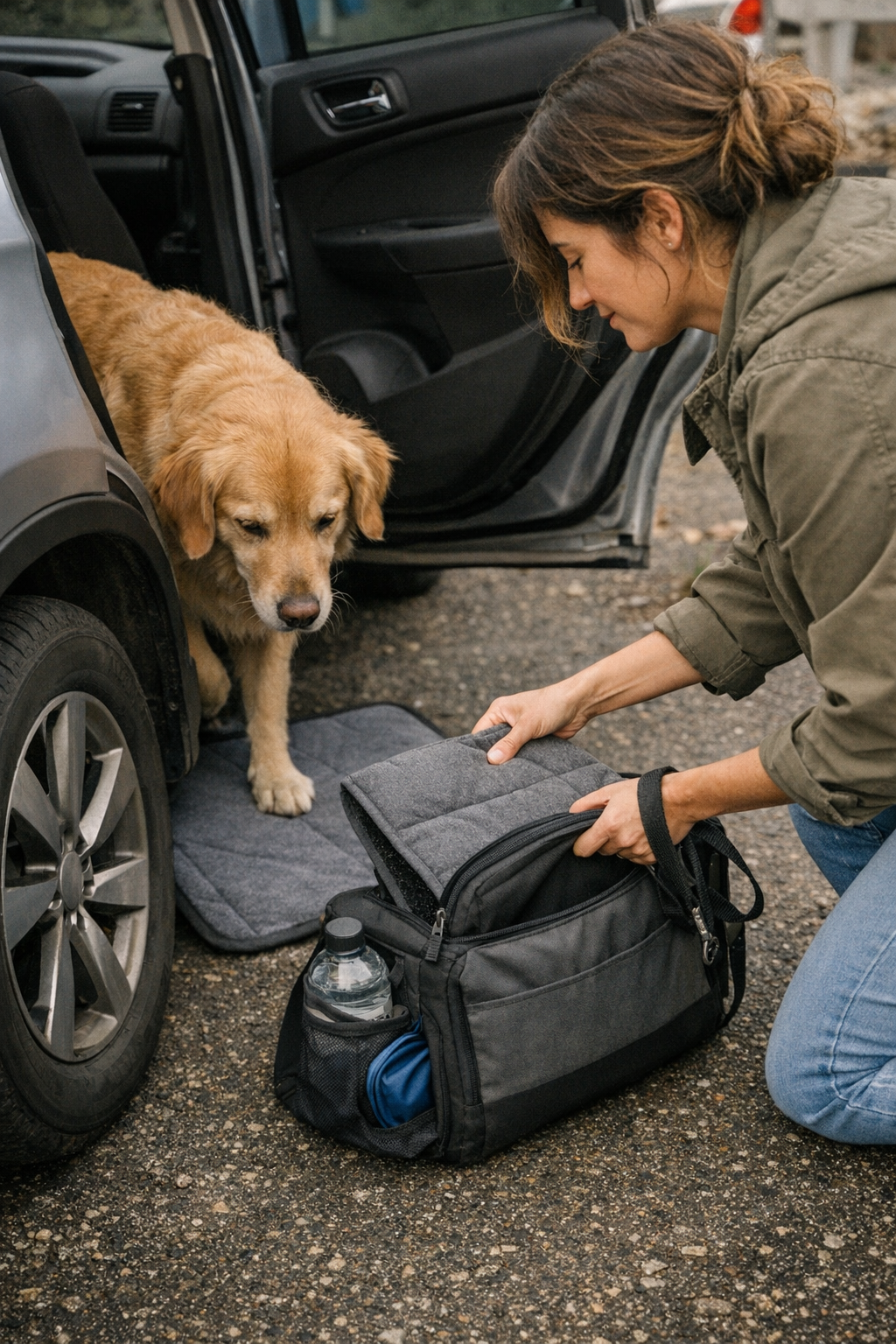
    Nearly every carrier includes some soft lining, but travel demands more: instant, seat-side access to a real ground buffer. Stowing the mat “somewhere in the bag” means you’ll always fumble for it while your dog paws at the edge of the car, restless on cold concrete. The specific fix: use a carrier or organizer with a dedicated, side-access pocket for the mat, right at seat height. One quick zipper, one-handed, and the mat’s down before your dog moves. There’s no juggling—no mix-up with bowls or wipes, no re-sorting required as your pet waits. The difference is immediate: transition is cleaner, the pace resets, and neither you nor your dog has to get tense at each stop.

    Real Travel Scenes: When Preparation Meets Reality

    Think routine: Saturday errands, a breakfast pickup, then swinging by the post office, and maybe quick pet store stop. First exit? Calm—everything ready, your dog steps down and settles. By the second stop, the mat’s jammed under water bottles you already fumbled last trip. Next, your pet sees gravel and hesitates. Now you’re juggling a leash, keys, partial zipper, and wondering why “organized” never feels ready when you actually need it. That readiness drains; the rhythm of quick errands breaks, one keep-finding-the-mat moment at a time.

    These are not big disasters, but repeating them shapes the entire outing—for your dog and for you. With every pause, the trip feels less about moving forward and more about dodging small, preventable slowdowns—usually because access, not just organization, is missing.

    Why Item Placement Outweighs Visual Neatness

    Neat isn’t enough if it hides the one thing you need most often. Real pain points:

    • Comfort mats buried behind stacked bowls or poop bags—always needing a full re-order to grab what matters first.
    • Wipes and hydration gear sit with the comfort kit; one spill turns pet cleanup into a reach-and-swap ordeal.
    • Section after section feels tidy, but these slow, repeated swaps erode the “prepared” feeling until even fast errands drag.

    Solve for separation: give comfort items their own, quick-reach space—never stacked with food, water, or cleanup gear. Fast transition drops the friction; you stop dreading the next fumble. Your pet doesn’t have to brace for cold or sharp or wet surfaces while you sort out stray gear.

    Comfort and Speed: The Essential Ground Buffer Test

    Not all mats work. A mat that soaks up rain creates new cleanup work; a too-thick one won’t fit a side pocket for quick grab. What works best: non-slip underside, enough cushion for paws, tailored folding to slip out seat-side, quick-dry fabric that you’re not afraid to put away while damp. There’s no sense adding a mat if grabbing it still means emptying half the bag each time.

    Keep comfort separate—one mat, one pocket. If you’re swapping sections or risk cross-contaminating with spilled treats or cleanup wipes, the stop slows and your routine gets messy. When each category—hydration, comfort, treat, cleanup—lives in its own section, neither you nor your pet repeat avoidable mistakes twice in a row.

    “Looks Prepared” Isn’t the Same as “Works Smoothly”

    The real lesson? Almost every “organized” setup shows strong on day one, but only a few survive three stops without exposing a weak flank. Most repeat-use failures show up here:

    • Digging the same section open twice trying to find a mat tucked behind other supplies.
    • Pausing to untangle wipes or wipes after a spill, holding up your pet and everyone else.
    • Routines that restart slower, with tidy gear that still blocks flow under normal movement—not just at the messy stops.

    The mat is a real-world filter: easy to ignore, until it’s the pinch point every cycle. Fast, seat-side mat access is the difference between tension stacking up and errands running quiet, with less gear-in-the-way drama every trip.

    Repeat-Use Wins: Less Stress with Every Pause

    No travel setup is invincible—routine will reveal every blind spot. But a bag set up for repeated, seat-side mat access eliminates one of the most common and persistent friction points: the gap between “looks ready” and “really lets you move.” With the right pocket layout, your outing stays simpler, not just neater—one less reason for your pet to wait and you to lose rhythm after every short stop.

    See practical pet-travel setups and gear at PawGoTravel