Category: Travel & Drive

  • Why Your Pet Travel Setup Slows You Down After Repeated Stops

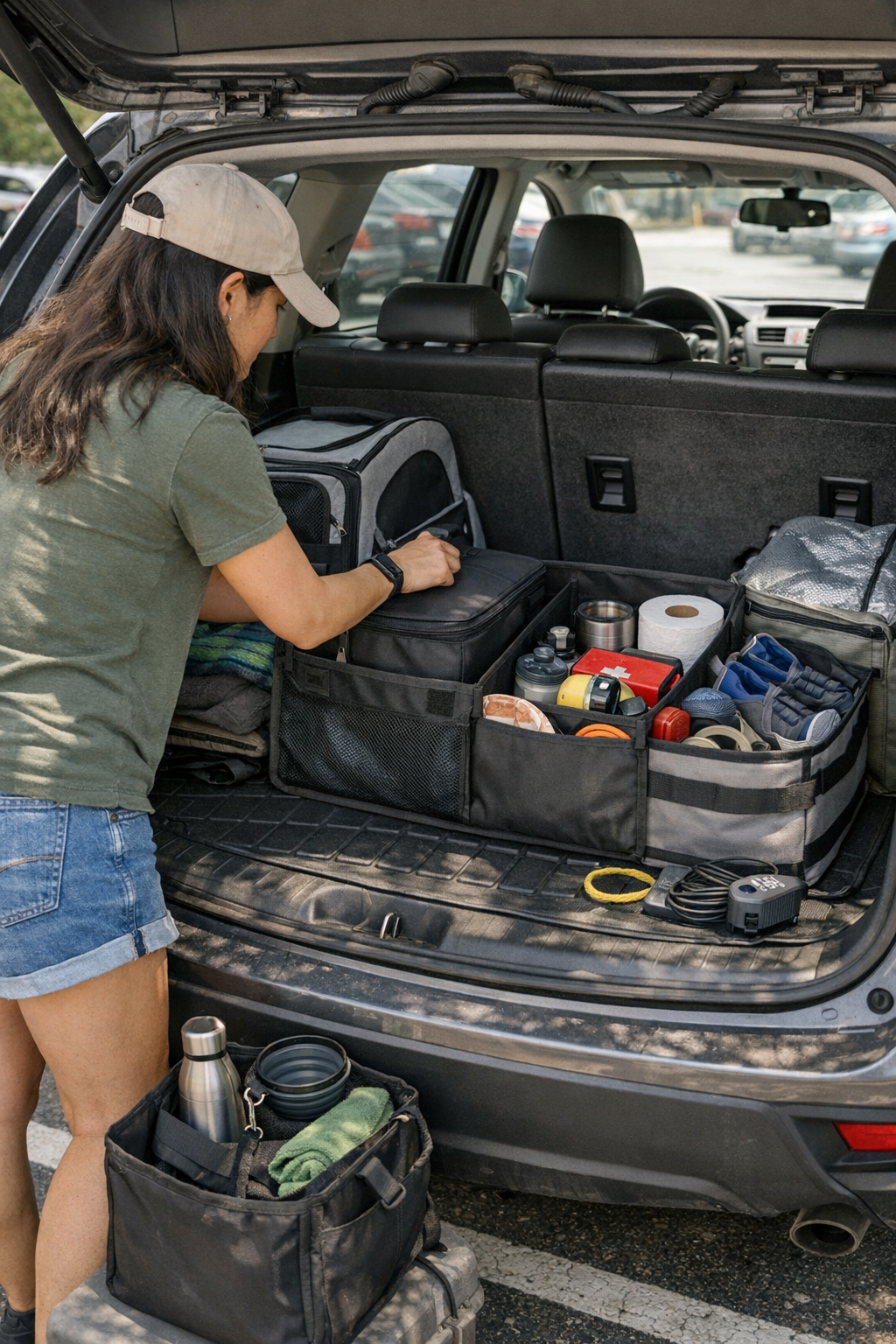
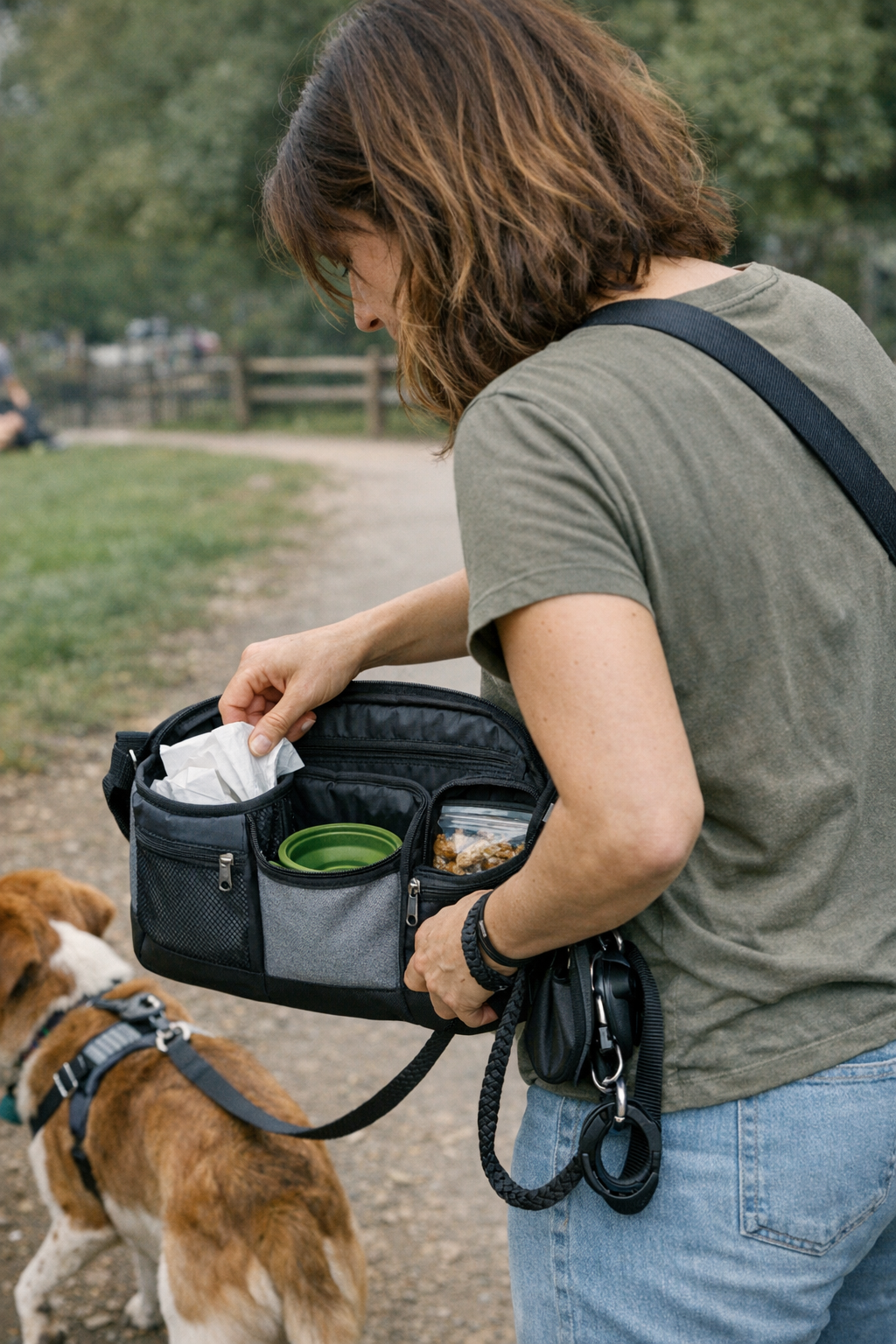
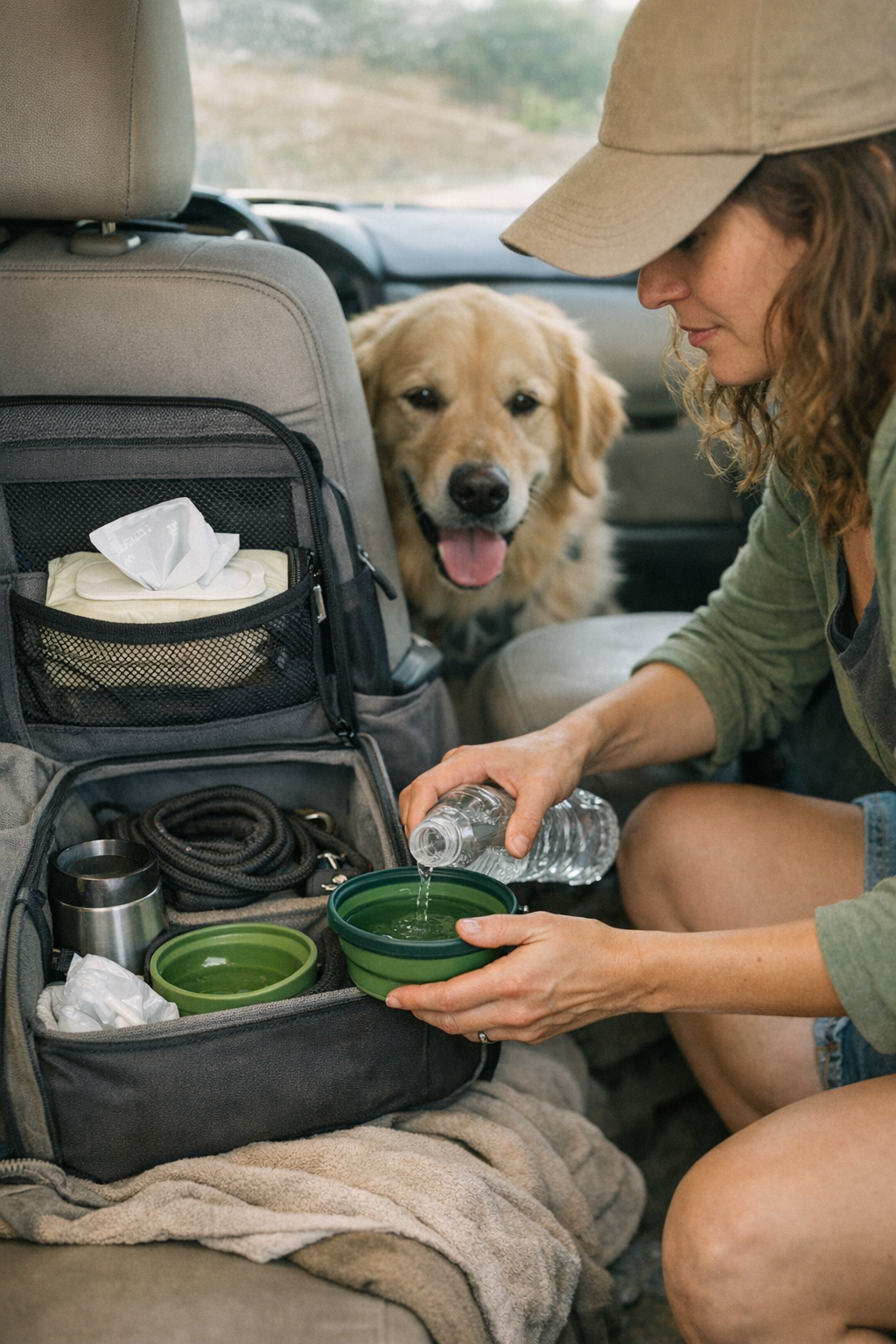
    The real test of any pet travel setup isn’t how it looks leaving your driveway—it’s what happens when you stop, start, reach, and reset again and again. That perfectly zipped bag with wipes “in their place” feels smart until you’ve made three quick stops, handled muddy paws, and fumbled for the one thing you actually need. Suddenly, the bag that promised organization starts slowing you down. You’re prying at deep pockets while your dog wriggles to escape, searching for wipes layered somewhere beneath snacks and leashes. Each “prepared” section demands an extra step you don’t have time for, and what looked efficient now delays movement, interrupts cleanup, and piles on low-level stress. This is the gap PawGoTravel is built around: what holds up for a photo, and what holds up to real, repeated use.

    When “Neat” Stops Being Useful: The Hidden Costs of Layered Packing

    Most pet travel bags look neat on day one. Bowls, wipes, and leashes each have their tiny designated spot—a zipped compartment, a nested pouch, a spot under the main flap. That order feels good until routines stack up and fast access matters more than photo readiness. You rush off for a trail walk, wipe paws before re-entering the car, dig for a forgotten leash, or try to swap water bowls in a crowd; suddenly, every hidden pocket becomes an obstacle instead of a solution. The benefit of tidiness disappears when you’re racing through the same pack-and-unpack cycle at every stop.

    Organization that works when everything’s still goes sideways during real-life pet travel. A restless dog shifting next to you, a call from across the parking lot, or an unexpected mess—these moments turn tidy layers into a source of real friction. That instant when you need one urgent item, every extra zipper or stacked compartment steals back the time you thought you’d saved by packing “right.”

    A Familiar Scene: The Stop-and-Go Scramble

    Midway through a road trip, you slide into a crowded rest area. Your dog’s awake and energized, pulling you toward the exit as you try to grab a bowl. But the bowl’s jammed at the bottom, trapped under jackets and straps. Unpacking one thing shifts another: leash clips slide behind bag dividers, wipes disappear inside zippered pouches you never should have closed. Rummaging for even the most basic item turns a fast pit stop into a disjointed pause, made harder with a dog leaning across the seat, ready to jump.

    Frustration in the Dog Zone: Repeat Trouble Spots

    The friction isn’t obvious at first, but shows up with repetition. After the fourth stop, you catch yourself reaching through three layers for a leash or wipes—again. Every “protected” item means another pause, another shuffle, another break in flow. Neatness masks how often your hand lands on the wrong section, reminding you that eliminating surface mess isn’t the same as making your pet travel setup truly work under pressure.

    The dog-handling zone becomes a repeated logjam. As trips unfold, each hidden item makes transitions (in and out of the car, between leash and seat, cleanup and restart) slower. The cumulative drag of reshuffling isn’t dramatic, but it chips away at both patience and rhythm—it’s not just minor delay, it’s real friction that piles up across every outing.

    The Split Between Owner and Pet Gear

    Owner and pet gear inevitably collide. Water bowls end up under human snacks. Wipes migrate beside hand sanitizer. Your dog’s leash gets tangled with your spare hat. What looks compartmentalized spills over in motion, forcing you to reorganize after almost every stop. It’s not just about knowing where each thing is—it’s about how easily you can reach what matters when the dog’s squirming, bags are shifting, and you’re trying not to lose your spot in the flow of travel. Even a small fumble can turn a simple stop into a micro-chaos scenario that resets your whole kit.

    Visual Order vs. True Accessibility: Why Most Setups Break Down

    On paper, more sections seem like a solution. In practice, every extra pocket or zipped layer is one more point of failure when the pace speeds up. Repeated use exposes the gap: a setup that’s “ready” at the start actually blocks you when speed or one-handed handling is needed. After a couple of stops, you’re not using the compartments as planned—you’re bypassing them, leaving things half-zipped, or staging wipes and bowls in plain reach out of desperation.

    Friction peaks when the item you needed “just in case” has to be tugged out from under three other “organized” tools. Even a single zipper slows the snap decisions and free hand you need during live travel—especially as the dog tugs, waits, or tracks in another layer of mud to clean. Function drops and impatience rises, all because usability got traded for visual calm.

    Why the Problem Grows Over Time

    Initial excitement about compartmentalization fades fast as the day wears on. Small inefficiencies—hunting through pouches, flipping open sections, untangling clipped gear, squeezing wipes out of too-tight sleeves—multiply with use. Every slow search is an interruption; every repack turns a quick stop into a drawn-out reset. Your setup didn’t get messier, it just stopped keeping up with real timing. And dogs don’t wait while you fix your system.

    Shifting to Real-World Flow: Making Essentials Instantly Reachable

    The most useful setups shift from hiding every item to keeping vital gear at hand. What matters: fast wipes, one-grab bowls, leash clips exactly where your hand expects them—not wherever looks neat. In practical terms, this means:

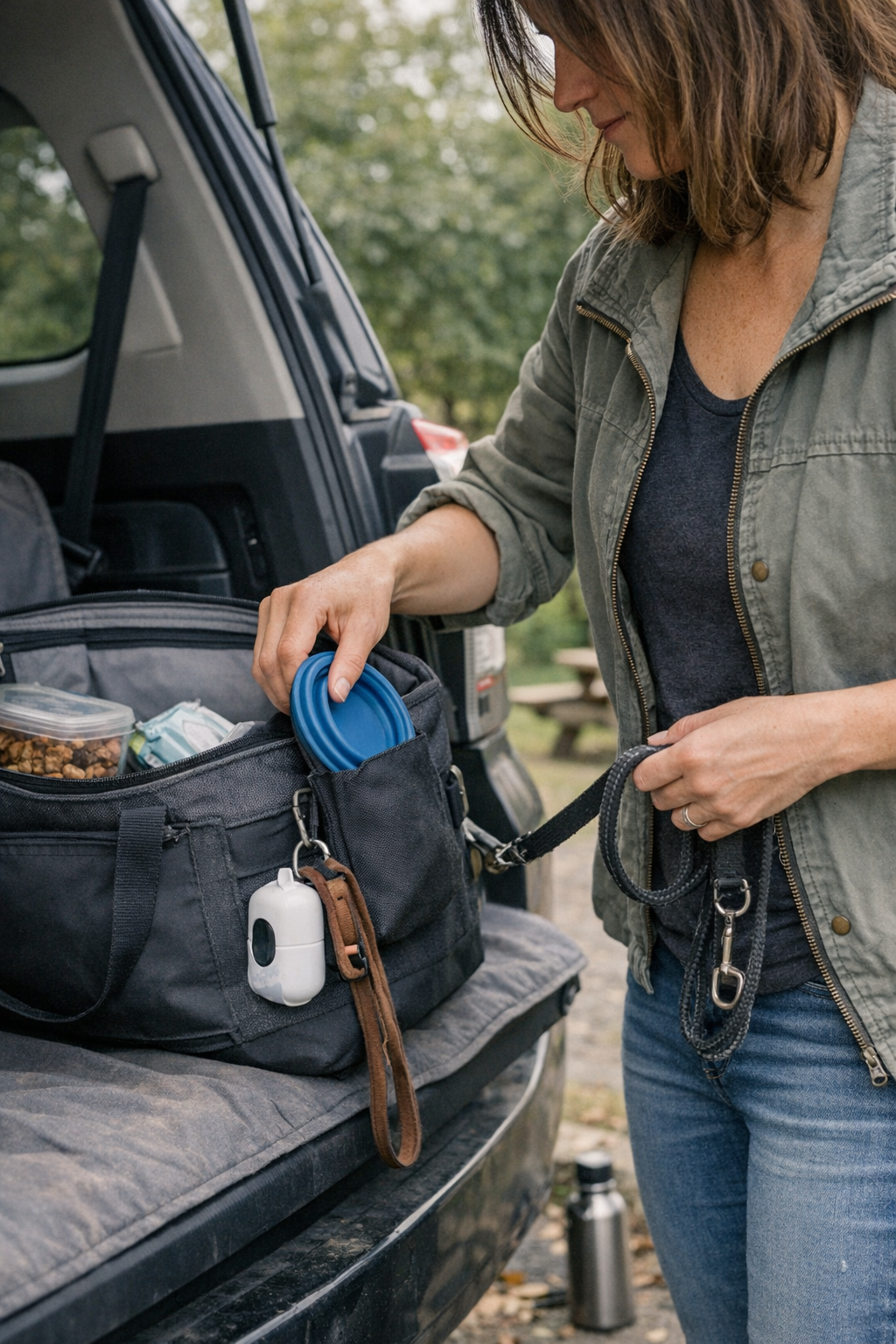
    • Wipes in a mesh pocket: Grab, clean, done. No hunting, no unzipping. Resets for the next muddy paw in under five seconds.
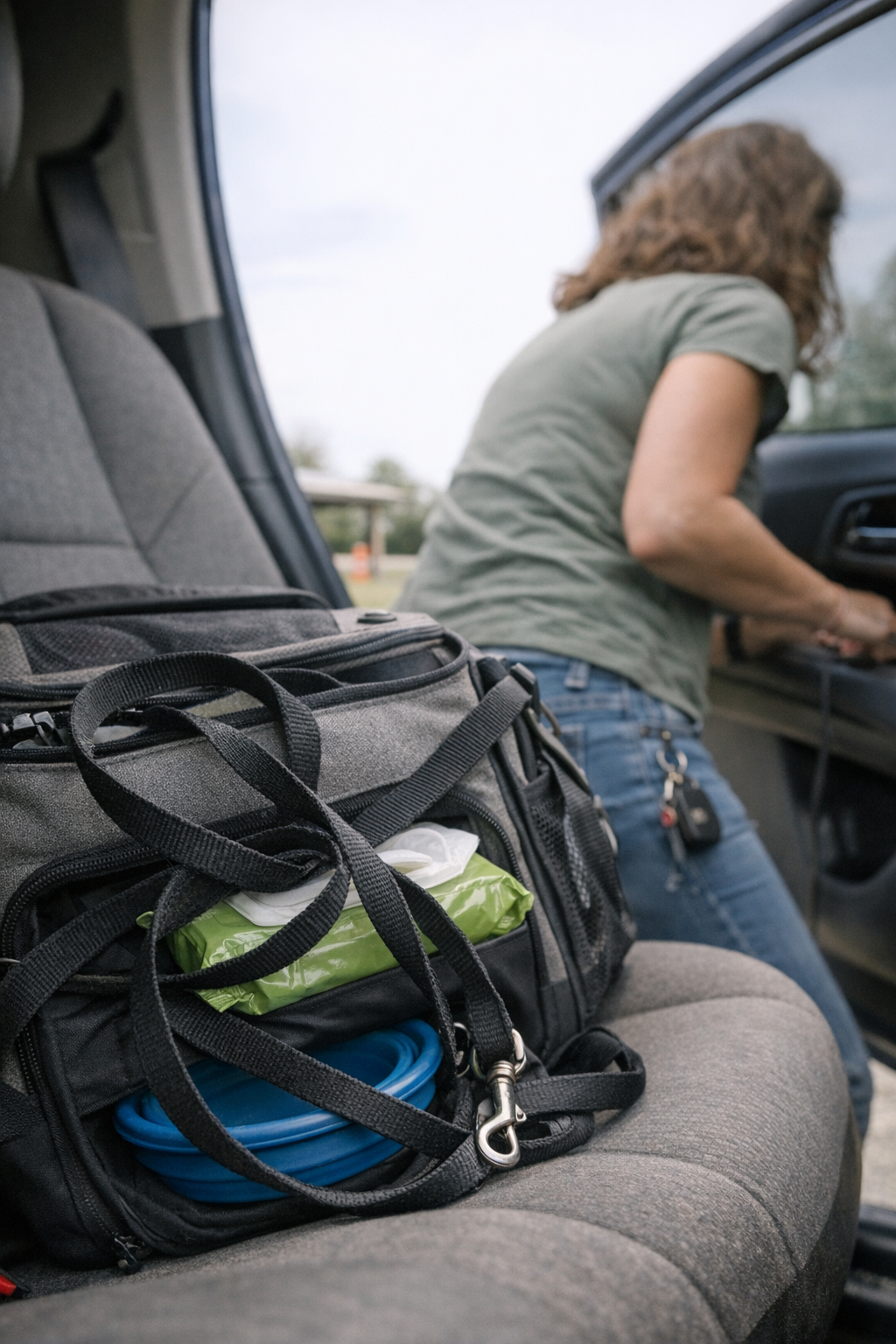
    • Bowls in seat-side slots: Lift, fill, and move—without unstowing half the bag or forcing your dog to wait longer for water.
    • Leash clip on a soft loop: No more digging past covers or struggling at the car door. The leash is instantly where you reach, even with a restless passenger.

    One tweak—the decision to make wipes accessible on the bag’s outside—turns cleanup from a self-imposed obstacle course into a smooth step. The best layout is less about maximizing storage than about minimizing lost motion, especially during those quick, repeated transitions travel demands. Your setup answers real travel logic, not just best intentions.

    Open Access: Managing “Mess” Without More Layers

    There’s a difference between exposed and chaotic. Leaving high-use items in visible, reachable spots isn’t a mess—it’s practical. The urge to tuck everything away makes sense—until it breaks your flow. Prioritize access over hiding, especially for wipes, bowls, and leash connectors. The result: fewer full-bag reshuffles, less interruption, more reliable restart after each stop—even if your kit looks a bit more lived-in by the end of the trip.

    Recognizing the Repeated Trap: Looks Ready, Works Slow

    Most pet travelers repeat the same cycle: pack for neatness, discover in the middle of the trip that their “organization” is undermining them. The weak points never disappear—just shift around. A bowl still ends up under three layers. Wipes still end up somewhere inconvenient. If you find yourself reaching, digging, and compromising at every stop, the real cost isn’t a mess—it’s momentum lost, patience spent, and flow interrupted by your own setup.

    Real progress means being able to clean up, grab water, and handle your dog on the move with seconds, not minutes, wasted. The difference is tangible every time you loop from trail to car, seat to stop, over and over. When setup supports repeatable, fast moves, the whole trip gets lighter—your bag and your mood included.

    Small Wins that Add Up: From Friction to Flow

    The most effective pet travel setups don’t feel perfect—they simply erase the hassle that usually returns in motion. True comfort isn’t about impressive packing, it’s about not noticing your kit at all while juggling cleanup, leash handoffs, and routine surprises. Each minor fix—making one item truly accessible, separating what the dog needs from your snacks, simplifying resets—pays off with every trip, and every stop where you don’t have to think twice about what’s next.

    Find more thoughtfully designed, real-world pet travel gear at PawGoTravel.
  • How Small Functional Zones Transform Carry-On Travel Efficiency

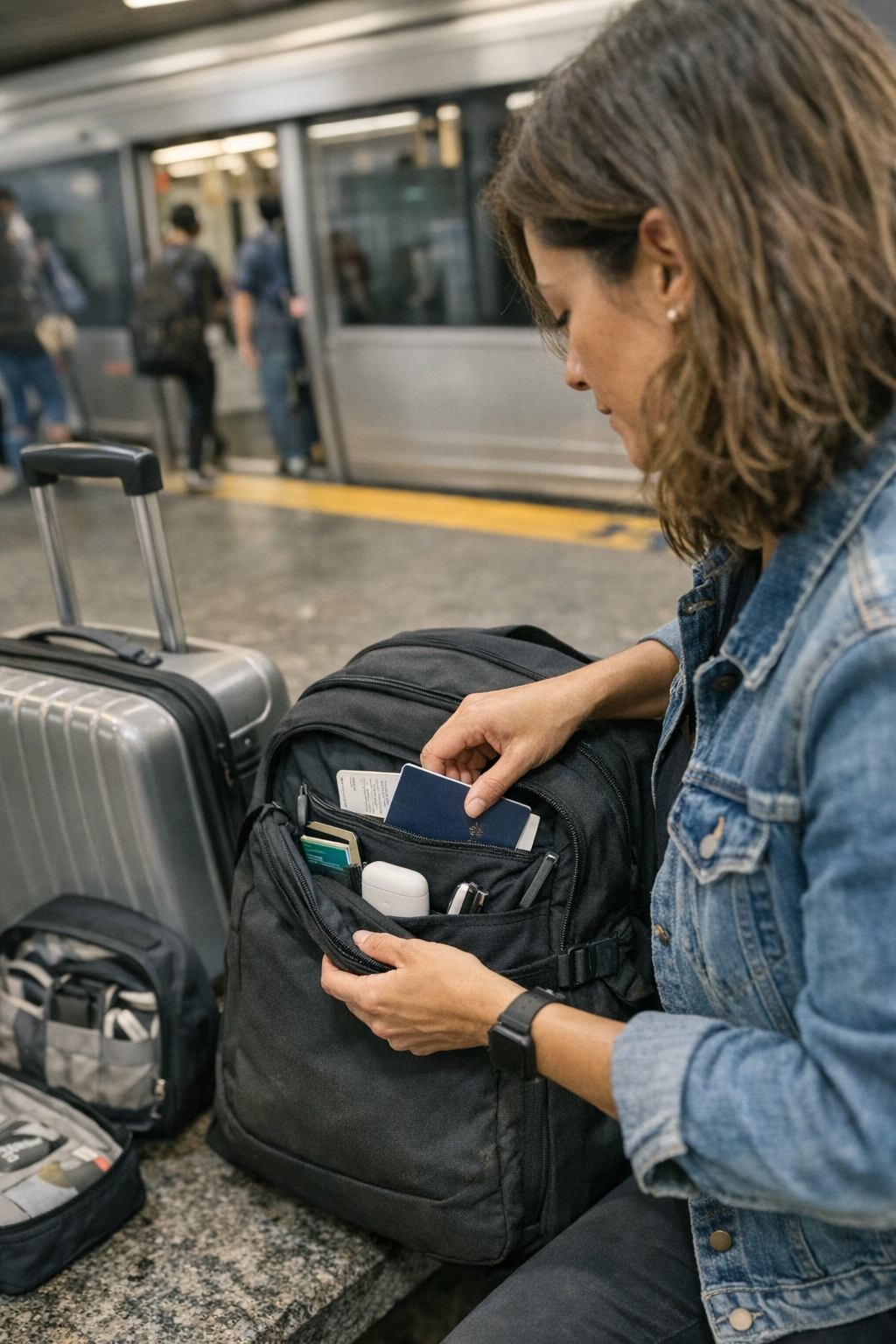
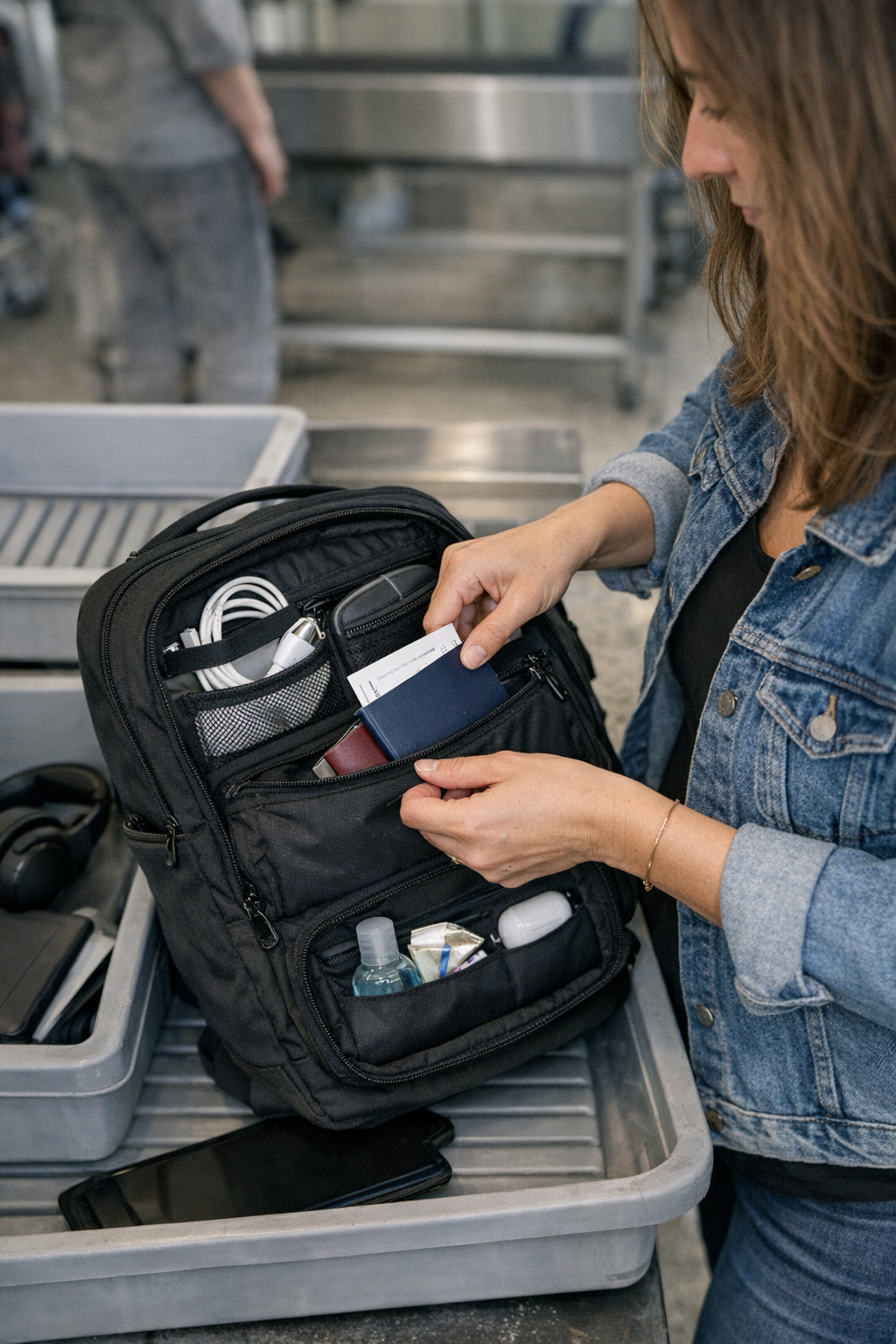
    Every frequent traveler has hit this wall: your carry-on seems perfectly organized when you leave home, but by the time you hit airport security or fumble for your ID in a boarding line, the “order” that looked efficient turns clumsy. You reach for a passport and brush past tangled charger cables, shuffle through so-called quick-access pouches, or pull open neatly zipped sections that fight you every step. The bag looks calm from the outside—but one badly placed pocket or a cable covering your travel documents can completely stall your flow at the worst possible moment.

    When “Visually Organized” Isn’t Actually Easier

    It’s easy to mistake a tidy carry-on for a practical one. The dividing line shows up in the micro-moments: stuck in a slow-moving security line, one hand balancing your bin, the other hesitating at a zipper that’s blocked by loose contents. You go for sanitizer but knock earbuds loose. A pouch meant for essentials turns into a snag point for every cable or receipt you collect mid-trip. What slows you down isn’t a chaotic mess, but a system that quietly resists you during the actual trip—forcing repeat stops, extra unzips, or awkward pauses while everyone behind you waits.

    It’s not spilled mess that signals the problem—it’s “order” that interrupts your access rhythm. A bag that photographs well can still force you to dig past unnecessary layers, unstack small items just to reach your boarding pass, or repack out in the open after each quick retrieval. By the third check, what looked organized at home becomes another slow-motion obstacle.

    Why Sequence Matters More Than Category

    The big mistake: organizing by gear type instead of by the order you actually use things. Lumping all your cables, chargers, and devices together works for storage, but in transit, you rarely need all tech at once. The cord you use once in-flight shouldn’t block you from grabbing headphones three times before you’re even airborne. Grab for a charger, out come tickets. Snag your passport, half your pouch contents spill into your lap. Each time, the “category” system unravels—and you pay the price in lost seconds, missed rhythm, and growing tension as you double back in lines or reach for a forgotten item from your seat.

    Travel sequences—security, boarding, seat entry, takeoff, mid-flight, landing—move fast. If your bag’s setup doesn’t follow this rhythm, you’ll keep pausing, repacking, or apologizing to strangers as travel order devolves into repeated micro-friction.

    Where Friction Builds, Even When the Bag Is “Neat”

    • In the boarding queue, balancing a bag on your shoulder, the gate agent asks for your ID. You dig into an outer pocket, but receipts and loose cables block your way. The pause feels longer—and so does the impatient line behind you.
    • On the plane, you placed headphones “on top” for easy reach—but turbulence and seat shuffling bury them under snacks and pouches. Now, just finding music means repacking your bag, tray table, and seat pocket in view of everyone nearby.
    • Security bins are sliding away. You unzip a pocket for liquids, only to find sanitizer jammed beside your e-reader. Sorting them exposes your private things to everyone, slows down the line, and leaves you scrambling to close zippers before your tray is gone.

    Small Zones: Packing by Use Timing, Not Just Item Type

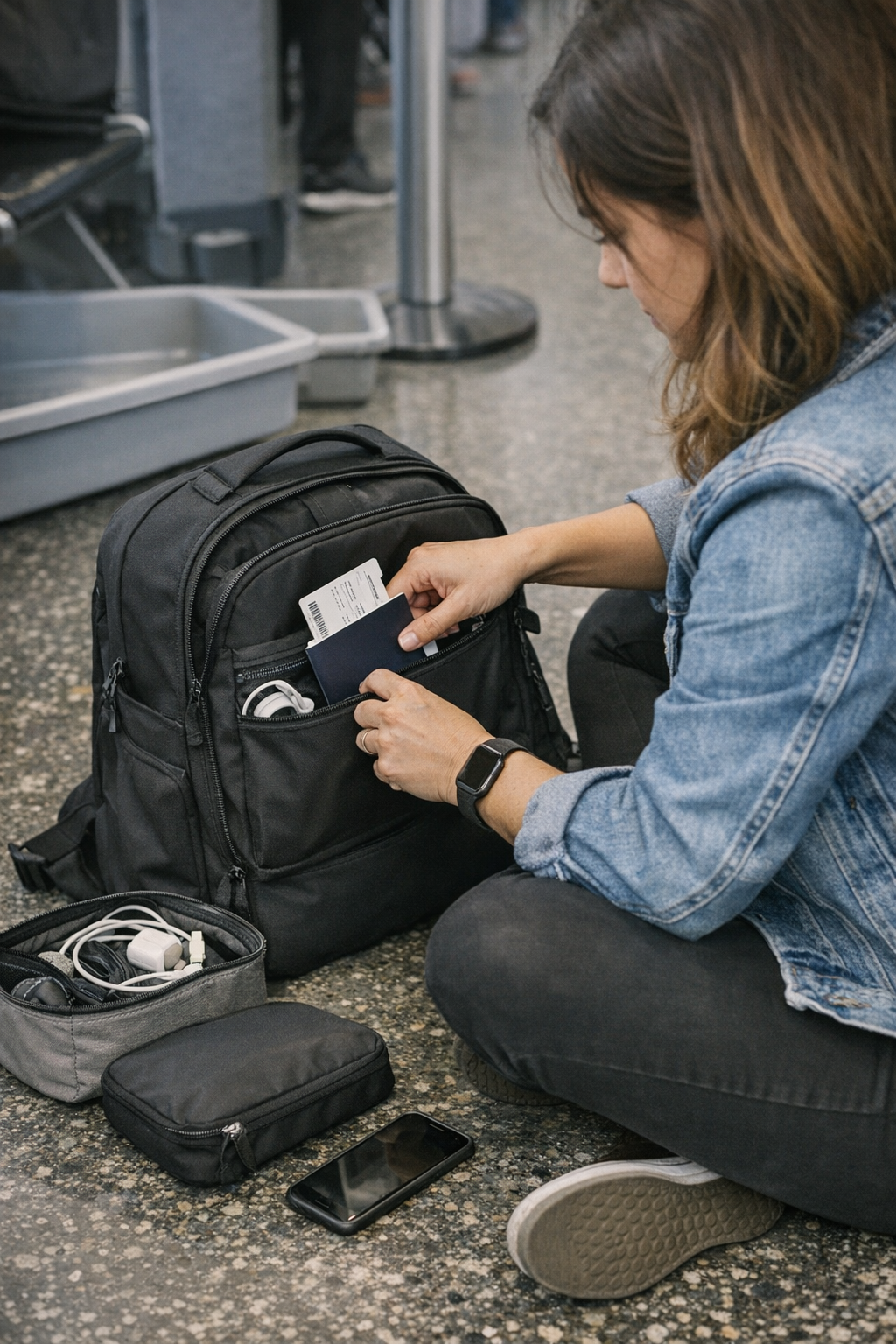
    The fix isn’t more organizers or ultra-tidy mesh pouches—it’s drawing real boundaries inside your bag by function, not just by what fits together. One zipper for just travel documents (and nothing else), a fast outer pocket for inflight needs like earbuds and sanitizer, a padded zone for electronics you only touch once seated. Each zone is purpose-built for a specific travel action, so you’re never forced to rummage through unrelated gear, or repeat the same disruptive search for a single item.

    The result: sanitizer comes out on cue without disturbing your passport or device, and grabbing a boarding pass doesn’t send snacks tumbling. Over even a few cycles—boarding, inflight, arrival—the outcome is tangible: less thinking about your bag, fewer exposed contents, lower risk of errors when outside your comfort zone, and faster returns to “ready” status after every routine interruption.

    The Usability Drop-off After Repeated Access

    Big compartments and deep catch-all pockets look neat on the first pack, but they don’t recover well once you start moving. Drag out a document, and you’re stuck sifting past cables or balancing piles on your knees. Two or three retrievals later, perfectly stacked items are bent, lost under flyers, or need reordering before you can even zip the section closed. Even if nothing spills, you notice that every new access point makes the next one slower—especially during the public moments, like reclaiming your bag from an overhead bin or moving quickly out of your row after landing.

    The more you repeat these motion cycles, the heavier the system feels. By the time you reach your hotel or switch gates, the “order” that worked at packing time has faded—just as pressure to move fast is highest.

    Troubleshooting: Repeated Frictions Reveal What’s Not Working

    • Do you pause for the same item at every gate or checkpoint—never quite sure which pocket is right?
    • Are you opening, then closing, several sections just to do a single action?
    • Does your bag’s “organized” setup seem to degrade after a few security or boarding cycles, losing all reliability?
    • Does grabbing one small thing (like sanitizer) make it twice as hard to keep your boarding pass or headphones in place?

    Each of these is not just a quirk, but a real design signal: your carry-on is arranged for looks or categories, not actual travel sequence. A shift to smaller, clearly defined functional zones rewires the whole experience. You’re packing for the way you move, not just for a tidy Instagram swipe.

    Practical Adjustment: How Real Zoning Changes the Flow

    Instant improvement doesn’t demand a bag overhaul—just field-tested adjustments. A slim, outside zipper for ID and documents (and only those). Chargers and tech staged deeper, safely ignored until your seat. A low-profile pouch always loaded for fast-grab basics—lip balm, sanitizer, earbuds—handled with zero impact on the rest. This isn’t about making every move “perfect.” It’s about reducing those friction points that turn lines, trays, and aisle transitions into slow-motion stress tests. One less zipper per routine, seconds shaved every time, and a repeated sense that your setup is keeping pace with actual airport pressure rather than creating new burdens.

    When you stop repacking on the fly or scrambling for a missing cable in front of strangers, you notice the difference: your motion feels less exposed, your contents less at risk, your overall pace more consistent. Even as long-haul flights or tight gate changes stack up, the pattern holds—and the trip feels lighter at its most demanding moments.

    The Real Payoff: Structure That Stays Reliable Under Pressure

    The best carry-on setup isn’t about surface order; it’s about invisible flow. A bag engineered around how you actually move—boarding, passing checkpoints, shifting seats, lifting to overhead—means quick, silent retrievals instead of public disruptions. The difference becomes obvious when your setup survives not just one leg, but the entire journey, letting you reset headphones with one hand or extract a boarding pass in seconds, no matter how crowded your space or tired you get.

    The gap isn’t visible when you zip the bag shut at home. It announces itself in security lines, at congested boarding doors, and every time “order” falls apart in motion. If your system makes every retrieval a mini struggle, or lets one misplaced item block another, that friction is real—and worth fixing for good.

    For carry-on tools and smarter travel pouches that actually fit the way you move, see what’s working now at CarryOnSupply.

  • Streamline Your Car Cleanup Routine with Smart Trash Removal Setup

    You don’t notice the moment your car interior stops working for you—it catches you when clutter sneaks into every action. Your evening commute starts clean, but wrappers collect at your knee, receipts tangle with your phone cable, and bottle caps slide underfoot before you pull into your driveway. This isn’t the mess of a road trip or a backseat disaster; it’s the small, steady friction in everyday routines: trash that never leaves the car when you park, items that block reach the next time you drive, and a setup that looks tidy but slows you down at the worst times. Until cleanup happens by default, not as an afterthought, your car’s organization quietly fails. Here’s where the DriveWellSupply world comes in—focused on setups that actually match the way you move, reach, and load, not just how things look after a detail.

    Recognizing the Real Cleanup Problem: When ‘Later’ Never Comes

    Most drivers don’t hit the breaking point with a trashed floor or a pile of cups on the dash. The real cleanup problem is the invisible creep: you return from a five-minute errand, and that same stray receipt is now threatening to slip close to your feet. You reach to unplug your phone, but a crumpled napkin tags along for the ride. This isn’t just about appearances—this is clutter interfering with the basic flow of driving, parking, and re-entry. Every missed cleanup moment pushes tiny obstacles into each routine task, turning “I’ll throw it away later” into next week’s project. The full breakdown happens long before your car looks truly dirty; you feel it every time normal use starts getting interrupted by last trip’s leftovers.

    Why Car Organization Fails Under Routine Pressure

    What looks orderly at first can fall apart in repeated use. Stashing trash in the glovebox works for two empty wrappers—until you’re trying to jam in a cup and holding items in midair while rooting around for a registration. Using a door pocket “just for trash” sounds controlled until you need to grab a charger, and wrappers wedge under the handle. Too often, the system that promises order leaves you fishing around, shifting things aside, or giving up on quick access for the sake of a surface-level tidy look.

    • Glovebox bags fit a few messes, then force you to balance out trash while fishing for insurance cards.
    • Door storage for trash blocks chargers or folds up against bottle holders, costing legroom and speed.
    • Floors pick up drifting litter, so every stop means another layer—leaving the car visually better, but functionally worse by week’s end.

    Quick errands and tight parking lots magnify the problem—getting in and out becomes a shuffle, not a flow. Surfaces may look clear, but every trip comes with a reminder: your “organized” setup can still jam the works when even a small mess returns before you’ve finished your daily loop.

    The Overlap Trap: Trash, Charging, and Storage Collide

    Real trouble begins when trash containers and storage routines compete for the same zone. Charging cables looped over stray receipts. Door bins stuffed to the point you’re pushing bottles under window controls. Floor mats with coffee lids pooled at the edge. Even a clean-looking car develops flashpoints where convenience bottlenecks as the day stacks up. You only notice after a week:
    – Reaching for your charger turns into a shuffle—unplugging your phone drags out a sticky note or grocery coupon.
    – Dropping trash becomes a contortion act, twisting past the passenger seat or dislodging a sunshade, just to avoid tripping a charger cable.

    Instead of a clear routine, every cleanup stall adds friction. Eventually, returning to your own car means shifting or picking up the same items you meant to toss yesterday. The micro-delays become real frustration: floor clean, but reach disrupted; cables accessible, but wrappers now block the rest of your center area.

    What Actually Changes With the Right Trash Routine

    When your trash solution fits the way you actually move in your car—anchored near your usual reach, not just wherever there’s space—cleanup slides into muscle memory. Attaching a small, rigid bin to the front edge of your center console is less about looks, more about removing the stall between sitting down and clearing trash. On a normal rainy evening, you pop into the seat, drop the coffee sleeve in one motion, and plug in your phone—no sidestepping wrappers, no rearranging bottles, no pushing off clean-up. The friction drops. Every drive ends with less to do, and the cleanup never snowballs.

    This isn’t about perfection. Extra passengers, muddy weather, or a rough week can still outpace your setup. But a routine that puts trash removal at arm’s reach, not on your cleanup to-do list, keeps your seats and main areas usable—chargers clear, door access open, and small disruptions prevented before they derail your next drive. The car isn’t just tidy; it’s tuned to real, repeated use.

    Small Improvements That Last

    The payoff isn’t show-car gloss—it’s a drop in low-level annoyance from Monday to Friday. Instead of a pileup, you get seat zones that stay open and a charger that’s ready in one step, not a shuffle. Function stays ahead of mess, even when your schedule doesn’t. The best setup isn’t flawless; it’s reliable enough to keep clutter from controlling your day or making a short drive one more thing to dread.

    It won’t pass every torture test—random downpours and fast-food runs can still spill over—but the structure keeps rebound friction from taking over. Feeling organized isn’t about empty floors; it’s about getting in, moving, and heading out with nothing in your way. Less delay, less catch-up, more control no matter what your week throws at you.

    Everyday Examples: Noticing When Setup Works—And When It Doesn’t

    • Reaching for your charger and not dragging out last trip’s survival kit of napkins and receipts—because trash is already out of the way.
    • Sliding directly into your seat after multiple stops without moving bottles, wrappers, or a sliding container—cleanup happened when it was supposed to, not when you’re already late.
    • Ending even a tough Friday without facing down a pile of cups or a floor full of drift—because messes never have the time to build.

    The difference between “organized” and “usable” always shows in the repeat: a car might look under control, but if you’re still interrupted by cleanup, blockages, or shifting cargo just to get settled, the setup needs rethinking. The DriveWellSupply world orbits this line—focusing on products that don’t just hide mess, but actively remove routine obstacles so your car keeps up with your life, not the other way around.

    A Setup That Keeps Up With Real Life

    Effective trash management in your car doesn’t mean buying the biggest bin. It means putting disposal right where cleanup happens: within your reach every time you park or return. Make the bin stable and obvious; emptying it should be as natural as grabbing your phone. If trash leaves the car as you leave your seat, you break the cycle of clutter resetting after every trip.

    Look at your own habits. Where do small items pile up before you notice? Which stretch between parking and driving feels clogged—by wrappers, by bottle drift, by charger tangle? Adjust your setup so removing trash isn’t a special event at the end of the week, but a small, automatic step every time you head out. This deliberate structure doesn’t just make a car look cleaner; it keeps access, reach, and charging fast, even as the routine repeats and pressure builds.

    See more practical solutions at DriveWellSupply.

  • How a Micro Loop Transforms Pet Travel by Reducing Friction

    Every pet owner recognizes the pattern: you leave home thinking your travel bag will keep the routine smooth—treats in one pouch, wipes in an outer sleeve, everything zipped and separated. But by the third stop, access clogs up where you least expect it. That outer wipes pouch now sags beneath treats you moved aside “just for a second.” A leash clip that worked on the first grab now dangles, tangled in a loop meant for cleanup bags. Each short stop—leash on at the curb, pause for cleanup, quick seat-side swap—scrambles your organization, until a bag that looked prepared becomes a slow-motion hassle: same tools, twice the struggle, every time you repeat the cycle. This is where PawGoTravel setups show their difference—not in looking organized, but in feeling simpler after five stops, not just one.

    The Real Wear and Tear: Where Organization Breaks Under Repetition

    Most pet travel bags can pass for “organized” when you load them at home or set them on the ground. The problem isn’t static order—it’s what happens in movement. Walk your dog on a short city loop, or run two errands with your pet in tow, and the first signal of trouble appears: gear that started separated blends into a pile, leash hooks clash with bowl loops, and quick-grab wipes are only quick the first time. Almost instantly, what looked like careful prep is undone by reaching, tugging, and juggling through stop after stop.

    Friction creeps in at every pause. A bag that opened with one pull in the parking lot takes three motions later. Each unnecessary fumble isn’t about lost minutes—it’s about breaking your flow, splitting your attention, and forcing you to work around the same structural weak points over and over. By the fourth or fifth stop, easy access is gone—replaced by the low-level grind of having to outsmart your own bag, while your dog grows more restless by the minute.

    What’s Actually Slowing You Down?

    Looks Ready, Feels Off

    The struggle isn’t missing gear; it’s items overlapping in the wrong pocket at the wrong moment. “Owner” stuff (keys, phone) and “pet” stuff (leash, bowl, wipes) drift into each other’s space after two or three uses, forcing awkward reach and reshuffling. Outer pouches vanish under loosely stuffed toys. Zippers that once closed neatly now resist after a quick, distracted grab. Most setups are built to look complete, but a clean photo doesn’t guarantee fast returns when you’re rushed, handling a distracted pet, and one wipe or treat has already slid out of its perfect spot.

    Quick-Access: Promised, But Rarely Delivered

    “Easy reach” pockets rarely match real movement. That quick-access slot for wipes? It slips under a shifting pile in the first ride or bump. Treat pouches get trapped behind comfort gear. With a leash in one hand and a dog tugging in the other, you wind up prodding, digging, or opening the wrong pocket first—while essentials hide just out of sight beneath a layer meant for another item. The setup didn’t fail; repeated use just revealed where it slows you, again and again.

    How Routine Friction Compounds with Each Stop

    Minor delays add up fast. A two-second fumble grabbing wipes at every pause? Multiply by eight quick stops: that’s the rhythm of your walk, not the rhythm of your pet. At the curb or park bench, you wrestle with the bag while the dog tugs, shifting gear left and right just to find the right pouch, never mind keeping your hands free enough for the actual cleanup. Once order is broken, the only reset is a full reorganization—usually rushed, incomplete, and ready to frustrate you again at the very next stop.

    This is the consequence most owners don’t notice at first. It’s not about whether you planned well or have enough pockets; it’s about how often you must repeat the same inefficient motion to recover gear. After three or four interruptions, the line between “organized” and “easy movement” shows up—clear as the leash running across your phone charger, or the wipes pouch collapsing back into the bag at the wrong moment.

    The Micro Loop: Solving the Most Repeated Small Movements

    There’s a reason seat-side “micro loops” and built-in quick return points are quietly transforming smart pet travel setups. Unlike deep zip pouches or fully lidded pockets, these let you re-stow a leash clip, drop in a used wipe, or return a treat pouch in a single, frictionless motion. Their value isn’t about keeping the bag photo-perfect. It’s about making repeated grabbing and returning—fifth, sixth, seventh stop—take zero mental effort. Owner items stay separate, pet essentials land right where your hand expects, and movement never stalls for more than a blink.

    Suddenly, the same gear just fits your rhythm. That leash clip? It finds a seat-edge loop instantly—no rooting, no double-back. Used wipes are corralled in a slip pocket, not left tumbling under snacks. Treats stay outside the main gear loop, ready to grab with a thumb and re-stash in a second. The more you repeat the cycle, the less you notice what you aren’t reaching for—and the less your dog has to wait while you untangle organization that failed one stop too soon.

    Why Structure Details Rule for “Every Stop” Essentials

    The biggest improvements don’t come from more pockets or a fancier design. They come from one well-placed loop by the seat, or a return spot that’s actually where your hand lands on re-entry. By the end of a real day—errands, back-and-forths, city walks—you notice what’s vanished: interruptions, multi-step resets, and missing essentials that would have turned into another restart. Instead of cleaning up your system after every pause, the flow just recovers itself. Collapsible bowls, leash clips, and wipes belong where movement is already paused for a second—no digging, no overlap, just one touch.

    Visual order looks good in a still photo. Functional order shows up when you need to start moving again, not managing a pile of gear. Valuables still belong zipped away—but most movement-dominant gear, like wipes and leashes, works best where friction is lowest and the reset is automatic.

    Practical Scenes: Where the Wrong Setup Slows You Down

    “Wasn’t That Just There?”

    You know you packed the wipes, but the last grab forced you to move the treat pouch—and now, at the messiest stop, the wipes are wedged under your own phone. Juggling a cleaning job with a twisting leash hand, you lose fifteen seconds and that crisp reset is gone. For a distracted or energetic pet, that’s the interruption that makes every curbside pause feel longer, messier, and less manageable.

    Seat-Side Shuffles and the Failed Quick Return

    Returning to your car isn’t the end of the juggling. The leash comes off, but now the clip has nowhere to go: do you stuff it in a side pocket, or just let it dangle off the handle? Without a true quick-return spot, you end up shuffling the bag, dropping treats, misplacing a spare toy or wipes. Every misplacement creates one more adjustment once you’re ready to move. What looked settled an hour ago now needs re-taming before your pet is ready for round two.

    The Real Value of a Well-Placed Micro Loop

    You’re not aiming for showpiece organization—you’re looking for the friction points that keep costing you time, resets, and missed beats in real travel. On days of errands, parks, or repeated stops, one visible change—an exterior loop replacing a fussy zipper—lets you reclaim all those seconds and all that attention lost during “little” shuffles. For any owner with a stop-and-go travel pattern, even a tiny structural upgrade means halving the cycle of annoyance that sneaks back with every repeat. It’s the low-profile fix that actually makes each outing feel easier, not just neater to pack.

    When Should You Rethink Your Setup?

    If you find yourself pausing to reshuffle at every quick stop, untangling a leash or forced into the same awkward pocket search between otherwise smooth transitions, you’re running straight into a common pet travel trap. Especially as your stops pile up or the routine gets tighter, the difference between “looks organized” and “actually moves with you” becomes impossible to ignore. Micro loops aren’t status upgrades—they’re the quiet structural corrections that finally drain the friction out of repeat use, turning the handoff from pet to owner back into a one-step reset, even after a string of ordinary interruptions.

    For those essentials that never stay packed away—leashes, wipes, a collapsible bowl—putting a one-second return exactly where you use it isn’t an add-on. It’s the missing core of travel that actually lets you move without carrying the old mess forward. That’s the difference that builds with every restart, and why so many practical upgrades are hiding in the smallest details nobody spots the first time around.

    Discover more practical travel solutions at

  • How Carry-On Packing Choices Impact Your Daily Routine After Travel

    A carry-on bag can look perfectly organized—zipped, stacked, everything in a labeled pouch—yet still slow you down the moment you enter airport mode. The real difference between a tidy setup and a truly effective one isn’t visible at home or photographed on a hotel floor. It shows up at check-in, security, and boarding, when you’re fumbling for a passport lost two layers deep or shuffling pouches just to reach a charger, and when repacking becomes a silent scramble. Physical order does not equal practical access: what works in static pictures often crumbles under repeated, rushed use.

    What Looks Organized Can Still Slow You Down

    Most travelers start with a sense of control: every item in a pouch, each pocket assigned, a cable kept in its case. On paper, it’s efficient; in action, the cracks show instantly. As soon as you need to produce your boarding pass or free your laptop for screening, the logic of “place for everything” buckles under the pressure of movement. Security trays come, bins stack up, and suddenly you’re juggling secondary bags—unzipping, digging, re-zipping—while the line behind you builds tension. Items meant to be “safe” slow you down, and what began as organized order leaves you mentally tracking three repacking moves just to restore your layout.

    The Layering Dilemma: Visual Order vs. Real Access

    A layered layout—pouches nested within pockets, tech zipped behind toiletries—promises predictability. But even the best system cracks under everyday travel friction:

    • Repeated retrievals: Needing headphones or a charger typically means unstacking higher-priority items, especially when cramped in aisle seats or digging under a seat mid-flight.
    • Overlapping compartments: A passport tucked behind two pouches feels secure at home, but during unplanned terminal checks, you pause, scanning pockets and stalling movement. Your “memory system” fails where real flow is needed.
    • Stacked tech pouches: Cables and adapters tend to migrate deeper into bags. Each time you reach in—boarding call, gate lounge, after landing—you face more tangled friction and wind up stuffing items wherever there’s open space, erasing the intended order.

    Even with a minimal, visually clean setup, friction re-emerges: cables hidden under pouches, flat items blending in front pockets, quick-access slots blocked by a single misplaced case. Every decision—outer pocket, deep pouch, stacked layer—trades off one friction for another, and you only learn which matters after the first few real interruptions.

    The Cost of Internal Friction, Trip After Trip

    The drag doesn’t end at the airport. Patterns you build while traveling seep straight into your workday or commute. If your carry-on is structured for perfect stowage rather than easy movement, every small retrieval—wallet, charger, ID—produces a momentary stall. The same setup that kept your bag neat on the plane leaves you double-checking pockets at home or halting a morning rush to repack something lost in the stack. What’s intended for the airport quietly slows down your daily rhythm, making “just-in-case” order a daily inconvenience.

    Real-World Scenarios: When Your Setup Gets in Your Way

    The Security Tray Pause

    As the line pushes ahead and trays clatter, you unzip your “organized” bag only to find your passport under a pouch and your laptop in yet another compartment. Each extra second—digging, shifting bags, unzipping layers—means pressure from behind and lost focus. The setup once meant for confidence becomes a liability at speed: security flow turns awkward as your layout breaks under actual timeline pressure.

    Boarding Line Tension

    Gate agents request another pass check. You haul your bag upright, reach past two organizers, and finally produce your document after a short visible scramble. Every missed quick-access moment turns you into a hold-up for the line, making retrieval a show instead of a smooth move.

    Seat Entry and On-the-Go Retrieval

    Sliding a bag under the seat: headphones are needed, but the outer pocket is blocked, so you reach deeper through an inner sleeve, past the book and tablet. Knees pressed, an aisle crowded—you recover headphones at the expense of spilling contents, prompting another round of repacking. The illusion of order collapses after just one real in-transit reach.

    Arrival Reset: The Repacking Burden

    Arriving at a hotel or home, you face the aftermath: half the bag emptied to reconnect the scattered pieces. “Organized at departure” now means unpacking to restore a simple order. The more complex your in-bag structure, the more noticeable the post-trip reset becomes—and the less eager you are to repeat it on the next round.

    Rethinking Carry-On Organization: A Shift to Predictable Access

    After trip after trip, it becomes clear: more compartments and deeper stacking don’t solve real movement needs. What works is predictable, immediate access for your most-used items—outer-front slot for documents, a middle zip for cables, single pouch up top for headphones. You structure for the next interruption, minimizing the number of steps between you and your essentials.

    This isn’t a promise of perfection. Even the best setup can slip after a tight layover. But when the items you reach for most often have a frictionless path—one move, one pouch, one spot—the sequence of daily travel turns smoother, not just visually tidier. You stop mentally mapping pouch layers and start moving in sync with the real airport routine.

    The effect isn’t instant magic—some items still migrate, and certain bags resist clean customization—but each direct-access solution trims away disruption. When your carry-on feels lighter at the moment of retrieval, not just at the scale, you’re on the right track.

    Making Your Next Trip Less Interruptive

    Traveling well isn’t about maxing out storage or styling the neatest flat lay. It’s about making sure your most-retrieved items don’t demand a pause, a shuffle, or a guess every time you move. Every extra layer between you and your essentials isn’t just a tiny hassle—it’s a multiplying frustration across the whole trip.

    Track where your movement stalls: repetitive delays at security, awkward reaches in crowded aisles, missing documents at boarding, reordering at arrival. Each issue signals a structural fix, not just a cosmetic one. Adjust your carry-on’s structure so that high-frequency items require a single, quick motion—not an unpack-and-reshuffle. Even a couple of tweaks—relocating your passport to a dedicated outer slot, or limiting tech to a single pouch—will dial back recurring disruptions and let both travel and daily routines run smoother.

    Explore carry-on solutions designed for real travel movement at CarryOnSupply.

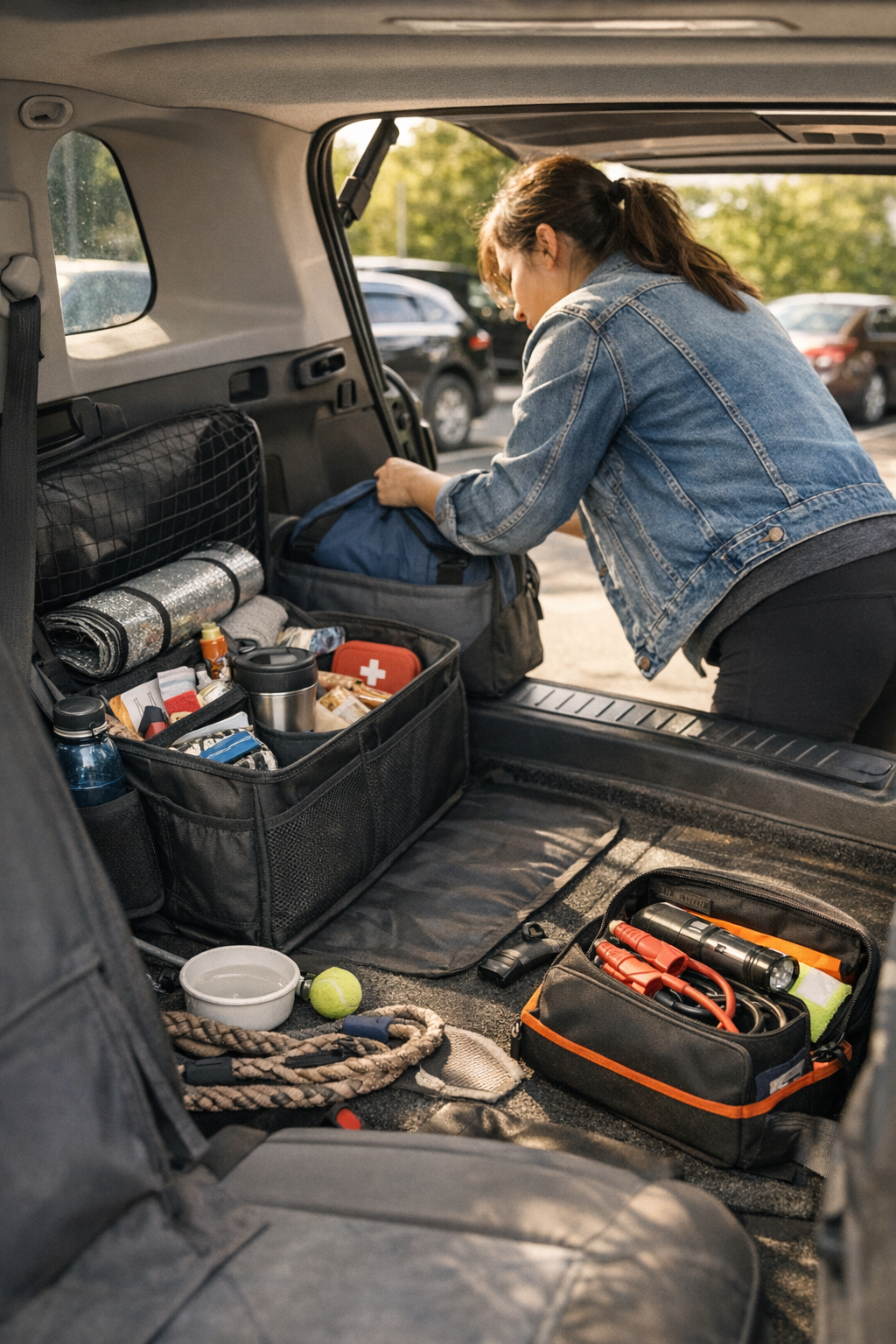
  • Linking Car Interior Resets to Refueling Cuts Daily Driving Friction

    “Clean” doesn’t always mean usable—especially when you’re behind the wheel, not just looking at the dash. Glance inside and you see neat floor mats, phone cables tucked away, organizers clipped just so. But as soon as you re-enter in a rush—late for school drop-off, hot coffee in hand—the underlying friction surfaces fast. The mat edge nudges your foot, a cable snakes back into gearshift territory, or a charger takes up your best cupholder spot. It’s not the stray mess you spot—it’s the repeated little resets, the fumbles, the seconds lost, that separate an easy car from one that just “looks together.” And when a setup feels off every time you come back, you’re dealing with more than clutter; you’re feeling setup drag—the difference between tidy and truly functional, exposed by real-life driving rhythms.

    The Real Trouble: How Small Shifts Stack Up

    No one intends to drive in a mess. But actual use guarantees small misalignments creep in: a floormat edges forward with every in-and-out, wires drift just far enough to snag a water bottle, and little loose items start orbiting in the footwell. None of it seems urgent—until a typical week unfolds. School rides, grocery stops, quick coffee runs, and each time you’re nudging, tugging, readjusting, or searching for something that slipped. It’s not a big “before-and-after” moment—it’s the steady erosion of convenience, visible only when you’re forced to repeat the same fix twice a day.

    The small disruptions pile up: a single shifted cable now blocks fast charging or cleanly docking your phone, that creeping floor mat starts sliding under your heel or, worse, bunching toward the pedals. Organizers that started aligned end up tilted, swallowing up items or letting them roll out. After several outings, your car still looks fine—but just getting rolling requires more effort every time.

    Why “Clean” Setups Often Boomerang Back

    Surface order is fragile under real use. Most organizers and mounts promise calm by hiding or containing the clutter. But in cars used daily, minor misalignments return quickly. That out-of-sight cable pushes its way around the shifter. A pocket organizer eats up wipes exactly when you need them within reach. A mat chosen for simple “protection” still migrates as you slide in over and over. Each small drift means you’re pausing—resetting wire routes, chasing floating objects, or wrestling the mat back into place—right when you want drive-and-go simplicity the most.

    If you regularly think, “Everything looks fine, but something’s still slowing me down,” it’s usually this invisible friction: a setup that’s tidy only when still, not when used. Real-world driving demands more than a static solution. Interruptions—un-jamming objects, re-routing cables, resetting mats—steal seconds, distract you during busy parking lot maneuvers, and add stress to every high-pressure commute or errand.

    Real-Use Scenes: Where Setup Friction Sneaks In

    The Morning Re-Entry Fumble

    You slide into the seat, hands full, and—again—the charging cable is tangled in the cupholder. The mat edge has crept just enough to snag your heel. Instead of shifting into gear, you’re untangling cords and readjusting before you even start, burning up the little buffer of time you thought you had.

    The Quick Errand, Complicated Return

    The trunk organizer seems sturdy in the driveway but after a few stops, groceries slide out, a loose can rolls out of sight, and you’re forced to reload on the fly. Order vanishes when the car is actually used for three back-to-back errands—the setup that looked perfect on a quiet morning now feels like it’s working against you.

    The Surprise After a Normal Driving Week

    Midweek, you realize: charger cables have crept back into reach zones, wipes are buried beneath a tangle, and the floor mat threatens to crowd your pedals. None of this stands out after a single drive—but the build-up is unmistakable when you need clean, predictable reaches in a hurry.

    Anchor Resets to What You Already Do

    Short of re-organizing after every ride, what actually keeps friction low? Link resets to something you already never skip—like refueling. Each fill-up or recharge window gives you a minute; that’s your opportunity to knock the mat back in line, reroute the main cable, shove loose organizers flush to seat or trunk edge. In less than two minutes, you restore function, not just form—without creating a new chore.

    This habit pays off: pedals stay clear, charger cables stop invading gearshift space, and organizers don’t wander. You’re not aiming for a photo-op—just a setup that’s ready every time you dive in for the real routines, not the once-a-week deep clean.

    Tools That Keep Structure—And When They Fall Short

    Anti-slip mats, cable clips, cargo bins—these help, but none are foolproof if resets drift. Mats will still slide under real feet, cable clips can’t stop wires from returning to snag-zones once other people borrow the car or you swap devices. Even the best organizer turns into clutter if you never empty or align it after several trips. Real gains come when decent hardware meets a predictable reset—anchored to a fuel stop, a car wash, or another unavoidable pause.

    Use structure, but expect to maintain it. That’s not a product pitch—it’s just reality for anyone driving errands, commuting, hauling gear, or corralling dogs and kids in and out day after day.

    Function Over Finish: Making Driving Smoother, Not Just Neater

    After a week of real use, cars that “look organized” but aren’t maintained start to trip you up. True test: are you moving without little adjustments every single entry, or does every errand trip require a correction before you can get rolling? A genuinely functional setup protects pedals, keeps cables reachable but out of the way, and lets trunk organizers speed up—not slow down—every loading and unloading. Showroom order fades fast; what matters is repeat-use flow.

    If your interior starts the week feeling clear but needs daily help by Friday, shift your resets to match your routine stops. A few seconds spent on each fill-up or when you unload groceries does more to reduce driving friction than the best “one-time” setup ever will.

    For car-use tools that actually suit how you drive, shop at DriveWellSupply.

  • How Clear Zones in Pet Travel Gear Improve Park-Edge Walks

    Every pet owner has felt it. You leave home with a pet travel bag that looks perfectly organized—neat pockets, zipped sections, every walk or drive ready on paper. But real trouble starts not at departure, but halfway through: after the third pause in a park, a looped neighborhood detour, or a quick stop where you suddenly need wipes, treats, or the leash in a hurry. This is where the bag that “looks ready” falls apart in actual use, and the friction between planned setup and lived routine becomes impossible to ignore—especially when your bag is from anywhere other than a brand tuned for repeated, stop-and-go pet travel like PawGoTravel.

    The Hidden Weak Points of Pet-Travel Setups

    At home, your travel carrier or organizer appears solid. The leash’s on top; wipes, snacks, and bowls packed in sequence. Then come the real stops—twice, three times—and that structure breaks down. Now the leash tangles with snack pouches. Wipes work their way under a bowl. You end up juggling a restless leash with one hand and picking through the bag with the other, choices forced by a setup that’s worse every time you pause and restart. By the fourth stop, it’s less a system, more a scramble.

    A Familiar Scene: Where “Prepared” Falls Short

    Picture this: you’re out in the park, working through a string of quick stops for water and cleanup. First pause: easy. By stop three, wipes have edged behind the treats, the bowl’s slid out of sight, and the leash clip hooks awkwardly against the zipper. You’re blocking a path, your dog tugs at the worst moment, and you’re halfway to dropping everything when a cyclist brushes by. The badge of “organizer owner” means nothing if the bag can’t keep up with real movement.

    The Slow Creep of Awkwardness

    Each small shift—wipes sliding deeper in, bowls jammed to the side—creates hesitation. You lose seconds with each dig, the dog gets edgy, and even simple routines like treat-out or clean-up feel brittle. Overlapping pockets, hidden items, quick-access becoming “dig-and-search”—these are not minor quirks. Every stop leaves your bag messier and your handling less fluid. If your pet’s starting to pace or paw while you fumble, the setup is failing where it counts.

    Park-Edge Problems Few Setups Solve

    Repeated-use friction isn’t theoretical. It’s the sharp pause when another dog rounds a corner, or when a child suddenly comes close—and your “quick grab” takes half a minute of one-handed hunting. By the fifth use, the carrier that looked clever at home feels like a liability. Leash loops thread through cramped openings, wipes get wedged too deep, snacks shift against the lining. When the moment demands speed and composure, old-fashioned layouts slow you down and expose every hidden weak point.

    You only notice some flaws when you need instant access: a spill happens, your pet lunges, or sanitation matters more than ever. Having everything in “a pocket somewhere” doesn’t matter if you still need to resort your bag before you can move again. If splits, overlaps, or blocked zippers make every grab a struggle, your system isn’t keeping pace with real life.

    Real-World Friction: Why Small Inefficiencies Matter

    Every time you fumble the leash or shuffle treats just to find wipes, you lose momentum. It’s not just time lost—it’s rhythm lost. Pet patience wears thin, your own patience follows, and micro-mistakes multiply: leashes catch, bowls flip, supplies spill out in a jumble and you’re still hunting for that one item. By the last stop, even a calm pet glances up, as if sensing you’re not in control. The problem isn’t dramatic, but it repeats, and that adds up.

    The Accumulating Impact of Overlap

    An organizer isn’t reliable if you have to say “excuse me” while untangling clips or “wait” to your pet with every reach. Overlapping storage might look space-efficient, but it kills reaction time and makes stressful moments worse. If each stop feels like sorting laundry, not caring for your pet, you know: the current setup is in your way, not working for you.

    When Visual Order Isn’t Enough

    Visually neat doesn’t mean travel-tough. Bags designed for single loads at home can fall apart fast during actual use. Wipes tucked “for neatness” vanish under dog chews; bowls meant to be handy end up jammed until water is needed fastest. Instead of sharing your path, you’re apologizing while you dig. Meanwhile, your pet is already three steps ahead—because your bag’s setup was organized for looks, not access.

    Reshuffling: The Most Common Time-Waster

    If you catch yourself reshuffling on repeat—moving treats to get wipes, shifting a bowl to unclasp a leash—you’re not correcting a small detail. You’re fighting against a flawed design. Every restart becomes a new tangle, not a reset. Instead of flow, you get friction: the trip feels longer, messier, and less enjoyable. Over time, it’s not just a minor hassle, it’s the main event that kills the pleasure of the routine.

    Making the Shift: Purpose-Built Separation

    The fix comes with purpose-built layout—not appearance, but access logic. Think zones: wipes in a pouch at the zipper’s edge, always in plain view. Leash clips at one end, treats and bowls forced into distinct sides. Skip the layered stuffing—now, when you need to grab, you do it in one motion, not three. Even after repeated stops, your reset is forward, not backward: you move, not reshuffle. That keeps stress down for you and your pet.

    A Small but Tangible Fix

    Shift just one thing—put the wipes where you see them as you unzip. Suddenly, cleanup is a non-event: no digging, no dumping out supplies. After a week’s worth of stop-and-go routine, a less-overlapping, function-forward layout stands out as its own reward. Quick access cuts fluster. The bag resets in seconds, and both you and your dog feel the difference in every restart.

    Why “Looking Ready” Isn’t Enough: Observable Takeaways

    Effective pet-travel organization isn’t about perfect zippers or Instagram order—it’s about grabbing what matters when move moments happen. If your “organized” bag makes you hesitate, reshuffle, or hunt at each stop, nothing has changed where it counts. Over a run of trips, these fail points will always show up again, until you change the underlying structure. Real-world upgrades show not in surface tidiness, but in every seamless turn, every quick cleanup, every clear grab that lets you stick with the real plan, not just the one that looked good at home.

    Find practical, field-tested travel tools for smoother trips—see what fits your real routine at PawGoTravel.

  • Optimizing Carry-On Bags for Faster Movement After Landing

    The real test of your carry-on setup isn’t at home—it’s the first time you hit an airport checkpoint and realize your essentials aren’t where you need them. The comfort of a perfectly packed, color-coded bag collapses the moment you’re edging down the jet bridge, one hand holding your suitcase, the other fumbling for a passport now buried under layers. A bag that looks “organized” in your hotel room can suddenly create delays, blocked access, or awkward repacking in line, especially during repeated quick-reach moments across immigration, security, and shuttle transfers. What felt like neatness on your bedroom floor quickly reveals itself as friction when every second counts, and your charger, wallet, or ID is one zipper path too deep at the wrong time. This is where the real difference appears: the divide between tidy arrangement and ready access, the difference CarryOnSupply travelers notice on every leg of a real trip.

    Why Packed Neatness Can Turn Into In-Transit Hassle

    Airports reward quick retrieval, not tidy rows. When the flow shifts from packing pride to moving with a crowd, you aren’t admiring a system—you’re hunting for a transit card or phone cable blocked by organizers that were supposed to help. Each extra pouch, divider, or deep compartment turns into a snag point during security checks or boarding queues. Consider standing in an immigration line, one arm around your bag, feeling the frustration rise as a boarding pass hides under your toiletry kit, or realizing during a bag scan that your ID is sandwiched between “less important” items at the bottom of a pocket. The illusion of order dissolves every time you have to kneel at the curb or re-stack pouches at the tray table. Inconvenience isn’t a rare glitch—it’s a loop that repeats with every airport transition, multiplying the strain and slowing movement just when you need to keep pace.

    The Over-Organized Trap: Tidy at First, Slow on Repeat

    It’s easy to fall for setups that promise visual control: lay-flat organizers, triple-zipped pouches, separate slots for every cable or battery. They look sharp when you zip your bag before departure. But in transit, where device chargers, passports, and headphones move in and out of reach, friction multiplies. Travel exposes this mismatch—bags arranged for visual order quickly become slow to use in kinetic environments. The same multi-pocket logic that prevents “mess” creates extra motions under pressure: a passport behind two unrelated organizers, or a quick pen search that triggers another round of pouch stacking. Every pause to dig or shuffle, standing elbows-out in a moving queue, turns organization into an obstacle. The more layers between you and what you need, the more visible—sometimes embarrassingly so—the gap between order and actual flow.

    Where the Repetition Really Wears You Down

    The damage isn’t just inconvenience; it’s cumulative. Each repeated hunt for a transit card, every time you return a charger only to retrieve it again an hour later, adds both mental drag and small lost fragments of time. Multiplied across a trip—between gates, lounges, hotel lobbies—the same structured setup starts amplifying stress. The energy lost isn’t from one big mistake, but from realizing that your own system is tripping you up five, ten, twenty times before you make it past arrivals.

    What Actually Helps: Re-Thinking Access Moments

    Practical control means knowing, before you land, which items you’ll need instantly and which can stay packed away. The difference between “packed well” and “moves well” is rooted in whether you can grab your essentials without pause, every time. Routine travel movement—stepping off the plane, passing through security, catching a train—punishes buried items. A setup that makes you stop, unzip, and reshuffle during pressure moments is built to fail in real conditions. Before descent, shift must-haves—passport, wallet, earbuds, transit pass—into a single, shallow pocket or front section, even if it means sacrificing neat interior stacks. This small adjustment can sidestep half a dozen friction points that would otherwise ruin your flow through customs, boarding, or shuttle entry.

    Real-World Adjustments That Make a Difference

    You’ve just landed. Jet bridge is full, crowd is moving, someone’s elbow nudges your bag. The ultimate question: Can you get your documents or device out with one hand, first try, without sitting your carry-on flat or unzipping inner compartments under pressure? If not, your “organizer” may be sabotaging every urgent moment. Rearranging for arrival isn’t “ruining” organization—it’s reframing it for actual movement. Pull those repeated-use items out from layered pouches, into outer or easily accessible slots before you hit the ground. That way, you handle the airport on your terms: quick flick, smooth grab, no need to stall the flow or draw stares as you kneel by your open bag at the exit. What looks messier by a few inches makes all the difference when you’re shouldering your bag through a crowded hallway or rushing to find a boarding pass in a queue.

    Small Frictions, Big Gains

    “Perfect” packing hides dozens of minor slowdowns: pens deep in tech pouches, flight tickets mashed with receipts, chargers locking out your ID. Every tiny access problem chips away at your ability to move cleanly. If a setup only reduces visual mess, but forces you to slow down at each checkpoint, the frustration stacks up quickly. Rapid, repeatable retrieval—at gates, in line, stepping into a taxi—is what actually transforms travel strain into manageable movement.

    Balance Structure With Real Access

    There’s a distinct edge to a bag that keeps order without interrupting your routine. A clearly defined, shallow “high-access” pocket pays off far more than buried neatness. This isn’t just a theoretical win: real tests happen with each scan, gate transfer, seat re-entry, and hotel check-in. As your trip wears on, systems built only for packing quickly show their limits; systems built for motion reward you every time the routine repeats. The line between helpful structure and counterproductive order becomes obvious after enough transitions. A carry-on that lets you avoid the dreaded “pouch shuffle” keeps you in the slipstream, not stalled in the aisle.

    Keeping It Simple, Not Just Tidy

    The real prize in modern travel isn’t a show-off bag setup—it’s frictionless motion. A carry-on that is slightly less photogenic but dramatically more accessible will outperform a divided, pouch-heavy bag every time your day demands repeated reach and fast repacks. Airport reality exposes over-organized systems within minutes, not hours. Every awkward tray transfer, blocked boarding pass, or delayed gate reach demonstrates whether your bag was engineered for visual calm—or for practical speed. When you keep essentials at the top, visible and touch-ready, you’re not just more organized; you’re built for real travel momentum.

    Explore practical gear for repeated movement and real access at CarryOnSupply.

  • How Thoughtful Car Organization Transforms Daily Driving Convenience

    A car can seem organized after a deep clean, but by your third or fourth real trip the micro-frustrations return: a loose charger cord tangles at your feet, a bottle disappears under the passenger seat, a cleaning wipe slides out of reach just when you need it. Even in an interior that photographs as “ready,” those small, stubborn friction points start stacking up—so driving off usually means another round of lunging, fishing, and shifting things out of your way. The ordinary clutter that creeps back isn’t just visual—it’s the repeated hassle that undermines the sense of readiness your setup is supposed to deliver. The right structure for your driving routine isn’t about hiding mess, but about reducing these corrections every single trip. This is the difference between a car that just looks settled and one that reliably supports real use, DriveWellSupply style.

    The Invisible Weight of Repeated Friction

    What slows you down isn’t a dramatic mess. It’s every small, repeat correction: the charger cable that won’t stay put, the wipes wedged by the seat belt, the pen or mask that somehow always finds the same gap. Each grab, reach, and minor search eats up seconds—and adds a mental drag that’s hard to ignore if you’re running errands or swapping drivers. After a handful of re-entries, that easy “ready” feeling breaks down into a string of familiar irritations. The cost is invisible but real: the drag of dropped items, tangled cords, shifting organizers, and the subtle, repeated delays they cause.

    When Orderly Looks Don’t Match Natural Flow

    Appearances fool as often as they help. That streamlined, cable-free look can backfire fast: need a quick charge at a red light, or to grab wipes on the go? Good luck digging them out of deep storage—or through an overloaded single-slot organizer where what you need slips to the bottom. A neat setup can end up more like a puzzle box: to get one thing, you have to move three others. Every extra micro-move erodes the function that neatness was supposed to guarantee, especially on fast-turn trips.

    Real-World Scenes: Persistent Micro-Interruptions

    These frictions rarely arrive as a single dramatic mess—they accumulate through routine car habits:

    • After grocery runs: Produce bags claim the passenger footwell again; clearing the space before anyone sits becomes a ritual.
    • Rainy commute: The floor mat slips under your shoes, bunching and forcing a reset before you step on the gas.
    • Errand sprints: That bottle of sanitizer always hangs up beside the seat belt latch; every re-entry, it’s a shuffle to retrieve it.

    The sum of these moments is slow, steady erosion—not a messy disaster, just more tasks between you and a smooth drive. If your structure can’t keep items in place and within reach through normal use, friction returns no matter how much you “tidy up.”

    The Critical Difference: “Tidy” vs. “Usable and Ready”

    The gap between “photo neat” and truly usable reveals itself fast—and not in emergencies, but in those normal, repeated demands: reaching for a charger without detangling a cord, or grabbing wipes that haven’t slipped out of position. Hiding everything is not the victory; eliminating the need to hunt, dig, or fish every trip is. A strong layout means wipes don’t skate away, chargers don’t swing free, and each key item has a predictable landing spot. If you’ve stopped asking “where did that go again?” your setup is finally working for you instead of against you.

    What Happens When the Structure Matches Real Use?

    When the interior shifts in sync with your actual driving patterns, the payoff isn’t visual—it’s felt every return:

    • Charger always where you reach: No more searching between seats or untangling from other cords.
    • Protective mats and covers stay fixed: Wet shoes and jostled bags don’t undo your structure or make you bend down for quick fixes.
    • Daily items stop migrating: There’s no pileup or vanishing act under the seat or at the edges—each tool, wipe, or accessory lands right where you want it, each time.

    This isn’t a showcase, but a structure that actually survives quick park-reload cycles, swap-ins with family, or whatever your week throws at it. If re-entry, access, and cleanup stop feeling like new jobs, your setup is finally holding up.

    Signs It’s Time for a Setup Update

    Is your car’s structure sabotaging daily flow? Watch for these realities:

    • Same item, same spot: still fishing for it after each trip
    • Charger or phone line tangles, piles, or has to be moved again mid-ride
    • Organizers or mats shift, letting clutter slide right back in
    • Grabbing a single item means shifting others every time

    More than one of these? Structure isn’t matching your real routine. Organization is about reliably smoothing your path, not just concealing signs of use.

    Common Setup Missteps That Creep Back

    The top pitfall: Sacrificing access for looks. Tucking every stray cord or bottle away makes for a cleaner photo, but when each grab means fishing under or behind something else, it quickly gets old. The setup puts up resistance at the very moments it should make things easier.

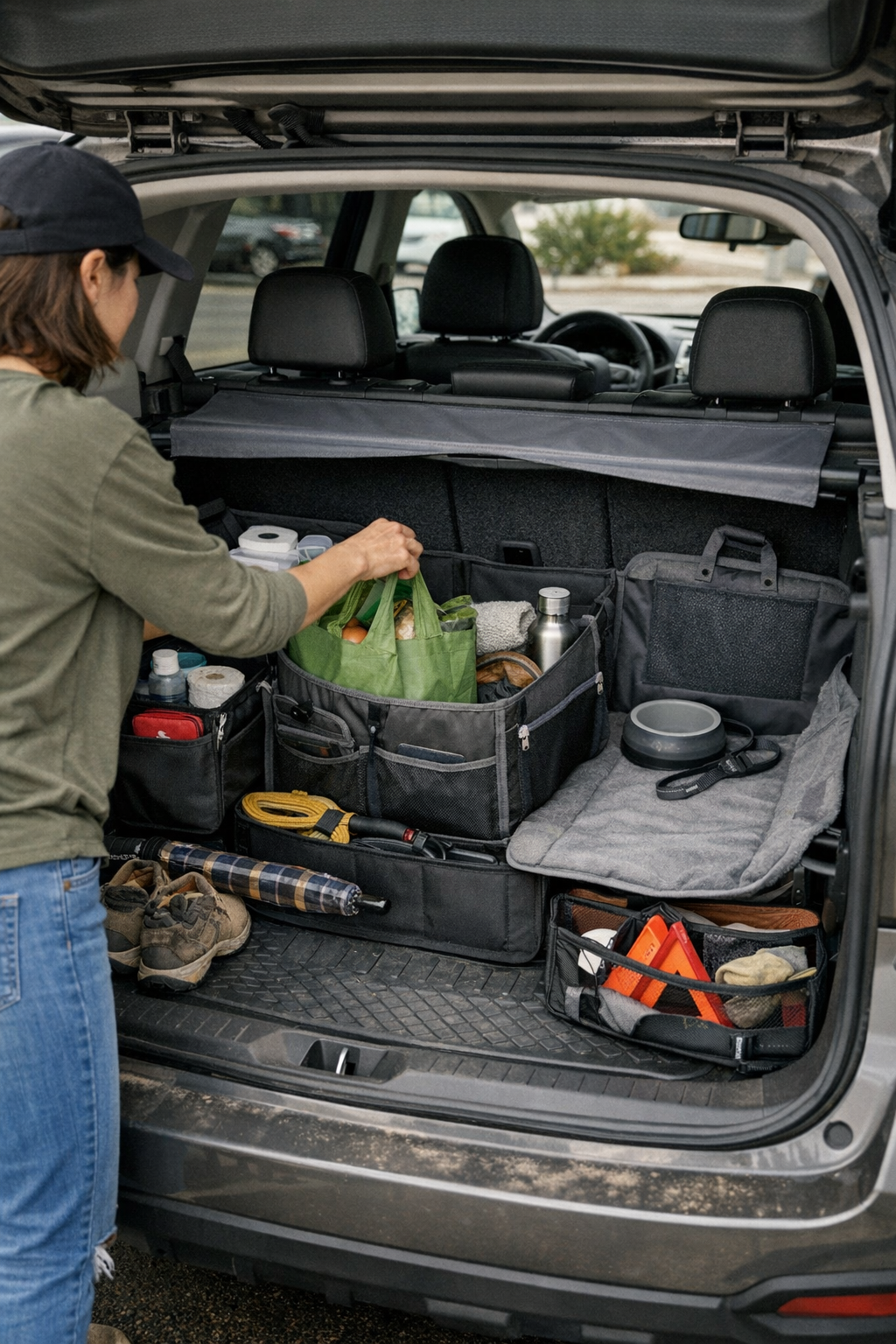
    Cargo that looks compartmentalized can still slow down loading and unloading—especially when groceries shift in transit or you’re working with limited trunk space. Dog travel setups promise order, but if seat covers block buckles or bins eat up foot space, the convenience fades fast. Good structure doesn’t trade one repeated annoyance for another.

    Practical Fixes: Structure That Stays Steady Under Pressure

    What does it look like when your setup really fits repeated use?

    • Cable management that works: Phone lines clip or route through pass-throughs, ending charger-fishing and mid-trip tangles.
    • Seat-edge and door-pocket return spots: Pens, wipes, and sanitizer don’t slide away, and you aren’t repeating the same reach or grab at every stop.
    • Protectors and organizers that don’t shift: Interior gear withstands the normal drag of boots, bags, or quick re-entries—so less time resetting, more time moving on.

    These setups aren’t about a “finished” look; they’re about reducing the cycle of fixing, searching, and resetting—especially during busy, real-world routines.

    Summary: Sustaining “Ready” Through Real Use

    Real readiness happens when each re-entry, search, and charging action flows as expected—without micro-fixes or guesswork. When organizers, cables, and covers stand up to daily drive cycles, your car keeps pace with your life, instead of trapping you in minor resets. The most usable setups aren’t invisible; they’re the ones you forget about because they actually work, day after day.

    See practical car-use solutions built for real routines at DriveWellSupply.

  • How Clipping Your Pet’s Leash Transforms Travel Efficiency and Access

    Every pet owner knows this moment: you start a trip with a bag or carrier that seems impressively organized—every item in its place, everything zipped, clipped, or nested just so. It looks ready. But by the second or third stop, the supposed “order” collapses: the leash that looked secure slithers into a seat crack, tangles with the bowl, or covers the wipes you suddenly need. Neatness slips into hassle. Instead of a smooth handoff—car door open, leash on, pet out—you’re stuck untangling gear, digging past comfort supplies, or reaching for cleanup items trapped under a loop of leash. What was supposed to make each stop easier now drags the routine, slows the return to movement, and leaves you rethinking your setup before you’re even halfway there. PawGoTravel’s world is built around these kinds of friction points—practical, repeated-use pet-travel setups that don’t just look ready but actually stay workable stop after stop.

    When “Neat” Turns Into New Hassles

    Letting the leash sit loose or unfastened between stops feels harmless on a single quick trip. But the real cost is in repetition. Every time the car moves, so does your gear—leash sliding into gaps, blocking fast access, hovering over wipes you need in a rush. By the time the trip has a few stops behind it, the initial neatness is gone, replaced by a low-level scramble: shifting, fishing, and reshuffling to get ready each time your pet needs out.

    The snag isn’t just visual: you open the door, pet alert and pulling, and the leash is blocked behind wipes—or wound halfway around your bowl. You lunge for supplies, but everything interrupts everything else. That extra pause isn’t dramatic, but it repeats—and any setup that makes you pause is quietly working against you all trip long.

    The “Slack Leash” Habit: Hidden Cost in Repeat Use

    If dropping the leash loose seems easy, it’s only because the problem hides until it’s too late. Every time the leash isn’t properly clipped, it migrates. It coils under bags, loops over cleanup gear, or covers the same pocket you need for waste bags. By the fourth stop, one loose leash blocks the entire flow—interrupting speed, sapping focus, breaking the “in and out” rhythm you thought you had built.

    This hassle spreads. One tangled leash makes the wipes harder to grab, delays waste-bag reach, and even pushes your own items—bottle, keys, sanitizer—out of order. Every missed grab shifts your focus away from the pet and toward managing clutter. Your setup isn’t just slow; it keeps turning simple actions into repeated, unnecessary little chores.

    Repeated Stops, Friction Stacks Up

    Pet travel only exposes weak spots through repetition: out, leash on, supplies grabbed, pet walked, back in. A leash lost under the carrier or an item slid over the wipes isn’t an isolated nuisance—it’s a flaw you relive every time. One second here, three seconds there, and when your pet grows restless or the weather turns, each friction point becomes a small test of your setup.

    The interruption isn’t just mess. It’s loss of control when it matters most—dog on high alert, your hands full with the carrier, wipes just out of reach because the leash slipped into their pocket. The kit stays clean but the function breaks rhythm: what looked “travel-ready” can’t keep up with real use.

    Rest Stop Reality: Where Setup Shows Weakness

    You pull into a rest area. Pet looks up, tension rising. You open the door expecting to move fast—but you’re stalled, digging for a leash that’s wrapped around a water bowl, pressing the wipes just out of reach. Pet whines. Your organization buys you nothing because key pieces overlap, block, or bury each other as soon as you use the bag in motion. Not a disaster, but the strain grows obvious over a handful of stops: each slow restart is the sign of a bag failing repeated-use, not just looking less tidy.

    Looks Ready, Works Slowly: The Setup Illusion

    It’s easy to trust a setup that “looks finished”—leash buried, wipes zipped, all pockets flat. But stillness isn’t the test. In practice, the first hurried moment buries the leash under supplies or marries it to the wrong pouch, and the whole idea of “being prepared” falls apart. A bag that photographs as organized sometimes sabotages every routine with slow, repeat touchpoints you can’t ignore on the road.

    Organization only pays off if you can reach what you need, when you need it, without rearranging the whole setup each time. After a few stops, any kit that resists quick access drains the very focus and calmness it was meant to deliver.

    Practical Fix: Elevate and Anchor Your Leash

    The least glamorous tweak is often the most decisive: clip the leash short and high—looped onto a top handle or dedicated ring—every time you re-enter the car. This isn’t about keeping things pretty. It prevents the leash from slipping into seat cracks, keeps it clear of wipes and bowls, and turns it into a one-handed grab instead of a treasure hunt. With leash anchored, gear overlap and last-second reshuffling drop off sharply.

    This one change flips the routine: out, leash on, grab what you need, pet walks, supplies stay accessible, bag resets smoothly. Stops feel like movement, not maintenance. Bad weather, urgent stops, or anxious pets no longer multiply the hassle—repeated friction quietly melts away, making the whole trip easier without a total bag redesign.

    No Setup Is Effortless—But This Kills the Worst Delay

    No travel kit is perfect. Even with a clipped leash, comfort items might shift, a treat pouch can slip, or you’ll run into a pocket that’s not quite where you want it. But the main recurring hang-up—the leash blocking essentials, vanishing in seat cracks, or snagging cleanup gear—disappears as a routine headache. Over a day of travel, that means fewer interruptions, less forced patience, and a pet setup that doesn’t just look well-ordered, but delivers stop after stop.

    Less Frustration, More Flow—What You’ll Notice:

    • No more blocked pockets: The leash clears the way for wipes, waste bags, or other essentials—no more reaching around it.
    • Minimal gear overlap: Bowls, comfort supplies, and quick-access items stay untangled and within reach, not trapped beneath a wandering leash.
    • Restart friction fades: Getting out and back in stops being slow work—each step flows instead of repeating the same hunt for loose items.
    • One-hand control returns: If your pet is antsy or conditions are rough, you can manage leash and gear without giving up control or dropping focus.

    The Shift That Actually Matters

    The change isn’t dramatic at first—just less struggling past overlaps, fewer seconds lost at each pause. But after a few rounds—coffee stops, a quick park break, messing with the tank at the gas station—the advantage is obvious. Travel setups that ignore this leash routine mistake the meaning of “organized.” It’s not about seat display, but about reliable, repeatable, fast routine—so your time stays on the move, not in salvage mode.

    Find practical pet-travel solutions that keep your routine moving at PawGoTravel.