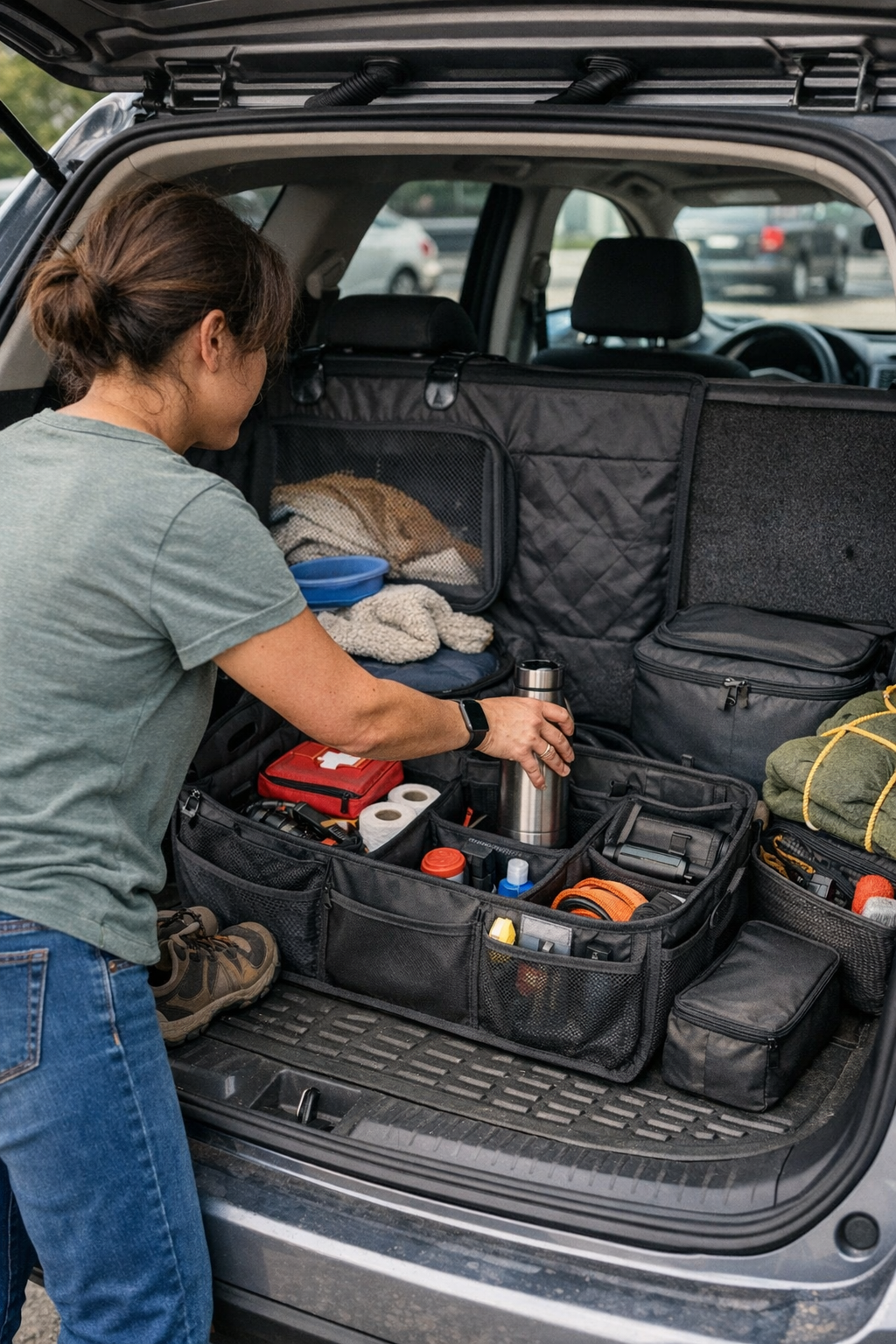
Category: Travel & Drive

  • Why Visible Storage Transforms Everyday Car Clutter Into Order

    A car interior that looks organized almost never stays that way under real, repeated use. Fast commutes, quick errands, and back-to-back stops expose design flaws instantly: chargers jam inside closed compartments, phones slip into unreachable gaps, and “tidy” storage turns into a scavenger hunt by the third or fourth drive. The line between an organized car and one that actually works for everyday routines isn’t just cosmetic—it’s measured in seconds wasted, items lost, and frustration that keeps returning.

    When Order Looks Right but Feels Wrong

    Factory layouts promise neatness with deep center consoles, sealed glove boxes, or slim door pockets. But the moment routines take over—fishing for gum at a stoplight, juggling keys and groceries, or charging on the go—these same compartments invite trouble. What’s out of sight doesn’t stay in mind: you reach for your cord and hit a tangle, sunglasses hide under street maps, and receipts crawl out from seat cracks with every turn.

    Returning to your car after a day out, the illusion drops: you’re forced to dig through the armrest for a charger you needed two minutes ago, or shove aside a pile of wrappers that seemed “handled” just one trip earlier. Small clutter lands right where you need fast access—seat edges, floor corners, cup holders—making a supposedly organized cabin feel clumsy whenever you’re in motion.

    The Repeated-Use Reality: Why Clutter Returns

    Prettiness fades when car traffic rises. Front-seat floors become the hold zone for bags or gym shoes, and quick handoffs override any hope of keeping smaller essentials neatly buried. Compartments with lids or zippers are rarely used once you’re actually pressed for time—so phones wind up on seats, snacks get jammed into visible ledges, and anything not instantly reachable just drifts out of order.

    Say you end a call as you pull in to park. If “putting your phone away” means popping a lid and cramming it into a shadowy bin, you’ll skip it half the time and let the phone ride shotgun until it eventually slides toward the door. Every ignored moment adds up—multiplied by rushed departures, changing passengers, and last-minute charging. Mess outpaces memory, and cleaning means chasing things that escaped the compartments entirely.

    Persistent Friction in Familiar Zones

    Clutter has its favorite landing zones: seat edges fill with receipts, center trays pile up with loose change and wipes, door pockets get stuffed when cup holders fail to fit another bottle. The source isn’t too many accessories—it’s the lack of visible, open storage in your high-use grab zones. And every extra second spent searching equals a little more friction injected into your routine.

    Hidden Storage: The Double-Edged Sword

    Packed bins and zippered organizers hide clutter—for about a day. Try retrieving a tangled charging cable while merging, or digging out wipes with one hand during school pickup, and the hidden solution feels like a trap. Convenience always beats aesthetics under real-world pressure: a neat surface with a jammed interior still leads to routine disruptions, lost time, and more “temporary” stashing that never gets reversed.

    Over a busy week, that deep compartment or covered tray quietly fills with “just for now” stash—random mail, snack packs, dead chargers—until cleanout day exposes the backlog. Visually clean doesn’t mean functionally better. Out-of-sight order breeds its own chaos, especially once the shuffling of daily use starts.

    How Visible Storage Changes the Routine

    Open organizers, center trays, and catch-alls in sight make the difference obvious. Instead of defaulting to any open ledge, your hands reflexively return the key, cable, or sunglasses to a seen, natural spot. No brainpower lost on digging or remembering. This small structural change—adding a slim tray or visible bin in the zone you most often reach—interrupts the cycle of drift and disappearance.

    This doesn’t demand overhauling your whole layout. Just a shallow, clearly-placed organizer lets your most-used items return instantly and stay put—removing both hidden mess and the slow drag of recurring searches. Extra, less-needed gear can live in the doors or trunk, while your in-and-out essentials stay always at hand, without friction or hunt time.

    Real Scenes: When Setup Makes the Difference

    • Returning to your car with groceries in hand, you drop keys and phone into a visible tray—no more half-blind pawing by the seatbelt or watching a phone flip out onto the floor.
    • On repeat school runs, snack wrappers and receipts land in an open trash bin—no more scraping under the seat two days later.
    • When switching drivers, nobody asks, “Where do I put my sunglasses?” They’re dropped in the same open pocket every time—accessible, obvious, and done.

    Each of these small shifts attacks specific pain points: cleaner re-entry, less missed gear, and faster transitions without the routine drag. The car adapts to your habits, not the other way around.

    Why Clutter Keeps Returning—Even in Neat Cars

    Organizing for looks isn’t enough. If your storage doesn’t match the daily motion—grabbing, dropping, swapping, and charging—mess always returns. A pristine console on Saturday is crammed with missed items by midweek, and anything not open or at hand is quickly forgotten. The high-traffic spots tell the real story: when “storage” means hidden, order falls behind nonstop access, and the neatest setup feels slower, not easier, after a few rounds.

    The right organizing setup isn’t about showroom minimalism. It’s about making the car adjust to the churn of actual use—meeting clutter at the source, not weeks later, and sparing you the repeated penalty of re-sorting every trip.

    Making Each Drive Smoother—Not Just Neater

    The payoff for real-world organization isn’t visual—it’s more fluid entry, quicker exits, and fewer moments spent swiping mess aside. Once the most-used items claim their visible zone, the time you’d spend cleaning out forgotten bins or chasing wayward cables almost disappears. The everyday cues—quicker handoffs, less gear lost, easier seat swaps, and less hesitation before starting the drive—all reveal the difference between a car that stays neat and one that actually runs smoother, week after week.

    Find real, repeated-use car storage solutions at DriveWellSupply.
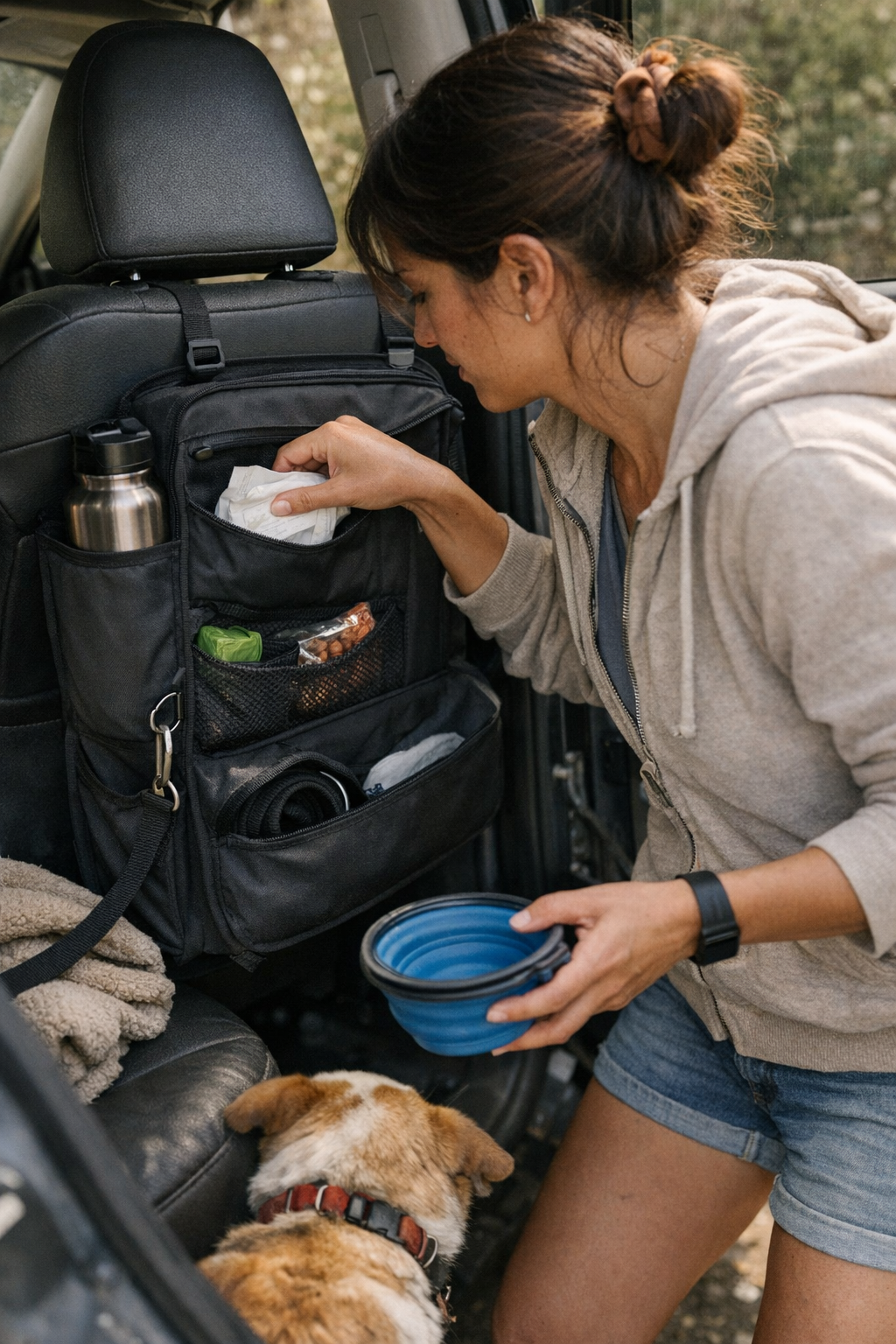
  • How Pet Travel Organizers Slow You Down Over Repeated Short Trips

    A pet travel bag never fails you on the very first trip—it’s the slow unravel that gets you. The “organized” kit promises calm, but within a week’s worth of errands, the cracks show: wipes that slip behind water bowls, a leash looped through three pockets, treats lurking with the clean-up gear. In theory, it’s all there and ready, but when you’re juggling a fidgety dog and a car door, every extra reach or mis-timed grab is another second lost—and another reminder that a packed bag isn’t the same as a practical one.

    Why Pet Travel Bags Lose Their “Ready” Feeling So Quickly

    The initial confidence from a freshly packed kit—pockets zipped, pouches assigned—fades fast once real routines take over. What promises order at home often delivers friction at the curb. By the third day of errands, you notice it: the travel bowl isn’t where you thought; wipes slide beneath a comfort toy; the leash, meant to be at the top, now knots around the bottom. Suddenly, cleanup and comfort compete for the same space, and your “efficient” setup blocks you at each stop. Looking prepared is easy. Staying functional, again and again, is the real test.

    The drag on pet travel comes less from missing supplies than from slow, awkward access. Essentials overlap, snag, or bury each other by accident—pockets meant for speed instead become traffic jams. The week starts strong, but by midweek, every delayed grab chips away at smooth movement, and your patience starts to follow.

    Real-World Interruptions: Where Smooth Setups Start to Stumble

    Bring your pet on a round of errands and patterns surface fast. At your first stop, wipes are easy to spot and grab. By the third stop, they’ve vanished under a half-folded blanket, and the collapsible bowl has slipped behind cleanup pouches you never meant to rearrange. Repeated use turns one-handed access into a clumsy shuffle—one hand holding your pet back, the other fishing for a missing item. Those tiny timing slips add up: your dog shifts anxiously, you lose rhythm, and the “quick stop” drags on.

    Blocked quick-access isn’t just an annoyance; it disrupts the flow for you and your pet. Cleanup bags tangle with leashes, pouches wedge into seat cracks, compartments that seemed smart in the kitchen slow you down at the curb. The calm, streamlined promise of your setup dissolves the moment you need something and can’t grab it without a hunt.

    Why Most Carriers Start Strong But Lose Steam Midweek

    It doesn’t take a “bad” design, just repeated motion. Wipes wander between sections; treats drift next to harnesses. Leash holders meant for speedy clipping catch your fingers every time you reach around them. The more perfectly you packed, the more your setup drifts off-spec as reality smears everything together. You’re not losing items—you’re losing rhythm, repeatedly forced to reshuffle or repack in the middle of a routine you thought would be easy.

    The hidden cost isn’t a single forgotten item, but the pileup of two-second delays and forced workarounds. Need a comfort blanket fast? Out comes half the bag. Search for wipes? Now you’re balancing gear between footwell, seat, and a squirming pet. Over a week, the stress of repeated micro-adjustments wears you down far more than the occasional missing treat.

    Seat-Side Reach: The Difference Between “Looks Ready” and “Works Fast”

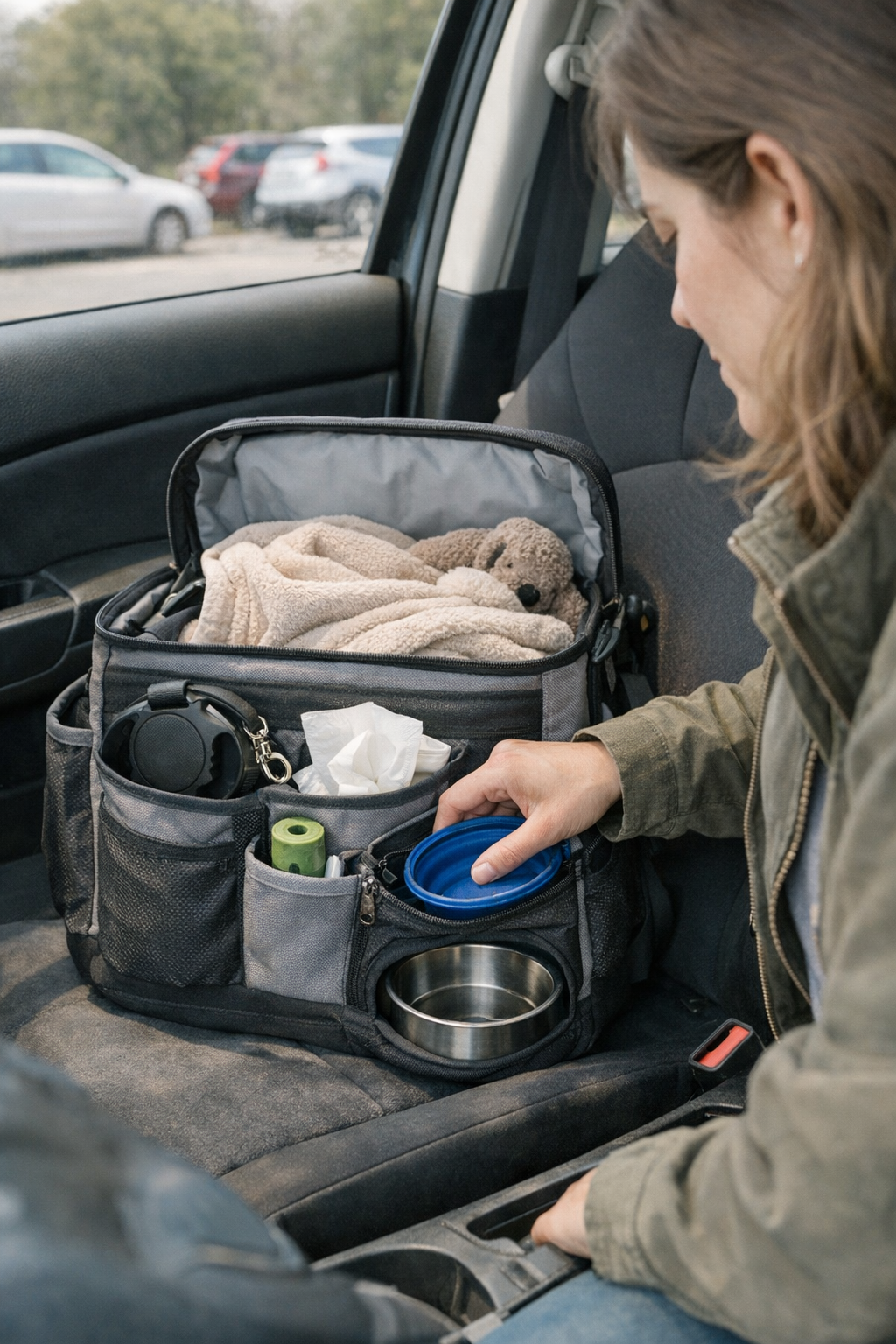
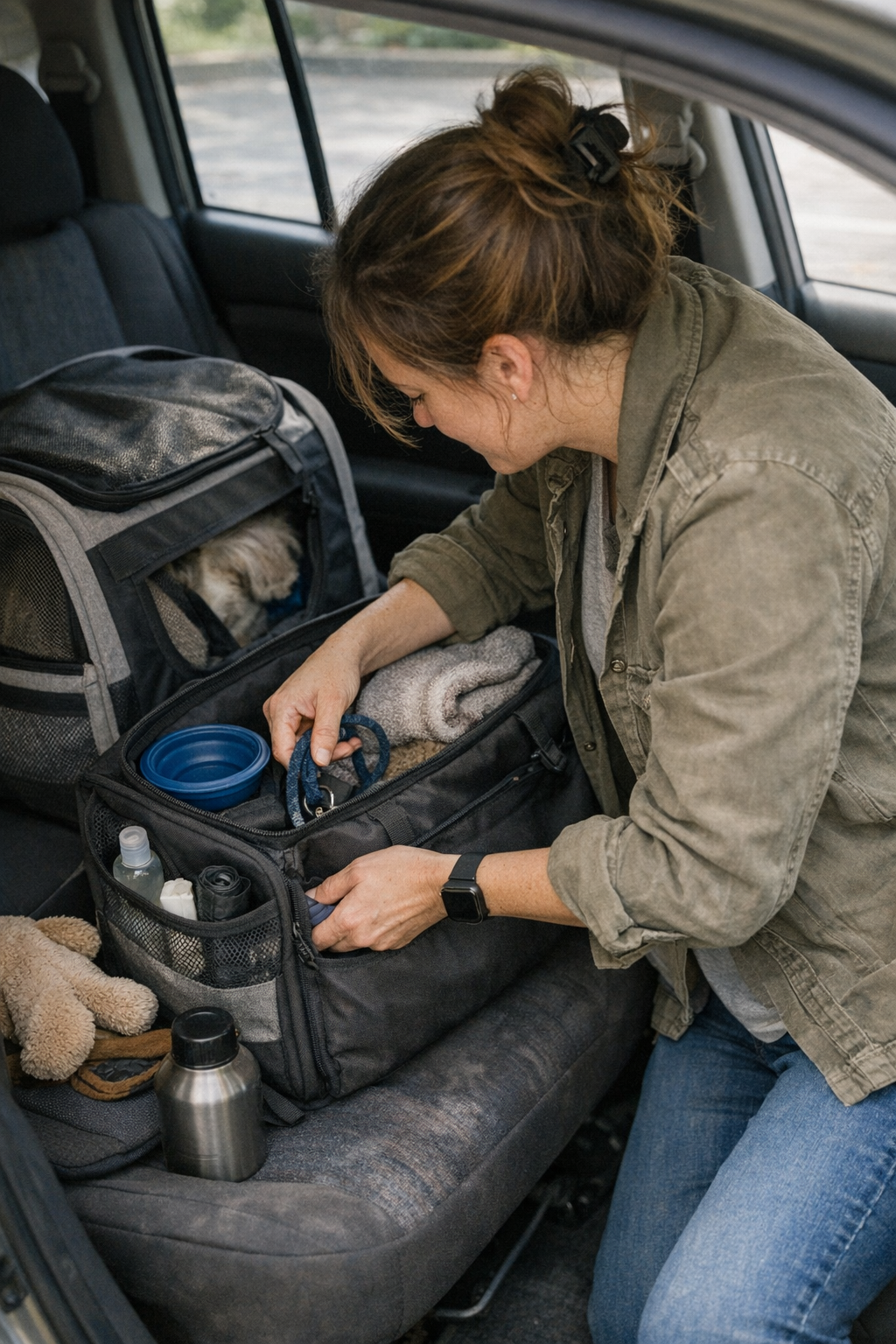
    The breakthrough isn’t more compartments—it’s a better flow: a shift from a deep catch-all carrier to a seat-side kit where high-use essentials claim space near your dominant hand. If you always need wipes and a water bowl at stops, having them in an outer pouch means real one-handed grabs—no rooting, no shifting, no breaking focus mid-move. A simple sleeve for the bowl, wipes at the edge, leash clipped openly: you stop wrestling with your bag and start handling the trip itself.

    With a setup like this, the visible “ready” is replaced by true ready: after five errands, wipes are still reachable, water stays at hand, and the worst midweek tangle fades out. It doesn’t look as picture-perfect as a catalog shot, but every move is faster, every return to the seat less interrupted. It’s a structure that favors real flow over artificial neatness.

    Knowing When It’s Time to Rethink Your Setup

    If you keep hitting the same snag—digging through stacked pouches for wipes, or emptying a bag just to uncover the bowl—it’s not a bad day, it’s a sign your setup isn’t matching your routine. Overpacking makes the overlap inevitable: too many small things layered together guarantee blocked access. What “looks organized” at home becomes a slow, cumbersome shuffle by Wednesday, and every unnecessary delay signals time for a simpler fix.

    Watch for repeated friction points. Do you need both hands just to fish out a leash while also steadying your pet? Are comfort items mixed deep with essentials you actually need every stop? When the same obstacle comes up again and again, swap out the rigid, compartmentalized kit for one that favors open pouches, quick reach, and single-motion grabs. The difference is immediate by the second or third run.

    Practical Fixes for Repeated Movement

    The true wear of pet travel isn’t mess—it’s friction across dozens of small moves. Fixes that last aren’t about impressive packing; they’re about layout. Keep bowls in sleeves, wipes outside deep pockets, and comfort gear from sinking beneath everything else. Each reduction in overlap translates into a faster reset, a cleaner handoff at the door, and one less reason to stop and reshuffle.

    Neatness matters, but it only helps if you can return to movement fast, with one hand free and no digging. Travel setups that survive a full week of stops do so because their structure still works—not just because their contents were sorted right on day one.

    See practical pet travel solutions at PawGoTravel

  • Why Carry-On Bag Design Can Make Post-Travel Moments More Stressful

    The quickest way to ruin a trip isn’t a delayed flight—it’s that supposedly “organized” carry-on that slows you down every time you move. The problem doesn’t wait until the end of your journey. Even before you’ve found your gate, a bag that looked squared away on your bedroom floor can turn every airport routine into a sequence of awkward pauses, mid-aisle shuffles, and frustrated zips. What promised flawless order at 6:00 a.m. becomes a slow leak of patience by the third time you need to pull out your passport or your headphones.

    When “Organized” Isn’t Fast Enough

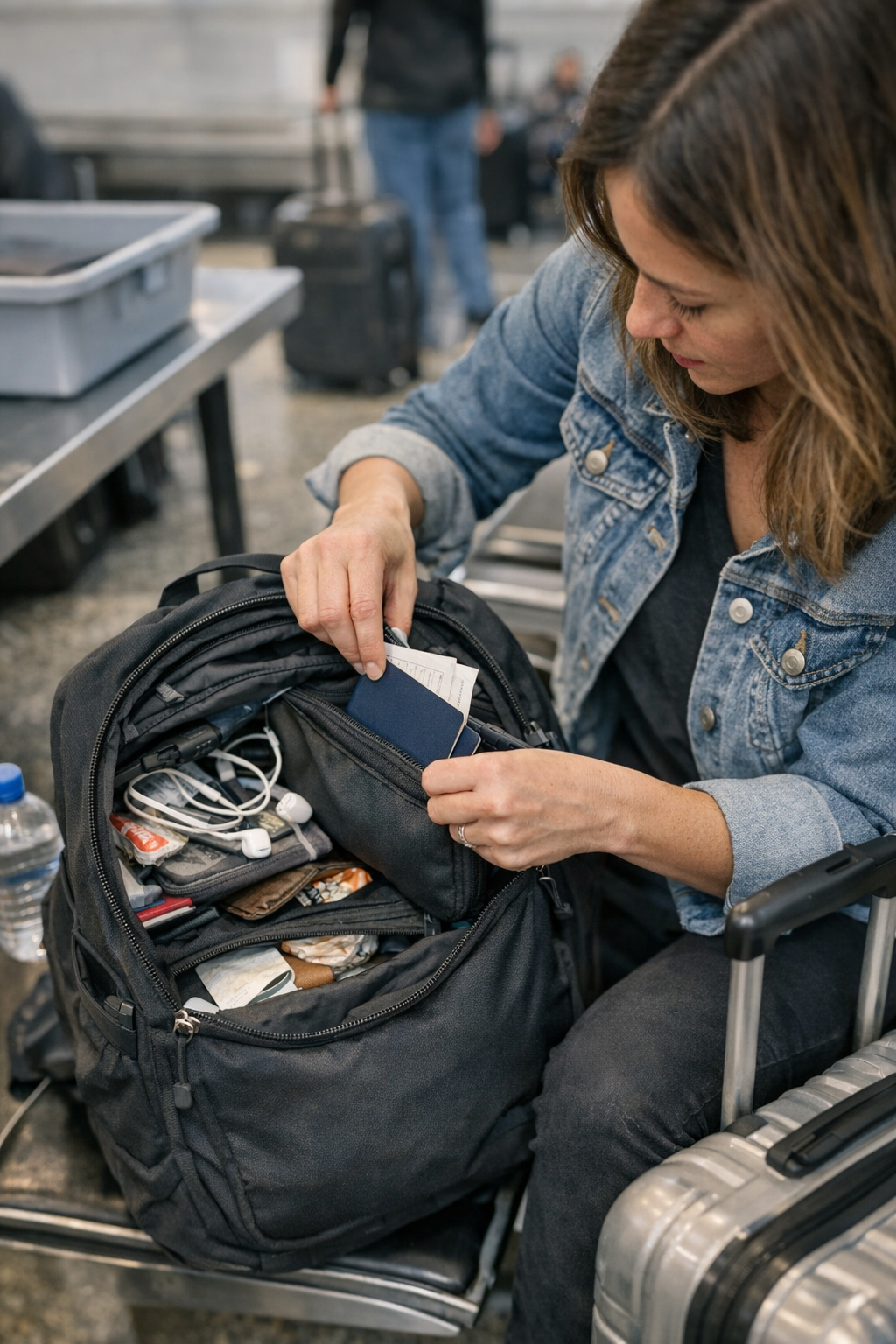
    Plenty of travelers trust they’ve solved packing with a lineup of pouches, tidy tech sleeves, and document slots. But travel has a way of exposing what “organized” actually means under pressure. It’s never the first reach—instead, it’s the repeat. Picture this: headphones behind a double-zip, passport wedged deep in a sleeve, chargers at the bottom in a tech kit. As soon as the security line snakes forward, you’re hunting for a boarding pass that’s trapped under a pouch that just lost its shape, or you’re unzipping three layers just to confirm your ID. Each fix takes more time than you had in mind. The bag that looked ready for anything resets itself into disorder with every grab and rushed return, making each re-pack a little less clean than the last.

    Friction in Every Routine Reach

    Travel pressure amplifies small design flaws. Need your passport for an unexpected check? It’s pinned under that quick-access pouch that worked perfectly—until three routine checks turned it sideways. Earbuds disappear, buried under yesterday’s napkin and a stray receipt. Your laptop, intentionally low-profile, now means digging through a pile you just organized minutes ago. These friction points don’t just cost seconds—they sap attention and stack stress, especially as the hours and checkpoints add up. By the time you’re lining up for boarding, “organized” becomes negotiation: one hand holding a half-closed pouch, the other blocking what might tumble out next.

    Gate Rushes, Security Lanes, and the True Test

    The gaps in your bag’s setup rarely show when there’s time to breathe. They hit hardest when speed matters: a last-minute gate change, a tight group boarding moment, or a cramped aisle with others behind you. Quick access is the real dividing line. If your headphones take three steps to retrieve, or your sanitizer is somewhere beneath a shifting stack of pouches, that moment of indecision costs you rhythm. Placing your bag in the overhead? Every extra movement amplifies the risk: something slips, a pouch opens, or worse—the thing you actually need gets sealed away again, forcing a fresh round of opening, searching, and hurried repairs in a moving cabin or crowded walkway.

    The Hidden Cost: Visual Order vs. Usable Flow

    The illusion is strong: organizers and tech sleeves show off perfect grids and zipped compartments when everything’s unused. But movement exposes the tradeoffs. That good-looking document wallet? It becomes a roadblock if it means pulling out two unrelated items to reach your boarding pass under pressure. Nested pouches and deep storage feel clever until repeated retrievals toss their order—and your mood—into chaos. Looking organized is not the same as moving efficiently. By your third gate, every “quick check” adds clutter, splayed zippers, and a guessing game about where the next essential actually landed. The setup designed to impose order is now part of the bottleneck.

    Reality Check: The Same Bag, Repeated Problems

    Patterns show up fast. The same items migrate to the depths, even after a full reset. Your “grab and go” pouch is gradually overtaken by whatever didn’t have a true home—tickets, loose masks, gum that escaped its wrapper. The tech organizer, zipped for neatness, becomes a hesitation point because grabbing the charger risks unlacing the entire system. Security trays make things even clearer: you upend half the bag to satisfy the scanner, debating how much to unload and how to stack everything again with the line moving behind you. Five minutes later, you’re half-repacked and realize you forgot something at the bottom. One careless close and now your cable is on the tray, not in your bag.

    Small Changes, Real Gains: Rethinking Access for Movement

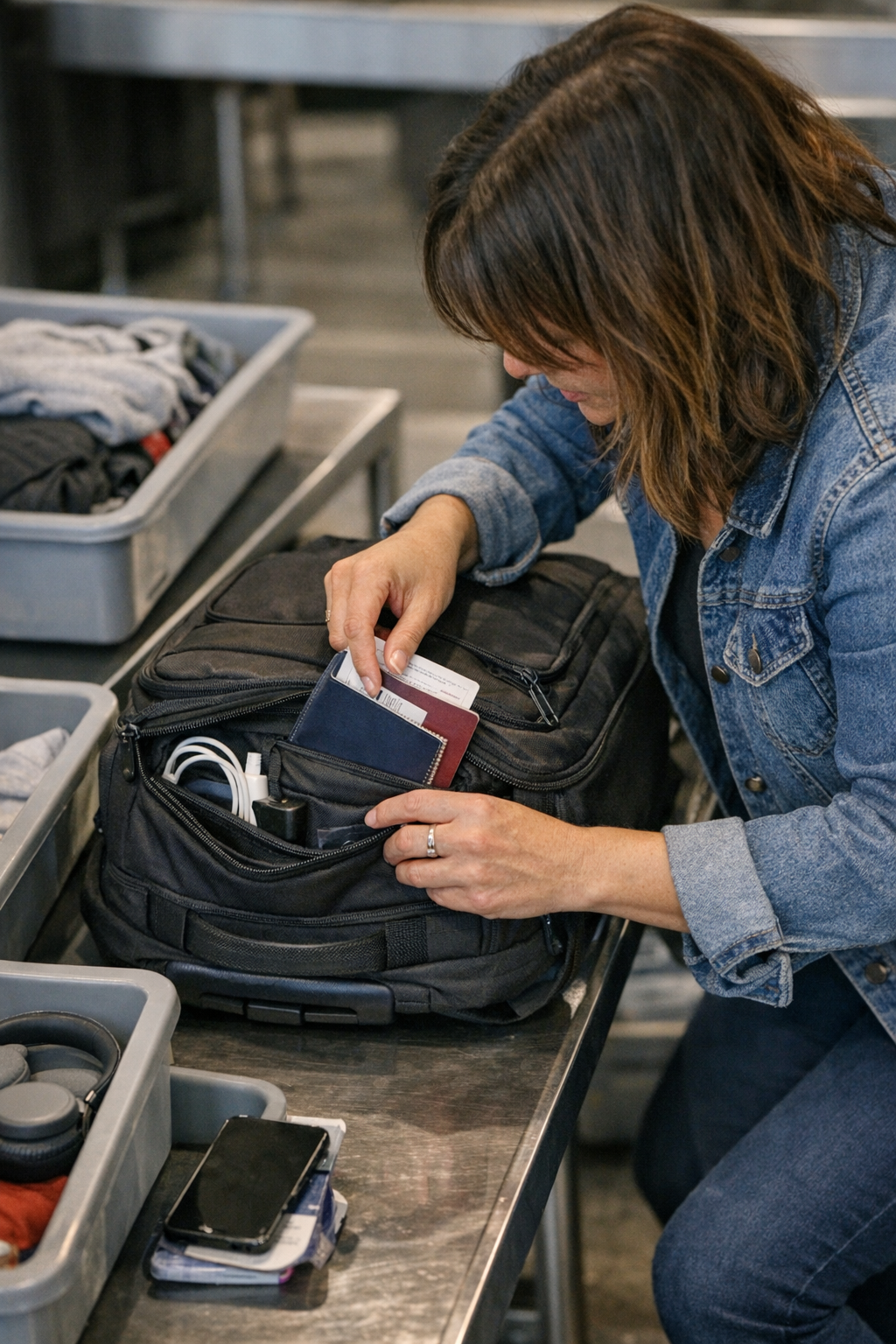
    Rebuilding from scratch isn’t needed—repositioning is. Transitioning travel essentials (passport, boarding pass, earphones) to a single, shallow zip pocket clears the first obstacle. Direct access isn’t just faster. It’s physically easier—instead of testing your memory with every checkpoint, muscle memory takes over. A dedicated quick-access slot or slim outer pouch can shrink retrieval time and reduce disruptions during boarding, seating, or sudden document checks. Even a single, logical zipper down the side can change a tense shuffle in a narrow aisle into a pass-through. It’s not about gadgets; it’s about a structure built to survive—not just appear—repeated use under travel strain.

    The Long Game: Less Linger, Less Drag

    The true standard isn’t the “Instagram moment” before the airport—it’s the fifteenth reach, the hundredth zipper motion, the reflex to open (or hesitate with) a particular pocket. Slowing at the same pinch points signals a faulty design: too much depth, illogical zipper paths, or essentials buried out of line with the rhythm of travel. Every small delay is the hidden penalty of prioritizing visuals over function. As you begin to separate “packed well” from “works in the wild,” you’ll notice what should stay visible and what can be buried. A lighter load sometimes comes from subtraction, sometimes from shifting what belongs where, but always from picking access over appearance when the pressure is on.

    Pack for how you’ll actually move—not for how your bag sits unopened. For carry-on structures and tools that improve with use, visit CarryOnSupply.

  • How Structured Seat-Back Organizers Reduce Front-Seat Clutter Interruptions

    The sense of order in your car doesn’t break down gradually—it snaps, often by midweek, the moment you reach for something and find your routine blocked. That bottle you set aside for later is now wedged against your seat rail. A short charging cable twists itself around your bag handle. What looked organized on Sunday turns into friction by Thursday: stalled errands, slowed entry, tangled gear, and a growing mess where you expected only quick access. This is where most tidy car setups fail—not during cleaning, but under the grind of daily use.

    The Hidden Problem: Order That Doesn’t Survive Real-World Use

    Every driver’s seen it: items meant to stay contained—wipes, a spare water bottle, emergency chargers—creep out of reach spots and invade your main space after a few drives. At a glance, the cabin still appears controlled. But slide open the door after groceries or a gym run and the true mess reveals itself. A cable loops into the footwell, bottles roll behind brake pedals, wipes lodge themselves where the vacuum rarely reaches. Each of these requires an extra motion before you can settle in or get moving.

    These small breakdowns aren’t minor—they add up. It’s not just a matter of untangling a charger, but of having to hunt and reach for everyday essentials over and over. You start to recognize how the same handful of objects are always drifting: resurfacing in awkward places, resisting your plan for a smooth drive, and building up reasons to fix your setup sooner than you wanted.

    Why Most Seat-Back Organizers Look Better Than They Work

    The typical car organizer promises “clutter-free living” with pockets and zipped compartments. But once the errands and short commutes begin, their design flaws show. Closed pockets hide mess, but force you to dig blindly—one hand on the steering wheel or a bag, the other rummaging for a lost wipe or backup cable. Soft bins and loose pouches slide open and eject their contents at every sharp turn or hard stop, undoing your effort in hours, not weeks.

    This is the heart of the problem: these organizers look tidy at rest but fight you in motion. They slow seat adjustments, block quick returns, and turn casual grabs into awkward lunges. The difference is stark—organizational “solutions” that stall your flow vs. structural upgrades that actually withstand daily cycles of use.

    Real Scenes from Repeated Use: Recognizing the Everyday Friction

    Parking and Quick Stops: When Items Slip the Net

    You pull in to load groceries—a routine move. Instantly something’s off: a bottle rolls forward from a sagging rear pocket and pins a phone cable under your seat. Loading takes longer as you free the cable and stuff the bottle back, already knowing you’ll repeat this at the next stop. One shortcut becomes three interruptions, and the cycle restarts each day.

    Return Trips: The Subtle Slowdown

    Short delays from loose items make every re-entry slower. With soft-binned organizers, wipes and bottles slide out by day two and make you spend time fetching, wiping down, or returning them. It’s telling when you recognize the same objects migrating—no matter how recently you cleaned—turning each return to the car into another round of corrections just to drive away.

    Access in Motion: More Than a Cosmetic Fix

    The test comes when you need to grab something while on-the-go. Stopping at a drive-thru, you expect a wipe within arm’s reach; instead, you twist behind your seat, digging through a too-deep pocket, or trying to snag a charger out of sight. The extra seconds kill momentum and prove the setup isn’t helping when it counts.

    What Works: A Structure That Withstands Daily Pressure

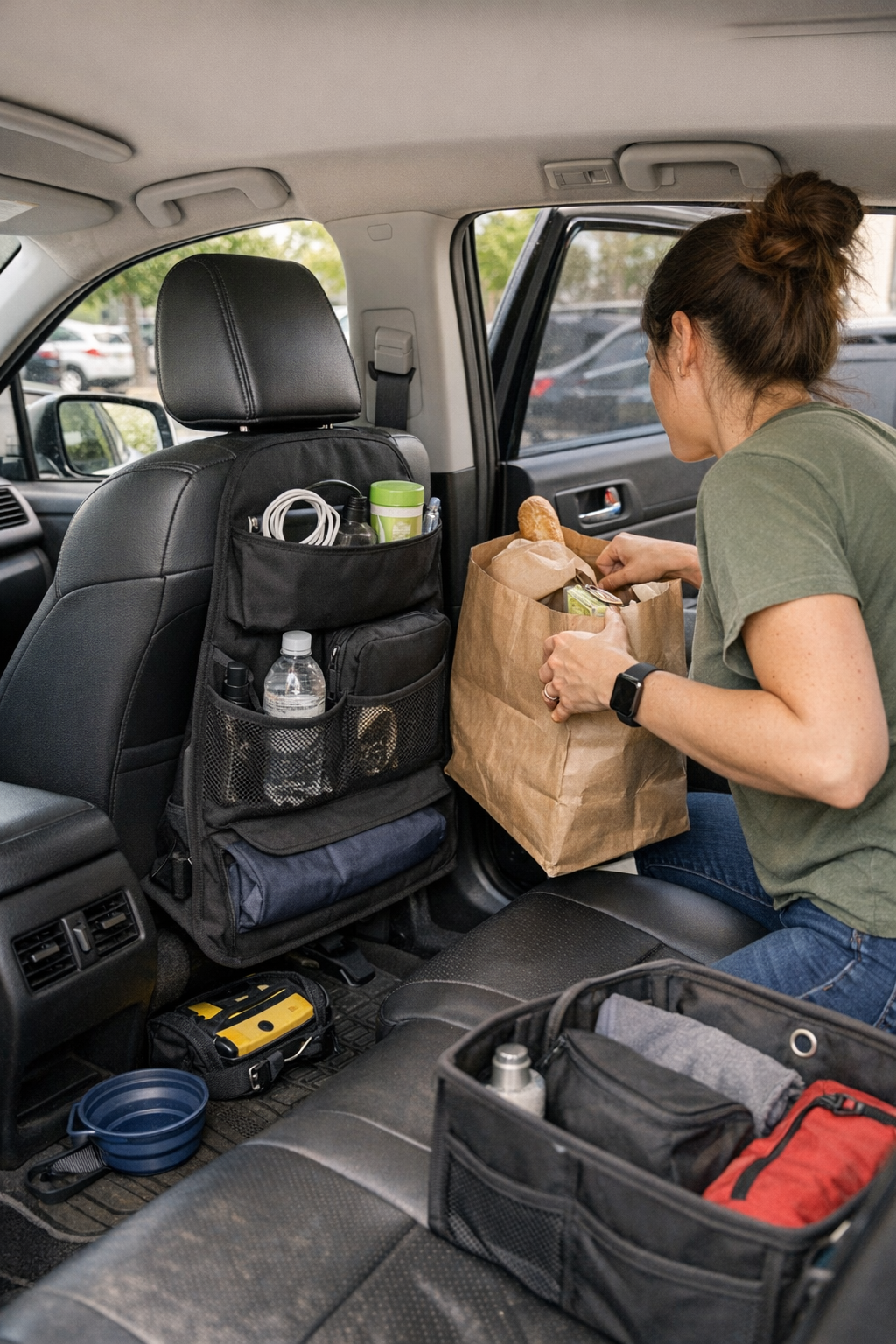
    The real fix is switching to a rigid seat-back organizer with upright, open-top pockets integrated at the upper edge—precisely where you use items most throughout the week. Unlike soft bins that collapse, these hold shape, keep chargers, wipes, and bottles right where you left them, and stop the migration of loose gear. You stop chasing essentials around the cabin. Instead, you reach, grab, or return—with nothing snagging or sliding below seat level.

    This is active stability, not just appearance: reinforced, open zones let one hand drop something in or pull it out, even during a rushed stop, without pausing to unzip, search, or detangle. By Thursday, you still find things where you expect them. An organizer that stays reliable under actual driving pressure keeps the friction down, so routine trips feel as smooth as they should.

    What to Watch For: Hidden Weak Points That Sneak Up

    Many car organization products advertise a “solution” but introduce their own daily headaches. Deep or sealed pockets swallow gear, making you fish around during the busiest moments. Soft bins sag and empty out sideways, undoing your intent to contain things. Items skidding back into seat rails are the first clue your setup is slipping—especially after only a few regular drives.

    If you see the same trouble spots—cables creeping under seats, wipes returning to footwells, bottles rolling after every stop—you’re doing double cleanup and feeling the drag of an organizer not matched to real use. True order means less correcting, not continual maintenance throughout the week.

    Making Each Entry Smoother: Why Practical Setup Beats Visual Order

    The best car interiors don’t just present as tidy—they actually help you move through repeated routines with fewer snags. A strong seat-back setup earns its keep by what it prevents: items remaining upright, access points staying clear, and no time lost re-tracking runaway gear every time you get in or out. It’s about reducing the sum of small daily annoyances, so your routine flows without you having to think about supplies, cables, or cleanup between trips.

    The key is what becomes invisible: after a workweek’s worth of errands and returns, you don’t have to stop and reset your system—missing wipes, tangled chargers, sliding bottles simply stop being issues, and the car keeps up with your day instead of slowing it down.

    Find setups that keep your driving zone functional, not just presentable, at DriveWellSupply.

  • How Smart Pet Travel Bag Setup Reduces Stop-and-Go Frustration

    Your pet travel bag can look like it’s ready for anything—right up until your second or third stop, when the real flaws show up. The first drive out feels smooth. But then comes the next pause: you grab for the leash, fumble for a waste bag, or realize the wipes you need are trapped under your own keys. What looked “organized” on the seat suddenly feels rigid, tangled, or just plain wrong for the way your trip actually unfolds. If a bag’s pockets make sense only while motionless, they don’t survive real pet travel—every minute spent untangling or digging is a stop your pet gets restless, and a trip you’re repeating the awkwardness that never showed up in the mirror at home. This isn’t about neatness. It’s about how setup structure fails—or saves you—once you’re actually on the move and fumbling for the essentials mid-routine, not just admiring the kit fully packed.

    When Pet Travel ‘Looks Ready’ But Doesn’t Work

    Anyone who travels with a pet knows the pattern: you stack the bag, double-check the carrier, sort the treats, leash, wipes, and bowls. Everything looks in place—until the leash gets buried under the blanket, wipes vanish beneath a bowl, or you fish out treats along with your phone. The illusion of order collapses as soon as you need speed. Instead of a quick reach, you’re shuffling, pulling at velcro, or repacking on the sidewalk, all while your pet starts circling or whining in the backseat. The problem isn’t mess, it’s that the order never holds up once the trip becomes stop-and-go.

    Even with supposedly “smart” layouts—labeled sections, upright carriers, extra zippers—the real trouble comes when you have to grab one thing fast. Owner items and pet gear get tangled. Reaching for the leash yanks out a toy or sends a bowl flying into the footwell. That one “clever” pocket, instead of helping, turns into a bottleneck. Under repeated access, everything you thought was separated blurs together, forcing you into a silent reshuffle after every stop.

    Small Delays That Stack with Each Stop

    One stop? Not a crisis. Stop number two or three and you notice the difference. Pulling out a leash means moving two comfort toys. Your dog stares while the waste bag hides under the snacks. Every pause becomes a reset—returning each item to a slot, wishing you didn’t have to. It’s not just time lost. It’s the low-level annoyance that adds up, both for you and your pet. A tidy-looking setup becomes a source of micro-delays, interruptions that erode the flow you thought you had under control.

    The Repeat Flaw: Where Structure Breaks Down

    The most common flaw isn’t a lack of sections—it’s organizing by looks, not actual stop-by-stop needs. Packing everything on one side creates a perfect surface, but in practice, items you need first and most often fight for the same pocket. The symmetrical bag with mirrored pockets looks ready, but at the rest area, those “identical” spaces want to be used at the same time—and don’t. Dragging the leash free dislodges comfort items. Getting to wipes means unburying them from under your own snack stash. One movement starts a cascade of others, and repeated friction builds with every return-to-car moment.

    Each Restart Reveals Where It Breaks

    The structure rarely fails at the first stop. It’s the second, third, or—on busy travel days—the fourth time you pause that the overlap and spillover become unavoidable. You’re holding a leash, wipes are under two other things, the bowl slips sideways every time you drive off. Your hands fill up, your pet gets livelier, and every attempt at a quick grab stretches into a minor reset. When the cleanup pouch or waste bags live in the same compartment as the rest, even finding a single item leaves your setup less organized than when you started.

    Segment, Don’t Stack: Real Separation Means Real Ease

    So what actually changes this experience? Not more pockets, but true separation—dedicated zones for the grab-and-go essentials. That means a leash, a bowl, wipes, and waste bags each with their own path to your hand, never blocked by comfort toys or wedged with treats. It’s the feel of opening a single side pocket and getting exactly what you need the first time, not sifting through a top layer of items you don’t.

    Smart setup options—vertical pouches, separate side-access pockets, or modular panel layouts—show their worth during messier travel moments. Bathroom break at a busy gas station? Wipes and waste bags are right where you reach, not behind a blanket. Muddy paws and impatient dog? The bowl isn’t trapped by last night’s toy; it’s in its sleeve, ready in one motion. There’s no hidden repacking. There’s no “dig, return, and hope it makes sense later.” The whole routine gets lighter because it’s finally built for movement, not just parking-lot show-and-tell.

    Single-Motion Grab vs. Forced Repacking

    When essentials live in their own zones—a waste bag and wipes pocket, a dedicated leash holder—resetting becomes one motion, not a full cycle of shifting and re-tucking. Comfort items and human snacks find a true “elsewhere.” You stop carrying chaos forward at every stop. Instead of your organization decaying, the kit holds up. There’s less memory work, less fidgeting, less stop-time tension. The bag “works” because it’s no longer fighting the routine you actually use.

    Everyday Travel Scenes: When Structure Fails or Holds

    • Coffee stop mess: You plan for a fast pickup. Instead, the leash is pinned by snack packs, and freeing it tips over the bowl. You fix it, but at the next stop the whole stack shifts again.
    • Rest area scramble: Dog paws are muddy. The wipes, supposedly “easy to grab,” are buried under a bulky blanket. Cleanup becomes a slow, juggling act.
    • Reload routine stalls: Pockets line up evenly, but they clash in real use. Putting things away while keeping a hand on the pet just means more overlap, more mixing, more chance of missing the next quick grab.
    • Blanket-bowl standoff: The comfort throw sits on top all morning. When you reach for the water bowl, you dig a path through unrelated items. Quick access becomes a repeated, clumsy detour.

    Each scene, minor on its own, points to the invisible drag: a structure pretending at readiness, but always just about to trip you up. Tiny delays collect, and the bag that once seemed like the solution starts to feel like a process that barely holds together.

    Shifting to a Flow-First Pet Travel Setup

    It’s not about adding more. It’s about separating by use-pattern, not just by sight. Stack your true everyday essentials at the top or place them in a side pocket that never hosts anything else. Comfort extras, toys, and treats follow—never overlapping or living above the items you touch after every stop. The best bags let you define these boundaries: vertical waste bag sleeve, a wipe-dedicated panel, a leash-clip spot, a sealed bowl pocket. When comfort gear goes in its own secured area, routine stops lose their drag. The experience improves—not by perfect packing, but by building a flow that holds when travel gets choppy.

    How Does Real Structure Change Travel?

    Two or three stops in a single day—one at a muggy park, one on the way home—tell you fast if your setup strategy holds. When you can reach, return, and reset in seconds, the static disappears. Your pet doesn’t fidget, you don’t second-guess, and tiny interferences vanish. The nagging sense of “almost organized” gets replaced by one-handed, actually-ready access—the sort you notice more by its lack of friction than any new look. The weak points are quieter, and travel feels lighter, not because the bag is fancier, but because it was built for how you actually use it under real, imperfect conditions.

    Final Fix: Make “Ready” Mean Ready—Every Time

    The most useful pet travel setup isn’t the tidiest-looking. It’s the one that stays out of your way on every pause, every reach, every return. Swapping visual order for true separation and reach, you cut repeated interruptions and remove the constant temptation to give up and repack. The perfect bag doesn’t exist—but the workable one keeps up with you, leaving ordinary travel lighter, movement clearer, and rest stops simply easier to restart.

    Browse practical travel bag and setup solutions at PawGoTravel.

  • Optimizing Carry-On Organization for Comfortable Long Flights

    Your carry-on looks sharp when you zip it shut at home—but on the plane, that “order” faces a real test. The real trouble waits until you’re halfway through a flight: knuckles jammed under the seat hunting for your charging cable, a snack wedged in the wrong pouch, or your passport nowhere near reach when you actually need it. The bag that felt streamline in the boarding line quickly reveals its weak points—awkward reaches, layered cubes, and lost seconds every time you dig for the wrong item. A setup that was “perfectly packed” in your hallway becomes a clumsy obstacle course during routine retrievals or when you need to slide into your seat mid-boarding.

    When “Organized” Still Isn’t Easy: The Cabin Reality

    Surface order fools you—until you’re boxed in and pressed for space. In the security line or gate area, it all looks under control. Cubes and pouches stacked tight, zippers closed, everything in its square. But as soon as you’re crammed in the cabin, knees colliding with the next row, your setup’s real nature surfaces.

    Simple requests—reaching for a pen, headphones, or snack—turn into half-unpacking jobs. You’re pulling at one cube to reach another, stacking pouches on your lap, and shuffling loose charging wires or spilled lip balm, all while trying not to elbow your neighbor. Each retrieval adds a little more disorder. Instead of quick grabs, you’re working around your own organization—forced to reverse your packing logic every single time you need one small thing.

    Why Functional Access Matters More Than First Impressions

    Packing discipline hides structural mistakes. Plenty of travelers obsess over how their bags look in the queue—no clutter, all sections flush. But the moment you have to reach for anything after takeoff, the flaw is obvious: visual order is meaningless if every access interrupts your row, shakes your tray, or requires a noisy full-bag unzip.

    After four or five reaches, finger fatigue and cramped knees make minor inefficiencies feel major. If your charger lives beneath three “neat” layers, even the cleanest pack layout becomes a liability. The true test is rapid, silent, one-hand retrieval—without dismantling your seat ecosystem or holding up the aisle. Not just “packed well,” but functionally set up for repeated use when headspace and elbow room vanish.

    Spotting the Carry-On Pain Points In Real Time

    That One Item Always Buried

    Every routine exposes the flaw you designed in. On every flight, one essential always ends up trapped: the ID lost beneath pouches, the snack morphed into a scavenger hunt, or a cord wedged into the tightest cube. Not a big deal once, but across a trip or two, the small irritation compounds, making your bag feel more like a blockade than a toolkit. That’s when setups with no true quick-access section start breaking down.

    The Accordion Effect: Repeated Repacking in Tight Spaces

    Aisle bottlenecks and limited seat width leave no space for re-sorting. Grab a book and your toiletries come along too; try replacing a pouch quietly, and you end up restacking your “order” from scratch. By the arrival gate, the carry-on that was packed to perfection now carries the subtle chaos of a rushed repack—items lurk in the wrong spot, and you’re already dreading the next retrieval.

    Anatomy of an Interrupted Rest

    On overnight flights, even small retrieval jobs feel disruptive. The sleep mask you packed “neatly” now means sliding a hand beneath trays or footwells, risking spills or waking your neighbor. Often, it’s not worth the hassle—so you do without, trading comfort for the false promise of initial order. The cost: missed rest and a setup that resists your real needs.

    Fast-Access: The Quick Win That Changes Everything

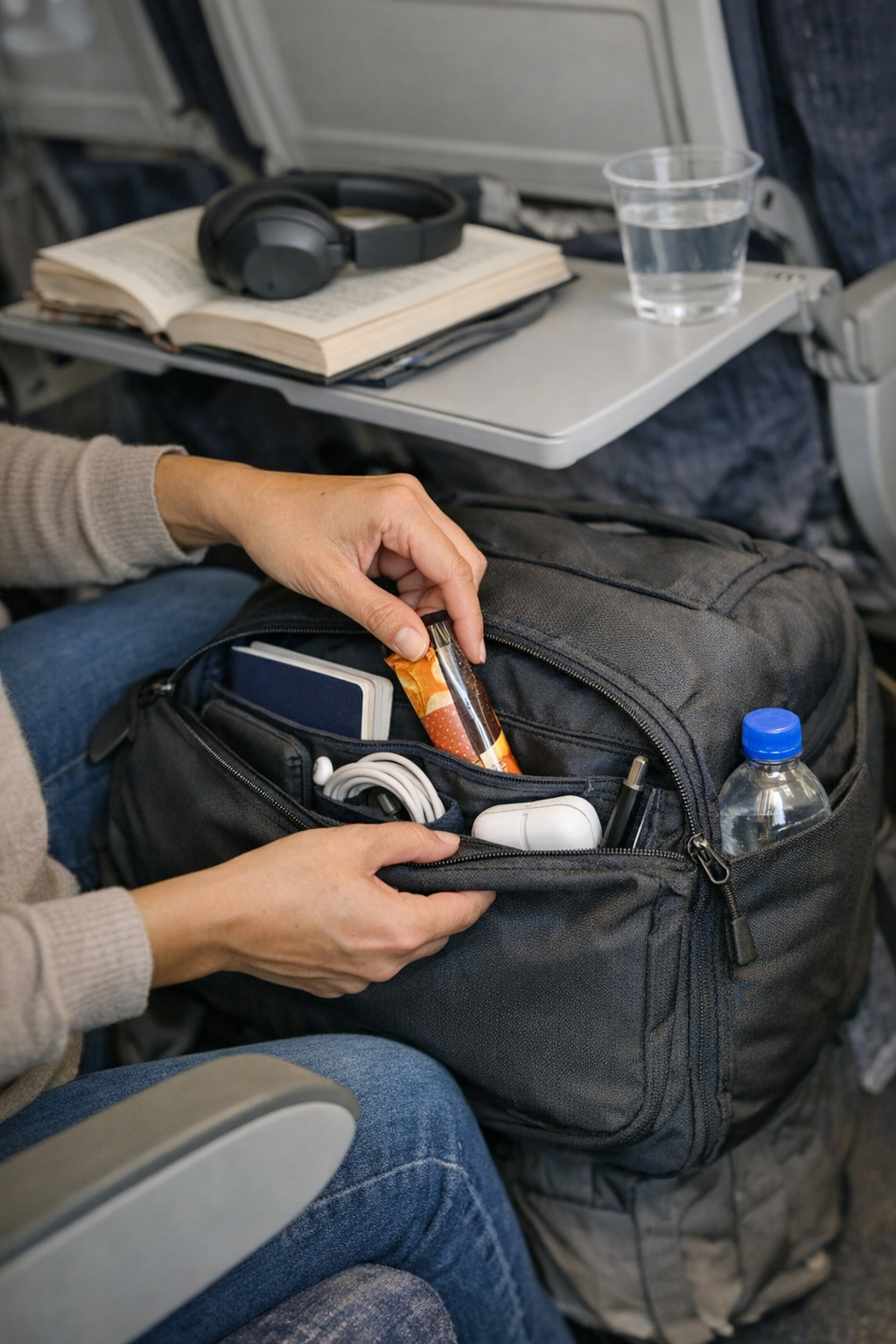
    Simple structure beats clever stacking every time: move essentials—passport, charger, snack, pen—into a top-zip or slim exterior pocket. The real shift is clear when the aisle crowds or the seat in front reclines. Suddenly you reach what you need with one discreet motion, staying settled and not unraveling your core pack job. The more you travel, the more you notice: every effective carry-on has a visible, reachable “high frequency” section that’s never blocked by cubes, pouches, or compression straps.

    Compartment Choices: Stacks Aren’t Always Smarter

    Everyone tries to maximize inside dimensions with vertical stacks, but deep-layered cubes mean a full mini-unpack each time you want something from the bottom. With exterior-access layouts, you cut the friction—repeat retrieval is a quick grab, not a production. That’s worth more than a few square inches saved inside. The lesson: if you need it more than once in flight, it doesn’t belong under cubes or inside your “arrival only” zones.

    Lessons From Repeat Travel: What Actually Reduces In-Transit Friction?

    On repeat trips, you spot patterns. Packing for looks means fatigue down the line: every extra unzip, every cube toppled, every missed zip path adds up. The real wins go to setups that let you move only once per needed item—not setups that look perfect on the baggage scanner. A single, intentionally designed quick-access pocket is more valuable than double the packing cubes for mid-trip convenience.

    If you keep fishing out the same item mid-air, give it front-row access. If you avoid opening your main compartment because it feels like opening a mini suitcase each time, you’re ready for an outer-pocket reset. When one quick retrieval turns into three movements and two repacks, it’s not organization—it’s just delay in disguise.

    How to Reorganize for Real Comfort: Simple Adjustments That Last

    Shift your most-used items—snacks, travel docs, earbuds—into exterior pouches or flat-access pockets meant for flight, not just for packing show. Keep “in-seat” essentials spread flat, so nothing gets buried beneath a layered stack. Treat outer pockets as mission-critical space; the fewer steps between you and your everyday items, the less friction you’ll feel as time and tiredness stack up.

    Your main compartment still holds its place: stash your “arrival only” gear deep and out of mind. But for everything else you need again and again, trade that perfect, dense stack for honest, instant access. You’ll feel the improvement before the flight even lands—and every time you sidestep the urge to reorder your entire bag just to find what you need in transit.

    Shop CarryOnSupply for travel organizers, quick-access pouches, and other carry-on essentials

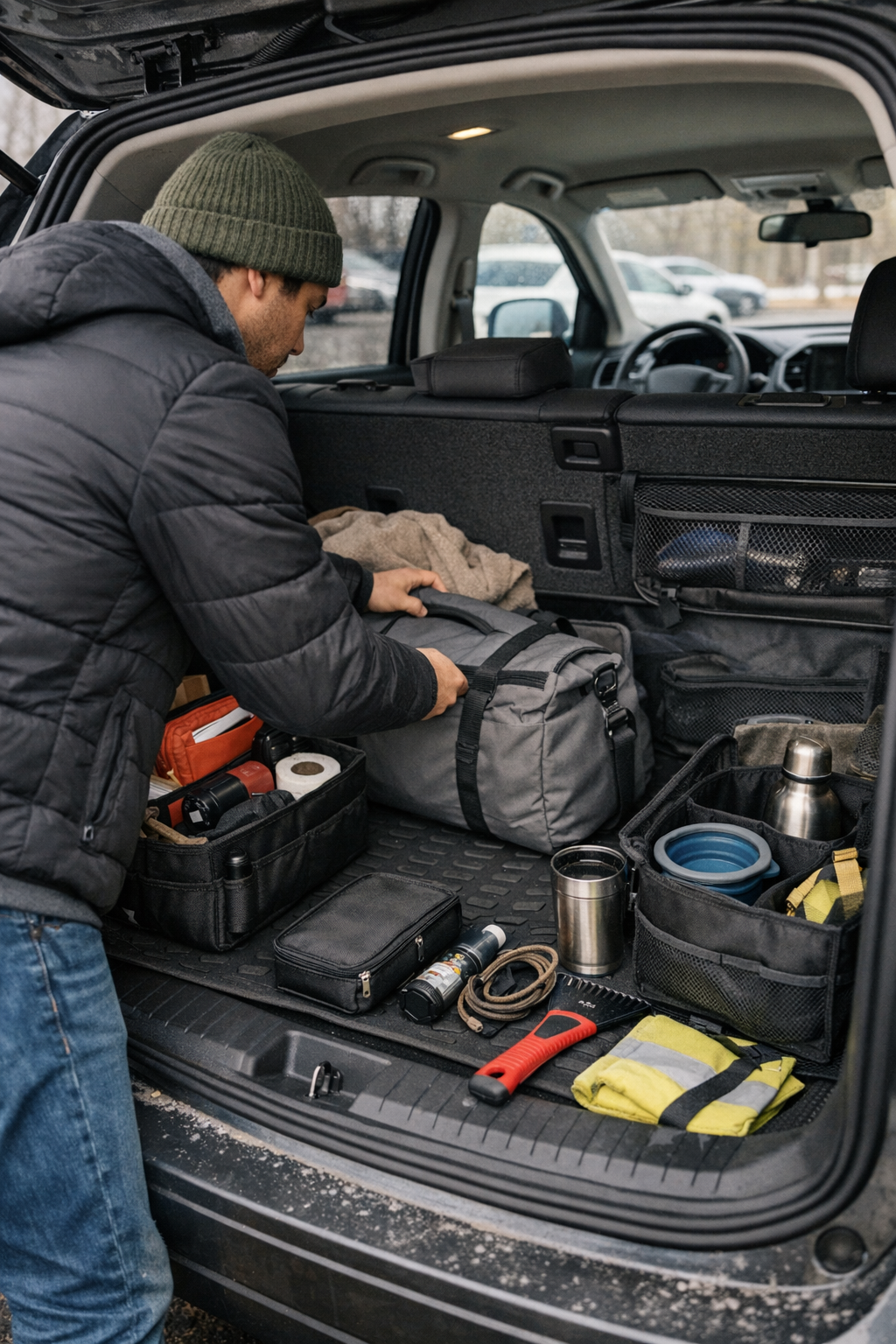
  • Keep Winter Driving Tools Within Easy Reach to Avoid Morning Frustration

    A car that looks organized can still fight you every winter morning. Slide into your supposedly neat cabin—floormats clean, dash wiped, bins “in place”—but the real setback comes the second you try to grab what you need and come up empty. You’re running late, fingers stiff from the cold, and instead of scooping up your scraper or charger, you’re contorting around seat corners, prying open gloveboxes, or digging through a tangled under-seat bin. “Clean” means nothing when reaching for a tool hijacks your routine—especially when it’s freezing or dark and every slow second costs you more than convenience.

    When “Organized” Isn’t Quick Enough

    It’s easy to think your interior is set up—everything with a spot. But try actually accessing what you use weekly and the illusion breaks. Getting a de-icer means sliding a tote aside or wrestling past a tangle of USB cables just to free a charger that always manages to snake under your bag. Sometimes you’re stretching from the driver’s seat for something shoved in a footwell or leaning awkwardly over the passenger seat when all you want is a flashlight before another icy commute.

    This problem doesn’t just show up in bad weather. Any routine—quick errands, back-to-back stops, sharing the car with someone else—turns “hidden clutter” into real friction. When you always have to unbuckle, lean, or empty a bin to get one tool, the neat look just exaggerates how inconvenient things really are. That slow drag of small delays repeats, eating into tight mornings or rushed afternoons and building a kind of low-grade frustration that resets every drive.

    The Trap of Tidy But Inaccessible

    Most “organization” hacks fail because they hide mess at the price of real access. Throw essentials deep into consoles or floor bins and you’re forced to break everyday flow just to reach what you need. On a frosty morning, you might find yourself down on one knee, coat picking up last week’s salt, stretching for a scraper wedged beneath a seat or blocked by a tote that was supposed to “streamline” the space. A neat trunk liner means nothing if it’s covering up the only tool you can’t drive off without.

    If you share your car, it gets worse: someone else’s idea of tidying bins means your most-used gear shifts spots—stacked deeper or switched to the other door. In one week, your “system” is suddenly guesswork, and you add another search-and-rearrange step to every morning—or skip using that tool altogether, until the next time it’s a hassle all over again.

    Cold Reality: Where Weak Setups Fail Fastest

    Cold weather exposes every small compromise. Head out after a hard frost, hop in, and instantly notice the scraper that was supposed to live in the door has migrated (again)—now stuck under a tangled charging cable or slid to the far side of the passenger footwell. One hurried reach means you’re pulling things loose, brushing grime onto your coat, untangling the charger, and realizing, once again, you’ll be late. Organized appearance can’t compete with setups that actually keep your hands moving, not hunting.

    This isn’t occasional; it’s a routine breakdown every time your setup breaks the rhythm of daily use. The longer you live with it, the more obvious the gap between “looks fixed” and “feels right” grows. Multiply that hassle by each cold start, dark return, or busy handoff, and the cost is undeniable—neatness on the surface, but a grind underneath.

    The Shift: Prioritize Instant Access, Not Just Storage

    Real improvement starts by cutting your “everyday access” down to the one or two items you truly reach for every drive. Forget about taping down every loose cable or building trunk bins for dozens of gadgets. The core is brutally specific: the single charger cable you actually use, the one scraper you always need, the flashlight you reach for in the dark. These belong within direct, seat-side reach—either in a shallow door pocket, a slim seat-edge tray, or a no-guess cubby at arm’s length. If you have to change posture, you’ve already lost seconds you can’t get back in a rush.

    Make this the non-negotiable “home zone”—items are always reset there after use, the way you automatically return the keys. Instantly, setup stops being a visual trick and starts working on the level you actually use it: drive, reach, grab, go. No shifting, no digging, no excuses in cold or rain. You save not just time, but focus—redirecting energy from hunting for a cord or scraping tool to actually getting on the road.

    Restrict Reach—Do Less, Need Less

    Squeezing everything within easy reach only brings back clutter. Narrow it to what really belongs: in winter, that might mean just a scraper and one key cable. Anything else—emergency flares you haven’t touched in a year, or a backup dog leash—lives elsewhere. If you only use an item once a month, it shouldn’t claim premium territory by your seat or door. Let “used weekly” decide what earns your closest spot.

    Sort By How You Use, Not What Category Calls For

    It’s habit, not label, that should shape your setup. Think through an average week: which tools do you actually grab, and when? Don’t fall for the instinct to build up “emergency kits” in the cabin if those items never come out until a rare breakdown. Instead, keep daily drivers—scraper, charger, maybe wipes or sanitizer—ready without digging. Let the rarely used stuff slide back into trunks, under seats, or gloveboxes, freeing the main zone for what keeps you moving.

    Use Organizers That Speed You Up, Not Slow You Down

    Visibility isn’t the fix if it just means a mess on display. Stick to slim, easy-access bins and door organizers, but keep them shallow enough that nothing stacks or buries your essentials. The right system stays open enough for a blind grab but keeps gear from drifting, spilling, or blocking the way. Don’t overfill—each added slot is just another way to hold up your reach or tempt you to store too much right where it doesn’t belong.

    Every Day, Less Friction—Even on Repeat

    The best setups earn their keep on repeat: cold mornings, late nights, quick errand runs, and shared-car chaos. Slide behind the wheel and, without thinking, grab your scraper or charger—every item has an automatic “home” in reach. No delayed departures, no kneeling on cold concrete, no wrestling a spaghetti of cables loose just to top up your phone. Over time, you notice the difference not by how clean your cabin looks in photos, but by how rarely you cuss at the clutter or stop to rearrange things before you can actually drive.

    The setups that only look under control leave you slowed and annoyed after every ordinary trip, especially as winter drags on. A tidy bin or covered tray is no win if it buries the gear you actually need when you’re rushed, frozen, or halfway into the next commute. Each time you skip a hassle—no digging, no untangling, no awkward reach—it adds up, building a routine that just works. That’s not about neatness for its own sake; it’s about structure that finally lines up with the way you really use your car, every single day.

    Organize your car to serve the routine, not just the photo. Find more practical solutions at DriveWellSupply.

  • Why Packing for Easy Access Beats Maximum Storage Efficiency in Travel

    The difference between a carry-on that “looks organized” and one you actually want to dig into at the gate isn’t obvious until the airport tests every choice. Zip your bag closed at home and you’re proud of the neat rolls and lined-up pouches. Fast-forward to the first security line: the charger you thought was smartly packed is now buried, your passport is wedged under a stack, and retrieving anything triggers a quiet scramble—forcing half the bag open under time pressure while trays push up and travelers shuffle around you. You realize it’s not messy, just slow. What worked in your hotel room is working against you—one pocket at a time.

    The Hidden Cost of Storage-Focused Packing

    Social media is full of “satisfying” carry-on photos—every shirt crisp, pockets shut, order everywhere you look. But compression isn’t the same as usability. The tighter you stack and pack, the more every future reach becomes its own event: friction on top of friction, especially when you actually need quick access.

    Think about the first checkpoint: bins rattling forward, shoes off, the person behind you pressing closer. If your main essentials—laptop, passport, ID—are trapped beneath layers of rolled shirts, charger bricks, and a shoe pressed against a pouch, every retrieval turns into a mini unpack. A layout that looked sleek and tidy now works against you, blocking quick reach, requiring awkward reshuffles, and breaking your momentum every time you move from line to line.

    Where Travel Momentum Hiccups: Checkpoints and Chokepoints

    Breakdowns in flow don’t arrive with fanfare; you notice them as a series of tiny, repeated stalls. Reaching for your passport becomes a two-step detour as you unstack layers or nudge aside zippered pouches. Down an aisle, retrieving headphones means shoving a sweater and zipping around cables. Security trays, boarding lines, overhead bin grabs—the illusion of packed order keeps getting peeled back.

    Here’s reality: Just because a bag “looks” tidy on a bench does not mean it works under real pressure. Each slow unzip or pouch shuffle doesn’t just cost seconds—it piles up over a trip, taxing your focus and flow. Small retrieval delays, repeated across checkpoints and boarding routines, add up to a persistent drag on every segment of airport life.

    Repeated-use Scenarios: Where Organization Breaks Down

    Security Trays: Clothing Layers Become Access Hurdles

    Picture yourself rolling into the security checkpoint. You need your electronics out, fast. Both are blocked by shirts crammed for space and a dense charger pouch—a setup that made sense at 6 a.m., but now demands a cramped, rushed search. Cables snag, pens tumble, clothing shifts. Suddenly you’re blocking the conveyor, forced into awkward hurry or letting your order collapse as you repack in a rush.

    Boarding and Seat Entry: When Bags Don’t Flex

    Boarding: it sounds routine until you juggle ticket, snack, device, and ID. Outer pockets bulge from over-compression, or the item you want is under a layer of barely-contained order. Every “just one thing” grab mutates into a partial unpack, with repacking slowed by corners that were tight by design. The result isn’t just inconvenience; it’s a public moment where smart storage becomes a private liability.

    In-flight Retrieval: Quick Essentials Turn into a Project

    Settled into your seat—then remember gum, earplugs, or the e-reader. They’re not where you want; they’re midpoint in a vertical stack. Instead of a quick zip, you’re half-standing in the aisle, pulling out layers, bumping elbows, or swinging your bag down—turning a one-handed grab into an in-flight project while your neighbor waits and space runs out.

    What Looks Packed Isn’t Always Easy to Use

    The most common mistake? Packing to hide mess often hides ongoing hassle. A bag that looks calm pre-trip can dissolve into chaos when every “grab” means disturbing half your kit. This isn’t a packing laziness problem—it’s a structural flaw that’s invisible until you face the same stuck zippers, reset pouches, or stacked-over essentials again and again. The first trip you might just feel slow; by the third, you’re strategizing how to repack for access you can trust mid-movement.

    You put your charger in a spot that made sense—logical in theory, but always an extra step deep when you need it on the fly. The same with a passport or boarding pass: guaranteed to wedge between snacks, headphones, or an oddly-shaped pouch as soon as you stand in line. The more order you create visually, the more you risk building friction into every future access point.

    The Access-First Adjustment: Practical Tweaks That Change Movement

    How do you actually cut down these micro-stalls? Build your packing order around actual use, not visual calm. That means isolating your high-frequency items—passport, phone, charger, headphones—into outward-facing, uncluttered pockets you can reach with one hand even when the overhead bin’s full or the aisle is blocked.

    Use structure, not just space: Give each frequent-access item a home that’s never shared with bulky storage: passport and phone nested vertically by themselves; charger and cable separated into a shallow top pocket. This keeps retrieval friction away from your core setup, so every access feels like a direct reach, not a mini repack. You’re not packing less—you’re packing for movement, and the difference reveals itself at every gate, bin, or seat.

    Recognizing and Avoiding the Most Common Packing Pitfalls

    • Compression overkill: When every millimeter is packed tight, the smallest retrieval means triggering an accidental unpack cascade.
    • Pouch overflow: Mixing tech, documents, and comfort items in one slot looks controlled, but leaves you unprepared when you must grab just one of them—fast.
    • Edge illusions: Outer-pocket items can still be blocked if those pockets become dumping grounds for overflow bulk—proximity isn’t the same as access.
    • Order without function: If you’re forced to unzip, reshuffle, or pause every time you need something, the organization is cosmetic. Flow matters most when the pressure’s on.

    Living with the Setup: How the Right Pocket Placement Changes Everything

    The shift is visible under stress—where travel design is meant to function, not pose for photos. At security, your ID, wallet, and device come out in one motion, not a layered excavation. Board the plane: your ticket lives in the same slim slot every time. Mid-flight, you grab headphones or a snack with a targeted reach—no neighbor disturbance, no half-opened bags, no wardrobe cascade.

    Airport travel finally feels like moving forward, not sideways—moving with your bag, not fighting its layout. What changed? You didn’t drop essentials; you just separated the high-frequency retrievals from the static bulk, ending the cycle of forced resets and fumbled repacks. Organized doesn’t mean untouched: it means packed for how you actually move, not just how you like your stuff to look at the start.

    Building a Carry-On for Real Airport Rhythm

    What sets a carry-on apart isn’t “max packing”—it’s the ability to match supply with demand in real time. The best setups prioritize movement: each key item assigned a frictionless pocket, each access designed around travel’s routine stress points. Your bulk gear still belongs in main space, but everything you need on the go stands apart, immune to pouch blockages and panic zips.

    This is where a carry-on stops being just a container and starts behaving as an in-transit tool. Micro-disruptions fade; retrieval, boarding, and repacking become background—not bottleneck. Every checkpoint, line, and aisle exposes the difference. The payoff isn’t a perfect Instagram shot; it’s the flow that can only come from structure made for the way you actually move.

    Find travel tools and layout inspiration for your next carry-on at CarryOnSupply.

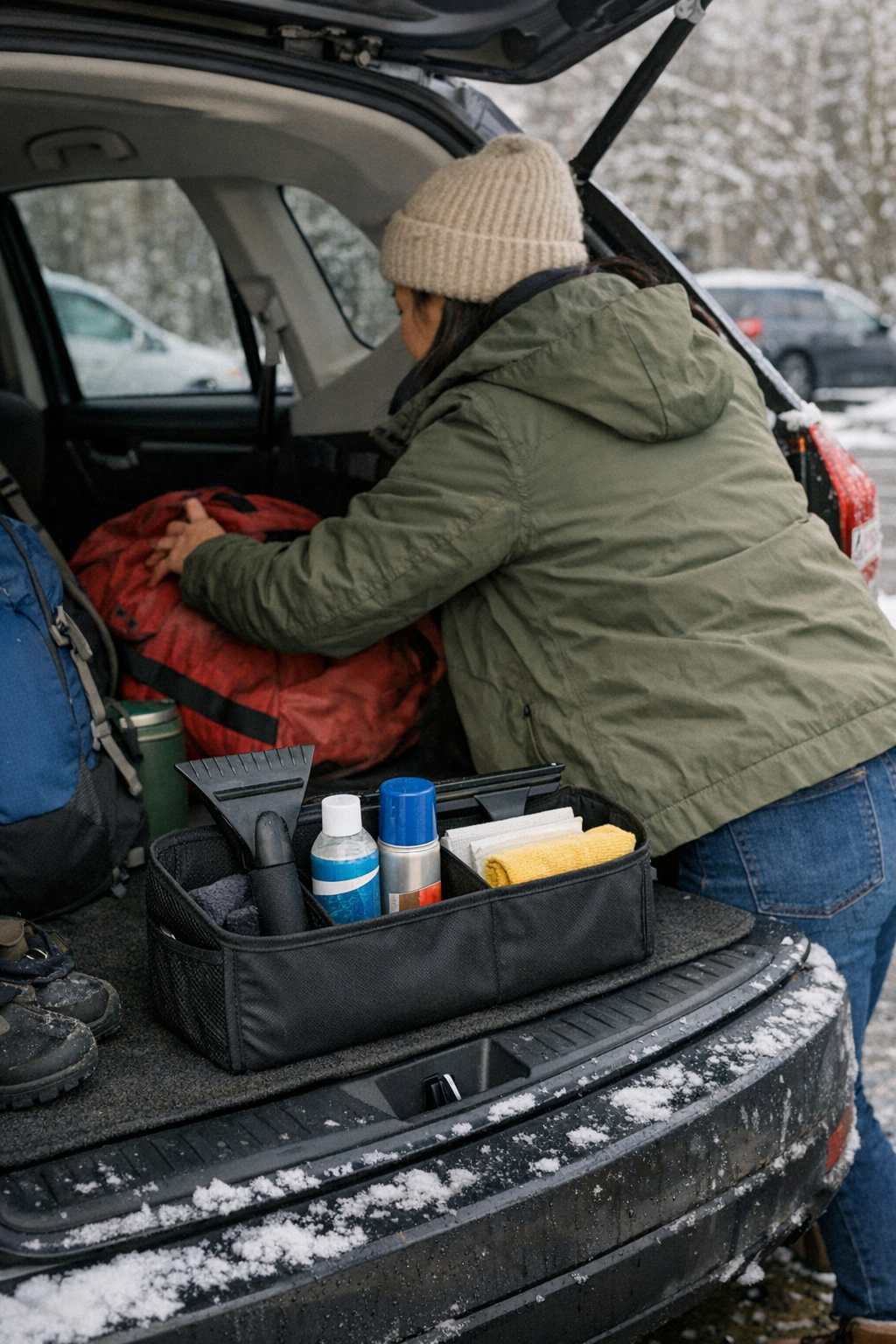
  • Streamline Your Winter Drives with a Dedicated Visibility Kit Setup

    Every winter, the real battle inside your car is not the cold—it’s the scramble to find your scraper, towel, or deicer while time drains away and your routine breaks down before you even start the engine.

    You step out ready to drive, but the moment you reach for your ice scraper, it’s buried again—jammed beneath a gym bag, kicked somewhere behind the seat, or left all the way in the trunk from yesterday’s quick stop. The deicer is wedged in a door pocket you barely access. Your anti-fog wipes slip under the seat; a spare wiper blade migrates to the far cargo corner. You have everything you need, but never where you left it. Routine winter mornings become a gear hunt—just as you’re rushing out, minutes start slipping away while you dig, kneel, and fumble around the cabin.

    When “organized” is a trap: hidden delays in winter-ready cars

    From the outside, your car might look spotless: clear floors, clean seats, gear stashed neatly out of sight. But the minute frost hits, invisible friction surfaces. Visibility tools drift, lodge, and hide—sapping minutes and patience when you need them most. It’s always the early start or the late departure. Scraper out of reach, you’re pawing through shadows; thick gloves make the smallest search a clumsy irritation. Delays stack quietly: ten seconds, then two minutes lost, before you’re even close to ready. Appearances mean little if the first cold step inside triggers another round of searching and sorting.

    The repeat cycle: invisible clutter, repeated drag

    This isn’t a one-time scramble. Each drive resets the mess, even if your cabin looked perfect before. The scraper slides back under the seat. The deicer falls sideways, just out of reach. By the next trip, the heater’s already fogging your windshield, but your hands are busy picking through loose wipes and a crumpled rag. You end up driving with a half-cleared window or—worse—streak marks made in haste. There’s no outright chaos, just a slow churn of items never where you need them, turning every cold start into a new friction point.

    Sharing the car? The setup frustration doubles

    Everything gets louder if you split car duties—family routines, alternating commutes, shared shuttles. Each person “organizes” winter tools their own way: the scraper wedged in a new door pocket, the deicer stashed in a cupholder, wipes tossed wherever they fit. Half the time, something leaves the car and doesn’t return. After heavy snow, you’re suited up and ready—only to find the essentials have drifted or vanished. Now you’re stretching under seats, tracking slush inside, and working double just to restore the basics before any actual driving begins.

    Routine small frictions: why “tidy” often fails in winter

    Winter gear always moves. Grocery runs push the scraper into new corners. Vacuuming on a warmer day displaces everything. Any attempt to “set up” lasts maybe a week—a single sharp turn or loading rush scrambles the kit again. On Thursday morning, you’re bending over bags, muttering “but I just cleaned this,” while the same unhelpful order reasserts itself. Every minor shuffle pushes tools farther from reach, making small cold frustrations an automatic part of the day.

    Stability vs. style: a working winter-visibility kit

    Adding tools is rarely the answer. Real game-changers are about fixed, ready access—always grabbing what you need with zero crawl, search, or tray digging. A low-sided, anchored organizer—even a simple one tucked behind the passenger seat—changes repeated cold starts instantly:

    • No more awkward dives or glove-struggle retrievals. The scraper stands upright. The deicer, wipes, and glass cloth all within one-hand reach—even with thick gloves or a heavy coat.
    • Stays put even when bags, groceries, or seat shifts knock everything else loose. Organizer containment keeps your kit visible and always accessible—never lost to cargo slides or careless re-stuffing.
    • Loading and unloading don’t bury essentials. Errands, carpools, dog rides, and gym gear all pass through, but your main winter tools are never swept under by the next wave of belongings.

    Instead of cycling between trunk, seat-back, and footwell for each tool, you shift to one reach spot—saving time, lowering stress, and ditching the scavenger hunt that slows down every winter drive.

    After the switch: real-world winter routines with a kit reset

    It’s not just a minor convenience. Over weeks, a dialed-in visibility kit turns into a new rhythm. Here’s when you really notice:

    • Late mornings with no time spill—you clear off the glass in under a minute, even on icy days.
    • Thick gloves no longer cause stumbles—open-topped tools offer direct grab, no fumbling with hidden fasteners.
    • Nothing blocks or buries crucial gear after hauling cargo—your kit stands out, visible in two seconds instead of lost under bags or jackets.
    • There’s no mental double-check at every stop—one look confirms everything stayed in place, ready for next time.

    The most old-school pain—kneeling in slush for a lost scraper, tugging at objects buried by passenger mess, starting with blurry glass—just fades away. You’re not spared the season, but you are spared the drag. Old friction that used to slow down every start quietly disappears once access stops being an obstacle.

    The “clean” illusion: why winter-ready setups mean setup, not just looks

    What works in spring means little when winter returns. A car that “looks” sorted is slow to use when cold snaps hit. Smooth floors and hidden gear quickly unravel—your hand still hits cold plastic while kneeling to extract a tool that should be within easy reach. Setting up for winter is less about minimalism than about position: fast access beats spotless hiding every time weather shakes up your routine.

    Practical beats pretty: for actual repeated use, keep your kit within arm’s reach from the driver’s seat—ideally behind the passenger seat or in a side door pocket you can hit without looking. Gear buried deep in the trunk or bottom of glove boxes? Each extra motion multiplies friction, slowing every round trip when winter is at full strength.

    Pushing winter friction out: why setup structure always matters

    No organizer can turn January into June, but one change—anchored, direct-access setups—drastically cuts repeated drag. The improvement isn’t seen in Instagram shots; it’s felt in real movement, task after task. How your cabin looks barely matters if cold starts and rushed stops still mean searching and bending.

    Shop DriveWellSupply for car organization and winter setup essentials

  • Streamlining Pet Travel: How Organized Gear Reduces Stress on Every Trip

    Every pet travel kit looks “set” until real movement starts. Two errands in, the polished bag turns stubborn: the leash knots under a comfort blanket, wipes slide deep beneath treats, and each quick stop means tension—not just for you, but for your pet waiting in the back. Even a carefully packed carrier gives itself away after a normal stop-and-go routine: slow, awkward reach for cleanup, blocked fast access, items overlapping until the next shuffle, all while your animal picks up on every reset or delayed move. The smooth look at departure rarely survives the first real pause—and by the second, you feel it’s more work than it should be. PawGoTravel is built for these exposed weak points, not the illusion of “ready” that fades by lunchtime.

    Why “Organized” Isn’t Always Easy in Motion

    Most travel setups fail at the first friction: the zipper that catches, the leash jammed beneath bulkier comfort gear, or a round of wipes buried when you need them fast. What looked sorted inside the living room unravels as soon as you hit repeat routines—multiple stops, short waits, unpredictable pauses. It’s not the gear quantity that slows you down; it’s the process breakdown as every item starts to block another.

    Organized isn’t the same as accessible. The bag that lines up leashes, wipes, and treats “for later” works until your hand lands on the wrong pocket, or until a cleaning supply is stuck under a mat meant to soothe your pet. Instead of a single smooth movement, you’re pausing, untangling, and already pulling for order halfway through the trip. That extra beat—your pet notices, too—and a calm outing becomes disjointed before you get back in the car.

    The Cost of Repeated Hangups

    Interruptions stack—one small block at a time. Reach for a backup leash, find it buried under a folded blanket, then spare wipes jammed beneath a full water dish. Each pause costs seconds, but across three or four stops, those seconds multiply into irritation and distraction. The disguised drag is that everything looks “organized” until the structure buckles on real use: tangled items, missed timing, small cancellations of momentum. Your animal doesn’t care how neat it looked just before you left—but they’ll absolutely respond when wait time lengthens at each stall.

    Picture the real run: grocery store, short leash-out at the vet, back in for the next stop. First, the folded mat wedges in the main zipper; by the third errand, treats have worked their way beneath bowls; finally, leashes are covered by comfort gear instead of separated for quick grab. The idea of “prepared” hides these little collisions—until your movement turns to mild frustration instead of fluid travel.

    Where Setups Fall Short: Real-World Scenarios

    That “Prepared” Feeling—Until You Need Speed

    At home, a well-packed bag feels bulletproof. Out the door, the cracks form almost instantly. That leash that was “strategically stashed” takes a two-handed search if the pet starts pulling early; wipes resurface late, always after the window to clean up messes cleanly has closed. Even comfort details, like a padded seat-side mat, end up sandwiched right where you need to dig—solving one problem (pet rest) but slowing another (cleanup, fast leash-on) every time you stop.

    Pet Items vs. Owner Items: The Overlap That Trips You Up

    The consistent friction isn’t lack of supplies—it’s overlap. Treats hide among keys, wipes crumple under your coffee flask, backup collars spill into the slot where your phone was supposed to ride. The more pockets double-up, the more you shuffle, losing time and rhythm with each change. It’s a fight against your own setup, especially when a quick grab turns into a mini excavation every single time you switch from owner to pet tasks.

    The Difference a Split-Access Setup Makes

    Divide and survive—assigning clear, dedicated spaces transforms travel flow. When the outside front pocket acts as the base for wipes and leashes, and the inside holds bowls and pet comfort gear, your hands know where to go before your eyes find the zipper. Quick access is no longer random luck; it’s built in. Suddenly, no part of your handling routine relies on chance—every critical item stands ready, stops reset faster, and the “wrong pouch first” habit vanishes.

    The most telling fix isn’t more compartments, but openings that never get blocked. The difference is seat-side: a zipper that’s always clear, never trapped beneath stuffed mats or heavy gear, meaning exits and returns take one clean, confident motion every time. That’s the adjustment people don’t realize they needed until the drag disappears—not on day one, but over dozens of small, repeated starts and stops where setup finally stays out of your way.

    Assigning Each Section a Single Job

    Real discipline is single-task pockets: cleanup here, leash and walk stuff there, comfort items separate and not competing for space. The logic is simple—overlap breeds confusion. After two or three errands, all-in-one sections collapse into a tangle, and what was once clear at home turns random when the bag lands sideways or gets restuffed on the fly. Assigning each section just one job preserves the travel structure—no matter how much shakes loose midweek.

    How a Better Setup Changes Real Trips

    Faster Recovery After Each Stop

    When a routine’s broken by delays, travel loses its rhythm. A divided setup means you move again before your pet’s patience is tested. Instead of fumbling for the next step, the bag delivers in one reach: leash, wipes, comfort—all in place, making the shift from pause to movement silent and quick. That’s the real gain—less time stuck in the halfway zone between stops.

    Visible Calm—for Pet and Owner

    A pet senses every hesitation. If you’re caught digging mid-walk, their alertness rises and yours drops. When your bag structure supports movement, tension drops for both. Each mapped-out section cuts not just time, but edge, letting routines run cooler and more predictable whether at a gas station or parking lot curb.

    “Looking” Ready vs. “Feeling” Ready

    The real payoff is never at setup—it’s in the fourth or fifth repeated stop, when everything still unpacks and repacks in seconds, not minutes. Looks-organized bags break down under return-to-movement stress; functionally mapped gear keeps travel snags from snowballing, and lets ordinary routines run how they should: without friction, not just without clutter.

    Find practical pet travel solutions that keep your movement smooth, your pet calm, and your own patience intact at PawGoTravel.