Category: Travel & Drive

  • Streamline Your Carry-On Setup to Avoid Travel Delays and Frustrations

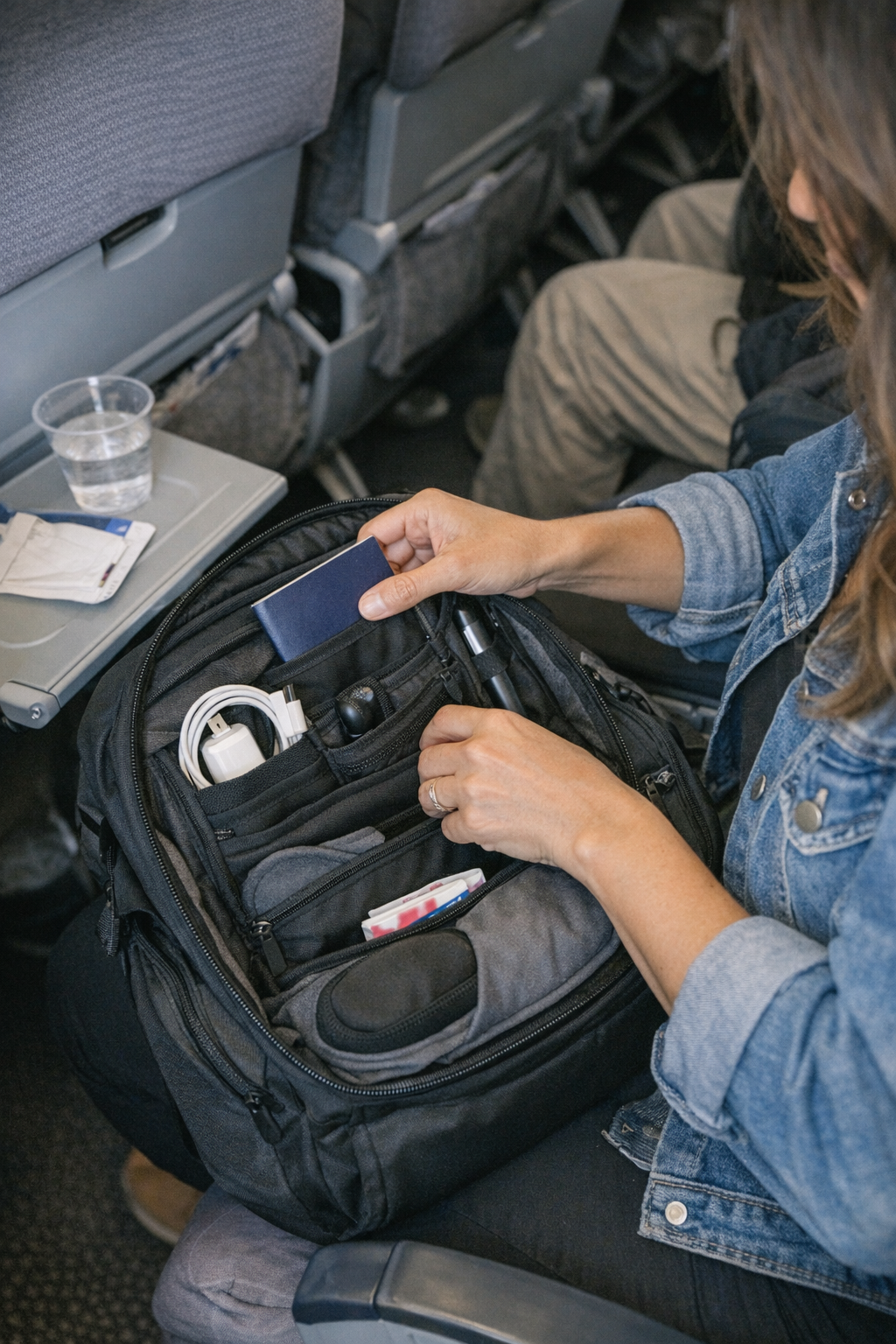
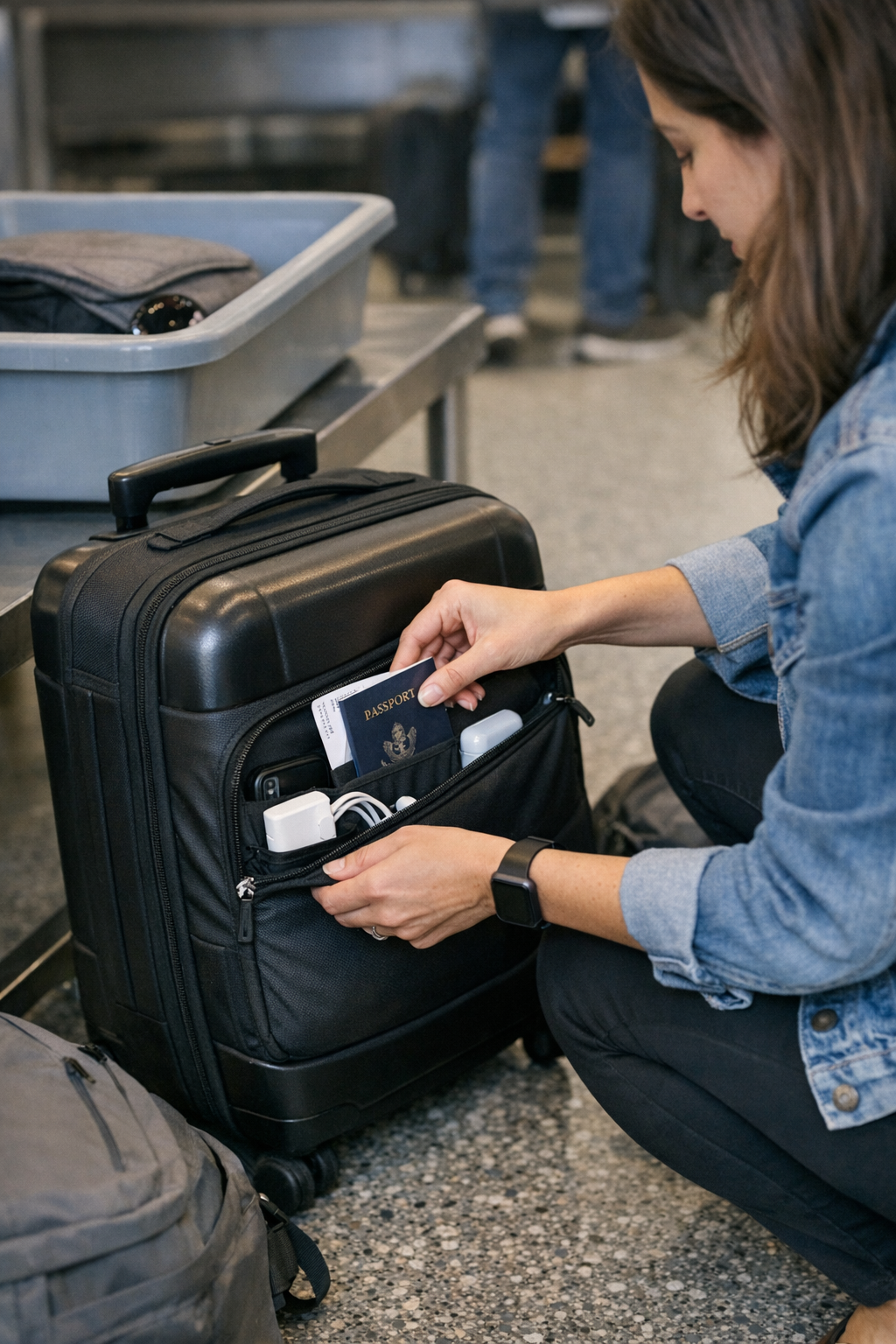
    Looks can deceive in carry-on travel. A bag that seems perfectly organized at home—color-sorted cables, passport front and center, neat little pouches—rarely survives the first wave of airport reality. Under pressure, your “quick-access” pocket turns into a choke point. The passport you set on top slips under a charger pouch; your boarding pass slides behind tangled headphones; even the zipper fights you, catching on a misplaced pouch. You feel the slowdown as soon as your gate is called. Access that felt effortless on your living room floor now burns precious seconds at security and in the aisle, making what should be a streamlined routine a repeated frustration. If you’ve ever jabbed through an outer pocket, pawing at overlapping layers for a single document, you know how fast a tidy layout collapses inside a crowded terminal. This is the difference between bags that only look ready and bags that actually work—a difference CarryOnSupply is built to expose and solve.

    Order That Doesn’t Hold Up Under Speed

    Packing order never guarantees smooth airport movement. Real friction shows up in every transition: security checks, boarding lines, overhead-bin lifts, and seat scrambles. The tell isn’t mess, but slowing access. You reach for your passport, and instead of a quick pull, you unzip, shift pouches, fish beneath a charger, and repack everything with the line breathing down your neck. The more you move, the more your careful layout resists. Instead of reliable quick grabs, you get sudden stutters—fumbling during boarding, delays at checkpoints, items slipping further out of sync each time you open your bag. The cost: seconds lost at the worst moments, and a bag that interrupts your movement when you most need it to help.

    Real Moments Where Organization Breaks Down

    Security tray delays: In the scanning line, you unzip a “security” pouch expecting one thing, but find headphones tangled with power packs, and a toiletry kit blocking the reach. The layout that felt logical yesterday now jams at the exact moment the tray needs to move forward.

    Boarding stress: As the line inches ahead, your passport hides behind two slim cases, forcing you to haul out every pouch, spread your tray of travel bits onto the boarding lane, and try to repack with a dozen eyes on you.

    Seat entry interruptions: Squeezing into a window seat, you try to extract earbuds from the outer pocket but hit a wall of cable bundles and hard-to-grab gadgets. You pause, dig, and catch the aisle traffic, repacking items on your knees before you can sit down.

    When Setups That Look Good Fail in Real Movement

    Flat, color-coded layouts fail the second you start opening the bag for actual travel needs. Each new access moment—passport, charger, boarding pass—pushes pouches out of position, bunches zippers, and nudges essentials deeper. The thing you need twice in an hour slips behind gear you only touch once per trip. “Neat” turns into “nested,” and retrieval cost grows—a few seconds per interruption, magnified across gate changes, connections, or last-minute security requests.

    Repeated Access, Repeated Interruption

    The friction isn’t in what you pack—it’s the buried access path. First pack always feels controlled. True pressure comes after a few real transitions. Your urgent item, easy in theory, ends up trapped behind layers of less-used gear. Soon, pulling a passport means unzipping three sections or balancing your bag on a knee just to fish out a cable that’s migrated to the bottom. Every slight reshuffle multiplies, turning a one-motion retrieve into a multi-step scramble as your day stacks up transfers and checks.

    Building a Carry-On Structure for Actual Use, Not Just Appearance

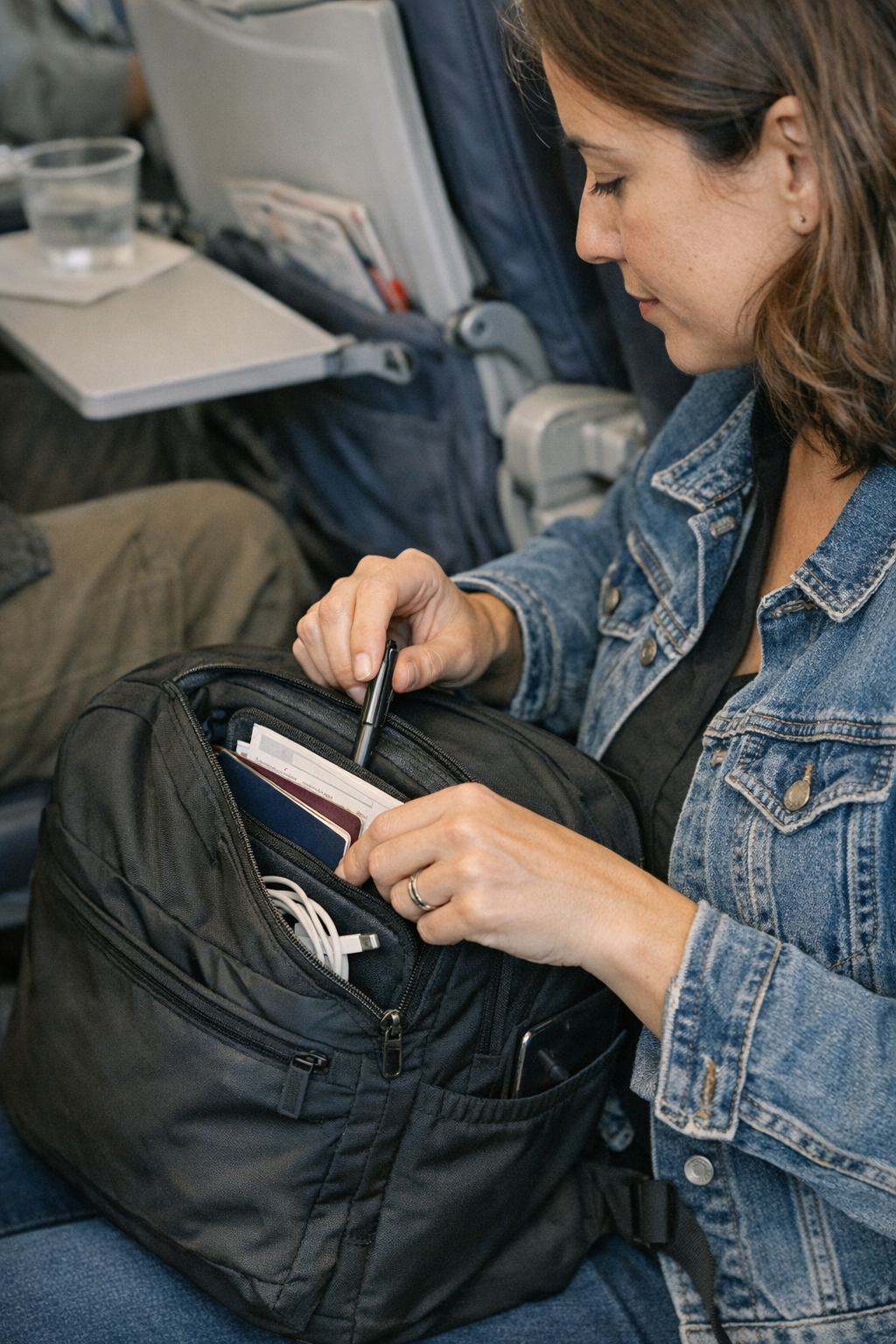
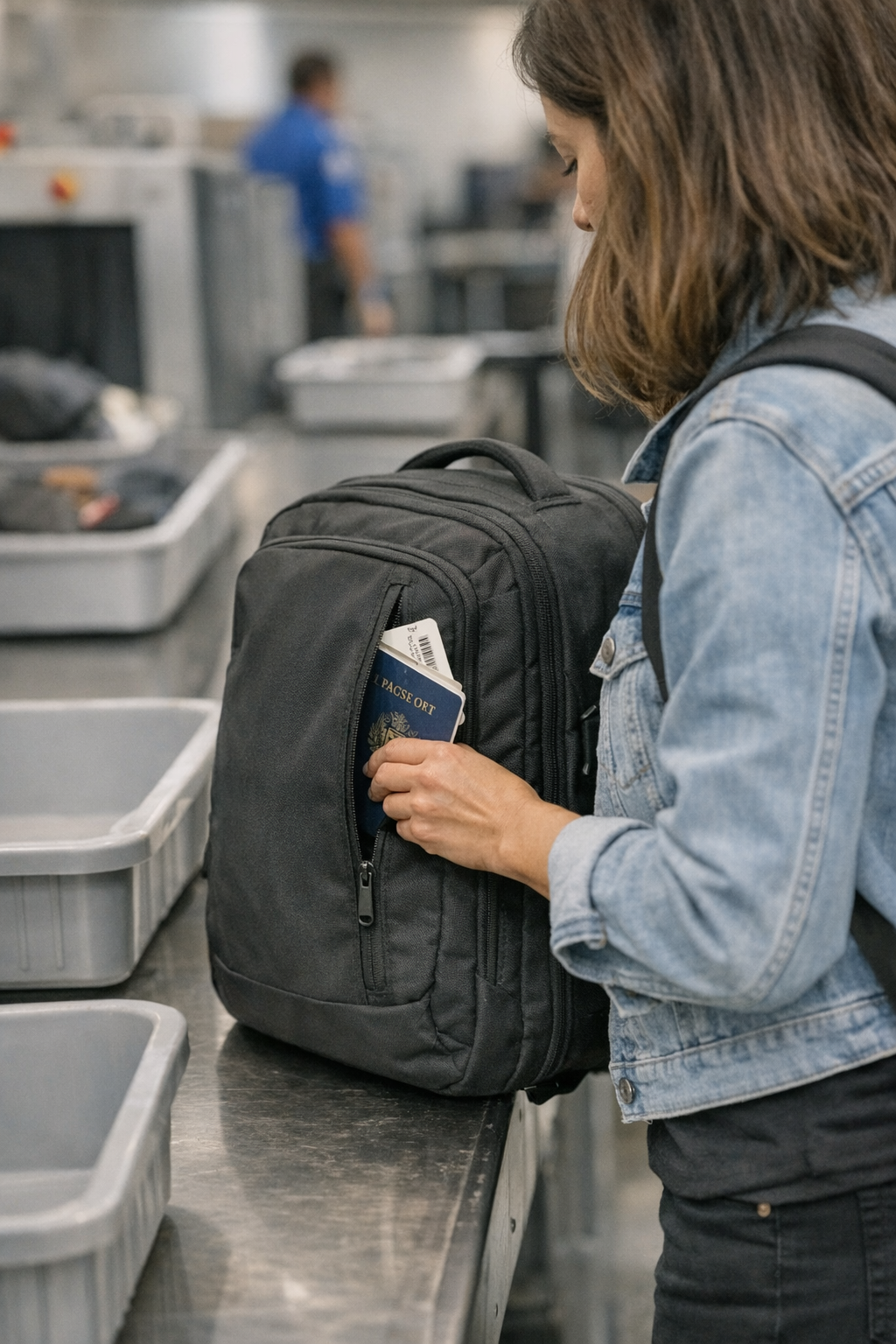
    Function under travel strain comes down to one rule: High-frequency items must be within one honest, unstacked reach. The difference isn’t the number of pouches—it’s which pocket you trust for what you actually need in motion. Shifting essential documents and devices to a dedicated, shallow-access pocket makes the entire process direct. No more unzipping the main compartment at the gate, no more stacking organizers to get to your phone at security. A single, well-laid outer pocket turns scramble into flow: unzip, retrieve, done. When real travel disrupts order, only setups that protect immediate access keep working hour after hour.

    Minimizing the Mid-Journey Repacking Cycle

    This small structure shift—reserving the fastest access slot for only passport, boarding pass, and phone—drops the cycle of public repacking. Retrieval shrinks from minutes to seconds. At the gate, in boarding aisles, or at the security scanner, you open one zip, grab what you need, and move. Old routines of laying out every small pouch or re-layering tech organizers in the aisle disappear. The essentials remain forward, the friction recedes, and your setup no longer tutors you in airport repacking while other travelers rush past.

    Practical Tweaks That Reduce Travel Slowdown

    Keep outer-access lean. Every item labelled “essential” but used once per day slows the pocket you actually need fast. Cramming too many things into shallow pockets piles up overlap and snag risk; soon, the “quick” pocket is just another layer to dig through. Watch for signals: if you’re pausing at security or fumbling documents at the gate, it’s time to rotate items further back. The difference is immediate—true high-frequency tools stay in reach, low-frequency gear slides deep, and travel flow regains momentum.

    The Shift from “Looks Packed Well” to “Works on the Move”

    This isn’t about spotless visuals. A setup’s proof is in movement by your second or third flight—not the Instagram shot on a hotel bed. The real test is how retrieval speed holds up when the boarding lane clogs, or how your pocket works when you’re bending to slide a bag under the seat. Glitches still show up—pockets sometimes crowd or shift in turbulence—but the difference is measurable: you reach for most-used items and get them in a motion or two, not a messy repack. Consistency, not perfection, is what lowers travel friction in real time.

    Consistent Access Means a Smoother Trip—Even When Things Speed Up

    Truly efficient carry-on setups aren’t just mess-free—they cut out repeated, avoidable interruption. Move quick-grabs to a single, honest outer-access pocket, and your bag becomes an extension of your travel rhythm. Security checks, overhead lifts, boarding—suddenly, interruptions fade and your setup keeps pace. The cost of sticking with “tidy but buried” is clear: more digging, more slowdowns, and time lost fixing a bag instead of moving forward. It’s not about hitting perfection, but about making visible order deliver in the real, moving world of travel—especially when seconds count.

    CarryOnSupply—see smarter carry-on tools for repeated real travel use.
  • Why Flexible Car Organizers Improve Daily Driving Convenience

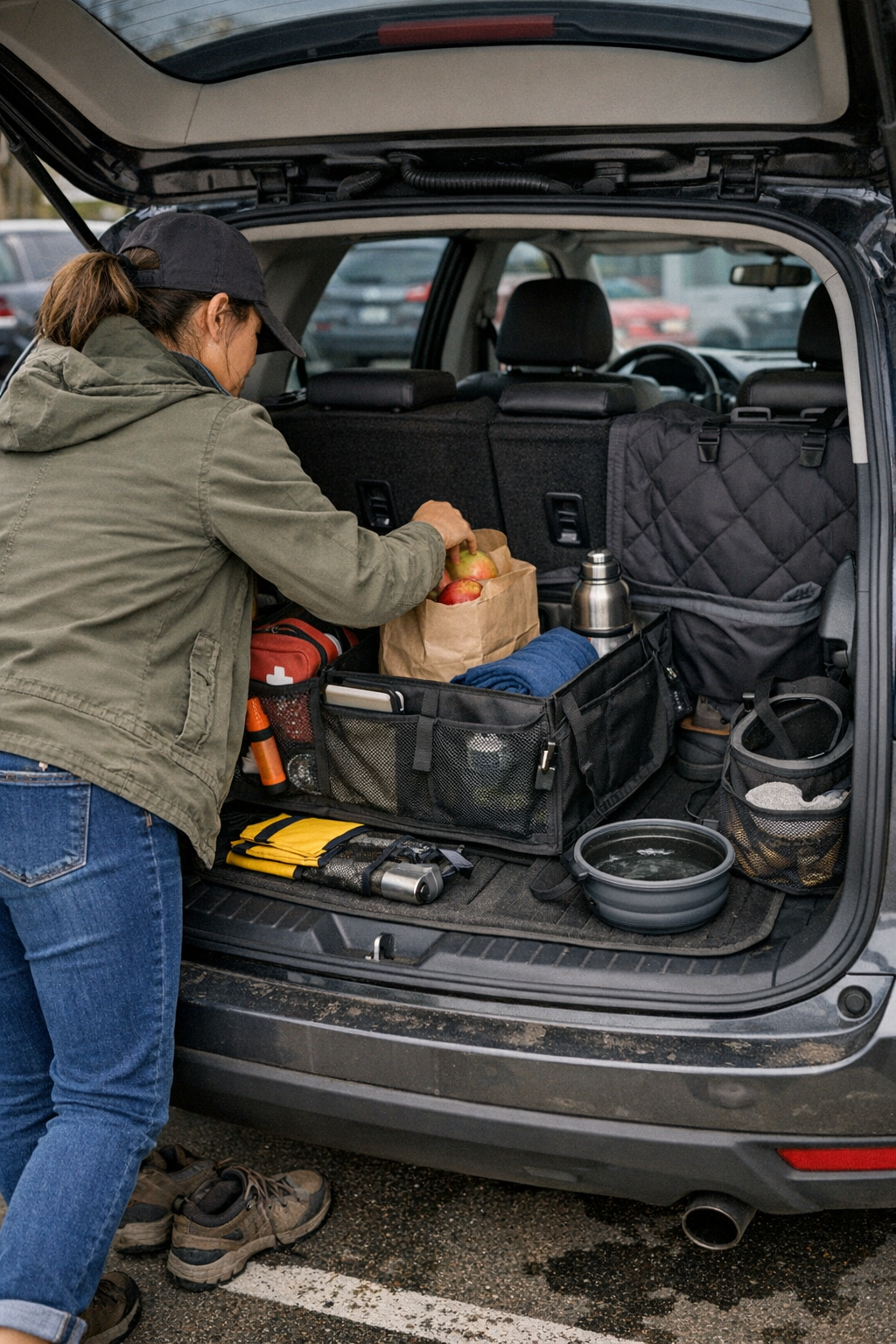
    Looking organized isn’t the same as being usable when it comes to car interiors. That crisp-looking seat cover, streamlined cable run, or row of bins might impress after a quick cleanup, but the real test starts the second you put the car through its paces. Day after day, the same trouble zones come back: a cable snags your jacket as you slide in, yesterday’s bin has shifted an inch after a hard brake, or that “perfect” phone mount now blocks your charger port during a rushed stop. The polished surface holds together, but real-life routines start picking apart every weak spot—often in the exact places you thought you’d solved.

    Where Car Organization Breaks Down During Repeated Use

    Most vehicle organizers look solid out of the box. You close the door, everything feels in place—for about a drive or two. It’s only after three days of errands, school runs, or work commutes that the cracks show:

    • Cables creeping back across seat edges, forcing you to move them aside every time a passenger jumps in or you slide your bag over.
    • Seat-side organizers that promise structure but inch forward at each quick stop, demanding another fix as soon as you reach for something inside.
    • Trays and dividers that need both hands, slowing those coffee-and-groceries balancing acts you actually do twice a day.
    • Emergency kits packed perfectly—until any real use means pulling out half your cargo area just to access or repack them.

    The images on the box match your car only until reality kicks in: halfway through a busy day, one awkward movement brings the whole “neat” setup back into question. Tidy cars can feel surprisingly slow and cumbersome if every access point starts demanding its own workaround.

    The Build-Up of Small Interruptions

    You rarely abandon a car setup over one big failure. It’s the steady buildup of micro-frictions: pushing an organizer back to buckle up, untangling cables for a quick phone call, or knocking a sanitizer bottle over as you shift your gym bag. It barely registers for the first week—then you find yourself dreading that next pause when the setup doesn’t adjust to you.

    Even “minimalist” interiors find their breaking points over time. The early satisfaction from seeing every item slotted in fades, replaced by:

    • The same small bottle rolling out and rattling across the floor at corners, mocking your dividers.
    • Chargers that need unplugging and re-routing each time a friend rides shotgun or you shift the seat to fit a coat.
    • Over-stuffed bins you can’t access without shifting three things just to get what you grabbed most last week.

    Flexible Setups: Absorbing Movement, Not Blocking It

    Good car organization bends with you—or it just gets in the way. The shift isn’t dramatic. It’s switching from rigid storage and tight-fitted accessories to solutions designed with repeated movement in mind. A cable path with enough slack to sway, a mount that turns toward whoever needs it, bins that nudge over rather than wedge in place—these quirks don’t stand out on a showroom day, but become obvious the third time you try to load groceries in the rain or reach for your charger on the go.

    The Moments When Flexibility Really Matters

    • Fast re-entry: Door swings open, you toss your keys, and nothing snags, falls, or tugs loose when you reach for your phone or charger—routine isn’t interrupted by resistance.
    • Seat adjustments: With a flexing cable route, the whole charging circuit moves smoothly as you or a passenger adjust. No unplugging, no trapped cord, no one holding up entry.
    • Loading and unloading: Cargo organizers slide or adapt just enough for odd-shaped boxes, instead of holding up the line and forcing everything else out of place.
    • Shared use: Organizers and mounts respond to the next driver, not hold last week’s “perfect” position rigidly—so you don’t start every trip by dismantling someone else’s setup.

    Flexible systems eat up those little collisions between you and your things. Instead of announcing order, they quietly stop disorder from creeping in every time your routine demands a new move.

    How Small Tweaks Transform Real-World Car Use

    The setups you notice least are usually doing the best work. Swapping out a fixed phone mount for a pivoting one, re-routing a charger line, or choosing an organizer that slides—these aren’t cosmetic. Each one cuts down a line of friction at your seat, console, or trunk corner. Over hundreds of everyday actions, those seconds saved and hassles avoided add up: fewer mid-drive corrections, less distraction when loading up, no mental scorecard of what’s going to go wrong on today’s second stop.

    A cable route that adapts to your seat, a bin that holds but doesn’t block, and a cover that protects without bunching at the edge—these are the fixes that keep you from circling the cleanup cycle or bracing yourself for another small snag. The car isn’t just neater; it’s less in your way.

    Recognizing When It’s Time to Switch

    If you’re repeatedly:

    • Shifting your bag to reach around a rigid mount or trapped cable
    • Pushing bins back into place during every drive
    • Pausing when loading, charging, or seat moves overlap and slow each other down
    • Seeing yesterday’s clutter reappear where you just organized

    That’s your signal. If the setup turns every small access into a new task, it’s working against your real use. This is where a flexible swap pays off—where one quiet adjustment now saves you five small interruptions a week later.

    Choosing Flexibility at Key Car Touchpoints

    The practical trouble spots keep repeating: seat edges, console spaces, trunk corners. These aren’t just dead zones to fill with tidy boxes—they’re where movement, reach, and clutter fight it out every trip. The gear that survives is the gear that flexes: a phone mount that rotates as hands and seats shift, a cable route that bends before it bunches, a tray that moves over instead of locking in place. Maybe less photogenic, but far more usable when a normal day throws twice as many errands at you as planned.

    “Perfect” interiors rarely survive contact with real life. Instead, seek the setups that keep the pace: fast re-entries, unblocked cables, bins you access in a second. That’s where a car stops looking merely cleaned up and starts acting like it’s built for your routine, not someone else’s ideal. Find flexible, field-tested organization solutions at DriveWellSupply.

  • How Thoughtful Pet Travel Organization Improves Every Stop on the Road

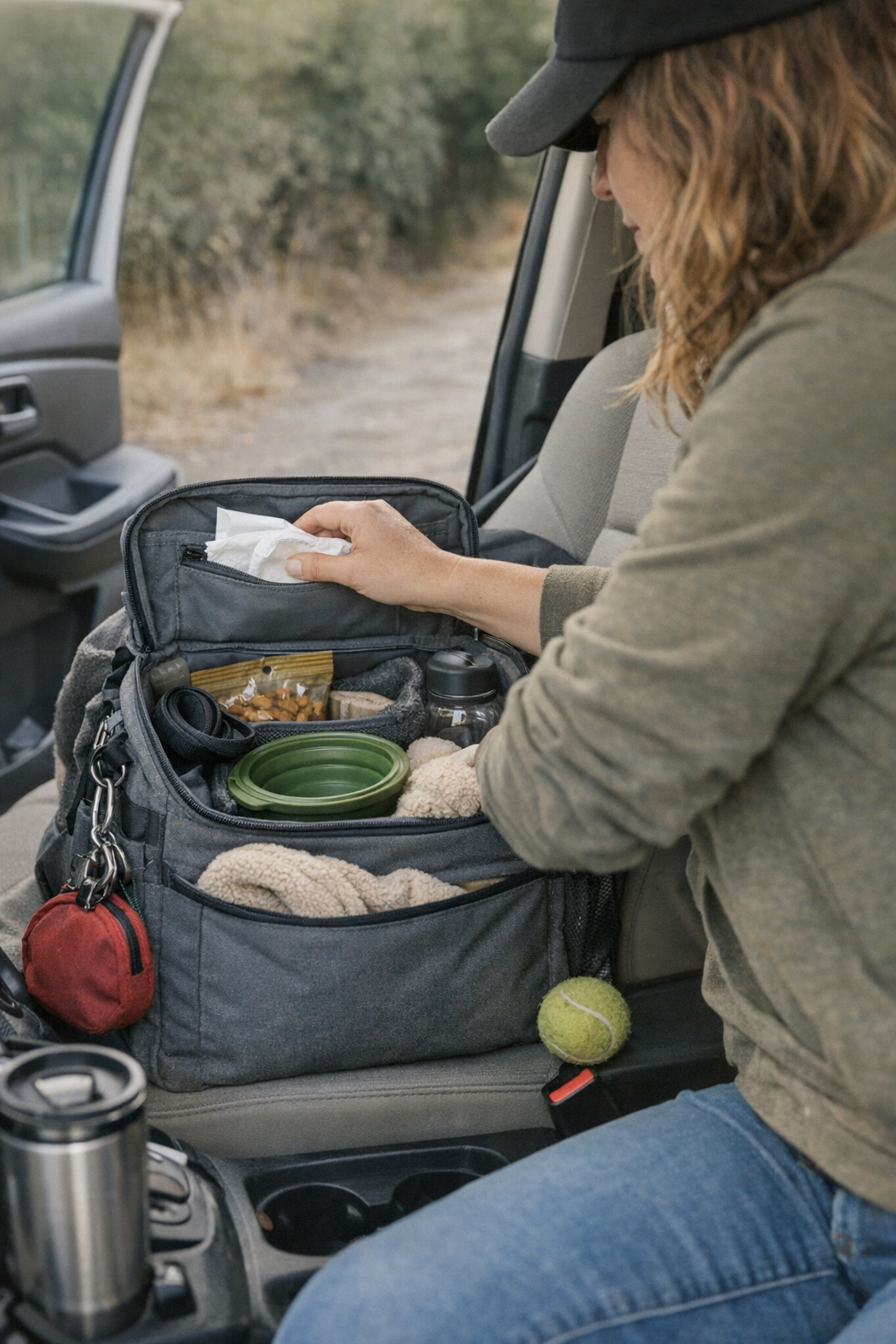
    The difference between a pet travel bag that looks organized and one that actually works on the road only reveals itself under pressure—at the third stop, the fourth attempt to grab wipes, or the moment you need a leash with one hand while steadying your dog with the other. That bag that seemed “trip-ready” on the kitchen counter quickly drags you into small, repeating hassles. Treats slip beneath blankets, quick-clean supplies vanish under toys, and every pause becomes a mini scavenger hunt. If you find yourself rearranging at every break, you’ve already lost precious travel rhythm—most so-called “prepared” setups cannot survive real movement without constant reshuffling.

    When “Organized” Stops Working on the Road

    A travel bag that promises perfect order at home rarely survives the first shuffle of a real trip. It all unravels quickly: the first sudden stop splinters neat rows, a roadside clean-up pushes comfort items into access slots, and a snack break turns unreachable wipes into the source of a new mess. Travel with pets is mobile and unpredictable—where your initial arrangement collapses is almost never in the photos.

    In use, weaknesses become obvious: wipes work their way behind pouches, seat-side pockets jam when pressed against the car door, and “smart dividers” designed for order actually make the leash impossible to snatch when speed matters. Appearance at rest is meaningless; only structure that supports messy, real-life restarts holds its own under travel pressure.

    Tricky Reaches and Repeating Interruptions

    The same pattern emerges for almost every owner: exit the car, pause, then fumble. Bowls wedge under travel blankets, wipes hide behind zippered pockets, and the leash you need ends up under everything else. Each supposedly “smart” pocket adds friction when it requires a detour—moving a comfort item, unzipping multiple layers, and finally reaching the thing you actually need after seconds lost to reshuffling. The initial sense of readiness evaporates as every basic action—grab, clean, calm—demands a workaround.

    These delays rarely come all at once. Instead, they seep into the trip as a series of minor slowdowns—a treat pouch out of reach here, a set of wipes requiring two-step access there. Ten seconds here, twelve there, but at every stop: compound friction. Only in repeated use does the cost become obvious—the system slows you down, breaking flow every time you need a quick restart.

    Carrying Transitions That Don’t Keep Up

    Many setups calm the visual mess at the cost of creating new obstacles. If you’ve ever balanced a restless pet with one hand while fishing past a blanket, a bowl, and a side pouch with the other, you know how quickly a bag’s “logic” falls apart. Stationary order disappears under shifting bags, tangled backseat belts, and sudden stops. Pocket placement that makes sense on a calm countertop stalls you when the trip starts moving in fits and starts.

    The Overlap Trap: When Items Block Each Other

    The most common error is packing for looks, not access. Comfort gear—blankets, plush toys—tends to land on top because it fits easily. On the move, this means every water break or wipe-down turns into moving the same item again and again. Overlap doesn’t just look untidy; it repeatedly slows you when it matters most, trading faster access for superficial order.

    Cleanup gear in particular nearly always gets buried: wipes jam behind bowls, treats get edged out by a plush, or hydration tools slide under a dog mat. In a real mess, the very things you need first are often the least reachable. Efforts to organize by visual separation actually lock essentials behind layer after layer, sapping your momentum the minute real travel disrupts your plan.

    Pattern Failures and the Cost of Slow Recovery

    Repeated use exposes every weak spot. The first stop goes fine—memory sharp, items freshly placed—but by stop three, reaching for essentials means guessing wrong, rechecking, or unpacking half the bag just to reload wipes. Suddenly, every action earns hesitation. Structure that seemed pristine at home stalls the trip at every turn, bit by bit.

    It’s not just about items mixing together. Even visually separated pieces go wrong: a leash that demands two hands to retrieve, wipes that can’t be pulled with a finger, bowls stacked too far from the carrier opening. Multiplying slowdowns turn each stop into waiting and repeat minor misfires, and you’re left feeling less in control with every round of re-entry.

    Building Access Into the Flow of Travel

    Dividers and tighter pockets aren’t the fix—these often create new access barriers. The solution is structure that supports repeated exit-grab-cleanup cycles, not simply a tidy appearance. Changing a single slot—moving wipes to a top-facing elastic pouch, or using a carrier with a single, wide-access panel—shrinks wasted movement for essentials.

    Separation without overlap is the key shift: leash clipped to the exterior, wipes pulled from a top opening, bowls in their own easy-reach section—never locked behind comfort gear. The goal is not to make the bag look untouched after every stop, but to allow for grab-use-go without second thoughts or forced repacking.

    What a Real-World Upgrade Looks Like

    One owner changed the wipes from a zipped inner pocket to a front elastic pouch—suddenly, muddy paw clean-ups took seconds, even while holding the leash in the other hand. Another switched to a carrier with a quick-snap snack panel, cutting nervous pet fumbles in the parking lot. Trips felt less interrupted, even if the setup no longer looked photo-ready by the fourth stop. The change wasn’t perfection, but movement felt smoother and less driven by the bag’s limits.

    Signals Your Setup Needs a Rethink

    If you’re routinely fumbling, reshuffling, or second-guessing where an item is mid-trip, the friction isn’t a one-off. These repeated irritations signal a structural problem in your current setup, such as:

    • Cleanup gear always ends up at the bottom, not at hand
    • Essentials—leash, treats, or bowls—keep getting blocked by blankets or toys
    • Recurring confusion about where things are at stop three or four
    • Tasks require both hands when only one is free
    • The same slow-down repeats itself, no matter how carefully you re-pack

    Every one of these is a trace of function being sacrificed for the illusion of order. The real test isn’t a photo finish at home, but whether you can reach key items instantly when travel is unpredictable and stops come fast and often.

    The Real Win: Smoother Flow, Not Just Cleaner Looks

    After the first few outings, the line is stark: what “works” in a staged kitchen rarely works at a backseat or park gate. No setup erases every snag, but arrangements that prioritize access, not just order, let you keep moving instead of hesitating or reshuffling. Every time the right structure erases a step, your routine gets less interrupted—and while the solution may never look as neat, the difference in how you travel is real, noticeable, and pays off most when you’re already in motion.

    Pet travel isn’t about keeping a bag untouched; it’s about a setup that shrinks interruption, lowers repeated drag, and turns each stop from a restart headache into a quick, confident action. If your current bag slows you instead of smoothing your day, it may be time for a setup designed for movement, not just for looks.

    Ready to upgrade your setup for real-world travel? Find solutions made for real pet movement at PawGoTravel.

  • Mastering Carry-On Organization for Stress-Free Airport Exits

    Every traveler knows the moment: the landing announcement hits, and suddenly you’re fishing for your passport or tugging at a buried charger—fumbling inside a carry-on that looked perfectly ordered two hours ago. But under the real pressure points—security trays, boarding queues, cramped seats, and gate switches—what passed for organization at home gets put to the test. Visual neatness fades fast; blocked zippers, layered pouches, and outer pockets turned junk drawers force you to stop, dig, and retrace your steps when you should be moving forward. That’s when a carry-on’s structure becomes either a friction point or your one advantage for quick reset—there’s barely room for “good enough” when space and time shrink, again and again.

    The Disappearing Order: When Good Packing Fails in Real Use

    It’s easy to admire your bag on the hotel bed: all zippers shut, pouches lined up, nothing loose. But order that’s all appearance collapses under travel repetition. Reach for a cord and you’re met with pouch roulette, opening two—even three—sections before the right one. That passport you confidently returned to a “catch-all” slot is suddenly beneath five receipts and boarding slips at the next checkpoint. You catch yourself apologizing to the agent while your row waits; frustration builds, not from mess, but from pointless retrieval lag. This isn’t a discipline problem—most carry-ons simply aren’t built to absorb repeated movement without becoming their own obstacle course.

    Real Friction, Not Just Visual Mess

    The slowdown isn’t visual—it’s structural friction that multiplies under repeated use. Walking narrow aisles, squeezing into row seats, or rushing through security, small design flaws turn every movement into a potential snag. Outer pockets balloon with stuff you promised yourself to “sort later.” Zipper heads hide behind a shuffling mess of organizers, and documents slide behind snack wrappers instead of surfacing where you need them. At home, it feels distant; in action, these details block flow in all the places where quick access matters most.

    The Compounding Cost of Small Packing Slips

    Each micro-miss—misplaced charger, passport beneath the pile, lost pen—rarely feels critical on its own. But across a single flight (or worse, two in a row), every fumble slows the routine. A tangled cable adds seconds at security when you should be clearing the tray. A document buried in the wrong slot triggers sideways digging that halts a boarding line’s rhythm. Outer pockets meant for speed become slow-motion mazes. Most painful? These moments cluster in “reset windows:” the scramble before descent, the repack after a forced seat swap, or the crush of arrival. Surfaces stay neat, but function breaks down where seconds and efficiency slip.

    Comparing Two Carry-Ons After Real Use

    Imagine two travelers re-entering the aisle after a long haul. One is juggling snacks, leaflets, loose cords, and hunting deep in an overstuffed front pocket for ID. Every small access turns into a messy reveal and a repacking pause. The other simply opens one familiar zip: passport, charger, pen—each to hand in one movement. Their bag didn’t just survive turbulence; it absorbed disorder and kept their must-grab items in logical, reliable spots. The true difference isn’t obsessive neatness or a single magic bag; it’s a setup that transforms every repeat-use interruption into something quietly automatic.

    Why Most “Organized” Setups Fail by the Last Half Hour

    The real tripwire: right before descent, when time compresses and movement options vanish. Aisle-seated travelers especially know the squeeze—one handed on the bag, the other steering clear of elbows, it only takes a mis-layered pouch or a misplaced zip path to halt the reset. Pouches fold in on themselves or stack up, hiding the one thing you need. That clever multi-use pocket now swallows flight essentials; perimeter zips disappear under sliding organizers. Retrieval slows, documents miss their beat, and spillage into the aisle isn’t rare. The “organized” setup falls apart precisely when pressure peaks. The real measure of structure is its speed and certainty during these time-starved crunch moments—not its appearance during a calm pre-board check.

    The One-Handed Reset Test

    Reliable carry-on structure boils down to one question: Can you perform a half-blind reset with one hand, zero guessing, and minimal movement? The best routines look like this: slip your passport into its true anchor—never a loose catch-all; snap the charger into its purpose-built spot, not into a random pocket; click that pen home, not jammed behind a tangled cord. The goal isn’t sterile order, but muscle-memory storage that survives jostling, seat-hops, and gate-runs. Items shift, but the retrieval pattern never collapses—every essential “returns home” on the fly, not by unpacking the entire bag.

    Building a Carry-On System That Survives Real Travel Movement

    The easiest way to lose flow is the broad-stroke pocket: all high-use items mashed together in a single compartment for “quick access.” In reality, pens tangle with headphones, chargers snake through snack wrappers, and primary documents vanish when you can least afford them to. The contrast: dedicated, indexed pockets and pouches—each with a feelable logic. When you can find the cable, card, or ID by touch alone, the reset turns into an instinct, not a project.

    Scenes from Carry-On Reality

    • Boarding line: You hesitate with three zippers—passport behind tickets, outer pocket overstuffed—a single grab becomes a two-step retrieval as the line shifts impatiently.
    • Mid-flight: Headphones go back “wherever,” later burying your charger just when the battery hits red; seat neighbor sighs as you dig.
    • At security: Tray transfer drags out, a missing boarding pass slid under tissues—order by layers, chaos in practice.
    • Seat exit: One-handed repacking stalls; pouches collapse, items tightrope the tray, and the slow shuffle back up the aisle starts piling behind you.

    Turning Reset Into a Habit—Not Another Chore

    The upgrade isn’t “being more careful”—it’s building a structure that resets itself almost by accident. About 30 minutes before landing, slide documents, chargers, flight pens, and tissues into their true homes—dedicated slots, sleeves, and pouches made for quick, one-handed closing. The test isn’t during the calm, but during boarding surges, unplanned gate checks, or those clumsy rushes into a terminal. When your setup lets you repack and recover by sense, not sight, the reset doesn’t drain time or focus. It happens at speed, guarding against those last-minute lapses that multiply across legs and routines.

    What to Watch for in Your Setup

    Even small, tidy systems can trip over actual use. Ask yourself:

    • Do the same items keep getting buried, even in a “minimal” setup?
    • Is accessing an essential ever blocked by multiple zips, stacked pouches, or cluttered slots?
    • Does a routine reach still take too long—forcing you to glance or feel twice?
    • Is your “organization” hiding top-use essentials instead of surfacing them fast?

    No structure survives perfectly. But logical, purpose-built pocketing reduces the repeated reach, accidental reshuffle, and those slow-motion seconds that trip up every normal travel day.

    Why Structure Matters More with Each Trip

    A carry-on that survives real movement—boarding, waiting, repeated repacking, sudden seat switches—does more than look neat. It keeps you moving with the travel flow instead of backwards, never that person blocking the aisle or holding up the line. Every cleaner reset saves seconds, but more than that, it saves concentration and travel margin. With consecutive flights or tight connections, the advantages multiply: faster tray transfer, smoother document checks, recovery mid-stride instead of at a standstill. Make the support structure stronger, and the hidden cost of travel friction drops visible with it.

    Find pocket layouts, pouches, and travel tools built for real movement and quick reset at CarryOnSupply.

  • Why Leaving One Empty Slot Transforms Your Car Organization

    Step into your car after a long errand run, and the flaw in “perfect organization” appears instantly: your hands full, your phone buzzing, and every tray, slot, and cupholder already crammed with last trip’s leftovers. Re-entry becomes a quick calculation: where does this new coffee go? Where do you drop your keys when the usual pocket is stuffed with receipts and sanitizer? The system that’s supposed to keep things controlled now blocks you at the exact moment you need flexibility. On the surface, everything looks tidy. But in real, day-to-day car use, a packed setup turns small tasks into small struggles, every single time.

    When “Fully Organized” Turns Into Everyday Friction

    Stocking every compartment, filling every pocket, and maximizing storage seems logical—until it’s time to use your car in motion. Mid-commute, you slide into the seat, reach for the charging cable, and notice it’s tangled beneath sunglasses, spare change, and an envelope wedged tight. That slip of a gap you counted on is already gone, and there’s no room left for an unplanned item. Instead of feeling streamlined, the routine triggers a scramble: shuffling coins, clearing cords, and risking a quick drop somewhere awkward just to claim a spot.

    This is not an occasional hiccup. Real car use turns even the best-organized setups into friction zones. Trays overloaded as default, floor mats collecting what rolls off the seats, receipts and sanitizers escaping their “assigned” spots after a single sharp turn. The effect: an illusion of control with a hidden side of constant micro-annoyance, especially during rapid errands, shared driving, or quick re-entries where speed matters more than looks.

    No Empty Slot = More Work Later

    Every time there’s no open slot left, each new or odd-sized item becomes a problem. With every compartment filled, the simple act of adding a phone, a snack, or a parking ticket demands rearrangement—on the fly. You find yourself stacking items by the shifter, dropping essentials in the passenger seat, or leaving loose objects to rattle until you have time (and patience) to clear the pile.

    Shortcuts don’t really save time. You end up cramming, misplacing, or letting small clutter slide under seats—knowing it’ll resurface the next time you slam on the brakes or hunt for something mid-drive. A setup that promised “less mess” suddenly creates a cycle of forced clearing, more frequent cleanup, and slower access to whatever you actually need most.

    Overlapping Routines: Why a Buffer Slot Changes Everything

    No driving routine stays on script. You’ve got your phone charging—but now a passenger needs a port. You plan for coffee, but your only cupholder still holds yesterday’s bottle. Fully packed organizers don’t flex: every overlap creates new interference. Each time two needs collide, either your flow jams or you rig a quick fix—dangling cables across the console, stacking keys and cards beside shifting snacks, or just risking a slide into the footwell. That’s wasted time, hidden distraction, and more wear at the seams.

    The “after” photo of a maxed-out organizer hides the real test—how it survives round two and three. By the third errand, gum packets and wipes are fighting for space. A backup phone gets forced into a sun-blasted dash or pinched between seat rails, cable stretched and ready for another snag. “Temporary” drop points become permanent clutter, and the result is always more awkward workaround than flexible system.

    Real Scene: After-Work Fumble

    Picture the late evening after two stops: my normal phone tray swallowed under spare coins and store receipts, needing a quick recharge before the next leg. No open spot left—so my phone landed crooked beside the seat, precarious and half-charging, cable yanked tight. Another floor hunt, another ounce of frustration, and one more example of the same tiny setup flaw repeating. Most drivers invent similar short-term “fixes”—and pay for them later in extra cleanup, slower stops, or sudden mid-drive distractions.

    Building a Buffer: The Power of Leaving One Spot Open

    The real fix is not more “organization.” It’s leaving one compartment purposely empty—especially near your main action zone, like the driver’s console or charging tray. Think of this as a structural buffer, not wasted space: the margin for last-second handoffs, unexpected guests’ devices, drive-thru change, or receipts that can’t be crammed elsewhere. A deliberate landing pad cuts the scramble to zero, letting you shift, charge, swap, or stash without a bottleneck forming every time routines overlap.

    Test it out: clear the main tray near your seat and keep it reserved for overflow. That one open zone absorbs unpredictable needs—morning wipes, a friend’s forgotten phone, random snack wrappers—without forcing a mess elsewhere. Over the course of a week, you’ll notice: less last-minute stacking, fewer items drifting to the floor, and a measurable drop in frantic, end-of-day tidying. Even quick exits and rushed re-entries become smoother, because your setup can flex as real life demands.

    Choosing Your Buffer Zone: Location Matters

    The buffer only works if it’s where your hands naturally move most. For most compact and midsize vehicles, that means the forward center tray or deepest console, close to chargers and regular drop points. In larger cars, it could be the key side pocket or organizer zone nearest the main seat edge. The goal: make the buffer visible, within easy reach, and at the heart of your live-use routine—not buried in a back-seat cubby where overflow just becomes forgotten junk.

    Leave just one spot open. Any more and you risk building a new clutter nest. The standout benefit is speed: drop, swap, or grab without blocking yourself or slowing everyone down. In any real stretch of errands, that small gap becomes the critical “give” your setup never had when every inch was filled on day one.

    Does Leaving a Slot “Empty” Actually Create More Mess?

    The common worry—“won’t an empty tray just attract extra junk?”—doesn’t pan out if the buffer zone gets used as intended. Think of it as a temporary transfer hub: a high-turnover surface for items in motion, not a final graveyard for forgotten clutter. Quick use and end-of-day sweeps keep it clear. Meanwhile, cables, phones, sanitizer, receipts, and random extras stop piling up in less controlled zones (like the floor or side doors), making cleanup easier and consistent. The real win is preventing those migration routes to hidden pockets and under-seat gaps where real mess hides and grows unseen.

    Looking Neat vs. Working Smoothly: What Real-World Organization Means

    Maximizing every inch looks good in photos—but if using your car means more shifting, slower reach, and constant rearrangement, “organization” has become functionally messy. An open buffer slot sacrifices showroom polish in favor of live convenience: less stalling, fewer micro-dilemmas, and less repeated strain at every stop. For anyone facing commuter pressure, fast-lane errands, shared cars, or even just the recurring loop of loading, driving, returning, and reloading, this is not an optional trick. It’s the difference between a setup that just sits still and one that actually moves with you—errand after errand, week after week.

    For more practical setup tools and strategies to make your car work better—day after day—explore DriveWellSupply.

  • How Pet Movement Reveals Hidden Flaws in Travel Organizers

    Even the most carefully packed pet-travel bag—pockets filled, zippers zipped, leash clipped and bowls nested—rarely survives the first real-world trip without trouble. What starts as an organized, seat-side setup crumbles fast when a dog lunges to see out the window or a cat shifts to curl up. Suddenly, the “ready” bag blocks the one thing you actually need: wipes jammed behind the carrier, treats buried under a twisted strap, or the leash tangled just as you reach for it. Functional in theory doesn’t mean reachable in motion—and the difference becomes impossible to ignore in the first few stops.

    The Surprise Friction of a “Prepared” Pet-Travel Bag

    Most pet owners have played out the same routine: load supplies, tuck the bag near the seat, drive off feeling ahead of the mess. But after one or two quick stops, cracks show. The neat loops and sections blur—leash clips not only tangle with bowl handles, but the bowl slides and lodges awkwardly against another pouch. Cleanup wipes, easy to spot when parked, get lost behind shifting carriers or blocked by a comfort blanket that slid out of position. What looked accessible suddenly requires a stretch, an awkward reach, or a partial unload just to fish out a single item.

    This isn’t about mess alone. It’s about seat-side decision flow: can you, one hand on the pet, snatch the right wipe or treat while half-turned out of the car, or does every small movement spiral into a search-and-reset? If your cleanup or comfort item takes more than a few seconds to locate after a stop, interruption becomes the baseline. That’s real friction—when ordinary moments, like letting your dog glance at traffic, lock you into a routine-slowing scramble.

    What Looks Neat at First, Stalls in Real Time

    Pet travel exposes hidden weak points quickly. You pop the bag for a leash—only to find it snarled with treat pouches, or shoved under a blanket now blocking the opening. Bowls wedge against the corner with every red light. Cleanup bags positioned “within easy reach” slide down to the seat edge, now blocked by the carrier’s bulk. In practice, every time you shift attention to your pet, items slip and stack. You waste seconds on the wrong pouch, miss the wipe you saw earlier, or knock items loose in a quick grab. By the third short stop, these wasted beats—not visible mess—add up to real irritation and longer cleanup chores. Suddenly, the whole setup feels like it’s working against you, not for you.

    The real breakdown isn’t visible clutter. It’s stalled access—when reaching for one item means shuffling through two others, or working around a handle stuck in the zipper seam, just because the pet or the road made your bag shift in place.

    Allow Your Pet Freedom—But Expose Weak Points Early

    Locking a pet in one spot can make travel easier for the bag, but not for the animal. Most setups break down exactly when you grant your pet normal freedom: letting a dog turn to watch a passing cyclist or a cat circle to get comfortable. Flexibility is good for the pet—and brutal on bad bag setups. Repeated test: every time your pet moves, does a clip, loop, or bulked-up corner suddenly block the tool or treat you always need at stops?

    • Leash clips twist into bowl handles each time your pet shifts direction.
    • Bowls slide beneath pouches or into the seat crack after a sharp turn or stop.
    • Handles snag cleanup-bag zippers, or catch the seatbelt anchor, so nothing opens smoothly when you’re in a hurry.

    Over time, the “almost organized” kit becomes a stubborn obstacle course. Fumbling for wipes takes longer, soothing items clash with access, and the tiniest misalignments after a single pet movement snowball into real, repeated slowdowns.

    Why Shared Access Zones Cause Ongoing Trouble

    Shared zones—where everything converges near bag openings or seat edges—are where most travel kits break down. If wipes, bowls, leashes, and baggies compete for one grab-spot, friction is guaranteed. Organized still photos mean little if, in motion, a bowl handle blocks the treat pocket, or a leash ring jams the main zipper. Each overlap isn’t just a nuisance; it’s a multiplying frustration during the only moments when fast, single-handed access is critical.

    The real pain shows at restarts: returning to the car, trying to settle your pet, reach a wipe, or reclaim a leash. Instead, you’re hit with a hard block—a bowl wedged over the opening, a pouch caught on the seat edge, or a stiff handle pressing against the door. Resetting the bag creeps from quick routine to a multi-minute chore. Visual tidiness hides the fact that every “easy-reach” now sits behind another object, and the confidence from that neat packing is gone.

    Adapting Your Setup for Flow—Not Just Order

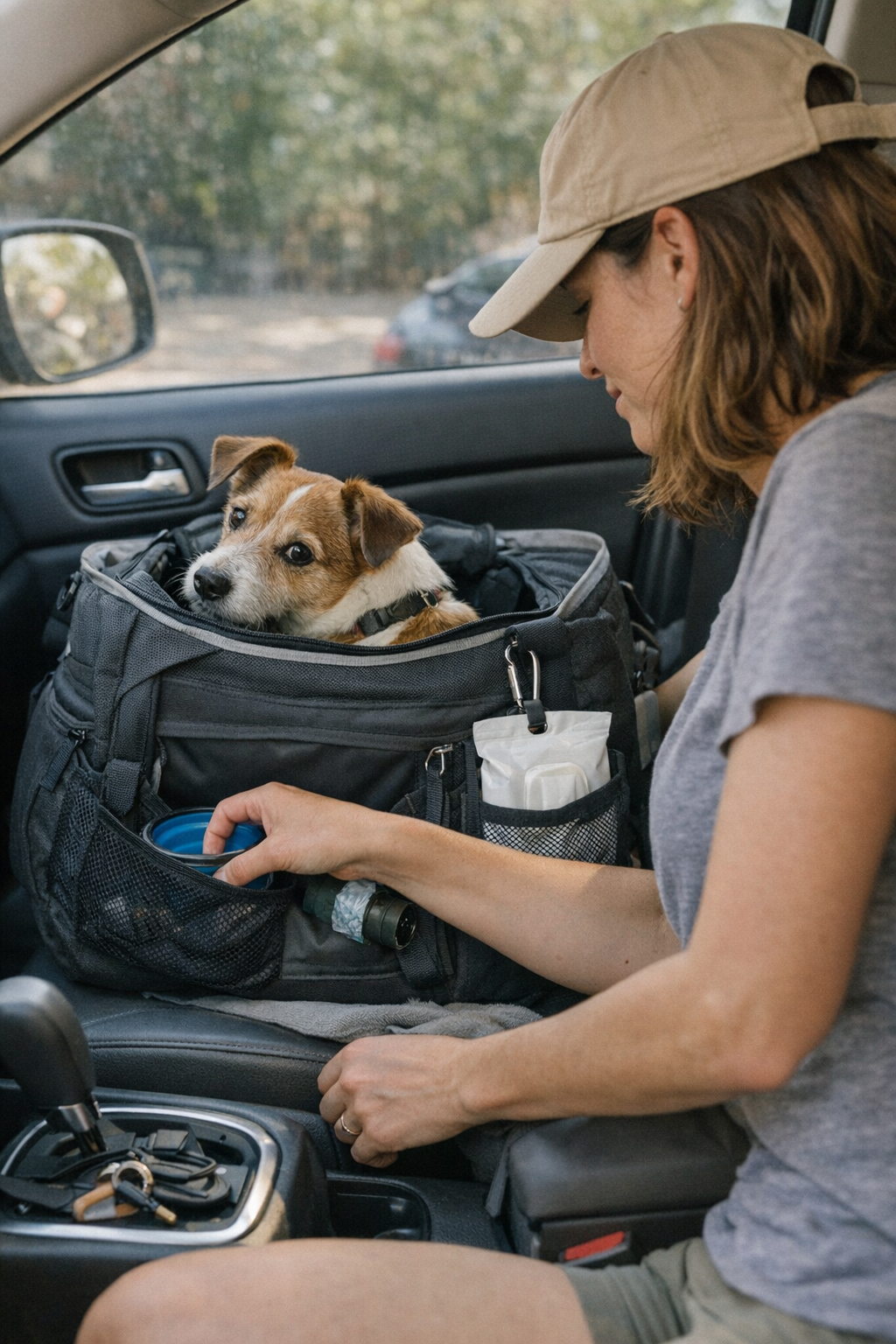
    After enough clumsy stop-and-go cycles, most pet travelers make real changes. For me, that meant yanking bowls from inside to a mesh side pocket, hanging wipes to a seat-side anchor where I could grab them with eyes never leaving the pet, and stripping the carrier entry to the single leash anchor. The actual difference didn’t show in photos—it showed in how quickly I could grab the needed item after my dog shifted for the third time in twenty minutes.

    When wipes aren’t buried, you reach and go—no stall, no second-guessing the pouch. If bowls live outside the main zipper, no more accidental blockages from sliding handles. Cleanup zones get their own side, leash clips never cross over with comfort pouches. The end result isn’t a prettier bag, but a travel kit that returns to ready after every stop, not just the first one.

    Practical Signs Your Pet-Travel Setup Needs Reworking

    • You start by opening one section but end up finding what you actually need elsewhere.
    • Cleanup wipes and bags are present, but never in reach at the most urgent moments.
    • A calming blanket or comfort item causes jams or clogs the route to quick access items.
    • Pet and owner supplies blend—with water bottles, keys, or phones slowing your ability to restart after stops.
    • The bag looks more organized than last trip, but you’re still forced to reshuffle or pause at every stop.

    How to Organize for Real-World Movement

    On the road, function exposes flaws that packed photos don’t. The strongest setups keep job-specific “lanes” open: wipes fastened where you find them blind, bowls stowed away from entrance points, leashes anchored out of the main traffic zone. Exterior loops, side-mounted pockets, and segmented carriers aren’t just decoration—they mark the difference between a three-minute reset and another frustrating seat-side search. Every repeated use spotlights the “choke points” in your kit—if you’re slowed by the same overlap twice, it’s clear packing order doesn’t equal actual travel flow. Watch for which tool actually holds up under repeated movement, and rework the layout to suit stops, not just departures.

    Find practical, field-tested solutions at PawGoTravel.

  • Why Carry-On Organization Often Fails During Flight Landings

    Every regular traveler recognizes the moment: crew announces descent, and your carry-on’s “organized” look evaporates into friction. What was a squared-away bag in the overhead now feels slow and clumsy under pressure—passport out of reach, charger knotted under layers, customs form buried deeper than you thought. Neat sorting at packing-time doesn’t protect you from the mess of actual travel: when retrieval means disturbing half your setup, organization isn’t working where it matters most—in the seat, in line, and on repeat.

    The Calm of Packing Versus the Rush of Landing

    Laying out pouches and cubes on a hotel bed feels precise—every item nested, zipped, decided. But the environment flips as soon as descent begins: trays up, elbows in, documents and devices due for stowage. Suddenly, you’re stuck balancing on a cramped seat, digging for the one item now needed first. Precision dissolves into a sequence of blocked zipper paths and awkward arm reaches. The “system” that looked impressive at rest jams under the real-time pressure of boarding announcements and tightening seatbelts.

    This is where most packing logic collapses. A bag made to look sorted doesn’t translate to fast, one-handed access squeezed by neighbors and crew. If a passport is two layers down or a pen requires dislodging two pouches, your ideal setup is in the way. Organization that only works lying flat on a bed fails the test of in-transit reach, especially when the clock and aisle keep moving.

    When Neat Packing Becomes Unusable Mid-Flight

    On the outside, a carry-on stacked with cubes and pouches signals readiness. But repeat flights expose what actually breaks: essentials shuffled under low-priority gear, zippers that snag, or the creeping realization you’re spending too many seconds on a single retrieval. Patterns emerge: the same stress at each landing, documents misplaced, muscle-memory plans forgotten mid-air. Mystery pockets become wasted time as tactile shortcuts vanish in a pressurized cabin.

    • Blocked Zippers: Overlapping or swollen pouches make smooth, single-handed pulls nearly impossible; you’re left twisting and tugging with little space.
    • Buried Essentials: Each new addition pushes urgent items—boarding passes, cables—down the pile, demanding partial unpacking for every check.
    • Partial Unpacking: A rush for a pen or form means extracting layers, balancing pouches on your knees, and hoping turbulence or a neighbor’s elbow doesn’t reset your whole stack.
    • Confused Retrieval: Long flights bluff memory; labeling fails, and you open two, three, sometimes four pouches before finding the right slip of paper or charging cord.

    These aren’t “bad luck.” They’re the result of setups built for visual order, not repeated, stressful access under movement and noise.

    The Stress Loop: How Access Delays Multiply

    Every snag inside a crowded aisle or during a customs line turns seconds into stress. Drop a form or tangle a charging cable, and you’re not just late; you’re holding up an impatient queue, re-packing with one eye on the clearing row, maybe nudging someone else’s bag to keep your own gear from spilling further. What looked like a minor hassle at the gate becomes a drag on your whole airport routine—especially after a long haul or tight connection, when even small interruptions compound into a habit of panicked checking and rushed repacking.

    • One passport slip under stuffed organizers can mean your entire bag threatens collapse as you grope for the right pouch, risking an avalanche of gear on a stranger’s foot.
    • Needing a single item urgently but finding it packed “for later” forces repeat overhead-bin lifts, crowding the aisle and spiking frustration on both sides.
    • Returning a cable or form turns into a pouch shuffle that will have to be repeated again at the next security checkpoint.

    Each struggle injects friction into your movements, turning orderly packing into a travel routine interrupted by its own design. The more steps each retrieval requires, the more likely the next one will be slower, messier, and more public.

    Look Organized, Function Slow: Where Visual Order Fails

    A setup that looks ready on Instagram often resists you in-flight. Stacked cubes and layered pouches keep a bag photo-tidy, but when the need for speed arrives, they block motion and stall quick checks. The gear praised for “order” often causes the slowest reach for the very items used most on planes: travel docs, pens, boarding passes, small tech.

    As retrieval slows, repacking gets sloppier: the careful system breaks down, turning order into surface resemblance only. Missed items, lost pens, or scrambled forms become more likely with each rushed moment—especially in boarding and deplaning shuffles. The cycle is visible: packing order returns visually, but flow decays. The neat look intensifies the underlying dysfunction every time you need to move fast.

    How Small Layout Tweaks Change the Landing Routine

    One fix shifts everything: keep travel essentials in a slim, always-accessible outer pouch. Don’t store high-priority items (passport, pen, forms, quick-access cable) under deeper organizers. Instead, create a pocket—external, seatback-ready, or just outside the main compartment—so you never unpack for a routine check or crew request.

    • Passport and travel documents should be reachable without disturbing anything else.
    • Keep a pen visible and untangled.
    • Place customs forms or medical cards where they slide out instantly with one hand.
    • A single short cable or charger should be as accessible as a boarding pass, not layered inside gear cubes.

    This adjustment removes forced unpacking and layered searches from boarding to arrival. The essentials pouch stands between you and a spiral of unpacking; it can hang in the seatback or ride the outer zip for easy, one-move retrieval—usually in 30 seconds or less. Old patterns—unlayering, digging, frenzied repacking—fall to the side, replaced by a sequence you actually control even when tired, crammed, or pressed by announcements.

    Real-World Impact: The Difference After Dozens of Flights

    No setup kills friction for good, but this structural change cuts out most of the repeated drag. Essentials in a slim, outermost pouch enable:

    • Stowing devices, prepping customs forms, or flashing ID without turmoil, delays, or upending your packing.
    • Moving smoothly through the aisle or staying clear of seat neighbors when demand for space spikes.
    • Fewer missed items, abandoned pens, or customs delays even after brutal overnight legs or last-minute reboarding.

    The biggest difference isn’t perfection—it’s in clearing away the interruptions that used to define the whole landing sequence. Instead of juggling or restarting every thirty minutes, you maintain a flow that keeps its shape across real-world travel. What once looked “organized” now acts organized, with less repeated stress and less time lost in every transition.

    The Practical Takeaway: Movement Over Appearance

    Most carry-on friction repeats because the wrong things are made easy and the right things are left buried. The best system isn’t necessarily the best-looking; it’s the one that lets you move, check, and stash with no forced resets in crowded, moving environments. Shifting high-frequency items into a quick-access zone does more to lower cumulative stress than any number of labeled cubes or extra pockets. Organization isn’t a goal for its own sake—it’s a tool for faster, smoother travel between security, seat, and arrival. If your bag keeps interrupting your movement, it’s showing you exactly where the next layout tweak should land.

    See more practical carry-on solutions at CarryOnSupply.

  • How Proper Treat Placement Prevents Pulling During Pet Travel

    Your pet’s travel setup looks perfect at home—treats stowed, comfort items packed, everything in its place. But real travel isn’t one smooth launch; it’s a hundred minor starts, stops, and interruptions. By the third time your dog lunges for the grass and you’re one-handedly unzipping the wrong pouch to grab a treat, the carefully packed “system” is now a live source of friction. What began as organized turns into a real-time struggle: blocked access, tangled items, repeated reshuffling—with every stop, the illusion of ease slips a little further from reach. PawGoTravel knows the difference between packed and actually usable, especially after your first few stops squeeze every flaw to the surface.

    When “Organized” Fails During Repeated Stops

    The true test of any pet-travel setup hits during the ordinary grind: crossing lots, re-entering cars, pausing for surprise sniff breaks. That treat pouch clipped on the bag? It seemed accessible at the start. But now, leash in one hand and phone in the other, you keep bumping keys or digging under wipes to find it. The neat organization you trusted at departure starts tripping you up—grabbing the treat takes one shuffle too many, and your dog’s patience wears thin.

    These slowdowns are quiet but stubborn. The first missed pocket, the second awkward fumble, the third buildup of impatience at your side—they repeat, and your pet senses the lag. Hectic leash pulls creep in. The setup that made sense on your kitchen counter now blocks you in the field, clutter turning calm cues into minor battles.

    The Real Cost of Slow Access on the Move

    Every stop is another test of your gear’s actual flow. You’re squeezing between car seats, unlocking doors, crossing paths with other owners. If the treats are buried, you break step to hunt. If the comfort mat blocks a needed pocket, you churn everything on your lap just to reward a sit. What looked “ready” in a photo now means shifting your grip, putting the leash momentarily on the ground, or bracing with an elbow just to dig for wipes or a foldable bowl.

    Each mishandled pause means your commands drift. Your pet, feeling the lag, might pull harder, circle, or bark—making you fumble more. Calm, planned cues turn choppy because your bag resists the rhythm of live movement. When access slows, tension and chaos leak into your travel routine, giving you a plan that actively interrupts itself.

    Clutter Creep: When Good Packing Turns Against You

    Packing for “everything” sounds smart: extra treats, collapsible bowls, wipes, comfort blankets. But as the trip wears on, too many well-organized layers become a maze. Treats hide behind a soft bowl; wipes slide just out of fingertip reach; a blanket meant for comfort now blocks your fastest access point. You stop to help your dog, but one item always nudges another out of place. The bag’s clean look becomes a practical roadblock instead of help.

    This isn’t just untidiness—it’s a flow problem. If every restart means moving the same bowl, unzipping that flap one more time, or shifting owner gear off a treat pouch, small waits stack up. Your dog expects a crisp reward; instead, you stall and reshuffle. On real trips, the split between “looks neat” and “works fast” gets painfully obvious. Calm travel isn’t achieved by packing more—it’s lost in those seconds of jammed handling that repeat at every stop.

    Spotting the Real Weak Points in Your Setup

    The real flaws of a travel kit never shout on day one—they creep in after those quick gas-station runs or sidewalk breaks. You start recognizing patterns: always pulling the zipper that leads to the wrong compartment, always having wipes you can’t grab fast enough when needed, always draping a blanket that gets in the way as you reload for the next move.

    These aren’t dramatic failures—they’re friction points that nag and return. Often, your essentials (keys, wallet, phone) magnetically find their way into pet sections, or vice versa, making every reach a gamble. No matter how well you think you’ve packed, some overlap or slide repeats: the treat pouch blocks the leash clip, the bowl wedges beside the carrier seat-strap, or wipes jam up the closure. Each repeat exposes a new twist on the same flaw.

    Access Under Pressure: How One Change Shifted Everything

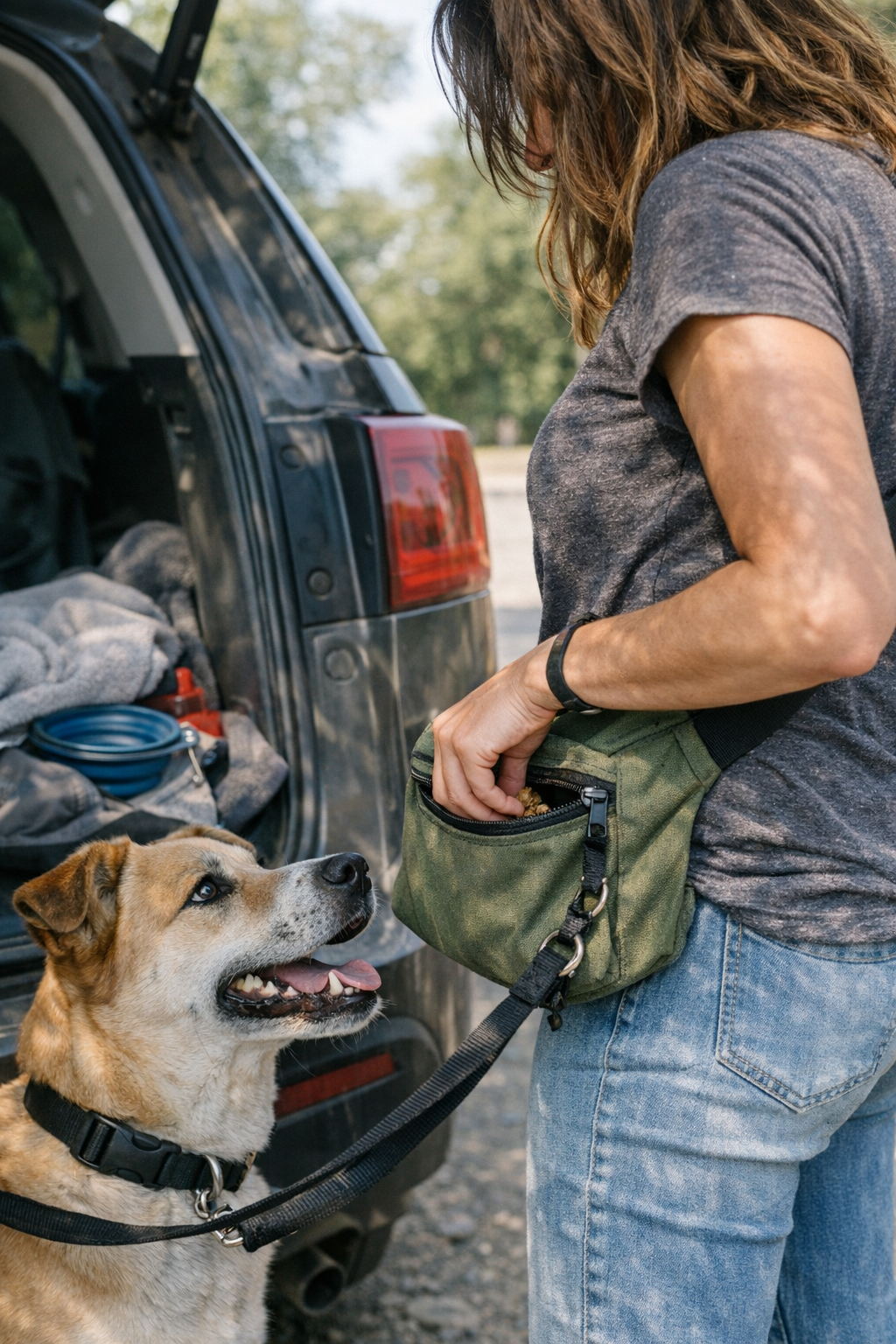
    After too many stops ruined by scavenger hunts for treats, I tried a shift: Give one dedicated, always-open side pocket to a single treat pouch, no wipes, no toys, no overlap. Lined up with my usual leash hand. Instantly, the repeated search and shuffle became a one-move motion—hand in, treat out, reward given—while the rest of my kit could slide around as needed. Even chaos in the main section didn’t block that route.

    This change reset my handling rhythm. No relocking zippers, no spilling items to get to the bottom. My dog’s reward matched my command, not my cleanup routine. Each restart after a stop felt smoother, not interrupted by another mini-juggle. Over time, the old leash-fumble and bag-shuffle rhythm faded away, replaced by a more predictable, calmer routine.

    Consistency Wins: The Unseen Value of Small Routine Fixes

    No setup is flawless, but the setups that survive repeated real use are the ones that fix their own slowest step. When quick access stays quick—after miles, restarts, and actual field use—handling flows, signals stay clear, and owner and pet both stay calmer. What matters isn’t the first impression but the fourth or fifth restart, when you aren’t stuck re-learning your own bag’s contents after each stop.

    The difference isn’t photogenic; it shows up quietly, when the slowest reach disappears and the pet’s focus doesn’t leak away. The setup you almost notice least becomes the one you count on most, holding together at seat-side, on curb, and in every quick return-to-movement reset.

    For pet-travel setups, organization is the starting line. It’s flow—real, repeatable, friction-reducing access—that keeps the journey steady. If your own routine keeps stumbling at the same spot, one direct change like re-routing your treat pocket or separating wipes from rewards can take a nagging problem off your plate—turning what slowed you down into an invisible, repeat-win advantage.

    See practical, field-tested gear for real travel routines at PawGoTravel.

  • Why Leaving Space in Your Trunk Beats Over-Organizing Every Time

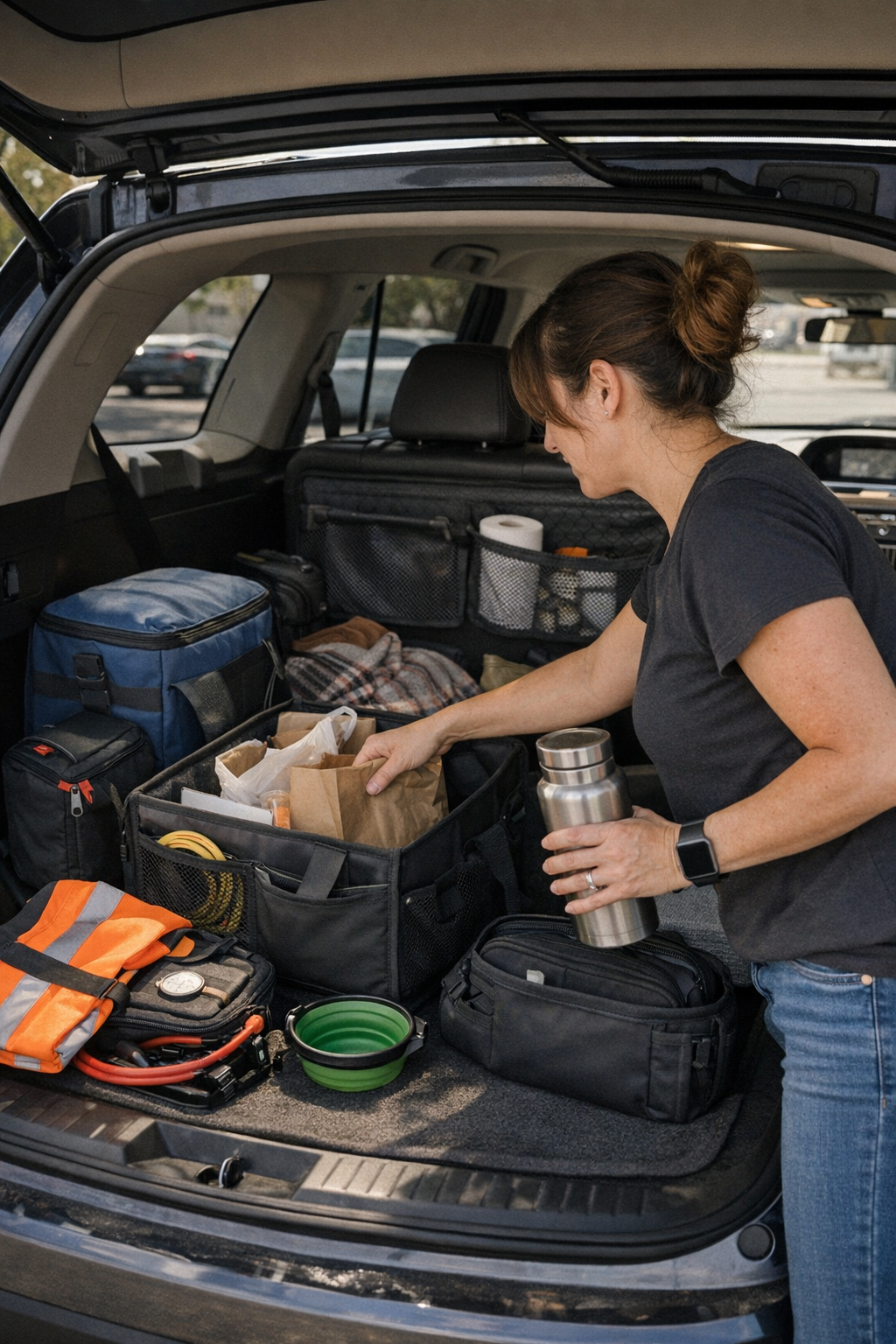
    Pop your trunk after a normal workday, and it looks under control—bins square, dividers standing, everything boxed in tight. But the first small surprise wrecks that illusion. One extra grocery stop, your kid’s sports bag tossed in out of sequence, and suddenly your so-called “system” is in the way: you’re shifting bins, unstacking organizers, negotiating every move. That quick loading, one-handed drop you expected? Gone. This is where driveway organization collides with real use. The promise of order flips—immediately—into friction.

    When Order Creates Obstacles: The Hidden Friction of a Boxed-In Trunk

    An organized trunk isn’t always a usable trunk. Bins stop bags from tipping and keep loose objects from rolling, but these fixed compartments soon behave like obstacles when your errands don’t follow the script. Every partition claims space not just from clutter, but from your own fast access—and as soon as the day’s plans shift, those rigid structures demand, “move me first.”

    If you’ve ever tried to cram a cold pizza or a last-minute grocery bag, you know the pattern: before you can load anything new, you’re pulling a bin out, rearranging your trunk on the curb, or cursing at a divider that’s positioned just wrong. To dodge the hassle, you might start flinging overflow onto back seats or footwells—letting mess migrate into the car you thought you’d just tamed. What started as an effort to save time now costs you minutes and patience, especially when errands pile up or appointments shuffle around.

    Real-World Use: Why Looks Can Deceive

    Most drivers discover quickly that trunk organization is not a set-and-forget game. Schedules flex: drop-offs shift, groceries jump to the top of the list, team gear collects unexpectedly, plans collide. Each time real life delivers an unscheduled task, your trunk has to bend, and most “tight” layouts resist that stretch. The more you optimize for a single workflow, the less tolerant your setup becomes under pressure.

    Picture an ordinary start to the week: The trunk appears spotless after the weekend—until a quick supermarket run reveals there’s no bare patch left. Grocery bags now share the passenger seat with yesterday’s laptop. Fast-forward an hour, and a kid’s backpack slides half-crushed into a side bin because that’s all the space you’ve got. By the next morning, stray lunch boxes and snack wrappers are back in the front of your car. Under the tidy surface, disorganization leaks in sideways.

    Trapped at the Edges: How Bins Can Make Small Frustrations Worse

    The issues are subtle but stubborn. Grab your phone charger after a drive, and you may see it wedged under a hard bin, just out of reach. Muddy shoes end up balanced awkwardly on a plastic divider because nothing else will fit. By midweek, you’re stacking takeout or sliding coffee down onto makeshift platforms atop containers—anything to avoid the “organizer shuffle.” The more the trunk stays boxed in, the more stray items abandon it entirely, crowding seats and floor mats you didn’t mean to use for storage.

    The Cost of Over-Organizing: When Structure Becomes Its Own Issue

    There’s a false logic that adding more compartments brings better control. What actually matters is how an organizer handles repeated, real-world abuse—random pit stops, unplanned hauls, dirty gear, and “just for now” items. When your setup gets too rigid, the trunk transforms into an annoying puzzle and every new errand becomes a negotiation. Heavy containers at the back block easy motion. Dividers conspire to bottleneck access. Suddenly, your tidy system is a barrier, not a tool—one more thing to work against on a rushed afternoon.

    Making Space for Change: The Simple Power of an Open Strip

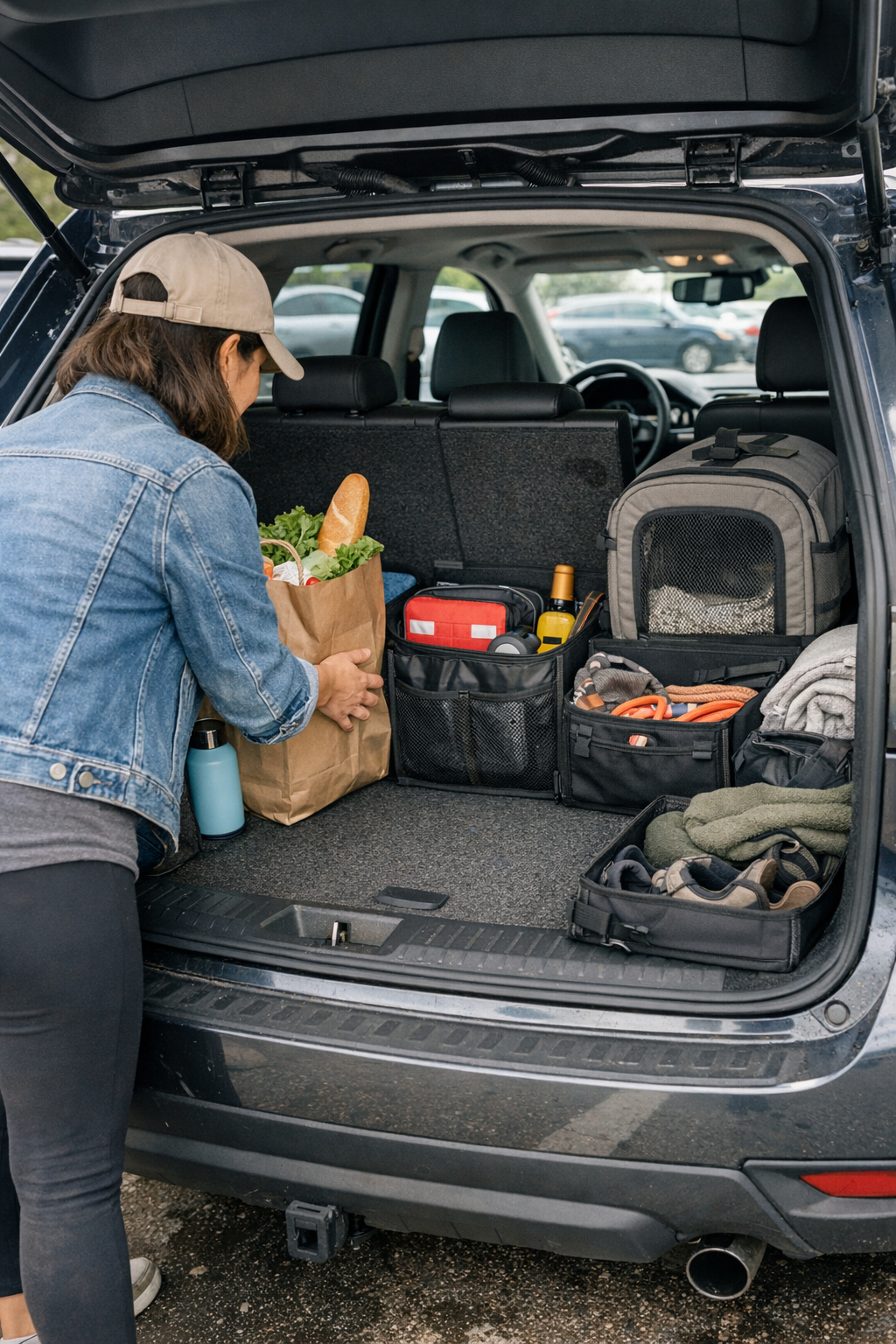
    The actual fix comes from subtraction, not addition. After weeks of frustrating trunk reshuffles, pulling out one organizer to create a bare strip (even less than two feet) reshapes your entire loading pattern. That stretch absorbs heavy bags, wet shoes, or returns in seconds—no shuffling, no double-handling. With a flex zone, a jacket, gym bag, or takeout can drop straight in, and the rest stays untouched.

    This uncluttered section isn’t wasted space—it’s your friction buffer. Fast stops stay fast. You no longer wedge extra cargo into the front seat, or balance dinner on top of bins. Over a week, the pattern flips: less time spent clearing the way, less chaos trickling forward into the cabin. The trunk finally starts matching the messy flexibility of your actual week, not just the fantasy of weekend tidying. You feel the payoff in every “in-and-out” motion, with less grumbling and way fewer repeat cleanups.

    Finding the Right Balance: Adaptable Structure for Everyday Life

    It’s not about letting chaos win—but a trunk optimized for visual perfection is usually sabotaging itself by Wednesday. Organized, yes, but not airtight: save space for the unknown. For most cars, a bare side strip or rear margin (about two feet wide) keeps daily surprises manageable without letting loose cargo bounce around. If you find yourself dragging bins out for nearly every errand or loading lunch onto the front seat twice a week, your layout is putting form over function.

    Organization That Supports Your Routine

    The real measure of a good trunk setup isn’t how orderly it looks with no cargo, but whether it still lets you load and unload, improvise, and adapt smoothly all week. Leaving a functional gap—space you resist filling—makes the whole system less of a headache, more of a help. The right balance feels obvious: no more wrestling organizers before coffee, no more rethinking storage while traffic waits, and a trunk that absorbs life’s curveballs instead of amplifying them.

    Visit DriveWellSupply for real-world car organization solutions.

  • Simplify Carry-On Packing for Stress-Free Travel and Quick Access

    The illusion lasts until you’re actually moving: that carry-on, cleanly packed at home—zippers aligned, pouches in military rows—begins to unravel as soon as you hit the first airport checkpoint. Grab your passport in a busy boarding line and the “order” vanishes; you unzip, dig under organizers, and your charger, boarding pass, or earbuds are out of sight and out of reach. What looked efficient on your bedroom floor quickly turns irritating when the travel sequence starts: trays stacking at security, agents waving you forward, items hidden under the wrong pouch, and seconds slipping away as the line backs up behind you. Carry-on neatness at home misses the two-minute reality of crowded terminal flow, where every smooth movement matters and every delay compounds.

    Why Visual Order Isn’t Enough

    The bag looks ready: cubes stacked, pouches in place, a visible “system.” But static order is not functional order. The difference shows up fast—in the boarding queue, at security transfer, or faced with a last-minute gate switch. What counts isn’t how perfectly everything fits when zipped shut, but how your setup actually responds when you need to retrieve, reset, and move. In the crush of real travel, every slow reach becomes its own interruption.

    The pattern repeats: reaching for your ID with your bag half-unzipped and one handle draped over your wrist, you realize the thing you need most is blocked by layers—cables, pouches, anything you organized for “space” but not for access. Each pause triggers a small but stacking penalty: awkward shuffling, that pressured feeling as you dig, the chance you set something down and almost forget it. These are not dramatic disasters, but invisible leaks in your airport flow that add up trip after trip.

    Repeated-Use Friction: When Packing Logic Fails on the Move

    The flaws don’t show while packing—they show up on the move. That “secure” boarding pass, slid behind a cable pouch, or your headphones paired with toiletries for neatness, create invisible obstacles you don’t see until it counts. Stacked systems that seem fine when untouched end up doubling your effort in motion. You find yourself repeating the same annoying steps: digging for a charger beneath your toiletries, pulling out unrelated gear and trying to stuff it all back before the next checkpoint. Each repetition reveals that the setup does not actually fit fast-use behavior; it merely looked organized until tested.

    Real inconvenience slips in as:

    • Fumbling for your ID while the line compresses and the agent already expects it in hand
    • Unzipping multiple layers only to realize what you need is in a third, half-buried compartment
    • Stalling in the boarding lane, neck craned as you dive for an item blocked by pouches built for “order” not speed
    • Wrestling your bag from the overhead bin and finding essentials out of sequence, prompting another rushed repack in the aisle
    • Needing to “restore” visual order after every quick retrieval, instead of having flow return automatically

    Where Most Carry-On Setups Start to Struggle

    The weak points grow obvious during:

    • Security checkpoint tray transfers: When retrieving your laptop or liquids means negotiating around charging cables or wrestling cubes, wasted seconds stack up—and so does stress.
    • Document checks: If every scan or ID check leads to digging through double zippers and misplaced pockets, you end up both slowed and visibly flustered.
    • Seat entry: Tight aisles punish hesitation—a five-second pause to find headphones or gum becomes a line of shifting passengers and abrupt seat drops.
    • Overhead-bin retrieval: Buried essentials force you to unpack publicly, blocking the aisle and holding everyone up, sometimes twice as you reassemble order under pressure.

    These aren’t dramatic malfunctions—they’re micro-interruptions that steal rhythm and undo the ease you were aiming for. Miss them once or twice and you might ignore them. Repeat them every trip, and the flow of travel begins to fade.

    Designing Carry-On Flow: Beyond Adding More Pockets

    Most travelers respond to disorder by multiplying compartments: more pouches, more cubes, more organizers. But the breakthrough comes not from cramming in more, but from structure—assigning clear, accessible zones for movement, not just static order:

    • Create a single, vertical outer-zip pocket for the things you always grab: passport, boarding pass, charger, earbuds. No mixing with bulk and no “shared” space with items used less often. This pocket becomes muscle memory—one zipper, one retrieval, zero delay.
    • Separate your fastest-access gear from core packing: If you find yourself opening the wrong pocket or moving aside “just-in-case” gear to get to everyday essentials, you’ve got the signals reversed. Assign every pocket a clear purpose and stick to it, or flow breaks down fast.
    • Enforce the access cycle: After every checkpoint, item, or document retrieval, drop essentials back into the same outer zone. Repeat the motion until it becomes automatic—no searching, no second-guessing.

    How Travel Changes When Zones Are Actually Clear

    With clear zones, subtle but powerful improvements show up on every leg of your trip:

    • Documents and IDs are in hand instantly on approach, never forcing a halt or fumble in line
    • Security routines smooth out—no digging, no guessing, just fast, repeatable access for the tray and back
    • Seat and aisle moves turn predictable—essentials on top, nothing forgotten or delayed in the shuffle
    • Recovery after retrieval becomes a habit, not a chore: your hand always finds each item exactly where it belongs

    It might not feel dramatic by the first checkpoint, but by the third or fourth airport transfer, the old pattern—pausing, shuffling, apologizing to the person behind you—simply stops happening. The friction disappears, and movement starts to feel automatic.

    Spotting and Fixing Avoidable Friction

    If you’re repeatedly opening multiple pockets for the same item or wrestling to close the main compartment every time you use it, those are signals your setup is causing friction, not smoothing it. Small holdups multiply fast over an entire journey. The neatness you see is not the friction you feel.

    The strongest carry-on setups don’t just look organized; they behave frictionless in actual use. That comes from maintaining an open path for what you reach for most, never blocking your own retrieval, and baking in a pattern where return and access feel automatic. By the end of a true travel day, you notice what isn’t happening anymore: no frantic searching, no misplaced documents, no string of hurried repacks. The absence of scramble and the restoration of calm is the payoff for structure that actually fits movement, not just packing plans.

    Ready to rethink your carry-on for real movement, not just static perfection? Visit CarryOnSupply for thoughtfully structured travel tools that make every reach, return, and repack easier.