Category: Travel & Drive

  • Streamline Your Car Interior by Eliminating Unused Duplicate Gear

    The signs are subtle, but the cost is constant: Each time you reach for your only charging cable, a second one tangles underneath it. The center console promises quick access—until you’re pushing past two phone mounts, a jammed organizer, or backup wipes that block the compartment you actually use. Every “just in case” item, every added mount or spare tray, quietly shifts your car from organized to awkward. It’s not clutter in the usual sense—the interior still looks under control. But drive a normal week—work commutes, errands, school pickups—and you start feeling the friction: split-second delays, repeated sidesteps, a cabin that’s less use-ready every time you return to it. The difference between a setup that works and one that holds you up shows in these micro-moments, long before the car looks messy.

    How Car Duplicates Drift Into Daily Driving

    Duplicate gear slips in when routines shift. Maybe your first charging cable gets sticky, and you add a second—though you never actually remove the old one. Or you stash extra wipes beside the originals, confident you’ll use them someday. Slowly, backups become permanent fixtures: side-by-side phone mounts, competing organizers wedged into trays, door bins stashing “emergency” everything. The effect: key spaces—dash, seat edge, driver console, trunk corners—start feeling jammed, even if everything has its spot on day one.

    The interference isn’t dramatic; it’s relentless. Quick stops turn into repeat work: one hand fishing past unused cables, the other shifting a booster seat to get at a cleaning kit you’ve never needed. What feels “fully equipped” becomes a series of micro-obstacles—an interior that demands repeated, minor reorganizing. The result is more than inconvenience; it’s the slow erosion of every smooth motion you expect to be automatic.

    The Hidden Cost of “Just in Case”

    Preparation and practical flow don’t always line up. The more duplicates accumulate—especially in high-frequency spots like cupholders, seat-side pockets, or the trunk—the more the system drags against you. It plays out in small, stubborn scenarios:

    • Phone mount crowding: Two mounts, but only one is actually useful. The other presses awkwardly against your wrist, or floats just enough to fall over a bump, complicating a quick dock or grab.
    • Cable tangle at the console: Grabbing for power while in motion? Extra cords knot together or coil under your phone hand, adding distraction when you can least afford it.
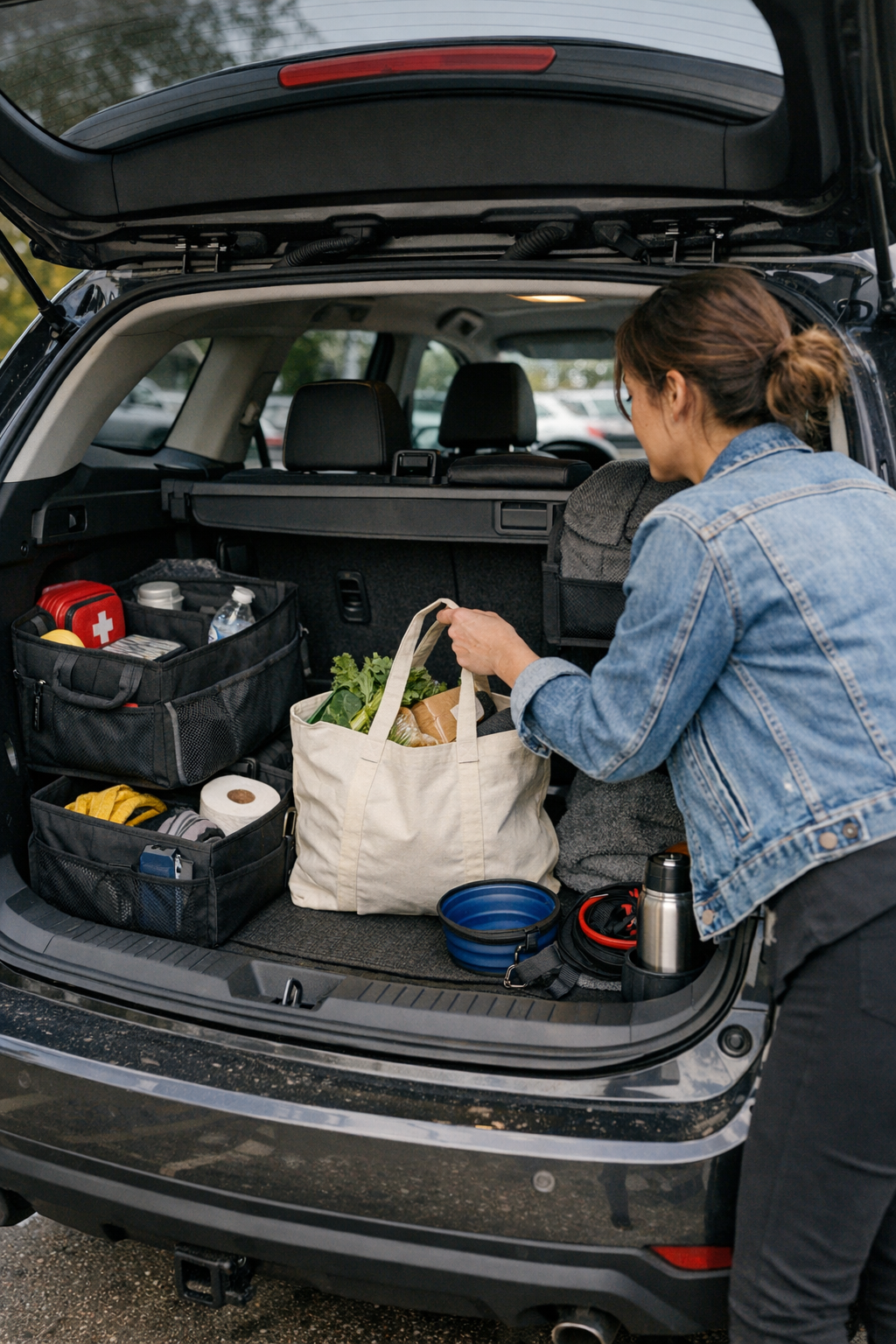
    • Organizer layering in the trunk: It looks efficient until unloading groceries means sliding bins out of the way for every armload, making a simple job twice as awkward.
    • Stacked floor mats: One grippy mat securing space is fine. Add a second, and the edges begin to curl, dirt pools in uneven seams, and you trip over coverage shifts stepping in—especially when rushing kids into the back seat.

    None of these slowdowns is catastrophic, but together they grind down the confidence you have in your car staying ready. You fix, shift, and re-tuck small things, making “preparation” feel suspiciously like maintenance.

    Why Fewer, Better-Placed Items Change Everything

    The advantage isn’t visual; it’s interaction speed. The instant you strip out duplicates that see little real use, a different car emerges:

    • Smoother charging routines: A single cable routed cleanly along the dash is a no-look plug-in; your hand knows where it lands each time, without knots or cord drift.
    • Unobstructed flooring: Well-set mats hold underfoot, no bunching or low spots, so every park-and-return stays stable and there’s less gunk to trap or clear.
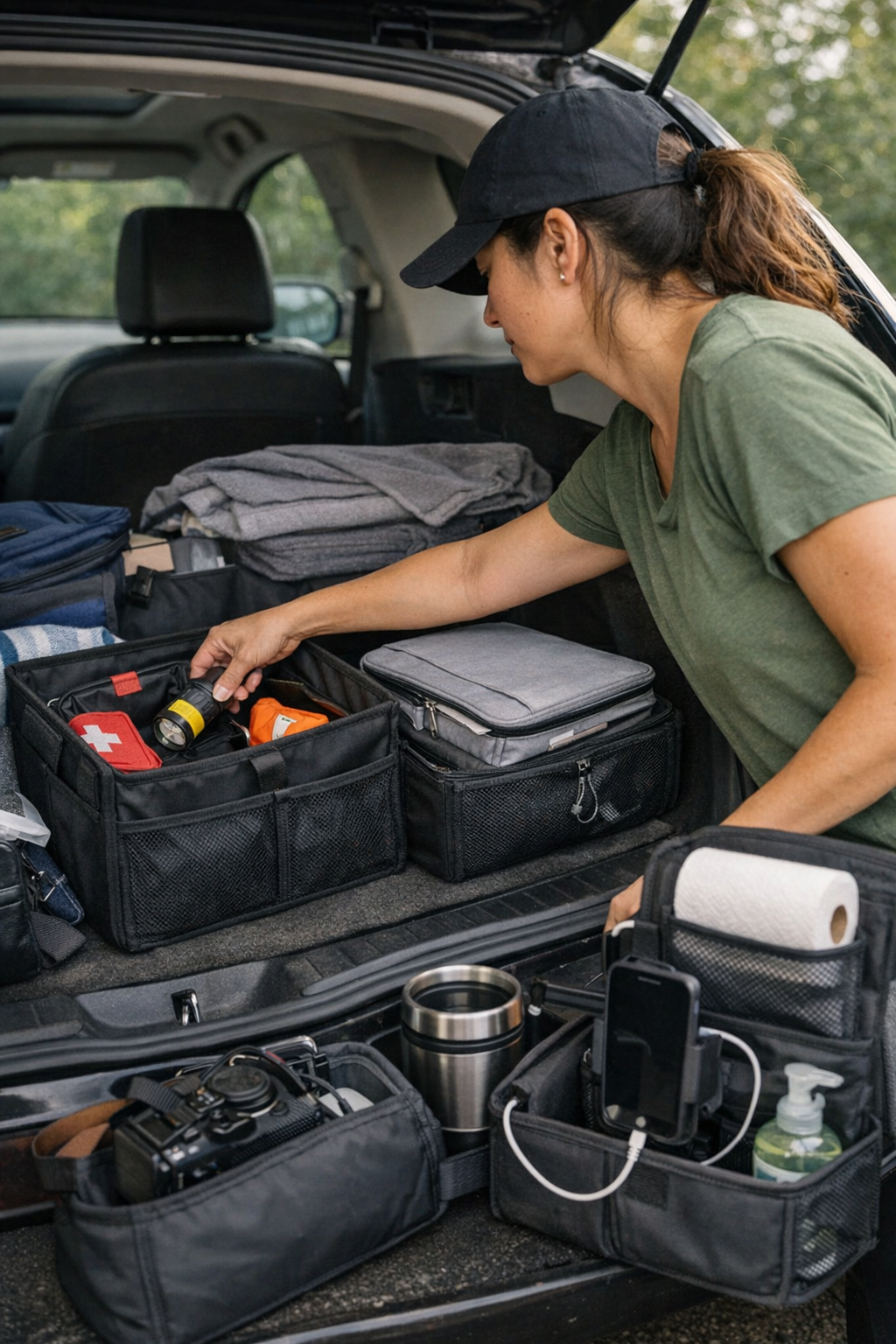
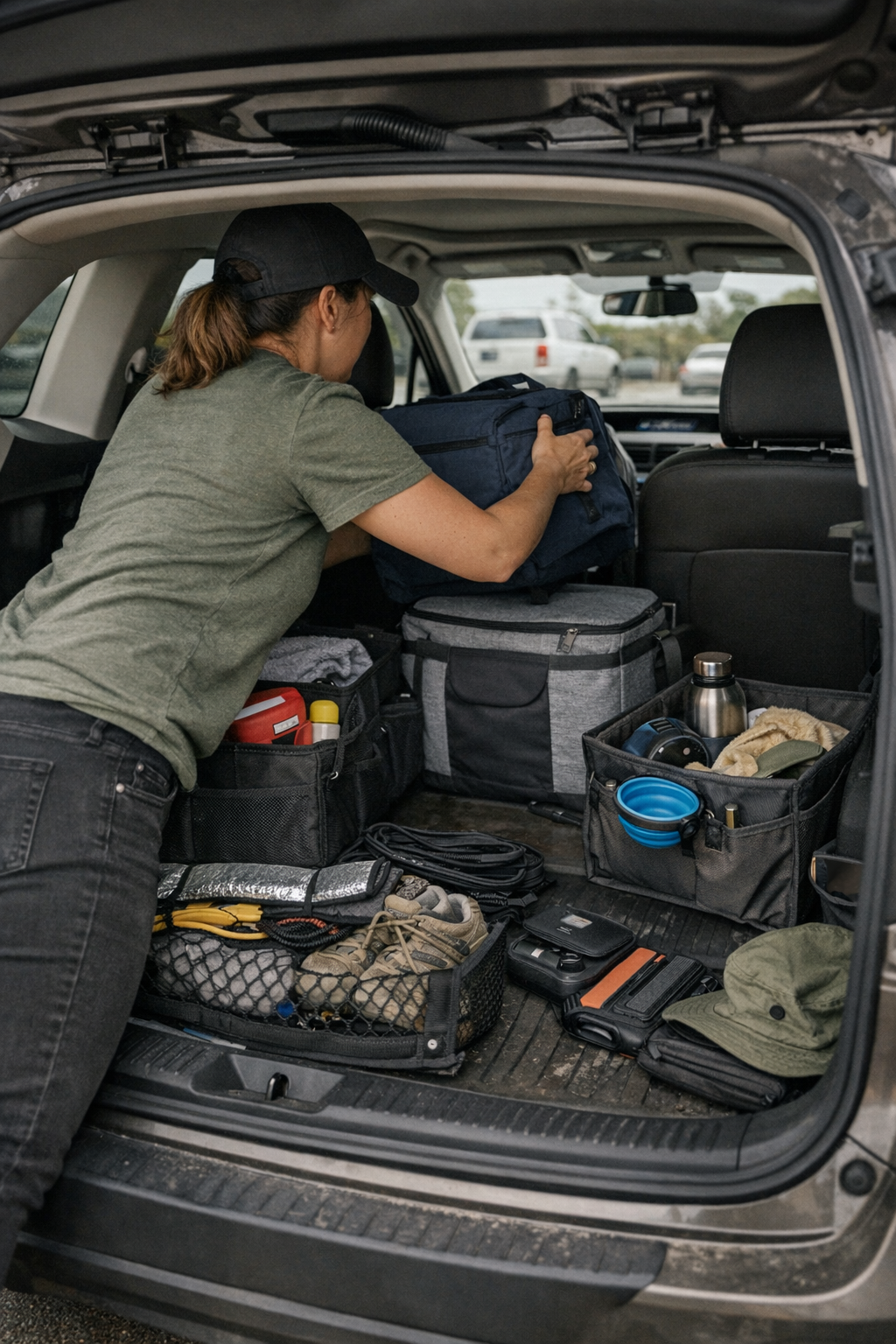
    • Trunk space that breathes: One well-sized cargo organizer means bags and tools settle without shifting, and you can drop in bulky loads without a preemptive reshuffle.

    A “prepared” car doesn’t mean over-layered. When every high-touch item does its work with no unnecessary backup, the difference is immediate: less adjusting, faster transitions, and no lingering doubt about what’s where.

    Emergency Readiness—Minus the Overlap

    The hesitation is familiar: If I clear out duplicates, will I be less ready? But the real hit to readiness isn’t simplicity—it’s invisibility. A single, accessible backup—emergency tool, jump kit, charge cable—keeps you safer than three buried spares you never touch. The real test is “reachable in a rush,” not “somewhere in storage.” Audit what actually works in a pinch, and cut duplicates that only get in the way of the gear you need when things go wrong.

    Spotting Duplicates That Hold You Back

    Some extras blend into the interior until practical use reveals them as friction points:

    • Unused second phone mount: Always in sight, always blocking a cable path, but never actually supporting your main device.
    • Console cords that rarely connect: Bundled backups clutter trays, slow charging access, and snag your hand reaching for cupholders or wipes.
    • Forgotten wipes and air fresheners: Jostle under seats, wedge into crevices, and become extra steps (not solutions) during fast cleanup.
    • Extra mats or bins: Create surprise dirt traps and paper slip zones, forcing last-minute pickup just to reach the floor or clean out the trunk.

    Test your layout by what you reach for in a regular week. Put back what gets actual use; relocate or remove what’s only creating sidesteps or blocking smoother car routines.

    Real-World Changes: Faster Flow, Fewer Interruptions

    Once low-need extras are gone and your real-use setup is visible, the change feels physical, not just cosmetic:

    • Reaching for USB power at a red light becomes a single, frictionless move—no more one-handed cable audits at 35 mph.
    • Trunk loading after errands is instant—bags drop in, gear settles, nothing gets shuffled for a second trip.
    • Passenger-side seat space stays reliably open, so everyone climbs in cleanly, not tiptoeing around stray cargo or tools.
    • Weekly cleaning gets faster: less need to move idle gear aside, more straight-shot vacuuming, and fewer hidden crumbs and wrappers wedged in “just in case” bins.

    If every trip involves untangling, shifting, or clearing space—even when the surface looks tidy—you’re not saving time, just moving the roadblock further down the line.

    The Payoff: A Car That Supports the Way You Actually Use It

    The best car setup doesn’t maximize what you carry—it removes what blocks what you use, over and over, all week. Clearing duplicates isn’t about living minimal; it’s about structure that supports repeated routines. With only what works, both driving and cleanup get easier. Reach, reload, and return—all smoother, with less device-juggling or seat readjusting.

    See the before-and-after for yourself: taking out duplicates is a low-effort, high-impact step toward making your car fit your actual life, not just an ideal version of it. Especially when your daily flow means getting in, out, and back again more times than you want to count.

    Shop DriveWellSupply essentials for streamlined, repeat-friendly car use.
  • How Smart Carry-On Organization Reduces Travel Stress and Delays

    The weak point in your carry-on setup never shows up in your living room—it attacks mid-trip, always when you need speed the most. You close your bag at home, every item locked into its space, and walk out feeling ready. Then security hits, boarding calls, terminal sprints—the first real reach for a passport or charger in a crowd breaks that order immediately. The flaw isn’t visible until the pace picks up, lines close in, and the smallest delay—unzipping twice, fumbling through a mixed pouch—becomes a routine frustration. The carry-on that looked controlled at home is suddenly an obstacle, forcing extra rummaging or repacking when you’re just trying to keep up.

    Why Orderly Packing Doesn’t Guarantee Easy Access

    Every traveler has watched their “perfect” home packing melt into a hassle at the first checkpoint. Neatly stacked cables and passports slump together; that streamlined pocket turns into a blind search when a security agent asks for your ID. The airport exposes a reality that home organization hides: visual order doesn’t block friction. Chargers slide under documents, snacks hide behind cords, and every “catch-all” pocket becomes a slowdown the first time you need one specific thing—especially when standing, pressed for time, or moving with one hand free.

    The Hidden Cost of Overlapping Access Patterns

    On the packing table, grouping “frequent essentials” in one go-to spot seems efficient. At the airport, it’s exposed as a design flaw: jamming tech and documents together forces you to untangle cords just to get at your boarding pass, or move a granola bar to find your passport. Every overlap between categories is a subtle, recurring snag. What started as a logical main pocket drags the trip into a loop of micro-hesitations—each reach for an item becomes a mini-chore, especially under pressure. The setup that looked minimal now imposes a cost: repeated interruption whenever access actually matters.

    Real-World Triggers: When Carry-On Structure Fails You

    Security: Where the Overlap is Exposed

    Security trays force your hand. You reach for the passport and pull out headphone wires instead. One tug on a charger sends documents sliding out, scattering smaller items across the tray. Someone in line beside you resets their bag in seconds; you’re still double-checking for missing items as the trays pile up. This is where a single mixed pouch, once “justified” at home, becomes a slow-motion mess.

    Boarding and In-Seat Access: The Stationary Headache

    Boarding lines drag and the difference in structure is clear. Some travelers unzip a visible sleeve, flash documents, and drop them back without breaking stride. When your own layout means flipping through wrapper-filled pockets, wrestling open secondary zippers, or even stepping aside for a repack, the price of that all-in-one compartment is impossible to ignore. Quick access is blocked not by disorder, but by too much in one place.

    Mid-Trip Retrieval: Rummaging and the Repacking Spiral

    Once in your seat, trying to grab headphones brings out a cable tangle, loose snacks, possibly your passport. Every retrieval jumbles the previous order; each repacking is messier than the last. By the time you land, “efficient” storage translates into a layered, tangled bundle that delays hotel check-in as you search yet again for essentials you swore were under control.

    Direct Access: How Separation Solves the Repeating Problems

    True travel relief surfaces after just a few use cycles: when you separate items by how and when you actually reach for them, friction drops away. Grouping by event—security, boarding, in-seat—not type or size, means each access is cleaner, every routine is faster.

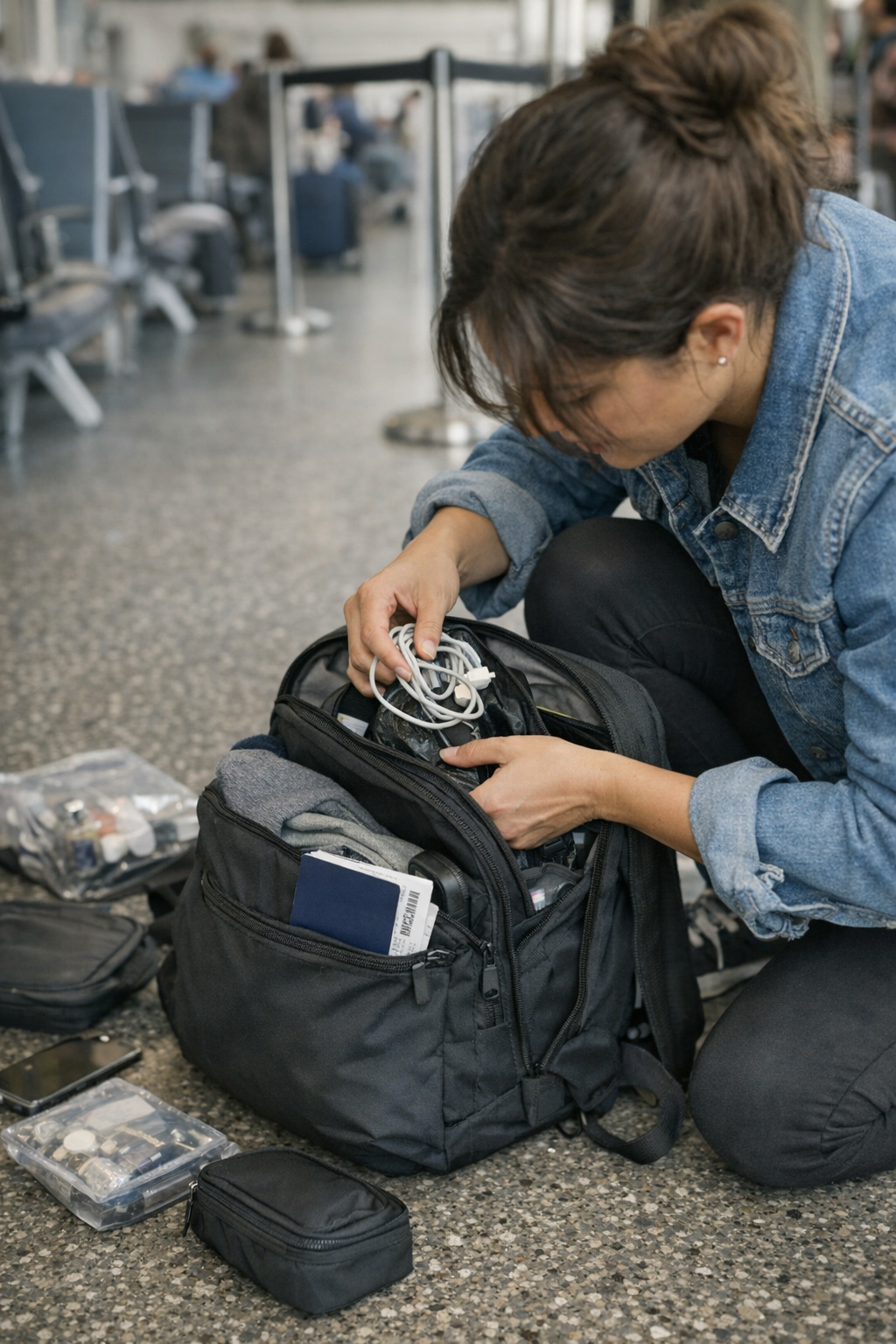
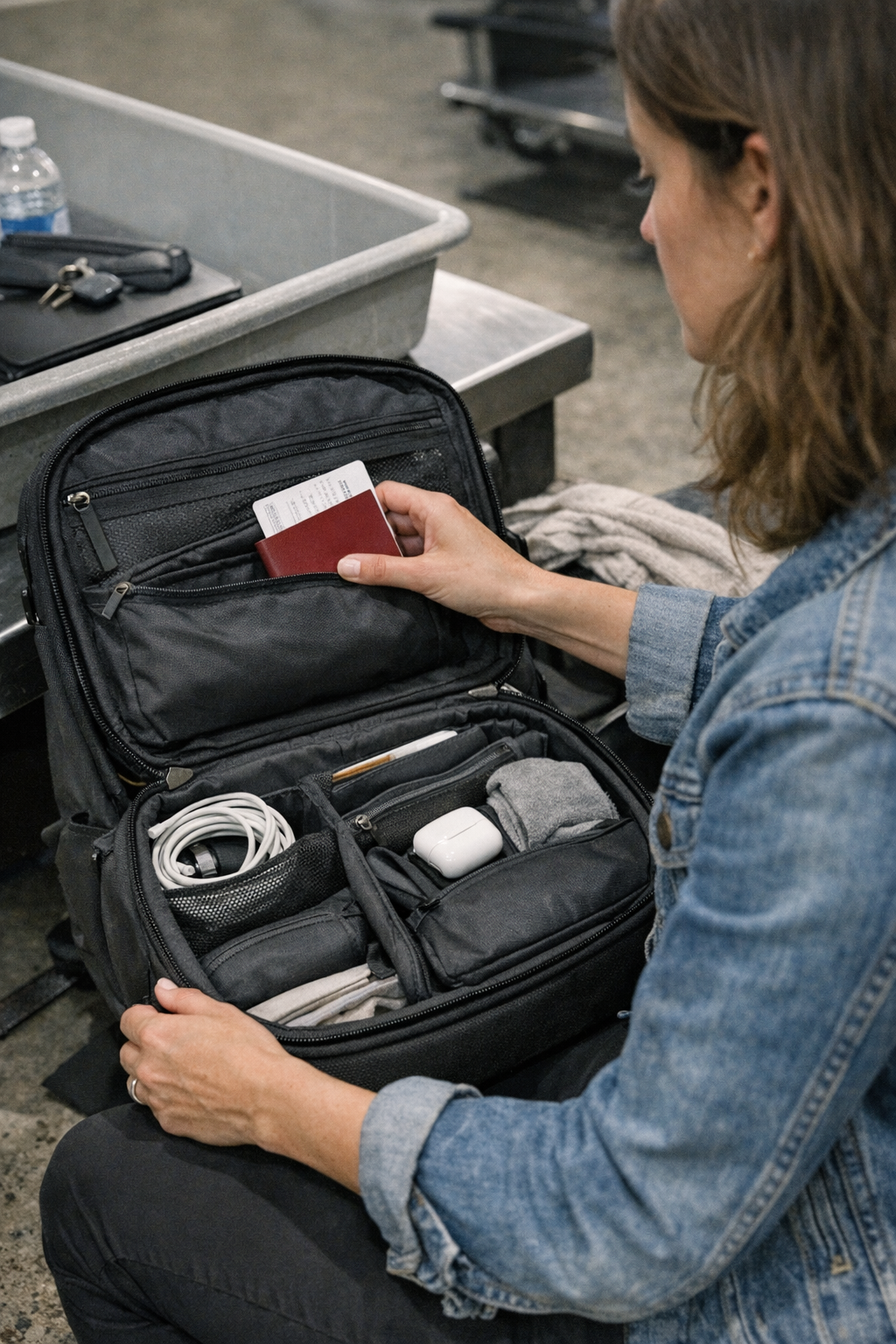
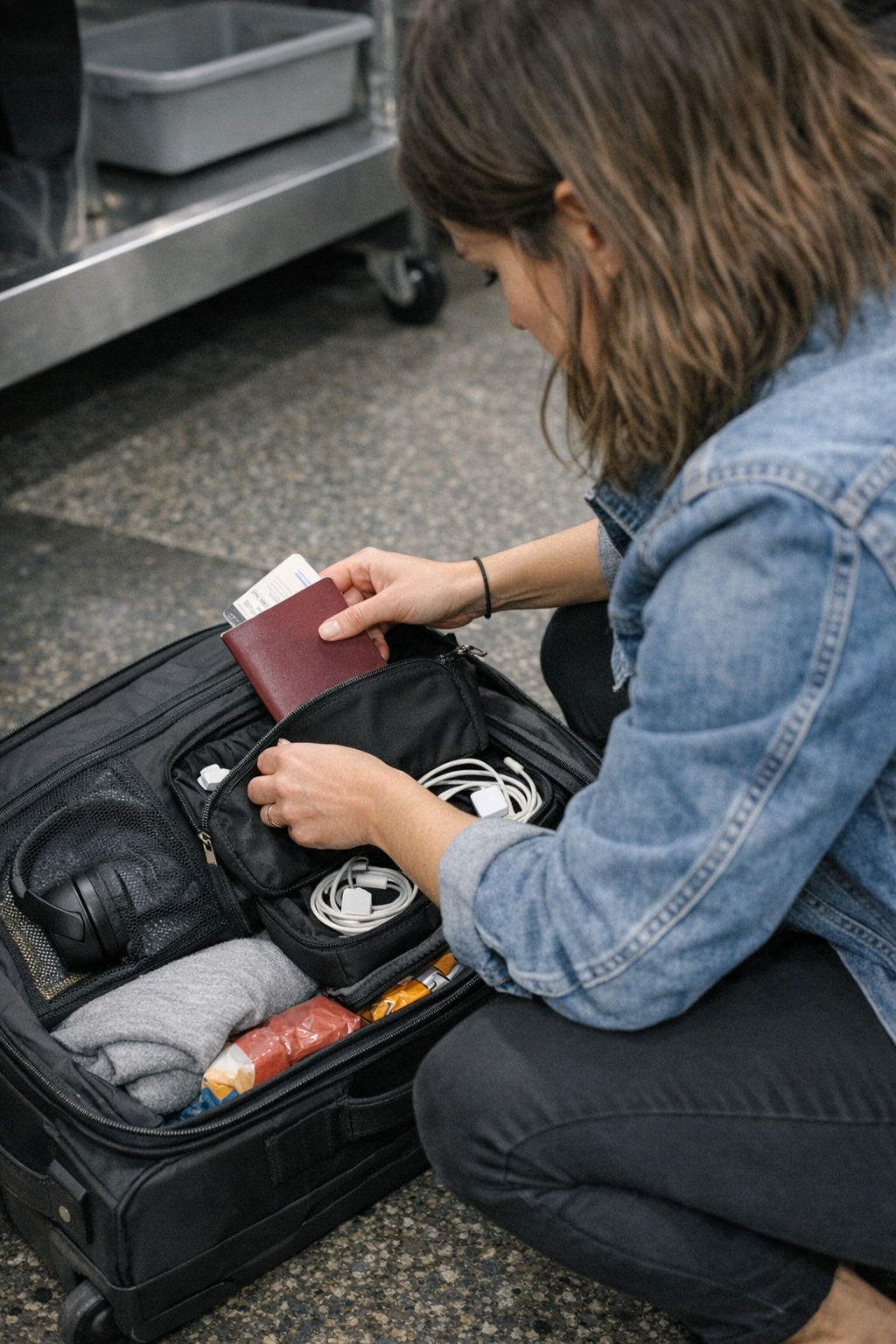
    Practical setup example: A single dedicated sleeve for travel documents. No chargers, snacks, or headphones inside—just what you’ll show repeatedly. Tech cables are sealed away in their own pouch; comfort items (like an eye mask) get their own spot, nowhere near documents. Now, reaching for a passport means one quick unzip and zero detours. Headphones are found minus the cord-web. Each routine—checkpoint, seat setup, snack break—moves without unnecessary crossover, and the bag stays workable even after multiple shuffles or transfers.

    Recognizing and Fixing the Sneakiest Weak Point

    This overlapping-access problem wins by staying hidden through small, repeated slowdowns. Your bag doesn’t look wrong—it simply grows more clumsy to use, one checkpoint or seat change at a time. The worst setups stay photogenic but quietly sap your attention and time; every quick grab becomes a small decision; every reset—however tidy—makes you work harder, not smoother.

    Once you strip out all layered paths, micro-hesitation fades. You stop pausing at every checkpoint. You don’t have to trace which zip holds the passport, or repack mid-aisle after missing one item. The outcome isn’t flash—it’s a bag tuned so your mind tracks the trip, not the next hidden pocket or tangled reach.

    How to Make Setup Work for Real Travel

    • One zip, one function: Assign each pouch, pocket, or sleeve a single repeated-use purpose—documents, tech, comfort items. Don’t double up.
    • Group by rhythm, not appearance: Resist clustering by look or size at home. Instead, group by movement: ask what you’ll need repeatedly in line, at your seat, or in a security tray.
    • Check after each stage: After running security or boarding, did you need to open two bags for one thing? Did anything else fall out by accident? Use this as your friction test.
    • Tweak, don’t tolerate: If you find yourself repacking more than once per segment, shift the setup—documents out of tech pouches, chargers given a solo spot, travel docs always in a visible, quick-access sleeve.

    The Bag That Works—Not Just Looks Good

    Most carry-on setups unravel after a few rounds of real movement. The winning bag is not the one that promises everlasting neatness, but the one that keeps retrieval direct and friction low after repeated cycles of standing, lifting, and retrieving—without the need for a full reset. Each trip row—from curb to seat to hotel counter—will test your layout.

    What matters isn’t a photo-perfect interior, but a structure that makes each access shorter, every retrieval cleaner, and the bag itself less of a focus than your trip. The visible win isn’t order, but time saved, awkward moments avoided, and one less carry-on decision stealing your attention every two gates. The right setup pays for itself in motion, not just looks.

    Visit CarryOnSupply for carry-on travel tools designed for real movement.

  • Optimizing Pet Travel Bags for Quick Relief During Heat Stops

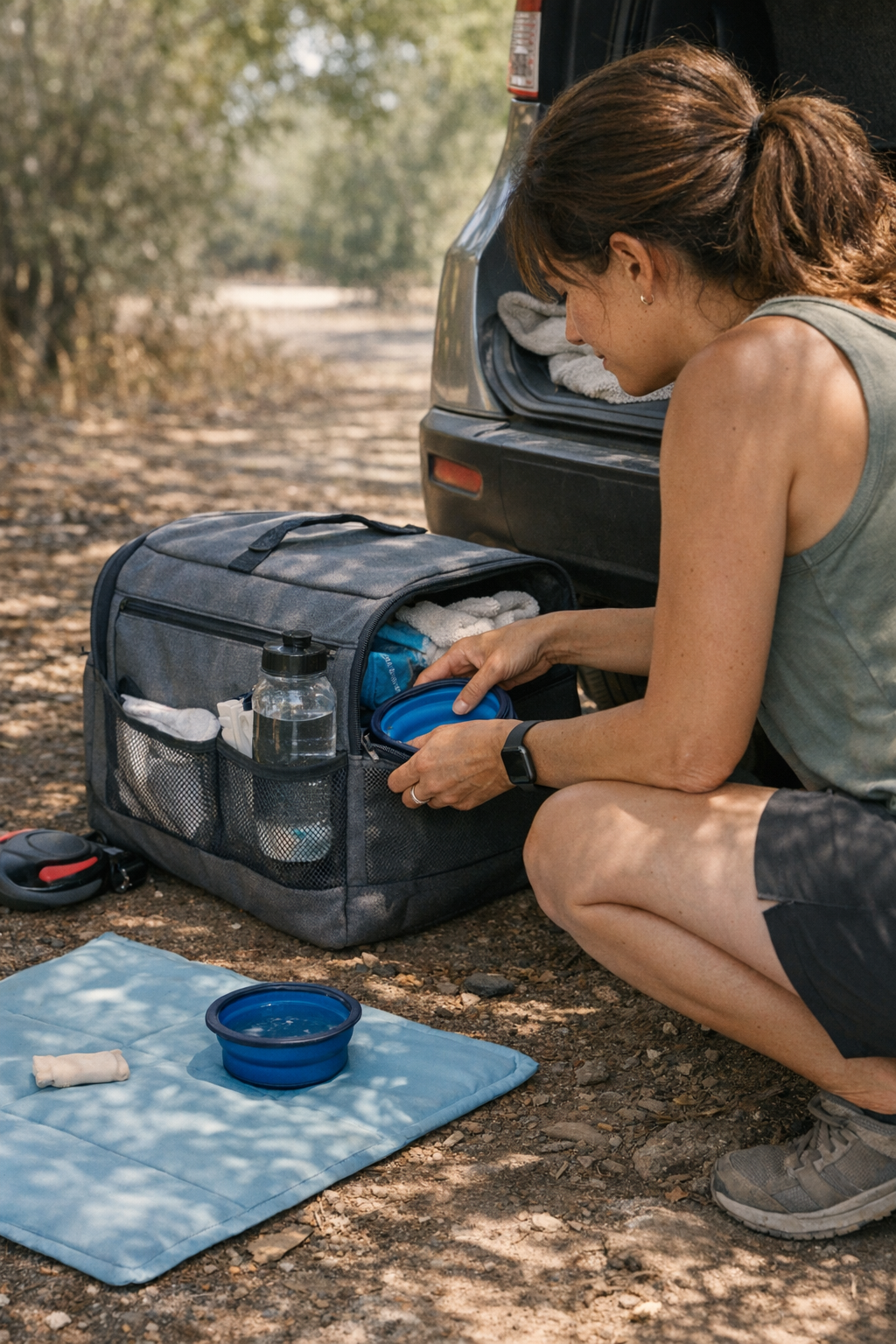
    Hot-weather pet travel exposes the cracks in your bag setup long before your pet runs out of patience. Your pet’s panting, you’re fumbling for water, but the “organized” bag won’t give up the one thing you need—because in real shade-stop rush, buried hydration is as useless as forgotten snacks. That first break in the heat betrays the difference instantly: looking packed is not the same as acting ready. Shaded parking spot, kit on the passenger seat, and still you’re wrist-deep, digging for essentials as your pet circles and the window for relief closes. That’s when you spot it: the structure that seemed “travel tested” at home is already working against you on the road. PawGoTravel gear exists for these friction points, not just for appearances.

    When “Packed Neatly” Becomes “Hard to Use Fast”

    On a table, a pet travel bag with zipped pockets, stacked bowls, and clipped leads looks under control. But every real-world stop exposes a different hierarchy: water ends up under a cooling mat; wipes wedge between toys. Shade is supposed to buy your pet a cooldown window—yet what should be a five-second reach turns into a semi-unpack every single time. Efficient packing turns out to be efficient delay. On the second or third stop, you notice yourself reshuffling faster, but the process drags—pet panting, your hands tracing the same obstacle course. By the last stop, there’s no margin for fumbles left.

    Real frictions multiply— what starts as a tidy layout decays into repeated rescues: bottle under pad, treats over wipes, and each item swap making the essentials even less reachable. Visually “smart” setups stall when it’s time to act with one hand and a restless animal two feet away.

    The Hidden Cost in Every Shade Break

    Under real sun and seat-belted restlessness, each shaded pause becomes a race. Every extra second your hand spends inside the bag is one second less vigilance on your pet, one more tick toward distress. Even a bag that was loaded carefully throws you into a loop—stop, search, pull supplies in the wrong order, reset, repeat. The whole point of shade slips away while the heat inside the car lingers and your dog (or cat) starts shifting nervously again.

    Typical moment: You slide the bag onto your lap, crack it open, and—again—the travel bowl is trapped under spare leads and rolled mats. Lifting out one thing sends the wipes off balance and under into the pile. Next stop, you try for a better pack, but the moment you need those wipes, they’re lost under snacks you never meant to move. On a two-hour trip, this cycle is the rule, not the exception—and every time, relief is a beat too late.

    Repetition—How Small Delays Build Into Big Discomfort

    It’s rarely the first break that breaks you. By the fourth, you’re tense and your pet is restless, pacing or vocalizing because routine means “now,” not “wait while I shuffle the gear.” Hydration and cleanup needs don’t line up with your packing logic, and the delay feels longer with every stop. The bag’s slick zipper snags just as a squirming dog pulls on the leash. The bowl comes out, but wipes are buried. Pet drool sets into the car seat as you hunt for cleanup. This is when you realize: each misplaced item adds up—not just in inconvenience, but in cascading agitation for everyone packed into that small, hot space.

    Pressure points: zipper resistance, slick pads that double as cover and as barrier, essential items surfacing at the wrong time. Restarting travel never feels seamless; it’s a partial reboot, not a continuation—and every reset is one more test of your nerves and your setup’s design.

    Exterior Mesh Pockets: The Unassuming Fix

    The simplest structural shift—moving wipes and water to an exterior mesh pocket—rewrites the whole stop routine. No detours through liners or mats, no tactical layering, no wrestling with stiff zippers. Bag down, hand out, water ready, wipes in reach—without breaking eye contact with your pet or juggling overlapping items to retrieve a bowl. In practice, exterior access means less panic, quicker routines, and essentials staying put rather than shifting deeper into packed layers. It’s a five-second reach instead of a two-minute scramble.

    Stops stop being stress-tests. Your pet actually gets the full shaded pause for relief, not just for watching you unpack. You recover instead of re-pack. And when the vehicle gets moving again, there’s no mental checklist gnawing at you—the gear returns to ready, not just to “packed.”

    Comfort That Doesn’t Undercut Itself

    That plush pad you added for your pet’s comfort? If it lands on top, it covers every quick-access item and turns hydration into a juggling act. When relief, cleanup, and water aren’t separated, comfort becomes a block instead of a benefit. The best setups—what you end up wishing for after the second or third heat break—let you reach for essentials instantly, regardless of what “showcase” item was packed first. The difference is in the seconds between parking and helping your pet: with friction, you’re dealing in minutes and spilled supplies; without it, you’re present and responsive, not distracted by bag mechanics.

    Real readiness means more than surface neatness— it means stripping away any pause between stopping and acting. Each layer that forces a reshuffle is a layer that slows actual comfort.

    Why Pet and Owner Items Keep Clashing

    Travel reality: your things and your pet’s things will try to merge, even if you swear you packed them in their own zones. Leash in the same pouch as house keys, snack bag nudging sunglasses, cleanup wipes hidden behind a phone charger. Every short drive and stop shifts the packing order, creating a bag interior that’s new each time you open it. More compartments don’t stop the problem—they usually add more nested layers to sort out under pressure.

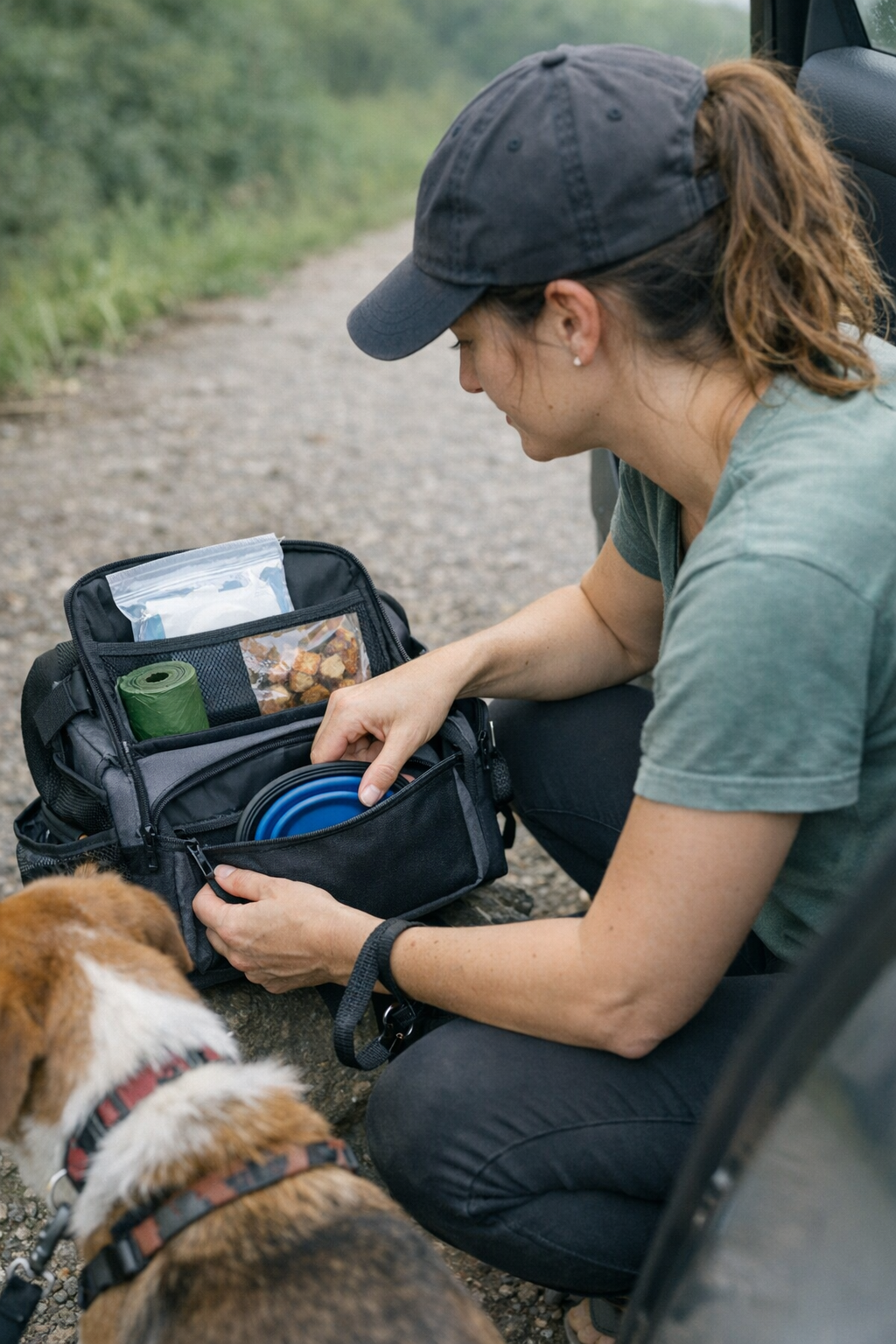
    The real answer? Build for stop-and-go with dedicated exterior or side-access pockets for the repeat-use trio—water, wipes, and bowl. That single change deflects owner/pet item confusion, cutting down on spillover and scramble at every rest. Interior order becomes less critical when the top-used items float, not sink, during travel.

    Not Just “Packed Right”—Actually Ready to Move Again

    Side-by-side, the “neat” bag wins Instagram. But real travel—the kind that runs hot, with repeated shade stops and species that do not wait politely—exposes the structural weakness of setups that bury relief under presentation. Tolerance for delay diminishes quickly; every cycle of dig-and-reshuffle burns away your margin for real comfort. Reliable travel gear, especially in heat or with restless pets, keeps what truly matters within arm’s reach, not just in theory but in every messy, real-world reset. It doesn’t matter if your setup looks ready at the start; it matters if it still works after the third time you have to flip it open, half-stressed, when the shade slips away.

    Discover pet travel solutions for real-world routines at PawGoTravel.

  • How Small Car Clutter Disrupts Your Daily Driving Routine

    You don’t notice daily car clutter at first. But the moment you reach for a charger and find it tangled—or slide into the seat and have to nudge yesterday’s “just in case” gear out of the way—every extra item suddenly matters. What promised to keep you ready becomes a source of split-second slowdowns: cables jammed under hand wipes, door pockets that hide what you need, or backup gear that turns arm’s-reach access into a scramble at the worst time. Under repeated use, even harmless additions drag down every return, every re-entry, every drive.

    Where “Just in Case” Turns Into Everyday Friction

    Most drivers start with a plan: a spot for your phone mount, a pouch for essentials, a spare charger just in case. Then come commutes, grocery stops, back-to-back errands. In real routines, those reasonable extras—one more cable, an emergency snack, spare wipes—begin to layer up until trays and pockets fill and overlap. The first signal isn’t visible mess. It’s the micro-interruption when you’re blocked from simply plugging in, or when your seatbelt jams because a “temporary” item migrated back into your space.

    Friction announces itself as a pause, not chaos. Suddenly you’re shifting napkins, searching for water bottles, or fixing cables that have slipped below last week’s shopping bags. These are the moments that never make a mess obvious but quietly erode the speed of every routine drive.

    How Clutter Hides Before It’s a Mess

    A car that looks sorted still hides snags. A charger blocked at the stoplight. A door pocket that eats napkins until sanitizer, snacks, and receipts crowd essentials out of reach. Bin systems that seemed smart now require a shuffle: the real need—quick plug-in, grab-and-go items—gets buried under stuff that’s just along “for later.”

    This is the real cycle: items for “next time” go unused, but make every next time slower: shifting, untangling, double-checking for what’s buried below. Clean surfaces distract from access problems that repeat every drive.

    A Real-World Example: The Surprise Roadblock

    Picture the reality: a brief stop mid-commute, back to the car to charge your phone. Instead of plugging in, the backup battery has covered your main cable. Suddenly your drive means pulling out low-use gear just to get power when traffic is building. Or a pen slides under the driver’s pedals, forcing a reach-and-retrieve move in work clothes, squeezing against the seat edge just to keep moving. “Prepared” becomes a routine of unnecessary steps, not peace of mind.

    Every “Just in Case” Is a Test for Quick Access

    Readiness isn’t about neatness; it’s whether you get what you need the first time, every time. If keeping backup gear means blocking door-pocket grab, cable reach, or seatbelt sockets, every drive pays a penalty in tiny but constant interruptions: nudging items from the step zone, pausing to check if your must-have gear is buried, or angling around “temporary” extras at every entry.

    Delays compound fast. Shifting things just to buckle in—again—or clearing a console before replugging, adds up dozens of times in a week. Every glance to check if something’s in place is a cost you keep repaying, especially in high-frequency driving: school runs, errand loops, or the seat-side swing on a rushed departure. The setup you thought supported you now trips you up when you least want it to.

    Why Organizers Aren’t Always Solutions

    Baskets, bins, and compartments promise order, but their biggest test is under pressure. Unless high-frequency items keep clear, catch-all organizers inflame the cycle: the “maybe” pile creeps up, hiding everyday needs as backup gear migrates to the top. Each trip means working around the box, not with it.

    Poor slot definition lets clutter drift. Receipts swamp the space beside your mount, cables burrow under wipes, and the quick-grab zone becomes a search operation. What looked like a stable fix fails at the pinch points—before a meeting, a fast unload, or parking on a packed side street.

    Cleanup Is a Test—Not Just for Neatness, But Speed

    A true car setup isn’t measured by how little you clean, but by how rarely you have to undo your own organization. If post-errand tidying means scooping up bins, coiling up cords, or training floating items back to their corners after every few trips, you’re fighting your own system. The cleanup “tax” grows, especially for anyone in constant routine: back-and-forth work drives, grocery stops, or carpool pick-ups. The best solution is something you hardly touch, because every item already stays put and out of the way—every time.

    The Difference Between Looking Organized and Feeling Ready

    It’s easy to snap the car back to visual order, even after a binge clean. What’s harder: maintaining unblocked access in day-to-day shuffles. Over time, visual tidiness masks functional awkwardness. Door pockets fill, seatbelt sockets get crowded by multipurpose gear, and the only slot you actually use for your charging cable is buried mid-pile. The shift you need isn’t minimalism—it’s ruthless daily-use filtering. If you don’t touch it three days in a row, it stays out. Fast charging: one cable, clipped clear. Door bins: only current essentials. It’s not about forced “declutter;” it’s trimming drag where it hides most.

    The real win is in the drive—not in the photo. If your car looks controlled but daily tasks still force a workaround, the setup is signaling where to trim. Every second you save on the return, quick plug-in, or buckling up is the sign that your system finally matches the speed of your routines.

    When “Maybe” Items Become a Source of Real Risk

    There’s a safety edge to clutter that isn’t visible until it matters. Small extras can slide to cover an emergency kit, crowd a seatbelt buckle, or lodge in the footwell where a hard brake could send items rolling. If a fast grab for your jumper, emergency tool, or charger becomes a fumble, readiness has turned into a risk. The car’s supposed backup gear blocks you in crunch moments—not because you lacked gear, but because it escaped control.

    Seeing (and Fixing) the Cycle of Daily Clutter

    Watch for tells: batting aside mounts, untangling the same cable twice, bumping organizers with your hip at every entry, double-tapping the door pocket for missing items. If those moves repeat, the system needs a reset. You want a setup where moving through your routine—loading, plugging in, grabbing gear—takes seconds, not a recurring detour. The fastest fix: drop anything unproven for daily use. Shift to weekly check-ins, keep cables clear of the path, and test whether your layout actually matches real commutes and returns. Most “just in case” isn’t earning its keep—it’s just slowing you down.

    Explore practical car-ready gear at DriveWellSupply.

  • Streamlining Carry-On Organization to Speed Up Airport Travel Experience

    The carry-on setup that looks pristine at home often falls apart on the move. You start with pockets assigned, chargers in their pouches, every document stacked where it should be. But walk into a crowded airport, and your neat layout turns demanding. What took one motion in your bedroom takes three at a TSA checkpoint. Suddenly you’re blocking the line, fumbling for your boarding pass as cables spill from a pouch or your passport slips behind zippered layers. That gap—between looking organized and moving efficiently—shows up fast and gets more costly with every checkpoint and tray transfer.

    When Visual Order Collapses Under Movement

    The divide between tidy packing and real travel use becomes obvious by the first document check. It isn’t about how crisp your bag looks closed, but how often you’re slowed down by sticky zippers, overlapping pouches, or items sliding out of assigned places. Airport routines—security, boarding, seat entry—stress-test every claimed organization trick. That travel wallet you meant to streamline cards and cash? It chokes retrieval if you’re digging through a “system” just to show ID. Those neat layers you built at home quickly turn into barriers once you’re in motion and under pressure. You notice which setups actually spare you friction, and which turn every grab-and-go into a stop-and-unpack.

    Most people don’t see this breakdown in the living room—but in airport loops: passport checks, rushed repacking after security, grabbing a charger mid-walk to a gate. Every reach exposes hidden inefficiencies—how your “order” either speeds the sequence or drags it out just when you need to move.

    The Trap of Looks-Good-But-Feels-Slow

    Category packing tricks travelers into feeling prepared. At home, pouches and color-coded pockets promise “everything in its place.” But in line, you end up opening three zippers and shifting stacks just to free a single pass. The signal: you’re doing more than one motion for every item, and reassembling the layers each time you rush. The friction only grows on tight layovers, where one buried item sets you two steps back.

    Distinct pockets and compact wallets promise speed but often double the work when items overlap in real use. A merged document-and-card pouch, for example, means you’re showing one card and then digging again for your passport. The cost isn’t just hassle—it’s being the traveler fumbling while the line moves past. Even “minimalist” stacks get exposed: the neatly packed tech case that sits two zippers down, a charger lost below folded shirts, the passport exiled for main-compartment tidiness. Every efficiency at home can create its own slow lane in practice.

    The Hidden Tax of Overlapping Pouch Systems

    Impeccable pouch layouts and organizer stacks promise clarity but become labor on the fly. When cash slips under cords or headphones mix with chargers, every small overlap means a restless pause. What feels like a micro-delay at first becomes real time lost during transfers or tight connections. Add up three or four prolonged retrievals during a single trip—suddenly you’re minutes behind.

    Real Scene: Cluttered Access at The Gate

    Imagine the moment: you reach your gate, think you’re ready, and the agent asks for ID. Your fingers find the doc pouch, but your passport fights for space with a phone cable you re-stuffed after security, and your paper ticket catches on an out-of-place receipt. That two-second hold-up isn’t rare; multiply it by every control point and the initial “order” starts to feel like a slow trap.

    Spotting the Repeated Friction Signs

    If your bag triggers extra rummaging, it’s signaling a setup problem. The signals: answering the same “which pocket?” question twice, dropping small items while reaching for bigger ones, running a mental checklist every aisle-walk, and needing two hands when one should suffice. Each time you open more than one compartment for a single routine task, you’re facing design drag. These hiccups never stay isolated; they return each leg, accumulating as fatigue and making quick pivots more taxing throughout your trip.

    Setting Up For Actual Single-Motion Retrieval

    What cuts through this cycle? Relentless separation of essentials, guided by actual use—not just visual order. Give each high-use item its own dedicated, accessible pocket: passport in an outer zip, boarding pass in a slip slot, charger in a pocket that’s never blocked by toiletries. Stop assigning double duty to pouches or wallets meant for single-moment retrieval. Keep cards, cash, and non-essentials corralled where they won’t slow the moments that matter.

    Small Shifts, Noticeably Less Drag

    Success here isn’t about adding more compartments, but breaking old packing habits. If you find yourself fishing for a passport mid-line—next trip, move it to an external zip, isolated. Stash travel docs where you can grab them in one movement without unloading the bag. The payoff is immediate: you clear security in a single action, find what you need while walking, re-stash with no need to reassemble stacks. The repeated friction melts away. You’re no longer forced to empty half your bag for one small retrieval, nor do you fear the contents “exploding” out in an aisle seat. The travel sequence flows—ready, reach, move on.

    Where Packing Theory Breaks: Scenes From Transit Reality

    Security Tray Transfer—Revealing the Gaps

    Security is the event where setups get unmasked. Clear pouches seem smart—until vital items are buried together. When pulling out a laptop requires shifting through both chargers and paperwork, everyone waits behind you. The more multi-compartment configurations you use, the steeper the learning curve after every repack.

    Boarding Queue and Seat Entry—Access Under Pressure

    Boarding is not the place for second guesses on pocket location. Grab your passport, slide out a boarding pass—simple, if the setup works. But if those live in separate organizers or behind travel pillows, you’re stalled, digging at the overhead bin, and re-stowing while anxious travelers shuffle behind you.

    In-Flight Reach and Under-Seat Shuffling

    Mid-flight, routine needs—like a charger or paperback—shouldn’t require a full bag inversion. If you’re bent sideways, knocking elbows while locating one item beneath a mess of pouches, the supposed neatness of your setup is costing you travel comfort and flow. Every reach that requires a silent re-pack triggers the realization: this layout needs to change.

    How To Reset the Carry-On Flow Mid-Trip

    Carry-on gear is inherently adaptable—but only if you listen to the signals. After a few travel cycles, travelers start isolating their repeat-use items: moving passports to the easiest-reach pocket, re-homing tech for quick grabs, banishing complex pouch stacks that never seem to work at speed. The breakthrough comes from removing overlap and refusing to double-stack essentials, not just buying new kits.

    On longer trips—with more transfers—this approach pays in energy saved and fewer disruptions. Every time you make a setup change that removes two-step actions from your routine, you get back minutes and lose travel fatigue. The aim isn’t a tidier photo, but a bag that lets you move through each phase—check-in, tray loading, boarding, seat—without the need for resets.

    Order That Moves: Why Real-World Carry-On Structure Wins

    No travel setup survives unchanged if it doesn’t work live. If your carry-on’s neatness fades after the first access, or if you dread opening it mid-journey, that’s a real loss in time and comfort. When repeated interruptions—blocked pockets, misplaced boarding passes, awkward repacks—become routine, the “organized” look is meaningless. The best carry-on structure isn’t complicated or overbuilt: it singles out essentials for immediate, repeatable access, and prevents overlap where you need speed most.

    Ready to improve your carry-on setup for repeat travel? Explore smarter, more usable organizers and tools at CarryOnSupply.

  • How Intentional Space Transforms Pet Travel Organization and Efficiency

    A pet-travel bag feels “ready”—until the second pause on a real trip exposes what’s wrong. It’s not your first stop that catches you. It’s that moment, leash in one hand, when the bag’s tidy pockets turn into blocked tunnels: wipes hidden under a blanket, treats trapped behind a half-packed bowl, owner gear tangled with dog gear. What looked sorted in your living room starts failing as soon as you need to grab, clean, and move—fast. If you’re digging, shuffling, or shaking out pouches while your dog gets impatient, the problem is never just about looking organized. The PawGoTravel world builds for these moments, not showroom order.

    Why “Organized” Isn’t Always Ready

    At home, every item fits and every pocket zips; it seems sensible to assume your setup will hold up in motion. But the calm evaporates by your first real break—any jostling, waiting curbside, or dirty paws increase pressure. Suddenly, the need isn’t for a beautiful arrangement, but for a setup that returns to “ready” after every stop. Most so-called organized bags can’t keep pace when you hit repeated stops: random gas stations, curbside delays, or quick cleanup after a nervous walk. You reach for wipes while blocking a door with your elbow, only to find a leash twisted through towels and cleanups pinned below bowls. Friction piles up with each shift; by round three, having to untangle the same overlap means the bag’s calm effect is mostly lost to small, avoidable delays.

    Recognizing Overlap: The Slow-Creeping Tangle

    Pocket count never saves you from overlap. Trouble happens when dog treats, wipes, and bowls end up fighting for the same “easy” space. Each stop adds a layer: you dig a little deeper, items shift, and before long, the simplest grab becomes a block-and-reshuffle routine. Reach for wipes and out tumble leashes; aim for treats and find your sanitizer snagged; a bowl, once accessible, is now wedged under everything. Every blocked or double-stacked zone multiplies friction on reruns.

    Failure is quiet but deadly to routine when:

    • Your dog’s comfort blanket always seems in front of quick-clean items, so you yank out two things at once or just skip the cleaning.
    • Cleanup tools arrive, but only after you empty half the bag to reach behind tumbled gear—making every roadside mess a hassle, not a pit stop.
    • The line between pet and owner essentials blurs; keys and bags cross with snacks, every search turning into an accidental full unpack.

    Scene from Real Life: One Stop, Too Many Steps

    Rest area, mid-trip: leash in your grip, you reach for wipes buried under a harness and towel. It should take seconds—instead, you fumble, your dog tugs, and each needed item is one layer too deep. Finish? Now you’re repacking as fast as your dog’s patience thins. The bag starts to look messy and—more important—resets get slower at every repeat. The trouble is structural: if high-use essentials compete for space, the friction after each restart isn’t just annoying—it’s repeated, trip after trip.

    Every pause grows tense as “organized” turns obstacle course. Your pet signals impatience. The bag, built to calm you, now interrupts your flow. The wrong setup isn’t a small bother; it’s a routine breaker.

    The Real Shift: Creating Intentional Gaps

    Maxing out pockets is a trap. The setups that survive real travel leave some room unused—an empty row, a solo pouch, a half-filled side compartment—to keep traffic flowing. A few lived-through fixes:

    • Wipes alone in a quick-grab slot: no double-layer, no confusion, just “in and out.”
    • Bowls slip outside, away from tangled leads and snacks; no more scrabble fights between clean-up and feeding time.
    • Dedicated cleanup zones where nothing but bags/pouches go—no wallets, no tissues, no mixed-use digging.

    One real gap—one empty space—breaks the reshuffle cycle. Suddenly restarts get quick, and you stop asking, “Where did I pack that?” Breathing room is not wasted storage. It’s the difference between a grab-and-go setup and a repeated delay trap.

    Repeated Movement: Where Friction Appears

    The cracks in a pet-travel bag won’t show on leg one. You see them by the third curb stop—when you’re sprinting to beat the rain, your dog’s restless, and every “organized” pocket requires new searching. This is where:

    • Stops drag out—“one grab” becomes “dig, ferry, repack” before moving again.
    • Cleanup needs become mini-projects, not quick fixes—because wipes migrate and bags hide, you need two hands even with one free.
    • Each attempt to reset the bag blurs order further, as stress makes items migrate and the neat structure disintegrates.

    The difference is clear: setups with separated, repeated-use access keep both pet and owner calmer. The right setup wins back time, avoids unnecessary repacking, and makes every transition less of a negotiation between bag, pet, and hurried hands.

    Real Solutions Over Perfect Packing

    No pet travel bag holds a single perfect answer, but the real fix is always deliberate separation, not the illusion of order. Every essential that has its own space—sometimes just an unused strip or a solo pocket—makes difference. If wipes, treats, or bowls ever require moving something else for access, your system is built for appearances, not action. Redo layouts so reach is single-step, not double, and keep the high-traffic items isolated. Reducing drag comes from subtraction, not more organization theory.

    A tiny improvement—like a wiped-alone pocket or owner keys outside the dog kit—shaves off routine interruption more than another zipped layer. It’s not about being clinical; it’s about getting your rhythm back between stops. At the end, not even a neat bag matters if movement feels stuck and your patience bleeds away at every opening.

    When Looks and Performance Don’t Match

    Sleek bags hide habit-slowing mistakes. Judge the setup by its worst repeat moment: does the same search happen on every stop? If a tangle or traffic jam keeps cropping up, the bag’s flaw isn’t excess gear, it’s failure to guard the essentials’ path. Fewer overlaps mean less wasted time, lower irritation, and a smarter, smoother pet routine. In the world outside pristine unboxing, it’s the setup that recovers itself—every single restart—that you trust.

    For practical organizers designed around real pet-travel movement, visit PawGoTravel.

  • How Small Car Organization Tweaks Ease Stress During Roadside Stops

    Most cars start out looking organized—but they don’t stay that way once the routine hits back. Think of the moment you slide behind the wheel after work, hands juggling a coffee and bag, only to find your charging cable has slithered into the footwell or your “easy-reach” organizer now blocks the seatbelt latch. An interior that seemed dialed-in on Sunday morning quickly turns into a minor obstacle course by Wednesday, each loop around town exposing another weak link. It’s the repeated stops, quick re-entries, and grab-and-go moments—exactly when your setup should help—that reveal which fixes survive real use and which just look good parked.

    Why Organization Breaks Down in the Real World

    Parked and untouched, most car setups pass the “at a glance” test: cables tucked out of sight, paperwork stacked, trunk floors clear. But the false sense of control disappears once the car starts doing its real job—running errands, making hard stops, hosting an extra passenger, squeezing in a last-minute grocery load. That’s when order slips and friction shows up in ways a static Instagram shot never captures.

    The friction builds over repeated use—not right away. A single tangled cable or missing glovebox paper can be shrugged off, but after a dozen drives, the pattern is obvious: phone cords pile up near the pedals, bins wedge in the wrong spot and block your reach, receipts slide deep below the seat. These aren’t rare emergencies—they’re small, accumulating hassles that turn every errand or handoff into a speedbump.

    Scenes Every Driver Recognizes—Where Setup Fails

    Pulled Over and Pressed for Time

    The stress flashes when you really need things to work: headlights in your mirror during a roadside stop, rummaging fast for insurance, only to find your tote has migrated forward and jammed the glovebox shut. Meanwhile, the cable you need has looped around the cupholder and won’t reach the dash. No crisis—just a clumsy scramble, made more public by the stalled car behind or a passenger already asking why nothing’s where it should be.

    The Hidden Drag of Clutter Creep

    Organization unravels not through big messes, but through slow, persistent drift. That organizer keeping your gear sorted by Monday becomes a catchall filled with odd receipts and sanitizer by Thursday, bulging into the passenger footwell. Chargers staged for arm’s-length grabs start twisting around seat latches. You notice the friction not as “mess” but as split-second delays: shifting a box before a backseat passenger sits, fishing out sunglasses kicked deep below detailing mats, untangling a charger before driving off.

    Order That Interrupts the Routine

    Even setups that look neat can start working against you. Floor mats that promise full coverage suddenly catch your shoe at the edge. A trunk divider keeps the groceries from rolling but leaves less space for quick bulk hauls—forcing you to haul bins out of the way when loading a stroller or gym bag. The car doesn’t become messy, but access gets slower, and each layer of supposed improvement introduces a new motion you have to work around, especially as routines shift and pressure points change.

    Real Friction Versus the “Clean Car” Illusion

    What looks organized at first starts feeling clumsy midweek. Filing paperwork under trunks, hiding cables along floors, or stashing kits under seats might earn admiration from a detailer but produce extra steps and new snags the moment your schedule quickens. The clean appearance disguises setup flaws: a charger that blocks the handbrake, an organizer that pins your lunch to the seat edge, a cargo cover you keep rolling back for the third time this week.

    Most drivers try hiding clutter and minimizing visible gear, but the cost is real: lost time untangling, awkward reaches for critical items, and—when the unexpected interrupts—repeated frustration just to get back on track. Each shortcut or “just fine” solution ends up adding a half-step everywhere you look for your essentials.

    Building for Real Use: Small Changes That Fix Big Issues

    The real shift comes from diagnosing exactly where setups break—then changing the setup to match those repeated stress points.

    • Anchor high-use items right in their return path. Mount paperwork in sleeves within easy reach of the driver’s seat, even if it means sacrificing some hidden storage.
    • Reroute cables to avoid natural foot and entry paths. Use cable clips, seat mount guides, or center-console organizers that secure them up and away from the floor and buckle area. This avoids cable snags at the exact moment you’re rushing.
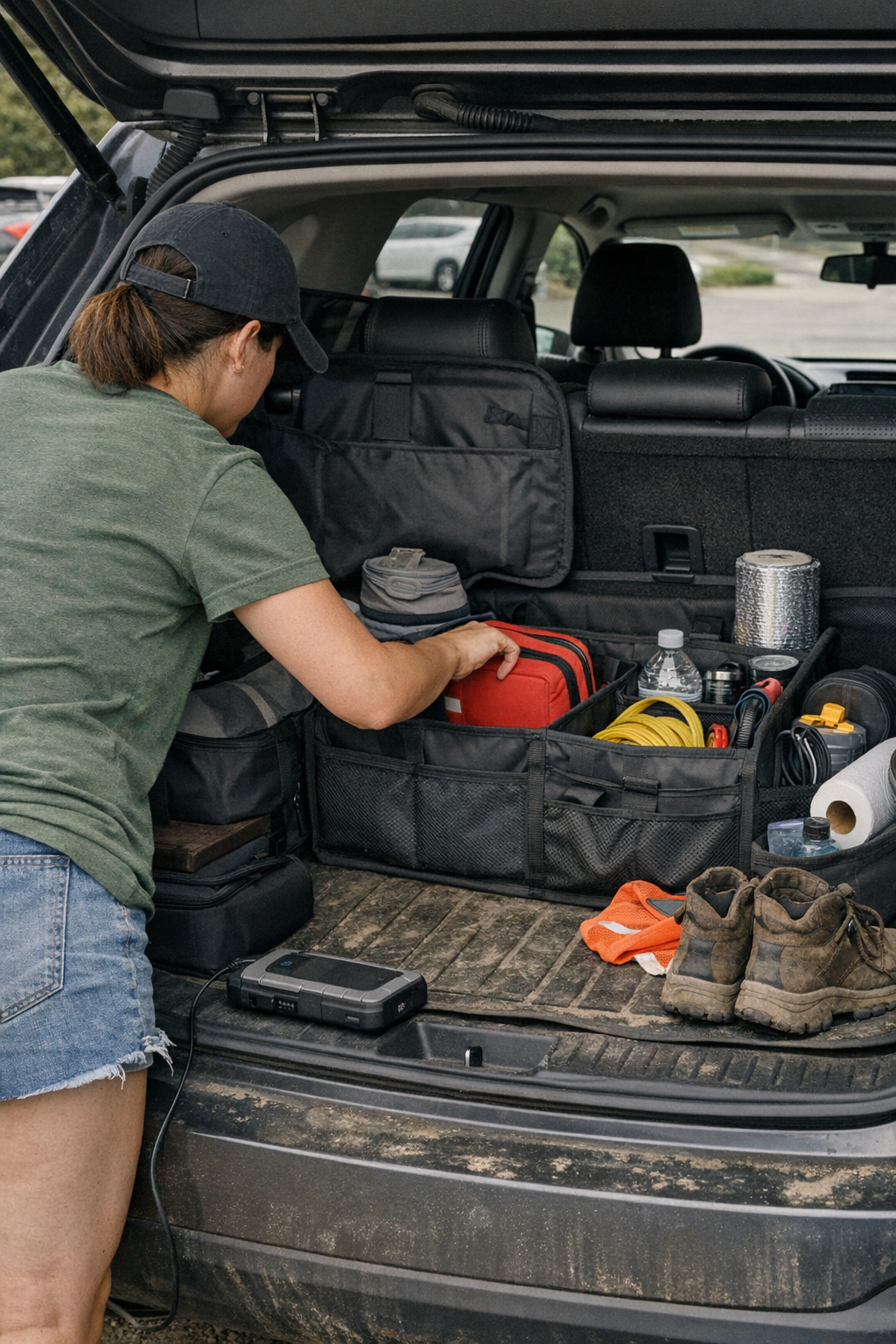
    • Stabilize sliding bins and drifting kits. Use bins fitted low and tight in the trunk, or attach emergency kits to seat anchors. No more sliding out of reach or creeping into passenger space where someone steps on them during a quick stop.
    • Balance visibility with speed of access. A tool or charger that’s half-visible but instantly reachable often saves more time over repeated use than one buried in “neat” storage—especially if you’re routinely loading, unloading, or switching drivers during a busy week.

    Where Routine Meets Repeated Friction

    The difference between a car that works with you and one that works against you isn’t about perfection—it’s about setups that shrink rather than add routine drag. A charging cable that never coils around your leg or a paperwork sleeve located two inches closer to your seat doesn’t sound dramatic, but in the cycle of errands and interruptions, it turns hassle into near-invisible habit. The real test isn’t the final look—it’s whether you stop noticing problems after they’re fixed, or just keep searching for the next workaround.

    Audit your routine, not just your trunk. Are your key items ready after a normal return, or do you always reset your setup? When you jump in with a new passenger, does anything get blocked or need shifting? In bad weather, do mats and covers help—or does protection become its own source of struggle?

    Redesigning for Fewer Interruptions and Smoother Return

    Upgrading your car’s interior organization is about function, not just a surface tidy-up. A setup you can count on means fewer pauses to adjust something that’s traveled or tangled out of place. The tweaks that matter most rarely look like transformations, but during a Tuesday night scramble for papers or a quick midweek cleanup after kids’ drop-off, those small differences erase steps you don’t want to take.

    Stubborn friction doesn’t go away by ignoring it. The right mount, the well-placed bin, or just a cable moved out of the wrong path makes those thirty-second interruptions invisible over weeks of returns, pack-ups, and driver swaps. If your setup means you don’t have to re-clear the same seat edge or restage the same cable before every drive, you’ll feel the difference most in all the moments when nothing gets in your way.

    If you’re ready to upgrade your setup from “looks tidy” to “works better,” you can find practical organizers, phone mounts, and car-use tools at DriveWellSupply.

  • Why Your Carry-On Setup Slows You Down During Travel Routines

    Most travelers realize too late that an organized-looking carry-on can still drag you down once you hit real airport movement. That tidy setup—pouches lined up, color-matched pockets, every charger wound and zipped—holds just long enough for one round of security or boarding. As soon as you’re juggling trays at TSA, digging for a passport while someone breathes down your neck, or trying to find a card at the gate, the initial order starts to break. A pocket that seemed “perfect” at home turns into a two-handed puzzle. Instead of quick retrieval, you get tangled charger cables hiding your boarding pass, critical documents stuck below snack bags, or a comfort item blocked by low-priority gear you thought you packed smart. You don’t just lose time—you lose momentum right when airport movement pushes for speed and access.

    A Bag That Looks Ready, But Moves Slowly

    Neat packing tricks rarely survive repeat-use pressure. At home, your layout looks under control; in motion—checkpoint panic, boarding squeeze, tray transfer—it exposes friction. Grab for your passport and a stray cable blocks the way. Your receipts, tickets, and boarding document share a slim pocket, but now they tangle every time you reach for one. The pain isn’t just a few seconds lost—it’s hesitation, blocked flow, and the slow realization that “visual order” isn’t cutting it.

    Recognizing the Early Warning Signs

    The first trip through security rarely shows the problem. But by the next gate, you’re still fumbling for ID while your section boards. Each access becomes messier: zippered pockets pulling double-duty, overlapping pouches forcing awkward two-hand digs, smooth routines derailed by the pocket you now avoid opening. Movement uncovers what home-packing hides—order that resists, rather than supports, real airport flow.

    The Hidden Cost of “Order”

    Order works until you actually need quick access. Bags that look versatile demand a full reshuffle for one document. Travel passes slip under mesh meant for tech, headphones migrate beneath snacks, and dividers intended to “help” create more layers to clear. With every extra compartment, structured neatness becomes physical friction—especially in the rush or when space closes in. It’s not chaos; it’s the wrong kind of control working against you at every movement checkpoint.

    Common Patterns That Disrupt Real Travel Flow

    • Re-grabbing the same passport multiple times—always shuffling past cords and bottles to reach it
    • Returning from security only to find your phone charger now blocks wallet access in the same pocket
    • Boarding hold-ups: awkward one-handed searches for a ticket now trapped under snacks and tissues
    • Fatigue that stacks—not just from carrying weight, but from the drain of repeating the same avoidable friction every time you need something fast

    When Repeated Use Highlights Real Weak Points

    Flaws rarely appear with a first packed bag—they build over three, four, five moments of gate movement. “Packed well” and “moves smoothly” become two different problems. That bedroom-perfect pouch configuration clears floor space, but can’t handle the rhythm of ongoing checks, tray dumps, and seat-side pivots. Every transfer magnifies the same design blind spot: digging for a document under slower-use items, or repacking half the bag to reach the one thing you need twice an hour.

    Real Moments That Expose Carry-On Weakness

    Imagine: At security, you go to pull your laptop but find it anchored by your liquid pouch. On boarding, your tech organizer traps the pass you need “right now” because it shares space with rarely used adapters. It’s not dramatic—it’s repeated micro-failure, where the cost isn’t a lost item but a lost beat, again and again. By hotel check-in, you realize every interruption today came from layout, not lack of preparation.

    Practical Fixes That Change the Experience (But Not Perfectly)

    Solutions don’t mean perfection—they mean fewer slowdowns and less rework, in the right places. The simplest fix: dedicate a single top-access pouch for high-frequency items—passport, cards, boarding pass—with no overlap. Cables and small gear live somewhere else. Leave deliberate “lanes” unfilled so nothing blocks the fast path. It’s counterintuitive, but empty space beats over-organized pockets when you’re moving between checkpoints back to back.

    Example: The Power of a Dedicated Access Lane

    Sail through security when key items sit alone at the top, not mixed with infrequent-use cords or toiletries. Instead of double-zipping around shifting pouches, you open one section, grab, and go. This small design pivot is only obvious after you run out of patience mid-transit and realize one friction-free grab is worth more than an alphabetized packing grid. Mid-journey, a quick-access lane feels like breathing room—less refolding, fewer retrieval errors, and noticeably less mental drag when every second counts between trays, gates, or narrow aisles.

    What Really Makes a Carry-On Setup Work

    The best layouts aren’t the ones that impress at the check-in counter—they’re the ones that rebuild themselves in seconds after the fifth interruption. Real structure minimizes friction, keeps you reset-ready, and quiets the urge to reorganize after every minor delay. Fast access turns delays into manageable blips instead of recurring headaches, so you spend less time recovering from your own system and more time moving forward through gates, connections, and hotel arrivals.

    Structured access always beats just looking tidy: fewer blocked grabs, less confusion about where things went, smoother resets from tray to seat, and a quieter, more controlled motion through unavoidable airport obstacles. The test isn’t what the bag looks like on the bed—it’s how little drag it creates in the middle of real travel.

    For more practical travel structure and easier carry-on access, visit: http://www.carryonsupply.myshopify.com

  • Streamlining Pet Travel Gear for Faster After-Meal Walks

    Rest stops don’t reveal weak setups—they multiply them. Pull in after an hour’s drive, dog already pulling to explore, and you know the routine demands speed: leash, waste bag, wipes, maybe a quick water break. But the “organized” travel bag slows you down at the very first stop. Leash tangled behind a bowl, waste bags swallowed under comfort blankets, wipes slipped into a zip pocket that now needs a two-handed dig—what looked neat at packing becomes a scramble under pressure. One hand holds back a restless dog, the other tries to free essentials that should never have gotten buried. The real pain isn’t a missing item—it’s the repeated drag: fumble, reshuffle, restart, every stop, every time.

    When “Looks Organized” Doesn’t Mean “Works Fast”

    Real-world pet travel is a test of access, not just order. The familiar letdown hits when there’s a pocket or pouch for everything—yet nothing is instantly grabbable when movement counts. Unzipping just to find items blocking each other, wipes nested beneath a double-stacked bowl, leash clasped behind treats—at rest, the kit looks tight. In use, it’s layered frustration:

    • One zipper opens…but the bowl’s in the way of waste bags.
    • The wipes you need must be fished out, leash-hand cramping from a dog’s pull.
    • Mid-trip, you’re repacking because you never found a way to avoid bottom-of-the-bag delays.

    The more stops you make, the clearer it gets: “organized” can just mean “stacked behind each other.” For multi-stop days, every slow retrieval becomes its own mini roadblock—especially when you’re juggling leash, carrier, and keys in one lopsided motion.

    The Multi-Stop, Multi-Interruption Trap

    Efficiency drops fastest on trips with repeated short stops. At the first break, you tolerate a slow search. By the third, you’re low on patience, reshuffling to keep up any sense of order. Small bags are no protection; if items overlap, even the best dispenser or folded blanket adds to the tangle. You grab for wipes and hook a finger on the dog’s ball instead. The mess isn’t just clutter—it’s lost flow, every single outing.

    Real-World Access: The Difference One Clip Makes

    The split between “looks good” and “works fast” is the access structure—what’s reachable at a seat edge or carrier door versus what’s swallowed inside. The first upgrade isn’t storage; it’s separation.

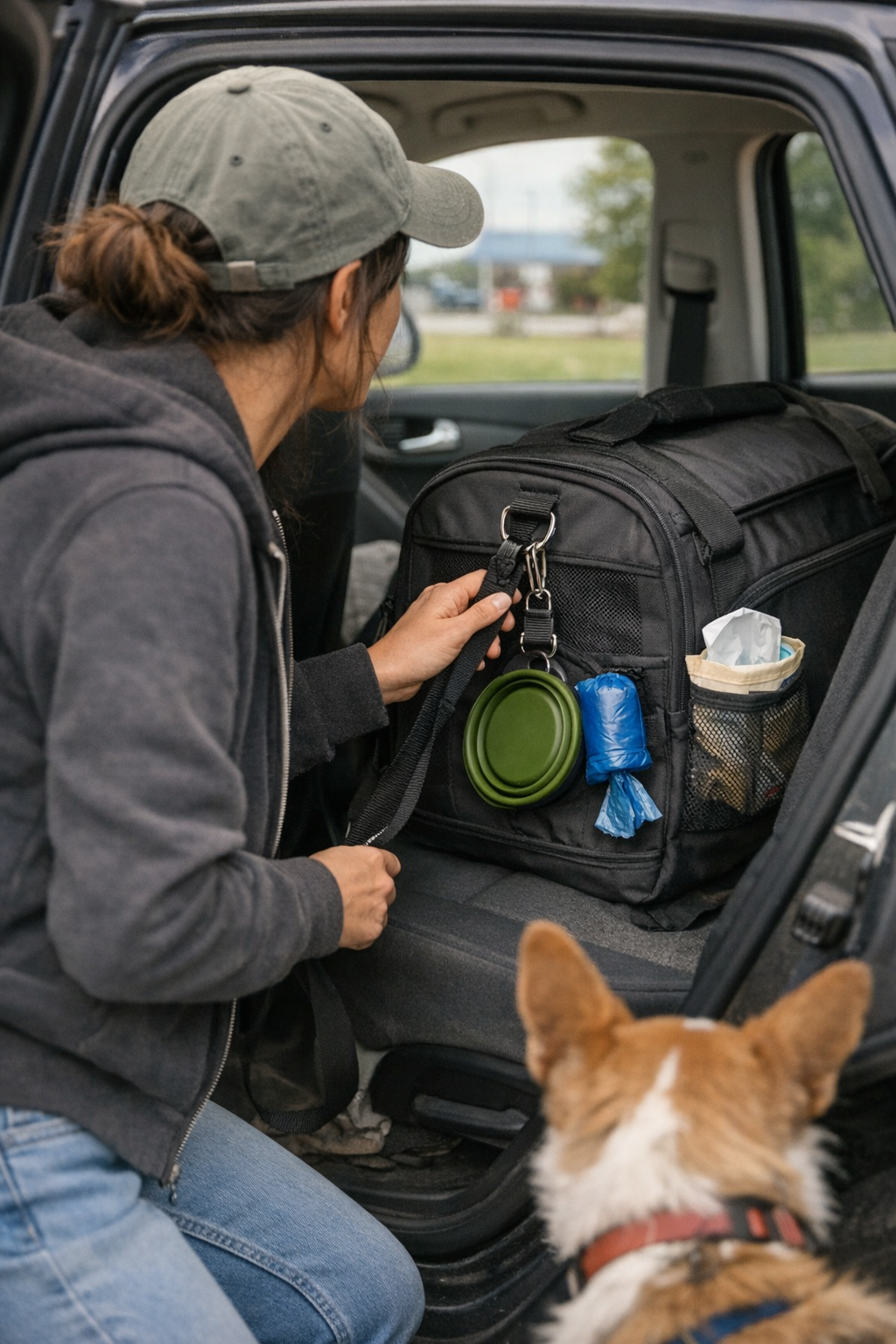
    Picture the high-friction rest stop: you’re pressed for time, dog ready to lunge, keys half out. Instead of scanning pockets or repacking on the car hood, you reach straight to a clipped waste bag at the seat’s edge—done. The leash is ready, clipped just outside the bag, no digging or double-hand fumble. Movement barely breaks stride; the restart is smooth, pet energy stays focused, and you skip the classic bag-juggle that frays nerves over a long day.

    Travel Friction You Only Notice When It’s Gone

    Repeated stops make weaknesses loud. Even a bag that impressed on day one will turn against you if daily use means constant reacharounds and forgettable pockets. True upgrades shove recurring items—leash, waste bags, wipes—into direct-access, not shared pouches or deep zips. Yes, the kit looks busier, less tidy. But efficiency overrules show: you transition from curb to car and back with nothing stuck, nothing overlapping.

    Common Setup Friction Points

    • One-hand fails: Needing a cleanup bag while both hands are full, forced into a risky unzip-and-search that risks dropping something or losing grip on your pet.
    • Stacked gear drift: Every item stacked just right at first—but by the third stop, wipes and bags have sunken out of instant reach, slowing movement every single time.
    • Owner/pet mixups: When a wallet, phone, or charger shares a space with pet gear, even a quick grab for treats turns into a full routine interruption.

    What’s barely tolerable at stop one gets old fast by stop four. Unless you fix the access logic, you’re dragging the same friction and delay through every leg of your trip.

    The Single-Reach Upgrade: Small Fixes, Big Flow Improvement

    Practical fixes aren’t about more pockets—they’re about smarter reach. Move your highest-use items to clips, visible loops, or outer pouches placed at the seat edge or carrier opening: waste bags clipped to the door, leash swinging from a carabiner, wipes visible in an open side slot. Each item split, never stacked, so nothing gets buried at the worst possible moment.

    This shift pays off in momentum:

    • Stops go smoother; less rummaging every time you park.
    • No tangled hands, no forced two-handed acrobatics with an impatient dog.
    • Cleanup and leash transitions run faster—movement feels reset, not stopped.
    • Pet stays engaged, less rattled by pointless pauses and owner-side scrambling.

    After a trip, you’ll find repacking is easier too—since nothing important disappeared into the bottom layer of the bag in the first place.

    Why “Prepared” Isn’t Always Practical

    The expected promise: more tidiness, more readiness. But tidy setups, especially fresh from packing, only feel effective if you ignore what real use exposes. “Prepared” matters less than “usable in motion”—especially when tired, distracted, or managing a high-energy pet under pressure.

    On long travel days or back-to-back stops, a system with true single-reach flow makes the difference between preserved patience and a day of friction. It only takes a missed waste bag or blocked leash to turn a simple stop into a hassle. The strongest upgrade can’t be photographed—it’s the flow that actually survives real travel. You only notice what works when, for once, nothing interrupts the pace, nothing saps your energy, and your pet isn’t left waiting while you hunt for what you already packed.

    Find pet-travel solutions and seat-side upgrades designed for real, repeated use at PawGoTravel.

  • How Practical Car Organization Reduces Daily Driving Frustrations

    Every car starts to feel “good enough” after a quick tidy—cables tucked, loose trash hidden, keys dropped somewhere safe. But you pay for almost-organized setups the moment real life piles back in. Return from work with hands full, and instantly you hit reminders: a cable bunches around the shifter, last night’s snack wrapper skids under your heel, or your charger plug migrates just out of reach. What looked under control still slows you down, trip after trip. The problem isn’t what you see at first glance—it’s the repeated friction buried in your daily return, load, reach, and re-entry routines. DriveWellSupply’s world is built for this pressure: setups that don’t just look better but break the pattern of small hassles before they pile up.

    The Real Cost of “Almost Organized” Car Interiors

    A quick cleanup fools you into thinking the problem’s solved: cables hidden from view, clutter stashed in the glovebox, trash slid into a door pocket “for now.” But within a week, the same cable wraps around your phone mount, coins rattle free into seat gaps, wrappers migrate from cupholder to floor. Real inconvenience lands the fifth or twelfth time you have to tug a tangled cord or dig through a shuffle of everyday carry—right when you want to start the drive, not pause for another fix.

    The friction isn’t obvious on an easy day. But after a week’s worth of early departures and rushed errands, the same loose charger or forever-drifting receipt adds up. “Almost organized” interiors don’t just resist chaos; they quietly tax your routine every time you grab for what you need and find only another small obstacle.

    Where Setup Friction Hides: Daily Patterns Uncovered

    Car routines rarely collapse under a single big mess. Instead, they lose efficiency in hundred small interruptions you tolerate day after day. Spot where friction lurks in patterns like these:

    Clutter Slides into Hard-to-Reach Traps

    A bottle that rolls under the passenger seat, keys wedged against the console, receipts retreating deep into side pockets—these aren’t accident spots, they’re the results of storage that isn’t ready for real use. Every time you have to twist, lean, or fish for something mid-drive, the structure is quietly failing.

    Cable “Solutions” That Only Work When Parked

    Plenty of cable tidies look elegant until you’re in a hurry. Concealed charging routes route cords right back into trouble: snared under the handbrake, tangled when you grab your phone, or vanishing when a seat passenger catches the slack. Friction here isn’t obvious in photos, but by Thursday morning, you’re tracing the cord for the third time instead of just driving.

    Center Console: The Everyday Bottleneck

    What starts as “just keys, wallet, cable” in the bin becomes a mini-jumble by day three. Constant push-pull to extract a pen, buried charging head, or forgotten toll stub forces you to dig, untangle, and reorganize right when you need to go. The mess isn’t dramatic, but it’s always in the way.

    Protection or Convenience—But Not Both

    Floor mats bunch near the pedals after every few entries and need straightening while you’re loading. Trunk organizers corral grocery bags but create awkward angles for anything oversized. So-called solutions cover one weakness but expose another—especially once the car is in real, repeated use by different people or routines.

    Why First-Glance Order Breaks Down for Daily Drivers

    A “tidy” cabin on Monday is slower and clumsier by Friday—not because you let things go, but because the cleaned-up look hides recurring little failures. Hidden charging ports delay plugging in. Lid-closed bins lock up essentials when your hands are full. Quick-drop door pockets overflow and migrate loose items onto the floor. The real test isn’t appearance, it’s how the space responds to a week of rushed grab-and-go, fast charging, hands-full returns, and multiple users all hunting for the same core items.

    What Actually Works: Tweak Real Routines, Not Just Appearances

    No “system” makes your car seamless, but a few targeted changes kill the worst friction in daily use:

    Essentials Only, Always Within One-Hand Reach

    Phone, wallet, keys—if you have to fish, open, or dig, the setup eventually fails. Open trays beside the seat or ahead of the shifter beat any lidded container for speed—especially when both hands are loaded or you’re passing items to a passenger. Ignore photo perfection; design for repeated, real-world reach.

    Magnetic Charging, Fixed in Reach—No More Cord-Hunting

    A charging cable clipped or magnetized near your phone mount performs every time: easy grab, zero chase, forget about the floor. The less you fiddle with cables, the more consistently you actually arrive with battery left and mental energy intact. Slow cable friction is invisible—until a simple switch kills it for you, permanently.

    Visible Open Storage Wins for Everyday Use

    Hiding everything looks better only for photos. In practice, open trays and organizers keep what you actually use quickly accessible—keys, receipts, sanitizer, or parking pass—no lid to lift, no stuck compartment to unjam. This matters even more when the car’s shared: family, rideshares, or rotating drivers stop tossing things just anywhere if there’s an obvious home, immediately at hand.

    The Accumulating Cost of Small Messes—and Small Wins

    Every spot you clear, every cable you reset, every item you dig for is feedback: the car’s setup is still quietly working against how you actually move and load. Wherever your hands hover or your eyes land first should have a solution built in—trays that hold fast, storage that never migrates, cable spots that don’t tangle after a week. Aim for setups that interrupt the return of mess, not just hide it.

    Less Work, More Flow—Routines That Stay Manageable

    No one cares about “perfect” in a car that gets used every day; what you need is for the places you touch most to stay ready, the cables to stay connectable, and the storage to stay functional after real-world pressure. Every time you reach for the charger and it’s exactly where you want it, or toss paperwork into a tray instead of under the seat, that’s less friction collecting. What you set up now either compounds hassle—or keeps busy routines moving, trip after trip. The right DriveWellSupply tools are those you notice least each morning, because they make everything easier to start again.

    Find practical car-use tools and solutions for your daily drive at DriveWellSupply.