
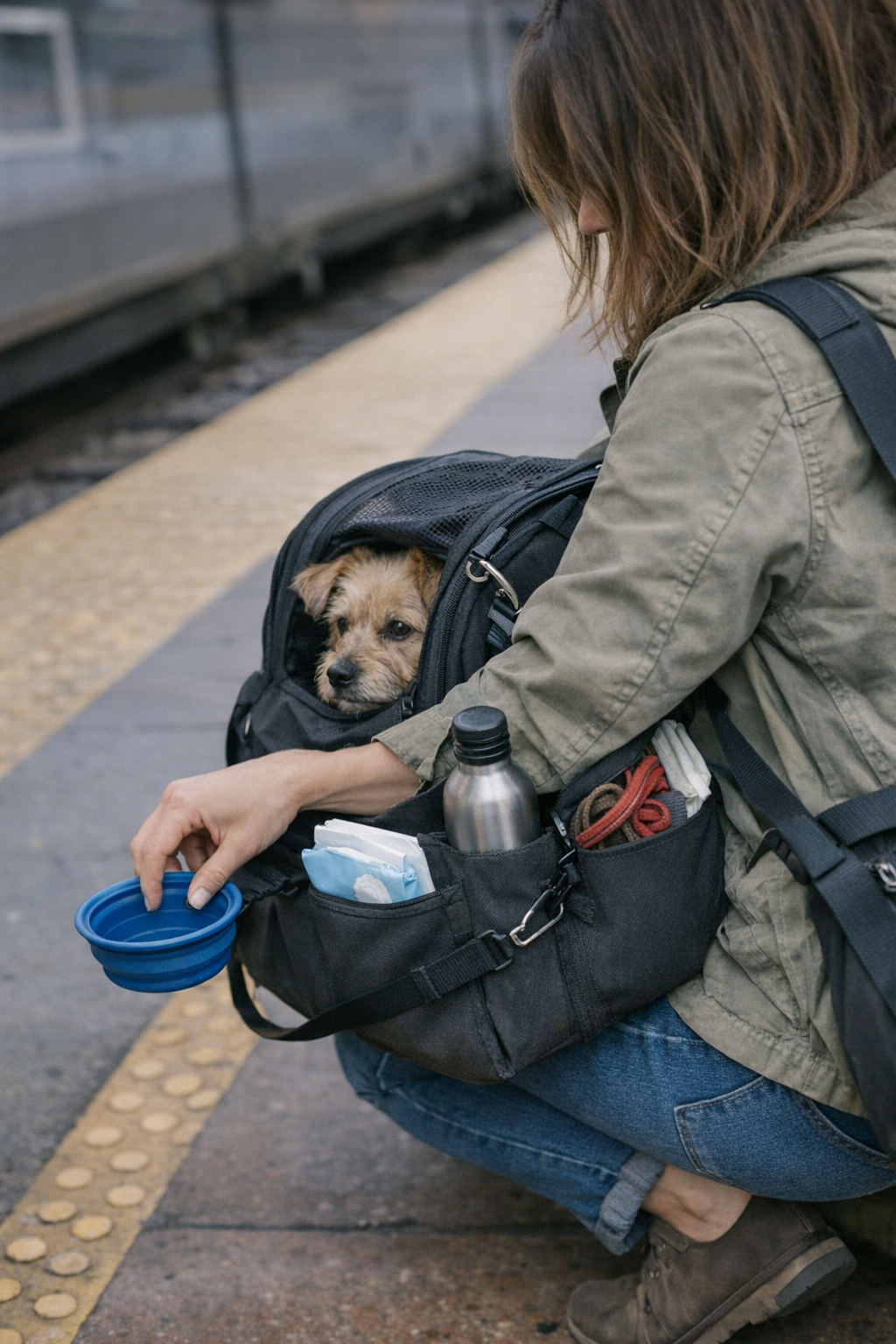
It’s easy to trust your pet travel setup before the trip starts—but the real test comes the first time you need something fast and can’t get to it. You feel the friction as soon as you reach for a wipe with one hand while steadying your dog, or fumble to find a bowl at a rest stop only to dig past a blanket and documents. In pet travel, the problem isn’t how organized your bag looks; it’s how those “just-in-case” layers, overlapping pockets, and blocked zippers add seconds of hassle at the exact moment you need flow, not friction. PawGoTravel lives in these pressure points—where travel gear either quietly breaks your rhythm or keeps pace, stop after stop.
When “Looks Ready” Isn’t the Same as “Works Smoothly”
An organized pet bag looks reliable at first glance. But the real divide shows up the moment movement starts. Maybe your leash slips in front of the main zipper, or wipes end up wedged behind a spare shirt. The collapsible water bowl, so logically packed, becomes a buried obstacle every time. The system looks calm until repeated stops reveal that well-zipped sections can still act like locked boxes—each extra second adds a layer of frustration to what should be basic travel routines.
The Repeat Offenders: Small Delays That Add Up
Fast access isn’t about carrying more, but about smart reach. A calm bag at the gate can become a source of clumsy struggles by the third trip to the aisle, especially if quick-grab gear drifts downward or gets trapped behind comfort items. You usually don’t notice until you’re forced into an awkward twist—one hand trying to keep your pet steady, the other sorting through a mess of “organized” layers. That’s when the difference between well-packed and well-placed items gets loud, every single stop.
Scenes Every Pet Traveler Will Recognize
Pet-travel setups rarely fail from lack of compartments. More often, it’s the mismatch between actual travel flow and how compartments behave under stress. Friction creeps in during:
1. The Stop-and-Search Cycle
A layover hits. Your carrier’s on one shoulder, your pet shifting with each announcement. You know your wipes are packed, but with one hand on the carrier and the other digging, it takes shuffling through larger items—blankets, harness, documents—before you finally reach them. That “organized” start is gone, replaced by the dreaded unpack-just-to-access rut. The original order offers zero help when every grab becomes a multi-step process in public, under pressure.
2. The Overlapping Zones of Owner and Pet
It’s routine: charger cords creep into pet supply pockets, snack bars wedge next to treats, or vaccination paperwork blocks leash access. Owner and pet items—blended for efficiency—end up making retrieval a two-sided chore. You’re repeatedly shifting your own things to deal with your pet’s, the line between the two getting messier at every rest stop or seat change.
3. The Comfort-But-Complication Dilemma
The cushion you add for a smoother ride or the plush toy meant to soothe your pet all have a knack for migrating on top of immediate needs. That “comfort-first” choice pays off only until you try to grab cleaning supplies or slip out a bowl—forcing a mid-trip reshuffle. Soothing one problem quietly sets up the next: calm pet, blocked access, slower you.
Packing Logic vs. Access Logic
Most travelers trust “packed and zipped” means ready. But motion—boarding, stopping, seat changes—exposes what static organization keeps hidden. Essentials packed under low-use gear turn single-handed cleanups or mid-trip snacks into unpack-and-repack drills, especially with bags lacking top or front pockets. The absence of true quick-access means routine actions demand both hands and extra seconds, just when you have no extra to spare.
Not Just a One-Time Hassle
These aren’t isolated annoyances. Real trips run on cycles: reach, pause, reshuffle, and repeat. If you’re always pulling out the wrong pouch first or shifting aside your own cables to reach the pet bowl, your bag structure is quietly working against you—and every restart gets heavier. The inconvenience is cumulative: small interruptions drain focus from your pet and slow down every return to movement.
Adapting for Real, Repeatable Travel Moments
What fixes the problem isn’t clever folding or more pockets. It’s noticing which items you actually grab first, over and over, and setting them up for reach—a side pocket for wipes, top slot for bowls, leash clip that doesn’t snag. That way, you avoid digging, don’t interrupt your pet’s calm, and sidestep the cycle of minor delays stacking up. The change isn’t about the gear’s look but about building access patterns that match the trip’s real tempo.
“Looks Prepared” vs. “Feels Easier”
No bag fails at the start. Weakness appears when the stable, backseat-perfect kit turns unreliable after a few cycles—subtle overlaps jam key move points, or visual tidiness hides access issues no one sees until routines repeat. Over time, bags built for smoother reach—not prettier lines—keep you and your pet in forward motion. Faster comfort, quicker cleanup, fewer restarts: set structure right, and every small action keeps the trip moving, not stalling.
Practical Observations from the Field
- External and top-access pockets save more time than their size suggests: that one-second reach beats any “deep clean” at every delay.
- Bags geared for one-hand-only retrieval let you handle brief stops without breaking your carry or making your pet wait longer than necessary.
- A neat setup under inspection is meaningless if the first delay exposes that essentials are always two layers away from where your hand lands.
- Owner/pet item overlap is a recurring pain—dedicated, reliably placed pet pouches prevent the need to unpack and repack for the same action, again and again.
Making Each Restart Smoother, Not Slower
The measure of a travel setup isn’t its initial order, but how many silent pauses you avoid after each stop. Gear that keeps wipes, bowls, treats, and leash exactly where you reach next time means less reshuffling, less pet anxiety, less drag on your focus. The smoothest pet-travel setups aren’t necessarily sleeker—they’re quieter in use, dissolving friction so you and your pet can actually keep moving together, not working against your own system.
Explore practical pet-travel organizers and setups that actually keep pace at PawGoTravel.