Author: jaesoon_admin

  • How Carry-On Design Influences Travel Fatigue and Movement Efficiency

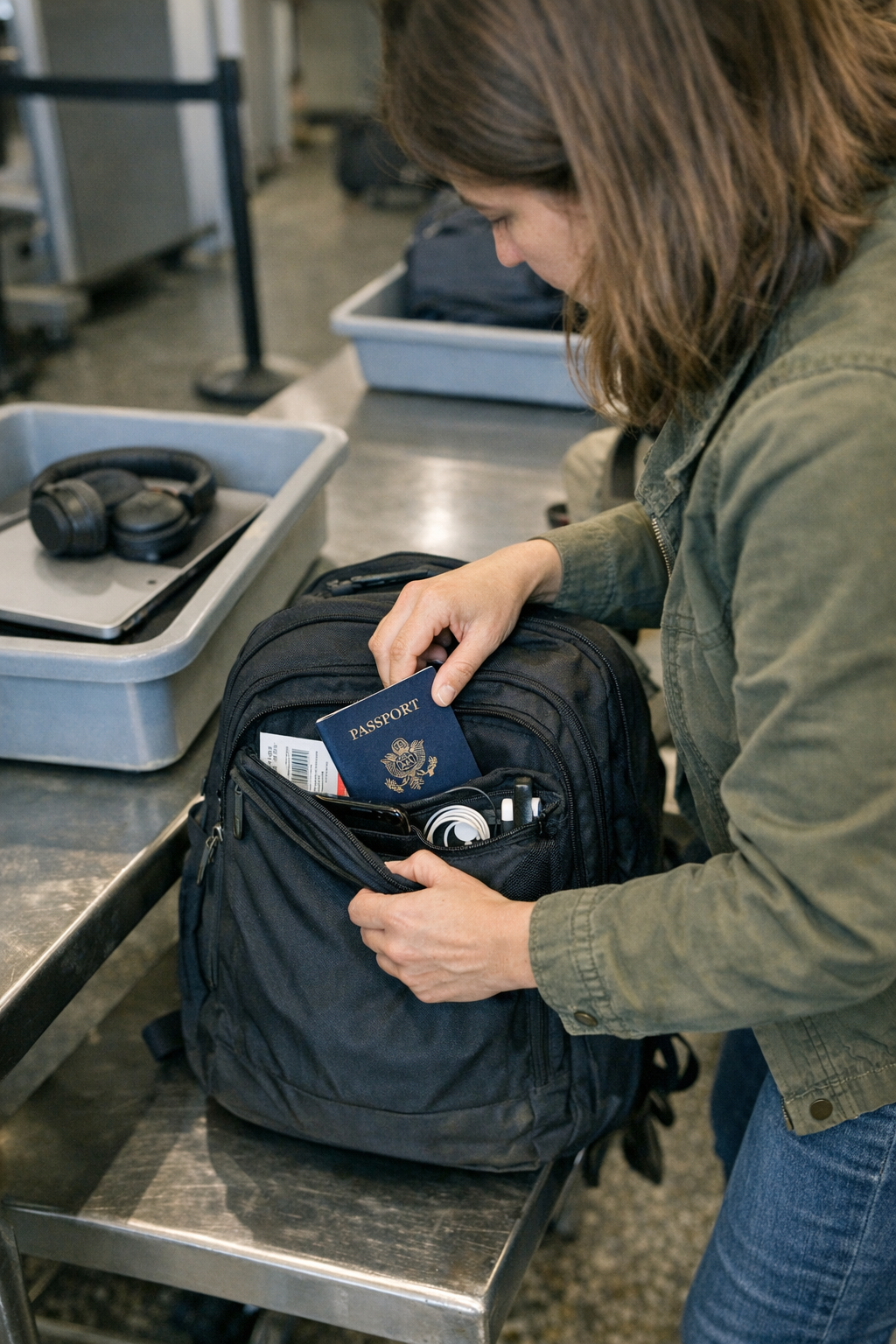
    No bag escapes friction once real travel starts— not even the carry-on that looks sharp on a hotel floor. You may start with every cable wrapped, documents sleeved, and pouches in strict order, but that visual system collapses the first time a security queue accelerates and you have to tear through a tight zipper or unbuckle two layers for a passport. What looked “organized” in stillness breaks down fast: outer pockets stall at the checkpoint, the right document hides one pouch deeper than you remember, and each retrieval turns into a mini delay with other travelers pressing closer. The drag isn’t just aesthetic—every missed grab, every awkward repack, chips away at your motion and energy for the rest of the trip. CarryOnSupply’s whole world starts right in that gap: where tidy setups get stress-tested by airport routines.

    Order on the Surface, Friction in Movement

    Smart pockets and tight grids promise control. In use, they turn on you. A pen holder that impressed you when packing becomes a thumb trap when you’re already blocking the boarding line. The passport you filed neatly is now squeezed between a cable nest and receipts—good intentions bogged down by tight layering and misplaced access. Digging for headphones at your seat means contorting around two other organizers. In the moments that matter—security, boarding, the grab for a charger during a gate change—bags designed for visual order often act like walls instead of doors. The more “buttoned-up” you go, the more every access point becomes a new bottleneck. Looks can fake utility, but speed and flow are what you’ll feel—or lose—every time the pressure spikes.

    The Real Cost of “Neat-But-Slow” Setups

    Energy bleeds out in seconds: slow zippers, layered pockets, a charger in the wrong sleeve. By midday, what you feel isn’t just miles walked or a long layover—it’s the invisible tax of tiny repacks, the break in concentration each time you hesitate in front of a tray or boarding agent. If a single retrieval forces you through three compartments, your flow breaks. Multiply that by each checkpoint, every boarding zone, every in-flight shuffle, and the design flaw compounds. The airport isn’t what slows you; your own bag is what stalls your progress in repeated, friction-heavy bursts.

    • Security line: The tech pouch that fits beautifully at packing becomes a puzzle box when the only way to get your laptop out is to pull three other things first. Bins crowd up. Eyes roll. Time slips.
    • Gate boarding: A boarding pass buried for “safe keeping” now means an awkward fumble and a line that closes the gap behind you, tension rising with each extra second.
    • On the plane: Cable pouches packed deep demand a full reshuffle—on your knees, elbow pressed into the seat, as the aisle crowd inches forward and your seatmate’s patience thins.

    These are not rare emergencies. They are the background noise of travel fatigue—a bag that started “in order” but gets heavier and clumsier with every repeated reach.

    Repeated Use: When Organization Backfires

    What feels secure and clever at home becomes less forgiving in actual travel motion. That color-coded pouch plan? Two layovers in, you’re double-checking which organizer ate your passport. Each micro-task—dig, unzip, repack—amplifies every time you face:

    • Multiple flights or short windows to connect
    • Frequent ID and document checks
    • Overhead-bin reshuffling, especially with quick swaps
    • Transitions from train to terminal, curb to gate, seat to seat

    Crucial items get isolated “for order,” but pressure moments expose every extra layer you built in. The bag that presents well on a bench falls apart when you’re speed-retrieving for boarding, or snatching a pen midsentence on a customs form. Organization that can’t adapt to repeated hand-off simply creates new patterns of friction—and travel makes you feel each one, over and over.

    Single-Pouch Solutions: Why Accessibility Wins

    The move that changes the day? Taking every recurring-use item—boarding pass, ID, pen, headphones, crucial cables—and staging them for single-motion access. That “messy” outer zone you worried would look cluttered? It’s your forward-motion insurance when lines are moving and fingers are cold. A single zipper replaces a five-step deep-dive. The improvement is immediate: you reach once, retrieve, and move—no stalling, no tray clutter, no mental lag. Now, you reset your bag structure in seconds, not after every access. Travel stops being a hunt and becomes a flow. That’s the real-world win: organization built for repeated disruption, not just for the moment the bag first zips closed.

    Repeated Friction Adds Up—But So Does the Fix

    Travel fatigue is cumulative. Each stop-and-dig adds tension you carry as you move through crowds, repack in cramped overhead spaces, or squeeze against strangers in line. The problem is rarely one big jam; it’s a hundred small barriers stacked by the design of your setup. Overlapping zipper paths, items sharing one pocket, or pouches set behind each other all combine to slow down the day. Changing your carry-on isn’t a cosmetic fix: moving high-frequency items into an “express lane” saves you from reflexively hesitating, freezing the line, or losing rhythm in the run-up to a gate. Tiny changes in pouch placement mean you move forward, not sideways, and finish each connection less “baggage-worn.”

    Realistic Trade-Offs: Less Visual Order, More Functional Flow

    Chasing perfect visual order often backfires once the trip actually starts. A bag that’s a Pinterest post at takeoff is soon “mid-battlefield”—pouches half-open, one outer slot a bit overused, a stack of travel scars on the quick-access section. That’s not mess. It’s evidence your setup is finally tuned for what matters: immediate, frictionless retrieval and minimal energy loss. If you’re reaching for the same item and not breaking your stride, you’re winning. After a few cycles, you stop wasting time wondering where things landed—your entire setup adapts to your actual, repeated trip rhythm instead of resisting it.

    Recognizing When Your Setup Needs an Upgrade

    If you catch yourself hesitating at every retrieval—palming pockets, feeling for a missing charger, growing irritated at a travel wallet that should be in reach—it’s the bag telling you it needs to change. The answer isn’t another round of pouch stacking; it’s moving repeated-use travel essentials into fast-access zones. By the end of a true travel day, count the number of times you have to dig for what should be at your fingertips. Every reduction is a win you actually feel—one less drain on your momentum and patience when it matters most.

    Small Shifts for a Noticeably Better Carry-On

    The difference between a carry-on that “looks organized” and one that moves with you is how it responds in stress. Stop measuring by internal neatness; measure by how few times you have to pause, re-sort, or apologize for blocking a walkway. Each step toward single-point retrieval is a step away from the slow build-up of travel fatigue. Organization isn’t about freeze-framing your gear; it’s about building repeatable flow for every hand-off, check, and transition, all day long. The best carry-ons aren’t just beautiful when static—they become more invisible, more useful, the more you move.

    Shop CarryOnSupply for practical carry-on travel organizers and tools

  • How Small Interruptions from Your Dog Can Disrupt Daily Care Routines

    Why the Littlest Dog Pauses Slow Down Your Entire Pet Care Routine

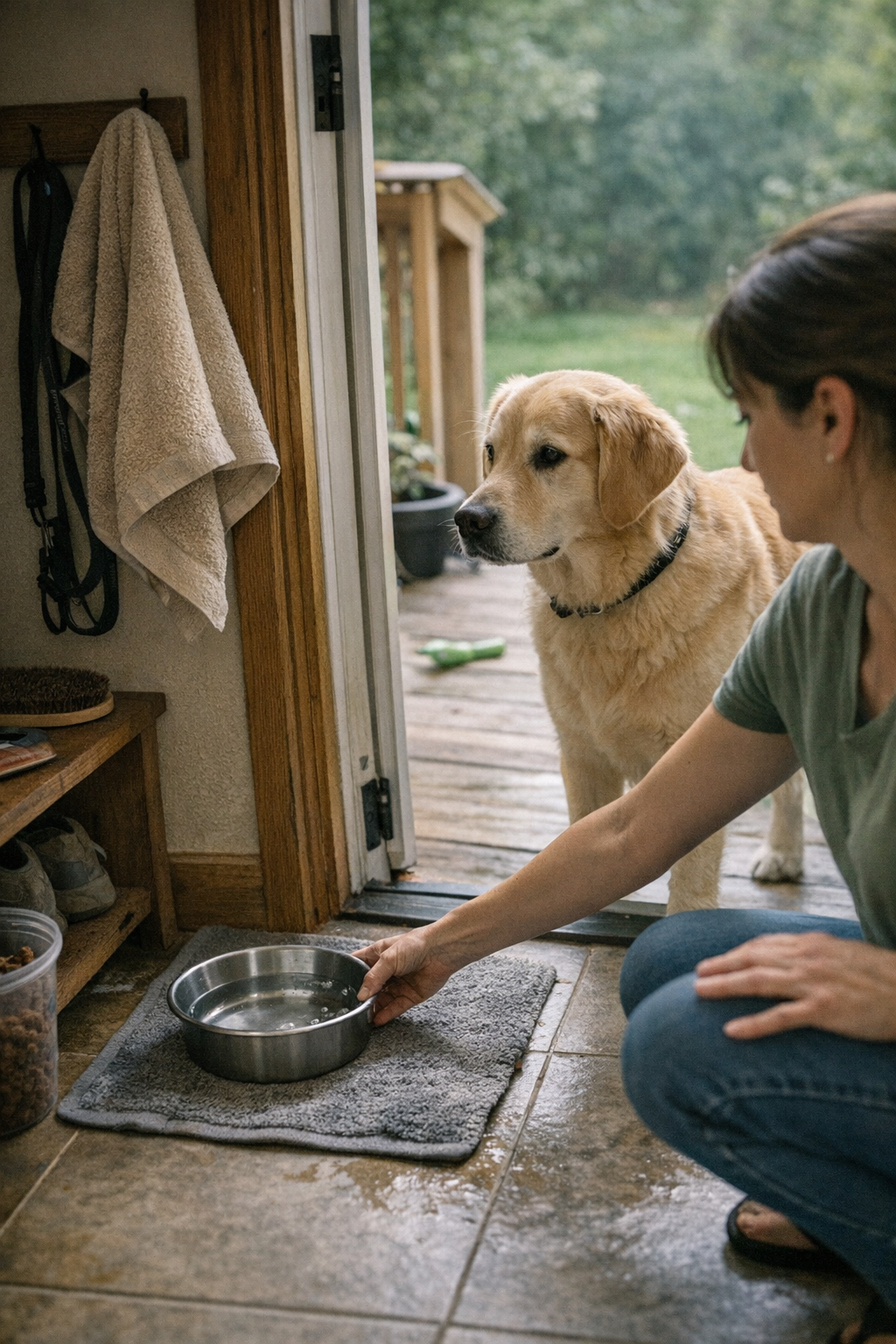
    You’re ready to dump out a used water bowl, reset your pet’s food corner, or toss a towel back on its hook—but then your small dog stops dead at the door, waiting for your okay before crossing into the room. What seems like a few seconds of hesitation turns into an entire stalled routine: your one free hand juggles leashes and mail, the wet bowl is dropped wherever fits, and now the floor’s streaked and the next cleanup tool is nowhere nearby. It’s these tiny, repeated pauses—with one item out of place or one tool just out of reach—that quietly unravel an ordinary pet care setup. If you’ve ever watched a tidy feeding corner slide into daily disarray, you’ve seen how a simple pause can trigger a chain of missteps CalmPetSupply was built to handle.

    The Compounding Cost of Small Interruptions

    Picture coming back from a walk, armful of leashes and a dripping bowl balanced in one hand. Your dog halts on the threshold, waiting for permission—a routine pause you already anticipate. That’s all it takes: you set the bowl down just inside the door, rarely on a mat that’s in place, often beside a bag of treats or a scattered towel left from last time. Now, water gathers where it shouldn’t, towels slip off hooks, and even a quick reset becomes a tangle. The plan for a two-minute transition turns into five: the bowl sits, half-cleaned, licking up counter space. With every repeated pause, these “small” interruptions add up, and missed wipes or delayed tool returns start piling into visible clutter.

    These moments don’t stand alone. Over a week, the shortcuts compound: a scoop buried under mail, towels stranded on dining chairs, bowls that never quite get clean and ready before the next feeding rush. Areas that looked organized fall back into old patterns, especially when the right supply isn’t right there where you need it most. Even with everything appearing put away, the same awkward step returns—just when you’re least prepared.

    When “Looks Tidy” Isn’t the Same as “Works Well”

    A feeding setup can seem neat, at least at a glance, especially after a quick surface wipe or a bowl pushed out of the way. But real friction shows when the daily rhythm gets interrupted—a towel isn’t at the entry, a scoop is in the sink, the wipes are stashed with shoes instead of near spills. Each time your dog pauses at the door, the break in flow becomes another chance for clutter to build up or for quick cleanup to get skipped, unnoticed until the “tidy” illusion wears off.

    The more you stack tasks—refilling water, greeting a guest, cleaning after a walk—the more obvious it is: the neat look covers up backup and missed resets. Working around unfinished steps is draining, and “organized” quickly slips into a repeat cycle of searching, reshuffling, and fixing after the fact. A system that only looks tidy creates a back-and-forth drag that a real-life setup can’t hide for long.

    Real-life Scenes: Where the Routine Stalls

    • You want to refill the water bowl, but the drying towel’s somewhere else. A napkin does the trick—barely. Streaks and drips slow you down and leave a sticky floor for later.
    • The leash finally comes off after the walk, but brushes and wipes are buried under a pile of outgoing mail. Five extra seconds here, a mental note to clean up later—delay layers on delay.
    • Litter check before bed turns into a hunt when the scoop is buried behind a load of laundry rather than beside the box. Bedtime stretched yet again because one item migrated out of reach.
    • Feeding is thrown off because the main bowl is still at the sink, half-cleaned, leaving the backup in use while the mess stacks up for tomorrow’s you.
    • On a late check, the hallway’s cluttered with abandoned toys and towels, slowing even your last sweep before sleep. The day never seems fully reset.

    One Weak Link Drags Down the System

    These breakdowns aren’t about training—they reveal how easy it is to miss a step in a setup that wasn’t made for real-world repeat use. A towel never on its hook, wipes always in the wrong corner, the brush behind the door—each missing piece becomes a recurring tripwire. No matter how carefully you organize, the one item that goes missing or gets buried means you’re repeating work and letting disorder slip back in, especially as the routine gets busier.

    How Staging Essentials at The Pause Point Changes Everything

    Everything shifts when essentials stay visible and reachable at those proven pause points. Instead of putting towels in a closet or scoops with the bulk supplies, hang them right by the main entry, or mount wipes by the feeding area—exactly where hesitation or chaos most often hits. You sidestep the need to search, grab, or “make do” every single reset. Brush by the door, towel actually on its hook, wipes not only in a drawer—these placements cut extra steps before they even start.

    The payback is immediate: cleanup and resets that happen in real time, not as a backlog. Water bowls get refilled and dried on the spot. Gear doesn’t disappear under mail. Litter change is one pass, not three. Every small interruption has a direct fix—the right tool at the right place—so pausing becomes a built-in moment to reset, instead of a missed opportunity that echoes through the week.

    Conclusion: The Long-Term Effect of Small Setup Changes

    Dogs pause and check in at the threshold—that’s how they show trust, not trouble. But most routines break down not from bad habits, but from setups that demand too much backtracking to run smoothly. When the basics are staged at the true pinch points, even frequent interruptions stop stacking into bigger weekly messes. It’s about closing the gap between what seems organized and what makes ordinary care easier to keep up—one towel, one scoop, one shelf at a time.

    The difference is durable: a setup that still looks calm a few days later, not just five minutes after cleaning. When you stage pet essentials where real-life friction happens, your routine finally stays manageable, even when the pauses keep coming.

    For more ideas on practical pet care routines and solutions, visit CalmPetSupply.

  • How Thoughtful Entryway Lighting Enhances Daily Routines and Safety

    The illusion of a finished entryway lighting setup breaks fast—usually within the first week of real use. You spot the gaps not during installation, but in the small, everyday frictions: reaching for keys in a half-shadowed niche, stumbling over a cable hidden by habit but exposed in practice, or wincing as ceiling glare floods your eyes but leaves the bench awkwardly shaded. What looked tidy at the start—a single overhead fixture, a streamlined lamp with minimal cords—starts tripping up daily routines long before it feels settled. The difference between what looks resolved and what actually works becomes sharpest in the rush of real life: missed edges, awkward shadows, and support hardware that feels more visible than helpful.

    The Slow Unraveling of Overhead-Only Lighting

    Overhead entryway lights can look crisp on day one, but real pace exposes their blind spots. That flush-mount fixture with a frosted diffuser? It photographs well but falls short by the end of a busy week. Glare ricochets off polished floors, edges at the bench vanish into shadow, and grabbing something from a low hook means stooping into murkier corners instead of acting in clear light. You notice, often when you’re in a hurry, where the “finished” look quietly fails the routine.

    This isn’t about atmosphere—it’s daily inefficiency. A ceiling light throws cold lines on the floor at dawn, while corners and action zones stay dim. Small items—keys tucked along the wall, dropped mail, shoes under a bench—regularly fade from sight. Every shortcut made during install becomes a repeated obstacle: forced searching, repeated squinting, stumbling over what should already be visible and accessible. Friction compounds: missed objects, fumbled routines, and entryways that never feel as resolved as they look.

    Cable Runs and Accessories: When Support Becomes a New Issue

    Quick plug-in lamps or peel-and-stick LEDs tempt with instant brightness, but their downsides pile up quickly. The surface stays tidy only until a cable creeps into a walkway or a bracket, once stable, grabs a passing sleeve or catches underfoot. Every exposed or lazily routed cord—especially without solid brackets or anchors—adds a new drop point, snag hazard, or visual distraction right where traffic is thickest and focus is lowest.

    Most entryways multitask—storage, drop zones, last-minute dressing—so hardware that looked invisible during setup soon becomes an obstacle course. In less than a week, most routines get slowed by their own solution: tangles under benches, rerouted cords inching loose, support points that seemed discreet but are now the visual focus of a usually ignored zone. The supposed quick-fix winds up giving you new clutter and a different frustration.

    Real-World Routine: What Slows Down Every Day

    Think about the pace on a Monday morning: one person grabs a coat from a wall rack, another digs for a bag near the bench, a third desperately checks under furniture for headphones. Bad lighting throws glare onto the seat and leaves hooks in shadow, forcing mini scavenger hunts, abrupt stoops, and defensive sidestepping. Even a setup that looked systematized on move-in day can undercut itself if a trailing cord or awkwardly placed bracket interrupts the fast “grab, go, drop” choreography that busy entries demand.

    Why Action Zones Demand Thoughtful Light and Cable Management

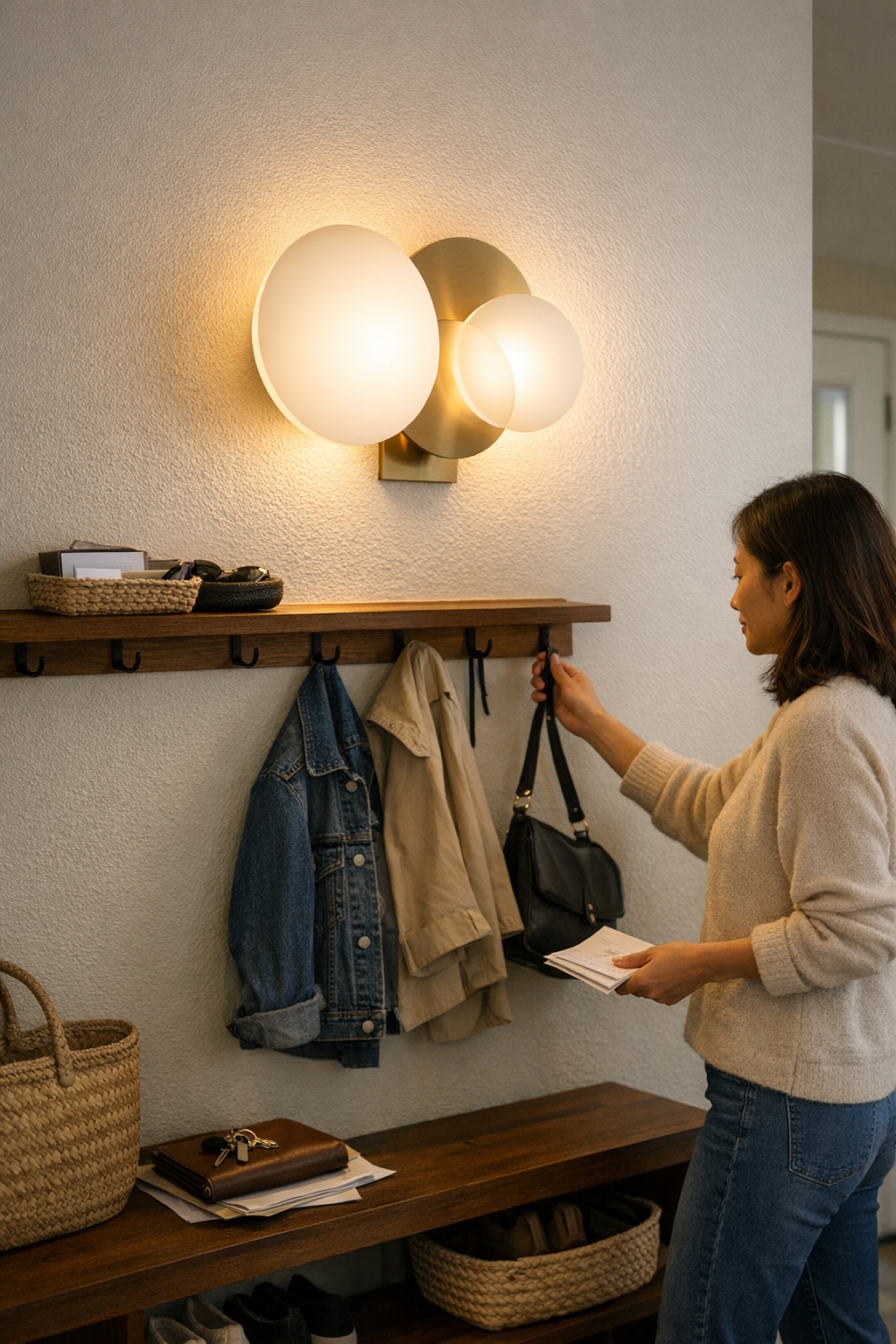
    The win isn’t just about overall brightness—it’s about placing usable light right where action repeats, and removing mess and friction, not just moving it. Wall-mounted sconces and slim LED strips, set at hand or shelf height (generally within 70–85cm from the floor) do what no ceiling fixture can: they deliver clear, shadow-free light at the exact points where you grab, sort, stash, or leave objects behind.

    It’s the difference you see in fewer problems: you reach for something on the shelf and your hand lands on it cleanly, without feeling around. Instead of glancing down to sidestep a tangled extension cord—or re-securing it for the third time—you barely register the bracketed cable tucked behind a coat rack. A routine proves its improvement: edges stay illuminated, corners don’t hide daily debris, and you stop tripping over your own fixes—both literally and visually.

    Bracket Placement: Small Moves, Lasting Improvement

    Entryway reliability often comes down to unglamorous but crucial bracket placement. When mounting points are anchored just behind shelves, under benches, or along wall supports, hardware disappears into the background—functionally and visually. This stops the slow migration of cables across traffic lines, the drift of mounting tape under temperature swings, and the sag of light bars that seemed level but end up tilted after a few weeks of real use. If hardware or cable feels sturdy at first but gets brushed, shifted, or knocked loose during the regular grab-and-go, you’re watching the actual limits of the setup play out.

    Small Practical Tips for Routine-Proof Entryway Lighting

    • Mount wall or shelf lights at hand level, not just for looks: Delivering light precisely to the active “grab zone” keeps you from repeatedly groping or squinting at bag, shoes, or keys in a dim stretch.
    • Use adhesive cable guides or robust brackets for every cable run: Tuck cords behind, along, or under furniture to eliminate both visual clutter and trip points—no unsightly tangles or accidental jerk-outs after the first week.
    • Leave exposed bulbs for elsewhere—use diffusion at entry points: Frosted or shrouded fixtures reduce harsh glare and stop the jarring “eye-flash” that stains first and last impressions when routines are under time pressure.

    The Real Test: Lasting Clarity Versus First-Impression “Clean”

    Setups that last don’t fight for your attention—they quietly support routine, staying in the background after months of use. What marks a routine-proof entry isn’t a perfect first look but frictionless function: grabbing keys, kicking off shoes, sorting pockets, all without side steps, blind spots, or cable-kicking detours. When lighting support is tuned—cables routed where you’ll never look, mounts chosen for both hold and invisibility, light targeted for the hand zone—the space feels settled, not staged.

    Everyday use is the only real stress test. Weak setups—those that leave glare trails, hide the bench edge in shadow, or let cables creep back into traffic—fail quietly but repeatedly. The right setup isn’t what impresses on day one, but what you simply stop noticing after the hundredth exit or frantic search. When entry lighting just “works,” it softens the entire morning scramble. For spaces where routines and traffic never let up, clarity and stable support are worth more than showroom polish every time.

    Find practical entryway lighting and cable support solutions at LightSupport.

  • Why Flexible Storage Solutions Outperform Fixed Systems in Small Workspaces

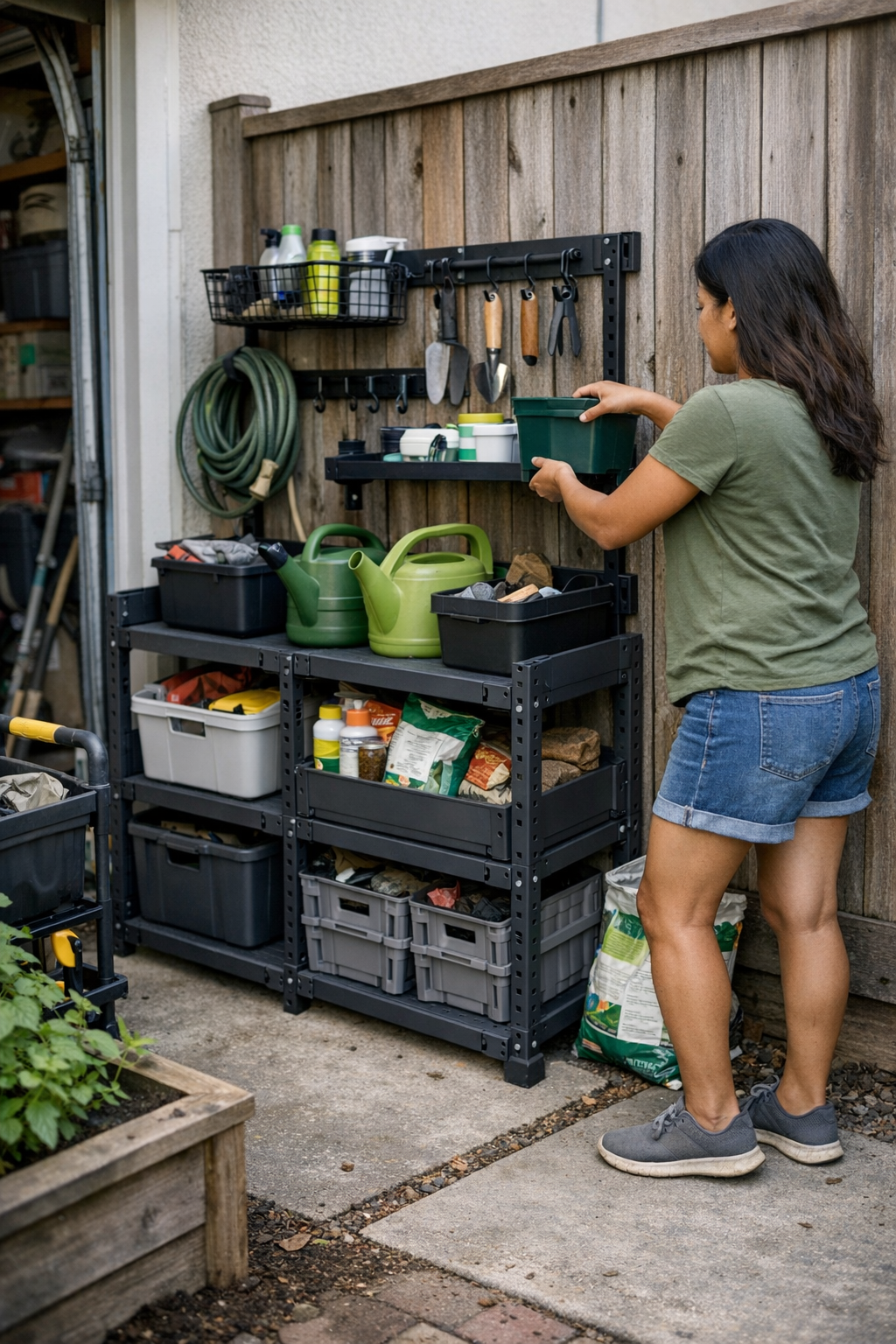
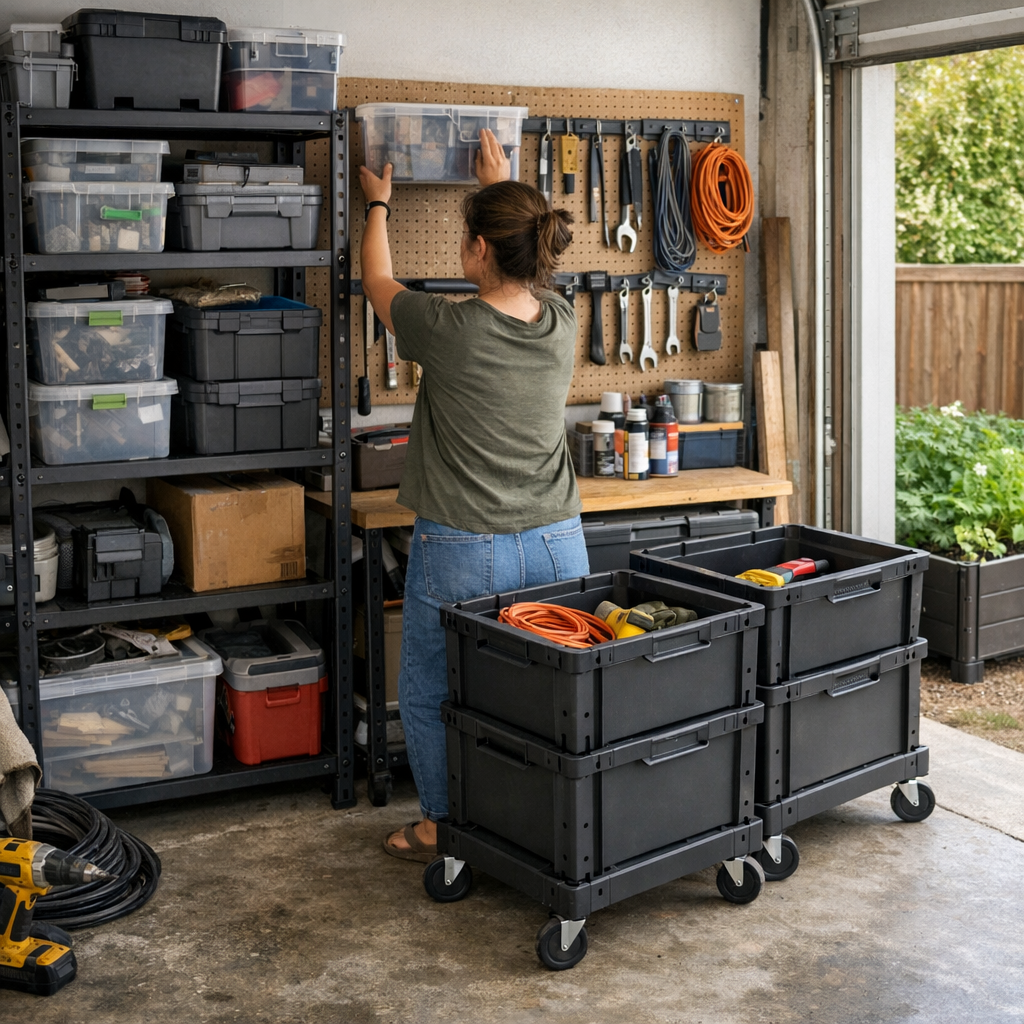
    The real challenge of any garage or workshop setup isn’t making it look organized for a photo—the friction shows up later, after a handful of busy days. Suddenly, you’re inching a cart sideways just to squeeze past the workbench. A bin sits half-blocked by a stray box. The shelf that once looked perfectly aligned is now a catch-all for whatever didn’t have a real home. What starts as “order” quickly slides into an everyday obstacle course, no matter how modular the system claimed to be.

    When Organization Turns Into a Roadblock

    Most problems don’t scream for attention—they creep in with small interruptions. You start the day dodging the same stack of bins left askew in a tight corner, or swinging open a cabinet door only to find yourself twisted, grabbing behind an awkward edge yet again. What felt like ample walkway narrows as tubs creep outside their original lanes. That line of shelving you admired on install day? It’s now collecting every odd-shaped leftover you can’t quite fit anywhere else—becoming less a solution and more a trap for the next round of clutter.

    The underlying issue usually isn’t mess or laziness. It’s a storage plan that looked fine on paper, but quickly fails under the pressure of day-to-day use. Every time you try to put a tool back in its spot—or grab something for a new job—you bump into the same friction points. Rigid layouts that can’t shift with your routine breed dead zones and force you to repeat the same awkward maneuvers all week long.

    Modular Ambitions, Real-World Failures

    True flexibility isn’t just swapping shelves or rotating which bin goes where. It’s about the entire setup falling in line with how you actually work—especially when stuff tends to move, projects overlap, or you rush to clean up after a long day. On a hectic morning, a fixed wall unit becomes a hard stop, blocking flow and choking corners with overflow. Rolling bins or pegboards can work—if they’re set up with actual movement in mind—smoothing out resets and making it easy to see and reach what you need without shuffling the rest.

    But “mobile” brings its own issues if you’re not careful. A cart with no assigned spot quickly becomes a blockade, parked wherever you last finished up. Modular components that roam aimlessly end up as clutter, piling into already-tight walkways. Flexibility that isn’t anchored to your real routes and habits only trades one kind of mess for another—just with newer gear.

    Real Example: The Overflow Magnet Shelf

    It’s the same story again and again: one deep shelf morphs from extra storage into the unofficial dumping ground. Within a week, it’s swallowing gloves, zip ties, half-finished projects, all just out of sight—but way too close to the area you need clear for tomorrow’s task. You dig a little deeper every time, pull things out, but getting them back tidily feels harder after each use. The “system” hasn’t really failed, but it never flexes to help—making every return cycle clunkier than the last.

    Why Fast Resets Matter

    The biggest win with mobile storage isn’t just rearranging bins—it’s restoring actual flow with minimal fuss. Picture that wall shelf you’ve hated: attach casters, and suddenly you can roll it aside to stash awkward items, then tuck it back and reclaim valuable walkway. No more blocked pivot points or awkward lifting to reach what’s behind. Fast resets mean clearing jammed paths without emptying half the space for every reshuffle. It’s not about “maxing out” every square foot; it’s about keeping the crucial walkways and work zones usable with the least effort possible.

    This kind of efficiency isn’t just cosmetic. When cleaning up or shifting projects takes less time—and fewer awkward moves—the space feels lighter. You spend less energy battling your setup and more time actually working. That’s what separates a functional workshop or garage from a static storage room with occasional access.

    Quick Audit: Where Is Your Setup Getting in the Way?

    Does the same cart get nudged out of the path multiple times a day? Is there a recurring moment you hesitate before putting something away because it means hunting for a buried bin? Those aren’t one-off annoyances—they’re signs your storage arrangement isn’t keeping up. The so-called “system” is resisting the daily rhythm, piling up micro-friction you feel more each week.

    Planning Beats “Just Modular”

    A major pitfall: assuming “modular” means the work is done. Wheels and customizable shelving can’t fix a lack of basic structure. A mobile battery rack with no clear dock will drift and clog your workspace. A rolling chest left in the middle of the room (because putting it away means unloading two other things) just creates a new bottleneck. Real improvement only shows up when your storage has mapped parking spots, obvious reset zones, and—just as importantly—a routine that enforces using them.

    An unlabeled, drifting “flexible” setup may look fine at a glance. But watch how you move at the end of a long day: if you’re backtracking to return tools or gingerly stepping around a bin jammed in the path, the weak spots are winning. Each delay is a silent drain on the whole setup’s promise.

    A practical shortcut: At peak use—when the garage or shop is busiest—do a “friction walk.” Where do bins collect or carts pile up? Where do you automatically slow down or sidestep? Flag those spots as top priority for anchoring mobile solutions—with obvious, logical parking built in.

    Daily Use Reveals the Truth

    First-day photos mean nothing after a full cycle of loading, moving, and repeat use. Real setups shine under everyday pressure: when marked zones make resets quick, and you’re not detouring around stranded carts or guessing where overflow should land. Wall and floor plans that focus on clear paths and flexible, assigned drop zones outlast any “fitted” system that can’t cope with late-night returns or new projects.

    The difference is obvious in practice: a setup that looks organized but still interrupts your movement, or one where you actually glide from job to job, knowing exactly where every tool and box lands on a busy week. When adaptability and zone planning come together, the workshop or garage space finally starts working with you—not against you—as the routines change and projects keep rolling in.

    See how StackNest modular storage can help you set up for real-life use at stacknest.myshopify.com.

  • Why Unlocked Mobile Carts Fail on Sloped Entryway Floors and How to Fix It

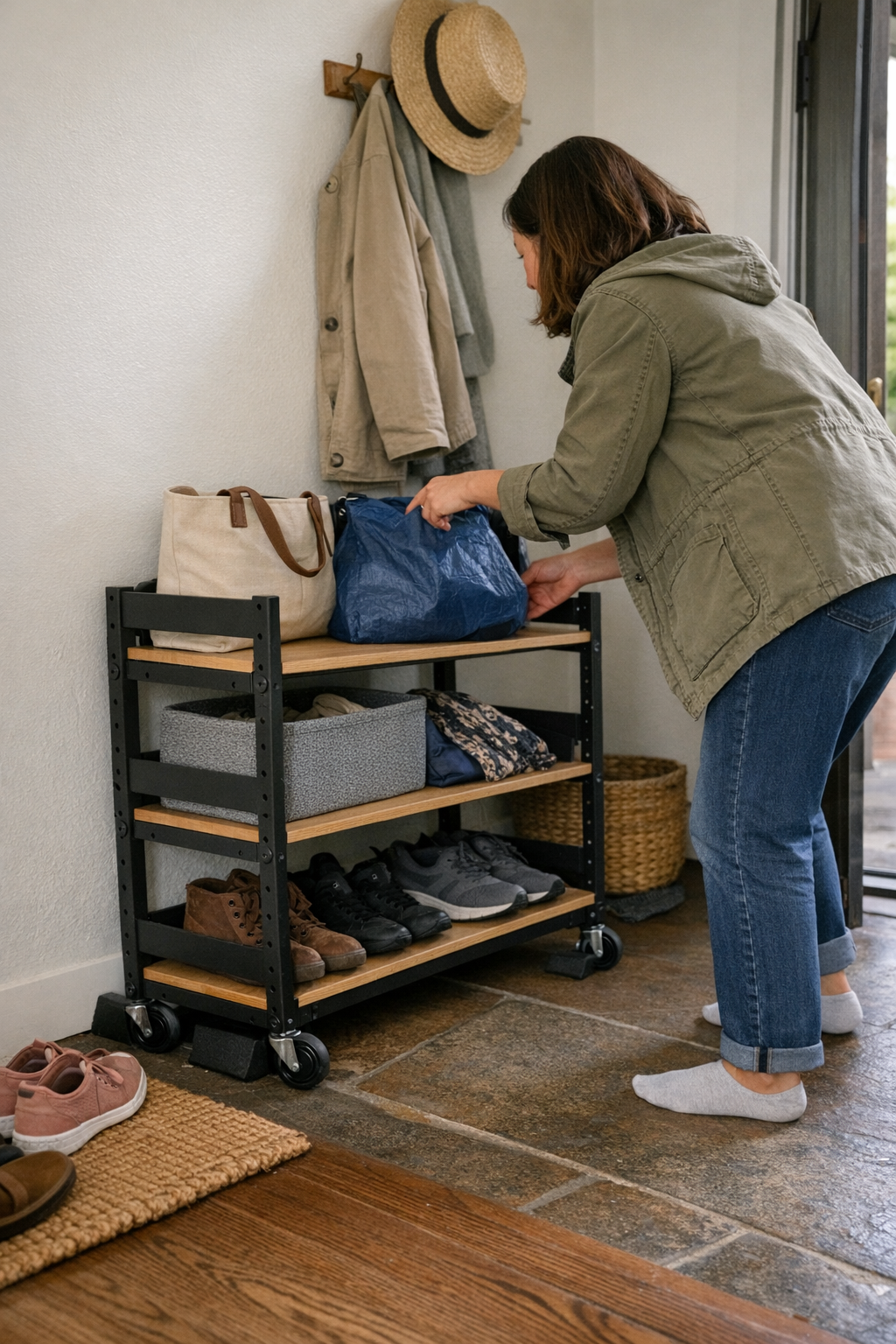
    The sloped-floor factor: The moment a cart creeps out from where you left it, the illusion of a stable entryway disappears. Setting down a mobile storage cart feels logical—until a week later, when it’s nudged itself halfway into the passage, wheels angled from a barely perceptible slope. Even minor inclines turn “drop zones” into drift zones: shoes spread off the edge, bags lean toward the threshold, and the tidy line you set up on Saturday is gone by Tuesday. Instead of a buffer, the entry becomes a shifting obstacle course—every arrival demands another reset, and each return home means stepping around, over, or through storage that simply won’t stay put. If you’ve ever watched a shoe rack or cart slowly migrate into the walkway, you’ve seen the friction up close.

    Carts on Sloped Floors: Inevitable Drift in Real Entryways

    Mobile carts promise flexibility, especially when space feels tight or fixtures feel like a commitment. But on sloped or uneven floors—a common reality in older houses and many apartments—adaptability backfires fast. Unlock just one wheel, and all it takes is a pair of dropped boots or a tossed backpack for the cart to edge into the path. Suddenly, what was supposed to organize shoes and gear infiltrates the main flow: blocking a doorway, narrowing the pass-through, or stopping the door itself just when you’re juggling bags and wet jackets. Instead of separating gear from walking space, the cart turns into another walker to dodge—or a reset you can’t avoid.

    The Breakup of Order—One Arrival at a Time

    The problem is not one bad drop-off, but relentless drift that compounds with every use. First, it’s a wheel turned a few degrees outward. Then, a boot sticks out, a bag tips over, and by midweek, the cart is halfway into the zone meant to be clear. On busy mornings, somebody bumps the cart rolling shoes aside, or presses their knee against it, and it inches even farther. The original setup—neat on day one—collapses into awkward edge sprawl and path crowding by Friday. You find yourself not just rearranging, but negotiating the walk—even holding the dog back while squeezing through, unsure when the mess started but certain it won’t end unless you intervene.

    Why Small Shifts Become Big Obstacles

    No entryway is static during real-life routines. With every grocery haul, guest, or after-school drop, mobile storage on a slope slides closer to chaos. “Easy to move” becomes “impossible to keep straight.” You spend minutes every day nudging the cart, propping shoes, or nudging bags that have edged into the path—never quite restoring function, but always delaying the next slip. Eventually, the setup feels less like storage and more like an ongoing rescue operation. The subtle angle that escapes notice turns carts into persistent intruders, requiring fixes that do not last. Every micro-movement multiplies: the original promise of adaptability is buried under a growing pile of daily, unsatisfying manual resets.

    Snapshot Scenes: How Slope Turns Storage Into Chore

    The Packed-Afternoon Drop

    One rainy weekday, three people come home one after another. Groceries set down beside the cart, then a backpack tossed that nudges a wheel, then hurried shoes kicked off and a cart shoved forward with a knee for balance. By evening, the cart isn’t where it started. It’s crept two inches into the walkway. Shoes have drifted underneath. The side that once let the door swing free now presses so close someone must squeeze through, stepping on an edge. The “temporary” drift becomes permanent, never quite letting the entry reset—just layers of small offsets that turn movement into an awkward shuffle.

    Reset Routine: The Slow Creep of Temporary Solutions

    Every evening, the predictable pattern returns: dragging the cart back, pushing the shoes into line, sighing at how order collapses in the face of one loose wheel and a sloped floor. Hacks appear—doorstops against wheels, baskets as wedges—but most stopgaps lose the battle after just a few days of use. The cycle of fixing and re-fixing isn’t really cleaning, it’s fighting physics. “Mobile” morphs into “constantly misplaced,” the solution needing as much daily attention as the mess it was meant to contain.

    Why Mobile Isn’t Always the Answer in Entry Spaces

    Rolling carts make sense on paper—flexible, unfixed, easy to clean around—but on sloped or uneven floors, their core advantage turns into a daily hassle. In places where you can’t (or shouldn’t) anchor permanent storage, a cart looks like order with options. Reality intrudes after a week of real foot traffic: wheels off-alignment, shoes pressed into traffic lanes, the cart edging closer to where people need to move. The friction accumulates, never dramatic but reliably persistent, adding seconds to every entry and quietly eroding the threshold’s sense of order. Your effort shifts from living with storage to living with its side effects.

    Compare and Contrast: Cart vs. Bench vs. Wall Storage

    You rarely appreciate how much a bench or wall-mounted rack holds its ground until you find yourself dragging a rolling cart back in place for the hundredth time. A bench absorbs bag drops and fast arrivals without budging. Wall racks capture the daily pile but don’t spill into walking paths. Stationary options handle chaos by staying immovable—even in tight layouts. Mobile storage, even with locking wheels or fancy arms, resists order only as long as the floor allows; on a slope, they become the first solution to collapse. Actual order depends on what doesn’t drift, tip, or require correction after every busy morning.

    Grounding Mobile Storage: Simple Solutions for Daily Flow

    Lock, Wedge, or Replace?

    If rolling storage is mandatory—maybe the spot doubles as cleaning access, or wall mounting isn’t possible—a subtle fix does most of the work. Anchor the cart with a firm rubber stop behind at least one wheel. Even something as basic as a thick cord or hose wedged tight can make the difference. Don’t rely on locking wheels alone: most are too weak against the push-pull of real routines. A solid block or wedge provides the resistance missing from friction, stopping that slow, constant migration and keeping the walking zone reliably passable.

    Everyday Benefits of a Stable Entry Zone

    The daily difference isn’t about fitting more gear—it’s about not losing ten minutes every week to tiny resets. When the cart, bench, or rack stays in place, the path stays clear for everyone, whether the zone handles two arrivals or five. That means less daily improvisation and more time actually moving through the threshold, not fixing what casual use disturbs. A stable setup prevents the familiar morning scramble—no shoe avalanche, no knee-bumping into an off-angle cart, no last-minute backup before reaching the door. The benefit is not perfection, but reliable function: a buffer that works even when routines are messy and hands are full.

    Match Structure to Real-World Use

    Few entryways call for anchors in concrete, but every threshold benefits when the storage matches its actual daily flow. On an inclined floor, “movable” storage means tomorrow’s obstacle unless you ground it. Choose benches, wall units, or fixed racks where you can; wedge, block, or stabilize what must roll. Your setup’s real value appears on hectic, repeat-use days, not in staged calm. Small, invisible shifts become a big deal when they repeatedly break the zone’s purpose or slow everyone through the door. Whether swapping mobile for stationary or reinforcing what you have, lasting relief comes from setups that withstand repeated pressure and return the threshold to function, not frustration.

    No fix eliminates the unpredictability of a lived-in entryway—especially on sloped or uneven ground—but shoring up your storage is a direct investment in visible, everyday calm. You’ll still drop bags or kick off shoes in a rush, but every arrival doesn’t have to unravel the whole zone. Control the drift, and the transition space feels like it’s working for you, not against you.

    Shop Betweenry for practical entryway and transition-space storage solutions.

  • How Consistent Portions Reduce Food Watching and Calm Your Dog’s Routine

    Every dog owner has felt it: you finish dishing out the food, hoping for a quick transition to the next thing; instead, your dog plants themselves at the bowl, watching your every movement, waiting. It’s not just hopeful eyes—it’s a slow-motion traffic jam at the kitchen doorway. Grab the leash for an after-meal walk? There’s a body blocking your reach. Wipe up under the bowl? Your dog repositions, convinced a second scoop might slip their way. After a dozen neat feedings, the same snag keeps creeping back: the space around the bowl looks right, but the actual routine never resets as smoothly as it should. This is where DogPile’s focus on everyday routine makes itself obvious: the difference between a tidy setup and an actually workable one shows up fastest at mealtime.

    That Persistent Food Watch: More than Curiosity

    The daily drama isn’t hunger—it’s friction built from repetition. Every meal turns into a standoff: your dog refuses to budge, you debate scooping just a little more, and normal flow stalls. The “right” amount never feels final. Even with bowls cleaned and mats straightened, the routine still fractures at the same pressure points:

    • Your dog: hovering, eyes darting, always believing the ritual isn’t finished
    • You: hesitating, repeating directions, or picking up the bowl just to prove you’re done

    This isn’t about how much you love your dog. It’s how reliably the setup closes the loop—or doesn’t. Each small shift in portion or timing teaches your dog that the rules might change any second, so they wait for a signal that rarely arrives cleanly.

    Routine Gaps: The Real Source of Mealtime Tension

    Picture a weekday scramble: you’re running late, eyeballing portions, maybe adding or subtracting food to match yesterday’s guess. Your dog eats, then re-stations—nose inches from your ankle as you sidestep to fill their water or find your keys. The kitchen, which seemed organized yesterday, now doubles as an obstacle course. A slip in routine here—one careless scoop, one random treat thrown in—drags the transition out. You start wishing the “clean up, walk, move on” sequence could actually happen smoothly, without detouring around one stubborn food-watching dog.

    The bigger pattern exposes itself over weeks. Chasing consistency one day, improvising the next, you end up with a routine that always feels slightly off, leaving both you and your dog in a waiting game that interrupts the logic of the rest of the day. The invisible cost isn’t even mess—it’s the repeated inefficiency that blurs the line between mealtime and everything after.

    It Looks Tidy—But Does It Work?

    Anyone can stage a feeding nook that looks organized—a fresh mat, storage bin, maybe even a hook for the scoop. But that’s not what stops the routine from breaking down. If you reach for the scoop and debate how much, if the bowl drifts closer to the action, or if the dog keeps circling between kitchen tasks—those little cracks in routine spill over into everything else. Suddenly the “organized” setup creates more movement to manage, not less. Instead of clearing out, you end up negotiating foot space, nudging the dog back again and again. The area looks finished but doesn’t actually support the repeated flow you need.

    Uncertainty, not mess, is what lingers. Even small gaps—switching to a different scoop, pouring by sight, forgetting to feed at the usual time—teach the dog that they should keep eyes (and nose) on alert. The friction is subtle but persistent: clean kitchen, sticky movement, more double-checking by both you and your dog.

    Recognizable Signs Your Routine Is Stuck

    The symptoms don’t take long to pile up:

    • More circling or blocking near the empty bowl, even after the meal ends
    • Quick glances toward kibble storage whenever you pass through the kitchen
    • Dog movements syncing with your own, always cropping up in the path to the next task
    • Pauses and resets—a feeding that should end keeps re-opening as the dog waits for round two or for a dropped scrap
    • Other routines domino—cleaning up takes longer, walks and errands are delayed, your prep for the next event gets derailed

    It’s easy to misread this for true hunger, leading to “just a splash more” or frequent mid-routine adjustments. But the loop stays open not because they need more, but because each meal never firmly signals the end, so the friction spills out into the rest of the schedule.

    Multi-Use Spaces Make the Problem Harder to Ignore

    In most homes, the feeding zone overlaps with every other kitchen task. As you chop vegetables, your dog stays parked near the bowl. As you wipe a counter, you have to ask your dog to move—again. Organized doesn’t equal friction-free. Tiny weaknesses in your setup—like an unreliable routine or a bowl that shifts from its spot—multiply each time you double back and find the way blocked, or have to work around a dog in “waiting for more” mode. After the third or fourth interruption, it’s clear: whatever looks tidy isn’t holding up when the kitchen becomes a shared, high-traffic zone.

    The cost is cumulative, not dramatic. Multiple small resets—moving the dog aside, returning after you thought they’d walked away, rearranging gear—make a supposedly organized feeding area the reason dinner takes longer or cleanup never fully sticks.

    Small Portion Swings, Big Behavioral Ripples

    Consistency isn’t about calories—it’s about how predictably your setup functions. Pour a bit extra one night, cut back the next, and the ritual starts to fray:

    • The scoop looks different from yesterday
    • The bag comes out again after the meal was “over”
    • Schedules stretch or compress, creating suspense instead of closure

    Every adjustment trains your dog that feeding is still up for negotiation—so they keep one eye on you and one paw near the bowl, waiting for another exception. The after-meal wait grows, routines collide, and what should be a calm end to feeding keeps re-opening and delaying every next step—from post-meal walks to evening wind-down.

    The Power of Absolute Routine (Without Overthinking It)

    The smallest, most reliable reset: one leveled scoop, placed in the bowl, at the same time in the same spot. No topping off, no rounding the scoop with guesses, no on-the-fly adjustments because of treats earlier in the day. Owners who break from “maybe a little more” see the standoff pattern fade within days: dogs eat, move on, and stop blocking the next task. The difference isn’t that the area looks better, but that you don’t have to manage friction in the space again and again. In homes where meal size or timing flex to mood, every departure prolongs the open loop—keeping hope (and your dog) glued to the bowl long after it should be routine.

    Every time you slip into adjusting for snacks or stretching the window, more time gets lost to repeated interruption. It’s not about controlling calories to the decimal—it’s about making sure the routine itself becomes invisible, not a recurring drama you have to referee every night.

    Beyond the Bowl: How Feeding Routine Shapes the Whole Day

    Once friction takes root at feeding, it infects every routine that follows. The morning walk starts late as you clear the kitchen yet again. Play sessions get detoured by food-checking detours. Cleanup is never as fast—there’s always fur, crumbs, or a damp patch in the same spot, since you can’t sweep or mop without dodging your dog’s hopeful presence. Even bedtime routines bog down as restlessness ripples into other corners of the house. What seemed like a small inefficiency at the bowl becomes a drag on the whole home rhythm.

    The “organized” look doesn’t translate into a routine that actually runs friction-free. If your setup breaks down every time it’s repeated, it isn’t just a cosmetic issue—it’s a sign that the flow of home life, not just the look, needs a reset.

    What Actually Works: Routine, Spot, Scoop, and Timing

    The real solution isn’t complicated gear or a new method—it’s removing points of friction and closing the loop with reliable tools:

    • One scoop: The same measure, leveled, at every meal. No guessing, no “today feels different.”
    • Same spot: Never improvise the bowl location, even if your space gets busy. Repeat placement, every time.
    • Set schedule: Keep meal times steady. A window is fine, but avoid surprise shifts that pull your dog back into “is this different?” mode.
    • Don’t balance for treats: Let snacks stand alone, so the primary meal stays fixed and predictable.

    These small details—not extra decor, not just surface tidiness—shut down

  • How Strategic Power Strip Placement Transforms Your Workspace Flow

    End-of-day desk check: the surface looks organized, even neat. Papers stacked, keyboard shunted aside, cables routed with care. Yet there’s that lingering sense—you still have to reach, shuffle, untangle, shift. The real culprit isn’t always the obvious clutter but the power strip, half-hidden, never fully out of the way. Even with everything “put away,” you keep dragging cables across the desk, bumping chargers, rerouting plugs. Hiding the power strip deeply can backfire: you escape visual mess, but with every laptop change or phone recharge, you’re ducking under the desk, fishing behind drawers, breaking workflow for the simplest reset. The work surface may look under control, but real movement tells a different story.

    When “organized” doesn’t mean “friction-free”

    The difference between a desk that looks clear and a desk that actually supports work shows up fast—especially if you switch devices or tasks throughout the day. You sweep the top, but that power strip and its cables creep back into reach; each cycle brings new little interruptions. Switch from a keyboard to a notebook, and the cord tugs at your wrist. Reach for your phone, and a blocky charger slides into the way. After only a couple rounds, you spend more time adjusting your path than focusing on the task. A tidy desk doesn’t always mean a frictionless one: true usability emerges only in repeated, shifting use.

    The problem is practical, not cosmetic. Every time you knock a plug with your elbow or graze a cable while sliding a notebook, that small pause accumulates. These unnoticed hassles splinter your focus and add up over a workweek. What looks ordered in the morning feels cramped and uncooperative once you’re two hours and three device swaps deep. The real test isn’t how the surface appears but whether every routine movement—reaching, plugging in, grabbing a notebook—can happen without resistance.

    The trap of hiding the power strip—too well

    Shoving the power strip out of sight—behind, below, or beneath stacked drawers—feels like the obvious fix. Suddenly your desk appears pure: no cords, no chunky blocks. Mouse glides uninterrupted, phone and tablet fit where you want them. But this aesthetic win can quickly sabotage practical use.

    Midday, you have to switch out a laptop, plug in a drawing tablet, or reconnect a monitor. If the strip is clipped to the desk’s far rear—or buried behind a mobile drawer—you’re ducking under, stretching cables to their limit. A quick device swap turns into a midair wrestle, cables knotting below, charger bricks dangling just above your knees. After a few rounds, setup drifts back toward disorder: cables looped onto the desktop, chargers left on top for speed. The repeated effort to “keep it clean” winds up slower and less workable. The very hiding place designed to streamline ends up introducing new obstacles with every change in routine.

    How placement changes your everyday motion

    Reach defines workflow. Find the right spot and your hand simply lands where it needs to—a plug swap happens almost blind, no interruption. Place the strip too distant, and you crouch and fumble just to attach a charger; too close, and the surface quickly crowds again. Overtight cable management promises tidiness but creates cable tension, tugging out power blocks or snaring your notebook’s edge with every move.

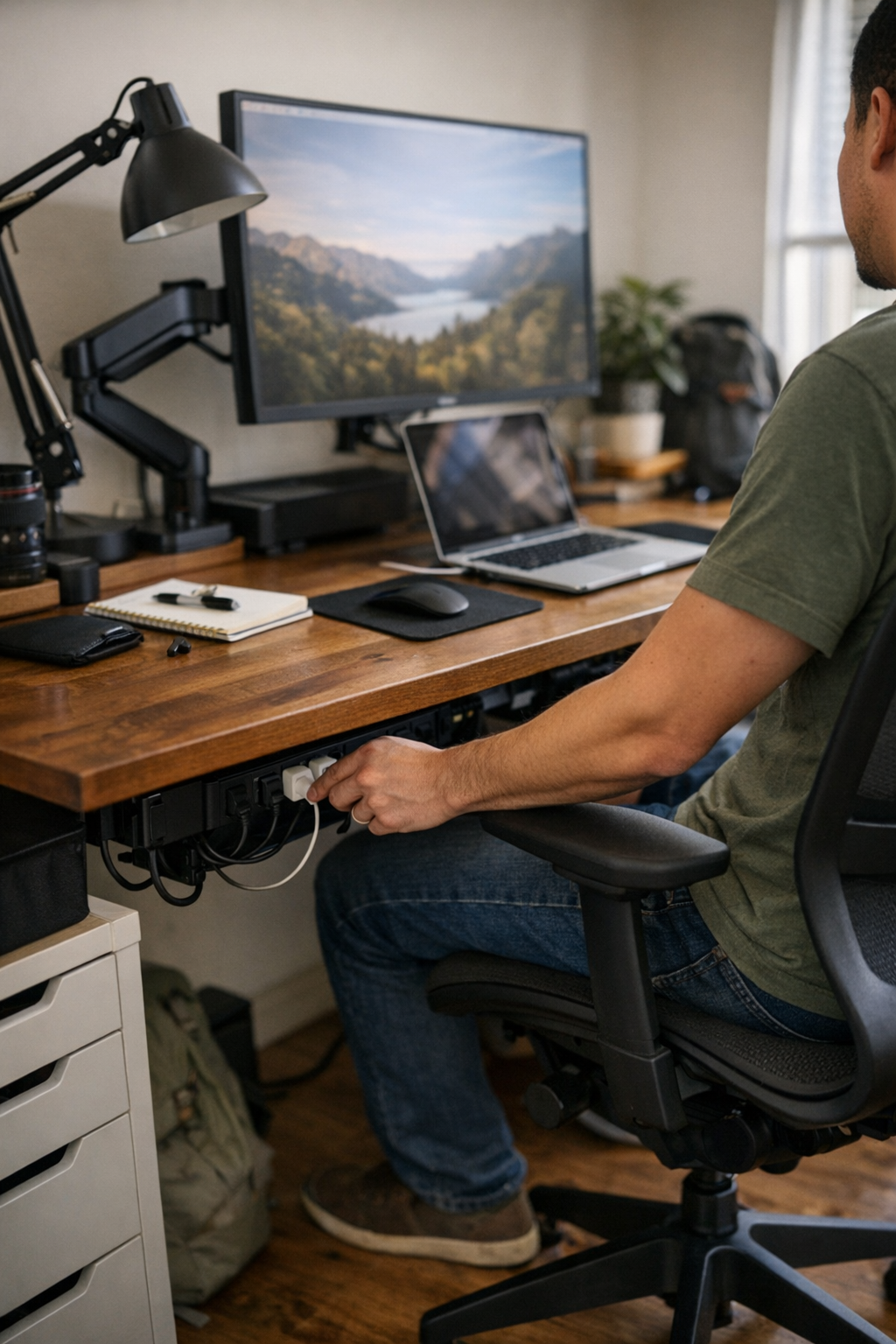
    The most functional setups put the power strip just under the leading edge—right or left, depending on which hand does the work. The path for each charger runs straight down, short and predictable, preventing droop or tangle. No need to pull out the chair, crawl under, or shake cabinets loose. The desktop is left clear for note-taking, sudden sketching, or spreading out reference material without charger bricks breaking stride. Unplugging a device or moving a monitor arm mid-session becomes as simple as reaching under the desk, not as disruptive as emptying a shelf or moving storage bins.

    Scenes from real-world use

    – Lifting a notebook beside your keyboard and not snagging a cord across your forearm.

    – Swapping in a second monitor or device mid-task—no full-body reach or blind fishing for plugs.

    – Plugging in a charger by touch, not sight, returning it to the same reliable spot every time.

    – Clearing the desk for a quick brainstorm, knowing you can reset to work mode with no cable shuffle.

    Common pitfalls—and what fixes them

    The classic mistake: hiding power strips so thoroughly that normal work becomes a physical puzzle. When the strip is shoved to the far rear or crammed under a deep drawer unit, every reset slows down. Sore wrists from blind fumbling, dropped adapters knocked behind storage bins, and cables that climb back onto the surface after just a day or two—these are clear warnings that the visual “fix” doesn’t hold up to repeated use.

    The shift comes from thinking of the power strip as an anchor, not clutter. Mount it right where your working hand naturally drops: under the front edge, or slightly to the dominant side. Offer every cable a direct, few-inch path, and keep only enough slack to move the devices you actually use. A well-placed power strip makes swapping out blocks or chargers possible by touch, without seeing—or searching for—anything. Desk stays truly clear, and resets are as automatic as returning a pen to its holder. This is when order and usability begin to align for more than a single clean-up cycle.

    Tuning the setup for how you actually use your desk

    No workstation setup is static—it’s an ongoing balance between appearance, reach, and the real cycles of your daily routine. Hiding clutter without losing access is the difference between a desk that looks good for photos and one that adapts to switching tasks, regular note-taking, device rotating, and the late-day shuffle. You’ll recognize the ideal power strip placement when it vanishes from thought: nothing blocks your reach, no sudden pausing to stand or fumble, no creeping mess from cables forced to run too far. Instead of fighting a setup with every cycle, you simply move, plug, or reset.

    Quick Q&A from real setups

    Where should you mount your power strip? Directly under the front or side edge of your work surface, on the side you naturally reach to most, and within easy seat-level reach.

    Does hiding cables always make things easier? No. If access means crouching, pulling boxes, or feeding overly long cables, tidiness fades and routine friction returns fast.

    What are the first signs of poor placement? Hand strain, awkward or slow device resets, cables drifting onto the desk again, and a clean look that only lasts until the second work cycle.

    What the calmer desk actually feels like

    When both access and invisibility are balanced, daily work gets quieter—no cable shadows in your field of view, no brick-sized blocks drifting across the surface, no device collapse mid-cycle. The change isn’t dramatic, but unmistakable: smooth, unbroken motion and steady focus. If the familiar drag, crawling, or shifting returns, it’s a sign to revisit placement, not to surrender to surface clutter or start hiding everything all over again.

    Explore the full WorkBasic collection

  • Streamlining Pet Travel: Reducing Friction for Smoother Routines

    Every pet owner recognizes the scene: you start a trip thinking your pet-travel setup has you covered. Carrier closed, bowls packed, every supply in its place. But after two or three quick stops—a pharmacy run, a coffee break, a gas pump pause—your supposed “ready-for-anything” kit turns on you. Reaching for wipes, you pull up a bag of treats instead. Try grabbing your keys, find a tangle of leashes. Each pause brings a fresh scramble: sections you trusted slow you down, and a bag that once looked sorted now works against your routine. That sense of friction doesn’t fade. It multiplies. The gap between looking prepared and actually moving smoothly gets wider with every restart—and most owners don’t notice it until the mess hits mid-trip. PawGoTravel is built for exactly those cracks in real pet travel.

    When “Well-Organized” Stops Meaning Well-Prepared

    On paper, packing every compartment and organizing all your pet’s gear feels like checking every box. It’s only after a few real trips—school drop-offs, errand loops, multiple stops in a single morning—that the hidden costs pile up. The drag isn’t dramatic, just persistent: digging out wipes from under a spare blanket, tugging a leash loose from behind a crowded pocket, repacking after a swerve scatters items. Each snag is small, but in repeated use, the setup that started “ready” starts demanding time and attention you never meant to spend. Real-world travel exposes where your setup fails—not by what you forget, but by how often you need to fix and recover what’s already there.

    Most problems don’t come from actual missing items. It’s about buried essentials, blocked access, and shifting priorities the moment things move. Wipes that sit at the bottom instead of the seat edge, leashes that migrate behind a bag divider, your own keys lost under pet pouches—every unnecessary reach or shuffle is a new point of friction. In a routine built on stopping and starting, those points stack up fast.

    Why True Setup Strength Isn’t About More Gear

    Adding compartments or elaborate organizers gives an illusion of control until pressure hits. The cracks reveal themselves by day two or three of routine use: a flap meant for easy access flops shut over the carrier opening, cleanup gear drifts where you can’t grab it, comfort toys slide into deep corners. The more you pack, the more you pause to repack, losing seconds at every errand stop. No matter how tidy a new setup looks, the test always comes with repeated action. When every restart demands rearrangement, the setup isn’t working for you. It’s taking over your movement, not supporting it.

    The friction is realest in the middle of a busy week. Early on, your system stays together. But by the third trip, reloads get sloppy, essentials settle out of reach, and every pause feels longer—not because you lack an item, but because the “organization” no longer matches your routine. By Friday, what once felt compact and cool now pulls you out of flow every time you return to the car.

    Classic Traps: The False Promise of Neatness

    Surface order lulls you into thinking your setup is cost-free—until you’re forced to dig through layers when time actually matters. The most stubborn traps show up again and again:

    • Buried cleanup supplies: Wipes under chews or toys are invisible when the mess comes fast.
    • Owner-pet item overlap: Phones, keys, and pet gear sharing space means something’s always playing gatekeeper for what you need next.
    • Side-pocket drift: Pockets packed for “quick grab” become blocked once bags settle and essentials slip out of prime position.

    Visually organized systems break down in motion. Every missed grab or extra dig is lost time—and the sense of neatness quickly becomes another friction point instead of relief. The gap between how things look and how they actually function is where most pet setups start failing on the road.

    What Real-World Use Reveals: The Payoff for “Reach-by-Memory” Setups

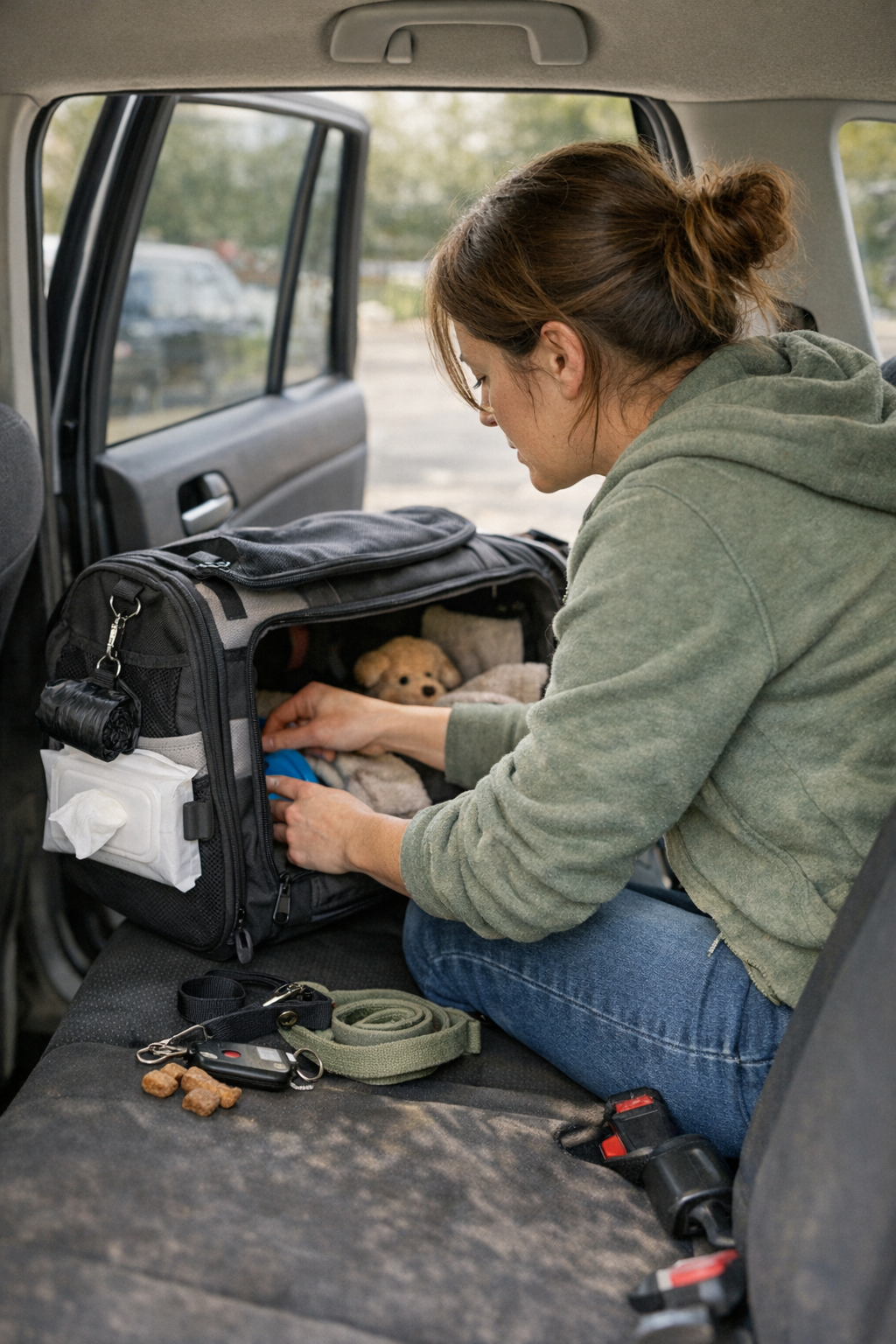
    Reliability in pet travel shows up after the first mess—not at the packing stage, but at the seventh stop, when you can find a wipe or leash without thinking. A field-tested setup makes reach automatic: wipes clipped at the seat edge, treats snapped onto the carrier, comfort blankets always beneath the main zipper. Reloads get faster, not slower. Instead of resetting with each stop, you settle into a flow—no digging, no disruptions, no time wasted figuring out where things drifted in transit.

    Consider a real triple-stop morning: you park, unclip your pet, and immediately have to choose—clean a spill, leash up, reach for keys. When essentials hide or cross paths, travel becomes a juggling act even on short trips. The right setup doesn’t add gadgets or pouches. It strips back, putting the must-haves literally at hand, in a structure built for quick cycle and return—not static shelf neatness.

    The Cumulative Cost of Tiny Friction

    Each awkward search or pocket repack chips away at momentum. Again and again you:

    • Reach for cleanup and come up empty—or delayed
    • Pause to fix a runaway item or reset a half-open pouch
    • Untangle leashes from keys or phone just to exit or re-enter the car
    • Shuffle gear to force the main zip shut when things have shifted mid-trip

    It’s not the rare disaster but the repeated “mini-reset” after every stop that saps your focus and makes the entire routine feel heavier. Each snag takes seconds, but the underlying cost is the feeling—by day’s end, you’re serving the setup, not the other way around. And no polished organizer can hide that inefficiency once stop-and-go becomes your new normal.

    Resetting the Setup: Practical Changes That Help

    Recognition usually comes in a simple question at the end of a frazzled stop: “Didn’t I fix this already?” The fix isn’t another fancy organizer. It’s about repositioning and removing barriers:

    • Externalize wipes: Clip or anchor at the bag rim where your hand lands first. If you need to fish in a main pouch for a spill, the setup failed.
    • Isolate comfort items: One pouch, near the top—never buried beneath daily supplies.
    • Direct-leash or key anchoring: Hang at natural grab points (handles, doors), not pockets-within-pockets that force repeat searching.

    It’s a principle: keep only what you reach for every stop where you can get it in one attempt. Everything else gets deprioritized. That’s how routines stay light even when travel patterns get messy. Structure, not storage, controls the flow.

    Everyday Scenes: Where Setup Friction Shows Most

    Scenario one: Grocery run complete, but wipes have drifted under a blanket. When your pet muddies the seat, you dig twice—maybe more—and cleanup delays you longer than the checkout line.

    Scenario two: By the third errand, your treat pouch drops out (again) as you untangle items. The space that looks “put away” is really a source of endless tidying—resetting between each stop rather than flowing forward.

    Scenario three: Post-bathroom break, you fight with leash and bag straps caught around the same handle. Each untangle is a small pause, but over multiple stops, these pauses eat real minutes—just from layers fighting your movement style.

    Less Looks, More Flow: The Right Structure for Repeated Trips

    The best pet-travel setups win by structure, not by show. What works isn’t the prettiest or most compartmentalized option—it’s the carrier, bag, or bowl layout where each action (grab, clean, reload, move) happens with minimal interference. Cleanup gear must stay visible from stop one through stop six. Comfort needs should never block seat-side reach. True preparation is about what stays ready after a day’s worth of motion, not just when you close the zipper at home.

    The proof comes after a week of short, repeated trips. When you start noticing fewer pauses and less clutter—not because you packed less, but because each part pulls its weight—you know your setup is finally tuned for real movement, not just for looks.

    Find practical pet-travel gear built for repeated real-world use at PawGoTravel.

  • Why Proper Breaker Zoning Is Essential for Reliable Indoor Lighting

    The real failure in most indoor lighting upgrades isn’t the fixture—it’s what happens when a single breaker shorts and half your daily routes vanish into darkness. You finally install a flush mount in the hallway or a wall sconce by the bathroom mirror. For a few days, the space looks fixed: no more glare bouncing off tiles, no more shadow swallowing the counter. Then you’re faced with a dead switch late at night, laundry pile in hand, and realize the laundry, stair, and main hall all went dark at once—not because of a failing bulb, but from the hidden trap of overloaded or badly zoned circuits. The surface looks finished; the reality is the routines are still held hostage by a single slip at the breaker panel. For indoor lighting that actually works, electrical planning—how you split, group, or isolate your lighting zones—makes or breaks the experience after install day.

    When Circuit Decisions Turn Into Daily Disruptions

    It’s easy to think a room is “done” the moment a new ceiling light or wall fixture clicks on. But true test comes during normal life: the moment a breaker snaps from an unnoticed overload, or a midnight hallway trip ends in a stumble because one switch darkened multiple critical spaces. The shadows are tamed on the first day, but a single circuit mistake brings disruption again, this time as a blackout right where movement and focus matter most.

    It’s not some rare fluke: you’re inching toward the cellar stairs at dusk, laundry basket tight in your arms, hit the stairwell switch—and nothing. Not just a bulb out, but no light for steps, no visibility at the landing, no way to check the next tread except by glow from a distant room. The wiring isn’t to blame—the breaker took down all nearby zones at once. Instead of losing a single light, your whole evening flows into frustration. That hesitation at every stair, the way you lean into the dark by habit—these are daily costs of a breaker plan built for convenience, not use.

    Why Breaker Planning Matters More Than Fixture Choice

    In most setups, the breaker box is “set and forget”—until darkness underlines every mislabel and grouping error. Dependable indoor lighting isn’t just in hardware choices; it’s how you divide and defend your zones electrically. Breakers—not bulbs—are the thin line between a space that works and one that erupts in chain-reaction failures. Stack too many fixtures—especially those in distinct rooms—on one breaker, and every small error ripples outward: a kitchen task light goes out when the laundry flips, a stair becomes invisible if a bathroom GFCI trips, or one overload means scrambling room to room with a flashlight, tripping breakers just to finish a routine.

    It’s common to pair a bathroom and a nearby utility on a single breaker for “simplicity.” All’s well until heat, moisture, or an extra appliance triggers an outage. Now, two unrelated zones vanish. This doesn’t just inconvenience—it reshapes habits, pushing you to work “around” failed lighting rather than trusting your setup to keep pace with your routines.

    Repeated Friction Points: Real Use, Real Annoyance

    These are not isolated mishaps. They’re predictable, repeat interruptions: missing the mirror’s edge when all vanity lights go out together; pausing halfway up a stair because shadow swallows the landing; feeling a countertop fade as the last under-cabinet light shares a breaker with a misbehaving corner. The weak points aren’t just visible—they’re built into every routine where overloaded breakers create flickering, unreliable transitions.

    Close Calls and Workarounds: Why Good Enough Isn’t Enough

    Your new fixture works the first week, but it’s the next month when trouble appears. One breaker trip, and an entire run of hall or stair lights vanishes, leaving the movement path fractured—a clear, repeated risk at bad moments: an early-morning search for keys, a late-night trip with arms full, a scramble for the breaker box when you’d rather not move at all. What could be a minor maintenance hiccup becomes a recurring safety problem. A laundry zone and stair each assigned their own breaker—carefully mapped—means that even when a bulb shorts at 2 a.m., only one small area goes dark. The rest of your path stays lit. That’s the everyday impact of a breakered setup designed with real routines, not just diagrams, in mind.

    “It Looks Bright—So Why Isn’t It Reliable?”

    The big visual fix—modern flush mount floods the ceiling, hall glows, new sconces line the wall—can hide a brittle, behind-the-wall flaw: all those upgrades run through a single, overburdened switch. Any trip, overload, or short acts as a domino. The result: a bright room that fails “blackout” tests when it actually matters. Every circuit reset is a hunt across darkened rooms. Every missed trip becomes a hazard that isn’t obvious until normal movement is interrupted not just once, but over and over.

    Practical Signals That Breaker Zoning Needs Work

    How do you know if your breaker logic is sabotaging your routines? Ask yourself—and check—these:

    • Flip each breaker off. Where does daylight fail? A whole stair, utility area, or mirror losing light from one switch is a danger sign.
    • If turning off a breaker floors both hallway and bathroom, or resets ripple from laundry to kitchen, zoning boundaries are ignored.
    • If a bathroom trip leaves you feeling your way along the kitchen counter, or a hallway fix shuts off mirror lighting, your plan is making routines riskier, not safer.

    The short rule: if darkness stops your normal route, your zoning betrayed you. More often, the pattern repeats until you finally bother to map—or fix—it.

    Addressing High-Frustration Zones: Laundry, Bath, and Stairs

    Some spaces punish sloppy breaker plans more than others. Bathrooms and laundry corners aren’t just about brightness—they weather humidity, heavy traffic, and distracted hands. One shared breaker can wipe out light—often after moisture or a heavy plug sets off a nuisance trip. With stairs and landings, one blackout can mean missed steps or a halted climb. Poor zoning here multiplies cost: every reset becomes uncertain, every outing relies on backup light, caution, or simple luck that the wrong fixture hasn’t failed on the same overloaded circuit.

    Real-World Tip: Start With a Label, Not With a Wrench

    The real fix starts at the breaker. Don’t upgrade another bulb or swap a fixture until you’ve mapped and tested each zone. Grab a second person, flip circuits one by one, and walk every path—see which rooms black out together. Label what you learn. Make sure no important area gets paired by accident. Ten minutes spent mapping zones can erase years of frustration—and makes every future lighting upgrade instantly better in practice.

    Everyday Lighting Isn’t Just About Brightness

    Indoor lighting that works after install day is about consistent, predictable function in real rooms. Flush mounts, sconces, under-cabinet strips, bathroom lights—they mean nothing if a single trip disables whole corridors or blocks a mirror exactly when visibility is crucial. A setup only “looks” upgraded until you live with it through a few failed evenings; the true upgrade is when you stop noticing what might go dark. If routines never stutter, stairs and counters stay visible, and breaker resets are minor and contained, your system is actually helping you.

    Before your next lighting change—especially if you’re tired of moving cautiously, stumbling at turns, or resetting panels by flashlight—start with the breaker, not the fixture. Reliable lighting comes from smarter, better-divided, clearly marked zones—not simply more wattage or trendier fixtures.

    Shop LightHelper for practical indoor lighting solutions

  • Why Hidden Storage Alone Can Undermine a Calm and Organized Home

    The calm that comes from an organized storage setup usually disappears fast—often after the very first round of real use. Behind closed doors and tucked bins, the system looks finished: shoes lined up, towels stacked, every loose item hidden. But once Monday hits or the after-work scramble begins, that “order” is tested by friction you notice immediately—like having to move a stack just to reach your keys, or having last night’s mail slide beneath a bag where it stalls retrieval all week. Hidden storage promises neatness, but too often it just hides the jam: a system that slows you down, collects broken routines, and breeds clutter one small annoyance at a time.

    When Hidden Storage Starts Working Against You

    A wall of closed cabinets or deep baskets feels like storage success—right up until repeated use exposes the flaws. If finding or returning everyday items means kneeling, sliding bins, or excavating layers, the setup quietly fails. Shoes mix with out-of-season boots, keys vanish under scarves, and category lines dissolve. What’s hidden isn’t organized, it’s just out of sight—until, in the crush of a busy morning, you’re forced to dig through two weeks of overlap to find what you need.

    It’s not about concealment—it’s about function in motion. Every extra step, every mix of unrelated items, makes quick resets impossible. The friction is small but constant: moving one thing just to access another, or hesitating to put something away because it means untangling yesterday’s shortcut. A single overloaded drawer or misfit bin turns retrieval into rearrangement, undermining whatever illusion of order the facade still offers.

    Surface Calm Versus Lasting Order

    Lack of visible mess is never the full answer. Hidden storage often lets disorder compound quietly—letting socks slink behind out-of-season coats or bills disappear under rain gear—until a normal routine is interrupted by a search that shouldn’t be necessary. Open shelves, for all their risk of visible mess, keep you honest; it’s obvious when categories mix or something is dumped “just for now.” With open shelving, you see category drift as soon as it starts; with deep drawers or baskets, it sneaks up until the next reset ends up twice as hard.

    Take a hallway bench meant for shoes and bags: for a few days, it keeps the entry calm. But the first cut corner—a soccer ball dropped on top, a stack of catalogs pushed to the back—sets off a chain reaction. Suddenly, to grab shoes, you’re rearranging a pile that wasn’t supposed to be there. A setup designed to hide overflow instead ends up trapping it, turning the daily exit into a chore instead of a glide.

    Divided Zones: A Small Change, a Big Difference

    Physical dividers break the silent creep of clutter faster than any “everything bin” ever will. Swapping an oversized under-bench trunk for two separate drawers had an immediate impact in one hallway: no more pulling gloves out from beneath last week’s mail, no more soccer cleats mixed with house keys. Shoes went straight back into their cubby, gloves into their slot—reset in seconds, not minutes. Overflow lost its hiding spot. Every item had a home, visible and separate, so spillover couldn’t quietly blend or block another routine. In use, a broken-up system felt less seamless, but actually worked: fewer bottlenecks, fewer lost items, and no slow buildup of things “waiting for the right moment” to be put away.

    Dividers and clear boundaries matter because, in busy stretches, every extra second spent sorting or reaching builds into a bigger disruption. Upright separators, even if improvised, offer a visible place for each thing—so morning rushes don’t become scavenger hunts and evening resets are quick, not a buried job left for “later.”

    Recognizing Routine Friction Before It Builds Up

    Any setup where you must dig, shift, or unstack to retrieve a daily-use item is already failing under actual use conditions. The signs show quickly: totes stacked over linens, baskets blocking one another, multi-step retrieval for something used every day. When storage slows you down, things are left out, or rehoused in the wrong spot “just for now”—fuel for larger resets later. The cost is not chaos but interruption, and it spreads: the more effort it takes to put something away, the more items linger where they shouldn’t, and the more the system erodes from the inside.

    Path blockage is a form of clutter too. Especially in high-traffic zones—entryways, small bathrooms, utility corridors—placing a box at the wrong angle or overfilling a cabinet narrows access and breaks flow. You’ll notice yourself pausing before bothering, or tossing items on a free surface “until next time.” Multiply that by a few days, and simple clutter becomes a habitual obstacle, always in the way yet never urgent enough to clear in one pass.

    The Danger of Blurred Categories and Multipurpose Zones

    Once category lines disappear—sports gear mixed with daily shoes, kitchen extras creep into pantry bins—every “organized” surface becomes a dumping ground. General-purpose bins promise flexibility but in real use, their endless intake erases boundaries, so anything handy gets dropped in. The weekly reset doubles in length, and small delays stack up: one rummage leads to another, every return becomes negotiation instead of routine. Eventually, the hidden mess dictates movement: instead of quickly retrieving what you need, you’re stuck sorting and reshuffling before you even start.

    Sometimes the only real fix is a single divider, one more labeled box, or making do with a cardboard spacer until a permanent system fits the pace of your week. The important signal is where a routine slows or breaks—where, if you notice yourself hesitating, a new storage boundary could turn a slow zone into one that resets almost by itself, no matter how many hands or drop-offs pass through.

    A Routine that Survives the Week—not Just the First Day

    What proves a storage setup is not how pristine it looks after Sunday sorting, but whether routine flow survives midweek, after everyday interruptions. If by Thursday the system forces you to shuffle, pause, or grumble just to retrieve a basic item, the structure’s intent isn’t holding. When resetting the area takes mere seconds—no digging, no re-sorting—you know it fits the way you actually use the space. Items stay near their real landing spot, not just their “ideal” one from a fresh install or photo day.

    Repeated use always exposes a setup’s weak seams. The best inside-storage isn’t finished when it looks good but when it absorbs overflow without breaking down, and lets you move, reach, and return in a snap—even after the week’s messiest moments. For storage components that keep pace with daily routines and make indoor spaces easier to use—not just easier to admire—visit Gridry.