
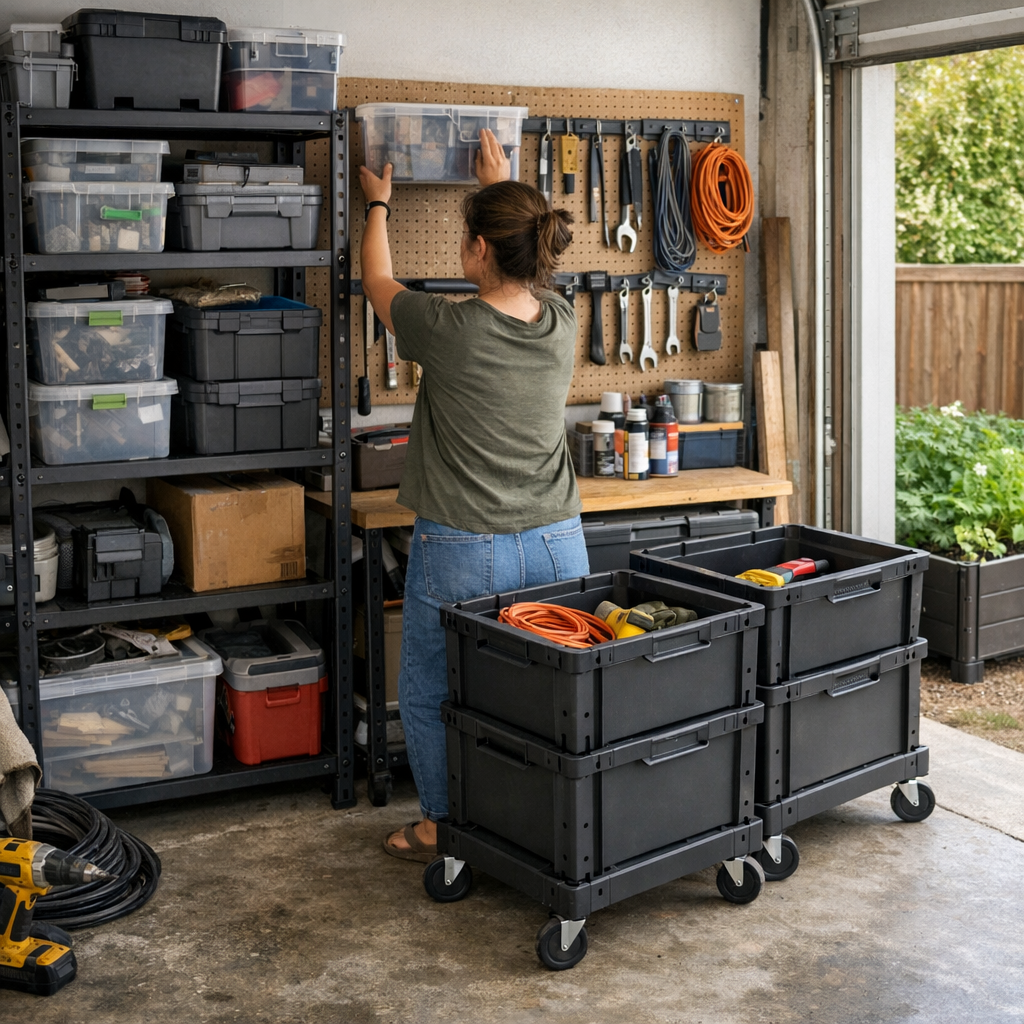
The real challenge of any garage or workshop setup isn’t making it look organized for a photo—the friction shows up later, after a handful of busy days. Suddenly, you’re inching a cart sideways just to squeeze past the workbench. A bin sits half-blocked by a stray box. The shelf that once looked perfectly aligned is now a catch-all for whatever didn’t have a real home. What starts as “order” quickly slides into an everyday obstacle course, no matter how modular the system claimed to be.
When Organization Turns Into a Roadblock
Most problems don’t scream for attention—they creep in with small interruptions. You start the day dodging the same stack of bins left askew in a tight corner, or swinging open a cabinet door only to find yourself twisted, grabbing behind an awkward edge yet again. What felt like ample walkway narrows as tubs creep outside their original lanes. That line of shelving you admired on install day? It’s now collecting every odd-shaped leftover you can’t quite fit anywhere else—becoming less a solution and more a trap for the next round of clutter.
The underlying issue usually isn’t mess or laziness. It’s a storage plan that looked fine on paper, but quickly fails under the pressure of day-to-day use. Every time you try to put a tool back in its spot—or grab something for a new job—you bump into the same friction points. Rigid layouts that can’t shift with your routine breed dead zones and force you to repeat the same awkward maneuvers all week long.
Modular Ambitions, Real-World Failures
True flexibility isn’t just swapping shelves or rotating which bin goes where. It’s about the entire setup falling in line with how you actually work—especially when stuff tends to move, projects overlap, or you rush to clean up after a long day. On a hectic morning, a fixed wall unit becomes a hard stop, blocking flow and choking corners with overflow. Rolling bins or pegboards can work—if they’re set up with actual movement in mind—smoothing out resets and making it easy to see and reach what you need without shuffling the rest.
But “mobile” brings its own issues if you’re not careful. A cart with no assigned spot quickly becomes a blockade, parked wherever you last finished up. Modular components that roam aimlessly end up as clutter, piling into already-tight walkways. Flexibility that isn’t anchored to your real routes and habits only trades one kind of mess for another—just with newer gear.
Real Example: The Overflow Magnet Shelf
It’s the same story again and again: one deep shelf morphs from extra storage into the unofficial dumping ground. Within a week, it’s swallowing gloves, zip ties, half-finished projects, all just out of sight—but way too close to the area you need clear for tomorrow’s task. You dig a little deeper every time, pull things out, but getting them back tidily feels harder after each use. The “system” hasn’t really failed, but it never flexes to help—making every return cycle clunkier than the last.
Why Fast Resets Matter
The biggest win with mobile storage isn’t just rearranging bins—it’s restoring actual flow with minimal fuss. Picture that wall shelf you’ve hated: attach casters, and suddenly you can roll it aside to stash awkward items, then tuck it back and reclaim valuable walkway. No more blocked pivot points or awkward lifting to reach what’s behind. Fast resets mean clearing jammed paths without emptying half the space for every reshuffle. It’s not about “maxing out” every square foot; it’s about keeping the crucial walkways and work zones usable with the least effort possible.
This kind of efficiency isn’t just cosmetic. When cleaning up or shifting projects takes less time—and fewer awkward moves—the space feels lighter. You spend less energy battling your setup and more time actually working. That’s what separates a functional workshop or garage from a static storage room with occasional access.
Quick Audit: Where Is Your Setup Getting in the Way?
Does the same cart get nudged out of the path multiple times a day? Is there a recurring moment you hesitate before putting something away because it means hunting for a buried bin? Those aren’t one-off annoyances—they’re signs your storage arrangement isn’t keeping up. The so-called “system” is resisting the daily rhythm, piling up micro-friction you feel more each week.
Planning Beats “Just Modular”
A major pitfall: assuming “modular” means the work is done. Wheels and customizable shelving can’t fix a lack of basic structure. A mobile battery rack with no clear dock will drift and clog your workspace. A rolling chest left in the middle of the room (because putting it away means unloading two other things) just creates a new bottleneck. Real improvement only shows up when your storage has mapped parking spots, obvious reset zones, and—just as importantly—a routine that enforces using them.
An unlabeled, drifting “flexible” setup may look fine at a glance. But watch how you move at the end of a long day: if you’re backtracking to return tools or gingerly stepping around a bin jammed in the path, the weak spots are winning. Each delay is a silent drain on the whole setup’s promise.
A practical shortcut: At peak use—when the garage or shop is busiest—do a “friction walk.” Where do bins collect or carts pile up? Where do you automatically slow down or sidestep? Flag those spots as top priority for anchoring mobile solutions—with obvious, logical parking built in.
Daily Use Reveals the Truth
First-day photos mean nothing after a full cycle of loading, moving, and repeat use. Real setups shine under everyday pressure: when marked zones make resets quick, and you’re not detouring around stranded carts or guessing where overflow should land. Wall and floor plans that focus on clear paths and flexible, assigned drop zones outlast any “fitted” system that can’t cope with late-night returns or new projects.
The difference is obvious in practice: a setup that looks organized but still interrupts your movement, or one where you actually glide from job to job, knowing exactly where every tool and box lands on a busy week. When adaptability and zone planning come together, the workshop or garage space finally starts working with you—not against you—as the routines change and projects keep rolling in.
See how StackNest modular storage can help you set up for real-life use at stacknest.myshopify.com.