
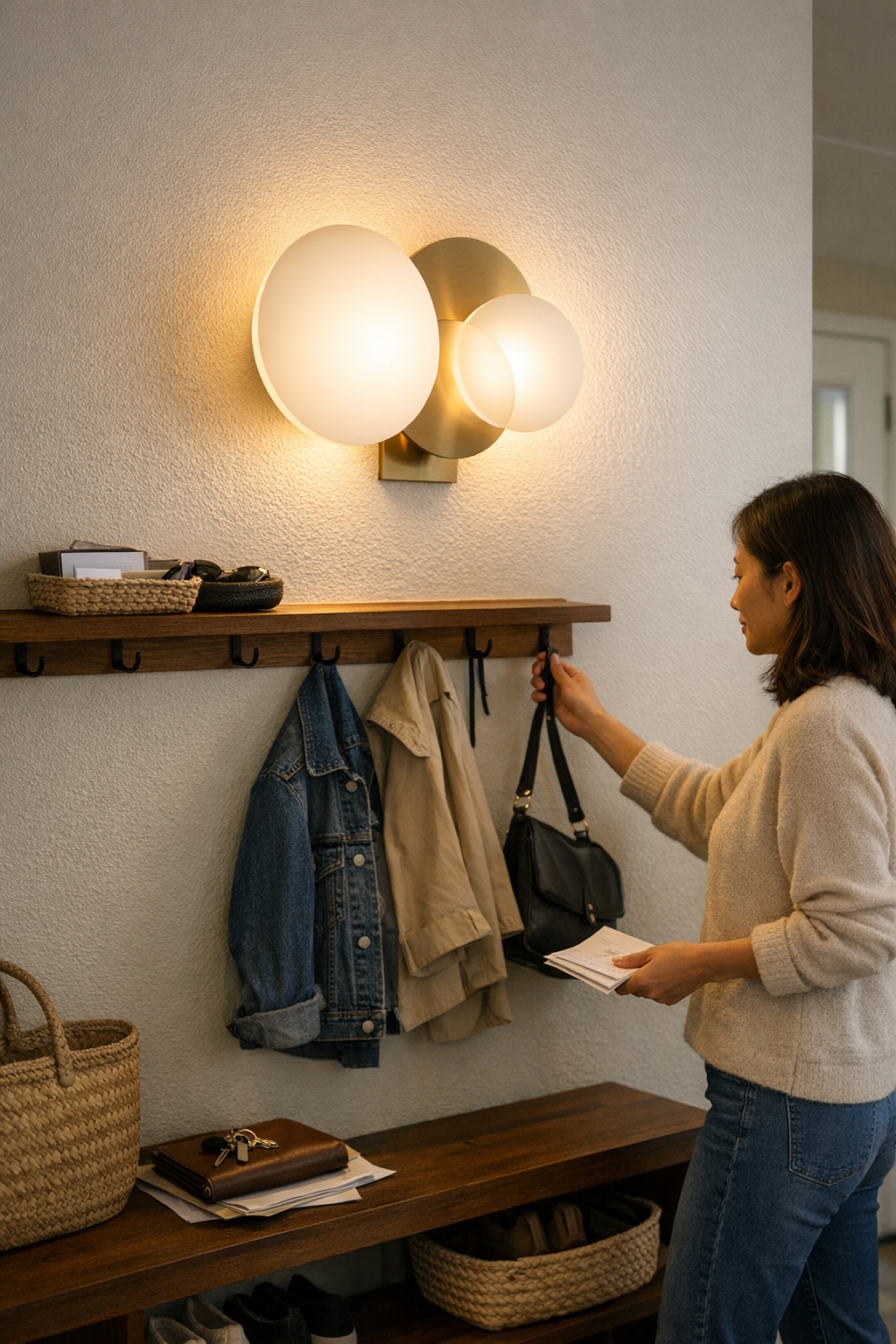
The illusion of a finished entryway lighting setup breaks fast—usually within the first week of real use. You spot the gaps not during installation, but in the small, everyday frictions: reaching for keys in a half-shadowed niche, stumbling over a cable hidden by habit but exposed in practice, or wincing as ceiling glare floods your eyes but leaves the bench awkwardly shaded. What looked tidy at the start—a single overhead fixture, a streamlined lamp with minimal cords—starts tripping up daily routines long before it feels settled. The difference between what looks resolved and what actually works becomes sharpest in the rush of real life: missed edges, awkward shadows, and support hardware that feels more visible than helpful.
The Slow Unraveling of Overhead-Only Lighting
Overhead entryway lights can look crisp on day one, but real pace exposes their blind spots. That flush-mount fixture with a frosted diffuser? It photographs well but falls short by the end of a busy week. Glare ricochets off polished floors, edges at the bench vanish into shadow, and grabbing something from a low hook means stooping into murkier corners instead of acting in clear light. You notice, often when you’re in a hurry, where the “finished” look quietly fails the routine.
This isn’t about atmosphere—it’s daily inefficiency. A ceiling light throws cold lines on the floor at dawn, while corners and action zones stay dim. Small items—keys tucked along the wall, dropped mail, shoes under a bench—regularly fade from sight. Every shortcut made during install becomes a repeated obstacle: forced searching, repeated squinting, stumbling over what should already be visible and accessible. Friction compounds: missed objects, fumbled routines, and entryways that never feel as resolved as they look.
Cable Runs and Accessories: When Support Becomes a New Issue
Quick plug-in lamps or peel-and-stick LEDs tempt with instant brightness, but their downsides pile up quickly. The surface stays tidy only until a cable creeps into a walkway or a bracket, once stable, grabs a passing sleeve or catches underfoot. Every exposed or lazily routed cord—especially without solid brackets or anchors—adds a new drop point, snag hazard, or visual distraction right where traffic is thickest and focus is lowest.
Most entryways multitask—storage, drop zones, last-minute dressing—so hardware that looked invisible during setup soon becomes an obstacle course. In less than a week, most routines get slowed by their own solution: tangles under benches, rerouted cords inching loose, support points that seemed discreet but are now the visual focus of a usually ignored zone. The supposed quick-fix winds up giving you new clutter and a different frustration.
Real-World Routine: What Slows Down Every Day
Think about the pace on a Monday morning: one person grabs a coat from a wall rack, another digs for a bag near the bench, a third desperately checks under furniture for headphones. Bad lighting throws glare onto the seat and leaves hooks in shadow, forcing mini scavenger hunts, abrupt stoops, and defensive sidestepping. Even a setup that looked systematized on move-in day can undercut itself if a trailing cord or awkwardly placed bracket interrupts the fast “grab, go, drop” choreography that busy entries demand.
Why Action Zones Demand Thoughtful Light and Cable Management
The win isn’t just about overall brightness—it’s about placing usable light right where action repeats, and removing mess and friction, not just moving it. Wall-mounted sconces and slim LED strips, set at hand or shelf height (generally within 70–85cm from the floor) do what no ceiling fixture can: they deliver clear, shadow-free light at the exact points where you grab, sort, stash, or leave objects behind.
It’s the difference you see in fewer problems: you reach for something on the shelf and your hand lands on it cleanly, without feeling around. Instead of glancing down to sidestep a tangled extension cord—or re-securing it for the third time—you barely register the bracketed cable tucked behind a coat rack. A routine proves its improvement: edges stay illuminated, corners don’t hide daily debris, and you stop tripping over your own fixes—both literally and visually.
Bracket Placement: Small Moves, Lasting Improvement
Entryway reliability often comes down to unglamorous but crucial bracket placement. When mounting points are anchored just behind shelves, under benches, or along wall supports, hardware disappears into the background—functionally and visually. This stops the slow migration of cables across traffic lines, the drift of mounting tape under temperature swings, and the sag of light bars that seemed level but end up tilted after a few weeks of real use. If hardware or cable feels sturdy at first but gets brushed, shifted, or knocked loose during the regular grab-and-go, you’re watching the actual limits of the setup play out.
Small Practical Tips for Routine-Proof Entryway Lighting
- Mount wall or shelf lights at hand level, not just for looks: Delivering light precisely to the active “grab zone” keeps you from repeatedly groping or squinting at bag, shoes, or keys in a dim stretch.
- Use adhesive cable guides or robust brackets for every cable run: Tuck cords behind, along, or under furniture to eliminate both visual clutter and trip points—no unsightly tangles or accidental jerk-outs after the first week.
- Leave exposed bulbs for elsewhere—use diffusion at entry points: Frosted or shrouded fixtures reduce harsh glare and stop the jarring “eye-flash” that stains first and last impressions when routines are under time pressure.
The Real Test: Lasting Clarity Versus First-Impression “Clean”
Setups that last don’t fight for your attention—they quietly support routine, staying in the background after months of use. What marks a routine-proof entry isn’t a perfect first look but frictionless function: grabbing keys, kicking off shoes, sorting pockets, all without side steps, blind spots, or cable-kicking detours. When lighting support is tuned—cables routed where you’ll never look, mounts chosen for both hold and invisibility, light targeted for the hand zone—the space feels settled, not staged.
Everyday use is the only real stress test. Weak setups—those that leave glare trails, hide the bench edge in shadow, or let cables creep back into traffic—fail quietly but repeatedly. The right setup isn’t what impresses on day one, but what you simply stop noticing after the hundredth exit or frantic search. When entry lighting just “works,” it softens the entire morning scramble. For spaces where routines and traffic never let up, clarity and stable support are worth more than showroom polish every time.
Find practical entryway lighting and cable support solutions at LightSupport.