Author: jaesoon_admin

  • How Grouping Desk Tools by Use Frequency Boosts Daily Workflow

    The satisfaction of a neat-looking desk is real—cables tucked, supplies lined up, surfaces looking empty enough to breathe. But for anyone who works more than an hour at a stretch, that surface-level order doesn’t last. Mid-morning, a setup that looked sharp at 8 a.m. can already feel crowded or awkward: you grab a pen, shuffle a notepad, snake your charger under a tray, push a drawer closed against a cable bulge. Suddenly, the logic behind your desktop organizer matters a lot more than its appearance—and what worked for a clean snapshot can start breaking down under repeated, real-world tasks. Where your most-used items live, how often you reach past obstacles, how many detours you make between keyboard, notebook, monitor, and device all add up to a workspace that either speeds you up or drags you down.

    Why a Picture-Perfect Desk Isn’t Always Fast to Use

    Looks can be deceiving. A symmetrical spread of pens, markers, cables—each in its own tray or compartment—can still trip you up in practice. Say you keep a basic desk tray sorted by type: every paperclip, pen, flash drive, and sticky note grouped “where it belongs.” Trouble is, the pen you actually use for every rushed call winds up buried between three highlighters and a USB stick. You fish or shuffle, each time losing seconds. These aren’t just tiny slowdowns; they break your momentum, forcing small resets. The core issue isn’t the presence of clutter—it’s when your organizing logic ignores your actual work rhythm and frequency of use.

    On a desk that feels crowded even when it looks clean, these invisible roadblocks pile up. Need to jot a number in a hurry? The pen is behind a decorative storage jar. Plug in a phone to charge? The cable has migrated under two stacked notepads. Even a compact desk can disguise wasted movement: a drawer that hits a stray cable, an organizer that blocks your elbow, a device tray that demands you sweep aside papers every time you swap from keyboard to notebook. Cleared surfaces only matter when they make daily resets and transitions easier—otherwise, tidiness is just delay, not progress.

    Grouping by Use Frequency: The Shift That Changes Workflow

    Function almost always wins in the long run. The fastest desks aren’t symmetrical—they’re grouped so what you use most is always nearest your strongest hand, within clear reach, with nothing hiding or overlapping. If your main pen, sticky pad, and phone charger anchor the space you touch most, your workflow changes: every reach is direct, and the rhythm of switching between tasks (mouse to notebook, plug to device, screen angle tweak) feels noticeably easier. This frequency-based grouping doesn’t showcase every tool equally, but it actually supports your work rounds.

    You feel the difference most sharply in multitasking bursts—voice call to quick note, laptop to manual sketch, adjusting your monitor so the webcam lines up just right. Each time something blocks your sweep—drawer resistance, tangled cable under a monitor arm, the “good” pen behind backup supplies—your attention stutters. These half-pauses multiply across each day, adding friction and fatigue. The Instagram-ready desk might impress, but the frequency-prioritized one means you stop hunting, shifting, or apologizing for where things landed after a busy block. Less perfection, more flow.

    Seeing Friction (and Momentum) in Real Desk Routines

    Real tension shows up in moments most people ignore: needing to take analog notes while on a video call, sliding your chair back and discovering the under-desk drawer unit blocks your feet, trailing your laptop’s charger over the corner of a desk organizer one too many times. The clutter isn’t visual—it’s structural. If your favorite pen and notepad are front and center, your hand-to-paper switch is natural. But one layer of stuff—even those sorted, well-placed supplies that looked smart on Monday—means awkward interruption with every transition.

    Physical setup details matter more on busy or shallow desks. An organizer wedged too close to the cable tray drags every time you connect a device. A shallow desktop disappears under a single monitor riser and lamp, leaving nowhere for your arms during typing sprints. In one setup, backing up a chair repeatedly bumped a side-drawer, making you unconsciously sit forward and hunch. Shifting passively-used tools—backup drives, extra cords—out of live zones restored the main surface for what you actually use, not what justifies a tidy picture. The direct effect: you sit, start, and cycle through work with fewer corrections.

    What Actually Helped: How I Adjusted My Desktop Organizer

    The leap in usability happened when I stopped organizing by category and arranged strictly by reach and repeat use. The main pen landed in its own slot right where my right hand returns after typing, with the sticky pad and charger beside it—everything else took a step back. Scissors, less-used cables, and backup batteries were exiled to rear or side slots in the organizer. This forced order made the routine direct: no scanning, no nudging aside a pile, no mental inventory before each action. After five full workdays, I spent less time resetting or reshuffling the surface than at any point in the previous month. The only ongoing tweak was a weekly sweep: move forward what crept backward, move back what I’d only used once, and resist the urge to reward symmetry over ease.

    Desk Setup FAQ: Real World Sorting

    Which items actually belong in front in my desktop organizer?

    Watch your hand movements for two days. The items you reach for every hour (usually: main pen, go-to charger, notepad) earn front-and-center space. Everything else moves back or gets sidelined, even if it looks neater all together. Don’t guess—track which tools land in your hand zone and adjust for reality, not initial expectation.

    Will grouping by frequency really save me time if my desk already looks organized?

    Absolutely. Even perfectly arranged setups still waste time if your top tools aren’t freely accessible. Every detour—moving a decorative notebook to plug in, fishing for a favorite pen among less-used spares—multiplies over the week. The real win is less wasted attention, quicker resets, and no end-of-day desk overhaul needed to catch up with your work pace.

    What if nearly everything feels essential for my desk’s front zone?

    Most desks carry “front-line” tools that don’t pull their weight. As an experiment, reduce your front zone to the top three or four things you grab each hour. Anything else can be temporarily shifted out. At the end of a week, odds are you’ll find half that list never really earned its space—open room that makes your actual cycles smoother. Shift priorities as projects change, but don’t be afraid to prune aggressively in the name of flow.

    Living With the Change: Fewer Setbacks, Smoother Reset

    Switching to frequency-based grouping rarely leaves you with a spread worthy of a catalog photo, but it does unload friction most people accept as normal: less scanning, less shifting, less redoing what a smarter logic would prevent. Chaos will still creep in, and a hard deadline will scramble any plan, but the difference is clear—a desk that recovers fast and matches the way you actually move through work. If a tool stops being essential, it drifts back; if a new routine takes over, your organizer adapts. It’s about less friction, not perfect stillness.

    Function outlives appearances every time. One week after rearranging based on reach and rhythm, I was working faster, pausing less, and clearing my space with less thought—no fuss, just flow. The real proof is in how few times I catch myself grumbling about the setup now: it fades into the background, exactly the way a good desk should.

    Explore the full WorkBasic collection

  • Streamlining Pet Travel: Avoiding Hidden Delays in Your Setup

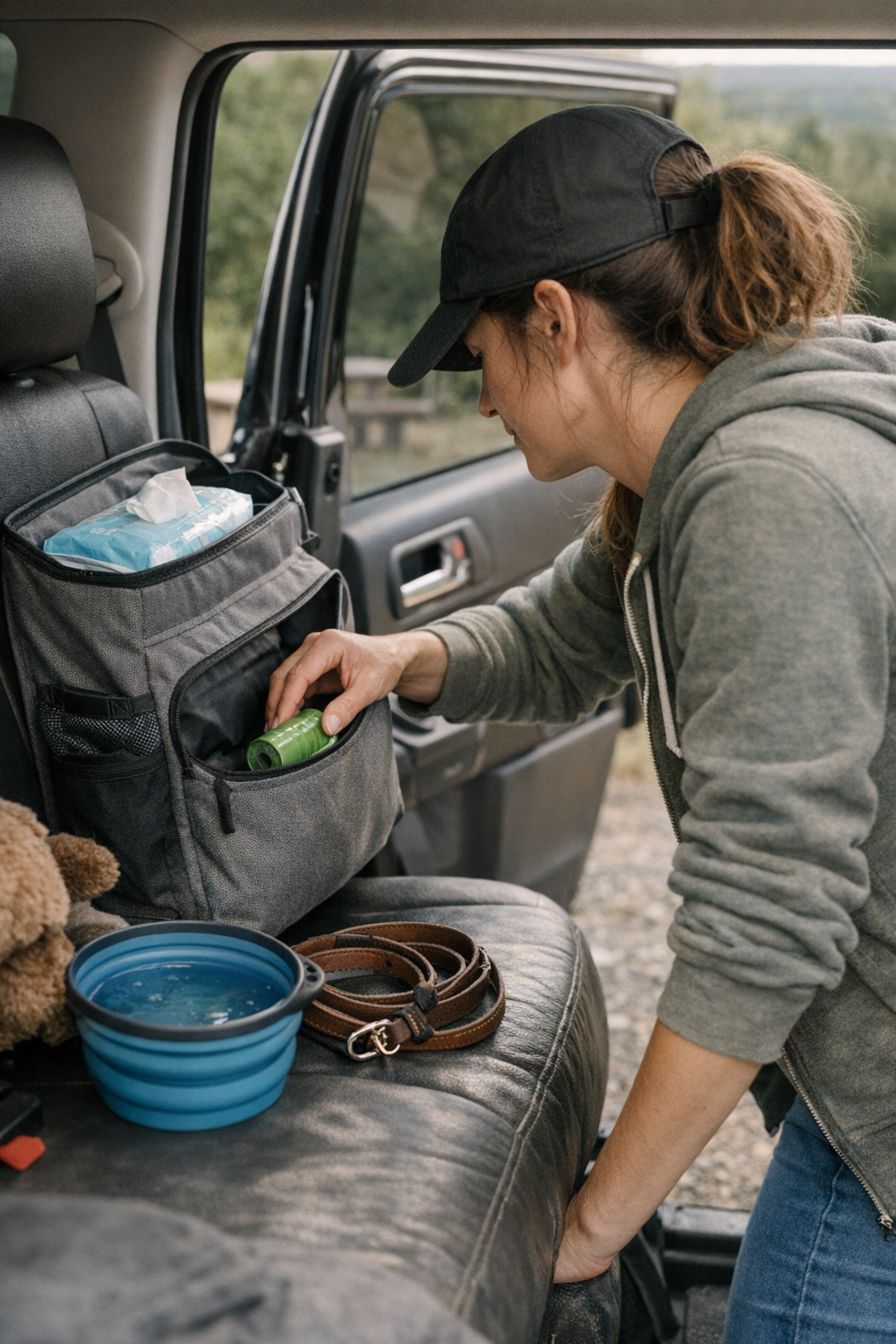
    Packing your pet-travel bag feels like you’ve solved the chaos before it starts—everything zipped, stacked, looking ready for anything. But that tidy setup rarely survives an ordinary trip. The first time your dog is pawing at the car door and you’re fumbling for wipes—trapped beneath a blanket, blocked by your own keys—you realize: organized doesn’t always mean usable. Every necessary item is there, yet the second you need fast access, the bag’s “order” becomes the problem. What starts as small delays—digging for a leash that’s slipped under a bowl, hunting wipes buried in a central pocket—quickly piles up stop after stop, grinding the promise of a calm travel routine into a loop of minor, repeated friction.

    Setups That Look Ready—But Stall When You Move

    Consider a normal travel pause. You pull up, bag by your feet, dog ready to leap. The moment you try to grab the leash, you’re blocked: one zip, then a shuffle because the leash handle is caught under the fleece. The wipes are now under a tangle of treats you stacked “neatly” before leaving. Your dog is already impatient—so you grab handles, toss packets aside, slam compartments closed—losing time and, often, dropping something in the rush. That’s the price of a setup built for stillness, not for movement: as soon as the trip goes beyond a single opening, each restart demands more reshuffling, sidestepping calm for pure scramble.

    Most travel setups stall during the “just get going” moments. Layered pockets or tight compartments slow you down. Every time the outer pouch fills with less-urgent gear, essentials sink deeper—forcing double-handling, awkward reach, and a stream of small, mood-breaking bottlenecks. The rhythm of travel—stop, handle, resume—breaks down into irritation, with both owner and pet absorbing the cost.

    The Quiet Burden of Repeated Friction

    The pauses compound. First rest stop: you nudge a treat tub aside for the water bowl. Second: towels are messily thrown back on top, wiping muddy paws but leaving organization behind. By the third or fourth pause, you’re no longer just “reaching”—you’re actively hunting, pushing aside bags, keeping the car door wedged open, feeling your setup jam at the same pressure points every time. Quick errands or longer drives start to resemble a cycle of shuffling, blocking, and mentally bracing for the same minor hassle.

    The trouble is never a mystery: certain pockets become repeat traps. Each time you pause, you hesitate, already dreading the next dig for wipes or the leash. Your setup doesn’t match the rhythm of what real travel demands—fast hands, clear spaces, stop-and-go flexibility—so each round, things get incrementally messier and slower.

    Missed Moments: When “Organized” Isn’t Enough

    Travel exposes every setup flaw: muddy paws need cleaning now, but wipes slip further out of reach with each drive. Clip-in leashes wedge under supplies, pausing movement while you fish them out. Comfort items bulk up the inner space, layering over quick-grab tools. Outer order disguises the hidden cost—delayed access, forced reshuffling, repeated frustration. Even when nothing spills, the structure itself drains the ease out of the trip.

    Why Do Access Delays Keep Happening?

    It’s not carelessness—it’s design friction. Bags built with layered compartments or all-zipper access seem smart standing still, but force three steps for every grab in real use. Shared spaces for owner and pet gear create blockages that slow you down when every second counts. Add travel pressure—restless dog, crowded parking, rain coming on—and the bag becomes a bottleneck you can’t ignore. The more stops you make, the clearer it is: good looks and packed supplies can’t make up for a layout that bottlenecks every common task.

    A bag that “photographs well” but keeps burying essentials leads to improvisation: holding your dog with one hand, digging with the other, tossing items into the footwell just to keep pace. The result isn’t a minor slowdown—it’s a steady grind. Trips become about handling the bag, not the actual pet care or travel itself.

    The Shift: Direct-Access Beats Layered Storage

    The fix isn’t adding more organization—it’s removing steps between you and what you actually grab, every single time. Think outer pockets for wipes and baggies, a single flap for bowls, an uncluttered sleeve for the leash. When your hand’s movement matches your intent—no digging, no rearranging—the time spent stopped drops dramatically. Direct-access design doesn’t just feel faster; it eliminates the chained delays that quietly sap every stop’s momentum.

    Over a full trip, one small change—positioning wipes and bags in a fast-reach section—removes a whole category of micro-frustrations. After tying my own wipes and cleanup bags to an outside loop instead of burying them, cleanup pauses shrank to seconds. Instead of hovering outside the car, tossing packs and restacking, I was back in motion quickly, and every outing felt one notch smoother. The physical relief was immediate—movement, not management, at the center of every pause.

    Examples From the Road: Noticing the Difference

    A short drive with your dog: you stop for a coffee, wet paws, minor mess. If wipes are buried, you lose time, fumble keys, risk a tracking paw slipping onto upholstery. But with wipes and cleanup bags at hand—side pocket, quick loop—every action is one step, not a chain. Or when hunger hits mid-trip, a bowl at the bottom under toys means extra digging, extra delay. Shift “first-grab” gear to their own fast-access spot, and suddenly even tired, distracted mornings run cleanly—no unpacking, no searching, just movement.

    Choosing Practical Calm Over Perfect Order

    Smoother travel comes from setups that work with movement, not just survive it. True calm isn’t about more storage or tidy stacks, but about not having to think about your next reach. Outer sleeves, single-flap pouches, and direct-access spots mean you’re not pausing, blocking, or restacking just to get on the road again. Less handling equals more control, and after a handful of trips, the value isn’t in how the bag looks packed—it’s in every time you don’t have to fight it. Notice if you keep tripping over the same bottleneck: if the bag forces you to block aisles, reshuffle every break, or slow down for the same repeated reason, it’s a sign the setup values appearance over repeated function. Travel is about movement; the only order that matters is the kind you barely notice—because it supports your routine, instead of interrupting it.

    Explore practical, travel-tested pet gear focused on smoother movement and less friction at PawGoTravel.

  • How Consistent Morning Cues Can Transform Your Dog’s Routine Flow

    Dog mornings rarely break down all at once. Instead, the routine frays at the same spot—a leash tangled under yesterday’s jacket, wipe packets sliding to the wrong corner, your dog pausing where kitchen flow should be clear. At first, you barely notice. By midweek, breakfast is delayed by nudging paws out of the hallway or tracking the missing clean bowl. The supposed “setup” starts costing actual minutes. By the time the leash is finally in hand and your dog is waiting by the wrong door, both of you are already behind—again.

    Recognizing the Subtle Drift: When Slow Mornings Start to Cost You

    A slow start with your dog doesn’t announce itself—it sneaks in as small blockages that repeat until the routine itself feels heavier. It’s not just the dog pausing by the bed, but your own morning derailed by forgotten wipes or a leash that’s never where you last left it. What seems like mild disorganization—one missing treat container, one rerouted bowl—multiplies with every repeat. The walk’s momentum breaks down. Feeding stretches from fast to fussy. And the more you adjust on the fly, the more each morning feels like a misfire of nudges, prompts, and half-backtracking through your own home.

    It’s not impatience; it’s the slow leak of calm and rhythm. The leash hides under a coat. The bowl edges too close to the next room. Cleanup becomes a second shift you didn’t plan. In environments with few friction points, routines flow: the dog moves at the first call, items are where you need them, time is less spent. Where structure is missing, signals are lost, and hesitation becomes standard—each friction spot compounding until the process that should feel automatic becomes a tangle you have to untwist every day.

    The Cost of “Good Enough”: Small Friction in Everyday Dog Routines

    It’s easy to dismiss these delays as dog quirks or just “not being rushed,” but they’re signs your routine is built on soft ground. When every meal needs coaxing, when a breakfast spatula is used to wedge a bowl out from behind couch legs, or when your dog camps in the hallway—forcing a detour during a rush—your setup isn’t working. These aren’t phase changes; they’re structure problems revealing themselves through repeated minor standstills.

    If you’re regularly giving your dog second or third cues—leaving the crate, clearing the door, moving into kitchen flow—and still finding yourself rerouting around them, your setup is sending mixed messages. These little standoffs lengthen the day drip by drip, breaking the sense of shared rhythm. Instead of moving together, you’re prompting, redirecting, and cleaning up after missed signals that never reset as fully as you’d like.

    Structure vs. Strictness: Why Consistent Setups Beat Daily Improvisation

    Structure isn’t about strictness or drilling. It’s about building morning cues into the home itself. A leash that hangs at exact reach by the main door (not hidden near the side entrance), a bowl that stays parked by the same cabinet, a wipe pack in plain sight by the usual return path—these work for you as much as for the dog. When the gear and the signals don’t shuffle, the routine stops throwing you curveballs. Dogs start to move because the cue is visible, not because you’re hovering or repeating yourself.

    Fixing morning stalls isn’t about louder prompts—it’s about silencing the setup questions that spark them. Consistent details let your dog read the room: one leash, one door, one place for bowl reset. Over time, predictability means both sides move the same way, with less coaxing and less double-guessing.

    How Subtle Setup Gaps Show Up in Real-Life Mornings

    Routine breaks aren’t always messy or loud. Sometimes, a “tidy” home hides frictions that only appear during actual use: the rest mat that cuts off the route to the kitchen, toy spills across the walking corridor, or cleanup wipes visible but awkwardly placed just out of reach after a muddy return. Every dog owner recognizes the moment: you reach for the leash, but bump a tote bag that snagged it during last night’s scramble; bowl wipes have migrated to the laundry room so breakfast cleanup stalls into the next hour.

    Appearances hide reality when the setup doesn’t follow the actual path of routine:

    • The water bowl seems well-placed—until every refill trails puddles across a frequently crossed part of the floor, resulting in daily mop-ups.
    • Treats look neat but are buried in a container that needs two hands and a second’s search—at precisely the wrong moment.
    • The crate fits the corner, but its door always opens awkwardly, so the dog hesitates, and you repeat the “come on” each morning.

    These don’t announce themselves with clutter—they quietly slow things down, forcing repeated workarounds even as the space “looks” organized. It’s the routine that almost works, but keeps stalling at the same spot.

    Routines That Hold Up: Repetition Builds Reliability

    Routines that flow are built from setups that support every repeated step—not just once, but every day under normal, rushed, or distracted conditions. Imagine if the leash always hung within arm’s reach—never buried, never needing a search. If the food bowl stayed in one place, always clean and waiting, not swapped for whatever’s dry or least dirty. Muddy-paw towels are reliably in the same spot at the door, not in a basket or behind a bathroom door miles from the action. The visible friction—a pause at a threshold or a stalled meal—shrinks when each piece is predictably returned to its home and easy to grab in sequence.

    Most owners keep improvising, only to face the same friction over and over. The routine stays vulnerable: your dog learns to wait for the second call, you keep doubling back for a forgotten wipe, and every out-of-place item leaves a weak link in the chain. Real improvement rarely comes from reinventing the space; it comes from eliminating that repeated drag—and making each step easier to repeat without thinking.

    Small Fixes with a Big Impact: Practical Adjustments You’ll Notice

    The smallest adjustments often dismantle the largest repeated headaches. Consider:

    • Centralize feeding gear in one, always-accessible station. When bowls, scoops, and wipes stay together, the routine becomes transparent—your dog knows where to look, and you do too. The “where is it?” shuffle is over.
    • Stick to a single, clear transition cue—no improvising the wording each day. The more familiar the phrase, the faster the response.
    • Store walk gear—leash, harness, bags—exactly at the main exit route. No more backtracking through rooms while your dog circles and the window for a smooth exit closes.
    • Place rest mats or beds away from doorways and kitchen paths, not just where they seem cozy. Comfort shouldn’t compete with daily flow. The right positioning keeps traffic lanes open and prevents that subtle drag that comes from stepping over a sprawling dog every morning.

    With just these basics, the real friction—meal messes spreading, slow exits turning into chaos, and re-cleaning patch jobs—quietly recedes. Your dog stops waiting for a second nudge. You save time not by moving faster, but by skipping the repeated obstacles you used to step around or shuffle past.

    Troubleshooting: If the Same Spot Still Trips You Up

    Even when you clean up and try new placements, some routine gaps come back. Maybe centralizing feeding gear shortened the search, but now scattered kibble creates a new clean-up spot. Or moving the gear closer to the door brought new interference—like blocking the coat rack you actually need. Sometimes, the routine “looks” better but doesn’t feel any easier, because the fix improved one part only to jam up another—like grabbing the leash only to fish it free from tangled boots, or wipes in sight but always one reach too far when paws actually need cleaning.

    The aim is a setup that resets quickly and fits your everyday movement, not just your best intentions. If you still have to scan the room to find the next item, or your hand hesitates every time you head for the door, you’re still living with friction. When routines plateau in speed or calmness, it’s usually a sign that another level of simplification, not just decluttering, is needed—making each item’s home match where you actually use it most.

    The Payoff: Mornings That Feel Calmer, Even When Life Doesn’t Slow Down

    The real difference between muddling through and actually moving with your dog isn’t dramatic. It happens through the moments you stop losing—not spilling food or wiping up messes after breakfast, not stepping over the same rest mat five times before lunch, not doubling back for a wipe when the window to clean muddy paws has already closed. The win isn’t perfection. It’s the quiet gain of frictionless flow—routine that finally fits the real way life moves, even on the most

  • Why Pre-Assembling Lighting Fixtures on the Floor Improves Long-Term Performance

    Bright doesn’t always mean right—especially in a hallway, laundry, or bathroom where you actually move, reach, and work. The fixture overhead can shine strong on install day, but after a week of real use, the weak points show up: a shadow slicing across the laundry counter just as you grab detergent, or an overhead glare that forces you to squint each morning at the mirror. This is the kind of lighting inconvenience that slips in slowly, shifting the room from “finished” to “frustrating” with every new routine.

    The Overlooked Reality: Lighting Alignment vs. Just “Looking Bright”

    A well-lit room on paper isn’t always usable in practice. It’s not just about the wattage, or the first impression under fresh paint—alignment and structural fit decide if light stays steady, or if a cabinet edge fades into shadow right when you need to see. A flush mount or hardwired wall light may seem to handle the load, but if the alignment slips and trims don’t seal cleanly, localized shadows and edge glare quietly sabotage key spots: the folding station, the hallway turn, the sink run.

    “Lit up” means nothing if the light misses where you live and work. Any fixture looks flawless when first mounted, but within a month, base sag and lens drift can create dim pockets that no one warned you about—right where you search for socks or scan the mirror for a breakfast crumb. That gap between first-glance and lived-through is where real lighting problems start collecting.

    Assembly Choices: Floor Pre-Assembly vs. Overhead Piece-by-Piece

    Every proper install comes with a choice: fully assemble the fixture on the floor, aligning trims and sealing lenses before you climb, or risk building it overhead, one screw and shield at a time, while you balance on a ladder. The stakes are higher than just speed. Pre-assembly on a stable surface locks in structure, making sure your lighting holds its shape after weeks of use, steam, door slams, or vibrations—not just during the first walk-through.

    When Overhead Assembly Starts Letting You Down

    The typical approach is to wire and build directly overhead, prioritizing safety and connection over every other factor. But with a shaky base, dropped screws, or forced alignments, trims pull off true, lenses skew, and small errors multiply. At first, it just feels a bit off. In a few weeks, you notice:

    • Shadow bands fall in odd directions as a semi-flush tilts with each door close.
    • Mirror faces turn uneven—one side washed out in glare, the other falling into shadow from a pulled trim.
    • The subtle but escalating rattle from a laundry ceiling light displaced by spin-cycle vibrations.

    The Hidden Win of Floor Pre-Assembly

    Spending the extra moments to align and seal every part on the floor pays off every day. The fixture arrives overhead with structure held firm—trims locked, lenses even, every angle checked. In squeezed quarters—a low-ceilinged bathroom, a narrow hallway, a laundry boxed next to a utility sink—this discipline shows: the beam lands where it should, not halfway down the wall or lost behind a cabinet run. Glare patches and creeping shadow are kept in check before they can interrupt your routine.

    Lighting Scenes That Reveal the Difference

    Hallways: When a Simple Trip Turns Annoying

    Imagine the routine: a long hallway with one central flush-mount. As weeks pass, a fixture assembled overhead can slip—just half an inch, just enough that a shadow line now traces your regular path. You find yourself stepping left at night, adjusting a coat, pacing around the unpredictable shadow. The flaw is subtle but persistent, multiplying every time you walk through.

    By contrast, a floor-aligned fixture stays where it’s meant to—beam straight, shadow minimized. Movement feels natural. Every corridor step lands in clear, even light. Lighting becomes invisible, which is exactly how you want it when half-awake or carrying laundry baskets at 6am.

    Laundry Room: Rattles and Dark Corners No One Warns You About

    Small rooms punish shortcuts. Overhead-assembled fixtures leave room for error—a trim just loose enough to vibrate, a lens angled to make the dryer’s edge dim. You shrug it off until the spin cycle, when the rattle gets louder and the far corner stays murky no matter how many times you wipe the lens. Those dark pockets aren’t “character.” They’re unforced errors, born of rushing what needed still hands and a flat surface.

    Pre-assembly closes the gap: all screws tight, all shapes checked. The fixture holds its place. Covers stay silent, no matter how many cycles you run. Even after weeks of slam-shut cabinets and steamy utility loads, the beam remains even and the rattle never starts.

    Bathroom: From Glare Patches to Even Mirror Light

    Bathroom lighting doesn’t just fail in the dark—it fails with glare, shadow imbalance, or moisture drifting inside a loose-fitting lens. The real cringe isn’t bad style, it’s the moment you shave or do makeup and realize one cheek’s in spotlight glare while the other is lost to a dim patch. That unevenness traces back to how the fixture was mounted—misaligned on a ladder, rushed to finish before steam fogs the glass.

    Pre-assembled vanities and sconces press flat and tight, holding their shape and keeping moisture sealed out. Mirror light is even, side to side—no guessing, no squinting, no realignment needed after the third shampoo bottle knocks the fixture. Every face wash and morning check is clearer, simpler, and less interruptive.

    Why Pre-Assembly Pays Off Again and Again

    Floor pre-assembly isn’t about saving time on day one—it’s about saving hassle every time you use the room. Error-proof trims block future shadow creep and stop covers from buzzing loose just as you step onto a damp floor or fill a laundry basket. You shouldn’t need a ladder for routine life. Lighting should stay quiet, even, and securely out of the way, month after month, not just barely holding on through week three.

    • Long-term stability—spend more time using, less time re-tightening trims or adjusting coverage.
    • True task clarity—no glare, no shadow at the counter or mirror where you need visibility most.
    • Better resilience in wet rooms—tighter seals, less dust and steam intrusion, function preserved between cleanings.

    A Real Tip for Busy Spaces

    For any area that sees daily movement and occasional humidity—think laundry, bathrooms, busy stairwells—give yourself margin: pre-assemble every major part at floor level, in daylight if you can. Align the trims, set the lens, test the fit before you even pull out the stepstool. Ten minutes spent here spares you hours of future glare-fighting, trim-tightening, or battling with a fixture that never quite centers itself above the mess. That’s how you avoid the slow slide from “looks bright” to “feels off.”

    The Difference Week to Week

    The mark of good lighting isn’t how a room looks the next day; it’s how naturally your movement, routines, and sightlines hold up week after week. Floor pre-assembly makes it less likely you’ll ever catch a shadow swallowing the hallway’s end, squint against glare at the sink, or tiptoe around a laundry dark spot. Instead, the light stays quietly reliable—the signal of a fixture whose only job is to let you work, move, and see clearly whenever you return.

    Visit LightHelper for practical indoor lighting solutions.

  • Creating a Stable Car Setup That Simplifies Daily Routines

    A car can look organized, and still trip you up every time you get back in. You finish an errand—the seats look clear, surfaces tidy, trays emptied after the last cleanup. But right away, you’re sidestepping a charging cord kicked into the footwell, digging for your phone charger under a drifting floor mat, or scraping yesterday’s receipt off the seat before you can sit down. This isn’t just clutter sneaking back after a long trip. It’s the kind of repeated friction—misplaced cables, sliding organizers, floor protectors bunching under your heel—that interrupts normal drives, slows re-entry, and turns “clean” setups into everyday headaches. Outward order doesn’t guarantee the car will work with you instead of against you—especially once the scramble and reach of daily use start to reveal the cracks.

    When “Organized” Isn’t Enough for Repeated Use

    A car can breeze through a visual check—the mats vacuumed, bins squared, chargers tucked away. But the difference between looking tidy and actually working comes out fast—often by your second or third stop of the morning:

    • The phone cable always winds up right back under your heel before you’ve driven a block.
    • That “catch-all” tray turns into a catch-nothing the minute you hit a speed bump, and now your ChapStick and coins are scattered under the seat.
    • Backseat protectors catch crumbs—but block the seatbelt latch right when you need it for a passenger.

    Mess isn’t the biggest enemy—unseen, repeat interruptions are. Every trip and quick return brings back the same snags, showing how most interiors fight against smooth access, no matter how “put together” they look after a cleaning spree.

    Everyday Scenarios: Where Friction Keeps Returning

    Chasing Cords and Compromised Charging

    Charging cables rarely stay where you want them. You finish up, think you’ve corralled the cord, and next drive it’s either curled in the footwell or lost under the seat. Plugging in your phone—especially rushed, one-handed, half-distracted—is suddenly a hunt through shoe treads and random wrappers. Even a “minimal” in-car charger becomes a daily hassle if the cable isn’t anchored or routed where your hand expects it during normal use—not just where it looks nice when parked.

    The Great Console Drift: Items on the Move

    Tray organizers advertise easy access, but in real driving, small essentials drift everywhere. Sunglasses slide under shifters, coins vanish into armrest cracks, sanitizer ends up sliding toward the passenger footwell. Organize everything at the start of the week, and by Wednesday your “clean” dash still means awkward searching for what you last left—usually out of reach or dumped somewhere unpredictable after a single sharp stop.

    Floor Mats and Edge Problems

    Floor mats keep dirt off the car, but a mat that slides or crumples under your shoe is a setup problem, not just a cosmetic slip. Each time you get in, you’re nudging the mat back into place or pausing to clear it from the pedals. Instead of making life easier, the supposed fix creates a new routine: climb in, adjust the mat, brace your feet, repeat.

    The Silent Cost of Every Five-Second Pause

    You’re juggling coffee and groceries after a long day, balancing a bag while you open the door. But the organizer tray has scooted just out of reach—or dumped its contents (again) when you braked earlier. Now the charging plug has vanished under the floor mat, and you set everything down, annoyed, to dig for it. Or you try to slide a bag into a tidy trunk bin, only to find the slot too tight for a normal grocery haul. Multiply those “just a minute” delays through the week and the car slowly becomes more frustrating, not less.

    • Unanchored charging cables tangle underfoot, stopping every quick start-and-go.
    • Trays that looked helpful after a clean become a chase for scattered items by Friday.
    • Cargo organizers add steps, not speed, if every load-in requires awkward maneuvering.

    These invisible pauses add up. The car that should save energy instead eats up micro-moments—stalling your next routine and draining out the convenience you expected from “good” organization.

    Changing the Equation: Anchoring Over Arrangement

    Why Fit and Routing Trump Visuals

    Lasting improvement doesn’t come from lining everything up for the next photo. It comes from setups that anchor what needs to stay stable and route what needs to be ready. Containment alone is never enough—items have to be locked into place, routinely reachable, and protected from sudden shifts or typical daily movement.

    A molded organizer tight against the console means sanitizer or keys don’t leap out of reach when you brake. A cable clipped to the right seat edge means plug-ins happen by muscle memory, not distracted groping. The setups that survive daily pressure aren’t just neat—they absorb motion, resist drift, and keep access points ready for your actual driving habits, not just your cleaning checklist.

    Counteracting the Most Persistent Friction Zones

    • Seat Edges: Where feet, bags, and shifting weight push against cables and liners—requiring anchor points or routed channels that don’t get kicked loose.
    • Console Gaps: The drop zone for everything you mean to keep: fitted gap fillers and tray stabilizers cut down on lost time and scavenger hunts mid-drive.
    • Trunk Corners: Too many compartments block as much as they organize. You want dividers open enough for quick toss-ins, but structured so nothing jumps or spills out when you park on a slope.

    It’s not just about tidy control. It’s about keeping flows open: protecting surfaces or gear without trapping or slowing every basic movement when you return to the car, reload, or go for the next errand.

    Choosing for Calm: Systems That Work With You

    The real measure of a car setup isn’t how it looks after the cleaning, but whether you still need to fix it midway through the week. If you keep grabbing cords from underfoot, adjusting mats before driving, or searching for gear that always migrates, that’s your signal: the setup isn’t holding up. These weak points stand out—quick plug-ins blocked by slack, items skittering to the floor on a normal stop, or having a pristine-looking trunk that actually slows down your whole return or unloading routine.

    • Fast plug-in, delayed by tangled charging cables or sliding plugs.
    • Hard-stopped items that break free of “organized” zones and land on the floor yet again.
    • Bin systems that hide mess, but still make every re-entry require a redo.

    The best solutions don’t just clean up the visual mess. They hold structure, keep motion smooth, reduce friction, and let your routines—driving, loading, returning, recharging—actually flow. When your car works with you, that difference is easy to feel, even if it’s hard to spot in a snapshot.

    Find practical organizers, chargers, covers, and driving accessories designed for real-world use at DriveWellSupply.

  • Why Firm Dividers Make Drawer Organization Truly Stress-Free

    You know the moment: you close the drawer on a perfectly organized row of shirts, socks, and belts—and feel a small victory. But even before the week’s out, that victory fades. Edges blur. Neat stacks lose their lines. The satisfaction of order is undermined, not by laziness, but by the ways real life pushes against fragile boundaries every single day.

    How Quickly Drawers Push Back

    This quiet unraveling doesn’t happen all at once. It’s the daily reach for a favorite shirt, the half-second spent fishing a sock from underneath a tangle, the small shuffle of a pile to get to what you actually need. Soon, sections that once seemed clear are unrecognizable. Categories begin to seep into each other’s territory—shirts slumping sideways, socks straying, scarves drifting across lines meant to keep the peace.

    It’s not chaos—just an unease, a feeling your drawer is now an obstacle. The culprit? Dividers and bins that look sturdy on install day but can’t take the strain of regular, impatient hands. Every grab, every hurried morning, and every unplanned reset erodes the order you worked so hard to create.

    The Slow Cost of Weak Boundaries

    The real friction isn’t visible junk, but the daily micro-struggles that chip away at your routine. Most dividers are too soft or too loose to stay put. That’s when the “maintenance tax” sneaks in: a little more nudging here, an extra straightening there. You start the week with crisp categories, but soon you’re sorting through socks mixed with t-shirts, belts that travel, and bins that collect everything—except what you’re looking for.

    This isn’t limited to dressers. Entryways quickly become catch-alls, where gloves slide into dog-leash territory and hats end up squashed under mail. Bathroom drawers set with the best intentions slowly melt into open landscapes—makeup brushes rolling into toothpaste tubes, hair ties mingling with travel bottles. Spaces that look organized after a weekend clean-out quietly revert by Thursday.

    When Looking Organized Isn’t Enough

    Matching bins and folded stacks are easy to put together, but they’re only as good as the boundaries that hold them. Soft-sided bins let contents slouch and mix. Stacks, no matter how perfectly aligned at first, lose shape the moment you reach from the middle. And in deep drawers or shelves, items slide backward, getting lost behind what you use most.

    Detecting Disorder Before It Spreads

    You’ll spot it in the subtle changes: piles tilting, bins no longer truly separate, and the extra time it takes to find a single item. That one-inch “gray zone” between two categories? That’s where socks cross into t-shirt territory. Pull out one thing, and something else topples. Eventually, the drawer requires a mini-reset after nearly every use—a slow, low-level loss of time and patience.

    What Actually Holds Up, Day After Day?

    Stability comes from boundaries that refuse to budge. Rigid, shallow dividers—fitted tightly, not leaving room for drift—beat soft barriers every time in high-use zones. Each space should match its contents: just wide enough for a stack of shirts or a row of socks, with walls tall enough to guide your hand but never so high they obstruct a quick grab. With a solid edge, each return is easy—there’s no pile collapsing sideways or slow creep from adjacent categories.

    The difference shows up immediately. Instead of bracing for a small mess every time you pull something out, you’re met with clear lanes that survive a week’s worth of real-life rummaging. The less you find yourself re-stacking, the more you realize how much easier the whole drawer becomes to use and reset.

    Real Spaces, Real Symptoms

    Every storage zone tells its own version of the same story. Open a family room drawer: remotes blend with coasters, batteries vanish beneath puzzles, and you spend extra minutes reshuffling to reach a charger. In the pantry, snack bins overflow and bread migrates into the dried-goods pile. Even closet shelves—supposedly sorted by season or style—lose clarity as loose stacks mix and “temporarily” out-of-place items linger for weeks.

    No setup survives everything. Overloaded drawers will always be trouble. The best systems aren’t the ones that look showroom-perfect on the first day—they’re the ones that bounce back quickly after normal use. When boundaries truly work, you feel less ongoing frustration: socks stop wandering, shirts stay stacked, and you stop dreading the small resets that come with every rushed morning.

    Low-Effort Tweaks That Actually Help

    If your storage feels like it’s always on the verge of slipping into chaos, a few practical upgrades can change the game:

    • Trade loose bins for fixed dividers in any drawer that gets daily use.
    • Add barriers in deep spaces—placing a low divider halfway adds a front zone so nothing sinks out of reach.
    • Adjust gaps between categories: if a stack keeps listing sideways, tighten the width until it consistently stays upright.
    • Seal off “creep lanes”—use a slim divider to prevent items from spilling into each others’ zones, especially in high-traffic drawers and shelves.

    What Real Function Feels Like

    A functional drawer doesn’t need you to remember a system or stage an Instagram photo. It lets you grab what you need quickly—without fishing, correcting, or bracing for the fallout of a single hasty move. The right boundaries fade from notice, quietly holding the line week after week, letting order survive ordinary life instead of resisting it.

    For storage that actually works, invest in barriers that stick. Every quick reach and unbothered reset is proof that your system is built for living, not just for looking neat in passing. The reward isn’t what you see—it’s everything you don’t have to fix.

    Shop ClosetWorks storage solutions

  • How Strategic Outdoor Storage Transforms Yard Usability and Cleanup

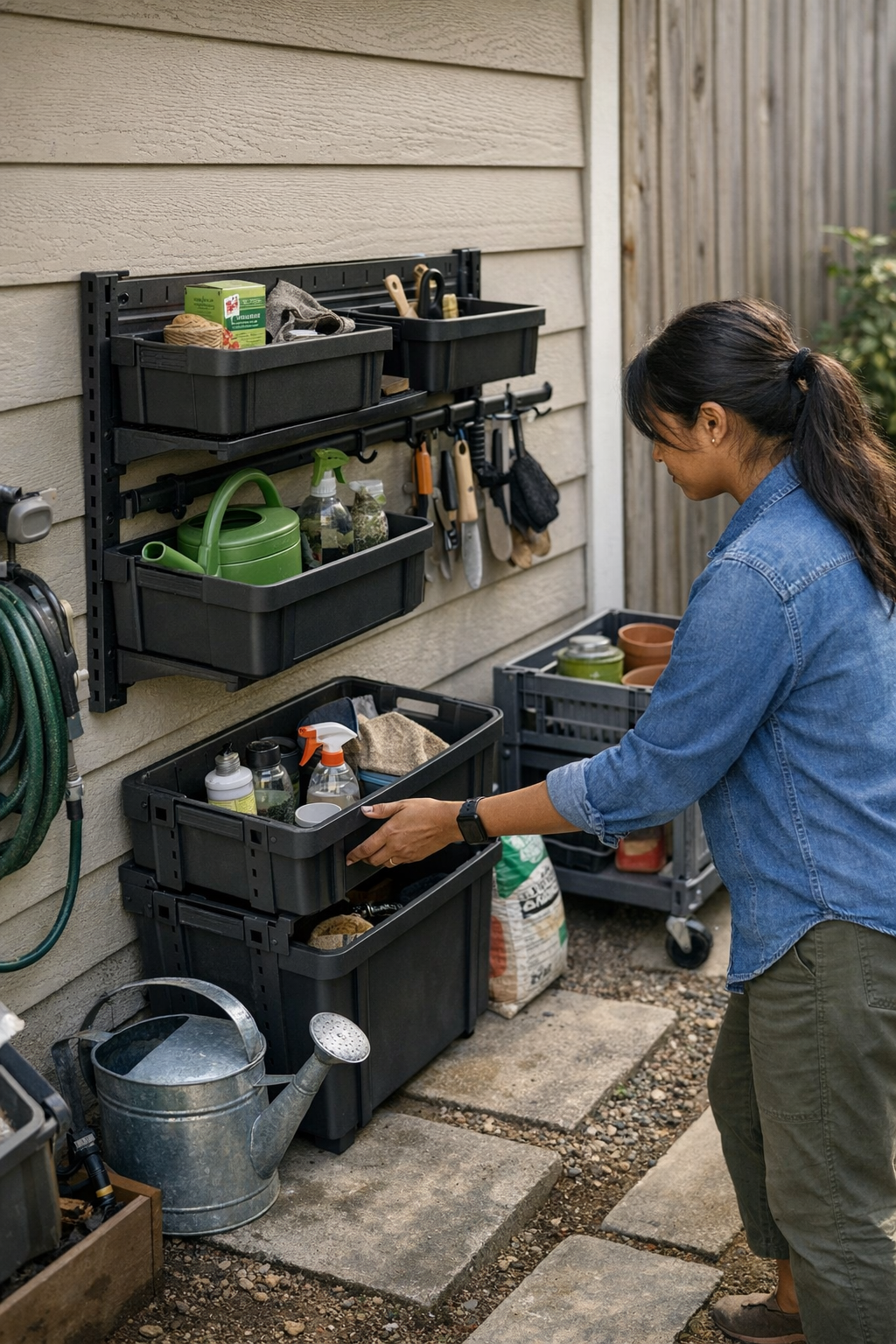
    Outdoor storage isn’t neutral—it can open up your yard or quietly choke its usefulness. Step outside and you’ll see it: shoes crowd the side path, hoses loop across the walkway, hand tools sprawl under the back steps. You’re not just fighting clutter; you’re fighting blocked routes, broken routines, and the slow build-up of obstacles that turn a weekend reset into a familiar slog. The real problem isn’t “not enough storage”—it’s storage cut off from where it’s actually needed. Move bins, racks, or boxes just a few paces away from the action and suddenly, “I’ll put it back later” wins. Paths fill up with what should have disappeared. By Friday, you’re shuffling the same gear back and forth, stuck in a cycle where the setup seems organized but movement is broken.

    When Storage Doesn’t Match Routine

    If you’ve ever tried to keep a narrow backyard or lanky side strip under control, you know order is less about form than flow. When storage drops out of your route, even by a step, resets get clumsy. You finish watering—gloves get tossed onto a step, not back into a box. The sprayer sits by the hose instead of disappearing. A spade rests near the beds. Soon, it’s not just a pile in one corner—awkward footprints and drip zones block the gates, a bike trip becomes a balancing act, “quick fixes” stay stuck in mid-task. Every day, you find yourself nudging boots or kicking hoses just to get through.

    So you add another bin. But most yards already have enough “solutions.” The issue is timing—can you actually return gear when it counts? If a bin’s lid jams or a wall hook asks you to detour, order collapses. The telltale signs pile up: a back corner behind a storage chest where overflow settles, a fence line that catches whatever’s in your hand as you head inside, a paved edge you keep promising to clear “this weekend.” The wrong setup quietly guarantees repeat mess.

    Placement and Flow: Where Setups Fail or Succeed

    The difference comes down to inches and instincts. Look at floor storage eating up walking space: a bin in a high-traffic zone actually triples its footprint, trapping access and making you step over, not through. Freestanding boxes at the far end of the yard almost never get used for daily tools—the useful stuff piles up where you actually work, not where a catalog said it should “fit.” Wall racks that cut across a path—so you have to dodge boots or duck past a ladder—swap one pinch for another. The flow gets slower, not smoother.

    Shelving seems open-handed, promising speed, but a half-emptied rack just advertises the next mess, making you avoid it instead of using it. Closed cabinets look neat for a day—but if you need to step out of your normal loop to reach them, leftovers collect outside, and the chore of “resetting” grows. Placement that’s off isn’t just inefficient; it quietly sabotages every reset you attempt.

    Real Yard: The Setup in Practice

    Picture a yard where everything—watering, pruning, sweeping—ends at the same bottleneck. For months, a lidded storage chest lived two strides beyond the hose bib. The result: gloves and pruners never made it inside. Gear clustered on top of the lid, then migrated—one piece at a time—along the fence or into the main walk, until blocking the path was just the way things were. A single extra step was all it took for “putting things away” to become “stashing things out of the way.” Every Friday, energy for another “proper reset” wore thin, and the setup that looked organized failed the only test that mattered—routine use.

    Just relocating the storage—a modular rack right by the fence, where the hose ends—instantly changed the pattern. Gloves or sprayer needed no detour to drop. Suddenly, the side path stayed open; gear stopped wandering, and the patch that always collected overflow actually cleared. The reset shrank from a full chore to a five-second move—the real result was fewer bottlenecks and an outdoor space ready for the next use, not stuck in catch-up mode.

    Setup Habits: Tiny Friction, Big Impact

    Clutter is only the symptom—the real fight is against little barriers that turn returns into chores. It only takes one awkward hinge, one out-thrust rack, or the wrong-sided bin lid to make a “solution” slower than leaving things out. A shoe rack poking into a side gate, a bin lid hinged away from the hand you carry gear with, a storage seat that won’t open unless you move everything stacked on top—these are the slow leaks that kill good intentions week after week.

    Dead corners and blind strips set the trap: what doesn’t have a proper return zone starts pulling the rest of your gear out of line. If a wall system soaks up overflow faster than you can deal with it, or your reset speed drops midweek, it means your storage matches the blueprint, not your habits. The patio looks tidy from a distance, but the routine—the moving, reaching, fixing—still gets stuck. That drag is what makes a place feel “off,” not a few weeds or scattered tools.

    Making Storage Match Real Movement

    The most resilient setups aren’t the ones that check every box—they’re the ones where organization takes no extra thought. Position storage at task endpoints. Hang caddies right by the faucet or mount utility hooks where shoes come off naturally. Trade out bins you have to step around for wall racks that use dead air, not floor space. If a corner keeps snagging stray gear, make it the new drop spot—not a last resort.

    Even small tweaks matter: a hook placed within reach of the garage entry trims seconds off every reset and cuts back visible mess. Swap a deep chest for a shelf at shoulder height, and you stop squatting but also stop blocking the way. The faster you can move through a routine drop-and-return, the less likely clutter is to migrate—so resets get lighter and the cycle of “should sort this out” actually breaks.

    Real-World Reset: Accepting Imperfection, Stopping the Slide

    No outdoor setup erases hassle, but the best ones make everyday resets more like muscle memory, not another weekend burden. Don’t chase a static, pristine shed or a patio ready for catalog photography—aim for setups that flex and recover through wet weeks and busy evenings. Fast resets, obvious drop points, paths you can actually use—even when things aren’t perfect, those are the wins that last.

    Watch your own patterns: what zone pulls in the leftover boots after a rainy day? Which entry gets blocked first, and which “solution” secretly creates one more mess? Reset your storage to match those daily routines, not what looks best in a brand photo. Every yard, big or small, develops its own use-rhythm—effective organization simply rides that beat, not the other way around.

    Explore practical outdoor solutions at TidyYard.

  • How Small Layout Changes Can Eliminate Hidden Steps in Your Workspace

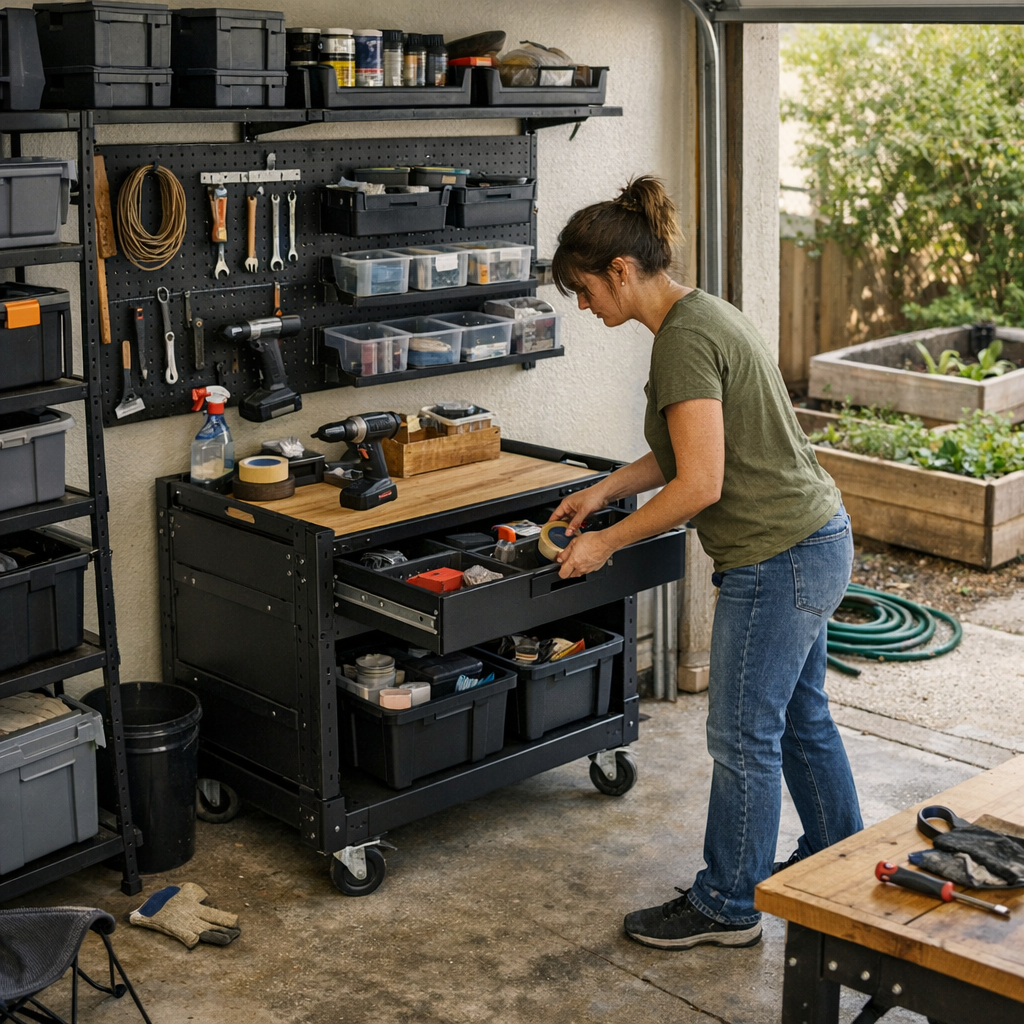
    The showroom promise of modular carts and wall racks is irresistible—the sleek storage, the illusion of a spotless garage, a workshop that finally stays under control. You bring in that new system, arrange the bins, hang up the tools, and at first, everything looks solved. But then you start living with it. Not a month later, a new kind of mess sneaks in: not loose parts or wayward cords, but the constant, almost invisible contortions you make just to do simple things.

    Where the Trouble Hides in a “Clean” Setup

    The illusion holds up for a few days. Everything’s in its place, at least until you actually need to get things done. That’s when the cracks show: You double back for a wrench because the right bin is just out of reach. You thread your arm past the lip of a cart to fish out painter’s tape. You shuffle sideways between a tool chest and the wall—never quite fitting through—only to realize you’ve blocked your own escape route. One awkward step here, a bin moved there—none of it feels dramatic. But by the end of a real work session, your routine has been sliced apart by a dozen tiny, repeating annoyances.

    This is the friction nobody warns you about. The space still looks organized, but your workflow keeps snagging—hidden obstacles and off-kilter footprints turn everyday resets into stop-start marathons. It isn’t junk, it’s the geometry of your own system quietly working against you.

    Why “More Storage” Doesn’t Equal a Better Setup

    The problem almost never starts with too little storage. Instead, it’s the ugly mismatch between what looks organized by the numbers and what feels effortless in use. Your wall system eats up the only reachable spot, bins stack high right where you need legroom, and your mobile rack—so tidy at first—ends up collecting overflow at the far end of every job. You get more places to put things, but fewer ways to move naturally.

    Picture mounting a big tool board above a rolling cart. Sensible—until you realize the cart blocks access. Now every project begins with pushing, angling, or pulling everything out just to get started. The storage “solution” adds work to the simplest task.

    How “Almost Right” Layouts Steal Your Time

    It’s a familiar scene: a rolling cart shoved almost but never quite close enough to your main table. Each time you grab for supplies, you angle your body around the edge, careful not to send a bin tumbling. Dragging a cord or carrying a rake means a whole extra detour. By Wednesday, you know the exact dance—you move inefficiently out of habit, not convenience. It’s not truly disorganized, but it’s just wrong enough that you burn minutes and patience every time you work.

    Counting the Costs of a Poor Flow

    Every time you slide a cart to clear a path or shift a bin to find the piece you need, you’re giving up seconds—and focus. These adjustments fade into the background so quickly, you stop noticing them. But over a week, they take over:

    • Return flow gets jammed: You abandon tools in the “close enough” spot because the real home is a hassle to reach.
    • Overflow takes over dead corners—nothing ever resets all the way.
    • The main walkway narrows a little more after every session, now blocked by a cart or an awkwardly angled box.
    • Resetting for the next project turns into a scavenger hunt, not a smooth transition.

    The neat look is a lie. Unless the movement flows cleanly—unless tools and supplies come and go without gymnastics—no shelf or rack is truly working for you, no matter how perfectly labeled the bins are.

    Resetting Your Setup Around Actual Movement

    You won’t fix these pain points by buying another organizer. The answer is to study exactly how you work—for real, not in theory—and make the smallest changes with the biggest effects. Sometimes, moving a cart 18 inches, turning it parallel with your bench, or clearing a single “return lane” is enough. Suddenly, the tools you use daily are right where your hand expects them; the long-way-around shuffle disappears.

    In one ordinary garage, simply nudging a garden supply cart out of a walkway and rotating it meant tools could be put away in a straight line, without stepping sideways every time. That flow didn’t just look different—it felt like instant breathing room.

    Test Yourself: Where’s the Grind?

    Do you find yourself circling the same obstacle to drop off a drill? Always reaching around the broad edge of a cart for tape, or shifting two bins because the thing you need hides in back? That’s your setup fighting you—even if every label faces front.

    Here’s a five-minute audit: run your full space-reset routine, start to finish, five times in a row. If any bottleneck slows you every lap, it isn’t a fluke—it’s a flaw baked into your layout. Map those friction points, and you’ll know exactly what’s worth fixing.

    Small Tweaks, Real Flow: How to Unlock Your Space

    Perfection isn’t the goal, and it isn’t possible—but real improvement is always specific, never cosmetic. Forget another wave of reorganizing just for looks. Instead, try:

    • Bring your highest-use carts or cabinets into your natural flow, not blocking walkways or stacked at awkward angles.
    • Shift bulky wall racks to hold rarely used items—freeing up clear landing spots for daily gear.
    • Protect one straight “return lane” so you can reset tools and bins without zig-zags or backsteps.
    • Open up corners and the ends of rows, so overflow can’t quietly pile up and choke your movement.

    These surgical changes deliver more relief than any new shelf ever could. Each solved friction point turns a clutter-battle into a real, usable space—the kind you forget to complain about, because it simply works.

    The Feel of a Setup That Actually Works

    The right tweaks leave your space feeling lighter, not just neater. You step through without weaving. Tools snap back into place without a multi-step dance. There might still be a crowded shelf or a rough edge, but the path you actually use is clear, the routine unbroken. The urge to reshuffle every session fades—you return to work, not to rearrangement.

    This is the payoff: storage and layout that matches real movement, every time you show up—not just in the photos, but in the day-to-day loop.

    Find practical storage and modular solutions built for daily flow at StackNest.

  • Streamlining Indoor Cat Care for Stress-Free Travel Departures

    Leaving your home—even for a quick errand—exposes every flaw in your indoor-cat setup. What seemed “fine” during a calm evening falls apart when you’re in a rush: a food bowl wedged out of sight suddenly adds an extra step, the litter scoop is missing again, and a water bowl tucked under a side table turns one refill into a cramped juggling act. These aren’t minor annoyances—they’re the repeat interruptions that make departure feel like a gauntlet, not a goodbye. StillWhisker’s world is built around cutting this daily shuffle down to size.

    Where Setup Friction Hides in Daily Life

    It’s easy to design a cat corner that looks neat—bowls behind décor, litter hidden behind a laundry door, everything clustered out of your walking path. But these “tidy” decisions bury the real work. The litter scoop’s always blocked by a box. The toy basket sits prettily in the far corner yet requires moving a chair. The food mat seems contained yet collects crumbs where you can’t swipe them until they trail across the floor.

    The pressure hits when you’re late—groping for liners under a cabinet, kneeling in the shadow of a plant just to wipe up that missed spill, resetting the same clumped spot again and again before you can leave.

    Departure Pressure: The Ultimate Indoor Cat Setup Test

    Leaving home is the stress test for every setup choice. Fast exits expose every hidden inefficiency: if you have to shift a watering can just to grab the bowl, you’ll keep doing it. If refilling the food means trail-walking to a closet, next time you’ll cut the task entirely—or risk an empty bowl while you’re gone. Skipped toys, forgotten wipes, reset mats locked behind furniture—these become regular snags, not rare slip-ups.

    Friction points show up as:

    • A water streak you only notice as you pass the threshold—because the bowl edges out of your periphery on normal walks
    • Food left unfilled when the feeder “out of sight” means it stays out of mind, especially when you’re multitasking
    • Spray bottles stored two rooms away, so litter cleanup becomes a future-you problem—and the mess lingers
    • Toys stashed in “nice” baskets but always missing when your hand reaches, causing a detour or a skipped play session
    • Crumbs fan to the edge of the food mat, blocking smooth movement and turning a one-minute reset into a repeat wipe-down after you return

    Repeated-Use Realities: Where Routine Breaks Down

    Arrangements that look composed crumble under repetition. Take the food bowl “tucked” neatly against a wall—the line pleases the eye until bits travel off-mat, demanding extra sweeps on your way out. You end up fishing kibble behind chair legs with your bag already on your shoulder. Or water bowls: what feels discreet in a room-corner becomes a source of dings and cold wrist-spills when you’re reaching on autopilot before work. Over time, the setup that looked invisible becomes a source of daily missteps.

    When Cleanup Tools Aren’t Where You Need Them

    Even with the best supplies, access ruins rhythm. You spot litter dust or fur tufts but realize the wipes are wedged behind a pile-up—or in a basket you “organized” out of reach. You plan to handle it later, but the delay guarantees the mess spreads. Each skipped cleanup loads another reset onto tomorrow, turning last-minute departures into a cycle of half-done chores.

    The Trouble with “Looks Ordered, Works Slow”

    Placements that hide cat life—the feeder behind decor, the litter box behind a door, toys invisible until cleanup—promise an ordered space. But in practice, the “order” transfers effort into the exact moments you need fastest movement. During departure, the setup reveals its true cost: the time lost flipping baskets, repositioning bowls, rescue-missions under the sofa, and always returning for something you meant to reset earlier. All for a room that looks better, but works slower, every single day.

    A Real-World Moment: The Last-Minute Reset

    Imagine the real cost: you’re jacketed, coffee in hand, ready to lock up—then spot the water bowl wedged behind a planter, only now realizing it’s empty. Shift the plant, knock over a leaf, spill the water, then cross the room for a towel. Suddenly, “just refill” expands into four tasks, and your whole timeline slides. This isn’t a one-off. It’s a daily rerun for anyone whose setup hides the real use path behind layers of “tidy” logic.

    What Actually Streamlines Departure: Visibility and Access

    The setups that actually save time put every reset tool and task in plain reach and obvious flow—not just out of sight. When your feeding, water, litter, and toy areas are placed for in-motion handling—with no doubling back—you clear the invisible obstacles. You scoop without pausing, spot a mess in passing, and grab a toy in stride. Everything stays “in circuit” with your real daily movement, not an idealized diagram.

    Small Placement Tweaks, Big Daily Payoff

    Shove the water bowl just to the edge of your walking line—each refill takes one hand, one second, and nearly eliminates the “leave it for later” temptation. Move the cat food closer to both prep and feeding stations: no more crossing the kitchen, no more kibble dust on the wrong counter. These tweaks, repeated in real morning rushes, make the difference between a seamless send-off and a weekly resentment.

    The Hidden Cost of Deep-Tucked Cat Items

    Deep storage or far-away corners mean micro-messes grow in your absence. Litter, scoops, wipes—anything not instantly reachable breeds compound cleanup. You notice it most on high-pressure days, but the friction exists on every ordinary morning too: a rag migrated out of room, a toy always under the same low table, each one breaking routine flow. Over time, this becomes an obstacle course built by yesterday’s “out of sight” choices.

    Recognizing Persistent Friction Points

    If you find yourself repeating the same clumsy kneel, or resetting a corner with your keys already in hand, those are signal flares, not quirks. A litter tray that needs a gymnastic reach, a food mat always on the verge of crumbs, or a wipe-down that never feels “done” until you’re moments from the door—these are signs your setup isn’t matching the real flow of indoor-cat life.

    When “Looks Nice” Shouldn’t Trump “Works Fast”

    Coordinated bins and hidden nooks impress when company visits—but if you’re cleaning, searching, or reshuffling just to keep up with daily basics, it’s not efficiency. Test it: shift bowls, supplies, and key toys into direct paths for one week. Track whether double-backs drop and if your reset routine speeds up. The best structures blend into daily pressure, not just into room photos.

    Making Your Indoor Cat Setup Work Under Pressure

    The real upgrade isn’t a picture-perfect corner, but a setup that absorbs routine stress without dumping it back into your busiest hours. When food, water, litter, and play zones stay in the sightlines you actually use—without sacrificing reach for looks—departure becomes predictable. No scramble to double-check, no invisible mess trailing into the evening. Instead of last-minute pivots, you get an exit routine that stays as smooth after thirty departures as it did on the first reset.

    If a weakness returns every time—slow refill, mislaid scoop, always-reset blanket—treat it as proof the setup isn’t working for you yet. The best indoor-cat routines erase these snags, letting you leave on your terms rather than on your setup’s schedule.

    For practical solutions that support smoother routines and lower friction in real indoor-cat-life moments, visit StillWhisker.

  • How Labeling High Entryway Storage Prevents Clutter and Speeds Resets

    When you start stacking shoes or bags on the high shelf or upper cabinet “just for tonight,” you’re not organizing—you’re setting a trap for your own routine. Those upper entryway zones are supposed to keep occasional gear out of the way, but the first time you toss something you’ll need tomorrow up high, your reset flow starts to buckle. The problem is immediate: every ‘temporary’ drop adds invisible friction, and your well-intentioned storage turns into a slow-motion pileup above eye level, right where you don’t want it.

    When Backup Storage Turns Into a Catchall

    High entryway shelves and cabinets—built for backup coats, guest gear, or once-a-month tools—only work if they stay truly backup. But busy weeks break that rule fast. The intent is always, “I’ll move it in the morning.” Instead, umbrellas land on the top shelf after a wet school run, the gym bag rests out of sight “for now,” and before you notice, long-term spots are full of daily overflow.

    By the week’s end, the upper zone becomes a silent dumping ground. Now gloves mix with outdated mail and yesterday’s tote. Shoes you meant to keep lined by the bench inch their way upward when the floor gets crowded. The difference between backup and everyday blurs, and your entry starts fighting against you every time you look for something you actually need.

    Quick Resets, Slow Retrievals: The Cost of Compromised Upper Storage

    The slowdown shows up right when you need speed: someone’s late, opens a cabinet, and finds a tangle of wrongly grouped stuff—jackets jammed with paper bags and mismatched shoes. That easy “drop and grab” flow is gone. Simple movements stall while you dig through bins that now hide as much as they store. Each extra step is a penalty for yesterday’s shortcut, and the habit grows with every “just this once.”

    The routine gets corrupted by small decisions: a fast bag toss you plan to fix later, a pair of shoes exiled higher because the lower shelf got crowded, a bench seat that never clears because it’s where overflow lands between trips. You don’t see the drift until you’re standing on tiptoe, rummaging, annoyed, while everyone waits by the door.

    How Upper Storage Drift Actually Feels

    You try to hold the line: shoes in a row near the door, bench open for putting on boots. But the boundaries start to bend. The row of shoes spreads until it blocks the path. A bag left on the bench nudges someone else to drop their stuff on top. The closed cabinet keeps the mess out of sight, but inside, bags, hats, last week’s receipts, and off-season gloves are crammed as if tomorrow might never need them. The “backup” shelf becomes a silent overflow trap—especially right when the entry is busiest.

    The Tipping Point: Overflow Eats Up Movement

    Transition spaces fail slowly, then all at once. Add one more basket perched up high and soon you’re dodging loose gear just to reach the door. Once the backup zone turns into a catchall, movement tightens—benches become bag piles, walkways shrink, and every reset takes longer. It isn’t chaos, but it’s enough to add micro-delays that stack up every week.

    Drawing a Hard Line: Why Labels Matter

    What actually fixes this? Distinct boundaries, not just neatness. Move all daily gear to within easy reach—benches, floor, or low cubbies only. Label every high bin with what belongs (“Rain Gear Backup,” “Guest Accessories”). When a bin is labeled, anything that doesn’t match stands out. The system draws the line for you: stray shoes or regular bags have nowhere to hide above eye level, and the messy upward drift stops cold.

    Clear, labeled bins force choices you can see. No more rooting through random containers: you know you’re only checking once a month, not every morning. The urge to stash daily clutter goes away—if it doesn’t fit the label, it doesn’t go up high. The high zone becomes controlled again, not just hidden mess.

    Reset Speed: The Real Test of a Good System

    You’ll feel the reset speed improve almost immediately. When you can open a cabinet and spot exactly what’s inside—no double-checks, no shuffling, no mystery—you cut the time and hassle out of packing up or returning. Shoes stay below, backup stuff stays up top, and your flow from in to out and back again keeps moving instead of sticking.

    Real-World Routine: Signs Your Setup Is Slipping

    Most entry setups don’t fail suddenly. It starts with a pinched sidewalk or a doorway blocked by a stray bin. Next, you take an awkward pause to remember where you hid your main bag, or you keep climbing to the high shelf for things you should have on hand. The signals are clear: daily items drifting upward, every reset taking longer, more thinking required to leave or enter—and the return path feels always one drop away from gridlock.

    If you’re re-sorting the upper shelves every week, your boundaries are gone. That’s the sign not just to tidy, but to redraw the lines: relabel, relocate, and reserve the top for what really stays out of rotation.

    Practical Tips to Keep High Zones Working For (Not Against) You

    • Label every bin clearly. One glance tells you backup vs. overflow.
    • Use see-through storage for upper zones. Visibility discourages accidental stockpiling and stops hidden mess.
    • Set a quick monthly review. Take five minutes to keep categories honest and boundaries sharp before drift sets in.
    • Keep the essentials where you reach them without climbing. Shoes, go-bags, and wet-weather gear belong at hand or foot level—never up high.

    Looking Controlled vs. Working Every Day

    The biggest trap in transition storage: setups that look organized but fail on a normal morning. True function is measured by reset speed and flow—how rarely you have to re-sort after daily use, not by how tidy things appear at rest. As soon as high storage shifts from true backup to overflow trap, the consequence is a daily grind—hidden, but felt by everyone who passes through.

    With the right rules and clear signals, high zones become backup again—not friction points. The entryway keeps its flow: shoes line up beneath, bags are dropped where they belong, and every trip in or out is predictable instead of unpredictable. You lose the need to reshuffle, the entry stays functional, and reset is quick no matter how many trips it sees in a week.

    http://www.betweenry.myshopify.com