Author: jaesoon_admin

  • Why Storage Systems Fail After Daily Use and How to Fix Them

    The first day of any closet overhaul feels triumphant—rows of matching bins, crisp stacks of shirts, categories clearly divided. But open the same door seven days later and reality blurs that picture. Bins have drifted. A once-separated sock pile now flirts with the belts. The scarf tucked away on Sunday is buried under bags by Friday. The frustration isn’t the mess itself; it’s realizing how quickly “order” loses its grip when daily life pulls, nudges, and reworks your careful setup.

    Where “Organized” Unravels: The Real-World Tangle

    Disorganization doesn’t crash in with a bang—it creeps up through a stream of petty interruptions:

    • The bin you reach for every morning has slid halfway down the shelf, needing another reposition before you can open it.
    • Stacks of jeans tip toward chaos as you tug out your favorite pair, sending the rest slumping forward.
    • Socks and belts, meant to stay in their own zones, end up mingling after one rushed search for the right accessory.

    At first, these slips are just background noise. But as the week wears on, you find yourself spending precious minutes nudging bins back, refolding shirts, and restacking what yesterday’s routine left askew. The satisfaction of organizing drains away each time you have to “fix” things just to make them usable again.

    Containers That Create More Work

    It’s easy to believe uniform bins and labeled baskets will solve every storage problem. The visual calm is real—until daily use presses them edge-to-edge and the cracks widen:

    • Pulled too often, bins start shifting the whole row, turning your shelf into a sliding puzzle.
    • Dividers may look official, but if they don’t pin items in place, the boundaries blur with every rummage.
    • Vertical stacks optimized for space make grabbing a T-shirt feel like pulling a block from the bottom of a Jenga tower.

    Photo-ready order fades the moment you grab in a hurry. In real life, busy entryways betray their system quickly—shoes spill beyond their intended line, bags and hats drift onto every flat surface, and returning anything means a two-step shuffle before the closet can close again.

    Reset Resistance: The Slowing Down of Every Day

    Daily friction becomes obvious when putting things back takes as much effort as finding them. If you have to lift two bins just to return a sweater, or rearrange a stack to squeeze in one more towel, the system is quietly sabotaging itself.

    The hesitation test: You’re left holding an item, scanning for a spot that won’t cause another collapse. Is it faster to just pile it anywhere and promise yourself a “proper fix” later? That promise adds up—and so does the clutter.

    In entryways, that means tripping over shoe piles and rerouting keys buried under unopened mail. In linen closets, folded towels shuffle forward until the neat stack spills into every spare inch. In bedroom wardrobes, the clothes you wear most hover on the edge—one step away from being permanently “out,” simply because returning them is too much work.

    The Stack-and-Slide Headache

    Stacking bins may look space-smart but breeds slow chaos. Tug one out, and the whole column shifts off balance. Suddenly, containers meant to keep “shirts” and “socks” separate start sharing contents—one ambitious grab or quick toss is all it takes.

    Pay attention: How often do you interrupt your routine to straighten bins or rearrange piles? If you’re spending time resetting your system every couple of days, your storage is demanding too much—and that’s the real thief of clarity.

    Why Shelf Height and Placement Matter

    Sturdy function starts with shelves and bins you can reach and reset in a single motion. Items you grab most should sit at elbow-height, with nothing stacked on top to create a barrier. When a shelf is stuffed up to the ceiling, every return becomes a balancing act—one wrong move and shirts, bins, or towels slide off, merging categories and sapping order.

    Make a simple shift: Remove a tightly packed upper bin. Leave a few inches of open space above your busiest shelves. Suddenly, daily grabs don’t topple piles. Each category keeps its lane, and tossing laundry on the shelf or grabbing shoes for a run becomes effortless, not a mini-reorg.

    Scenes from the Storage Frontlines

    Picture the folded shirt shelf after two laundry days: once-neat stacks now slouch and lean. Dig for what you want, and the next layer crumples, turning “organized” into a scramble. Or the hallway nook—Monday’s empty hooks fill with gym bags, umbrellas start slipping sideways, today’s groceries encroach on tomorrow’s coats. Spaces intended for one role quietly host everything at once.

    Small Tactic: Add Breathing Room

    Where it matters most, create intentional wiggle room. Resist the urge to maximize every inch. Give bins and baskets at least an inch of empty space on all sides—even if that means leaving a container out. This softens the daily jostle, preserves invisible boundaries, and lets your storage system absorb the shock of real-life routines.

    Lasting Ease, Not Illusion

    The best setups aren’t the ones that look newest—they’re the ones that still function at the end of a hectic week. You should be able to grab, return, and move on—no multi-step resets required. Systems that last have categories that hold, containers that don’t drift, and shelves that cooperate rather than block. The benefit shows up quietly: less reshuffling, clearer spaces, easier mornings.

    Storage doesn’t have to be perfect, just practical. With bins that slide but anchor, a little breathing room, and honest shelf placement, you can spend less energy on cleanup—and more on the things that actually matter in your day.

    See more ideas and storage solutions at ClosetWorks.

  • Why Movement Matters More Than Perfect Organization in Storage Spaces

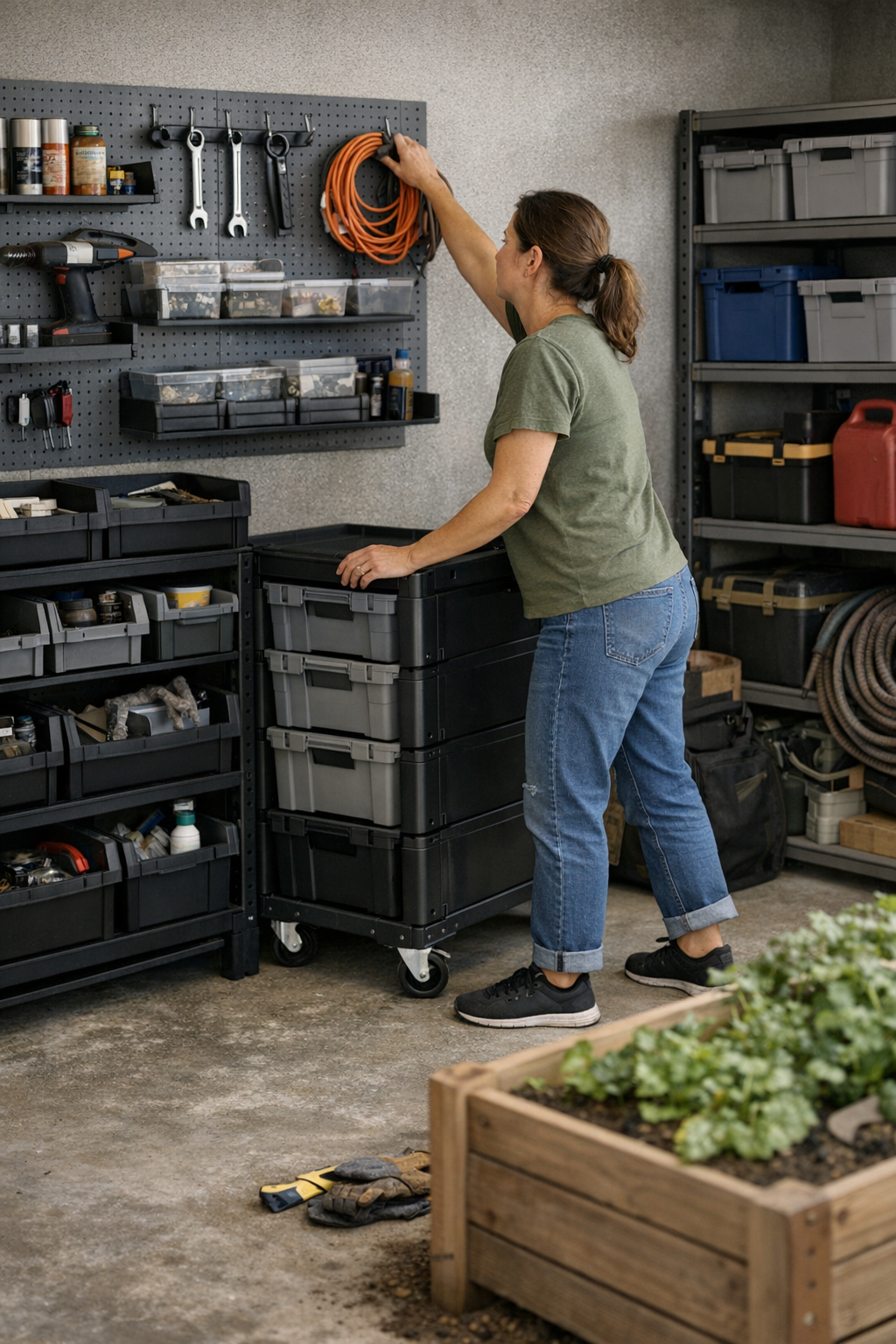
    Everyone loves the crisp satisfaction of a freshly organized garage, workshop, or backyard shed—a place where every tool has a label, every bin squares up in tight rows, and the floor finally looks clear. It lasts about as long as it takes for real work to start. The first time you pull out that mobile cart, open up a wall system, or reach for a drill mid-project, the “perfect” setup proves itself less perfect: storage fights back, movement stutters, and the tidy arrangement you sweated over quietly becomes the new source of friction.

    When “Perfect” Layouts Trip Up Real Routines

    The thrill of seeing everything snapped into place easily hides this creeping frustration—movement friction that sneaks up on you in your actual routine. The so-called mobile cart seems nimble until it ends up wedged between folding tables and parked halfway into the walking path. The low cabinet that fit so neatly along a wall now demands a sideways reach around its edge every single time you grab the one hand tool you use daily.

    Clutter isn’t the problem; it’s blocked flow where organization gets in your way. Detouring around a misplaced cart, sliding out bins stacked in front of the one you truly need, or hunting for a gardening glove in a compartment lost behind others—not only do these tiny disruptions add up, they slowly chip away at the sense of order you thought you’d achieved.

    The Real Price of Blocked Pathways

    The tension between looking organized and actually living with the setup shows up in small but relentless ways:

    • A rolling chest perfectly camps against the back wall—until fetching the shovel hanging behind it becomes a wrestling match.
    • Your cubby grid sparkles on day one, but every Saturday finds you stepping over the same baskets dumped out from last week’s project. The prime parking spot for your mower? Slowly overtaken by overflow you “temporarily” stuffed there.
    • The workbench with built-in storage looks efficient, but now you’re in the habit of shuffling bins on and off it each time you want to actually work in the space.

    Resetting these zones turns into an obstacle course of micro-shifts: carts that never quite return home, bins crammed blocking easy access, a heap behind the door that grows with every project. The more you have to maneuver around your system, the more routine resets stretch and frustrate—until even a quick tidy-up feels slow, clunky, and discouraging.

    Real Resets vs. Routine Resistance

    This isn’t just a once-a-season headache. In the day-to-day grind—especially in small or multipurpose spaces—these frictions show up after every use. Finish a job, and suddenly you’re sidestepping a half-moved cart, squeezing past a tray you left out for “just a minute,” or rerouting your return because bins have piled up on the “clear” part of the floor.

    It’s not just lost time—it’s a slow drain on motivation. Two minutes to “reset” balloons to five as you’re forced to touch the same items over and over. Eventually, the system meant to make things simple just breeds a quiet resentment and a feeling that your setup is working against you. The more you “fill” your space, the more you realize the real priority: how easily you can move and reset, again and again.

    The Shift: Serving Movement, Not Just Storage

    The biggest improvement rarely comes from adding more storage. It comes from creating open movement lanes and rethinking what “full” even means. The best setups respect your need to get in, reset, and move out—without choreography or second-guessing. That might mean not lining every inch of wall with storage, or carving out clear “parking spots” that don’t collapse into each other after a busy weekend.

    Sometimes, just leaving a deliberate half-cart-width between your mobile rack and the shelves behind it is the single tweak that transforms daily use. That split-second access—no sidestep, no “excuse me”—removes a routine interruption you’d accepted without question. Your wall tools, for example, become a simple reach, not a detour requiring you to drag something else aside first.

    Test It: The “One-Move Rule”

    Put your setup to the test: if you have to shift, slide, or backtrack just to get a tool you use every session, you’ve spotted a friction zone. Try re-assigning where carts park. Slide core-use bins up to eye level. Shift infrequent items—and only those—to the corners or deep shelves. The goal: one move, not three, to access anything you need all the time.

    Spotting Subtle Drains: Overflow Piles and Dead Space

    Let flow issues go unchecked, and you’ll spot the real cost quickly enough: zones that slowly fill with overflow, corners that become permanent drop zones, wall organizers that overflow onto the floor. Labeled bins multiply behind closed doors—and suddenly every “temporary” pile is part of your new normal. Those dead corners never get reclaimed; they just rearrange the obstacles.

    In reality, it’s not about the sheer amount you can store—it’s about how easily it all returns to place without a chain reaction of bumps, slides, and re-shuffles. Nobody plans to be tripped by their own organizing system, but it’s the most common side effect of ignoring circulation, bottlenecks, and how things land after real use.

    Designing for Effortless Repeat Performance

    Lasting ease isn’t about picture-perfect bins—it’s about setups that handle repeated routines without turning resets into relapses. Leave genuine lanes for carts. Prioritize wall zones for the dozen tools you grab on autopilot. Study your own traffic: wherever you get stuck or forced to shuffle, make a change—even if it means storing less on that one shelf. These adjustments last because they mirror your habits, not just aesthetic ideals.

    The right difference is immediate: No more pausing before putting things back. Less weaving around forgotten bins. A routine that feels like “coming home” to a zone ready for your next move, not a puzzle to be solved every time. Space welcomes you back because everything is staged for actual movement—not just on display for a camera.

    The glossiest storage layout isn’t always the one that works. What matters is carving out a plan that lets you flow—resetting, reaching, and moving with real ease—no matter how many times your week upends your best intentions.

    See modular and mobile storage that lets your routine flow at StackNest.

  • Creating Efficient Two-Zone Outdoor Storage for Small Yards

    Most outdoor storage holds up for exactly one day—right up until you start actually living with it. The problem isn’t size; it’s the churn. Small yards, garage thresholds, and side-yard strips see tools out, gear in, kids darting by, another day’s stuff crowding the path. Neatly packed bins and wall hooks seem organized at first, but after a week of normal routines, walkways close up, corners fill with overflow, and returning a single thing means shifting two others just to squeeze by. “Organized” turns into “obstacle” fast, and the space meant to free up your yard becomes an unpredictable, barely navigable zone you’re stuck resetting again and again.

    Why That One Big Storage Unit Always Bogs Down

    The appeal is obvious: one large shed or bench, floor clear, everything tucked behind doors—no visible clutter. But as soon as real use hits, the cracks show. The gear you need often—soccer balls, hand tools, watering cans—shifts toward the front or piles onto the floor. Meanwhile, bins of last season’s pool toys or camping chairs settle in and refuse to budge, clogging anything behind. Suddenly, the route from patio to storage shrinks from an open path to a squeeze and shuffle.

    Grab a tool? You’re hauling out half the wrong items just to reach it. Returning a garden stake or backyard frisbee means wedging it above tall bins, hoping nothing comes tumbling down. One dead corner quietly collects the overflow—now you’re blocking yourself in just to get what you actually use. Every reset becomes a clumsy shuffle: moving one stack, re-tucking another, and losing patience before you can even shut the door. Instead of making things easier, the setup works against your routines.

    The Two-Zone Split: How Real Yard Storage Actually Survives

    There’s a reason most tidy setups fall apart: single-zone storage ignores real-life flow. What fixes it is physical or visual separation—one clear zone for everyday gear, another for the stuff you won’t need until next month. This isn’t about expensive cabinets or complicated modular tricks; it’s about moving essentials forward, pushing long-term gear out of the main lane, and keeping return flow fast, especially when you’re just grabbing or dropping something on a busy day.

    Daily-use pieces—hose ends, gloves, favorite balls—go right where your arm naturally lands: open hooks, shallow bins, easy shelves in the direct movement path. Bulky or off-season gear gets pushed down, to the back, or into a low box—out of walkways, out of mind until the weather changes. Without this split, out-of-season stuff creeps up and takes over. Soon your fastest route to that one tool is blocked—sometimes permanently—by a loose bag of mulch or a cover for a pool that’s in storage for good.

    Typical Trouble: Corners That Keep Getting Jammed

    Think of a fence-line corridor or that sliver between the house and driveway. The initial setup looks smart: bins on the ground, hooks overhead. For the first week, all good. Then rain hits, kids rummage, and suddenly, small items drift everywhere—ball pump lost behind bags, gardening gloves shoved onto any free hook. Getting the mower out becomes a puzzle, with tarps and buckets forming a barricade. Each day, non-essential clutter pushes farther into the path, until a shortcut becomes a slow detour. The problem isn’t how much fits, but how easily things move through and get returned—awkward movement, blocked access, and clutter always seem to sneak back in.

    The Simple Fix That Changes the Routine for Good

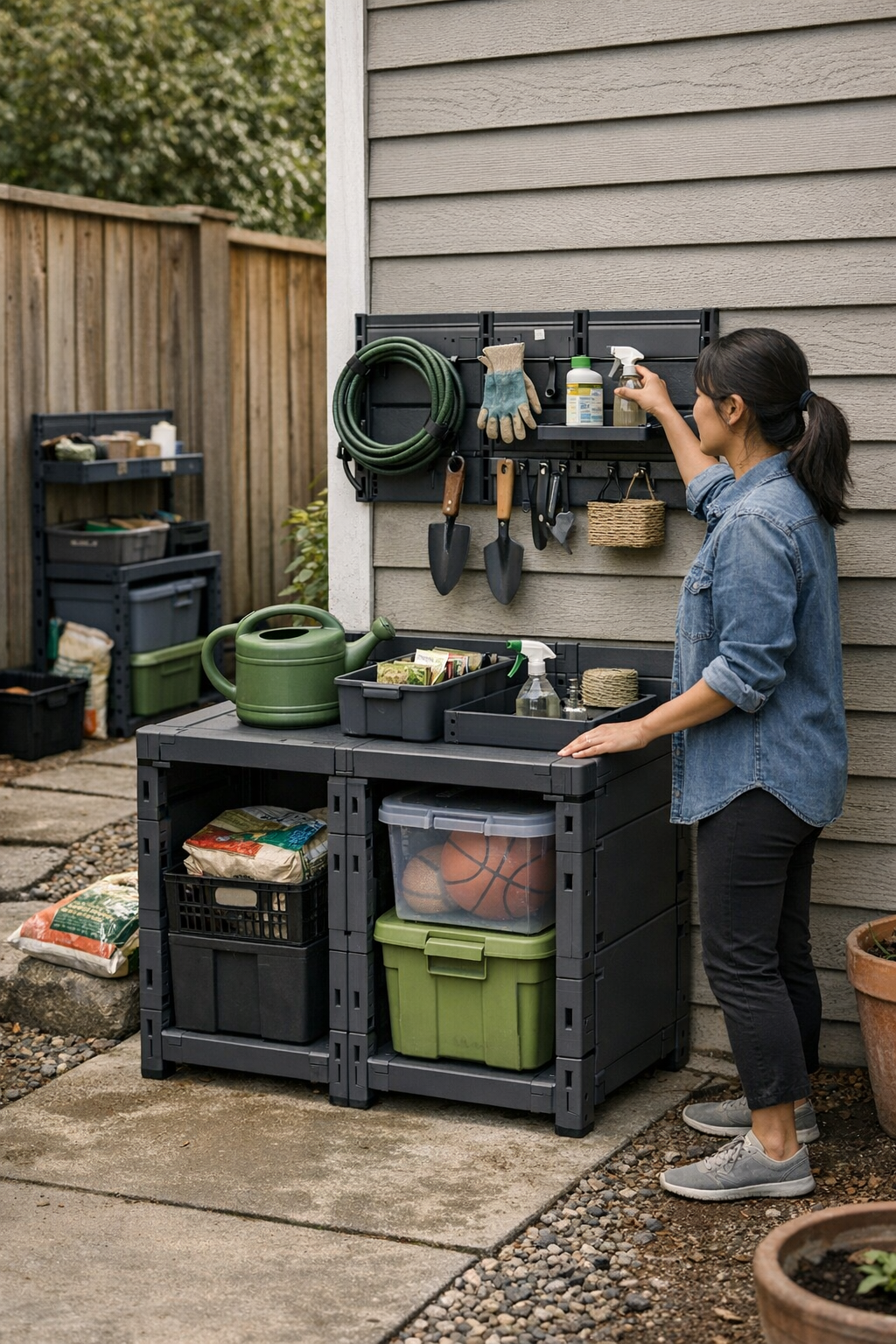
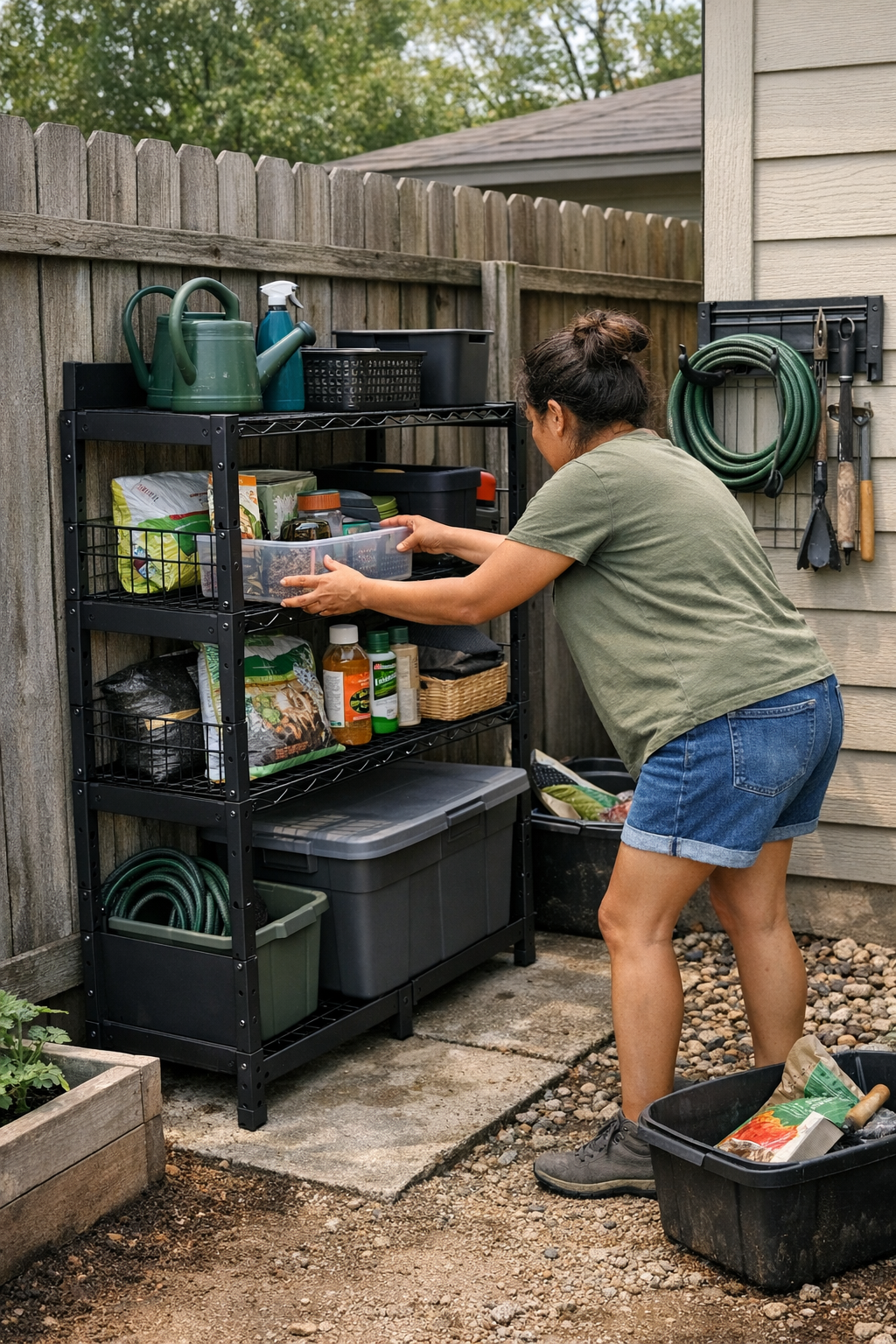
    The breakthrough comes with a clear, usable split. Imagine a slim wall rack mounted right at arm height above a low box along your main outdoor wall. No extra footprints, just a smarter vertical sequence. Everyday gear—balls, sprayers, hand tools—live on the rack and hooks, always in sight and easy to drop back in seconds. The box below becomes the slower lane: stash the folding chairs, extra hose, winter covers out of the way, ready but invisible in regular traffic.

    The result isn’t just tidy—it’s less reset and more return. The path stays open, no matter how disorganized that box gets inside. Drop-offs never block the entry, and spontaneous backyard games or quick project grabs don’t trigger a stack collapse. Even at peak season, flooded with new gear or muddy shoes after a storm, the split prevents spillover from hijacking your walkway. Resets shrink from a 15-minute chore to a handful of seconds: a quick scan, a small nudge, done.

    How to Actually Decide What Stays Up Front

    Rely on a living rule: If you touch it every week, it gets a prime spot. Wall hooks and the front of open racks are for daily reach. If something’s cold since last season, down, back, or into storage it goes—downward, deeper, stashed. During busy stretches or summer rotations, this keeps high-use things fast to find, while seasonal bulk just sits out of the way, not silently coiling into new obstacles.

    The Untold Cost of Single-Box Thinking

    Nothing slows a backyard routine like trying to cram daily and rarely used gear into a single bin or entry. Each rush through for a rope or basketball means “excavating” three things you barely remember storing. Wall space gets used, but racks overflow with random stuff that’s months from relevant. Before you know it, the center of the area is a pile, the path narrows, and the effort to tidy up grows every day. Square footage stays the same, but movement feels tighter, blocks pile, and actual use drops. “Storage” becomes a synonym for reset fatigue.

    What’s Different When It Just Works

    The right setup doesn’t just look tidy—it moves with you, day in and day out. After twenty backyard shakeups, sudden rain, or a string of family visits, things still make their way back without drama. The two-zone split keeps essentials flowing and clutter contained, even as routines change or gear multiplies. The walkway stays open. The wall space finally makes sense. No more full-scale reorganization just to find a trowel after a long week. It’s a daily improvement you can see: resets shrinking from dreaded chores to reflex habits, the frustration of blocked paths replaced by real ease. The setup works—not because it stores more, but because it stores smart, and you can finally trust it to handle real life as it actually happens.

    For practical outdoor storage that fits real routines, explore more at TidyYard.

  • Why Keeping Your Cat Carrier Visible Eases Stress and Mess at Home

    The cat carrier is the quiet weak link in most indoor-cat setups—harmless when ignored, and then instantly a problem the moment you actually need it. Most carriers live buried behind jackets, wedged behind cleaning bottles, or stashed under benches, out of sight until the next vet appointment or repair visit. As soon as real use hits, everything that looked clean and settled falls apart: you’re reaching past muddy boots to tug out the carrier, tripping a storage avalanche, and realizing the area you kept “clutter-free” now blocks the entire routine. Meanwhile, your cat bolts under the couch at the first scrape of plastic, leaving you chasing fur trails long after the day’s disruption.

    Why Hiding the Carrier Sets Up Trouble for Later

    Stowing the carrier away seems like an easy fix: no eyesore, no gear trailing through the hallway. But under daily conditions, this “tidy” logic does the opposite. Pulling out a hidden carrier almost always means yanking it through tangled coats, scattered bags, and corners full of shed fur that went unchecked since the last emergency. By the end, there’s a visible mess—shoes knocked sideways, a spray of dust across the floor, and now the real routine is just starting with extra cleanup.

    For your cat, the problem compounds: the carrier only appears at peak stress moments. One or two cycles of this and your cat starts making the connection, leaving the food bowl behind and diving for cover the minute a closet door creaks. What was a neutral object for the human becomes a clear stress flare for the cat—a feedback loop of tension you feel everywhere: skipped bites, scattered fur, and a room that instantly feels unsettled.

    Routine Breakdown: How Hidden Carriers Disrupt Daily Flow

    The damage isn’t limited to carrier day. Scrambling after your cat in a panic kicks toys under the couch, drags the litter mat crooked across the tile, and knocks the water bowl off target. Even after the trip, you’re left realigning bowls and smoothing fur lines—sometimes replaying the same reset sequence you thought you solved last time. Cleanup turns into a drawn-out, multi-zone chore triggered by one hidden item.

    Notice how small scratches show up on the baseboard exactly where the carrier scraped through during the last battle, or how feeding areas look fine until you have to move everything fast. The room’s order survives only as long as all routines run on schedule—which they never do when the carrier returns.

    The Gap Between “Tidy” and “Liveable” in Cat Homes

    The biggest miss? What soothes the human eye doesn’t always save the routine. Out-of-sight carrier storage looks purposeful but sets up the kind of slow-drip inconvenience that only appears on the third or fourth cycle. When it’s go-time, all the friction hits at once:

    • Access turns into obstacle course: You end up shifting half your supplies just to reach the carrier, fighting a storage squeeze you created yourself.
    • Room flow gets sliced up: Mats bunch up, shoes block quick exits, and your reset streak gets instantly blown apart—every zone left half-right, half-wrong.
    • Cat stress explodes: Instead of rebounding, your cat hangs back, reluctant even after the carrier vanishes, each event leaving a bigger stress residue for the next round.

    The Real Cost: Reset Burden That Keeps Returning

    The result isn’t just one extra wipe-down—it’s a sequence that starts slow and then multiplies. Now you’re:

    • Wiping down a water bowl again because a rushed foot scattered its contents mid-chase.
    • Peering under furniture for lost toys and grooming gear that used to stay put.
    • Finding that same fur whirlpool every time, always at the spot where the carrier scraped through.

    The more you rely on the hidden carrier “solution,” the more it becomes a bottleneck for every shared space and reset—less a shortcut, more a recurring source of friction that outlasts the emergency.

    Flipping the Setup: Why Visible Carriers Reduce Hidden Stress

    The quickest real-world fix isn’t about keeping things invisible—it’s about erasing friction where it builds up most. A carrier left in plain view (and well-placed) doesn’t just erase the panic search; it resets the whole dynamic. Now, the carrier stops being a stress alarm and blends into the normal traffic zones of the day. Settle it near a favored rest spot and it becomes part of the territory, not an intruder. The stress signal is gone.

    Turning the Carrier into Ordinary Structure

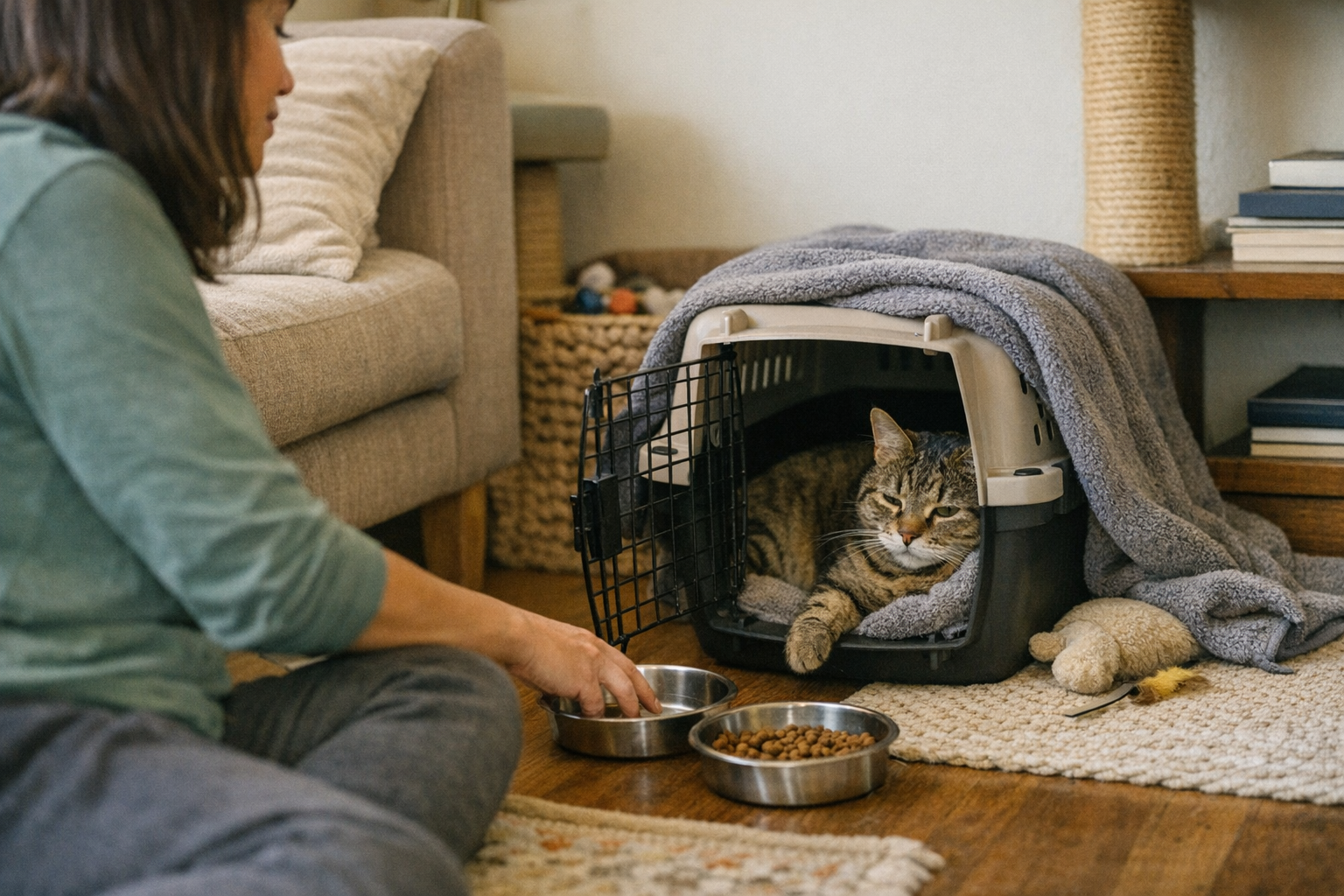
    Planting the carrier near daily anchor points—a blanket in the window nook, or by the toy patch—changes the game. A bit of bedding draped over a corner, a scratch pad beside it, and suddenly your cat treats the carrier like neutral ground: napping half-in, stretching a paw against the crate edge, no more high alert. For humans, this means the reset work drops away. The old routine of yanking, shifting, and dusting disappears. Suddenly, prepping to leave means moving a blanket, lifting the handle, and stepping out—nothing else requires a re-sort.

    The Practical Change: Reset in Two Moves Instead of Ten

    Here’s a pattern from real use: the carrier parked under the bench used to mean water bowls got jostled, crumbs scattered, and cleaning sprays were always just out of reach at the worst moment. Cat gone, routine scrambled, and by the time you left you’d spent fifteen minutes piecing the feeding zone back together. After moving the carrier next to a favorite nap spot, the routine snapped into place. Cat inside (sometimes already halfway there), bowls barely nudged, bedding straightened in seconds. The reset became a background step, not an ordeal.

    Smart Placement Without Turning the Room Into a Maze

    No one wants to trip on a carrier every time they cross the living room. The trick isn’t just visibility—it’s intelligent placement. Only integrate carriers in spots already used daily, where both cat and human traffic flow smoothly. Don’t wedge it by the door or jam it in a dumping zone, where it gathers dirt and blocks movement. Instead, next to a blanket station, by the regular toy drop, or in line with your own cleaning caddy—all places that blend it into routine and keep resets minimal.

    Blending Familiar Textures and Patterns

    A cat carrier that shares texture with existing comfort items (a blanket, a scratch pad, a chewed-up toy) loses its status as a threat. Now it’s just another nap option or scratch target. Visually, the carrier recedes; practically, it becomes one of the easiest spots to swipe clean, since its presence puts problem areas right in front of you, before loose fur or litter tracks upend the look of the room again.

    The secondary benefit: accessible carriers let you catch surface buildup, litter drag, or stray fur before messes multiply, lowering reset pressure with each daily use rather than every emergency.

    From Reset Chaos to Predictable Ease

    The difference grows with every cycle: the out-of-sight “clean” carrier spreads chaos each time it reappears, while the in-sight, everyday carrier fades quietly into the background. The room holds its structure after the rush. No more full-area resets. No more missing toys burrowed under baseboards. Cat tensions and human cleanup both slide back toward normal within minutes, not hours.

    Signs Your Current Carrier Setup Creates More Work Than It Saves

    • You dread carrier days because you know they’ll scatter the organization you thought you’d nailed down.
    • Your cat’s panic reaction seems to increase, hiding faster and resisting longer with every event.
    • The same scratches and scattered debris return after each use, in the spots where resets keep falling short.
    • The setup’s neat appearance doesn’t hold up—each round of use demands a slower, heavier cleanup.

    If Your Cat Setup Struggles After Round Three, It’s Not Really Working

    Most indoor-cat setups look functional on day one. It’s by the third, fourth, or fifth time that hidden friction exposes itself: missed feeding windows, toys jammed under couch legs, water dribbles where bowls shifted in the rush, or the faint litter trace marking every emergency maneuver. “Organized” means little if it breaks under repeated use—and nothing slows cleanup like dragging the whole closet into the routine every time the carrier has to move.

    Reducing carrier chaos comes down to making resets shorter, not hiding gear deeper. Once the carrier lives in the flow of the room and blends with the setup, breakdowns get smaller each round. The item you used to hide becomes just another surface to wipe down on the daily run; the tension dies down, and the routine gets lighter, not heavier, after each use.

    If your home asks for less chasing, less hidden buildup, and fewer marathons to put things back, the setup doesn’t need to get prettier—it needs to make use easier after round three. Where the

  • Why Chest-Height Storage Transforms Entryway Organization and Flow

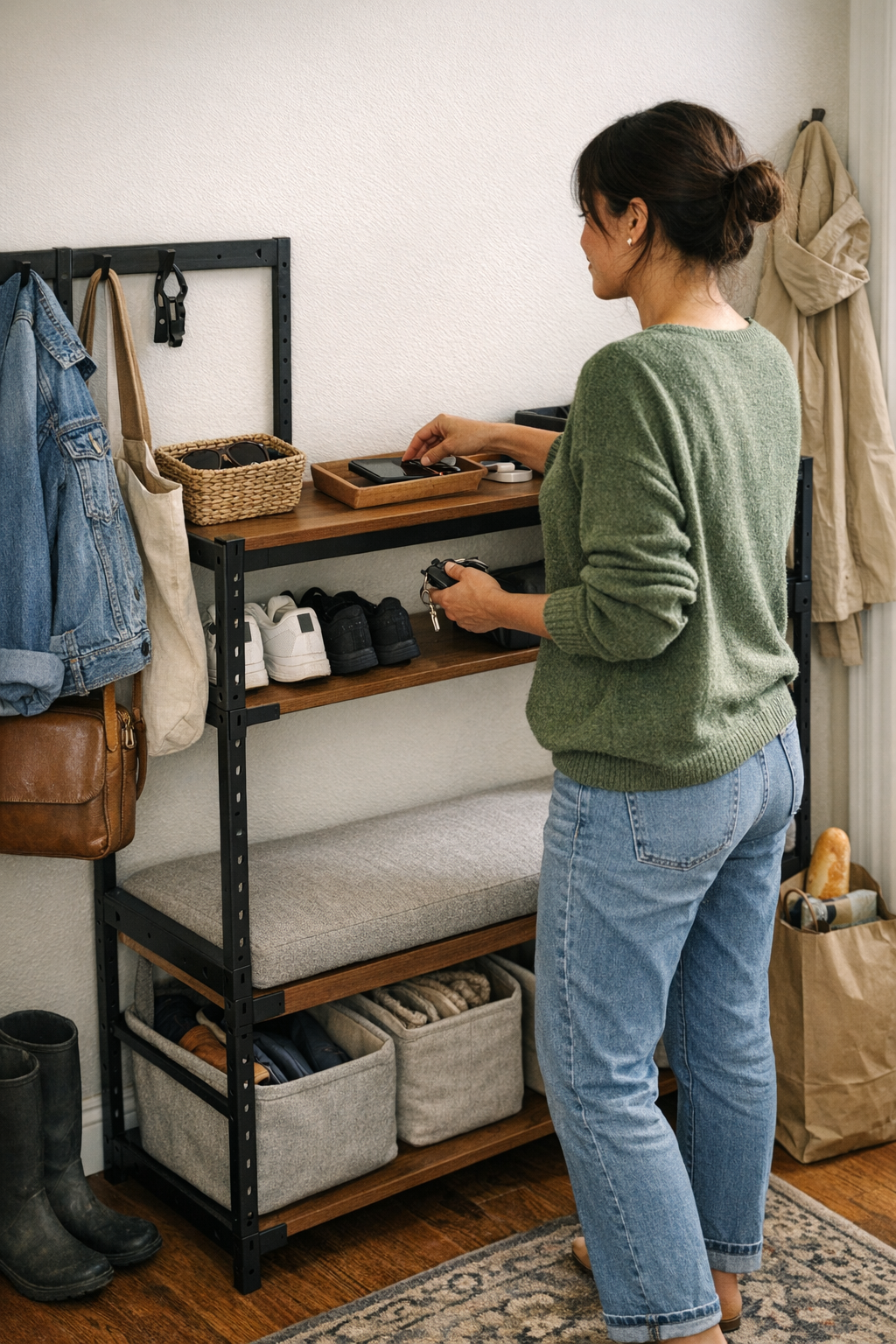
    Entryways rarely fall apart because of generic clutter—they fail when storage fights against movement, slowing down every routine. Floor bins crowd the walking path, high shelves go untouched, bags land on the only bench left to sit. After “organizing,” the reset never lasts: shoes march back into the middle of the hallway, mail reappears where you meant to place groceries, and within days, you’re sidestepping, rebalancing, and stalling out at the door—especially with your hands full or in a rush. If storage isn’t exactly where your arms already move during the daily exit and return, the entire system unravels—bins ignored, hooks left empty, overflow edging further into whatever space you had left.

    When Storage Misses the Mark, Routines Grind to a Halt

    Every threshold, from cramped apartment halls to wide, open foyers, faces the same problem: the instant items cross the door, they drop wherever is least inconvenient at that second—not where you “meant” to store them. If storage zones sit below your knees or above eye level, every transition jams up: one extra squat, one awkward reach, and you’re adding friction to a process already under time pressure. In reality, by midweek the pattern is obvious: shoes half-tucked under benches but spilling out, backpacks flopped where feet are supposed to go, keys missing from trays and stuck between mail pieces. What looked “organized” for a day quietly mutates into blocked doorways and longer resets, as every pass-through reroutes around friction in the wrong places.

    How Chest-Height Storage Rewires the Flow

    Chest-height isn’t about aesthetics—it’s about matching storage to the actual angle and height of your hands as you enter or leave. The space from waist to armpit becomes a built-in “motion path” for bags, essentials, and jackets. Hooks at shoulder level catch coats before they hit the nearest surface; a tray above the bench claims keys and mail the second you reach for the door. Instead of bending low for every pickup or forgetting about anything above your head, you work with your own habits. The payoff: no more daily repeats of missing keys, shoes creeping into walkways, or benches collecting every stray item in arm’s reach.

    Been fighting a shoe cubby that sits just above ankle height? Four days out, neatness collapses: pairs fan out into the main hall, and resets stall as extra steps pile up. Meanwhile, high-up mail organizers gather stacks nobody wants to reach for, letting stuff trickle back down into the active zone. If storage fights the movement pattern, even the best plan fails under normal use—resetting just slows down the next unraveling.

    Real Entryway Bottlenecks: Where Storage Fails Routine

    The Bench That Loses Its Job

    Designed for sitting, the bench turns into overflow ground zero: one grocery bag, then a week of mail, then everything else. Sitting down means clearing a whole pile—not grabbing your shoes. When storage sits too low or isn’t immediately visible, the bench turns from utility to permanent drop zone. Resetting means rescuing the seat from its own backlog every single time.

    Bags That Block the Path

    Every new arrival—kids, pets, groceries—pushes bags wherever there’s open floor. If racks or hooks are out of reach, backpacks and totes hit the ground. By morning, you’re fishing for today’s essentials from under yesterday’s pile, while the doorway narrows with every shortcut taken. Far from streamlining entry, the wrong storage pattern punishes every deviation and encourages more workarounds than solutions.

    Accumulated Reset Fatigue

    Organizing gives you a clean slate—once. A few days, a few rushed exits, and bins are buried, tray tops vanish under unrelated items, and shoes spill out in all directions. The space “looks” set up from certain angles, but the walking path shrinks and every pass demands extra sorting. This is where most systems fail—not at the clean-up, but in the slow daily breakdown that costs time, focus, and movement right at the moment when you need the entry behaving on autopilot.

    The Quiet Shift: What Happens When You Raise the Zone

    Across hundreds of entry resets, one physical adjustment outperforms every organizational trend: raise core storage into the zone where your hands already move on entry and exit. Install a wall rack at chest height for active bags. Add a tray above the bench for phones or loose essentials. Shape a hook row to catch jackets in transit rather than after-the-fact cleanup. When the highest-traffic items land in the “active reach” zone, friction drops instantly. Here’s what actually changes:

    • Bags lift off the path without thought—no more targets on the floor, no more obstacle course at the threshold.
    • Shoes hold their lane, anchored by visible, easy-to-access storage—row spread halts and reset requires less effort.
    • Essentials like keys land in plain view, always where your hand already expects them, stopping the last-minute hunt.
    • Overflow stands out as soon as it starts, making backlog visible and motivating resets before things spiral.

    After bumping a household’s main drop tray by just over a foot, the transformation wasn’t subtle. Headphones that used to disappear for days stayed in place. Sunglasses landed in the tray and stopped hiding under mail. Even serial bag-droppers got the pattern: hooks at the natural hand height make it easier to hang up than drop down. Backlog dropped from a full week’s worth to a couple daily resets, and the bench finally acted like a seat instead of a catch-all.

    Fitting Raised Storage into Tight, Busy Entryways

    The busier and narrower your entry, the more you need active-height storage. Wall-mounted units, slim vertical racks, and modular hooks at hand-level carve out order without eating up the path. Even in the smallest zone, a single well-placed hook beats a trip hazard of bins or an unreachable shelf. Return home, drop items at natural reach—now the floor stays clear, walkways open, and everyone can come and go without battling through piles that “fit” the layout but never really flow with daily use.

    When space is tight, low storage may seem like the only answer—but it’s usually a long-term hassle. Floor bins fill up and block movement, while high cabinets hide away what you need most. By lifting core storage, setups finally keep pace with real routines—the difference isn’t just in cleanliness, but in never having to double-back or trip just to get through your own door.

    Two High-Impact Ways to Test and Shift

    • Audit Your Actual Landing Zones. For a couple days, step back and watch where everything lands—without correcting. Is your main drop above waist level or always collecting on the floor or seat? The mismatch is the first sign the current setup is fighting, not helping, your routine.
    • Shift Up in Small Steps. Don’t overhaul in one go. Move key hooks, trays, or racks 12–18 inches higher—trial one spot for high-frequency items and watch what happens. Let the natural reach change what’s used; then adjust further based on real traffic, not theory.

    Your entryway doesn’t need to meet a perfection standard—it needs to work on repeat, under daily pressure. Raising storage into the line of daily movement keeps resets small, walking paths open, and the ongoing burden of re-organizing far lighter. What looks “organized” once is less important than what keeps your threshold moving, clear, and actually livable week after week.

    Explore Betweenry’s collection for real-world transition storage that works under daily pressure.

  • Why Inspecting Your Circular Saw Blade Before Use Saves Time and Money

    If you work a jobsite long enough, you see it: perfect cuts that suddenly go sideways, slowing workflow and sapping energy when there’s no room for error. Circular saws are the muscle behind framing, decking, and trim day after day. But in the real world, it takes just a single invisible chip, a dab of sap, or a blade with a hair too much wobble to turn easy rips into headaches. That early morning hum—with the saw gliding through plywood without a hitch—doesn’t last. By mid-morning, you’re forcing the saw through dense pine, the line starts drifting, and you’re wrestling burnt edges. You can check your stance and your technique, but the real villain is often the same: a blade you trusted without really checking, costing you speed, finish, and patience before lunch.

    The Small Faults That Steal Time—and Precision

    You don’t need missing teeth or a bent plate to ruin a cut. The real trouble comes from hairline damage: a chipped carbide barely big enough to catch a fingernail, or a smear of pitch that gums just one gullet. Stack two supposedly identical framing blades, and you’d swear either is fine. But send the wrong one through yellow pine on a chilly morning and you get telltale slowing, ragged breaks at the kerf, and that split-second shift from a steady hum to a thin, protesting whine. Nothing sours momentum faster than realizing too late that your lumber’s fine—it’s your blade that’s dragging the job.

    When a Single Tooth Throws You Off Course

    Picture breaking down twenty-some 2x6s for a floor, deadlines close behind. Layout is crisp. Blade’s set square. But mid-rip, the saw tugs just enough to jolt your control. The motor note sours, tiny scorches appear, and the cut edges start to splinter. Fingers instinctively blame the lumber, or maybe the tool. Nine times out of ten, you push through—only to discover, under shop lights, that one tooth’s bent, chipped, or gummed enough to send every board off-kilter.

    Payoff? Extra sanding, slower feed rates, more sawdust, aching wrists—possibly tossing good lumber when the damage goes too deep for a cleanup cut.

    Early Warning: The Telltale Signs of Blade Trouble

    Blade problems rarely declare themselves from the start. Instead, the warnings creep in:

    • Resistance builds up: Cuts feel heavier, pushing takes more effort than you expect.
    • The saw won’t track: Try to follow a chalk line, and the blade walks by the end of the cut—especially when ripping longer stock.
    • Unexpected burns or smoke: Clean hands but the wood still blackens? The issue is almost always blade-related.
    • Splintered or ragged kerfs: Smooth faces turn rough, even on good plywood or clear pine.
    • Odd whines, buzzes, or new vibration: A healthy saw runs smooth—a nagging chatter or odd resonance nearly always means blade trouble.

    These problems usually show up after the first handful of boards, when you figure your setup’s fine, and the real work starts. That’s why they’re so easy to miss—until your stack of bad cuts is too big to ignore.

    The One-Minute Inspection That Saves Your Day

    Most pros glance at the blade and move on, but a real check takes sixty seconds: flashlight in hand, run a fingertip gently along the teeth. What you miss by eye pops under a raking light—a chip, some dried pitch, a wobble you wouldn’t spot otherwise. Check for:

    • Bent, chipped, or cracked teeth—especially near the lead side
    • Glossy streaks of sap or pitch that catch light at the edge
    • Runout (is the blade wobbling?)—spin it by hand and watch from the edge for even a tiny shimmy

    This isn’t babying your gear—it’s about keeping momentum. There are days a one-dollar blade swap saves hours spent sanding, adjusting, or even recutting finished work. Toss a blade that “almost cuts” and you dodge the cost of wasted time, wasted boards, and frayed nerves.

    Don’t Trust Yesterday’s Blade

    Blades that felt brand-new at the end of one shift can foul up overnight—pitch you missed, micro-damage from a brush with hidden metal, warping from a hard drop. No matter how clean yesterday’s cuts looked, start each job with a check: a minute now saves a half-hour and a half-dozen ruined boards later.

    Jobsite Reality: The Morning Routine That Pays Off

    The real world isn’t a catalog photo. Plates clang as trucks unload, stands go up, and the noise rises fast. Before the first cut, our crew runs blade checks as automatically as plugging in the saws. Case in point: last week a guy wasted an hour fighting drift. The culprit? A tooth that looked fine until you traced your finger across it—there was the chip, left over from nailing the end of a board the day before. Swapping a blade and cleaning the housing? Ten minutes. Problem solved. One lesson, learned for good.

    Shop Habits With Real Payoff

    • Keep a flashlight on your belt. Don’t trust shop lighting—angle a beam across the teeth and every flaw jumps out.
    • Use your thumbnail. Eyes miss what skin catches. Run it around the rim for roughness or tiny chips before you mount up.
    • Track blade changes on big jobs. Mark the date or the cut count. Fresh pressure-treated lumber or long rips eat carbide fast—a two-day-old blade isn’t always a good blade anymore.

    Blade Condition: The Overlooked Difference Maker

    In basements, garages, and backyard decks, the gap between a sharp blade and a dragging one is clarity itself: clean, fast cuts give you control, let you move on to joinery or layout while energy’s still high. Sloppy blades force you into rework and endless dust—cutting accuracy turns into correction work, and hands fatigue twice as fast.

    Build the blade-check habit as you set up and everything runs sharper. Snag problems before they cascade. Jobs move cleaner, frustration stays low, and the only thing working harder is the saw—not you compensating for a dull edge you never bothered to inspect.

    http://gumboll.myshopify.com

  • Why Wire Pantry Shelves Keep Your Kitchen Organized and Waste-Free

    The split between solid and wire pantry shelving isn’t visible when you finish reorganizing—it’s visible during the scramble on a busy weeknight. A “sorted” shelf feels clever until midweek, when quick hands shift groceries, categories unravel, and items that were once in plain sight disappear behind deep rows. Suddenly, finding a single can means unloading half the shelf, and weekly restocking turns into a guessing game fueled by expired backups and silent overflow.

    When a “Sorted” Pantry Doesn’t Stay That Way

    Solid shelves promise a neat, lined-up look: boxes stack, cans march in rows, the presentation feels ready. But that system cracks as daily use mounts. In practice, tall boxes are shoved forward, smaller jars get buried behind deep lines, and bagged goods migrate without warning. “Deep zones” quietly develop—the kind you only notice after months, when you’re finally pulling out three opened bags of rice or a backup baking powder from a forgotten corner.

    If you’ve bought another bag of flour only to spot two half-used ones hidden behind pancake mix, you’ve felt the slow breakdown of the “organized” look. By Thursday, what looked straightforward on Sunday now feels like a layered maze—not from new mess, but because access vanished and what you need went out of view.

    Wire Shelving: Built-In Visibility for the Daily Rush

    Wire shelves stop that hidden build-up before it starts. Sightlines don’t get blocked so easily—labels and missing gaps show right through. Even when the shelf is jammed, you can still spot a stray can lodged near the back or realize at-a-glance if you’re low on staples. It’s not about making your pantry look like a retail display; wire shelves simply force everything into your line of sight, yard by yard, so nothing quietly disappears for months.

    This makes a real difference during that after-work rush or when kids plow through for snacks. With solid shelves, bags and boxes collide, and whatever drops behind the front row is gone until the next overhaul. Wire shelves expose those awkward piles and force better stacking or cleanup on the fly instead of three weeks later.

    Everyday Example: The Recurring Hunt

    Picture hunting for the soy sauce you used last night. The front is packed, so you start peeling boxes forward, digging for a small bottle you’ve already restocked out of frustration once this month. Short-cycle chaos like this eats up minutes and rewards overstocking—just in case it’s missing again.

    Wire shelves short-circuit this dynamic. The grid lets you see clear through and spot what’s been left behind—even during a messy, quick restock—drastically cutting down both lost time and forgotten goods. Items are forced into awareness, reducing wasted purchases and those “where did it go?” shelf-clearing sweeps.

    What Actually Changes With Wire vs. Solid Shelves?

    Solid shelving quietly builds lost-and-found zones. As the days pass, more and more gets buried: random jars behind soups, rice hidden by breakfast cereal, ingredients expiring out of sight. Restocking becomes an ordeal, not because you’re messy, but because a pretty line-up turns into a front row that blocks all context. The deeper and higher the shelf, the worse the effect. Layered storage pushes you to store more, see less, and reset everything more often.

    Wire shelves fight back on every level. The design makes single cans and stray containers hard to hide even under the worst misuse. It’s less about perfect order, more about visible absence and instant feedback: if something’s missing, you know, and if something’s piling up, you see it—no blind rummaging required. Resets become quicker. Overbuying drops. Forgotten food all but disappears.

    The Real-World Benefit: Faster, Lighter Resets

    Previously, a pantry reset meant pulling half the shelf just to take stock. No shortcuts—every layer revealed a surprise. With wire shelving, one long glance is often enough. Groupings hold, empty spots are obvious, and the need for a full unload falls away. Over time, less invisible stock means less wasted food and less repeated shuffling, even as routines flex or kids put things back imprecisely.

    Side Effects: Overflow, Return Flow, and Keeping Up

    Crowded pantries broadcast their limits through unintended overflow and awkward return flow. Solid shelves hide overflow until the last minute: piles build up or zones crowd out slow-moving goods, sending excess into other rooms or letting random items vanish into hard-to-reach recesses. Wire shelves can’t disguise the problem—if something teeters between bars or bulges outward, you get a nudge to clear or reorganize before a silent mess turns into actual clutter. Spillover is exposed, not buried.

    Return flow improves too. When everyone can see where items go—because the categories are visible and front-row piles can’t dominate—stuff finds its way home more reliably. Family members can’t just wedge new bags behind the front row and hope for the best. The shelf itself “asks” for better circulation, so the system holds up longer with far less effort.

    Practical Tips for Smoother Wire Pantry Use

    • If small items slip: Use a bin or a grip liner where needed, especially for snacks or loose packets, to keep visibility high while stopping frustrating slides—avoiding one of the only real trade-offs with wire grids.
    • Heavy loads: Anchor big jars, flour bins, and heavy cans on the lowest shelves. Wire handles the weight but keeps upper levels lighter and more accessible for things you reach for every meal.

    Real Use, Real Relief—Not Perfection

    No shelf system erases all chaos. But wire shelving delivers a clear everyday shift: fewer blind corners, less “where did that go?” and more quick pivots from meal to meal. This isn’t about showroom calm or perfect order—it’s about keeping everything visible, cutting down slow resets, and making lost items much harder to ignore. The best pantry feels quieter, not because it’s flawless, but because the structure quietly does its job as the week unfolds—helping you keep pace, spot what drifts, and move on without dozens of small, friction-building checks.

    Browse practical pantry shelving and organization at Gridry

  • How Under Cabinet Lighting Transforms Everyday Kitchen Tasks with Clear Illumination

    You spot it as soon as you start working—the kitchen counter looks bright, the desk feels tidy from across the room, the shelf glows under ceiling lights. But step closer, and the flaws surface fast: shadows pool at the back edge, your arm blocks the light, and every reach under a wall cabinet throws your own silhouette across what you need to see. The surface that’s supposed to simplify your routine now makes you pause, squint, or shuffle things forward. The disconnect is sharp—from a distance, rooms look resolved; up close, the task zone stays awkward. This is where typical overhead and wall lighting break down: you notice the gap every time you cook, fix, or read at the same spot, and the inconvenience compounds as the week stacks up.

    The Everyday Struggle with Shadows and Glare

    Each return to the same surface brings back the same friction. Overhead lamps throw your shadow over the work, so you lean sideways or twist your neck to get a useable view. Glare bounces off glossy areas—tiles, steel, even crumb-strewn counters—making cleaning and reading detail harder with every repetition. Ignore it, and the strain collects: missed edges when you wipe, crumbs left behind, fine print still in the dark. Add a plug-in lamp as a quick fix, and now there’s a new cable snaking between your tools, or a glare line catching your eye with every move—another problem traded for the last one.

    The Hidden Cost of Imperfect Setups

    Exposed or tangled cables break the illusion of a clean setup before anything even gets used. A bracket or stick-on mount that seemed steady when new starts to rattle after each cleaning session. A lamp nudged to reach one spot never seems to land back at the right angle, so small adjustments eat into every task. The routine shifts from simple work to small, repeating interruptions—things look organized, but every use reopens the same weaknesses.

    Where Overhead Lighting Falls Short

    A room can look crisp on a checklist—wall sconces, ceiling fixtures, clear desk edges—but as soon as work starts on a surface pressed against a wall or under a shelf, the limits show up. Overhead light simply vanishes at the hinged dark seam where work meets the wall or the underside of cabinets. No matter how bright the general light, the crucial back edge stays vague. You’ll catch yourself pulling items forward, chasing usable light. The space looks finished, but the dim zone never quite resolves—a real setback for any surface that’s meant for prepping food, reading small print, or sorting parts.

    The Daily Reality of Shadow Zones

    The repetition is impossible to ignore: slicing vegetables with your own hand casting a blur, searching for a screw at the back of a shelf by feeling more than seeing, juggling jars just to spot a label. Every time you adapt your position or bring in an extra flashlight, it’s a signal that the core lighting plan is outmatched by real routine. The friction is lived-in: workarounds become habits, comfort gets replaced by constant adjustment, and the best you get is “it’ll do for now.”

    How Proper Under-Cabinet Lighting Changes the Game

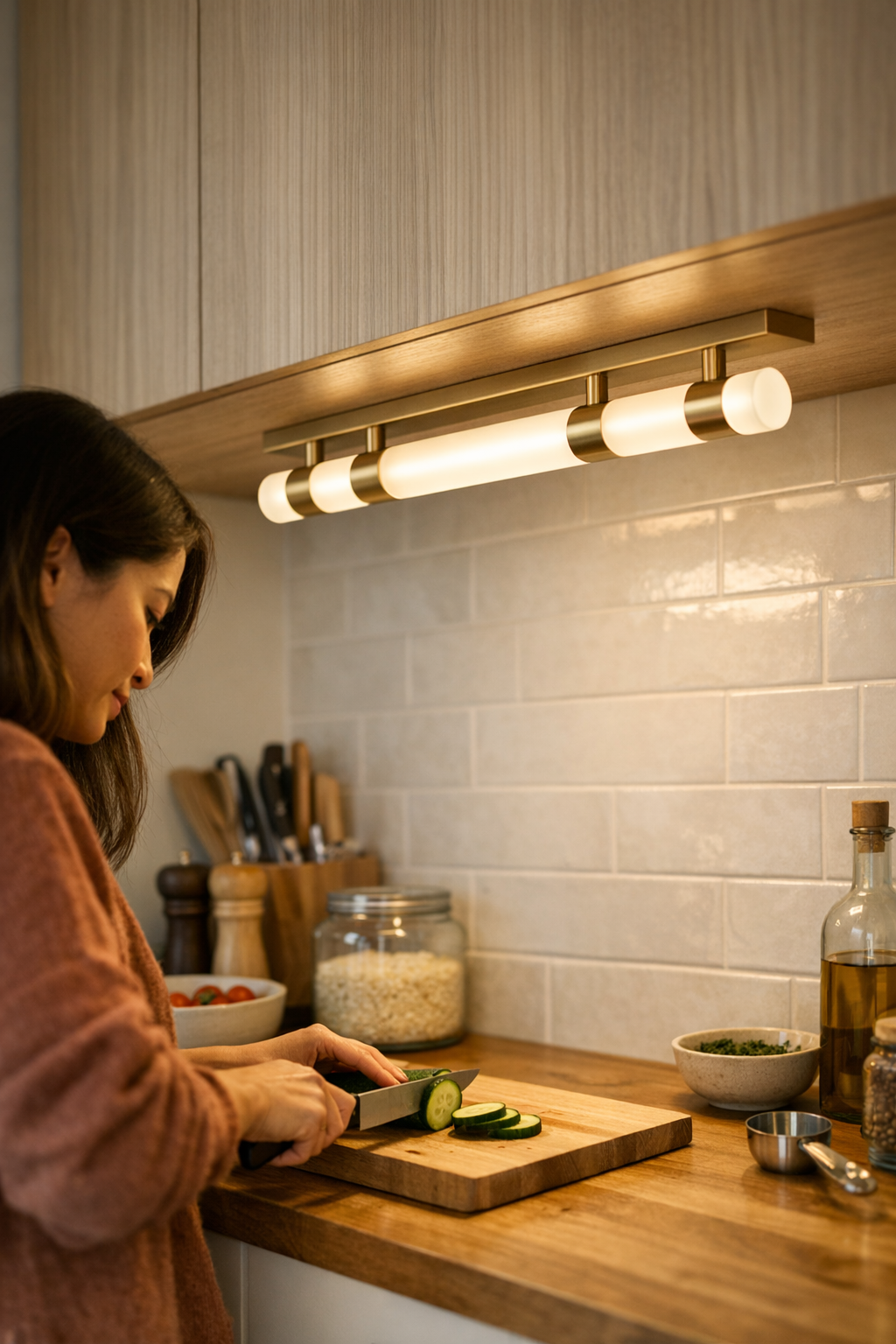
    Direct under-cabinet or under-shelf lights solve the missed spots that main fixtures can’t touch. Placement is everything: a slim LED bar or adhesive strip tight beneath the front lip of a shelf shifts light right where hands work and details matter. The difference is immediate—no more hand shadows, no more guessing where the counter’s edge stops, and far less shifting just to see. Instead of improvising, you see and reach with ease the first time, without dragging lamps or hunting for better coverage.

    A Real-World Upgrade: Less Strain, More Clarity

    The most practical fix is this: fixing a low-profile LED directly under your most-used shelf with its cable pressed flat and hidden. Before the swap, maybe a plug-in lamp hogged counter space—its cord pooling in puddles when the sink gets busy, or snagging every time you rearrange containers. With a permanent bracketed light, suddenly every inch of the surface reads clean, no cable chaos, no lamp to keep nudging back, no bouncing glare to dodge. Late-night tasks lose their hassle; you find yourself matching labels or measuring small pieces in one try, not a series of workarounds. The setup actually steps out of your way.

    The Role of Support: Clean Holds and Cable Calm

    Brightness alone doesn’t win. Support hardware—solid brackets, clean cable runs—keeps the solution working under pressure. Lights that wobble with each grab, or cables that drag through crumbs and catch on containers, turn a fix into another nuisance. Only with cables routed tight against the structure and a stable mount does the solution settle into the background—and stay reliable across cleaning, shared use, and everyday motion.

    Most Common Mistakes—And Why They Matter Fast

    If a lighting setup falls short, it almost always fails here first:

    • Loose, visible cables: They trap dust, snag cleaning rags, and stack up distraction by the day.
    • Shaky mounting or brackets: A single careless bump shifts the light, so you’re fussing with angles instead of working comfortably.

    Weaknesses that seem minor on install become big annoyances after a week—especially if more than one person is reaching, cleaning, or moving things in the same zone. What looked organized on day one soon feels unreliable or cluttered.

    For Lightly Used Spaces, General Lighting Might Suffice

    If a shelf holds storage and rarely gets touched, or a counter is used once a month, the shortcomings of overhead-only lighting barely register. But for any spot you use several times a week—making lunch, charging tools, sorting supplies—a properly mounted under-shelf light, with secure support, changes the experience from make-do to actually smooth, saving your eyes and your time every visit.

    From “Looks Clean” to “Actually Feels Right”

    The difference is obvious after a week of real use: the space isn’t just visually finished, it works—no dark corners asking for improvisation, no cables or brackets breaking the flow, no rerouting your tasks around a weak edge. Solid support does more than hold up the light; it holds up your routine. It’s the move from “tidy on inspection” to “nothing gets in my way when I use it”—lighting and mounting logic designed for movement, for regular cleaning, for actual living. When everything stays easy week after week, you stop thinking about the setup at all—and start trusting that what looks resolved finally matches up with how you need it to work.

    Visit LightSupport for practical lighting solutions and installation accessories that make real spaces feel clear, usable, and easy to maintain.

  • How Simple Setup Changes Transform Daily Dog Care Routines

    Why Smooth Daily Pet Care Routines Matter

    A calm walk with your dog ends at the doorway, but the real work always starts right at home. Set down the leash and you’re confronted by the gaps in your setup: the towel you need to wipe paws is still in the laundry, the water bowl is half-full and slippery with old drool, the leash lands wherever there’s space—and suddenly, basic cleanup becomes an awkward string of micro-messes. You lose time doubling back, sidestepping shoes just to fill a bowl, or tracking muddy prints deeper into the house because a simple tool wasn’t at arm’s reach. The CalmPetSupply world isn’t just about pet gear, but about setups that actually lower this hidden drag in your every day.

    The Hidden Signs Your Routine Isn’t Working

    The difference between a neatly-behaved dog on the street and the low-key chaos inside the front door is measured in these breakdowns: reaching for a towel that’s vanished, unwinding a leash tangled around shoes, having to refill a water bowl while bags and dirty coats block your way, or wiping pawprints long after they’ve dried to the floor. These aren’t emergencies. They’re misfires that keep repeating—interruptions that pile up until resetting your entry takes twice as long and still leaves everything feeling slightly out of sync. Even tidy homes lose their edge when these friction points keep returning.

    Use Scenes: Where the Routine Slows Down

    Picture a rainy evening. You’ve planned for quick paw cleaning, but the towel’s missing in action. Instead, the dog walks muddy prints into the hallway while you track down a backup rag, and by the time you’re done, the water bowl—jammed behind grocery bags—reminds you it’s overdue for a refill. Every extra step feels smaller than it is, but the loop keeps growing: hooks you installed are buried under jackets, bags pile up on the landing, and what should’ve been a one-minute reset now trails into five, then ten, as clutter relocates itself with every pass.

    Or take the weekend loop: coffee in one hand, phone in the other, juggling a leash after the walk. You have to ditch everything just to open a jammed closet for the spray bottle. The right tools exist but are never right where you need them. Chew toys drift into the hallway, a brush migrates to a kitchen counter, towels settle wherever there’s an open chair. The entry looks tidy at noon, messy again after dinner, and each reset feels one step slower—constant detours to fetch or return a basic item while the setup forces you into small, annoying workarounds.

    The Difference Between Neatness and Usability

    It’s easy to confuse “looks organized” with “works easily.” Entryways with clever bins, hooks, or baskets can still go off track: bins get moved, towels disappear, bowls migrate to another room. The routine only holds for as long as the structure doesn’t shift or clutter doesn’t return. Instead of cleaning at the source, you mop up splatter in the kitchen or hunt for essentials that never made it back to their spot. The real penalty isn’t just lost seconds—it’s the erosion of a routine that once felt smooth but now seems to drain energy with each added workaround.

    Most setups are fine out of the gate. By week two, reality sets in: the towel isn’t near the door, your refill pitcher is somewhere behind the mail, dishes compete for space with backpacks, and you realize tidy isn’t the same as ready. Each find-and-fix adds drag you never planned for.

    Anchoring Every Step of Care

    The only routines that stay smooth treat every step as essential—not optional. A fixed hook right at the entry, towel always present. A refill pitcher that always sits within easy reach. The leash bin never migrates away from its designated corner. No improvising, no scavenger hunt—just one sequence: paws wiped, leash stowed, water poured, done in under a minute before the next task pulls you away.

    When even one item drifts out of place, you’re forced to improvise, and that’s where resets get messy. Organize towels, bowls, sprays, and brushes where you actually use them—the first contact point after a walk, not hidden away for visual neatness. Hooks and bins only save effort if they intercept mess and tools right where dirt and water show up. This cuts off the domino effect of blocked closets or missing hooks the moment things get busy.

    How Small Friction Turns Into Mess

    Routine breakdown is rarely dramatic. A towel skipped today stalls cleanup tomorrow. Toys left underfoot block the water bowl on your next lap through the hall. Entryway bins get hijacked by whatever’s in your hands—mail, keys, random junk—so you dig for dog gear just to start the next walk. The longer these “minor” friction points stack up, the more your resets double in time and effort, not for lack of organization, but because the setup isn’t anchored in repeatable, real use.

    What Actually Lasts: Small Systems That Remove Interruption

    Durable routines work because they minimize decision and improvisation. Pick a spot for each tool and defend it: the same towel in the same place, not a new spot each week; water refilled by the same bottle, not whatever’s handy. If any step depends on “I’ll remember it next time,” you’ve planted a weak link that recurs daily. Visual order is nothing without physical reach and return.

    Tools that stay right at the source speed up every step. Feeding, quick wipe-down, after-walk resets, and late-evening checks feel lighter—not because the routine disappeared, but because it stops slowing you down or pulling attention just to stay ahead of the next round of mess. The best setups take care of themselves, freeing up visible space and, more importantly, your energy.

    Making Quiet Routines Easier

    Most owners only feel the friction when the setup quietly goes wrong: towels migrate, the leash is somewhere awkward, water refills take too many steps, and old stains reappear because supplies weren’t reachable. Anchor daily tools—towels, leashes, bowls, sprays—where the mess actually starts, not later in the routine. The difference is immediate: resets shrink, clutter stalls at the door, and care turns from a scavenger hunt into a sequence you can trust. These are small, practical tweaks, but in CalmPetSupply’s world, they’re the difference between tidy that fades and care that actually lasts.

    Find practical pet-care tools for real, repeatable daily routines at CalmPetSupply.

  • How a Simple Two-Minute Reset Transforms Your Carry-On Organization

    A carry-on that looks tidy on your bed can fall apart within minutes at the airport. At home, every pouch and pocket seems logical. But the walk from check-in through security, down crowded aisles, and into your seat forces your setup to prove itself—or quietly turn against you through every rushed transition. The real test isn’t how it looks before you leave. It’s that split-second when you need your passport and drag the wrong zipper, or find your phone charger tangled with gum wrappers and boarding stubs. Visual order collapses fast under real airport movement, slowing you down exactly when the pressure is highest. This isn’t just about gear. It’s about whether your tools actually keep up with your travel speed—or quietly create new friction at every stop.

    When Order Breaks Down in Real Transit

    Most carry-ons pass the “living room” test: everything zipped, pockets aligned, layout calm. The airport exposes the cracks immediately. You’re pulled out of “packed” mode by TSA trays, last-minute gate changes, or boarding calls. The failure point comes right when you reach for one thing and get three in your hand—or nothing at all. That moment: half-open pouches, wires roped around pens and chargers, comfort items popping out of order. Standing by the conveyor belt, you try to stuff stray items back with one hand as the line crowds behind you. What started as a system turns into a puzzle.

    Stop after security and the weak points become obvious. The tech pouch slides into the main compartment, charger now loose after a tray scramble. Lip balm falls out with your passport at document check. Headphones drop to the bottom when you reshuffle in the boarding line. Every “temporary” fix multiplies friction. Restore order mid-transit and you’re just setting up a new mess for the next checkpoint—it’s not dramatic, but it wears you down with every transition.

    The Quiet Cost of Overlap and “Temporary” Fixes

    Each time you stuff one more “temporary” item into a quick-access pocket, the trouble stacks up. It starts as a lost pen, turns into mixed cords, and by your next stop—every zipping moment triggers a new slowdown.

    • Fumbling through two organizers to find your ID at document check
    • Digging for headphones wedged behind toiletries after finding your seat
    • Grabbing the wrong pouch, only to pull out a tangled cord instead of a boarding pass

    Nothing’s catastrophic. But the micro-delays stack: the “organized” carry-on becomes a source of repeated interruption. It’s not visible in the setup—it’s in every access moment that feels longer than it should.

    Spotting the Distance Between Looks and Use

    Visual “tidy” is a trap. A hotel-bed packing photo says nothing about performance in the security line, boarding zone, or tight seat row. If you ever find yourself zipping, sifting, or closing one pocket to hunt through another during a line move, that’s the warning sign. Structure that worked at rest doesn’t survive real movement flow.

    Feel the gap when edge cases stack up: tray transfer at security, slow forward-lean in a boarding bottleneck, or awkward leaps over a neighbor’s knees to extract a document pouch. Two-second delays under pressure stretch and pile up. If grabbing your ID is a small adrenaline spike, your setup isn’t helping. One misplaced comfort pouch quickly buries your passport three layers deep. These aren’t disasters but they chip at control every leg of the trip.

    Repeated Use: The Overhead Bin and Onboard Shuffle

    The pattern repeats mid-flight. Lifting a carry-on from an overhead bin, you find your document holder trapped under the tech kit you shoved in after security—one quick grab now means an awkward stack spill. The pocket labeled “quick-access” is stuffed with snacks, gate stubs, and mystery receipts. Over time, every in-flight retrieval turns into a small repacking event. These quiet breakdowns add up. What passed for order at the beginning now feels clumsy and unpredictable, even as the packing grid looks intact.

    The Two-Minute Reset That Changes the Pattern

    There’s a concrete fix worth more than any extra gadget: the two-minute reset. After every major checkpoint—security, boarding, arrivals—pause to empty and repack your fast-access pocket in a set order: document holder, tech organizer, one comfort item (tissues, hand lotion), nothing else. This isn’t about minimalism. It blocks “just for now” item drift, so you don’t build hidden friction for the next rush. The reset becomes your stopgap against the slow mess that sabotages real-time retrieval.

    Less Is Smoother: Limiting Repeated Access Points

    Keep the fast-access zone predictable: one document pouch, one tech kit. Anything else—snacks, receipts, loose pens—get repacked or moved before zipping up. What feels like two extra minutes at a checkpoint can spare you twenty minutes of silent irritation later. Next time you need something in line or mid-flight, it comes out in one motion, without the slow reveal of random stowaways. No repeated searching, no repack loop. You reclaim speed not by carrying less, but by beating the root of travel friction: unpredictable “temporary” overlap.

    How to Tell When Your Setup Needs a Reset

    If you find yourself hesitating in motion—scanning, digging, double-checking which pocket holds what—your structure is slipping. Frequent re-sorting, delayed document pulls, or not remembering which pouch you used last are all signs: reset overdue. Often it hits just after forced adjustments—after a gate change, or seat swap, or when you realize an “easy fix” now blocks three steps instead of one.

    Even Single-Compartment Bags Benefit

    You don’t need a maze of pockets to build this pattern. One main compartment can still keep “high-frequency” items stacked in a fixed top-down order—if you resist dropping extra objects on top for convenience. “Just for now” is how the old mess returns. The reset works because it quietly resists that drift before it turns permanent, no matter how simple your bag’s layout seems.

    Travel That Feels Smoother—Not Just Looks It

    The goal isn’t obsessive minimalism. It’s a setup that resists the invisible mess—the kind that slows your movement at every real pressure point and leaves you irritated in the line, the seat, or the aisle. The two-minute reset turns your carry-on from something you manage into a tool that actually moves at travel speed—especially when every pause feels longer and every retrieval exposes the gaps. Visual order might return for a photo, but real travel flow is only possible when repeated interruption stops.

    Find practical, movement-ready carry-on tools at CarryOnSupply.