Most hallway, stairway, and laundry lights are installed to look finished—then quietly make daily life harder for years to come. You notice it not in dramatic failures, but in regular routines: a passage that feels dim, glare flaring across a mirror edge, shadows pooling along a step, or a “bright” room where you’re still guessing at the edge of the counter. These aren’t just the result of fixture choice or lamp wattage. Instead, the problem almost always starts with a single overlooked move: skipping a full dry-fit of the canopy against the actual ceiling or wall before wiring it in place. This is where usable lighting can go sideways, literally, affecting every flush mount, semi-flush, wall sconce, or utility fixture you rely on.
One Overlooked Step, Many Daily Headaches
Miss the dry-fit, and your fixture’s shape and spread are now set by uneven trim, warped plaster, or hidden ceiling seams—not by where the light should actually fall. It might look fine until nightfall or the rhythm of the week returns: turning into the hallway, you notice a crescent of shadow hugging one baseboard; doing laundry, you fight glare splashed at eye level; leaning to shave, half your face is evenly lit but the other side stays lost in shade. The inconvenience is not just cosmetic—it’s woven into every pass through the space, magnified by real use and movement.
Small Installation Mistakes, Big Room Consequences
Skip dry-fitting, and the fixture’s final position defaults to wherever brackets find the path of least resistance. It might rest high on a corner of crown molding, twist slightly to fit an old electrical box, or sag fractionally where the ceiling dips. The difference feels subtle at first, then becomes routine friction:
- Flush mounts in hallways project crescent shadows down one wall—making a previously clear path look uneven or vague after dusk.
- Vanity lighting over a bathroom mirror tilts just enough that a shadow line forever splits your reflection, forcing you to shift position to find good light.
- Laundry lights sit proud or crooked, leaving visible gaps that collect lint and dust, and making bulb swaps or wipes much more fiddly than they should be.
By the time you notice, it’s become a daily irritant—the kind of thing avoided until it quietly shapes how confidently you move or work in a room.
Why Dry-Fitting Matters in Everyday Spaces
Functional indoor lighting isn’t about looking good at rest—it’s about behaving well the moment you actually use a hallway, pause at the laundry sink, or turn into a stair landing. These are spaces where alignment flaws punch above their weight:
- Stairways: Even a slight tilt throws a persistent shadow across risers—making the step edge disappear at night, or hiding dust as you clean.
- Corridors and entryways: An off-center canopy pins brightness overhead but can throw walking paths into shadow, turning a “lit” corridor into an uneven obstacle.
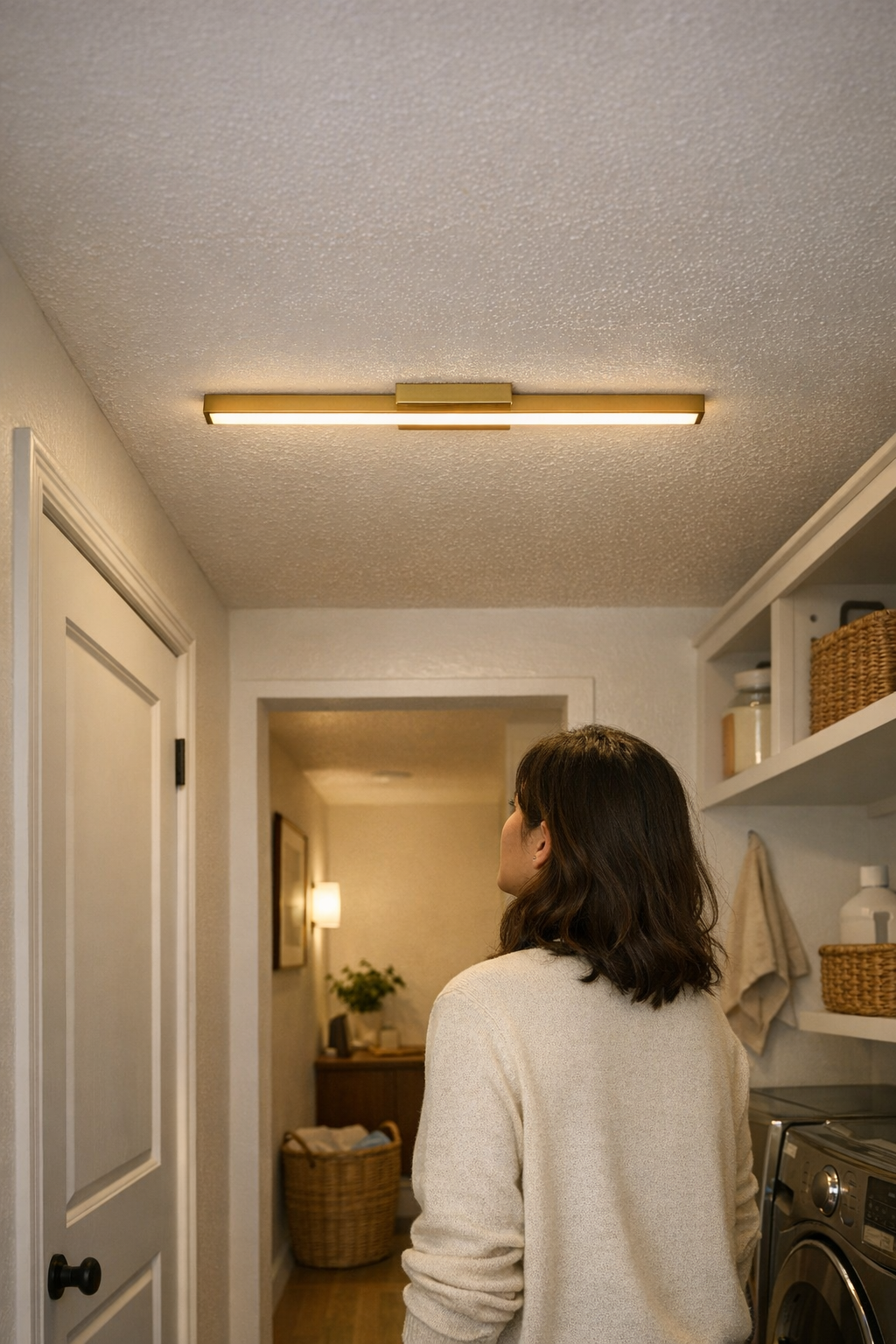
- Laundry and utility rooms: When the fixture base doesn’t sit flush, glare spills over the wall instead of the counter, making folding and sorting both harder and less safe.
Minor mounting flaws are persistent: not a one-time error, but a source of recurring discomfort, uncertainty, or low-key annoyance that accumulates with every use.
The Canopy: More Than Just a Cover Plate
Many lighting canopies look like trivial trim. In practice, they’re the single pivot point for controlling how—and where—light lands in daily use. Just a slight tilt or small gap at installation can redirect an entire fixture. On a sloped stair landing, failing to dry-fit guarantees a streak of shadow lingers at the top step—never erased by swapping bulbs, only solved by getting the mount truly flush to the real surface. A bathroom sconce that “almost” fits creates decades of lopsided reflections and repeated small adjustments each morning and night.
Daily Use: Where You’ll Feel Every Flaw
What does this look like in real life?
- You’re constantly shifting in the mirror to dodge shadow—never quite getting both sides of your face evenly lit.
- One corner of the hallway feels vague or unfocused, no matter the time of day.
- A laundry fixture that looked fine from below now shows open box edges and collects fuzz—right where you reach every week.
- A room that looks “finished” but leaves you navigating around only half-usable lighting every time you pass through.
Nothing dramatic, but hard to ignore—and much harder to fix once installed.
Building a Smart Lighting Habit: Always Dry-Fit First
The simplest way to dodge these issues: always dry-fit the canopy before committing to wiring. Don’t trust straight lines or new paint—hold the fixture in place, step in and out, and check it from every angle you actually use. Stand in the doorway, crouch by the washer, look up from the stairs. Watch for pinched trim, exposed gaps, or a tilt that only shows when real daylight hits. Adjust for all the hidden irregularities—old plaster, paint buildup, non-flat ceiling lines—so the fixture sits truly flush where it counts. Once you know the fit is clean and the spread is right, then (and only then) wire everything in.
This habit pays off immediately in visible ways:
- Bathroom vanity: A two-minute dry-fit catches a tilt that would have split your reflection. The shift means you wake up and see yourself clearly, not in lopsided shadow.
- Stair turn: A trial fitting reveals a gap that would have left a sharp shadow just where you land with your laundry baskets—so a quick spacer saves you years of awkwardness.
The room doesn’t just look brighter—it works better, with lights that support your routine instead of fighting it.
Where This Matters Most: High-Traffic and Task Zones
Anywhere you move, pause, or reach repeatedly exposes tiny misalignments. Ceiling lights amplify these flaws: misalignment on a flush or semi-flush mount goes from invisible to glaringly obvious once you view it along the corridor, down the stairwell, or across the entry. Wall sconces and under-cabinet fixtures might seem more forgiving, but cleaning, changing bulbs, or simply reaching across a counter brings every gap or shadow back into view.
Zoned and task spaces—vanity mirrors, kitchen counters, laundry folding surfaces—turn “minor” flaws into constant interruptions: one cheek in shadow, counter edges lost, dust pooling where there should be light, awkward angles every single day. Especially in spaces used after hours or with dim outside light, the cost of a bad fit multiplies over time.
A Practical Tip for Immediate Improvement
For every swap: keep a pocket level and a strip of tape handy. Even if you’re in a rush, a quick dry-fit using both will instantly reveal tilts, gaps, or pinch points that wiring alone can’t undo—making it possible to prevent a month of frustration in just five minutes. It’s the difference between ongoing hassle and a fixture you forget about (for all the right reasons).
Why It’s Worth the Small Extra Effort
Skipping this step isn’t a trivial shortcut—it’s a structural choice with years of visual side effects. Dry-fitting locks in alignment before a single wire is touched, delivering even, usable, glare-free light that won’t keep interrupting your daily routine. If there’s a secret to rooms that actually feel clear, tidy, and well-lit every time you pass through, it’s often found at the canopy—not the bulb or finish.
Test the fit before you wire. The habit is simple, and the improvement is immediate—because good indoor lighting is about how it works, not just how it looks.