Author: jaesoon_admin

  • Choosing the Right Ventilation Fan to Keep Your Workshop Airflow Consistent

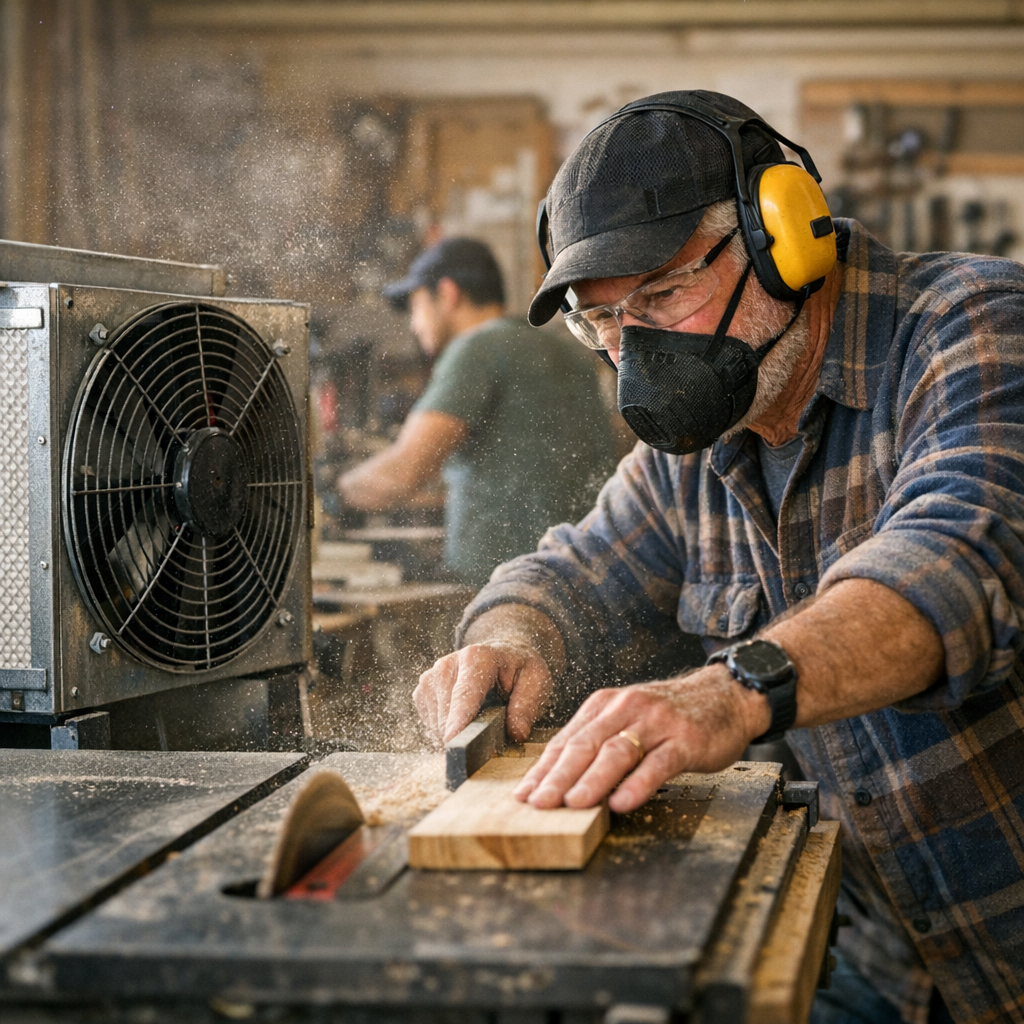
    If you’ve spent more than a day in a windowless shop, you know the moment when air quality turns from afterthought to obstacle. What starts as a clean, sharp morning—run the saw, tap a clean mark, drill a precise hole—slowly blurs as invisible dust builds up in corners, clings to every tool grip, and creeps inside your mask. By midday, hand planes feel tacky, clamps drag across the bench, and even a fresh drill bit feels dull as grit collects in collets and pockets. This isn’t just a matter of comfort—it’s about whether your tools perform at their best as the real work piles up, cut after cut, clamp after clamp.

    Where Standard Shop Fans Start Failing

    We’ve all been there: prop up a discount box fan, flick it on, and hope for the best. At first, it stirs just enough air to keep dust moving. But layer in a couple hours of back-to-back drilling, an uninterrupted run on the sander, or a batch of plywood crosscuts, and that bargain airflow flatlines. Soon, dust starts pooling on your ankles, infiltrates tool housings, and settles inside blade guards and drill chucks—right where precision matters most.

    As the hours pass, cleanup time grows: you’re wiping hands after every cut, scraping glue haze that reappears on newly jointed edges, and pausing every 10 minutes to clear a view through your safety glasses. If your respirator is clogging before lunch and you’re spending more time brushing off tools than using them, you’re feeling the slow sabotage that underpowered fans deliver—every action gets grittier and less controlled.

    How a Workshop-Rated Fan Changes Your Workflow

    Real workshop fans aren’t just bigger—they’re built for nonstop cycles: sawing, sanding, glue-ups, and assembly runs without the air turning dense or sticky. When the dust extractor can’t catch everything, the right overhead or cross-bench fan sweeps out what’s left, keeping your handles dry, your cuts visible, and your bench clear even three hours deep into a build. Suddenly, clamp pads no longer grab at glue, and fresh glue lines dry crisp instead of cloudy.

    What a Weak Fan Costs You in Practice

    Take a run of birch shelf sides: With only a consumer-grade fan, the bench looked tidy for the first hour. By the second, switch tools—and every grip left fingers coated. On clamp-up, the tool faces left smears of sawdust, and the fine dust floated just enough to blur scribed lines. Each tool switch meant a full wipe-down and a lost minute, just to keep edges and slots crisp. Instead of getting into a rhythm, momentum stalls—control drops, bit changes get hesitant, and by the end, fatigue hits long before the work is done.

    Switching to a Real Shop Fan: What Actually Improves

    When I swapped in a 600 CFM, continuous-duty shop fan with a fitted filter—pointed to push directly across the main assembly zone—the upgrade was immediate. Dust dropped where it should: into the vacuum, not across the bench. The burnt-motor smell disappeared. There was no cold draft or racket, just a steady hum, and for the first time, glue-ups stayed bright and clean late into the day. The difference wasn’t flashy: it was in predictable control. Drill bits didn’t seize up from grit, battery contact points stayed clean, and after hours of sanding, the respirator didn’t clog before the job was done. Less dust meant fewer mistakes and more confidence every time I grabbed for the next tool.

    Beyond CFM: Timing and Coverage Really Matter

    In a real jam-packed workday—shift from drilling pilot holes to routing edges, then run a random orbital sander across joinery—there’s never a pause for a full cleanup between jobs. If dust lingers between workstations, you’ll fight it from one operation to the next: rough cuts muddy your sanding, glue-ups stick to unexpected spots, and delicate measurement becomes guesswork as debris clouds your markings. A real shop fan keeps pace with you, reaching into shelf recesses and under benches, not just blowing air above eye level. Strategic airflow means you control the timeline—not the cleanup.

    How to Spot Subpar Ventilation Before It Kills Your Day

    Your shop’s air is probably holding you back if you notice any of these by midday:

    • Fine dust building up in router collets or along the rim of bench vises, hours after you started
    • Tool handles and chucks feeling rough or slippery, even with regular wipes
    • Lingering glue or burn odors that grow more pungent with each new process
    • Power tool batteries and bits picking up debris, leading to slow installs or connection issues
    • Energy dips and heavy breathing, even in full PPE—because stale, dust-heavy air catches up to you fast

    If this is familiar, you’re losing precision, comfort, and stamina every shift. Each pause to clear off a gauge or shake out a clogged mask is time and momentum lost—especially as jobs get longer and tool changes get faster.

    Bigger Impact: Sizing and Aiming Your Shop Fan for Real Jobs

    Start with the right capacity: calculate your workspace cubic footage, multiply by recommended air changes (usually 6-8 per hour for woodworking), and aim high if your air usually hangs heavy. But numbers alone aren’t enough if the airflow misses your real work zones.

    Positioning changes everything. Direct your strongest air across the active workbench, saw station, or sanding area—it’s wasted if it just whips past a storage wall. For L-shaped shops or odd corners, test adjustments midway through the job: sometimes, shifting the fan three feet is all it takes to keep glue areas or drill presses dust-free. If dust is still coating hardware or your tools feel slow by afternoon, rethink both position and power before doubling down on cleaning routines.

    Cut Time Off Cleanups With This Combo

    Pair a workshop-rated fan with a portable table-top dust extractor on high-dust jobs—sanding, routed dadoes, or quick hole runs. It’s not just about cutting visible mess; it means attachments, collets, and batteries come off cleaner, so next-tool switching doesn’t grind grit into moving parts or fresh finishes. Cleaner air equals fewer pauses and more solid tool performance, station to station.

    Consistency Over the Whole Shift—Not Just the First Hour

    The difference between “good enough” ventilation and real shop airflow is clear by day’s end: tools still grip right, clamps release clean, and your workflow doesn’t grind to a halt as dust builds up. Your second session starts with a workspace you trust, not a slog through sticky, leftover debris. Watch how your tool habits change when you stop constantly wiping, shaking, or bracing for mid-shift cleanup. In woodworking, as in every craft that stacks job after job, true ventilation keeps attention on the cut—not the cleanup.

    Find tools and gear to keep your workshop performing at its best at Gumboll.
  • How Stackable Pantry Bins Transform Snack Storage and Daily Access

    Stackable pantry bins look like an answer—until daily routines start pulling them apart. The first setup feels almost surgical: snacks sorted in neat blocks, labels staring forward, shelf space suddenly squared away. But one week later, as kids grab quick breakfasts, someone hunts for the last granola bar at midnight, and new groceries squeeze onto crowded shelves, the old system shows its cracks. Bins inch forward, stacks lean, and what started as clear borders between categories blurs into a tangle. The promise of order turns into a tug-of-war between easy access and actual organization—right where you need storage to just work, not slow you down.

    When Early Order Meets Everyday Reality

    Those first stacked rows of snacks, crackers, and breakfast bars create a satisfying illusion of control—until real life scrambles the logic. A bin is pulled for popcorn and never slides perfectly back. Someone, hands full, shoves chips wherever there’s a gap. Return flow breaks down. By Friday, bins have migrated, categories drift, and the lowest shelf is blocked behind a stack leaning toward the aisle. At a glance, the pantry still looks “organized” to visitors, but inside, the route to the right snack is confusing, crowded, and slow. Reaching twice for the same item—or yanking out a front bin just to check what’s slipped behind—becomes normal, not rare.

    The Subtle Friction of Stack and Access

    Stacking bins deep isn’t just about storage capacity—it’s about what happens every time you grab or return something. Most households don’t return things in the same perfect order. Every new hand multiplies the chance of a bin left angled, categories blended, or a “blocked” snack that’s technically stored but now buried. The more traffic, the quicker the breakdown: bins covering each other, with a growing pile at the front—a row you keep reshuffling just to see what’s left at the back. This starts slowly but adds up. Missed snacks go stale. Restocking takes longer because you have to fix the system before you can use it. Reset burden creeps in, quietly pushing the space from quick-access to reset-required.

    One sign things aren’t working: your midweek grocery run turns into a puzzle of where to fit new snacks, since old bins have shifted or filled out of sequence. The grocery restock that once took a few easy moves now drags out, and snacks get lost or doubled up. This isn’t just an annoyance. It’s a signal your storage system isn’t matching the way your household actually moves through the space.

    The Hidden Cost of a Slow Reset

    When bins no longer return to reliable positions, what started as a two-minute shelf reset after groceries turns into a mini-overhaul. Stacks lean, labels disappear, and fishing for buried snacks means pulling out half your system. You start to work around the storage—leaving overflow in random zones, finding expired food in bins you haven’t touched for weeks, and giving up on returning things exactly. High-traffic shelves become friction points, not flow points. The “organized” look hides a growing mismatch between the system as designed and the pantry as lived-in.

    Pushing Back Against Overflow and Drift

    Burst shelves, bins hovering half off the edge, and snack piles mixing in the front row: these are everyday signals of “storage creep”—the natural slip from order into entropy. One zone packs tight while another sits empty, and return flow turns into guesswork. Ask who’s really sticking to the old categories. Usually, it’s no one. The cost? Extra time rearranging, more overlap, and a system you quietly dread resetting.

    The fix isn’t more discipline—it’s adaptation. After trying the classic column-stacking, a deliberate stagger made more difference than any strict rule. By leaving each bin offset—a thumb’s width forward—every front edge stayed visible and reachable. Snacks could go straight in or out without moving other bins, and restocks started flowing again. The shelf absorbed small misalignments without losing overall clarity; maintenance dropped back to seconds, and the dreaded all-bin resort faded away.

    Seeing Small Trouble Before It Turns Big

    Don’t wait for the perfectly collapsed stack before acting. Notice when bins drift forward, categories start to bleed together, or stacks block each other—these are small invitations to fix flow before real mess sets in. A five-minute midweek correction—nudging bins, clearing spillover, or sorting a single row—can spare you the headache of full resets and lost snacks. Letting tiny drift build up only guarantees rediscovering last month’s crackers or abandoning the system until the next deep clean.

    Matching Storage to Real Routines

    It’s not about looking organized on day one—it’s about the setup staying usable when the household is busy or plans change. Storage systems that allow visible, independent access (staggered bins, clear fronts, or non-slip bases) keep retrieval quick and returns frictionless, even as snack stock and hands shift every week. Find yourself able to grab what you want without a full-bin shuffle? That’s a real improvement. When categories still mostly make sense and resets are rare or easy, the pantry space holds up against daily pressure.

    For single-person pantries or strictly monitored snacks, traditional stacking might survive. But most shared kitchens see shifting stock, different routines, and hands that blur the original order. Here, the difference is measurable: spaces that look fine but feel slow, versus setups that stay quick on the busiest days. A workable pantry is not just sorted, but resistant to quiet category-drift and hidden clutter build-up.

    Small Shifts That Keep the System Moving

    Try offset stacking—just enough so each bin’s front is clear to grab. Or pick bins that won’t slip or tilt, even if they get nudged out of line during a rush. Use labels where you need them, but keep shelf lines flexible enough to absorb overflow without trapping snacks for weeks. Don’t wait until the back row is out of sight and out of mind; clear it while things are fresh. Practical adjustments protect your setup from the slow breakdowns that block retrieval, crowd the path, or force a total reset in the middle of the week.

    Stackable pantry bins can be the backbone of a reliable storage system—if you let the setup shift with your real use, not just the neatest photo. The payoff is a pantry that looks organized and actually makes daily access faster, not harder. When storage meets your routine, order has a way of holding its line—and the friction of daily living finally gets out of your way.

    See more practical storage solutions at Gridry

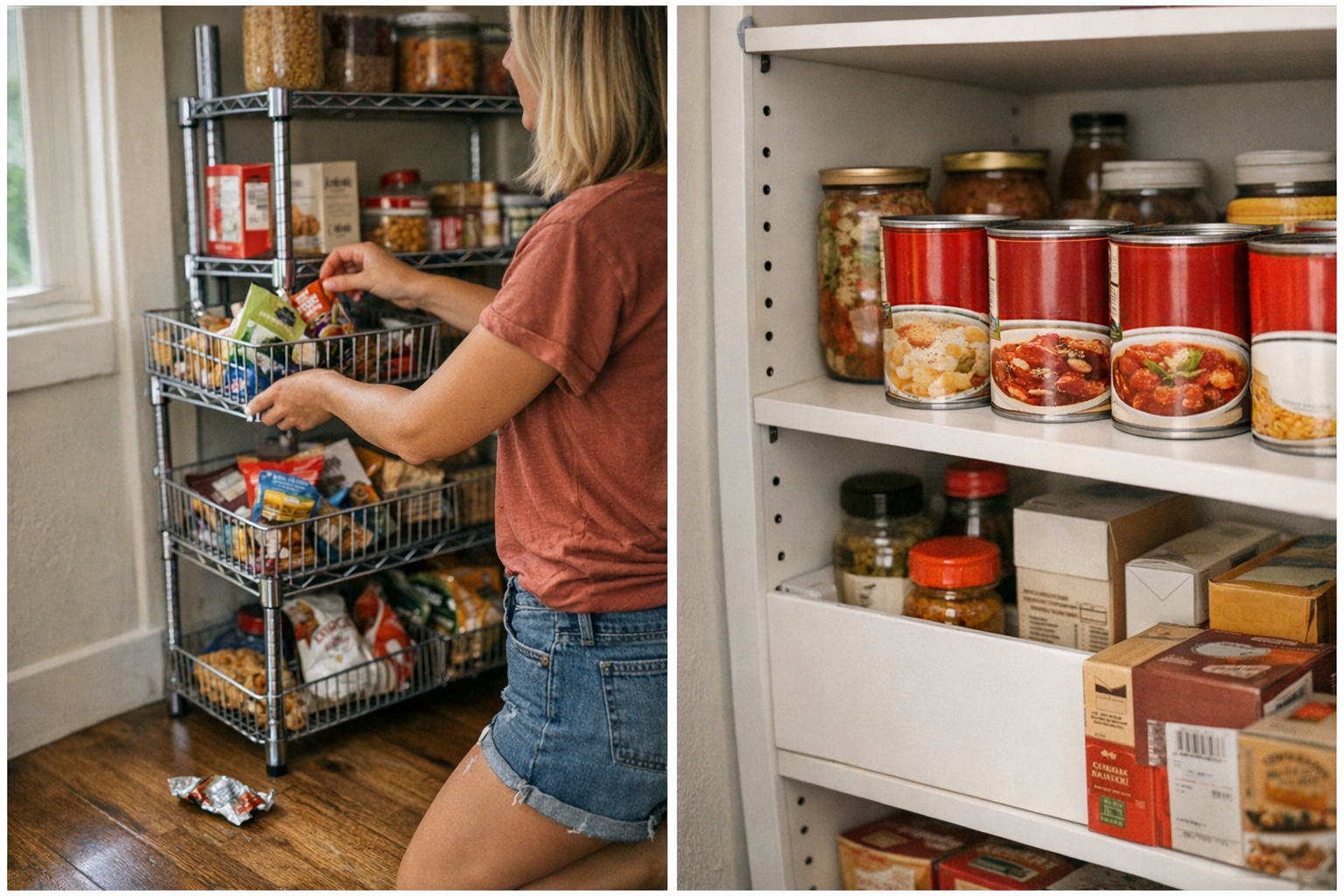
  • Choosing Between Wire and Solid Shelving for Efficient Pantry Storage

    The real test of pantry shelving isn’t on installation day—it’s after a few grocery runs, when your morning routines collide with quick dinners, surprise guests, and last-minute snack raids. What began as a picture-perfect setup now reveals the friction points that make you rethink every shelf. Suddenly, the difference between wire and solid shelving isn’t cosmetic—it’s the quiet line between a space that works with your life and one that works against it.

    Where Frustration Builds: The Daily Use Test

    Your pantry starts off orderly enough: each shelf lined with boxes and jars, every item visible. Fast-forward a week. Now the oatmeal is hidden behind snack bars, one soup can teeters near the edge, and half-open chip bags slump in a lopsided pile. The slip between “organized” and “usable” is subtle but real, fueled by normal—sometimes messy—daily grabs and quick shoves out of sight.

    This is where shelving choices suddenly become glaring: reaching behind a stack of canned beans for one spice, fishing a packet out of a collapsed heap, or watching a sleeve of crackers wedge itself somewhere it doesn’t belong. These aren’t dramatic disasters—they’re the micro-annoyances that chip away at any sense of pantry control.

    Wire Pantry Shelving: Exposed, Breezy—and Restlessly Shifty

    Wire shelves sell the dream of breathability and easy scan-ability. You see every label. Air circulates. But here’s the inevitable reality: gravity is not your friend. Spice jars tilt and rattle. Biscuit packets droop through gaps. Flour and sugar bags lose their battle against the wire grid, toppling into ragged stacks or, worse, dropping through with a thud to the floor below.

    Breakfast Rush, Guaranteed Spill

    Picture a familiar scene: you’re in the weekday rush, aiming for a quick oatmeal packet. Instead, three pouches tumble through the wire, and a granola bar gets trapped at an angle you can’t quite reach. The shelf is technically “open”—but your food isn’t accessible when everything small migrates downward, hiding or mixing up with whatever’s last in line.

    Solid Shelving: Steady Surface, Subtle Hideaway

    Solid shelves end the drop-and-dangle problem. Every jar, can, or teabag stands firm; no more mystery items wedged between rails. But a new issue creeps in: the slow migration of items toward invisible depths. As shelves fill, cans retreat behind cereal boxes, baking mixes disappear into the gloom at the back—and before you know it, you’re double-buying peanut butter you already own.

    The Pile-Up Problem

    Stability comes with a tradeoff: out-of-sight means out-of-mind. Every restock pushes less-favored items further back, and soon the shelf’s back row becomes a zone of forgotten goods with expiration dates you haven’t checked in months. The space looks organized, but real access slips away behind those neat front rows.

    The Real Reset: When “Tidy” Fights “Functional”

    This all comes to a head during a reset—after a grocery run, or after a burst of heavy use. Wire shelves spark the hunt for dropped snacks and sideways spice jars, as you gather up what’s slipped through the cracks. Solid shelves keep uprights upright, but the reset is slower if you have to unload the entire front just to recover a single baking supply from the back.

    Grab-and-Go vs. Lost-and-Found

    Two fast realities:

    • On a wire shelf, a snack bag catches and falls—again—during one rushed grab.
    • On a solid shelf, you hesitate and squint, wondering if your favorite sauce is lurking behind those pasta boxes, lost to pantry limbo.

    Both frustrations stem from design, not your effort. One leads to sprawl, the other to deep confusion—the shelf determines the pain.

    Fast Fixes: Making Shelves Work Harder

    Here’s where simple upgrades bend reality: shallow bins or baskets on wire shelves corral those rogue packets, preventing messy pile-ups. Shelf liners instantly transform wire grids into a stable platform, keeping jars where you put them. Even a roll of grippy liner can save a week’s worth of annoyance by anchoring lightweight items in place.

    For solid shelves, clear slide-out bins rescue those lost items from the back—now you can pull forward the entire zone instead of reshuffling by hand. Labeling bins with clear, bold tags cuts down on blind rummaging and keeps categories intact, no matter how fast you need to reset.

    Micro-Adjustments, Macro Relief

    One easy move—a simple basket per shelf—means you’re reaching once, not digging three times. Small upgrades reclaim minutes from your week: no more chasing pouches that slid through, no more forgetting what’s buried behind a pasta barricade. Instead of accepting chaos, you shape your shelf to fit your rhythm, not the other way around.

    Staying Functional: Every Shelf Needs a Checkup

    No shelf style is invincible. Routines keep changing; grocery loads vary; family members treat shelves as a free-for-all. What works brilliantly one month can unravel the next. The trick is recognizing where your system loses discipline—where goods collect, categories drift, or resets slow down—and layering in small fixes as you go.

    Wire shelves reward you with visibility and air circulation, but they rely on good bins and liners as backup. Solid shelves offer sturdiness but demand a system: labeled bins, regular purging, and maybe a pull-out or two. The only real “solution”? Keep adjusting. Shelves aren’t set-and-forget—they’re an evolving backdrop to your routines. Give them a nudge, and you’ll reclaim not just storage, but usable, reliable space that fits how you actually live.

    Find more everyday storage solutions built for real daily life at ClosetWorks.

  • How Wall Sconces Transform Workspace Lighting and Reduce Glare

    The problem in most desk setups isn’t simply too little light—it’s light that lands in the wrong place, at the wrong angle, turning a “bright” room into a field of small, daily frustrations. Sit at any desk under a single ceiling fixture: the top of your keyboard glares; your arms cast sharp shadows right where you need to see details; the back edge of the desk sinks into dimness. You straighten posture. You shift your chair. The lighting looks finished but never quite fixes the friction—until you realize you’re spending more energy managing glare and hunting for usable space than actually working.

    When Overhead Lighting Looks Bright, but Still Fails to Deliver

    In most home offices, shared study corners, or tight bedrooms, you’ll spot tidy ceiling domes, LEDs, or recessed downlights—symmetrical, promising complete light. Yet with every session, something nags: you angle your monitor to dodge a steady flash of reflection; paperwork migrates across the surface, always seeking the one glare-free zone; you lose time groping at shadowed desk corners for a missing pen.

    Overhead setups breed a stack of familiar friction points:

    • Bright ceiling light throws your forearms or hands into hard, distracting shadows—right over keytasks.
    • Desk and shelf edges vanish into shadow, forcing constant shifting, and making organization feel like guesswork.
    • Glossy desk surfaces or laptop screens catch relentless reflections, leaving you squinting, not seeing.
    • Cable runs, however “organized,” start grabbing your eye—with clutter growing more obvious the longer you use the workspace.

    Why Wall Sconces Change the Tone of the Room—and the Routine

    Wall sconces aren’t just decoration—they’re targeted tools for shifting the whole lighting dynamic. Positioned around eye level, sconces push usable, diffuse light sideways across the desk and immediately erase the most persistent issues from ceiling-only setups:

    • Instead of a single hot spot, you get clear, even coverage that reaches the awkward desk edge and shelf recesses where work actually piles up.
    • Lateral light cuts across shadows—not just softening the margins, but breaking up the hard lines that overhead beams always draw.
    • In compact corners or beside stacked shelves, the right sconce sidesteps the need for another clunky lamp base; you keep precious surface open without sacrificing usability.
    • Support pieces—when managed properly—move cables out of sight and out of reach, keeping both movement and vision clear, not just on day one but after a dozen uses.

    The routine shifts fast: small print stays readable no matter where it lands; you don’t have to squint for keyboard symbols in the evening; paper passed across the desk stops vanishing into shadow under your own arm.

    Scenes Where Setup Friction Remains: Not All Solutions Are Equal

    Ceiling lights that look “done” at a distance can unravel the minute you settle in. Real use exposes every weak spot—especially if you’ve made quick fixes or underestimated support placement:

    • Central lights swamp the immediate area but leave the back edge of the desk murky. You end up physically tracking light, shifting seats, or craning over the middle to see both text and screen.
    • DIY clamp lamps clear away some clutter on paper, but during real work, the brackets intrude. Cables nibble at your workspace, snare your sleeve, or wedge between shelf items as you reach.
    • Wall sconces installed as an afterthought look clean when new, but let their cords crawl down the wall or across reach zones and watch the “upgrade” become another maintenance chore.
    • Supposedly sturdy brackets start shifting after a week. The light creeps off target—sometimes millimeters at a time—and every nudge to realign is more distraction than improvement.

    The real test isn’t how a setup cleans up for a photo—it’s how many times in an average day you have to adapt, compensate, or silently curse a fix that created its own leftover hassle.

    How Effective Wall Sconce Placement Rewrites the Workspace

    Here’s a typical reality: your desk runs against the wall, no windows nearby. The overhead LED makes a well-lit pool in the center but burns glare across your keys and leaves the right edge—where your notes sit—deep in shadow. Every note you jot means nudging your chair or hunching to escape your own shadow. As the hours drag, your comfort drops, and you catch yourself rearranging, not working.

    Add two wall sconces, just above eye level and spaced out on either side. Instead of one glaring spot, the entire desk—both edges, all corners—gets bathed in balanced light. The difference: no more shadow-chasing or posture adjustment every time you switch tasks. Tucked cable covers seal off visual mess so the focus shifts back to actual work, not the distractions collecting under your line of sight. Even during wordless evenings or spreadsheet marathons, the lighting quietly disappears into the background—until you notice you’re no longer fighting with it.

    This isn’t “brighter” lighting—it’s a shift from hostile to helpful, from working around a setup to letting it work for you.

    Tip: Small Adjustments for Big Comfort

    Never mount sconces by guesswork. Use painter’s tape to mark planned spots and actually move through your workspace. Is the light in your direct line of sight? Do cords cut through your key paths? Is any bracket right where your reference book or keyboard needs to go? Five minutes of testing this way almost always reveals friction before it becomes a built-in aggravation.

    Trade-Offs: It’s Not About “More” Light—It’s About the Right Light

    Adding side lighting isn’t about cranking up the wattage. When sconces are angled toward real work—and installed with support that keeps cords unobtrusive—brightness doesn’t need to increase. Instead, the light stays steady across surfaces, so shadows and distraction drop. You move your eyes from screen to page and back without a pause. The urge to “fix the light” evaporates.

    But trade-offs creep in when sconces are pushed too close to mirrors or left with cords exposed. Bad support—brackets that wiggle, cable runs that cross every reach—just brings old annoyances back in new forms. Solutions that only solve noise or aesthetic leave the functional hassle in place.

    The Real Win: Small Daily Habits, Actually Improved

    What actually changes with a well-supported sconce setup isn’t showroom drama—it’s subtle relief across countless daily habits:

    • Your chair stays put, no more shuffling just to see the corners of your own desk.
    • Papers stay legible from any angle, without a black stripe of shadow wherever your hand lands.
    • The urge to move a lamp or fix a cord mid-session disappears.
    • After a long workday, what stands out isn’t the light—it’s the lack of friction, clutter, or the usual pile of minor annoyances.

    Making Lighting and Support Work Together for Real Life

    Sconces aren’t perfect, and neither is any one-time installation—but they solve a daily-use problem that ceiling lights and makeshift desk lamps rarely touch. If your setup keeps fighting you—glare, shadow, cables always just in view—then targeted support, smarter mounting points, and solved cable runs will do more to smooth your routines than any wattage boost. The mark of a solved setup isn’t how it looks the first day, but how it quietly disappears as a source of friction week after week.

    For lighting and support options that actually hold up under repeated use, Visit LightSupport for practical lighting and support solutions.

  • Why Entryway Storage Fails Without a Real Item List and How to Fix It

    Entryway storage usually fails for one hard reason: it doesn’t match what really hits your doorstep. The drift begins the first time you stagger in with a wet bag, a dirty pair of shoes, or armfuls meant to land “just for now.” Day one, the setup looks sharp—hooks aligned, bench empty, shoes in a row. By week two, the truth appears: you’re sidestepping a line of half-wet boots, hunting for keys buried under bags, or wrestling for space to sit. Every pass-through adds invisible friction, forcing small resets and erasing whatever calm “organization” promised. The cost isn’t just clutter—it’s blocked paths, slower exits, and a daily loop of putting things back before you get out the door.

    Where Entryway Storage Breaks Down—And Why You Notice Too Late

    Failure in the entryway never arrives as a sudden avalanche. Instead, the system just starts dragging at your routine: shifting shoes to reach your own pair, unstacking bags to clear a seat, tripping over that one “temporary” bin that’s always in the way. Shared entries pile on awkwardness—a bench covered with someone’s gear, hooks that look full even when half are buried by layered jackets, and bags retreating to any available surface the moment routines overlap.

    The problem isn’t surface mess. It’s a slowdown that accumulates—extra seconds to untangle shoes, minutes lost moving bags, repeated detours around a “solution” that only fits when nothing changes. Every reset—shoving aside a block of boots, scavenging for lost keys, clearing a bench—confirms the setup’s not keeping pace with reality.

    The Trap of Open, Unitemized Storage

    The starter-kit fix is universal: wall hooks, a narrow bench, a simple rack. It’s organized at rest, but almost none of it is assigned to real, repeating items. Add rain, groceries, or an extra person: the shoe rack doubles up, soaking soles meet clean sneakers, and every “grab-and-go” zone turns into a game of shoe shuffle. The bench, meant for a quick tie or pause, becomes a soft overflow—bags settle, then multiply. The “open” look masks invisible friction: you’re always tidying, with no memory of how it slipped from streamlined to cluttered.

    Even wall-mounted bins—meant to absorb leftovers—get loaded with odds and ends, then forgotten. When there’s no specific rule (“bags here, gear there”), every bin becomes a catchall. Visual chaos is hidden, but daily function breaks down: searching for a single glove, fishing through random piles, or dodging what can’t dry fast enough. By midweek, the open system looks blurred; by Friday, you’re fighting it.

    Pressure Points: What Happens When Real Life Hits

    The real test hits with shared entries or bad weather. Imagine this sequence:

    • You and a housemate step in—heavy coats, dripping bags, boots still wet.
    • The bench vanishes beneath a pair of grocery totes.
    • Shoes skid off the rack, stacking sideways, then blocking the door swing.
    • Keys migrate to the first flat surface—windowsill, radiator, even the shoe rack—building new clutter that nobody owns up to clearing.
    • Adding “just one more hook” leads to overlapping coats, tangling sleeves, and vanished wall space.

    In these high-pressure moments, small issues reveal the structural gaps. You sacrifice flow: set something down and pick up three, block another person’s path, sidestep rogue shoes and sprawl, or simply abandon order. The problem isn’t always too little space—it’s that the space can’t handle daily, real-time entry churn.

    Real-World Correction: The Power of Purpose-Built Zones

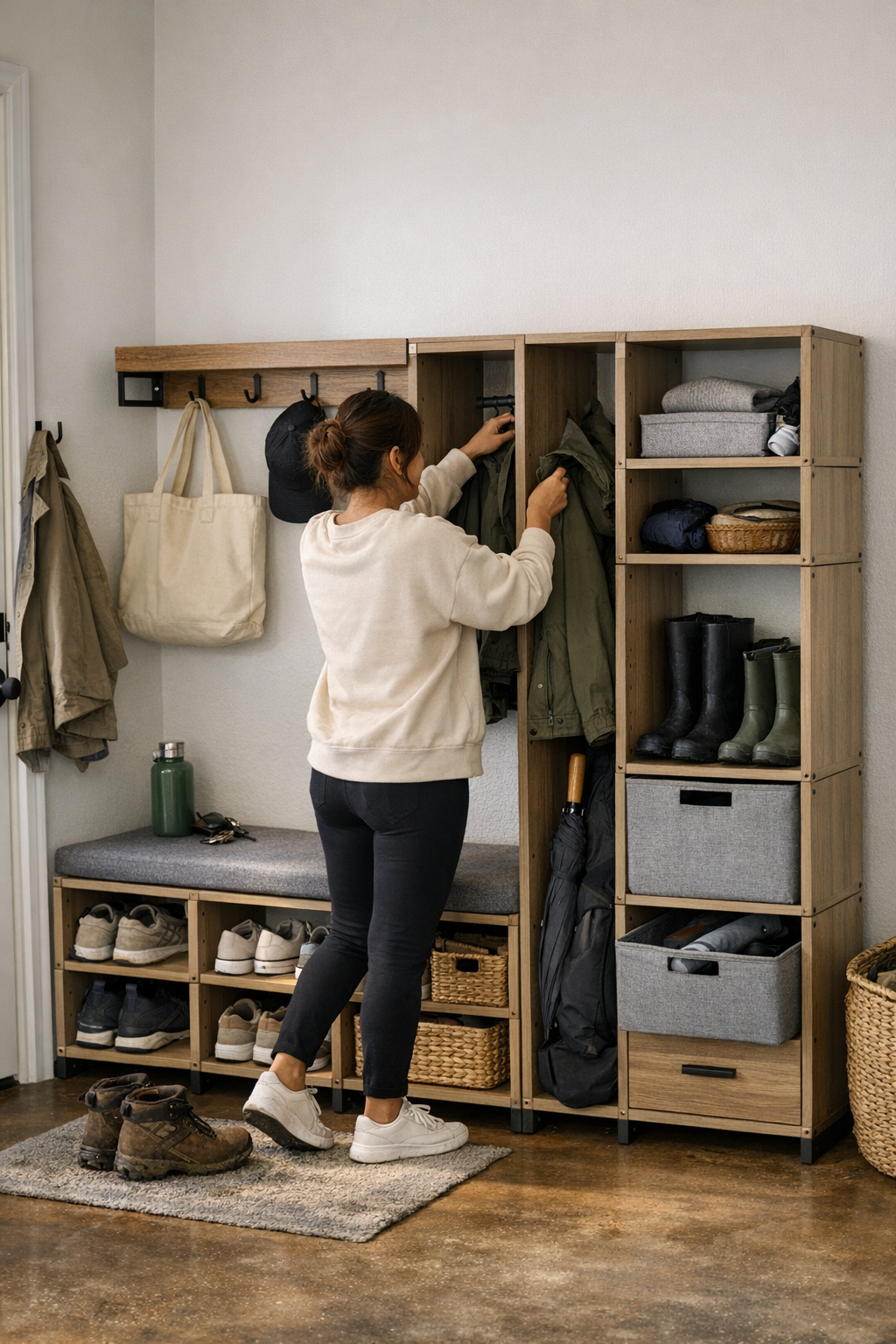
    What solves this isn’t “more storage”—it’s sharper borders and the right container for each category. A real fix recognizes what always returns and builds around the messiest moments, not the cleanest. Modular cubbies change the physics: replace a low bench with a single row of shoe slots and a tall upright beside it. Shoes land side-by-side, never on tiptoe or in tangles. Tall gear—umbrellas, oversized bags, saturated boots—get their own vertical slot: not crammed, not left leaking onto the mat, never blocking a seat. Routine items boomerang to their spots without pause. The bench edge once used for mail and keys stays clear—defaults become habits, not nightly chores.

    • Daily shoes in quick-access cubbies prevent pileups in the main walkway.
    • Tall, segmented storage contains everything awkward: rain boots, briefcases, gym bags, or folded umbrellas—no more “where now?” cycle.
    • The bench becomes predictable seating, not an accidental shelf.

    The outcome isn’t perfection. It’s stability you feel—the five-minute nightly reset shrinks to seconds, the zone recovers without drama, and the daily “drop” loses its sting.

    Trouble Signs: When Storage Feels Like More Work Than Help

    Every overpromised “organizer” has weak points that show up fast in real use:

    • Rows of shoes migrate outward, stalling in passageways, demanding constant swipe-backs to reclaim safe footing.
    • Bags on an empty bench vanish for a minute, then return by evening in a repeating cycle—the bench is both seat and overflow, so always halfway full.
    • More hooks don’t equal more order: coats double up, guessing whose is whose, with out-of-season layers hiding under the latest arrival.
    • Open bins tempt drop-ins, but become a fast blur; closed bins look sharp until you’re digging blind for backup hats or last week’s scarf.

    Once the system starts to need as much attention as the mess itself, the storage becomes its own work. Watch for spreading shoe rows, bags settling wherever you rest, or bins whose contents you can’t account for—these are warning lights that the routine is breaking down, not being streamlined.

    Make Each Slot Count: Tuning Storage for Real Use

    The difference between “organized once” and “organized for daily use” comes down to control at the item level. Every repeating object gets a defined home:

    • Daily shoes in front-access cubbies—visible, always ready, never double-parked.
    • Bags on their own hooks or vertical slots, never forced to share with coats unless you build it for that overlap.
    • Wet, dirty, or oversized gear in a tall, open segment, not on the bench and not at the door’s edge.

    Shared surfaces—like benches without rules—inevitably become mess magnets. The bench is for sitting, full stop. Wall hooks and vertical slots break up the spread, but only if each category has its territory. The best entryway layout blocks clutter drift by default, not because you micromanage it.

    Open Storage vs. Closed Storage: Picking What Fits the Routine

    Open storage always wins on speed—instant see, grab, go. But open systems show disorder fast: the clutter is in plain view, especially once more than one person collides in the space. Closed cabinets, by contrast, hide the mess but breed new ones of their own: the quick dump, the disappearing act, the stack of “found later” things that gum up routines. The middle path is blunt: closed bins for what’s rare or bulky, open access where you need speed, and clearly marked zones for everything you drop daily. Don’t copy catalog images—plan for the mess that happens under pressure, not for how it looks at rest.

    From Control to Routine: Keeping Entryways Clear When It Matters

    The entryway that doesn’t backfire isn’t the most stylish—it’s the one mapped to the churn of real re-entries and resets. Count what you really bring in. Watch where things always land by accident, not where you wish they did. A working setup accounts for busy departures, slushy boots, late returns, and just-enough moments when one more thing tips the balance. If the gap between “looks fine at rest” and “works in motion” keeps tripping you up, the cost isn’t aesthetics—it’s time, blocked flow, and a daily sense you’re working around the system, not with it. Map a real return path for every shoe, bag, and coat, tune for daily rhythm, and the worst friction falls away: the threshold clears, and the zone flexes with your real life instead of fighting it.

    For modular and transition-focused storage solutions built for real entryway pressure (not just clean looks), explore Betweenry.

  • Maintaining Calm Dog Greetings with Simple Entryway Solutions

    Where Calm Breaks Down: The Real Impact of Hidden Pet Upkeep

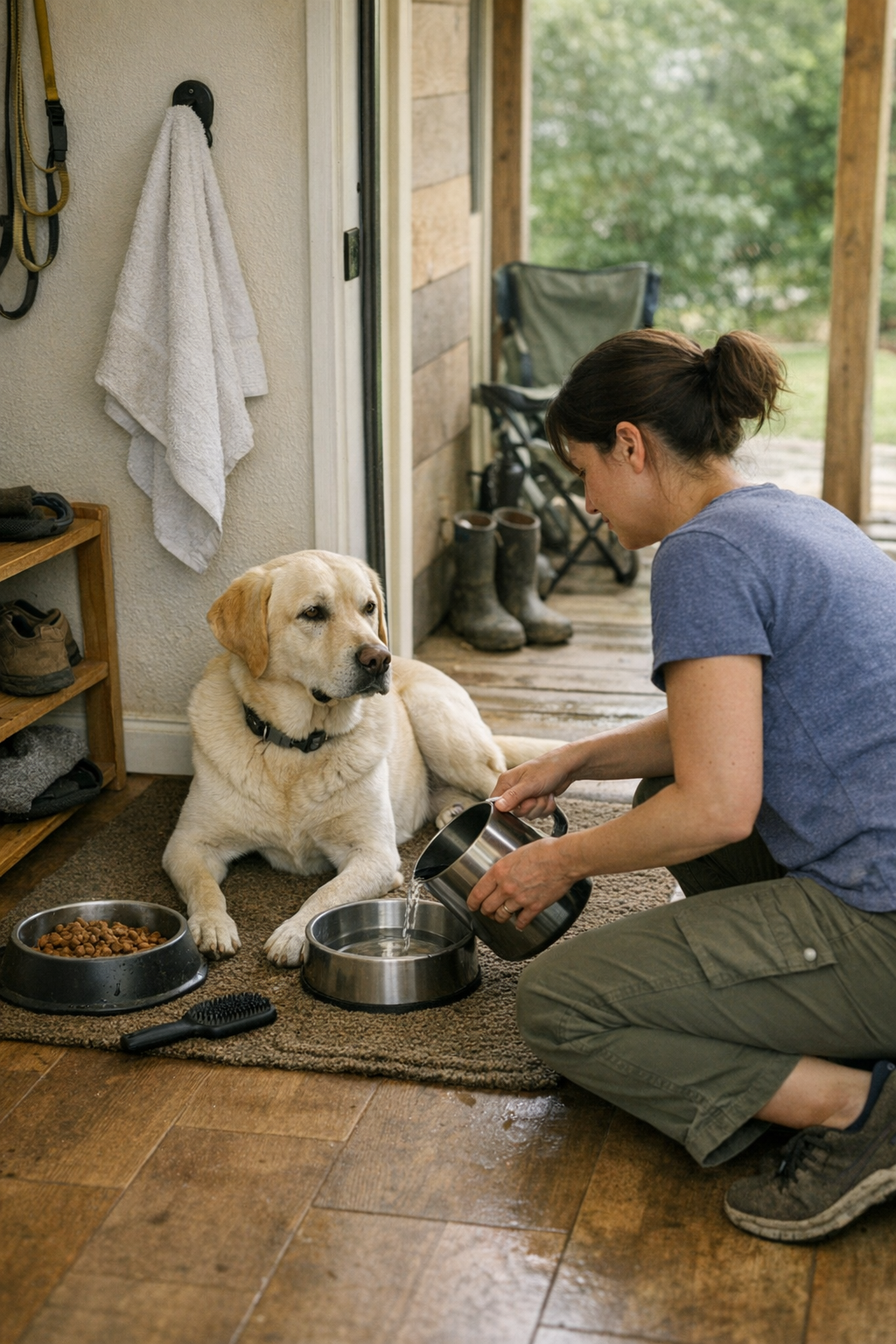
    There’s a difference between a pet routine that just looks organized and one that actually works under daily pressure. It shows up fast on busy days, when you go to refill a bowl and have to drag a treat bag out of the way, or you reach for a towel that’s always migrated from its hook. The clean mat by the door means little if wiping muddy paws turns into a minor scavenger hunt, or the grooming brush is nowhere near the entry just when a tumble of fur shows up before guests arrive. Each extra step—one more reach, shuffle, or search—quietly piles up until small annoyances start dragging the whole routine off course. What felt “almost ready” at first quickly exposes weak points that do not go away with tidiness alone. CalmPetSupply is built for these moments—the real, repeated friction points that disrupt a routine even when a space looks fine on the surface.

    The Accumulation Effect: What Small Misses Add Up To

    Pet care slip-ups rarely crash everything at once. Instead, minor losses—backup towel buried under laundry, water jug wedged behind a cleaning spray, brush gone missing thanks to drifting storage—combine into real slowdowns. It might seem like overkill to anchor a brush at the door or keep a towel always visible, but the cost of not having them ready shows up every time urgency breaks your pattern. At the actual moment of cleanup or reset, a missing item is almost never worth the workaround: drying paws with a shirt sleeve, letting muddy prints dry until later, postponing grooming until fur collects in corners. “Order” is only as real as the minutes you save when the routine repeats under pressure.

    The classic late-evening walk exposes this: you come back, dog waiting, reach for the towel and realize it’s still drying elsewhere. Now it’s a scramble—mud prints drying on the floor, entry area tidy to the eye but setting up double the work for later. What could be an efficient reset turns into another background task still waiting for you.

    Tidy Isn’t Always Easy: Where Organization Fails in Practice

    A fresh, organized setup always seems promising—until repeated routines show where it cracks. After a week, the water bowl inches further from reach, toy baskets block access to towels, the “easy grab” leash is under a pile from the last trip out. Quick jobs slow down: you shift bins just to get at a backup towel, or skip a wipe-down because the cleaning cloth got stashed high after last use. False tidiness can mask a buildup of hidden steps and non-obvious delays. The real slowdown isn’t visible until a rushed morning, when you’re reshuffling items again just to do basics like feed, wipe, refill, or quick groom.

    Sometimes, the routine breaks exactly where the setup was supposed to shine—like when the bowl is always clean but so out of reach you splash water getting it back for a refill. Perfect organization means nothing if it makes you work around it to keep up.

    One Weak Point Can Slow Everything

    Most routines fall apart at a single, repeat offender: the towel that drifts, the brush that “floats” into another room, the food scoop banished somewhere mid-rush. Miss just one of these, and the rest start failing in a chain. If the brush isn’t back at the entry, you skip grooming—fur spreads, future cleanup multiplies, and the easiest moments now cost you twice over. A missing staple forces quick fixes that always generate more work: a towel substitute that leaves wet spots, or a missing scoop that turns feeding into a mess you now mop up twice.

    Picture it in real time: arms full, calm but attentive dog at the door, and the essential item isn’t where it belongs. You force a workaround, but crumbs, tracked water, or a never-dry mat now follow you for the rest of the day. It’s rarely chaos—it’s more like calm with invisible penalties added.

    When Pet Care Spreads Out—and Slows You Down

    The biggest performance drag comes from drift. Even when everything starts in the right spot, daily use scatters the system: backup towel in the hamper, scoop misplaced after an early feeding, toys abandoned across the hall. Every shared space becomes semi-pet storage—having company over turns into an extra round of retrieval, bin shuffling, or spot cleaning. Attempting to reclaim order for just a minute exposes how many pieces have migrated or become awkward to grab.

    Over time, a neat-looking entrance hides the creeping disarray. Finding the brush for a night check drags into a search. Getting to the water bowl means fighting past bags or baskets. The space still seems under control, but the workflow is slower, and undoing this drift eats up every minor pet-care “pause” you had budgeted.

    What Actually Shifts the Routine from Patchwork to Smooth

    The difference is never in “one more container” or extra supplies, but in making the real basics unmissable. Mounting a towel hook directly beside where you dry paws, anchoring the brush on a clip at the entry, or making sure the bowl doesn’t migrate out of easy reach—these single, repeatable tweaks cut through friction and stop the roundabout fixes. A guest walking in doesn’t interrupt your flow for a last-minute hunt, and you no longer split your focus trying to re-stage pet items during ordinary resets.

    Keep only what gets real use within arm’s reach: one brush clipped up, one towel visible, food and water where you don’t have to shift anything to reach. Refills and backups—extra towels, more kibble—return to a single spot after use, rather than drifting off and turning every routine into a mini scavenger hunt. Quick-shake mats and immediate wipe-downs before buildup eliminate tasks piling up later. It’s the low-friction setups—not just visual order—that make every routine run smoother.

    Lasting Calm Isn’t Hidden—It’s Built In

    Only routines that work in repetition stand up to daily life. A space that looks neat but can’t deliver what you need, when you need it, is just organized clutter. The actual test is whether one weak point will break the chain—or if a small, fixed improvement keeps the routine from unraveling under real pressure. CalmPetSupply setups are about reducing invisible penalties, anchoring one or two essentials, and letting the routine hold together over time without extra rescue work or repeated tidy-ups. The difference is subtle—until you find yourself not having to think about refilling, wiping, or searching at the busiest moments.

    For more practical ideas and streamlined care setups, visit calmpetsupply.myshopify.com.

  • How Small Travel Habits Keep Your Carry-On Organized and Stress-Free

    If you travel more than a couple times a year, you already know the pattern: A carry-on that looks orderly on your hotel floor turns into a slow-motion struggle by your second airport transfer. A passport you stowed proudly in its “spot” is suddenly wedged beneath a scatter of charging cables. That tech pouch you zipped smoothly into place now demands a total shuffle—just to reach the one charger you really need, while the security line breathes down your neck. Visual neatness means nothing if every small retrieval feels like untangling someone else’s logic under travel pressure.

    Why Visual Tidy-ness Isn’t the Same as Real Efficiency

    A bag that photographs well does not guarantee a faster trip. Packing cubes stacked perfectly and mesh panels zipped tight lull you into believing your setup will stay sharp through every stage. In reality, these “clean” layouts often disguise the very flaws that slow you down. The order you see before takeoff dissolves the moment you reach for anything twice—what worked on the hotel bed rarely survives real, repeated retrieval and return cycles. It’s not just about looking good for the pre-flight shot; it’s about whether your system can withstand the wear of actual movement and interruption.

    Cross-packed compartments are a classic trap. Toiletries ride beside travel docs “just for now.” Cables get layered under a sweater to keep things snug. None of it feels wrong—until the first document check or charger search stops you cold. You pull out one item and trigger a half-undo of your whole arrangement. What started as calm order now becomes a scramble, every small retrieval turning into its own frayed puzzle.

    The Real Scenarios That Break Order—And Why They Matter

    Checkpoint Chaos: When Packing Order Falls Apart in Line

    The moment of truth usually isn’t packing—it’s that pressurized pause just before the security tray. You go for your ID, but it’s blocked by layered pouches and a cable sack that’s slipped off its mark. Forced to unzip fully, you fumble through overlapping gear, hoping nothing spills out as the line inches forward. Once you finally clear security, repacking is anything but tidy: now you’re restacking half-blind, pushing items wherever there’s room. That “system” that made sense an hour ago? It’s breaking down, piece by piece, at exactly the worst time.

    Reaching, Retrieving, Repacking: The Unseen Drain on Movement

    Boarding is fast until you hit the aisle squeeze. The moment you need something—headphones, travel docs, sanitizer—your brain already knows the dig is coming. Instead of a quick grab, you have to push past three soft pouches and a sagging cable roll while the queue stacks up behind you. What should have been a seamless move now marks you as the person clogging the flow. For every retrieval, you add small delays and extra attention, trading calm for awkwardness again and again.

    Overhead-bin Surprises: Why Compactness Isn’t Always Convenient

    The “ultra-compact” carry-on seems efficient—until you’re standing mid-aisle, hunting for an item you thought you’d only need at your seat. Instead, your charger hides beneath a compression cube, and getting it means unlocking the entire main compartment. Now you’re balancing the bag half-open in a too-narrow aisle, risking a messy spill or clumsy re-pack that unravels on arrival. The clean look turns into real hassle the moment you need anything out of sequence.

    The Subtle Difference: Looking Packed vs. Moving Smoothly

    A carry-on that only looks tidy almost always falls apart after real use. The collapse isn’t dramatic—just silent, repetitive breakdowns. You start the trip with chargers on top, documents where you expect, and pouches stowed for quick access. By the third retrieval, cables snake their way under shirts, boarding passes drift, and you find yourself improvising temporary “fixes” that slow you down again at the next checkpoint. Every small interruption signals that your setup isn’t truly built for rapid, repeated access. Order that can’t survive movement isn’t order at all.

    Habits That Actually Make a Difference

    Dedicated Pockets, Zero Overlap

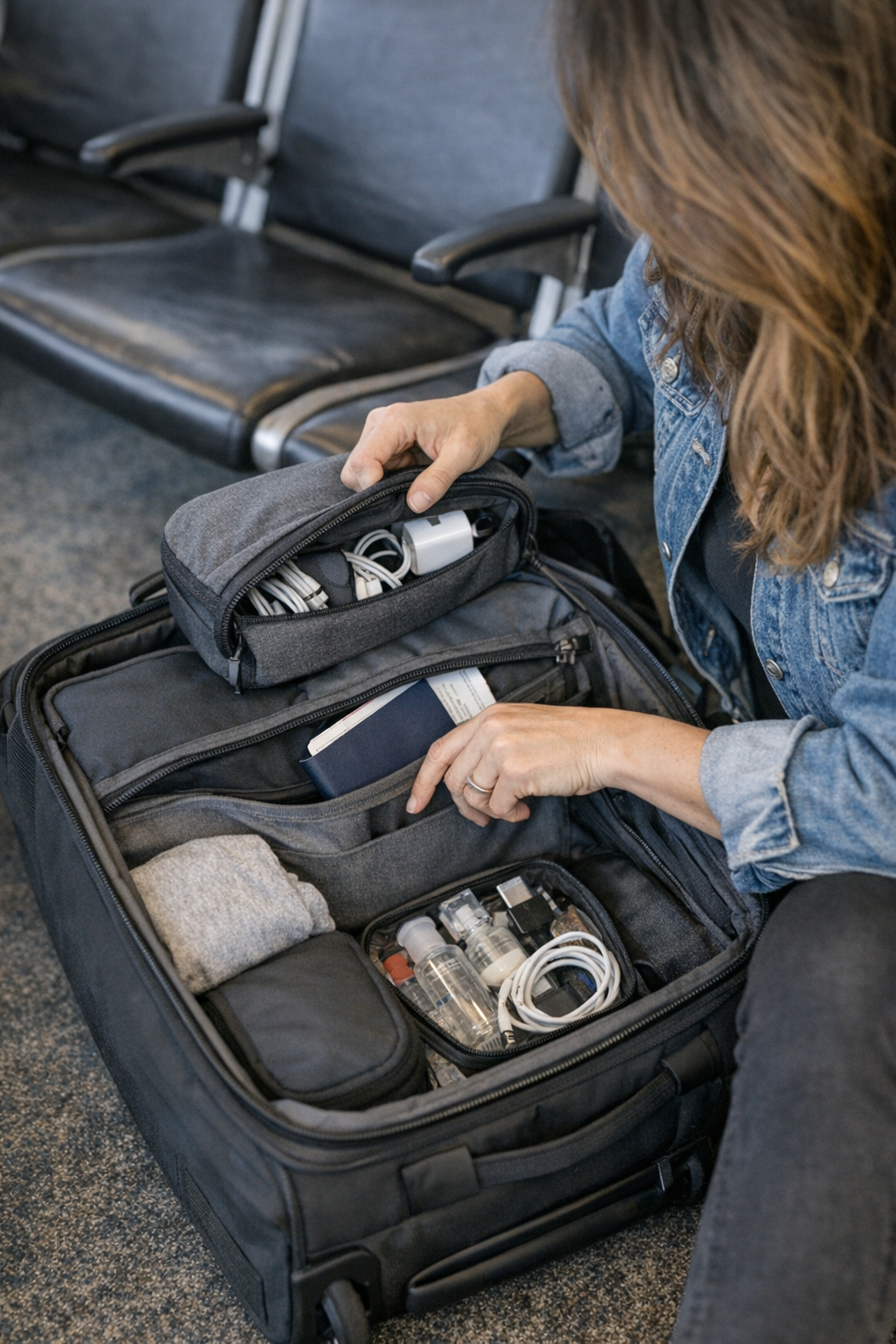
    Speed and sanity come from strict separation. Assign one top or exterior pocket for documents—never for snacks, coins, or spare tech. That way, you train both hand and memory: the item you need is always in the same place, every time. Tech—chargers, cables, headphones—belongs in a single, upfront pouch: no digging, no tracing random wires, no stress when the tray line moves. Use it, return it, same spot—no exceptions. When your essentials have fixed homes, retrieval and return become second nature, not fresh problems.

    Modular over Monolithic: Why Separated Items Win

    The “everything-in-one” organizer feels efficient until you need just one item—again. Modular pouches for clear categories (one for tech, one for overnight, one for liquids) prevent the domino effect, letting you grab and replace each type without disrupting the rest of your setup. At a checkpoint or during forced repack after searching for a passport, you return each piece to its predictable place. There’s no cascade; disruption is minimal. Over a long day’s travel, the accumulated savings in time and energy are impossible to ignore, especially when systems that once seemed neat start to fail after only a few retrievals.

    Recognizing Trouble Early—And Resetting Before It’s Too Late

    One clear signal your system is failing: you find yourself digging for the same item several times an hour—a passport behind toiletries, a charger lost under layers, a boarding pass buried under headphones. If, halfway through the trip, you invent a “temporary” holding spot because returning something is too much hassle, it means workflow breakdown has already set in. That’s when it’s time to stop, strip down, and assign each essential its own clear place. A quick reset, strict pouch discipline, and ruthless avoidance of overlap restore flow—and keep you from stacking repack mistakes for the rest of your journey.

    What Actually Speeds You Up: Practical Takeaways from Lived Travel

    The best carry-on setups aren’t the ones that look untouched on arrival; they’re the ones that recover fast, retrieval after retrieval. The advantage isn’t in the initial neatness but in the repeatable, predictable access patterns when tired, rushed, or interrupted. Assign zones—tech, documents, comfort basics. No mixing. No creative repurposing mid-trip. Each return and retrieval follows the same path. After dozens of flights, the difference is measurable: minutes saved, stress dropped, and fewer mid-aisle repacks under pressure. Your bag won’t stay photo-perfect, but your movement through every gate and aisle finally feels as streamlined as it looked back at the hotel.

    For travelers who are done with systems that look good only before the first boarding, it’s the setups that withstand real use—and recover after every interruption—that actually change the trip. Move toward modular, separated, purpose-built arrangements. See what order feels like when it works at every phase, not just the start.

    Shop at CarryOnSupply

  • How Under-Desk Cable Trays Transform Corner Workstations for Better Flow

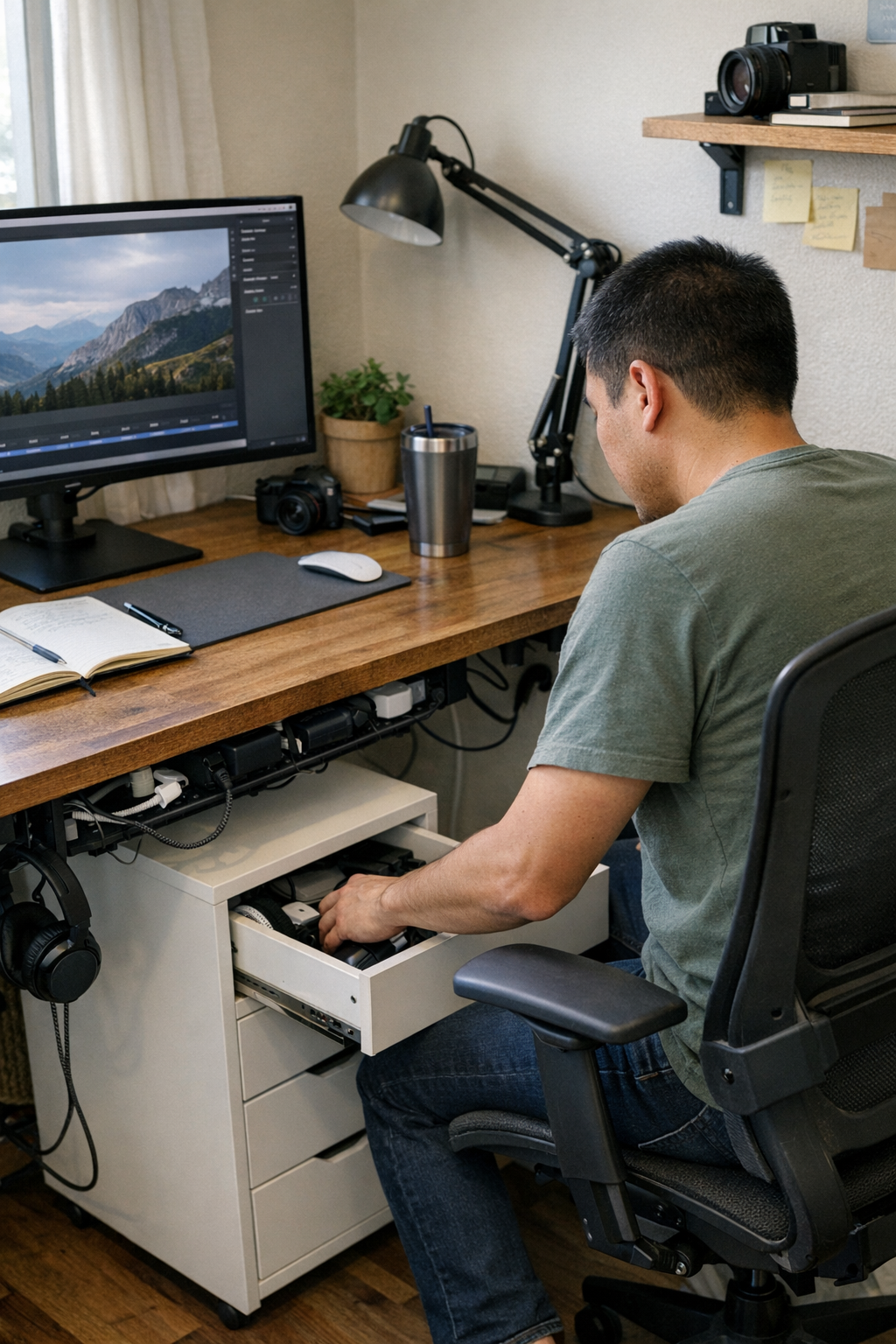
    If you’ve tried turning a desk corner into a daily workstation, you know the drill: cables managed at first, desk wiped down, nothing loose in sight—yet by day three, the mess is back. The desk looks organized; cables tucked behind the monitor, adapters wedged along the far edge. But in real use, friction keeps leaking in. You reach for a notebook: your forearm drags a wire. Pull your chair in, and suddenly a cord lurks underfoot. Slide open a drawer and an overlooked charger snags the track. The surface stays “tidy,” yet each session you’re stumbling over the same stealth obstacles—restoring order is part of the routine, not a solved problem. This is the reality of most corner setups: what looks sorted isn’t actually supporting your workflow.

    Where surface order falls short in daily use

    A neat desk is not a usable desk. You can sweep cables into a box or run them behind the screen, but most workstations don’t live in still-frame mode. Even basic tasks—moving your laptop aside, swapping power bricks, plugging headphones into a port—reveal the gaps. Hide every cord and you’re soon prying open cable boxes for that charger, hunting through a tangle to connect a backup drive, or untangling wires that rode up with your arm. On Monday, everything resets; by Wednesday, transitions grow clumsy and each new device reveals where the surface “order” starts to fall apart.

    The difference between “contained” and “temporary”

    What actually divides a dependable setup from one constantly in recovery mode? It isn’t whether cables are visible; it’s whether they hold their routes as the day unfolds. In corner desks—especially those with under-desk drawers or tight leg space—the weak links show up fast. Chairs pinch cords, drawers drag adapters into the open, or a casual monitor adjustment takes a wire for a ride. “Contained” means your monitor arm can swing, storage opens fully, and you’re not tensing up before moving anything. “Temporary” means working around your own system, hoping nothing pulls loose each time you return.

    When work heats up, friction multiplies

    The cracks in corner setup logic show up during real deadlines, not quiet afternoons. Switch tasks quickly—camera on, notebook out, second laptop charging—and you’ll spot every flaw as cables catch, drawers jam, or plugs shift into reach zones. Superficial tidiness can’t withstand rapid switching: it collapses into re-setup mode. Even cleaning the desk becomes a chore if dusting means disturbing a nest of cords under the surface every single time.

    How cable choices affect the “return” routine

    Cable friction rarely shouts—it ambushes you on return. Set everything up, then leave for a break; when you sit back down, a drawer won’t open right, or a cord blocks the chair’s path again. Too-rigid cable layouts fight anything that moves: trays crowding leg space, boxes sliding across the desk, adapters shifting with every small bump. Now you’re nudging your laptop back after a cord drags it off angle, or working around a charger that’s drifted into your drawer gap for the third time that hour. The organizational system is dictating your decisions, not supporting your movement. It drains pace, bit by bit.

    Visible order vs. real workflow freedom

    Tidy cables can sell a photo, but daily productivity exposes the compromise. If you’re fidgeting with a drawer or avoiding an outlet because “organization” made it harder to move, you’re trading looks for real utility. Plugging in a device should be faster, not an invitation to unravel or rethread what the desk is hiding. Daily friction is a clearer test than any staged workspace shot.

    What changed when I switched containment methods

    The breakthrough wasn’t a total desk overhaul—just swapping a clunky cable box for an under-mounted cable tray, set three finger-widths back from the desk’s edge. Suddenly, device chargers lined up, plug-in points stayed flexible, and loops quit falling into my workspace. Drawers opened—always. Not once did a wire block my reach or snake under my feet. Returning to work after a long stretch, everything was where it should be, reset was instant, and the mental noise of cable maintenance simply vanished.

    The tray was firm enough to steer cords clear but loose enough to let me route or unplug as needed. Access stayed easy; routine movements no longer collided with cable runs. It felt less like a “neat desk” and more like working in space designed for motion—no forced resets, no hidden hooks, no attention spent where there shouldn’t be any.

    How to spot if your corner setup still needs work

    • If you find yourself leaving drawers closed because opening them means combating a cable, your containment is failing, not finished.
    • If moving your chair always pulls something loose or threatens to, your routing isn’t mapped for real movement.
    • When outlets end up blocked by adapters, or new devices create fresh crowding, you’re exposing a system that doesn’t adapt to routine use.
    • If you catch yourself resetting, untangling, or clearing cables before each “real” session, that’s your desk signaling it’s not actually supporting your rhythm.

    Frequently asked questions from repeated use

    How do I contain my cables without blocking storage or drawers?
    Mount an under-desk cable tray a few centimeters back from the edge—above foot traffic, behind the typical open drawer range. Open drawers fully in dry runs before screwing down the tray to dial in placement. This preserves access without letting cords drop into your main reach zone.

    Is surface tidying enough, or do I need something under the desk?
    Surface solutions work for a first impression, but for real repeat use an under-desk tray or guided run is essential. It prevents cords from creeping into work paths and keeps drawer, plug, and leg access clear—all day, not just after a reset.

    Does a cable tray actually matter, or is it a visual upgrade?
    The difference becomes obvious across weeks: a tray positioned for your workflow means fewer interruptions, faster swaps, and less time spent managing cables. You stop anticipating friction; you just return and get to work. Utility beats a photo-ready finish every time.

    Letting the corner desk actually “settle in”

    A stable corner workstation isn’t about hiding cables at all costs—it’s about structuring space so power, signal, and device swaps happen without adding obstacles. Clean looks matter, but the best setups are the ones you don’t have to babysit. If week after week you’re moving through tasks without battling wiring, your corner finally feels permanent—not provisional. That’s the mark of a desk supporting, not resisting, how you work.

    Explore the full WorkBasic collection

  • How Structured Pet Travel Bags Improve Comfort and Efficiency on the Go

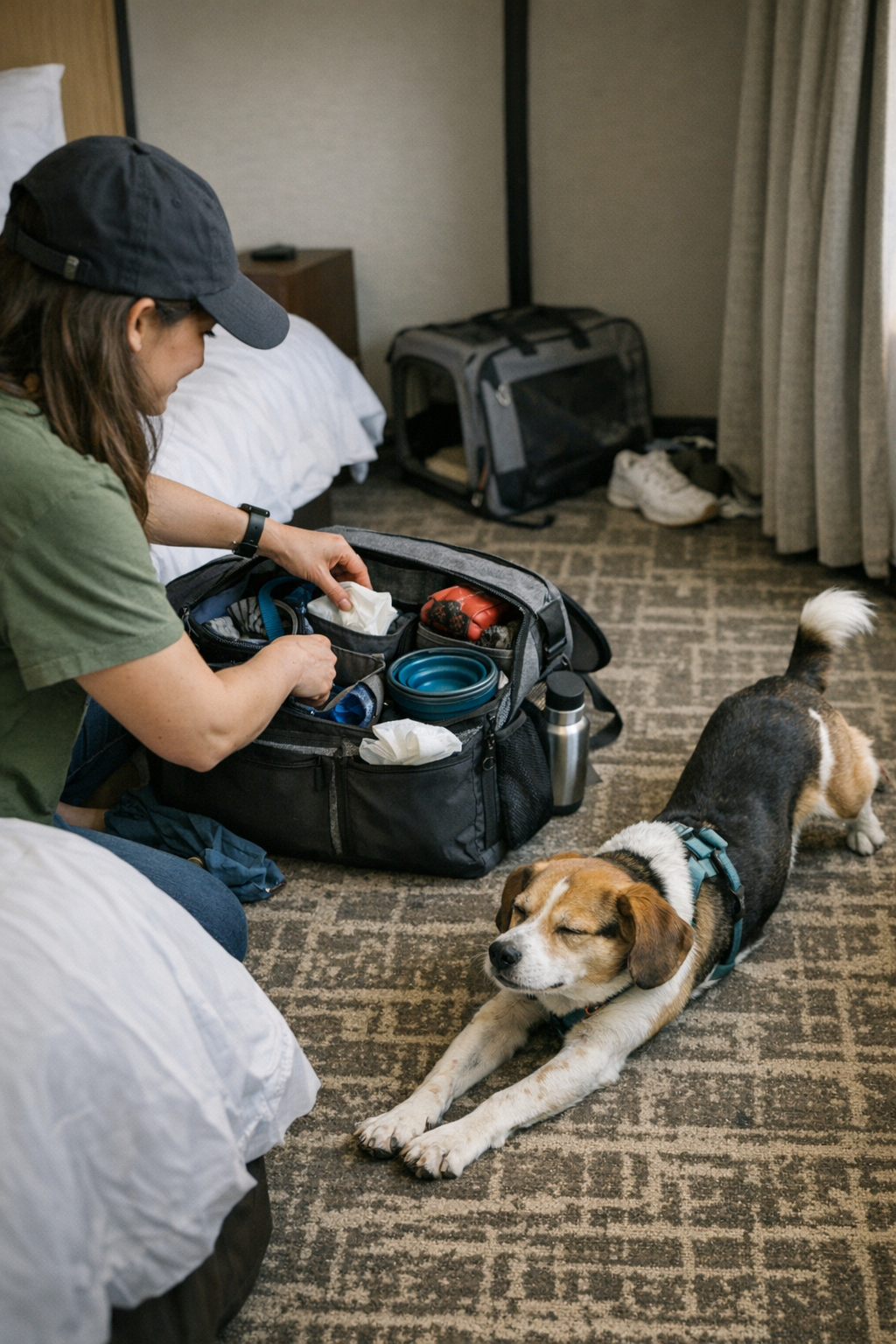
    The difference between a travel bag that looks ready and one that actually works appears the moment real movement starts: Your pet is eager to step into a new hotel room. Bags look tidy on the floor, but within minutes, a hidden mess surfaces. You reach for wipes—blocked by treats. Bowls shift into the walkway. The leash? Buried under yesterday’s rearrangement. Whether you’re heading out or resetting from another stop, order unravels as soon as you need fast access. The friction’s not in the first impression—it’s in every rushed pickup, blocked reach, or slow restart that interrupts what should be simple routine. PawGoTravel’s world exists to solve exactly this gap between “organized” and actually usable on the go.

    When “Ready” Falls Short in Real Travel

    What passes as “travel-ready” on your kitchen counter can’t always handle a real day’s pace. Short stops expose weak spots: the wipes you stacked at the bottom, the bowl rolling loose again, the leash tangled with a charger you meant to keep separate. Suddenly, your pet is waiting at the door while you reshuffle gear, one-handed, in a parking lot. The setup works great until it matters—and every small delay costs not just time, but patience. Travel routine doesn’t reward neatness; it reveals structure that only pretends to help when movement starts crowding the day.

    By lunch, you’ve repeated the same fumble three times. Hand busy with your pet, you reach for cleanup or comfort items and hit the same wall: the “organized” setup blocks you instead of backing you up. That gap—between looking sorted and moving effortlessly—shows up over and over.

    How Small Friction Builds Up Stop After Stop

    The first pack always feels hopeful. Everything fits, every compartment is zipped, each accessory placed just so. But by your second stop, separated sections have started to blend—a bowl sliding over wipes, squeaky toys cushioned into cleanup pouches, leashes twisting around your own wallet. Deep bags that store everything become bottomless pits when speed matters. “Easy access” is lost to hunt-and-peck as you fish out what should be on standby.

    Patterns repeat whether you notice or not. If you keep moving bedding aside for the leash, or always wrestle the wipes free, the structure’s not keeping up. It’s a design that wins at home but falters in motion, chipping away at calm and making each stop a little heavier. Your pet senses it before you do—the lost rhythm, the hesitation, the stall instead of go.

    Real Travel: Reach, Reset, and Restart

    By hotel number three, your pet’s ready to rush in, but you’re stuck untangling—again. A bowl blocks the zipper, wipes are now under toys, and the leash is jammed on the other side. Even after repacking, the weak points return. This is where tidy looks fade and practical function matters. Each stop is a test of whether your setup supports fast reach, quick cleanups, and a restart that doesn’t drag.

    If you’re tripping over the same access points—quietly losing time on what should be grab-and-go—the setup isn’t actually working for how travel really flows.

    Where Overlap Sabotages the Flow

    Bringing every “essential” won’t save you from structure that sabotages itself. Blended sections force you to dig for the leash past your phone charger or untangle snack pouches from wipes just as your pet pulls ahead. When comfort items pile into the same space as cleaning supplies, you lose speed on both fronts—never quite ready for cleanup, never quite fast on comfort. Overlap isn’t a sign of messy packing; it’s a setup that doesn’t defend quick reach or return. That repeat disruption is what turns “good enough” into travel drag you feel with every pause or scramble.

    As trips stack up, one small overlap becomes routine frustration—a pocket you end up avoiding, a section that slows emergency cleanup, a repeated pause during what should be smooth returns to movement. By the end, you’re not just tired; you’re wary of your own bag.

    The Quiet Power of Dedicated Structure

    What finally untangles travel friction? A setup with clear separation—wipes claim their pouch beside the opening, leash gets its own lane (no need to push past bowls), and bowls sit in fixed slots. With structure built for motion, these small design shifts remove mini-fumbles. What used to be a pause is now a half-second move.

    This difference only grows over time: The third, fourth, or tenth stop stays as clean as the first. Fewer slowdowns, less reshuffling, and your pet is back in comfort—fast. Most bags look organized once; only a few prove it trip after trip.

    Warning Signs Your Structure Is Slowing You Down

    • You end up digging for the same item on every stop—never in the spot you expect it.
    • The first reach is blocked or mis-aimed every time you need speed.
    • Your pet waits—shifting, antsy—as the shuffle repeats, even though “everything fits.”
    • Your wallet or charger gets tangled with pet gear, making both slower to access or repack.
    • By trip’s end, pockets get ignored or dreaded because recovery is always awkward.

    These aren’t just annoyances—they’re proof the layout isn’t supporting real travel. The most organized look won’t make up for access that fails routine checks in motion.

    Choosing Structure That Keeps Up with Movement

    The right travel bag or organizer isn’t about adding more compartments—it’s about separating the right items for movement. Key pouches for wipes always at hand, leash slots that slide free without untangling, bowls held where they can’t roll across the opening. This isn’t organizational theater but structure for everyday travel stress.

    A setup that lets you grab, handle, and reset in seconds—no digging, no stopping the flow—wins back actual time and patience for you and your pet. The test isn’t a photo. It’s how the gear works after the fifth stop and the next restart, when routine should be frictionless and neither of you has to wait on the bag.

    Real Travel, Real Calm, Real Flow

    The real payoff isn’t visible in a packed bag—it’s in the moments when hands land on the right item, reach stays instant, and your pet isn’t left waiting. Order isn’t just about looking neat; it’s about how quietly and quickly you can move, clean up, and reset, stop after stop. When a bag really works, your pet’s first stretch in a new room isn’t delayed by another round of sorting—and your routine finally matches what you hoped travel would be.

    Find the travel gear that earns its place after every stop, not just the first one. http://www.pawgotravel.myshopify.com

  • How Small Sounds Disrupt Your Dog’s Walk Routine and What to Change

    Everyday dog walks should be simple: grab the leash, head for the door, step out together. But if your dog leans away or freezes the moment you reach for the leash clip, that’s not just a training quirk—it’s your setup quietly failing at the exact point you need it most. The same metal snap that signals “walk time” keeps interrupting the calm, turning a tidy entryway and well-placed hooks into a repeated momentum-break. Over time, that tiny interruption grows: a clean front hall still comes with delays, a ready hanger still leaves you fumbling, and what looks efficient on paper just builds more friction in practice. This is the gap DogPile is built to close: not with more gear, but with setups that actually hold up under real daily routines.

    The Leash Clip Pause: How One Weak Point Upends Routine Flow

    Picture the most ordinary walk: you step into the hallway, your dog waits near the door—you reach for the leash. At the moment you snap on the clip, your dog’s weight shifts back or they hesitate. It’s not dramatic, but it’s not random. That little withdrawal is a signal, quietly repeating across all your outings: the first beat goes tense, energy drops, your routine breaks before the walk even starts.

    This isn’t about distraction or willfulness. That metal snap cuts through the house’s quiet and your dog responds in the one space where excitement and anticipation are already wound tight. You’re left coaxing, pausing, and sometimes rushing the leash step to get momentum back. The cost isn’t a failed outing—but it’s a hinch every single day, right where calm and exit should connect.

    The Hidden Pattern—And Why It Won’t Go Away on Its Own

    Once you notice it, you can’t unsee it. The more often that pause recurs, the more you begin to anticipate it—expecting a tiny dance at the doorway, a brief friction that wasn’t always there. With every repeat, the hallway loses its “launch pad” feel and instead becomes a bottleneck. Now, instead of heading out, both sides are stuck: you delay for your dog, your dog delays for the leash, and the routine grinds down just when it should feel automatic.

    Setup Isn’t the Same as Flow: Where Friction Hides in Daily Layouts

    Most people respond to early-walk tension by cleaning up: racks for leashes, baskets for toys, hooks for bags, everything within easy reach. But if sliding open the leash still means sidestepping a shoe, reaching past a crate, or unstacking a mess, it’s not organization—it’s just a quieter way to get tangled. Even a clean, well-arranged corner still lets invisible friction build up: leashes catch, clips stick, a toy falls, or you just end up crowding the same small space with your dog on edge.

    The mistake isn’t failing to tidy up. It’s confusing visible order with real walking flow. Those few seconds where the leash moment stalls? They’re where order unravels—every day, in the exact same spot.

    When Looks Deceive—And Why Real Use Still Feels Off

    This is where setups trick owners. You install more hooks, move wipes closer, set out towels. The entry looks “done”—but when your hand reaches for the leash, shoes crowd the grab, old towels pile in, or wipes wedge out of reach. The cycle repeats: your setup looks right, but each walk still starts with bumping past the same obstacles or coaxing a nervous dog toward the noisy trigger point. The visible problem is gone, but the experience hasn’t improved.

    Routine Friction in Action: How Small Hurdles Stack Up

    • Leash stored too close to shoes—every grab shifts the pile, stalling that critical first reach.
    • Multiple leashes tangle on the same hook—the clock ticks as you untwist one while your dog fidgets or backs away.
    • You go for the leash and discover the clip is closed or stuck, so now you’re prying it open, adding tension where calm is needed most.
    • The loud leash snap happens right beside your dog’s ears, in the most echoey part of the hallway—breaking calm before you even get through the door.

    Even in a corner that looks organized, the repetition of these small failures builds up. Dog and owner both develop new reflexes: you expect resistance, your dog expects hesitation, and neither side really trusts the setup. It’s not about chaos—it’s about routines that look smooth but move clumsily in practice.

    The Real Trigger: Where Sound, Movement, and Setup Collide

    For dogs that pick up on small cues, a metal leash snap isn’t just background noise; it’s the moment that marks “now everything changes.” If your dog pulls away or braces every time, that’s not solved by a prettier hook or extra command. What actually shifts routine is changing the sequence and space of the moment itself—specifically, by moving the action out of the doorway “hot zone,” prepping gear before you’re pressed for time, and smoothing every last motion before you take that joint first step.

    • Clip the leash away from the threshold. Take the tension out by doing it before the high-energy spot—in the living room, near a bench, wherever the air is calmer and paws are steadier.
    • Keep the leash clip open in advance. Store it ready-to-go, not closed, in a caddy or tray a few feet from the rush so you aren’t fiddling at go-time.
    • Make every movement quiet and prepped. Fewer abrupt noises, less fumbling, and a routine your dog can actually relax into, not brace against.

    Everyday Example: How Shifting the Leash Step Flattens Friction

    For one household, just moving the leash-clip step out of the entry and into the living room—before shoes went on—dropped the pattern of freezing and hesitation entirely. No metal “crack” bouncing off hallway walls, no nervous sidestepping. Instead, both parts of the routine—owner prep and dog anticipation—could run side by side. The routine wasn’t magic, but it became automatic, and the difference was visible after just a few days: walks started rather than staggered out the door.

    Why Friction Sticks Around Even When Setups Appear ‘Fixed’

    If you’ve ever reorganized leashes, baskets, or storage, you know the look of “done.” But if the leash step still breaks rhythm—if you have to shift mats, clear toys, circle crates, or lunge past crowded corners—the real problem hasn’t moved. Underneath every tidy arrangement, routines can still jam at pressure points: gear that’s in reach but not ready, spaces that look sorted but stall out the moment you need to move fast.

    Catching the Real Weak Link

    True friction makes itself known at the same second in every walk: your hand to the leash, dog to the door, clip to collar. If your dog hesitates or the route slows right here, that’s your structural flaw—one repeated action that every new shelf or hook can’t hide. The sign isn’t clutter or chaos; it’s repeated, timed interruption, no matter how orderly the scene.

    Resetting Dog-Life Routines for Real Flow

    The best everyday fixes aren’t always more gear—they’re about cutting out the single repeated snag that keeps the whole routine feeling stuck. When a leash hangs prepped, towels and wipes are stored where you actually grab them mid-transition, and the final metal snap happens away from the hotspot, the routine flows. There’s less bracing, fewer second-tries, and a real chance for owner and dog to sync up before the chaos of the outside world barges in.

    Finding the right setup isn’t instant. Sometimes the answer is a low bench, a wall caddy one step back from the door, or a gear spot that doesn’t crowd human movement. The true shift isn’t visible order, but a routine that moves as smoothly in the hundredth repeat as it did on the first clean-out day.

    When Walking Starts Working for You—Not Against You

    No daily routine stays perfect—and some days, you’ll still battle a tangled leash or dropped treat bag. But when the same friction points no longer chew up your first steps, the pattern finally breaks: the walk starts quieter, with less correction and more flow, and both you and your dog move together instead of tripping over the same old interruption.

    Real dog-life comfort isn’t built on how your setup looks—it’s decided by what routine still gets in your way after a month of repeated use. The setups you keep are the ones that stop snags before they start—and that distinctions shows up, step after step, in the doorways and corners where routine friction sneaks back in.

    Shop DogPile for more practical daily-life dog solutions