
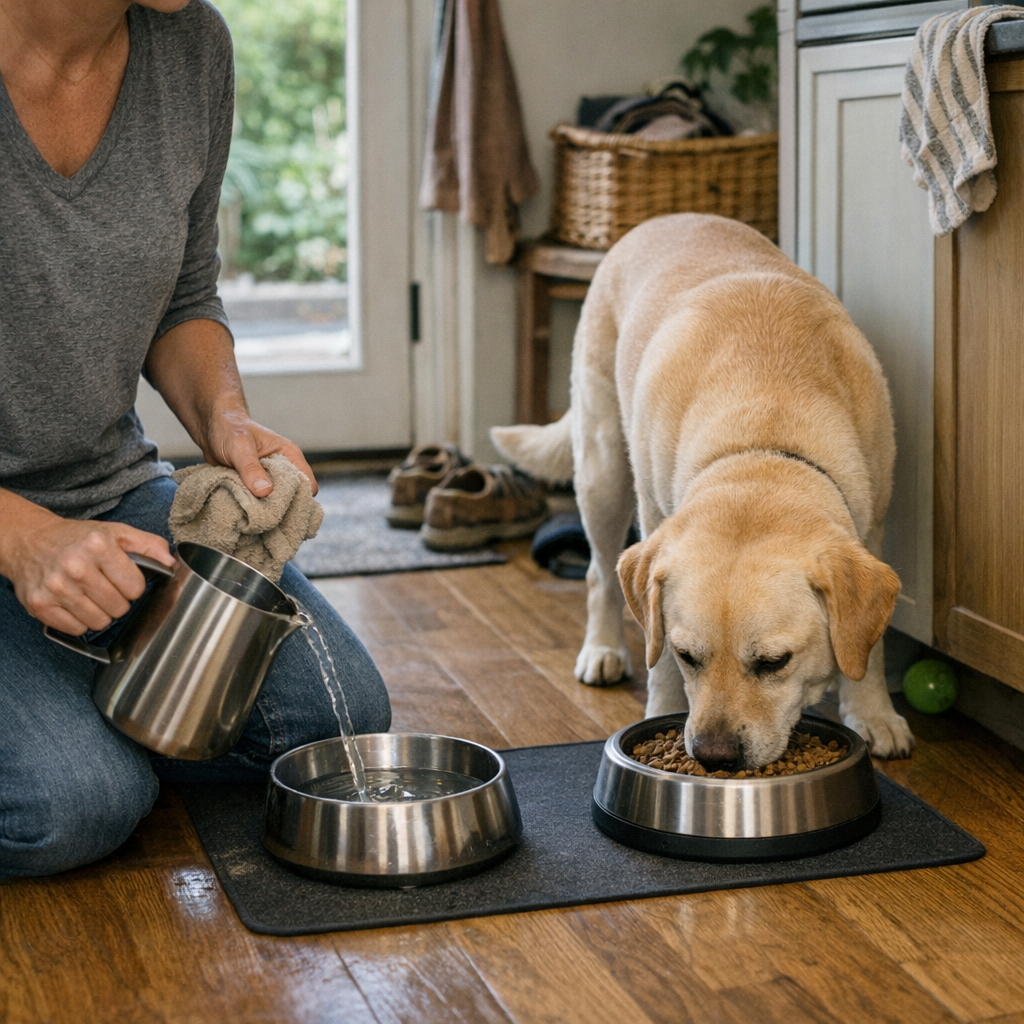
Where Pet Bowls End Up—and Why It Matters, Every Day
Everyday pet care isn’t just refilling a bowl—it’s running into the same awkward slowdown each time that bowl refuses to stay put. It hangs up your morning: stepping around a drifting food dish, wiping up the water you missed the first time, crouching again to reposition the bowl you already straightened after breakfast. What looks like an “almost tidy” setup in the kitchen or hallway turns into a low-grade disruption that repeats itself, not just in mess but in blocked cabinets, scattered kibble, and another round of stretching for a towel that should’ve handled it all an hour earlier. The problem isn’t a one-off spill—it’s how a bowl that won’t stay where you need it can start breaking the rhythm of every routine in a shared space. This is the pressure point CalmPetSupply designs for: not perfection, but the return of easy, keep-up-with-it feeding and cleanup routines that actually hold together between meals.
When a Bowl Moves, So Does the Workflow
The real trouble shows up the moment you reach to refill water or grab the kibble scoop—only to find the bowl wedged against the cabinet or twisted under a chair leg. You bend for a refill and realize the bowl isn’t even close. Reach for the scoop, notice a smear of crumbs, and by the time you’ve fetched a towel, half the mess has found its way behind a footstool or under the trim. Not major disasters, but they stack up: late wipe-downs, repeated moving of furniture, or stepping into a wet patch you meant to handle on the last pass. When bowls don’t stay put, cleanup becomes piecemeal, and every busy kitchen—especially when shared—amplifies the friction that should’ve stayed minor.
Even with care supplies close by, unpredictably wandering bowls mean you’re working around pet gear, not with it. The area where you prep food or pass by with groceries turns into a reset zone, not a usable part of the room.
The Limits of a Neat-Looking Setup
Mats and basic bowls promise order. But a dog’s paw or a nudge from a curious cat is all it takes to shift even the tidiest station off target. You start the day with everything aligned, but a few meals in: the mat bunches, water sneaks underneath, and crumbs pin themselves between the lip of the mat and the kitchen floor. Retrieve the bowl from a corner and now you’re balancing it and a dish towel, probably while sidestepping a slippery splash. Cleanup tools might be within arm’s reach, but not when the mess recurs from another direction, turning “routine” care into repeated, out-of-sequence chores that run behind schedule.
Small Shifts—and Repeated Annoyances
By the third or fourth reach for that bowl in an afternoon, minor hassles stop feeling minor. Maybe it’s blocking quick access to the recycling bin one hour; maybe you’re stretching around it catching crumbs the next. A simple end-of-day sweep can transform into moving appliances aside just to fish out run-off kibble or pooled water. Especially in homes with stacked routines—after-walk water stops, night feeding, midday brush-offs—these weak points don’t just disrupt, they reliably return. What looks fine at sunrise sprawls out of bounds by dinner, demanding the same fiddling and straightening on each repeat cycle.
Function Over Appearance: The Real Measure of Pet Care Routines
A feeding station can appear organized but still trip you up over and over. Bowls with real traction—weighted bases or mats that genuinely hug the floor—cut down on movement in a way you feel right away. The actual savings? Fewer panicked spills at dinner, far less midday straightening, and a routine that doesn’t collapse just because the kitchen gets crowded or your attention shifts.
Switch out a slide-prone bowl for a non-slip model and you notice the shift on the very next reset: your end-of-day check is a quick confirm, not a full search for where the mat wandered. The area stays drier. There’s no wobbly bowl to adjust or kibble creeping behind the trash bin. What you gain isn’t some showpiece setup, but a feeding station that quietly stops demanding extra work from you, again and again.
Setup Details That Actually Save Time
- A bowl that stays put means refills aren’t detours—just a direct reach, without angled grabs or scooting it back to center.
- Cleanup supplies stay in the spot you expect, rather than being dragged from room to room to follow spreading mess.
- Leaving an inch or two of space between the bowl and the wall keeps trapped crumbs and pooled water from building up—no awkward stretching to reach behind furniture.
- The feeding area stops interrupting the rest of the kitchen or walkway. You refill or wipe down, then go back to your task—no checklist of mini-fixes lingering in the back of your mind.
Lasting Improvements Show Up in the Routine
What matters isn’t a one-time organizational win, but a difference that sticks around as routines repeat: fewer unplanned resets, less bending, more time where nothing needs chasing down or re-aligning. The less friction creeps back in, the better setup proves itself after seven or twenty meals—not on day one, but when the process becomes background instead of a low-level interruption. For anyone balancing work, walking, quick cleanups, and family rhythm, a simple, non-slip bowl is one less thing pushing the day off track.
If your setup is still costing you repeat resets, experiment: adjust the mat texture, try a bowl with a different base, shift its position—and watch what actually sticks. Choose what keeps movement to a minimum, not only what looks good at the start. In daily care, these small, structural changes make more difference than any one-off cleanup ever could.
To explore practical pet care setup options, visit CalmPetSupply for solutions designed for repeat, real-world use.