Author: jaesoon_admin

  • How Hidden Power Zones Transform Desk Organization and Focus

    Clear desk, confused workflow. Your workday starts with an open, distraction-free surface. But by the second video call or mid-project reset, chargers and chunky power strips inch their way back onto your desk. The real friction isn’t clutter you can see—it’s the cables and bricks that sprawl into every quick reach, turning what looks tidy into a crowded, constantly-interrupted workspace. If you ever sit down, glance across your surface, and already feel mentally scattered before typing a word, exposed power gear is usually the culprit. Those charger tangles don’t just look untidy—they wedge themselves into your routine, slowing every handoff between keyboard, notes, and screen, and turning each reset into a minor obstacle.

    Why fake cable order collapses fast

    Sliding a power strip behind your monitor or anchoring it to the far edge only delays the problem. It feels organized for a day or two, until you need to plug in a phone mid-call, swap out a laptop charger, or untangle a cable after shifting your mouse. Cords migrate forward—creeping over notepads, jamming under keyboard legs, or looping back from the “neat” rear corner. You’re left fishing for chargers behind the monitor, accidentally unseating plugs, or clearing space just to find the right brick. Over and over, tidy setup photos collapse under the weight of daily movement and quick device switches.

    Appearance versus friction after actual use

    Every organized desk looks stable for about a day. Product photos, desk tours—even first-morning setups—capture one frozen instant. By day three, old friction returns: cables forced out of the way by notebooks, stray adapters that shift with every move, and a surface that reverts to “sorted mess.” Resetting before each session becomes a chore. If you swap devices regularly, that ritual isn’t just keeping your space neat; it’s evidence that your setup isn’t really supporting your workflow.

    What a hidden power zone actually does

    Moving all power and charging under your desk strips visual drag from the workspace—not just for looks, but for how you move. A metal cable tray or box bolted to the desk’s underside corrals power strips, adapters, and loose cords. Now, all device charging routes drop straight down and disappear underneath, while your main surface stays reserved for whatever’s active right now—keyboard, notes, mouse, or tablet. After long, multi-stage work sessions, this difference is sharp: instead of loose bricks resurfacing every hour, only the devices you’re actually using are visible. You sit, scan the surface, and don’t have to claw back depth or nudge chargers out of the way. Task shifts and notebook grabs go faster, the physical and mental clutter is cut—and the desk’s “clean” look matches its function, not just its photograph.

    Access friction: the trade you actually feel

    There’s a catch. Stashing cables and adapters under the desk reduces constant cable spill, but introduces a new pause. Fast device swaps—plugging in a client’s machine, topping up a phone in panic mode, untangling headphones—now mean a reach-under, a second’s pause, or even a knee bump. If the tray sits too far back or gets jammed with bricks, accessing power mid-routine can interrupt your work rhythm more than expected. And during a rush, those seconds stack up into real hesitation, especially for anyone used to a single power strip always on hand.

    Where hidden power slows or speeds you up

    Picture an average cycle: spreadsheets open, notebook laid beside the keyboard, phone buzzing low on power at arm’s length. With the power strip on your desk, plugging in is a simple sweep. With it hidden, you push back your chair, reach under the edge, sometimes drag on a slack cable, and often bump knees on the tray or brackets. It doesn’t feel like a real delay until you find yourself stacking calls, frantically researching, or working from a shared surface where every device is in motion. In high-traffic, high-swap setups, the seconds lost to under-desk power start to add up exactly when your routine is under stress.

    Reset momentum: the clear desk that actually works

    After enough reset rituals—adapters spilling over, wires snaking between notebook and elbow—a concealed tray at the desk’s back edge changes the equation. Suddenly, the zone behind the keyboard stays clear, even during three-device charges: laptop, headphones, phone, all in use. The difference isn’t aesthetic; it’s practical. Your hand can reach for a notepad, plug never bumps loose from a rapid mouse shift, and break-to-work restarts get shorter. No more wasting the first minute of every session just nudging bricks into place. The surface feels consistently ready, meaning the energy lost to physical friction each cycle nearly vanishes—even if the rare device swap below desk level does take a little longer.

    If you use a height-adjustable desk

    Standing desks expose a hidden risk: every vertical movement tests your cable management. Without enough slack, raising the surface yanks plugs out, drags adapters off the tray, or even shifts devices unexpectedly. Most under-desk trays fit standard strips, but chunky bricks or extra adapters need planning and a trial fit. For setups with dual monitors, work laptops, and frequent device swaps, precision in routing pays off—there’s no hidden fix later if you run out of tray space. A poor fit means repeated midweek reshuffling, not silent organization.

    Surface speed or hidden clarity?

    Some routines demand both. If you’re jumping between devices in back-to-back meetings, a lone adapter on the surface—easy to grab, always in reach—beats any fully hidden system for speed. Hot desks, client calls, and team setups often justify that one visible plug. But the tipping point comes in repeated-use, multi-device workstations: if your hours are spent toggling through resets and dragging adapters back into stacks, moving power out of sight breaks the loop of “looks organized, acts chaotic.” You choose between instant access and smoother flow—or adopt a hybrid, leaving one surface option for emergencies without letting everything else sprawl back onto the desk.

    Real test: setup reveals itself over the week

    The value of hiding power strips rides on the details you notice only after real use. Under-tray setups can easily run out of space, tangle cords when rushed, or get blocked by awkward brick sizes. Before mounting, group all adapters, dry-fit the tray, and practice a full week’s worth of swaps—don’t trust first impressions. In shared or family workstations, occasional surface adapters or a pop-out extension cord provide flexibility without surrendering the whole desk to clutter. What survives after five days of resets signals what actually works—not just what looks sorted at noon on Monday.

    Takeaway: visual calm, invisible pauses

    Moving power strips and bricks under your desk stops clutter from constantly resurfacing, giving the main surface back for working—not tidying. But it’s not an all-win trade—quick swaps can get slower, and poor fit or awkward under-tray layouts can add new friction. The payoff is simple: if your sessions depend on clear, fast resets and minimal surface interference, a hidden power zone is worth it. But if device swaps during high-pressure calls dominate your week, a hybrid approach wins out. In the end, the right setup is always revealed by how much time you spend juggling—not just by how organized your workstation looks in a photo or after a single, careful reset.

    Explore the full WorkBasic collection

  • Why Soft Pet Carriers Can Slow You Down During Frequent Stops

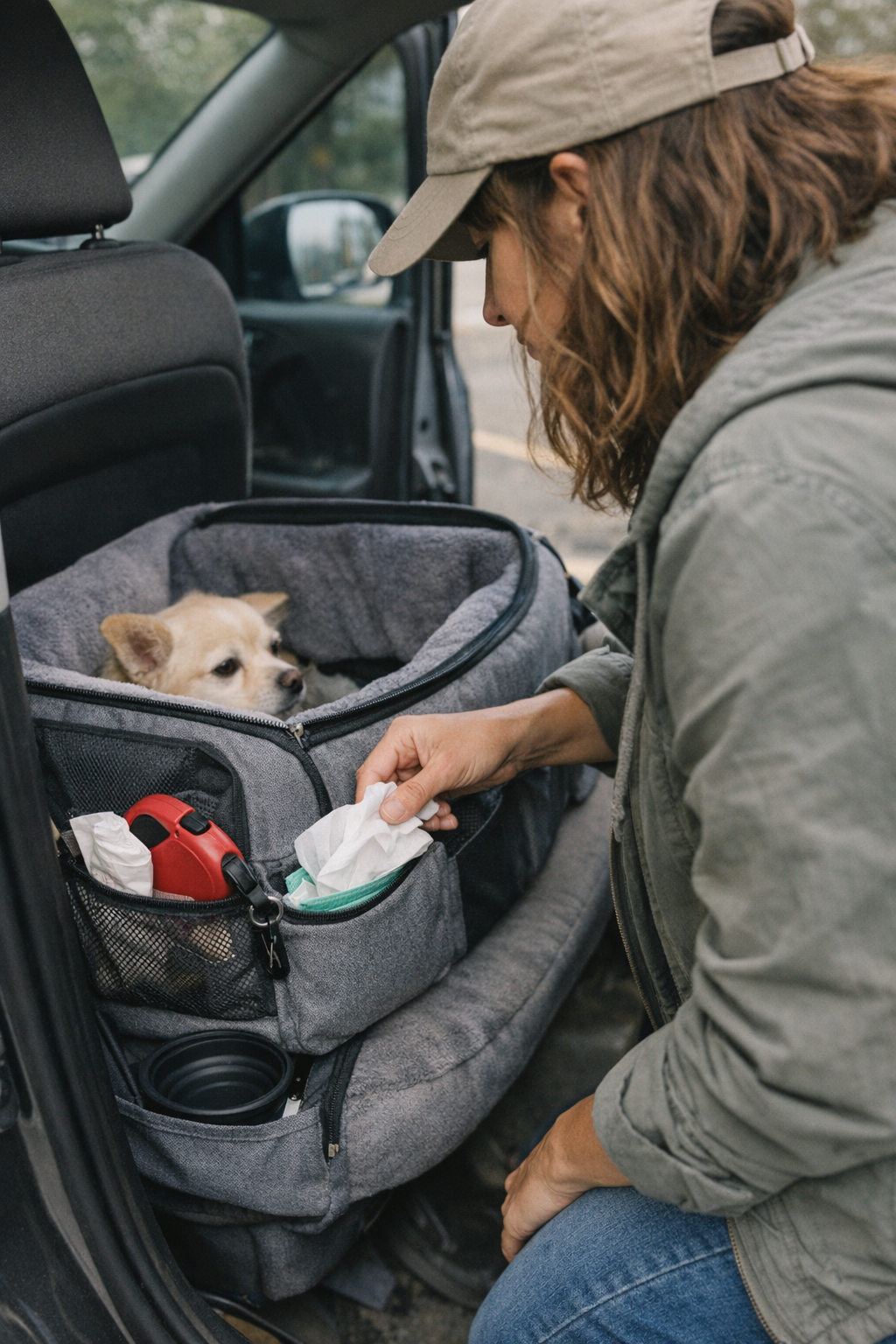
    Pet carriers always look organized—until you use them for more than one stop. Zip up bedding, check the supplies, and the bag could pass for “ready for anything.” But after two quick errands, the truth hits: your leash is buried, the wipes have shifted beneath padding, and every attempt to grab one needed item turns into a quiet scramble. With each pause, the once-tidy setup turns slower and rougher to handle—even though nothing’s technically missing. Anyone routing through pet travel with more than a single trip notices the same friction: each return to the bag means another hunt, another small reset, another chance for routine movement to break the smooth start. The “prepared” carrier keeps looking neat while feeling less workable with every stop. PawGoTravel specializes in setups that address this exact kind of practical breakdown.

    Why One-Stop Comfort Fails in Real Travel Routines

    The soft, plush carrier feels perfect at first glance—a calm zone, an organized nest. But the illusion fades almost immediately after real use starts. The first stop? You might get away with just reaching for the leash. By stop two or three, you’re shifting bedding, unzipping compartments that feel just out of reach, and waking a confused pet just to access the treats. That “all-in-one” comfort carrier never quite recovers from a busy round of errands; what started as organization turns into an obstacle, with each essential now layered, hidden, or out of sync with how you really move. The gear looks made for peace, but in routine motion, you get an interruption every single time you need anything fast.

    The Repeated Return: A Test Most Setups Fail

    This isn’t just an inconvenience you brush off—it’s a repetitive hassle that only gets worse as the day goes on. Common pain points show up fast:

    • Picking up the carrier again, noticing the leash clip now lost beneath a folded blanket—again.
    • Wrestling a zipper stuck on bedding, just when you need smooth access.
    • Grabbing for wipes, only to find them pressed into a corner, now damp from a shifting water bowl.
    • The outer look is still neat, but every use after the first feels more cluttered and slower than before.

    Most setups are ready for one scene—almost none stay smooth for repeated in-and-out travel.

    When Pet Comfort Starts Causing Extra Friction

    It makes sense to value softness and structure; no one wants a stressed-out pet. But excess plush layers and tight compartments make every routine exit harder. Park runs and banking stops morph into mini time-sinks, with bedding jostled and “quick grab” zones now just confusion. The more layers or closures the carrier adds in the name of comfort, the longer it takes to access simple essentials. Instead of easing movement, comfort layers start adding steps, squeezing pace and patience on both sides. The pet may snooze, but the owner is left hunting for one pouch that’s drifted out of line with every bump or pause.

    Owner and Pet Supplies: Colliding in the Same Carrier

    Another overlooked struggle: travel routines mixing pet gear with your own essentials. When leash, wipes, treats, water bowl, keys, and phone all compete for deep-compartment space, the result is friction that spills from one stop to the next.

    • Wipes tangled with treats mean even a basic cleanup turns into a scavenger hunt.
    • Bedding stacked on top of small items virtually guarantees at least one “where did that go?” mid-trip.
    • Comfort setups that block quick access mean you’re constantly resetting the whole carrier for just a one-minute errand.

    This overlap isn’t a design flaw—it’s a reality for most bag layouts that look orderly at home but fail under repetitive travel pressure. Every real stop exposes the tradeoff between looking prepared and actually functioning without extra steps.

    How Setup Design Turns into Everyday Handling Trouble

    The real test for any pet carrier is not its out-of-the-box look, but how it handles after hours of stop-and-go use. When structure prioritizes appearance—dense foam, deep plush, hidden pockets—real-life movement slows everything down. Bowls, leash clips, and wipes all wind up pressed aside or half-hidden, making each grab slower. The more you pack for peace of mind, the more you end up rediscovering the same stuck or shifted items, as if your organization resets after every stop. It isn’t about having enough—it’s about having essentials in the right place when you need them the third or fourth time that day.

    Everyday Story: Three Stops, Three Interruptions

    Picture a standard run: first trip out, the bag looks perfectly arranged. Second stop, you already find yourself waking the dog just to fish out a leash. Third stop, the treat pouch has slithered under rumpled bedding and wipes are buried against the side. These aren’t one-off annoyances—they’re the pattern. Movement is interrupted, the travel rhythm falls apart, and each restart feels longer. The difference is never “productivity”—it’s the constant drag of rearranging, searching, and soothing a newly unsettled pet.

    Structure Over Looks: What Actually Helps with Movement

    Switching to a structure-centered carrier—a low-profile design, side flaps, real external pockets—doesn’t advertise itself with plushness. But in real use, the effects are permanent:

    • Essentials are in grab-ready outside pockets—safe from bedding shifts.
    • Leash, wipes, and treats are accessible at seat level, not buried beneath or separated by layers.
    • Cleanup routines no longer compete with comfort: the bag opens wide, you’re moving again in seconds, not minutes.

    After the switch, exits and restarts blur together. The carrier’s structure fits the repeated-movement reality, not just the picture of “preparation” before any actual travel begins.

    Quiet Improvements, Stronger Routines

    The difference isn’t loud, but you feel it: bedding stays put, pet rests undisturbed, and you stop dreading the next reach for a treat or wipe. External pockets and easy openings shrink the distance between “packed neatly” and “usable mid-trip.” Once quick access and comfort are designed to coexist, you don’t notice the setup so much—until you have to borrow a basic one-stop carrier again and the old frustration snaps right back.

    Don’t Let Visual Neatness Hide Real-World Weak Points

    No matter how good your setup looks before leaving the house, repeated stops quickly reveal whether it really works. When every pause means slower access, shifting supplies, and overlapping needs that rub together, that’s your structure—not your packing—exposing its limits. Don’t assume visual order equals practical readiness. The difference shows up only with repeated movement: comfort isn’t about extra plush, it’s about every item being where you need it, every time. When your actual routine is a pattern of stops and restarts, your carrier needs to move with you, not slow you down.

    Discover practical carrier designs and travel setups at PawGoTravel.

  • How Consistent Routines Ease Restlessness in Dogs During Daily Life

    Everyday dog routines always reveal their cracks in the same places. You reach for the leash, but find it tangled under yesterday’s jacket—again. Wipes and towels are “out,” but never close enough when muddy paws barrel in. Water bowls drift from their corner, toys creep into your walking path, and what seemed organized yesterday now means circling back, doubling up, or stepping over the same dog-bed for the third time this morning. Most owners just patch these interruptions and call it “manageable,” but a setup that only looks tidy keeps you stuck in the same slowdowns, over and over.

    When Everyday Routines Get Stuck on the Same Weak Point

    Setups that appear fine in week one slowly uncover their own friction. The leash starts buried, bowls migrate across three kitchen tiles in as many days, and the soft bed “fixed” for comfort starts blocking quick access to another doorway. Each little adjustment means an extra pause—by the door, after a walk, before feeding—until your daily flow turns choppier, and your patience stretches thinner. What started as just a few seconds forced detour gets repeated so often it becomes how your entire routine feels.

    Surface order does not erase real friction. Maybe your wipes sit in a cute basket on the shelf, but hunting for them with a wet dog dancing at your feet turns cleanup into a two-step production every single time. An “organizer” might hide mess, but delay the very access you need when the routine actually happens—not just when someone’s looking.

    Reading Your Dog’s Signals: When Routine Feels Off

    Dogs notice when patterns change—even by a few inches or minutes. A familiar bowl gets nudged aside, the walk time drifts, or the crate ends up facing a new direction. The impact shows up right away:

    • Your dog hesitates at the doorway, glancing between spots instead of heading straight out
    • Paces or circles around the water bowl before drinking
    • Hovers and watches, instead of settling, as you re-gather items you thought were ready
    • Delays at mealtime if feeding rituals or bowl placement have changed

    These aren’t just quirks—when start points, gear locations, or feeding spots keep changing, dogs stall or backtrack. It’s a quiet but real signal: your “system” is unpredictably resetting itself, and neither of you can relax into it.

    Recognizing Real-Life Routine Friction

    Take the evening walk: you usually reach for the leash at the entry table, but today it’s gone—straightened up into a basket on the far shelf. Your dog stands by the door, waiting longer, glancing from you to the new hiding spot. Multiply these delays across feeding, watering, and rest—now the routine looks organized, but works slower at every turn.

    Scenes Where the Routine Falters (and Frustration Creeps In)

    The Missed Leash Moment

    You’re in a rush. The leash should be by the door, but your hand lands on keys and random clutter—leash moved during last night’s tidy-up. Searching adds extra minutes. Not huge, but enough for your dog to lose focus, start whining, and for you to leave the house already behind schedule. The cycle repeats: same trip, same interruption, day after day.

    Cleanup Items Out of Reach

    Back from a wet walk, the dog charges in ahead. You go for the wipes—hidden behind a treat jar you set down yesterday. Instead of a quick cleanup, now you mop the floor first, backtrack for the supplies, and try to coax a squirmy dog back for round two. Each misplacement costs momentum, making after-walk resets messier and more drawn out than they need to be.

    Resting Spots That Keep Moving

    You buy a new bed, set it up in the living room. It works—until the laundry basket needs the space, and suddenly the dog’s bed shifts to the hallway. The dog circles, hesitates, then lies down on the bare floor. Even great comfort fails when the “landmarks” move every few days—leaving your pet pacing, not settling, and bedtime calm replaced by restlessness.

    Why “Predictable” Routines Calm Down the Fuss

    Dogs relax into routines built on reliable, repeatable structure—not just what looks neat on a weekend. The gear placement, path, and order become cues. When a bowl returns to the same cupboard after every meal, the leash always hangs by the same hook, the rest mat holds its corner without migrating—patterns stabilize, and friction fades. Meals proceed with less circling; after-walk cleanup turns into a single, smooth reach, not a multi-part search-and-reset for basics. Calm returns not by accident, but because the structure stops shifting beneath you both.

    It’s the Chain, Not the Clock, That Calms the Routine

    Most dogs care less about precise time than concrete, repeatable steps. You can walk at 8:00 or 8:30—as long as the order and gear are always the same, your dog cues in. But move the leash, swap bowl sides, or force your pet to navigate random toy piles and you’ll see the confusion play out as slow approaches, glancing back at you for guidance, or not eating right away. Predictability is about the flow: leash, coat, waste bag all in reach as you leave; bowls and mats unmoved, even when tidying feels tempting.

    • If play always follows the same corner, and bowls stay anchored, meals settle into rhythm—regardless of sunset or dinner rush.
    • If leashes, coats, and wipes live together by the door, walks become less about searching and more about actually getting outside—even in rain or snow.
    • Rest mats only truly anchor calm if they don’t need to be reset each night—pick a spot and let it become familiar, not a floating target.

    How Small Setup Tweaks Can Fix Slow-Downs

    Spot the repeated snag:

    • You keep searching for the leash at the door, but it’s always mixed in with mail or tossed onto a chair
    • Toys or bowls keep ending up in your walking path, tripping you on your way out
    • Soft beds, designed for comfort, now block crate access or force awkward detours
    • No matter how tidy things appear, you always hit the same sticky point—a step that just never gets smoother

    A “neat” setup isn’t always a usable one. If you’re always reaching, reshuffling, or correcting just to make routine moves, the structure is making you work around it. The quickest sign is when you keep adjusting the same spot three times a week—moving a bowl, straightening a mat, repositioning wipes—only for the delay to return at the next mealtime or after the next walk.

    Resetting for a Smoother Cycle: What Really Changes With Better Structure

    Stable routines make the reset—and the rest—feel automatic. Items return to the same place; the dog knows what’s next and stops signaling for help or clarity. After a few days of true consistency, your dog approaches the bowl or leash without circling or waiting for direction. The after-walk wipe-down involves a reach, not a search, and evening calm begins with the dog already settling—because the rest mat hasn’t moved. The net result isn’t just “faster” routines, but fewer breakdowns—each transition holds together, and the small frictions stop adding up.

    The Real Test: “Looks Tidy” vs. “Works Smoothly”

    A perfectly styled entry way still fails you if the leash is in a closed drawer, the wipes are a room away, or you double-back for toys that block the door. The right setup survives actual daily repetition: fewer detours, no recurring snags, and no dog left hovering in uncertainty. Smooth routines win not because they’re neat, but because they hold their shape across three rainy mornings, five return-from-work entries, and a week’s worth of muddy paws without buckling.

    Practical Ways to Anchor Predictable Routines

    • Choose a visible, fixed location for essentials—leash by the door, bowls by the cupboard, bed in its own corner—and stick with it for a week before moving things “just to tidy.”
    • Think before relocating: if “cleaning up” means less reachability, wait until a new spot actually shortens your reset, not just hides the clutter.
    • Group the highest-use pieces together—outdoor gear, cleanup wipes, water bowl—where you grab them in one step, not two or three.

    Better structure is not about outsmarting every mess—it’s about picking the right anchor points for your real routine and letting comfort and speed reinforce each other. These are the setups that work even on tough days, with muddy paws, forgotten wipes, or a dog

  • Prevent Lighting Fixture Issues with Proper Hand-Started Screw Installation

    One rushed shortcut during lighting install—especially with a power driver—can undermine every routine that follows. A ceiling light looks flush above the laundry sink, a vanity strip brightens the mirror, a hallway sconce sits square after install. But what you don’t see on day one is often what unravels everything after a week of real use. Cross-threaded screws or stripped heads—usually from forcing things fast in a tight zone—let fixtures sag, hum, or shift until a steady space becomes an ongoing irritation.

    Lighting That Holds—Or Starts to Slip the Moment You Use It

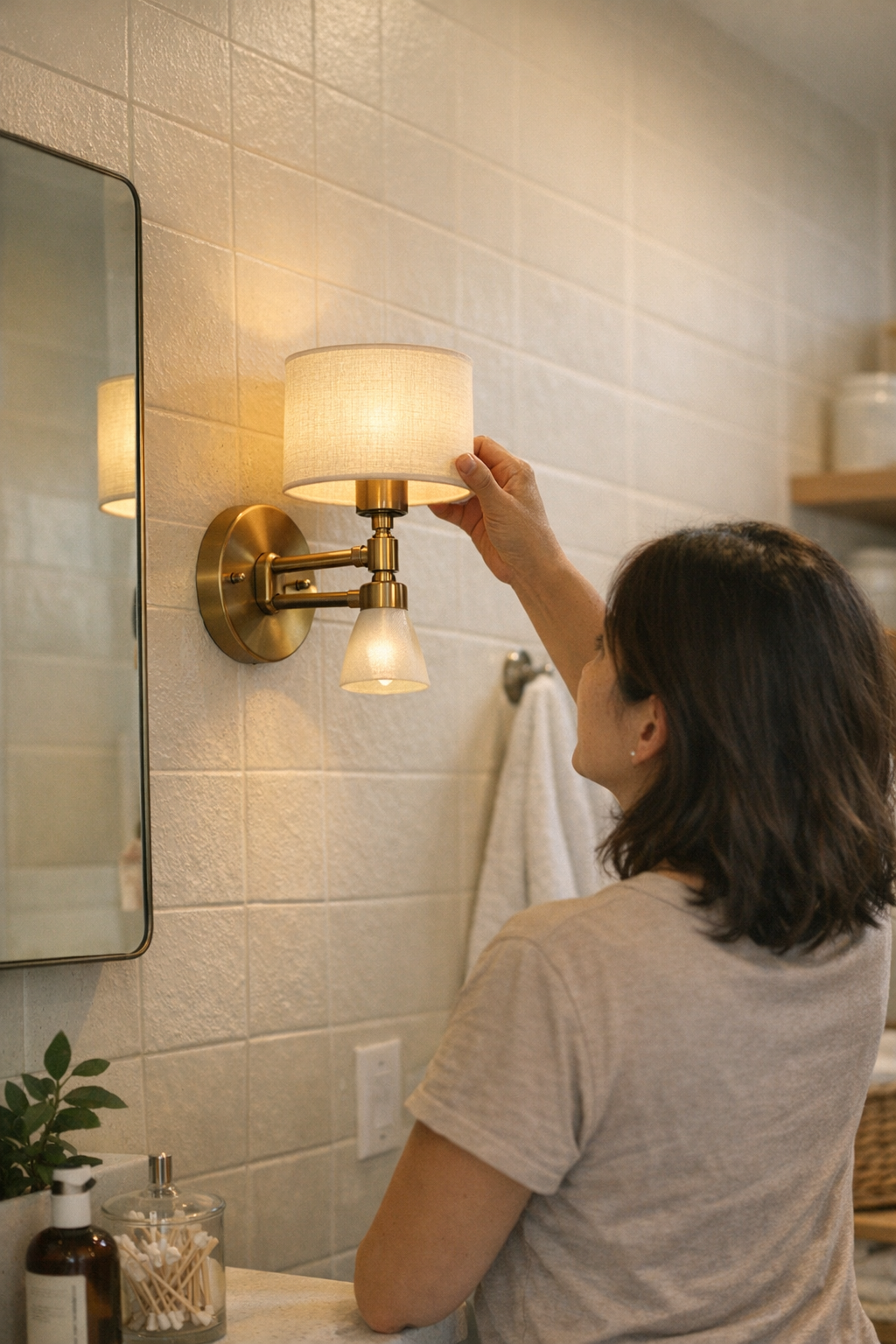
    Fixtures can look perfect right after installation. The flush mount sits even, the wall light sits steady, everything aligns. But invisible installation mistakes take hold before you even flip the switch. A ceiling fixture set too quickly can drag a gap at one edge—barely there, until the first bump with a laundry basket or a door slam makes it obvious. Bathroom sconces that lined up along the mirror slide off-level just from weeks of steam and wiping the glass. Under-cabinet task lights—so clean on day one—start to gap and collect dust or moisture near the mounting points where a screw was rushed and couldn’t bite properly.

    This kind of failure isn’t random. It’s almost always in the most awkward places: above mirrors, behind laundry units wedged to the wall, back corners under cabinets, stair turns where your hand can barely fit. Those are the spots where grabbing the drill feels easiest—right up until the next cleaning, bump, or quiet vibration makes a loose thread or compromised anchor finally show.

    Routines That Expose Every Weak Point

    Repeated movement exposes fixture flaws more than first impressions ever will. Stepping up the stairs, tossing a towel in the laundry, swinging a door—each routine flexes mounts and fixtures. A flush mount near the washer that shifts when bumped. A vanity mirror light that starts humming with every open-and-close. The edge of the under-cabinet light that tilts further each time you wipe the counter, until shadows fall over the sink’s lip and you instinctively lean closer to see.

    Everyday use is relentless. Corridor footfalls loosen a misaligned semi-flush. Damp air amplifies the slant of a hurriedly fixed wall sconce. You start to hear a buzz that wasn’t there, see dust or bugs settling in the crack that grew next to a driver-driven screw. The flaws don’t just annoy—they disrupt safe movement, shadow the work surface, or force you to work around the lighting you paid to improve.

    One Bad Screw, Months of Small Interruptions

    The real problem always comes during upkeep. That moment when a bulb goes, or the fixture needs a clean, and the screw head is locked or stripped—no way to open without more tools and time. You’re left extracting hardware, re-mounting under less access, repeating the very fix that a hand-tightened screw could have prevented. For any fixture in a spot you have to clean or see daily, one installation shortcut turns small inconvenience into a recurring hassle.

    What Happens When You Hand-Start Screws—Proven in Utility Spaces

    Commercial and utility spaces make it obvious: a run of under-cabinet lights, each mounting screw started by hand, not drill, stays anchored month after month. Wipes, vibration, heat—no gaps, no slip, the panel stays true. When you have to unscrew for dusting, the fixtures come down smoothly: the anchor is still intact. The single screw forced by drill in the tightest corner? Its section always shows the first slip—gap at the edge, growing grime, uneven light scatter over the worktop. The difference isn’t whether the room glows, but whether that light stays useful with every routine knock, wipe, and adjustment.

    Slower Means Fewer Repairs

    Hand-start every screw. Especially in blind corners, damp areas, and every place you can hardly get a grip. When the thread starts clean, the light fixture holds. Even above the mirror, by the stair turn, under the shallowest cabinets. Time spent now buys months without shifting shadows, loose wires, or the tilt that makes you avoid using part of the counter or mirror. That reliability? Built in a single, patient step before any tool ever touches the screw.

    Common Lighting Mount Problems—And What Actually Causes Them

    Why do mounting screws cross-thread in lighting installs?

    Answer: Because drilling at an angle, or forcing the screw straight into the box or drywall anchor, often distracts from feeling the threads line up. The screw cuts its own off-kilter path—especially easy in older surfaces, patch jobs, or shallow wall boxes. The tighter the access, the easier to mistake speed for success.

    How can stripped screw heads put the whole fixture at risk?

    They make maintenance a struggle and stability a gamble. A stripped screw can’t be tightened or loosened safely. You risk a fixture coming loose over time, or wires getting pinched and exposed in ways that invisible misalignment can worsen. Each skipped cleaning session or unmade bulb change just deepens the problem—until the whole light feels risky to use.

    Is careful, hand-started mounting really necessary for flush mounts, sconces, or task lights?

    Absolutely, especially where movement, moisture, or daily cleaning test the install again and again. Every damp bathroom, busy stairwell, or high-traffic hallway proves: hand starting means the fixture stays tight and flat, wires behind the ceiling stay unmoved, and the light itself doesn’t become a future obstacle. The more routines and traffic, the more this microscopic care pays off.

    Lighting That Survives Real Use, Not Just Looks Good Once

    Reliable indoor lighting isn’t about a room looking bright the day it’s finished; it’s whether each fixture stays secure and usable after daily bumps, wipes, and shifts. That flush mount above your washer that doesn’t rattle when steam fills the room, or the stairway fixture that holds level all through winter boots and raincoats, signals a good install—one built on hand-started threads, not drill-forced shortcuts.

    Day after day, the difference is this: do you move confidently through the room, or do little stutters, shadows, or ill-fitting gaps make you pause, detour, squint, or just quietly regret the last-minute push to finish?

    For flush mounts, wall sconces, vanity runs, or work-area lights in busy, tight, or damp spots, the quickest way to an unreliable setup is speeding past the basics. The most useful, trustworthy performance always comes back to the details nobody sees—especially that first, slow turn of each screw.

    Visit LightHelper for practical indoor lighting that works, not just looks finished

  • Why Car Organization Fails After the First Drive and How to Fix It

    Your car looks organized—until you actually use it for more than one stop. First drive of the week: cupholders are tidy, cables tucked, mats clean. But by the third errand or coffee run, the “organized” setup starts breaking down. Charging cables drift under seats, your phone slides out of reach, crumbs and receipts stack up near the pedals. The problem isn’t messiness—it’s that setups designed for surface neatness can’t keep pace with real use, especially when routines pile on and access keeps getting interrupted. Friction creeps in fast when you need to grab, plug, drop, or reload without stopping to rearrange. And suddenly, that clean look costs you a little more time every time you climb back in.

    What Looks Organized Isn’t Always Easy to Use

    The difference between a car that functions and a car that just appears organized usually shows up during a rushed or routine stop. You might start with everything put away, but real-world demands expose the weak spots instantly: reaching for a phone that’s wedged out of sight, plugging in a charger while cables snake across the floor, or shifting a bag off the passenger seat for the third time. The tidier the setup, the more obvious it becomes when you have to hunt, untangle, or dislodge something to keep moving.

    It doesn’t take a long road trip for these sore spots to show up. Just a few rounds of town errands or a commuter morning, and you’re repeating small adjustments—re-grabbing cables, digging out receipts, shifting organizers—just to do the basics. When your “organized” system sacrifices repeat access for empty-looking surfaces, each trip chips away minutes and patience.

    The Hidden Tension of ‘Put Away’ Accessories

    The idea of “everything in its place” falls apart the second you actually need that stuff in motion. Chargers stashed in glove boxes leave you fumbling for the right wire from a seat that doesn’t swivel. Armrest organizers with zipped pockets hide keys and tools, but force you to stretch and fumble while parked sideways in a busy lot. Accessories that disappear out of sight tend to give you the cleanest dash—and the most interrupted flow when you’re loading, connecting, or bailing out of the car in a hurry.

    This turns small car returns into a constant low-level obstacle course. Every time your hands are full—or you’re pressed for time—those buried or pretty solutions make access slower, not easier. The worst friction always pops up when you need two or three things at once: map, charger, and a hand free for carryout or groceries.

    Moments When Organization Backfires

    Picture a fast grocery run in bad weather. You juggle groceries onto the passenger side, drop your phone somewhere while toggling navigation, and a charger cable wraps around your leg as you slide back in. On return, your phone’s wedged between the seat and center console, the charger is tangled underfoot, and groceries have rolled off the seat to the floor, every “put away” item just a bit too far or stuck behind another. The interior looks tidy until you need anything in a hurry—then the “neat” setup turns into a tangle of minor delays: untuck, unhook, reach, reclaim, start again.

    This is where slick organization layouts actually get in the way. Perfectly zipped bins, tightly stashed cables, and hideaway pockets make sense parked—until your routine is moving fast or you’re balancing more than one bag. The extra reach and frequent stops turn a cleaned-up car into a slow, high-friction space, with seconds lost each time you try to get life moving again.

    The Repeat Offenders: Cable Chaos and Shifting Essentials

    Every organized car has spots that fall apart first. Cables slip from their tidy routing, sliding beneath the mat after a few tosses of the phone. Multi-use gear lands wherever it’s most convenient—sometimes on the seat, sometimes jammed in the rear door. Cargo organizers that impress on Sunday can force you to bend, reach, or move half the trunk’s content just to grab a single item while parked at the curb. What felt “solved” on the first drive becomes a repeated problem on the fifth or sixth, as your routine exposes limits that weren’t visible while everything was still carefully placed.

    This is the cycle: neaten, use, shift, repeat. By the end of a normal week, you’re back to searching for missing cables and fishing gear out of footwells. It’s not lack of effort. It’s the difference between setups designed to look controlled and setups built for shifting, repeated, real-life use.

    When Protection Adds Its Own Problems

    Floor mats and seat covers mean to keep your interior clean—they just don’t always make things simpler. A waterproof mat folds up at the footwell edge, blocking your backpack and catching new debris. Seat covers meant to shield against dog hair slide enough to push your own go-bag out of reach. Chunky cargo organizers demand an extra round of re-loading whenever you need to toss in a stroller or awkward parcel. Solutions that protect against spills or grime often create a new layer of interruption for anything that isn’t small and flat.

    It’s not about skipping protection—it’s realizing that “solved” messes can generate repeated micro-inconveniences. When you’re in-out-in all day, any setup that needs adjusting, tucking, or rearranging every time isn’t really covering you—it’s just moving the problem around to new spots.

    How Simple Adjustments Change Repeated Use

    The best fixes aren’t always the fanciest or the ones that disappear from sight. If your charging cable keeps migrating, a clipped guide along your seat edge keeps it anchored—no digging under seats, no cable knots, just plug and move. A shallow bin near the center console beats a zippered pouch every time for wallets, keys, and sunglasses—items you grab repeatedly, not just at the start or end of a trip. Even a weighted floor mat corner in the trunk lets you load and unload bags without wrestling the protection out of the way.

    Usable setups solve for friction, not for appearances. The goal shifts from “can I hide this?” to “can I reach, return, and reclaim without repeating old mistakes?” Even a slightly visible organizer that stays put is better than an invisible one you have to re-find every time.

    Recognizing What Actually Makes Your Car Easier

    The real test of your car interior isn’t how it looks clean—it’s how it works return after return. Do you automatically find your phone mount without fishing through a crevice? Plug in to charge without a hunt? Reach for an umbrella, leash, grocery bag, or charging brick and not find it tangled, jammed, or out of place? If not, you’re probably solving for surface, not for repeated use. The strongest setups let you bypass that cycle of fidgeting, reaching, repositioning—so the inside of your car stays ready for what you do, not just how it looks parked.

    The difference shows when you stop noticing the old friction—because it’s gone. For car organizers, phone mounts, cable clips, protection covers, and real solutions that actually hold up to repeated use, see what DriveWellSupply has in store: DriveWellSupply.

  • How Modular Wall Storage Transforms Narrow Yard Accessibility and Flow

    Outdoor storage headaches rarely explode—they creep in, one inch at a time, until the simple act of crossing your side yard or garage threshold feels like threading an obstacle course. Yesterday’s neat setup turns into today’s shuffle past leaning rakes, a bag of potting soil dropped “for now,” or a bin so stuffed it’s faster to just leave gear outside. It doesn’t start with chaos; it starts with one item that can’t quite go back, a floor corner lost to overflow, a path you no longer walk straight through. You keep sidestepping because the system that looked right last month now quietly resists every return, every reset. The cost isn’t just mess—it’s momentum lost, routines disrupted, and real space stolen from your week.

    When “Organized” Isn’t Usable: Where Outdoor Setups Break Down

    Most outdoor storage looks fine right after a cleanup—hooks lined up, bins stacked, everything in place. But real use isn’t a single Saturday. The question isn’t whether the garage or fence line looks tidy today—it’s whether you can get the mower out on Wednesday without moving three things first, or walk the side yard after a storm without steering around soggy bags and loose gloves.

    Ground-level bins attract stray gear like magnets. Trowels, soccer balls, garden shoes—anything left “just for a minute” lands in the same bin, quickly mixing tools with toys until finding one means digging and reshuffling. The garage edge designed as a quick drop-off spot morphs into a permanent holding pattern. Getting to what you need means shifting something else—an endless chain that makes every trip slower, every reset heavier. The space still looks organized, but you’re working around it, not with it.

    Real Trouble Spots: Overflow Zones and Blocked Paths

    Take the classic side-yard strip. Meant for stashing tools or the mower, it starts clear. But on a hectic weekend, the storage bench gets piled with a tangled hose and rake across its lid—now nothing inside is accessible. The wall above, maybe with a fresh pegboard, keeps smaller hand tools tidy—until a basketball shows up and crowding begins again. Wall systems that seemed organized double as catch-alls. Overflow isn’t loud; it’s quiet, gradual—the lane narrows, the “return” gets skipped, and floor space shrinks until shuffling sideways is routine.

    How Movement Gets Interrupted—And Why It Adds Up

    In real outdoor corners, the penalty for poor storage isn’t always visual; it’s the way movement bogs down. Floor bins and shelf units drift into walkways. Bikes get wedged behind bins, hoses spill over into footpaths. Every out-of-line shelf or rogue bag costs another lost second—multiplied by every family member, every week. At first, you only notice when the mower’s stuck. But by Friday, there’s always something in the way, and clearing a path requires a five-minute shuffle that saps momentum before you’ve even started.

    You’ll feel the difference after a single week: On Sunday, you set out chairs for a barbecue, carving a lane through garden gear. By midweek, something’s dropped “out of the way” against the fence. Suddenly the zone is half its original width. The routine isn’t stopped by a mountain of clutter—it’s slowed by the routine friction of reshuffling, sidestepping, rerouting. The space becomes mentally taxing, not just physically crowded.

    Reset Fatigue: When Systems Don’t Absorb Real Life

    This is reset fatigue—when every return or cleanup is slowed by the system, not by laziness. If nothing has a clear slot—if hooks double up, rails overflow, bins swallow stray gear—overflow never leaves. It just trades places, lingering in new forms. Even the best-looking closed cabinet can betray you: stash too much, and it becomes a barrier, not a helper. The floor in front collects the latest drop-off, so you shuffle gear just to reach what you put away “neatly” two weeks ago. It’s a shell game—and eventually, the shell cracks, and mess fights back.

    What Really Changes the Routine? Modular Wall Rails in Action

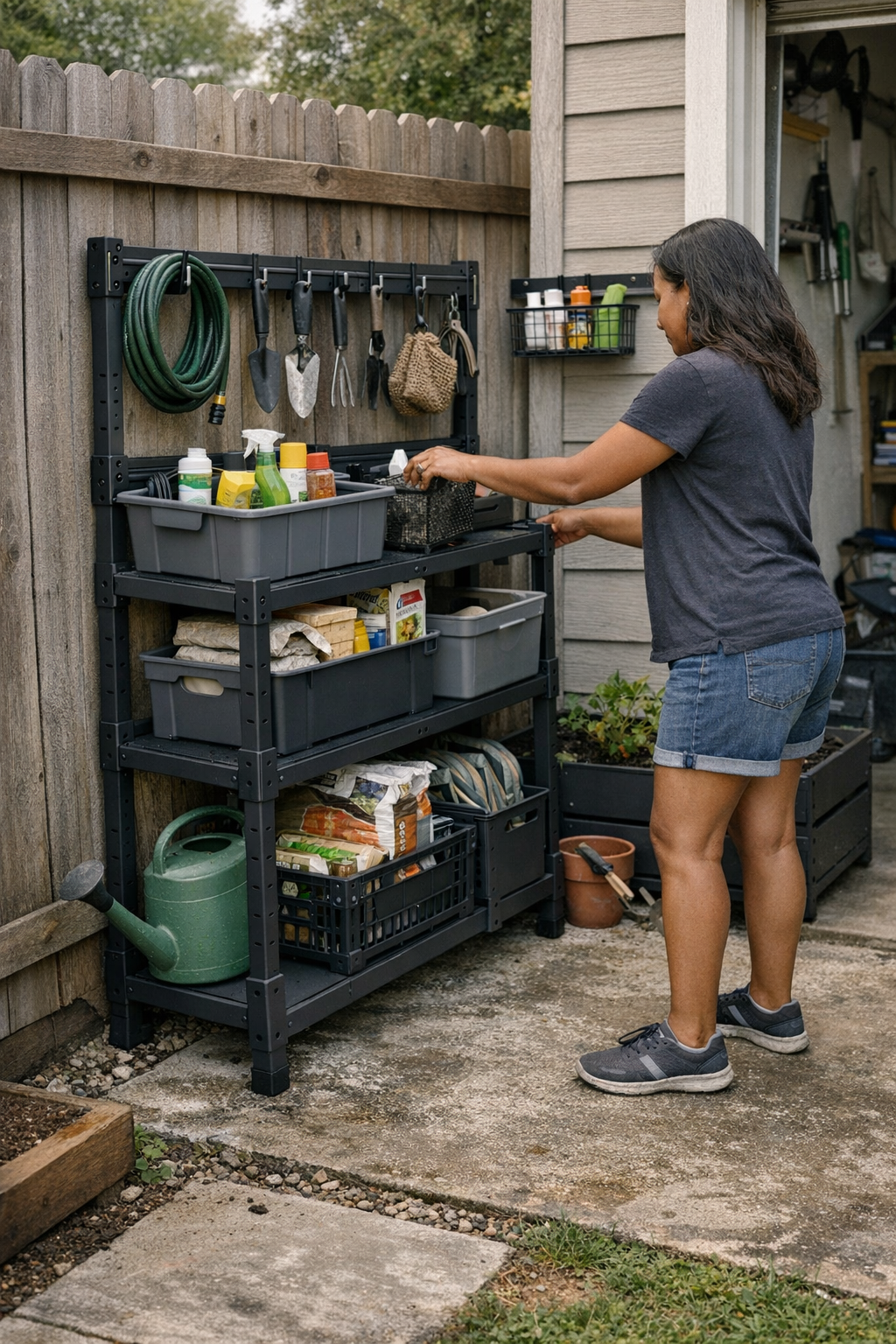
    The only setups that truly break the spiral are the ones that adapt to the repeated flow—not just the initial organization. In one garage-edge spot, adding a modular wall rail at the single busiest choke point changed everything. Rather than cramming overflow onto the floor or into endless bins, the most-used rakes, hoses, and bags went up into fixed slots, reclaiming a foot and a half of pathway in a single move. Now, pausing with gear no longer meant creating a new trip hazard. The rhythm changed: return up, not out. Anything left in the walkway at week’s end wasn’t just visual clutter—it was a direct signal that the setup needed a tweak, not a blind spot to be ignored.

    With real slots, routines tighten. Each tool’s slot is visible, fixed, and not up for overlap. Wall segments get reconfigured as needed, but doors and walkways stay clear. Instead of rearranging to recover floor space, you adapt wall rails or swap a hook. Small yards and narrow strips—where one out-of-place shelf can choke access—become passable, even during high-traffic weeks.

    Are Mobile Carts the Answer—or Just Another Source of Drift?

    Mobile carts sound flexible, and sometimes they are. Haul gardening tools out for a full afternoon, sure. Wheel party gear right where you need it. But if a cart always ends up stationed by the only exit or right in front of the shed, “mobility” just means relocating the bottleneck. The real question: when the weekend rush is over, does the cart roll out of your path, or is it another piece to route around? Flexibility only counts if it actually reduces routine irritation, not just changes where it appears.

    Effortless Isn’t the Same as Tidy—What Holds Up After Real Use

    Organization that survives busy weeks isn’t about perfection—it’s about systems that absorb mistakes before they pile up. The best outdoor setups keep walkways unblocked, use wall slots that match repeated patterns, and avoid overlapping categories. If resets drag over ten minutes, or overflow comes back before the week is done, the setup needs revision—not more discipline. Storage isn’t a battle; it’s a buffer you trust to handle reality, not just appearances.

    Practical Checks: Does Your Setup Really Work?

    • Is your main path as open on Friday as it was on Sunday? If not, something’s feeding everyday drift.
    • Do items have dedicated return slots, or are you shifting things just to clear a route after “normal” use?

    If you’re constantly moving gear or confronting the same pile every weekend, it’s the system holding you back—not your habits. The structure should do the heavy lifting, not you.

    Three Tweaks That Deliver—Without Adding More Stuff

    • Walk your routes regularly: Test your path after a normal week. Any tight squeeze or backup is a real-world signal—not a minor inconvenience.
    • Limit the reset: A decent system resets in ten minutes or less, even after storms or parties. If not, there’s friction at the wall or in the flow that needs fixing.
    • Enforce slot-only assignments: If everything can’t fit on fixed wall slots or rails, reconsider what belongs in prime zones. Stop stacking categories on single hooks or rail strips.

    Let Your Storage Catch the Clutter Before It Hits Your Day

    Outdoor areas—the garage edge, narrow side lane, fence corners—will always test your system. Perfection isn’t the goal. But a setup that defends walkways, makes return-to-slot frictionless, and absorbs the churn of real weeks turns annoying resets into a non-event. Instead of fighting the same battles, you reclaim time and space—making the yard work for you, not against you.

    http://tidyyard.myshopify.com

  • Why Assigning One Role to Your Storage Chest Boosts Workshop Efficiency

    Most garage and workspace setups look “sorted” for about five minutes. The bins line up, lids are flush, and drawers snap closed—the whole area polished for a weekend photo. But walk back in three days later, after a week of real, rapid-fire use. Screwdrivers missing, random cords wedged in where they don’t belong, overflow building up on any available flat surface. What started out organized turns into a mess of blocked paths and reshuffling routines—not because the storage is too small, but because the layout just can’t keep up with how the space is actually used.

    Surface Order vs. Everyday Chaos

    Most new chests and modular bins deliver a quick hit of order. Stuff fits, the workbench clears, and everything has a spot—temporarily. But as soon as you start peeling tools out for real projects, old friction creeps in: pulling one sparking a domino effect, each return feeling more like a puzzle than a reset. You close the lid, relieved for now. By next week, categories blur. “Put away” is no longer simple. What’s left is surface neatness masking the creeping sprawl underneath.

    These setups have a secret flaw—they make you the sorter, again and again. That seemingly versatile chest becomes its own recurring job. Every quick return is a mini negotiation: rearrange a wrench for the sake of the extension cord, move a tape roll out of the way of the bits. One awkward return, and the cycle of clutter builds up under the clean surface. The more general-purpose a storage chest gets, the more of your time it quietly eats.

    Lock In Purpose: Stop the Overflow Spiral

    The setups that actually work don’t just hold more—they work harder at keeping zones dedicated. Assigning only one job to each chest (fasteners, hand tools, garden hardware, project parts) blocks the slow re-mix of categories that turns every return into a headache. Suddenly, the question isn’t “what drawer did I use last time?” but “is this the battery bin or isn’t it?”

    This setup eliminates the most grinding friction: no more sifting for pliers under leftover zip ties, or batteries slipped into ducts of painter’s tape. You can walk in, reach for what you need, finish the job, and return it without hesitation—week after week. There’s no fancy subdividing required. This is about boundary lines, not intricate compartments.

    Recognizable Scene: Where Reset Breaks Down

    Picture weeknights in your own garage. On Monday, sections feel zoned—power tools here, clamps there. By Wednesday, you’re cramming in bike tools or a roll of tape “just for now,” desperate to clear the bench before dinner. Next, you’re sliding a whole drawer’s contents just to make room for one garden glove. The moment “put away” stops being a drop-off and turns into a slow shuffle, the system is working against you.

    The Creep of Overflow and Blocked Paths

    Chests seem perfect when they’re only half-filled and everything’s fresh. But force them to do multiple jobs, and tiny daily annoyances pile up. One drawer blocks another. You nudge a cart six inches down the aisle every week to get at the battery charger—until one day, you simply stop. The shelf above becomes a random drop spot. Corners fill up with boxes you meant to deal with “eventually.”

    This is the trap: storing things is not the same as streamlining your moves. A chest “fits” more, but afternoon after afternoon, you find yourself holding open the lid with your elbow, digging for what you need. You organize. You reshuffle. But the friction keeps leaking back in, slowing resets and making every job take just a little longer. Surface order survives, but workflow breaks down.

    How One-Job Zones Change the Whole Flow

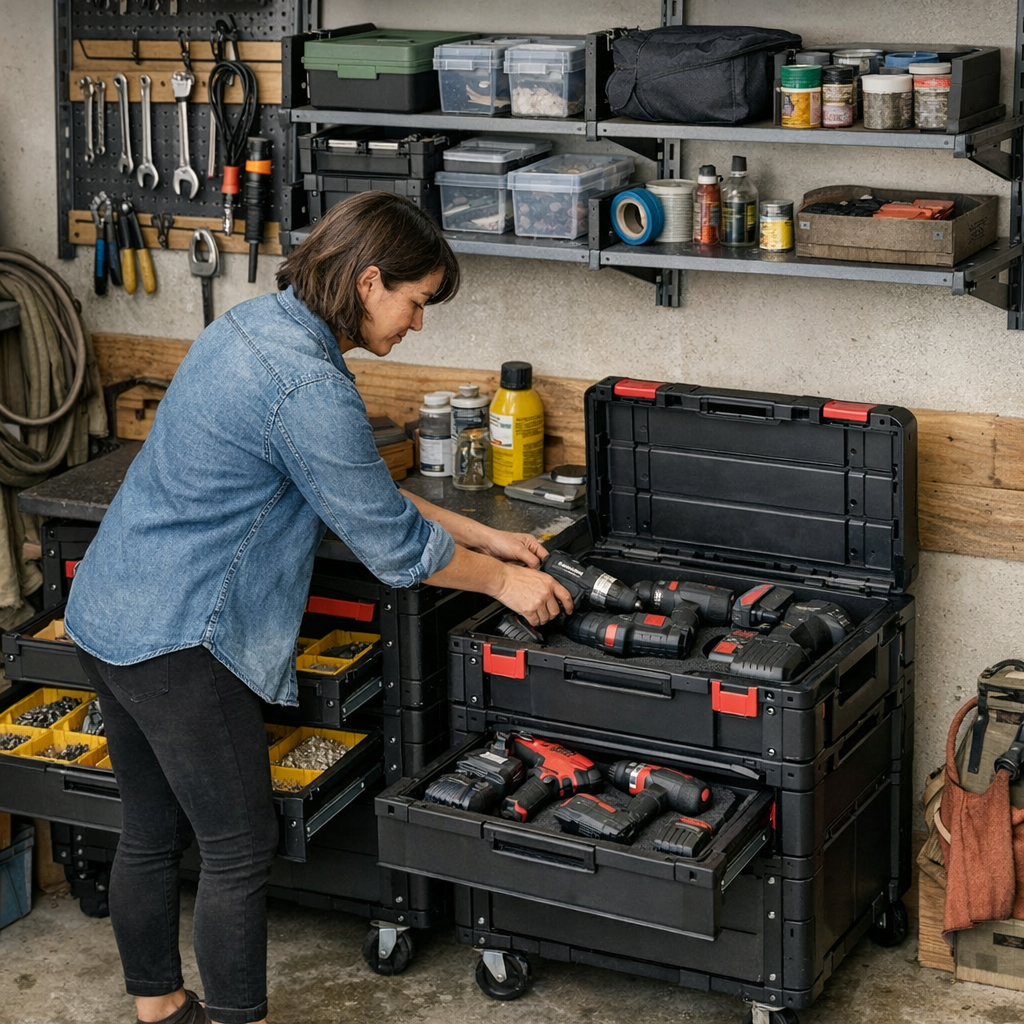
    This shift only clicked for me once I dedicated a rolling chest just for power tools and chargers. No more pushing aside garden pruners just to reach a drill. No stacks to move or corners to juggle. After a few weeks, it was clear: everything went back in seconds, and the shelves above stopped becoming “temporary” clutter landings. Movement through the garage got easier—no dead corners, no zigzagging around mystery bins. The space actually felt bigger, not just neater.

    The Patterns You’ll Feel Shift

    • No more shifting a cart just to plug in the charger, or reaching around the edge of one cabinet yet again.
    • Grabbing the right chest immediately, knowing the wall zone now means “gardening”—not “gardening plus whatever overflow fits today.”
    • The dead corner by the door stops collecting half-finished projects because the main layout never blocks movement or hides tools in overflow bins.

    This kind of clarity is quiet: less obvious than a freshly organized worktop, but far more valuable after ten resets and two months of real-world chaos. Suddenly, returning a tool doesn’t feel like another tiny project. It’s just—done.

    Questions That Pop Up Once You Try It

    Isn’t it overkill to have more than one chest?

    Not if you want lasting flow. Letting each chest own a category makes navigation automatic, not a guessing game. Two or three single-purpose chests—even small ones—beat a jumbo “do-everything” bin every time. Fewer collisions, fewer blocked drawers, fewer confused returns.

    How often do you need to fix a chest?

    The honest answer? A little, often. Drift shows up the third or fourth work session—sometimes after one weekend. As soon as overflow starts or drawers stick, do a five-minute reset. Don’t let the mess build. Small, frequent course corrections keep resets quick and the system intact.

    How do you spot when your setup’s failing?

    Blocked movement is your canary. Needing to move a stack or hold the lid open to rearrange? Batching returns because “it’s easier tomorrow”? That’s your signal: zones blurred, friction’s back. Get harsh with purpose, and reset the boundaries immediately.

    Real-Use Function: When Setup Finally Keeps Up

    Declaring victory after a deep clean is easy—that’s just tidying. The real test comes weeks in: Can you grab, use, and return without creating new clutter or blocking your own path? When repeated use is effortless, returns automatic, and there’s no hidden sprawl behind lids or under shelves, you’ve moved from looking organized to actually working organized.

    It’ll never be flawless. The best arrangements won’t eliminate every stray screw, but they’ll absorb chaos without collapsing. They make the routine simpler, not fancier. Adopting the “one chest, one job” mindset isn’t flashy—but after a dozen projects, it’s the difference between a garage that gives you momentum and one that’s always asking you to pause, rearrange, or start over.

    Find storage solutions suited for real setups and persistent use at StackNest.

  • Creating Reliable Snack Routines to Ease Indoor Cat Stress and Mess

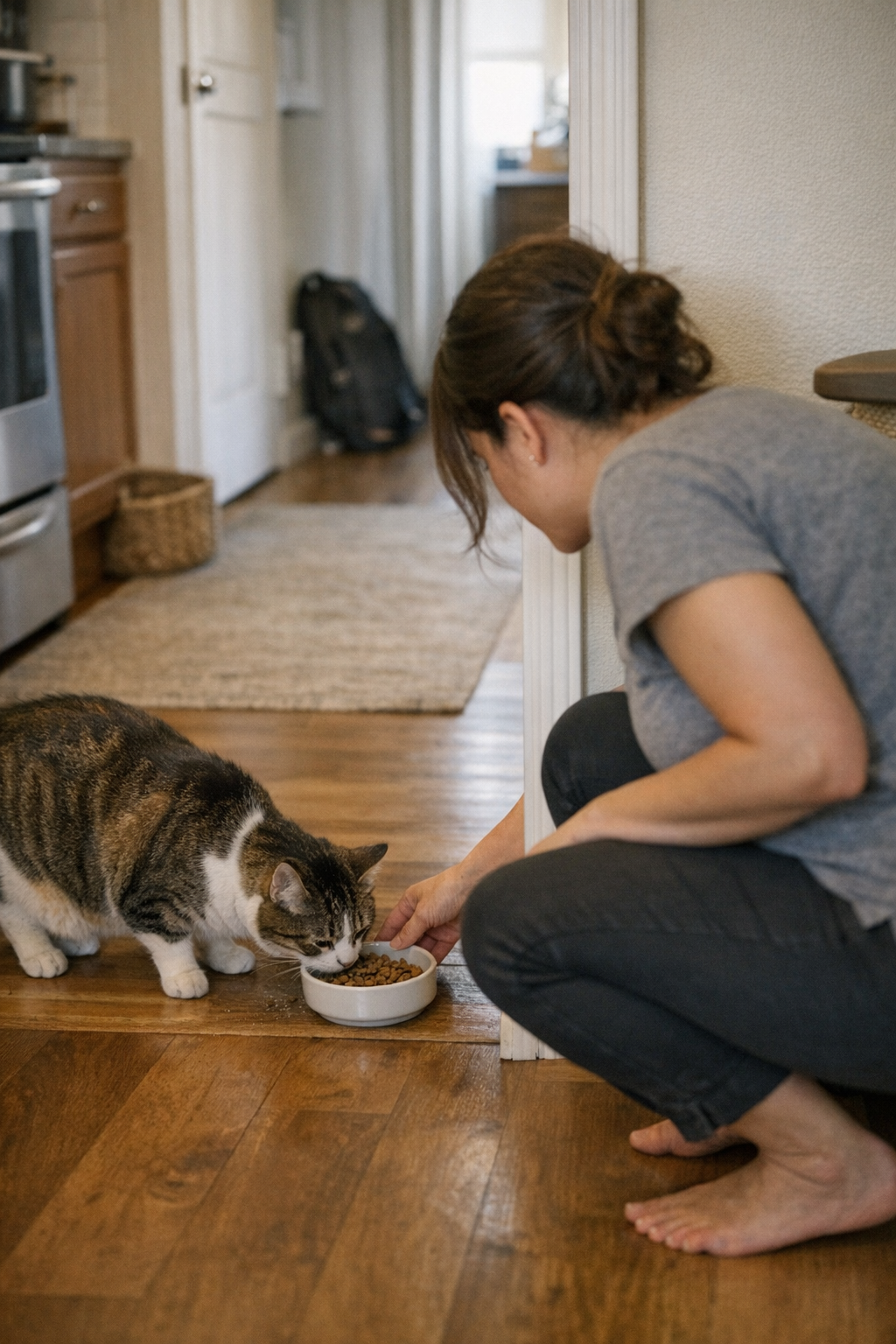
    The cleanest-looking cat feeding setup rarely holds up to indoor life that actually interrupts itself—one late snack, one missed refill, and suddenly the whole “tidy corner” starts unraveling in real time. It’s not about the initial look: bowls aligned, mat swept, the area staged for a photo. In regular use, what actually shows up first is friction—your cat pacing at the empty space, crumbs sneaking past the edge, a puddle forming just as you’re trying to get out the door. That neat setup you trusted stops holding the line when routines slip, no matter how ready it looked yesterday. The StillWhisker world starts with the question: what happens when your feeding zone is forced to absorb a real-life miss?

    The Problem Behind the “Tidy” Feeding Space

    The illusion is simple to build: wipe down, realign, admire. But every “perfect” zone is tested by what interrupts it, not by how it looks after you clean. Skip a midday snack for a work call or forget a refill during a long commute, and weak points surface quickly. The cat doesn’t wait politely—circling turns to anxious tracking, crumbs invade hallway lines, water forms a slick just where you don’t want to step. Suddenly, the system isn’t just untidy; it’s physically in your way, and the crack shows up on your next trip past.

    • Visible pacing: Your cat begins looping between feeding and rest spots, waiting in plain sight, making you more aware every time you step over the mat.
    • Scattered crumbs: Even after a fresh wipe, dry food escapes—the next pass reveals a new crumb trail spreading toward shared space.
    • Spilled water: A puddle slips just past the mat. Miss it once while rushing, and the sticky feeling lingers until you get back to mop up what your earlier cleanup missed.

    The feeding setup stops being a background comfort and becomes a source of interruption—requiring more handling, more double-backs, and more quick—but never fully satisfying—fixes.

    How a “Perfect” Setup Breaks Under Real Life

    Home setups that look frictionless can’t handle unpredictability. Maybe you refill on schedule for days—but the first stray work emergency, the bag drop after a late trip, or even a lazy weekend morning is enough to let the cracks widen. Feeding zones built just for looks start costing you: repeated wipe-downs, more shifting of mats, extra meows and more complicated resets—none of which show up in a neat, “after” photo.

    The Disappearing Snack Spot

    Main bowls remain staged, but every missed routine clutters up the snack edges. Heavy-use hours bring new crumbs, water lines, and bowls that migrate into walkway dead zones—usually just where you don’t want them. “Quick” resets turn tedious: lift the mat, dodge the edge mess, sweep new debris, then listen to your cat’s growing impatience as you juggle cleanup tools that never seem to be at arm’s reach.

    Cleanup Chasing Refill—Again and Again

    No matter how well you stock supplies, the cycle returns: missed refill, fast wipe that leaves a smear, then doubling back because the crumbs already spread. If your backup stash or mat-cleaning cloth is blocked behind a stack or lost among toys, the “simple” setup exposes exactly where convenience failed. Each mishap compounds—especially when cat and human clutter meets in one shared spot.

    Patterns That Signal a Struggling Routine

    Truly useful feeding setups show their weakness in patterns, not incidents. Notice any of these, and it’s less about aesthetics and more about structure under pressure:

    • Repeated bowl checks: Your cat circles back three times to stare at the bowl you just topped up, sniffing, waiting, then retreating to another high-traffic floor patch.
    • Extra crumbs or water marks: After a missed refill, the edge gets messier, not cleaner—even though you scrubbed the mat and wiped the floor just last night.
    • Cat lingering at empty spots: Fresh paw prints in places you never intended suggest your cat’s spending more anxious minutes hovering rather than relaxing.

    Each is a quiet feedback loop warning that your setup isn’t absorbing gaps as your day demands.

    What Actually Stabilizes Snack Routines for Indoor Cats?

    It’s not about an extra dish or flashier décor. It’s about structuring feeding so that when timing is off, the reset is minimal—and doesn’t add to your work. A practical StillWhisker routine means predicting routine interruption, not pretending you’ll always have time for a full reset. Backup isn’t overkill: it’s the difference between a feeding zone that creates new friction and one that holds together under strain.

    Strategic Placement Makes All the Difference

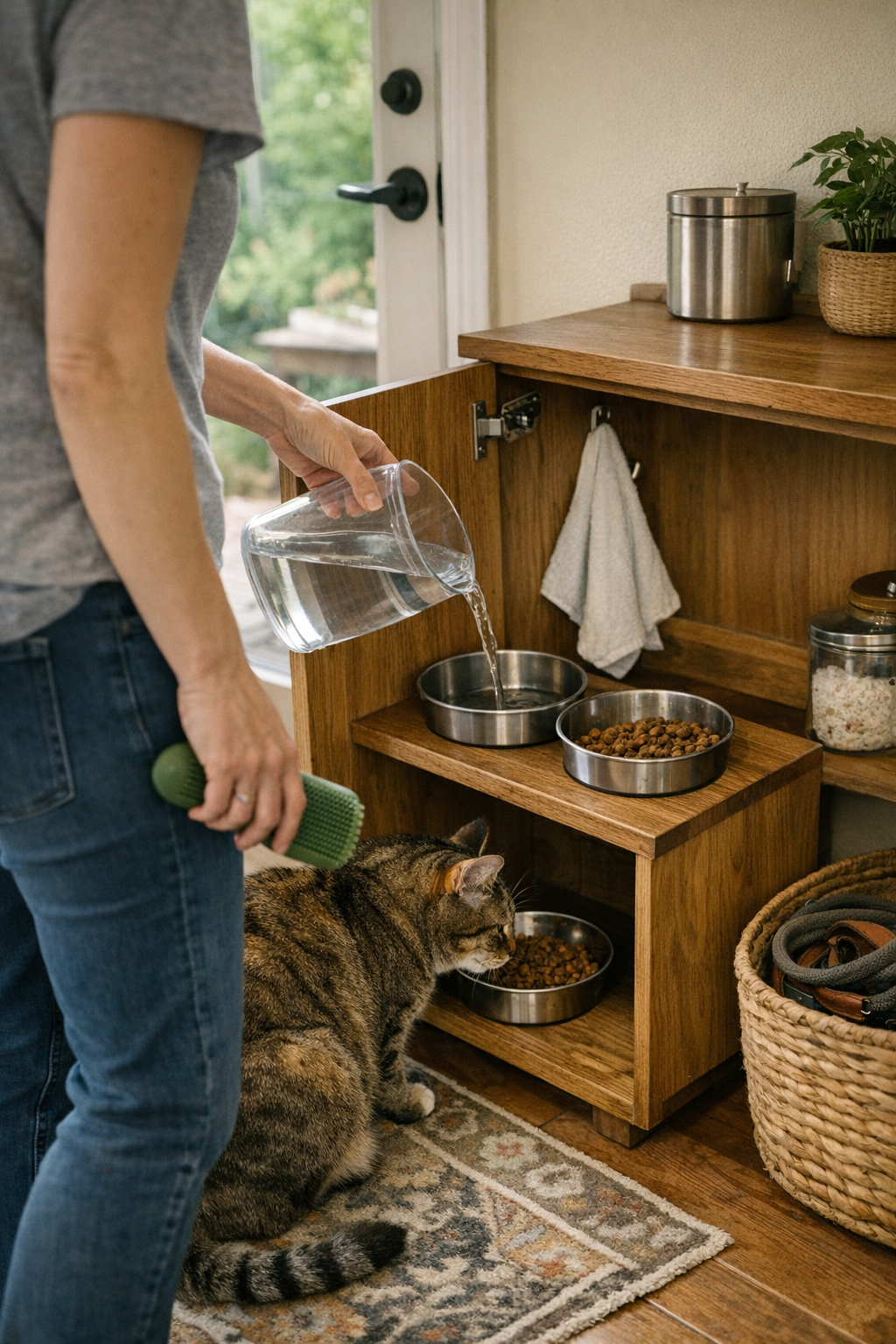
    Backup bowls work—if they’re placed to be helpful, not just extra. One secondary bowl tucked by a hallway, away from zones overloaded with litter or lounging, absorbs the miss without begging for a full cleaning rescue. It doesn’t take over the space or crash into the room’s calm. Instead, it’s there exactly when you need a lifeline but don’t want to open a new mess front—mopping up owner slip-ups without multiplying the effort.

    The Measured Backup—¼ Cup of Convenience

    It’s the opposite of free-pouring: keep a sealed container with a pre-measured ¼-cup dry snack, within reach of wherever you most likely need it. The goal isn’t overfeeding; it’s cutting panic resets. You skip the run for spare bags, dodging the drawer stuck behind cleaning supplies—your cat gets a fast, routine-saving snack, and the pathway stays uncluttered. Predictable, limited, and immediately on hand: the anxiety and mess both drop, and the feeding corner stops triggering rework all night.

    How the Right Structure Changes Daily Cat Life

    Once you trade in convenience for repeat-wipe tedium, the difference doesn’t just show up in mood—it lands in every home routine. You see fewer random crumbs tracking past the mat. The snack-wait loop shrinks, and cleanup drops from a full session to a three-second check. The worst-night scramble—where all you can manage is one refill—now means you land a win, not a mess, before you even take off your shoes.

    • No more chasing scattered food: The auxiliary bowl localizes off-schedule feeding, sidestepping new spill points in high-traffic areas.
    • Cleanup feels lighter: Fewer emergency dumps mean mats and floors stay manageable, even during the week’s most chaotic hours.
    • Comfort stays steady: Instead of standing guard at an empty station, your cat flows through the room—or settles—without the same anxious lingering, making guilt-fueled hurry a rarer event.

    Scenes From Real-World Home Use

    The missed midday refill: Grocery bags in the way, a cat already circling, your primary bowl out of step. The backup—within reach—means it takes seconds to reset; skip the kitchen reshuffle, pour the measured snack, and nothing else moves.

    The post-workday scramble: One sticky water track, a dry-food drift along the hallway. Instead of a teardown cleaning, a handy wipe and clear backup bowl get things temporarily stable. The major reset can wait; your cat doesn’t.

    An unplanned phone call: Routine’s off, and focus is gone. But when you pass through the hallway, the snack station is still working, because you built for this precise disruption. Both you and your cat skip the usual stress spiral.

    Designing for Both Order and Usability

    The right feeding setup isn’t about multiplying dishes or crowding every corner. It’s about deliberate structure: backups near pass-through routes, not blocking main living zones; bowls distant from litter drag or nap mats; a routine slim enough to flex but strong enough to function without a reset at every minor gap. The aim is a corner that still looks calm—but now works far faster when life goes off script.

    Recognizing When It’s Time to Reset Your Setup

    If every week you’re repeating wipe-downs, tripping over food scatter, or dodging mats and toys en route to the refill, your zone is asking too much. Audit the flow: is there a reachable backup? Can you grab a measured snack in seconds, one-handed, without dragging out extra supplies? If the answer involves moving clutter to get to basics, switching a minor physical struggle for a cleaner look is probably overdue.

    Less Fragile, More Livable: The Real Goal

    The right structure is what makes routines reliable—not how everything looks after a deep clean. Attractive feeding corners break first under real pressure if they can’t handle a missed refill or routine detour. Upkeep shouldn’t mean sprinting for towels, over-managing snacks, or negotiating empty bowls every time you walk in late

  • Choosing the Right Ventilation Fan to Keep Your Workshop Airflow Consistent

    If you’ve spent more than a day in a windowless shop, you know the moment when air quality turns from afterthought to obstacle. What starts as a clean, sharp morning—run the saw, tap a clean mark, drill a precise hole—slowly blurs as invisible dust builds up in corners, clings to every tool grip, and creeps inside your mask. By midday, hand planes feel tacky, clamps drag across the bench, and even a fresh drill bit feels dull as grit collects in collets and pockets. This isn’t just a matter of comfort—it’s about whether your tools perform at their best as the real work piles up, cut after cut, clamp after clamp.

    Where Standard Shop Fans Start Failing

    We’ve all been there: prop up a discount box fan, flick it on, and hope for the best. At first, it stirs just enough air to keep dust moving. But layer in a couple hours of back-to-back drilling, an uninterrupted run on the sander, or a batch of plywood crosscuts, and that bargain airflow flatlines. Soon, dust starts pooling on your ankles, infiltrates tool housings, and settles inside blade guards and drill chucks—right where precision matters most.

    As the hours pass, cleanup time grows: you’re wiping hands after every cut, scraping glue haze that reappears on newly jointed edges, and pausing every 10 minutes to clear a view through your safety glasses. If your respirator is clogging before lunch and you’re spending more time brushing off tools than using them, you’re feeling the slow sabotage that underpowered fans deliver—every action gets grittier and less controlled.

    How a Workshop-Rated Fan Changes Your Workflow

    Real workshop fans aren’t just bigger—they’re built for nonstop cycles: sawing, sanding, glue-ups, and assembly runs without the air turning dense or sticky. When the dust extractor can’t catch everything, the right overhead or cross-bench fan sweeps out what’s left, keeping your handles dry, your cuts visible, and your bench clear even three hours deep into a build. Suddenly, clamp pads no longer grab at glue, and fresh glue lines dry crisp instead of cloudy.

    What a Weak Fan Costs You in Practice

    Take a run of birch shelf sides: With only a consumer-grade fan, the bench looked tidy for the first hour. By the second, switch tools—and every grip left fingers coated. On clamp-up, the tool faces left smears of sawdust, and the fine dust floated just enough to blur scribed lines. Each tool switch meant a full wipe-down and a lost minute, just to keep edges and slots crisp. Instead of getting into a rhythm, momentum stalls—control drops, bit changes get hesitant, and by the end, fatigue hits long before the work is done.

    Switching to a Real Shop Fan: What Actually Improves

    When I swapped in a 600 CFM, continuous-duty shop fan with a fitted filter—pointed to push directly across the main assembly zone—the upgrade was immediate. Dust dropped where it should: into the vacuum, not across the bench. The burnt-motor smell disappeared. There was no cold draft or racket, just a steady hum, and for the first time, glue-ups stayed bright and clean late into the day. The difference wasn’t flashy: it was in predictable control. Drill bits didn’t seize up from grit, battery contact points stayed clean, and after hours of sanding, the respirator didn’t clog before the job was done. Less dust meant fewer mistakes and more confidence every time I grabbed for the next tool.

    Beyond CFM: Timing and Coverage Really Matter

    In a real jam-packed workday—shift from drilling pilot holes to routing edges, then run a random orbital sander across joinery—there’s never a pause for a full cleanup between jobs. If dust lingers between workstations, you’ll fight it from one operation to the next: rough cuts muddy your sanding, glue-ups stick to unexpected spots, and delicate measurement becomes guesswork as debris clouds your markings. A real shop fan keeps pace with you, reaching into shelf recesses and under benches, not just blowing air above eye level. Strategic airflow means you control the timeline—not the cleanup.

    How to Spot Subpar Ventilation Before It Kills Your Day

    Your shop’s air is probably holding you back if you notice any of these by midday:

    • Fine dust building up in router collets or along the rim of bench vises, hours after you started
    • Tool handles and chucks feeling rough or slippery, even with regular wipes
    • Lingering glue or burn odors that grow more pungent with each new process
    • Power tool batteries and bits picking up debris, leading to slow installs or connection issues
    • Energy dips and heavy breathing, even in full PPE—because stale, dust-heavy air catches up to you fast

    If this is familiar, you’re losing precision, comfort, and stamina every shift. Each pause to clear off a gauge or shake out a clogged mask is time and momentum lost—especially as jobs get longer and tool changes get faster.

    Bigger Impact: Sizing and Aiming Your Shop Fan for Real Jobs

    Start with the right capacity: calculate your workspace cubic footage, multiply by recommended air changes (usually 6-8 per hour for woodworking), and aim high if your air usually hangs heavy. But numbers alone aren’t enough if the airflow misses your real work zones.

    Positioning changes everything. Direct your strongest air across the active workbench, saw station, or sanding area—it’s wasted if it just whips past a storage wall. For L-shaped shops or odd corners, test adjustments midway through the job: sometimes, shifting the fan three feet is all it takes to keep glue areas or drill presses dust-free. If dust is still coating hardware or your tools feel slow by afternoon, rethink both position and power before doubling down on cleaning routines.

    Cut Time Off Cleanups With This Combo

    Pair a workshop-rated fan with a portable table-top dust extractor on high-dust jobs—sanding, routed dadoes, or quick hole runs. It’s not just about cutting visible mess; it means attachments, collets, and batteries come off cleaner, so next-tool switching doesn’t grind grit into moving parts or fresh finishes. Cleaner air equals fewer pauses and more solid tool performance, station to station.

    Consistency Over the Whole Shift—Not Just the First Hour

    The difference between “good enough” ventilation and real shop airflow is clear by day’s end: tools still grip right, clamps release clean, and your workflow doesn’t grind to a halt as dust builds up. Your second session starts with a workspace you trust, not a slog through sticky, leftover debris. Watch how your tool habits change when you stop constantly wiping, shaking, or bracing for mid-shift cleanup. In woodworking, as in every craft that stacks job after job, true ventilation keeps attention on the cut—not the cleanup.

    Find tools and gear to keep your workshop performing at its best at Gumboll.

  • How Stackable Pantry Bins Transform Snack Storage and Daily Access

    Stackable pantry bins look like an answer—until daily routines start pulling them apart. The first setup feels almost surgical: snacks sorted in neat blocks, labels staring forward, shelf space suddenly squared away. But one week later, as kids grab quick breakfasts, someone hunts for the last granola bar at midnight, and new groceries squeeze onto crowded shelves, the old system shows its cracks. Bins inch forward, stacks lean, and what started as clear borders between categories blurs into a tangle. The promise of order turns into a tug-of-war between easy access and actual organization—right where you need storage to just work, not slow you down.

    When Early Order Meets Everyday Reality

    Those first stacked rows of snacks, crackers, and breakfast bars create a satisfying illusion of control—until real life scrambles the logic. A bin is pulled for popcorn and never slides perfectly back. Someone, hands full, shoves chips wherever there’s a gap. Return flow breaks down. By Friday, bins have migrated, categories drift, and the lowest shelf is blocked behind a stack leaning toward the aisle. At a glance, the pantry still looks “organized” to visitors, but inside, the route to the right snack is confusing, crowded, and slow. Reaching twice for the same item—or yanking out a front bin just to check what’s slipped behind—becomes normal, not rare.

    The Subtle Friction of Stack and Access

    Stacking bins deep isn’t just about storage capacity—it’s about what happens every time you grab or return something. Most households don’t return things in the same perfect order. Every new hand multiplies the chance of a bin left angled, categories blended, or a “blocked” snack that’s technically stored but now buried. The more traffic, the quicker the breakdown: bins covering each other, with a growing pile at the front—a row you keep reshuffling just to see what’s left at the back. This starts slowly but adds up. Missed snacks go stale. Restocking takes longer because you have to fix the system before you can use it. Reset burden creeps in, quietly pushing the space from quick-access to reset-required.

    One sign things aren’t working: your midweek grocery run turns into a puzzle of where to fit new snacks, since old bins have shifted or filled out of sequence. The grocery restock that once took a few easy moves now drags out, and snacks get lost or doubled up. This isn’t just an annoyance. It’s a signal your storage system isn’t matching the way your household actually moves through the space.

    The Hidden Cost of a Slow Reset

    When bins no longer return to reliable positions, what started as a two-minute shelf reset after groceries turns into a mini-overhaul. Stacks lean, labels disappear, and fishing for buried snacks means pulling out half your system. You start to work around the storage—leaving overflow in random zones, finding expired food in bins you haven’t touched for weeks, and giving up on returning things exactly. High-traffic shelves become friction points, not flow points. The “organized” look hides a growing mismatch between the system as designed and the pantry as lived-in.

    Pushing Back Against Overflow and Drift

    Burst shelves, bins hovering half off the edge, and snack piles mixing in the front row: these are everyday signals of “storage creep”—the natural slip from order into entropy. One zone packs tight while another sits empty, and return flow turns into guesswork. Ask who’s really sticking to the old categories. Usually, it’s no one. The cost? Extra time rearranging, more overlap, and a system you quietly dread resetting.

    The fix isn’t more discipline—it’s adaptation. After trying the classic column-stacking, a deliberate stagger made more difference than any strict rule. By leaving each bin offset—a thumb’s width forward—every front edge stayed visible and reachable. Snacks could go straight in or out without moving other bins, and restocks started flowing again. The shelf absorbed small misalignments without losing overall clarity; maintenance dropped back to seconds, and the dreaded all-bin resort faded away.

    Seeing Small Trouble Before It Turns Big

    Don’t wait for the perfectly collapsed stack before acting. Notice when bins drift forward, categories start to bleed together, or stacks block each other—these are small invitations to fix flow before real mess sets in. A five-minute midweek correction—nudging bins, clearing spillover, or sorting a single row—can spare you the headache of full resets and lost snacks. Letting tiny drift build up only guarantees rediscovering last month’s crackers or abandoning the system until the next deep clean.

    Matching Storage to Real Routines

    It’s not about looking organized on day one—it’s about the setup staying usable when the household is busy or plans change. Storage systems that allow visible, independent access (staggered bins, clear fronts, or non-slip bases) keep retrieval quick and returns frictionless, even as snack stock and hands shift every week. Find yourself able to grab what you want without a full-bin shuffle? That’s a real improvement. When categories still mostly make sense and resets are rare or easy, the pantry space holds up against daily pressure.

    For single-person pantries or strictly monitored snacks, traditional stacking might survive. But most shared kitchens see shifting stock, different routines, and hands that blur the original order. Here, the difference is measurable: spaces that look fine but feel slow, versus setups that stay quick on the busiest days. A workable pantry is not just sorted, but resistant to quiet category-drift and hidden clutter build-up.

    Small Shifts That Keep the System Moving

    Try offset stacking—just enough so each bin’s front is clear to grab. Or pick bins that won’t slip or tilt, even if they get nudged out of line during a rush. Use labels where you need them, but keep shelf lines flexible enough to absorb overflow without trapping snacks for weeks. Don’t wait until the back row is out of sight and out of mind; clear it while things are fresh. Practical adjustments protect your setup from the slow breakdowns that block retrieval, crowd the path, or force a total reset in the middle of the week.

    Stackable pantry bins can be the backbone of a reliable storage system—if you let the setup shift with your real use, not just the neatest photo. The payoff is a pantry that looks organized and actually makes daily access faster, not harder. When storage meets your routine, order has a way of holding its line—and the friction of daily living finally gets out of your way.

    See more practical storage solutions at Gridry