Author: jaesoon_admin

  • How Wall-Mounted Storage Transforms Shared Outdoor Spaces Efficiently

    The real test of outdoor storage isn’t how tidy it looks right after setup—it’s how quickly order unravels when more than one person starts using it. Walk into any backyard corner, side-yard strip, or patio-edge utility zone and you’ll see it: big deck boxes lined up straight, a rugged shed, rows of “weatherproof” bins. The first afternoon, everything appears under control. But let a family, roommate, or two neighbors put the area through a week of lawn work, outdoor meals, or bike tune-ups. Paths that were wide enough on day one end up narrowed by wayward buckets. A bin meant for tools gets hijacked by outdoor toys. The gear meant to hang on the wall gets pushed into a pile near the gate. What once felt solved is now a reset ritual—just to keep the area usable for basic routines.

    How “Tidy” Slowly Turns Sloppy

    The pattern repeats everywhere: what starts as a few bins or a single storage chest ends up complicated by different people’s return habits. Maybe your gloves end up on the patio table, the trowel hides behind the shed, or the mower blocks access to the extra folding chair. Each new mismatch isn’t a crisis, just one more stumble. When one person’s “good enough” is another’s “where did that go,” the area stops resetting itself. Someone—not always the same person—starts reshuffling buckets, uprooting stray rakes, or pawing through piles for that missing garden fork, while everyone claims the setup “mostly works.”

    The invisible tax is time and repetition. Most people don’t refuse to reset; the structure just doesn’t reveal mistakes until they’ve stacked up. Hide a return spot in the back of a deck box or shed and you invite quick shortcuts—just set it nearby, “just this once.” Those shortcuts accumulate until one person has to dig out the whole mess just to get the routine moving again.

    Why Floor Storage Breaks Down in Real Use

    Deck boxes and single-chamber sheds advertise simplicity, but after a few real weekends, the limits show:

    • Thrown-in tools and gloves settle to the bottom, quietly lost until the next full excavation.
    • Two people reach for different things at once—the chest becomes a bottleneck, one person rummaging while the other waits or blocks a walkway entirely.
    • Overflow erases zones. Patio cushions land on gardening gear, kids’ balls wedge into corners, and the line between “organized” and “buried” blurs fast.

    In-floor storage doesn’t just eat space—it swallows time. You end up shifting half the unit’s contents onto the ground for a quick grab, then rush to cram everything back while the next person tiptoes around, wondering where the broom landed. The area might look “put away,” but only because all the real friction is hidden.

    What Hidden Clutter Actually Does

    Floor bins flatten out boundaries. That new pack of pruning shears gets lost behind last fall’s gloves. Outdoor hoses slip under a tarp at the bottom. Every forgotten return weakens the whole system—not because anyone’s careless, but because the layout muddies what counts as “returned.” Backlogged items don’t jump into view; trouble goes undetected until you need it—right as the sun’s going down or the rain starts moving in.

    How Wall and Modular Systems Break the Pattern

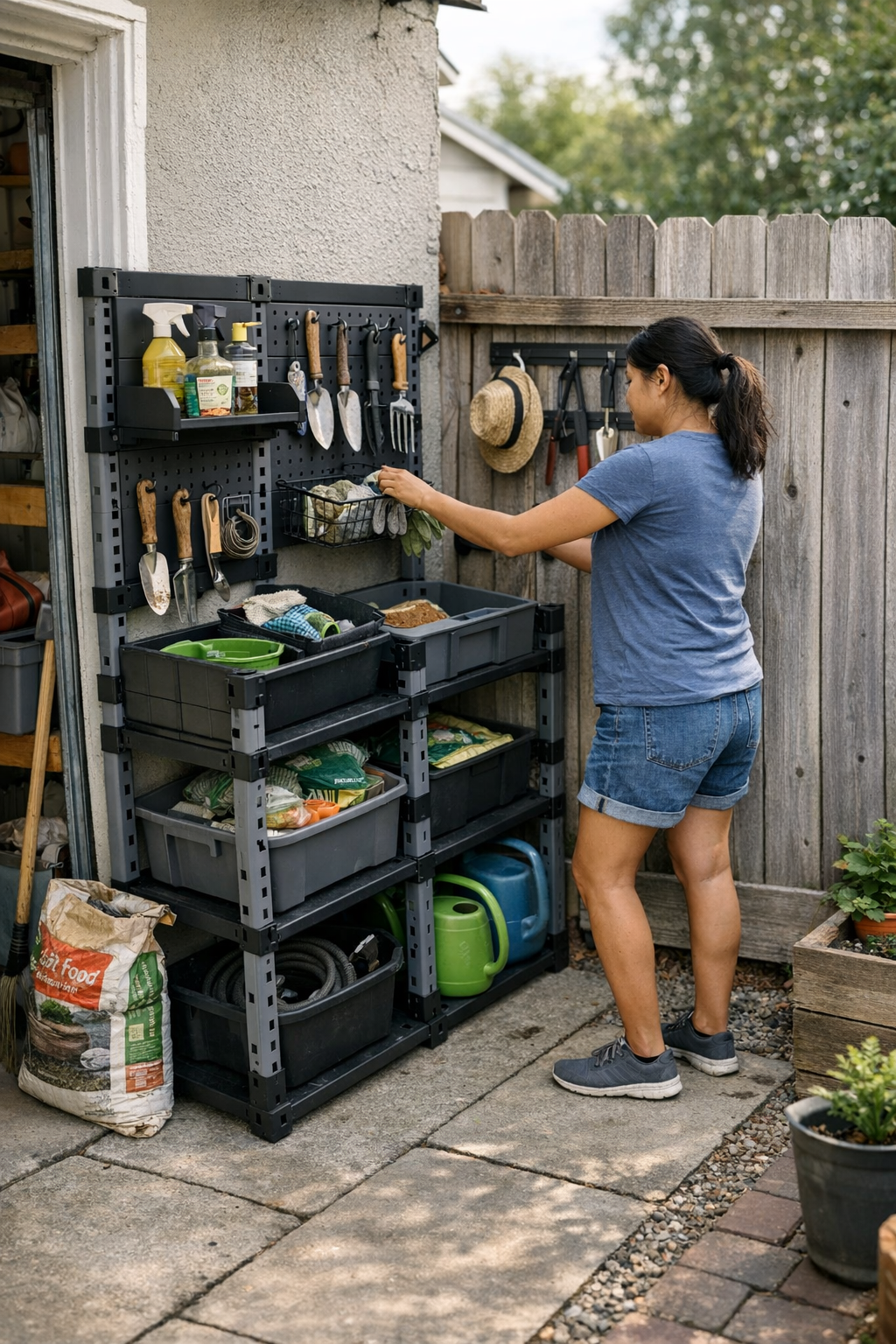
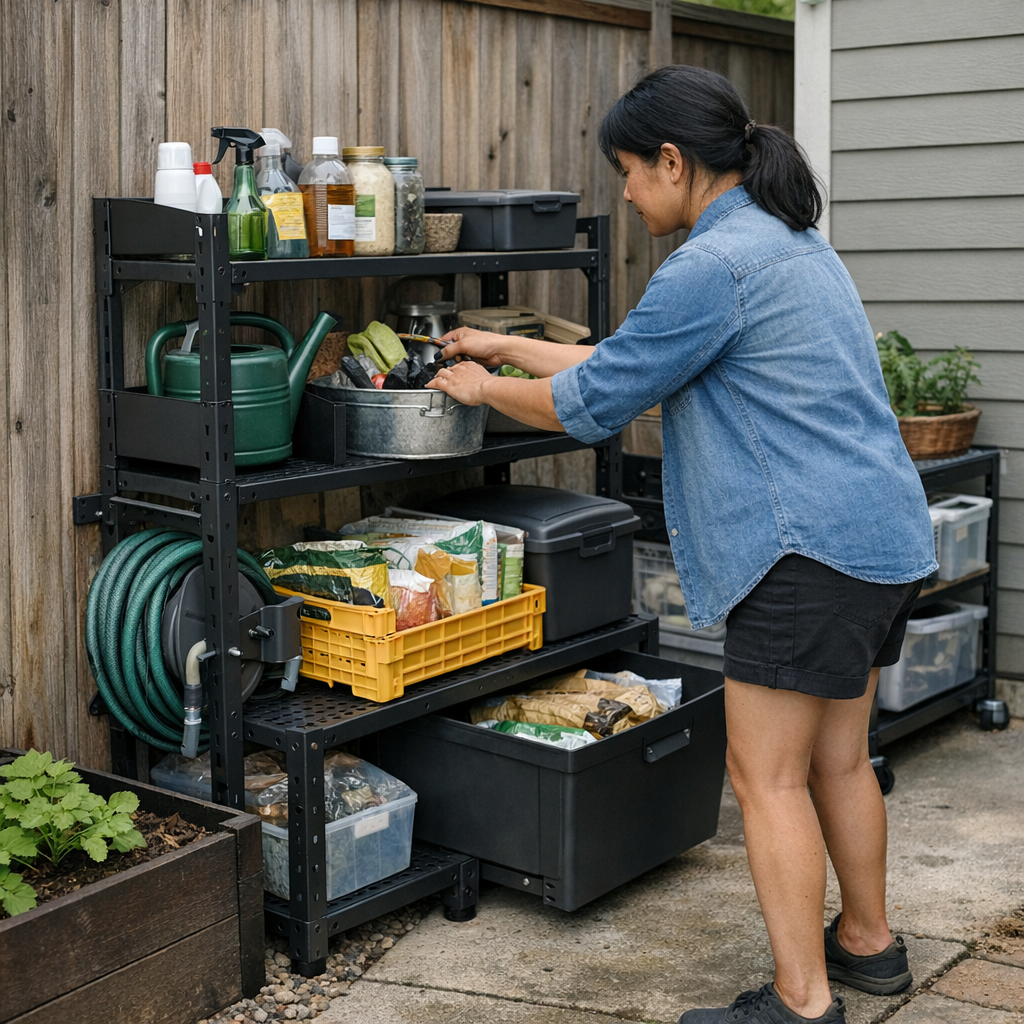
    Wall storage changes the rules by putting everything on display. Line a fence, gate, or garage-edge wall with racks, modular grids, or vertical rails and you expose order and disorder at a glance. Long-handled tools hang clear. Pruners, gloves, and hose heads claim consistent “homes.” The minute something is missing or off, the gap is visible—even on a rushed pass-through.

    Wall systems refuse to let buried messes collect. Unlike deck boxes, you aren’t reaching blind or spreading tools across the floor just to check inventory. Instead, the absence of a shovel or the sudden overcrowding of a rail is impossible to ignore. Every user gets a nudge: put it back, not just down.

    Flow, Not Friction, During Everyday Use

    Picture two people in a narrow side-yard stretch. One wants the weed trimmer; the other’s after patio cushions. With a chest or bin, they bottleneck, negotiating the lid and fighting for elbow room. With wall-mounted zones, each grabs from their own section—no sidestepping, no waiting for a rummage to finish, no blocked return path. If an item’s missing or misplaced, it jumps out during the next walk past. The pileup is ended before it starts.

    Modular and wall setups shape the return flow: instead of shuffling through piles or guessing where things will fit, each zone prompts accountability. When new clutter builds up—kids’ water toys, awkward rakes, extra boots—it’s immediately seen. The fix goes from being a dreaded monthly project to a quick, obvious reset shared by anyone passing through.

    Shared Use, Shared Order—If the Details Work

    I saw the difference firsthand at my garage threshold. Most-used hand tools and gloves moved to a rail by the main gate, just above the reach of our youngest but in direct line for anyone hauling mulch or moving bikes. Instead of five minutes spent scanning a bin or digging behind bags of soil, the wall became the default destination. Stray trowel? Nobody wonders where it should go. Overflow in the corner? The wall shows what’s getting jammed and what’s missing. Perfection never lasted—but reset moments shrank to a quick adjustment, not a half-hour cleanout.

    Practical Fixes From Real Repetition

    • “Grab-and-go” should mean never buried. The most-used gear belongs at eye-level, near entrances or gateways, with zero barriers to return.
    • Modularity wins against changing routines. Seasonal swaps, shifting sports gear, new battery tools—walled sections adjust easier than bins. Tweaking a few hooks beats dumping another crate on the floor.
    • Dead corners reveal themselves fast with wall setups. That patch behind the gate or by the compost pile? A single rail or upright bin deflects clutter before it stacks past being fixable.

    The Difference You See on the Tenth Trip—Not the First

    It’s easy to look organized on day one, especially when everything’s freshly sorted. But the cracks appear the first time someone needs a large tool and finds cushioned overflow blocking the way. Or after a rainstorm forces a scramble to shelter gear and nobody has a clear drop spot. Effective storage setups aren’t about erasing disorder altogether. They make any early-stage mess obvious—spread out, not buried—so small resets take seconds, not an unseen hour dumped on one frustrated organizer.

    Wall-mounted and modular systems aren’t immune to mud, awkward gear, or soggy days. Every outdoor layout carries its own compromises. But layouts that force everything onto the floor hide problems until they become jobs. Wall systems keep pressure points in sight, letting real users see the reset point long before frustration builds—and making it normal for everyone to share the load, instead of letting chore duty sneak back to one reluctant person.

    If your storage corner keeps circling back to the same old mess, it’s probably not laziness—it’s the setup turning “organization” into a moving target. Build around the way your space actually works: sometimes crowded, always shared, rarely slow. The right structure lets you reclaim time, skip the pileups, and finally enjoy a space that helps you move, not just store. Resetting becomes part of the flow—not a setback you keep dreading.

    TidyYard Outdoor Organization

  • How Fixed Return Addresses Transform Portable Bin Organization and Workflow

    No storage system reveals its weakness faster than a row of bins after a few weeks in the wild. That first weekend—installing matching containers, aligning shelves, standing back to admire the order—feels like a personal win. But days later, real life tugs the system off track. A bin lands by the garage door “just for now.” Another trails off to a worktable’s edge after an unfinished project. By mid-month, you’re back to dodging bins in walkways, shifting rolling carts sideways, or stretching awkwardly around a blocking tote just to reach a drill. What started out looking organized begins to interrupt your routine every time you need to move, reset, or just find a tool. It’s not a dramatic collapse—just a slow leak as clarity gives way to creeping clutter, blocking movement and bleeding away that satisfying sense of control.

    When “Temporary” Bin Spots Turn Permanent

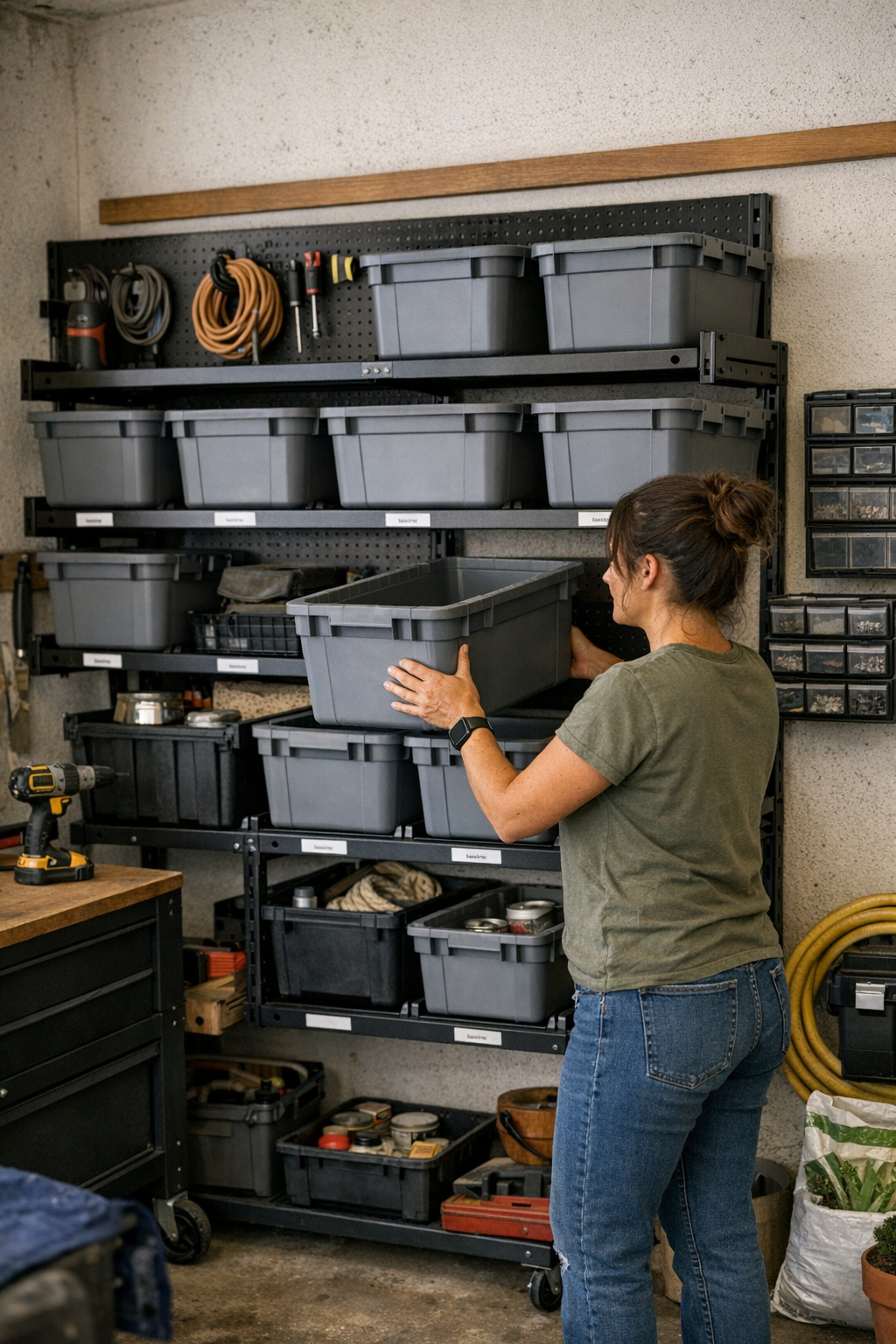
    That familiar slip—setting a bin down “just until tomorrow”—becomes the first domino. You’re tired after finishing up late, or someone else is helping and makes a guess. A single bin strays into a high-traffic strip near the bench. Another finds its way into a corner that never really worked. Over time, bins collect like driftwood: stacking up behind cabinet doors, sprawling into dead corners, creeping into the center aisle. What was wall-mounted to open the floor now causes you to sidestep, reroute, or slide a parked cart just to restore order after a small task. And there’s always that one shadow zone under the lowest shelf—a “temporary” pile that never finds its way home.

    This scatter isn’t just annoying. It adds hidden costs to every session. Frequent reshuffling slows you down: you’re pausing to clear a path, guessing where someone parked the extension cord bin, or dealing with a stack that’s migrated dangerously close to the car or mower. The setup still stores things, but it doesn’t serve your real routine. Reset time stretches and the space slowly fills with awkward workarounds—quick fixes that only deepen the mess.

    Every Bin Needs a Fixed Home—No Exceptions

    Real modular storage lives and dies by “return addresses.” If every tote doesn’t have an obvious, enforced home, the system turns on you. Not just any open shelf, but a labeled, can’t-miss spot for each category—visible, specific, and not up for debate. Without it, every session nudges things further off course. Each trip back to the bench chips away at predictability, until you’re never sure what you’ll have to clear next.

    The difference is night and day: struggle with bins that play musical chairs, and a simple supply run becomes a puzzle. Have to dig out the fasteners bin? Shift two others first, then restack, and hope you don’t end up with more orphans blocking another corner. The system “saves space” on day one, but wastes minutes and multiplies frustration with every new project. The area fills with awkward footprints and phantom obstacles—never quite your setup, always a little in your way.

    How a Real System Handles Everyday Mess

    The test always comes after a heavy-use weekend. Maybe you’ve hauled out bins for gloves, seeds, brackets, bits—all scattershot as you move between jobs. If there’s no fixed zone, the reset means searching: is the paint gear still on the mower deck, did the bin of screws get lost behind the step ladder, is the tub of garden ties hiding by the freezer? Each time you finish, you waste half your energy just tracking things down—or, worse, piling bins in “open” spots that never quite free up again.

    When every bin’s return is mapped, cleanup takes on a different rhythm. No wasted searching, no last-minute fumbles. Labeled shelves, rails, or wall grids cue your muscle memory—bin goes here, that one right there—eliminating decisions and getting your zone reset instantly. Over weeks of use, this is what keeps the setup alive: not just a tidy look for visitors, but a friction-free routine for you, every session.

    Small Tweaks That Hold the Line

    Big re-installs aren’t what keep storage working. Tiny interventions are. A short rail on the shelf front stops bins from sliding into walkways, especially in a rush. Oversized, dead-simple labels vote against lazy drops in the wrong place. Each cue short-circuits the drift, turning clean-up from a mental chore into a no-brainer: everything just feels wrong if you put it outside its zone. The result isn’t perfection—there’ll still be the odd stray—but the system gently nudges bins back where they belong, session after session.

    If mobility is king, wall grids and modular racks let you lift bins up off the ground, keeping floor patterns clear even as the setup shifts. With ordinary shelves, even taped outlines claim territory—no “floaters” edging into the aisle or swallowing up access to tools. The aim isn’t to corral every bin perfectly, but to keep the whole pattern readable and resettable—reducing the need for repeated reshuffling and frantic last-minute searches.

    Clarity Beats Perfection, Every Session

    Chasing the “best” storage product rarely beats simply making the system readable. Wall mounts, marked floor spots, tape-defined return zones—it’s the cues that win. When it’s dead obvious where a bin belongs, you never gamble: no bins blocking a cabinet, no gardening gear stranded behind power tools, no reaching around the wrong container for the part you actually need. Clarity trades a little style for real, daily breathing room.

    This is how the mess stays measured. The system shrugs off small lapses, cleanup times shrink, and the layout keeps working through dozens of on-the-fly changes. The difference isn’t once-and-done neatness, but an everyday routine that doesn’t get harder with each new task or set of hands in the space.

    Routine Wins: Less Drift, Actual Working Space

    In the end, a return address for every bin isn’t just an organizer’s trick—it puts a shield around your space. No more bins becoming trip hazards, no more wall sections turning into generic piles, no more movement zones sacrificed to overflow. You feel it on every reset: the path is clear, bins aren’t lost, you spend less time wrestling with the setup (even on your most scattered days). The improvement isn’t in some catalog-perfect look, but in a layout that grants a little more breathing room, a little less scrambling, every session.

    Find storage that actually supports your routine: StackNest

  • How Linear and Panel Ceiling Lights Eliminate Patchy Lighting Problems

    If your desk light forces you to shuffle papers just to see the edges, or every new lamp turns into another cable to dodge, your lighting isn’t just unfinished—it’s interrupting your routine. Most indoor setups—desk lamps in easy reach, sconces high above, a “statement” fixture overhead—promise coverage but crumble in daily use. You think it’s enough, until each night you’re chasing usable light: one zone too bright, another too dim, cords snaking over the floor, and the relief of a “clean” surface outweighed by constant adjustment. What looked resolved at first begins to break down the minute real work, reading, or cleanup starts stacking up.

    Patchwork Light: Looking Good, Feeling Annoying

    A room lined with lamps and wall lights might impress at first glance, but the cracks show up fast. Stand back and everything looks organized—until the daily routine exposes stubborn friction. The work zone splits: a bright monitor leaves the keyboard in a fog; a kitchen shelf casts a shadow right where you prep; a lamp staged for “ambience” can’t light the whole table, so you angle things, move chairs, or—again—reach for a plug-in extension.

    You’ll recognize these routine friction points:

    • Glare from an angle that still leaves you working in your own shadow
    • Shelf lighting that lights the wall but ghosts the storage edge
    • Extension cords crossing the only clear path or pooling under the desk edge
    • A lamp that keeps migrating—first for dinner, then for homework, then back again

    This isn’t a rare complaint—it’s the normal drag in multi-light setups. Instead of focusing on the task, you spend minutes each day chasing the one spot with enough coverage, untangling the latest run of cables, or shifting your seat to avoid a dark stretch. The “finished” look becomes just another maintenance loop.

    Why Single Fixtures Outperform the Patchwork

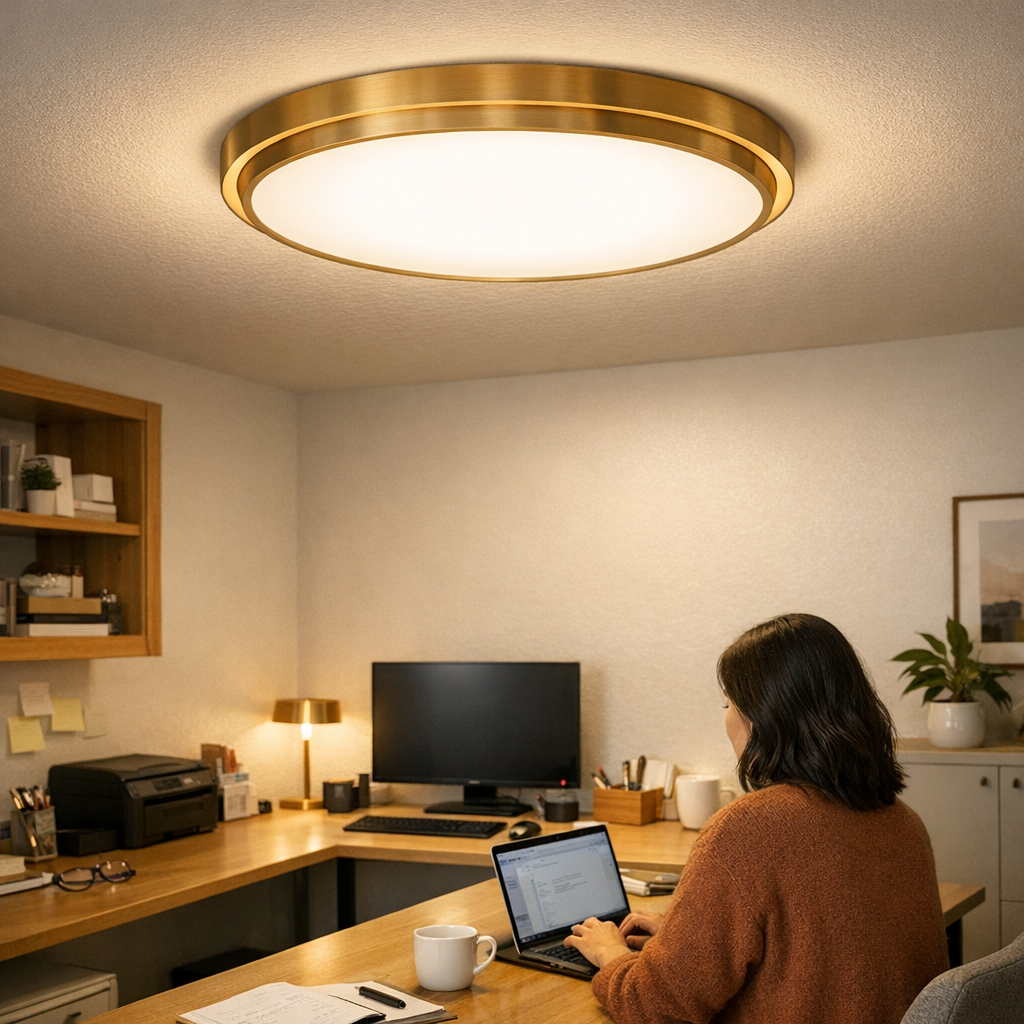
    A single linear or panel ceiling fixture cuts through these headaches by delivering wide, even light where patchwork setups simply can’t. You trade stacks of lamps for predictable coverage: every desk edge visible, every shelf lit to the back, cables fixed out of sight. It’s not subtle—after a week, you stop noticing problems and start using the whole space for its intended purpose.

    • Edge-to-edge visibility: No more lurking dimness at the far side of a table or the back shelf—everything is evenly lit from the start.
    • No cable chaos: Overhead or under-cabinet mounting means you stop dodging cords, with chargers and devices stored in logical, reachable spots.
    • Persistent clarity: Surfaces stay usable through every shift in activity, even as you move gear, shuffle projects, or share the space—it’s no longer about adjusting for the light.

    The Routine Test: Day-In, Day-Out Use

    The real difference appears not on installation day, but with repeated use. Picture a shared work area: desk, shelf, a corner for projects. Patchwork lighting lines the periphery—a floor lamp on standby, sconce above the storage. At night, you reach toward the paper pile only to pause at the dim edge. You plug in a device, but the cord trails across where someone needs to step. Moving a fixture helps for a bit, but never settles the space. The pattern repeats: you compromise or reorganize every day, all because the light hasn’t adapted to your routine.

    The same dynamic surfaces in kitchens where the countertop’s usable line is safer in the middle of the day but falls apart at dusk, or living rooms where reading light works for one seat, then leaves everyone else in unclear shadow. These are not just annoyances—they’re daily collisions between a design that appears functional and one that actually is.

    How Linear and Panel Solutions Change the Space

    Swapping clusters of unrelated lights for one well-placed linear or panel fixture transforms the entire workflow. In a real-world shared desk, replacing old lamps and a solo sconce with a low-profile LED panel immediately made every square inch accessible—no more stacking folders to lift a lamp, no more taping cords out of the way. The change was immediate: you could finally reach both sides of the desk without bumping into hardware, and surfaces that used to sit in shadow became instantly usable.

    • All surfaces get their share: Full, even light replaces awkward bright spots and forgotten corners.
    • Cables fade from view: The logic of the setup supports workflow, not clutter—everything routed and out of daily reach.
    • No more scramble: The lights stay put and the need for late-night rearrangement vanishes; everything is prepared for the actual mix of tasks you throw at it.

    A Real-World Tip: Don’t Trust “Even” Without Testing It

    Lighting deceives in photos—a ceiling panel might look centered while the working edge sits in gloom, or under-shelf strips blaze a distracting line on glossy counters. Before you shrug and call a setup done, walk the room while working: reach, shift, open what you usually open, and check every corner. Only by matching the light’s reach to your routine will the hidden gaps reveal themselves.

    Typical Patchwork Problems (and Why They Persist)

    Why do so many “layered” setups keep derailing routines? The answer: predictable, persistent patterns the decor never solves.

    • Shadow lines that reappear every time you change the activity—even after another lamp is added.
    • Reflected glare where jobs and surfaces overlap—a page that shines white, a screen that glows but leaves the desktop lost in haze.
    • Cables forced into high-traffic paths because every new device “needs” a different plug route.
    • Temporary workarounds stacking up: books propping a lamp, cord tape damaging the floor, or an extra flashlight always nearby.

    The core mistake: confusing a neat, symmetric placement with reliable functionality. Patchwork setups call attention to themselves—the moment your arm reaches just outside the light’s range, or you trip on the same extension, you’re reminded just how unresolved the space actually is.

    Are More Lamps or Smaller Fixtures the Answer?

    Not really. More table lamps and decentralized LEDs solve very little. Each new unit means another source of offset glare, another reach for a switch, and the same neglected edges—especially along long desks or wherever cabinetry fragments the layout.

    Small lights only help if their coverage areas merge smoothly—but in most surface-based setups, they leave either cross-glare or a missed strip. You end up shuffling, realigning, and chasing workable light instead of getting a space that finally works for you.

    What Actually Fixes the Real Problem?

    The fix is behavioral as much as structural: Mount a linear or panel fixture in clear line with your practical use—not just centered in the ceiling or shelf. For a desk or table near the wall, run the light parallel along the main edge. For shelving that cuts into the room, orient fixtures so that every active area sees direct, uniform coverage. Only by matching lighting paths to actual movement and routine—not just furniture shape—do you eliminate the gaps that patchwork always leaves behind.

    Everyday Headaches Your Lighting Should Eliminate

    • Moving a lamp—again—mid-task just to chase clear coverage.
    • Bumping or snagging a cord that never quite disappears.
    • Leaning toward the only “good” light instead of spreading out naturally.
    • Rooms that photograph as “complete” but force endless fiddling in actual use.

    Replacing scattered fixtures with a continuous linear or panel ceiling light usually erases these low-grade aches, not just reduces them. You stop noticing where the light “fails”; you start using the space without planning each move around the next shadow line. The clarity and ease don’t just look better—they function better, every day.

    Lighting That Matches Real Use—Not Just a Finished Photo

    Linear and panel fixtures aren’t a design upgrade—they’re the move that removes cable clutter, shadow patterns, and forgotten corners for good. When glare is managed and coverage runs wall to wall, you stop treating the lighting as a project and start treating the space as ready for anything: reading, work, group projects, chopping, cleanup, or in-between tasks nobody bothers to photograph.

    If your lighting looks organized but keeps pulling you back into awkward workarounds and shadowy edges, it’s time for a direct fix. Choose lighting that matches your working routines, not just the floorplan. The change is immediate and keeps paying off—one less irritation, one less adjustment, and a room you can actually use in full.

    Visit LightSupport for practical panel, linear, and everyday lighting solutions that

  • Prevent Charger Overheating in Garages with Smart Placement and Ventilation

    No one plans for battery problems in the middle of a job—until it wrecks your day. You’re halfway through a big cut, the next battery swap lined up, when the charger refuses to cooperate. Suddenly, what started as a quick garage sprint turns into a drawn-out standoff: batteries stalling out, runtime sagging, and every precise cut or straight drill line threatened by power loss you didn’t see coming. If you’ve ever leaned over for that last charge before dusk—only to find the charger too hot to hold—you know just how fast a smooth workflow collapses when the charger fails you.

    Heat: The Silent Saboteur in Real Garages

    With a single pack, most chargers coast along. But actual work doesn’t happen at half speed. Try running through three or four batteries: mapping stud lines, trimming door trim with a saw, punching pilot holes for lags, then rolling over to sanding edges. There’s always another battery waiting its turn, and the charger barely sees a break. As the hours tick by and inside temps creep over 80°F, the early warning signs turn up:

    • The charger plug-end gets that sticky warmth
    • Power cords grow limp, almost rubbery, after a long run
    • Plastic around vent slits sours to a weird off-color or smells faintly burnt after back-to-backs

    This silent heat buildup can rob full charges, quietly gut runtime, and leave every drill bit or circular saw blade working harder against dwindling power. If you start blame-checking the tool, you’re missing where the real slowdown begins.

    What Charger Stress Actually Costs You

    It’s rarely the sloppy cut or dull blade that sabotages your day—it’s missed battery handoffs. You’re working fast: driving deck screws, notching out jambs, cleaning up with a sander before rolling into the next task. Battery runs dry, you grab what should be a ready swap—except the charger has gone into thermal lockout. Red light, and nothing moves.

    Now options shrink fast. Drag out the noisy corded drill you hate for finish work? Risk a draggy, half-spent battery and feel the RPMs dip halfway through a screw? Or just stand, hands in pocket, watching LED indicators while dust settles and the garage cools. Every lost minute interrupts the flow—tripping up your blade control, pushing tomorrow’s prep later, even making clean-up a chore you didn’t plan for.

    The Problem with “Smart” Chargers Under Actual Load

    Chargers love the “fast” and “smart” branding—until faced with real-world pressure. They look the same on a shelf, slick in the catalog, promising rapid trays and flexibility. But side by side, the differences get ugly in practice: One accepts battery after battery without flinching—case is warm, but steady, and swap-outs keep pace with your work. The other’s fan roars, its shell almost burns you after charge two, and then it hard-stops, forcing you to wait. The culprit? Skimpy internal heatsinks, cheap casing, budget cuts you only discover when battery rotation gets dense.

    Specs mean little if your workflow stalls by noon.

    Charger Placement: The Simple Fix With Outsize Results

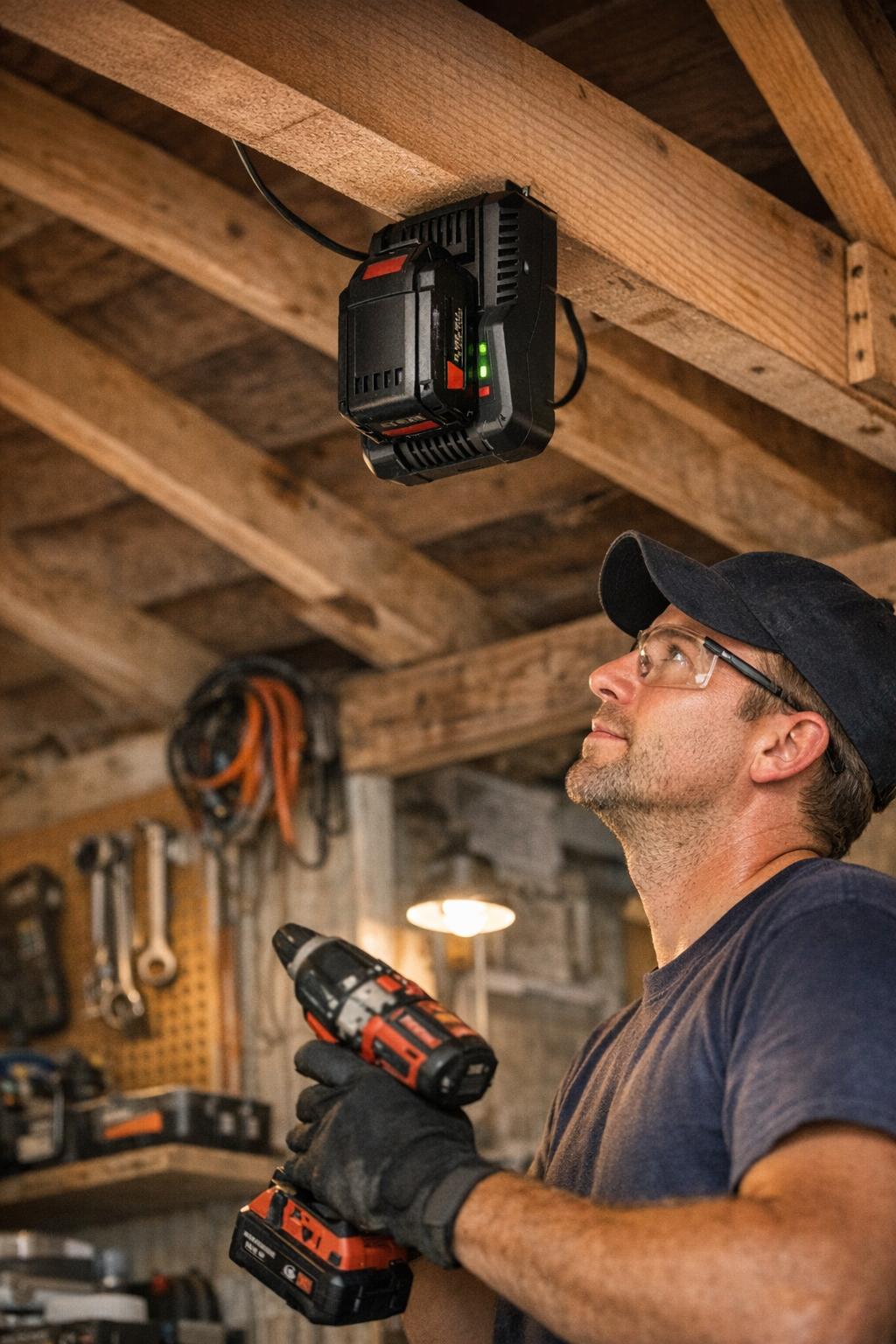
    The best charger means nothing if you banish it to a dead-air shelf or bury it on carpet. So many garages end up this way: charger half-lost under dropcloths, wedged behind bins, or pressed against insulation that smothers air flow. That’s how small heat issues become battery graveyards. But move the charger—hang it vertically with a half foot of empty air all around, up where the heat can actually escape—and you flip the script. Natural air flow starts to do its job. On swampy days, that means your charger can run 15-20°F cooler, even when the rest of the garage is thick and still.

    • No more burnt-plastic smells sneaking up mid-run
    • Charging times stop those inexplicable mid-afternoon lags and “cool down” pauses
    • Packs actually finish, so your next cut or sanding pass isn’t compromised by secondhand power

    It’s a tiny adjustment—five minutes on a rafter, a twist of a mounting bracket—but it means the difference between finishing on your terms or scrambling for one last desperate charge at sunset.

    Don’t Brush Off Warning Signs

    If your charger feels sticky, stinks of melted plastic, or routinely cuts out, it’s more than just “running warm”—it’s failing. And in the chaos of garage work, every lost cycle throws off your flow: a dead battery means the random-orbit sander waits, the impact driver sits, and nobody gets to start cleanup until the charger finishes reconsidering its life choices.

    Don’t fall for the “stack them all up” habit. Sidelining chargers shoulder-to-shoulder, or planting them on dense shelves, turns every fresh task into a waiting line for cool-downs. Especially when bouncing between soft pine drilling and grinding down MDF, or flipping from jigsaw to multi-tool, you can’t afford for your charger to dictate how many steps you take—or how crisp your cut lines look.

    Two Moves That Instantly Improve Battery Rotation

    • Give It Breathing Room: Mount your charger vertically, free on all sides—at least six inches clear. No more bins, no burying it on carpet scraps, no trapping it in shelving cubbies.
    • Keep It Clean: Hit the charger with a dust-brush every couple weeks—the same way you’d flick grit from a blade or blast out a stuck sander pad. Caked dust traps heat, leeching performance and lifespan without a sound.

    Why a Reliable Charger Matters More Than You Think

    Every cut, every tight fastener, every hour spent sanding relies on the next battery being truly ready. Unpredictable charging doesn’t just slow you down—it breaks precision, ruins your project rhythm, and leaves every tool working harder for the same result. Mount your charger right, keep it clear, and match it to your real pace, and you’ll start noticing jobs flow smoother: fewer stops, sharper blades, less end-of-day fatigue.

    When the charger keeps up, the tools deliver—and you finish the project exactly when (and how) you planned.

    http://gumboll.myshopify.com

  • Why Fixed Entryway Storage Fails as Household Needs Change

    If your entryway storage system needs tools every time life shifts, you’re not getting true order—you’re just buying delay. The cost shows up in the exact moment you realize: to fit winter boots, or squeeze in one more bulging backpack, you’d need a screwdriver. Suddenly, “organized” means “can’t adapt.” That perfect calm when the floor is visible and every shoe is in place? It breaks the second your routine outpaces your setup. Shoes spread, bags overflow, and now any change to your entryway is a project, not a quick fix. Even basic resets get stuck behind the friction of tools and time you don’t have.

    How Fixed Storage Becomes Friction in Everyday Rush

    At first, it’s easy to mistake rigidity for reliability. Day one: the bench fits everything, hooks all have a job, and the shoe rack lines up just right. But after the first week—after a rainy school pick-up or a grocery run with muddy sneakers and an overloaded tote—problems emerge. Cubbies no longer match what’s actually being dropped. You start forcing bags into barely-fitting spaces, twisting shoes at odd angles, or just tossing things onto the nearest open ledge. The hassle of finding hardware for a five-minute need guarantees it’ll be put off.

    And then the flow breaks. The pathway from front door to hallway shrinks as extra shoes pile up and benches turn into catch-all shelves. The entryway might look passable if you squint, but moving through it means dodging dropped bags and overflow, feeling the entry squeeze tighter with every “later” fix that never comes.

    When Adaptation Requires a Project, Small Tasks Stall

    Fixed storage resists you the moment your routine changes. Hardware-fastened panels or bolted-in racks mean every little storage tweak needs a tool—and time you only have on weekends, if ever. When the weather changes, or your kids’ gear balloons mid-season, the system turns each small adjustment into a drawn-out chore. Nobody fetches a wrench just to shift a divider, so umbrellas start living on the floor, new shoes wedge in wherever there’s a spot, and coats pile up in places meant for other things. The grand promise of “a place for everything” collapses into workarounds and edge clutter.

    The longer these mini-projects are delayed, the worse the drift. The entry space begins to serve furniture, not routine; resets are skipped, and temporary placements—like boots blocking the walking lane—become permanent obstacles. What was supposed to organize now traps you in last month’s pattern, no matter how your week shifts.

    Scenes From a Threshold Under Pressure

    • A school bag that once slid neatly in its cubby now bulges over the edge, landing sideways, blocking everyone passing through.
    • Shoe rows that outgrow their rack by Thursday, spreading down the wall and narrowing the space you use to unload groceries or let in guests.
    • Benches doubling as bag zones: not usable for sitting, just another surface overrun by overflow.
    • Raincoats and boots searching for spots—but fixed shelving leaves no give, so they end up draped or stacked where they don’t belong.
    • Piling up temporary items—returns, library books, gym gear—because moving anything “official” requires hardware, so the loose stuff just builds, sticking around longer than planned.

    These are not rare days—they’re standard whenever entryways face real, changing demand. And every workaround signals a system that looks orderly but acts rigid, turning tiny changes into gridlock.

    Why Visual Order Isn’t Always Functional Order

    Rowed cubbies, anchored hooks, and benches with fixed dividers sell the look of instant order. But their discipline fades as soon as real traffic hits—like a visiting friend’s extra coat, or a flurry of wet shoes from a rainstorm. If your setup can’t let you quickly adjust for a weekend’s gear or a one-time surge, it quietly loses ground with each mismatch. What once looked precise now feels inflexible—good for a photo, not for a lived-in week.

    Functional order is tested by surprise—not how tidy it seems, but how quickly it can bend, flex, and adapt without becoming work. A fixed system holds you in yesterday’s routine, adding weight to every change that doesn’t fit its first draft.

    The Difference: Adjustment Without Delay

    There’s a practical power in setups you can adjust instantly. Tool-free storage makes friction invisible—no projects, no putting things off.

    • Sliding bins under benches—shiftable in seconds, they absorb boots after a storm or slim down for summer sandals.
    • Instantly movable hook rails—let you change which coats or backpacks are most accessible, in one motion, not a weekend job.
    • Freestanding baskets or shiftable racks—placed where pressure is heaviest, they flex to catch overflow right when you need it, then pull back again.

    Switching in my own space from fixed, hardware-locked slots to open bins and tool-free hooks turned the “reset” from a project into a reflex. No more dreading the chore of unscrewing a panel. The bench stayed clear, not swamped with spillover. The bottleneck at the door opened—because every tweak could happen on demand, without breaking stride.

    If Every Reset Feels Like a Chore, the Setup Is Out of Step

    If you’re forced to wedge shoes, stack bags in corners, or sidestep a sudden block on the way in, your storage has fallen behind your actual routine. When “I’ll fix it later” becomes the norm and not the exception, movement jams up. Tasks like reopening the walkway, stowing a spontaneous delivery, or reclaiming the seat you meant to use become heavier each time the setup stays rigid. The fallout shows quickly: slower mornings, extra clutter, and more frustration as small barriers add up. The cost isn’t just mess—it’s wasted time and lost calm at your main threshold.

    The advantage of tool-free or modular setups is that sturdiness comes from use, not bolts. As long as you pay attention to capacity, these storage pieces flex without tipping or breaking—letting you reset on your terms, not around a hardware schedule.

    Building Entryway Resilience: Small Shifts That Matter

    Resilient entryway storage isn’t about how sharp it looks on install day, but how easily it updates under stress. Does your system let you clear a space for muddy boots, stash overflow gear, or give an unexpected delivery its own bin before the old routine resumes? When the answer is yes, resets become habit, not headache. “Wild item” baskets or at-the-ready hooks create fallback zones for those urgent, unplanned drop-offs. The moment that fallback fills, it’s a built-in prompt to reset—no tools, no hunt for hardware, just a few seconds and you’re back to clear lanes and uncluttered benches.

    Threshold Order That Lasts: Make Adjustments Easy, Not a Project

    In high-traffic entryways and transition spaces, change isn’t the exception—it’s the rule. Storage that lets you adapt with a nudge or a quick move will recover after a rush, not just dazzle on quiet days. Put off the system reset, and you guarantee clutter creeps from the edges. Make resets as easy as reaching and moving, and order lasts past the first round of shoes and bags.

    The real test of threshold storage isn’t what it hides—it’s how fast it recovers. Systems that can’t bend create bottlenecks; those you can shift by hand keep the path open, the bench usable, and your routine light no matter what walks in next.

    http://www.betweenry.myshopify.com

  • Creating a Stable Indoor Cat Setup to Reduce Nighttime Disruptions

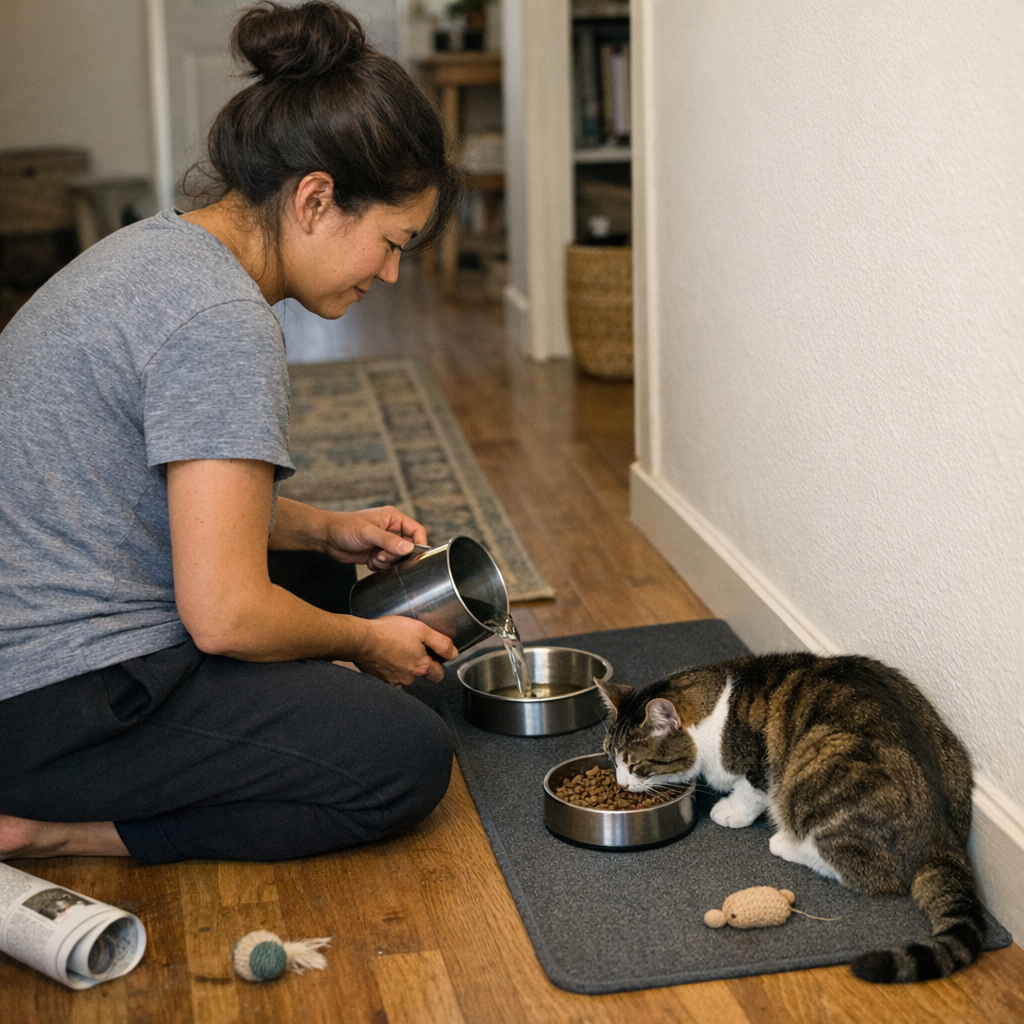
    The tidy feeding zone you set up at noon will betray you by 2 AM. That water bowl, seemingly anchored, edges into the hallway as you stumble out for a refill. The mat that stayed flat in daylight has rolled and dragged, its grip lost to a paw’s midnight shuffle. Toys, bunched in their designated nook, slip out one by one and wait for your bare foot halfway to the bathroom. These aren’t flukes—every overlooked shift in your cat’s corner creates a new snag, turning quick late-night routines into mini obstacle courses. What looks organized at a glance rarely survives a week of real, repeated use—especially after dark, when small changes turn into daily friction.

    The Hidden Instability Beneath a Tidy Surface

    Most indoor-cat stations look composed under regular light: mats squared to walls, bowls lined up, toys corralled. But once the cycle of use begins, instability creeps in:

    • Mats slide inch by inch—especially with high-traffic paws or one hard tail swipe—even when they seemed settled after the morning reset.
    • Bowls and feeders drift. A few meals, a brief head-butt, and suddenly the bowl that was flush to the wall now blocks the next pass-through.
    • Toys wander pathologically—always returning to the walkway or lodging under a chair right where your heel will find them.

    These silent shifts become visible when wet footprints appear past the feeding mat, or when you’re clawing for a toy under the sofa for the third night running. Order dissolves and reset work multiplies, all from the relentless, routine micro-motions of living with an indoor cat.

    Why Nighttime Exposes Every Weak Point

    Weakness in setup stays hidden until nighttime makes it costly. As the household dims, your cat’s quiet pacing turns each small misalignment into an interruption: a bowl jutting into a shortcut, a mat buckled right where she steps, a ball wedged deep under the table. The “good enough” setup shows its cracks in the hours when every step and pause is felt—by you and your cat.

    • Midnight checks turn from simple refills into late tasks: you nudge the water bowl away from the threshold, again.
    • The rolling toy under the chair? It needs to be fished out—again—for a clear path.
    • Litter mat, bunched just right, causes another trickle of grains across the floor, catching a sock at 1 AM.

    This is not just a matter of aesthetics. Repeated, unaddressed drift during off-hours can keep routines stuck and owners awake—over and over.

    Repeated Reset: The Frustration Behind the Motion

    There’s a gap between setups that appear organized and those that resist disruption. The difference comes out in repeated routines, not first impressions:

    • Refill block: The bowl shifts just far enough that you now need to use both hands—one to pour, the other to reposition—while holding back a cat eager for breakfast.
    • Wipe-down delay: Dried splashes under bowls, invisible until the morning, mean another round of bending and scrubbing you didn’t plan for.
    • Storage out of reach: Litter bags and scoops are technically present but always misplaced during a hasty cleanup, stretching a five-minute tidy into a circuit around the whole room.
    • Toy migration: That favorite mouse reappears in lounge walkways every day, no matter how often you return it to its proper spot.

    No single event stops the flow. But the slow, daily build of inconvenient adjustments—pushing, bending, collecting, chasing—eats efficiency, making tidy spaces feel less functional every cycle.

    When Looking Tidy Isn’t Enough

    An “organized” setup can still trap you in repeat work. Placing everything flush at the start feels done, but the real test starts after a few days: mat edge curled, water bowl shuffled loose, kibble scattered beyond last night’s reach. You end up:

    • Stalking spilled kibble on the daily walk to the coffee machine—even when it “should” have been contained.
    • Pushing the bowl back into the designated spot with a half-awake hand, only to see another puddle collecting where none should be.
    • Straightening mats, then discovering another edge rolling, funneling debris where cleanup is harder.

    Most of these issues emerge when no one’s looking—or when you wish you could look less. Tidy on the surface, painful beneath: that’s the real-world cost of setups built to look settled, not to hold up in motion.

    The Impact of Stability on Routines and Rest

    Purpose isn’t achieved by appearance but by structure. In repeated use, small setup weaknesses slow every step:

    • Wandering bowls require constant correction and double the reset steps.
    • Zones that don’t absorb the friction of traffic, refills, or cat energy invite more accidental mess and unplanned cleaning.
    • Predictable, anchored setups shrink the wipe zone and bring routines back to one spot—no more running laps to restore order.

    Cat routines become less choppy, owner sleep improves, and night interruptions drop—not because the setup is perfect but because it stops unraveling at every minor push or motion.

    Small Changes With Outsized Effects

    In testing real setups, the fix rarely means starting over. Swapping in a wider, low-profile mat that actually grips the floor can anchor a whole zone. It’s functional structure—removing the biggest causes of drift—with visible payoff:

    • Bowls stay in position, reducing hallway creep and keeping feeding areas contained, not spreading toward shoes or doors.
    • Kibble and water splashes get trapped early; mess no longer fans out into walkways or under furniture.
    • The cleanup target shrinks: instead of tracking bits from every corner, you handle one reliable spot, every time.

    Within a week: fewer disrupted nights, no detours around overnight mess, and a feeding and play corner that survives both cat rounds and human routines with almost no extra vigilance.

    Dealing With Where Setup Drift Really Shows Up

    Most drift goes unnoticed after the first night or two. Mats migrate just a half-inch at a time; by the end of the week, the zone has migrated across the tile. Toys veer farther from their return point until they’re a daily obstacle. “Fixes” like pushing the bowl or catching the mat corners become built-in habits, not solutions.

    The real burden is slow build-up: Each repeated detour costs another ten seconds. Every delayed wipe shaves away patience. If your cat’s routine seems to stall at a feeding corner, or you anticipate the new mess location every morning, you’re feeling the structure—good or bad—long before you notice the cause.

    Structuring Cat Zones for Real-World Use

    The best setups aren’t just “neat”—they actually reduce movement, friction, and missed resets over time:

    1. Reduce movement where it happens: Grippy mats, combined stations, and physical boundaries keep essentials anchored, so zones don’t sprawl under daily use.
    2. Centralize and simplify resetting: Mess, scattered toys, and water stay predictable: always in one spot, nothing hidden at the far edge, no new search routes.
    3. Let the structure absorb the tension: Anchored mats, dual-use stations, and toy-catch setups prevent daily creep without constant human intervention.

    The difference is clear after a few real cycles. The setup worth keeping is the one that feels easier to handle by week’s end, not just camera-ready on day one. The weak spots? They show up as lost time, blocked access, and one more cleanup that wasn’t on your checklist.

    Recognizing When to Rethink the Setup

    If you catch yourself bending down to recenter a mat every morning, chasing stray pieces of kibble on the same route each day, or seeing your cat pause instead of moving fluidly across zones, there’s probably a structural flaw waiting for an anchor or adjustment. The fix is rarely a full redesign. It’s noticing which item keeps shifting or which mess keeps spreading—then locking down that variable with a still, practical change.

    You don’t need a complicated overhaul to see relief. Focus on what’s moving, what catches you out of rhythm, or what your cat keeps circling. A single better-anchored station, mat, or zone can calm the cascade of small fails that unravel the daily pattern. For setups, resets, and routines that actually last, see what works in the long haul at StillWhisker.

  • Why Shallow Pantry Shelves Transform Restocking Into a Seamless Routine

    The test for real pantry organization isn’t how it looks after setup—it’s whether you can find and return anything on a Thursday night without reshuffling half the shelf. Deep pantry shelves might promise spacious calm, but within days, those extra inches become an obstacle course: items drift backward, categories blur, and every grocery run adds a new hidden layer. The real friction isn’t the mess you see, but the time lost digging, the duplicated staples forgotten in back, and the reset routine that gets slower every week. That’s where the difference between storage that soothes and storage that slows you down becomes obvious—fast.

    Why Deep Pantry Shelves Break Down So Quickly

    Deep, wall-to-wall shelves sound smart in theory: bigger storage, fewer interruptions along the wall. But real use exposes where the setup collapses. As weeks pass, cans get pushed behind boxes; the second row forms by itself; bins that seemed helpful become black holes. The initial lineup—labels out, grains side by side—lasts until real life kicks in. Soon, retrieving one ingredient means leaning in, shifting three things, and coming up empty anyway. A shelf that looked generous now forces you to double back just to check if you’re out of olive oil or if it’s lost in the shadows. Every restock becomes a partial excavation. This is how the promise of “plenty of space” quietly turns into daily inconvenience.

    Visual Access and Shelf Depth: What Actually Works When Used

    Functional pantry shelving isn’t about maximum volume—it’s about what you don’t have to move to reach what you need. Shallow, open shelving—ideally 10–14 inches deep—keeps everything visible and within a true arm’s reach. When shelf depth matches practical access, nothing ends up stranded behind, and even bulk staples stay in clear sight. Restocks shift from hunting to a single scan. The right depth means you’re not thinking about “systems”—each category naturally stays distinct, and the shuffling stops. Daily cooking stops requiring a search party, even when the shelves are full. The payoff isn’t just neat rows: it’s never wondering what’s missing or buying a second bag of rice just because the first one slipped out of view.

    The Hidden Cost of “Tidy” Bins on Deep Shelves

    Bins seem like a fix—at first. Post-reorg, every container lines up, each with a clear purpose. But as soon as groceries start rotating, the system buckles: bins overflow, labels lose meaning, and backup bags land wherever they fit. By the third shopping trip, you’re pulling out whole containers to find a single can, and overflow crowds the front again. The deeper the shelf, the less that bin logic holds up—each new item has more places to hide, more room to drift from its category, and more chances to delay dinner. The short-term “tidy” look hides the long-term reset fatigue.

    Scene from a Real Pantry: When Shelves Hide More Than They Store

    Picture the chronic trouble spot: a family corner pantry with two wide, deep shelves. Every weekend, new goods line up in the front row. But there’s never quite enough room—overstock forms a backup row, and mixes in quietly. By midweek, you’re shifting bags and boxes just to check for a basic ingredient. Hunting for cooking oil takes three minutes, brushing aside pancake mix you forgot you even had. Each misplaced item at the back is a potential double-buy or a meal plan detour. The shelf isn’t “failing”—it’s just not built for repeat access, and every trip becomes a small reorganization. That creeping annoyance isn’t a lack of willpower; it’s structural friction that multiplies every time the setup is used in real life.

    Moving From Deep Shelves to a Clear, Reset-Friendly Pantry

    Switching out deep shelves for shallow, open wire shelving (never more than 12 inches deep) eliminated the excavation cycle almost overnight. Adding a single pull-out bin for oversized grains meant bulky backups never blocked dailies. Now, nothing retreats behind. Categories remain distinct because the setup no longer allows overflow to hide in the shadows. When you can’t lose items to a second row, even a big grocery run doesn’t slow you down—everything finds its lane, and resets take minutes. Most telling: you don’t find yourself restacking just to make space for cereal or reaching twice for the same jar.

    The surprise isn’t beauty—it’s the absence of constant shuffling to keep things functional. Living with a setup that fights against your routines drains energy. Changing the structure changes the pattern: you’re no longer micromanaging, just returning things to their visible home.

    Physical Shelf Dividers: Small Change, Big Clarity

    Want to stop supplies from drifting? Add short dividers or bin inserts along the front edge. Every staple—broths, grains, snacks—gets an obvious boundary. Bookends and caddies aren’t for appearance; they pull items into repeatable lanes. Even limited shelving gains stability when permanent logic directs each reset. It’s not about over-sorting—it’s about reducing category drift. The real save comes on overwhelmed weeks, when there’s no time or interest in a full overhaul: dividers mean you can reset, not reorganize.

    The Real Test: Does Your Pantry Bounce Back or Bog Down?

    Perfect-looking setups rarely survive routine use. The real value is in the “return flow”—how fast you restore order without a total restack. Systems built for the after-photo degrade as soon as new groceries arrive. Deep storage slows retrieval, buries staples, and amplifies low-grade chaos. Shallow, divided shelving bounces back—because the structure never lets categories blur too far or staple items get buried.

    Shared pantries, mixed-use zones, and high-traffic shelves amplify these patterns. The more hands reach in, the more little resets multiply. With routines anchored by visible, accessible storage, you stop losing time and start using space as intended. That means less friction, not just better lines. Hidden storage is only useful if you can retrieve from it without disrupting everything else.

    Tips for Daily Pantry Calm That Lasts

    Refuse to let the busiest zones become overflow dead-ends. Assign each staple a stable position along the accessible front, structured by shelf depth, not just by bin. When adding trays or caddies, prioritize what you grab every day—or every week—over what simply fills the space. Place heavy backstock higher up or elsewhere, but keep daily use zones clear of backups. This way, you avoid rescue missions just to assemble a basic meal.

    For hybrid pantries that blend daily and long-term storage, create an intentional break: backstock belongs higher or deeper, never behind or beneath the most-used items. Keeping categories visible and fixed up front shrinks lost time, and stops the creeping clutter that feeds each week’s reset fatigue.

    The Lasting Difference: A Pantry That Works Hard Without Looking Like It

    The true reward isn’t a perfect display—it’s simple retrieval, faster resets, and zero lost staples. Good storage makes items easy to find and even easier to return. That’s what separates “plenty of space” from genuine pantry flow: a system that fits real life, absorbs big shops without chaos, and never turns convenience into extra chores.

    Explore storage systems built for real routine at Gridry.

  • Why Overfilled Storage Creates Hidden Clutter and Slows Daily Routines

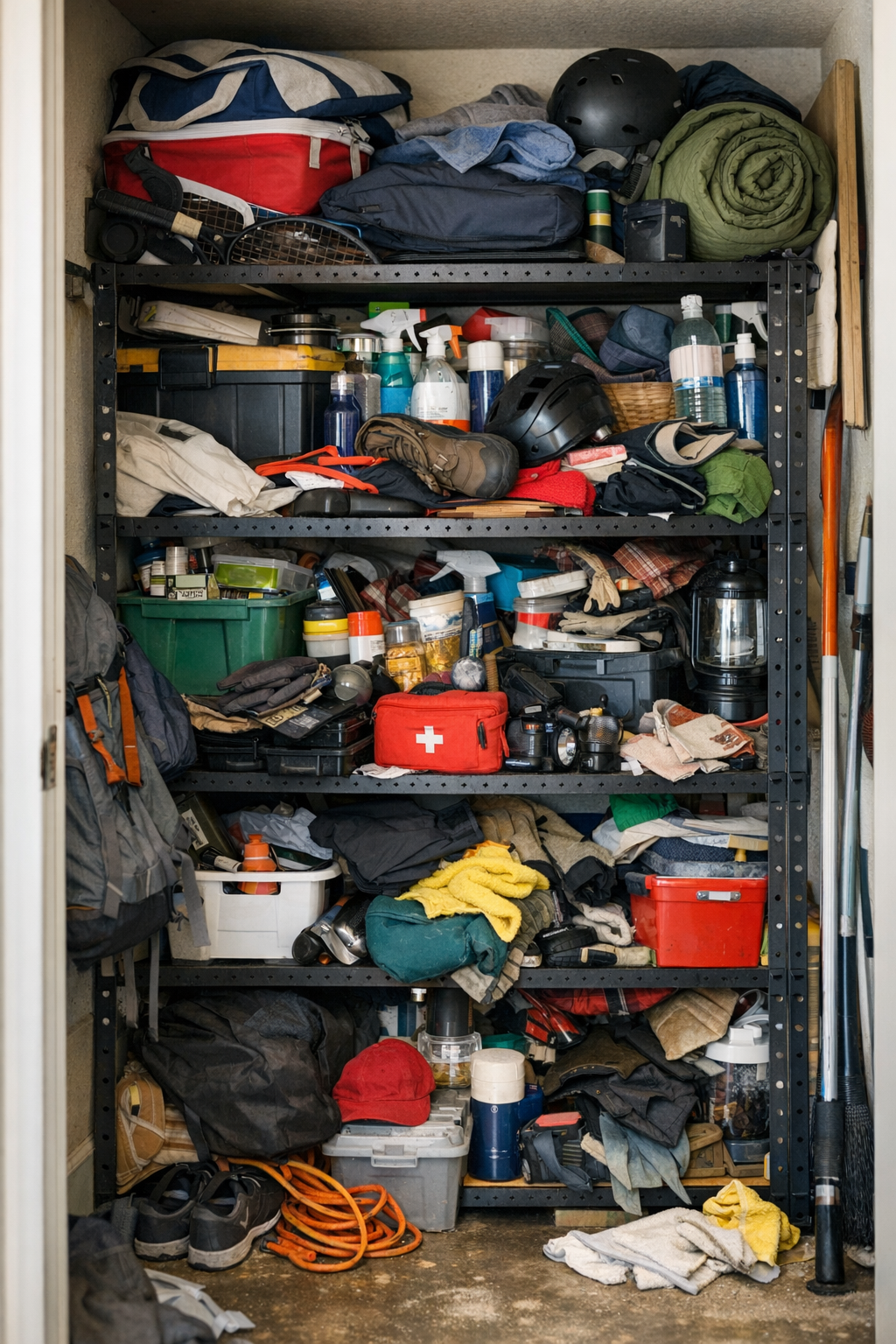
    You open a closet to grab a jacket. One sleeve is caught on a bag handle. Gloves you stashed up front have slid behind laundry detergent. A shelf that looked organized on Sunday now seems booby-trapped by midweek. This is the invisible grind of everyday storage: the rows and piles that promise order, but slowly unravel with every reach, grab, or rushed return. That surface-level neatness rarely survives real-life routines—and by Thursday, the promise of ‘organized’ often collapses into a mess of categories lost, stacks slipped, and time wasted.

    When “Everything Fits” Isn’t the Victory You Think

    Your drawer closes. Every shelf looks tidy after a Saturday reset. For a moment, the system seems perfect—every item has a slot, nothing’s out of place. But come Wednesday morning, that rulebook is out the window. Jackets slide down underneath backpacks, folded shirts grow unstable and teeter, and shoes who once enjoyed their own cubby now pile heel-to-toe in a slow, silent landslide. You needed to grab one thing in 10 seconds; instead, you’re shifting two piles just to free it.

    The frustration isn’t from bad intentions, but from overload. When shelves and bins are filled to the edge, there’s simply no slack in the system. ‘Grab-and-go’ turns into ‘shuffle, nudge, and hope the tower doesn’t fall’—and every small inconvenience multiplies over time, tangling categories and turning resets into a recurring chore.

    The Quiet Creep of Hidden Chaos

    At first, the chaos is invisible—a basket looks fine, but you notice yourself reaching awkwardly for mittens underneath hats, or searching behind bottles for the right spray. The space doesn’t explode overnight. Instead, each normal use leaves small signs: you return an item but have to wedge it into place because everything is jammed. Next time, it’s easier to just toss it on top. The spiral begins.

    These subtle failures pop up everywhere:

    • Utility closets where rags and extension cords slowly mix with screwdrivers and tape, until finding anything is a hidden-object game.
    • Hallway shelves where “just for scarves” morphs into a jumble with wallets, mail, and whatever needs to be out of sight fast.
    • Laundry rooms where folded towels are knocked flat by a bottle of stain remover perched too close to the edge, or lost completely behind a stack of empty hangers.

    Early Red Flags: Spotting the Moment Organization Slips

    You don’t need to wait for total chaos to see trouble. A few subtle cues tell you when your storage is fighting against you instead of working for you:

    • You can’t grab one thing without disturbing something else. If picking out a pair of gloves triggers a cascade of shifting bottles, the shelf is overbooked.
    • “Zones” get blurred. When bins meant for belts now house tangled socks too, or shelves meant for “sports gear” absorb art supplies, clear categories have dissolved.
    • You double-check constantly. If every retrieval starts with a scan to see what’s shifted or what’s hidden, order is slipping—and so is your time.

    Picture that utility shelf after a dozen rushed mornings: the box of lightbulbs you placed up front is now wedged between cords, and getting it out knocks over three things. You promise yourself a reset, but there’s never time. Every use makes the system a little less functional—and a little more tiresome to face.

    Why “Filling It Up” Always Backfires

    It’s tempting to squeeze in one more bag on a closet rail or squeeze another box onto a shelf—after all, “maximizing space” sounds like a win. But in practice, the tighter you pack it, the more every action becomes a hassle. Categories mix, access slows to a crawl, and returns become an exercise in patience. Soon, you’re storing stress alongside the stuff.

    Real usable space isn’t just about physical volume; it’s about flow. Shelves with clear space between items invite quick, one-step use: grab, return, done. You see what you need in a sweep. Resetting is a matter of returning one thing to its home, not reshuffling an entire lineup.

    The Practical Test: Remove a Third, Gain a Week of Order

    Want to see how much your storage is working against you? Remove just one third of what’s packed onto a shelf or into a bin—then live with that setup for a week:

    • The shelf feels easier on the eyes and hands—gaps appear, and you can retrieve what you want with zero drama.
    • Everyday items don’t have to share, so nothing gets shoved into the wrong spot.
    • Your quick tidies actually hold; one motion returns an item neatly, instead of layering or cramming.

    This change isn’t about perfection or minimalism. It’s about building a system that doesn’t collapse as soon as routines get hectic or more than one person starts using the space.

    Bins and Baskets: The Double-Edged Tools

    Bins and baskets help divide categories and contain clutter—up to a point. But stuff them too full, and you’re trapped. One entryway basket meant for hats quietly becomes a burial ground for everything in your pocket by Friday. Mixing categories in desperation means next time, you’ll be sifting through a tangle hoping to find that one glove. And every time you dig, you scramble the rest.

    Tip: Give your most-used items prime real estate: a portion of open shelf where they land and leave in a single move. Reserve bins for truly related items (not just “everything small”), and leave them roomy—half-full bins don’t just look calmer, they work faster and stay organized through the week.

    Everyday Wins: Recognizing When Storage Is Actually Working

    The best storage systems reveal themselves quietly when used—not after a reset, but while you’re living through back-to-back mornings and busy weeks. You’ll notice:

    • The entry shelf never becomes a second junk drawer; keys and sunglasses stay in line.
    • Shoes remain in a row you can actually see—stacking and hunting are gone.
    • Folding and putting away laundry doesn’t mean leaning piles exploding onto the floor.
    • You grab what you need in one move, and every category is still encounterable at a glance, without digging.

    When your spaces support your routines—they never ask you to reshuffle or hunt, even during the busiest days—you stop dreading resets and actually trust your own system. That’s the difference between an organized home and one that’s just temporarily tidy. It’s not about display; it’s about surviving daily life, every week, with less frustration and more ease.

    Find practical closet and utility storage that works for real daily routines at ClosetWorks.

  • How Short, Calm Pet Greetings Improve Daily Care Efficiency

    Why the First Pet Greeting Shapes Every Step That Follows

    That chaotic first moment home—dog claws on the floor, cat brushing your leg, eager faces crowding the door—does more than welcome you. It exposes every weak point in your routine. Bowls nudged sideways, water tipped onto tile, the towel for muddy paws already missing. Even five extra seconds at the door can throw off the order: feeding starts late, water bowls don’t get changed, or you’re shuffling bags just to reach the supplies that should be at hand. Over a week, these split-second delays pile up, making everyday care feel slower and harder, and turning what should be a quick reset into another fractured task. A pet supply setup that looks neat on Day 1 often breaks down exactly here: at the threshold.

    The Stacking Effect of Small Delays

    The fallout of a drawn-out greeting never hits all at once. It’s the slow grind of repeated missteps—feeding skipped by fifteen minutes, fresh water put off, paws forgotten until dirt streaks the floor. Every delay pushes the next routine out of rhythm. Owners juggling remote work or family schedules can spot the pattern: one missed cue at the door, and the rest of the day’s care never quite catches up, resetting only after several days of low-grade friction.

    Scene: Reaching for Supplies, Finding Friction

    Step in with groceries, sidestep a jumping dog or zigzagging cat, and try for the water bowl—only to bump into last night’s chew toy. The towel for dirty paws is at the far end of the hallway, not the door. The grooming brush that’s meant for quick grab-and-go has migrated into another room. A simple refill or wipe-down becomes a scavenger hunt. The supply exists, but the energy to reach it is pushed aside by clutter and misplaced tools left in the wake of one overexcited welcome. Instead of a two-minute reset, you’re stuck doubling back, then wondering why cleanup always feels one step behind.

    How Order Gets Lost in the Daily Rush

    Initial setups often pass the eye test—bowls together, wipes restocked, leashes on a hook. But come day three or four, regular greetings turn hectic and order unravels: water splashes beneath the bowls, containers slide out of place, and supplies drift further from their target spot. By the time you finish one simple feeding, you’ve already lost track of half the essentials, or are doubling back for treats and towels. What looks organized ends up working against you, with the area tidy, but the flow jammed by items being just out of reach or reset at the wrong time.

    Why a Repeatable Signal Matters

    Cutting off excitement with a harsh “no” doesn’t work. A visible, repeatable cue—a hand to the bowl, a pause at a mat, a distinct word—lets you and your pet shift from chaos to care. After just a few days, the pattern sets: entrances get shorter, supply hunts shrink, and care resets fall into place. Suddenly, it’s not about hurrying affection along, but about letting one small action become the anchor for everything that follows—feeding, water refills, post-walk wipe-downs. The door’s threshold becomes a switch, not a stumbling block.

    Real-Life Repeats: Where the Routine Slips

    Inconsistent setups give themselves away quickly. Water lingers in bowls past its best moment. Paws don’t get wiped during the rush to get dinner started. Brushes block quick access to food storage, or mats slide aside and never get fixed. Even after reorganizing, the same friction creeps back: towels too far to reach, treat jars misplaced, cleaning supplies hidden behind a stack of bags. Surface order returns, but the actual function—the ability to reset quickly after feeding or a walk—lags behind, dragged down by friction points you can’t ignore.

    Practical Adjustments for a Calmer Flow

    The adjustment isn’t complicated: rein in the greeting, use one clear cue, and pivot directly to care basics. Touch the bowl edge, say a cue word, or pause together at a visible mat every time. The signal matters more than the mood. This isn’t about shortchanging time with your pet—it’s about keeping the first minute from derailing the rest. Fast greetings prevent the snowball: feeding routines actually run on time, water bowls get refilled before you forget, and cleaning fits the flow rather than interrupting it. Consistency calms both you and your pet, and routines begin to work instead of working against you.

    The payoff is visible by day’s end: you’re not scrambling at night to catch up on resets, and your pet isn’t left waiting or confused by a pattern that changes with your energy. A well-timed, brief greeting means more time—and less mess—later.

    From Tidy to Functional: Closing the Loop

    Order isn’t just how supplies look lined up; it’s how easily you can grab that towel when paws hit the mat or refill a bowl without kicking aside toys. A setup that looks calm rarely stays that way unless the routine behind it works under pressure. The real fix is rarely dramatic: one cue, one reachable hook, one spot for the basic tools that never drifts from the entry zone. Most problems—spilled water, delayed feedings, forgotten wipes—fade when routines run on signals instead of scattered improvisation.

    Messes and interruptions still crop up, but the cycle resets faster. The difference isn’t that the home looks perfect; it’s that every care step, from post-walk wipe-down to evening feeding, folds naturally into the flow. Over time, what started as a tangle at the door becomes a pattern that makes pet care lighter, steadier, and more sustainable—no matter how many times the toys wander off or the routine takes a hit.
    For more practical solutions and tools that help your home routines stay steady, visit our shop.

  • How Organized Carry-Ons Can Slow Your Travel Flow and What to Do Instead

    There’s a gap between how your carry-on looks at home and how it actually works the second you’re forced to dig for a passport in a crowded security line. What looked organized—color-coded pouches, tight stacks, empty outer pockets—turns fumbly fast when a document vanishes under a tangle of chargers, or an ID check interrupts your “perfect” packing logic. Travel exposes packing choices that seemed smart until you watch yourself open, search, and repack the same bag—over and over—while others move past you.

    When “Neat” Doesn’t Mean Efficient: The Dilemma of the Organized-But-Slow Bag

    It’s easy to believe that a lined-up, tidy carry-on guarantees a smooth airport experience. But the first time you’re up against a moving security tray, that layout cracks: a passport ends up beneath headphones, an emergency pen slides under toiletries, and pockets that looked empty overflow into confusion. Even with a neat “system,” you catch yourself unzipping, retracing, or shuffling, just to dig out what should have been instantly reachable.

    These moments aren’t big disasters, but they slice into your travel rhythm. Each pause to fish out a gate document, or each unnecessary search for a charger, eats into your speed. That invisible friction builds—soft at first, then quietly relentless.

    Travel Movement Reveals the Weak Spots: Common Repeated Friction Points

    Security lines punish poor access in seconds. Maybe you started out organized, but now your boarding pass is under two pouches. As security trays move, you’re juggling layers, pulling what you need from the bottom, then awkwardly rebuilding on the fly. One misplaced cable pouch can force you to repack right in front of strangers—shuffling your way back to “order” while the line presses on.

    Then, at the gate, your bag is half-open, revealing a puzzle of stacked cases. A boarding pass check means unzipping what made sense at home…but blocks you now. Even one wrongly buried item slows the whole line, turning your setup into a source of stress instead of speed.

    It’s not just about raw speed—travel flow breaks down when the bag forces you to reach, dig, and reset while space and time shrink around you. Enough small interruptions, and even an “organized” bag starts dragging you back.

    Stacking and Overlapping: When Order Becomes Obstacle

    The classic mistake? Stacking: chargers on top of wallets, cables beside documents, everything layered for visual neatness. At home, this compresses well. But at the airport, the stacking logic fails. The moment two essentials are in the same zone, you’re force-pulling one out, only to awkwardly repack in mid-conversation or in cramped conditions.

    Repetition exposes the flaw. The third time you go for ID, it now means: unzip, sift, extract, zip, and immediately realize you’ve missed the next item. Even a slim, orderly setup backfires when every retrieval blocks the next movement. The more items you stack, the more you disrupt your own trip.

    The bag stays tidy in theory, but the real test is how much overlap you have to undo on each reach. Perfection at home becomes friction during use.

    Small Delays Add Up: The Cumulative Drag of a Flawed Setup

    One misplaced boarding document won’t ruin your day. But the time cost isn’t obvious until you add up each small hassle: sliding out a pouch for headphones, digging past snacks to reach cables, shifting comfort items to retrieve travel paperwork. Each repeated micro-delay silently accumulates, breaking your flow with every segment, every checkpoint, every gate.

    That drag isn’t dramatic—but when your trip includes a layover, or your final connection is tight, you feel the weight grow. Even if you pull it together at the next gate, by trip’s end there’s a sense of lost rhythm—and you’re weighed down by invisible extra steps that started small but multiplied with every round.

    Repacking After Each Use: An Invisible Burden

    Ask frequent travelers about real pain points, and “repacking” comes up fast. It isn’t the initial setup—it’s the cycle that repeats: open, retrieve, reshuffle, restore, only for another checkpoint to force the sequence again. At a busy TSA checkpoint, a single out-of-place pouch becomes a tray-side repack while others crowd in, raising the pressure and pushing your flow further off balance.

    It doesn’t end at security. No traveler wants to pull three things out just to grab a snack or earbuds in a cramped aisle seat. Yet an overloaded main compartment or mismanaged outer pocket means exactly that—rummaging, re-stacking, and starting the whole retrieval cycle all over, no matter how organized you thought you were.

    Building a System Around Movement, Not Just Aesthetics

    The real breakthrough isn’t a visually flawless bag, but a system built around access in the real world: pressure, time crunch, and awkward space. That means separating what you need in motion from what can stay out of the way. Assign a “never buried, always-reachable” spot for your boarding pass. Give tech and cables their own separate pouch, not cohabiting with travel docs. Comfort gear—eye masks, balms, small snacks—live in their own section, routed for one-handed grabs instead of hidden beneath other gear.

    After running the same bag through three TSA checks, it’s obvious: only setups where every high-use item has its own ready spot keep your trip flowing. It’s not about how nice it looks packed—it’s about reaching what you need, in the moment, without breaking stride.

    Prioritize Access Over Visual Slimness

    Travelers often don’t want to “bulk up” their slim, neat carry-on by moving essentials to outer pouches. But the tiny cost of a less sleek shape pays off—no more digging for zipped-away key items while the line waits. A slightly fuller exterior is nothing compared to the hassle of invisible essentials blocked by perfect order. Faster reach means less stress, fewer zipper passes, and less visible anxiety, whether you’re squeezing into an aisle seat, shifting for overhead bin access, or standing mid-cabin with others waiting behind you.

    Practical Adjustments for Real Repeat Use

    Group only what travels together in use, not just in theme. If you genuinely grab your passport and charger at the same time every trip, fine—keep them paired. Otherwise, separate urgent-retrieval gear from comfort items, so nothing unnecessary blocks your next move. Even one less double-reach or stop-and-repack leaves you less scattered, more clear-headed, and moving through transitions instead of stumbling through them.

    Setting Up for the Real Travel Rhythm

    The right carry-on setup isn’t about “packing well”—it’s about building for actual travel rhythm: security trays, back-to-back boarding checks, in-flight moments when you need something now. Stacked, overlapped layouts look beautiful but cost more every time you move. Instead, create obvious zones for documents, tech, and comfort. Try a home test: pack your usual way, then run live quick-access drills. See what causes hesitation, where hands retrace, where order falls apart. Adjust until every frequent-use item is accessible without a puzzle, even on your third pass through security.

    The real value of your carry-on system isn’t how stress-free it seems at the start, but how much lighter and smoother it feels with every repeated use—as you loop back through the rhythms of travel again.

    CarryOnSupply — practical tools for smoother carry-on travel