
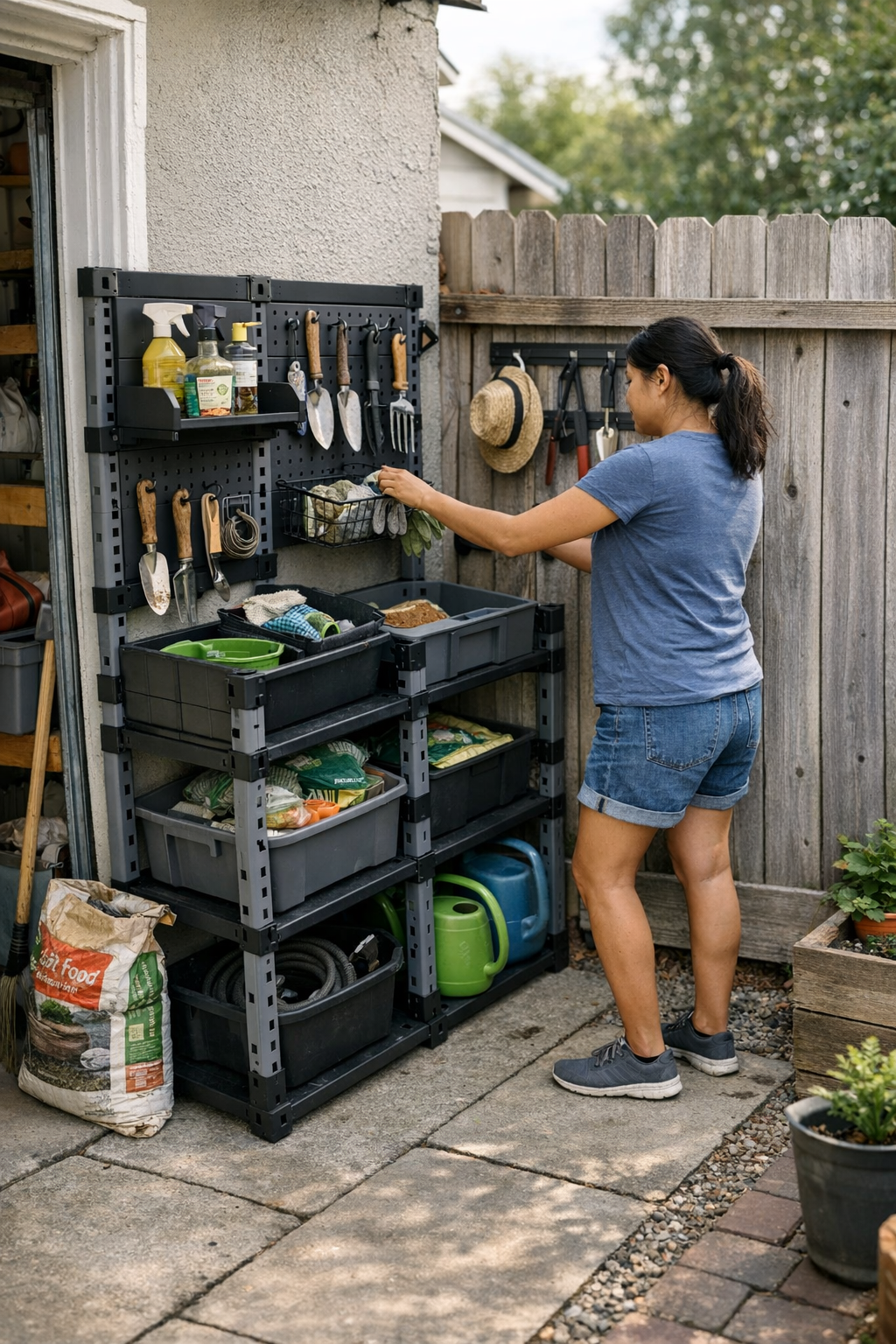
The real test of outdoor storage isn’t how tidy it looks right after setup—it’s how quickly order unravels when more than one person starts using it. Walk into any backyard corner, side-yard strip, or patio-edge utility zone and you’ll see it: big deck boxes lined up straight, a rugged shed, rows of “weatherproof” bins. The first afternoon, everything appears under control. But let a family, roommate, or two neighbors put the area through a week of lawn work, outdoor meals, or bike tune-ups. Paths that were wide enough on day one end up narrowed by wayward buckets. A bin meant for tools gets hijacked by outdoor toys. The gear meant to hang on the wall gets pushed into a pile near the gate. What once felt solved is now a reset ritual—just to keep the area usable for basic routines.
How “Tidy” Slowly Turns Sloppy
The pattern repeats everywhere: what starts as a few bins or a single storage chest ends up complicated by different people’s return habits. Maybe your gloves end up on the patio table, the trowel hides behind the shed, or the mower blocks access to the extra folding chair. Each new mismatch isn’t a crisis, just one more stumble. When one person’s “good enough” is another’s “where did that go,” the area stops resetting itself. Someone—not always the same person—starts reshuffling buckets, uprooting stray rakes, or pawing through piles for that missing garden fork, while everyone claims the setup “mostly works.”
The invisible tax is time and repetition. Most people don’t refuse to reset; the structure just doesn’t reveal mistakes until they’ve stacked up. Hide a return spot in the back of a deck box or shed and you invite quick shortcuts—just set it nearby, “just this once.” Those shortcuts accumulate until one person has to dig out the whole mess just to get the routine moving again.
Why Floor Storage Breaks Down in Real Use
Deck boxes and single-chamber sheds advertise simplicity, but after a few real weekends, the limits show:
- Thrown-in tools and gloves settle to the bottom, quietly lost until the next full excavation.
- Two people reach for different things at once—the chest becomes a bottleneck, one person rummaging while the other waits or blocks a walkway entirely.
- Overflow erases zones. Patio cushions land on gardening gear, kids’ balls wedge into corners, and the line between “organized” and “buried” blurs fast.
In-floor storage doesn’t just eat space—it swallows time. You end up shifting half the unit’s contents onto the ground for a quick grab, then rush to cram everything back while the next person tiptoes around, wondering where the broom landed. The area might look “put away,” but only because all the real friction is hidden.
What Hidden Clutter Actually Does
Floor bins flatten out boundaries. That new pack of pruning shears gets lost behind last fall’s gloves. Outdoor hoses slip under a tarp at the bottom. Every forgotten return weakens the whole system—not because anyone’s careless, but because the layout muddies what counts as “returned.” Backlogged items don’t jump into view; trouble goes undetected until you need it—right as the sun’s going down or the rain starts moving in.
How Wall and Modular Systems Break the Pattern
Wall storage changes the rules by putting everything on display. Line a fence, gate, or garage-edge wall with racks, modular grids, or vertical rails and you expose order and disorder at a glance. Long-handled tools hang clear. Pruners, gloves, and hose heads claim consistent “homes.” The minute something is missing or off, the gap is visible—even on a rushed pass-through.
Wall systems refuse to let buried messes collect. Unlike deck boxes, you aren’t reaching blind or spreading tools across the floor just to check inventory. Instead, the absence of a shovel or the sudden overcrowding of a rail is impossible to ignore. Every user gets a nudge: put it back, not just down.
Flow, Not Friction, During Everyday Use
Picture two people in a narrow side-yard stretch. One wants the weed trimmer; the other’s after patio cushions. With a chest or bin, they bottleneck, negotiating the lid and fighting for elbow room. With wall-mounted zones, each grabs from their own section—no sidestepping, no waiting for a rummage to finish, no blocked return path. If an item’s missing or misplaced, it jumps out during the next walk past. The pileup is ended before it starts.
Modular and wall setups shape the return flow: instead of shuffling through piles or guessing where things will fit, each zone prompts accountability. When new clutter builds up—kids’ water toys, awkward rakes, extra boots—it’s immediately seen. The fix goes from being a dreaded monthly project to a quick, obvious reset shared by anyone passing through.
Shared Use, Shared Order—If the Details Work
I saw the difference firsthand at my garage threshold. Most-used hand tools and gloves moved to a rail by the main gate, just above the reach of our youngest but in direct line for anyone hauling mulch or moving bikes. Instead of five minutes spent scanning a bin or digging behind bags of soil, the wall became the default destination. Stray trowel? Nobody wonders where it should go. Overflow in the corner? The wall shows what’s getting jammed and what’s missing. Perfection never lasted—but reset moments shrank to a quick adjustment, not a half-hour cleanout.
Practical Fixes From Real Repetition
- “Grab-and-go” should mean never buried. The most-used gear belongs at eye-level, near entrances or gateways, with zero barriers to return.
- Modularity wins against changing routines. Seasonal swaps, shifting sports gear, new battery tools—walled sections adjust easier than bins. Tweaking a few hooks beats dumping another crate on the floor.
- Dead corners reveal themselves fast with wall setups. That patch behind the gate or by the compost pile? A single rail or upright bin deflects clutter before it stacks past being fixable.
The Difference You See on the Tenth Trip—Not the First
It’s easy to look organized on day one, especially when everything’s freshly sorted. But the cracks appear the first time someone needs a large tool and finds cushioned overflow blocking the way. Or after a rainstorm forces a scramble to shelter gear and nobody has a clear drop spot. Effective storage setups aren’t about erasing disorder altogether. They make any early-stage mess obvious—spread out, not buried—so small resets take seconds, not an unseen hour dumped on one frustrated organizer.
Wall-mounted and modular systems aren’t immune to mud, awkward gear, or soggy days. Every outdoor layout carries its own compromises. But layouts that force everything onto the floor hide problems until they become jobs. Wall systems keep pressure points in sight, letting real users see the reset point long before frustration builds—and making it normal for everyone to share the load, instead of letting chore duty sneak back to one reluctant person.
If your storage corner keeps circling back to the same old mess, it’s probably not laziness—it’s the setup turning “organization” into a moving target. Build around the way your space actually works: sometimes crowded, always shared, rarely slow. The right structure lets you reclaim time, skip the pileups, and finally enjoy a space that helps you move, not just store. Resetting becomes part of the flow—not a setback you keep dreading.