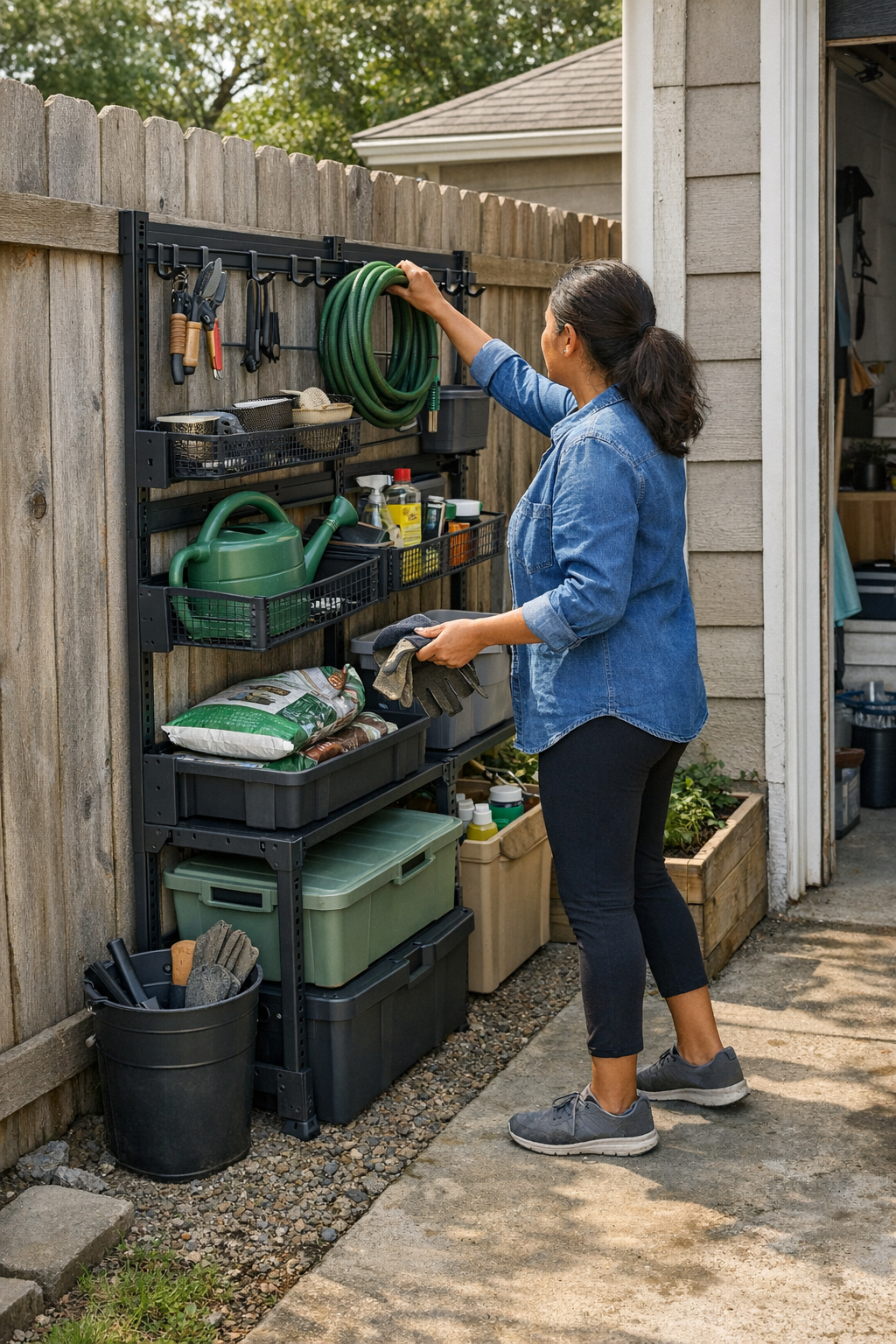
The initial payoff of installing a wall-mounted rail system is real—standing back, you see bins and hooks in perfect order, the floor finally open, and—just for a moment—it feels like you’ve finally outrun the chronic garage mess. But that clean sweep rarely survives the first week. The everyday reality—new gear dropped off, tools cycled in and out, or a folding table suddenly appearing—quickly exposes the stubborn limits of any fixed setup. The “organized” wall you proudly admired becomes something you’re constantly working around, instead of working with.
When “Organized” Turns Unworkable
In theory, static wall panels promise lasting order—every item assigned a place. But in practice, their one-size-fits-all logic never keeps pace. Tools rotate with projects, season bins swap, and surprise donations (or returns) force their way into your storage plan, Monday morning or Saturday sunrise. What fit perfectly around last spring’s gear becomes a straitjacket for whatever just arrived.
This is where frustration creeps in. A new garden trimmer or awkward extension pole? If the rail is already full, you’re stuck dismantling half a row just to shoehorn it in. Minutes drift away as you juggle bins and hooks. The traffic flow jams. “For now” piles start to form in corners, and what was a sleek wall display devolves into a session of real-life Tetris every time you need to pull something out or put it back.
The Trap of a Fixed Layout: Where Smooth Starts Break Down
It’s not just about looks—it’s about how a setup handles the churn of actual use. Fixed wall systems freeze each slot, so every shift in your routine kicks off new hassles:
- Blocked returns: Big tools can’t slide back home without unpacking half a row first.
- Overflow builds: There’s no place to coil up a hose, so it sprawls across the only walkway.
- Stagnant corners: Stray items that don’t fit anywhere else collect in zones you can’t really use.
These little snags compound—they don’t feel major until your “reset” ritual stretches from a quick tidy to a 20-minute sorting ordeal. You start stashing things on the floor, stacking hooks, or dumping tools wherever, just to end the day. What felt organized last week gradually starts tripping you up.
Modular Storage: Built for the Real Rhythm
Unlike rigid systems, modular rails and rolling carts adjust as your needs shift. Their advantage isn’t in clever gadgets or showroom sleekness—it’s the everyday reduction in wasted effort each time your setup flexes. Instead of forcing a big rearrangement when anything changes, modular options let you carve out space or shift zones in seconds.
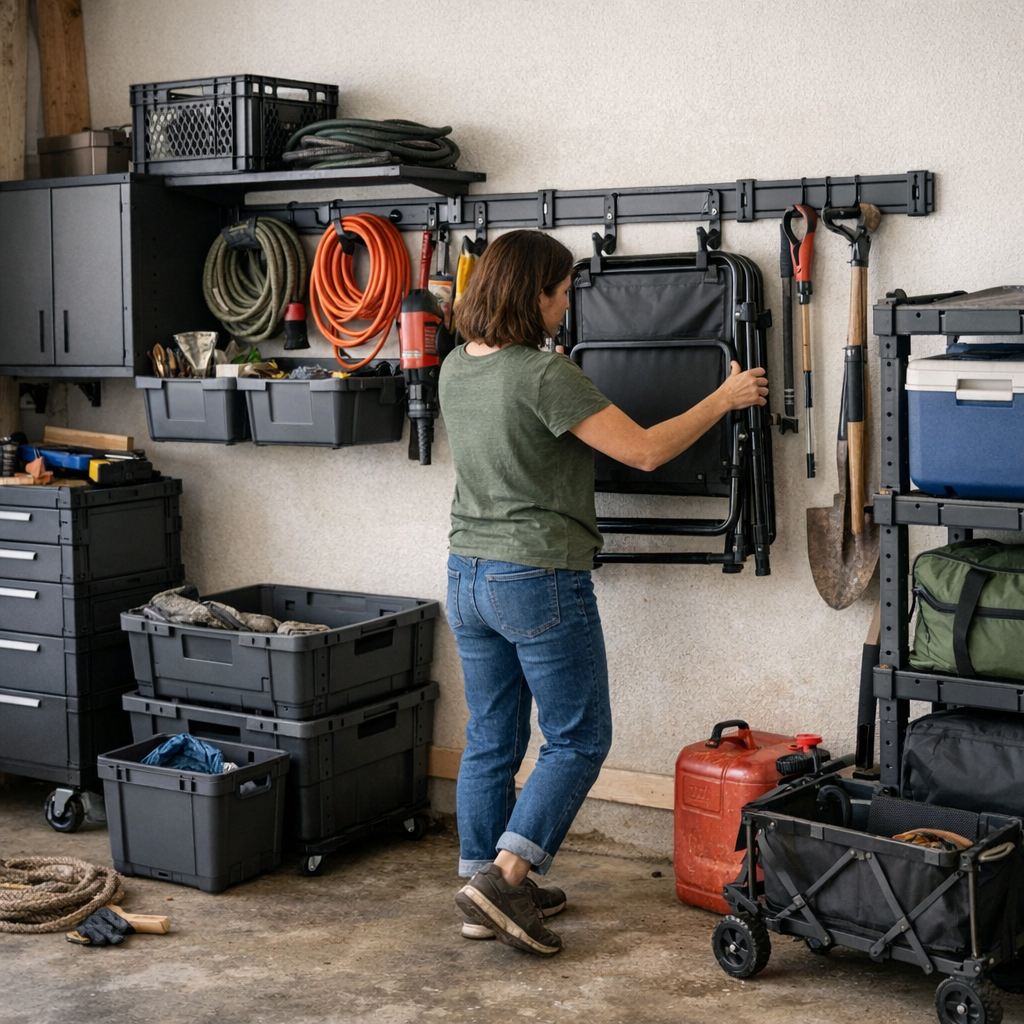
Consider one mundane but common scenario: A neighbor swings by and drops off a folding table. If your fixed wall is lined edge-to-edge, there’s nowhere it fits unless you pull down two bins, move things around, and hope you don’t spill everything in the process. But with a modular rail, you slide a hook, pinch space between bins, and hang the table right where you need it. The rest of your zone stays put—no domino effect.
Mobile carts bring a similar agility. Need the workbench clear for a weekend project? You can roll a loaded cart to a new corner without rethinking the entire storage plan. Over time, these details make a huge difference—traffic lanes stay open, pileups get avoided, and your floor doesn’t disappear under “temporary” stashes that linger for months.
How Fixed Setups Derail Day-to-Day Flow
Symmetry and neatness fade into friction once exceptions show up. That wall of bins that fit your old lineup leaves zero slack for extra-long shears, a surprise rain barrel kit, or rotating seasonal gear. Every new item means shuffling the whole lineup, or cramming things into whatever space is left—even if it blocks a path you use all week.
For small spaces, rigid layouts double the pain. A blocked spot means you’re sidestepping bins under tables, nudging carts that always seem in the way, or doing circuitous laps just to get the right tool. What was once a one-step reset now nags at you all week until the floor fills or you give up and let chaos creep back in.
Where Flexibility Quietly Wins: Resetting in Real Time
Here’s what stands out over time with modular setups, especially if you’ve been burned by rigid layouts before:
- Shifting zones take minutes, not an afternoon, when new gear appears or storage needs suddenly change.
- Binned areas can collapse or expand, reclaiming floor space or swallowing overflow before it sprawls.
- Carts glide left or right to free up blocked corners, or disappear entirely when clear space matters more than storage density.
- If overflow keeps hitting one section, you can “grow” that area by sliding hooks, no tools (or all-day projects) required.
It’s not a flashy transformation. But living with modular storage feels different: paths stay clear, stuff circulates out of dead zones, and restacking after a project takes three minutes—not a sprawling block of your Saturday.
Practical Tweaks That Save Time Every Week
From repeated use and trial-and-error, a couple of details make outsized difference:
- Leave built-in “breathing room” in each rail or mobile section: Resist the urge to fill every gap. One or two intentional blank spots mean returns or swaps are simple slides—not a shuffling headache.
- If the same spot always trips you up (a ladder protruding, a box always blocking a corner), switch to a mobile unit right there—even if it messes up the straight lines. In real life, function wins over matching the catalog look.
Spot the Tells: Is Your Storage Wasting Your Time?
Are you always maneuvering around the same cabinet, noticing untouched wall sections, or watching dead corners refill? If yes, your storage isn’t really working for you. The gap between “looks organized” and a system that truly works comes down to how smoothly you can return tools, clear the floor, and reset your zones—no matter how routines evolve.
Modular setups aren’t some miracle hack. But by allowing quick micro-adjustments where you need them most, they chip away at the recurring friction that eats up time and clogs your workflow. The result isn’t just aesthetic—your garage or workspace finally moves at the speed of your real life, not the speed of your last big cleaning day.
Find more practical storage tools and ideas at StackNest.