Author: jaesoon_admin

  • Maintaining Sanders for Consistent Furniture Finishes in Long Projects

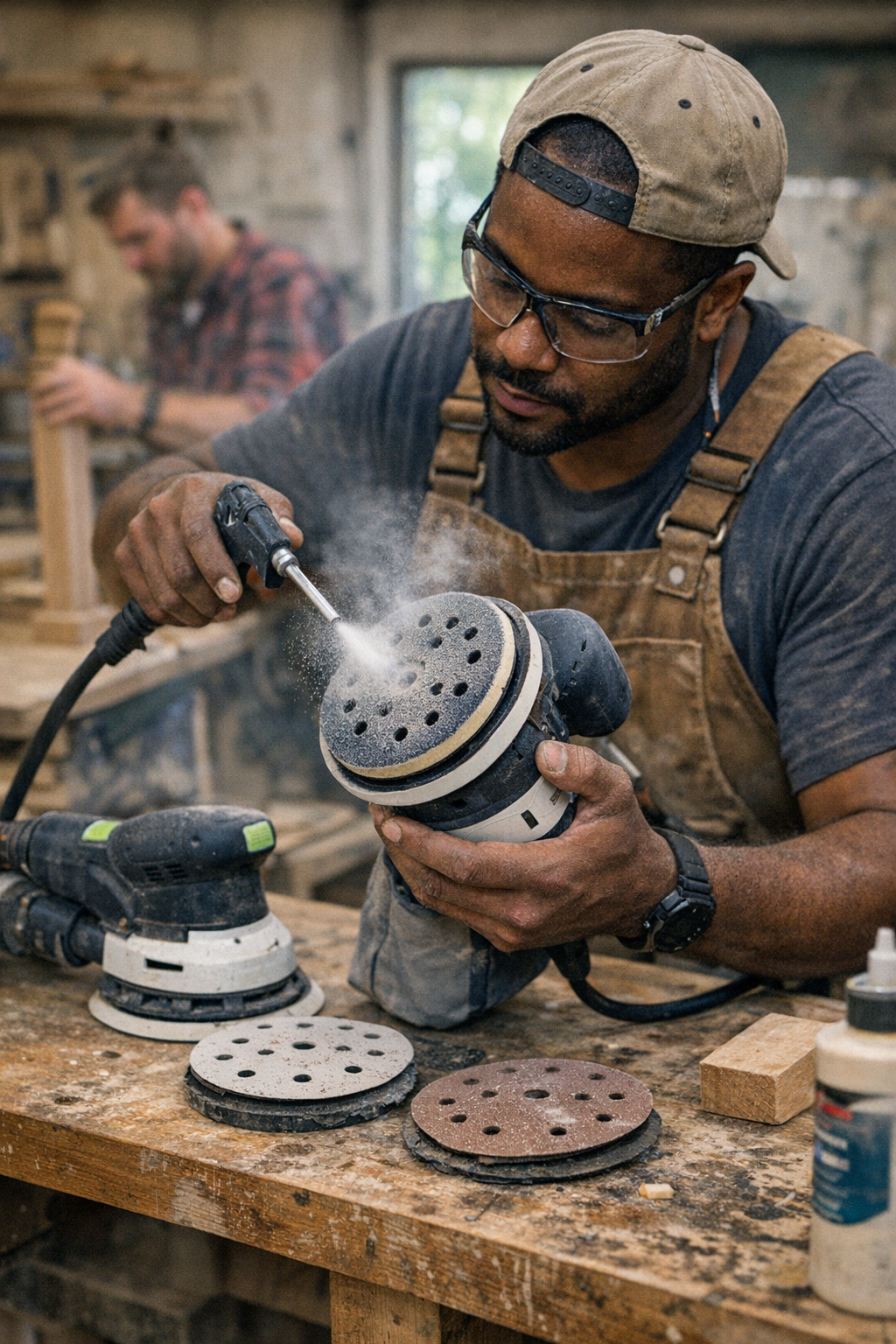
    On a real shop day, surface prep starts with optimism and usually ends with a reminder: shortcuts never stay hidden for long. The first hour, you’re running on routine—just a quick pad slap, dust can half-emptied, sander whirring clean over test scraps. The wood tells a different story by late afternoon. Batch work—those eight identical panels lined up or a stack of chair rails—has a way of exposing every skipped detail. What felt like a minor shortcut at 9 a.m. becomes the reason you’re hand-sanding out swirl tracks at 4 p.m., breathing through a clogged mask and wishing for yesterday’s patience.

    When Small Issues Become Big Friction

    The shift hits somewhere between “fresh pad, let’s go” and “why is this taking so long?” Pad grips loosen, dust holes clog, and suddenly you’re muscling the tool over spots that should glide. The feedback is real: uneven scratch patterns around knot lines, heat building through the handle, and the surface sheen turning dull where dust’s been riding the pad. Ignore the early warning signs—drag, vibration, or slow dust pickup—and small mistakes stack into repair hours fast.

    Side by Side: The Outcome Test

    It’s clear on the bench: two sanders, one tuned in, the other neglected. The first floats from board to board—pad aligned, channels blown out, grip tight. The second, same model, starts to chatter, catch, and drop in finish consistency. It makes a low, grinding sound or leaves ghostly swirl patches that don’t buff out. This isn’t tool age. It’s pure care—the quick 10-second actions that either feed your momentum or drain your patience later on.

    Batch Runs Amplify Everything

    Batch jobs magnify even the smallest lapses—a missed pad check or a crust of dust that goes ignored. By the fifth leg or tenth drawer front, every skipped reset feels like a physical drag. You interrupt flow to scrape away debris, press the pad back down, or guess if the sanding marks trace back to yesterday’s dulled grit. Each delay feels longer, and each fix less satisfying than if you’d paused for a maintenance check between boards.

    The time saved by skipping details evaporates twice over when you’re forced to fix deep scuffs by hand. It doesn’t matter if you’re seasoned or just learning—the cost of shortcuts always comes back, usually right when you want it least.

    Locked-In Habits: Small Fixes, Big Results

    The honest upgrade isn’t a new tool—it’s what you do, every single board swap. Six seconds to blow out the channels, check pad fit, and move on. It’s the easiest discipline in the shop: maintenance on repeat, less disruption, more control. The sander feels lighter, less heat builds in your grip, and the batch moves forward instead of circling back to fix avoidable flaws. The finish? It holds up across every board, not just the first two.

    Quick field tip: Make that micro-maintenance step non-negotiable. Reset after every board. No drama, just a rhythm that pays dividends in saved time and steadier results, especially when the clock is running and the afternoon heat’s climbing.

    Delayed Maintenance—Real-World Cost

    Skip this just a few times and watch the feedback change. Your sander starts veering, running hotter, losing its neutral feel. You’ll hear more friction, see cloudy, uneven surfaces, and feel it in your forearm as the tool resists smooth motion. Missed maintenance throws off everything—precision, control, the quality of your final finish.

    Over a full run, those “small” delays snowball into stubborn problem spots. It’s almost never tool failure—it’s the details that compound. Just a misaligned pad or stubborn dust turns an easy run into damage control for the rest of the job.

    Finish Strong: Routine Makes the Difference

    Consistent results don’t just ride on tool choice or grit—they’re built in the everyday habit of pad checks and dust clearing, board after board. Ignore them, and you start running tabs in hidden labor—touch-up sanding, wasted sheets, uneven stain. The field doesn’t lie: Small, steady resets between boards keep your workflow smooth and make interruptions rare, not routine.

    If you care about reliable finish and less wasted motion, this quiet in-between work is what saves your wrists—and your deadlines—every time mass production meets real grit.

    Visit Gumboll for practical tools and accessories that hold up on the job.
  • How Smart Carry-On Organization Eases Travel Stress and Delays

    The difference between a carry-on that works and one that just looks organized shows up in real airport movement, not on your living room floor. Many travelers mistake tidy compartments and lined-up packs for true readiness—until their first security line exposes how slow “neat” can be. That careful packing routine breaks down fast when you’re reaching for a document that’s shifted, opening the wrong pouch mid-rush, or digging past snacks just to get at your charger. What looks under control at home often becomes a repeated hassle the second travel friction starts.

    Why “First-Glance Order” Fails When You’re Moving

    Most travelers don’t lose momentum due to visible mess—they get slowed by hidden friction. A bag that looks squared away invites confidence, but the first test—boarding pass check, snack grab, charger reach—reveals the design’s weak spots. At every step, you dig past something you didn’t mean to move. Pouches slide out in the wrong order. Headphones emerge with pens knotted through their cords. And when someone behind you in the queue starts shuffling, each second lost to bag confusion feels more costly.

    Familiar signs the structure is failing: pulling a pouch for headphones and finding receipts instead, dropping travel documents deeper while reaching for gum, or misplacing your ID beneath loose chargers. These small stutters add up—especially when you’re squeezed between other travelers, hustling to clear a security tray, or ducking into a tight seat row before the last call.

    Airport Security: The Stress Test for Any Packing Plan

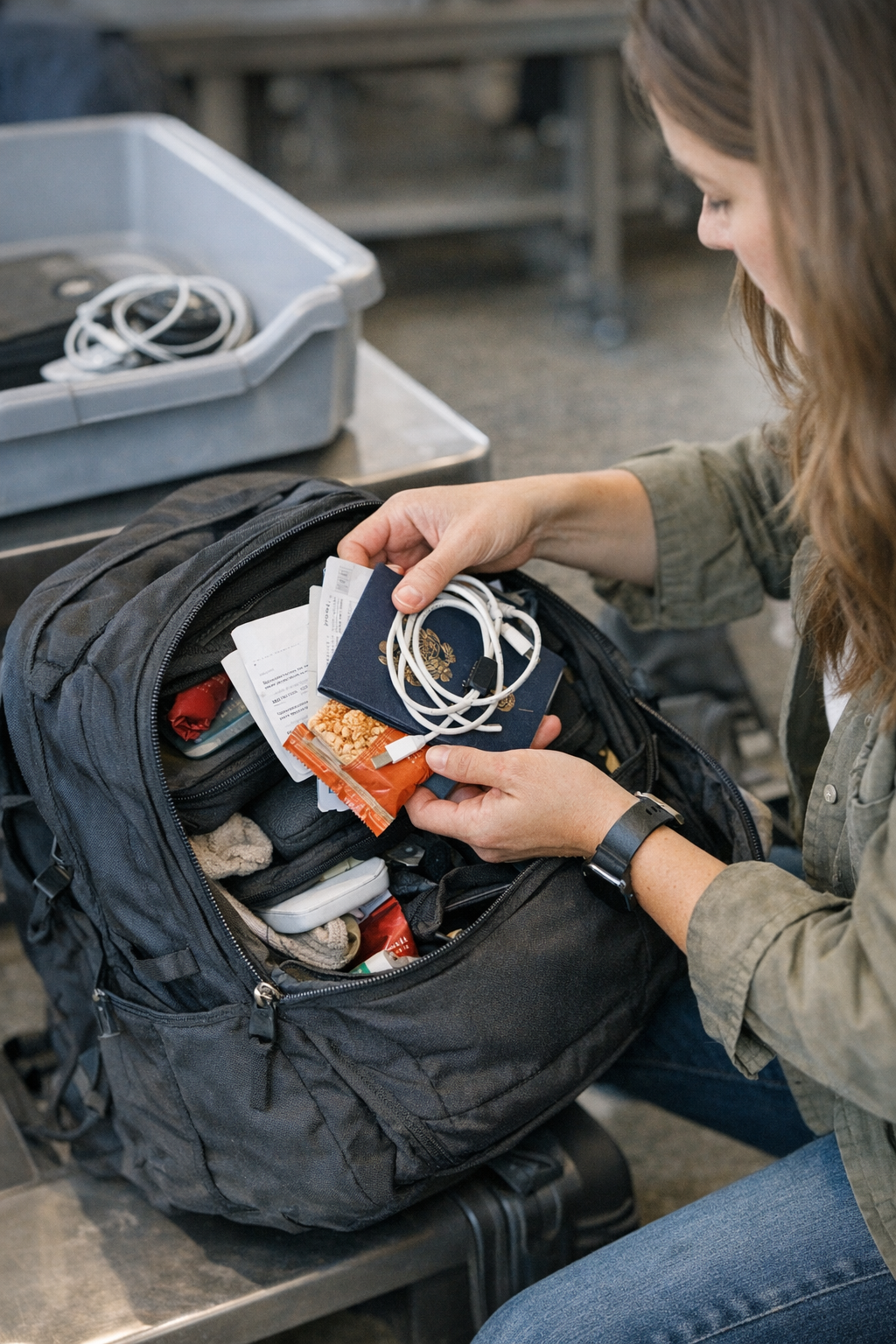
    The plastic security tray exposes what your packing actually does under pressure. Each time your charger slips beneath your boarding pass or your phone ends up blocked behind a toiletries pouch, you burn time you can’t afford. Neatness at home vanishes in the face of real motion—a slot designed for your passport won’t help if it’s blocked by items you had to dump in during a rushed repack. No one behind you sympathizes if you fumble through two extra zippers at the scanner. Multiply this by every leg of your trip and the friction is no longer minor—it’s the main thing you remember about your own setup.

    After the tray glides away, you’re left repacking fast on a narrow bench. A bag that looked “organized” on a table forces you to reshuffle layers to get even one critical item back into place—slow, awkward, and definitely not what you pictured when you packed those clean pouches together.

    Rushed Boarding, Aisle-Blocked Entry, and the Repacking Shuffle

    Security isn’t the only place these stress points appear. When you heave your carry-on from an overhead bin to grab headphones during a flight delay, only to find they’re jammed behind a scarf or missing among scattered receipts, you lose time and attention. In the aisle, even a three-second pause as you search for a boarding document feels magnified by impatient eyes—and often, the quicker you try to be, the more your careful packing falls apart.

    Seat entry is another test: you expect your snack to be right on top, but it’s buried beneath tech cables. Your pen, needed for landing forms, is lost in the shuffle of repacking under pressure. The delays start small but accumulate: every retrieval becomes another reshuffle, inching your carry-on further from “neat” and closer to a running inconvenience you’re forced to manage the entire trip.

    Packing Looks Impressive—Until Routine Use Changes the Game

    The gap between organized appearance and working real-world structure is what trips up most travelers. At home, it’s satisfying to sort gear by category—chargers stacked together, snacks in a pouch, documents sandwiched flat. But in transit, these lines blur. High-use pockets end up stuffed with receipts, wrappers, and things you swore would stay separated. Pouches “for one purpose” mix together under pressure: cords tangle around your passport, documents are half-draped by open snacks, and everything you need seems just out of immediate reach.

    Typical travel moment: You’re checking in and grope for your passport—only to move aside a charger that drifted loose or shift an organizer that’s blocking the slot. Each time it happens, you realize this isn’t a one-time slip but a repeated pattern that won’t reset until you’re back home. Every checkpoint ups the odds of missing something small, making even well-packed setups feel unreliable in the moments you need them most.

    The Value of Assigning Pockets by Retrieval Sequence

    This is where the practical fix starts: arrange your carry-on not by groupings that look tidy, but by the actual sequence of access during your routine. If you hit passport and boarding pass often, they only belong together in a fast outer zone—nothing else mixed in, no “just in case” snacks or pens crowding the spot. Every item you access on the go—headphones, chargers, snacks—gets its own fixed home, with barriers (and temptations) for casual repacking removed.

    It can feel strange at first to split these things up. But the change speaks loudest when travel pressure hits: you know exactly where each must-grab item is, you skip the accidental reshuffle, and you sidestep the silent “where did I put that?” panic that makes every checkpoint feel longer than it is.

    What Changes with This Approach?

    • Security lines move faster: You reach for your ID or boarding pass without rummaging; no other pouch, sleeve, or cord is in your way.
    • Boarding routines get easier: Each reach is one motion, even when pushed forward by the crowd or wedged in a tight row.
    • Repacking becomes minimal: Instead of reorganizing pockets after every grab, items always go back to a fixed spot—repetition makes your bag smarter, not messier.

    Common Mistakes: When Order Creates Its Own Friction

    Travelers often ruin quick access by letting outer pockets turn into dumping grounds. Mixing pens, snacks, paperwork, and plugs into one area ensures every urgent grab turns into a hunt. One bad habit—tossing receipts or wrappers near travel documents—means even a “zero mess” setup will grind to a halt after a busy airport transfer. If your most-used items crowd the same space, friction is guaranteed to return, usually faster than you think.

    And it’s not just mess—well-packed layers can block each other. A charger perfectly placed under a boarding pass is still an obstruction, even if it matches your ideal home layout. The more items play musical pockets every time you move, the more drag and delay you feel along the way.

    How Small Choices Add Up During Your Trip

    These are not isolated annoyances—they’re recurring interruptions that shape your entire travel experience. When your system lets you recover instantly after each move—and you genuinely know what pocket holds what—it’s not about perfection, but about removing friction where it counts most. You feel this improvement clearly when chaos breaks out: a surprise gate change, another security checkpoint, or a cramped seat that forces fast repacking. Fewer pauses, fewer missed grabs—suddenly, your carry-on isn’t a stylish block, but a silent advantage you notice only when everything else around you is failing.

    If your bag’s structure wasn’t built for the actual flow and repetition of travel, you’ll know it by the second time you’re slowed down. A neat-looking carry-on that’s slow and awkward is a liability, not a solution.

    Resetting the Approach: What Actually Helps?

    The real improvement comes from ruthless separation—protecting your fastest-access zones for single functions only, not just for looks. Build your layout around use sequence, audit whether a pocket has turned into a catch-all, and judge your packing plan by how it performs after you’ve been through two real-life airport routines. The result isn’t perfect, just less interrupted. That edge—less repacking, less searching, less delay—stays with you when the rest of travel throws new friction in your way.

    Explore carry-on travel tools tested for real use at CarryOnSupply.

  • Maintaining a Cat Perch: Practical Tips for Daily Care and Organization

    Every cat perch or small dog area starts out looking manageable: bowls lined up, a wipe-down just done, a fresh mat in place. But within days, the cracks show. The water bowl slides just out of reach. Fur collects under the sill trim. The brush you counted on yesterday is missing or buried under a pile of toys. What looked tidy on Sunday is cluttered by Tuesday—not from big messes, but because the routine breaks down at the exact moments daily care is supposed to be frictionless.

    The Shift from Tidy Setup to Repeat Effort

    The illusion of low-effort fades fast in real use. Morning routines expose the gaps: you reach for the water bowl and find it wedged behind the leg of the perch, almost empty. To top it up, you move a couple of toys that weren’t where you left them. There’s a wipe for crumbs, but it’s in another room. Every step turns a two-minute reset into a series of micro-dilemmas: search, reach, shift, repeat. These aren’t crises, but they’re why yesterday’s setup keeps getting harder instead of easier.

    Even when cleaning supplies exist, they’re usually just out of place, or buried behind other items. You spot a line of fur along the ledge—but the soft cloth slid behind the organizer, or the brush is tangled with a cord you didn’t notice before. Each extra movement, each delayed wipe or search for a missing tool, nudges the routine from a smooth pass into another low-grade hassle.

    When Small Obstacles Become Everyday Friction

    The difference between a corner that looks orderly and one that actually works is sharpest on busy days. You check in quickly: your cat jumps to the sunny sill, and at a glance, you see dry water rings and tufts of fur have built up again. You reach for wipes—then have to clear a treat bag blocking access because last night’s play session ended with an armload stashed in the wrong spot. Instead of a quick reset, you’re stuck realigning bowls, sweeping under the mat, poking around for the misplaced brush—always a few steps behind as micro-obstacles compound.

    Over time, these missed resets accumulate. Feeding basics, grooming tools, or wipes aren’t gone, just scattered, low, or hard to grab. Even after a thorough evening tidy, it takes only one tired morning for clutter to creep back. One bowl out of place or one missing cloth later, and “handled” pet care quietly becomes routine drag.

    Real World Scenes: Hidden Disruptions in the Pet Care Flow

    Repeated use tests any setup. After a late dinner, you spot crumbs on the ledge, the mat slid sideways, and a bottle knocked off its hook. A quick sweep can’t start until you clear space—supplies crowd together, and what was once “organized” is just another obstacle course. Or mid-call, your dog’s water needs a refill, but the closest clean towel is on the other side of the room. The perch might still look good from a distance, yet every interaction is slower, every fix interrupted or deferred.

    Attempting to solve one problem often creates another. A thicker mat soaks up stray fur, but now it blocks the walking path, forcing you to step over or around during busy moments. Adding a bigger organizer keeps supplies at hand, but now grabbing one item means shifting two others. None of these slips look like visible clutter, but they chip away at any promise of ease.

    What Actually Makes a Pet Perch Work Day After Day?

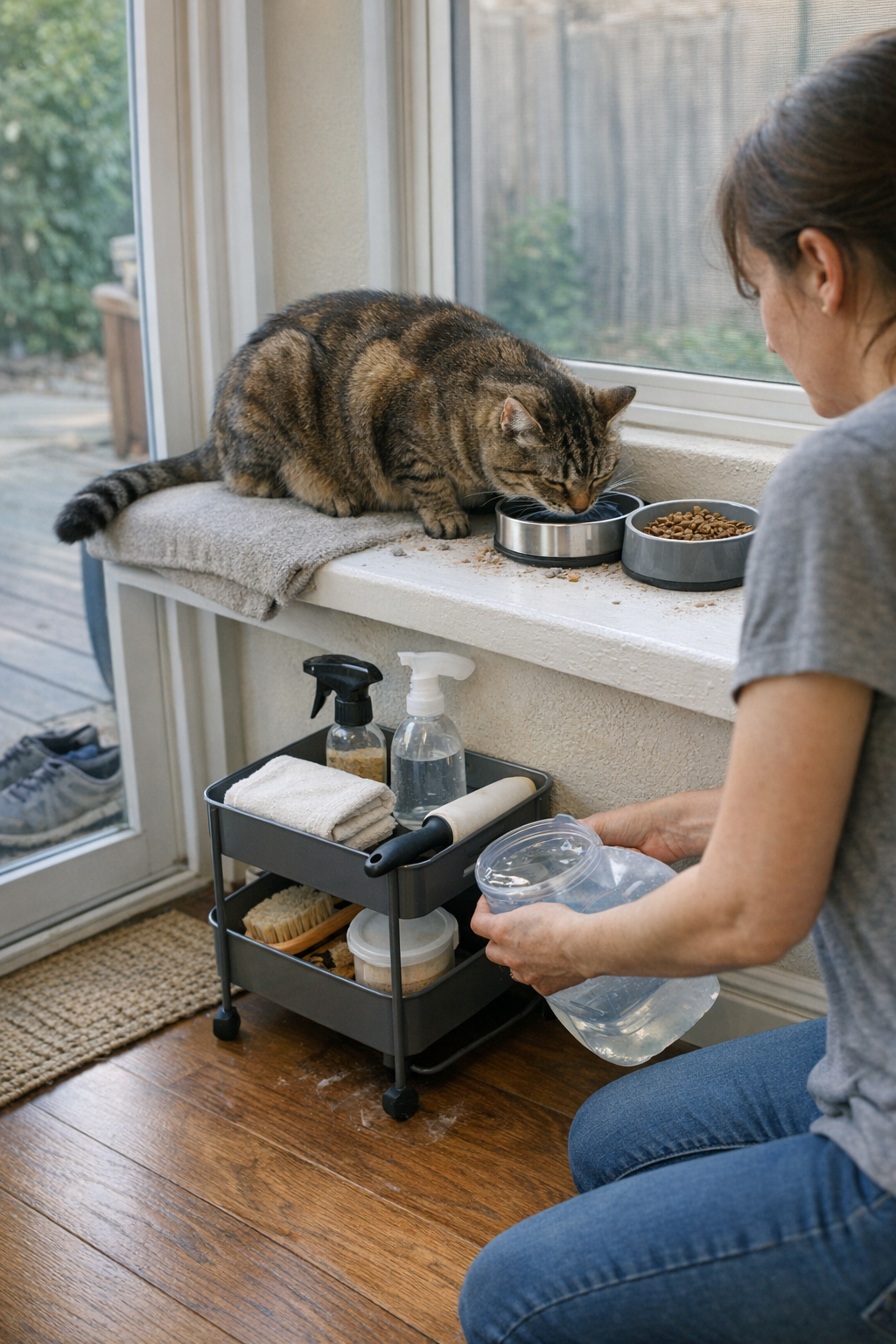
    Actual improvement comes from setups that survive repeated care, not just initial tidying. After one too many laps to fetch the lint roll or a replacement water bottle, moving a small caddy under the perch changed the pattern: cloth, brush, and backup bottle stayed within arm’s reach, saving steps and stalling less. The routine didn’t shrink, but the wasted motion did.

    Still, every extra item is another spot for loss or delay. Put too much on a shelf and the system slows. A setup that worked at week one—just enough supplies, clear hooks, one mat—now needs a tweak when new toys, spilled food, or shifting pet habits reveal blind spots. Functional setups are less about one big fix and more about small, repeated reviews.

    The Quiet Difference: Tidy Versus Functional

    Order isn’t just how a corner looks after you tidy—it’s in how few steps you need to stay ahead of mess. If it takes an extra search or a second trip every time, clutter isn’t really solved. In the right CalmPetSupply setup, friction points get closed off where they start: one cloth always waiting where fur appears, bowls that snap back when bumped, supplies in reach before you notice they’re low. A space that handles resets easily stays ready without you having to overhaul it every time.

    For everyday pet care, focusing on repeated ease—not just appearance—keeps both you and your pet calmer. Less hidden work, more automatic resets. The difference isn’t flashy, but once you live it, the old friction is hard to ignore.

    Find practical feeding, grooming, and cleanup basics ready for repeat use at CalmPetSupply.

  • How Subtle Lighting Changes Can Improve Your Dog’s Bedtime Routine

    Most bedtime stalls with dogs don’t start with barking or chaos—they show up as a pattern: your dog hovers uncertainly at the door, circles the bedding, or pauses instead of settling. You tidy the space, arrange every blanket, and call it “ready,” yet your dog still hesitates, every single night. It’s tempting to pin this on skipped walks or stubborn routines, but in real dog-life, small setup mistakes—like the wrong light at the wrong time—quietly drag out the entire bedtime process in ways that keep you stuck repeating the same fix over and over.

    Why Lighting Disrupts the Routine You Thought You Got Right

    A too-bright lamp or mismatched lighting scrambles your evening signals. The space may look organized—with the bed in its corner, toys in a basket, and bowls out of the walkway—but if light falls the wrong way, your dog’s body language shifts: head tilts at the doorway, slow-motion circling, restless sitting that turns into more pacing. What seems cozy for humans can signal the opposite for dogs—especially if the lamp is aimed right at the rest area or jumps between moods night after night. The physical signs are subtle: one extra loop, another return to the hallway, a blank stare at the bed instead of that heavy “all done” exhale. Over weeks, it doesn’t just waste time; it trains you both to expect a dragged-out wind-down, even as you redo the setup, trying to spot what’s off.

    Hesitation Patterns: Where the Real Friction Hides

    You only catch on after the pattern repeats: setup looks right, but the dog’s hesitation repeats. Instead of a calm walk to bed, you get alert circling and reluctant half-steps, followed by you guiding them (again) or waiting through their slow decision. If you listen, you realize your voice grows less patient, your bedtime routine gets extra steps, and in the morning, everything feels just a bit less rested—including you. Little bedtime failures multiply: more leash tangles at the stand, more stalling around the food bowl, and a routine that keeps showing its cracks wherever a detail gets missed.

    Looks Tidy, Acts Messy: Clean Corners Hide Setup Weakness

    Neatness means little if your setup fights your routine. Owners line up beds in “quiet” spots, keep floors clean, or use plush blankets—but let a bright lamp pour straight over the rest area and watch hesitation return. Too much direct light, an undimmed bulb, or inconsistent lamp placement quietly resets your dog’s cues every night. The result: bedding gets circled but not claimed, the dog pops up again after almost lying down, and what looked like a “fixed” setup becomes a nightly hassle that steals extra minutes and patience.

    Actual Adjustment: When One Change Resets the Routine

    Here’s a real example: moving a lamp behind a side table and lowering the brightness so light bounced softly off the wall instead of hitting the dog bed directly. Immediate difference. Instead of five minutes of pacing and tail-thumping, there’s a single circle, one deep sigh, and actual settling. The rest of the setup—bed, cleanliness, corner—stayed the same. What changed was the signal: indirect, steady, non-confrontational light. No more repeated verbal correction or drawn-out waiting. Bedtime began to run on autopilot, matched to how the rest of the room was actually used, not just how it looked.

    Bedtime Friction Doesn’t Stay Put—It Spreads

    Ignore these small nighttime frictions, and they show up everywhere: restlessness before meals, stalling at crate time, resistance at the door when it’s walk time. If every evening ends in hallway lingering, nose-poking, or uncertain movements, check what cues—like lighting, clutter, and pathway flow—might be working against you. The problem isn’t just late-night energy; it’s repeated mixed signals that slow down every other step of the evening and turn tidy spaces into bottlenecks during the busiest moments.

    Accumulated Hassle: When Small Interruptions Stack Up

    Missed signals in one part of the night bleed into the next. Five minutes lost to bedtime hesitation becomes ten more minutes correcting the setup the next day, or unfolding blankets that never stay in place. You fetch wipes late, shuffle beds out of the walkway, or restock bowls around toys that keep escaping the basket. The appearance of order doesn’t matter if your evenings still get eaten up by repeat interruptions, last-second adjustments, or that same old sigh when the “fixed” area doesn’t really reduce the friction.

    Fixes That Actually Change the Flow

    Indirect, Even Lighting—Not a Spotlight on the Bed

    Indirect, consistent light is one of the simplest fixes with the biggest impact. Don’t aim the bulb right at your dog’s bed—move the lamp behind a piece of furniture or angle it so the glow bounces gently across the wall. A dimmer or low-watt bulb helps you control the vibe without plunging the space into darkness or unpredictability. The goal: stable, background lighting your dog can ignore. That shift alone removes a major trigger for restless, alert body language every night.

    Let Lighting Support—Not Distract from—Real Routine

    Lighting only helps if the rest of the bedtime pattern lines up. Pair a predictable, soft light with quieter movement (pick up toys without fanfare, lower your voice, keep door swings minimal), and even high-energy dogs adapt. When the environment stops lobbing mixed messages, settling down becomes a habit, not a nightly project. You spend less time pleading and more time resetting for tomorrow—bedsline up, blankets tuck quickly, nothing gets shuffled more than once.

    Match the Setup to How Real Nights Unfold

    It’s not just about the bedroom—lighting that’s too bright or patchy spills into hallways and crossing points. If your dog’s routine slows at several steps—returning from a walk, pausing outside the crate, investigating the water bowl—check if the lighting pattern throws obstacles where calm should start. Well-placed, indirect light sets up every transition: from muddy paws at the back door to the quick check of the food bowl to that final crossover into the bed area—each stalling point shrinks when the cue is consistent and the setup matches actual nightly movement.

    Everyday Signals: How to See if Your Setup’s Working

    Working Scene:
    Lamp dims, toys are gathered, dog enters the bed zone, makes one loop, lands on the blanket, sighs. Nothing dramatic. No stalling or waiting for a missing “signal.” Bed reset is quick—blanket flattens, bed slides, nothing needs shuffling, your dog falls in without delay.

    Still Failing Scene:
    You flick on a lamp for something else, and light floods the bed. Dog veers toward sleep, hesitates, doubles back to the hallway, resumes circling. You tidy, adjust, lose minutes, and in the morning both of you move slower. The room looks fine, but the flow at bedtime still collapses on the same weak spot.

    Setup is Moving, Not Static

    Dog spots keep unraveling in places owners don’t check: water bowls crowding pathways, toy baskets migrating out of reach, lighting acting as a “stay alert” signal, not a sleep cue. Stability only sticks when you adjust after actual use—a week or two in, move the lamp, shift the bed, check if one part of the setup keeps re-introducing friction, even if the rest of the area looks neat. The routines that last are the ones reset by function, not just appearance.

    Why It Goes Beyond Appearances

    A smooth bedtime isn’t just a cleaner room or fewer scattered toys—it’s a routine that runs itself, needing less intervention each night. Fixing details like the angle of your lamp doesn’t eliminate every rough patch, but it does erase the kind of repeated problems that would otherwise train you and your dog into frustration. A better setup shows up in the speed and ease of the return to rest—not in decorative order but in nightly routines that stop eating up your patience.

    The most effective improvements show up not in the way a space looks, but in what you no longer have to keep fixing. The DogPile world is built for setups that stop the slow buildup of routine drag and make every return-to-rest a little smoother.

    See practical setups for calmer night routines at DogPile.

  • Why Proper Glass Support Transforms Indoor Lighting Comfort and Safety

    A bathroom mirror that looks bright in the morning can still leave your face half in shadow. A hallway lit with a new flush mount feels safer—until the glass buzzes every time someone slams a door, and dark edges creep toward the baseboards. The repeated discomfort isn’t about how a fixture looks or how new it is. It’s about the structure behind the glass: how well each part stays anchored during daily use, and whether that support is strong enough to keep glare, vibration, and awkward shadows from taking over the spaces you cross, work in, and depend on.

    Where Fragile Lighting Reveals Its Flaws

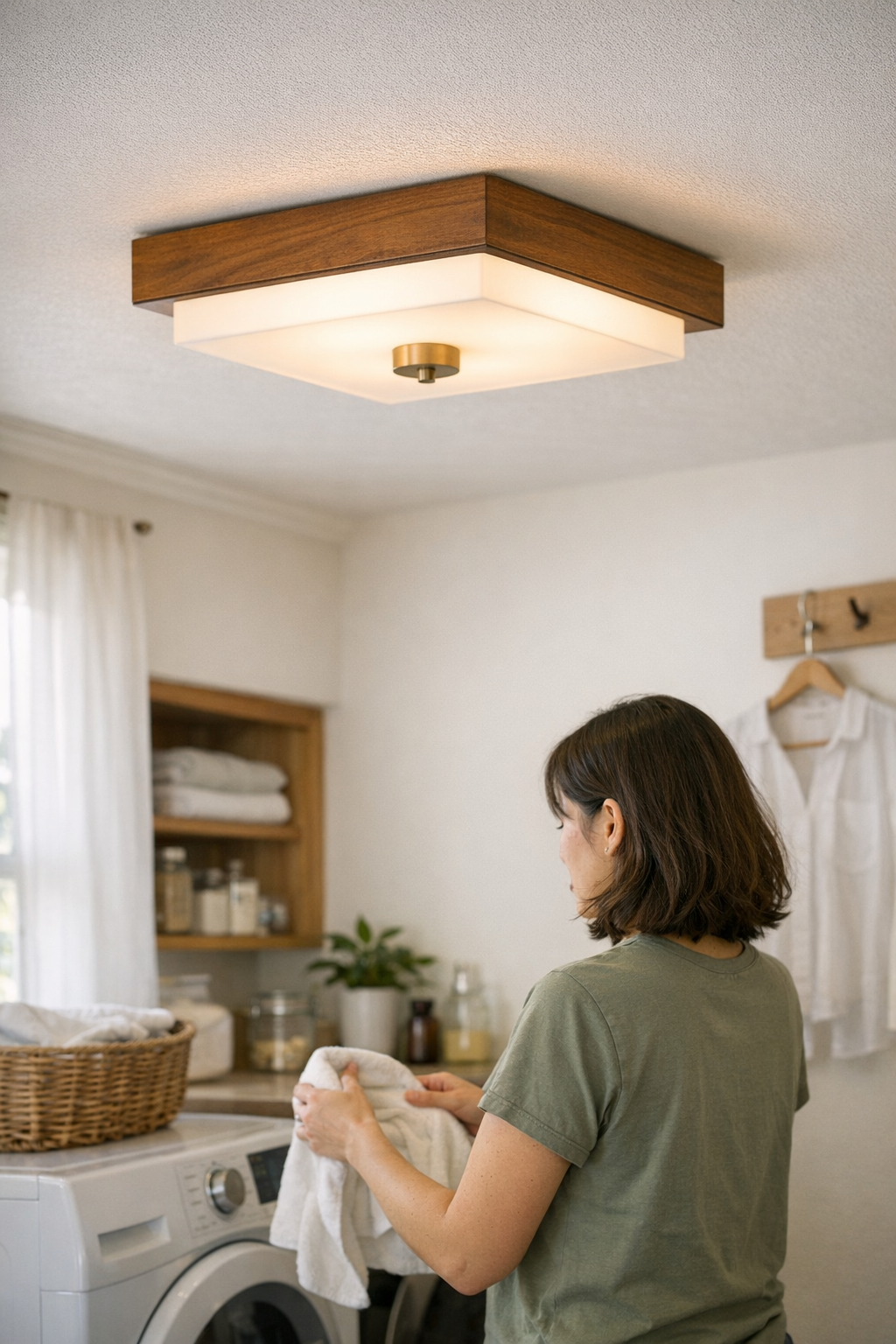
    On install day, even low-profile ceiling disks and clean-lined wall sconces seem solid. But fast-forward a few weeks and common weak points show up—especially in busy spaces. That smooth ceiling light over the laundry folds into cloudiness along the edge after two dryer cycles. A hallway fixture that sits still when installed starts to wobble when you shut a nearby door, making light flicker and corners go gray. One loose edge or thin, loosely clipped glass panel is all it takes for condensation to move inside in a steamy bathroom, dulling the surface and shifting the feel of the room from clean to unsettled.

    That same fragility shows in ways you feel but don’t always see first—a stairway wall sconce that hums when you step past, drawing your eyes away from the tread, or a vanity light that gradually collects glints on one side of the mirror, forcing you to lean in to see your own face. Each is a sign not just of style decisions, but of support that fails in real life.

    Routine Movement Turns Small Weaknesses Into Persistent Problems

    Fixtures that only look rigid can make daily movement more uncertain. Repeated hallway crossings, hurried mornings flipping on a mirror light, or simply putting away towels in the laundry test each fixture’s tolerance for vibration and moisture. You notice it not in technical specs, but in living with it: Each door slam sends a rattle through the ceiling mount overhead, breaking up the light and filling side walls with shadows; the corner you count on to stay bright disappears into murky dimness. A hallway that seemed “done” now leaves you squinting to find the next step.

    In the bathroom, condensation seeps along the edge of a vanity sconce, softening the seal, until suddenly the glass shifts at the touch—so the mirror is blinding at center, gloomy at the edge, and nothing you wipe off can fix it. Even in a dry corridor, a poorly anchored flush mount will start to vibrate at every upstairs stomp. The lesson comes through failure: an uneven room is more than a visual annoyance. It’s unpredictable to move through, and, over time, interrupts your rhythm.

    Glare, Shadow, and Safety in Everyday Zones

    Lighting quality isn’t simply measured in watts—it shows up in whether critical spots are actually usable, comfortably navigable, and free from sudden dark spots. The stair turn is the classic test: if a fixture tips or shifts, even slightly, the beam drifts and a shadow lands right where your foot should go. At the bathroom sink, glare collecting on one mirror edge makes normal washing or shaving unsteady, as you squint or shift positions to see straight. Countertops with under-cabinet lights anchored by a single wobbly point end up with bands of light and missed patches, leaving small tasks harder than they need to be.

    When glare cuts into a hallway path, or shadow chokes off a stair’s turning point, the space feels less ready—even if it “looks bright” on first glance.

    The Real Difference: How Fixtures Support Their Glass

    The gap between lighting that quietly outlasts daily chaos and lighting that becomes a source of frustration lies in the support structure. Not finish, not style—anchoring. A flush mount or panel with true glass-to-body locks, tight gaskets, and a sealed perimeter doesn’t just resist a week’s worth of bumps. It distributes light with less interruption, shrugs off vibration, and fends off the fog and dust that creep into loose seams. Look for:

    • Gasketed or truly sealed glass: Keeps laundry and bath fixtures clear of condensation, preventing that creeping cloud at the edge.
    • Secondary locks or body anchors: Block the buzz and rattle from everyday foot traffic or slamming doors, keeping light even and silent over time.
    • Glass secured against shifting: Defends against abrupt shadow lines and edge pooling in stairways or task corners—small differences that alter safety and comfort.

    By contrast, fixtures that rely on thin clips or lightly attached glass won’t hold their place. Weak sealing means dust (and moisture) sneaks in. Stress points magnify each step, door slam, or cabinet close, and the lighting you trusted to brighten a space starts to highlight its own instability—harsh lines streak across the ceiling, corners dim, every tap is an echo of a job half done.

    Small Upgrades, Noticeable Gains in Everyday Use

    Evaluating a fixture’s real quality means living with it—over weeks, not just the first unboxing. Swapping out a flimsy ceiling mount for a sealed, double-locked flush mount in the laundry killed the telltale fog and let lint and lost socks stay obvious at a glance. Upgrading a loose hallway fixture to a properly secured, thick-glass design stopped the persistent rattle and evened out the corners instantly. The stair landing didn’t just look brighter—it moved from unreliable to confidently navigable because the light’s center actually stayed where it belonged, no matter who ran up or down in the morning rush.

    Most of these changes don’t earn compliments, but you notice them every time nothing distracts you, nothing needs a second glance, nothing forces you to squint or tiptoe. Instead of adapting to lighting quirks, your space finally adapts to you.

    Field-Tested Tips for Avoiding Repeat Lighting Frustrations

    • Check fixture movement after install: Even a gentle tap shouldn’t shift the glass or send tremors through the frame. Movement means trouble—address support before finishing.
    • Scan for shadow and glare: Walk your route at dusk or with night lighting. Note any dimming in corners, shadow lines on stairs, or mirror edges that glare.
    • Observe moisture patterns: After the first week of use in bathrooms or laundry spaces, look for any signs of internal fog or condensation. A properly sealed fixture should stay clear.

    Lighting That Fits Repeated, Real-Life Use

    Stair landings, bathroom mirrors, hallway turns, and utility work zones all push lighting structure in ways that product descriptions miss. Selecting fixtures with real, secure glass support isn’t a technicality—it’s what decides whether movement feels safe, tasks remain visible, and comfort holds up after daily routine resets. The best setups aren’t just bright at install—they stay steady, silent, and balanced, no matter how many times you swing a door, reach for a switch, or walk a familiar path.

    Find indoor lighting that fits the way you actually use your space at LightHelper.

  • Why Your Car’s Tidy Setup Is Slowing Down Daily Routines

    There’s a gap you notice most after the first “organized” cleanup wears off: your car looks sorted, but actually using it feels just as clumsy as before. You enter with your hands full—phone, keys, a coffee balancing on top—and that same charging cable has vanished behind the console again. Visor cards stay straight until you need one in a rush, then scatter. Loose receipts, that “clever” coin tray, bottles just out of reach: you always seem one motion away from a fumble. A tidy setup isn’t the same as a functional one, and this mismatch becomes glaring when your routines pile up—morning commutes, errands, back-to-back parking stops. Every re-entry exposes small frictions the vacuumed look can’t fix. Clean doesn’t mean smooth, especially when your layout fights the way you actually move through the car.

    When “Tidy” Stops Being Useful: Recognizing Routine Friction

    Order fades under pressure. The car’s surface-level neatness holds up for a day—sometimes only on the first drive. By the week’s second errand loop, issues pop up: your main charging cord disappears behind a seat edge; the parking pass you lined up perfectly has wedged under the mat; the coin tray flips or slides when you take a sharp turn. These are not just minor annoyances. Each missed reach or lost item signals a deeper problem: your setup isn’t designed for repeated action, only for appearance.

    A car interior that looks organized can fall apart when real use adds up—bottles rolling, floor mats bunching, emergency kits sliding on stops, or a dog-hammock shielding the seats but blocking fast access to the back. The more often you run errands, pick up kids, or hop in after a grocery run, the more you notice: pristine looks fail in the face of constant, real movement. It’s not about clutter returning—it’s about structure that doesn’t actually support how you use your car every day.

    It’s the Second (and Third) Re-Entry That Counts

    Picture trying to load up with two bags, sliding quickly into the seat, and hitting the same snag each time—the charger you need just out of fingertip reach, shoved behind the gear lever. A mask falls, a water bottle rolls under your heel as you shift, and you’re forced into extra motions, disrupting any sense of flow. The neatly-placed organizer won’t stay anchored, forcing you to wedge it back while juggling everything else. A supposed order becomes an obstacle course—lost seconds, repeated interruption, and a routine that feels more taxing than settled.

    Weather Makes the Strain Obvious

    Rain, slush, or just a muddy curb turn small delays into bigger messes. Fumbling behind the seat for that lost cord leaves grime on your sleeve; a floor mat supposed to catch water curls at one edge, letting moisture creep further in. Even a good seat cover might bunch or shift, tugging at you when you slide out—protection that trades one hassle for another. After just a few damp drives, every design weak point grows obvious and annoying.

    The Hidden Cost of Looks-First Organization

    Organizing just for looks nearly always fails practical use. Straight cards and perfect cable alignment mean nothing when a trunk net sags or an organizer topples at the first hard brake. Products promising invisible fixes rarely stay that way—one sharp turn and the “solution” is floating in the footwell. A dog cover may contain fur but can block quick back-seat loading. Form-first setups unravel when driving gets real.

    Patterns emerge fast:

    • Cards sinking out of reach—or jamming in seams meant for hands
    • Cables winding deeper under other items after quick stops
    • Organizers sliding, shifting, or turning into catch-alls rather than quick-access spots

    Frustration isn’t just about lost items. It comes from repeated, friction-heavy micro-moments that slow you down. You find yourself flipping floor mats, fishing cables from footwell corners, or having to restack organizers that seemed clever until they started migrating. Again, clutter isn’t the problem—layout blindness is. Every smooth return to the car gets interrupted by gear or protection failing to hold under pressure.

    Designing for Daily Reach—and Accepting What Works

    Real fixes put essentials exactly where you grab for them, even if it means breaking the curated “clean” look. Take a weighted cable keeper anchored at the driver’s seat edge—not invisible, but it saves you from constant under-seat fishing. Or a rough-around-the-edges pass holder that’s always at hand by the visor, not hidden in a drawer you forget to open. Mounts, holders, organizers: what matters is whether they reduce how often you hunt and reposition—not how they look after a carwash.

    These changes aren’t obvious upgrades. In practice, a cable routed slightly across the console can look untidy but makes plugging in your phone a one-second, one-handed motion. A pass holder that blocks an unused button still means no more frantic window fumbling at the garage. The best layouts work with your habits—not against your reflexes—so the car feels more automatic after a week, even if Instagram would swipe past your photos.

    What Real Improvement Feels Like

    The win isn’t dramatic. It’s the low-key absence of the usual pain points: no more half-glances under the seat at every stop, no more mat adjustment after a soggy day, no more cable train snags when you’re running late. Sometimes the improvement is obvious—the charger’s always where you left it. More often, it’s just a smoother interior routine, trips blending into each other without new frictions stacking up.

    Not Every Solution Is Invisible—And That’s Fine

    Invisible organization is a myth when you’re driving every day. The right cable keeper might stick out visually but means you stop losing chargers. A phone mount can block a vent but keeps you from fishing under limp cupholder attachments or cascading change trays. The trick isn’t hiding every tool—it’s making sure the essentials work every single day as setups shift, groceries slump, or wet gear comes in. If a compartment or holder solves a real friction point—even at the cost of a little visible bulk—it’s a smarter trade than silent suffering with “minimal” gear that fails in practice.

    Real Setups Hold Up—Fake Order Fails Fast

    The sign of a car that truly supports its driver is how little you have to think about your stuff—and how little backtracking you do for things that keep getting away. If you’re still groping for charging cords, re-aligning mats every few days, or cleaning up the same messes that “organizing” was supposed to prevent, your setup might be designed for looks, not actual use. The best car gear brings your hand right to what you need, plugs in without fuss, and makes repeated re-entry less of a chore. Surface order means nothing if every routine drive brings back old headaches. If you keep correcting, nudging, or searching, the structure isn’t working for you—it’s working against you.

    Improvements aren’t about filling your car with products; they’re about noticing what routines keep breaking down—and choosing fixes that hold up, even if they’re visible. Sometimes, the best setup feels almost boring: everything’s where it should be, there’s nothing to chase—and you get on with your drive, not another round of car-tetris.

    http://www.drivewellsupply.myshopify.com

  • Why Pet Travel Gear Must Prioritize Quick Access Over Perfect Organization

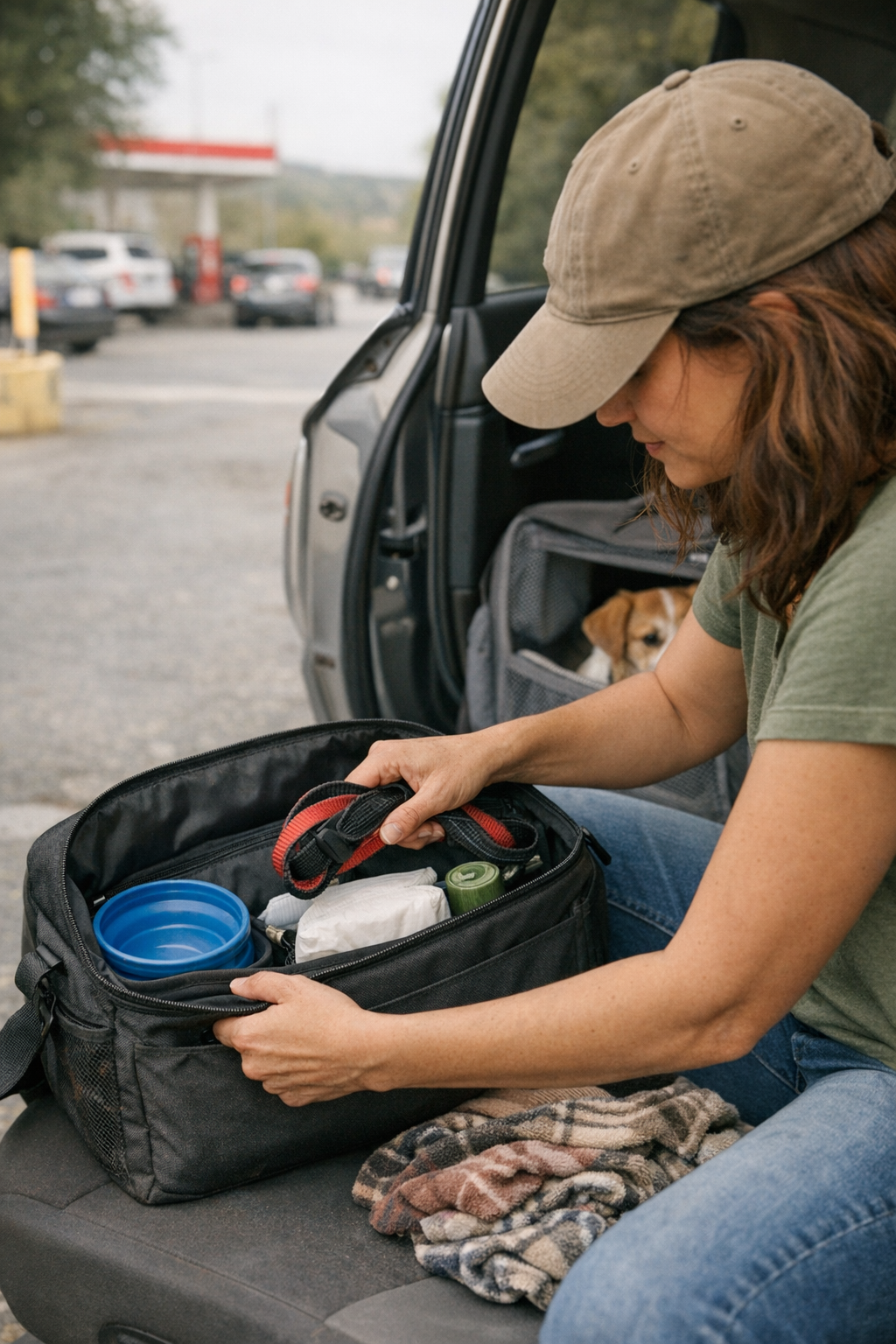
    The difference between a pet-travel setup that looks organized and one that actually works is exposed within the first real stop. A bag can appear perfectly packed on your front seat—leashes coiled, wipes zipped, bowls nested. But as soon as you try to grab a leash while steadying a restless pet, what looked efficient unravels: you’re blocked by a mat covering the wipes, or the cleanup bags are now jammed under a comfort blanket. The gap isn’t just cosmetic. It’s minute-by-minute friction: slowed access, forced reshuffling, and a side glance from your pet who feels every delayed move. This is the everyday pressure PawGoTravel setups are built to answer, but too many travelers don’t recognize the real problem until it keeps repeating.

    When Looks Mislead: The First Signs Your Setup Is Slowing You Down

    Packing feels sharp—until you actually try to move. On your first stop, holding an eager pup with one hand, you realize your “easy access” pocket isn’t where you expect. Seconds stack up as you:

    • Burrow through layers for a leash while your pet tries to lunge forward
    • Discover wipes tucked behind two extra accessories—just far enough to interrupt quick cleanup
    • Try to reach a bowl without scattering mats or repacking everything you just set up

    The first snag—a zipper that hesitates or a pouch hiding under pet gear—signals trouble ahead. By stop three, your system is already tiring you out, with every new pause making it harder to regain rhythm.

    Where Travel Organization Meets Real-World Friction

    An organized bag at 8 a.m. proves little by 11. What’s stacked at the start rarely survives real travel’s fluid mess. As you shift gear in and out, each forced pause exposes the setup’s limits:

    • Blocked quick access: The leash sits buried despite being “prepped” on top; reshuffling after each use always costs time.
    • Overlapping zones: Your cleanup wipes disappear each time comfort items for your pet get rearranged mid-trip—it takes two steps to unearth them, not one.
    • Restart friction: Every break brings a choice: do you leave essential items half-out for speed, or repack everything and risk the next search getting slower?

    Your pet senses the stall. Each dig through the bag is a cue for tension or impatience. Quiet friction like this doesn’t create dramatic failures; it grinds away at your pace and focus, sometimes so subtly you miss the pattern until you’re already behind.

    Not All “Secure” Designs Stay Convenient

    Complicated organizers—full of compartments, stacked mesh, and zipper security—promise order but demand more from you every stop. A morning’s tidy system becomes:

    • Loose items shifting out of their “assigned” space as you walk from lot to trail or corner to curb
    • Bags or bowls getting lodged under comfort mats, making one-handed access nearly impossible with a barking dog in the other hand
    • Order purchased at the expense of flow; after a handful of stops, “secure” feels like slow-motion undoing

    Maybe the bag looks uncluttered, but cleanup now takes longer. What began as smart packing now asks you to think, sort, wait. Friction isn’t gone—it’s spread thinner, stuck in every repeated motion.

    The Real Impact: Losing Flow, Not Just Time

    You notice it fastest at checkpoints: what should be a routine grab stretches into a mini-puzzle. Is the leash in the side pocket, or under the treats? Did the quick-access zipper close all the way—now blocking the one thing you need? Instead of watching your pet or the next stop, your attention is anchored on the bag. Each cycle nudges focus away from the trip and toward minor annoyances. That small slip adds up, replacing calm travel with a sequence of tiny resets. Not a crisis, but a constant, low-grade drag you only feel stacking up over time.

    A Common Scene: City Stop Friction Unpacked

    Take a five-minute curb break. One hand juggles the leash, the other tries to grab a collapsible bowl. The bowl has slipped behind a folded blanket from the last stop. Meanwhile, wipes are half-stuck in a nabbed section, forcing another search. Each move risks tangling the leash or spilling a treat bag, all with your pet wriggling sidelong. These are not disasters; they are slow leaks of efficiency—and patience—that repeat at every public stop where pressure is already running high.

    The Overlapping Challenge: Pet Needs and Owner Needs Tangle

    Most travel setups quickly blur what’s “yours” and what’s “theirs.” Your water bottle tangled next to pet wipes; your hand sanitizer next to treats. Each repeated reach rearranges boundaries, with more overlap between pet and owner items. Nine stops in, this blurring turns every restart into a question: does reaching for wipes dump the treats, or brushing past your own item covers up what your pet needs next? The system isn’t broken, but it asks more memory and micro-adjustments at every cycle.

    Looking “Ready” vs. Feeling Ready: The Functional Divide

    A bag can look prepared but behave differently under real pressure. The real question: after multiple stops, does your system make each action faster, or does it create a new round of searching and repacking?

    • Are your essentials—leash, bowl, wipes—hit-or-miss each time, or all actually in-hand within seconds?
    • Does a soft bedding help your pet, but end up blocking what you need to reach in a rush?
    • Is tidy organization turning into extra steps—reminding you to maintain order, or forcing quick-fix improvisation in a crunch?

    Repeated use exposes the cracks: not a dramatic failure, but enough persistent snagging and resetting that the whole trip feels heavier than it should.

    Finding What Actually Helps: Simple, Flexible Arrangements

    The best practical shift: ditching rigid stacks for layouts that respond to actual travel use—three or more stops, with real pet handling between. Instead of forcing items through individual compartments, simplify. Keep the leash, bowl, wipes, and bag together at the top or one clear side. Zip just far enough to allow a clean, quick grab. Focus on easy return, not just show-off neatness at departure.

    • Place core items where you can grab any with one hand, even while steadying your pet
    • Allow a seat-side opening wide enough for instant access in either direction—no need to unroll or untangle first
    • Use fewer, more adaptive segments—avoiding the stacked, deep layers that slow every re-entry

    With this structure, you’re not “unpacking” at each stop—you’re using, resetting, and moving. Seconds saved compound with every break. And the absence of friction grows: your pet stays calmer, you reach less, clean up smoother, and the stops start to feel more routine than rehearsal.

    What Shifts After Repeated Use: Real-World Momentum

    By midday, a flexible setup is judged not by looks, but by silence—no fidgeting at pit stops, no awkward bag wrestling, just quick reach and smoother starts. Travelers report noticing what’s gone: the time spent rummaging, the buildup of tiny delays, the stress signal in their pet’s posture that used to flare up with every lost second. You haven’t packed less; you’ve just stopped fighting your own system.

    The bottom line: Most travel friction creeps in as small, repeated stumbles—one blocked reach, one tangled item, one quiet pause. Fixing what slows you down isn’t about adding more structure, but about letting your essentials move as quickly as you need, without making every cycle a new obstacle course.

    Explore practical pet travel setups at PawGoTravel

  • Why Wall-Mounted Rails Outperform Traditional Hooks in Busy Entryways

    Clutter in the entryway is rarely dramatic, but it’s relentless. The moment two people drop a bag and a damp jacket at the same time, the system breaks: hooks fill, bags spill, shoes creep outside their lane, and a once-clear passage becomes a daily bottleneck. Suddenly, what looked “organized enough” turns into a zone you have to wrestle your way through—nudging shoes, shifting coats, digging for keys—just to get in or out. If you’ve found yourself resetting the same pile five days in a row, the problem isn’t your willpower; it’s a setup that can’t flex as daily routines overlap or weather turns unpredictable.

    Why Fixed Hooks Fall Short When Routines Overlap

    Fixed hooks seem like they should hold the line—a neat row on the wall, each with its role. Until real routines return. The cracks show instantly when:

    • Multiple people pile in together: Three hooks become too few long before you hit the door with two backpacks, a raincoat, and someone’s gym bag.
    • Gear gets bulky, damp, or dirty: One jacket drips onto another, bags press together, and what doesn’t fit gets stacked on benches or left on shoe racks.
    • Resetting gets awkward and slow: Shifting one thing tugs another, knocking keys down or tangling up bag straps, and a quick “clean up” always turns into an annoyed scramble.

    This isn’t just surface clutter. It’s the difference between an entryway you can walk through in one motion and one that stops you to rearrange piles. Over time, overflow spreads—shoes start migrating out from the bench, bags slouch onto the floor, and what’s meant to be “temporary” almost never gets put away. The zone that manages gear turns into the zone that collects it.

    Rail Storage Adds Crucial Flexibility in the Entryway

    Install a wall-mounted rail with sliding hooks and you’ll see the difference inside a week. A rail isn’t just decorative—it’s an adaptable zone. Need more space for winter coats? Slide a few hooks tight together. Wet jackets after a storm? Move a hook aside so they don’t drip on school bags or pile up on the shoe bench. Rush hour bulk drop? Cluster hooks on one end to catch the day’s overflow, not block the main path.

    • Group bulky coats away from the door to keep quick-access hooks clear for keys and daily bags.
    • Slide wet items to the end—no more drips on shoes or tangled straps.
    • Re-arrange for after-school gear explosions, then reset for evening calm, all without taking the whole wall down.

    This isn’t about keeping things “pretty.” It’s about stopping regular rushes—or surprise gear dumps—from turning a threshold into an obstacle. The difference: the entry stays usable, not just tidy for a moment.

    Where Fixed Hooks Break Down: An Everyday Scene

    Late afternoon—school bags and a heavy parka arrive just as someone settles on the bench to get their boots off. The hooks are already crowded. The first bag fits, the second half-hangs, shoved against a coat. Going for the keys? They tumble off a hook that’s lost all open space. The shoe row becomes backup storage for whatever can’t be hung. Clearing any of it means juggling armfuls while other feet try to squeeze past. Every item added tightens the zone, and every retrieval becomes a reset.

    How a Rail Handles the Same Pressure

    Rail system: shift a hook. Backpacks move left and clear bench access. The parka slides over—no more drips down on bags. Keys get their own hook, not tangled or dropped. The floor stays visible—shoes don’t vanish under collapse. This time, nobody has to move three things just to reach one. The path is open, even with the usual chaos.

    Real Improvements, Not Just Visual Tidy

    Rail storage doesn’t erase clutter, but it blocks the cycle where stuff crowds every surface until the only option is a total reset. Over a few weeks, you notice:

    • The bench stays clear for sitting—it isn’t just a backup for what can’t hang.
    • Shoes stay visible and accessible—no more getting buried by whatever slips off a too-crowded hook.
    • Pressure gets relieved as needed—clusters, slides, and isolation give you options instead of forcing ugly reshuffles.

    The difference isn’t decor; it’s a daily routine that survives real-life mess. The threshold stays open, resets get faster, and friction drops—even when nothing is perfectly in place.

    When a Rail Really Makes the Difference (and When It Doesn’t)

    Some households—just one or two people, no shared gear, staggered schedules—can get by with a few fixed hooks. But if your entry is regularly overrun by:

    • Morning and afternoon traffic jams
    • Mixed-weather chaos piling up gear in waves
    • Shared drop zones and guest overflow

    —then a wall-mounted rail starts to matter. The detail that counts: you need a minimum of 18–24 inches of wall to let the rail flex. Without that flex, benches and shoe storage will still become overflow zones, no matter how tidy the hooks look. If you’re still stepping over bags and bumping shoes aside, the fixed hook setup is not holding up—it’s just hiding the jam behind better spacing.

    Why Setup Flexibility Becomes a Daily Advantage

    Rail storage doesn’t banish clutter forever, but it delays—and often avoids—the moment when minor annoyances become deal-breaking clogs. Shifting hooks for the week’s rhythm means less blocked movement, less searching for buried shoes, and faster resets. The system flexes; the routine flows. Entryways only look functional on paper—real function comes when storage can bend to absorb whatever real days drop at the door. For most busy setups and shared drop zones, a rail isn’t a compromise: it’s a defense against repeated frustration, letting the entry hold its purpose without constant workarounds.

    betweenry.myshopify.com

  • Entryway Storage Benches with Divided Cubbies for Organized Living Spaces

    The open-bench trap: how easy storage can slow you down

    Most entryway benches look organized for a single day. Line up shoes, slide in bags, and it seems like the clutter problem is solved—at least until real life takes over. After just a few days of actual use, the order collapses: shoes scatter, bags migrate, and the put-it-back routine stalls. Morning rushes turn the neat bench into a blockaded zone. Every exit means stepping over shoes that didn’t return to their spot, or digging through someone else’s gear to find your own. The open design that’s supposed to make things easy actually invites overlap and scramble, especially when more than one person shares the space. That’s when the whole setup stops feeling like storage—and starts feeling like a bottleneck on your way out the door.

    Collision course: shared entry, no boundaries

    When multiple people rely on the same open bench, boundaries disappear. Shoes, bags, gym gear—they all blend into one shifting pile by midweek. You reach for your own pair, but someone else’s are on top. The supposed “system” demands you shuffle items each time just to clear a path or find what you need. On busy mornings, this backfires: blocked access, missing pairs, a last-minute scramble while everyone edges around each other, tripping on overflow. Even a generously sized bench turns into a communal drop-zone, not an organized entry. With no clear divisions, “put away” turns into “drop wherever,” fueling clutter instead of control.

    Cubby solutions: why divided storage changes the daily experience

    Switching to a storage bench with divided cubbies hits differently in real use. Each cubby signals its purpose—a place only for one person’s shoes or one category of item. Instead of digging through a shared heap, you reach once, and the right pair is already in hand. On return, there’s no guesswork: every item lands in a set slot. Kids can identify and use their zones, adults keep categories straight, and problems stand out early. Overflow becomes specific—one cubby crammed full, forcing you to rotate or clear out, rather than letting mess seep across the whole zone. It’s not perfect, but the division keeps resets manageable and missteps visible, where open benches just hide building chaos.

    Why matching the system to your real routine matters

    Cubby benches only work if they fit the daily pattern. One for each routine user, or for each major category: shoes, boots, daily bags. If you find yourself double-stacking or stashing items “just for now,” drift returns immediately. Overflow on top or on the floor signals that your storage setup no longer matches the way the household really moves. Ignoring this breeds more pileups and tension, not less.

    Real-use checkpoint: If clutter starts spreading, check if your storage layout fits your current usage, not just last season’s plan. The best structure tracks the number of people, actual routines, and seasonal shifts—not just what looked organized the first day.

    Spotting the warning signs: when the system pushes back

    The visual illusion of order can last a weekend, but real problems surface fast:

    • Shoes drown each other—making every retrieval a drawn-out search.
    • Bags migrate to unused gaps, shrinking the effective entry path and blocking movement.
    • Pairs and categories mix, so nothing returns to where it started—especially after rush hours.

    Divided cubbies, while not flawless, force these issues to show up where you can deal with them. A cubby that’s jammed can’t hide the problem like an open bench can. You get an instant nudge: rotate, clear, or rethink, rather than letting disorder become background noise. The storage system itself makes friction visible—before routine turns into reset fatigue.

    The morning test: structure that speeds the rush

    Real entryways prove themselves during weekday mornings. In an open-bench setup, several people end up reaching into the same pooling space, blocking each other and slowing down the exit. There’s shuffling, sidestepping, and the inevitable double-check when a missing shoe or lost bag holds up the line. Each minute lost is a direct result of weak separation and poor return logic.

    A bench with cubbies solves this at the ground level. Everyone knows their reach: one person bends for their cubby, grabs what’s needed, and moves clear. The return flow is just as fast—as soon as anything is out of place, it’s obvious. If someone tries to squeeze in more than fits, the overflow stands out, pushing the whole routine to self-correct before chaos builds. It doesn’t keep things pristine, but it absolutely sharpens retrieval and resets—a major difference when every minute counts.

    Keeping up without the chore feeling

    The real value of cubby storage isn’t museum-level tidiness, but how it converts maintenance into a quick, friction-light activity. Each item has a home, overflow is flagged quickly, and you tackle the buildup before the work gets bigger. Instead of marathon cleanups, you get short, regular corrections built into your daily walk by the bench. “Put away” is a one-move task, not a project for later.

    Maintain with routine, not effort: Scan your cubbies once a month for orphaned or off-season items. Swap in what’s used most, and rotate out what clogs the path—so the storage reflects your life, not just your plans.

    Containment and cleanup: the silent advantage

    Divided slots naturally localize dirt and mess. Grit and debris stay in their own mini-zones, so a quick handheld vacuum or single wipe actually feels worth it. The open bench, by contrast, accumulates grime across the whole surface, raising the threshold for doing anything about it. Choose cubby benches with smooth or removable inserts—cleaning becomes a small puzzle, never an overwhelming one.

    Overflow and drift: early signals before reset overload

    When more shoes or bags appear than cubbies allow, the evidence is immediate—overflow piles up loosely on top, or drifts to the floor. That’s not just a cosmetic problem; it points to a gap between the system and your actual routine. “Just for now” items rarely return to a real zone and quickly become permanent clutter. Use these moments to recalibrate: cull, rotate, or set aside a bin for backup pairs. Fix the mismatch before the problem expands beyond the bench zone.

    The cubby model doesn’t promise perfection, just frequent nudges to keep order functional—helping you reset before mess gets invisible or overwhelming. Every new pile is a system feedback loop, not an invitation to tolerate drift.

    What stays useful in the long run?

    A well-matched divided bench turns resets from a chore into a rhythm: less pileup, less search, and clearer boundaries. The point isn’t showroom neatness, but never letting clutter take over the routine flow. The simple act of matching slot count and layout to your real traffic—and refusing to let overflow go unchecked—delivers a storage setup that lasts beyond first impressions. The mess never drops to zero, but when the system exposes small problems clearly, your entry recovers, and life moves through it faster, with less friction each time.

    Gridry practical storage systems

  • Flexible Cable Sleeves Transform Desk Organization and Workflow Efficiency

    The moment your desk setup needs to change—even slightly—is when cable ties turn from solution to roadblock. That neatly routed under-desk cable run feels satisfying right up until a real adjustment comes: a new charger, a monitor swap, or just shifting a hub closer to where you actually work. Then, everything rigid about the system becomes visible. Now you’re emptying a drawer to find scissors, cutting through old ties, picking up plastic scraps, and unraveling an entire cable route for one small swap. On the surface, the desk stays photo-ready. But in real use, each adaptation means bracing for hassle, delay, and clutter hidden under the order.

    The appearance of order vs. the reality of adaptation

    Cable ties give you control—a frozen cable path, a locked-in sense that every wire will stay put. But the moment your gear rotates—adjusting monitor risers, swapping docks, unplugging a laptop, or rotating in a new device—that locked-in control breaks down. Every “just add this cable” turns into undoing yesterday’s tight fixings. Upgrades get postponed, workarounds stack up, and the cables you actually use drift outside the official route—trailed somewhere between scheduled reset and everyday mess.

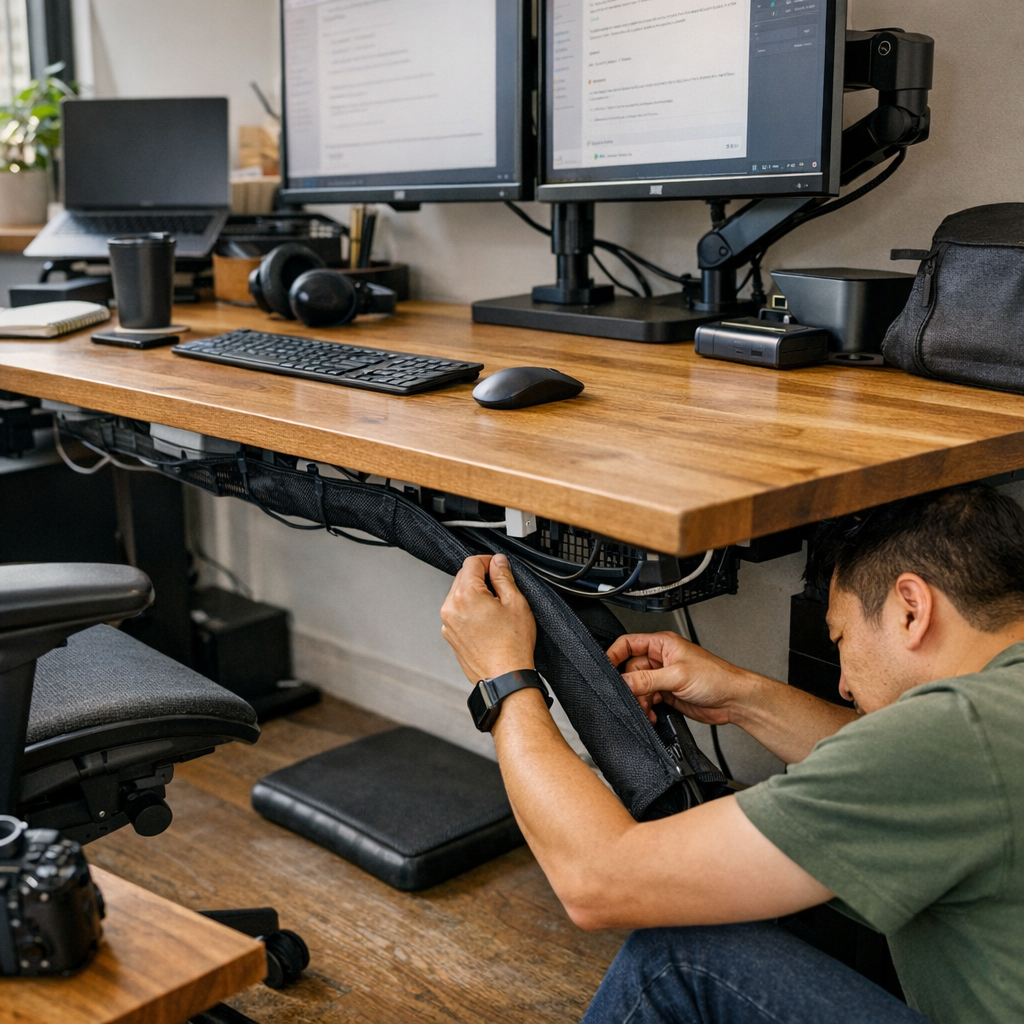
    Flexible sleeves interrupt this friction cycle. Instead of going back to square one, you simply open the sleeve, tuck in or move a cable, and close it again—no tools, no fragments, no reset delays. It’s in the friction zone—behind a monitor riser, squeezed along the back rail of a height-adjustable desk, or under a crowded shared bench—where sleeves show their difference. The work flips from maintenance overhead to a quick, lived adjustment.

    Real scenes: When cable ties hold you back

    Real desk use isn’t staged. You reach to plug in a second laptop, but the first cable is locked mid-air by a tie. You add a USB fan to edge off summer heat, or need to loop in a different dock—each time, you hit the same wall: clear space, cut fastenings, redo an entire cable section just to add one line. Cables end up running outside arms’ reach or tangled at the desk’s edge because changing anything feels oversized. Sometimes, changes just don’t happen until downtime forces your hand.

    Sleeves change that: slide, add, close. When you need to flex the setup, it happens in the flow—no separation between working and maintaining. Instead of a lingering side project under the desk, you get back to a state where the cables respond as quickly as your workflow shifts.

    The hidden cost of a “tidy” setup that doesn’t adapt

    The desk might look streamlined, but if you’re repeating tool hunts and resets just to manage a new charger or keyboard, you’re not working—you’re preoccupied with the system itself. Under a sit-stand desk, it’s typical: cables pinned up, no slack left, each new device setting off a full re-thread. What should be a five-second change becomes a tense, ten-minute reset—pulling trays, backtracking cable ends, picking up tiny cut-offs from the floor.

    This isn’t just visual: every small interruption eats into focus. Over weeks, that’s more than downtime—it’s the creeping drag that stops upgrades and encourages awkward workarounds. Upgrades are shelved “for later.” Temporary fixes stick around too long. The cost isn’t just inconvenience—it’s a slower, less responsive workspace, one that gently resists each change.

    Making adaptation routine: My own switch to sleeves

    Swapping from fixed ties to a zippered sleeve on a 120cm cable tray, the payoff was blunt: the desk didn’t just stay clear, it let me swap, route, or remove cables in seconds, not sessions. New devices slotted in without dragging out scissors or risking nicks to wires. No more loose cable clumps delayed at the end of a busy week, no ritual of tools and tidying. Adaptation became part of the daily workflow—the space stayed organized, but more importantly, it stayed responsive when real changes were needed.

    Everyday use: Where sleeves show their advantage

    On days when switching between a drafting tablet and laptop, with chargers running to the far side and headphones cycling through, ties turn every change into a disruption. With a sleeve, the move is the same each time: open where you need, drop in a line, close—the rest of the setup undisturbed. Cables stop dictating where devices go or how far you stretch. You get to arrange gear for the real work—the system adjusts as you move through the week’s needs, instead of fighting back every time you rotate your lineup.

    When minor interruptions vanish, real improvements add up

    This isn’t a dramatic reveal, but it is a slow doubling of convenience: the missed minutes, abandoned quick changes, and all the times you put up with an inconvenient cable run shrink away. Over a month, that’s not just less friction, but a workspace that keeps pace, not one you avoid shaping to new tasks. When the tools and surface actually fit what you’re doing, every adjustment feels routine, not like reopening clutter you’d rather just ignore.

    Practical FAQ: Getting sleeves right on your own workspace

    Will a sleeve keep cables as secure as ties?
    For normal desk movement and device swaps, sleeves keep the cable run controlled and protected. If you’re dealing with an open-plan or high-traffic desk—where bundles might get bumped—anchor at each end with a tie for backup. That covers the vulnerable points without locking down the flexible middle.

    How do you keep sleeves from sliding around?
    Fix the sleeve’s ends using adhesive clips, or thread it through a cable tray under the desk. If your cable path is long or needs to turn a corner, add a midpoint anchor—this holds things steady for daily sit-stand or rolling-chair motion while keeping the whole line accessible for quick changes.

    Can you use ties and sleeves together?
    Yes. Ties work best for permanent anchors—corners, endpoints, or cable drops. Use sleeves anywhere you expect cables may be swapped, rerouted, or added together. This mix means structure where you need it, but flexibility where your routines actually change.

    Why modern desks need flexible, repeatable structure

    Workstations don’t stay static. If you swap devices, update tech mid-year, or share the desk, inflexible cable management eventually slows you down. What looks streamlined can quickly breed clutter or tangled workarounds when it can’t adapt to day-to-day needs. The friction isn’t dramatic, but it’s real: a postponed upgrade here, an awkward charger crossing your reach there, a cable snake growing behind the monitor each time you delay the next reset because the system itself resists easy change.

    Flexible cable sleeves keep cables neat, but more crucially, they allow for instant resets and quiet tweaks as your work pattern evolves. That ongoing adaptability is what separates a desk that stays useful from one that’s just show-ready. In practical terms: if you expect your workspace to fit you—not the other way around—making cable management flexible is a foundational shift in how smoothly and confidently every upgrade, rotation, or adjustment lands.

    Explore the full WorkBasic collection