
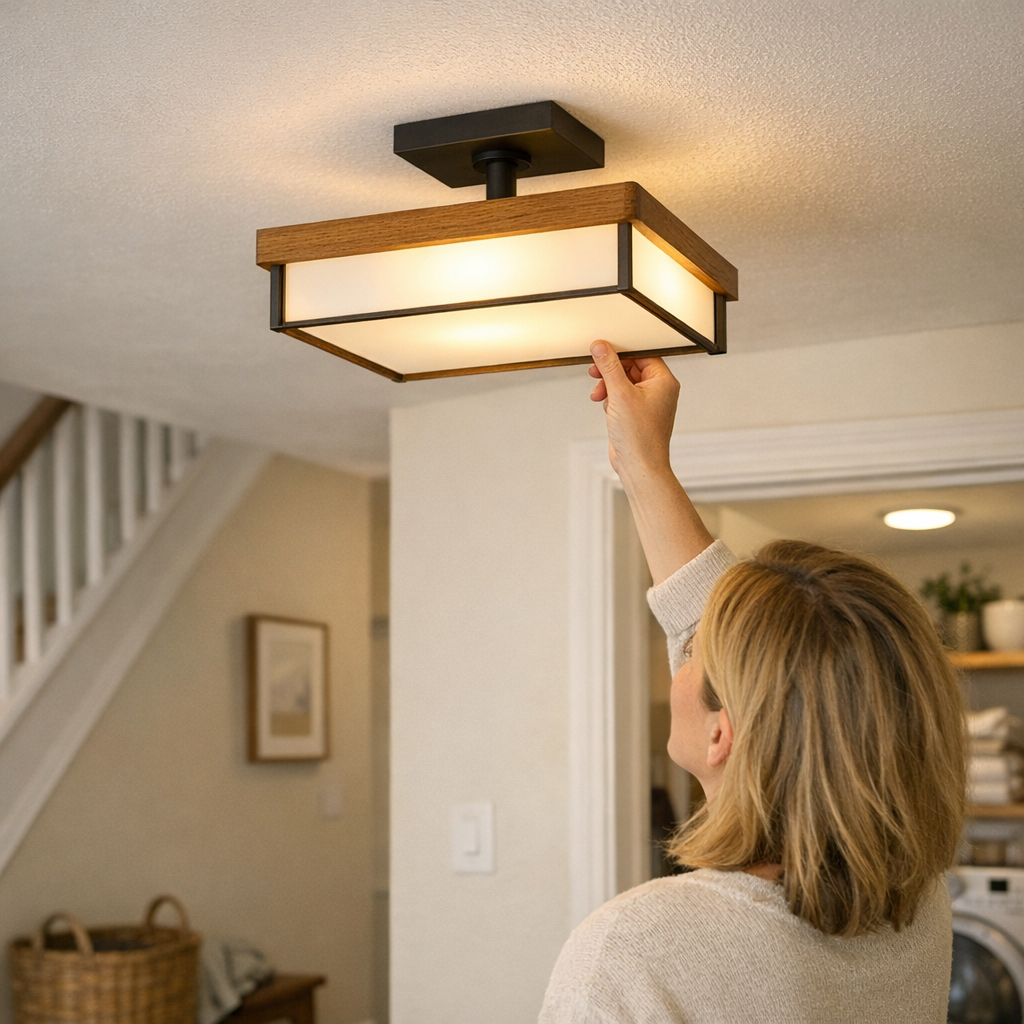
If a ceiling or wall light wobbles when you clean it—or flexes from an everyday brush-by in a hallway—this isn’t just cosmetic. It’s a first warning that your fixture’s weight rating is mismatched with real household activity. Over weeks, a supposedly “secure” fixture starts to betray its limits: screws loosen, alignment drifts, and stubborn shadow lines show up after the routine bulb swap or the slightest shake. Suddenly, what looked freshly installed now feels unreliable or half-finished every time you walk past, especially in high-contact areas.
Where Lighting Weight Ratings Fail—and Why It Matters
Lights aren’t set-and-forget. They exist in spaces you move through, clean, and touch every day. Subtle vibrations—slammed doors, footsteps above, just the ordinary pulses of a lived-in home—slowly compromise fixtures that don’t have real strength behind their weight rating. The problem is most visible in places with little margin for error: laundry nooks, stair turns, narrow hallways. Here, the signs aren’t theoretical—they show up in moments you can’t ignore: the light sags after a week of humid showers, brushes out of level as you pass with a laundry basket, or forms a ceiling gap you spot from across the room.
The light stays on, but the difference is felt—an area that always seems in need of a tweak, never quite matching the rest of the house. Annoyance grows: another screw to re-tighten, a shadow at an awkward angle, that half-second hesitation each time you walk under the fixture or wipe it clean.
Why Most Fixtures Don’t Survive Routine Use
Two fixtures can look identically sized and styled—the only difference: one is rated for 6 pounds, another for 20. That number doesn’t affect the packaging photo, but it changes everything over time. If your daily routine includes dusting, swapping bulbs, or bumping fixtures in a tight stairway, the wrong fixture turns into a tug-of-war with your own setup. Micro-movements become daily headaches: instead of lighting a space, the fixture becomes another thing you tiptoe around or patch up.
In hallway zones, for example, overloading a flush mount or semi-flush fixture by just a few pounds results in changes you’ll notice within weeks: screws that refuse to stay tight, gradual tilting, or an uneven shadow that spreads across the passageway. The first month, you might only see a small shift—by the third, you’re fighting flicker, visible droop, and distracting shadows that weren’t there before.
Real-World Setups: When Ratings Make or Break the Space
Stairways: Tilted, Touched, and Always on the Edge
Picture a narrow stair landing. The wall sconce, mounted in arm’s reach, handles bumps from laundry baskets, elbows, or coats. At first, it seems steady. But fixtures not rated for this kind of repeated contact quickly start to droop or sag within weeks. You tilt it back to level, but next week the flaw’s back again. When the fixture is genuinely rated for repeated contact and load, it shrugs off these daily bumps and keeps shadows—along with frustration—out of your routine.
Laundry and Utility Rooms: Vibration Meets Gravity
Laundry and utility rooms punish fixtures. Mount a flush or semi-flush model above a washer, or near a cabinet that swings wide, and you’re testing the hidden limits with every cycle. Fixtures chosen only for looks—ignoring load—start to sag toward a swinging door, loosen at the mount, or collect dust in a new ceiling gap within months. The space no longer feels finished; instead, you avoid using the main light or dread retightening anchors every time the machine rattles. This is time lost to the wrong rating every single week.
Cleaning as a Stress Test
Cleaning is the silent reveal of a bad weight match. Wipe down a ceiling light that’s properly mounted and there’s no movement—job done. But if you feel a shift, see even minor flex, or catch a lopsided shadow after a quick polish, you’ve already discovered the fixture’s limit. The hassle only adds up: annual cleaning, monthly bulb swaps, and the unpredictable bumps of daily life separate fixtures that quietly stay put from those that become a constant project.
The Case for Exceeding Minimum Weight Ratings
Upgrading to a fixture that beats the previous weight spec often looks visually identical to what was there before. The difference isn’t a decor switch; it’s a daily relief. Swap a hallway fixture for a stronger-rated model and notice the end of constant realignment—even after a not-so-careful cleaning or a tight pass with laundry in hand. The new mount stays overbuilt for its load, outlasting minor ceiling imperfections and banishing those creeping shadow lines. It’s not just a steady fixture—it’s a space that actually feels finished, no matter how many times it’s used or cleaned in a week.
How to Spot Weak Points Before You Need a Fix
Find the manufacturer’s specs for your fixture—usually in the manual or online. Don’t just go by the broad “rating”—check the real combined weight: shade, glass, bulbs, and add-ons all count. If resets never last, the mount sags, or new shadows appear after incidental contact, those are your active warning signs. Shadow lines that grow more uneven, or screws that back out after every bump, mean the rating isn’t holding up to honest use—it’s not bad luck, it’s misfit structure.
If you can’t find the specs, a pro can estimate for you, checking mounting hardware and design. Upgrade by targeting a fixture that’s clearly rated above your real total, not just for safety, but to avoid a routine of quick fixes and uneasy workarounds.
Damp, Steamy, and Unforgiving Rooms
Bathrooms, laundry, and utility corners multiply risk. Steam and humidity not only shorten the lifespan of finishes, they amplify fixture weight—glass domes and extra seals add pounds right where the mounting is most stressed. Under-rated fixtures in these conditions fail faster; even minor sag or movement near a tub, shower, or over the sink indicates the mounting is losing the long game against gravity and moisture. Repair usually ends up costing more, and the sudden “why is this loose?” turns into real hassle—in these rooms, overrating the mount is a clear win against slow, avoidable failure.
When Lighting “Looks Right” But Fails Routine Life
A room can look “done” after a new install, but repeated use quickly tests appearances. If you’re always retightening a fixture, turning the shade to hide a shadow, or working around a tilt no one else sees, you’re living with an everyday design miss. The right weight rating isn’t a number—it’s the difference between lighting you ignore (because it works) and lighting that always reminds you it’s the weak point. Upgrade not for another design refresh, but for the real fix you’ll notice every time you don’t have to touch a thing after cleaning, moving, or just living in your space.
LightHelper: Practical ceiling and wall lights built for real, repeated use.