Author: jaesoon_admin

  • Ensuring Invisible Lighting Mounts Stay Hidden Through Daily Use

    The cleanest-looking lighting setups rarely stay clean once you start actually using the space. On install day, the lines look sharp—no stray wires, invisible brackets, nothing obvious to snag or catch your eye. But it only takes a few hours of real work at your desk for the setup to unravel. You slide a notebook across the surface and the “hidden” cable tugs loose, spilling into view. A chair leg nudges the edge of a bracket that had seemed flush and minimal. By day three, dust builds up along that supposed low-profile support, and you’re constantly re-adjusting a lamp that won’t quite hold its position. What felt calm and invisible in photos now feels busy, unsettled, and increasingly interruptive every time you try to focus. In the world of indoor lighting and supports, the difference between a setup that looks solved and one that actually stays out of your way becomes painfully clear—especially at a compact desk, a cluttered work corner, or anywhere cables cross reach lines.

    Why Real Use Brings Hidden Friction to the Surface

    In daily indoor life, a “mostly hidden” lighting mount doesn’t stay hidden for long. A cable loop that hugged the back of the desk droops into view after you shift your monitor. The adhesive that felt strong on install day softens after a single cleaning or a humid night, and one lost bracket edge starts collecting dust or crumbs—turning into a visual reminder that something’s off. The plug access that looked clever in a photo makes you pause mid-task when you need to kneel under the desk just to reconnect a charger or light. These aren’t just appearance issues: small breakdowns slow routines and build low-grade annoyance each time you adjust the light or run a different wire. Invisible only means invisible until your habits break the setup’s disguise.

    Typical Frustrations—Recognizing the Signals

    There’s always a giveaway. That spare lamp cable catches your eye before you even feel for the light switch. An “invisible” bracket edge flashes a reflection during clean-up, or snagged dust lines gather at the very point that was supposed to disappear. At a cluttered or shifting desk, you notice the untidy cable loop before you notice the room itself. By the end of a week, you’re hesitating every time you adjust a light, reach for a USB cable, or wipe down the surface—constantly fussing with a setup that was supposed to fade into the background but now interrupts your workflow in small, regular ways.

    The Difference Between “Neat” and “Truly Invisible” Supports

    Appearances fall apart where movement and repeated use expose every shortcut. A slim LED bar floats under a shelf until one cable sags free after a minor nudge. Snap-on cord covers make things orderly for a couple of days, but any vibration or new cable can tear that order open again. Two setups that looked identical out of the box start to drift apart in real time: one holds its line, the other slowly frays, droops, or shifts out of sight—then right back into it. At a glance, it’s just a cable in the wrong place. In practice, it’s a creeping frustration that breaks the promise of an “unseen” fixture, especially in spaces you share or work in daily.

    Real-World Example: The Desk Shelf That Wouldn’t Stay Quiet

    Picture a shared study nook with a low-profile LED strip mounted tight under a shelf. On day one, there’s no trace—brackets disappear, and the cable is routed up, out of reach. But within a week, routine laptop plug-ins and paperwork nudge the power cord down. Suddenly, a loose line dangles into the footwell, bumping your shin and picking up dust. The shelf’s “invisible” mount now becomes a minor irritant, distracting anyone who sits down and turning what should have been a functional upgrade into a daily source of low-level annoyance.

    What Separates Strong Mounts from the Ones That Slip

    Differentiating factors show up with every routine: lasting invisibility depends on structure more than style. A true out-of-sight setup needs mounts that anchor both light and cable through repeated touch, minor vibration, and even the cleaning rag. This means rigid channels for cable runs—no slack left to escape—mounts that clamp or fit tight enough to resist wall and surface shifts, and adhesive or clips that actually match the brackets and cables being used. Setups that withstand life’s repetition avoid the slow creep of brackets tilting, cords revealing their lines, or shifting supports that throw off the careful balance at the workspace’s edge.

    How to Build Stronger, Distraction-Free Lighting Setups

    • Follow the shadow lines: Run cables along the deepest recess or natural shadow at the back of a shelf to keep them invisible even as light conditions shift and furniture gets adjusted.
    • Match hardware and pathway size: Pick adhesive clips and channels sized exactly to fit the cable and bracket, not just “close enough”—undersized options dip, snag, or fail under routine strain.
    • Keep cable slack away from active zones: Fasten all cable runs close to plugs or fixtures instead of letting lines hang loose, where they inevitably swing back into direct sight or finger reach.
    • Anticipate routine disruption: Humidity, vibration from typing, adjusting monitors, or even frequent cleaning will test every support. Plan weekly spot checks to nudge cables and brackets back into place—and replace any piece that slips, before the distraction hardens into the new normal.

    Daily Use Scenes—Where Supports Earn (or Lose) Their Place

    In a small desk zone, every centimeter is a commitment. A barely sagging cable interrupts as soon as you slide papers or devices across the surface. Any bracket edge that dips below the shelf becomes a catch point for dust, a visual nag before your day starts. Add even one extra power or data cable and the best under-shelf lighting setup can quickly fall apart—hidden clips drop into sight, cable runs cross your arm path, and the lamp that was “minimal” now steals attention every morning. On shared tables or mixed-function surfaces, supports that drift out of line after daily movement make every meal, meeting, or clean-up session feel just a bit more awkward. What reads as bad design often comes down to untested, incomplete setup logic exposed by actual living routines.

    Small Fixes That Make Real Improvements

    Remove all slack from cable runs at the touch-points: if even a few extra centimeters of cord can shift during use, expect them to show up everywhere you don’t want. Choose adhesive mounts or flex brackets that sit absolutely flush—no projecting corners, no dust-catching edges—to make cleaning easier and cut down on bits that grab your attention for the wrong reason. When supports are built to flex with uneven walls or ridges, your lighting holds its line, even as habits and furniture change. The small difference between a cable that stays perfectly routed and one that slides free can determine whether your space stays visually settled or becomes a daily threat to your workflow.

    Why Function Matters More Than First Impressions

    The test isn’t how hidden a lighting setup seems when you first wire it—it’s whether it stays invisible and off your mind after a week of actual use. A support that doesn’t slip, a cable that doesn’t swing out or snag at the work edge, a bracket that doesn’t tilt or collect debris: these are what turn a lighting fix into a reliably calm background. Overlooking even one exposed end or misplaced bracket lets clutter creep back in as a low-key irritant, making the difference between a workspace that feels like an improvement and one that feels like a compromise you keep correcting.

    For more ways to keep lighting supports out of sight and indoor spaces calmer to live with, visit LightSupport.

  • How Strategic Carry-On Organization Eases Travel Stress and Saves Time

    The real test isn’t at home—it’s in motion: Your carry-on might look sorted the night before, pockets zipped, cubes aligned, everything with a home. It feels under control right up until you step into the airport. That’s where neatly packed turns into slow-to-use—where you reach for your passport at security and instead fish out a charger, or unzip one pouch too many before finding your boarding pass, with the line behind you growing restless. The friction isn’t about laziness; it’s about how an “organized” carry-on collapses under repeated, real-world travel routines. The difference isn’t just visual—it’s whether your bag lets you move, reach, and repack at airport speed, or traps you in its own tidy grid the moment you need something fast. This gap is where nearly every carry-on setup—no matter how sharp it looks—starts to fail or succeed.

    When “Organized Enough” Isn’t Actually Enough

    Frequent flyers know this pattern: At home, packing makes sense. But when the boarding line lurches forward, you’re suddenly squinting at zipper pulls, feeling for IDs while phone charging cables tangle between fingers. What seemed smart on the bedroom floor—the pouch layout, the all-in-one organizer—falls apart when seconds matter. Grab the wrong zip, dig an inch too far, shuffle through tech gear that’s drifted into document space, and now you’re blocking the flow.

    This isn’t about not caring or planning. Travelers invest effort for that Instagram-order shot, but on the airport floor, movement—not appearance—matters. The moment routines speed up—tray offloading, doc checks, in-seat prep—an “organized” setup exposes its weak points: items lost to overlap, pouches that resist quick return, and small mistakes that repeat on every segment.

    The Trouble with Overlap: Real-World Scenarios

    Security Checks Change Everything

    Security trays reveal design failures fast. Try pulling your laptop from a side pocket—only to yank out a clump of charging cords and a power bank. A jacket snags on the tangle. Suddenly, you’re side-stepping to re-coil wires, blocking the belt, wishing you’d sorted tech away from documents. Every second spent untangling, nudging snacks aside, or flattening a boarding pass that’s bent under headphones is a consequence of categories crossing in your bag.

    Boarding Lines: Underestimated Pressure Zones

    Boarding feels routine until you need your ID again or the flight attendant asks for your boarding pass on the jetway. If those essentials share space with snacks, receipts, or stray pens, extraction turns into a minor performance—quickly searching while balancing what not to drop. The rest of the queue is waiting, and your “compact” organizer is actually forcing another slow scene every time your item isn’t at hand.

    Seat Entry and Overhead Bin Moments

    Think your bag is streamlined? Now you’re stalled in a tight aisle, craning to reach headphones or a pen—yet a clothing cube blocks access. Forced to pull the bag down, unzip, and rummage, what looked efficient at the hotel becomes a seat-side bottleneck, with each “quick” access followed by on-the-fly repacking and disrupted order. A setup that packs neat but overlaps categories guarantees you’ll feel this drag two, three, or ten times per trip.

    Why Looking Organized Isn’t the Same as Moving Smoothly

    Perfect at rest, failed in motion: pouches seem aligned, cubes stack sharp, but repeated use exposes the flaw. By the third retrieval, overlaps—boarding passes fighting headphones for zipper space, slim organizers blocking key paths—start grinding your efficiency down. Each attempt to grab an essential becomes a repeat interruption. The bag’s main problem isn’t volume, it’s friction at pressure points: the exact pocket where charger wires invade the doc slot, or where stowing a pen interrupts document flow every time you shift terminals.

    Simple Fix: Assign Clear Zones for High-Frequency Items

    Real trips prove one upgrade works: clear, category-based separation for every essential. That means:

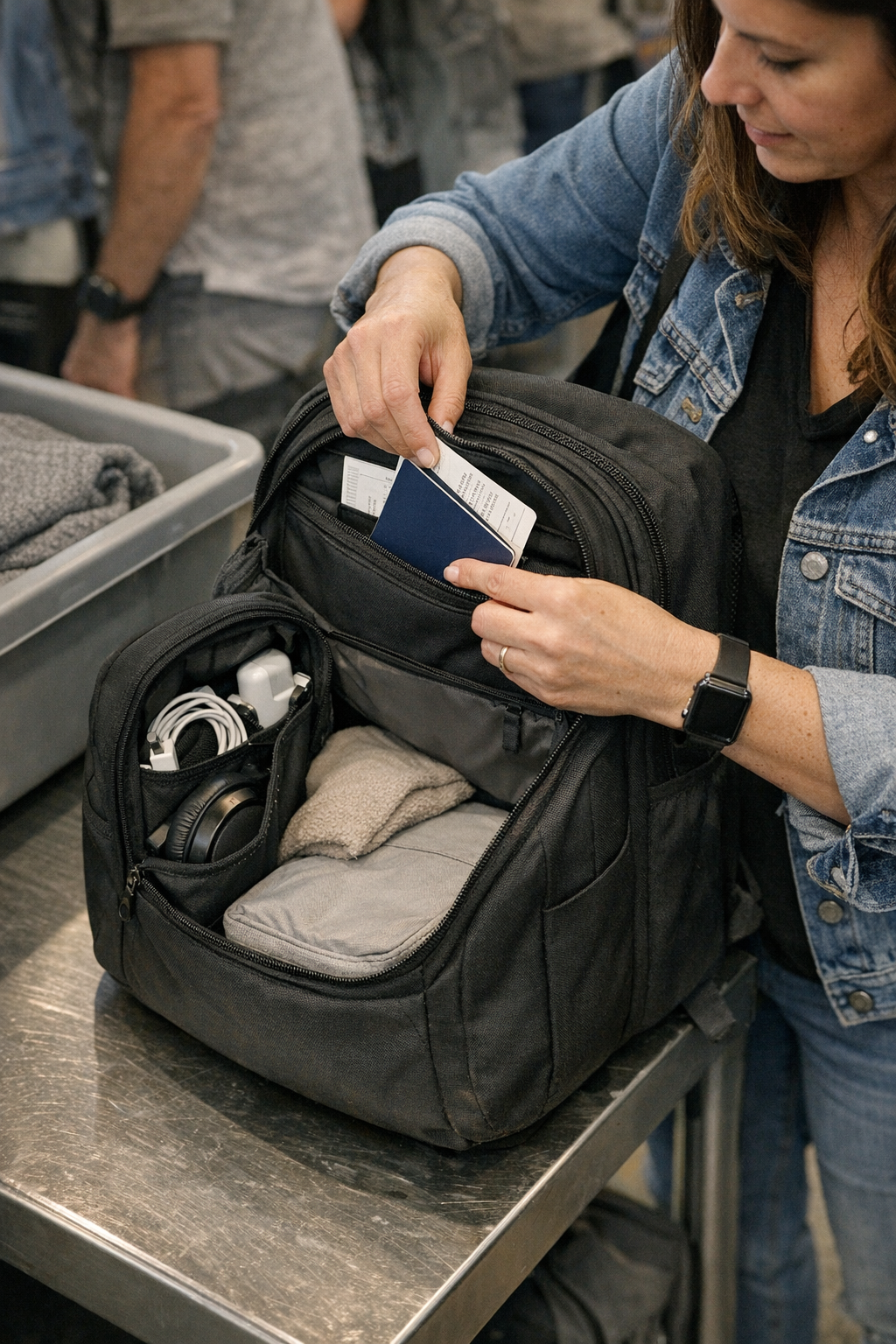
    • One zipper pocket for travel documents—passport, ticket, ID—completely free from tech gear invasion.
    • Side pockets or soft dividers dedicated only to cords, chargers, and headphones, away from paper or snacks.
    • Comfort and medical items corralled in a labeled pouch or obvious divider, never mixed into fast-access panels.

    Obvious? Maybe. But the change is measurable: when zones stay single-purpose under repeat use, grabbing or returning an item becomes a reliable, two-second motion instead of a decision every time. No more restoring order after every tray check. No more quiet unraveling after each “quick” grab. When you refuse to stack categories, retrieval pace climbs, mistakes drop, and the bag keeps its order even when you’re rushed.

    Packing Tactics That Stand Up to Real Trip Cycles

    Start Before You Leave Home

    Assign zones before you go. Handle the items you’ll reach for in transit—doc, pass, device, pen—each gets an uncongested pocket. Use outer zones for only these, never tech or comfort items. Avoid creeping overlap from last-minute changes or just-in-case stashing.

    Limit Each Pocket to Its Most Critical Use

    Packing to the max often means pockets end up as catch-alls. Don’t. Give one slot only to what triggers the most routine checks—a passport and pass together beat a confused pile of “maybe useful” stuff that only gets in the way when time is tight.

    Stay Honest During the Trip

    Mid-trip chaos tempts shortcuts—a charger shoved in with your documents, a pen landed atop your tickets “just once.” These blurs create ongoing drag: what’s quick now causes future fumbles, turning your system into a slow-ticking mess. Strong separation rewards you with self-correcting order; blurred lines multiply costs every time the airport routine starts over.

    Small Adjustments, Noticeable Results

    Here’s what changes on a real trip: Security done, you drop a passport straight back into a top slot—done, no reshuffling. You reach for headphones before seat entry—they’re where you expect, no cubes to unpack. Every “just a sec” stop vanishes because zones hold their own. Packing order isn’t just protected, it advances: the bag becomes easier to handle each time instead of slipping into miniature chaos after each access.

    The surprise? Cleaner separation rarely feels dramatic at first, but within two or three pressure cycles, your bag works faster, your hands land where they should, and you stop dreading routine checks. One category, one pocket—it’s a small adjustment, but for carry-on travelers, it’s the difference between fighting your own order and actually gaining speed in real airport flow.

    Browse practical carry-on solutions at CarryOnSupply

  • Ensuring a Calm Cat Visit with Reliable Daily Care Setups

    When Calm Visits Highlight Pet Care Gaps

    When guests show up, your daily pet-care routine is exposed—fast. One missing refill bottle or an untidy bowl that looked fine all week, and suddenly you’re reaching for essentials, explaining a stray spill, or digging for a brush behind a stack of mail. What looked “ready” when the house was quiet proves shaky the second someone else is in the room, or when your routine gets thrown off by even a small change. This is where CalmPetSupply setups often show their value: not in how they look, but in how they actually handle the breakdown moments most owners ignore until they return—again and again.

    Quiet, calm pets can make routines seem solid, but that calm snaps when something basic slips—a half-empty water bowl, grooming tools hidden behind clutter, or mess that spreads just as a guest sits down. Gaps that feel minor alone quickly add up to repeat detours when attention shifts and a step you need isn’t available until you move three other things. These are the daily fail points that reuse exposes, not just the aesthetic gaps of a less tidy space.

    Daily Setups: What Works in Practice?

    It’s easy to feel “ready” until a guest arrives or the day stutters. Take feeding: if the refill water bottle is buried behind yesterday’s mail, or a brush has drifted out of reach, routine flows you counted on grind to a halt. Tools or supplies that aren’t within arm’s reach become an invisible speedbump—especially during quick changes or interruptions. Even if your cleanup supplies are present, if they’re blocked by bags or mixed with less-used items, every reset is slower, and visible order becomes fake order.

    Home care routines pass their real test only after several cycles: by the third water top off, the unplanned spill, or the moment you discover a key item covered by a visitor’s bag. The space that seemed tidy now demands reshuffling just to get to the basics. Surface neatness means little if you burn minutes relocating a feeding scoop or clearing a path for a single wipe-down. These are not outlier events—they’re routine stress points that expose what your setup can’t handle under repeat use.

    Real Use Scenarios: Where Setups Get Stuck

    Picture this: You’re prepping a quick lunch with a friend. Your cat’s feeding zone looked set, but now the water bowl is empty, and the refill bottle is trapped under half a week’s mail. In the seconds it takes to dig it out—while your guest watches—you notice crumbs underfoot from a mat you meant to clean that morning. Instead of a calm meal, you’re covering for one missed wipe and wishing the basics were right where you needed them.

    Another common scene: It’s evening, company rings the bell, and your pet settles down—but the brush you expect to be at hand is missing, buried under old magazines or relocated after last use. Retrieving it means pausing conversation, moving around furniture, or asking your guest to shift. Worse, the quick-clean wipes are in the cabinet you can’t reach without moving something else. “Tidy” becomes “slow and awkward” as you chase down small-but-essential tools.

    Reset Friction: When Tidy Isn’t Enough

    “I’ll wipe up later” sounds fine until daily delays build up: a morning reset skipped, a night refill put off, and suddenly repeated interruptions cut into every visit. Home looks neat when no one’s moving, but as soon as real life kicks back in—feeding, cleaning, resetting—the hidden friction multiplies. Cat toys drift into walkways, grooming items wander into shared rooms, and every fix adds another short, preventable delay.

    That repeat reshuffling—moving a bowl for a sweep, searching for that same dish after—slowly wears on setup reliability. Surfaces wiped after dinner need redoing when a pet (or guest’s shoe) brings new mess into a just-cleaned space. The cycle is clear: one overlooked step leads to harder resets, and the more you work to keep up, the easier it is to fall behind.

    Why One Weak Point Derails the Flow

    Most pet setups start with good intentions and fall apart at a single missed link: a brush set down out of reach, a refill bottle stashed too far, wipes exiled to a high cabinet, or a scoop in a drawer it never should have seen. Small slippages add up—often only causing trouble when you’re cut off mid-routine or interrupted by company. That’s when ordinary basics, overlooked in a “clean” area, suddenly become the reason for rushed searching or embarrassing delays.

    A clear fix stands out: keeping key items like the refill bottle or brush visible and always within arm’s reach, right at the care zone. That one change—practical, non-decorative, and repeatable—instantly cuts back on frantic searches and crisis cleanups, especially with unexpected guests. Over a single week of use, the old scramble for missing items fades out, replaced by a routine that bends instead of breaking under pressure.

    Routine Readiness Means Less Mess and Fewer Interruptions

    Stress-free resets come from setups that put what’s necessary in arm’s reach before an interruption hits, not from cosmetic neatness. One care station—bowls, water, brush, wipes—all in reliable spots beats three different drawers or closed cabinets in real use. Even one consistently placed daily-use item eliminates last-second searching or awkward guest explanations, no matter how much the routine gets interrupted post-walk or at night.

    It only takes one moveable, easy-to-grab bottle or brush at the right point to take your routine from catch-up to controlled. What looks orderly for guests matters less than whether the objects you need interrupt your flow every time you pick up, refill, or clean. Clutter returning, items blocked by other storage, or cleanup supplies getting “saved for later” always comes back to frustrate—even in a “tidy” area.

    Real setups aren’t just about looking less messy—they’re about repeated handling, actual reachability, and less reset friction. A routine that supports real life means prepping for the next interruption, not just the next photo. Choose practical order over surface order, and you’ll notice visits and resets become just another simple part of daily pet care instead of a stress trigger.

    For care routines that actually keep pace with daily life, the difference is in real readiness at the point of use—and setups that remove repeat scrambling before it starts.

    See practical solutions for daily care routines at CalmPetSupply.

  • How TV Volume Quietly Disrupts Your Dog’s Nightly Rest Routine

    Dog rest at night isn’t just about a soft bed or a cozy blanket. It’s about everything that gets in the way—like the TV’s low dialogue, sudden laughs, or swelling music tracks that echo after hours. Owners rarely point to nighttime background noise as the culprit when their dog “settles but never really switches off.” The living room setup looks fine, but by 9 p.m., as routines slow and dogs curl up, a hidden problem becomes clear: the room feels still, but the rest is thin. Each burst from the speakers prompts a head-lift, an untucked paw, a long pause that interrupts what should have been a winding down, not a waiting game.

    When the Room Looks Calm—But Your Dog Never Fully Lets Go

    You finish the last walk, deal with small cleanups—maybe you have towels within reach, or maybe you’re half a step late as muddy paws hit the floor. With lights dimmed and water bowls checked, you expect rest to follow. Your dog finds their bed, but what follows is a string of small corrections: a stretch here, a quick glance up, a shift right after a TV shout. There’s a gap between a dog holding their spot and a dog sinking into deep rest—most owners see it only when they look for it.

    Nothing dramatic happens. Instead, it’s the steady leak of tension: a “reasonable” TV volume that, for a dog wired to notice sudden sounds, never fully fades out. Commercials pop, showdowns spike the audio, laughter stabs the quiet. The dog doesn’t hide, just hovers on edge. By the end of the week, you’re both more worn down than you should be, and nights are less restorative than they look.

    “Quiet” Isn’t Always “Restful”—And Structure Can Work Against You

    It’s easy to mistake silence for calm. A tidy room with a corner bed and topped-off bowl gives the illusion of rest, but routine background noise tells a different story. For dogs, barely-there TV sounds become a steady source of micro-alertness. Your setup might look ideal on paper: dog in the best corner, blanket arranged, food and water lined up. But sound drifts, and the bed near the speaker traps them in a zone of shallow dozing—never quite off-duty.

    This is the invisible friction that reshapes the entire evening. If you spot your dog readjusting every commercial break, flinching with each spike in volume, what you’re seeing is tension layering itself into the night. The problem rarely announces itself all at once—you feel it in the drag of routines, the slow leak of patience, and the restless start to your own end-of-day wind down.

    What Restless Looks Like: Micro-Interruptions You Can Miss

    Restlessness isn’t just pacing. It’s the nearly invisible struggles that stack up:

    • Dog shifts three times before finally lowering their head, only to shift again at the laugh track.
    • A single loud commercial means a hesitant paw stretches off the bed, then retracts once the noise calms.
    • Each new scene triggers a quick head-turn, eyes checking—always a half-step from real sleep.
    • Their curl is tense, paws partly folded, muscles flexed, as if waiting for the next jolt.

    Over several nights, you don’t need data to spot the cumulative effect: your dog’s rest spot turns into a permanent “just in case” station. For owners, it means routines drag, bedtime gets later, and everyone wakes up with less reserve. The trouble isn’t dramatic, just persistent—always hiding behind an “almost fine” setup.

    The Repeat Weak Point: When “Fine” Fails Over Time

    After the last walk—sometimes after a scramble for wipes you wish were closer—you return, cue up the TV, and expect the day’s friction to ease. Instead, the bed placement leaves your dog inches from every noise burst. Night after night, this spot becomes the weak link: the late-night action scene or offbeat sitcom laugh undoes the calm. You catch yourself pausing the show, hushing the volume, calling the dog over to try again—as if resetting the same mistake repeatedly.

    The weakness rarely shouts. It builds across nights: setup looks normal, but the sum of small disruptions undoes the tidy appearance. Each fresh interruption stirs up just enough confusion that rest never really lands, and the routine starts needing constant “just one more” adjustments.

    One Tweaked Detail Can Reset Everything

    You don’t need a new system—just a realignment. Lower the TV volume by two notches, enough that it quietly disappears at dog level. Slide the bed away from the speakers—sometimes a single cushion-width creates the buffer you both need. Across three nights, you can actually track the shift:

    • First night: fewer shifts but alert ears when the noise spikes.
    • Second night: the dog settles earlier, stretches are slower, rest periods get longer.
    • Third night: no more quick lifts or tension in the bed—only the true signal of rest: paws tucked, eyes closed, breathing steady.

    Real rest isn’t silent—it’s unbroken. When your dog’s tension melts and those small resets disappear, you’ve worked around the friction point that most routines keep missing. The goal isn’t a “quiet room” but an easy one—a flow that stops needing owner-side intervention every night.

    Spot the Early Clues—So Fixes Come Before Patterns Settle

    This ongoing friction is easy to write off: after all, you both “deal.” But the owners who catch these low-level signs early—especially on nights without background noise—see real improvements. Notice what vanishes on quiet evenings: restless fidgets disappear, bed time shortens, and the cycle of shifting and resetting slows or stops. The room signals when it’s right, if you’re willing to notice what’s not happening anymore.

    The fix isn’t overhauling your living space. Check where the bed lands relative to the noise source and main walking paths. Rearrange furniture—shift the bed near a wall or buffer it with a rug, ottoman, or folded blanket to muffle the TV’s edge. Repeatedly missed wipes after a walk? Move the storage point—not just closer, but within arm’s reach. The benefit isn’t in the picture—it’s in the unfussy flow: when cleanup and wind down fit without pause or detour, the routine gets lighter on everyone involved.

    The Details Aren’t Decorative—They Stack Up Fast

    What piles up isn’t visible clutter—it’s all the near-misses: a leash snagged under a chair, a towel one room away when the mess happens, a dog bed that looks ideal but gets ambushed by sound every night. These are the adjustments that move routines from “barely holding together” to quietly reliable. Each changes little by itself, but together, they end up flipping the week from draining to manageable—without fanfare or redesign.

    Where “That Should Work” Leaves You Unprepared

    Most owners stop at “good enough.” TV feels low, bed looks ready, dog stays more or less put. But friction hides in setups that look organized yet keep making the same small asks: a bit more patience, one more reset, or a late rescue for something that should have been at hand. Over time, these interruptions become baked into the routine—until you step back and layer out the last source of repeated drag.

    When minor shifts—like dropping the volume or scooting the bed—wipe away the pattern of micro-disruptions, you see the difference immediately. The room demands less correction. The dog finally rests. You spend less attention managing a zone that “should” have just worked—and the routines lose their undercurrent of strain.

    The Test: Does Your Setup Actually Make Nights Smoother?

    Change nothing major. Instead, try what’s missing: soften the soundtrack, nudge the bed, give it three nights. Ignore the decor for a moment; watch the movement—do restless shifts and scanning glances fade? No elaborate fixes, just small tweaks that pull hidden tension out of the air. When a setup stops creating points of friction, routine becomes background, not a nightly task list.

    The difference is practical, not pretty. Routines that stack up the right way—wipes within reach, walk paths clear, rest spot buffered from noise—let the small things fade away. That’s what makes a real dog-life setup work: fewer interruptions, quieter resets, and the slow removal of everything that kept the night just less than restful.

    For more everyday dog-life

    DogPile

  • Why Using the Right Lighting Anchor Matters for Long-Term Stability

    The real test for indoor lighting isn’t whether it turns on—it’s how reliably it works after a week of actual living. The mounting anchor, that unnoticed connection overhead, decides whether your light fixture stays steady or slowly surrenders to shadows, glare, or a creeping tilt. If you’ve ever crossed a hallway and noticed your path disappear into a pocket of shadow, or tried to use a bathroom mirror only to find the light above throwing split reflections or an uneasy wobble, you’re already paying for a mounting shortcut. Flush mounts, wall sconces, vanity lights—all rely on a hardware connection that sounds simple but quietly controls the way your light survives doors slamming, baskets bumping, and vibration building up, day after day.

    The Hidden Cost of “It Fits Well Enough”

    Not every lighting anchor is equal, and “close enough” results add up fast in real use. A flush mount that seemed steady on install day becomes slightly crooked once steam softens bathroom drywall or laundry baskets knock the ceiling. Glare sneaks in from an exposed screw. A shadow—barely there at first—expands with every footstep until you notice you’re folding clothes in a dim corner or re-aiming the bathroom mirror to avoid a distracting double image. These aren’t issues you catch while standing on a ladder. They show up below, every day, moving slowly but steadily into your routines.

    The ceiling (or wall) might look uniform, but a misaligned light disrupts the whole room’s balance. Corridor fixtures cast shadows in odd directions, making a late-night pass feel less safe. Kitchen or laundry lights seem to work, except the actual counter or folding surface turns dim, or the cabinet run suddenly ends in a pool of shadow. The inconvenience is quiet, but it keeps returning—each time you reach for more light and find it off-center, unreliable, or demanding small fixes that never quite last.

    Where Routine Begins to Reveal the Mismatch

    Reliability slips when “good enough” anchors meet real movement. At first, a hallway’s ceiling light or laundry corner flush mount seems unchanged. But after a door slams or you drag a hamper beneath, a swap-in bracket starts to give itself away. A fixture that felt solid now leans, vibrates, or rattles—sometimes only enough to nudge a shadow line, other times enough to draw your eye every time someone crosses the room. The difference grows only with repeated use: one fixture stays silent and stable, the other breaks your routine with every small tremor.

    It’s not an installation flaw—it’s a daily-living mismatch. Stop at the turn of a staircase and check how a slightly twisted ceiling light throws uneven lines on the steps, making your footing uncertain. Try to spot your reflection in a bathroom mirror while the overhead fixture slowly shifts, spilling glare across half your face or leaving details faded in the wrong places. The room is lit, but the lighting fails at the very points where clarity and safety are supposed to be automatic—movement paths, counter edges, mirror centers.

    Laundry Corners and Drifting Fixtures

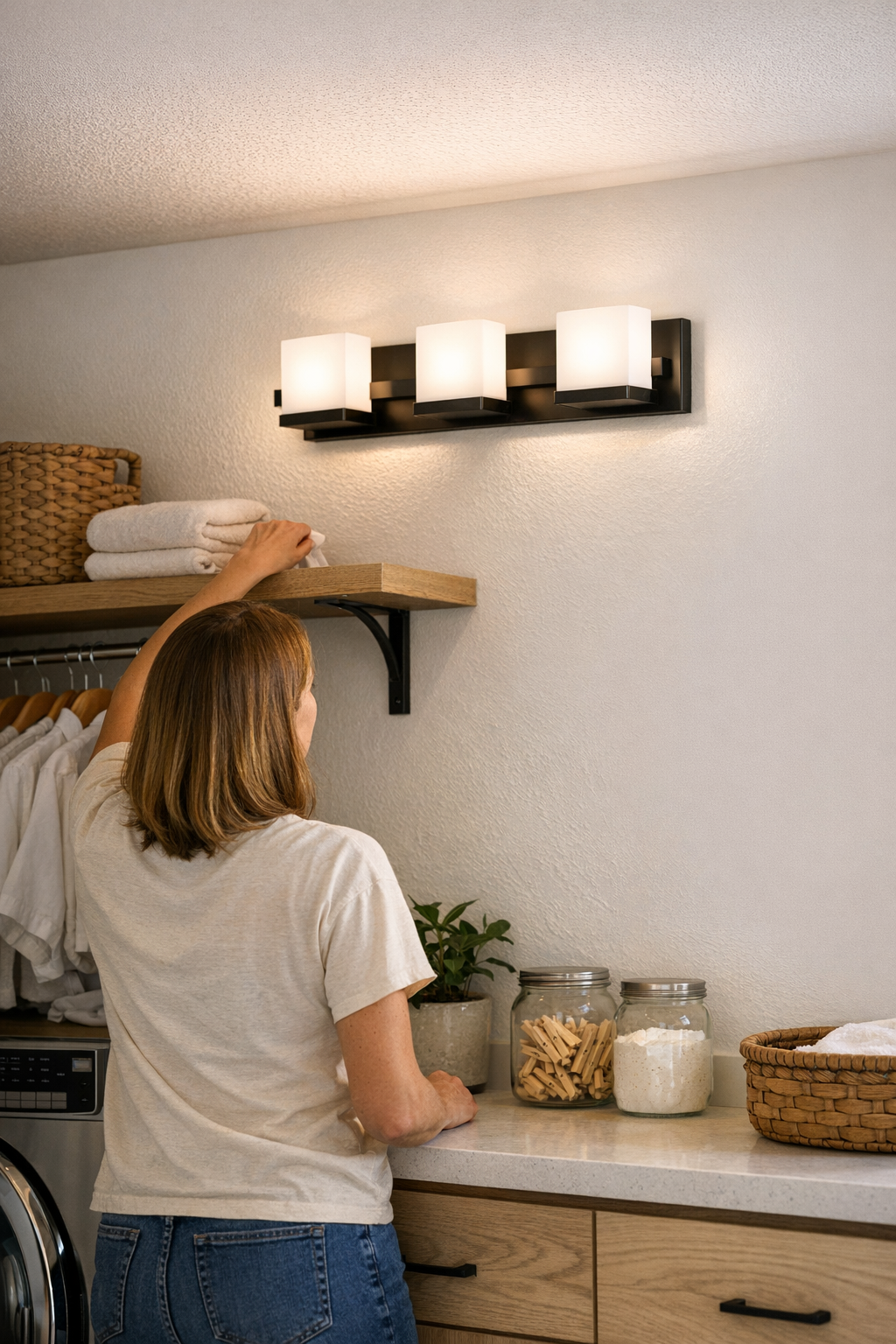
    Install a flush mount in the utility room using a leftover bracket and most days it looks fine. But after you thump a laundry basket past, or wipe dust off the shade, the slightest nudge sends the glass rocking. Each vibration gathers shadows behind the machines or leaves dead spots just where you need to see. Suddenly, folding or sorting is less certain, shelf edges blur, and routines require you to shift or squint more than before. Over time, it’s not an issue of style—it’s an ongoing interruption, an accumulation of shadows exactly where clear light should be, nudging you to either fix the misalignment again or put up with subpar results.

    Bathroom Mirrors: When Vibration Sneaks Into Vision

    Generic anchors in bathrooms rarely last long without trouble. A fixture can start to creep downward, screws loosen with each heavy door swing, and the shade shifts until it stares back at you—off-center or slightly vibrating—each morning in the mirror. If you’ve ever seen a faint second image or a flutter at the corner of your eye while shaving or applying makeup, you know the subtle havoc: glare that steals contrast, shadows that obscure fine details, or a buzzing fixture that refuses to stay aligned through repeated use. Every cleaning or hurried towel-swipe widens the gap between how the fixture appears and how reliably it controls your light.

    Why Original Anchors Matter for Repeated Use

    The right anchor is invisible when you get it right, and quietly disruptive when you don’t. Flush mounts and panel lights depend on anchors designed for their specific vibration, weight, and ceiling slope. Semi-flush or wall sconces face sideways torque each time a nearby door closes or someone brushes past. Fixtures meant for damp or high-activity spaces—bathrooms, laundry—require anchors with moisture resistance or built-in damping. Replace any of these with a generic or mismatched part, and you transplant the issue from “quick install” to “constant adjustment.”

    • Flush mount fixtures need secure anchoring to hold their shape against the daily low-level tremors of multi-use rooms.
    • Semi-flush and wall fixtures reveal small bracket errors as mounting stress—one side droops, shadows lengthen, and patterning on the wall becomes uneven.
    • Damp-rated and utility fixtures need corrosion resistance and anchors that won’t loosen after weeks of humidity or repeated wiping—qualities generic parts usually lack.

    One small tilt makes a room look bright but function poorly: glare bounces off shiny handles, pooled light forms where you want even spread, and the safest walking path blurs with unpredictable shadows. Instead of a once-and-done installation, lighting becomes an ongoing, low-grade annoyance—tightening, straightening, repositioning—or just putting up with less usable space.

    What Real Repeated Use Teaches Us About Indoor Lighting

    After a week in a lived-in space, the flaws of a “universal” anchor start stacking up in routines you didn’t plan to change. These are not catastrophic breakdowns. If you’ve stepped into a corridor and watched your own shadow switch sides, or turned at a stair to find half the step washed out with glare—while the fixture above looks untouched—you’ve seen the limits of quick-fit hardware. Maybe your laundry area’s surface seems to dim week by week, or the bathroom mirror splits your reflection after each door slam. Even minor issues—having to adjust a fixture every few days or ignore a slight buzz—signal that the anchor isn’t working for your real space.

    • Hallways where the fixture-level light looks fine, but your movement path drops into uneven shift or shadow
    • Bathrooms where the mirror repeats edges or throws glare that makes close work tough
    • Laundry or utility surfaces losing bright, even spread, especially after routine bumps or cleaning
    • Fixtures you have to nudge more than once a week just to keep level

    None of these failures are dramatic—but they keep your lighting from ever feeling finished.

    Two Small Upgrades That Prevent Big Annoyances

    • Always use the purpose-built anchor for the fixture and surface you actually have. It’s the smallest, most decisive detail for keeping light steady and spread predictable—not just on setup day, but through weeks of moving, cleaning, and living.
    • Check and retighten mounts after one week of normal activity. Most misalignment sneaks in only after repeated shutdowns, bumps, or cleaning. This single step helps you avoid the slow drift and loose hardware that turn strong lighting into a repeat problem.

    The Difference You Notice—And the Frustration You Don’t Have To

    No room fails because it “looks” dim or bright—what matters is whether sightlines, surfaces, and movement paths stay clear, without ever grabbing your attention for the wrong reason. The right mounting anchor doesn’t perfect the lighting, but it ends the cycle of creeping shadow, shifting glare, and silent frustration that pulls you out of your daily rhythm. It’s not about flawless interiors—it’s about finally being able to forget about your lighting because it just works, day after day, in the rooms you actually use.

    http://www.lighthelper.myshopify.com

  • How Smart Car Organization Reduces Interruptions on Long Drives

    Fast-forward one week after any interior clean-up or new organizer install—most drivers can spot the cracks. The dashboard still looks decent and the floor mats are mostly in place, but now you’re back from a grocery run, hunting for your charging cable as it snakes behind the gear shift again. You’re half-twisting in your seat, fishing your phone from the gap by the console after it slipped out of its mount on a sudden stop. Cupholders that once seemed clear now catch loose receipts or a sliding pen. Even if everything appeared “fixed,” the routine of real driving—grabbing, loading, rerouting cables, quick stops, and rushed returns—tests whether your system stands up beyond that first organized look. Not every car setup handles the rough edge of daily repetition. That’s when you feel the difference between a DriveWellSupply solution and the rest: not just cleaner, but configured for repeated, real driving habits.

    Why a Neat-Looking Interior Isn't Always an Easy Interior

    A car that looks sorted isn’t necessarily set up for actual use. What kills that smooth feeling are the micro-hassles—the things that didn’t seem like problems at first. Each school drop-off, coffee grab, or fuel stop knocks things loose: now your seatbelt buckle is hidden under a receipt, and a pen blocks the footwell. Charging lines claim territory you never wanted them to, so you’re untangling something on autopilot nearly every drive. The organization isn’t failing visually, but it isn’t holding up structurally, either.

    The friction isn't surface clutter—it’s the slow return of minor obstacles. A bottle that rolls underfoot, a phone mount that’s just off-angle—each pause to adjust or retrieve adds up over the week. You don’t think about these delays until you’re running behind or until something finally causes a real slip. Why does the car never quite stay “ready to go,” despite your best effort? Because the setup can’t keep up with the routine motions of your actual life.

    Everyday Scenes Where the System Breaks Down

    The Phone That’s Never Quite in Reach

    You park, grab your bag—and your phone has slipped just out of reach, again. The mount that should have kept it secure is a little loose or slightly misaligned, turning every bump into another drop or awkward reach. You end up digging for your phone in the narrow space beside the seat, sometimes pressing it deeper with every fumble. No matter how polished things looked on day one, the “set and forget” solution needs constant readjustment. It isn’t.

    Cables That Keep Wandering Back

    Charging cables are supposed to make things easier, but unless anchored or routed firmly, they boomerang into your way. Every few trips, a cable you tucked away swings loose, finds its way into a gearpath, or loops around a cupholder. When you’re rushing to plug in—or grabbing a coffee while navigating—untangling a cord becomes another routine interruption. The smooth, cable-free effect fades fast unless your setup actively keeps lines out of every reach zone you actually use.

    Items on the Move: The Return of Clutter

    Organizers don’t stop migration when they mis-match the stuff you actually need mid-drive. Bottles drift under the seat. Loose change and pens creep toward rails. Those back-pocket folders you add for “all the paper stuff”? They fill up, then overflow: now you’re digging through them, knocking gum wrappers onto the floor while stopped at the light, or finding a coat sleeve catching on an overstuffed bin. Even the best-intentioned containment fails if it hides items you need or just moves clutter to another, harder-to-reach spot.

    When Organization Creates Its Own Problems

    Some fixes—sleek mats, brand-new cable organizers—bring new issues if they ignore how you actually move in and out, or what you grab most. A perfect-fit floor mat can ride up on the seat rail or shift toward the pedals, carving open a slot for grit and coins, making cleanup harder instead of easier. Tidy cable boxes hide what you need, slowing you down each time you dig for a charger on a busy errand run. The appearance improves, but the routine gets just a bit slower. It’s a trade: one less scrap of paper, two more seconds finding what you reach for constantly.

    Loading and Unloading: The Logjam at Trunk and Seat

    Cargo and seat organizers promise “grab-and-go.” But if the system blocks your basic movement—requires un-doing a strap to toss in gym shoes, or shuffling compartments to load groceries—order turns into drag. You’re forced to pause, wedge a bag past rigid bins, or unclasp something that was supposed to make things “easier.” Every time setup structure blocks fluid entry, you lose the supposed benefit of organization for the sake of a look.

    Small Adjustments, Real Payoff

    You don’t always need new gear, but placement and strategy matter. Consider these real-use adjustments:

    • Anchor Cables Where Motion Happens: Route charging lines along a fixed, midline path. Use clips to keep cables away from gear levers and away from the space by your feet—the cable should disappear from daily interference, not just look organized.
    • Mount With Reach, Not Just for Show: Your dominant hand should fall naturally on the phone mount—don’t prioritize “clean look” at the expense of habit. If grabbing or stowing your phone comes with a twist or tense reach, you’ll keep fighting the setup and risk a mid-drive drop.
    • Choose Overlapping Mats, Not Just Sized Mats: Mats that extend under the pedals and overlap seat rails stop debris and small items from hiding. Even two extra inches at the rail can spare you weekly hunts for coins or wrappers underneath the seat, immediately translating to less crawling or cleaning.
    • Avoid Jammed Organizers: Leave real, empty space—or things crowd and avalanche. If an organizer slows you down, it’s not helping. Build your system around quick reach and return, not maximum fill.

    The Accumulated Cost of Minor Interruptions

    Every time you adjust a mat, reach for a phone, untangle a cable, or re-collect a rolling bottle, you lose momentum. These low-level interruptions quietly add up: a few seconds here, a hesitation there. After a busy week, you’re doubling the hassle required to keep your car “usable”—and your patience wears thinner, not thicker. The best car setups aren’t just tidy; they’re structured to vanish from your attention. You move, grab, return, and go without thinking, because there’s no hidden interference waiting to trip you up.

    What Really Separates a Smooth-Running Car from an Organized One?

    The split isn’t tidy versus messy—it’s setups that keep order only until you move, versus those designed for movement. The systems that last prevent clutter from returning and block friction before it happens: chargers out of the way, high-use items accessible on the first reach, floor mats controlling creep, organizers supporting flow instead of blocking it. If your driving routine feels slower or heavier with every trip, that’s a sign the current setup is fighting your habits—not helping them. A smooth-running car isn’t just about a clean look but about frictionless reach, return, stowing, and cleanup, repeated day after day.

    Explore car-use solutions designed for real, repeated routines at DriveWellSupply.

  • Creating a Travel Setup That Keeps Pet Trips Smooth and Stress-Free

    There’s a difference between a pet travel bag that looks sorted in your hallway and one that works when you actually need it. Most setups feel “ready”—pockets full, zippers closed, gear in its place. But the first real stop tests everything: you reach for wipes and instead find them pressed under bedding, the bowl is blocked behind the comfort pad, and the leash is buried just out of sight in the wrong section. Seconds drag into irritation. Suddenly, being “organized” doesn’t mean fast, smooth, or calm.

    When “Organized” Turns into Ongoing Delay

    Pet travel friction doesn’t show as a big mess. It reveals itself through small, repeated slowdowns: reaching through a pile of treats for a wipe, shifting a layered pad to find a bowl, unzipping the same pocket twice to get the item you forgot was at the bottom. Each “almost there” moment stacks on the last, especially during short stops and quick returns to the car. The more you have to re-search, the more every break bleeds time and rhythm away. An at-home layout that seemed efficient quickly shows its weak links once you’re actually moving.

    What passes for neatness at home stalls in motion. Stacked or nested compartments force extra actions. Your most-used items become the hardest to grab—and every attempt to keep things “tidy” ends up making stops slower and more frustrating. Clean lines and closed flaps may hide the real pressure points: the items you need most are never the ones on top or in reach when the moment hits.

    Real-World Slowdowns: How Good Setups Stall in Use

    The Double-Layer Dilemma: One Pocket Blocks Another

    Standard double-pocket setups seem clever—until you see how often that “secondary” layer buries something you need. Snacks and wipes get arranged by habit, not repeated sequence. Real use means you reach for wipes and end up emptying bedding and leftovers to get there. Even a minor misplacement turns each stop into an awkward reshuffle. The order that made sense at home breaks down after the first use.

    Quick-Access Items Buried in “Safe” Spots

    Bags that hide daily-use essentials in zipped, “secure” pockets create friction every time you stop. Bowls meant for quick drinks after a walk end up locked under layers. Cleanup wipes meant for fast handoffs get zipped away for neatness—turning minor spills or muddy paws into time-consuming interruptions. In the rush, you’re stuck digging where “safe” doesn’t mean “ready.”

    Shared Spaces, Shared Snags

    Mixing pet gear with your own—leashes bumping against sunglasses, hand sanitizer tangled with treats—always seems fine packed flat. But on the road, your items overlap and migrate. One careless turn or quick stop and an easy find turns into a scatter of mixed contents—each little spill or reshuffle forcing a full-bag hunt just to locate the basics. Streamlined space quickly becomes shared pileup.

    The Real Cost of Repeated Interruptions

    Few delays are huge; they’re just constant. One more search for a leash. Another pause to unbury the water bowl. A pad falling loose while you’re rushing a cleanup. On a multi-stop trip, every two-second snag builds into a restless routine—and your pet feels it. Instead of a smooth exit, you’re resetting for every stop, handling the same small irritations over and over. Pets pick up the cues: the hesitation, the fuss, the waiting while you untangle one more layered pouch. Even a perfectly arranged bag doesn’t help if using it interrupts rather than supports your route.

    Spotting the Breakpoints: Where Pet Travel Setups Actually Fail

    Dragged-Down by Layered Layouts

    Impressive travel bags tend to show off order, but overlook repeated use. When you need a bowl hidden under blankets, you’re forced to repeat the cycle: reach, pause, pull everything out, repack, and lose your momentum. What felt secure and contained at home becomes a drag—literally slowing how you get your pet out, cleaned up, or fed en route. One hidden item breaks the entire “flow” at every restart.

    Cleanup Delayed, Comfort Compromised

    Cleanup supplies hidden for appearance become obstacles in real use. If wipes are under food pouches or wedged behind a comfort pad, a spill becomes an ordeal instead of a quick rescue. Pads and blankets meant for comfort sometimes form new barriers—preventing you from getting at a bowl or wipe without a messy, all-layer disruption. Every comfort item meant to soothe your pet adds handling steps if it isn’t positioned for real movement.

    The Distraction of Looking Prepared

    Visual neatness fails practical tests. That photo-perfect carrier—or color-coordinated organizer—looks satisfying until the third stop, when you’re reaching behind, digging from the wrong angle, or pausing to decide which zipper to open for the thing you need. Function fades, friction grows. Looking ready is not the same as moving easily with your pet, especially during repeat transitions.

    Switching the Flow: One Setup Change That Really Helped

    The most effective shift wasn’t about new gear—it was about how gear was placed. Putting highest-churn items—bowls, wipes, leashes—right at seat-side in a fast-grab pocket above or outside bedding flipped the script. Not everything looked as crisp, but in real stops, it barely mattered: wipes became a true grab-and-go, water bowls unclipped in a second, and the leash was where a hand naturally landed. Messiness didn’t vanish, but friction did. Stops sped up, pets settled quicker, and the need to pause and reshuffle slowly disappeared.

    Keys to a Smoother Pet-Travel Routine—Tested in Repeated Use

    Favor Open Access Over Over-Zipping

    Items used at every stop—bowls, wipes, chews, leashes—should have open or seat-side pockets, not be buried in zipped zones. Each quick-access section cuts down on friction and stops the “secondary search” that slows down real movement.

    Design for Movement, Not Just Initial Appearance

    The best routine survives real restarts: spills, muddy paws, jumping in and out. Notice which items you always need to dig out again, and let the setup flex for that—don’t just aim for “untouched” appearance. It’s the after-the-trip layout, not the before-the-trip look, that signals what works.

    Watching for Recurring Slow Spots

    Take note of where you reach and get stuck: seat-edge awkwardness, buried wipes, mixed-up owner/pet items. Each of these is a signal—not a one-time annoyance, but a design flaw that can be fixed for the next run. A few tweaks keep movement smooth, even if your kit looks a bit scattered later on.

    Function Over Form: Travel Calm Built to Last

    Being prepared for real travel means your gear matches interruption, mess, and fast restarts—not just a clean look. The working setup is the one you can grab, reset, and move on from—at rest stops, friends’ houses, or curbside—without breaking the flow or your focus. Spills and mix-ups never disappear, but the right structure means they stop stealing your time and energy from every trip. “Ready” is what moves with you and your pet, not just what looks sorted before you leave.

    Find setups made for real travel rhythm at PawGoTravel.

  • Why Wall-Mounted Glove Hooks Beat Closed Drawers for Entryway Storage

    Drop damp gloves in a closed bin by the door, and you might think you’ve solved clutter. But a few days of shifting weather, another round of soaked school runs, and the system breaks: gloves shoved away while still wet, invisible until the day none are dry, and you’re left yanking clammy fabric from the drawer as everyone rushes out. Organized storage isn’t always functional storage—especially in transition spaces fighting wet boots, heavy coats, and the spillover from daily commutes. The wrong setup turns “reset” into a hidden task, slowing you just when you should be out the door.

    When “Organized” Storage Turns Against You

    What looks neat for a week—a sealed basket or deep drawer—quickly becomes a choke point. Wet gloves tossed in with scarves and hats never really dry, and by Wednesday the clean-surface illusion cracks. Each search for a dry pair turns into digging through a limp pile. Every “tidy” solution that closes out of sight traps mustiness and moisture, storing up odor for the end of the week. Over time, the so-called order doesn’t reduce mess; it just moves it below the surface, waiting for the reset burden to spike on a busy morning.

    Airflow Beats Containment: How Drying Hooks Change the Routine

    Switch to wall-mounted hooks, and the difference hits on the first wet morning. Instead of stuffing gloves out of sight, you hang them up—fingers apart, each pair with its own air. No more half-damp linings or mystery smells when you reach for gear before sunrise. By the time you need them again, gloves are far more likely to be actually dry and wearable, with the reset built into the movement: take off, hang up. This is a visible change—no fumbling, no digging, just clear status at a glance. Storage turns from a secret mess to a self-maintaining loop right at the threshold.

    It’s not only about speed, but relief from the low-level stress of never knowing which pair is dry, or how much work a “quick” reset will demand. The routine moves from hidden chores to predictable, sustainable order, especially when the pace of in-and-out accelerates during bad weather or a packed weekday morning.

    What Real Entryway Routines Reveal

    You can spot which setups will fail just by watching a real threshold under pressure. When bags pile up against a bench, the shoe row creeps across the floor, and the only clear path is whatever’s left between yesterday’s drop and today’s rush, hidden storage falls apart. The temptation is always to sweep loose gloves and hats into the nearest drawer—but then the next grab is slower, riskier. Gloves tangle with scarves or are trapped at the bottom, often retrieved still damp. Someone grabs the wrong pair in the confusion; someone else drags more gear out, leaving things half-reset across the bench. Resetting means not just clearing, but untangling and drying gear you thought you’d already handled.

    Wall hooks flip that tension. Each item is out in the open, easy to check, easy to manage mid-rush. Dampness is visible. One glance, one motion, no suspense. The process doesn’t eliminate clutter, but it makes the “necessary mess” obvious and much quicker to reset—clutter you can deal with in flow, rather than clutter that accumulates in hidden, musty waves beneath tidy surfaces.

    The Visual Tradeoff: Clutter or Function?

    Yes, gloves will be visible. On the wall, a few pairs instantly mark the area as “used” rather than staged. Not everyone prefers this look. But anyone who’s spent winter weeks tracking down the least-damp glove in a sealed bin knows the frustration of “clean” concealment that backfires. The visual noise—a handful of gloves drying in open air—is a minor cost for keeping the space genuinely functional. Fewer morning setbacks, no more mildew surprise, no silent buildup of maintenance waiting for one big reset. You see what needs airing out, you see when the system is working, you don’t lose time or peace to the drawer trap again.

    Lessons from Real-World Adjustments

    Switching is low-drama but high-impact. One family replaced a soggy drawer with a series of metal hooks—just a slim strip beneath the bag wall, 40 centimeters wide, above the shoes. Instead of stacking gloves on top of each other, each person had a hook. Gloves dried with fingers apart and space around them. Even if rain lasted all week, gloves were rarely wet two uses in a row. Smells faded, the count of “permanently weird” pairs dropped, and the setup no longer depended on someone remembering to unpack and air out gear before bed.

    The greatest shift came in the return flow. As shoes inevitably spread and bags drifted from the hook zone to the bench and back, the glove area didn’t become a backup mess. Resetting meant one step: hang up and move on, even when the rest of the threshold overflowed or shifted around it. A tiny structure change protected that high-friction spot from collapsing into twice-daily disorder.

    Practical Tips for Effective Glove Hook Setups

    • Choose hooks with a lip or curve: Gloves stay put even when stretched or slightly stiff.
    • Keep spacing at least a palm’s width: Air moves better, damp patches dry instead of brewing mildew pockets.
    • Install above walking height, below eye level: Too close to shoes gets knocked; too high, and even adults skip using it during fast exits.
    • Separate wet from dry items: If you use the same hooks for hats or scarves, carve out a dedicated section for the dampest gear. This keeps moisture and smells from leaping between items.

    You don’t need designer hardware—basic hooks work if spaced and sited for airflow and reach. The function isn’t visual perfection, it’s making drying the default instead of a chore you have to remember.

    Why Airflow Wins in Transition Spaces

    Threshold spaces break down when reset costs rise: shoes migrate, bags pile, and hidden storage just means tomorrow’s disorder lurks out of sight. Closed drawers make things look better fast, but only by delaying and compounding the actual problem—slow resets, stale gear, and messy retrievals. Wall-mounted hooks leverage the chaos instead: they put friction out in the open, make it visible and fixable. Not every annoyance disappears; entryways always collect overflow during real use. But drying hooks absorb the repeated churn directly, letting you see the status, reset with one action, and return to order before the next round of wet weather or weekday scramble.

    The real mark of a functional entry isn’t the absence of clutter—it’s the speed and ease with which you can bounce back to “usable.” A few hooks replace the quiet trap of the drawer with a process you can actually keep up with, storm after storm, school run after late return. For practical, repeatable improvements to entryway and transition-space storage, visit Betweenry.

  • Organize Closet Storage Bins by Season for Faster Daily Access

    The moment a closet stops working isn’t when it fills up—it’s when what you need disappears behind layers of “organized” storage. Standing in front of a shelf of matching bins, you might think the problem is solved. But try grabbing cold-weather gloves on a frantic Monday: now you’re unpacking half a shelf just to reach a single item, with hats tangled under jackets and swim goggles resurfacing in January. The real frustration isn’t visible at first glance. It builds up week after week, as routines break down and supposed order becomes a daily slowdown.

    Why Mixed Bins Always Start Slipping

    Even the straightest, color-matched stack lures you into thinking a closet is under control—until real life kicks in. The trouble starts not when you’re organizing, but when you’re actually living out of the closet. You’re late. You reach for winter gear. Instead of a quick pull, you dig past scarves knotted around beach towels and jackets crushed over a lost sandal.

    • Retrieval grinds to a halt: categories blur, you’re left pawing blindly through random moonscapes of off-season clutter.
    • Bins won’t close and pileups start: one stray item becomes three, then a whole category floods the floor.
    • The “grab and go” promise collapses—reaching means reshuffling, stacking, and eventually creating a mess bigger than what you started with.

    At first, it’s a single misplaced item. After a few wash cycles or season changes, every trip to the closet is slower and more annoying. The system that looked sorted on day one crumbles under real, repeated use. Instead of storing well, you’re stuck re-sorting every time life happens.

    Category-Clean Storage: The Long-Term Edge

    Labeling a bin “hats,” “scarves,” or “jackets” doesn’t sound dramatic on paper. In actual use, the shift is bigger than it looks. Suddenly, you know exactly where to reach, even with arms full or distractions flying.

    • Find what you need—every time: The right item lives in the same spot, retrieval becomes muscle memory, even during a morning scramble.
    • Returns get effortless: Laundry days mean quick drops—no detours, no weighing what fits where. If a bin’s getting crowded, the problem is clear and specific.
    • Overflow reveals itself at the source: A hat bin that’s overflowing signals too many hats, not a closet-wide collapse.

    Category separation isn’t about perfection; it’s about drastically reducing the hidden labor of keeping your closet functional. The major improvement is speed and reliability every time you repeat the routine—not just the tidy look on day one.

    The Hidden Trap of “Looking Organized”

    Uniform bins and a clean shelf line fool the eye. But behind the surface, mixed interiors set daily friction traps. That fresh-looking system breaks down as soon as you try to use it:

    • “Will this be the right bin?” now means opening three in a row just for a single glove.
    • Checks become slow-motion scavenger hunts; what’s needed never lands right on top.
    • Labels lose meaning. A “Winter” bin starts swallowing sock or swimsuit oddments, turning every search into a time sink.

    When there’s a gap between how things look and how they work, organization quietly fails the stress test of daily life.

    Real Life: Mornings that Reveal the Flaws

    Picture the weekday rush: you and your kids both hunting for different gear, no time to spare. Instead of quick pulls, you’re lifting bins, opening a sequence, sifting under out-of-season clutter just to find one matching mitten. The second time in one week, you already know this is a pattern: the closer the deadline, the slower it all moves.

    Every delayed return breeds more drift. Piles form at the closet edge or hang off open bins, waiting for “some weekend.” Soon, every reach in means a risk—something topples or the next layer threatens to slide, and what looked manageable last month is now a clog in your routine.

    The Setup That Actually Holds: One Category per Bin

    A system with one category per bin—clearly labeled, ideally with transparent sides—is the only setup that holds up under repeated, distracted, high-traffic use. Some bins may end up half-empty between seasons; some may be idle for weeks. But boundaries mean peace:

    • No searching through outerwear just for a single scarf.
    • Returns are automatic: every item has a home, so putting things away doesn’t become another task to avoid.
    • Refills and resets are simple, habit-based, not a mini project that burns a whole Saturday.

    Clear bins do this at a glance. With opaque ones, labeling needs serious discipline—if that slips, drift returns and you’re back to square one.

    Fighting the Real Enemies: Drift, Overflow, and the Blocked Floor

    Most-used bins creep forward onto the prime shelf spots. But unless overflow gets actively pushed out, high-traffic zones clog with “extra” until the closet floor is a hazard line—moving one bin means nudging three others or balancing an unstable stack just to reach the back.

    A sharp fix: rotate only the most-used seasonal bins into prime spots and get less-used items out—either relocated to a hallway cabinet, sidelined in an underbed container, or stacked high out of daily reach. The aim is not perfect stasis, but a reset that keeps daily movement friction-free while seasonal or rare-use stuff doesn’t jam the main path.

    Practical Ways to Keep Category Calm

    Never drop a random item “just for now” in whatever bin happens to have room. That’s always how drift starts and resets get longer. When a category shrinks or grows, relabel on the spot—even if it means shifting your whole layout. The small, regular tweak is easier than letting it become crisis cleanup that takes hours.

    Every laundry day is a checkpoint: is everything returning to its right spot without hesitation? If not, adjust immediately instead of waiting for a bigger problem.

    And remember: looking tidy isn’t proof the system works. Real test is when you’re two steps deep in the closet, out of patience, and still able to grab what’s needed without chaos or delay.

    The Difference that Lasts: Not Just Looking Organized, Staying Usable

    Many closet setups only work when nobody’s actually using them—bins stacked tight, labeled just so, never disturbed. As soon as the daily routine begins, those good intentions get tested. Retrieval slows, returns get put off, and storage starts blocking rather than helping movement.

    True organization is less about perfect facade and more about reducing daily friction: can you keep grabbing, storing, and resetting on autopilot, or does every use require a workaround? Category-first bins turn slow jams into simple reach-and-return, and the benefit only grows more obvious the longer you live with it. There’s no need to struggle with “organized” chaos just to keep a closet clean for another week.

    See how Gridry systems are built for practical, repeatable storage.

  • Flexible Cable Sleeves Transform Desk Organization and Workflow Efficiency

    Most desks start out clear—but almost none stay that way once real work begins. Even a workstation that looks organized on day one quickly slips into friction as the device count grows. As chargers and extra screens creep in, cables twist, and that clean path across the desk turns into a gauntlet: wires pull when you aim a monitor, block the spot where your notebook should rest, or snag every time you swap out a device. By the end of the first week, the gap between a desk that looks tidy and one that actually lets you work without interruption is obvious—especially when you’re constantly switching between laptop, monitor, phone, and pen. It’s not just clutter; it’s a pattern of resistance that slows routine resets and multiplies the small delays hidden inside a seemingly “organized” setup.

    Clarity versus Constriction: Why Traditional Tie-Downs Go Stale

    Zip-ties and rigid clamps promise order—but they freeze your options fast. They discipline every cable into place, perfect for a still photo or an untouched workstation. But that control is brittle: change one device, and you pay in time. Just unplugging a charger or rerouting an HDMI means opening clamps, rethreading, even snipping and replacing ties. Multiply this by daily shifts—borrowing a mouse, adding a notebook charger for an extra session, switching keyboards between setups—and the neatness quickly becomes a point of hesitation. Moment by moment, a system that seemed “clean” at a glance makes you work around it, not with it.

    As routines change, so does your patience. Yesterday’s perfectly hidden cable turns into today’s locked-down obstacle. Workstations styled for show—cables unseen and motionless—don’t translate to real flow. Each new addition, each reset after a move, becomes another reason to avoid adjusting the layout, leaving useful hardware unplugged simply to dodge the hassle.

    Where the Problem Actually Shows Up: A Day on a Real Workstation

    Picture a real desk, not a catalog page. Monitor shoved to the left for a bigger spreadsheet, laptop dock teetering close to hand, chargers and adapters pooled below the surface. Through a typical morning: you reach left for a notebook and your elbow snags a phone cable doing an awkward lap around a power brick. Mouse movement is just enough to catch on a tight bend at a clamp. Notes, hands, and coffee all brush against cable loops lurking out of view. By midday, order collapses into a maze you have to tiptoe through—hesitating before adding a device because you remember which clamp will fight you next.

    If plugging in a borrowed keyboard or shifting your monitor means bracing for a tangle, you’re not just working slower—you’re letting your setup dictate your moves. That’s organization that gets in its own way.

    Routines that Reveal Rigidity

    It’s not the initial setup that fails—it’s the second reset. Come back after a weekend, and the cables that once lined up neatly have knotted themselves into a twisted clump around the anchor points. You fish behind drawers for a charger tip that’s vanished under a clamp. What started out satisfying becomes a string of micro-annoyances: little delays that build up every time the lineup shifts, or you simply try to clear the desk for next day’s work.

    The Gentle Sleeve: Flexibility That Keeps Up with Change

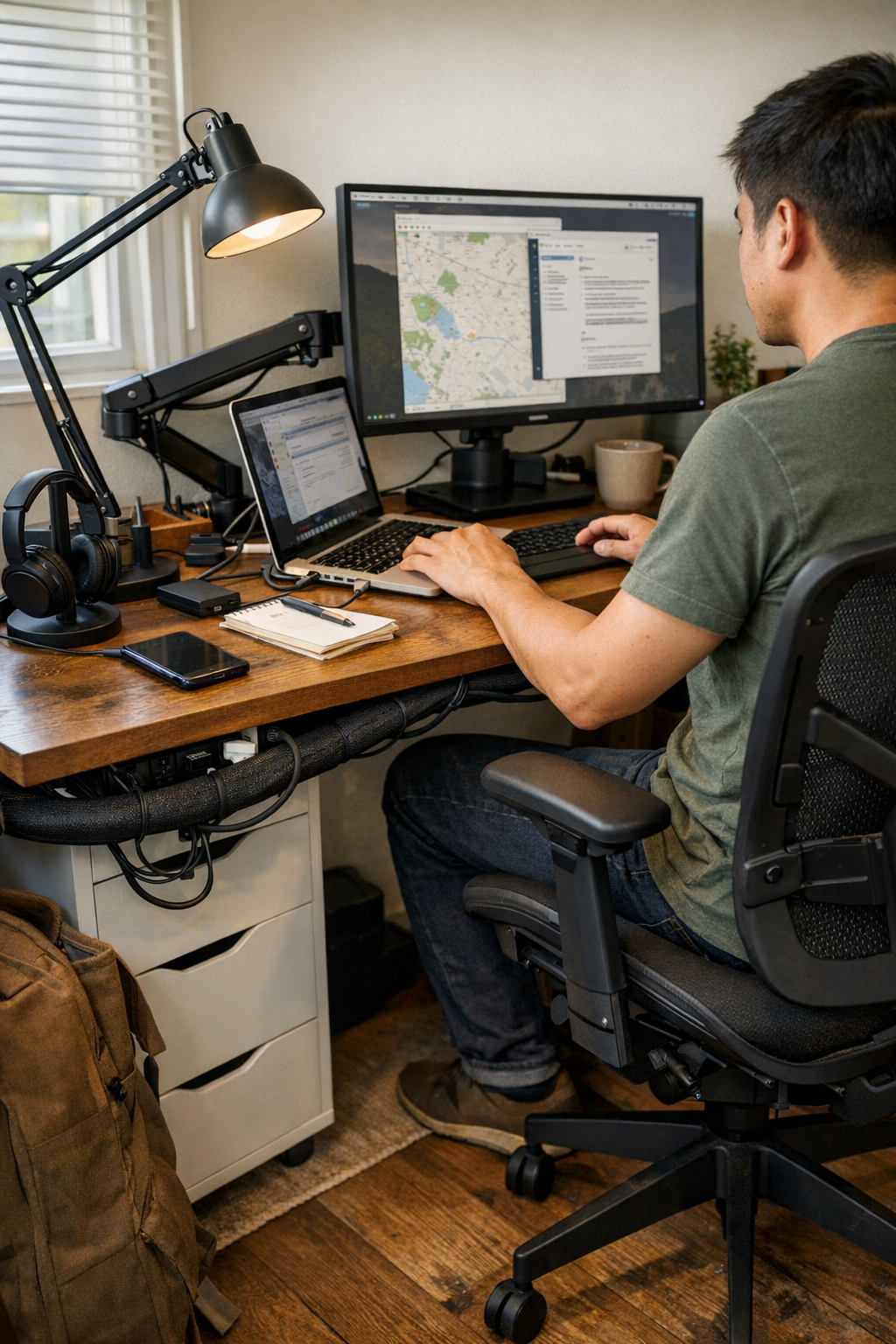
    Cable sleeves operate on a different logic—one that matches daily, shifting routines. Instead of treating every cord as a hazard to be pinned, a sleeve guides a bundle without locking it down. You slip power, HDMI, and charging cables together—under the rear edge or along the underside of the desktop—no tools needed. As devices rotate, the sleeve flexes with you. No single cord needs its own checkpoint, and adding or removing a line is a matter of seconds, not a fresh teardown.

    This adaptability is visible the minute work changes—even slightly. Shared desks, setups that constantly swap monitors, or anyone alternating between workstations: sleeves absorb variation. You can add or pull a cable on impulse, without pausing the work—tools stay in the drawer, and hands never reach for a plastic clamp or lost zip-tie again.

    Visible but Useful—And That’s the Point

    Sleeves don’t erase every cable from view; they group and direct lines, making movement easier to map. For real, changing workflows, visibly aligned cables are a minor tradeoff for being able to shift, unplug, or route anything without a fight. If your choice is between a perfectly hidden setup that slows you down, or a visible sleeve that never blocks a needed change, the answer gets clearer with every reset.

    How Making the Switch Changed My Desk Routine

    I ran rigid tie-downs for years, assuming “less visible” was always better. The reality? Every routine change—adding a backup charger, repositioning a display, plugging in a student’s adapter—came with resistance: search for the right anchor, fumble for a tool, or abandon the improvement for lack of energy. Resets happened less, not because the gear list stayed simple, but because the process felt cumbersome every time.

    Installing a single 60-centimeter sleeve changed the pacing. Four primary lines—power, display, network, laptop charge—travel together. Need an extra USB next week? Open the zipper, slide the line in, close. Need to remove a cable after a project wraps? Same split-second routine. The difference shows up most when cleaning up after a long session; resets lose their friction, and the desk is ready again before the motivation slips. No hunting for pliers. No guesswork about which tie to snip. Routine improvement becomes the easy choice again.

    Returning to Work, Without the Reset Drag

    After a few weeks using only a cable sleeve, coming back to the desk isn’t an act of recovery. The mouse cable can shift as needed; an extra charger for a visitor slips out in two seconds. The area beneath the desk feels less congested; the desk edge clears for a notebook or a full keyboard with no cables pulling against reach. Even rerouting a power cord to avoid a drawer or a rolling file doesn’t spark hesitation—reset is just part of the work, not a project in itself.

    Frequently Asked, Quickly Answered

    Is a cable sleeve useful for desks in constant motion?
    Yes. If you swap devices, share the workstation, or rotate gear by project, a sleeve eliminates tool delay and makes day-to-day changes routine—rather than reasons to avoid updating your setup.

    Will sleeves fully hide every cable?
    Not completely. Sleeves group and tidy cords, but you’ll see them along the channel—especially compared to a cable box. For most open desks, the tradeoff is a far less crowded surface and easier access for fast adjustments, even if the lines are visible.

    What trips people up when starting with sleeves?
    Overpacking. Trying to force too many cables or running a sleeve too short creates new friction. Starting with only essential lines and a little slack delivers the real benefit: quick access, easy adjustments, and a system that doesn’t jam up the moment the setup changes.

    Real-World Upgrade: Desk Adaptability Over Illusion

    Looking tidy isn’t the same as working smoothly. A cable sleeve trades visual perfection for agility: changes become quick, resets feel light, and the desk returns to a ready state without making a project out of every small update. Rigid tie-downs may suit a static, display-only desk, but any workspace that actually flexes—swapping laptops, adding monitors for a deadline, or just clearing room for notes—demands a system that won’t penalize adaptability just for the sake of hiding wires.

    The result is never spotless—some grouped cords still peek from beneath, especially after a heavy week. But the momentum advantage beats the old cycle of fighting the same knots. What you gain isn’t just tidier lines; it’s a desk that finally stops pushing back every time the real work changes shape.

    Explore the full WorkBasic collection