Blog

  • How Adjusting Cable Routes Keeps Your Car Buttons Cleaner Longer

    Your dashboard glows clean for one day. By the end of the week, buttons are smeared, lint locks into seams, and every “tidy” setup starts dragging you back to square one. Even when you scrub down surfaces and stow every loose cable, all it takes is three days of normal driving—quick errands, plugging in a phone at a red light, tossing a receipt in the tray—for the slick order to break. That spotless panel turns sticky; your charging cord, admired for its neat loop, traps dust across dials the moment you grab it in a rush. Clean doesn’t stick when your setup works against you.

    The Clean Look That Doesn’t Last—And Why

    Interior resets begin with good intentions: a fresh wipe, quick vacuum, cables folded flat. For about 24 hours, everything clicks—the buttons look crisp, the trays are crumb-free, the charger blends in. But real-life driving chips away fast. Daily reach-and-grab use—coffee stops, fast food pickups, scrambling for charging cables mid-transit—undoes all of it. High-touch zones become grime magnets not because you’re careless, but because the layout sets you up for repeat mess.

    Heat sears lint into touchscreen crevices. Charging cords catch on gear levers, dragging grit with them. The moment you empty pockets into the tray, dust and tiny papers tumble into the seams you just finished cleaning. It’s a loop: the more you use these ‘organized’ spots, the faster the fresh look vanishes.

    Repeated Friction: When Clean Isn’t Enough

    Even a perfect reset doesn’t last when the car’s setup preloads new hassles. Sunday cleanup means nothing if, by Wednesday, you’re yanking the phone cable—snagging it on switches and flicking residue right onto panels you’d polished. A mug slides into the side pocket, but fine grit rides your hand, marking up climate controls while you drive. Every movement—plug, grab, stow—becomes a trigger for junk to return in exactly the same spots.

    The culprit isn’t just the way you clean—it’s how the system steers debris back. If cables cross over controls or trays crowd seat edges, every routine errand floods the car’s weak points with new mess. The most impressive vacuum lines can’t outlast a phone charger that keeps sweeping dust over switchgear every time you hit the brakes.

    Why “Organized” Sometimes Means More Hassle

    Looks deceive. A tucked phone mount might impress at first—yet every unplug-and-go drops the charging lead right onto the climate dials, where it collects every stray hair and crumb. Or the trunk bin lines up your groceries, but crams all overflow into the rear seat pocket, turning that tidy divider into a grit-delivery system as soon as you reach back for your wallet. You set up for less clutter, but end up with awkward access and recurring spillover.

    The real trouble is friction you don’t see in photos. No matter how thoroughly you clean, if cables, trays, and organizers interrupt your actual movements, the clean look crumbles with every return trip. Bringing wipes isn’t enough unless they’re in reach before the next mess lands.

    Small Setup Shifts That Actually Protect the Effort

    Staying ahead of debris isn’t about scrubbing harder. It’s about re-routing the ways mess creeps back. One switch: drop the charging cable under the edge of a seat organizer instead of routing it across controls. Suddenly, that weird dust build-up doesn’t reappear—because the cable’s no longer drawing it over freshly wiped buttons. Another: keep a thin microfiber cloth within arm’s reach, not stashed deep in the glovebox. Two seconds after plug-in, a quick swipe does what a weekly detail never could—stopping build-up at the source, not just resetting it.

    These tweaks don’t make things perfect. They make messy returns feel slower and more predictable. Instead of wondering why nothing stays fresh, you start noticing which layout choices actually extend the cleaned-up feeling between full resets.

    Pinpointing Where Mess Returns Fastest

    Certain trouble spots never seem to stay clean: the gap beside your shifter, the cluster around seat controls, the corner where charging lines and gear collide. Watch your own routine—if cables or gear slide through these areas, count how fast residue reappears. It’s usually the travel path of your hands and items, not random dust, setting up the next mess.

    Try re-routing lines or moving trays away from active button zones, and track whether cleanup slumps at a slower pace. Even a temporary adjustment can reveal just how much layout feeds into the endless return of grime.

    It’s Not Just “Looking” Clean—It’s Actually Working Smooth

    Scrubbed panels and boxed gear might look sharp, but if you’re tangled in chargers or shifting items out of reach every other trip, the setup is barely working. There’s a difference between a car that looks under control and one that actually keeps up with you after each errand or commute. If you keep pausing to unhook cables from dials or re-stack the trunk before unloading, the friction never leaves—you just get used to fighting it.

    Real-world routines spotlight the gaps fast:

    • You swing in for a coffee, but the once-tidy cable blocks the AC buttons, trailing lint as you adjust the vent.
    • A short store run leads to overloaded seat bins, with loose snacks spilling into cupholders rather than staying sorted in the trunk—undoing the last cleanup in a flash.
    • If the car is shared, every swapped charger or tossed receipt piles up new crud in those supposedly “fixed” spots, no matter how recently you cleaned.

    Sometimes, the inside seems “fine.” But with every small snag, the convenience breaks, and order slips in ways you only notice when your hands are literally stuck navigating “solutions” you just set up.

    What Makes Debris Control Actually Stick?

    Light, routine touch-ups around real-use zones matter more than big cleans. A focused wipe—even just once per week—on the gear you touch and charge most is practical. Use soft, dry cloths (wet sprays just gather muck in seams), and keep them at-hand—not hidden. Most crucial: study how you reach, route, and store. A single shift—rerouting that charger cable, or pulling grab-and-go gear away from delicate switches—can win you extra clean days, not just a cosmetic reset.

    Cleaning isn’t just about what you see. It’s about whether the setup itself keeps the car from sliding straight back into friction right after you finish. The right tweaks don’t guarantee perfection, but they buy relief from endless, pointless recleaning.

    The Real Payoff: Fewer Setbacks, Faster Returns

    No setup makes a car flawless. But some choices stretch the gap between cleanings, making it easier to handle mess as it crawls back—where you expect it, and when you have a second to deal with it. If the dash and controls always seem one errand away from grime, step back and ask if cable paths, organizer positions, or stash points are quietly sabotaging your routine. When small changes let you re-enter, charge up, grab gear, and get moving without a constant need to fight returning clutter, you know the setup is finally doing its job.

    Shop DriveWellSupply for practical car-use solutions

  • How Proper Placement of Timed Feeders Reduces Cat Feeding Conflicts and Mess

    Add a timed feeder to your indoor multi-cat setup and you expect smoother routines—but friction shifts fast. Instead of ending bowl duels, a poorly anchored station turns meal resets into a chore loop: you’re forever nudging the mat back, picking kibble from corners, and sliding the whole feeder away from walkways that cats and humans both keep crossing. What looked organized on the first day quickly turns into a high-traffic zone where feeding time spills out, and cleanup creeps across the room. That’s where StillWhisker’s structure-first approach makes the difference: less about appearances, more about what stops your setup from falling apart after the third refill.

    Why Feeding Time Still Gets Messy—Even With a Timed Feeder

    Timed feeders sound like a solved problem: portioned meals on schedule, less food anxiety, calmer cats. But when the tray spins and cats swarm, one always rushes the bowl—scattering food and shifting the setup. Two days in, the routine grows lopsided: dried food rings appear on a mat that won’t stay put, crumbs roll just under the edge of the cabinet, and every refill becomes a messy pause, not a smooth move. You bend down, realign the mat, wipe off residue, and slide the feeder back for the second or third time. That’s not meal control—it’s repeated, slow-motion cleanup.

    The Routine That Looks Settled—But Never Really Is

    The feeding corner might seem stable after initial setup, but small frustrations keep stacking up. Bowls slide, mats drift, and a quick glance turns into a spot-check: is everything lined up, or did a cat nudge the bowl halfway under the fridge again? Every pass through the room means another interruption—scraping stuck kibble off tile, fixing the feeder’s angle, or swatting loose crumbs out of your own path. Instead of stability, you get an endless micro-reset, each time just off enough to slow you down.

    The Hidden Cost of Mess That Moves—And Grows

    Here’s where “looks tidy” falls short of “stays easy”: once mess starts moving, it grows. The feeder isn’t anchored, so bowls inch away from their zone, mats bunch underfoot, and stray bites track out to walkways or under sofas. Each nudge, whether from a cat’s paw or your morning rush, inches the whole setup out of its lane. Instead of reducing work, every subtle shift creates one more cleanup job—for you, not the cats.

    • Bowl edges cross onto the kitchen path
    • Mats fold and crumple under doors or furniture
    • Kibble and crumbs slip into gaps you can’t reach without moving everything

    Instead of one controlled area, you fight a slow, spreading mess that resists any quick fix.

    The Real-Life Feeding Zone: Small Decisions, Big Effects

    Watch the pattern after a few cycles: does one cat muscle the other out, shoving the bowl with every bite? Does the mat jump the gap between wall and feeder over and over? Find yourself picking crumbs from the same corner night after night? Those patterns show up fast. Within days, you know if your setup contains chaos or just scatters it further into your space—adding new resets to each feeding routine.

    Split Bowls: The Problem Hides, But Never Leaves

    Adding extra bowls in different spots can mask tension but rarely solves it. One empties faster, “backup” bowls start collecting uneaten food or sticky rings, and before you know it, you’re on daily patrol for where today’s mess hid. Assertive cats double-dip, quieter cats wait out the chaos, and your refill routine breaks down into scattered checks and surprise finds. It’s not less competition—it’s more surface area to cover and more time spent wondering what you missed.

    • Uneven food disappearance—one bowl raids, one ignored
    • Persistent buildup in the “secondary” dish
    • Cleanup hunt as bowls drift out of sight or under foot
    • Refill routine that never finishes in one loop

    The symmetry looks tidy—but the daily work just multiplies out of view.

    The Slow Creep: How a Weak Setup Makes More Work

    Mats migrate, feeders drift, and that unnoticed trail under the table waits for you to finally move a chair—or, worse, not notice until crumbs build up. Meals become a series of small tasks: repositioning the feeder, shaking out the mat, running a cloth over sticky patches, or moving objects out of the way just to refill. That’s time lost every single day to a setup that keeps slipping out of alignment—even when it looks neat at a glance.

    The Walkway Trap: Mess Finds Its Way Out

    Feeder placement isn’t cosmetic—set it near a walkway or shortcut and every foot or tail will push the boundaries wider. Mats ride up over thresholds, the feeder noses its way into cooking space, and within a week crumbs show up in hallway corners or under the couch. Mistaken “neutral” spots become accidental spread zones:

    • Crunch under your heel on the coffee run
    • Mat pushed against or half-under the fridge
    • Kibble dust collecting where no vacuum reaches easily

    Now you’re not just resetting the feeder—you’re chasing a mess that broke into the rest of the house.

    Everyday Examples: When the Feeding Zone Doesn’t Hold

    You step into the kitchen and immediately feel one: a gritty crumb underfoot right by the sink—again. After dinner, you see the feeder at a new angle, mat folded up, crumbs radiating out like it’s been swept by a fast tail. You “fixed” this yesterday. But the reset never sticks. The feeding zone is a moving target, always a little more chaotic than you left it.

    How Anchored Structure Changes the Routine

    The right structure turns the feeder from a fragile guest into a fixed part of the room.

    The practical upgrade? Set the feeder and mat in a guarded corner, far from walkways, with a mat that has a raised lip—just half an inch, but enough to catch most sprawl. That detail resists the sideways push from paw or foot, keeps the mat where you put it, and stops routine slides. Now, the full reset is one contained cycle: move the bowl, wipe a single area, shake the mat, refill. One check, one pass. Cleanup happens where you expect it—not everywhere else.

    Why a Raised-Lip Mat Is a Game-Changer

    Not all mats are equal; a simple raised edge marks the boundary. Kibble paws can’t fling food as far. The feeder, nudged by hungry cats, holds position instead of drifting with every meal. When feeding gets chaotic, the chaos stays boxed in. Cleanup time and effort shrink. Instead of multitasking your way through scattered sites, you find mess contained and returns predictable.

    The Role of Surface Underneath

    Miss this detail and you fight the same battle: mats on slick wood or tile just slide, no matter how neat the rest looks. Non-slip backing, adhesive pads, or simply pressing the mat flush against two walls changes everything. The less the base moves, the fewer resets sneak in—and you stop burning attention on a zone that’s always in motion.

    Anchoring for Both Cats and Humans

    A feeding zone must work for you—not just the cats. Invisible placements mean surprise spills behind the feeder or stale buildup hiding where you never check. It’s not enough to look organized once—usability needs to survive every refill.

    Check your space for:

    • Visibility: Can each cat approach with a clear line of sight—no blocking or blind turns?
    • Reach: Can you lift bowls and sweep mats without shuffling other items first?
    • Cleanup access: Are the right supplies already at hand when spills hit—or do you lose time fetching paper towels from another room?
    • Reset speed: Does everything return in a single movement, or does “almost done” drag out with one more trip?

    A strong structure cuts not just mess, but the friction that makes daily meals a string of little extra jobs. The goal isn’t spotless looks—it’s setups that don’t keep interrupting you at every pass.

    Spotting When Your Setup Isn’t Working

    How do you know it’s time for a structural feeding fix? Watch for these cues:

    • Your cleanup takes longer than the refill itself
    • You keep finding stray food outside the feeding zone
    • Bowels or mats migrate even when you “just fixed” the area
    • Cleanup supplies are present—but never the moment you actually need them
    • The setup looks organized, but still forces you into mini-reset mode with every meal

    The difference between a setup that

  • Why Proper Rivet Gun Stroke Adjustment Prevents Costly Finish Flaws

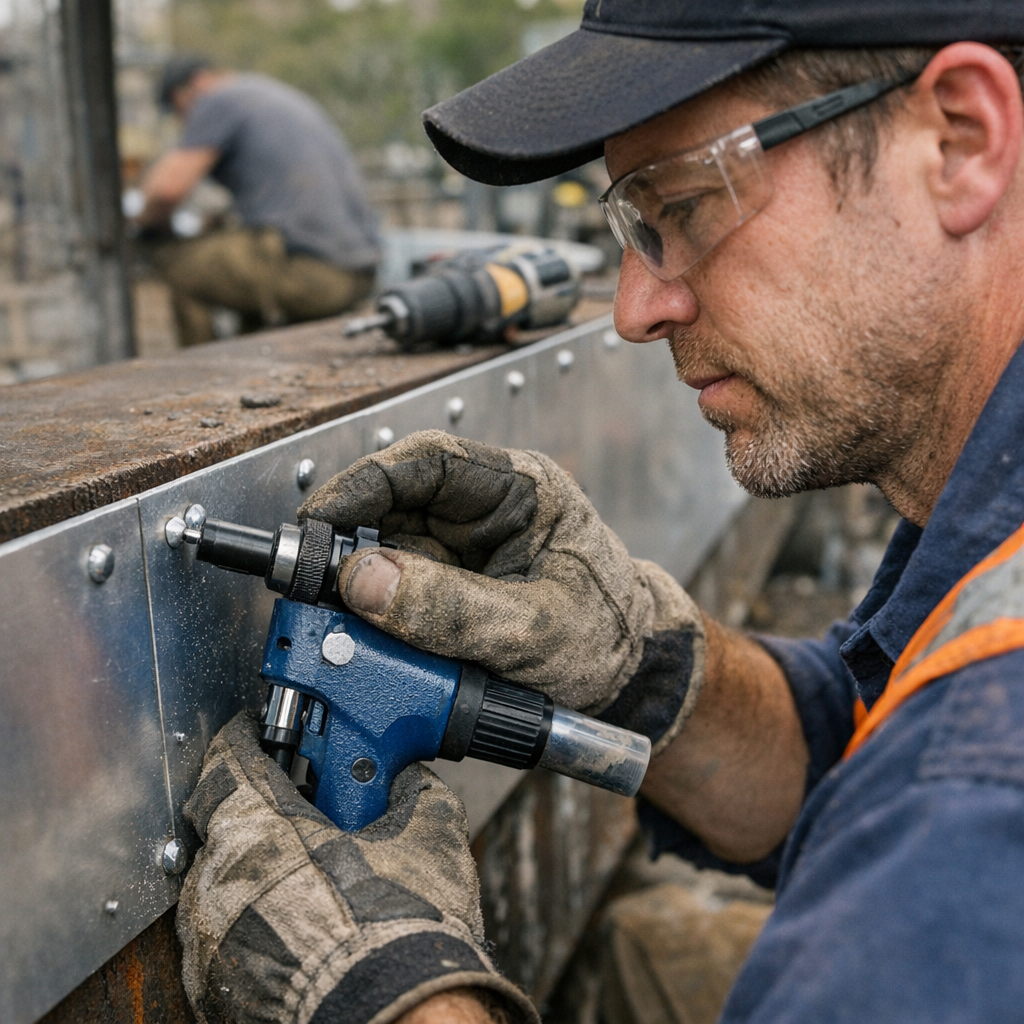
    Rivet guns rarely announce their mistakes while you work—they just quietly pile up the pain, especially in the middle of a demanding job. The first dozen rivets go down smooth. Heads lay flat, seams look tight, and every squeeze feels controlled. But as soon as you face a warped steel frame, a gnarly patch of doubled metal, or an awkward corner, a hidden flaw in your stroke adjustment exposes itself. One by one, rivets sit proud, seams lose their flush edge, and your grip tightens as if squeezing harder will pull the tool back on track. What started as clear progress becomes a stubborn fight—extra effort, mounting hand fatigue, and a finish you’ll be cleaning up long after the gun is put away.

    When Setup Slips: How Small Errors Escalate

    Jobs always start easy on a flat bench with uniform scrap—your rivet gun’s default stroke setting seems fine. But the real work is rarely that forgiving. Switch to a heavier steel channel or half-twist a frame to meet a misaligned panel, and suddenly every cycle feels off. The symptom list is unmistakable: fingertips buzz from new vibration, your glove snags on proud rivet heads, and by the final few pulls, half-broken mandrels demand two hands instead of one. None of it screams “stroke adjustment” at first glance, so you find yourself blaming the rivets or your own grip—until a crooked row or battered finish finally forces you to stop.

    Unlike a dull blade or a gummed-up drill bit, a poorly set rivet gun doesn’t announce itself with drama, just a slow stacking of inconsistencies. Those small imperfections—misaligned heads, rising cleanup time, irritating wrist fatigue—compound over every transition until your supposed quick job crawls to a halt.

    Why Stroke Adjustment Isn’t Optional on Tough Jobs

    The right stroke setting shapes more than the pull—it shapes your finish, your speed, and how your hands feel after a full shift. With thick or uneven metal, there’s zero wiggle room. Too short a stroke? You end up with proud, unstable rivets that catch every rag during cleanup. Too long? The gun bottoms out with a jolt, leaves ring dents in soft aluminum, and transfers leftover shock into your forearm.

    Picture fastening an aluminum handrail to a half-warped steel stair. The first stretch, everything clicks; then you hit a sloped joint. Suddenly you’re leaning harder into the handles for each pull, fighting to keep each head flush as the tool starts resisting you. A single wrong setting won’t just cost a missed rivet—it turns into repeated rework, visible surface marks, and wrists that feel every bit of the extra pressure. Over a few hours, that bad rhythm becomes the difference between a job you sign off with pride and one that sits with a not-quite-right finish under harsh shop lights.

    Cutting Corners? Here’s What It Really Costs

    No one wants to pause for an adjustment when the run’s in motion. It feels easier to push through with the factory default. But as the material changes—from thin aluminum panels to dense galvanized sections or layered overlapping joints—each mistake multiplies. Rivet shanks jam. Edges need more grinding. Your energy leaks out through every “just one more” squeeze. You start fighting your tool, then lose your workflow, and find yourself fixing small problems that should never have added up in the first place.

    Dialing It In: Real-World Gains from Quick Stroke Tweaks

    Adjustment isn’t busywork—it’s the core of smooth, repeatable results. On a live job, adding as little as 0.4mm to your stroke can shift everything. In practice, that difference shows up instantly: pull resistance drops, each rivet clicks flush on the first squeeze, and you spend less time adjusting your grip or double-checking your alignment by eye. That persistent off-center “pop” vanishes, and the finish line follows your chalk mark like it’s supposed to.

    No one can predict every curveball jobsite throws, but tight stroke control keeps you from getting blindsided. When the frame flexes or material suddenly stiffens—whether it’s humid out or the steel has finally chilled in the late afternoon—your gun’s default is never quite right. Quick micro-adjustments aren’t perfectionism—they’re insurance against slowdowns, fatigue, and hours spent correcting avoidable flaws.

    Field Cues: How to Spot When It’s Time to Adjust

    • Sudden spike in hand effort: If you’re squeezing harder for the same result, suspect the stroke before you swap rivet sizes.
    • Proud or uneven heads: A flush seam turns uneven, or rivets stand tall and vulnerable after popping.
    • Visible indentations or bruises: Ring marks or dented finishes almost always trace back to excessive stroke, especially on soft metals.
    • Material or thickness changes: Every new section, metal transition, or layering shift is a flashing sign—stop and reset before the next row.

    Pro tip from the field: Sweep a utility blade along your seam after every dozen rivets. More than a couple bumps or snags? Stop. Tweak the stroke right then while the problem is small. You’ll save hours over the lifespan of the project—and your wrists will thank you.

    Building the Habit: Small Adjustments, Big Wins

    The operators who set the pace never cross their fingers and push through—they pause, check, and tweak. A measured half-millimeter isn’t overkill. It’s the gap between a steady line and a patchwork you end up reworking under deadline glare. Each pause cuts surface vibration, reduces grip fatigue, and keeps cleanup to a minimum. As the job wears on and the frame shifts, those small changes protect your hands and your finish, keeping your workflow tight to the end of the shift.

    Tool setup isn’t a one-time checklist—it’s an ongoing rhythm. The sooner you catch subtle changes and adjust on the fly, the less your work feels like an uphill slog. Every correction now is one less inspection headache later, and a step closer to finishing strong no matter the material, angle, or degree of jobsite chaos.

    Find tools and equipment that stand up to real jobsite demands at Gumboll.

  • How Wall-Mounted Storage Transforms Outdoor Gear Organization and Flow

    Outdoor gear drift doesn’t shout—it creeps. One muddy boot slumped at the garage threshold. Gloves left to dry, forgotten on the fence. A half-deflated soccer ball wedged under the side gate. At first, these are just minor misses, easy to ignore on a busy weekday. But one item left out becomes three, then five. Soon, your so-called “quick-access corner” is swallowing walkways, tripping you every time you haul out the trash or run for the car. Each week, a chunk of routine vanishes under a pile that never actually goes away—just shuffles from one spot to another.

    The Real Cost of a Weak Setup: When Convenience Catches Up

    You don’t notice the unraveling until the everyday reset turns into damage control. The side yard starts clean—one bin tucked by the steps—but by midweek it’s already collecting the wrong things: boots beside the bin, caps on the fence post, garden shears balancing dangerously on top. A rainy day means hesitation: do you really want to fish around for soaked gloves at the bottom of a grimy pile? Sometimes you toss them on a chair instead. Bit by bit, every “not now” moment builds a new obstacle. By Friday, the bin is just landscape—overflowing, blocking the gate, ignored because it defeats its own purpose. You’re back to stepping around someone else’s wet gear, eyeing the usual bottlenecks and wishing for a fresh start.

    Mess doesn’t announce itself. It spreads, quietly and relentlessly, with every shortcut and every I’ll-fix-it-later. Soon, each pass through the yard means dodging heaps or stepping awkwardly over gear that should have a home but never does. The biggest drag isn’t even the physical clutter—it’s the endless micro-decisions. Should you squeeze one more thing in that bin? Drag wet boots through the house, or just leave them lined up in the rain? Where did the soccer ball disappear this time—the basket or somewhere out of sight?

    Storage That Shifts With Your Real Routine

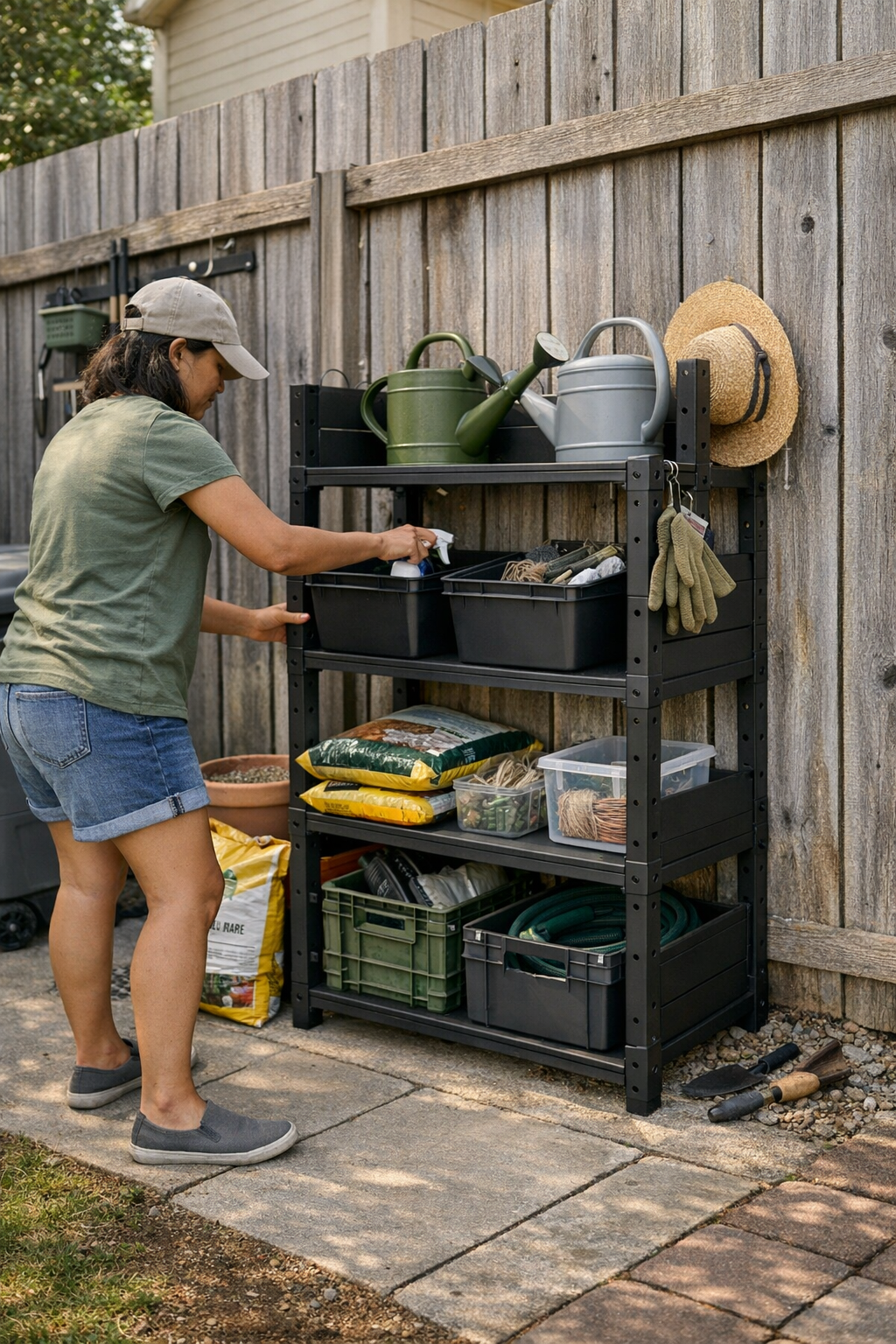
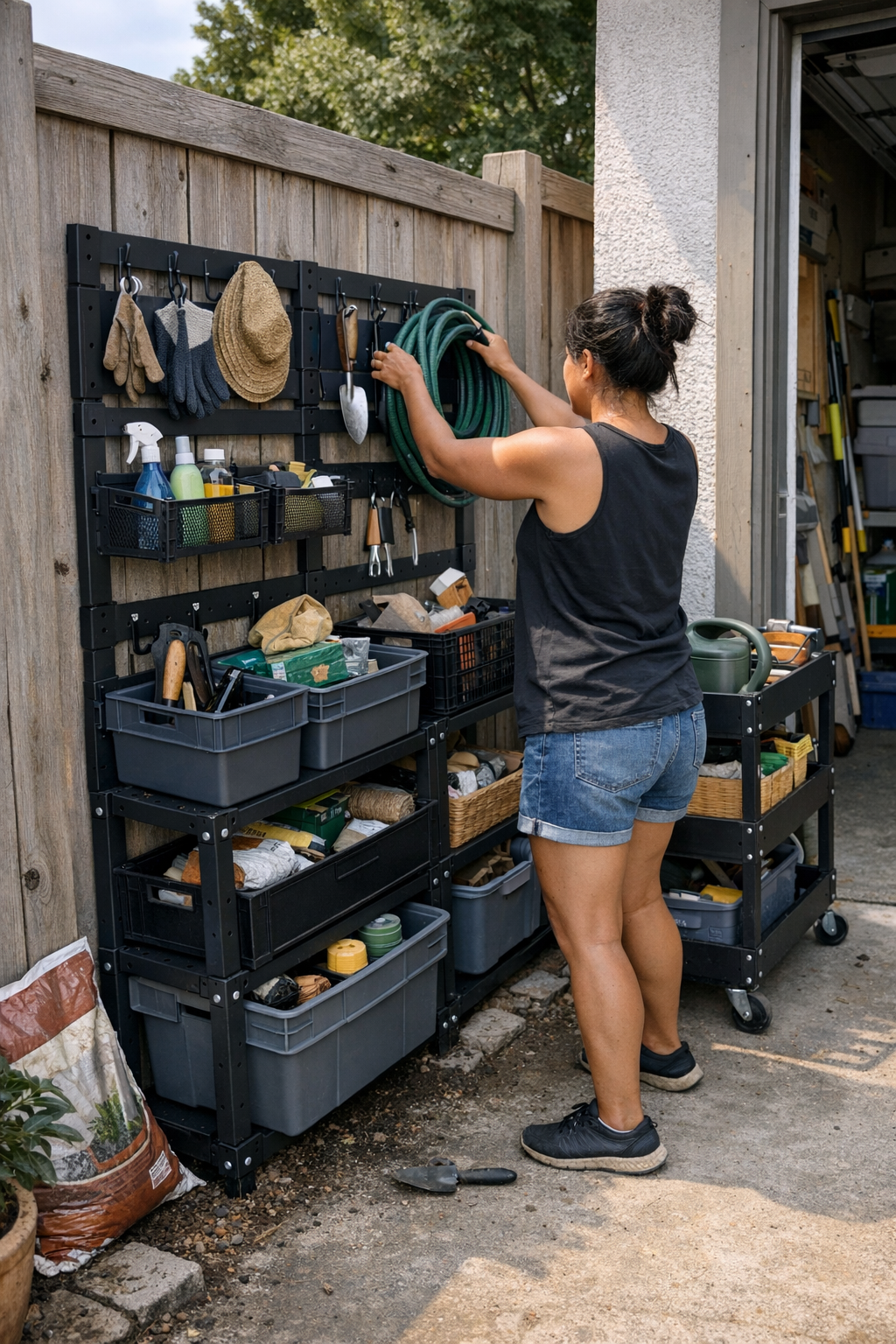
    The difference isn’t just storage—it’s whether the setup matches how you actually move. Wall systems don’t solve everything, but they kill off floor sprawl instantly. Hanging hooks and racks along that fence-line or the narrow garage strip pulls gear up, marks out what goes where, and instantly spotlights when something’s missing. Instead of tripping over a bin blocking the gate, you see open pavement. Instead of wading through piles to fetch the dog leash, you spot it hanging, dry, ready to grab.

    Floor bins seem fast—throw it in and go. But reality hits when the corner fills: boots topple over, a basketball rolls under the deck, trowels stick out dangerously, mixing with pool toys. That “grab-and-go” area is now a minefield of stuff that needs constant sorting. Every extra piece stretches the zone outward until you’re sidestepping—sometimes literally—to even reach what you need. Floor storage always invites overflow, especially during weekends when everyone’s rhythm breaks: muddy shoes pile up, garden gloves drift, and last season’s gear never really leaves the stage.

    What Actually Holds Up: Return Flow in Action

    True organization passes the only test that matters: a busy weekend with real people using, dropping, and returning outdoor gear—rarely with care, usually in a hurry. Picture three kids storming in from the backyard, each peeling off boots, raincoats, and backpacks at once. On a wall rack, the flow is visible: boots drop on the lowest rung, jackets on hooks, hats above. No thinking, no searching. Ten minutes later, the path is still clear, and if something’s missing, you see it immediately. Even after two or three rushed resets, the structure holds—because each item has a slot and there’s no floor pile to grow sideways or out of sight.

    The contrast is sharp when you try the same with bins. Gear just layers up. In the hurry, gloves are flung onto the nearest edge, wet boots get propped against the wall, and before the day is done, someone’s already pushing the bin aside just to open the side door. Floor bins hide the mess for a day or two—then spill it everywhere. Every “shortcut” here draws out the next cleanup. Instead of faster resets, you get more scatter and more reasons for things not to land back where they belong.

    Modular Setups, Movement, and Real Space Friction

    Adaptability sounds like magic—until it turns into more reset steps. Mobile carts or rolling racks seem smart if your kids’ gear keeps changing, or if you try to swap tools for sports gear every month. But put a rolling basket on a narrow patio, and soon enough it’s blocking the route from garden to gate. Every trip now means shifting the cart just to pass through. Worse, a filled modular unit without a set “parked” spot floats into the most used zone and sits there—another thing to get around, not a solution. Instead of streamlining cleanup, adaptable storage schemes can quietly double your hassles if they don’t fit the actual flow.

    The real upgrade isn’t about buying more pieces—it’s about whether tweaks make daily resets lighter. Adjusting a wall rack up by 30 centimeters might finally give you room to tuck a mower in the awkward garage edge. Shifting a hanging basket to a dead corner might turn a pileup spot into a quick toss-and-move zone. Change is only an improvement if the area gets easier to clear after heavy use—not just more visually filled.

    Everyday Breakdown: Recognizing Weak Points

    It doesn’t take long for the cracks to expose themselves. After just a handful of real resets—a rainstorm, a Saturday yard day, a couple of rush exits and muddy returns—the floor bin is ignored because nobody wants to reach underneath wet gear. A mobile rack, once the darling of your setup, ends up jammed beside the AC unit, left in the way until someone hauls it back. The wall rack, on the other hand, might take a few tries to “teach” everyone, but the habit grows. Hooks get used. Specific slots make it clear what’s missing and what’s out of place. Even the worst week doesn’t swallow the walkway or demand a total re-sort every Sunday.

    The friction isn’t about running out of room—it’s about return flow. Is it obvious where things go? Does putting something back mean lifting piles, or is it one action, done? Gear is only as organized as the lowest-effort reset your people will stick to.

    Filling Space vs. Freeing Space

    The best outdoor setups almost hide themselves. You notice their value not in perfect rows, but in what’s missing: all the little roadblocks you don’t have to dodge to get to the garden hose, the side gate, or the garage door. When you swap a crowded bin for a wall-mounted system, you feel it instantly—less shifting, less guessing, no more Pez-dispenser effect of dumping out everything just to find one ball. The space feels open, instantly ready, not just less chaotic.

    Dead spots and cramped corners aren’t a lost cause. Mounting a small rail or a minimalist hook in a fence-line gap flips a nagging pileup area into a stop-and-drop that isn’t in the way tomorrow. At the patio edge, a low shoe rail at the entrance plus vertical baskets above kill two birds: shoes dry out of puddles, hats and toys don’t vanish into dusty corners. The goal isn’t max storage—it’s clearing the path so you don’t have to keep clearing it again tomorrow.

    Cut Down Cleanup and Clutter with Small Adjustments

    Often, the real test is how little space you can reclaim and still get a big win—a 15cm shift off the floor can give back a full step of walkway or let you swing the gate easily after rain. Raising one rack for kid gear, separating out the eternally soaked gloves, or simply stacking at a reachable height makes all the difference after ten resets. Small changes even out the chaos, killing the “floating” gear problem before it spreads.

    Try a dedicated hook for each family member, or a marked bin-per-category if wall space is tight. This isn’t about tracking every item—it’s about making it obvious when something is out of place, so gear doesn’t vanish into a bottomless pile. You save time, skip the backtracking, and get out or back in without stumbling around looking for socks or pruning shears twice.

    Real Setup, Real Results: How You Notice Change

    The best improvements show up not in perfect calm, but in relief—less stepping around bins, less moving stuff just to get through the door, less overflow bleeding into the corners every time the routine breaks. You reclaim real space not by making things pretty, but by making sure you no longer have to fight the same small battles every week. When you feel the area helping you move, not blocking you, you know the setup is working.

    Curious what that looks like in your own backyard, garage-side, or fence-line? See practical outdoor storage that steps up in daily use at TidyYard.

  • Why Pull-Out Pantry Shelves Outperform Fixed Shelves in Everyday Kitchens

    Pantry organization isn’t just about tidy lines and matching containers—it’s about whether you can actually grab what you need without setting off a chain reaction of chaos. If your weeknight cooking routine means digging past precariously stacked crackers or balancing a bag of rice on top of a box of granola, you know firsthand: storage setups matter most when the kitchen is busy, not when it’s freshly reset. The tug-of-war between fixed and pull-out pantry shelves shows up in these exact moments—the daily reach, the fast reshuffle, the silent sighs when last week’s tidiness has already unraveled.

    When “Organized” Shelves Hide Everyday Friction

    On day one, every pantry looks promising—labels forward, items lined up by size or cuisine, each category in its own neat section. Then real life happens. As you grab snacks, restock dry goods, and cram in new finds from the store, gaps close up, rows blur, and the back row becomes a black hole of forgotten or duplicate items. It’s a slow drift from order to quiet hassle: reaching past front stacks, sliding out half the shelf to find a sauce, or discovering a lost can months later during a hurried clean-out.

    Fixed Shelf Aggravations: Why Does Everything Slide Forward?

    Imagine a pantry shelf that runs deep. You’re reaching for a bottle of vinegar you know is somewhere in the back. To get to it, you unload a line of boxes—one tips, another falls, and then you’re left restacking everything. Even with good intentions, items creep forward over time, bins become mixed, and “categories” become fuzzy. The more crowded the shelf, the more impossible it feels to find what you’re after without building and dismantling piles. Cleaning? You won’t find that sticky spill until it has seeped beneath three layers of perfectly lined-up snacks.

    These aren’t just small annoyances; they’re where systems quietly fail. The fix looks simple—shuffle things back, tidy up. The reality is lost time, repeated resets, and eventually, dreading pantry “maintenance day” because you know what’s waiting behind that front row.

    Pull-Out Pantry Shelves: Reducing the Blind Spots

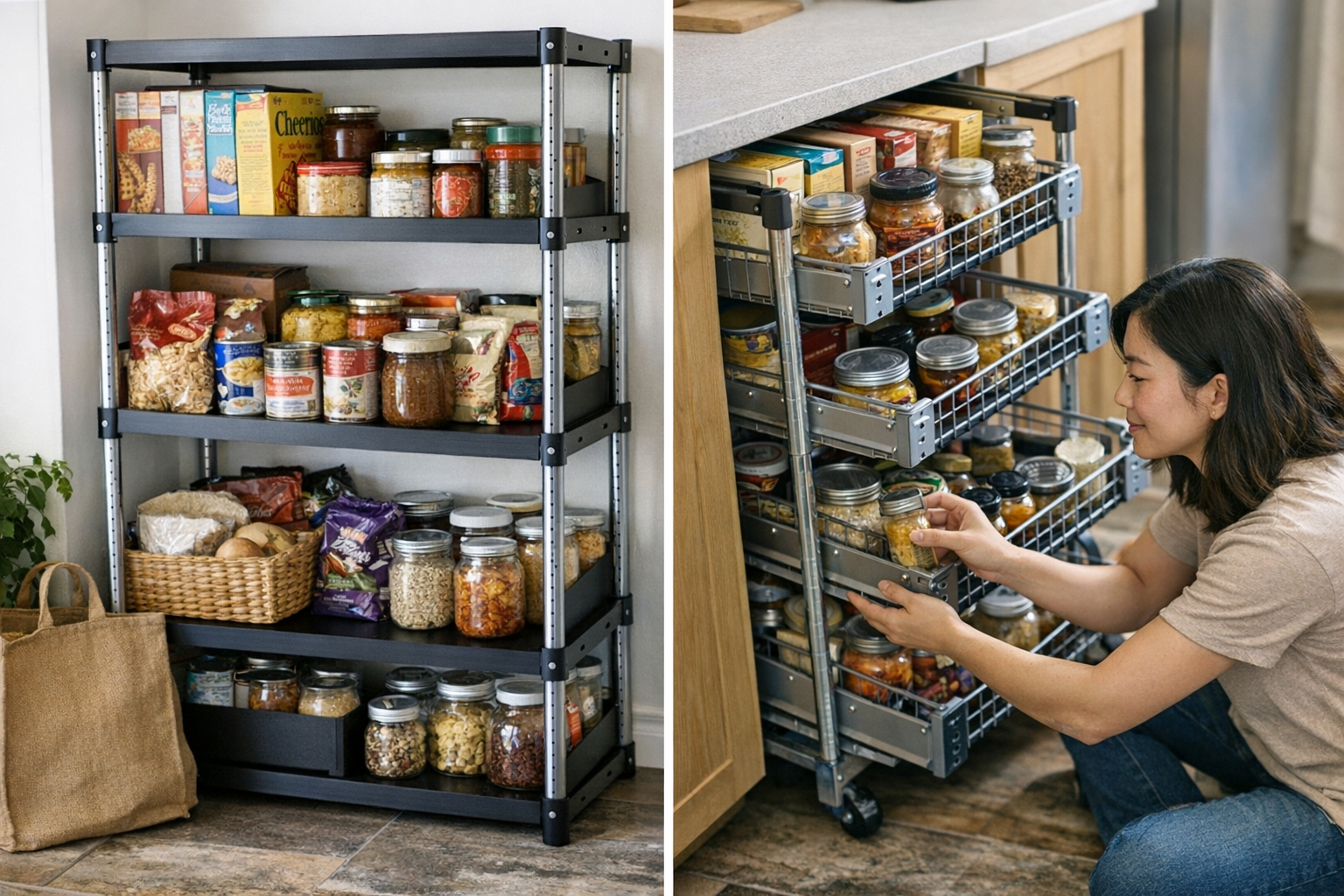
    Pull-out shelves break the cycle. With a single motion, the entire shelf comes forward and the contents—all the way to the far edge—are in plain view. There’s no hidden zone, no lost jars behind the pasta, no strange vertical stacks teetering because you can’t see what’s in back. You pull, you scan, you grab—no collapsing towers, no hunting for a hand mirror to peer into the depths.

    Quick Inventory, Quicker Reset

    The difference is most obvious after a grocery haul or when it’s time to check expiration dates. Pull out the shelf, and you can instantly assess what’s running low or what needs rearranging. There’s no cascading mess if you grab something from the far end. Categories stay clearer because you’re not constantly mashing things together to reach what you want. Over the weeks, you’ll notice fewer duplicates, less hidden clutter, and a reset routine that actually feels quick—slide out, move a few things, done.

    This isn’t magic; it’s a simple mechanical advantage that holds up as the pantry sees real use. When there’s no mystery area in the back, “getting organized” doesn’t require redoing your whole system every few weeks. You simply see what you have and put things back without creating a new stack of problems.

    The Fixed Shelf Upside: Strength and Simplicity

    Fixed shelves still win out in a few key scenarios. They’re usually stronger—a solid choice for stowing heavy kitchen gear, bulk flour, or cases of cans that would eventually strain a gliding track. In shallow cupboards and tight spaces, fixed shelves use every inch without worrying about room for slides or moving parts. Sometimes you want the absolute maximum volume for oversized items or awkward angles, and fixed shelves keep things straightforward.

    But the Cost: More Hidden Mess, Slower Recovery

    Those advantages come at a slow price. What starts as a fully stocked, perfectly aligned shelf gradually slides toward hidden clutter. Each time you stretch in for something small, you nudge other items out of place. Bins without dividers turn into catchalls. Before long, pantry traffic jams mean you’re repeating the same juggling act—move a stack, find the item, rebuild the stack. Even in other spaces—laundry, entryways, under-sink cabinets—fixed shelves invite clutter to gather in the shadows, just out of easy reach.

    Maintaining Order: Small Habits That Actually Stick

    Any shelf can work if you commit to a little routine care. Pull-out shelves perform best when tracks are kept clear—crumbs and stray bits build up, but a quick swipe every so often keeps them gliding smoothly. Fixed shelves invite hidden stickiness, so periodic wipe-downs—before the rings and spills turn into a weekend project—keep things manageable. Weekly check-ins, a simple adjustment here and there, and even the most well-used pantry stays functional, if not showroom perfect.

    Use-Tested Tips that Make a Difference

    1. Don’t overload pull-outs: Know the weight rating, especially if you’re drawn toward the convenience of loading in case goods. Distribute heavy items evenly—avoiding that dreaded “crunch” when you slide out an overloaded shelf.

    2. Use bins and dividers, but stick to clear labels: Divided bins corral categories and keep similar items together, regardless of shelf style. Clear labeling isn’t just for looks; it helps everyone in the house (kids, guests, partners) put things back where they belong.

    3. Set an auto-reset for deep shelves: A recurring monthly check stops minor messes from becoming full-scale pantry overhauls. Even five minutes spent scanning and shuffling can spare you the hunt for that rogue can of beans—or a mystery spill spreading under the cereal boxes.

    The Long-Term Test: Does Your Storage Still Work After a Month?

    Give your pantry four solid weeks of active use—cooking, stocking, late-night snacking, and rushed mornings. By then, the difference is undeniable. If you’re spending less time searching, less effort resetting zones, and finding fewer surprises at the back, your storage is actually supporting you. If not, and you’re stuck in a loop of sorting and reshuffling, even clever “systems” are secretly making your work harder.

    Ultimately, the best storage works with your daily rhythms, not against them. For real kitchens with real routines, pull-out pantry shelves often deliver cleaner categories, less lost space, and easier resets—especially in those deep, high-traffic cabinets. Fixed shelves do their job where strength, simplicity, or room shape demand it, but they ask you to stay vigilant to keep clutter at bay. The winning setups aren’t always pretty in photos—they’re the ones that gently pull you back to organized every single day, no matter who’s used the kitchen last.

    Find more practical storage solutions at ClosetWorks

  • Why Proper Mounting and Cable Management Transform Indoor Lighting Reliability

    A new ceiling light or slim desk lamp can make a workspace look finished, but most setups break cover almost instantly once daily routines really begin. The “just-installed” neatness fades fast: cords droop into view, adhesive strips shrug under light fixtures, and plugs snake out behind monitors no matter how tidy things looked on day one. Within a week, you’re adjusting a sagging under-cabinet light for the third time—or bumping a cable under your desk every time you slide back your chair. The illusion of order doesn’t survive regular use. That moment when a stray cord or tilted bracket interrupts your flow? It’s the first clear signal your lighting or support hardware wasn’t built for actual life indoors.

    A Finished Look That Doesn’t Last

    Day-one “solution” often masks deeper trouble: hidden mounting problems and unplanned cable runs creep out of hiding as soon as real routines push against them. The difference between setups that hold up and those that quietly fall apart isn’t visible packaging—it’s in the decisions you don’t see at first. Weak adhesive pads lose grip just from desktop friction; “temporary” cord clips slip under the smallest tug. A rolling office chair yanks loose a charging cable, or a shelf light starts to sag after you wipe down the counter—each one a small sign that even good-looking setups fail when the underlying structure is wrong. It only takes a couple of weeks for a ‘clean install’ to turn into a daily readjustment loop, especially where appliances, chairs, and plugged-in accessories keep forcing everything out of line.

    Routine Disruption Happens Fast

    Real use exposes shortcuts—fast. Two matching panel lights might sit perfectly straight above workstation desks on installation day, but only the one with rigid mounting and protected cable stays that way after a week of plugging, cleaning, and shifting. Its twin, stuck up with adhesive and a soft plug cord, starts angling off and collecting dust where the cable bends into view. You sweep a hand past, nudge a cable, and now the fixture sags or glares into your eyes. What began as a barely-noticeable tilt soon means daily repositioning, awkward shadows, and creeping dust lines under every edge.

    Why Weak Support Shows Up First in Busy Spaces

    Nowhere do shortcuts fail faster than in shared or high-contact areas. In kitchens, even slim LED strips reveal the gap between stable and “good enough” mounting. One under-shelf light, anchored with real hardware and tight cord routing, keeps close to the shelf’s edge and out of the way. Its adhesive-backed twin slips with each counter wipe or shuffled blender, leaving cords exposed and light running dim just where you prep most often. Drooping strips don’t only look tired—they trap utensils behind loose cords and distort light along the workspace, turning what should help into a minor obstruction every day.

    It’s the ordinary motions—a rinse at the sink under a sagging light, a cord caught by a rolling chair, a cable that shifts loose every time you tidy—that show whether your mounting and support choices are actually holding up. Even relentless cleaning can’t offset the strain of brackets too weak for real use or cord guides that always seem just a few millimeters out of place.

    How Setup Decisions Shape Daily Routines

    Lighting fails the moment it draws more attention to its hardware than the surface it’s meant to illuminate. If a desk lamp promises “even light” but its arm starts to droop by week’s end, you’re not getting reliable spread; you’re getting constant glare. Crawling under a desk to untangle the same cable every few days is another friction point—one that marks a setup more concerned with hiding clutter in photos than in use.

    The Limit of Quick Fixes

    Adhesive cable tabs and plastic holders look right in still photos. In practice, they rarely outlast three cleaning cycles or a single spilled coffee. As soon as hands, vacuum heads, or chair legs brush past, they peel loose or sag, letting cords drop where they’re guaranteed to get in the way. Upgrading to slim, rigid cable channels fixed along the desk’s back edge or underside makes a visible difference: cables stay tight and reach plugs without tangling, wheels stop snagging loose lines, and you stop knocking the lamp out of aim just by moving in your seat. True improvement is easy to recognize: it’s not having to fix what never should have come loose in the first place.

    Clutter-Free Only if It Lasts

    Support hardware only “disappears” when it’s built for friction. Rigid brackets, proper mounting sleeves, and correctly routed cable channels turn fixture edges invisible and keep lines from slipping out, no matter how often routines change or surfaces are wiped down. The payoff is simple: worktops stay bright and surfaces open, not buried under shifting shadows and creeping clutter. A desk doesn’t become the problem spot where everything is almost-but-not-quite right. Even wall-mounted ambient lights hold their aim and their effect long after the last major cleanup—if what holds them up is built for the job.

    Visible Signs Your Setup Needs an Upgrade

    • Cables become the first thing you see—transforming a finished corner into an exposed tangle
    • Under-cabinet strips lose their straight line, drooping exactly where you prep or reach the most
    • Desk or floor lamp arms drift out of position, forcing constant small nudges to refocus the light
    • Mounts and accessories shift, showing dirt outlines and hinting at instability you keep noticing

    Practical Tips: What Actually Holds Up

    In places that see real action, prioritize:

    • Rigid, bracketed mounting for overhead and task lights (especially at desk edges and above counters)
    • Continuous cable channels or sleeves under or behind surfaces to keep wires held tight, not just hidden
    • Non-adhesive mounting in damp, high-traffic, or regularly cleaned areas—stick-ons fail where daily use hits hardest

    Small but effective: Even the most basic, neutral cord cover—run tight along trim or tucked just behind a shelf edge—becomes almost invisible, but its absence is obvious every time a stray cable gets caught or forces a routine stop-and-fix.

    How Good Setup Changes Everyday Use

    The benefit of solid mounting and structured cable control isn’t theoretical—it happens in the way a desk stays clean (not just looking clean), a fixture holds its light angle instead of creeping into glare, and you plug in devices without battling a nest of cords every time. Less visual mess means fewer interruptions and a surface that doesn’t intrude when you’re trying to work or reset. Real setup improvement is clear: instead of noticing lighting and support hardware with every small problem, you practically forget about it—even after months of constant movement.

    LightSupport

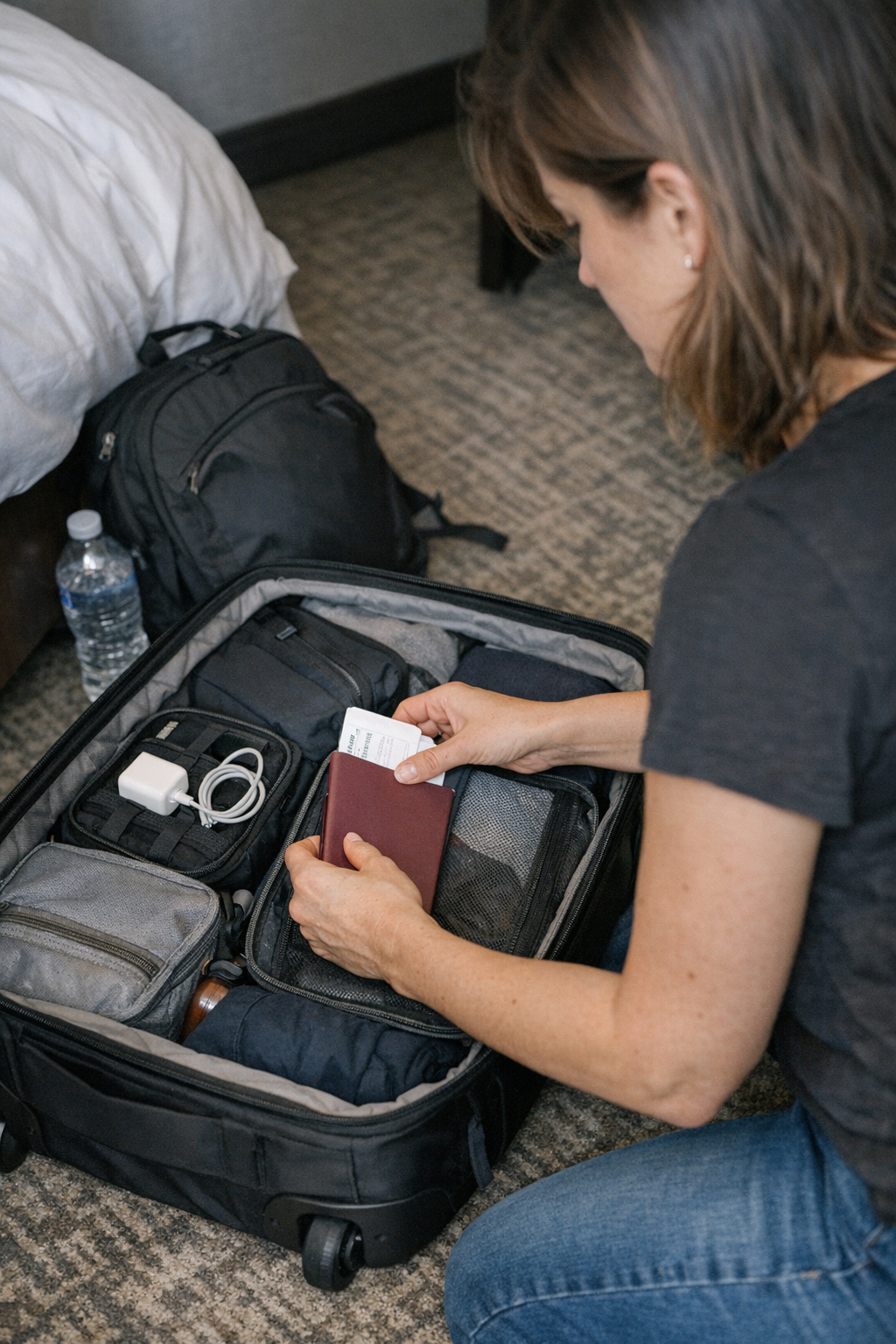
  • How Smart Carry-On Packing Transforms Your Hotel Arrival Experience

    Every traveler knows the setup: you zip your carry-on, admire those tidy packing cubes and crisp pouch lines, and, for a moment, everything looks ready for anything. But one flight in, the real challenge hits—your phone charger goes missing under a shirt, travel documents stick behind a repacked organizer, or your toiletries bag buries itself midway through the main compartment. The inconvenience isn’t dramatic. What breaks your flow is the slow, constant friction—pausing to dig for a passport as the security line inches forward, fumbling through layered pouches at boarding, or losing rhythm every time you need to grab something fast. Even when your bag looks under control, your sequence still gets interrupted, one awkward hand-search at a time—the silent drag that follows every so-called “organized” carry-on.

    The Hidden Drag of a ‘Visually Organized’ Carry-On

    Visual neatness fools almost everyone: on day one, your bag looks intentional, each pouch slotted by category. But the illusion shatters at the first checkpoint—suddenly, the items you thought would stay put aren’t where you expect. Pulling out your ID at security, you now have to move a pouch that slid sideways during transit. At the boarding gate, a needed cable or hand sanitizer is buried under cubes that looked logical before you started moving. The bag might photograph well, but inside? Pouches slide, documents drift, and outfits compress unpredictably. The problem isn’t visible chaos. It’s the internal disorder that begins as soon as you actually use the bag, not just zip it closed.

    This gap—the difference between “packed right” and “works right”—emerges quickly. A bag that feels effortless at home falls apart with just a few retrievals: the tech organizer ends up under a jacket after TSA, your travel wallet gets wedged when hustling through a gate check, and suddenly you can’t trust your muscle memory to guide your hand. You repack in ways that seemed fine for looks but don’t survive a real trip’s rhythm. Each useful category—chargers, masks, snacks, documents—loses its spot after just two or three quick access moments, and your setup lags behind your actual travel needs.

    Every Transition Exposes Slow Spots

    The danger isn’t one big mess—it’s the chain of small delays that seize up your travel sequence:

    • Security lines: Your passport was in an easy-access pocket at home. Mid-trip, it drops below a pouch or gets blocked by an organizer that’s shifted. Now you’re disrupting the entire line as you shuffle layers at the scanner.
    • Boarding: You reach for your boarding pass or headphones. Instead, you find them buried under a tablet or stuck behind a half-open cube. The boarding lane presses forward while you repack with your elbows in the aisle.
    • Hotel arrival: Exhausted, you unzip for your toothbrush—only to face a stack of cubes you have to remove in sequence, turning a thirty-second routine into an awkward unpack-and-restack on the floor of a dark room.

    None of these moments are “disasters”—but they chip away at your composure. Each micro-delay compounds tension throughout your trip, especially when every checkpoint, seat entry, or tray transfer depends on seamless motion. The carry-on that stays pretty on the surface interrupts travel at every layer beneath.

    Order That Survives Movement—Not Just Day One

    Adding organizers or cubes won’t fix the real issue if the underlying structure fails under pressure. What actually changes the game:

    • Essentials—chargers, passport, hand sanitizer—live in assigned, repeatable “zones” next to the zipper or in reliably shallow pockets.
    • Pouches face outward and are never stacked in a way that blocks direct access; the right move feels obvious, never hidden.
    • Every high-frequency item is one motion away—unzip, reach, retrieve. No secondary digging, no guessing, no second-guessing.

    This isn’t about arranging everything for a flat lay. It’s about a structure that holds up when the airport tray scrambles your packing, when narrow aisles force awkward reaches, and when late-night arrivals make you operate on instinct rather than perfect memory. Practical setups mean your charger always comes out cleanly from its pocket, your toiletries bag flashes through security instead of forcing a full unpack, and every document sits ready for one-move access. The carry-on’s order becomes muscle memory, not just visual design.

    What Happens When Items Lose Their Path?

    Start returning items wherever they fit and your hand loses the “map”—so you waste seconds, then minutes, retracing” the route just to find a charger or ID. The setup isn’t technically messy: it’s just unsupportive. Each time you’re tired, in a hurry, or carrying an extra cup of coffee, the bag gets in your way instead of out of it.

    Real-World Scenarios: Repeated Friction in Practical Use

    Notice how these ordinary moments expose the difference between theory and repeated use:

    • Security line stall: You set your documents for quick access, but after your first tray check, a cable pouch blocks the way—and now you’re the reason the scanner queue slows down.
    • Charging during gate wait: Grabbing a phone charger turns into a public shuffle—your neat layout from earlier is now a mixed pile of cubes and cords in the middle of a crowded terminal bench.
    • Seat entry: The bag that looked slim now jams under your seat because you stashed headphones in the wrong spot. You kneel in the aisle, annoyed and visible as the flow behind you builds.
    • Nighttime repack at the hotel: Poor, tired layout means you upend everything just to get that travel-sized toothpaste. Five minutes gone, energy spent, and still a chance of leaving something behind during the tired re-stack.

    Every pause adds up. Over multiple flights, trains, and rooms, the supposedly “organized” setup gives you more to fix and less calm—erasing any early confidence your packing system gave you.

    How to Identify Weak Points in Your Carry-On Setup

    Test your setup before the next trip—no templates needed:

    • Put your bag on a flat surface and try to retrieve, in turn, your charger, toiletries, and travel documents.
    • If you have to shift other items—even one layer—for any of them, that small obstacle multiplies when you’re fatigued, crowded, or rushed.

    Organizers stacked for looks or “safe” stashing out of sight create drag long before the third or fourth access. A carry-on’s tidiness means nothing if every grab interrupts your momentum.

    Building a Carry-On Setup That Works for Your Real Travel Rhythm

    Workable structure isn’t maximal packing—it’s intentional order. Anything you need repeatedly lives next to the zipper or in a fixed outer pocket. If you always put essentials back the same way, they stay in reach, not buried by repacking in a rush. Stop letting your setup force you to move a cube every time you need your passport, or lift out your toiletries before you can reach anything else. When the order of your trip matches the structure of your carry-on, every transition—security, boarding, arrivals—gets lighter, faster, and less stressful.

    With the right structure, travel stops feeling like a series of small obstacles and starts to run as one flowing motion—repacking, retrieval, and access become second nature, not a constant reshuffle. It isn’t just about aesthetics; these choices pull friction out of travel itself and finally let your carry-on perform at the pace you actually move.

    Find carry-on-ready organizers, document holders, tech pouches, and packing tools built for the realities of repeat movement at CarryOnSupply.

  • How to Maintain a Steady Cat Care Routine Despite Daily Interruptions

    Smooth-looking pet routines break down fast the minute real life steps in. A cat’s care station can look organized at breakfast—until a midday delivery, a surprise visitor, or even a pile of mail blocks the only open counter. Suddenly, that water bowl is nudged off the edge, the food scoop is buried under yesterday’s packaging, and the grooming brush has vanished just as your cat darts under the couch. In the span of an ordinary morning, what started as a tidy setup quickly turns into a scramble for basics you thought were already handled. CalmPetSupply’s practical routines live in this gap—the difference between a care area that looks fine and one that holds up under repeated, everyday interruptions.

    Why Small Disruptions Reveal Routine Weak Points

    Most pet-care setups work—right up until you need them to recover quickly. The friction isn’t dramatic: you reach for the food bowl, only to dig past boxes or yesterday’s mail. Water spills get wiped up late because your towel never stays put—it’s either in the laundry or misplaced for the third time this week. At first, these delays seem minor. But as they add up, feeding gets delayed, water sits too long, and cleanups start skipping steps. Missed basics don’t announce themselves; they just turn daily cat care into work that never quite gets easier.

    Everyday Scenarios That Break the Flow

    Come end of day, your cat’s feeding area looks ready: bowl, scoop, refill bag, maybe a brush tucked nearby. But try to refill water, and the cloth for quick wipes is under unrelated clutter, nowhere you actually need it. That “handy” brush? Two rooms away, last used during TV time. Cat toys drift into busy home spaces, where just reaching the bowl interrupts whatever you’re doing. Every time tools migrate or get buried, another care step slows down or gets skipped entirely.

    The pattern repeats after dinner: you want to scoop the litter and top off water, but the scoop is outside the bathroom and all spare towels are lost in the laundry heap. Even with a staged, tidy look, the routine starts eating up more time and effort with every cycle, purely because the core tools aren’t where they need to be.

    Visible Tidiness Isn’t Always Routine-Friendly

    An “organized” pet zone is easy to create—and just as easy to outgrow. One decorative basket or a neat feeding corner cuts visible clutter, but still forces you to dig for the necessary item when you’re already in a rush. Food and water near the kitchen looks efficient until family traffic blocks access at the exact times you refill. Too often, setups that appear calm on weekends can’t absorb the hit of weekday chaos: one missing or misplaced tool still derails the whole routine, usually exactly when you’re least able to reshuffle.

    Key signal: if you keep needing to shuffle or search, the area isn’t really supporting your routine. Even after a fresh organizing spree, the same weak point returns—always forcing that last-minute hunt or extra trip for something basic.

    The Impact of Recovery Time on Pet Care

    Pet routines rarely break from the big steps—they crumble in the recovery time between tasks. If grabbing a scoop or towel means a detour to another room or rooting through a pile, every lost minute adds frustration. Delays stack up: food is late, water gets overlooked, fur and crumbs collect around missed cleanup edges. What should be a quick, stable part of your day now drags out, making daily care feel like a burden instead of a background routine.

    Specific Adjustments: Anchoring Essentials for Smoother Flow

    Change isn’t buying all-new gear. It’s making each tool genuinely reachable at its point of use, every time. A dedicated bin or wall hook right at the feeding zone keeps the scoop, brush, or towel from wandering off. Anchor the water refill bottle, clip the brush close, keep cleanup supplies in a spot that never shifts, even if visitors or pets move through. These tweaks look small but erase the daily pause where something critical goes missing.

    Moving a brush to a wall hook beside where your cat actually spends time eliminates the midday scavenger hunt. Cleanup cloths anchored by the food area stop puddles and crumbs from lingering. Practical anchoring turns random mess into quick resets—not because the house is perfectly organized, but because each routine tool stays ready, close, and out of other people’s way.

    Reducing Friction, Not Perfection

    Daily cat care will never be spill-proof or interruption-free. The goal isn’t to prevent every dash under the bed or every water splash; it’s to prevent a minor snag from becoming a time-sink. Anchoring essentials where you need them means a quick recovery stays possible—without launching a housewide search for the missing item. Your cat may vanish, but your core tools remain at hand, keeping resets short and stress down.

    How a Functional Setup Changes Daily Life

    Setups that hold up in real-world use don’t just look calm—they prevent daily care from slipping behind or getting messier after each interruption. Fewer missed meals, drier floors, faster transitions back to normal: that’s the functional calm that matters day-to-day. When everything is anchored where it’s actually used, every care step absorbs problems without turning disorder into a project.

    It’s not about the show of order, but about resilience in the ordinary chaos. CalmPetSupply is built around this baseline: simple, reachable, repeatable tools that make your pet-care setup faster to recover, even when the day keeps shifting underneath.

    Explore the everyday difference at CalmPetSupply.

  • Why Flat Carts Fail to Keep Small Items Visible in Entryways

    Entryway order fails fast—and always at the worst times. That first week with a flat cart parked by the door feels controlled: surfaces are clear, bags stacked neatly, keys dropped in one spot. But give it three hectic days—grocery runs, kids back from practice, weather swinging—and suddenly: keys slide behind a gym bag, shoes wedge under mail, and the cart that once worked becomes a scramble zone. Instead of a smooth transition, you get the familiar stall—searching, shifting, and reshuffling just to step out or come back in.

    Why Flat Entryway Carts Feel Helpful—But Fall Short

    Open carts dominate threshold areas for a reason: they soak up everything at once. Shoes, coats, bags, daily odds-and-ends—drop and go. For a family or housemates, that “catch-all” feels flexible. But it’s a surface that resets itself against you. Drop one oversized duffel or winter coat, and yesterday’s mail, keys, or lunch sack slip underneath. On the first day, maybe a minute fixes it. By midweek, layered routines—one person hurrying in, another heading out—mean stuff piles up, and you’re not grabbing what you need without digging.

    As each person grabs a different item at a different time, the zone blurs. The cart itself becomes a moving target; quick exits turn into impromptu archaeology. That “adaptable” setup blocks the way, requiring everyone to filter through unrelated layers or tip the whole stack. The more varied the flow, the worse the mixing—and the slower the reset gets each time.

    Everyday Friction Points: What Actually Happens in Entry Zones

    A Cycle of Hidden Essentials

    Start with everything in line. Forty-eight hours later: keys are somewhere beneath a sagging backpack, a stray hoodie flattens the day’s mail, and what you thought you left on top now lives under a flap or jacket sleeve. The search routine gets repeated. Every exit, every return: a hand slides under the pile, looking for earbuds, then comes up with extra chargers or old receipts. Even a short, ten-second scan—multiplied by each person—turns into a bottleneck where entryway flow should be automatic.

    Clutter Drifts, Zone Boundaries Blur

    No setup drifts faster than a single open cart. At first, clutter seems contained, but “just for now” placements always sprawl—shoes nudge the edge, a backpack blocks one side, the bench next to the cart becomes the new drop spot. Sit down to put on boots, and in seconds, overflow claims your seat. The walking line narrows, forcing one person to squeeze past a half-blocked path. True routines—grab-and-go, kids loading up, swapping shoes, hauling groceries—put constant pressure on every inch. Movement slows as soon as you must move one thing just to reach another. Meanwhile, that reset you keep meaning to do only gets heavier.

    The Real Cost: Reset Fatigue and Slowed Flow

    Daily clutter isn’t about one mess—it’s the grind of decisions that never end. Toss a jacket here, dump a bag there, promise yourself to “sort it later.” Flat carts let this pile-up happen invisibly at first, but the cost is cumulative. With each pass-through, the stack grows and category lines blur, making every reset a full-scale reshuffle. Short-term convenience becomes long-term reset drag. Instead of a grab-and-go threshold, you’re hesitating, retracing, or skipping the reset entirely—until the next rerouted morning or lost item slows down everyone again.

    What Actually Works Better in Heavy-Traffic Entryways?

    Breaking the Stacking Cycle: Vertical and Divided Storage

    Divided zones flip the script. Slim racks, wall hooks, tiered organizers—they force one category per lane, breaking up the pile. Shoes stay on the floor, keys live at eye level, bags hang above the clutter zone without blocking the walkway. Imperfect as it looks, every item has a first-grab slot, and fewer things hide each other. It’s not just about looking organized: you touch only the essentials, pull one thing without moving three others, and see the clutter before it overflows.

    After a standard week—wet boots, hurried departures, late returns—a flat cart is crushed under accumulation. A vertical or divided setup, even if not pristine, keeps everyone’s everyday items visible and easy to retrieve. Reset is no longer an overhaul but a fast scan. When overflow happens, it’s obvious and contained, not quietly blocking the passage.

    How Everyday Flow Changes with Vertical Organization

    Switch to a tiered rack: now, the key tray sits up top, shoes land in a visible row below, and bags hang ready to grab. Drop-off is direct—no more fighting a heap to make space. Departures mean actually spotting what you need: keys right up front, shoes not sprawled under the path, mail waiting in the pocket. Even when multiple people move through at once, traffic lines stay clear. Overflow stands out instead of hiding below something larger, so a rescue reset takes seconds, not a half-hour block. Your “clean” zone stops being just a project; it becomes the unblocked path you actually use, whether it’s a busy Monday or a muddy Saturday.

    Tips for Smoother Setups in Real-Life Thresholds

    Real entryways aren’t showrooms—they live under pressure. These behaviors help more than endless re-straightening:

    • Divide by type, not just space: Force separation—shoes in one row, keys or mail in their own tray, bags up off the floor. Consider a less uniform look in favor of grab-and-go reliability.
    • Put storage on the wall, clear the walking path: Mount hooks and shelves at various heights; make sure nothing narrows your main entry line, even during busy mornings.
    • Assign a “just for now” tray: Prevent pileups with a high-visibility pocket or tray for daily drop-off. Even a small container at the threshold will curb spillover.
    • Expect drift—and design resets for speed: Don’t fight overflow; accept it’s coming and make sure clutter is easy to see (and fix) with one quick sweep, not a major overhaul.

    From Clean Appearance to Reliable Performance

    A flat cart and a divided setup might look similar for a day. The difference shows up by the end of a real week: vertical and modular solutions keep retrieval and return fast, block less movement, and make clutter stand out before it blocks your entry. What looks managed is only half the battle; what stays usable is what changes exit and entry from slow shuffle to actual flow.

    See real-world entryway and threshold storage options at Betweenry.

  • Why Modular Storage With Clear Paths Beats Packed Cabinets Every Time

    The fantasy of a perfectly organized garage, workshop, or utility space collapses fast—usually the moment you try to get real work done. At first, every shelf, cabinet, and cart lines up crisp and spotless. But give it one week. Before you know it, that “picture perfect” setup reminds you what the photo missed: shift a rolling cart just to squeeze by, reach awkwardly behind a stacked bin to snag a tool, find yourself boxed in by some heavy cabinet you thought you’d use more. The frustration isn’t cosmetic. It’s the grind of daily resets and slowdowns built into a system that looked organized—but never learned how you really move through the space.

    Nice to Look At, Exhausting to Use

    Too often, initial storage setups are designed by the eye—not by the way you work. The temptation is to create a seamless wall of closed cabinets or shelves. On day one, it feels complete—until the first project, repair, or weekday rush. Suddenly, every closed door becomes a barricade. The walkway narrows because there’s nowhere to park a cart. You sidestep into a corner just to avoid that cabinet edge (again), or find yourself nudging a bin into whatever spot looks least in the way.

    The visual order that felt reassuring now steals time: you reach, shuffle, and reshuffle. That leftover stack of supplies? It lives in the overflow corner—the same spot that always seems one step too far. By the end of the week, “organized” means tripping over what you can’t put away and parking projects out of sight so they aren’t in the path. The result: a system that stores things but never truly supports how you use the area.

    Where the Setups Really Break Down

    The difference between a setup that helps and one that quietly wears you down becomes obvious with real, repeated use. It’s about flow: can you cross the workspace quickly, bring back supplies without re-stacking, and put tools away without detours? Packed, rigid systems conspire against you. Every extra shelf or closed cabinet adds a step—a little sidestep here, a reach over there—until you’re working around obstacles you paid to install.

    Ask yourself: Do you avoid a certain route because the rolling cart blocks it? Is there a spot you instinctively skip because it gathers clutter or is just hard to reach? Are you always doubling back for the same tool? These aren’t minor annoyances—they’re repeated friction points, the sign that your storage “plan” is winning a war against your actual routines.

    When More Turns Into Less

    It’s logical to think that using every inch—floor-to-ceiling storage, deep shelves, wall-to-wall cabinets—means less clutter. But in practice, more often creates dead corners, crowded walkways, and zones that become permanent overflow dumps. That “just one more” shelving run easily traps heavy or rarely used gear where you can’t get at it without a sequence of moves. With each project cycle, these black holes of blocked access multiply, making every reset slower and more frustrating.

    The Missing Ingredient: Space You Can Actually Use

    The best workspaces are built for action, not just display.

    One small tweak can shift everything. Instead of filling wall after wall, try this: leave a deliberate, open pass-through—maybe 16 inches wide—between major storage banks. Place a slim mobile rack on locking casters in the gap. Suddenly you’ve got a flexible “reset lane”: somewhere to drop a project-in-progress, move overflow bins temporarily, or just walk through cleanly, no rerouting required. It isn’t wasted space; it lets you keep using the setup even as your projects and supplies cycle endlessly.

    What Actually Happens After the First Week

    Walk through your own space on a Monday: the tool panel’s tidy, paint cans sorted, hardware in neat drawers under the bench. Then flash forward to Saturday. The rolling chest is wedged tight, half the bench blocked. Two bins sit in your usual path, and you have to slide trays just to get a screwdriver. That one supply box? It’s always in the way. The stuff looks stored, but you’ve lost clear movement. What used to take seconds now takes shuffling, searching, and second-guessing—proof that a “finished” setup can still interrupt work every single day.

    Why Modular and Mobile Means Fewer Headaches

    Locked-in storage lines work only for routines that never change. But most real setups serve shifting projects, rotating supplies, and shared spaces. Too much rigidity breeds bottlenecks and “dead zones”—places nobody uses except to hide overflow. Modular shelves, mobile carts, and purposeful gaps break that pattern. Need to clear the floor for a delivery? Roll something aside instead of unloading a whole wall. Got a new project? Wheel the parts where you need them, no reshuffling or full reset required. Weeks later, you’re still moving smoothly, and no corner is filled with a mystery pile of orphaned gear.

    Real-World Storage Reduces Routine Friction

    Every small instability in a setup—each needless reach, sidestep, or shuffle—turns into hours lost across a month. It’s easy to underestimate just how fast “organized” descends into “in the way.” Filling your garage or workspace with containers looks tidy for a day, but if every reset is a minor headache, the system failed. The best setups protect your movement: build-in pass-through zones, fallback areas for overflow, and mobile elements that flex with your tasks. Storage shouldn’t just corral mess—it should adapt to your routine so you can move, fetch, and put away without thinking twice.

    Two Simple Fixes That Actually Matter

    1. Hold back one open patch on purpose. Resist the urge to fill every wall. Leaving a single flexible area (just big enough for a cart or bench) gives you the breathing room to handle projects, manage temporary chaos, and survive busy resets without the whole setup unraveling.

    2. Walk your entire routine—literally. Every few weeks, load your hands, walk your route, and notice what slows you down. Where do you shift things, detour, or give up and pile something random? If you find repeat friction, don’t wait: adapt the layout before the clutter takes over for good.

    No One Notices “Perfect,” but Everyone Feels Clumsy Resets

    Stacking, labeling, and filling shelves is satisfying—the photo looks great. But watch what happens after a week of actual use: blocked walkways, sticky corners, overflow spots where every stray item piles up. That’s the difference between appearance and reality. The best storage setups learn from that tension. Leave room to move, choose mobile options, build in a safety net for surprises—and your workspace stops being a source of friction, even on your busiest days.

    Change doesn’t mean gutting everything you’ve built. Often, it takes just one smart, modular tweak to get you back on track—so every trip across the space feels easier and the “order” stays, no matter what the week brings.

    StackNest modular storage and organization systems