
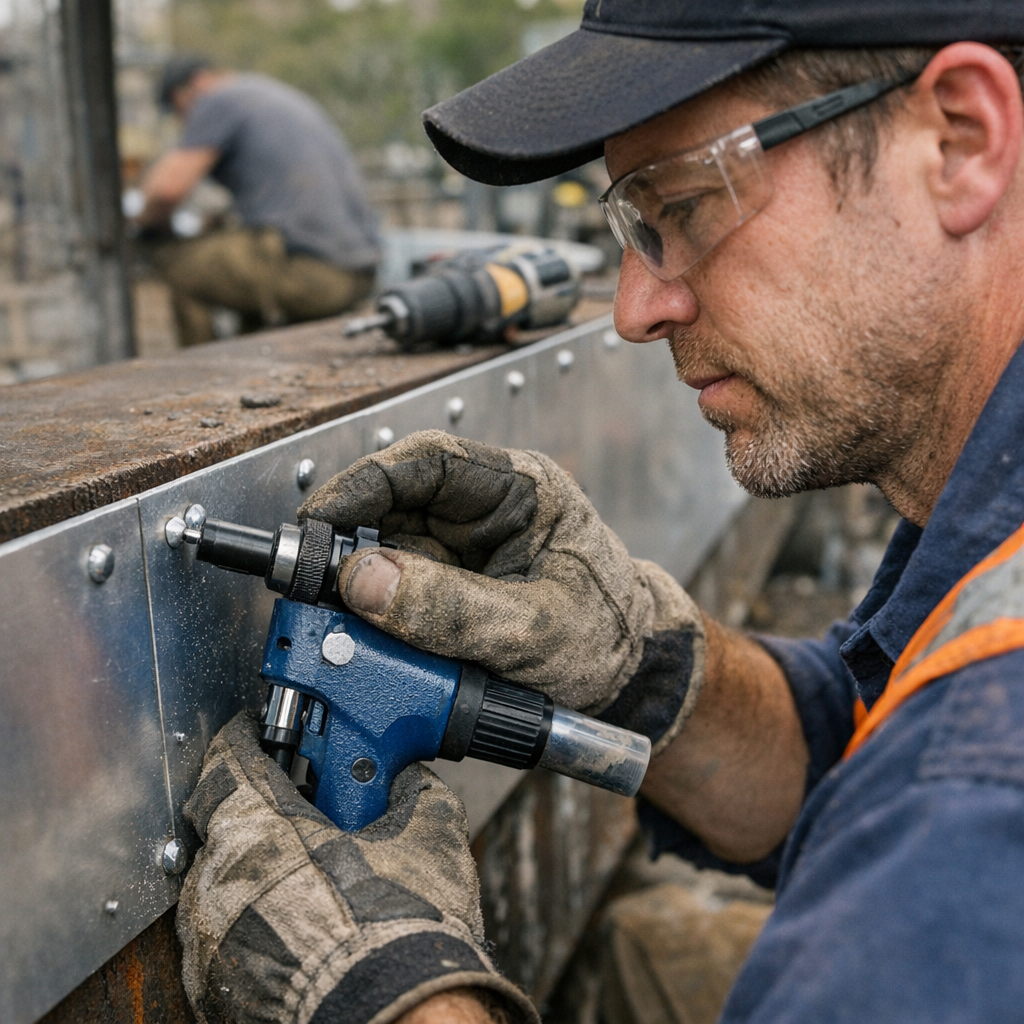
Rivet guns rarely announce their mistakes while you work—they just quietly pile up the pain, especially in the middle of a demanding job. The first dozen rivets go down smooth. Heads lay flat, seams look tight, and every squeeze feels controlled. But as soon as you face a warped steel frame, a gnarly patch of doubled metal, or an awkward corner, a hidden flaw in your stroke adjustment exposes itself. One by one, rivets sit proud, seams lose their flush edge, and your grip tightens as if squeezing harder will pull the tool back on track. What started as clear progress becomes a stubborn fight—extra effort, mounting hand fatigue, and a finish you’ll be cleaning up long after the gun is put away.
When Setup Slips: How Small Errors Escalate
Jobs always start easy on a flat bench with uniform scrap—your rivet gun’s default stroke setting seems fine. But the real work is rarely that forgiving. Switch to a heavier steel channel or half-twist a frame to meet a misaligned panel, and suddenly every cycle feels off. The symptom list is unmistakable: fingertips buzz from new vibration, your glove snags on proud rivet heads, and by the final few pulls, half-broken mandrels demand two hands instead of one. None of it screams “stroke adjustment” at first glance, so you find yourself blaming the rivets or your own grip—until a crooked row or battered finish finally forces you to stop.
Unlike a dull blade or a gummed-up drill bit, a poorly set rivet gun doesn’t announce itself with drama, just a slow stacking of inconsistencies. Those small imperfections—misaligned heads, rising cleanup time, irritating wrist fatigue—compound over every transition until your supposed quick job crawls to a halt.
Why Stroke Adjustment Isn’t Optional on Tough Jobs
The right stroke setting shapes more than the pull—it shapes your finish, your speed, and how your hands feel after a full shift. With thick or uneven metal, there’s zero wiggle room. Too short a stroke? You end up with proud, unstable rivets that catch every rag during cleanup. Too long? The gun bottoms out with a jolt, leaves ring dents in soft aluminum, and transfers leftover shock into your forearm.
Picture fastening an aluminum handrail to a half-warped steel stair. The first stretch, everything clicks; then you hit a sloped joint. Suddenly you’re leaning harder into the handles for each pull, fighting to keep each head flush as the tool starts resisting you. A single wrong setting won’t just cost a missed rivet—it turns into repeated rework, visible surface marks, and wrists that feel every bit of the extra pressure. Over a few hours, that bad rhythm becomes the difference between a job you sign off with pride and one that sits with a not-quite-right finish under harsh shop lights.
Cutting Corners? Here’s What It Really Costs
No one wants to pause for an adjustment when the run’s in motion. It feels easier to push through with the factory default. But as the material changes—from thin aluminum panels to dense galvanized sections or layered overlapping joints—each mistake multiplies. Rivet shanks jam. Edges need more grinding. Your energy leaks out through every “just one more” squeeze. You start fighting your tool, then lose your workflow, and find yourself fixing small problems that should never have added up in the first place.
Dialing It In: Real-World Gains from Quick Stroke Tweaks
Adjustment isn’t busywork—it’s the core of smooth, repeatable results. On a live job, adding as little as 0.4mm to your stroke can shift everything. In practice, that difference shows up instantly: pull resistance drops, each rivet clicks flush on the first squeeze, and you spend less time adjusting your grip or double-checking your alignment by eye. That persistent off-center “pop” vanishes, and the finish line follows your chalk mark like it’s supposed to.
No one can predict every curveball jobsite throws, but tight stroke control keeps you from getting blindsided. When the frame flexes or material suddenly stiffens—whether it’s humid out or the steel has finally chilled in the late afternoon—your gun’s default is never quite right. Quick micro-adjustments aren’t perfectionism—they’re insurance against slowdowns, fatigue, and hours spent correcting avoidable flaws.
Field Cues: How to Spot When It’s Time to Adjust
- Sudden spike in hand effort: If you’re squeezing harder for the same result, suspect the stroke before you swap rivet sizes.
- Proud or uneven heads: A flush seam turns uneven, or rivets stand tall and vulnerable after popping.
- Visible indentations or bruises: Ring marks or dented finishes almost always trace back to excessive stroke, especially on soft metals.
- Material or thickness changes: Every new section, metal transition, or layering shift is a flashing sign—stop and reset before the next row.
Pro tip from the field: Sweep a utility blade along your seam after every dozen rivets. More than a couple bumps or snags? Stop. Tweak the stroke right then while the problem is small. You’ll save hours over the lifespan of the project—and your wrists will thank you.
Building the Habit: Small Adjustments, Big Wins
The operators who set the pace never cross their fingers and push through—they pause, check, and tweak. A measured half-millimeter isn’t overkill. It’s the gap between a steady line and a patchwork you end up reworking under deadline glare. Each pause cuts surface vibration, reduces grip fatigue, and keeps cleanup to a minimum. As the job wears on and the frame shifts, those small changes protect your hands and your finish, keeping your workflow tight to the end of the shift.
Tool setup isn’t a one-time checklist—it’s an ongoing rhythm. The sooner you catch subtle changes and adjust on the fly, the less your work feels like an uphill slog. Every correction now is one less inspection headache later, and a step closer to finishing strong no matter the material, angle, or degree of jobsite chaos.
Find tools and equipment that stand up to real jobsite demands at Gumboll.