
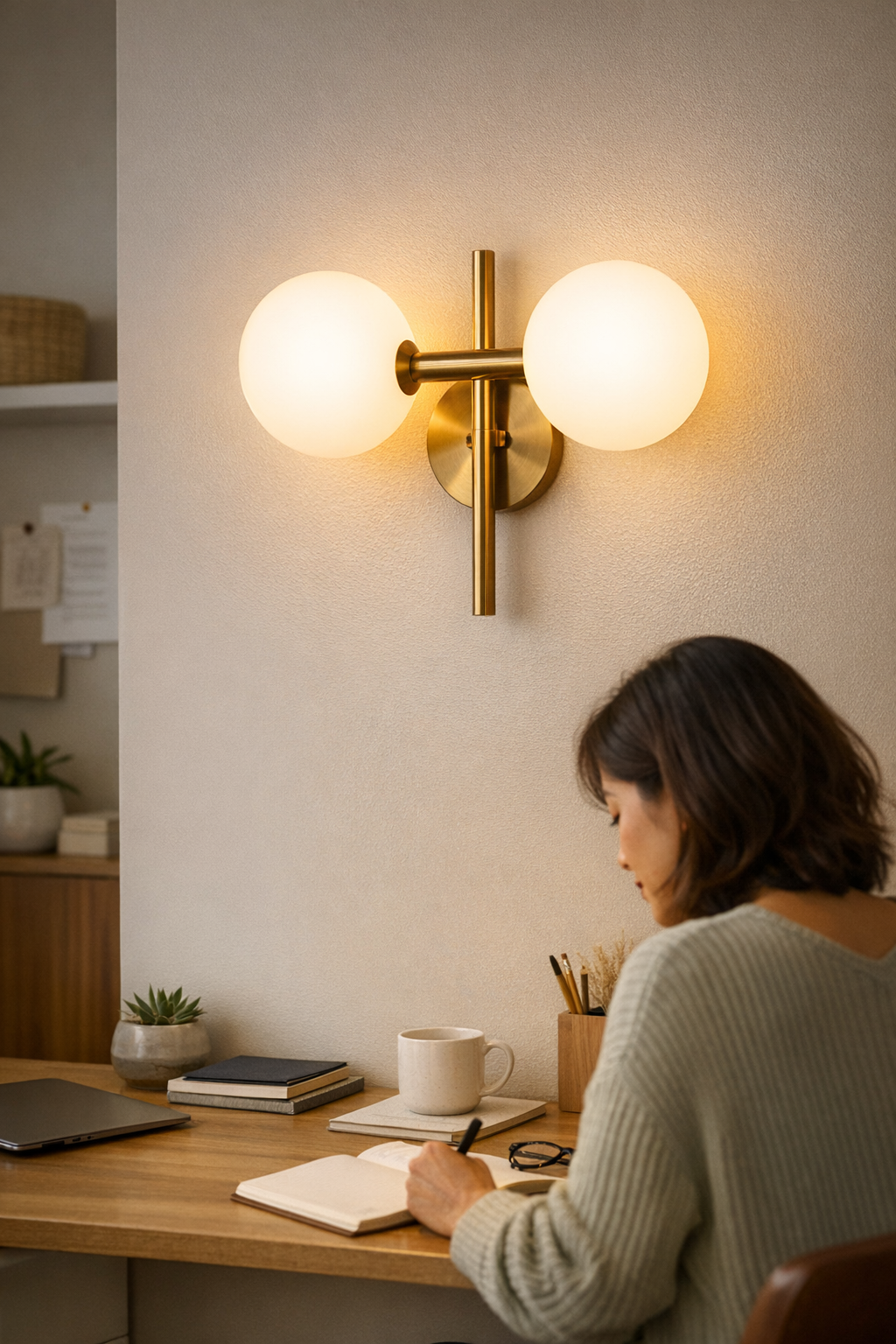
A new ceiling light or slim desk lamp can make a workspace look finished, but most setups break cover almost instantly once daily routines really begin. The “just-installed” neatness fades fast: cords droop into view, adhesive strips shrug under light fixtures, and plugs snake out behind monitors no matter how tidy things looked on day one. Within a week, you’re adjusting a sagging under-cabinet light for the third time—or bumping a cable under your desk every time you slide back your chair. The illusion of order doesn’t survive regular use. That moment when a stray cord or tilted bracket interrupts your flow? It’s the first clear signal your lighting or support hardware wasn’t built for actual life indoors.
A Finished Look That Doesn’t Last
Day-one “solution” often masks deeper trouble: hidden mounting problems and unplanned cable runs creep out of hiding as soon as real routines push against them. The difference between setups that hold up and those that quietly fall apart isn’t visible packaging—it’s in the decisions you don’t see at first. Weak adhesive pads lose grip just from desktop friction; “temporary” cord clips slip under the smallest tug. A rolling office chair yanks loose a charging cable, or a shelf light starts to sag after you wipe down the counter—each one a small sign that even good-looking setups fail when the underlying structure is wrong. It only takes a couple of weeks for a ‘clean install’ to turn into a daily readjustment loop, especially where appliances, chairs, and plugged-in accessories keep forcing everything out of line.
Routine Disruption Happens Fast
Real use exposes shortcuts—fast. Two matching panel lights might sit perfectly straight above workstation desks on installation day, but only the one with rigid mounting and protected cable stays that way after a week of plugging, cleaning, and shifting. Its twin, stuck up with adhesive and a soft plug cord, starts angling off and collecting dust where the cable bends into view. You sweep a hand past, nudge a cable, and now the fixture sags or glares into your eyes. What began as a barely-noticeable tilt soon means daily repositioning, awkward shadows, and creeping dust lines under every edge.
Why Weak Support Shows Up First in Busy Spaces
Nowhere do shortcuts fail faster than in shared or high-contact areas. In kitchens, even slim LED strips reveal the gap between stable and “good enough” mounting. One under-shelf light, anchored with real hardware and tight cord routing, keeps close to the shelf’s edge and out of the way. Its adhesive-backed twin slips with each counter wipe or shuffled blender, leaving cords exposed and light running dim just where you prep most often. Drooping strips don’t only look tired—they trap utensils behind loose cords and distort light along the workspace, turning what should help into a minor obstruction every day.
It’s the ordinary motions—a rinse at the sink under a sagging light, a cord caught by a rolling chair, a cable that shifts loose every time you tidy—that show whether your mounting and support choices are actually holding up. Even relentless cleaning can’t offset the strain of brackets too weak for real use or cord guides that always seem just a few millimeters out of place.
How Setup Decisions Shape Daily Routines
Lighting fails the moment it draws more attention to its hardware than the surface it’s meant to illuminate. If a desk lamp promises “even light” but its arm starts to droop by week’s end, you’re not getting reliable spread; you’re getting constant glare. Crawling under a desk to untangle the same cable every few days is another friction point—one that marks a setup more concerned with hiding clutter in photos than in use.
The Limit of Quick Fixes
Adhesive cable tabs and plastic holders look right in still photos. In practice, they rarely outlast three cleaning cycles or a single spilled coffee. As soon as hands, vacuum heads, or chair legs brush past, they peel loose or sag, letting cords drop where they’re guaranteed to get in the way. Upgrading to slim, rigid cable channels fixed along the desk’s back edge or underside makes a visible difference: cables stay tight and reach plugs without tangling, wheels stop snagging loose lines, and you stop knocking the lamp out of aim just by moving in your seat. True improvement is easy to recognize: it’s not having to fix what never should have come loose in the first place.
Clutter-Free Only if It Lasts
Support hardware only “disappears” when it’s built for friction. Rigid brackets, proper mounting sleeves, and correctly routed cable channels turn fixture edges invisible and keep lines from slipping out, no matter how often routines change or surfaces are wiped down. The payoff is simple: worktops stay bright and surfaces open, not buried under shifting shadows and creeping clutter. A desk doesn’t become the problem spot where everything is almost-but-not-quite right. Even wall-mounted ambient lights hold their aim and their effect long after the last major cleanup—if what holds them up is built for the job.
Visible Signs Your Setup Needs an Upgrade
- Cables become the first thing you see—transforming a finished corner into an exposed tangle
- Under-cabinet strips lose their straight line, drooping exactly where you prep or reach the most
- Desk or floor lamp arms drift out of position, forcing constant small nudges to refocus the light
- Mounts and accessories shift, showing dirt outlines and hinting at instability you keep noticing
Practical Tips: What Actually Holds Up
In places that see real action, prioritize:
- Rigid, bracketed mounting for overhead and task lights (especially at desk edges and above counters)
- Continuous cable channels or sleeves under or behind surfaces to keep wires held tight, not just hidden
- Non-adhesive mounting in damp, high-traffic, or regularly cleaned areas—stick-ons fail where daily use hits hardest
Small but effective: Even the most basic, neutral cord cover—run tight along trim or tucked just behind a shelf edge—becomes almost invisible, but its absence is obvious every time a stray cable gets caught or forces a routine stop-and-fix.
How Good Setup Changes Everyday Use
The benefit of solid mounting and structured cable control isn’t theoretical—it happens in the way a desk stays clean (not just looking clean), a fixture holds its light angle instead of creeping into glare, and you plug in devices without battling a nest of cords every time. Less visual mess means fewer interruptions and a surface that doesn’t intrude when you’re trying to work or reset. Real setup improvement is clear: instead of noticing lighting and support hardware with every small problem, you practically forget about it—even after months of constant movement.