Blog

  • Solving Screen Glare with Smart Work Area Lighting Solutions

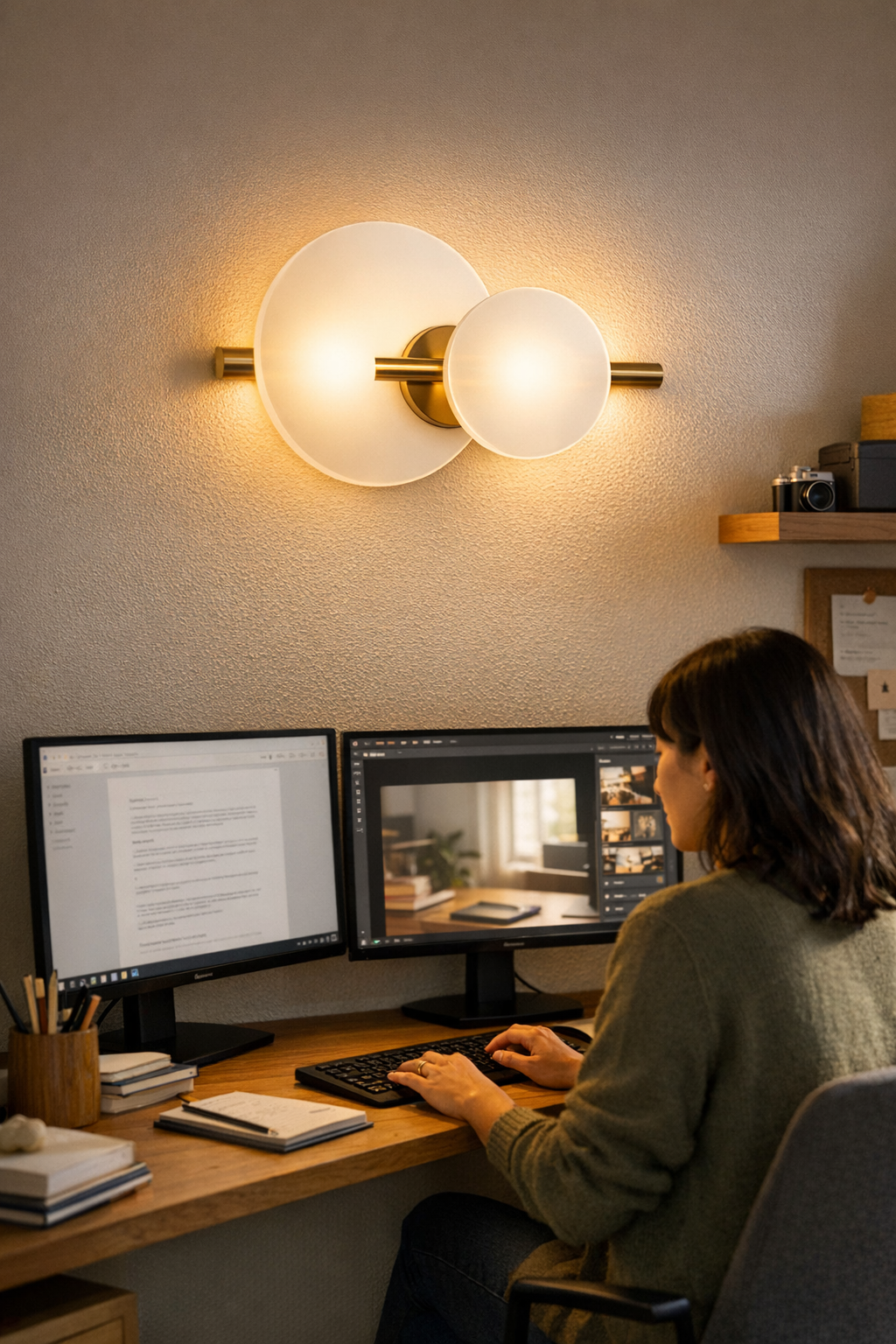
    Almost every “finished” desk—overhead light on, lamp in place—fails the second real work starts. Bright ceiling fixtures and a polished table may look sharp in morning photos, but as soon as you settle in, the gaps show. Glare crawls across your monitor, cables snake into sightlines no matter how often you tuck them, and shifting in your chair becomes routine just to dodge a stray reflection. The desk looks ready, yet every work session drags into a quiet negotiation with your lighting: you’re constantly tilting screens, inching notepads closer to the edge, or squinting at document highlights that fade into shadow. It’s not a simple issue of brightness or bulb choice—it’s about how support and light combine in the actual zone where work happens, and what goes wrong when they don’t fit.

    Where Glare Sneaks In: Real-World Screens, Real Annoyances

    Even when a room feels “fully lit,” routine desk work quickly reveals lighting patterns that undermine focus. Familiar friction points show up fast:

    • Glare bands crawling across the monitor whenever you move your head or tap the keyboard
    • Task shadows pooling right where you need to annotate, mark up, or actually see what’s in front of you
    • Exposed cable runs crossing the visual field—reminders that the last fix didn’t solve the daily tangle

    These aren’t minor annoyances. Adjust your chair once, then again. Pinch the bridge of your nose after an hour lost in spreadsheets. Watch as half your desk effectively disappears—the line between light and shadow splits your usable workspace, making it hard to find the right spot for any task. Over time, this drag accumulates: more fatigue, shorter focus, productivity quietly slipping as each day turns into another round of lighting acrobatics.

    Overhead Lights and Desk Lamps: Why They Miss Where It Matters Most

    Standard overhead lights and center-set desk lamps chase the illusion of order, but rarely help in repeated-use trouble spots. Ceiling fixtures flood the room but fire down at steep angles—good for filling space, bad for anything with a screen. Glaring bands cut through the top edge of your display, or flare in the background whenever you look up. Instead of clarity, you get a parade of white streaks and faint ghosting that keeps moving as you try to work.

    It isn’t just computer displays. Glossy surfaces—whiteboards, metal edges, glass table tops—catch and bounce light, turning every practical corner into a guessing game. The space snaps a nice photo, but after one hour you’re shifting between hot spots, defending against annoying side-shadows, or just avoiding whole stretches of your own desk because the lighting always makes those zones a strain.

    Shared Spaces, Shared Frustration: When Lighting Multiplies Distraction

    Grouped desks and flexible setups magnify the gap between “looks complete” and “actually workable.” Picture two people at a long shared table—overhead lighting and matching lamps look perfect, but when both start working, sharp glare bands find every screen. One leans over to avoid a reflection. The other nudges their lamp, and the cord slips into full view, trailing over shared work zones. Midweek, frustration wins; someone decamps to a corner table just to avoid the relentless pattern of glare. To visitors, there’s no obvious flaw, but anyone using the space feels the silent divide between visual finish and genuine, lasting comfort.

    Under-Shelf Lighting: Subtle Placement, Noticeable Comfort

    A forward-facing under-shelf LED strip sidesteps these recurring problems with quiet precision. Instead of light blazing straight down, the fixture tucks 15–18 cm behind the shelf edge, running parallel to the work surface. Suddenly, the light lands where your notebook, keys, and hands actually go—leaving monitors free from flare and keeping the area you use most consistently visible.

    The difference isn’t just comfort, it’s a reduction in clutter: cables route invisibly along the bracket, and the strip’s beam forms a working zone without washing over your screens or throwing harsh edges onto nearby tools. No dramatic reveal—just a daily lack of distraction as markups remain visible, handwritten notes sharpen, and browser tabs resist the usual noon dimness, hour after hour.

    Tip: For cable control, use adhesive cable clips or a flush cord cover behind the shelf bracket—this hides stray lines, keeps the desk edge clean, and snuffs out the last visual reminders of drag-and-drop fixes.

    Small Fixes, Lasting Impact: Repeated Use Sets the Standard

    Desk setups solve nothing if they only perform in a single snapshot. What counts is whether the layout quietly outlasts a full week of shifting routines, keyboard sprints, and late-night work. Add a low-profile LED or shelf-mounted strip: suddenly, you stop losing half your focus to shadow edges, cable clusters, or the quiet battle to keep your screen readable at 4 pm. The change creeps in with less eye strain, no more fighting for the one well-lit patch, and the background frustrations slowly fading from daily rituals.

    The setups that last aren’t flawless—they’re just less demanding. Fewer posture tweaks, less glare-diving, more time spent using the desk instead of negotiating its limits. Over a month, you’ll see fewer notes written in angled corners, screens that finally hold their clarity, and a noticeable drop in the low-grade annoyances that quietly drain your best work time.

    When to Rethink Your Setup

    If glare, bright shadow bands, or the shifting white lines of reflected light haunt your work as the sun moves—or every time you shift your chair—the heart of the problem isn’t the screen, but how the light is aimed and supported. Shuffling lamps, pinning paper diffusers, or taping cable guides might stall the issue, but none fix the basic misalignment that comes from having the wrong lighting angle or a messy cord path in the first place.

    Search instead for targeted, low-profile fixtures—ideally under-shelf or bracket-mounted strips with flexible placement. Focus on mounting positions that route cables behind brackets, keep the source above hands and not screens, and let you tweak location as work patterns change.

    Lighting and Support: The Overlooked Partnership in Everyday Clarity

    Most setups promise tidiness but leave daily friction untouched: cords that tangle into sight, shaky bracket placement, or fixtures that shoot light everywhere but the real work surface. Just swapping one overhead panel for a bracketed LED strip and a clean cable run out of sight transforms both function and focus. With the right pairing—support that stays out of the way, light that takes aim at your actual work zone—you lose the visual clutter and gain a setup that adapts quietly to shifting routines.

    Lighting and mounting that responds to how you actually use a space—not just how the room is drawn out on paper—erases the daily stress points that linger in even the most finished-looking room. The payoff isn’t just tidier appearance; it’s subtle, everyday clarity and a space you’re less likely to abandon for some better-lit corner.

    Improve the actual usability of your lighting and support, not just the surface impression: LightSupport

  • Why Carry-On Organization Often Slows You Down During Travel

    The carry-on that looks sharp and meticulously packed on your hotel bed can quickly become a weak link once you hit your second airport in a day. What feels efficient—stacked cubes, color-matched pouches, everything secreted away—often collapses at actual checkpoints: you’re stalled at security, knuckles deep in the main compartment, digging past three layers just to find your passport. That impressive hotel-room layout rarely survives the first boarding line, where every extra unzip, pouch-shuffle, or lost document not only slows you down, but leaves you blocking the line and cursing your packing logic.

    When Visual Order Slows Actual Movement

    It’s tempting to trust a bag that looks organized: rows of zipper pouches, precision-folded clothes, tech cords in their own sleeve. Laid out, it gives a sense of being ready for anything. But the friction appears as soon as you leave the controlled packing zone. Real travel exposes the gap between tidy arrangement and quick access—especially when you hit a fast-moving line or your connecting gate flashes an urgent update.

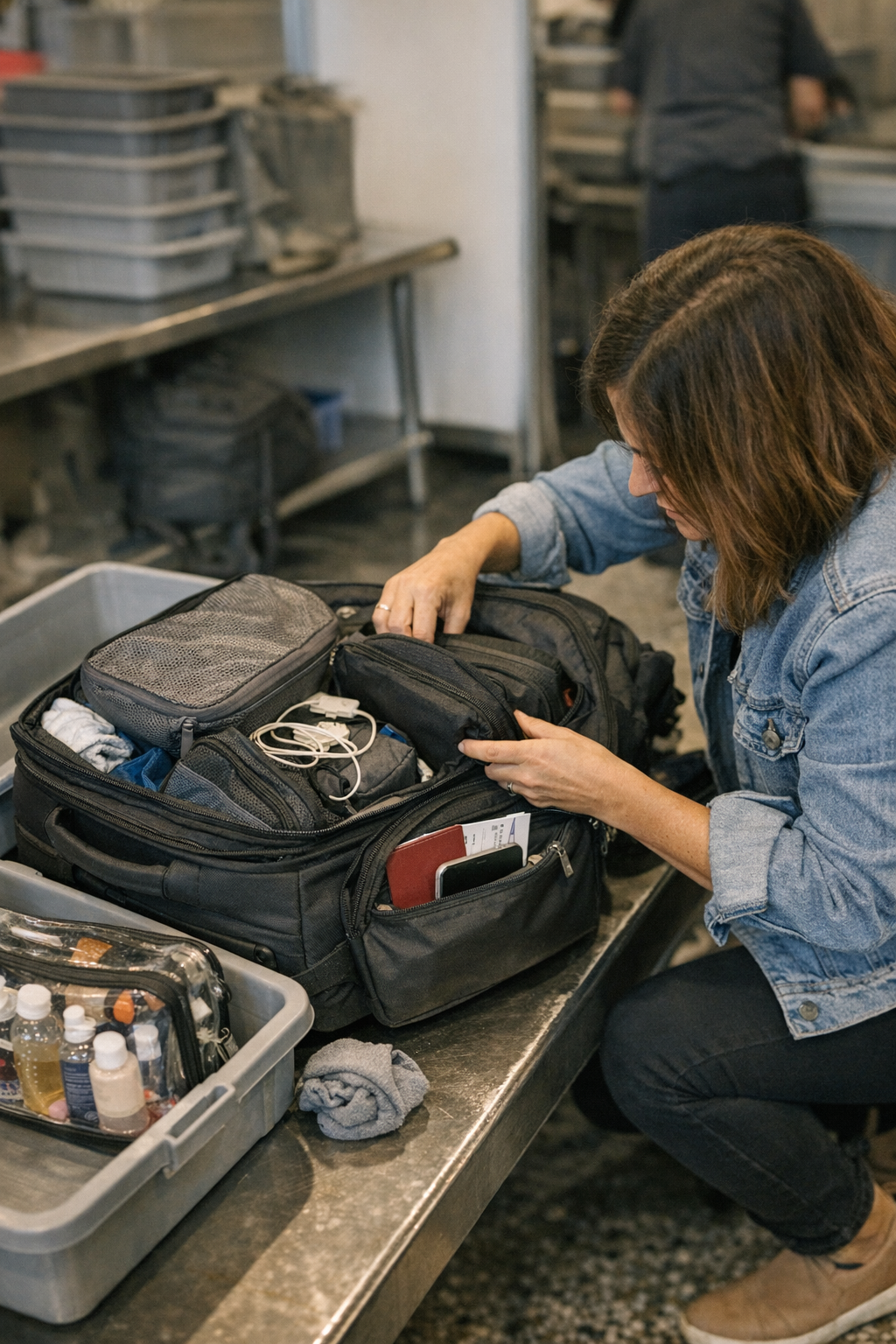
    Repeated retrieval reveals where these setups break down. Needing your ID means unzipping three barriers you’d zipped with care that morning. You’re in the tray area, suddenly repacking on a lip that barely holds your bag, flanked by impatient travelers. Suddenly, that smartly nested cube is an obstacle. You pull one pouch, another shifts sideways, and your carefully built order unravels fast. The tidy stack becomes a clumsy search game—never obvious until you’re the reason the line stutters.

    Packed to Impress vs. Packed for Uninterrupted Movement

    Organization that photos well can sabotage you in the churn of travel. The look of control vanishes during the small crises: boarding lines that lurch forward, bins that close faster than you expect, the double-check for documents just a few feet from the gate. Every time you need a charger or wallet mid-line, you’re forced to trigger an unintended domino effect—grab two, maybe three containers, now repack them while one elbow keeps your spot in line. Worse, every “quick” access risks a misplaced item in the rush, teeing up hassle at the next checkpoint.

    Compartmentalization kills visible mess, but it’s notorious for slowing the very actions you’ll repeat most. A setup that demands four steps for what should be muscle memory does no favors mid-transit. Once you’ve broken the order during a rushed repack, it rarely resets. Instead, each stop—security, boarding, customs—becomes slower and clumsier, even as your setup still looks ordered from above.

    Noticing the Real Signs of Setup Drag

    The cracks in your system show up in ordinary, repeated pain points:

    • Your passport requires two nested-unzip moves—just when your place in the line is shrinking.
    • Cords coil around documents, forcing an on-the-spot untangle with TSA bins stacking up.
    • Packing cubes designed for control split up pairs—making every repack a new puzzle mid-trip.
    • You’re halted at the airplane aisle, weighing whether you can dig for what you need or if the shuffling will set you back in the boarding bottleneck.

    Layered Organization: The Hidden Cost of Control

    Every pouch and cube promises order—until the fifth time you need the same item, and the “system” delivers new friction. Miss an essential on the first grab, and now it’s a full bag dig, main compartment splayed open as you fish past layers you once admired. With each checkpoint, that tightly packed arrangement becomes less a sign of efficiency than a routine interruption, especially when surrounded by travelers flowing past without a pause.

    It’s a familiar pattern for anyone who has left for the airport with a bag that feels impressively secure: the first security stop, your setup demands a mini reset as soon as you reach for ID or boarding pass. The bag teeters on the tray, unzipped; items shuffle out of sequence. The odds you’ll repack in perfect order drop—and your next checkpoint will probably cost you another minute, all because “order” meant hiding what you need most under layers you don’t.

    When Pretty Arrangement Clogs Real Retrieval

    Clever layouts show off well—aligned pouches, sleek zippers, every type of item corralled. But on your third retrieval in under an hour, what matters is whether your hand lands right on what you need. With each added organizer, the chance for slowdowns grows. It’s rarely an issue—until access comes with pressure: the line moving, an announcement overhead, that friction building with every missed reach.

    When Streamlined Access Outperforms the Illusion of Control

    Flawless order is overrated compared to setups built for real movement. Progress comes from identifying what actually gets reached for again and again—passport, phone, charger, boarding pass—and making each instantly accessible. Placing those items in a quick-access sleeve or external zip panel, even at the expense of some “perfect” interior order, transforms the travel rhythm. Less choreography, more automatic grab-and-go.

    In practice, each step you can eliminate reduces friction. Shifting from multi-layer unpacks to a single pull for must-have items—no matter how chaotic the rest looks—makes a bigger difference than most new packing tech combined. You retrieve without ceremony, reload without hesitation, and sidestep the slow creep of minor irritations that add up with every checkpoint, boarding, and repack cycle.

    How a Smarter Structure Pays Off in Plain Travel

    The payoff feels real in regular travel frictions:

    • At security, a passport always comes out of an outer sleeve—never a buried pouch.
    • For boarding, you manage phone and ID in one reach—free from the distracted, one-handed rummage that signals a clog in your system.
    • On arrival, essentials return to their pocket faithfully, not lost in a swirl of reorganized cubes or half-zipped pouches.
    • During seat entry, you pull headphones, pen, or snacks in a move so smooth you barely pause, leaving your neighbors undisturbed and your aisle unblocked.

    Choosing Setup That Lasts Beyond First Impressions

    Packing for order often reveals its limits by the third checkpoint or after a single forced repack. Real improvement doesn’t mean tossing organization, but rebalancing where fast access matters and giving high-frequency items their own fast lane. You let go of a little surface perfection to gain real, repeatable efficiency—not just at first use, but every time movement ramps up.

    If your current layout forces repeated two-handed grabs, unlocks the wrong zippers, or makes you repack on unstable surfaces, those tiny problems compound until a minor delay becomes a routine drag. The best carry-on setups aren’t just tidy at rest—they deliver under motion, checkpoint to gate to seat. Stay alert to the friction, and tweak until your bag moves as smoothly as you try to travel.

    Explore practical carry-on upgrades at CarryOnSupply.

  • Why Wearing Shoes Matters for Safe and Precise Indoor Lighting Installs

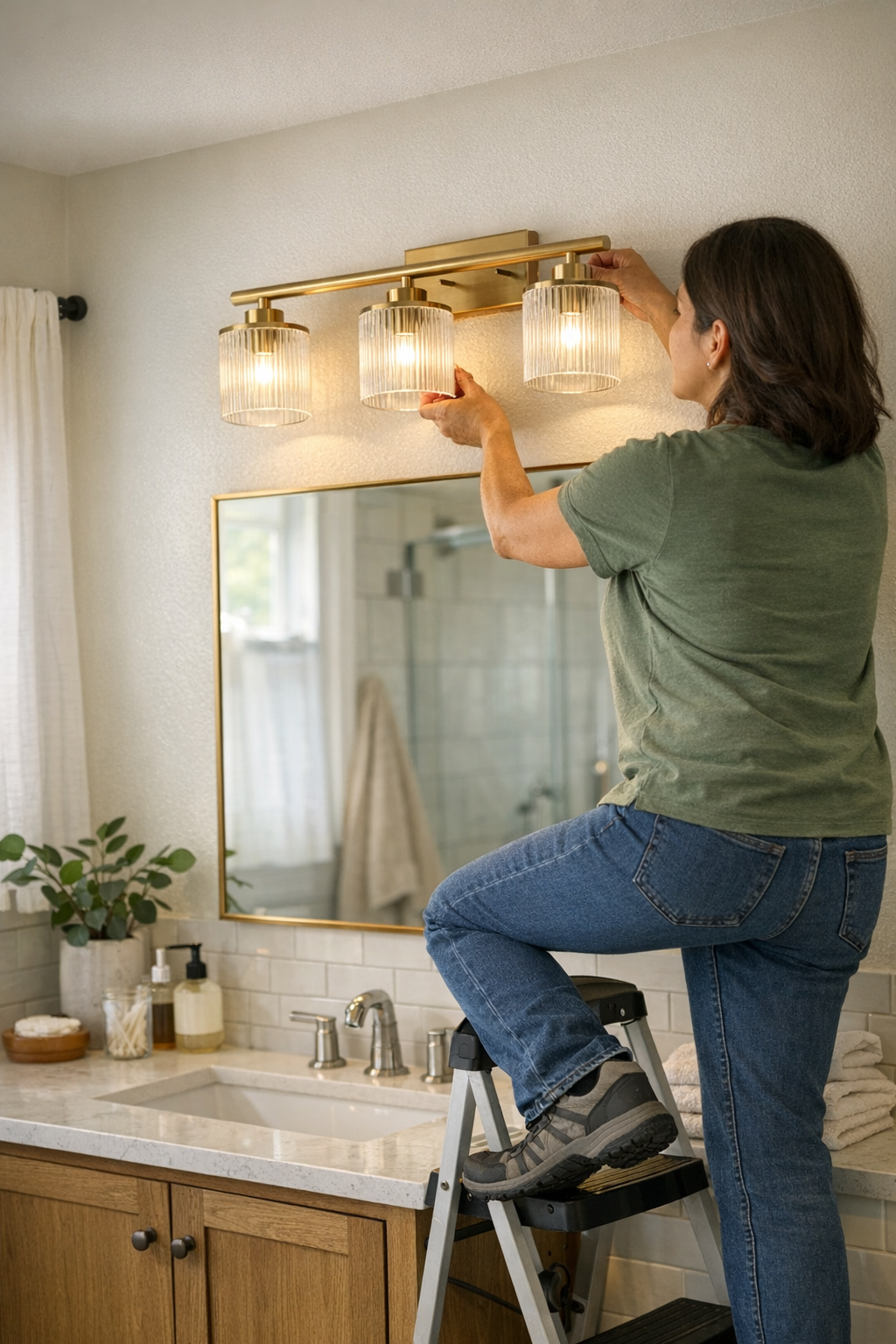
    Installing a new ceiling or wall light in a hallway, stairwell, laundry, or bathroom looks simple—until a week later when you spot shadows cutting across every step, or realize you always end up twisting sideways to see yourself in the mirror. The moment you rely on unsteady footing—a sock on tile, a shaky chair—the odds of a slightly crooked fixture go up, and on hard floors or narrow turns, those half-hidden mistakes become part of your daily routine. Most people don’t notice while mounting the light, but every shadow line, glare patch, or missing edge is a signal: the way you install lighting (even something as basic as what’s on your feet) quietly replays itself, day after day, in real-world use.

    Why Footing During Installation Still Matters After the Job Is Done

    Lighting isn’t just about flipping the switch on day one and calling the job finished. When you install flush mounts, semi-flush ceiling fixtures, or wall lights in a space with hard flooring—think bathroom tile, stair runners, or laundry room vinyl—the support under your feet decides how steady and level your final result is. Grabbing a few seconds barefoot or in socks speeds things up, but it’s where most lingering annoyances get built in. A light that looks centered at first can end up tilting twin shadows across the hallway, or making a staircase landing less visible, all because the install slipped half an inch during a rushed, unbalanced moment. Often, you’ll only spot the result as shadows break up the path you walk every day or as the countertop edge fades on laundry day.

    Picture how a wall sconce set askew while you balanced badly on wet bathroom tile can shift the glare line just enough so it crosses the mirror—and you keep dodging it by leaning left every morning. Or a flush mount in the hallway, installed from a shaky step, that leaves one side always a little too dim, no matter how bright the light itself seems. These are not dramatic failures, just recurring friction that buries itself into daily habits and movement, never quite going away.

    The Repeated Friction of a Room That Isn’t Quite Right

    Navigating the Same Space, Noticing New Frustrations

    Fixtures don’t have to be wildly crooked to make a difference. In long hallways, a light that misses the true center throws extra shadow down one side, leaving your feet or bags to blur into the gloom. Moving through that space feels subtly wrong each time, forcing you to adjust course or slow down. Stairwells are worse: a misplaced fixture, just slightly off, can make the turn at the landing harder to spot at night—and the result is everyone in the house gets used to double-checking their step instead of moving confidently.

    Mirrors, Edges, and the Cumulative Effect

    Bathrooms and laundry areas throw lighting mistakes into sharp relief every day. Install a vanity light while awkwardly perched on a towel or slick tile and the mirror will glare on one side, shadow on the other—so you start unconsciously hunching closer, or flipping your posture just to avoid the bright edge. An under-cabinet fixture, slipped behind the line because you hurried on shaky footing, means the counter edge disappears every time you try to read garment tags or work late at night. These aren’t single-use frustrations: they build into routine detours and distractions, like always squinting at dials you can’t quite see or sidestepping a shadow that shouldn’t be there.

    Lighting Placement: More Than Just Visual Symmetry

    Lighting installation mistakes aren’t about trends or visual taste—they’re the difference between a fixture that flatters the room and one that quietly undermines its purpose. A flush mount off center by half an inch might seem trivial, but in a hallway it can plunge one wall into shadow while throwing glare back from the opposite side. In a damp bathroom, an unbalanced install can make a mirror feel unreliable every time you shave or do makeup, simply by sending the light askew. If you keep squinting after a new light goes in, or find yourself reaching across a patch of shadow to start a load of laundry, it’s not random—it’s the after-effect of poorly controlled, rushed installation under unstable footing.

    Small Missteps, Big Consequences

    How Subtle Errors Become Daily Annoyances

    Routine traffic—kids dashing through halls, hands full of towels heading down stairs—magnifies every misstep made during install. Humid bathrooms or laundry spaces pose extra risk: a fixture mounted too quickly, without solid stance, can start to sag or drift over months, slowly twisting shadows or letting glare creep in at eye level. You rarely notice right away. Instead, the cost builds in constant, low-level inconvenience that never fully leaves the routine—a dark patch that steals outline from a stair, a glare line that doubles each time the light hits the mirror just wrong.

    The frustration isn’t in the type of fixture or the bulb, but in whether light consistently lands where you need it—across months of real use, not just the first impression.

    Real Example: Laundry Room Relief from a 30-Second Fix

    Moving a ceiling light squarely over a cabinet run—taking thirty seconds to pull on shoes first—fixed a problem that had dragged on for months: the washer’s controls no longer vanished in shadow, and reaching for the “start” button became easy and automatic again. No dramatic makeover, just relief from the old loop of squinting and second-guessing under a fixture that had always looked slightly off for want of solid footing during installation.

    The Logic of Supportive Shoes: It’s About Control, Not Formality

    Wearing supportive, closed shoes for indoor installs seems unnecessary—until the first time you try to align a flush or semi-flush light above a glossy tile floor or narrow stair tread. Shoes turn “good enough” into actually level, giving hands and arms the steadiness needed to hold fixtures in place while marking or fixing. The result is not just fewer slips on ladders, but fewer surprises as months of humidity or movement pass: straight lines stay straight, lights stay level, and you stop wasting time fixing phantom shadows or glare streaks that should have been solved on install day.

    Quick Tips for Reaching Real Lighting Clarity

    • Wear supportive shoes for every install—even the “fast” ones. You’ll move steadier and keep flush/sconce fixtures better aligned, especially on hard or slick floors.
    • Check alignment from real-use angles, not just from across the room. Walk the hallway, stand at the mirror, or lean over the work counter, making sure the light lands cleanly from each spot you’ll actually use.
    • Take extra care in areas with hard flooring or regular humidity. Poor footing in these spots builds future problems, from new shadow patches to a fixture that droops over time.

    When the Installation Matters Most: Everyday Lighting Scenes

    Hallways with one wall faded into darkness, mirrors that force you to dodge a glare slice, steps left unsure at the stair landing—these moments show whether a careful install actually solved the space, not just brightened it. Real relief comes when you cross the room without squinting, turn a corner with full confidence in your footing, or finally find the laundry button in plain sight instead of fumbling in shadow.

    Properly installed lighting should disappear into your routine, supporting movement and vision without demanding attention. If a fixture constantly reminds you of its presence—through glare, shadow imbalance, or unpredictably lit corners—it’s usually not a hardware problem, but a signal that footing, alignments, and placement were never fully dialed in. Those small details in the install set up months—sometimes years—of either seamless use or constant workaround. A few minutes spent on stable footing can spare you a lifetime of minor daily irritation.

    Explore practical indoor lighting at LightHelper

  • How Afternoon Noise Disrupts Your Dog’s Rest and Routine

    Afternoon pacing isn’t just restlessness—it’s a daily friction point most dog owners keep tripping over. Late in the day, as kitchens fill, shoes pile by the door, and voices bounce between rooms, a familiar pattern repeats: your dog cuts the same path between bed, bowl, hallway, and threshold, never settling. It’s not boredom or a simple bathroom request. It’s a breakdown in routine reliability. When a dog abandons their bed for the fourth time in under an hour or sidesteps bowls because a shoe rack or laundry basket blocks the way again, you’re living with the daily gap between a “neat” setup and one that actually holds up to repeated use. That’s the DogPile world—routines nudged off course by tiny, continual misses.

    What Afternoon Pacing Really Signals

    Many owners dismiss pacing as pent-up energy or impatience for a walk. But true afternoon pacing isn’t sharp or playful—it’s a low, steady shuffle through spaces just as household noise crests. You see it in the hesitation before settling, the way your dog stands half-on the bed, eyes locked on the next doorway, ears twitching each time a family member passes or a chair scrapes in the kitchen. These aren’t random laps; they’re the signs of downtime routinely interrupted by the flow of daily life.

    What starts as subtle drifting—moving from water bowl to door to hallway—adds up. When your dog glances at the bed, then at you, then at the pack of feet crossing the entryway, it means even rest is now a calculation. Comfort becomes contingent on the next interruption: a noisy appliance, a misplaced bag, the traffic in a supposedly “quiet” zone.

    When Routine Friction Adds Up

    Let this repeat a few afternoons in a row and the cost becomes obvious. Meals are rarely finished in one go, the dog’s bed is a stopover, not a haven, and downtime never fully resets for either of you. Owners often write it off as “midday jitters,” but the cycle grinds down routines until every homecoming or meal time feels like starting from scratch.

    Picture a Tuesday: laundry machine clattering, a dropped pot in the kitchen, footsteps echoing down the hall. Your dog circles from den to kitchen, pauses at the water dish, then shifts closer to the door, waiting. You find paw marks scuffed into the floor by the bowl, toys pushed aside, and when dinner prep begins, the dog hovers at the edge, ready to slide away from the next incoming noise. These aren’t quirks—they’re the visible cost of relaxation lost to ordinary commotion.

    The Real Cost: Fragmented Days and Rising Tension

    It isn’t a single dash or bark that wears down your routine, but the steady circuit of laps that never settle. Play becomes scattered. Feeding routines splinter. Instead of relaxed transitions, both you and your dog mark time until the next pause collapses under the daily rush. Every “break” is temporary, and everything needs resetting again before it sticks.

    Behind the Quiet Erosion: How Setup Shapes Routine

    It’s a hard fact: tidy setups don’t always translate to practical, usable routines. The bed lined up just so? Worthless when it sits right in the hallway traffic, and your dog stands mere seconds before darting out of the way. Bowls optimally positioned in the kitchen? All it takes is a jostle from passing bags, and water splashes or food gets nudged off course. The toy basket, “in its place” in the walkway, becomes a stumbling block every time your dog grabs something, only to find feet in the way.

    • Bed on the edge of a busy hallway—your dog drops his head, only to snap up as someone charges past.
    • Nap broken by rolling laundry baskets or an oven timer’s blast.
    • Toys “stored” in neat baskets, instantly scattered by little nudges and redirected steps.
    • Water bowls never truly out of reach—until a hasty cleanup or grocery drop shifts them mid-meal.

    This is where setups that pass the “looks organized” test fail the lived-in one. Slow access, repeated interruptions, and pathways that keep sliding into each other—the practical friction wins out every single time if the arrangement can’t withstand repeated, real-life movements.

    Changing the Placement, Changing the Routine

    The wins almost never come from buying more gear—but from watching where your dog repeatedly tries to land when the commotion hits. Most dogs aren’t angling for the prettiest corner; they’re angling for any spot buffered from the parade of feet and commotion.

    In one real-world pivot, sliding the bed away from a busy threshold and into a window nook—half-hidden behind a stationary chair—immediately dropped the ambient noise, and fewer footsteps grazed the resting zone. Moving water and food bowls closer to this corner meant meals could happen with less restart and fewer sidesteps. The result? Longer stretches of true rest. Less persistent standing by the door. Play that lasted, rather than fragmenting after each footstep.

    Fine-Tuning Matters: Small Adjustments, Big Results

    It rarely means an overhaul. Pivoting a bed so it’s shielded by a wall, placing bowls just out of the corridor’s line of fire, or buffering the rest zone with a soft runner or side table can mean the difference between a dog who paces and one who actually settles. Instead of endless re-circling, you get completion: meals eaten, paws dry before tracks appear, a rest area that isn’t another “chore spot.”

    Typical Scenes Where Friction Returns

    This friction isn’t theoretical—it’s visible in routines every owner endures:

    • Post-walk return: You reach for a towel but realize it’s been pushed behind the door again. Your dog dances in place, dripping or muddy, as you scramble, prints multiplying with every second of delay.
    • Crossing toy territory for the third time: You step over the same plush squirrel or chew rope blockading the path to your keys. Morning order dissolves as daily use scatters everything underfoot.
    • Mealtime fumble: You bump the water bowl with a stray bag on your way to unload groceries; suddenly, the floor’s slick and feeding stops and restarts in short, anxious bursts.
    • Evening reset stalls: You want to set a calmer tone, but the bed sits right in the main thoroughfare. Instead of downtime, you’re negotiating where everyone—dog included—can actually land.

    Each time, the problem isn’t “stuff everywhere”—it’s access blocked at exactly the moment it matters most. Picking up and resetting only helps until the next rush. Friction will always cycle back unless the arrangement survives the day’s pattern, not just the morning’s tidy sweep.

    The Difference Between Looking Tidy and Living Easy

    Morning can fool you: a corner free of clutter, a bed plumped, bowls aligned. But as the day intensifies, the weak points show up. The dog bed loses its calm shield. The bowl’s at risk of a spill or shuffle every single meal. Toys that seemed contained creep farther into walking space. A setup that photographs well collapses under repeated movement.

    Progress comes not from another organizer or stricter tidying, but from tracking which pain points survive after three, four, or five resets. If your leash still tangles around an entry bench, or your dog’s nap gets clipped by kitchen chaos every day, you’ve found the honest spot that needs changing. That’s the gap between routine that holds and routine that just “looks better.”

    Reliable Progress: Living With, Not Against, Your Home’s Patterns

    No setup is perfectly frictionless. Even the right corner picks up noise or the occasional misstep. But setups tuned to the dog’s actual movement—where towels are within hand’s reach after a walk, rest zones aren’t instant shortcuts, and bowls aren’t reset after every meal—cut down on the slow build of owner annoyance and dog frustration. Results show in:

    • Faster post-walk resets—towel where you actually grab it, mud tracks held closer to the entry
    • Rest spots that don’t need constant policing to stay usable, even when the house surges
    • Bowls that survive the rush and don’t become just another thing to move around again and again
    • Routines that don’t unravel at the first sign of noise, bag drop, or movement clash

    The solution isn’t perfection—it’s real setups that absorb daily traffic, not just disappear at the first challenge. With each small change, the afternoon gets less scattered, the return flow less tense, and the difference between living “around” your gear or moving through your day finally becomes visible.

    DogPile — practical setups for real daily life with dogs

  • Streamlining Pet Care Routines to Reduce Hidden Daily Frustrations

    Feeding your dog, wiping paws after a muddy walk, filling the water bowl—these daily moments should run smoothly. But too often, your routine gets tripped up in small, predictable ways: the scoop is missing, the towel’s in the laundry, cleaning wipes are out of reach. These aren’t rare hiccups; they’re chronic interruptions, cropping up exactly when you’re trying to keep the day moving. A setup that looks organized at a glance can still break under pressure where it counts—one missing item at the wrong moment, and you’re left circling the house instead of caring for your pet. The CalmPetSupply world centers on solving these repeat snags, not just hiding them.

    How Routine Gaps Appear in Daily Pet Care

    Every pet owner recognizes this scene: you head to the feeding station, food bowl ready, only to find the scoop buried under yesterday’s mail. Rinsing out a water dish, you reach for a drying towel—except it’s in a back room, not where you need it. The routine still “works,” but it forces you to improvise, grabbing a paper towel from the kitchen or calling to your dog to wait while you hunt for an essential. Calm gets broken not by big disasters, but by these repeated, tiny failures in setup.

    Each moment of searching or reaching triggers a visible disruption—a task that should take seconds stretches out and signals to both you and your dog that something basic is missing. These aren’t just minor inconveniences; over time, they wear down the sense of steady routine.

    Mid-Task Delays: The Hidden Cost to Calm

    The real test of your pet care setup doesn’t come when it’s freshly tidied. It’s when you’re already mid-task and need one thing that’s not there. Consider:

    • You refill the food bowl, realize the rim is still wet, and reach for a towel that’s nowhere near the station.
    • After a rainy walk, you need paw wipes—only to find them trapped behind a pile of shoes by the door.
    • The broom for stray kibble is stored out of sight—and just as out of reach—so crumbs linger until the next round of cleanup pressure builds.

    These mid-routine delays quietly drag down your flow, repeating at exactly the wrong time and breaking your momentum.

    When a “Tidy” Setup Falls Short

    A pet care corner can look neat, with bowls stacked and wipes out of sight, but if every use means shifting clutter, it’s not working. Most common: you kneel to fill a bowl but have to move a bag of dog food or clear out scattered leashes just to reach the wipes. Organization that seems fine when unused often becomes friction when you actually run the routine. Over a week, the clutter creeps back—tools migrate, storage bins get blocked, and once-easy access becomes a series of repeated maneuvers.

    Especially during rush times—after work, late-night checks, or before heading out—the extra seconds lost add up. A drawer meant for towels gets filled with odds and ends, or a basket of brushes goes missing under laundry. That “tidy” look delivers less and less until friction becomes the new normal.

    Realistic Scenes: When Convenience Gets Blocked

    Evening is when weak setups show their hand. You’re ready to feed your dog; he’s waiting by the bowls. But the wipe for spilled water is missing, or the scoop is somewhere at the back of a hard-to-reach drawer—so you detour and your dog’s patience wears thin. After a muddy walk, towels exist, but you’re stuck fetching them from another room while paw prints spread across the floor. Simple grooming becomes a hassle when the brush is hidden behind laundry piles. These aren’t dramatic crises, but they are routine slowdowns—adding just enough resistance that quick care becomes drawn-out work.

    Each extra trip across the house, or reshuffling to uncover the basics, gives away that the setup is still patchwork. Tidy on the outside, inconvenient on repeat use.

    Small Fixes That Reshape the Routine

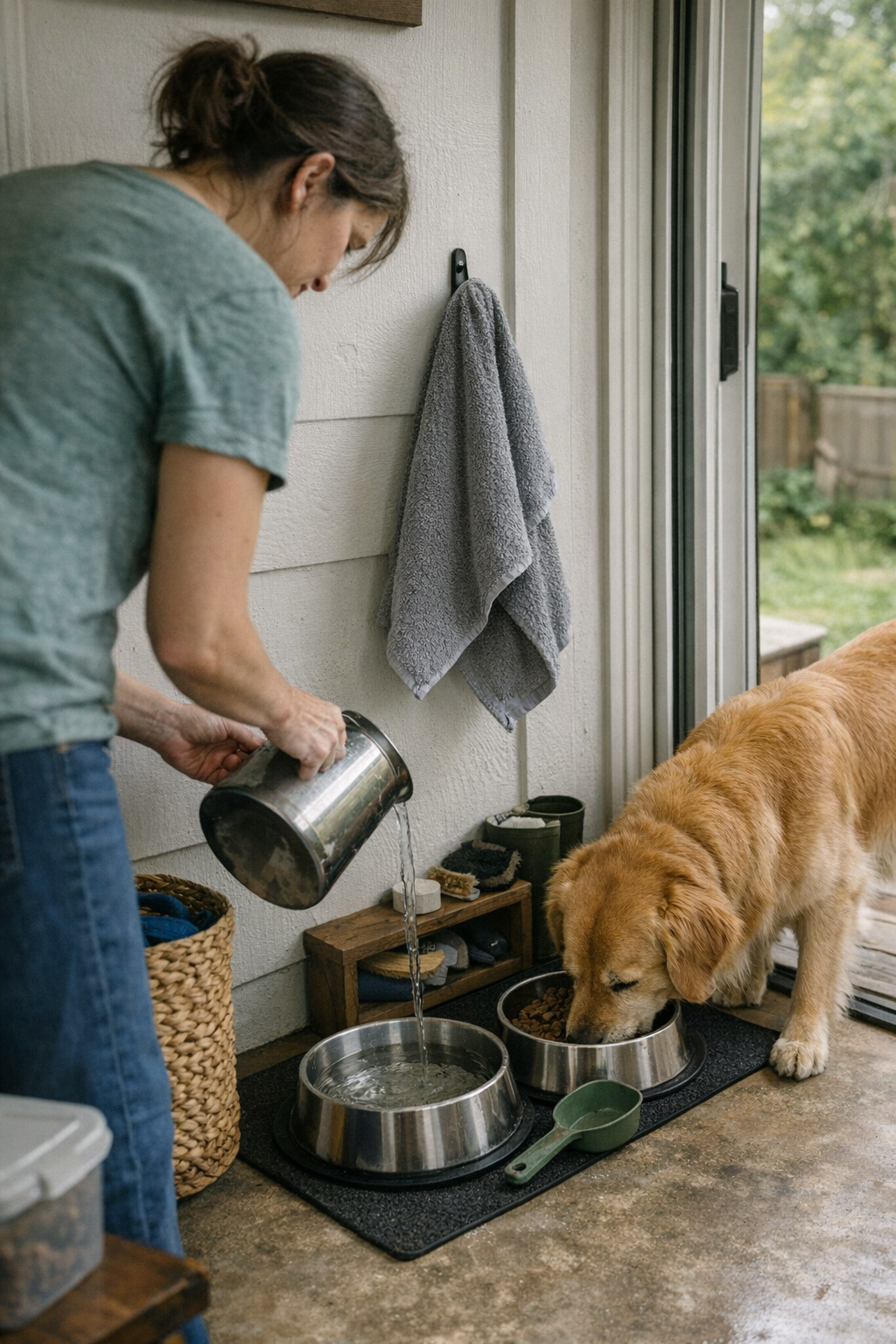
    Most real-world improvements aren’t about total makeovers—they’re about putting the right item in exactly the right location. Mount a towel hook above the feeding zone and hang a thick, visible towel: suddenly, drying a wet bowl happens in one move, not three. You’re not balancing a drippy dish on the counter or rummaging through the kitchen. The refill now flows without the clumsy back-and-forth.

    You feel the shift instantly; there are fewer “hold on” moments, less waiting for your pet, more time just moving through the routine. Keeping a drying towel within reach, a drop-cloth for floor spills near the action, or a paw brush parked by the entry takes your care from scattered patches to a single, reliable rhythm. These fixes don’t add work—they subtract micro-pauses and patch jobs.

    From Hidden Work to Real Ease

    If you catch yourself making two extra trips or apologizing for slow routines, there’s likely a structural gap repeating behind the scenes. Effective care isn’t about “almost” calm—it’s about being ready at every step. Does your setup let you finish feeding, clean, and reset in one flow, or does it keep you cobbling together quick fixes? Every time an item is exactly where you need it, you avoid the hidden effort that turns basic pet care into a layered hassle.

    The real difference isn’t in appearances—it shows up in repeated handling. The process gets lighter only if the basics are always present, always ready, right at the pinch-points of your daily rhythm.

    Supporting Calm that Lasts

    Beneath most pet care routines lies a quiet obstacle course—missing towels, wipes that drift out of reach, or supplies that block each other. Spot the sticking points where your flow gets interrupted, and adjust the placement or access. Hang the towel above the bowls, park the scoop in the same dish after each use, keep wipes visible near the entry—these micro-adjustments turn “looks fine” into care that actually feels sustainable. The more repeat routines run without these slowdowns, the easier daily life gets for both you and your pet.

    Sometimes calm just means being prepped for the next pause or cleanup—not perfect, but always ready right where it matters.

    See more daily setup solutions at CalmPetSupply.

  • How Modular Furniture Keeps Storage Zones Organized Over Time

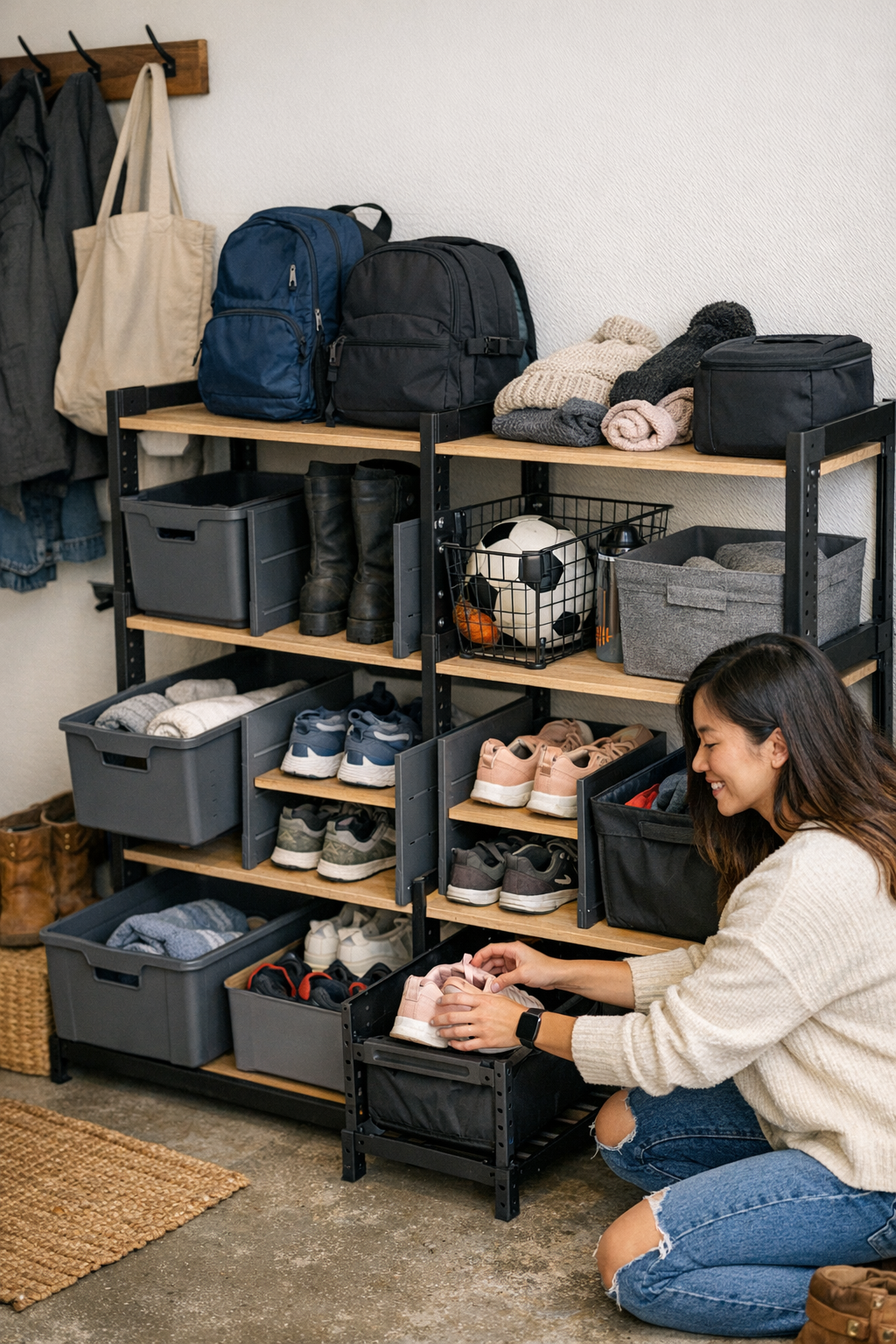
    The morning after new shelves go up, it all lines up like a catalog shot—shoes sitting in a neat row, jackets spaced just so, sweaters folded into crisp stacks beside bins for gloves and hats. For a brief window, it feels like you’ve finally pulled ahead of the chaos. But two days later, real habits start to rub out that order. Shoes get pushed into the sweater pile by an early-morning grab. An extra bag ends up on the coat hooks. The basket for hats morphs into a dumping ground for keys, receipts, and last-minute breakfast bars. The beautifully defined zones buckle—fast—and what started as clarity morphs into yet another muddled maze.

    When “Organized” Turns Into Just More Shuffling

    Most so-called ‘systems’ unravel in just a week of actual use. You dig through three bins for gloves while boots topple forward. What was a clean shelf becomes a layered mess—backpacks pinning lunchboxes, shoes jammed behind a tangle of scarves. Rigid baskets or shelves might look like answers, but they demand the impossible: routines that never shift. When life barrels in—unexpected weather, late soccer practices, a muddy dog—structure devolves into friction. Instead of order, every day forces you to dig, stack, and reshuffle just to get dressed or out the door.

    Fixed vs. Flexible: Where Real Storage Difference Emerges

    The first weekend, fixed shelves and dividers give you the high of possibility. But by Thursday, the weaknesses are obvious. Want to put away gym gear and it doesn’t fit? Too bad—the compartments won’t budge. Scarves overflow their corner; shoes stack up where they don’t belong. Each time you move one thing, you push something else out of place. Suddenly, categories blur: chargers in the mitten bin, mail with the hats, boots squashed under backpacks. The promise of order melts into a constant low-level annoyance.

    Modular shelving breaks this cycle where it counts—on the days you wish you could just nudge the space, right now. Movable dividers, adjustable shelves, and cubbies that reset in seconds give you the power to re-draw boundaries before frustration sets in. Cramped backpack zone? Drop the shelf a notch. Too many shoes? Slide a divider to reclaim room. Instead of living in permanent rearrangement mode, you spend less energy catching up and more time using the space as it’s needed.

    The Build-Up: How Everyday Storage Friction Strains Your Space

    No one actually resets shelves every night—real fixes get pushed off. That means a single misplaced bin quietly grows into daily hassle. Shoes kick mud up and multiply across the floor. The ‘hats and gloves’ basket swallows everything from receipts to lost earbuds. Lower shelves fill fast, while the upper ones stay barren just because they’re a stretch to reach. Quickly, even small messes become routine time sinks—digging for matching mittens, reaching behind a pile just to get a jacket, wrestling an umbrella free without dumping half a shelf on the floor.

    Modular storage doesn’t eliminate all chaos—but it hands you simple, instant-tweak options that keep things from spiraling. As categories start to blend or anything gets cramped, a quick shelf slide or divider shift saves the day. Adjust one thing, and suddenly you get back clear zones and easier reach—with barely any thought or extra effort.

    A Real Entry Closet: When Permanent Dividers Fail

    Picture a family entryway: two shelves packed with shoes, an upper shelf for bags, and a few permanent dividers that looked smart on install day. By Thursday, lunch bags backed up on the shoe shelf so nothing is easy to grab. Wet winter boots invade the next zone, spreading puddles sideways until the fixed divider blocks cleanup. Before you know it, finding a glove means pushing aside backpacks, and the supposed gloves basket—now half-filled with isolated hats and receipts—loses any clarity. The lines between ‘zones’ vanish and resets become overwhelming chores, not quick fixes.

    The frustration isn’t a lack of effort—it’s the rigidity. When dividers won’t move, it’s impossible to adapt without emptying half the closet. The idea of true organization is replaced by constant, draining reshuffling.

    How Modular Adjustments Change the Game

    Now swap out those fixed dividers for sliding shelf inserts or adjustable slots. The next time boots crowd the sneakers, the divider glides over—no cramming or creative stacking. Bags overload the shelf? Slide it up or down and reclaim space. Resets aren’t a dreaded, once-a-week event. They’re a few-second fix: nudge, adjust, move on. Everyone finds their things; everyone knows where to put them back. The space isn’t just tidy—it’s recoverable, stable, and obvious, even as family patterns shift from season to season.

    This approach isn’t about keeping a space showroom-perfect—it’s about saving yourself from inherited messes and lost time with every simple reset. As routines change or clutter threatens, the layout flexes, and your sanity holds out longer.

    Modular Shelves: Worth the Shift?

    Do modular shelves really stay tidy?

    Only if you use their flexibility. Categories drift? Reset a divider before the mess grows. Backpack bin filling with random mail? Move a shelf before it becomes a black hole. Small nudge now, not a dreaded overhaul later.

    Who actually benefits from modular setups?

    Anyone whose space feels perfectly organized, then falls apart as soon as routines change—families with school years and summer breaks, anyone with rotating sports or activities, or those facing surprise weather one week and totally different gear the next. If sections lose their job as soon as life shifts, modular fixes matter.

    Are modular shelves better for tight spaces?

    Absolutely—if you adapt before it’s an avalanche. Lower a shelf just as boots multiply, widen an area before backpack sprawl, and you protect both usable space and your own patience. Ignore it too long and you’re right back in the cycle.

    Small Tweaks, Lasting Relief

    Modular storage won’t turn a jumble into a showroom, and it won’t rewrite your habits overnight. What it gives you is power over small, daily headaches: a two-second adjustment instead of a half-hour overhaul. Breathe life back into your closet or entryway before the clutter rules again. Each minor tweak buys you an extra morning where finding what you need is fast and obvious—and resets never have to be all-or-nothing.

    In the end, modular shelving means your storage works with your actual, evolving routine—instead of trapping you in endless sorting and frustration.

    Shop ClosetWorks storage solutions

  • Maintaining Clear Boundaries for Effective Seasonal Storage Rotation

    The trouble with entryway storage isn’t starting out messy—it’s watching what seemed organized become a daily slowdown. You get a sharp setup: bins for boots, a bench for bags, walls clear. But by midweek, shoe rows bleed into bag zones, hats cover what you need to grab next, and one quick drop-off turns into a clumsy search for keys. Instead of smooth transitions, you’re stepping over pileups or pausing to reshuffle before you can even leave the house. The very spot meant to speed you up becomes a choke point in the routine.

    How Category Drift Builds Friction at the Entryway

    Entryway storage rarely crashes outright—it erodes. Category drift starts everything sliding: summer sneakers stacked with wet boots, hats tangled with backpacks, the bench barely visible under overflow. Every time categories mix, routines stall. Instead of walking in, grabbing what you need, and heading out, you’re tracing circles around misplaced gear. Not just a visual mess—the real loss is time at the threshold, with each step interrupted by invisible clutter that suddenly needs sorting.

    Picture the afternoon crunch: muddy sneakers bump up against dry shoes, umbrellas block gym bags, and you’re rifling through a scarf heap just to find your keys. What should take ten seconds now means sidestepping bags, pushing aside overflow, redoing yesterday’s order. It’s a speed bump in disguise—tiny slowdowns adding up, turning the entry from a reset zone into an unpredictable obstacle every day.

    Why Rotation Falls Apart When Boundaries Blur

    Seasonal rotation always sounds manageable—on paper. Rotate bins, switch winter for summer, keep things in play. But real use breaks the plan: boundaries soften, categories overlap, and swap-outs stall. You dig for a winter hat, but gym socks and goggles block the way. Instead of a quick seasonal reset, you’re unearthing the whole pile. Rushed mornings or visitors only make it worse—whatever doesn’t fit lands in the nearest gap, and soon every category is murky. The system dissolves quietly under repeated, normal use, leaving resets harder each cycle.

    Matching Bins: Order or Illusion?

    A matching set of entryway bins delivers surface calm—at first. Labels line up, everything looks ready, but the system can’t enforce discipline where there isn’t any. When the family’s in a rush, wet boots go with clean ones, grocery bags fill the nearest slot, and the labeled order shifts almost imperceptibly. Open baskets offer quick access, but invite faster spread: off-season gear sneaks in, and separation disappears as more hands reach for space.

    Even precisely stacked, lidded bins can’t fix the core flaw if internal structure is missing. Gloves slide under boots, umbrellas wedge into bags, and the original system blurs away. Look away for a weekend, and no one really knows what’s in which bin. Organization lives and dies by practical separation—not just by appearances.

    The Tipping Point: When Movement Gets Blocked

    The real system failure never announces itself with a grand mess—it sneaks up as blocked movement, where routines jam:

    • Wet boots dumped at the door, dry pairs stranded behind, clear tray gone
    • Bags crowded onto the bench, blocking the only seat and forcing a stand-up boot pull
    • Edge clutter—hats, gloves, mail—collecting in pass-throughs, tightening your path until you step sideways to get out

    Suddenly, the entry isn’t just untidy—it’s slow and barely functional. Movement stalls, decisions pile up, and what once felt like a set-and-forget solution becomes a maintenance burden every trip through the door.

    Structural Clarity: Why Real Dividers Matter

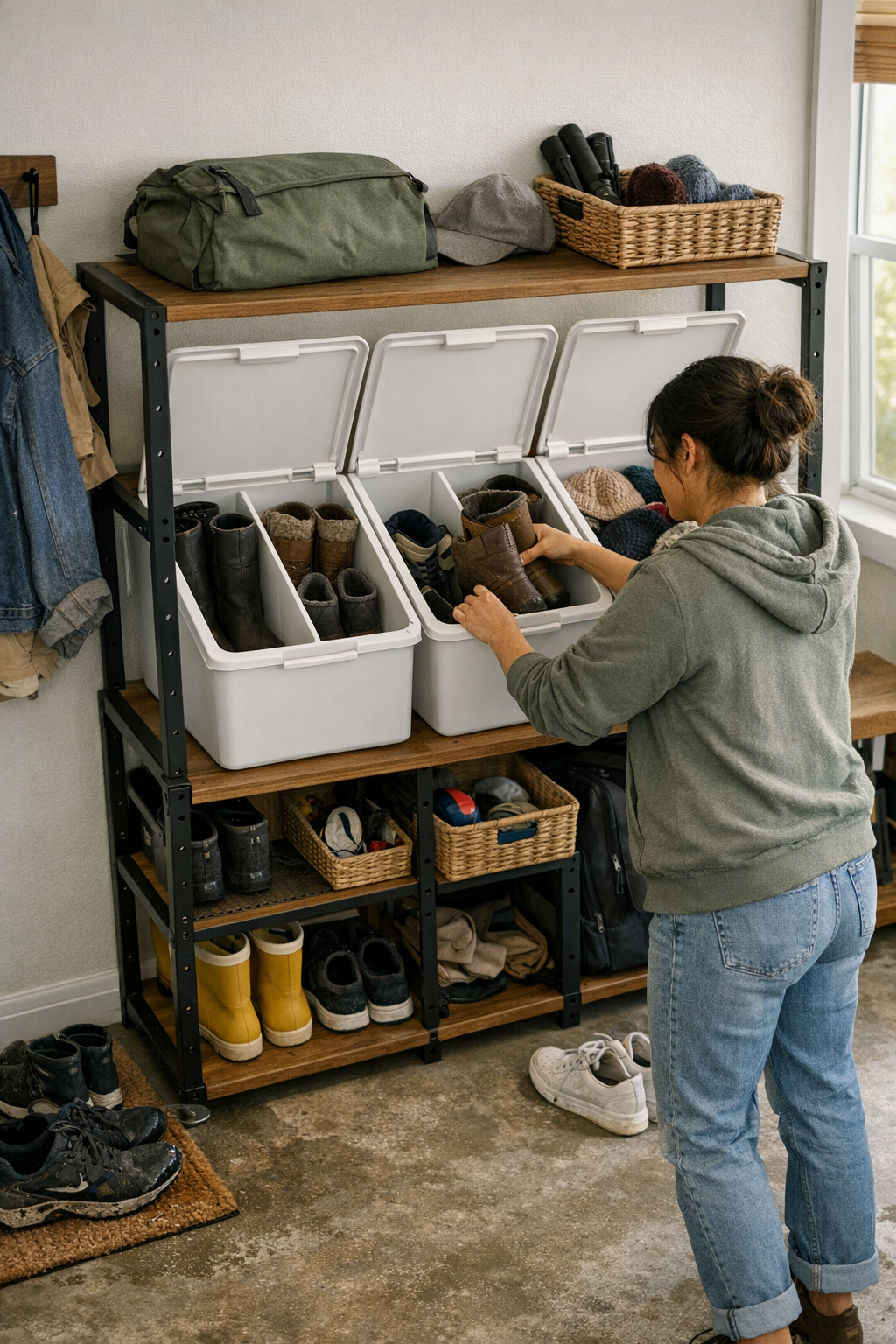
    Beneath every genuinely functional entryway is structure that can take a beating. Bins with rigid, vertical dividers or fixed-lid constraints don’t just look controlled—they hold the line, physically and visually. Shoes keep to their section. Hats can’t wander over to the glove zone. It’s not about looking neat; it’s about preventing slow leaks between categories that gum up even basic routines.

    Dividers set hard boundaries the daily shuffle can’t easily cross. The moment a divider is missing, overflow seeps in—bags slip into shoe slots, mittens end up with mail, and each reset gets more exhausting. One overlooked divider, one flexible bin, and the system returns to “organized for a day, scattered by the weekend.”

    In Practice: How a Better Structure Holds Up

    Switching from open baskets to divider-equipped bins in a busy entry changes more than appearance—it changes flow. Now, each item lands where it should. No cramming a backpack where scarves go. Boots stand, gloves stop migrating, and standing in the doorway, a glance is enough to spot where drift is just beginning. Cleanup shrinks from full-on reshuffling to quick sweeps—stray items are obvious, not camouflaged by overflow.

    Importantly, small mistakes don’t become broad messes. Missed a drop-off? One slot is out of order—not the whole system. End-of-season swaps become one fast motion, not a mini excavation. The structure itself does most of the work, not the user. Instead of reorganizing from scratch each week, you’re only correcting the outliers.

    Scenes from the Threshold: Where Setup Fails and Succeeds

    • Lining up shoes and gradually watching the row expand, toes straying into different “zones.”
    • Sitting to tie a shoe, but the bench is crowded with bags—forcing a shuffle and a quick recalibration of space.
    • Coming home, trying to drop a backpack in its place, only to find the slot blocked, setting off a cascade of misplacements.
    • Wall storage looks neat until the first rush—wet hats and paperwork blend together and blur the system from the inside.
    • Trying to reset: one accidental shuffle, and suddenly you’re re-sorting half the bins, every few days.

    Tips for Enforcing Category Boundaries in Entry Spaces

    • Pick bins with non-negotiable dividers. Internal walls or upright slots maintain strict lanes, reducing accidental blending and category creep.
    • Prevent overflow from finding spare capacity. If bins stretch to absorb “just one more” item, boundaries weaken—tight, defined space acts as a failsafe.
    • Reserve open storage for low-impact, low-traffic locations. High-turnover zones—family entries, weather shift points—need structure, not just surface order.
    • Reset fast, before drift sets in. Brief checks midweek, correcting spillover at the first sign, stop the problem from growing. Waiting for “the weekend reset” lets small errors escalate.

    Less Is More: The Value of Uncompromising Structure

    The payoff isn’t a prettier entryway. It’s the way movement stays frictionless, how little time is spent repeating the same fix, and how order survives the randomness of guests, kids, weather, and routine. Strong physical dividers unlock a difference you can feel each morning: returning the wrong item stops at one slot, not infecting the whole entryway. Seasonal swaps don’t become a chore. A tidy look is secondary—the big gain is daily stay-clear, with no hidden collapse waiting underneath.

    When the structure holds firm, your entryway stops being another soft project. It becomes a working part of the house—surviving daily pressure, making resets faster, and keeping the zone clear enough to actually work. If a storage setup can’t do that, every improvement is temporary—and stranger, slower, more frustrating each return trip.

    http://www.betweenry.myshopify.com

  • How Small Changes in Cat Zones Cut Down Daily Mess and Stress

    A cat space that looks tidy in the morning rarely survives a full weekday without showing its weak spots. When the water bowl is wedged by an abandoned toy, the mat curls up right where you step, or the grooming brush is just out of reach—what started as “clean and contained” grinds daily routines to a halt. The setup that once seemed settled quickly slows you down in the middle of dinner prep or a late dash for the door. That’s when the difference between looking tidy and functioning smoothly becomes impossible to ignore—and this is exactly where the right StillWhisker setup begins to matter.

    Why ‘Neat Enough’ Cat Setups Break Down Fast

    The real pain points show up mid-routine, not during Sunday resets. Maybe the bowls are perfectly aligned and toys sit untouched—until you juggle groceries at six, and your cat claims the feeding corner, cutting off your way through. Or the zone looks organized until you’re late, swipe for a brush that’s slid out of reach, and discover litter and crumbs scattering past the “cat area.” A setup that looked simple to maintain turns into clutter to dodge, finding you doing unplanned reset work every time pressure builds.

    Visual order blurs fast when routines overlap. Life with an indoor cat means stacking micro-tasks: feeding, spot-wiping, toy returns, awkward water refills. Each layer exposes new reach problems, misplaced supplies, or mess creeping past its boundary. If your setup isn’t designed for actual routines, it starts to work against you—especially by the second or third reset of the day.

    Moments When Friction Stacks Up Instead of Down

    Bowl Refills Blocked by the Usual Clutter Creep

    You want to refill water, only to stop short: a plush toy blocks the way, or there’s an unseen sticky patch curling the mat. Instead of a quick top-up, you’re kneeling awkwardly, moving clutter, and risking a spill. Each small annoyance adds up, making the reset slower and multiplying frustration across the week.

    Cleanup That Spreads Beyond the “Cat Zone”

    Mats bunch, bowls drift, and toys escape—letting water or crumbs wander out onto the main floor. Suddenly cleanup isn’t limited to the feeding corner: you’re wiping under the table, chasing litter, and retracing your steps after every pass. The edge between “cat mess” and “whole-room work” fades quickly.

    Supplies Present, But Never Instantly Handy

    Brushes and wipes are somewhere in the right area—just not right where you need them. You lean or stretch in the middle of cleaning, vowing to “fix it later,” but pressure always crowds out good intentions. Tools migrate inches from their base after every round, and that little gap always eats up valuable time on busy days.

    Shared Spaces That Stop Feeling Shared

    Your cat loves spreading out, but their comfort can scramble your traffic zones. Feeding mats nudge into hallways, toy baskets drift toward doorways, and sharp storage bins block the path with laundry in your arms. Human spaces shrink, friction increases, and containment lines mean less with every day lived in.

    Why Most Setups Feel Good—Until Daily Life Starts

    An organized zone feels fine at a distance, but real routines hit hard. Your cat drags things, pushes bowls, and expands territory as days go by. What felt manageable wakes up old frustrations every morning rush or evening reset—and those stress points only become obvious under repeat use, not in the first hour after a big cleanup.

    Comfort That Quietly Increases Your Upkeep

    Soft mats or cushy blankets may keep your cat napping, but if the mat can’t stay flat or the blanket collects fur that won’t shake off, resets get slower and more annoying. One comfort fix turns into another clean-up chore, especially once habits settle in and you can’t keep resetting from scratch.

    An Area That Resists Rush Hour

    The test isn’t about having “less stuff”; it’s whether the setup holds up under real overlap. If every toy or tool adds an extra pickup step, or if a single bowl out of line blocks the rest, resets get exhausting fast. Repetition reveals weak points no surface-level organization hides.

    Moments That Expose Hidden Weak Points

    Certain routines break the illusion of control, whether or not you notice every day. If you’ve lived with an indoor cat, these probably sound familiar:

    • You reach for a bowl—only to knock into an old chew or treat buried just out of sight.
    • Losing track of time until wet socks tell you water has crept under the mat again.
    • Cleanup spray is close but not visible, so the sticky spot remains until it’s hardened in place.
    • You tuck away toys, only to spot escapees back on the main walkway half an hour later.
    • Running late, you realize grooming tools have drifted behind bowls or lamps, forcing another awkward shuffle.

    Small Tweaks, Real Impact: Adjustments That Last

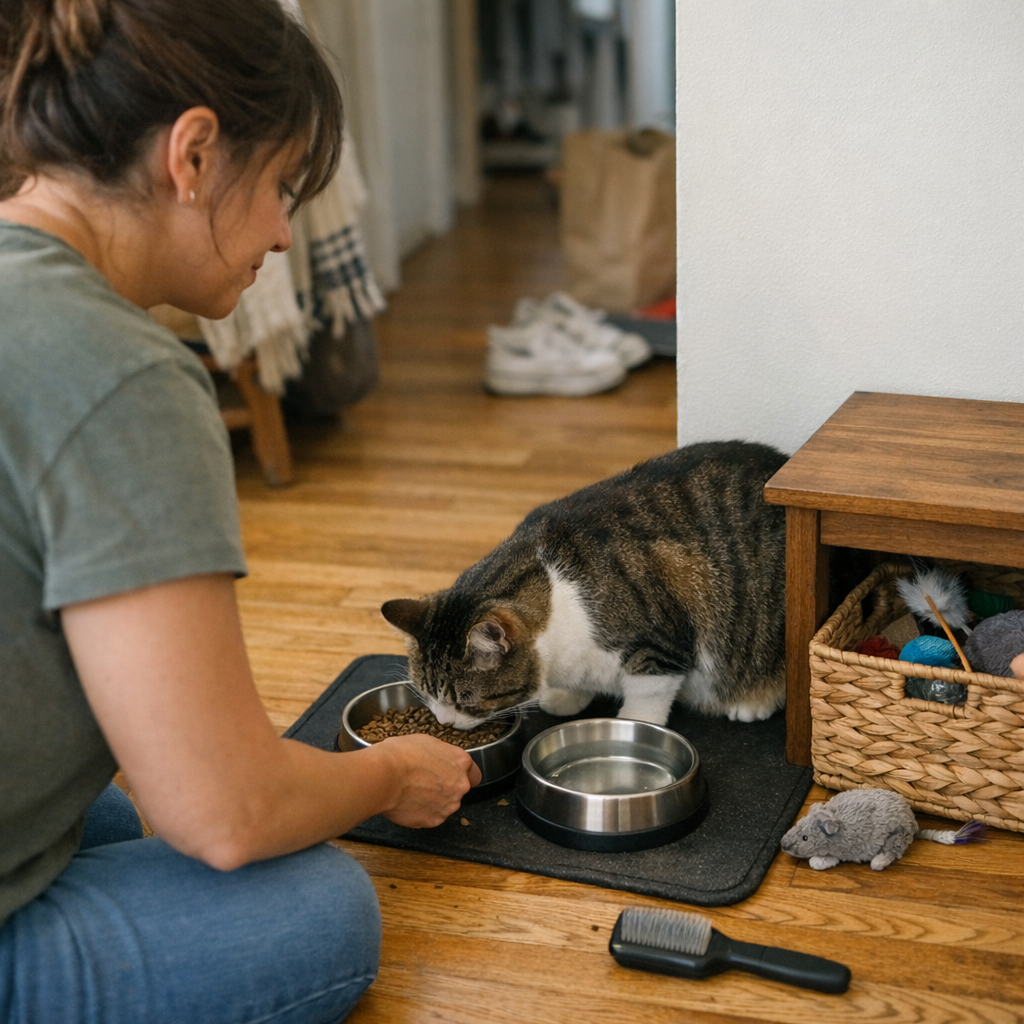
    The simplest fixes aren’t about perfect tidiness—they’re about shielding your setup against collapse when real pressure hits. For example, sliding the food bowl a bowl’s width away from the mat edge creates a spot-clean zone that stops crumbs and water from wedging straight into seams. It’s a minor change with a big payoff for next-day upkeep.

    Or, after play, sweeping toys fully under a table ledge—not just beside their basket—keeps them paw-accessible but stops toy sprawl from creeping into every high-traffic area. With repeated, low-cost adjustments like these, your area becomes not just set-and-forget, but actually able to survive daily repetition at real speed and pressure.

    Set Boundaries, Cut Repeated Work

    Clearing just enough space from clutter means fewer resets. Anchoring mats, giving zones a little extra width, and grouping tools by true reach—not just by category—lets resets shrink, not stack. The goal isn’t a showroom look, but a routine that doesn’t fall apart outside the rare quiet morning.

    Containment That Still Moves When You Do

    Stowing supplies out of the walkway—yet instantly grabbable—provides order without pushing work further away. Your cat’s zone stays open for them, but shared spaces stop being constant trip hazards. Daily maintenance gets smaller and more automatic, instead of turning upkeep into an everyday event.

    What to Watch for After Each Use

    Don’t trust last night’s tidy look to last. After each meal, play, or grooming session, take ten seconds to check the core trouble spots:

    • Are bowls drifting off the mat or blocking paths?
    • Did every toy make it back, or are some already on the move?
    • Is the mat migrating or curling toward your shared space?
    • Do brush and wipes sit where your hand expects—or where it has to dig?

    Fast, specific checks halt drift and keep the little messes from growing—eliminating the need for yet another “big” reset.

    The Payoff: Practical Trust in Your Setup

    This isn’t about perfect containment or a static system. It’s about building trust that your cat’s area will keep up—through busy days, surprise visitors, and repeat pressure—without falling apart or adding hidden work. When a space absorbs repeated use instead of spreading out tasks, you get more than an area that’s clean: you get a setup that actually keeps your home easier to live in, even when nothing is going according to plan.

    For setups and supplies that make everyday cat life genuinely easier, visit StillWhisker.

  • Smart Outdoor Storage Solutions That Keep Yard Work Quick and Easy

    Outdoor storage is rarely judged by how it looks after a weekend clean-out; it’s exposed by what happens three hurried days later. Those neat lines and empty pathways vanish the first time you rush in midweek—elbowing past a stack of gear, shoving a half-damp hose aside, or upending a box searching for pruners you just used. When setups turn every fast yard job into a sidestep-and-dodge routine, it’s clear: good storage isn’t about day-one order. It’s about surviving constant, careless, repeated use without turning into an obstacle course.

    When “Organized” Collapses Under Real Routines

    The honeymoon lasts about 48 hours. Sheds and racks look great right after installation: each tool slotted, nothing crowding the edges. But normal life doesn’t run on resets. Maybe you come home late, toss the sprayer “just for tonight,” or nudge a cooler out of the way because your hands are full. One shortcut leads to the next—a coil of rope dumped by the door, a forgotten bucket left by the mower. Suddenly, that intentional lineup becomes an awkward jumble, and resetting it means moving half the pile just to put back one thing.

    The difference shows in every rushed grab-and-go. If you can’t pull a trowel or stash shears without shifting bags or stepping over clutter, your setup is working against you. Overflow creeps outward—a bag sagging into a walkway, a tool propped against the fence, bins wedged into corners. Instead of a working zone, you’re tiptoeing through clusters of nearly-right storage, losing time and patience every lap.

    The Gap Between “Same Size” Setups

    It’s easy to think any side-yard shed or wall rack will handle the churn. But actual use tells the difference—especially when you need something buried at the bottom or need to return gear in a hurry:

    • The deep floor box: Looks generous on day one. But a week later, long-handled tools sink under coolers, sprayers wedge at odd angles, and every buried thing means a quick avalanche onto the patio. What began as organized storage gradually turns into a heap right at your feet.
    • The zone-labeled wall panel: Each handle has a marked slot, bins hold stray gloves, and every missing rake is obvious. Nothing’s hiding. Returning or grabbing something is a one-step move, not a rummage. You spot when overflow tries to take root—catching a fallen trowel or a stray bag before the pile rebuilds. It doesn’t magically hold more. It just works harder—allowing repeated, careless returns without losing the thread of order.

    This isn’t abstract. The test shows up by week’s end: in one corner, the box margin creeps outward, tools touch your ankles, and the path narrows. In the other, things slip back into place almost by accident because there are fewer puzzles and fewer opportunities to stall out the system.

    How Narrow Zones Turn into Endless Obstacles

    Side yards and patio edges promise walkable space—right up until a stray trimmer slides from its hook or a tangled extension cord sags into your feet. That “clear path” becomes choked by one folding chair, then two, then bags and loose buckets stuck wherever an open patch appeared. At first, you move things “just for the moment.” Days pass, new gear lands, and before you know it, opening the shed involves shuffling a ladder, weaving around a propped rake, or dragging a bin out by the handle because nothing slides anymore.

    In these tight passages, storage that only maximizes capacity quickly backfires. Every new item blocks the last, and even basic movement—grabbing a mower, hauling out the hose—requires a two-step shuffle. If your gear keeps blocking your own way, the setup is “full” only in the sense that it now controls your route, not your tools.

    Incremental Fixes That Actually Stick

    Resets don’t require a full rebuild. After tripping for weeks over a box that regularly spilled tools into my only side path, I hung a segmented anchor panel three inches higher on the fence. Suddenly, rain shovels finally had vertical clearance; overflow buckets could hang above the traffic line instead of blocking it. Assigning “home stretches” for each tool—so they naturally slotted into place—reduced the quiet urge to just drop things in the closest empty corner.

    The biggest shift? I stopped dreading half-resets. Returning just one lopper mid-task took a quick hook, not a balancing act. Clutter was visible before it grew—so I could catch a problem on Tuesday instead of spending every weekend on a full reset. What changed wasn’t the storage “volume”—it was the layout’s ability to handle the churn without decaying into a mess.

    When More Space Stops Helping

    More square footage won’t save a setup that can’t manage movement. If every trip through your storage means squeezing around junk or stacking gear on the floor, a bigger shed just means a bigger mess to move each time. Floor space and wall space only work when both allow fast, direct access—no detours, no silent pile-ups. Modular panels and adjust-as-you-need hooks let you nudge zones around as seasons change, instead of locking dead corners into every layout.

    The best setups expect “routine messes”—muddy boots, rained-on gloves, supply runs that leave an extra bag behind. Real improvement comes from layouts that let you spot and clear trouble early—so your walkways stay open and your gear flows through the week without demanding a restart.

    Lessons From Messy, Real-World Use

    • Make every spot obvious—even if it means leaving wall space open. The clearest setups mark lanes or color-code hooks, so missing tools are glaring and returns need zero guesswork.
    • Defend movement space. If gear slides into your steps, lift it higher or shift it to the sides—racks should protect traffic lines, not become new obstacles.
    • Don’t let “efficient stacking” trap you. Wall storage that turns into a high-rise of handles or a jigsaw of bins just speeds up the next bottleneck. Leave air between anchors for honest single-move access.
    • Resets are inevitable. But make them a one-minute fix, not a Saturday project. The strongest layouts don’t prevent all mess—they just shrink the fallout and make the reset loop nearly automatic.

    Where Real Storage Proves Itself

    No shed or rack fails on day one—they all shine with a fresh sweep. But actual routines erode the difference between a temporary lineup and a working layout. Systems that keep walking room clear and tool returns frictionless resist collapse week after week. The setups you don’t have to think about—the ones you can use half-tired, one-handed, mid-rush—are the ones worth keeping.

    Outdoor storage that matches how you actually move, drop, and retrieve gear lets you get through any chore without the space biting back. That’s the difference between storage that looks right and storage you barely notice—because it just works.

    Discover practical outdoor storage and zone systems at TidyYard

  • Why Mobile Carts Outperform Fixed Storage in Busy Workspaces

    The promise of a spotless workspace always looks good—until the friction begins. If you’ve set up a garage, workshop, or utility room with those satisfying wall shelves, crisp cabinets, or neatly stacked modular bins, you know the routine. Day one is all clear counters and smooth labels—the space radiates readiness and order. But let a normal afternoon unfold, and the cracks reveal themselves fast. The clutter that “shouldn’t” return starts creeping back, but not as chaos—this time, it’s awkward footsteps, blocked corners, and a subtle drain on your workflow every time you try to get something done.

    From Showcase to Slowdown: When “Organized” Trips You Up

    The trouble isn’t clutter—it’s how “organized” means working twice as hard just to keep the pace. On the first real project, you find yourself darting between cabinets for a drill bit, dodging the mower squeezed in for winter, then reaching around that shelf that always juts onto your path. Grab a handful of fasteners, make two trips since one never holds everything, then circle back to return what you forgot. Every extra step redraws those supposed “clean lines.” Spaces that look dialed in on day one suddenly make every movement feel boxed-in—and the overflow starts accumulating in the same tired zones every time.

    Fixed setups sell the dream of order. But after a few rounds of actual use, their real legacy is blocked walkways, double-duty movement, and corners that quietly choke up with overflow. That clear area next to the cabinet mutates into a dumping ground; the floor fills up as bins get shifted out “just for now.” Resetting after a job? Suddenly it’s a scavenger hunt, not a process—slowing you down before the next project even begins.

    The Hidden Cost of Fixed Storage: Reset After Reset

    Setup day isn’t real life—the true test is how long it takes to reset after each job. Too often, that means juggling bins to reach what matters, or abandoning tools near the door because shelving is buried behind “temporary” piles. The wall might be fully kitted out, every shelf labeled, but actually getting to what you need—and putting it away—requires constant reshuffling. You move a box to open a cabinet, nudge a bin to pull out a sander, then detour around a cart left parked in your work lane.

    Footprints get awkward and detours multiply. It’s not one big mess—it’s dozens of micro-obstacles: a half-blocked aisle, a tool left balancing on the freezer, a quick reach around a cabinet edge that you repeat for the hundredth time. What felt “efficient” at first slowly turns every 10-minute chore into an unintentional marathon—especially if two people are working at opposite ends or you suddenly have to haul larger equipment through those tight walkways.

    How a Mobile Cart Shifts Everything—Without Adding Clutter

    You don’t need more storage. You need storage that moves with the job. Roll your core tools, fasteners, and small parts onto a heavy-duty cart—and the friction that drains your setup simply stops accumulating. Instead of zigzagging across the room for each piece, you work straight through: the cart follows you, not the other way around. Wall space could look the same, but now there are no dead corners or blocked pathways, because the essentials move with you, and nothing gets parked in the way for long.

    Clutter zones start to evaporate. No more overflow quietly sprawling behind toolboxes, under benches, or beside the washer. With a mobile hub, bits and tools return to you—not to a random flat spot across the room destined for forgotten piles. Flat surfaces that were once magnets for “just for now” gear finally stay clear, because your reset can actually keep up with your workflow.

    Real Setup Scene: Getting It Done—Or Getting Stuck

    Picture a bracket installation near the garage side door. With tools locked away in fixed cabinets, you shuffle across the room for a screwdriver, realize you’re missing anchors, kneel for hardware, then stand up only to remember the drill’s back by the door. Now, one box is underfoot, your balance is off, and the job that should take 15 minutes mushrooms into a series of stop-and-go corrections. A mobile cart changes the scene: you roll up, everything stays beside you, each tool returns to the same spot, and your path never tightens. The job finishes with less back-and-forth and almost no unnecessary detour.

    Mobility Isn’t About More Stuff—it’s About Easier Returns

    The cart doesn’t just haul extras—it unravels that relentless loop between using and resetting your space. When the job’s done, everything used is already on the cart, ready for return. Start-to-finish, there’s less scatter, no forgotten piles on random shelves, and your reset is nearly automatic. The visual calm and the open movement aren’t just an illusion—they’re a real improvement you can feel at the end of the day.

    What Static Storage Still Does Well (And Where It Fails Without Backup)

    Wall cabinets still earn their keep—just not for daily flow. Stash overflow, off-season gear, and backup supplies where they’re out of the way. But if you lean on these zones for every project, cracks show fast. The system might “look finished” right after setup, yet within weeks, new piles sprout in awkward spots the layout never anticipated. Clarity starts eroding not because you lost discipline—but because static storage can’t flex with your actual work rhythm.

    Notice yourself—or anyone else—repeating the same detours: shifting a cart just to pry open a door, weaving around gear you parked “one time,” or reaching past the same cabinet edge for the third trip in a row. These repeated movements aren’t mistakes—they’re your setup signaling it’s working against you, squeezing the room tighter even when there’s technically “a place for everything.”

    Flexible Fixes: Tweaks for a Smarter, Smoother Setup

    You don’t need to ditch your shelves or rip out what works. In most setups, background storage stays—wall cabinets for backup, shelving for seasonal tools. The real shift is making your daily-use gear mobile: a cart, caddy, or rolling chest that clears the main area after every session. Even a single high-quality cart changes the flow of the whole workshop or garage, letting you put hands on what you need, right where you’re working, without crowding the floor or wall zones for good.

    Four Tweaks That Help Right Away

    • Make overflow obvious: Any bench, floor corner, or shelf that always collects extra gear? Give that stuff a mobile home, not a permanent landing pad.
    • Use your cart’s top tray for in-progress parts: Fasteners, bits, or hardware stay visible and contained—not spread across every project zone or slipping underfoot.
    • Watch your walkways: If you have to move your cart (or a bin) just to open a cabinet door or squeeze by, reconsider where things live between uses. The return route should stay as clear as your starting lane.
    • Group tools by action, not by wall: If you always grab the same drill, measuring tape, and level, keep them together on the cart—don’t split them between fixed shelves, only to cross the room every session.

    Choose Flow, Not Just “Order”—And Make Your Setup Work For You

    The best area isn’t the one that looks arranged right after a deep clean. It’s the setup that lets you work straight through, reset in moments, and keeps corners from turning into overflow traps—even when projects pile up or routines repeat. Once you’ve swapped the headache of endless return trips for the ease of open movement, the case for a mobile zone writes itself.

    For real-life setups that hold up—the kind that don’t box you in or slow you down—mobility is the missing piece. The difference isn’t abstract: it’s felt every time you avoid that repeat detour, recover precious floor space, or end a day without hunting for lost tools. Try letting your essential gear flow with your work, and see how much more usable your space becomes.

    Visit StackNest for practical storage solutions that fit the way you really work.