
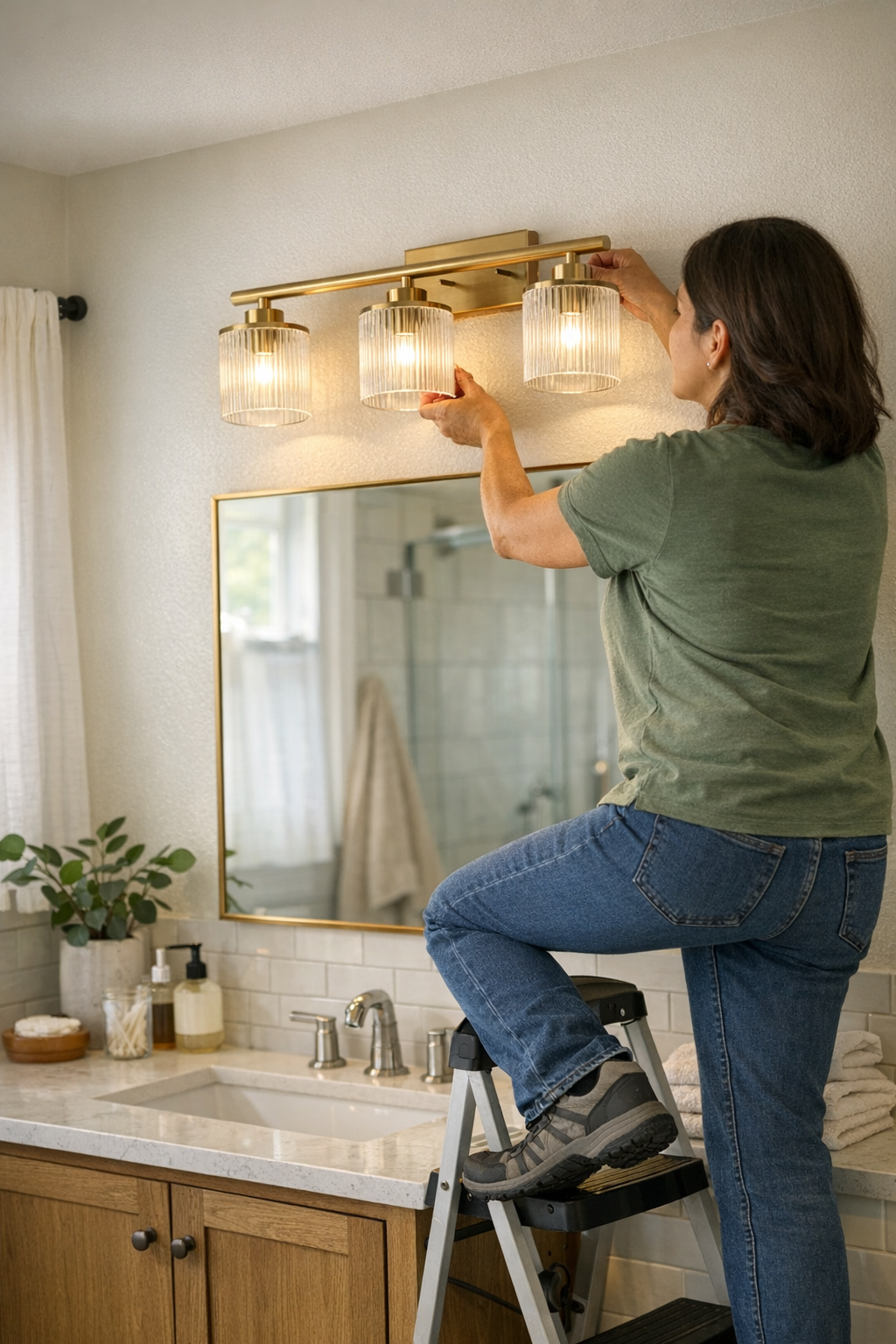
Installing a new ceiling or wall light in a hallway, stairwell, laundry, or bathroom looks simple—until a week later when you spot shadows cutting across every step, or realize you always end up twisting sideways to see yourself in the mirror. The moment you rely on unsteady footing—a sock on tile, a shaky chair—the odds of a slightly crooked fixture go up, and on hard floors or narrow turns, those half-hidden mistakes become part of your daily routine. Most people don’t notice while mounting the light, but every shadow line, glare patch, or missing edge is a signal: the way you install lighting (even something as basic as what’s on your feet) quietly replays itself, day after day, in real-world use.
Why Footing During Installation Still Matters After the Job Is Done
Lighting isn’t just about flipping the switch on day one and calling the job finished. When you install flush mounts, semi-flush ceiling fixtures, or wall lights in a space with hard flooring—think bathroom tile, stair runners, or laundry room vinyl—the support under your feet decides how steady and level your final result is. Grabbing a few seconds barefoot or in socks speeds things up, but it’s where most lingering annoyances get built in. A light that looks centered at first can end up tilting twin shadows across the hallway, or making a staircase landing less visible, all because the install slipped half an inch during a rushed, unbalanced moment. Often, you’ll only spot the result as shadows break up the path you walk every day or as the countertop edge fades on laundry day.
Picture how a wall sconce set askew while you balanced badly on wet bathroom tile can shift the glare line just enough so it crosses the mirror—and you keep dodging it by leaning left every morning. Or a flush mount in the hallway, installed from a shaky step, that leaves one side always a little too dim, no matter how bright the light itself seems. These are not dramatic failures, just recurring friction that buries itself into daily habits and movement, never quite going away.
The Repeated Friction of a Room That Isn’t Quite Right
Navigating the Same Space, Noticing New Frustrations
Fixtures don’t have to be wildly crooked to make a difference. In long hallways, a light that misses the true center throws extra shadow down one side, leaving your feet or bags to blur into the gloom. Moving through that space feels subtly wrong each time, forcing you to adjust course or slow down. Stairwells are worse: a misplaced fixture, just slightly off, can make the turn at the landing harder to spot at night—and the result is everyone in the house gets used to double-checking their step instead of moving confidently.
Mirrors, Edges, and the Cumulative Effect
Bathrooms and laundry areas throw lighting mistakes into sharp relief every day. Install a vanity light while awkwardly perched on a towel or slick tile and the mirror will glare on one side, shadow on the other—so you start unconsciously hunching closer, or flipping your posture just to avoid the bright edge. An under-cabinet fixture, slipped behind the line because you hurried on shaky footing, means the counter edge disappears every time you try to read garment tags or work late at night. These aren’t single-use frustrations: they build into routine detours and distractions, like always squinting at dials you can’t quite see or sidestepping a shadow that shouldn’t be there.
Lighting Placement: More Than Just Visual Symmetry
Lighting installation mistakes aren’t about trends or visual taste—they’re the difference between a fixture that flatters the room and one that quietly undermines its purpose. A flush mount off center by half an inch might seem trivial, but in a hallway it can plunge one wall into shadow while throwing glare back from the opposite side. In a damp bathroom, an unbalanced install can make a mirror feel unreliable every time you shave or do makeup, simply by sending the light askew. If you keep squinting after a new light goes in, or find yourself reaching across a patch of shadow to start a load of laundry, it’s not random—it’s the after-effect of poorly controlled, rushed installation under unstable footing.
Small Missteps, Big Consequences
How Subtle Errors Become Daily Annoyances
Routine traffic—kids dashing through halls, hands full of towels heading down stairs—magnifies every misstep made during install. Humid bathrooms or laundry spaces pose extra risk: a fixture mounted too quickly, without solid stance, can start to sag or drift over months, slowly twisting shadows or letting glare creep in at eye level. You rarely notice right away. Instead, the cost builds in constant, low-level inconvenience that never fully leaves the routine—a dark patch that steals outline from a stair, a glare line that doubles each time the light hits the mirror just wrong.
The frustration isn’t in the type of fixture or the bulb, but in whether light consistently lands where you need it—across months of real use, not just the first impression.
Real Example: Laundry Room Relief from a 30-Second Fix
Moving a ceiling light squarely over a cabinet run—taking thirty seconds to pull on shoes first—fixed a problem that had dragged on for months: the washer’s controls no longer vanished in shadow, and reaching for the “start” button became easy and automatic again. No dramatic makeover, just relief from the old loop of squinting and second-guessing under a fixture that had always looked slightly off for want of solid footing during installation.
The Logic of Supportive Shoes: It’s About Control, Not Formality
Wearing supportive, closed shoes for indoor installs seems unnecessary—until the first time you try to align a flush or semi-flush light above a glossy tile floor or narrow stair tread. Shoes turn “good enough” into actually level, giving hands and arms the steadiness needed to hold fixtures in place while marking or fixing. The result is not just fewer slips on ladders, but fewer surprises as months of humidity or movement pass: straight lines stay straight, lights stay level, and you stop wasting time fixing phantom shadows or glare streaks that should have been solved on install day.
Quick Tips for Reaching Real Lighting Clarity
- Wear supportive shoes for every install—even the “fast” ones. You’ll move steadier and keep flush/sconce fixtures better aligned, especially on hard or slick floors.
- Check alignment from real-use angles, not just from across the room. Walk the hallway, stand at the mirror, or lean over the work counter, making sure the light lands cleanly from each spot you’ll actually use.
- Take extra care in areas with hard flooring or regular humidity. Poor footing in these spots builds future problems, from new shadow patches to a fixture that droops over time.
When the Installation Matters Most: Everyday Lighting Scenes
Hallways with one wall faded into darkness, mirrors that force you to dodge a glare slice, steps left unsure at the stair landing—these moments show whether a careful install actually solved the space, not just brightened it. Real relief comes when you cross the room without squinting, turn a corner with full confidence in your footing, or finally find the laundry button in plain sight instead of fumbling in shadow.
Properly installed lighting should disappear into your routine, supporting movement and vision without demanding attention. If a fixture constantly reminds you of its presence—through glare, shadow imbalance, or unpredictably lit corners—it’s usually not a hardware problem, but a signal that footing, alignments, and placement were never fully dialed in. Those small details in the install set up months—sometimes years—of either seamless use or constant workaround. A few minutes spent on stable footing can spare you a lifetime of minor daily irritation.