Blog

  • How Wall Lighting Transforms Dim Corners Into Functional Spaces

    Most “finished” lighting setups ignore the one thing that costs you every single day: hidden corners and dim edges where clutter builds and routines break down. You step back after installing a ceiling light or desk lamp—everything looks resolved from a distance. But by Wednesday, the far side of a desk starts collecting charging cables and lost adapters. Pens and receipts vanish behind shadowed dividers. The further you reach, the more you bump into the weak spots: edges nobody really sees, but everyone ends up fighting. If your lighting only shines from above or from a single direction, these frustrating dead zones become part of your daily setup whether you realize it or not.

    When overhead light isn’t enough: edges slip out of sight

    Desk edges and room corners hide the first symptoms. Overhead lighting pours brightness onto the middle of the space, making the overall room look clear—until you have to plug in a charger or spot a cord that’s halfway behind a monitor stand. The back edge of a desk or a wall-meets-surface gap gets just dim enough to blend cables, power adapters, and misplaced notes into a single untraceable zone. Instead of sorting, most people end up shoving what they’re not using closer to the hidden side, reserving the visible spot for whatever’s urgent. In busy setups, these “blind spots” take over faster than you’d ever admit.

    Clutter builds where light does not reach

    That freshly cleared corner turns into a dumping ground by Thursday—not from neglect, but from lighting structure. If seeing what’s there means bending sideways or dragging the whole lamp across your workspace, most small things just stay out of sight, compounding the next day’s frustration. The more people use a room, the more the “out of sight” edge becomes a communal dead zone nobody really claims. A so-called tidy space quickly crumbles under the pressure of everything that’s too annoying to deal with after dark.

    Wall and bracket lights: making corners actually usable

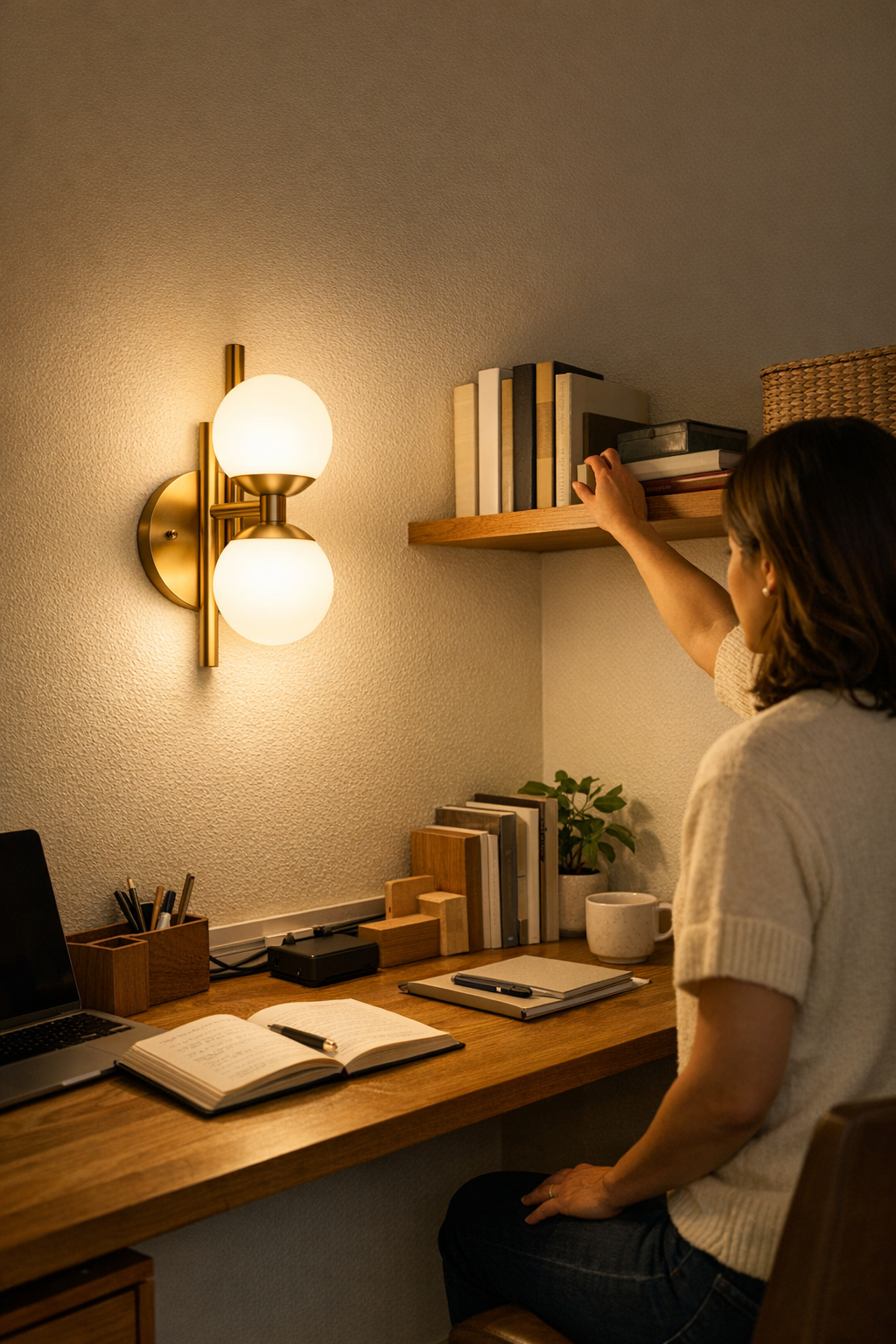
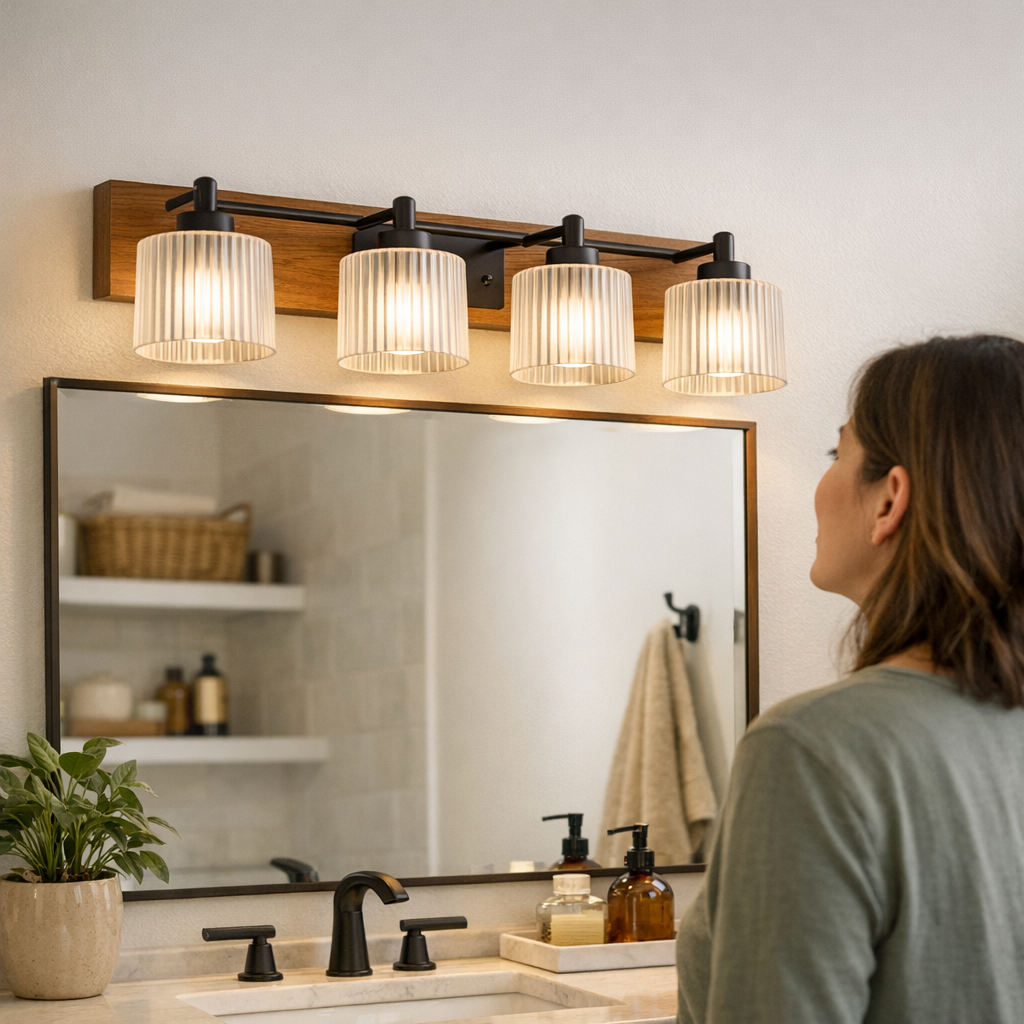
    Lighting that cuts across a surface from the side does what top-down fixtures can’t: it puts the problem area directly in view. Well-placed wall or bracketed lights break up the shadows left by ceiling fixtures and reach into the exact zones that pile up clutter. Now, the back third of a desk—the spot where books lean, cables rest, or devices charge—becomes part of your usable workspace. The difference is instant: the same shelf that used to eat phone chargers now holds them in plain sight. It’s not about brightness alone, but about lighting the actual edge where the trouble happens.

    Seeing the difference in daily routines

    The real test for a corner light isn’t its effect in the first hour—it’s what you stop tripping over after a week. You notice the change the moment you plug a cord in without shifting your chair, or snag that stylus that would’ve disappeared under a shallow shadow the day before. Kitchens with “looks-minimal” under-cabinet lights may still leave coffee mugs or power strips in dim twilight if the angle is wrong. Workspaces with mismatched lamp heights force you to play a daily game of “avoid the glare” or “where is that cable again?” The best-placed wall fixture, aimed to sweep just over the needed edge and low enough to cut through the gloom, solves the right problem without being showy.

    Common setup misses: flush looks, hidden problems

    Sleek ceiling panels and ultra-flush cabinet lights sell the promise of a spotless edge, but their pooled light fades right where clutter and cables take over. Even a nice sconce, unthinkingly pushed too high, just joins the ambient brightness without actually helping at eye-level. Total disregard for cable runs brings a new layer of visual drag—lines breaking the wall, cords looping across pathways, or chargers drooping off a work edge, all under the spotlight of your latest “upgrade.”

    It’s the missed trouble spots—where wall meets counter, or where bracket arms block tidy cable drops—that sabotage what looked perfect in the install photos. For example: you clip a new task lamp under a shelf, loving the even wash—until you reach for a device on the edge and realize your own hand casts a shadow, moving the problem but never erasing it.

    Small shifts, big changes: getting the setup right

    The simplest win? Mount an adjustable wall light about 35 centimeters out from a room corner, angled just enough to skim both wall and work surface. Suddenly the “clutter edge” stays visible instead of dissolving into the background. Cable channels, color-matched to your wall or light base and running tight alongside, keep every cord calm and in check—so you’re no longer stuck dragging plugs in and out, or wincing at mismatched cable clutter every morning. Even low-use corners start taking on the everyday load: sorting, charging, stashing, cleaning. The right light keeps function sticking longer than any initial attempt at tidiness ever could.

    Don’t ignore cable management

    The quickest way to ruin a good lighting upgrade is to skip cable structure. Loose, tangled, or mismatched cables turn a $100 wall light into a new annoyance within a week: cords run across walkways, snarl under desks, or make plug-in swaps a multi-step chore. A simple slim-profile channel, matched to the wall or bracket, keeps cords both visible enough for safety and invisible enough for calm, breaking the usual cycle of “move this cord again” and letting the new setup actually last.

    Recognizing real improvement: form versus function

    Looks finished isn’t the same as lives finished. Any lighting change feels like an upgrade on installation day—glossy surfaces, tucked wires, every bulb on for the after shot. But reality shows up next week: the one usable patch is still dead center, while all the edges remain places to avoid. Real progress shows when routines get easier—less reaching to find that lost charger, fewer near-unplugs of your laptop, less time untangling beneath the surface. The right support isn’t just sharp for guests; it makes your daily movements waste less brain power and motion every time you return.

    One small tip: audit corners after a week

    Shut off all but the newest light, and actually use the space. Are there things you still can’t see? Cords that snag your feet, objects that hide along the back row of a desk, positions you have to twist to use? This is the signal to adjust—shift a bracket, re-run a cable, or drop a light slightly. Fix the pain points once, and your setup will finally serve what you do every day, not just look better in the evening.

    Choosing lighting setups that support daily life, not just appearances

    In the end, the right angled fixture or slim cable bracket isn’t about showing off—it’s about making every edge stay visible, every work line useable, and every cord less of a future mess. That’s less wasted energy, less daily cleanup, and fewer little annoyances stacking up until the room feels unworkable. Good lighting support fades into the background only because it’s done its job: real, repeatable function that never takes days off or forces you to think about what’s missing next.

    Find practical lighting, smart cable solutions, and real setup support at LightSupport.

  • Why Weak Hinges Cause Entry Cabinets to Fail Daily Use

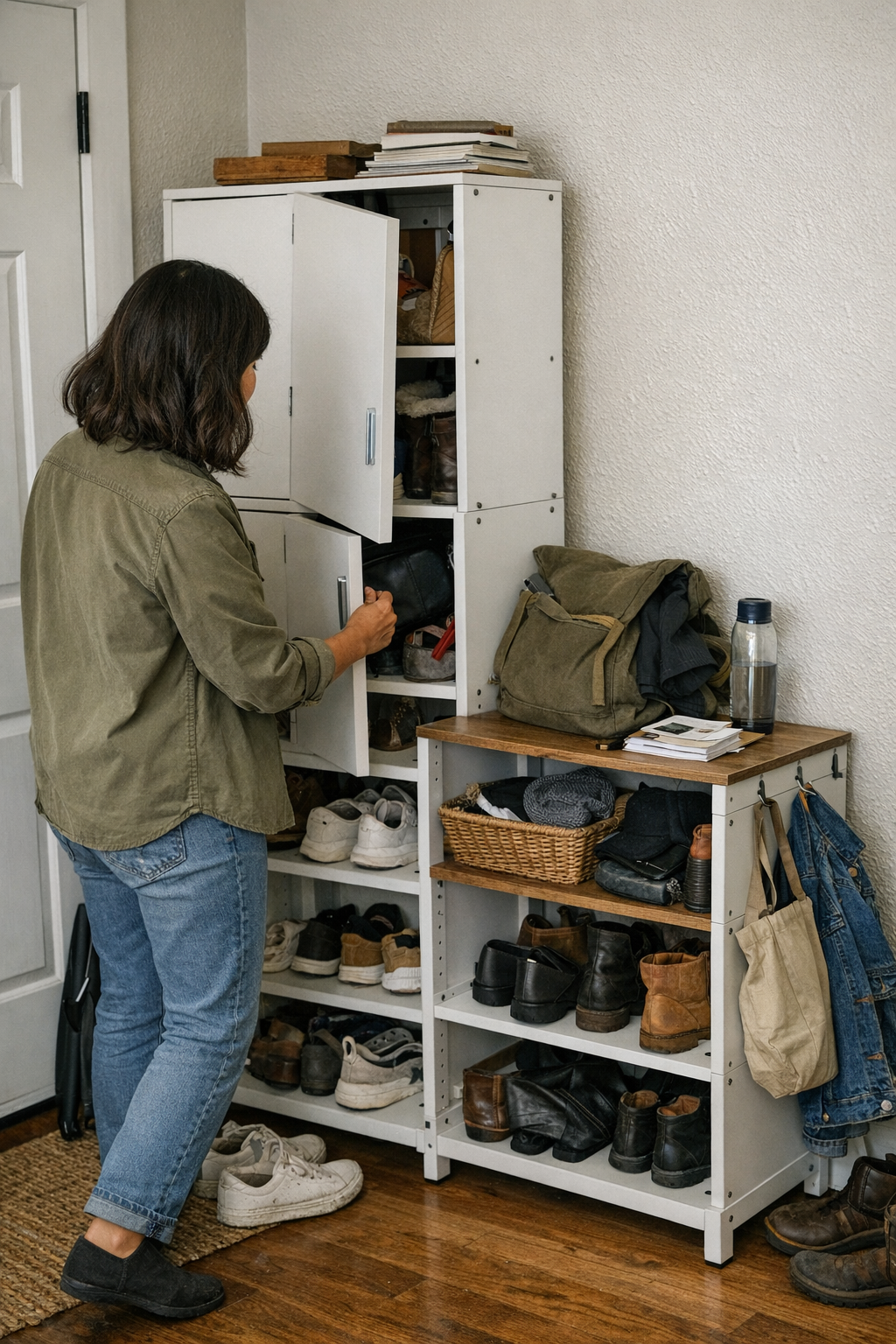
    The moment a hinge begins to slip, the whole entryway changes. Suddenly, what was meant to bring order—cabinet, bench, or shoe unit—turns into the kind of problem you can’t ignore: shoes jammed at an angle, cabinet doors needing a shove, and bags balancing on a surface that’s no longer clear. These small failures build up fast in a transition zone, where routines depend on everything working at a glance. The right hardware quietly holds routines together; the wrong detail lets clutter sneak back in every time you step through the door.

    When Entry Storage Breaks Your Routine Instead of Helping It

    After a wet weekday afternoon, the threshold tells the truth: mud collecting around shoes that won’t quite fit back under a crooked cabinet door, arms full and nowhere to land the shopping because the top surface is already crowded with overflow. Weak hinges don’t flare up instantly, but after a week of normal in-and-out, their effects multiply. Each person’s pass leaves the door hanging a bit lower, the gap opening a little wider, routines tripping on a slow failure you usually don’t spot until it starts costing time. The original storage plan—stash, move, repeat—collapses into friction: pushing against a door that sticks, rerouting around shoes that won’t return, giving up and tossing bags on top when the door’s off and the interior’s blocked. Instead of the cabinet collecting clutter, it’s fueling it, right at the entry.

    How Small Hardware Flaws Create Daily Bottlenecks

    You don’t notice the drift immediately—but in transition spaces, delay equals spread: The door that used to swing closes now waits for a hard nudge. The top corner sags, shifting the alignment away from your direct hand. Shoes once invisible behind a neat door begin spilling out, kicked forward by each new attempt to force them back. The unit was meant to absorb the daily scramble, but now every access creates a new point of friction: a nick in the door, a backpack wedged half-in. Trying to use a bench for sitting just pushes more overflow onto the adjacent floor. Clutter migrates: one loose hinge turns a single pile into a sprawl, claiming both the surface and the pathway you need clear for re-entry.

    This isn’t about how organized you are. Even slim, wall-mounted units look crisp at first but begin to warp under repeated handling if their hinges can’t absorb the real pressure of daily routines. Cabinet lines drift, openings miss the place your foot actually lands, and reach-in access becomes two-handed work. The result: every walk-through needs an extra step, an extra pause—until you start avoiding the cabinet altogether.

    Real-Life Scenarios: Where Weak Hinges Break Down the System

    It’s the 8:00 AM push—everyone grabs bags and heads out. The entry cabinet, once the solution, now drags at the threshold: doors that don’t shut flush, a shoe row always poking into the path, backpacks teetering on the edge because the gap is off-center. The walkway, built for clean flow, bottlenecks. Each fix—shoving shoes inside, propping the door—works for a day, then resets to chaos. The cabinet was meant to hide the mess, but in practice, its flawed access means mess floods back out, undoing yesterday’s reset. What looks neat for an hour can’t hold up to real, repeated use.

    Accumulating Friction: Why Small Access Issues Multiply

    Weak hinges don’t just misalign doors—they reroute routines. Every time closing the cabinet becomes a hassle, you leave more outside. Shoes stick out and bring in mud. Bags hang off edges and get left on the floor. The “I’ll fix it later” pile grows, spreading from the top of the unit to a spillover zone at your feet. The intended fix—streamlined entry, gear landing where it belongs—gets replaced by work-arounds: shifting items to make space you no longer really have. Resetting the cabinet, even on a good day, starts to feel like a full chore rather than a quick pass-through.

    Slowly, the cabinet becomes less of a threshold buffer and more of a recurring burden. The access you designed for five seconds now costs you half a minute and extra frustration—multiple times a day. Misalignment grows, routines delay, and the cycle restarts after every attempt to reclaim the zone.

    Threshold Pressure: When the Walkway Gets Blocked

    In tight thresholds—narrow entries, garage landings, backdoor slips—every extra step matters. A cabinet door that catches, or a bench edge that drifts into the walking line, tightens the space until even a small crowd turns into congestion. Most won’t bother to adjust the hardware midweek, so overflow migrates right to the edge: shoes creeping into the hall, bags flaring sideways, shouts to “clear the entry” repeating with every delayed reset. After a while, storage that doesn’t store well is worse than none—it disrupts the core transition path itself.

    What Actually Changes with Sturdy Hinges and Reliable Placement

    Reinforcing a cabinet’s hinges or upgrading to hardware designed for daily stress isn’t just a technical fix—it’s a reset of how the space works. With solid steel hinges and a cabinet set about 5 centimeters off the wall, the door swings fully open and closes flush every time, freeing access and allowing shoes or bags to return in one move. Overflow stops crowding the top—now a true drop spot, not permanent storage. The difference isn’t visible from across the room, but in use, resets last: clutter stops accumulating, and the walking line stays open, no matter how many cycles the space sees. Routines become automatic rather than interrupted by the cabinet itself.

    Tip: Read the Warning Signs Early

    If your cabinet door hesitates, needs nudging, or swings back open a day after resetting, don’t wait. That’s the transition-space equivalent of a check engine light: upgrade or reinforce hinges immediately, or you’ll see a simple drift turn into a daily cleanup spiral. The payoff isn’t just neater lines—it’s a transition zone that absorbs pressure and keeps routines intact, even as season and household demands shift.

    Quick Checks: Is Your Cabinet Handling Repeated Use?

    If you’re not sure where the breakdown is happening, look for these practical signals:

    • Doors that resist closing, ask for a shove, or misalign after a week point to hinge fatigue.
    • A sagging sightline, even slight, means screws are pulling or hinges are loosening—check them immediately.
    • If shoes and bags spread farther across the floor week by week, your “return flow” is blocked by poor access.

    Minimal reinforcement sometimes helps for a while, but if you’re resetting or realigning the cabinet more than you’re actually storing things inside, the friction is here to stay. Entry storage built for daily threshold use—solid hinges, robust frames, intentional placement—keeps the flow smooth and makes organization stick longer between resets.

    The Difference: A Setup That Resets Itself

    In everyday use, hardware and structure decide whether storage is background support or a fresh source of frustration. Reliable hinges and purposeful placement mean you only need one gesture to return shoes or bags—and seldom need to think about the cabinet at all. When your setup absorbs the wear, routines remain stable, and you reclaim time and clarity at the door, instead of fighting daily resets that fail. The whole point of transition-space storage is to keep movement free and resets minimal. If you’re spending more time wrestling the cabinet than passing through, it’s time to rethink what counts as “organized.”

    See practical transition-space storage at Betweenry

  • Why Everyday Storage Setups Fail and How Small Changes Improve Use

    Everything looks organized—right up until you actually need something. Maybe it’s your hallway closet, freshly arranged after a marathon cleaning session. Every shelf lines up with labeled bins, towels stacked with crisp edges, every basket in its place. The first day, it feels “fixed.” But the real test isn’t how your setup looks when untouched—it’s what happens at 7AM, hands full, digging for socks, or three weeks later, as life pushes neatness out of shape. Suddenly you’re nudging over a pile to reach one glove, cramming in another sweatshirt, or realizing there’s no easy way to get anything without sending the whole stack sideways. That’s when “organized” doesn’t feel practical anymore—and storage starts working against you.

    Where Order Breaks Down: Recognizing Real-Life Storage Friction

    The first signs aren’t dramatic. They’re subtle tugs and slow jams. You go to pull a single t-shirt, but half the pile comes with it. That perfectly lined pantry shelf? The cans upfront hide what you actually use, and now you’re routinely sliding items aside just to reach the oatmeal in the back. Baskets that once glided out now stick; mystery objects lurk deep in corners. It isn’t chaos—it’s friction, added up in small, daily moments. Every little obstacle steals a bit of energy or speed, especially when you’re rushing, hands full, just trying to get out the door or put groceries away fast.

    When Use Exposes the Gaps in “Organization”

    A setup can look flawless but fight you every day. Take the matching bins in a closet: promising order, but real life quickly bends the rules. The sock drawer on Wednesday morning is a swirling jumble, not a military row of pairs. The bottom “catch-all” basket? It devours hats, chargers, stray mittens—everything except what you’re looking for. In the kitchen, grabbing crackers means shifting three things just to see what’s behind. These aren’t failures of effort; they reveal where the arrangement ignores how you actually reach, see, and reset in the blur of daily routines.

    Hallway Closets: Where Small Friction Grows

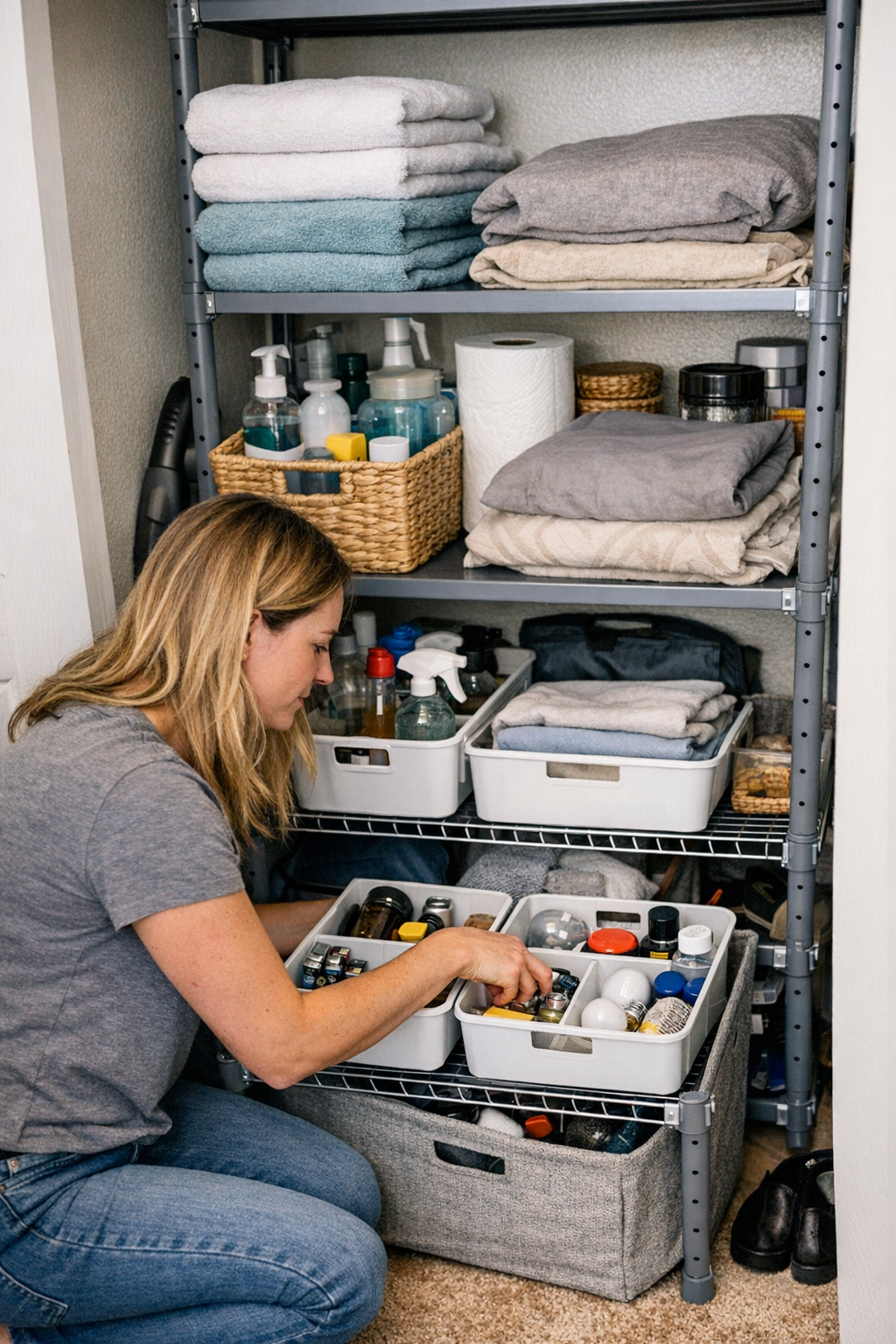
    Visualize your hallway closet after a fresh reset: towels stacked, sheets folded tight, cleaning supplies lined up. Weeks pass. Pulling one towel tips the rest into a lopsided heap. Sheets slip into the bathmat pile. The “once-a-year” bin at the bottom becomes a graveyard for receipts, old phone cords, loose batteries—anything without a clear home. At first you ignore the stray cords; by the next search for lightbulbs, the bin’s overflowing and everything gets tangled. What was spare space now batters back with clutter and confusion, spreading with every missed reset.

    Category Drift: How Storage Loses Focus

    Zones meant for one purpose quietly become dumping grounds. That deep bin for scarves gains shopping bags; a shelf once for towels carries backpacks and baseball gloves. There’s no announcement—it just shifts week by week, as quick fixes become normal. Suddenly you’re hunting in six places for something that used to belong in one. It’s less “mess” than a slow fade: the system fails to match how your household actually uses each zone, and things lose their place in the shuffle.

    How Small Changes Restore Clarity and Access

    You don’t need a full overhaul. Notice one recurring pain point: a bin where nothing stays sorted, a shelf where everything gets stacked and unstacked daily. Replace that deep bin with two shallow trays—now batteries and bulbs go in one, cords and polish in the other. Suddenly you reach in and find what you need in a single motion. There’s no rummaging, no excavating, no reshuffling six items to get one. And when it’s time to reset, the structure holds: things stay separated, stacks don’t collapse, overflow doesn’t get hidden and forgotten.

    The Cost of Unseen Friction

    Micro-hurdles add up without you noticing. If you keep pushing socks back into line, if your “temporary” overflow bin never empties, your storage isn’t keeping pace with real use. Quick resets become half-hour chores. Clutter multiplies in hidden pockets, and every retrieval means wrestling with the setup to make it work. It’s not about needing expensive organizers—it’s about honest matching of system to habit, so putting things away stops being extra work.

    How to Spot When Storage No Longer Works

    Watch for these clues: items block each other, stacks constantly topple, bins swing from empty to overflowing overnight. Old order gets buried—jeans lean, socks scatter, random tools collect at the edges. If getting dressed or making a snack means shoving aside yesterday’s solution, the friction is baked into the structure itself.

    Easy Fixes: Tweaks That Last

    New dividers or different sized bins are often all it takes. Lift daily-use items within easy reach; split “everyday” from “occasionally” so trips in and out don’t disrupt everything in sight. If you’re always unstacking-picking-restacking, break the pattern—one deep basket can become two clear, accessible compartments. Suddenly resets are fast and stress stays low, even as weeks pass.

    Storage That Holds Up to Real Life

    It’s easy to feel organized when the shelves are half empty. The real value is what happens after dozens of uses: whether you can still grab something in one motion, whether piles hold shape, whether “overflow” stays contained. When the setup matches real patterns—keeps visibility, keeps categories, doesn’t create more work than it saves—you stop dreading resets. Your space feels calm, not because it’s perfect, but because it’s built for the way you actually live, not just the way you want it to look on day one.

    Shop ClosetWorks storage solutions

  • Recognizing Hidden Friction in Your Dog’s Daily Care Routine

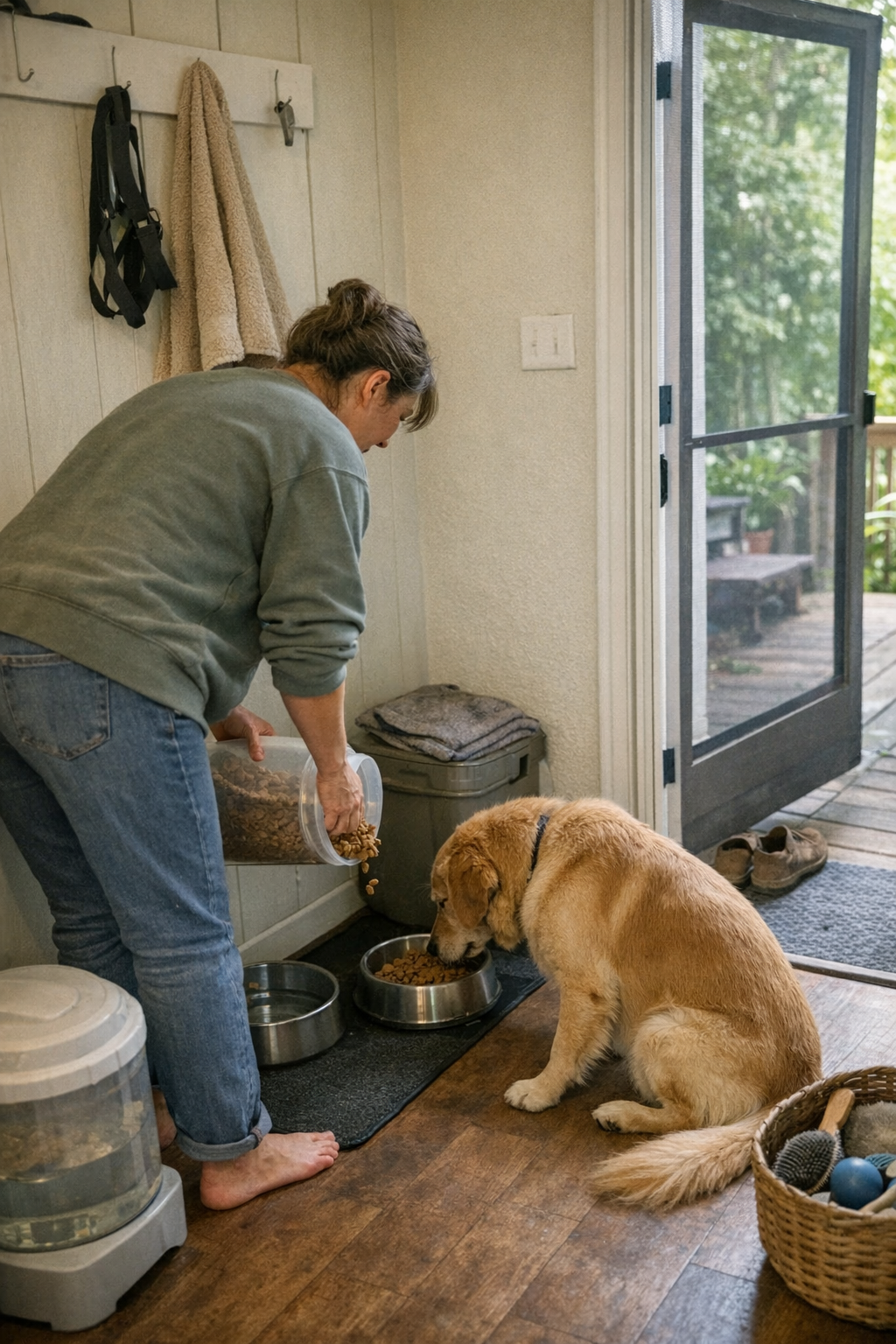
    Daily pet care breaks down faster than you think. Bowls start out lined up and towels seem easy to grab, but it only takes a week before the water bowl sits blocked by stray bags or a brush ends up lost behind stacked bins. Ever realized you’re rooting through a kitchen shelf just to find the one scoop you need while your dog waits, eyes tracking every delay? These aren’t accidents—they’re signs that your feeding, cleanup, and storage setup is quietly working against you. Miss one routine reset, and what used to take ten seconds suddenly drags into a mini scavenger hunt, eating up time, testing patience—both yours and your pet’s—and leaving routines less calm than you planned. CalmPetSupply is built around this practical reality: a setup that works is one that survives daily repetition, not just photo day.

    How Slow-Building Friction Interrupts Daily Pet Care

    Friction in pet-care routines shows up as a string of missed beats—not dramatic, but wearing. Your food scoop ends up wedged behind cleaner bottles. The towel for muddy paws is tossed into the laundry and never returned. Your dog might hover near the door longer, uncertain whether the next step means a pause or a wait. After just a few days, routines that felt automatic get stickier, forcing small but steady interruptions that multiply as the week goes on. The reset you didn’t do yesterday becomes the snag you deal with today.

    Repeated Use Scenes: Where Care Stalls

    The weak points show up when you’re short on time—grabbing for the food bin, only to push aside storage boxes and kitchen odds to get to the scoop buried at the back. You notice crust around the water bowl because yesterday’s wipe-down got postponed, so today’s cleaning takes more effort. After a muddy walk, the towel’s missing from its hook, so your dog stands, paws on the threshold, shifting weight while you track it down. If daily-use gear is tucked away “neatly” but not within reach, each step of care spawns more reshuffling, more retracing—slowing routines, adding friction you don’t want.

    Fixing one mess sometimes creates a fresh snag. That mat under the water bowl? Great for catching drips, useless if placed where it blocks the brush you need after feeding. Storing toys in a basket keeps the floor clear, but if it invades the corner used for late-night check-ins, you trade visible clutter for a bottleneck at bedtime. Arranging pet supplies to keep things looking clean can hide new interruptions just waiting for the next rush.

    Acceptable Today, Tiring Tomorrow: How Routines Slip

    A misplaced refill bottle goes unnoticed at first. A treat jar hidden behind bulk food feels like “no big deal.” But after a few cycles, you’re double-handling everything—clearing, fetching, re-shelving—just to get through basic feeding or after-walk wipes. Clutter shifts from visible mess to invisible slow-downs: one stubborn towel repeatedly vanishing for laundry, one scoop never put away where you expect it. These small lapses grind down what should be simple flow, turning care into a repeating drag.

    Every time you refill, clean, or go to grab a core item and end up making an extra trip, you reinforce tiny barriers your setup should’ve erased. Seconds lost to searching add up. Calm routines turn choppy, less predictable, and both you and your pet notice—the energy difference creeps in long before anything looks truly out of order.

    The Difference Between Tidy Looks and True Flow

    A pet area can look spotless and still stall you out. That row of brushes by the door? Not much comfort when you’re carrying groceries, juggling a leash, and forced to dig for the right one with your elbow. The kitchen may look neat, but if the food bin is tucked in the lowest, furthest cabinet, you spend each meal fishing for basics while your dog circles, nose to the floor. Real smoothness isn’t about clean lines; it’s about grabbing what you need, where you need it, without a stop-and-search routine.

    The warning signs are clear if you notice them—pauses at mealtime, slow walks to the water bowl, little detours made on autopilot just to complete one “easy” chore. These are your system waving a flag: what looks managed isn’t actually working smoothly when tested for the fourth, tenth, or thirtieth time.

    Practical Fixes: Adjusting Your Setup for Daily Ease

    The most effective changes target the spots where friction starts. A towel hook installed on the path from outside to in saves you the step of searching and gets muddy paws handled before they ever land on your rug. Keeping refill bottles and food bins grouped together—right where you prep, not wherever they fit—eliminates the detours that drain energy on busy days. Wiping the water bowl as you refill cuts down on the heavier scrub needed after days of buildup.

    Make sure towels, bowls, treats, and basic grooming tools are within arm’s reach of their action spot. Don’t let essentials migrate behind seasonal clutter or “backup” gear you barely use. When you adjust these small details, daily routines speed up, reset work drops off, and your dog or cat responds—faster, steadier, more predictably. You notice fewer snags at feeding, after walks, during late-night checks; what’s supposed to be quick actually stays quick, instead of stacking small setbacks.

    Signs You Need a Pet Care Reset

    If you catch yourself pausing to search, rerouting between kitchen, closet, and door, or watching your pet hesitate at the same spot every morning, pay attention. These are hints your system is slipping—pet routines testing weak links that get worse with each cycle. You don’t need a disaster for friction to pull energy out of both you and your pet.

    Even organized routines unravel when hidden gaps pile up. Consistent setups eliminate these slow leaks—less by looking perfect, more by delivering a repeatable, low-effort reset every time. When the basics are actually easy to reach and return, daily care holds together with less grind and more calm across the day.

    The trick: View your setup honestly, the way it works under pressure, not just on a freshly cleaned Saturday. Adjust sooner, not just when something finally breaks down. A home that stays calm in both appearance and action is one you and your pet actually want to come back to, again and again.

    Find practical tools and everyday fixes for these routine gaps at CalmPetSupply.

  • How a Flexible Carry-On Setup Improves Travel Efficiency and Access

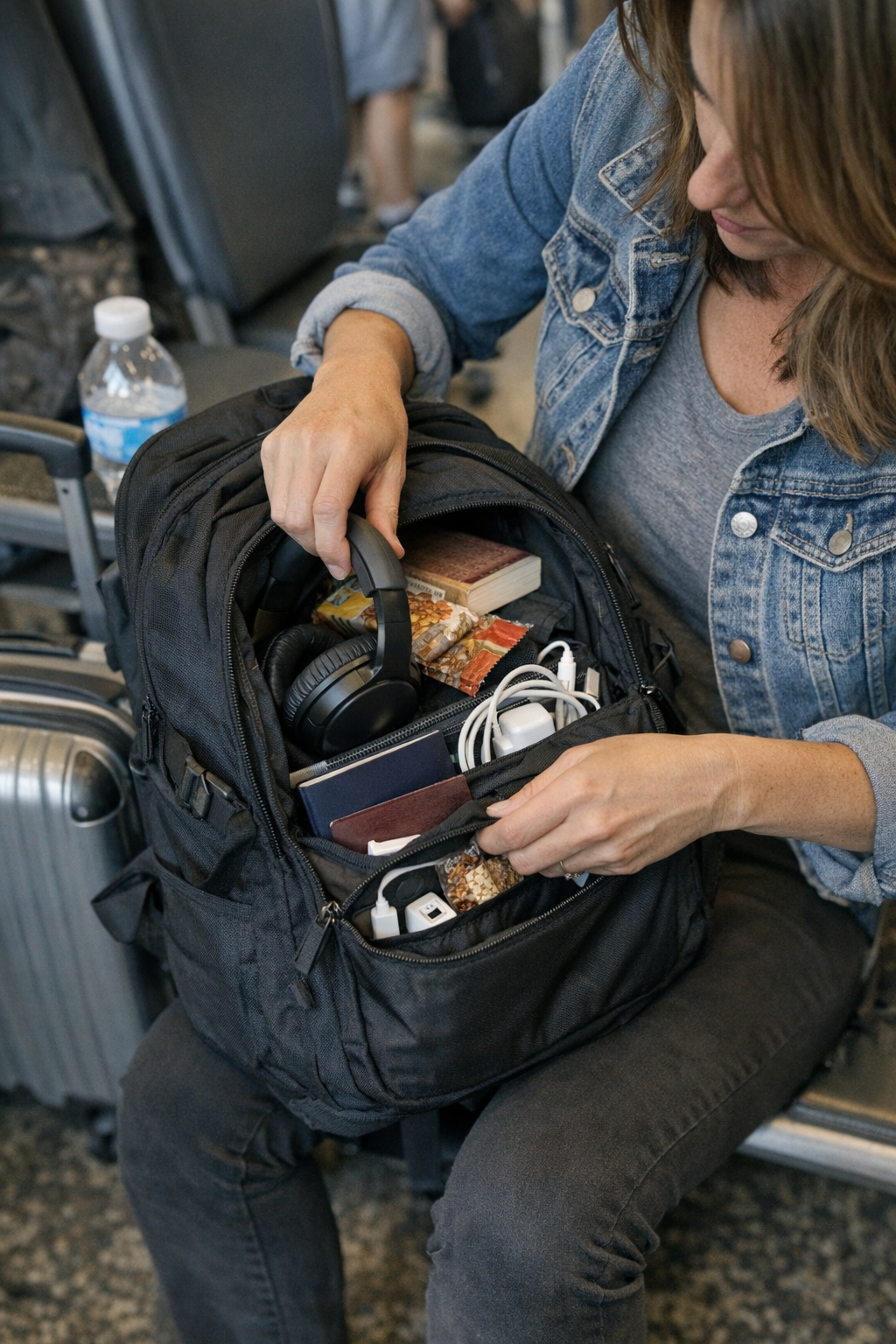
    The gap between a carefully zipped carry-on at home and the chaos inside after multiple airport stops is bigger than most travelers expect. Once the first security check or boarding call hits, the friction begins—not just at a single checkpoint but with every repeated reach for your charger, passport, or snack in real airport motion. The bag that seemed “ready” in your kitchen often fails after only a few rounds of interrupted access, blocked outer pockets, or buried essentials.

    When “Organized” Turns Against You

    Perfect packing almost always breaks down at the first unpredictable reach. That clean grid you built at home collapses when the boarding queue tightens or your outer pocket jams from overstuffing. Two pouches slide on top of each other—the charger covers your passport, and now even the first ID check feels like a puzzle. Each step toward being “organized” starts making you slower: every return knocks the layout just enough off-balance that you lose track of where essentials actually are.

    This is the headache most travelers never see coming. Your bag keeps looking neat each time you repack in a rush. But inside, each movement—another dig, another awkward shift—reminds you how much function you’ve given up to maintain that “photogenic” order for just a single snapshot.

    The Build-Up of Small Malfunctions

    Travel trouble rarely shows up as one major breakdown. Instead, it’s the drain of micro-frustrations: you breeze through security, toss your documents back, and minutes later your passport is buried beneath headphones and snack wrappers you just crammed away. The single-sleeve organizer that kept cables sorted in your living room now forces you to move three items to grab one. Those same tech sleeves—tight and clean at departure—slip into chaos after two rushed returns in the boarding area.

    The repetition piles up. Dig for gum and end up dragging out your Kindle during a gate delay. Store hand sanitizer “neatly” but spend an extra twenty seconds unearthing it from a deep, packed toiletry pouch. Overhead-bin grabs become a scramble—one stuck pouch, a shifted document case, headphones tangled behind your backup battery. Each tiny inefficiency stacks. Not dramatic, but enough to slow you down where every second matters: at boarding, in the aisle, or just trying to find your seat with one hand already full.

    Where Packing Logic Actually Breaks Down

    The telltale signs aren’t in that first hour—they show during transitions when your flow is tested. After a second ID check, you reach for headphones. Instead, your fingers hit a paperback jammed by a shifting pouch. That half-zipped return at security now blocks every subsequent reach. The weakest point isn’t one bad move—it’s the slow chain of micro-blocks as every retrieval becomes not just slower, but less certain, more disruptive to everyone behind you in line.

    Every “smart” setup begins to slide into confusion: pouches for tech get crammed with leftover receipts, toiletries slide to the bottom where they were never meant to live, and the neat divisions you trusted at home disappear under pressure. The categories that made sense in a quiet room stop working when your hands are full, the clock is running, and you just need to clear the aisle—now.

    A Better Standard: Reach First, Order Second

    If you want your carry-on to actually hold up, stop packing by category and start by repeated need. Essentials you grab again and again—passport, boarding passes, chargers, snacks, wipes—should dominate your main, quick-access zippered pocket. Not the squarest or “cleanest” spot, but the path you can work with one hand mid-movement. That single zipper becomes the nerve center at each pain point: security trays, gate calls, seat settling, bin grabs.

    One adjustment you’ll notice instantly: less rummaging, fewer silent curses during every transit moment. By splitting high-frequency items away from deep-storage ones, you stop re-sorting the whole bag just to free your passport or charging cable at a pinch point. Suddenly, the bag feels like it’s working with your routine instead of against it—quietly absorbing stress instead of manufacturing more.

    Spotting the Wrong Setup—Before It Costs You Again

    • Opening two or three pouches because the right item is always behind something else
    • Digging deeper each time for the same essential—ID or snacks keep sinking out of reach
    • A “tidy” bag that interrupts you every time you actually try to use it on the move
    • Every attempted compartment “reset” is harder and slower as your trip wears on
    • Outer pockets that look slick but seize up in lines, under bins, or squeezing onto your seat

    The same structure that wins at home creates new interruptions on the go. Your setup’s so-called “rigidity” keeps you stuck repeating awkward motions hour after hour, obstacle after avoidable obstacle.

    Packing for Flow, Not Just Storage

    The aim isn’t to create a static, impressive “once-only” display. Real travel demands a bag that forgives—accepts rushed returns and absorbs new priorities as they appear. Items rarely go back where you planned, and your logic must flex with the turbulence of movement, gate changes, and actual in-transit needs.

    Make quick-access pockets your primary setup—they’re your lifeline for things you pull out a dozen times per trip. Choose pouches and organizers that accept less-than-perfect returns and still let you navigate your bag fast, without derailing the rest of your layout. Let the shifting contest between tech, documents, and snacks play out on your terms by designing for timing—not just an idealized category list.

    The Real Difference in Everyday Travel

    Flip your system and the changes are small but cumulative. Your main zipper routine—trained by airport repetition—means less rummage time between stages. Security is not a re-packing drama: essentials out and back in, without restarting the order each tray cycle. Boarding line tension drops because you can reach headphones or a snack without unpacking layers. Overhead-bin drops and seat entries become “grab-and-go” smooth. Even hotel repacking works because your essential zones remain shaped by access, not misplaced tidiness.

    The improvement isn’t dramatic in one snapshot—instead, it compounds: less wasted time, fewer stuck zippers, lower repacking fatigue, and a carry-on that feels like a working tool, not just a showpiece. Lasting travel order isn’t what survives the first photo—it’s what holds up through the fourth forced reach, the seventh boarding call, the tenth time your hand dives in and finds exactly what’s needed without hesitation.

    The setups that succeed are the ones that quietly handle repetition, interruption, and imperfect returns. Packing order matters only if it survives real use. That is the difference CarryOnSupply is built for.

    See practical carry-on tools and packing solutions at CarryOnSupply

  • How Organized Outlet Placement Enhances Focus and Workflow Efficiency

    Sit down at a perfectly organized desk and try plugging in your phone—yet again, you’re tracing a cable behind your monitor, shifting a notebook, or bending awkwardly just to find a free outlet. Clean surfaces promise order, but the reality is often a daily loop of minor hassles: cables that drift into arm’s reach, outlets just out of the comfortable zone, and one more power brick jammed between drawers or cable boxes. Even when your workspace appears clear, the friction keeps returning—whether you’re moving from keyboard to sketchbook, dragging a cord across crowded desk depth, or feeling your workflow snag on a strangely persistent physical gap. In the world of workstations, surface tidiness means nothing if getting power or data in and out still breaks your stride.

    When Hiding Cables Isn’t Enough

    Order and function rarely line up by accident. Tucking cords away—cable trays, sleeves, boxes—cleans up appearances fast, or at least hides evidence of the last cable scramble. But the shortcut unravels after a week of real use. Needing to reset a device, you’re back on the floor untangling, digging behind a drawer unit, or threading a cable through an out-of-sight hole. The setup is photo-ready, but each repeat breaks posture, slices seconds from focus, and splits your attention every time a device joins or leaves the party.

    In fast-paced work—think two laptops, a phone, headphones, drawing tools, tablets—the costs stack up. That “clean” cable channel rarely holds under real switching: a charging cord falls out of reach, tension drags a plug just enough to disconnect, a sleeve bunches up behind the monitor riser. No single hiccup ruins the workflow—yet after a dozen small interruptions, momentum fades and clarity drains from the day.

    The Subtle Toll of Bad Outlet Access

    Small or compact desks and tidy cable trays should make for smoother work. But in practice, you discover the choke points through repetition. Mid-morning, a device battery hits red—charger’s missing, or the outlet is buried under paperwork, blocked by a drawer, or hidden against the wall. Maybe you have to slide your chair left to get enough elbow clearance, or scoot a drawer unit that fills the under-desk space. Resetting your posture, the thought is gone and the interruption has done its job: slow erosion, not obvious clutter, but a disruption that compounds with every cycle.

    This isn’t like the screech of a bad chair or glare from a harsh lamp—it doesn’t demand an immediate fix and so rarely gets one. Instead, weeks pass with you adjusting the setup: rising to plug in, twisting to unjam a cable, or reorganizing after each work session. Yet the symptom remains—resetting still takes too long, and the tidy look barely compensates for the time and effort lost in hidden workarounds.

    Recognizing the ‘Looks Clean, Feels Messy’ Trap

    If you sweep every cable out of view yet still reach behind storage every time something needs charging, “organized” becomes a shell game. The first day’s relief fades when, by Friday, you’re tracing that same cable path or twisting to reach an outlet under the drawer again. Each awkward motion slips under your radar, but over a week, focus grinds down, and the quick flow you wanted gets replaced by interrupted, distracted movement—the desk becomes another source of slow-down.

    Resets That Don’t Interrupt Momentum

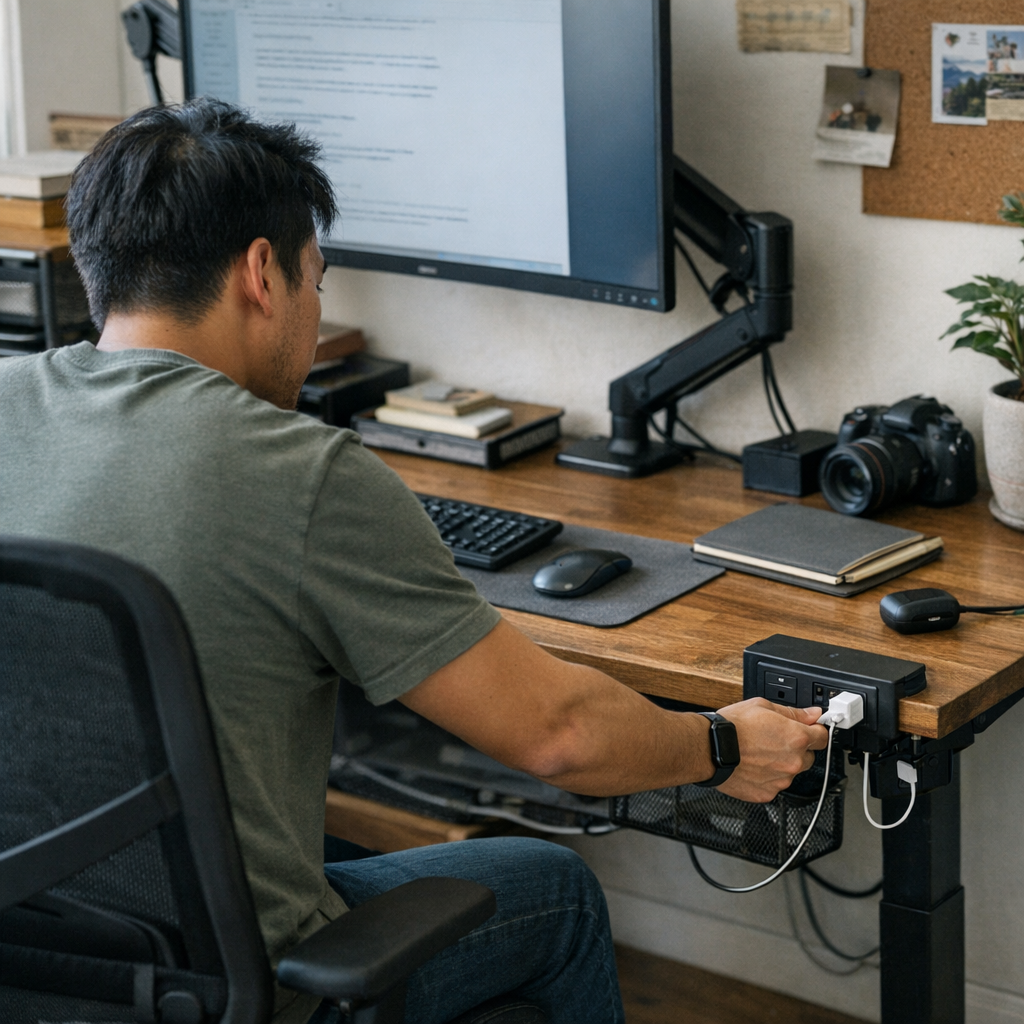
    The real shift isn’t perfect concealment—it’s effortless access where you actually work. Move from a deep cable box to a clamp-on or edge-mounted outlet and feel the difference instantly. Unplugging, swapping, or adding a device becomes a one-handed move, never requiring a chair shift, a crouch, or a search under paperwork. The workstation serves the routine, not the other way around: you reset gear without breaking posture, session, or train of thought.

    That means plugging in becomes background, not a pause. Good outlet placement sits at the edge of reach—out of sight yet always available—never in the way but never buried. You don’t have to untangle, crawl, or worry about kicking out a charger with your knees. Each device shift is handled without visible effort, the setup remaining ready even as your gear cycle changes, especially on a busy day.

    What Changes With the Right Placement?

    The shift shows up in the margins: you avoid knocking over pens while chasing cables, don’t drag contents across limited desk depth, and find the daily “reset” doesn’t require a mental step or a physical compromise. By late week, you aren’t repeating the same hunting motion or nudging a chair back just to reach the charging port. The desk’s order matches its utility—when you stop noticing your workflow being interrupted by access, the workstation is working for you, not just looking tidy.

    Practical Signs It’s Time to Rethink Power Access

    • Are you shifting your chair, or moving under-desk units, just to reach an outlet? That’s a sign the layout is designed for show, not speed.
    • Are cables always sliding back into the work area or tensioning as you move? Every bit of drag, tangle, or resistance slows repeated actions.
    • Do you notice even a slight hesitation before charging or plugging in? If there’s a pause—mental or physical—the structure is working against your routine, not with it.

    What Actually Works in Busy, Real-World Setups

    Desks with edge-mounted, clamp-on, or tray-level power access outperform hidden setups for repeated use, not just initial appearances. Cable boxes or deep trays might look immaculate in a photo, but after one device swap—the friction returns. True test: does the setup let you finish a dense day without repeated fidgeting, reaching, or reorganizing?

    The best workspaces keep resets fast and transitions minimal. Reachable power, clear cable control, and adjustable outlets stop minor interruptions before they can build up. Less time spent on desk maintenance means more momentum carried from one task to the next—even as your workload or devices shift mid-session.

    Real Change Means Reliable Reach, Not Just a Clean Look

    Desk friction rarely comes from one big mistake, but from small, repeated obstacles—a loose plug, a cramped charger, a cable that slides into a writing area or gets snagged behind stationery. Reliable access—an outlet you reach without clearing a path, a cable that stays where it’s put, hidden but easy to grab—means your work cycles don’t hollow out over time. Don’t buy systems that hide evidence; invest in a structure that supports the way you actually move, switch, plug, and reset.

    Explore the full WorkBasic collection

  • How Small Changes Make Pet Travel Gear Work Smoothly on the Move

    The problem isn’t packing—it’s what happens after the first stop. At home, your pet travel bag looks ready: wipes, leash, treats, all zipped up. But once you’re parked and your dog needs a quick clean or a comfort item, organization turns into obstacle. You dig through a tangle, open the wrong pocket twice, disturb three other items just to reach one. Every everyday stop—coffee, gas, a stretch at the next park—adds another round of awkward shuffling. What passed for “ready” in your living room stalls out when real travel demands fast access, calm handling, and cleanup at the speed of actual use. This is the gap PawGoTravel setups are built to close: not perfect order, but stress that doesn’t pile up with every restart.

    The Hidden Friction in “Organized” Pet-Travel Setups

    A bag can look fine on the seat but leave you struggling once you’re in motion. The biggest cracks show up at routine, short stops—not while packing. Every moment you reach for wipes and find them under two bowls, or trigger a mini landslide grabbing a comfort item, you feel the difference between “stored” and “actually reachable.” Each pause to reshuffle what should have been ready is a small repeat penalty that piles up through the day.

    • Wipes stuck under layered bowls or blankets when mess hits fast
    • Comfort item grabs turn into clumsy treat-leash avalanches
    • Every restart means re-stacking gear just to regain order that shouldn’t have fallen apart

    Order on a checklist isn’t the same as order in action. Stops get slower, frustrations stack, and all that neat packing means little when you’re blocked on the basics.

    Why Reach—and Not Just Storage—Defines Real Travel Use

    The more you stop and move, the more your “system” reveals weak links. If a wipe pouch is “safe” behind two layers, cleanup is never quick. If water bowls are buried for security, hydration becomes an ordeal. Accessories placed for photo neatness rarely survive the third stop without friction. A bag with one outside, always-ready wipe or treat spot immediately outperforms one with a dozen clever compartments if it saves you fumbling when your pet needs speed.

    Pet travel works on repeat. The process is never just pack and go—it’s settle, supply, soothe, clean, reload, and restart, again and again. Every extra move you make, every layer, multiplies the difficulty and turns organization into a drag on your flow.

    The Real Test: Repeated Use, Not First Impressions

    Picture the morning: a few short errands, your dog joining you stop-to-stop. After step one or two, setup seems fine. But by the third stop, your order starts breaking down. Wipes are deeper in, now under the leash and snack bag. The blanket your dog needs is stuck—again—beneath bowls and treats. Each return to the car becomes more about untangling than traveling. That convenience you organized at home turns into a slow cycle of setup and reset, where every essential is technically present, but never quite at hand.

    The irritation is cumulative. A few lost seconds for a wipe, another scramble for a treat, another shuffle for comfort—they all start to slow you down, break your routine, and make the “organized” setup feel clunky fast.

    Recognizing Recurring Weak Points

    The same logic traps repeat every trip:

    • Moving the same leash to snag wipes at every stop
    • Storing calming items so deep they take five moves to actually use
    • Cleanup gear “present” but buried, turning a quick grab into a minor search

    There’s a difference between location and accessibility. Real-world cycles reveal where your bag’s structure works against you, not just whether everything has a “spot.”

    Seat-Side Access: A Game Changer for Speed and Sanity

    Setup location, not just sorting, changes your daily friction. The wipes you can pull seat-side, the travel bowl with a grab-and-go outside slot, the leash stored unclipped but upright—these shifts reduce each restart from a mini-reset into a single, thoughtless motion. Forms that look simple—like a broad, flexible side pouch—can eliminate layers of fuss without adding bulk or complication.

    In practice, moving from deep nesting pockets to open, seat-access sections kills two pain points immediately: the need to dig, and the urge to re-pack after. What the bag gives up in looks, it gains in momentum. Reach, clean, go—no pile, no reset, no lost pace.

    Repeat Exposure: When Good Structure Outperforms Extra Organization

    Packing for photo order fades after your fifth stop. You notice which items truly need to be at hand and which can wait. The systems that last aren’t “maximally packed”—they’re built for the cycle: grab, use, move on. If reaching for a must-have means shifting two other things, every restop is a test your bag keeps failing. Responsiveness, not layers, keeps your travel pace smooth.

    Each stop is an audit. If you’re not gliding through seat-side wipes, open treats, and quick comfort resets, order becomes drag—and all the extra pockets aren’t helping.

    Troubleshooting the Most Common Pet-Travel Slowdowns

    Are You Moving Items Just to Reach the Essentials?

    If grabbing one item means uprooting or untangling others every time, your structure is working against you. Placement must match frequency; every extra layer burns time.

    Comfort Items: Helpful or Hindrance?

    If your pet’s soothing blanket is always trapped under bowls and treats, it’s doing as much to slow you as it does to calm your dog. Frequent comfort needs deserve top visibility, not deep nesting.

    Quick-Access for Frequent Use

    Test your setup by literally tracing your stops: how often do you reach, pause, or reshuffle for just one small thing? Each repeated snag signals structure, not just storage, is the culprit. Mark those pressure points—then adjust before your next outing.

    Practical move: Assign your top three travel essentials to always-open or seat-side slots. Even removing just one layer of friction can cut the worst delays—and you’ll know it by the third stop.

    The Outcome: Smoother Restarts, Less Friction, Real Relief

    Effective pet travel isn’t judged by how tight the kit looks at departure, but by how quickly you can handle, clean, and settle at stop eight. The gear that feels best is almost invisible in use—items fall to hand, cleanup is automatic, comfort is available without a scramble. Keep watching for those repeat points of drag or overlap—places where you lose pace for no good reason. Those are the structure fixes that matter. Pet travel reliability is won or lost in the pattern, not the first impression.

    Find travel setups designed for real use at PawGoTravel.

  • How Familiar Routes Help Reduce Dog Scanning and Improve Walks

    The problems start before you’re even out the door. You go to grab the leash—but your hand hits the mail pile, stray toys, the leftover towel you meant to move yesterday. Your dog, already wired, does that circling-push toward the door, all nerves and anticipation. You manage to step through the jam, but within five minutes, what was supposed to be a brisk, no-hassle walk stalls out: your dog zigzags, scans every moving leaf, stops short at the neighbor’s gate. Suddenly you’re not walking—you’re negotiating. The route looks familiar, but moving from one end to the other takes twice as long, every pause multiplying tension instead of working it out. Nothing about this feels smooth, no matter how tidy the entryway looked at dawn.

    The Overlooked Drag: When Walks Become More Work Than Reset

    Dog scanning looks harmless—a turn of the head, a pause at a lamppost—but the pattern breeds friction. Each off-rhythm stop kicks the leash taut, then you’re clutching cleanup bags with one hand, wrangling the dog with the other, sidestepping another mess on the sidewalk. The muscles in your arm start to ache, your pace drops, and it’s not just your mood that sours—the dog stays on edge. If your “quick walk” keeps ballooning into a stop-start slog, forcing you into constant catch-up, you’re not just unlucky. It’s structure, not just chance, that’s failing. When the interruptions start showing up like clockwork, you move from mild annoyance to a daily drain most owners just live with but don’t recognize as fixable.

    Where Minor Fixes Fail: Pauses That Multiply

    What looks like a minor delay—dog halts, owner waits—actually piles up. Ten extra stops across two blocks isn’t a blip: it throws off your whole transition. Getting back through the door, muddy paws everywhere, you reach for the towel only to find it wedged behind shoe bins or still drying in the bathroom. Your hands are now full—leash, keys, maybe damp wipes—while your dog’s still pacing, not settling. The routine that’s supposed to hit refresh becomes a series of small, avoidable jams: wrong item in the wrong place, delayed cleanup, energy never dropping. The tidy hallway doesn’t help if nothing stays where you need it. Over time, the setup demands more from you with every pass, shaving off comfort instead of adding it back.

    Familiar Walks, Unfamiliar Stress: Why Repetition Isn’t Enough

    “Just pick a routine”—that’s the usual advice. But repeating the same loop isn’t a cure when your dog resets every shadow as a new alert. Some mornings flow: leash loose, distractions minimal, brain space reclaimed. The next day, with zero warning, it’s all snags and near-collisions. The constant? Predictability that goes beyond the map. A familiar street means nothing if your dog can’t anticipate what’s next—if shoes, leash, or bowl location shifts, or if the return flow keeps teetering on “almost settled but not quite.” Without clear, repeated signals before and after the walk, both dog and owner get trapped in a loop where the only thing regular is the repeated breakdown.

    It’s a design problem: routines aren’t stable if each small variable (bag storage, towel reach, bowl refilling) is left to chance. When even one handoff gets scrambled, your walk morphs back into high-alert mode—every day, no matter how many times you’ve walked the block.

    Routine Snags, Real-Time: The Actual Walk versus the Setup

    Getting out the door: Shoes half on, leash knotted around a chair leg, your dog pushing against the door as you fumble for waste bags clipped somewhere. When you finally open the door, your dog bolts into a tangle—signal missed, hands already full.

    Midwalk tangle: Dog freezes mid-step; you nearly drop your phone trying to regain control. The trigger could be invisible, but everything stops. Meanwhile, treats you thought you had ready spill into the gutter while your leash arm gets jerked sideways. Every slight change in sidewalk, trash pickup, or parked car adds another unpredictable fight for pace and attention. The more you repeat the chaos, the less the routine sticks.

    Back home, no reset: Shoes muddy, hands juggling, the towel is always one step out of line—it’s on the wrong hook, or you’re blind-searching while your dog leaves paw prints on the floor. The water bowl got nudged during earlier morning traffic, so instead of a clean finish, your dog paces, circles, or noses you for the next step. The comfort corner is now a staging area for disorder.

    Reading the Pattern: When Scanning Signals Pressure, Not Play

    If every walk—a week’s worth or more—feels like a rerun of scanning, slowing, leash correcting, and repeated “almost-there” moments, curiosity isn’t what you’re seeing. It’s low-level stress, and it shows up the same way every time: pausing at the same yard, skidding near the same mailbox, never actually unwinding before you’re back inside. When routines don’t settle, and the same micro-frictions keep popping up after supposed fixes, your setup isn’t supporting relaxation—it’s feeding the loop.

    Shifting More Than the Path: Where Routine Actually Locks In

    The fix isn’t a total overhaul. What actually helps: visible, unchanging signals at each handoff. Owners who swapped a long, loose leash for a consistent, shorter one cut down on side-to-side wandering. Switching walk times to the least-busy stretch on your street keeps surprises from hijacking the pattern straight from the first step. The most important: do the same things in the same order. Always grab the same item from the same hook. Use the same door, set the bowl in the same corner—every time, without a second thought. These are friction cuts, not just routines: when cleanup gear, water, and comfort are all directly on your return path—no detours, no digging—you see the dog’s pulse settle, their circling end sooner, and your own frustration fade for once, not just for an hour. That observable drop—settling time shrinking from minutes to seconds—shows when the setup actually fits the routine, not just the décor.

    Genuine Predictability Beats Flawless Order

    You can restructure every walk, try hidden storage, swap out toys, force a perfect look. But if the essentials keep drifting or reshuffling—if you fight the same setup battles each afternoon—comfort is still a moving target. For scanning-prone dogs, novelty only resets the vigilance. True predictability comes from arrangements that repeat whether you’re moving quickly or slogging: a gear pattern that stays stubbornly the same, even if the scene isn’t Instagram-ready. When ‘setup time’ creeps longer, or you catch yourself chasing the same supplies every day, that’s a warning. The drag is baked into the flow, not just the walk itself.

    Layout That Works: Tidy Isn’t the Same as Smooth

    Owners often mistake visual order for daily function. But a clean row of supplies isn’t enough if the leash is never on the dominant-hand side, if the water is blocked by a backpack, or if towels are always out-of-reach when the dog careens inside. Bowls, wipes, and leashes need spots that make sense in motion—reachable without sidestep, interruption, or blind-searching. The real test: can you move from door to cleanup to settle without detouring around your own stuff? When setup matches your actual rhythm, not just your aesthetic, the process sheds minutes and sidesteps. What you notice: less scramble, the dog sliding into rest rather than circling, essentials waiting where needed, not just stored “somewhere.” The shift is visible—fewer mid-transition mistakes, less leash drag, more real downtime. Emotional tone changes too: from “coping” to “done already.”

    Guidelines for Walking with a Scanning Dog

    • Short, repeatable, low-traffic routes help keep scanning fixed to true signals, cutting random vigilance that saps routines.
    • Leash management is routine defense: enough slack for comfort, not enough for zigzag or self-started stops.
    • Repeat ritual, not just route: predictability calms the process; change only after calm becomes the new baseline.
    • Setup beats storage: If towels, bowls, or bags are one reach out of line, cleanup and reset will always lag behind the walk. Keep what you grab where you actually need it—not hidden for neatness.

    Dog routines don’t fail because of bad intentions—most fall apart in the margins, when gear, access, or flow block the only predictability your dog counts on. For setups that cut through repeated snag points—not just the visible clutter—see more practical options at DogPile.

  • Why Manual Screwdrivers Ensure Lasting Indoor Light Fixture Stability

    A light can look finished the day it’s installed—fitted flush, trim pressed flat, not a gap in sight. But fast-forward a month, and suddenly that ceiling or wall fixture reads differently: a crescent shadow appears at one edge, dust lines form in seams that were once invisible, or the fixture feels loose after a single bulb change. Most of these problems don’t trace back to faulty fixtures. They begin with one decision—the final over-tightening turn, usually done with a power tool, that feels secure but quietly warps, compresses, or strains the installation. That last twist changes how the fixture stands up to daily routines in real rooms, from hallway to bathroom to stairway, risking the friction and imbalance that turn lighting from reliable to irritating.

    Why “Too Tight” on Day One Turns Into Trouble Months Later

    No one spots the damage on install day. A powered driver gets the light up quickly, flush to the ceiling, apparently perfect. The catch: tightening too hard with power tools subtly deforms gaskets, distorts frames, or strips threads, leaving the fixture quietly vulnerable. A flush mount in a busy hallway might hold steady for a few weeks, but then a crescent shadow starts tracing one edge. In a bathroom after several humid mornings, a faint ring darkens around a compressed gasket—no amount of wiping removes it. The utility room fixture begins to rock slightly with every door slam or basket nudge. Each sign isn’t just cosmetic—it signals a gap, tilt, or seam that gets worse each time the room is used.

    • Hallway flush-mounts cast uneven shadows, especially as doors open and foot traffic shuffles past.
    • Bathroom fixtures collect condensation and dust along over-compressed seams, making fast wipe-downs nearly impossible.
    • Utility room lights loosen after minor bumps, leaving them out of true and distracting every time you look up or walk past.

    Manual Finishing: The Small Step With Real-World Payoff

    Precision matters more than speed when it comes to lighting that endures. Swapping a power driver for a manual screwdriver on the final turns lets you gauge resistance—stopping as soon as the base holds steady, before the trim distorts or the gasket crushes out of shape. Hand finishing builds lasting alignment and a fit that stands up to vapor, vibration, and movement. Repeated frustration usually flares up in:

    • Hallways and corridors: Small misalignments grow obvious as shadows pull unevenly along walls or ceiling edges.
    • Bathrooms: Steam finds the weak point at warped seals, leading to a faint but persistent ring along the trim.
    • Utility corners and stair landings: Dust, grit, and humidity turn small gaps into stubborn cleaning problems.

    From Install Day to the Hundredth Use: How Small Mistakes Multiply

    Picture a stairway at midnight—the panel light overhead is supposed to edge every step with clarity. After a power-tool overtighten, the fixture edge creeps loose over time. The light’s beam shifts left or right, sending a wedge of darkness across the treads. Each trip down you sense the risk—no matter how bright the fixture, the edge of the stairs now fades into shadow, and the balance of the space seems off. In a bathroom, a seam compressed by a rushed install turns into a grime-magnet line that scrubbing never quite clears. The initial mistake rarely seems important until it multiplies with every flip of the switch or weekly cleaning.

    Bathroom Gaps and the Annoyance of the Shadow Seam

    In bathroom zones, humidity reveals flaws fast. The smallest overtightened seam draws in water and dust, leaving a visible gray line that breaks the edge of the fixture. Suddenly, a light that looked tightly finished feels like a maintenance chore—the difference between one swipe to clean and a slow, finger-tracing scrub along the trim that never feels quite done.

    Utility Room Lights: The Case of the Slowly Spinning Base

    In utility spaces, door swings and passing baskets put real, repeated strain on ceiling fixtures. If the bracket isn’t finished by hand, the base gradually rotates, threads loosen, and the fixture won’t stay square—resulting in off-kilter light and an endless urge to adjust. The payoff of manual finishing is control: you feel the screw seat, the bracket snug into drywall, and you know the fixture will withstand dozens of minor hits without twisting out of line or cracking the ceiling.

    How Lighting Performance Breaks Down in Real Routines

    When first powered on, even an overtightened fixture looks fine—light spills out evenly, and the room appears “done.” A few weeks in, reality reasserts itself. Every attempt to change a bulb leaves the fixture wobbly. Shadow edges ring the base and—no matter how you try—won’t wipe away. The light may still be bright, but usable visibility disappears in corners and on working surfaces. The daily difference is sharp: a fixture that’s over-tightened simply doesn’t hold its lines, its seal, or its ease of cleaning.

    • Bulb changes become a risky negotiation—will the fixture shift, tilt, or crack if you touch it?
    • The trim starts to collect dust and grime along the compressed, uneven seams.
    • The room feels lit yet somehow harder to use: counters half-shadowed, mirrors ringed, movement paths uneven.

    Proper manual finishing lets you stop at “just right”—the fixture snug, edges even, trim flush, and nothing over-stressed. This isn’t just a fussy install detail—it’s how lighting remains usable and frustration-free after dozens of uses and cleanings.

    Real Tips for Repeat Success (and Less Cleanup)

    • Finish by hand. Use a manual screwdriver for the last turn or two; power drivers get you close, but hand control prevents over-compression and preserves the seal.
    • Inspect edges before the final snug. If one side pulls away, don’t torque the opposite edge—reset gently and apply even pressure.
    • Watch the gasket: If it buckles, loosens, or disappears under the trim, back off and reseat the fixture for a flush, uncrushed fit.
    • Test stability: Press gently on different corners. If you feel a shift, reset immediately—don’t settle for “almost tight enough.”

    Not Just a One-Time Fix: The Daily Advantage

    Manual finishing is a long-game discipline. It’s the difference between a light that looks right for a week and one that stays tight, flush, and fuss-free after a hundred switch flips or cleans. The payoff is concrete:

    • Bathroom mirrors stay streak-free—no ring of dust or water to scrub out after every shower.
    • Hallway and entryway fixtures remain square, making cleaning and routine use frictionless instead of becoming a mild annoyance that distracts every time you pass.
    • Under-cabinet and kitchen lights maintain their angle, so counters stay fully visible, without shadowed edges or lost corners.

    The habit of hand-finishing every install means less realignment, less cleaning fatigue, fewer loose bases, and a more resilient seal against dust and moisture. It’s a small step that decides whether your lighting stays straightforward—lining up with your routines—or slowly turns into another source of daily disruption and cleaning work. Consistently tight, flush, and sealed, fixtures do more than illuminate: they let you use every corner of the room without pause or workaround.

    LightHelper — Practical indoor lighting, selected for rooms you actually use.

  • Designing Car Interiors That Stay Organized Through Everyday Use

    The gap between “organizing” your car and actually making it usable shows up the moment you repeat your routine. That first glance at a “clean” car is a setup: cables tucked aside, wipes in bins, everything looks in place. One trip, maybe even two, and the cracks start showing. You snag your bag on a charger cord every entry. The sanitizer bottle, supposedly handy, migrates under the passenger seat or toward your pedals after a stop. You try one more time to wedge your phone into a mount that never lines up right, so it always ends up tossed in a cupholder instead. These aren’t big breakdowns—they’re small, stubborn snags that stack up through repeated use. The car looks organized, but the problems come back each drive.

    Small Snags Add Up: Everyday Access Challenges

    Real-world car use isn’t tidy: it’s reach, grab, move, repeat. Coming back after an errand, you want a phone or sanitizer without hunting, but the same issues repeat. Cords dangle across your footwell or snag your hand every time you get in. The wipes you thought would stay handy are now under a shifting tote bag. Organizers claiming “less clutter” slow you down the second you grab something mid-drive. Surface order means nothing if, in a rush, you’re forced into a juggling act just to find what you use constantly.

    One common scene: you pop open the door, toss in groceries, wedge the cooler, and try to reach for your phone—while the charger line manages to hook your sleeve yet again. Every move after re-entry tests whether the clean look equals real function. “Tidy” slips quickly into “annoying”—a longer reach, a block in your path, or a distracted fumble, right when you can least afford it.

    Why Tidy Isn’t Always Functional

    Seat pockets and bins can hide mess, but the “solved” look often masks new problems. Minimalist dividers corral stuff, until a hard brake sends loose items flying—or drifting out of reach down the side of a seat. Charger routes laid across open floor space snag your heel, block pedal movement, or get stepped on in any stop-and-go traffic. Protectors meant to solve mess can instead create a new hassle: covers that bunch, shift, or slide just far enough to annoy your feet every drive. Hidden inconvenience replaces visible clutter.

    Recognize Where Friction Begins

    Most trouble builds in “overlap zones”—the gaps between seat and console, the space near your feet, the spot you always reach for passes or sanitizer. If cable, bin, or organizer blocks that path, you notice: a sanitizer knock you can’t ignore, a cord you tug loose every trip, or a small item you keep having to chase. Friction rarely announces itself. It’s the low-level hassle that turns simple routines—grabbing, plugging, or loading—into small contests that repeat on loop.

    Real-World Scenarios: The Pressure Test

    Picture the morning routine: grocery bag in one hand, dog leash in the other, phone alert chiming as you try to get settled. The charger cable cuts right through your entry route, meaning you twist awkwardly every single time. Or you’ve loaded up from a store run but now have to move a shifting bag just to pop open the wipe container—barrier after minor barrier, none show in photos, all add up fast. Over dozens of stops and starts, what’s “solved” on paper unravels. You end up resetting trays, chasing keys under the seat, tugging shoe heels loose from a misplaced mat, or spending five extra seconds detangling cables each time—a cost you feel more with every repetition.

    Once you’re using your car daily, shallow fixes get exposed fast. The console looked tidy, but every drive, chargers and odds-and-ends migrate into the footwell, or stuff still slides off hard trays. That feeling of clean fades when even small inefficiencies—untangling, chasing drifted items, awkward loading and unloading—repeat over and over.

    Anchored Solutions: What Changes with Pressure-Tested Gear

    Setups that truly hold up don’t just look under control—they actually remove repeated friction points:

    • Anchored cable routes follow and stay against the seat base, never in the way of hands or feet and never snagging, so plugging in doesn’t mean detouring your arm around a live wire.
    • A shallow, divided tray replaces a deep bin, turning every “search” grab for sanitizer, cards, or sunglasses into a one-move reach—no more slow digging or off-balance hunting.
    • Seat-edge organizers or anchored footwell bins stop item drift completely, blocking the migration of stray wipes or cards under seats or into pedal territory even after a sharp stop.

    The reward isn’t just less visible mess; it’s a smoother, faster, lower-effort routine. Anchored arrangements cut the friction you notice (searching, re-tucking, detangling) and the friction you feel after every drive when “clean” starts breaking down in practice.

    Common Pitfalls: When Order Masks Ongoing Inconvenience

    Plenty of systems hide chaos and still leave you stuck at the moment you need something. Sleek organizers swallow the items you use most, so you’re forced to dig or shift three other things just to reach them. Mats and floor covers trap dirt, only to slide under your heel or up against the pedals, giving you a new reason to fidget mid-drive. Even trunk organizers can force you to play Tetris with bins and bags—great for lifting, bad for getting that one thing in a hurry. Looks like order, but you still stall, search, or shift at every turn.

    If your hand or foot stops, hesitates, or reroutes more than once a trip, the setup is failing its real job. Repeated inconvenience is the sign. In practice, a useful system signals itself by what you don’t notice—nothing blocks your reach, nothing slips out of place, nothing slows you down on your normal routine. Anything else is just organized clutter.

    Building a Car Setup That Goes Beyond Looking Tidy

    The setups that survive actual life are built for cycles—hands, bags, and pets landing in the same spot, repeated grabs for the most-used gear, sideways knocks from parking-lot shuffles. What matters isn’t the photo at the start, but whether every tool, charger, or wipe stays where it should after a week of errands and real parking returns.

    Ask two things as you build or adjust: Does this stay put under actual pressure? and Can you grab what you need instantly, even after everything’s been loaded, jostled, or parked in the sun? Anchor what moves, define lanes for cables, give each essential an obvious home that fits real reach, not just appearances.

    Because what works isn’t just tidy, but pressure-tested—staying functional after all the hurries, stops, and daily bumps that reveal what you only learn after real use.

    Find practical, pressure-tested car-use solutions at DriveWellSupply.