
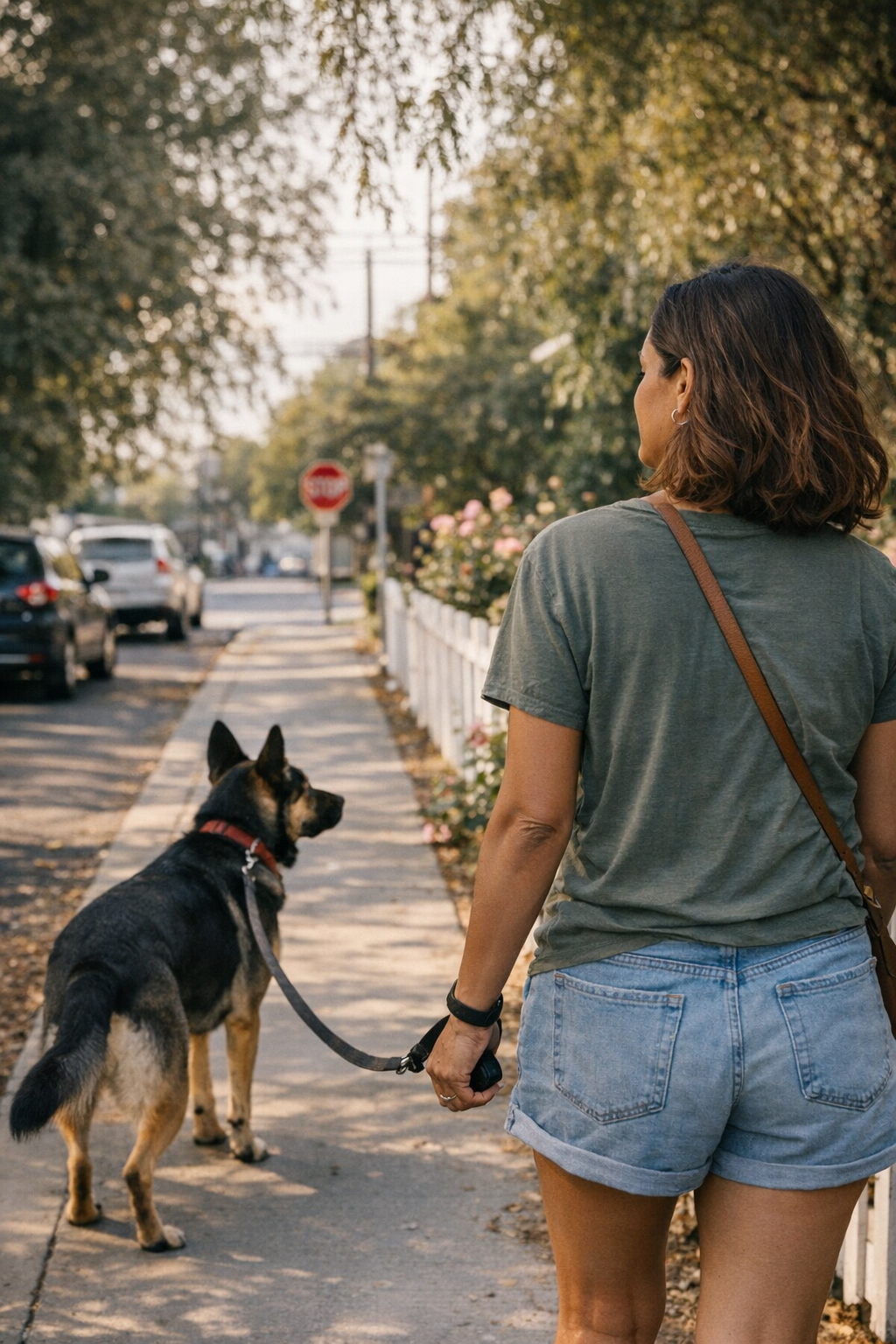
The problems start before you’re even out the door. You go to grab the leash—but your hand hits the mail pile, stray toys, the leftover towel you meant to move yesterday. Your dog, already wired, does that circling-push toward the door, all nerves and anticipation. You manage to step through the jam, but within five minutes, what was supposed to be a brisk, no-hassle walk stalls out: your dog zigzags, scans every moving leaf, stops short at the neighbor’s gate. Suddenly you’re not walking—you’re negotiating. The route looks familiar, but moving from one end to the other takes twice as long, every pause multiplying tension instead of working it out. Nothing about this feels smooth, no matter how tidy the entryway looked at dawn.
The Overlooked Drag: When Walks Become More Work Than Reset
Dog scanning looks harmless—a turn of the head, a pause at a lamppost—but the pattern breeds friction. Each off-rhythm stop kicks the leash taut, then you’re clutching cleanup bags with one hand, wrangling the dog with the other, sidestepping another mess on the sidewalk. The muscles in your arm start to ache, your pace drops, and it’s not just your mood that sours—the dog stays on edge. If your “quick walk” keeps ballooning into a stop-start slog, forcing you into constant catch-up, you’re not just unlucky. It’s structure, not just chance, that’s failing. When the interruptions start showing up like clockwork, you move from mild annoyance to a daily drain most owners just live with but don’t recognize as fixable.
Where Minor Fixes Fail: Pauses That Multiply
What looks like a minor delay—dog halts, owner waits—actually piles up. Ten extra stops across two blocks isn’t a blip: it throws off your whole transition. Getting back through the door, muddy paws everywhere, you reach for the towel only to find it wedged behind shoe bins or still drying in the bathroom. Your hands are now full—leash, keys, maybe damp wipes—while your dog’s still pacing, not settling. The routine that’s supposed to hit refresh becomes a series of small, avoidable jams: wrong item in the wrong place, delayed cleanup, energy never dropping. The tidy hallway doesn’t help if nothing stays where you need it. Over time, the setup demands more from you with every pass, shaving off comfort instead of adding it back.
Familiar Walks, Unfamiliar Stress: Why Repetition Isn’t Enough
“Just pick a routine”—that’s the usual advice. But repeating the same loop isn’t a cure when your dog resets every shadow as a new alert. Some mornings flow: leash loose, distractions minimal, brain space reclaimed. The next day, with zero warning, it’s all snags and near-collisions. The constant? Predictability that goes beyond the map. A familiar street means nothing if your dog can’t anticipate what’s next—if shoes, leash, or bowl location shifts, or if the return flow keeps teetering on “almost settled but not quite.” Without clear, repeated signals before and after the walk, both dog and owner get trapped in a loop where the only thing regular is the repeated breakdown.
It’s a design problem: routines aren’t stable if each small variable (bag storage, towel reach, bowl refilling) is left to chance. When even one handoff gets scrambled, your walk morphs back into high-alert mode—every day, no matter how many times you’ve walked the block.
Routine Snags, Real-Time: The Actual Walk versus the Setup
Getting out the door: Shoes half on, leash knotted around a chair leg, your dog pushing against the door as you fumble for waste bags clipped somewhere. When you finally open the door, your dog bolts into a tangle—signal missed, hands already full.
Midwalk tangle: Dog freezes mid-step; you nearly drop your phone trying to regain control. The trigger could be invisible, but everything stops. Meanwhile, treats you thought you had ready spill into the gutter while your leash arm gets jerked sideways. Every slight change in sidewalk, trash pickup, or parked car adds another unpredictable fight for pace and attention. The more you repeat the chaos, the less the routine sticks.
Back home, no reset: Shoes muddy, hands juggling, the towel is always one step out of line—it’s on the wrong hook, or you’re blind-searching while your dog leaves paw prints on the floor. The water bowl got nudged during earlier morning traffic, so instead of a clean finish, your dog paces, circles, or noses you for the next step. The comfort corner is now a staging area for disorder.
Reading the Pattern: When Scanning Signals Pressure, Not Play
If every walk—a week’s worth or more—feels like a rerun of scanning, slowing, leash correcting, and repeated “almost-there” moments, curiosity isn’t what you’re seeing. It’s low-level stress, and it shows up the same way every time: pausing at the same yard, skidding near the same mailbox, never actually unwinding before you’re back inside. When routines don’t settle, and the same micro-frictions keep popping up after supposed fixes, your setup isn’t supporting relaxation—it’s feeding the loop.
Shifting More Than the Path: Where Routine Actually Locks In
The fix isn’t a total overhaul. What actually helps: visible, unchanging signals at each handoff. Owners who swapped a long, loose leash for a consistent, shorter one cut down on side-to-side wandering. Switching walk times to the least-busy stretch on your street keeps surprises from hijacking the pattern straight from the first step. The most important: do the same things in the same order. Always grab the same item from the same hook. Use the same door, set the bowl in the same corner—every time, without a second thought. These are friction cuts, not just routines: when cleanup gear, water, and comfort are all directly on your return path—no detours, no digging—you see the dog’s pulse settle, their circling end sooner, and your own frustration fade for once, not just for an hour. That observable drop—settling time shrinking from minutes to seconds—shows when the setup actually fits the routine, not just the décor.
Genuine Predictability Beats Flawless Order
You can restructure every walk, try hidden storage, swap out toys, force a perfect look. But if the essentials keep drifting or reshuffling—if you fight the same setup battles each afternoon—comfort is still a moving target. For scanning-prone dogs, novelty only resets the vigilance. True predictability comes from arrangements that repeat whether you’re moving quickly or slogging: a gear pattern that stays stubbornly the same, even if the scene isn’t Instagram-ready. When ‘setup time’ creeps longer, or you catch yourself chasing the same supplies every day, that’s a warning. The drag is baked into the flow, not just the walk itself.
Layout That Works: Tidy Isn’t the Same as Smooth
Owners often mistake visual order for daily function. But a clean row of supplies isn’t enough if the leash is never on the dominant-hand side, if the water is blocked by a backpack, or if towels are always out-of-reach when the dog careens inside. Bowls, wipes, and leashes need spots that make sense in motion—reachable without sidestep, interruption, or blind-searching. The real test: can you move from door to cleanup to settle without detouring around your own stuff? When setup matches your actual rhythm, not just your aesthetic, the process sheds minutes and sidesteps. What you notice: less scramble, the dog sliding into rest rather than circling, essentials waiting where needed, not just stored “somewhere.” The shift is visible—fewer mid-transition mistakes, less leash drag, more real downtime. Emotional tone changes too: from “coping” to “done already.”
Guidelines for Walking with a Scanning Dog
- Short, repeatable, low-traffic routes help keep scanning fixed to true signals, cutting random vigilance that saps routines.
- Leash management is routine defense: enough slack for comfort, not enough for zigzag or self-started stops.
- Repeat ritual, not just route: predictability calms the process; change only after calm becomes the new baseline.
- Setup beats storage: If towels, bowls, or bags are one reach out of line, cleanup and reset will always lag behind the walk. Keep what you grab where you actually need it—not hidden for neatness.
Dog routines don’t fail because of bad intentions—most fall apart in the margins, when gear, access, or flow block the only predictability your dog counts on. For setups that cut through repeated snag points—not just the visible clutter—see more practical options at DogPile.