Blog

  • How Predictable Placement Transforms Daily Car Organization and Driving Flow

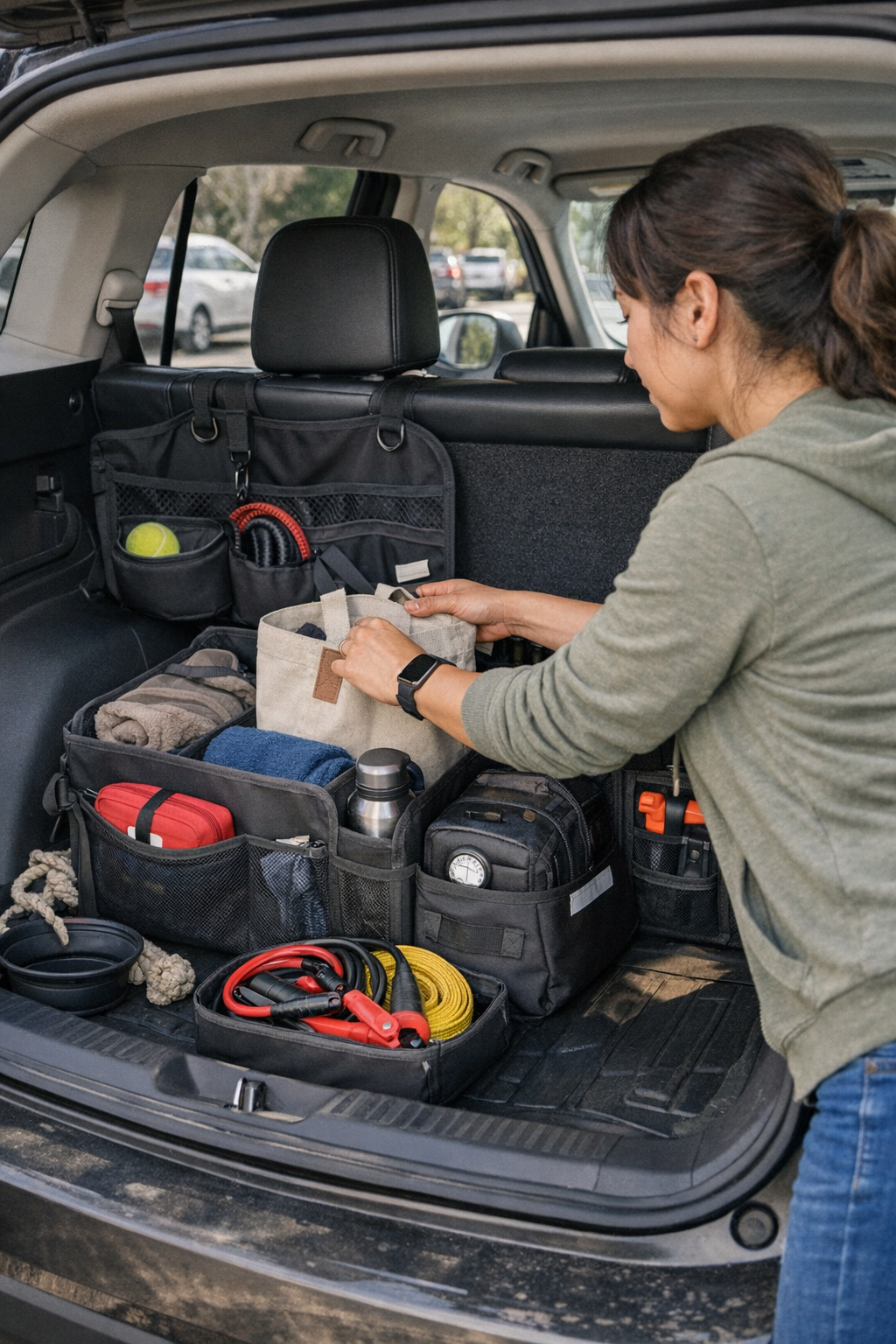
    Car organization isn’t proved by the first five minutes—it’s what holds up by the fifth errand. If you’ve ever returned to what looked like a neat interior, only to grope under seats for a charger or wedge your hand past a drift of keys and receipts, you know surface order means little. Most clutter isn’t one obvious mess. It’s the repeated tangle of charging cables slipping between seats, loose gear creeping into footwells, pocket items dropping out of reach—turning what should be a simple grab-and-go into a silent contest of hunting, shifting, and re-sorting with every short drive. The real cost? Delays build up, routines snag, and “organized” ends up just another layer you have to work past.

    When “Good Enough” Fails: Repeated Friction Hiding in Plain Sight

    Most setups start strong: a new tray for your phone, a pocket for the charger, a container for car masks or pens. But by midweek—after school runs, tight parking squeezes, fast-food detours—order collapses. A cupholder bin spits out coins on a hard turn. A cable, once perfectly looped, dangles and catches your hand at the gearshift. Floor mats might hide crumbs but can’t stop that sanitizing spray bottle from rolling to the far side with every stoplight. Friction doesn’t scream; it grinds away quietly, layering seconds of lost time and micro-irritations you never meant to sign up for.

    The pattern repeats: sprinting to your car in the rain, you expect to grab your charger and dash, but find yourself stabbing at shadowy crevices where things have migrated. The structure you trusted falls apart right when pressure is high. These aren’t dramatic breakdowns—they just slow you, again and again, every time you think a system is finally “good enough.”

    Open Trays vs. Anchored Placement: Why Tidy Isn’t Reliable

    Drop zones and open organizers give you that showroom look—for about as long as your car stays still. The moment driving starts, so does drift. Face masks edge toward the pedals. Emergency cash slips behind the console. You catch a pen clattering out from a catch-all with each half-mile. Even as your eyes sweep a “neat” surface, your hand meets one patch of friction after another—always adjusting, always rescuing items from where the car’s motion has tossed them.

    It’s the classic micro-mess: not dramatic enough to call “clutter,” but persistent enough to slow you down every time you slip behind the wheel. Each shortcut taken early—like tossing keys into a loose bin—adds up to later effort, as small items stack, slide, and bury each other just out of reach.

    Making Placement Predictable, Not Perfect

    Predictable beats perfect every day. Anchoring your phone on a true mount, locking a charger cord into a low-profile clip, or stashing keys in a fixed spot shifts your routine from searching to autopilot. Take the everyday sprint—a five-minute grocery run, rain at your collar, arms full. If your phone is always in an eye-level mount, you’re reaching for what’s actually there, not doing blind fingertip sweeps around the seat seam. A charger cable, anchored at the seat edge, doesn’t snake into the footwell or kink with every exit. Instead of matching memory to mess, your actions stay in sync with your setup—even when you’re juggling six things at once, never mind the car door swinging shut behind you.

    Everyday Annoyance: The Wandering Charger

    The charger cable is a repeat offender. Dangle it from the center console and it’ll slip, loop, or wedge itself into the least accessible spot on even the tamest drive. Soon you’re reaching under the seat mid-parking lot, yanking a cable out with half the car’s lint attached. The fix—a decent cable anchor along the seat edge—is a five-second install but a total shift in flow: grab, connect, drive, done. No more crouched fumbling, just a routine that finally works the way you hoped it would the first time.

    Spotting the Difference: Looks Organized vs. Actually Works

    A clean interior can still trip you up at every turn. Containers mask what’s happening underneath. Cupholder “organizers” jam when you actually want to use the holder. Pens roll under the mat. A surface tidy enough for carpool is often a scavenger hunt for everyday use, especially as you load and unload repeatedly. Function comes down to consistency: groceries stay upright, chargers stay findable, nothing important slides out of reach after the third errand or the first hard stop.

    Knowing exactly where each tool or item will be on every entry changes the car’s role from obstacle to assistant. Structure holds up under pressure—from food runs to school carpools, from dog park detours to urgent errands—making sure you’re moving, not resetting, each time you return.

    The Real Payoff: Less Reset, More Momentum

    The surest test of a working car setup isn’t how spotless things look, but how rarely you get dragged into mini “cleanup mode.” Anchored chargers, fixed phone mounts, and spot-on pockets mean your time goes to the drive, not the hunt. Short trip after short trip, you skip the fidgeting and start on what matters next. Your mental energy moves forward, not back to whatever just slithered under the seat or flipped behind the storage bin.

    But any system can slide, often without warning. Maybe the new seat organizer blocks your quick exit. Maybe your latest bin collects more trash than tools. Once the pattern of “one more reach” creeps back, it’s time to see the cost: routine, not just cleanliness, is being interrupted—and it’s only going to build if you wait for mess to get obvious again.

    Turning Friction Into Flow—One Adjustment at a Time

    Order that doesn’t work is just a delay in disguise. Building in predictable placement—whether it’s a single anchor point, re-routed cable, or a better access habit—means each trip through your car feels a bit smoother, a bit less wasteful. The right fix isn’t about chasing perfection, but about seeing where small shifts pay off: fewer repeats, fewer rollbacks, more time moving through your day the way you meant to. That’s what finally keeps your car working for you, not against you.
    DriveWellSupply

  • Why A Single Tool Zone Outperforms Large Entryway Walls Every Time

    When “organized” becomes just another kind of clutter, it usually starts at the entryway’s open wall. A single tool wall, a broad shelf, or a dense run of hooks looks in-control on day one, but by Thursday, the real-life slowdowns return. You reach for a rake and find bags, boots, and mail wedged where tools used to go. Shoes spill out beyond their tray, bench space shrinks under the weight of quick drop-offs, and your reset efforts last only as long as it takes for everyone to pass through again. What looked like a solution turns into a choke point where routines snag and every “quick grab” gets slower.

    The Drop Zone: Where “Organized” Stops Helping

    Most entryway storage fails not because it lacks space, but because it blurs routines. Storage that’s just a wall of hooks and shelves invites the wrong kind of overlap the moment a bag is dropped or a child misses their shoe cubby. Instead of streamlining traffic, open setups quietly enable category drift:

    • Kids’ shoes form a sprawl beneath tool hooks, forcing detours around the muddiest pairs.
    • A sports bag, left “just for tonight,” squeezes into tool space and never leaves.
    • Mail starts filling the glove bin, dividing the space until nothing matches the original plan.

    Movement slows, bottlenecks multiply. Benches meant for seating double as overflow shelves. Every item left “just for now” collects until retrieval means wrestling gear out of someone else’s category. Each pass-through means a new object joins the jumble at the edge of the zone. The entryway keeps its shape, but the system crumbles each time real-life speed collides with pseudo-order.

    Category Creep and the Disappearing Boundaries

    This isn’t a decorative problem—it’s a function breakdown caused by category drift. When every inch of the wall is fair game, boundaries dissolve. Shoes migrate outside their tray. The nearest empty hook swallows garden gear, hats, or whatever can’t quickly find its exact home. The storage fills, but friction grows: you hesitate before dropping a bag, or end up blocking the path because nothing is ever where it should be.

    Instead of a quick grab-and-go, you hover, shuffling boots aside, reaching over stray mail for a spade that’s half-buried by last night’s overflow. “Temporarily” misplaced stuff turns semi-permanent—not by decision, but by routine pressure. Each misplaced item nudges the whole area toward confusion.

    Real-World Friction: A Morning Scene

    Picture the post-school-run mess: bench covered in shoes nobody actually wore, a damp coat slumping over the gardening fork, the backpack wedged behind the cabinet and blocking the cleaning caddy. Every pick-up or drop means working around someone else’s last-minute shortcut. By the time you need a tool, you’re untangling layers of category creep—and the space that “looked organized” is now a slow obstacle.

    Focused Tool Zones: Small Surface, Big Payoff

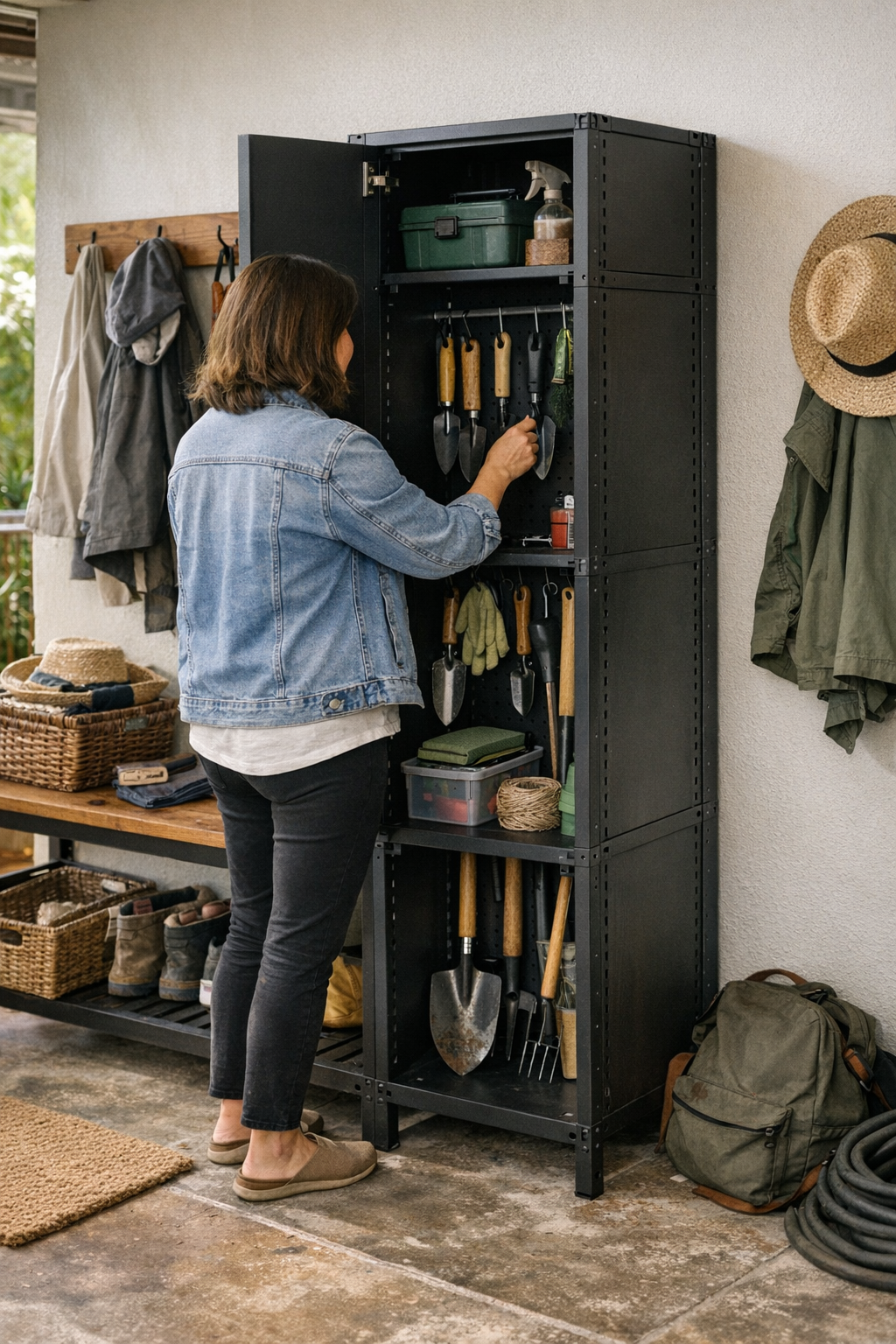
    The real fix isn’t more wall space—it’s sharper boundaries. Vertical cabinets and tight tool zones at the threshold limit what creeps in. When only essentials fit, overflow is visibly blocked: shoes can’t pile up in front of garden tools, bags have nowhere to squat “for now,” and routines bypass the wall scramble entirely. Even a single tall utility cabinet defines what belongs—everything else can’t linger long enough to get stuck.

    With just two or three defined drop zones—one for tools, one for shoes, one for daily bags—returns become fast, and retrievals don’t bottleneck. You grab a trowel on the way out or toss garden gloves back in without detouring past someone’s forgotten gym clothes. Those few seconds of routine flow add up: no more sifting for what’s buried, no more sliding around piles. With pressure high and the clock ticking, the entryway boundary holds instead of collapsing into a mixed catch-all.

    When “More Storage” Makes Things Worse

    Adding extra hooks or another bench tempts you with surplus, but in practice, every new open panel just resets the spread. If the edge isn’t enforced, temporary items turn permanent, and benches swap their seat for a pile. Shoes drift beyond the tray, bags edge out tools, and unsorted gear hops from shelf to shelf. Unless you’re ready to reset everything every time, extra surface equals extra mess—and the core slowdowns return faster than before.

    How to Spot Weak Structure Before It Slows You Down

    • Mail mixes with tools, and sports gear fills zones intended for garden supplies.
    • Returning or grabbing anything means shuffling aside other items first.
    • The area resets visually but falls apart within days under normal use—especially with multiple people and daily entrances.
    • A subconscious pause before crossing the drop zone, bracing for the next pile or blocked path.

    These signals don’t just mark a “busy” zone—they’re proof the setup handles everything and serves nothing, inflating the daily reset burden and shrinking usable flow.

    One Small Change, Big Daily Difference

    Switching to a single, vertical utility cabinet at the edge of test setups changed the entryway cycle immediately:

    • Direct access: Daily tools are a reach away—never behind a maze of gear.
    • Overflow prevention: Shoes and bags can’t pile up in the cabinet’s footprint.
    • Predictable returns: Each category stays isolated. After a week, routines still flow and categories haven’t collapsed into each other.
    • Quick resets: Even in a morning rush, you restore order in seconds and the threshold doesn’t clog.

    No glamour—just a hard stop for category creep and the slow erosion of routine. The difference isn’t theoretical: less reshuffling, clearer movement, a setup that stands up to busy weeks instead of just photo-ready moments. “Looks organized” finally means nothing is in the way when you need to move.

    Tighter Boundaries, Better Routines

    If your drop zone slows things down, skip the next wall of hooks. Focus on what the space looks like after 48 hours of normal use—not after a perfect reset. Do boundaries hold, or does daily life wash them out? For high-traffic homes and tight transition spaces, a smaller, stronger zone anchored at the threshold resists collapse—and cuts the friction that generic wall storage keeps inviting in.

    http://www.betweenry.myshopify.com

  • Balancing Open and Closed Closet Storage for Lasting Organization

    The first week with a freshly organized closet—open shelves gleaming, drawers smoothly closed—feels like getting a clean slate. But by day six, the truth surfaces. Where you store your sweaters, bags, and everyday essentials doesn’t just shape how tidy things look, but how easy (or maddening) every grab, toss, and return becomes. This is the difference between open and closed closet storage: not a question of taste, but how your setup stands up after a week of real-life mornings, laundry marathons, and half-awake evenings.

    Open Storage: Instant Access, Instant Mess

    Walk into a closet with open shelves, and everything you own is visible, grabbable, and—at first—perfectly lined up. In the rush of a weekday morning, it’s easy to snatch a shirt, slip a bag off a hook, or return a folded hoodie right in view. But the same visibility that invites order also amplifies every small break in routine.

    One missed return becomes everyone’s problem. Maybe you shove a T-shirt to the side looking for yesterday’s jeans or nudge a pile aside to fish out a hat beneath. Suddenly, stacks that once looked purposeful start to buckle. A scarf drapes unevenly, more mail lands on an empty shelf “for now,” and the spillover travels fast—especially if you’re juggling everyday traffic or a shared closet. Resets grow more frequent. What started as easy access turns into tight, unstable stacks, and the visual highlight quickly becomes a daily irritant.

    Daily Scenes: The Unraveling in Real Time

    Picture a shelf that was just sweaters and jeans on Sunday. Two days later, a lunch bag claims space at one end. Midweek, someone tosses in mail and that stray umbrella. By Friday, grabbing a sweater means shifting random piles and hoping nothing falls. With no doors to buy you time, open shelving is either perfectly reset—or instantly reveals every shortcut, missed fold, and “just for now” addition. The mess isn’t hidden. It insists on being noticed and, eventually, dealt with.

    Closed Storage: Clean Lines, Hidden Piles

    If open shelves announce every mistake, closed drawers offer another kind of fiction: the illusion of calm. From the hallway, everything looks serene. But that calm surface often conceals a private, slow-climbing avalanche behind each door.

    Open a cabinet after a busy week and you might find last Friday’s folded shirts jammed under socks, scarves stacked sideways, and a tangle of accessories clumped together. You dig for what you need, shifting heaps with one hand as the pile sags and something inevitably falls out. Instead of a reminder to tidy as you go, closed storage gives your mess a hiding place—until it builds up enough that you dread tackling it.

    The Painful Reset: When Hidden Problems Catch Up

    Closed storage doesn’t shame you daily, but it makes for a tougher reset. Without visual pressure to tidy, clutter festers—until “where’s my belt?” or “why is there a shoe with the scarves?” tips you into a full-blown reorganization session. The mess creeps up quietly, and the job of restoring order becomes a Saturday project instead of a quick weekday tweak. In shared closets, this means more time spent trading blame or hunting for lost things—all hidden neatly until the doors swing open.

    Mismatch Means More Trouble: When Storage Fights Your Routine

    A closet that ignores your habits creates constant micro-friction. When every type of item is jammed onto open shelves, daily resets become nearly full-time. The more you pile on, the more the shelf loses its role—you’re stacking hoodies on gym bags on yesterday’s mail, and by Wednesday, the original categories are gone. But when everything is behind closed doors—with no quick view or easy grab—you end up with “out of sight, out of mind” clutter. Important things disappear into the heap, and finding what you need means destabilizing the entire stack.

    The real pain comes when systems don’t fit how you move: folded shirts toppling as you reach for one at the bottom, bins turning into mixed catch-alls, lost items, and slow morning shuffles while you try to remember whether your favorite scarf landed in a box or under a pile. The setup looks fine at a glance, but each reset takes longer, and going back to “organized” gets harder each week.

    Finding Balance: Sharper Zones That Actually Last

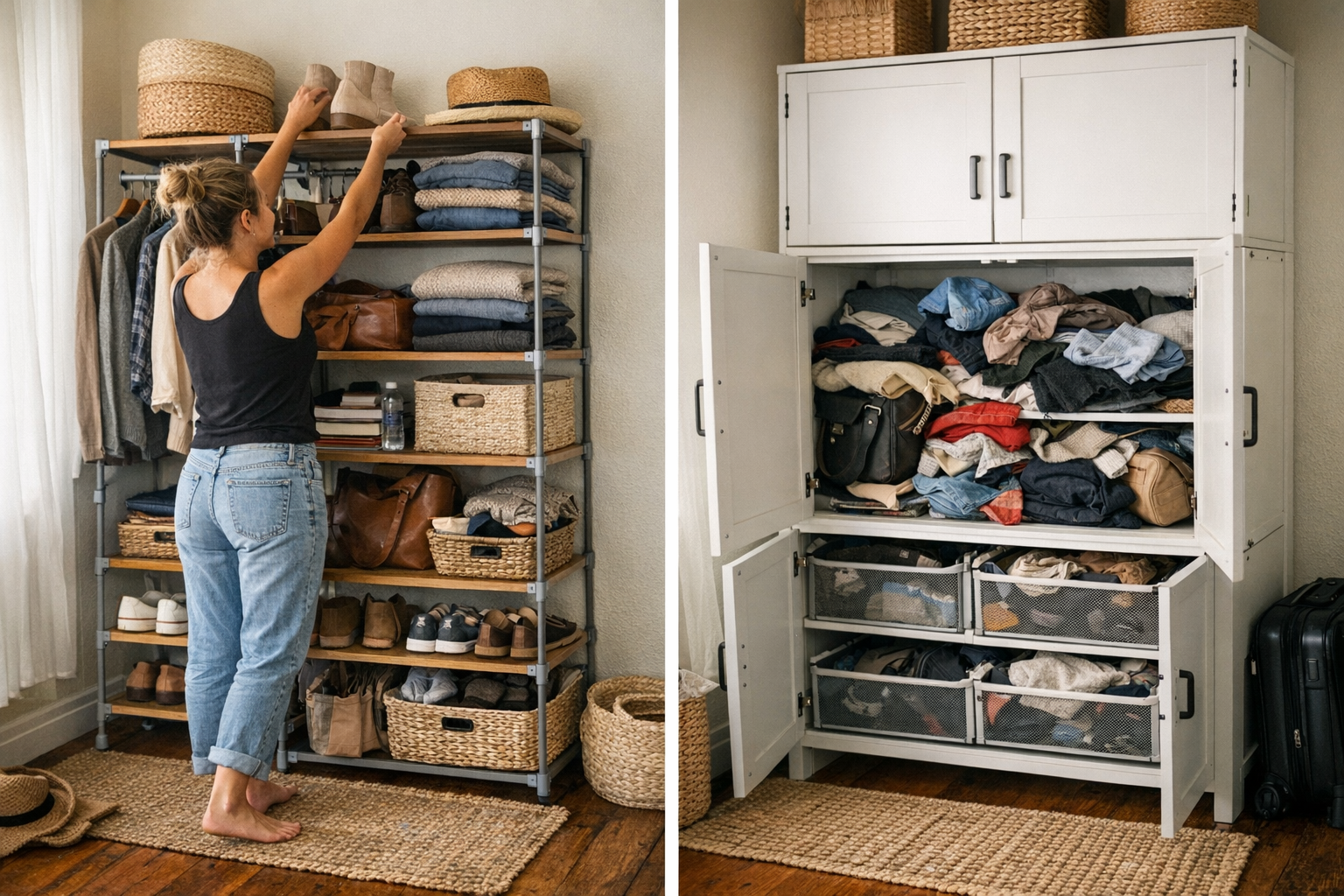
    The fixes that work aren’t about perfection, but about reducing headaches. Keep open shelves within arm’s reach for your highest-velocity items—the coat, the daily shoes, the bag you swap twice a week. Shift overflow, off-season, and “backup” stuff into closed storage or up high, out of the main flow.

    This single change means fewer daily reshuffles. Your go-to items have a clear landing zone, so shelves don’t crowd early—and resets shift from daily interruptions to fast, once-a-week tweaks. Bags and oddballs that used to get dumped at the entry, or left on the floor, finally have a home, and the stress points fade. Roles stay clearer: the top shelf is always for out-of-season gear, not a random heap. Less mixing, fewer surprises.

    Easy Tweaks for Lower-Frustration Closets

    • Label bins and inside drawers. A sticky note by the edge stops bags and hats from overtaking one another.
    • Resist overfilling—leave open shelves with room to spare. A “buffer” makes quick drops easier and keeps piles from tipping.
    • Use your best real estate for what rotates most. Put high shelves to work for out-of-season or rarely used stuff; handle daily favorites at the “grab” level, never above eye line.

    Why Single-System Setups Wear Out Fast

    Closets rarely fail because of capacity; they fail when open shelves or closed bins are given every job. Open storage looks good out of the gate, but needs nonstop upkeep. Closed storage keeps the peace at eye level, but lets clutter pile up in secret. The only approach that survives a hectic life: mixing both. Open shelves for what you’ll touch before your second cup of coffee, closed bins and drawers for what only surfaces every few days or weeks. Each zone gets a job, and the system doesn’t collapse as soon as routines get messy.

    Organization That Holds—Not Just Hides

    It’s easy to be lulled by a tidy exterior, but real, lasting order is about closets that support your movements, your speed, your habits. Revisit what you actually reach for. Notice which categories drift and blend. Make each shelf, basket, or hook earn its space by matching how you actually use them, not just how clean they look. This keeps routines smoother and frustration down—even when the rest of life doesn’t cooperate.

    See practical closet options at ClosetWorks

  • Why Grounded Storage Systems Outperform Wall-Mounted Shelves Over Time

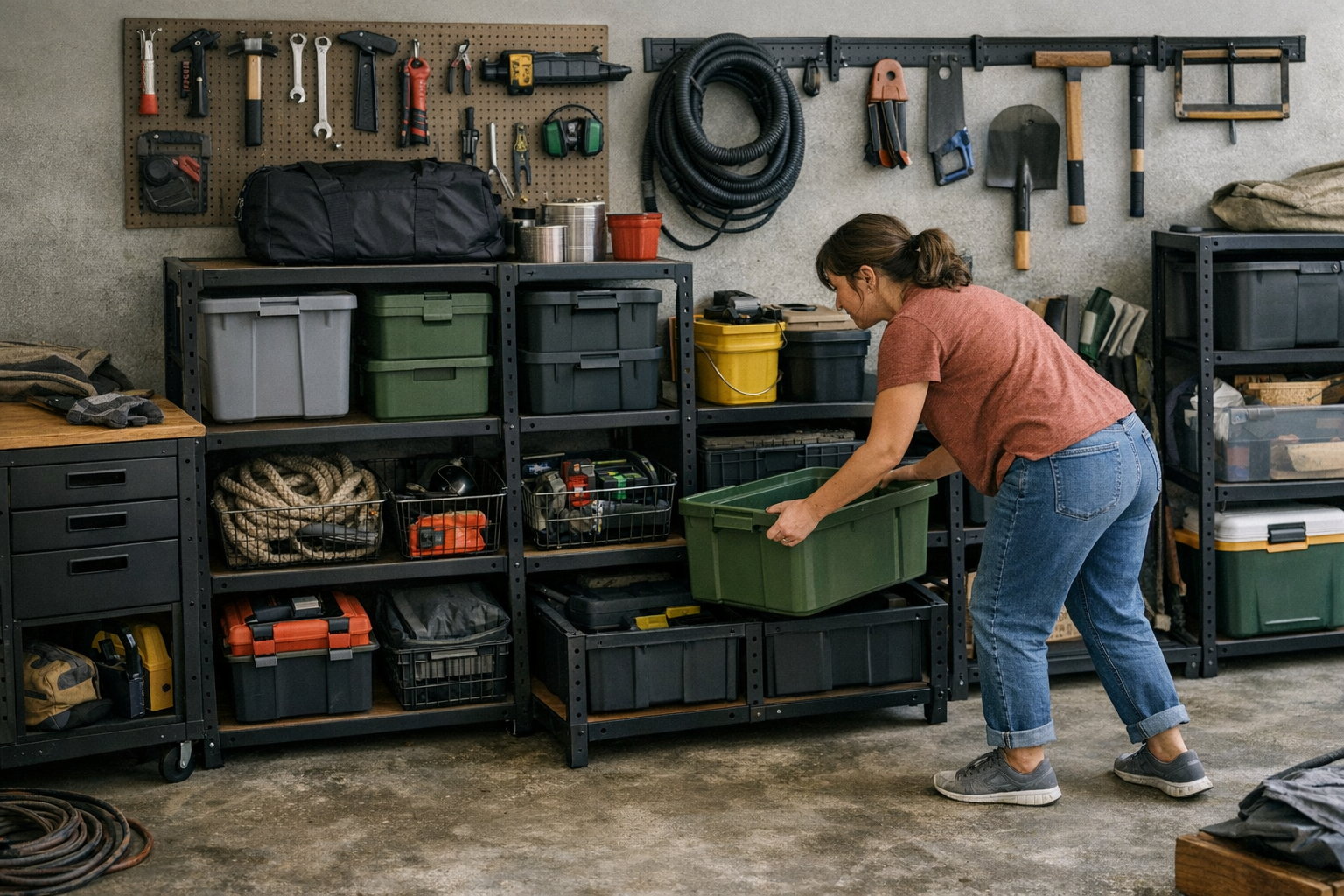
    It’s easy to be fooled by that first rush of order: fresh shelves mounted on the wall, racks lined up, everything swept off the floor. But the real test of any garage, workshop, or mudroom isn’t how sharp it looks on day one—it’s what happens after a messy month of daily use. That’s when hidden friction points start appearing. Setups that seemed perfect quickly reveal their limitations as routines, heavy gear, and clutter patterns take over.

    Wall Storage: The Disappearing Illusion of Control

    Wall-mounted systems always look impressive at the start. Rails run straight, each shelf artfully spaced, floor space suddenly wide open. It’s a temporary feeling of freedom—until you’re forced to use the space as it’s actually meant to be lived in. Hanging bins and tools on the wall solves surface-level clutter but leaves a subtle layer of inconvenience lurking behind the clean lines.

    Stack anything with real weight—heavy totes, power tools, a pair of car batteries—on floating shelves and you begin to sense the give. Studs bow, brackets lean. Even with good installation, the difference between setup day and week three shows itself in tiny, growing shifts: the most-used bins always end up on the lowest shelves, making overhead sections awkward to reach and risky to unload. Carefully labeled containers start stacking out of order. Before you realize it, the “easy access” is gone, replaced by cautious one-handed retrievals and shuffling maneuvers just to get what you need without knocking something loose.

    The Floor-Based Payoff: Reliable, Predictable Movement

    You don’t notice how tense wall storage makes you until you switch to floor-based shelving and feel it lift. When I swapped my strained overhead system for a modular bench and heavy-duty base shelves, the daily pattern changed immediately. Each bin landed with a solid thud. No forced balancing act to get a toolbox down. No checking whether the brackets were still tight. Every chore—moving parts bins, switching out seasonal gear, fetching an awkward bin of cables—happened in one clean motion.

    This stability is what turns space into something you can actually use. If you’re hauling in muddy tools, moving sports gear in and out for the weekend, or stocking up for a month of projects, you want storage that absorbs the load from the ground up. Instead of letting gravity drag everything downward and crowd out the floor zone, floor-based storage expects the weight and makes it accessible. There’s no hesitation or need to brace a hand against the wall before removing a box. The clarity isn’t just visual; it’s in how you move through the area without thinking.

    The Quiet Breakdown of Wall Storage Over Time

    On paper, wall shelves and cabinets seem like a fix-all. In reality, their weaknesses add up quietly. Pulling down a heavy bin at shoulder height gets harder every week. Old studs and drywall anchors loosen; a loaded shelf sways, or starts to sag so that the sides don’t quite line up. Relying on overhead or wall-only setups invites a slow accumulation of awkward workarounds—sidestepping around overhanging corners, finding one zone that always collects overflow, or realizing you’re moving carts just to keep the path clear.

    “Dead corners” appear: sections of wall that look available but are always blocked by stacked items on the floor below. Reaching around one shelving edge becomes a daily ritual. Resetting after a big project means endless shifting, as bins migrate down and living clutter spills into walkways. The once-tidy array is now a series of little choke points, and restoring order starts to feel like wrestling the layout itself.

    One Month In: How Habits Expose the Weak Spots

    Think through a typical four-week cycle: the initial setup looks great; bins lined up, gear in its place. By week two, you’ve started shuffling heavy items downward, assigning the overhead shelves to lighter, rarely moved things out of self-preservation. Smaller tools and loose pieces fill in cracks, and something almost always ends up in front of a cabinet you use the most. By week four, walkways are pinched. The rolling cart you need is blocked by a stack that migrated from a top shelf. A cabinet door is sticky from a slight lean. Returning items to their place often means detouring around a stumble spot or bracing a sagging rail before pulling something down. Familiar order has turned into a series of little interruptions.

    Why Modular Floor Storage Changes the Routine

    The main advantage of modular, grounded storage isn’t just the space—it’s the disappearance of hesitation in your movements. My own swap to a deep, floor-based system instantly freed an entire foot of usable walkway. There was no more squeezing past jutting shelving legs, no dodging a unit that had shifted or leaving items perpetually out “just for now.” Cleanup became direct: every bin slid back where it belonged, and the grab-and-return routine ran smoothly. Overflow didn’t collect in dead corners; the major zones stayed defined after every use.

    Routine reset speed improves. You stop cycling the same boxes from place to place just to reclaim floor space. Instead, the system flexes to hold the load day after day. Small changes—spinning one unit sideways for better reach, using open vs. closed shelving to handle quick swaps—actually stick, because you’re not battling instability or awkward reach. The space starts to work with you, not against you, and the temptation to let clutter pile up fades naturally.

    Recognizing When Your Setup Is Failing

    If moving through your workspace means shifting a cart out of the way, sidestepping a sagging rail, or repeatedly stacking and unstacking the same bins, your setup isn’t suiting your real habits. Storage that demands constant vigilance—bracing, tightening, or reshuffling—signals a mismatch between what’s stored and how it needs to be used. Overflow piles and blocked movement tracks are silent alarms that the layout is slowing you down, not speeding you up.

    Designing Storage Around Actual Routines

    Wall-mounted solutions make sense for light, infrequently used items, or where wall height is all you have. But if your daily routine involves heavy, awkward, or often-in-motion gear, a grounded, modular setup keeps pace with real use—not just first impressions. Stable floor units absorb weight without drama, hold zones steady, and let routines run friction-free. Everything stays easier to reach, return, and reset—without a slow drift toward chaos.

    A truly effective storage system isn’t about how clean it looks the day you install it—it’s about how much less it gets in your way after a month of real, repeated use. When you shift to solid, adaptable storage you reclaim not just floor space, but a workflow that survives the messiest stretches and the heaviest weeks. Routine tasks become smoother, resets are faster, and you don’t spend time dodging your own setup just to get work done.

    Find more practical modular solutions at StackNest.

  • Transform Your Small Yard with Smart Wall-Mounted Outdoor Storage Solutions

    Recognizing the Real Cost of Floor Storage in Outdoor Spaces

    Step into any small backyard or narrow side yard, and the struggle is immediate: storage seems solved with a neat row of bins or outdoor cabinets parked against the fence. But within a week, those carefully lined-up containers transform from “organized” to “obstacle.” What starts out looking controlled quickly turns on you—trips to grab pruning shears become sideways squeezes, the garden hose sprawls across the path, and a simple sweep means playing musical chairs with heavy bins just to reach bare concrete. Corners fill themselves with stray clippings, and what was meant to make life easier quietly introduces a new, daily hassle. The more you clean, the more you notice how much time goes into shifting, not storing.

    Floor Bins: Neat in Theory, Cumbersome in Practice

    Picture the six-foot-wide strip beside the house. Day one, bins hug the fence, bikes lean against the wall, and bags of soil fill the leftovers. By Saturday, that “walkway” is more a shuffle lane—each step compressed by mismatched storage. Need the loppers? You’re dodging the recycling can, tilting the compost bin, and nudging the hose reel out of the way just to reach the right spot. Even sweeping becomes a micro-move routine: lift a box, scoot the planter, stoop low to fish leaves from the dark gap behind containers. The promise of order erodes when every return trip adds friction instead of flow.

    This is where most setups fall apart: dirt and leaves gather under bins you never move, clutter escapes into slivers of “unused” space, and soon you’re making detours to dodge your own organization system. Resetting just one area means dragging three things aside. Gear that should live on the wall inches into corners, and cleanup stalls because there’s nowhere easy to stand or sweep.

    Wall Mounts: Small Changes, Real Movement

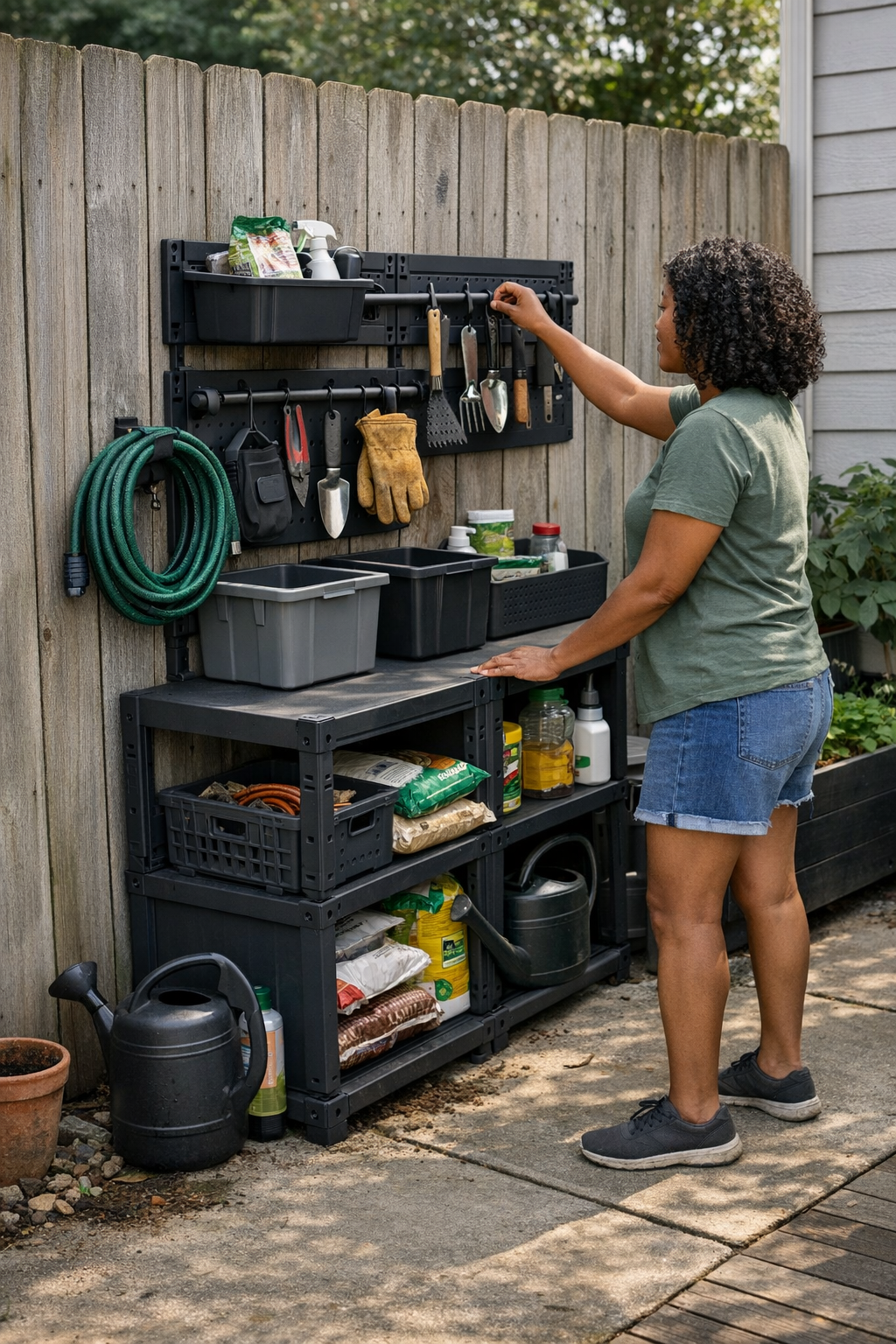
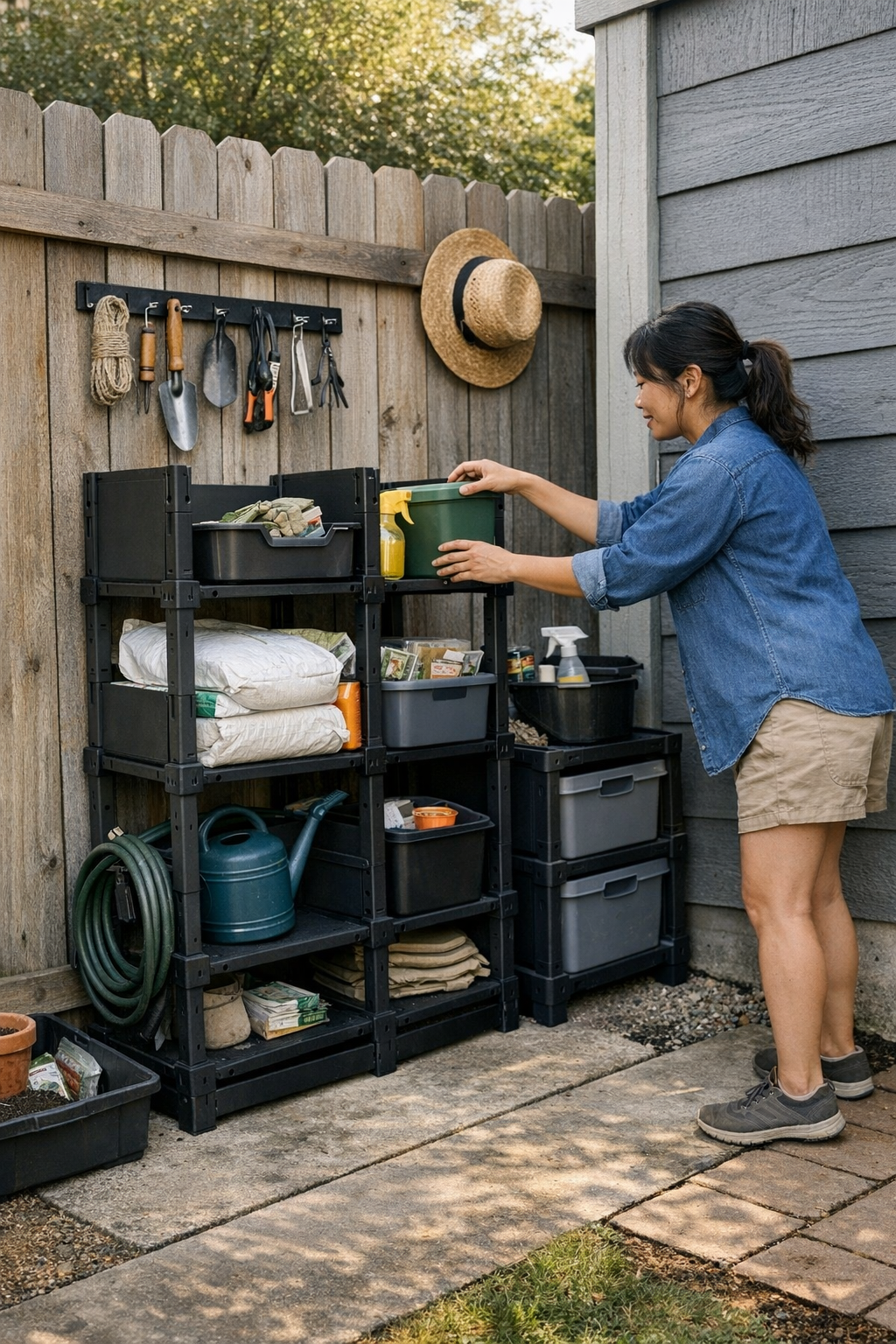
    Wall-mounted racks and rails don’t try for perfect—just possible. Lifting hoses, tools, or bags up onto a few strong hooks instantly reopens the tightest sweep path. A foot and a half of bare ground, previously blocked by a bin, suddenly makes it possible to finish cleanup in one pass instead of three. Instead of stepping around obstacles, you’re gliding through. No more shifting one thing just to return another. The hidden upside: wall storage slows down that creeping edge of sprawl that floor bins quietly feed.

    Why Less on the Floor Means More Available Space

    Every ground-hugging unit does double duty: it stores, but it also attracts clutter that’s easy to forget about until the next deep clean. Underneath—out of sight, always grime. Wall storage leaves concrete, bricks, or pavers exposed, so sweep-ups happen before neglect settles in. You don’t need a huge system: just a run of hooks or a compact rack on a wall or fence clears enough to turn resets from multi-step chores into grab-and-go tasks, even when you’re running low on motivation.

    Real Reset: When a Bare Wall Outperforms Two Bins

    One example: the pinch point at a back gate. Trash, boots, garden bags—everything lands right where traffic jams are guaranteed. Replace two clunky floor bins with a short wall rail for gloves, hand tools, and bundled twine, and suddenly the space breathes. Sweeping shifts from stop-and-go to a single, fluid push. That scrap of wall isn’t pretty, but the effect is instant: fewer built-up piles, fewer excuses to leave corners unchecked, and far less wrestling with bins just to restore order. The shift isn’t in what you see, but in what you don’t: the area doesn’t bog you down every time you step outside.

    It’s not just aesthetics: after two weeks, you realize you’re stalling less. Corners stay clear, stuff returns to its spot with minimal effort, and you don’t find yourself dragging floor storage back into position after every backyard day. The urge to ignore the mess, because it’s “too much,” fades.

    What Goes Up, What Stays Grounded?

    Not everything belongs on the wall. Regularly-used, lightweight items—trowels, spray bottles, extension cords, garden gloves—earn their place up high. Floor bins still matter for heavy, unstable, or weather-prone gear, animal feed, big bags of soil. The trick is moving just enough off the ground to bring back easy movement and cleaning. A few well-placed hooks on a back fence or garage wall can change your reset flow more than buying yet another matching storage box.

    Try Before You Overhaul

    Before mounting a whole storage bar, start simple: add three hooks in the area where backup clogs the floor most. Next time you sweep, see how often you’re just hanging and going instead of shuffling bins aside. If you notice a clear path returning—or realize you’re no longer returning misplaced items to a cluttered pile—expand from there. The goal isn’t a crowded wall; it’s a floor with nothing parked where you need to move.

    Spotting the Floor Bin Takeover

    Watch for these warning signs: the path gets tighter each week; bins multiply, then spread; “overflow” starts filling the slivers behind and underneath. If putting things away takes delaying—because it means heavy shifting, not a quick drop—your storage system is starting to work against your routine. Resets become events instead of afterthoughts. When tidying up the yard means rebuilding a setup, not just touching up corners, it’s a signal that lighter, higher-up options might actually match how you want the space to work.

    The Bottom Line: Outdoor Spaces That Work, Not Just Appear Orderly

    A setup that frees the floor isn’t just about looks—it’s about recovering how the space moves. Over weeks, the right layout means you fight the area less. Sweeps and returns shrink to simple, repeatable moves, and even small zones—side yards, patio edges, garage thresholds—offer new freedom when only essentials stay on the ground. This isn’t a total overhaul—just a smart pivot that trades a cramped lineup for open flow, quicker resets, and visible breathing room.

    The difference reveals itself not just in a cleaner view, but in how much less you dread bringing things outside and how rarely you have to reset the same ground twice. That’s the kind of ease that sticks.

    Visit TidyYard for practical outdoor storage solutions

  • Why Immediate Cleanup Prevents Persistent Cat Feeding Messes

    Every indoor cat owner recognizes this: you walk past the feeding zone after breakfast, spot what looks like a harmless splash or crumb, and think, “It can wait.” But by dinnertime, that innocent bit has baked itself onto the mat edge, fused with dust and stray fur, and somehow managed to creep beneath the bowl where it’s become a hassle to reach. What started as one tiny speck quietly escalates—now, instead of a two-second wipe, you’re prying sticky residue off the floor and dragging out the full cleaning kit just to feel like the area’s really clean again.

    Why Spills Left for Later Always Grow Into a Bigger Problem

    The first day a spill happens, it’s barely noticeable. But delay cleanup, and invisible layers form: food dries in streaks along the mat’s edge, wipes become less effective, and bowl rims develop a sticky ring that refuses to budge without a real scrub. Visually, the area might “pass,” but functionally it gets worse—harder to reset, harder to keep up as the week goes on. Now the routine slows: you hold the mat at an awkward angle, dig at patches that would have vanished with a single swipe if caught early, and re-enter a loop of nagging cleanup you never budgeted for.

    It rarely starts with a flood. Usually, an edge soaks up just enough to attract wet food, and repeated meals make the residue build quietly. Soon your hand sticks to the mat, or you get the first whiff of yesterday’s meal, and you realize there’s buildup hiding underneath—sometimes forcing you to move the entire setup for a proper clean. In a shared or open kitchen, this mess doesn’t just linger; it spreads—crumbs and drips end up where you walk or eat, and what was a cat corner is now a series of tiny interruptions all over the house.

    The Slow Creep: Mess Spreading Beyond the Feeding Zone

    Think through an ordinary week: you lay the mat out straight after cleaning, only to watch the cat flick her paw, sending gravy just off the edge. Slowly, crumbs ride just beyond the mat, clinging to shoe soles or catching in the grout between tiles. In high-traffic areas, the transition is obvious; mats curl from moisture, fur bonds to sticky spots, and suddenly you’re wiping along baseboards or finding litter or food underfoot in places that have nothing to do with feeding time.

    None of it is dramatic—just a series of small set-backs. A quick reset becomes a drawn-out hunt for hidden mess. The day’s friction isn’t just annoyance; it’s a real drag on the routine, especially when the same pattern comes back after each meal.

    The Real Reset Burden: What Delayed Cleaning Actually Means

    There’s a quiet frustration in thinking the feeding area “should be fine” while your effort keeps going up. Delayed cleanup brings:

    • Extra effort in every single reset—dried-on food and stubborn oils stick to bowl and mat, demanding longer scrubbing and more tools.
    • A space that appears clean but always resists—under-bowl grime or edge stains that surface when least expected.
    • Tracking—litter, dust, and crumbs migrate past the feeding zone, so cleanup grows from a point problem to a hallway-and-floor sweep.

    Have two cats? The cycle just speeds up. One untidy eater is enough to turn “manageable” into an ongoing maintenance cycle. Food and water residue accumulate fast, oil and kibble bits clog textured mats, and the tiniest sticky patch acts like a magnet for dust and cat litter from neighboring zones. Ignore it once, and you’ll clean up double later.

    Comfort vs. Cleanup: When Each Gain Delivers a Tradeoff

    It’s tempting to go for a thicker mat, heavier bowl, or a perfectly placed setup that looks “solved.” But most comfort upgrades only hide the next problem: mats trap spills under bowls, so messes sneak up for big, annoying cleans. The space looks organized, yet by the time you lift the mat, there’s a whole sticky film. Add a cozy nook for the cat, and suddenly you block quick tool access—now you’re squeezing wipes along the edge, and the disaster always gathers where it’s most awkward.

    Even the best-looking setup can create more work if the day-to-day flow gets slowed. What calms the feeding station today may just shift mess and movement into tomorrow’s routine. The tradeoff is clear: easier on the cat, heavier on your schedule.

    The Repeated Scene: When “Looking Tidy” Isn’t Smooth Living

    • Reset pileups: You wipe down after breakfast, but by dinner, the mess is set—making a simple job feel like a chore you have to drag yourself through.
    • Hidden mess boomerangs: Out-of-sight spills under bowls or at mat edges quietly return as odor or stickiness right when you’re least ready—often just before guests stop by or while you’re prepping your own food.
    • Shared spaces get hit: Feeding corner “containment” only works until the cat knocks a chunk off the mat, shifting crumbs and drips directly into the busiest walkways. Suddenly, every pass through the kitchen is a test for sticky socks or mystery crunch underfoot.

    When Supplies Are Close—But Not Close Enough

    It’s easy to think your setup’s covered: towels in a drawer, spray bottles below the sink, and extra mats in another room. But it’s not storage that matters—it’s reach. If you can’t grab a wipe without shifting two chairs or opening the wrong drawer, you’ll always delay. “Ready, but not reachable” turns fast cleanup into a missed moment, and that’s exactly when messes multiply. Most setups look ideal after a deep clean, but by mid-week, the friction shows: you fall behind, small jobs become bigger, and the layout seems to create more hurdles every time you use it.

    Make Cleanup Automatic: The Simpler the Routine, the Easier the Home Feels

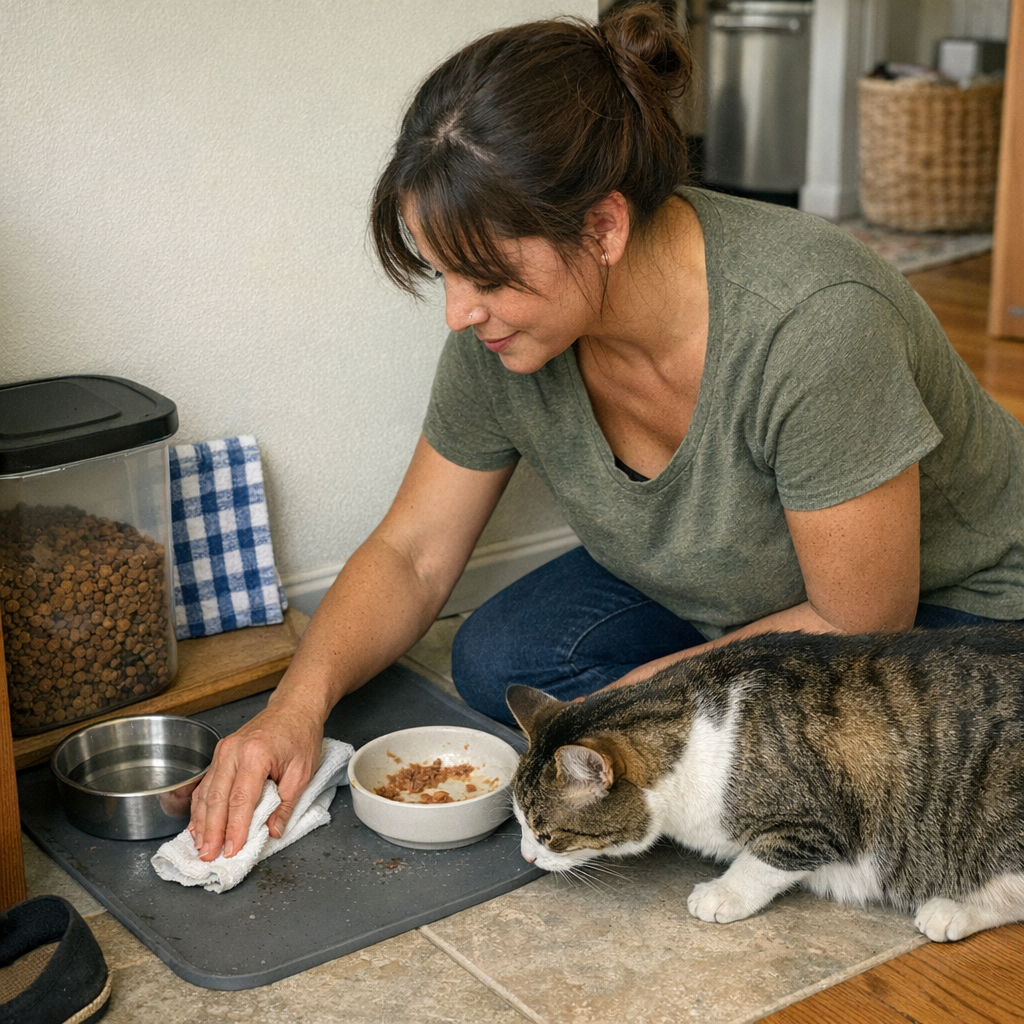
    The breaking point comes quietly: another sticky patch, another minute lost hunting the right towel. The simple fix isn’t adding more gadgets—it’s moving the routine closer. Leave a reuse-ready cloth tucked next to the food bin or looped right over the mat’s edge, where your hand already moves after a meal. Now, wiping happens in real time, not hours later.

    Every time you pass the feeding zone, a direct swipe can clear spills while they’re easy. Press the rim, slide under the mat, and avoid those “set-in” surprises. Instead of a weekly chore buildup, cleanup takes seconds, and the area actually stays fresh—no lurking mess, no sniff test needed just to be sure.

    Real-World Improvement Over Time

    • Mats stay flat—no curling, no damp buildup distorting the zone.
    • Refills are pleasant—no ring of sticky grime to tackle at the bowl edge each time you pour.
    • The floor beneath the feeding setup stops bearing the cost of every missed wipe.
    • Odor and random fur patches no longer drift into the rest of your living space.

    No overhauls needed—one minor adjustment in where you keep cleanup tools makes all the difference. It’s about timing: routine wipes at the source, not deep cleans long after the fact.

    A Setup You Can Trust: Living With the Feeding Zone, Not Around It

    When your feeding zone matches the real pace of home life, everything clicks into place. The right structure is the one you don’t have to mentally track or shuffle around; upkeep fits into normal movement. Guests don’t see spill streaks, you don’t stall out each reset, and routines lose that drag that quietly makes feeding a dreaded task.

    The daily difference is real: a feeding setup that stays dry, flat, and clean—days after the last full reset—lets you spend less time on catch-up and more on things that actually matter. Quick cleaning where it counts keeps both your space and your week working better—no surprises, no scrubbing cycles, no lived-in mess sneaking back when you look away.

    Visit StillWhisker for practical indoor-cat-life setups and supplies.

  • Choosing Impact Drivers That Protect Apartment Walls and Reduce Noise

    Every job looks clean and easy from the outside—until you’re sweating over drywall dust in a cramped apartment, one screw away from a dented wall or a noise complaint. Tool catalogs brag about horsepower and torque, but in real rooms with thin partitions and the clock ticking down to your lease renewal, what separates the “almost good enough” from “never again” is how the tool actually feels—and what it leaves behind.

    Apartment Fastening: Friction Shows Up Fast

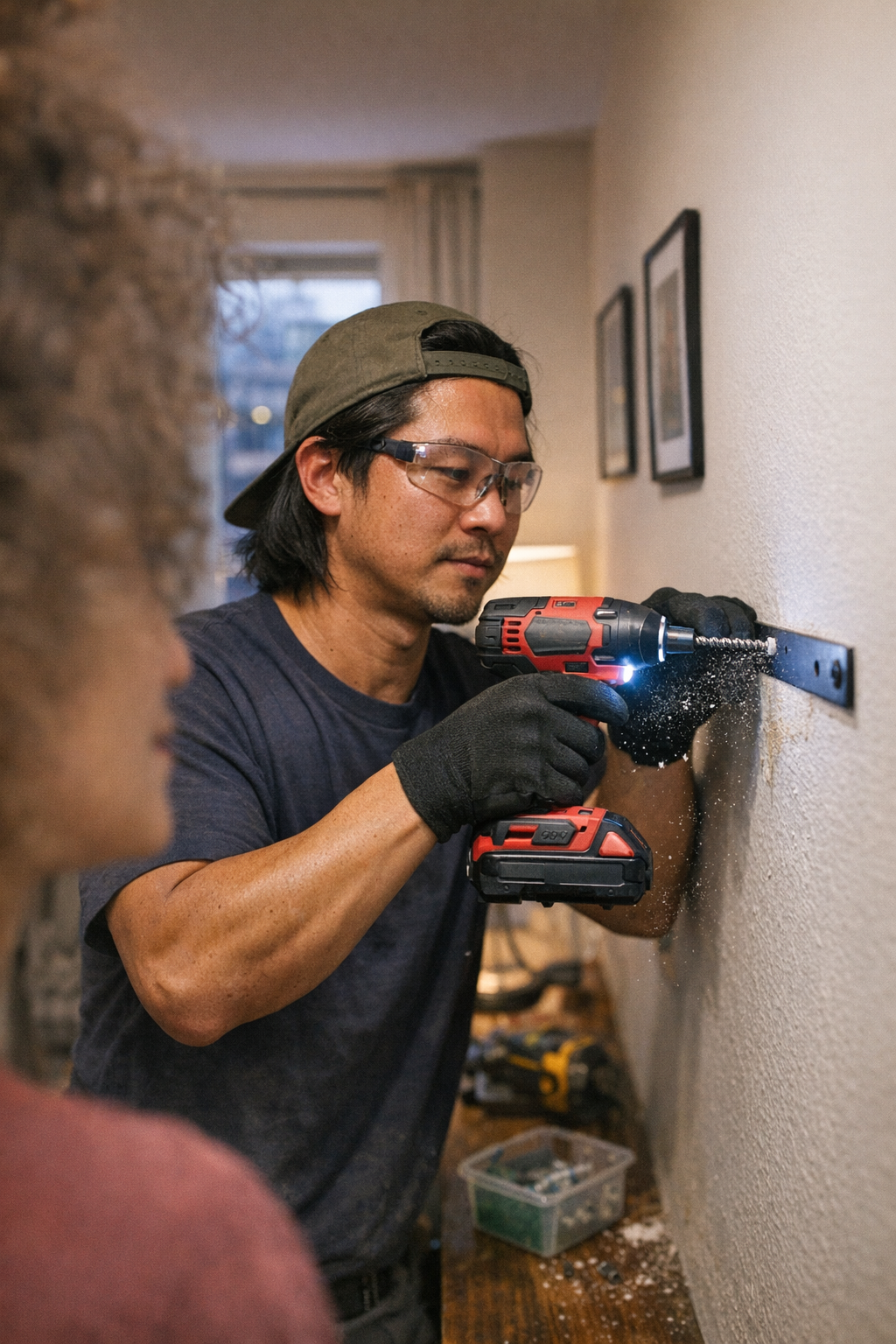
    If you’ve ever assembled a shelf set or mounted curtain rods in an apartment, you know the routine. You walk in thinking, “I’ll be done in an hour.” The first anchor goes in, fine. By the third, the buzzing tool starts to bite. Jittery vibration creeps from your palm up your wrist. The noise spikes as the screw seats, echoing not just in your ears, but in the apartment below. Dust pools along the baseboard. And with every next anchor, holes widen, plaster flakes, and your confidence shifts to damage control.

    It’s the accumulation of little problems that grinds you down—bit slips, bounced anchors, and the spreading mess. One bad driver and suddenly ten anchor points become five cleanup projects.

    Spec Sheets Don’t Silence the Neighbor

    Marketed specs—RPM, weight, torque—mean little when you’re partway through a wall of fastening. You switch to high gear expecting speed, but instead get more rattle. The wrong driver transmits vibration with every screw, turning your living room wall into a low-grade percussion instrument. In thin units, the reality isn’t just noise, but physical feedback: cracked seams, splintered drywall, anchors that won’t bite flush. What looked “powerful” in the ad just feels reckless in your hand.

    Contrast that to a tool with decent vibration dampening. Each drive is controlled, anchors stop just where you want—no sudden kicks, no cloud of dust spreading three feet out. You power through awkward angles without bracing for the ache after every fastener.

    When Poor Tools Make More Work

    A cheap or mismatched driver means scrapes, stripped bits, torn paper, and that slow ballooning of patch jobs: spackling, sanding, and repainting over craters where an anchor blew out the back. And for every echoing bang, the risk rises—the neighbor’s fist, the building manager’s warning, the mounting stress.

    What’s supposed to be an afternoon project piles up into days spent restoring your own mistakes. Fatigue isn’t just physical, it’s mental—repeating the same action, dreading the next flaw, constantly cleaning droppings you never planned for.

    Scenes from the Real World, Not the Showroom

    Imagine it: Friday night, bracket kit laid out, driver battery freshly swapped. You start mounting shelves; after a handful of fastenings, you’re feeling every impact both in your wrist and your patience.

    • Noise snowballs: Each drive drumrolls through plaster. By anchor eight, you’re bracing for the next complaint as much as the next screw.
    • Mess multiplies: Bits of paint and grit scatter across furniture and carpet—more time with the vacuum than the tool.
    • Anchors fudge or fail: Lack of control means the anchor’s not square or buries deep, forcing the dreaded wall patch even before the shelf’s up.

    Minutes saved with a bargain-bin driver evaporate into hours lost redoing, cleaning, and running apology circuits with neighbors or landlords. Cheap seems fast. It rarely is.

    Switching Drivers, Shifting Experience

    The first job with a properly engineered driver feels like switching to noise-canceling headphones for your hands. Vibration doesn’t jump back at you with every pull. Wrist pain subsides, even with repeated anchor runs. Most notably, the clatter drops instantly: the job sinks comfortably below the level that travels through walls. Dust and chipping slow, anchors stay tight, and drywall stays intact.

    The difference is precision—anchor after anchor goes exactly where you wanted. Seams stay crisp. By the end, you’re not scrubbing corners, redoing holes, or apologizing for the disaster. The real win isn’t speed; it’s the way each small fix stays small.

    Fatigue and Friction: Work Smarter, Not Harder

    Fatigue sneaks in. Squeeze a vibration-heavy driver and your hand cramps; you start skipping the fine touches, just wanting the job finished. With the right dampening, control returns: you brace less, slip less, and each run feels measured instead of rushed. The job doesn’t just go faster, it feels lighter—mentally as much as physically. There’s no holding your breath to counter stray kicks, no crossing your fingers you haven’t missed a stud or widened the hole.

    Why “Lightweight” Can Work Against You

    That featherweight driver on sale? Sometimes it’s a shortcut to more vibration, not less. Lightweight bodies pass more of the fight to your hand—and through every thin partition you touch. Suddenly, your afternoon job turns into a lesson in drywall repair: splintered holes, spidered paint, and yet another lost afternoon beneath the patching kit.

    If you feel the floor shake after three or four fastenings, or hear the walls echo next door, your tool’s isolation has failed the test. And in apartment living, that’s a shortcut to a growing repair list and annoyed neighbors.

    Bit, Blade, and Battery: Control Matters Most

    Sure, upgrading to a better bit helps—less cam-out, less stripped hardware—but it only fixes half the problem. The real leverage is in the driver’s “feel” itself: whether sanding, cutting, or sinking anchors, the more control you get, the less fallout you manage. It’s in how you swap bits without fighting stiff chucks, how a fresh battery slots mid-job, and how the driver’s balance prevents accidents on the very last run.

    This is where experience shifts: tool behavior becomes prevention, not just correction. You spend less time patching and more time actually progressing, because mistakes stop multiplying.

    Protect the Job, the Walls, Your Sanity

    In apartment work, specs don’t tell the whole story. What matters is how the tool counters the friction points: persistent vibration, creeping fatigue, control slipping away at the worst moment. The right driver means tighter anchors, less dust roaring out over your floors, and a quiet enough workflow to finish a job without planning an apology script.

    If you’ve patched one wall too many or found “quick” fixes spiraling out, you already know the truth: the impact driver isn’t just about what you put into the wall—it’s about what you don’t have to fix after.

    Shop practical, work-proven drivers and fastening gear at Gumboll.

  • Streamlining Pet Entryway Routines to Reduce Daily Cleanup Hassles

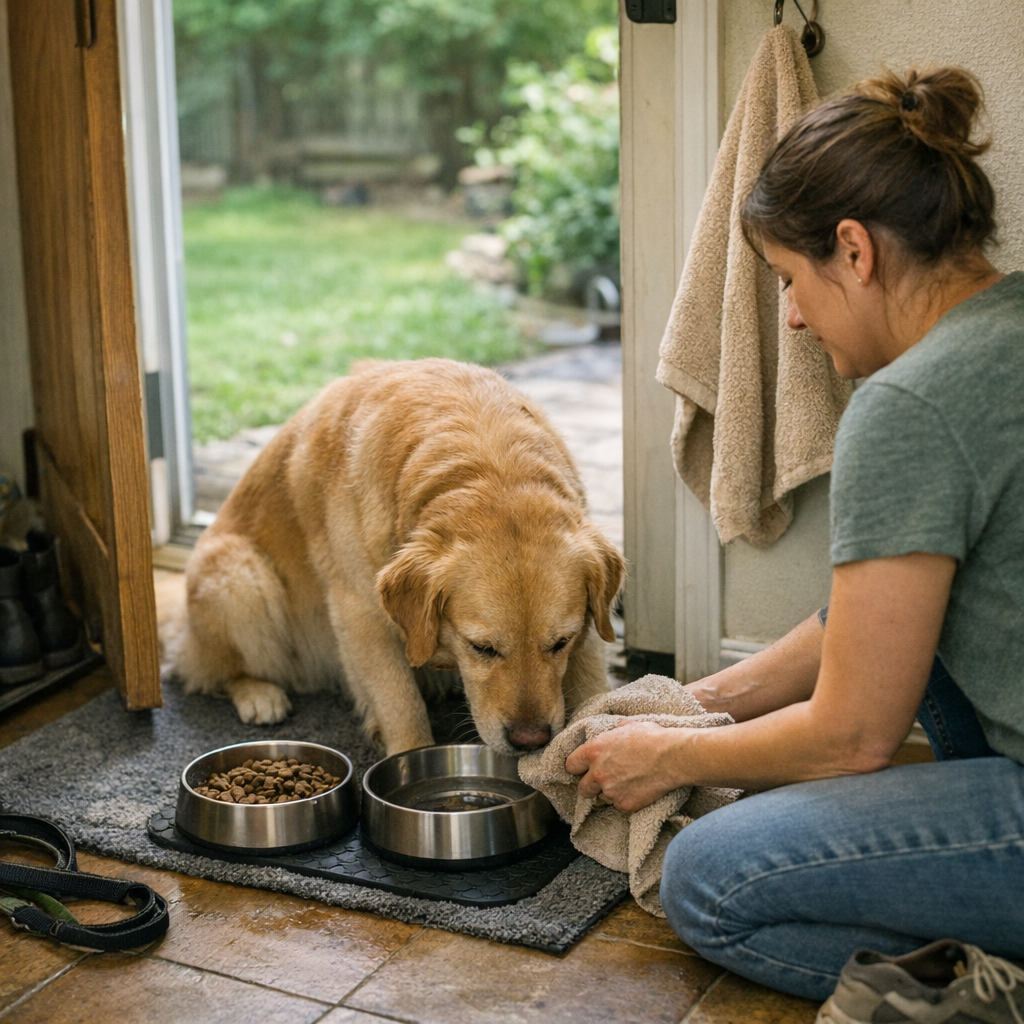
    When a dog or cat bursts in from a walk or the yard, every missed reset—an unwashed bowl rim, a damp mat forgotten by the door, a towel draped somewhere out of reach—adds drag to the next round of care. The difference between a routine that works and one that slows you down is how quickly you can find, use, and reset basic supplies after each feeding, walk, or quick grooming. Most pet care friction isn’t dramatic: it’s the slow buildup of small unfinished tasks—delayed wipe-downs, supplies migrating out of place, quick resets taking longer with every missed detail. CalmPetSupply’s world is built around these pressure points, not just the appearance of order, but the repeatability of basic care.

    When “Clean Enough” Isn’t Reliable

    The entryway looks managed after an early walk, but by midday, signs of friction surface. The water bowl edge is tacky from rushing a refill. You reach for a paw towel—still damp, or missing entirely—while your dog marks a fresh trail across clean flooring. If groceries are piled at the threshold, even basic cleanup turns into juggling: searching for a missing towel or shifting a misplaced bowl yet again. Each small gap in the routine multiplies effort, forcing you to retrace steps and catch up spills that could have been contained. “Clean enough” slides into repeat work that wears you down by evening.

    Routine Friction in Real Homes

    Designating a spot for pet basics—bowls by the door, towels on a hook, wipes in a bin—doesn’t guarantee you’ll reach what you need in the moment. Towels get moved when guests squeeze past or when someone borrows them for another spill. Bowls creep out of line and start blocking the path to the shoe bench. In compact apartments and busy households, setups that seem orderly at first begin pinching you for space or time: a bottle of spray buried behind clutter, a towel knocked to the floor, a water bowl that slides just far enough to trip you on the way out. Every quick care habit exposes where setup looks functional but requires constant readjustment.

    Practical Reset Steps—And Why They Slip

    On paper, a routine looks clean: hook for the towel, quick paw wipe on reentry, bowl wiped and restored in seconds. In practice, small points break down:

    • Supplies migrate: The towel isn’t at the door—used by someone else, or left over a chair somewhere else. The wipe bottle is tucked behind grocery bags. Cleanup starts with searching.
    • Bowls slide off-track: Placed six inches away or nudged by a foot, they start inviting spills and slow down even simple refills.
    • Clutter returns fast: Paw wipes and sprays sink behind other storage within hours, blocking easy grabs for the next rush home.
    • Dirty surfaces linger: “I’ll clean the rim later” quietly becomes “I forgot again”—hard streaks appear, just when you’re too busy for full cleanup.

    No setup is immune. “Organized” areas that miss how items migrate or how hands-free access breaks under pressure become daily sources of extra movement and longer resets—adding five minutes here, another trip there, every day.

    Everyday Use Scenes—Where Disruptions Multiply

    Night check: leash off, reach for the towel—gone. Maybe it’s still outside, or tossed on a chair during the afternoon rush. Now the dog is circling the living room, dropping wet marks that will wait until later. The so-called “quick” water bowl refill? A spare leash or shoe blocks the bowl, turning a one-step job into a four-move fumble. And when two pets or visiting animals share space, their gear sags into the shared hallway: wet towels covering coat hooks, bowls crowding the floor, and quick access always delayed. In real routines, every step that requires backtracking or moving something else is a friction point that repeats with daily care.

    Why Looking Tidy Isn’t Enough

    A space can seem organized at 8 a.m.—bowls in a row, towels ready. But by lunchtime, a missing cloth, blocked bin, or out-of-place scoop starts creeping back in. Refilling water means moving the supply bin that’s stuck under an extra bag. Grabbing a towel sends you to the bathroom where it was last left to dry. Even setting down a dish can mean clearing the entry again. What feels manageable in the morning drags down the pace by afternoon. The difference isn’t just visible order, but whether supplies can be grabbed and reset instantly, without doubling back or clearing a path first. Fast resets—not just clean surfaces—keep routines from piling up friction with every cycle.

    Reducing the Repeat Friction

    Most care setups only need one fix to start shrinking daily friction. A sturdy hook within easy arm’s reach, set right by the door, keeps the paw towel where every caregiver expects it. A weighted, steady bowl on a specific square of low-traffic floor means spills stay contained and the bowl doesn’t wander into the main path. Storing paw wipes or spray bottles in a single, visible container—never buried, never doubled up—means you grab what you need or see immediately when something’s missing. If it’s easy to reset after each step, routines stop leaving supplies scattered, and care moments actually shrink instead of stretching longer with every interruption. The test isn’t just cleanliness: it’s whether resets disappear into the flow rather than taking up more time tomorrow.

    Conclusion: Lasting Calm Is Built on Immediate Resets

    Less friction means fewer steps, not more. A hook that keeps towels from wandering. A heavy bowl that doesn’t slide and never traps you into a spill. One visible storage spot for cleanup gear. These aren’t upgrades for order’s sake—they are daily tools that make routines function at real speed. Routines that can be reset mid-rush, without thinking, are the ones that keep the home, and everyone in it, genuinely calm—even after the third walk of the day, or the last check-in before bed.

    Explore practical daily care solutions at CalmPetSupply

  • How Dedicated Pouches Keep Carry-Ons Organized During Travel Shopping

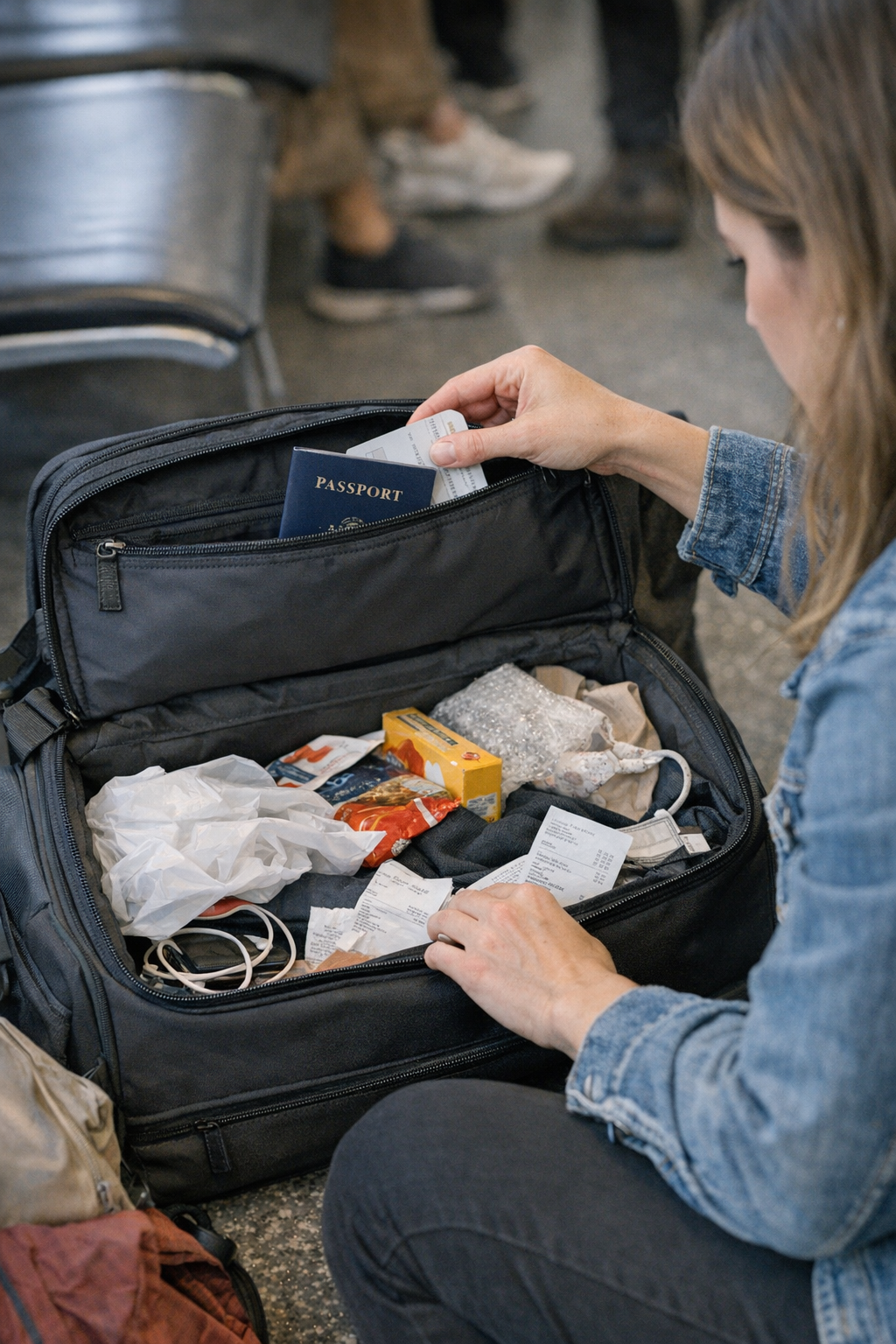
    The carry-on that looks perfectly organized at home rarely survives a single airport shop before its setup starts breaking down. The moment you pick up an unexpected snack, collect a handful of new receipts, or accept a souvenir bag, your efficient packing structure starts slipping—sometimes even before you reach your gate. Headphones get pinned under snack wrappers, that easy-to-grab passport is suddenly camouflaged by store packaging, chargers vanish behind impulse purchases. Order collapses fast, not from overpacking, but from the way real travel introduces new, badly placed objects into every pocket and gap. No matter how tidy your bag looked at the hotel, friction hits hard after just one or two airport stops: reaching slows, movement stalls, and “organized” means less than you thought.

    When Shopping Joins the Carry-On

    The myth is that your careful packing will withstand the chaos of airport life. But within one layover—or even the first pass through duty-free—the pattern breaks: a last-minute gift, snacks for the plane, receipts you meant to tuck away but suddenly forget. With nowhere planned for these extras, they end up wedged in the first available space—jammed next to pouches, buried beneath what was once a flat layer, or piled on top of everything else. The cost is immediate: grab your passport at a checkpoint and instead you drag out a tangle of stubs; reach for headphones at the gate and crush a chocolate bar somebody handed you ten minutes ago. Each access point doubles as a friction point, slowing you down and sapping your travel flow.

    It isn’t just about mess—it’s about movement, about the way every small addition interrupts the carry-on you’re trying to use on the fly. Every attempt to retrieve an essential forces you to shuffle aside new obstacles, or pause and rethink your reach-path. The line behind you moves. Your own progress, even moving from gate to gate, starts to drag.

    Repeated Reach, Repeated Friction

    The typical cycle looks the same every time: zip your bag closed, feeling in control. Then, after one checkpoint, your system unravels. Receipts slip out and scatter, snack wrappers block access to chargers, that compact souvenir is now blocking the tech pouch you actually needed. Every “quick” retrieval becomes a mini detour. You catch yourself pausing mid-queue, digging through pouches you didn’t mean to open, running your fingers through layers that felt simple an hour ago and now leave you stalling in public, visibly disrupting the flow you thought you’d preserved.

    The wear shows most clearly with single-compartment bags. Even well-packed cubes can’t offset the entropy that creeps in once unplanned items spiral throughout the main cavity. Each repeated retrieval takes longer—sometimes just seconds, sometimes enough to irritate the person behind you at a checkpoint. By the second or third search, essentials might as well be invisible, lost under a shifting layer of new, unordered stuff.

    When “Tidy” Stops Working

    A bag that zips up looking calm isn’t actually organized if it can’t protect fast access from last-minute chaos. This becomes painfully clear at crunch moments: boarding pass buried under a gift bag you forgot you had, ID jammed next to snack wrappers, headphones tangled with receipts. The system you trusted on departure starts to feel actively hostile just hours in—because appearance doesn’t survive airport reality if your structure can’t bend without breaking.

    Where Most Carry-On Setups Fail

    The real risk isn’t overpacking—it’s failing to plan for the unplanned. Almost everyone stumbles here, usually for the same handful of reasons:

    • The surprise overlap: Souvenir bags or receipt piles settle right on top of daily essentials, hiding what you need mid-trip.
    • Awkward blends: Loose snacks drift into “tech gear” territory, forcing re-sorting at the worst possible moment.
    • Compartment confusion: Single, open spaces absorb new objects deep inside, so even simple retrieval turns clumsy and multi-step.
    • Visual order, physical mess: What looked neat in a hotel mirror collapses as soon as you’re at the tray transfer; small things vanish instantly or jam in zipper paths you thought were protected.

    Each micro-delay on retrieval might seem ignorable, but the sum adds up—especially when it’s repeated for every routine check or boarding sequence.

    The Compounded Cost of Tiny Interruptions

    This isn’t about “just seconds lost.” The hit comes from repeatedly pausing, awkwardly, for items you should already have in hand—hauling a bag down from the overhead bin to find a cable lost behind a snack pack, or shuffling for documents while blocking the aisle. Each interruption feels trivial in the moment, but stacked together, they sap travel energy and turn simple movements into a running reset.

    If your structure focuses on looking good, not on adapting, the cost is cumulative: after every checkpoint, you’re forced to reorganize. Essentials for quick access drift out of reach. The entire sequence—security, shops, boarding, even hotel check-in—becomes choppy, and your mental load goes up just keeping track of what’s moved where. Bags that seemed minimalistic can become stressful just by the third airport stop.

    The “Waystation” Fix: Segregate New Shopping Instantly

    The fix isn’t necessarily a new bag, but a repeatable setup: a flat, surface-access pouch set aside for anything you acquire in motion. Think receipts, last-minute snacks, stubby souvenirs, shopping bags. This pouch sits at the very top of your main compartment or slides into a dedicated outer pocket—never invisible, never buried. Every new object goes there first—nothing blends into your base packing. The pouch isn’t just extra organization; it’s a quarantine zone for chaos, one layer separating the predictable from the unpredictable.

    Every quick add—snack picked up at the terminal, receipt handed across the counter—goes to the pouch, not your main layers. The real advantage: at security or boarding, you know exactly where floating items live, so every “quick grab” is actually quick. Your base system isn’t punctured with every unplanned stop; your essentials remain accessible, untouched by the day’s random acquisitions.

    How It Changes Actual Travel Flow

    The stress test is real-world security, not home trial runs. Unzip your carry-on at a tray checkpoint and only your shopping pouch moves—no paper explosion, no food packaging rolling over your tech setup. Pull out your passport without brushing aside snacks, retrieve headphones with zero interference. After the first airport stop, you’re not rebuilding your bag while hunched over a gate seat—just unzipping the waystation, moving on. Instead of a “good enough” visual reset, you get a real operational reset for each cycle of movement.

    Choosing a Carry-On That Won’t Break Down Mid-Trip

    Some bags make this routine painless. Segmented compartments or modular insert systems often work best; top-access or externally zipped outer pockets provide a built-in “incoming” zone for new items without disturbing everything else. Bags built around one large cavity, no matter how minimal they look during packing, tend to break down first in real use—just a few floating items later and every retrieval is a forage. Choosing a structure that routes new stuff to a controlled spot—immediately—means you spend less time fixing and more time moving.

    What to Avoid With In-Transit Packing

    The baseline mistake is letting new clutter mix deep into the core compartment. Once snacks, receipts, and shopping bags weave themselves directly into your packing cubes or gear pouches, every access becomes multi-step. This is how you end up re-stacking clothes at the gate, losing small items between layers, or repacking in a cramped aisle as the queue grows. Predictable separation—not picture-perfect order—is the real measure of carry-on effectiveness when actual movement counts.

    Organization That Survives the Realities of Travel

    The point isn’t a bag that looks organized, but a setup that endures disruption without crumbling at each checkpoint. Frequent travelers know: every trip guarantees new receipts, snacks, and extras, and bags that can’t keep those separated from your essentials fall apart under repeated use. Building a “waystation” pouch into your travel logic—always surface-accessible, always the first landing zone—turns ordinary travel breakdown into routine, stress-free motion. Carry-on order, instead of being temporary, becomes something you can actually trust during real movement, not just admire in a packing photo.

    Find practical carry-on solutions built for real movement at CarryOnSupply.

  • How Closet Shelf Dividers Keep Sweater Stacks Neat and Stable

    Most open closet shelves don’t fail in theory—they fail on the third morning you’re late and that supposedly neat sweater stack collapses in your hands. For anyone relying on a basic shelf to keep clothes sorted, it’s a cycle that repeats: fresh Sunday-night folds melt into leaning piles, category lines blur by Wednesday, and the shelf edge becomes the overflow zone before week’s end. An open-shelf system promises a clean look, but it can’t stop stacks from drifting after a few real uses. Each routine grab or rushed return shifts rows just enough to make order feel temporary—and it’s the shelf’s flat, borderless structure that gives in first.

    Why Most Open Shelves Break Down After a Normal Week

    The actual weakness isn’t your folding—it’s the lack of physical separation. With nothing forcing boundaries, even one hurried morning can start a small collapse: pull a sweater from the middle, and neighboring stacks slant, leaving a space that only grows. Add a thicker or softer item to a pile, and the next retrieval slides more out of line. After a few turns, even obsessively stacked rows topple outward or blend into each other, making the shelf’s original order meaningless. It’s not about who uses the shelf; it’s about how easily open space lets friction build up invisibly with each use.

    What Happens When Closet Shelves Go Untamed

    The breakdown isn’t dramatic—it’s persistent, and it’s everywhere. Double-stacked shelves swallow lighter layers behind heavier ones. Pull a single top from the center, and you’ll often drag half a different row with it. Every touch, every rushed return, weakens the borders you meant to keep. This gets hidden by the surface neatness for a day or two, but repeated access tells the truth. Suddenly the front rows creep towards the edge, piles merge in the back, and the spot meant for one item is now piled with whatever didn’t fit elsewhere. The cost isn’t just a tilted stack—it’s the time lost untangling the mess or hesitating over where to return a newly washed piece. More often than not, you’ll find yourself fixing the same shelf two or three times a week before accepting that the setup is working against you.

    Minor Setup Choices Become Major Annoyances Over Time

    What looks “open” and flexible at first becomes an ongoing maintenance job. Every user—especially in shared closets—adds their own friction: one family member folds wide, another narrows the stack, and order evaporates with every small mismatch. Even if you keep up for a few days, that shelf’s edge gradually transforms from a stable border to the default drop spot for overflow. Soon, the original idea of orderly rows is replaced by hesitation, then delay, and eventually by resigned pile-ups that push any real organization farther away. Weak boundaries turn a usable shelf into a reset chore built into your week.

    Shelf Dividers: The Simple Fix That Actually Lasts

    Dividers immediately change how shelves interact with daily life. Even basic wire or acrylic dividers carve permanent boundaries, giving every stack a lane that actually stops slippage and category drift. When you grab from one row, you don’t collapse the next. The shelf holds its shape: stacks stand up instead of leaning, and overflow at the edge drops sharply. This means resets aren’t a regular timeslot—you’re spending less time re-stacking, and more time just using what’s stored. The constant friction—pull, sag, merge, repeat—largely disappears. You’re noticeably less likely to open the door and sigh at damage you’ll have to fix later.

    Real-World Use: Less Mess, Smoother Habits

    In use, the change isn’t cosmetic—it’s practical. You can pull a sweater from the third slot without shifting the rest. Edge piles stop spilling onto the floor or mixing with off-season layers. You’re not fishing for a lost top under a heap of misfiled knits. Instead, boundaries hold through the week; you stop noticing the shelf except when you’re taking or returning something—because it quietly works. The improvement isn’t the look; it’s the drop in interruptions and fixes that become normal in most open-shelf routines.

    Where Dividers Make the Most Difference

    Some shelves collapse faster than others. The more your closet depends on deep stacks, high shelves, or mixed users, the greater the stress on open systems. In a shared space—kids, partners, or roommates—the odds of one messy return scrambling three other rows multiply fast. Dividers pay off most on deep, multi-use shelves where layered rows mix up in seconds, but the difference is just as obvious on standard closet widths storing jeans, shirts, or bathroom linens. Any shelf where you catch yourself nudging stacks back into line is showing the gap a divider covers.

    A Minor Trade-Off for Major Gains

    Dividers do claim a little flexibility: cramming in irregular overflow or odd shapes can be slightly harder. But for standard folded clothes or linens, the control gained is worth more than the lost edge space. If you spend more time re-stacking than reaching for what you need, a firmer silhouette and fewer surprises make every shelf-use feel less like a gamble and more like a usable tool.

    Recognizing the Real Difference: Looks Organized vs. Stays Organized

    There’s a practical test for whether your closet actually works: does pulling one item wreck the row, or does order survive a return? If the shelf edge has quietly become a permanent drop zone, if piles blend by midweek, or if you’re still guessing where a category starts or ends, the structure itself is letting you down. Dividers turn hope into reality by making the shelf support order instead of requiring constant repair. The payoff isn’t just tidier lines—it’s lower reset pressure, fewer weekday bottlenecks, and a closet that keeps pace with real lives, not just once-a-week resets. Some friction will always return, but the endless cycle of collapse slows way down—and time spent fixing gets reclaimed for anything else.

    If you’re constantly revisiting the same sagging shelf, a few strong boundaries make retrieval, return, and whole-shelf order feel reliably possible—not just showroom-plausible. Order doesn’t have to be a gamble. Sometimes, it just takes a divider to put the setup on your side.

    www.gridry.myshopify.com