
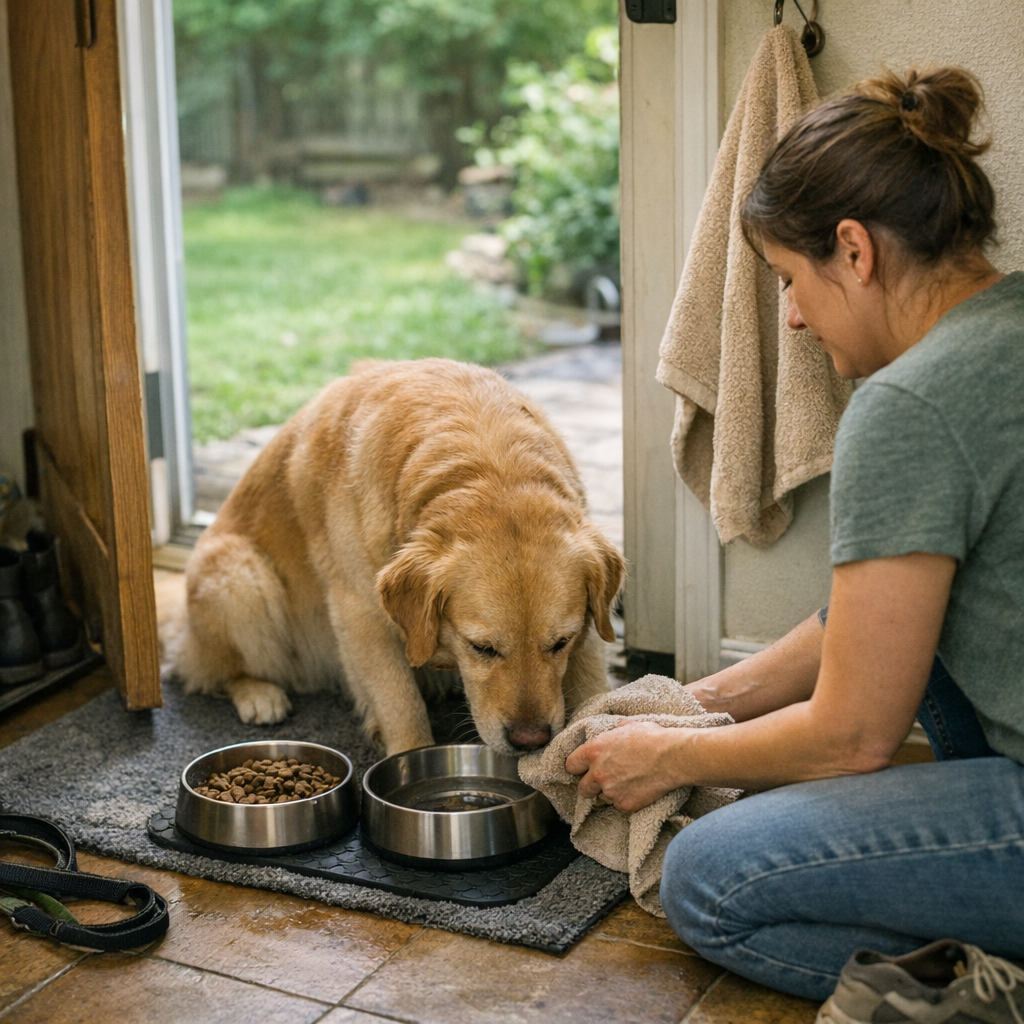
When a dog or cat bursts in from a walk or the yard, every missed reset—an unwashed bowl rim, a damp mat forgotten by the door, a towel draped somewhere out of reach—adds drag to the next round of care. The difference between a routine that works and one that slows you down is how quickly you can find, use, and reset basic supplies after each feeding, walk, or quick grooming. Most pet care friction isn’t dramatic: it’s the slow buildup of small unfinished tasks—delayed wipe-downs, supplies migrating out of place, quick resets taking longer with every missed detail. CalmPetSupply’s world is built around these pressure points, not just the appearance of order, but the repeatability of basic care.
When “Clean Enough” Isn’t Reliable
The entryway looks managed after an early walk, but by midday, signs of friction surface. The water bowl edge is tacky from rushing a refill. You reach for a paw towel—still damp, or missing entirely—while your dog marks a fresh trail across clean flooring. If groceries are piled at the threshold, even basic cleanup turns into juggling: searching for a missing towel or shifting a misplaced bowl yet again. Each small gap in the routine multiplies effort, forcing you to retrace steps and catch up spills that could have been contained. “Clean enough” slides into repeat work that wears you down by evening.
Routine Friction in Real Homes
Designating a spot for pet basics—bowls by the door, towels on a hook, wipes in a bin—doesn’t guarantee you’ll reach what you need in the moment. Towels get moved when guests squeeze past or when someone borrows them for another spill. Bowls creep out of line and start blocking the path to the shoe bench. In compact apartments and busy households, setups that seem orderly at first begin pinching you for space or time: a bottle of spray buried behind clutter, a towel knocked to the floor, a water bowl that slides just far enough to trip you on the way out. Every quick care habit exposes where setup looks functional but requires constant readjustment.
Practical Reset Steps—And Why They Slip
On paper, a routine looks clean: hook for the towel, quick paw wipe on reentry, bowl wiped and restored in seconds. In practice, small points break down:
- Supplies migrate: The towel isn’t at the door—used by someone else, or left over a chair somewhere else. The wipe bottle is tucked behind grocery bags. Cleanup starts with searching.
- Bowls slide off-track: Placed six inches away or nudged by a foot, they start inviting spills and slow down even simple refills.
- Clutter returns fast: Paw wipes and sprays sink behind other storage within hours, blocking easy grabs for the next rush home.
- Dirty surfaces linger: “I’ll clean the rim later” quietly becomes “I forgot again”—hard streaks appear, just when you’re too busy for full cleanup.
No setup is immune. “Organized” areas that miss how items migrate or how hands-free access breaks under pressure become daily sources of extra movement and longer resets—adding five minutes here, another trip there, every day.
Everyday Use Scenes—Where Disruptions Multiply
Night check: leash off, reach for the towel—gone. Maybe it’s still outside, or tossed on a chair during the afternoon rush. Now the dog is circling the living room, dropping wet marks that will wait until later. The so-called “quick” water bowl refill? A spare leash or shoe blocks the bowl, turning a one-step job into a four-move fumble. And when two pets or visiting animals share space, their gear sags into the shared hallway: wet towels covering coat hooks, bowls crowding the floor, and quick access always delayed. In real routines, every step that requires backtracking or moving something else is a friction point that repeats with daily care.
Why Looking Tidy Isn’t Enough
A space can seem organized at 8 a.m.—bowls in a row, towels ready. But by lunchtime, a missing cloth, blocked bin, or out-of-place scoop starts creeping back in. Refilling water means moving the supply bin that’s stuck under an extra bag. Grabbing a towel sends you to the bathroom where it was last left to dry. Even setting down a dish can mean clearing the entry again. What feels manageable in the morning drags down the pace by afternoon. The difference isn’t just visible order, but whether supplies can be grabbed and reset instantly, without doubling back or clearing a path first. Fast resets—not just clean surfaces—keep routines from piling up friction with every cycle.
Reducing the Repeat Friction
Most care setups only need one fix to start shrinking daily friction. A sturdy hook within easy arm’s reach, set right by the door, keeps the paw towel where every caregiver expects it. A weighted, steady bowl on a specific square of low-traffic floor means spills stay contained and the bowl doesn’t wander into the main path. Storing paw wipes or spray bottles in a single, visible container—never buried, never doubled up—means you grab what you need or see immediately when something’s missing. If it’s easy to reset after each step, routines stop leaving supplies scattered, and care moments actually shrink instead of stretching longer with every interruption. The test isn’t just cleanliness: it’s whether resets disappear into the flow rather than taking up more time tomorrow.
Conclusion: Lasting Calm Is Built on Immediate Resets
Less friction means fewer steps, not more. A hook that keeps towels from wandering. A heavy bowl that doesn’t slide and never traps you into a spill. One visible storage spot for cleanup gear. These aren’t upgrades for order’s sake—they are daily tools that make routines function at real speed. Routines that can be reset mid-rush, without thinking, are the ones that keep the home, and everyone in it, genuinely calm—even after the third walk of the day, or the last check-in before bed.