
Recognizing the Real Cost of Floor Storage in Outdoor Spaces
Step into any small backyard or narrow side yard, and the struggle is immediate: storage seems solved with a neat row of bins or outdoor cabinets parked against the fence. But within a week, those carefully lined-up containers transform from “organized” to “obstacle.” What starts out looking controlled quickly turns on you—trips to grab pruning shears become sideways squeezes, the garden hose sprawls across the path, and a simple sweep means playing musical chairs with heavy bins just to reach bare concrete. Corners fill themselves with stray clippings, and what was meant to make life easier quietly introduces a new, daily hassle. The more you clean, the more you notice how much time goes into shifting, not storing.
Floor Bins: Neat in Theory, Cumbersome in Practice
Picture the six-foot-wide strip beside the house. Day one, bins hug the fence, bikes lean against the wall, and bags of soil fill the leftovers. By Saturday, that “walkway” is more a shuffle lane—each step compressed by mismatched storage. Need the loppers? You’re dodging the recycling can, tilting the compost bin, and nudging the hose reel out of the way just to reach the right spot. Even sweeping becomes a micro-move routine: lift a box, scoot the planter, stoop low to fish leaves from the dark gap behind containers. The promise of order erodes when every return trip adds friction instead of flow.
This is where most setups fall apart: dirt and leaves gather under bins you never move, clutter escapes into slivers of “unused” space, and soon you’re making detours to dodge your own organization system. Resetting just one area means dragging three things aside. Gear that should live on the wall inches into corners, and cleanup stalls because there’s nowhere easy to stand or sweep.
Wall Mounts: Small Changes, Real Movement
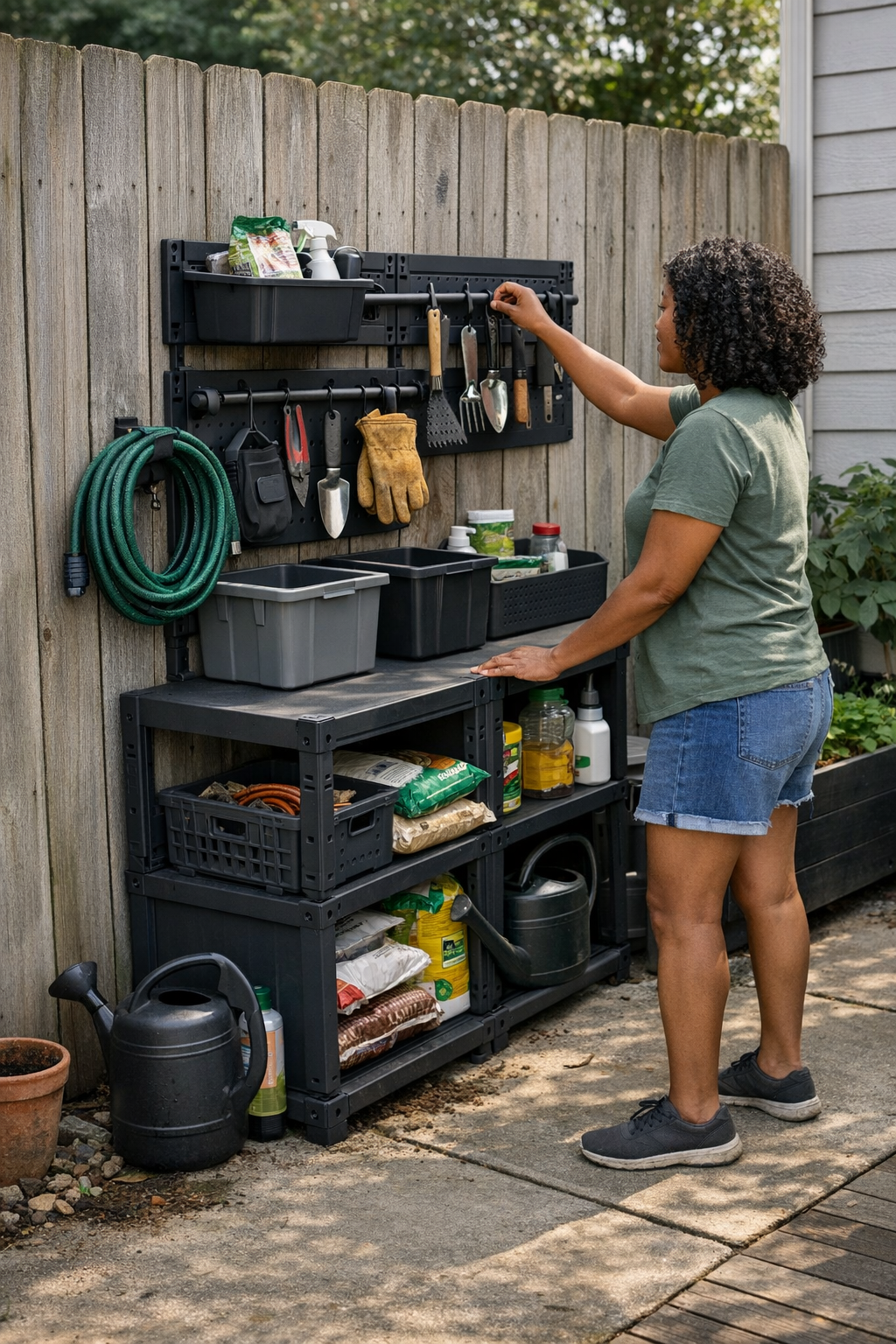
Wall-mounted racks and rails don’t try for perfect—just possible. Lifting hoses, tools, or bags up onto a few strong hooks instantly reopens the tightest sweep path. A foot and a half of bare ground, previously blocked by a bin, suddenly makes it possible to finish cleanup in one pass instead of three. Instead of stepping around obstacles, you’re gliding through. No more shifting one thing just to return another. The hidden upside: wall storage slows down that creeping edge of sprawl that floor bins quietly feed.
Why Less on the Floor Means More Available Space
Every ground-hugging unit does double duty: it stores, but it also attracts clutter that’s easy to forget about until the next deep clean. Underneath—out of sight, always grime. Wall storage leaves concrete, bricks, or pavers exposed, so sweep-ups happen before neglect settles in. You don’t need a huge system: just a run of hooks or a compact rack on a wall or fence clears enough to turn resets from multi-step chores into grab-and-go tasks, even when you’re running low on motivation.
Real Reset: When a Bare Wall Outperforms Two Bins
One example: the pinch point at a back gate. Trash, boots, garden bags—everything lands right where traffic jams are guaranteed. Replace two clunky floor bins with a short wall rail for gloves, hand tools, and bundled twine, and suddenly the space breathes. Sweeping shifts from stop-and-go to a single, fluid push. That scrap of wall isn’t pretty, but the effect is instant: fewer built-up piles, fewer excuses to leave corners unchecked, and far less wrestling with bins just to restore order. The shift isn’t in what you see, but in what you don’t: the area doesn’t bog you down every time you step outside.
It’s not just aesthetics: after two weeks, you realize you’re stalling less. Corners stay clear, stuff returns to its spot with minimal effort, and you don’t find yourself dragging floor storage back into position after every backyard day. The urge to ignore the mess, because it’s “too much,” fades.
What Goes Up, What Stays Grounded?
Not everything belongs on the wall. Regularly-used, lightweight items—trowels, spray bottles, extension cords, garden gloves—earn their place up high. Floor bins still matter for heavy, unstable, or weather-prone gear, animal feed, big bags of soil. The trick is moving just enough off the ground to bring back easy movement and cleaning. A few well-placed hooks on a back fence or garage wall can change your reset flow more than buying yet another matching storage box.
Try Before You Overhaul
Before mounting a whole storage bar, start simple: add three hooks in the area where backup clogs the floor most. Next time you sweep, see how often you’re just hanging and going instead of shuffling bins aside. If you notice a clear path returning—or realize you’re no longer returning misplaced items to a cluttered pile—expand from there. The goal isn’t a crowded wall; it’s a floor with nothing parked where you need to move.
Spotting the Floor Bin Takeover
Watch for these warning signs: the path gets tighter each week; bins multiply, then spread; “overflow” starts filling the slivers behind and underneath. If putting things away takes delaying—because it means heavy shifting, not a quick drop—your storage system is starting to work against your routine. Resets become events instead of afterthoughts. When tidying up the yard means rebuilding a setup, not just touching up corners, it’s a signal that lighter, higher-up options might actually match how you want the space to work.
The Bottom Line: Outdoor Spaces That Work, Not Just Appear Orderly
A setup that frees the floor isn’t just about looks—it’s about recovering how the space moves. Over weeks, the right layout means you fight the area less. Sweeps and returns shrink to simple, repeatable moves, and even small zones—side yards, patio edges, garage thresholds—offer new freedom when only essentials stay on the ground. This isn’t a total overhaul—just a smart pivot that trades a cramped lineup for open flow, quicker resets, and visible breathing room.
The difference reveals itself not just in a cleaner view, but in how much less you dread bringing things outside and how rarely you have to reset the same ground twice. That’s the kind of ease that sticks.