Category: Yard & Utility

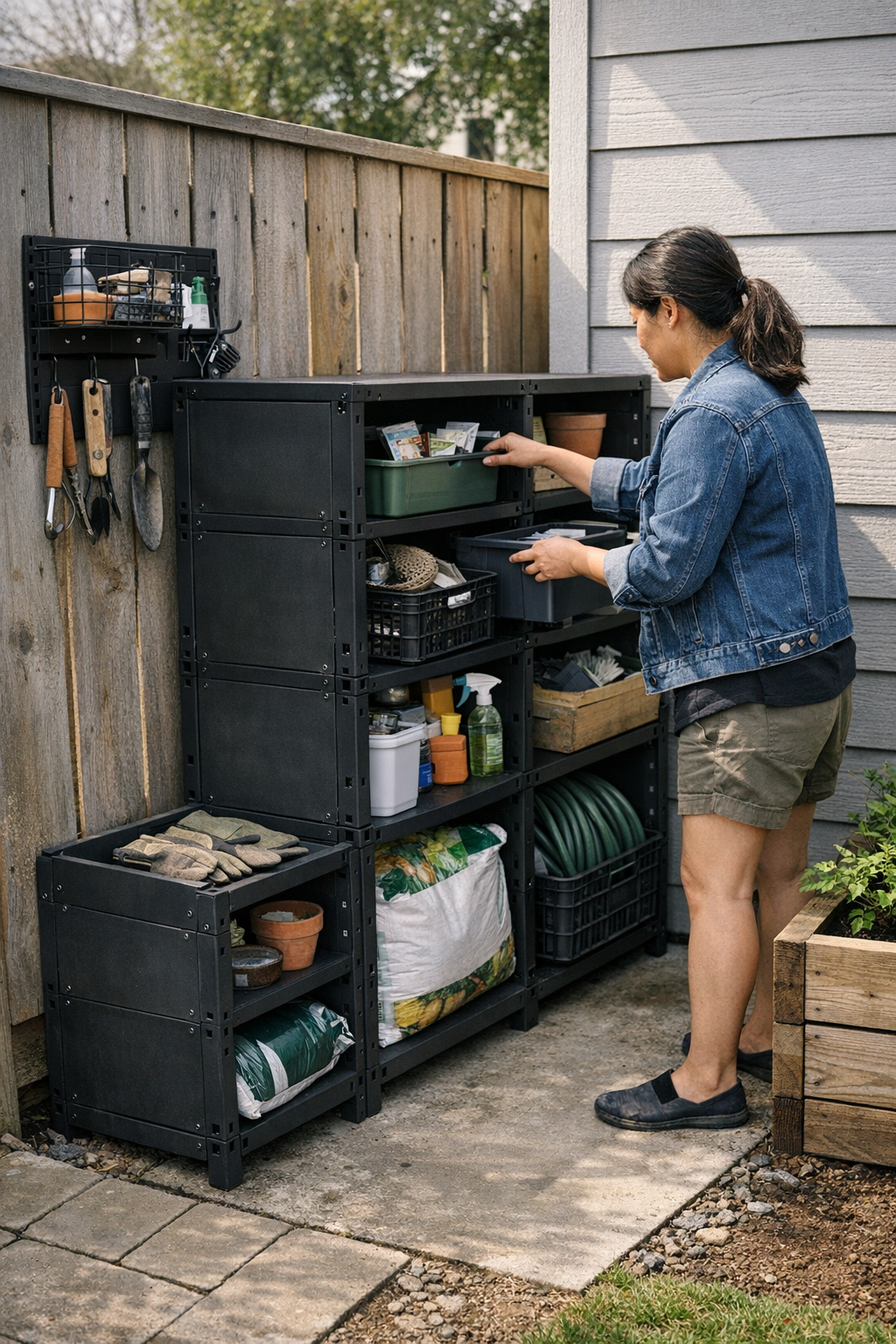
  • Choosing Backyard Storage That Fits Your Space and Daily Flow

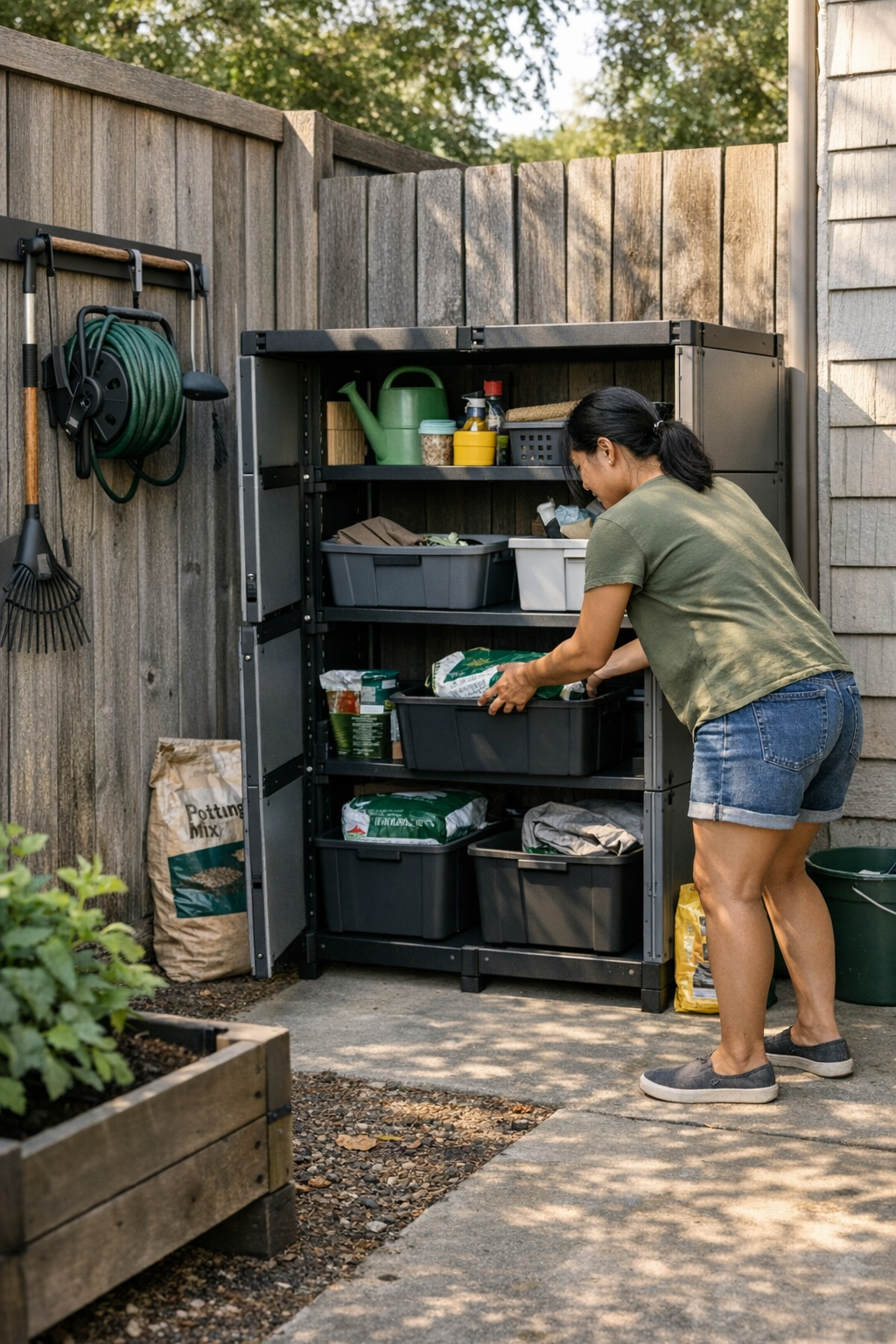
    The illusion of backyard order fades the second your routine collides with real storage. Look past that freshly arranged corner or flawless rack on move-in day—what counts is how your pathway clogs, how bins bloat with overflow, and how “organized” turns to obstacle course. If you’ve ever heaved a deck box aside just to get the shovel, tripped over sports clutter in a narrow run, or watched your best walking route shrink under “temporary” bins that never move, you’ve seen how outdoor storage friction creeps in. It doesn’t announce itself; it builds, waiting for the next rushed return or rain-soaked reset to show its teeth.

    When a Tidy Yard Starts to Feel Tight

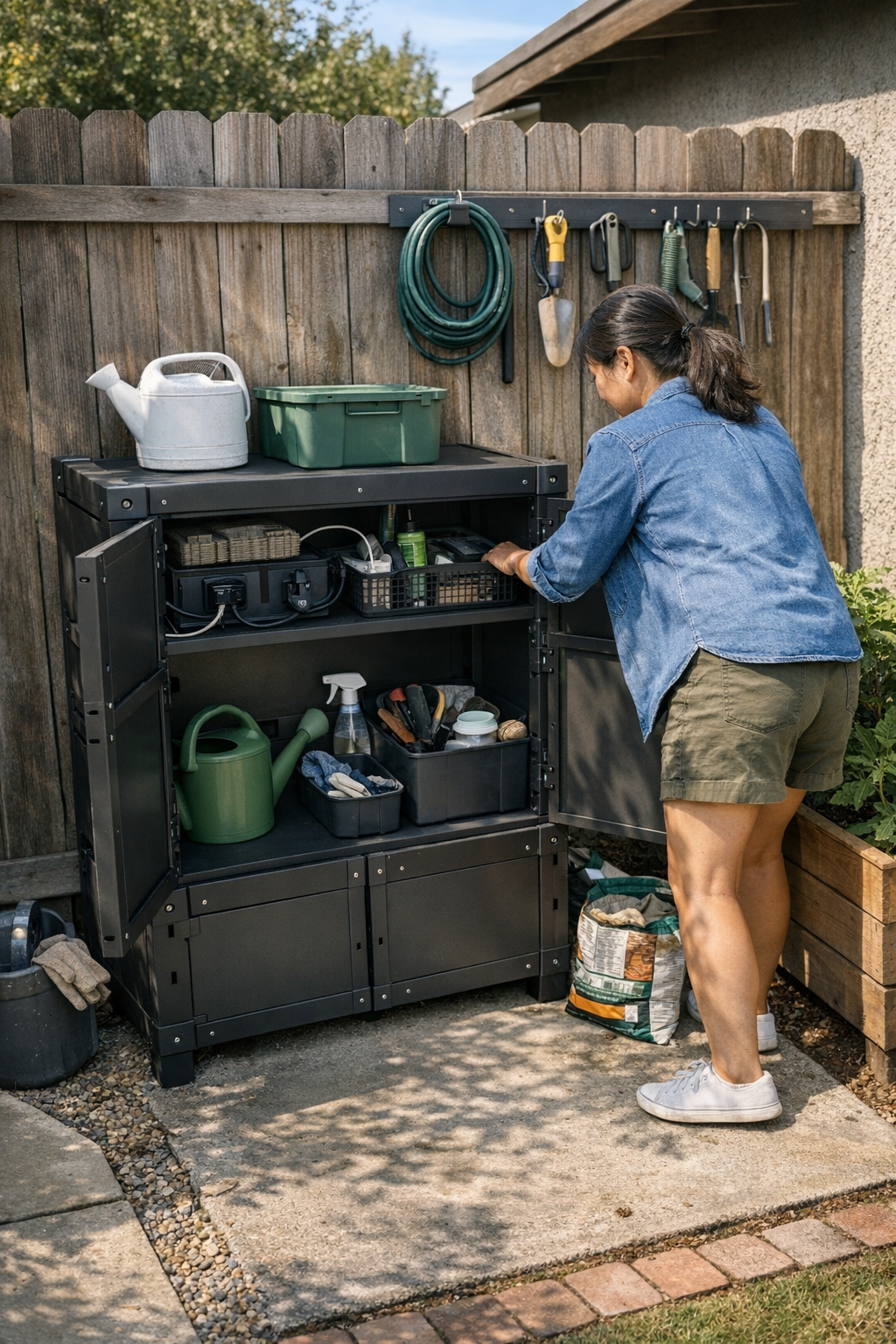
    Picture your side-yard strip: a couple of feet between the fence and house, barely enough for a mower squeeze. Add a storage bin with a lid that sticks, and every trip for a hose means an awkward shuffle. It starts neat—tools put back, path almost clear. But within weeks, a ball perches on the lid, a hose slumps over the edge, and every return becomes a negotiation with the last thing that wasn’t actually put away. Clutter always wins if your setup can’t clear itself on the fly.

    It’s not subtle for long. By the second or third family cleanup, “good enough” piles collect on the flattest surface near the gate. Lids stay unlocked, overflow pushes out, and each person’s fix makes the next reset a bit harder. These are not messes—they’re signals: your current setup can’t handle the pace of actual use.

    Diagnosing the Friction: Where Does Use Break Down?

    It’s rarely about how much you can store; it’s about whether you can move and return items without a whole shuffle. Are you forced to reroute because a handle juts out? Is putting away one item a two-step dance? Hooks that send rakes swinging into your shin, bins whose wheels seize up, or modules that break their own logic—all whisper the same thing: your system is working against you, not with you.

    • Wall racks that can’t carry their load: A system that sags with anything heavier than a broom turns into tangled handles and tools that slide out of reach. Each attempt to return a spade becomes a Tetris session—and the floor piles up again.
    • Modules that break apart under pressure: Stackable bins sound flexible, but when getting to one lid slows you down, or pieces drift into new corners after one storm, “changeable” becomes “scattered.” Hunting that one missing lid shifts from rare to weekly ritual.
    • Deck boxes that invite clutter, not calm: Closed bins only bring order if the return process is smoother than just dropping gear. Check what gathers in front of or on top of the box—a growing pile there means your storage route is jammed at the entrance.
    • Mobile units that don’t match your ground: Carts and rolling bins look smart until they stall on uneven patio stones or flex when filled. If a “mobile” system needs two hands and a shove to clear a path, you start dodging the obstacle, not using the tool.

    Wall Systems: Vertical Promise, Horizontal Friction

    Mounting tools and gear seems flawless in diagrams—raised, visible, off the floor. Daily reality is rougher. Hooks at the wrong height turn the usual return into a stretch or squat, and heavy rakes or hoses end up slouching to the floor anyway. A wall of hardware that looked custom becomes half-used, as most-used items migrate to whatever’s closest at hand.

    Some pain points hide until you try a real return: a corridor rack so tight you clip a shovel handle on your hip every time you pass, or hooks spaced perfectly for display but hopeless for actual reach. Slip past with wet shoes, arms full, and soon you’re snared by a dangling rake. A system barely used is just one step from surrendering the whole wall to chaos again.

    Tip: Test your system with the bulkiest, most-used item. If it doesn’t go back on “autopilot,” adjust or move before bad habits set in.

    Standalone Units: Closed Storage, Open Churn

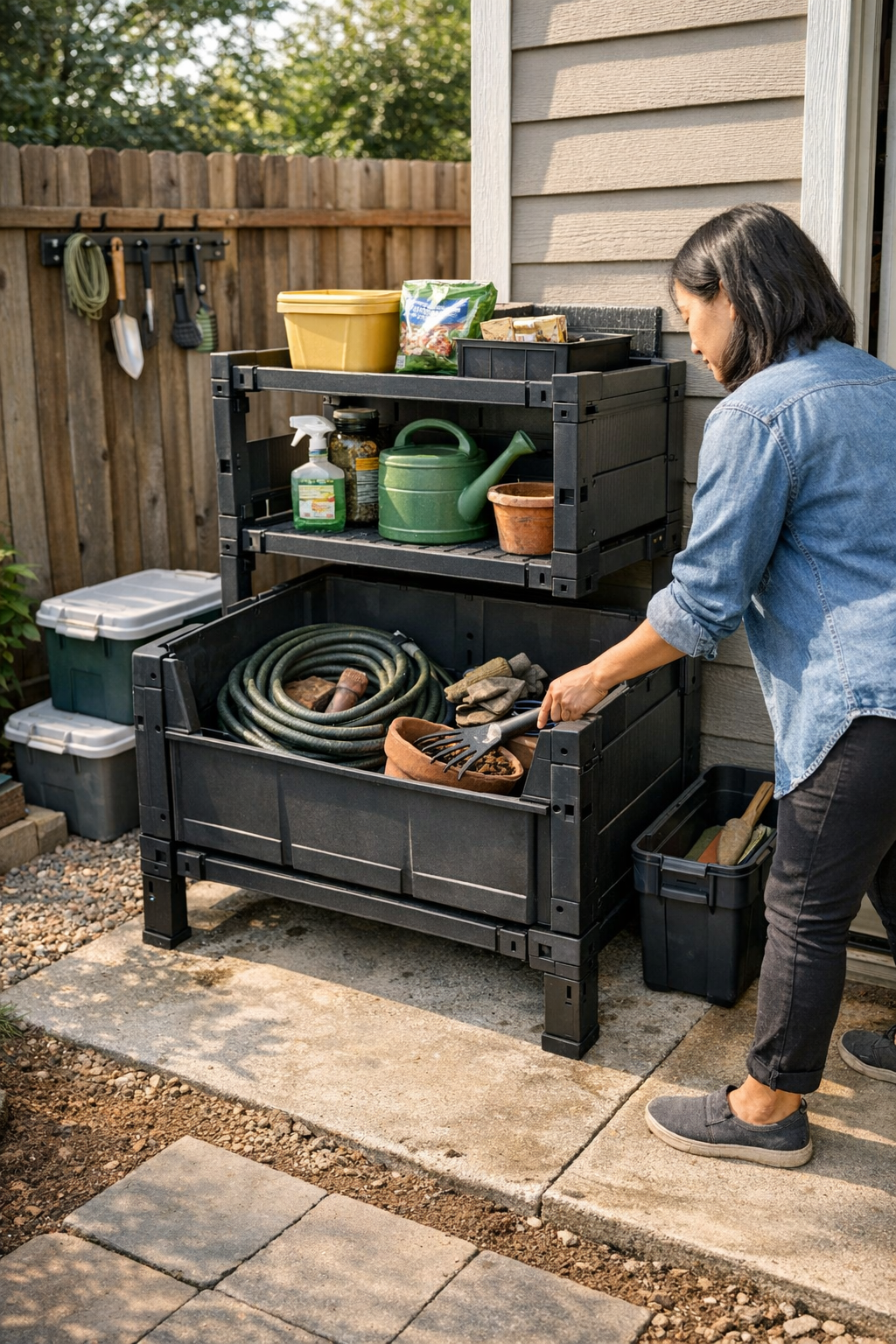
    Deck boxes and bins solve the dry-storage riddle, but they create their own kind of shuffle. In theory, everything has a slot—until a rushed return leaves the lid open or piles gear on top “for now.” Give it a month, and you’re spending more energy moving stuff out of the way just to reach the original item. Storage stops being a station and turns into a blockade.

    It all comes down to the return: If flipping the lid or finding space takes even ten seconds extra, people skip it. So overflow builds precisely where you don’t want it—across the walk, on the nearest flat patch. By the time you notice, your “solution” is making you late, not organized.

    Modules in Motion: Stack, Shuffle, Repeat

    Modular containers sound like freedom: move things, reconfigure, adapt with the season. But a stack that doesn’t stay locked—lids that don’t nest, tubs that spread out, pieces that look similar but don’t play well together—turn resets into puzzles no one wants to solve. Each missing or stranded piece slows every session.

    In any small backyard, one lost module or off-balance stack is the weak link. There’s never “just a quick fix”—one routine interruption, and chaos sneaks in. After a few rushed weekends, you end up with half a system and double the clutter.

    Tip: Anchor extra lids or loose modules to a single, visible spot. Otherwise, tracking pieces becomes the next time sink.

    Mobile Units: Promise or Pitfall?

    Wheeled storage offers hope: move bins aside to clear space, bring tools close to the job. But if the wheels gum up or the handles bow with weight, you end up dragging, not rolling. Outdoors, a single uneven flagstone or thick patch of grass can turn “mobile” into “immovable.” The freedom you wanted gets replaced with one more thing to dodge every time you walk through.

    A system that actually works lets you reclaim the walkway for dinner, then shift everything back without a fight. A flawed unit demands its own shuffle—sometimes two or three times a day as everyone uses the path differently. The best outdoor setups aren’t just moveable; they’re actually effortless to move, even after a surprise rain.

    The Fence Line and the Overflow Zone

    Every backyard grows a clutter magnet—along the fence, behind the shed, or that forgotten patio edge. Storage bins should tame those dead spaces, but many just tighten the squeeze, making the side yard or edge paths places nobody wants to fight through. If pulling open a lid boxes you in, or you consistently have to step over a storage stack, the setup has missed its mark.

    Check your “return drift”: if most-used gear never quite makes it back, the layout is demanding too much effort. On paper, the corner stays empty—until real life piles up in the path after every game, barbecue, or gardening session.

    Where Reset Really Breaks

    The tell isn’t wild mess but slow, creeping friction. Every lap around the yard, your walkway feels tighter. The floor fills back in even with empty bins on the wall. The “weekly reset” is just moving piles from one blind corner to another. If your fixes don’t outlast a couple of busy weekends, the setup isn’t designed for your pace.

    Reset can’t be a stretch—it needs to occur as part of using the space, not in a block of weekend chores. The more steps it takes to move, open, or return anything, the faster the frustration adds up and the harder your storage fights back against you instead of alongside.

    What Makes Storage Actually Work?

    Forget “most stylish” or “holds everything.” The only system that works in real outdoor life is one you nearly forget is there. It fits your boundaries, leaves a clear path, and lets anyone—kid, neighbor, or spouse—put things back as naturally as they took them out. That means racks sized for your heaviest gear and reach, not just empty wall; bins that stack only where stacking helps, not where it slows you down; self-contained units that don’t sprawl into walkways; wheels that actually roll over the ground you have, not just a showroom tile.

    If you’re constantly dodging bins, shuffling gear, or scraping open a path just to start your own project, your system is sending a clear signal. The moment you spot where friction first appears—whether at the fence, the wall, or along a too-tight side path—you’ve found your starting point for a real fix.

    See how outdoor storage setups designed for real return and movement can change your routine: Visit TidyYard
  • Maintaining Smooth Sliding-Door Storage in Dusty Entryways

    The problem with sliding-door storage doesn’t start on installation day—it starts weeks later when repeated use turns smooth entryways into chokepoints. In theory, sliding cabinets look like the solution: doors don’t eat up precious walkway space, everything is hidden, and the entry zone feels calm. But walk through that area for a month. By then, the daily parade—muddy shoes, pet hair, city grit, and backpack swings—has found every gap and groove. Sliding tracks fill up with debris you don’t notice until the door jams hard, halting the morning rush just when you’re least able to stop. The entryway isn’t a showroom; it’s a collision point where storage and real life collide, and sliding doors are first in line to collect evidence of every commute, storm, and careless bag drop.

    When Streamlined Looks Become a Slowdown

    Sliding-door cabinets are a go-to for narrow halls and improvised drop zones because they hug the wall, promise walkable space, and keep things out of sight. The trap: what looks organized is often quietly building up new friction. Every trip inside tracks in a new layer—sand, salt, pet fur—vanishing under the cabinet until you feel resistance instead of seeing a mess. Open shelving shouts when it’s time to sweep, but sliding tracks go silent until they’re jammed. Meanwhile, shoes left too close inch outward, bench seating blurs into overflow storage, and the space meant for flow starts backing up, one gritty glide at a time.

    Real-life routines break the illusion quickly. Damp sneakers nudge dirt into tracks as you stash them. A gym bag clipped carelessly against the base drives another dust line into hiding. Sit for a second on the bench and the row of shoes spreads wider, filling the only gap for cleaning or walking past. Lose track for a few days, and you’re wrestling a stuck panel just to start your shift, unload groceries, or keep evening mud off the floor. Reset is needed long before most people realize the track’s become a trap.

    The Realities of Reset Pressure

    The pain point doesn’t announce itself gently—it pops up during high-pressure minutes. Arms full, rushing out, and the door catches. Two people try to pass, and the whole pathway shrinks to one impatient shuffle as the cabinet resists. Suddenly, there’s nowhere to kick off shoes or drop a bag but right in the walkway. Even a bench that was supposed to collect clutter becomes a stranded island of random stuff—because a snarled track quietly froze the return flow.

    What happens next isn’t just frustration—it’s a loop. The more tightly “organized” the entry appears, the less headspace there is for hidden mess. A sticking door means more overflow: shoes along the edge, bags stacked, items rerouted to wherever there’s open floor. What was once a quick reset after coming home now means a chore list, as the first sign of trouble signals the bottleneck already formed.

    Why Sliding Tracks Fail Under Real Entryway Pressure

    Sliding tracks are invisible collection zones for what every threshold brings in. Swinging doors shrug off a bit of dirt, but sliders depend entirely on a clean run—every missed crumb, stray earring, or sprinkle of dirt compounds. And because the threshold is where inside and outside trade places, no cleaning routine ever fully keeps up. Even careful homes with mats and regular sweeping lose ground: pet hair and micro-grit will always outpace the schedule.

    Pressure points get sharper in busy or multipurpose spaces. Shoes sneak sideways to fill any open space, bags sprawl wider, and with each round, the track absorbs more without giving you a visual cue. Most people only act once it’s obvious—when a dropped backpack blocks the cabinet, or you have to double-stack shoes just to reach for the door. Temporary placements turn semi-permanent as the sliding storage quietly demands more maintenance than anyone bargained for. The fastest way to reset the space becomes to leave things scattered because it feels easier than wrestling the jammed track yet again.

    What Actually Works: The Small, Daily Reset

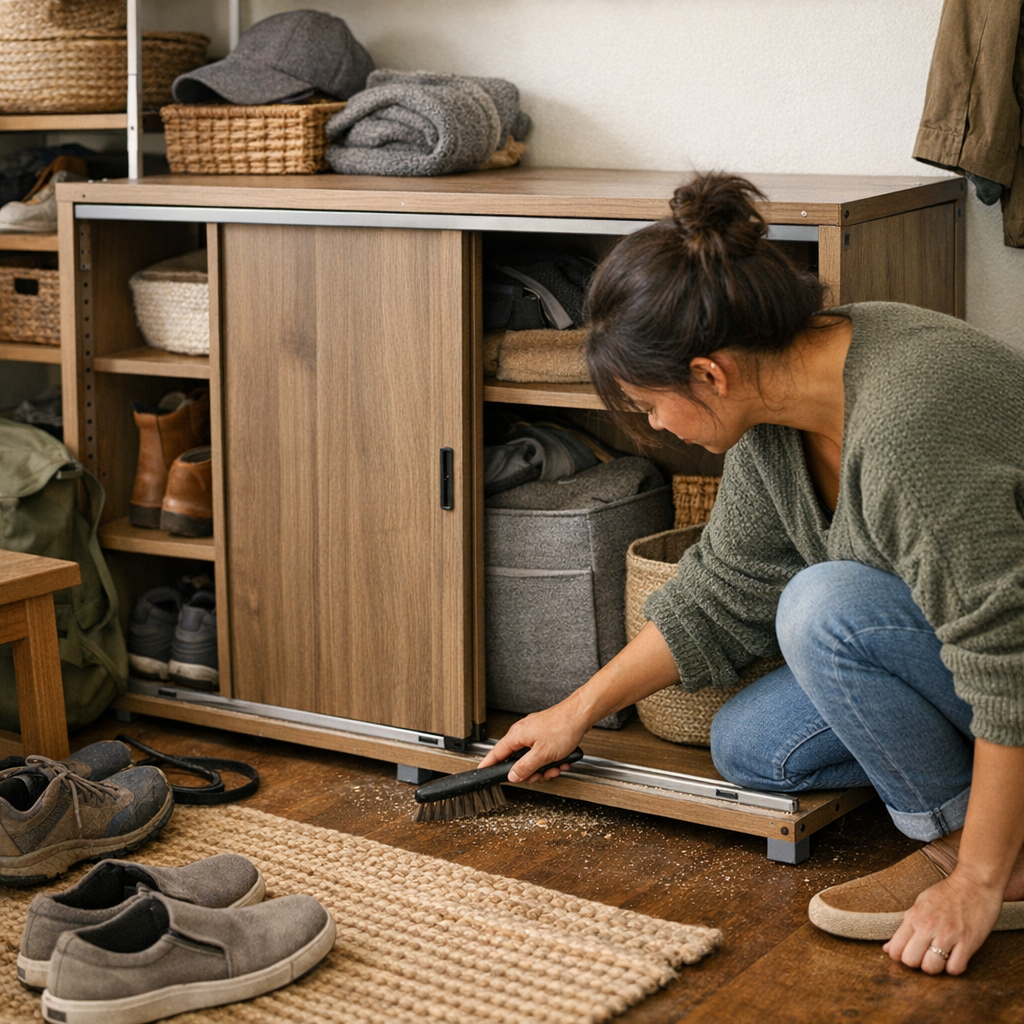
    The solution isn’t about perfection or complicated routines. A skinny nylon brush stashed next to the cabinet does more in a minute than any deep-clean schedule can promise: one deliberate nightly sweep across the track clears invisible buildup before it becomes a problem. This habit—quick, nearly automatic, often done while the rest of the house is quiet—undoes accumulation before it bites, keeping the mechanism reliable even during weekly chaos. No gear timeline, no specialty gadget, just a regular swipe right at the pressure point: the exact place friction wins if you leave it to build.

    Instead of waiting for grit to grind, build the routine where it interrupts least—after the last arrival, before the next rush. Homes with active pets or outdoor-heavy routines, especially, see the payoff. A brush within arm’s reach means fewer bottlenecks, less stalling in the path, and storage that stays trustworthy for the next return. It’s low effort but high return—the only kind of maintenance that survives a transition zone’s real turnover rate.

    Leave Breathing Room: The Four-Inch Rule

    Trying to pack every edge tight sabotages easy resets. Leaving even one shoe’s width (about 4–5 inches) clear in front of the sliding cabinet turns basic maintenance into a fast daily gesture, not a project. That extra bit of buffer makes it possible to sweep or reach the track without moving a dozen things out of the way. Once shoes creep in or overflow piles fill the gap, buildup multiplies—resetting spills over into the hallway, and congestion becomes all but guaranteed. The visible gap isn’t wasted space; it’s a pressure valve against permanent backup.

    Sliding Doors vs. Open Shelving: Tradeoffs That Don’t Show Until Later

    Open shelves air their problems right away—mess is visible and anyone can clear it fast. Sliding-door storage hides disruption until it blocks you, then demands extra steps to recover the lost function. If your routine means quick, shared resets—or you know clutter will always sneak back—open shelving’s visibility wins, even if it means sacrificing the showroom look. In tight or high-traffic entryways, streamlined sliding storage works only if “invisible cleaning” fits your reality. The difference isn’t about style; it’s about whether you want a zone that tells you when it needs help or one that hides trouble until it’s too late to prevent messy overflow.

    Some entryways thrive with sliding doors because the extra minute spent maintaining actually happens. Others find the hassle outweighs the “clean” appearance and end up with their controlled look undone by daily pressure. The choice depends on your entry’s real job—churn, recovery, and how you want to contend with the constant arrival of new mess, not just the photo at move-in day.

    Watch for Breakdowns Before They Become Routine

    The real test isn’t how storage looks the first week; it’s how well the mechanism stays effortless under normal churn. Are resets taking longer, or does the panel still glide on the first try? Have shoes and bags started drifting back onto the floor because the threshold is too hard to keep clear, or is stashing still frictionless? Do minor setbacks—like a day of rain gear or a visit from a friend’s dog—leave clutter lingering, or do you have a way to clear it before it becomes a fixture?

    Entryways rarely fail overnight—the drift is subtle: a handle that sticks, a row of shoes that reshuffles after every trip, or bags lingering one day longer. Strong sliding storage doesn’t just look right behind closed panels; it works right when the pressure is highest, keeping access open and reset simple in spite of constant pushback from real-world debris.

    No entryway stays spotless, and no cabinet stays frictionless forever. But with the right habits and a little space left to maneuver, your storage can carry its weight instead of adding to it—especially when you need its promise the most.

    http://www.betweenry.myshopify.com

  • How Closed-Door Cabinets Reduce Clutter but Hide Hidden Storage Challenges

    Closed-door storage cabinets promise instant relief from visible clutter—but that sense of order is often an illusion that unravels under repeated, real-world use. Shut the doors on a kitchen mess or a hallway scramble, and surfaces snap back to calm. But the hidden friction doesn’t vanish; it shifts behind the panels, where every rushed search or missed category quietly strains your routine. In everyday zones like busy entryways, overstuffed kitchens, or shared family corners, the difference between looking organized and actually functioning well shows up fast: misfiled shoes block umbrellas, bread bins crowd out lunchboxes, and what appears “tidy” keeps disrupting the flow you need most.

    When Calm Surfaces Hide Everyday Friction

    The urge to “just close the door on it” runs strongest in the areas hit hardest by daily drop-offs—entryways thick with shifting piles, kitchens where small appliances and bags have no single home. From the outside, closed cabinets flatten the chaos, especially in tight apartments where any exposed item feels like clutter multiplying. But inside, closed storage turns new issues loose: blind zones, slow retrieval, and the quiet buildup of items nudging out of place. The cost isn’t just cosmetic—it’s measured in lost steps and interrupted escapes, like having to dig for a jacket buried behind grocery overflow, or scavenging beneath shoe piles for a charger you swore you returned yesterday.

    Picture the classic family entry zone: jackets and shoes tucked behind slim doors, backpacks upright—briefly. Real use blows past the initial system. Shoes drift sideways, mail clogs the path, one mitten slides behind gym bags and instantly blocks everything else. “Organized” at a glance means little when you’re already late and the cabinet demands a full search just to get out the door. Each closed-door rescue is paid back with extra reshuffling later, often making the next reset more exhausting than the mess you tried to avoid.

    Why Hidden Storage Can Slow You Down

    Closed cabinets exist to clear the view, but they do it by hiding movement and overflow signals you’d spot right away on open shelves or hooks. With doors in the way, category drift creeps forward—jackets on shoe space, gloves blending with shopping bags—until even the basics get lost in the shuffle. Overflow builds because you don’t see it until something jams. Retrieval turns slow and indirect: you open one cabinet for bags, then have to cross back to search another for a missing hat, all because the divided zones inside blur and blend until there’s no real shortcut left.

    You trade visible mess for hidden disorder: peaceful fronts, but insides wired for accidental sprawl. Shared or high-traffic spaces multiply these invisible costs. One person’s quick drop-off blocks another’s path; a guest jams in a new bag and the entire shelf buckles. With everything out of sight, minor buildup goes unchecked, and full resets become longer, rarer, and more dreaded. You don’t just lose items—you lose rhythm, with each blocked grab or awkward shuffle accumulating into daily friction.

    The Surprising Cost of “It Looks Tidy”

    Line a wall with closed cabinets and watch the illusion of control set in—until a normal routine “sticks” at the worst moment. The first hint is often a hiccup: reaching twice for the same lunch container, detouring around an overfilled section, or pulling open three doors just to get at what floated to the back. These movement bottlenecks slow everything down, especially where speed and repetition matter—entryways, kitchens, and mixed-use halls that need to clear daily volume, not just hide it.

    Overflow and Category Drift: The Invisible Enemies

    Open a closed cabinet a week after a big tidy, and the cracks show. One shelf is suddenly jammed, another hosts a jumble of oddball objects, and categories merge with no clear boundary. In pantries, pasta blends with gadgets; in hallway cabinets, scarves push shoes into blind corners. Moment of recognition: open the door expecting easy access, and hit a compressed tower of unrelated things—a mixed layer you need to pull apart, with each reach risking collapse or total reshuffling.

    The longer category drift and overflow go unchecked, the heavier the penalty: what should be a five-second grab turns into a full redo that kills momentum and morale. Instead of a quick shelf adjustment, you’re hauling everything out—vacuum, hiking boots, abandoned mail—just to restore basic function. For many households, that threshold is never met; items linger in the wrong spot for months, until even looking for them feels like a chore.

    Shared Spaces: When One Person’s Drop-Off Blocks Everyone Else

    Multi-user zones—front halls, shared closets, family bath cabinets—are especially susceptible to hidden drift. A gym bag lands, then groceries, then school supplies; the door closes but inside, categories compress. With walls hiding it, blending grows uninterrupted: cords tangle with gloves, boots swallow shelf space meant for towels, and one person’s “just for now” becomes a weeks-long block for everyone else. Unlike open organizers, where category creep is visible and little issues get fixed in passing, closed-storage slip-ups linger until someone finally empties and resets the whole system. Not surprisingly, that task slides down the priority list for as long as possible.

    What Actually Makes Cabinets Work: Internal Dividers and Bins

    Visual order on the outside doesn’t fix chaos on the inside—only structure does. The most powerful change? Breaking up closed cabinet space with removable bins and real boundaries. Dividers make insides use-specific: a shoe bin for five pairs flags crowding instantly, while a labeled tote for cleaning gear prevents lost mail or stacked coats from vanishing into the mix. Instead of having to dig across everything, search and resets stay sharply focused. When buildup happens, you fix the one zone that’s slipping, not the entire cabinet wall.

    Add defined zones, and closed storage moves from blind spot to early warning system: categories stay in their lanes, overflow gets caught while it’s still small, and resets shrink from half-day projects to matter-of-fact tweaks. Instead of dreading the next overhaul, you spot issues as they emerge—handling exceptions in real time, not letting them spiral until they undermine the whole setup.

    Tip: Choose Container Sizes That Fit Your Routine, Not Just the Shelf

    Bin size dictates system stability. Too big, and the boundaries disappear—everything gets lumped together, making resets grueling. Too small, and every load triggers overflow, annoying everyone involved. Match your bin or divider to the amount and access rhythm of each real-life category: lunchboxes one layer deep so nothing gets buried, cleaning bottles in a single, easy-out tote. Slide-out trays for tools instead of stacking multiple boxes where the bottom is never reached. The right container makes retrieval automatic and return flows reliable—avoiding the slow creep that sabotages the whole wall.

    Making Closed Storage an Ally, Not a Source of Hidden Stress

    Closed cabinets earn their spot in spaces overloaded by volume or visual noise—provided the inside matches your use. Their core weakness plays out over time: slow retrieval, blocked access, creeping resets, and hidden mess that turns up only when your routine already feels strained. Real relief doesn’t come from closing more doors, but from separating zones inside and catching drift before it cascades.

    If you’re trapped in repeat reshuffles or delayed resets, the solution isn’t just “more cabinets”—it’s a smarter, more visible structure inside the space you already have. When each category has a defined home and movement stays unblocked, closed storage supports the speed and flow real rooms demand—not just the look. That’s the shift from looking tidy to functioning fluently, especially in the rooms that test your storage the most.

    Visit Gridry for modular storage solutions that adapt to real-life use.

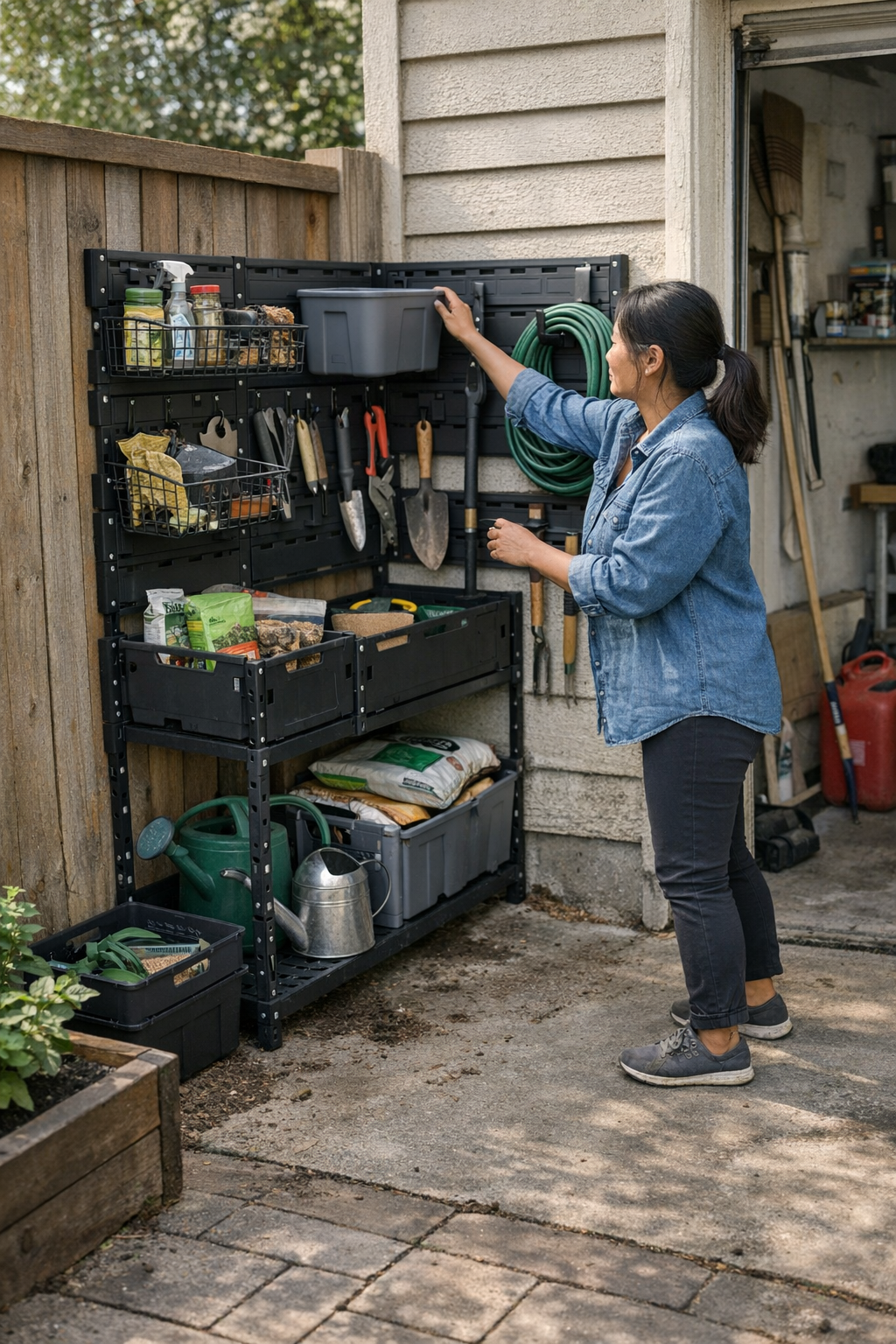
  • Choosing Wall Storage for Small Yards That Stands Up to Daily Use

    Every small-yard owner has felt it: the relief that comes the day a new wall system goes up—hooks filled, bins stacked, a tidy edge carved out of the chaos by the garage or fence. For one weekend, everything stands where it’s supposed to, and you can finally wheel the mower through without tripping. But two weeks in, order starts slipping. The same hooks that looked smart now snag your jacket as you slide past, the bikes you hung to save space end up squeezing the gate, and a muddy soccer ball finds its new home exactly where you step. What first felt like a win now presses in, trip after trip—a wall storage setup that fits the space, but still interrupts the routine.

    When “Organized” Doesn’t Mean Usable

    Saturday arrives. Kids drag out toys, tools get borrowed, something always comes back muddy or awkward. By evening, the clean lineup has warped: a trowel jams up the rake, hoses twist down from the wall, and garden gloves end up somewhere no hook planned for. Often you’re nudging a hanging lawn chair or shifting a storage rack just to reach what you really need. The return flow—actually putting things back—is now full of small negotiations, and you start leaving items “for later” because getting it right means undoing half the setup.

    This is where setups start to work against you: the wall system technically fits, but now you’re holding your breath just to navigate the side yard. Paths tighten, gear bunches up, and one quick grab for shears means accidentally toppling the shovel—another shuffle, another delay. What worked on day one is now a reason you hesitate to go out for something simple.

    Fixed Systems vs. Modular: Where the Strain Appears

    Fixed storage systems flatter at the start—hooks spaced just so, shelves aligned, imagining every spot set for every item. But everyday use exposes weak points: tall handles obscure smaller hooks; a bulky mower, once hung neat, suddenly blocks everything behind it. Rigid shelving collects whatever happens to land—boots migrate from hooks to floor to corner pile. Eventually, the tidy wall turns back into ground-level clutter, only differently arranged.

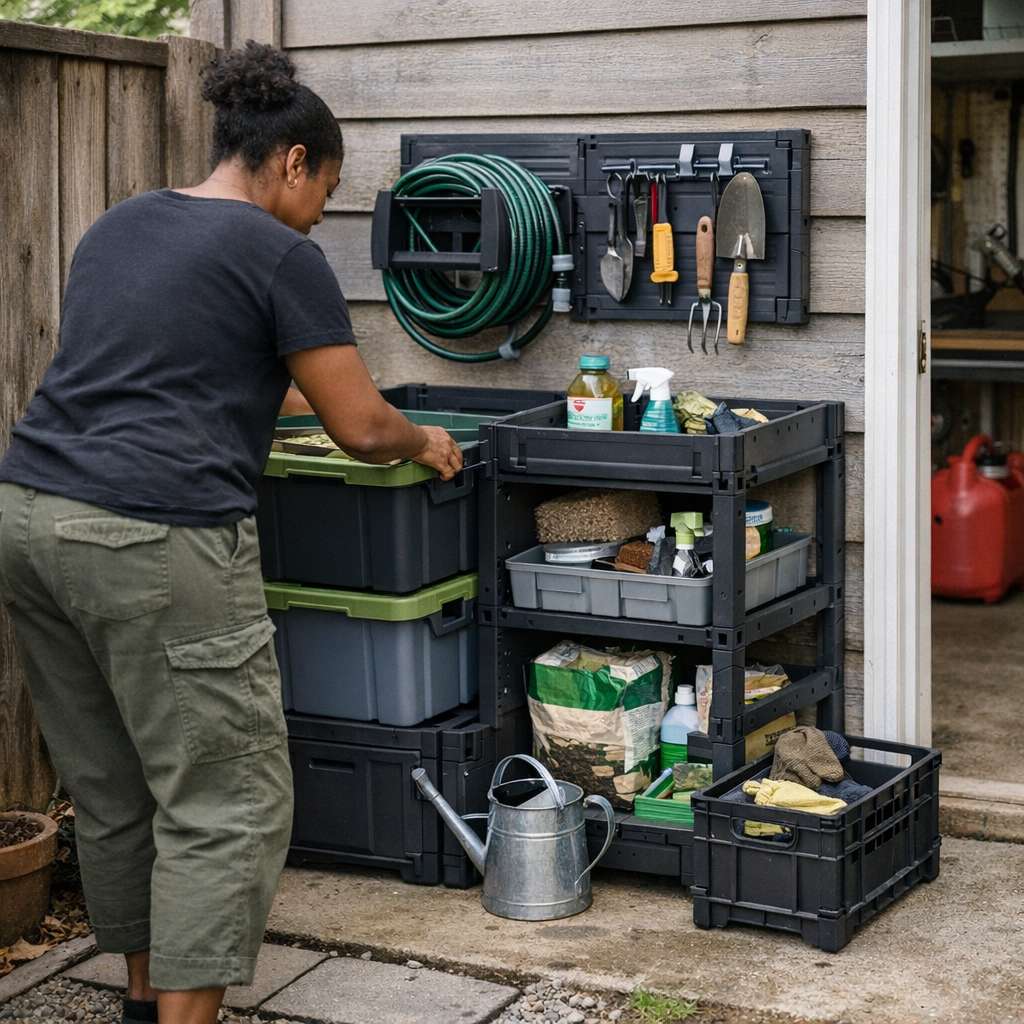
    Modular setups—rails, panels, snap-in baskets—play by different rules. After a muddy weekend or a new sports haul, you can unclip a crowded shelf higher, bump a hook over for longer tools, and open a wider path without emptying everything or fumbling for tools. A quick adjustment after a busy day can keep overflow out of the walking zone and keep the reset feeling manageable, not like a project you dread all week.

    Reset Speed: What Breaks Down First

    Test it: after yard work or a birthday, can you restore order in five minutes, or are you moving three things just to put one back? With a modular rail you slide things to fit, the floor stays clearer, and the next trip to the composter or the bikes doesn’t demand a workaround. With a fixed rack, every “quick fix” is a compromise—returns build up in the easiest spot, edges collect piles that were meant for hooks, and before long, the system blocks more than it helps. That’s when the weekend reset starts to feel like work you’d rather avoid.

    Real-Life Friction: Where Small Yards Trap You

    • Returning a long-handled lopper after trimming— but the shovel is already in the way, so the lopper ends up propped in a corner, starting another mini-pile in your narrow strip.
    • Reaching for the broom— but it’s buried behind two hooks that have migrated lower, forcing an awkward unhooking chain just to sweep up after the dog.
    • Trying to drag the garden cart through— but last week’s attempt to tidy bikes and bins onto the wall has pinched the route, leading to a string of off-ground plans that ignore how gear drifts when you’re in a hurry.
    • Overflow at the garage edge— the further from your entry point, the more “for now” items jam onto the wall rack, snowballing into visible clutter and a tighter squeeze every trip.

    If you keep noticing one corner swallowing more spillover, or the “organized” wall needs more sidestepping now than before, the mismatch is real. Resetting becomes its own mini-burden, routine movements get blocked, and shortcuts turn into permanent mess.

    Reconfiguration Is the Real Test

    Outdoor storage has to adjust with real life: seasons flip, tools rotate in and out, kids outgrow scooters, garden projects take over, and the “hot spot” for activity shifts with the month. Even in a simple yard, new habits create their own clutter. A setup that lets you slide shelves lower when shorter tools become daily grabs, or move a basket when the pile grows, keeps you moving. Rigid walls just turn the small stuff into new work.

    Try this test: Time your reset after a normal Saturday. Does returning everything take more rerouting or fiddling than it used to? If the routine grows slower, or “temporary” piles keep growing, it’s the system—not you—that needs to flex.

    Small Yard Flow: The Visible Difference

    The best storage wall isn’t judged by the first-day photo, but by how little you have to think about it after a muddy kid, a late haul of patio cushions, or an unexpected spring project. When movement feels natural—when you wheel something through without untangling or sidestepping—you gain usable space instead of fighting for inches. That’s the difference: fewer slowdowns, fewer end-of-week resets, and less energy wasted on figuring out where overflow should go.

    Choose outdoor storage that adapts as you do. When your narrow strips or garage edges remain open and passable, the yard actually works for you—week after week. If the setup always makes you pause or redo, it’s only pretending to be organized. In outdoor spaces where every corner and pathway counts, the right storage system is the one that holds up to real life, not just the day you install it.

    To see how practical organization can make your outdoor space easier to use—and less of a chore to reset—visit TidyYard.

  • Why Bi-Fold Doors Often Fail in Busy Entryway Storage Spaces

    Threshold storage isn’t just about making clutter invisible—it’s about how fast you can reset the zone when the next entrance, drop-off, or handoff crashes through the door. In a cramped entryway, the promise of bi-fold door storage sounds unbeatable: panels fold away, walk space opens up, and for a brief spell, order is restored. But in the day-to-day grind—arms full, shoes drifting, bags multiplying—the cracks show up fast. The neat facade matters less when you’re stuck handling temperamental doors or stalled resets just to keep chaos at bay.

    Why Bi-Fold Storage Seems Like the Answer—Until It Isn’t

    Bi-fold cabinets catch attention for tight hallways because they sidestep the wide swing—no more doors banging into benches, bags, or bodies squeezing through the threshold. Early on, it feels like you’ve solved the passage puzzle: more space to move, mess zipped away in a tidy shell. For a few days, everything glides. But in a home that pulses with repeated comings and goings, that smoothness breaks down where you can least afford it.

    Small compromises in daily use add up fast. Every folding panel becomes another moving part that can misalign, accumulate grit, or snag on a stray shoe. Instead of a quick return—grab, store, move—you’re juggling sticky hinges, nudging stubborn tracks, or dealing with panels that refuse to stay flush. A threshold that looked streamlined yesterday now bogs down today, just when you’re rushing to reset before the next round of arrivals.

    When Small Friction Turns Into a Stalled Reset

    Looking organized isn’t the same as working fast—especially at the entry where clutter pressure is constant. Picture the morning routine: shoes expand into the hallway, a backpack squats next to the cabinet, coats slip half in, half out. With bi-folds, a jammed panel or misaligned track means you’re stuck—groceries in one hand, fighting to coax the doors open with the other. If a panel pops loose or won’t stay shut, the “clean” look collapses and the reset backs up for everyone.

    Real-world reset hurdles:

    • Juggling two doors at once with one hand already busy
    • Prying at a hinge or shuffling the track before the door will move
    • A stuck fold blocking access to everything—no quick fix, no simple grab

    This isn’t dramatic failure—it’s the kind of low-level hassle that piles up across every wet morning, hands-full entrance, or school-day rush. What starts as efficient storage trickles into repeated little interruptions. The system you trusted begins to stall you, one jam and one deferred reset at a time.

    The Visual Order vs. True Usability Gap

    Bi-fold doors conceal chaos—at least until the mechanism turns on you. The real cost appears not in the first week, but after dozens of rushed returns. A stuck panel or inch-intruding door breaks both flow and order. In morning traffic, someone dodges sideways for a half-folded panel, or gives up and dumps shoes outside the storage—restarting the hallway clutter all over again. In transition spaces, every slow reset shows on the floor, not in the design catalog.

    Direct consequences you’ll notice:

    • In a rush—one shoe in hand, the other hand on the lunchbox—the resistance leads to shoes abandoned beside the unit, not put away.
    • Two people passing: a partially open bi-fold crowds the path, making each squeeze a stress test for space—and patience.
    • With the door open, the next person waits, blocked by your incomplete reset; return flow stops until the panels are back in place.
    • When tracks warp or hinges stick, “temporary” clutter becomes semi-permanent. The zone that was supposed to stay reset slips back into disorder after just a few days’ use.

    What Actually Improves Daily Flow?

    Switching from bi-fold doors to open-front storage in a tight alcove is less about aesthetics, more about reliability. When your entry gives you a foot-and-a-half at best (think 18 inches between the wall and the door), anything adding friction becomes an obstacle. With open storage, you see what needs resetting, toss shoes or bags in one-handed, and keep moving—no detours for adjusting hardware or matching panels. It’s honest: you trade away perfect concealment, but you get zero-delay returns.

    Entry routines run better on:

    • One-hand-or-no-hand drop-in—even if you’re juggling groceries and a toddler’s rain boots
    • No alignment rituals—just grab, toss, or adjust on the fly
    • Instant scan—what’s overflowing, what needs to be fixed before movement gets blocked

    This is where function steps ahead of form—where looking “done” gives way to staying adaptable. If you’ve jammed your hand, tripped the reset, or watched clutter choke the path more than once, the problem isn’t your routine. It’s the setup slowing you down when you need speed the most.

    The Real-World Payoff: Reliable, Low-Effort Reset

    Entry zones take a daily beating—small faults grow bigger with every pass-through. A bi-fold that sticks or comes off-track once might be forgiven, but every extra micro-adjustment gets between you and a clean threshold. Each clog turns a five-second reset into a multi-step workaround. By contrast, open storage skips the risk: nothing to break, nothing to block, nothing to keep you from a quick, low-effort reset. It’s not about hiding the mess; it’s about preventing it from multiplying in the first place.

    In real use, see where the simple setup wins:

    • Bags dropped midstream: With open bays, you spot spillover right away—deal with it before it becomes wall-to-wall mess.
    • Shoe lines drifting wide: Open units make it clear which pairs are out-of-bounds, so you can sweep the reset before anyone trips.
    • Bench as landing zone: When every seat edge becomes overflow, open storage lets you rescue the bench for quick sitting without fighting panels for access.
    • Return in motion: If closing a cabinet interrupts your momentum, that step gets skipped—leaving the system weaker each time. An open front keeps the reset part of the walk-through instead of a separate task you might skip.

    Fast fix: For houses with the highest entry churn—kids, guests, recurring gear—leave at least one open bay for must-drop items. Visual clutter is a smaller problem than slow resets that let mess snowball.

    Form vs. Function: The Entryway Reality Check

    Catalog glamour fades fast if your storage slows the routine. If your entry isn’t constantly under traffic pressure, maybe a bi-fold shelf works out. But for most city apartments and crowded family homes, every extra hinge and track is another chance for trouble. Once a panel sticks, every return feels heavier. When things stall or snap off-track, maintenance and catch-up become regular chores—not rare issues.

    The underlying logic: a threshold setup should turn your day smoother, not slower. The cost of chasing perfect visual order can spike each time a return gets blocked or postponed because the storage created one step too many. Simple setups—open benches, wall racks, drop zones you can reset in seconds—almost always outlast “clean look” systems in spots that see real, repeated use. If the trade-off is visible shoes but a pass-through that actually resets every day, most households find the “imperfect” system wins on reliability and real order, not just appearance.

    Explore practical entryway storage solutions for real transition-space routines at Betweenry.

  • Balancing Paperwork Storage: Sideboards Versus Open Organizers Explained

    If your paperwork never seems to land in the right spot, the storage setup isn’t keeping up. Even when counters start empty and the dining table looks clear, by midweek there’s a migration—mail with receipts, school forms edging across surfaces, and the same stack making the rounds from bench to shelf to open drawer. When a bill goes missing or a permission slip vanishes just as you need it, the real problem emerges: your system isn’t designed to handle the way paper actually moves through daily life. More storage doesn’t fix routines that break down every Thursday evening, or stop this week’s pile from blending with last month’s archive in the same hidden cabinet. If you’ve ever hunted through layers or spent Saturdays simply resetting zones, you’re not alone—the real cost of a mismatched storage choice shows up in lost time and repeated friction, not just visible mess.

    When Paperwork Collides with the Week

    Choosing between a sideboard (closed, anchored storage) and open organizers seems straightforward—until real routines hit. An uncluttered start quickly unravels if your storage doesn’t fit where and how you actually handle paper. Paperwork doesn’t flow neatly into its category; it builds up around pinch points: that kitchen counter where urgent mail lands because the sideboard is too far, or the hall shelf where incoming forms crowd out yesterday’s “to-dos.” The dinner table doubles as a shuffling ground. Retrieval no longer feels quick. By the time you notice, finding a single page involves backtracking through three different zones, each a step slower than it should be. It’s not just an untidy look—it’s stalled decisions and extra loops in your day.

    Hidden Calm or Instant Access? Why Structure Means More Than Looks

    Sideboards clear surfaces fast. Sweep stray envelopes behind a closed door: visual calm restored in seconds. But a week later, that same sideboard swallows categories. Tax forms edge under coupons; action items slip between ignored flyers; the archive layer thickens and today’s urgent document is out of arm’s reach. Hidden storage can quietly concentrate confusion—retrieval becomes a slower, multi-drawer search that disrupts the routine you meant to protect.

    Open trays and labeled organizers work differently. Every category stays in view, and sorting seems quick—until real volume stretches the setup. Watch as “file later” bins merge with “to pay now,” folders overflow onto the first available surface, and high-turnover zones bleed across the room edge. The promise of instant access turns into a subtle maintenance burden: you’re constantly adjusting stacks, trying not to trigger a collapse, and the reset cycle creeps closer to daily instead of weekly. The pressure builds in plain sight.

    Where Setup Collapses: Fallout in Real Use

    The real tension between looking organized and staying functional shows up in high-traffic spaces. Picture an entry counter by the kitchen: the obvious spot for keys, bills, and updates. With a sideboard within reach, it’s too tempting to sweep stray papers away before dinner—out of sight, but not out of the system. By Friday, the compartment holds a muddle of old statements and tomorrow’s deadline, making even a short search unpredictable when you’re in a hurry.

    Open systems feel under control until one heavy week brings in more than they can contain. Bins overflow, “urgent” piles blend with “just arrived,” and soon you’re out of assigned slots—paper spreads to desks and the floor. After two or three cycles, the space needs rescue, not just a reset. Open clarity is only as strong as the system’s ability to keep pace with the incoming volume, and to hold a line when routines slip under pressure.

    Movement Blocked, Flow Interrupted, Order Lost

    Storage impacts more than what’s seen—it slows how you move. A bulky sideboard may keep the counters clear, but if it shrinks the passage or its drawers collide with chairs, the setup interrupts every pass-through. You might move stacks twice to reach what you need, or pause to shift a bench out of the way just to open a drawer. Open organizers without enough structure can do the opposite: they invite rapid stashing but turn every surface into a catchall. As return flow weakens, small messes multiply—one tray overflows, then a full shelf joins the sprawl. Restoring order demands effort out of sync with the rhythm of daily use, and “easy access” turns out to be its own friction point.

    Category Boundaries: The True Line Between Order and Chaos

    Most setup failures aren’t solved by just adding more storage. The difference is boundaries. Insert a divider inside a sideboard drawer and suddenly “to process” has zero overlap with “to archive.” Retrieval is immediate—routines tighten, and the urge to start new stacks on top of surfaces fades. A tidy look turns into sustained, visible function: each category has an address, and even short resets are more efficient.

    With open organizers, labeled slots for each document type slow down category drift. But when the volume outgrows the structure—or returning an item feels like a chore—the system can’t hold. Overflow zones appear, surfaces fill, and the cost is measured in time wasted shuffling between sites. A setup that flexes—a new divider for a busy week, a repositioned tray when activity shifts—is less likely to slip under real pressure.

    Breakdown Signals: Where Storage Fails Real Use

    • Overflow hits the floor: When trays max out, paper spreads to whatever open space is nearest, quietly increasing the weekly reset burden.
    • No internal boundaries: Drawers without dividers let categories blend—requiring full-drawer excavations for every retrieval.
    • Movement gets blocked: Sideboards or benches placed too close to choke points make even tidy spaces awkward, slowing natural routines.
    • “Sorted” but not stable: Spaces look neat on Sunday, but with no clear return flow, new mini-stacks appear by midweek and sorting starts over.

    Outpacing the Paper Trail: Fine-Tuning Your Setup

    Lasting order hinges on using mixed storage types for mixed problems. Sideboards and cabinets handle overflow—if you add dividers to keep them from becoming black holes for paper. High-frequency documents work better in open-front or wall-mounted organizers within reach of your entry or main work zone—provided those units aren’t crowded or blocking daily paths. Timed returns matter: if putting away a receipt or form takes more than a few seconds, or if papers migrate between zones before settling, the system’s not fitting your real flow.

    Try a live test at the end of any regular weekday: did stray notes and mail end up filed, or did quick stacks form on your go-to table? This routine check reveals breakdowns faster than any deep clean. And when routines change—new activities, digital bill shifts, or heavier use—the most adaptable setups let you quickly add a shelf, insert dividers, or rotate organizers so new surges don’t push the limits and force paper back onto visible surfaces or problem walkways.

    A Setup That Survives the Midweek Rush

    The strongest systems aren’t the tidiest on day one—they’re the ones that hold their boundaries under pressure and shrink reset time to minutes, not hours. When you open a drawer and immediately find today’s paper—not a mulch of old forms—you know the setup is working. Inside storage isn’t just about hiding clutter; it’s about matching each zone to the way paper really enters, circulates, and leaves your space. When a storage choice fits your actual reset rhythm, categories stay separate, flow stays clear, and your space keeps working in real time—even when routines shift and new friction appears.

    For practical inside-storage setups, explore Gridry.

  • Maximizing Entryway Space by Managing Swing Door Clearance

    Add any storage—bench, bin, basket—near a door that swings open, and you sign up for a daily test of what fits where. An inward-swinging entry door doesn’t just limit how much you can store; it reshapes the entire path in and out, forcing split-second decisions every time you cross the threshold. The “storage solution” that looked efficient the day you brought it home can slowly become a lineup of toe-stubs, sidesteps, and small detours, especially when you have to nudge shoes out of the way or slide a basket just to get the door all the way open. Real use reveals a pattern: every inch claimed by storage is another pinch point where routines pile up, overflow drifts, and resets slow down.

    The Invisible Battle Between Door Swing and Storage

    Every swing door slices through your entryway on an invisible path—an arc that no basket, rack, or bench can cross without setting up a future collision. At first, the zone seems clear enough: the door opens, your bench tucks along the edge, maybe no one complains. But as days stack up and routines layer on, the mess builds without anyone deciding it: shoes decide their own new boundary, bags get dumped at the nearest edge, and an umbrella—soaking wet—wobbles where the door barely misses it. These aren’t mistakes; they’re natural results when the “don’t-block” line is a living, moving thing.

    Storage units, even the most compact, tend to creep into this arc. And as each bit of storage encroaches, you give up just a little more of your only open lane. Eventually, every movement gets narrower, more awkward—and the bench you thought would solve mess starts to collect extra shoes, pushing everyday flow into a real bottleneck. Scuffed paint and banged toes are just symptoms of what’s actually happening: your entry’s working space has shrunk into an obstacle course, one that refills on its own.

    How Small Setup Choices Affect Everyday Flow

    A layout that looks neat at 7 a.m. rarely survives to dinner without cracks showing. It isn’t about too much stuff; it’s about the difference between storage that looks planned and storage that gives way under stacking routines. Say you plant a deep bench beside the door or a row of bins within arm’s reach—they fit on paper, but as soon as two bags and three pairs of shoes drop down by sunset, the open path you counted on disappears. You might think you just need more discipline, but every arrival tests one core thing: can you ever get the threshold actually clear, or does each reset end up temporary?

    Repeated Use Reveals the Flaws

    Picture the weekday reset that unravels by noon: shoes that begin in rows but balloon sideways by midweek; a work bag landing on the bench’s easy-access corner—right inside the door’s swing zone; jackets tossed to the nearest hook, which crowds the fallback zone you didn’t even plan for. Suddenly someone’s backed up in the entry, shifting bags, wedging their shoulder around the door to get in or out. The meltdown isn’t caused by too much storage—it’s the slow collision between moving bodies and the arc that storage always seems to cross. If you’re moving things aside every day just to open or shut the door, it’s the layout, not just the users.

    Common Patterns: When Storage Turns Into New Friction

    The “just for now” effect: The entryway bench is a magnet for anything “just dropped for a minute”—but the minute never ends. Shoes, bags, groceries, or gear accumulate in the gap between intention and real movement, crowding the only clear zone you need on repeat.

    The overflow edge: Every system finds its weak spot—usually the bench’s far end or in front of a utility cabinet. These areas catch whatever lacks a set home, quickly turning the area you value most into the one you have to dodge or step around, even if you “reset” it nightly.

    Daily door block: If the door bumps, pushes, or doesn’t open fully even once a week, the setup isn’t working under pressure. A shoe rack that gets nudged, a basket that takes the impact—that’s not just minor annoyance, it’s evidence your entry setup is fighting your natural routines instead of supporting them.

    Practical Fixes: Reset the Zone by Respecting the Door’s Arc

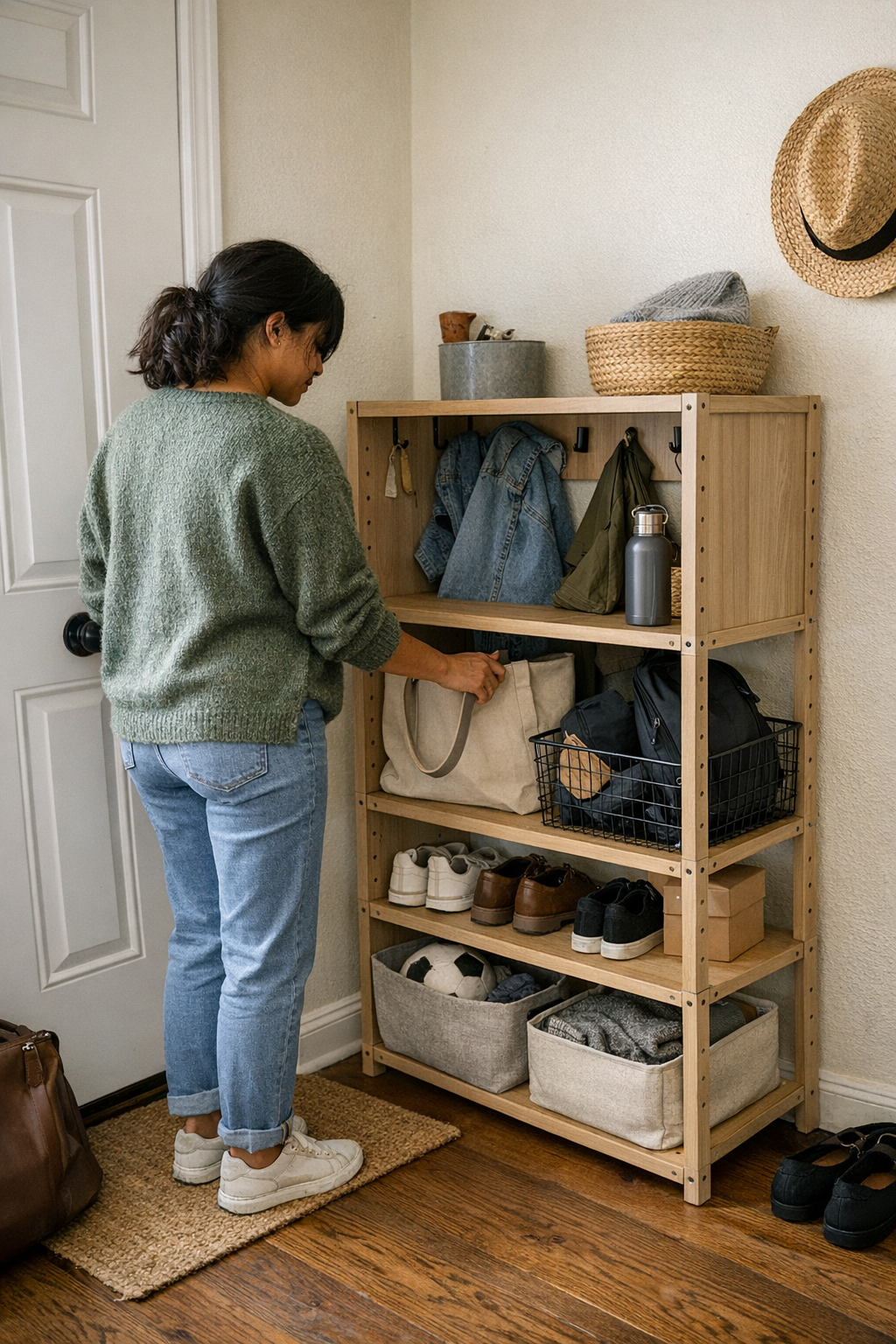
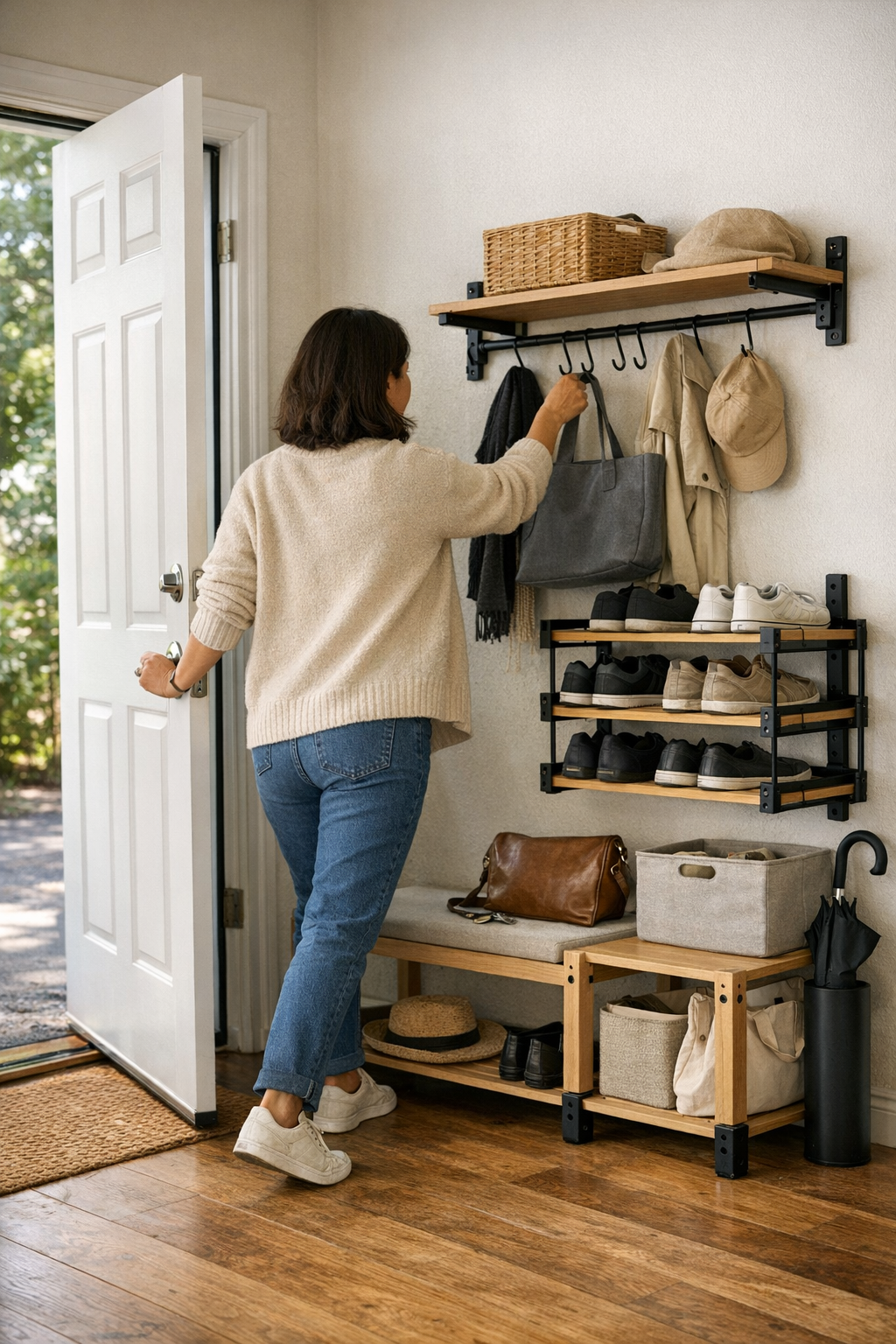
    The turning point comes when you move high-traffic storage—shoes, main bags, overflow bins—completely outside the door’s swing, even if it requires ditching bigger floor pieces for slimmer wall racks or upright cabinets. For example, shifting shoes from a bulky floor bench (always drifting into the danger zone) onto two narrow wall racks cleared up the mess almost overnight. The bench didn’t leave—it just moved further down, and only items that don’t migrate land there now. The result: at least 18 inches of clear path right at the entrance, even during peak chaos.

    The amount of storage didn’t change—the main collision point did. For once, you could walk through with arms full, not dodge surprise bags or a wall of scattered sneakers. The urge to create a “dump zone” lessened, resets sped up, and nobody had to stop to move five things behind the door just to leave. It’s not just about owning less; it’s about clearing the zone where everything otherwise bottlenecks.

    What to Watch for When Reviewing Your Layout

    • Door arc buffer: Measure your door’s full sweep and add a buffer—4–6 inches beyond the arc. Any item inside is a future collision, and the closer it is, the more likely it’ll collect clutter you never intended.
    • Wall-mounted options: Racks and hooks installed above the swing zone protect your path. These excel for keys, small bags, or daily-use gear, but heavier or kid-friendly items may demand alternative zones within reach but out of harm’s way.
    • Benches/cabinets: Place these outside the critical swing—far enough along the wall that nothing crosses into the threshold. Accept the tradeoff of taking a few extra steps; quick resets and free movement matter more than squeezing in one more bin beneath the door handle.

    Real-World Tips for Living With a Swing Door Entryway

    • Test your routine: Simulate a real return—hands full, jacket half-off, bag slipping, or muddy shoes in one hand. Where do you naturally want to drop things? If your answer is “where the door must swing,” adjust that zone until easy placement doesn’t block movement.
    • Don’t apologize for open floor: Emptiness right inside the threshold is leverage: it keeps routines smooth, resets fast, and movement constant. That unused patch is the difference between an entry that feels jammed and one that gives you breathing room day after day.

    The Daily Impact: Why This Detail Matters

    Living with a swing door isn’t about making the entry look perfect, but about catching how even the “best” organized system buckles under daily, repeated use. Most setups hold their shape for an hour after a deep clean; very few survive three days of real family life without the entry path clogging, the return flow stalling, or the same four bags and pairs of shoes drifting right back into the critical lane. The trouble isn’t visible on day one—it’s in the small scuffles at the threshold: the door that never opens all the way, the bag you keep nudging, the pile that returns even after last night’s cleanup. That’s the consequence of ignoring the door’s arc: every pass-through feels tighter, and the whole entry fills with small, avoidable friction.

    The difference is immediate when you respect the space a swinging door claims. Suddenly, routines that once slowed down now glide—walking in is faster, exits are calmer, and there’s less need for constant reshuffling. The best entry isn’t packed—it lets everything return to zero with less effort, keeping the threshold ready for anything your day throws at it.

    Find transition-space storage that fits your real routine at Betweenry.

  • How Proper Cutout Placement Transforms Cable Management in Storage Cabinets

    The illusion of organization: where hidden cables attack daily flow

    A storage cabinet promises instant order—a smooth front, no wire jungle, all those adapters out of sight. But if you’ve ever opened a cabinet expecting calm and found a twisted heap of charging cables, you know the surface is a lie. Most cabinet setups break down at the first real test: a charger swap, an extra device, or a rushed retrieval. Instead of quick access, there’s a cluster of cords pulling against each other, tangled around adapters, forcing you to fish blindly or yank out a whole ball just to charge a phone. The visual reset lasts hours; the everyday chaos returns with the first sign of shared use, overflow, or one changed device. Storage may look organized from the outside, but the lived routine inside tells a different story—too many setups trade visible calm for recurring hassle.

    What actually happens after the cabinet door closes?

    Even if you start with device-specific cutouts and tidy anchor points, reality catches up. Someone unplugs a speaker but doesn’t rewind the cord. The power strip slides on a slick shelf. One quick charger grab at night, and three cables slip out of their channels, collapsing the system into messy overlap. Over time, every “just for now” shortcut builds up: adapters lean off their shelf, cord slack pools at the bottom, and cutouts that once made sense become pinpoints for bunched, snagged wires. The mess isn’t always visible, but the delays never disappear—you end up clawing past loose cords or bumping your hand against the tangle every time you need a device. A cabinet that looks calm at a distance quietly sabotages daily flow up close.

    When visibility hides the friction

    Hidden storage hides clutter from visitors, but not from lived-in routines. What looks crisp to guests becomes a search-and-reset loop for anyone using the cabinet. In shared family spaces or communal work zones, forgotten cables knot around each other, and chasing the right charger means tracing cords by hand, usually while something else shifts out of place. As more users drop random devices into the mix, friction doubles: a quick charge stops being quick, and the time to reset—even if you bother—grows longer with every round. The real indicator is how often you find mismatched cables stuck in the door or trailing out the back, crowding what’s meant to be an easy-access zone.

    Spotting where cutouts matter (and where they don’t go far enough)

    Cabinet cutouts promise organization, but only if they match real device zones and habits. Clustered cable holes mean cables fight for the same tight gap, stacking up at a single pinch point. If your main tablet lives above the nearest cutout, you improvise—a cable drapes at an angle, another runs across open space, and soon even tidy layouts breed runaway slack and tangle. When the placement of cutouts ignores how people actually reach in and use the storage, the result is crowding, cable bends, and cords left hanging out because nobody wants to play threading games just to reset.

    Real-use mismatch: Clean look, tangled routine

    Picture a living room cabinet transformed into a family charging station. On day one: tablets lined up, headphones hanging neatly, spares stacked. By midweek, an extra laptop appears, a couple more chargers sneak in, and the universal remote gets thrown in at the end. Cords now overlap at a single slot; adapters topple into the heap. When you need your phone in a hurry, you’re yanking on the right cord but getting three others with it—resetting the whole mess takes more effort each time, until no one bothers and chaos becomes the default.

    Small adjustments that shift daily routines

    The breakthrough isn’t another basket or color-coded tag. It’s matching each device with its own cable exit, right where it naturally sits. Three routers? Carve three cutouts, aligned at shelf level—no overlap, no wrestling cords past each other. A kitchen counter charging zone? Each phone or gadget needs its own outlet through the back, not a single exit point. Small alignment tweaks mean next-day resets take seconds: grab, return, done. When shelves and cutouts map to actual use—not just a designer’s first setup—the storage works under rush, not just under inspection.

    The measurable shift: Time spent resetting drops

    In homes and busy offices with this setup, the change is obvious—retrieval gets efficient, cables stop snagging, and the chore of reorganizing becomes rare. Instead of five-minute hunts and delicate balancing acts with power bars, you spend seconds grabbing or putting back a device. Most importantly, people use the storage as intended because friction stays low: overlap is minimized, return paths are clear, and cords no longer default to a tangled ball after the third or fourth use.

    Why retrofitting cutouts rarely fixes the issue

    Retrofitting more holes doesn’t save a failing system. Drilling new cutouts often chips paint, leaves splinters, or compromises structural corners. Worse, these improvised fixes rarely evolve with your device mix—today’s smart speaker swaps out for tomorrow’s router, leaving cable holes stranded in the wrong spot. Each afterthought cutout risks replicating the original mistake: bunching, awkward cable drape, and a patchwork of mismatched slots that invite more crowding, not less. What’s sold as a late fix can become a lasting source of friction and visual drift.

    Common mistakes (and how to sidestep them)

    The two biggest layout mistakes? Forcing too many cords through one opening and grouping unrelated devices by convenience, not use. If you end up holding a shifting power bar on your lap while untangling knots, you’re already in this trap. Every fresh device added to a pile with no extra cutout nudges the system towards complete collapse—retrieval slows, and put-back gets skipped until the hidden chaos leaks out as visible disorder. The more the storage scheme crowds different categories into a fake order, the harder any real reset or regular use becomes.

    Making hidden storage work for your actual routine

    The true measure of a cabinet, bench, or wall unit isn’t what it hides on day one, but how much it speeds (or slows) repeated use a month later. The steadiest solutions match exit points and shelf positions with real-life habits—keeping shared zones accessible, separation real, and reset friction low. No product or plan eliminates all mess, and setups drift over time. But choosing storage designed for the way you move, reach, and reset cuts down on backtracking, daily tangles, and that invisible burden of having to “fight” your organization just to live normally. When cable exits and device locations line up, chaos stays in check—and the inside never returns to that cycle of quick calm, slow mess, and invisible hassle.

    Find more practical solutions for inside-storage and cable management at Gridry.

  • Optimizing Entryway Bins to Prevent Backyard Debris Overflow

    The real test of any outdoor setup starts at the threshold: that patch by the door where routines either flow or stall, depending on what gets dragged back in. You set down a bin, thinking you’ve bought yourself order—a place for muddy gloves, stray twigs, the hand tool you nearly leave on the lawn. For a few days, it works: less chaos, more space to step inside. But friction always finds the weak spot. Suddenly, clutter reappears in the corner of your eye, and the so-called landing zone is just reshuffling the mess, not containing it.

    When Outdoor Entry Turns Into a Trap

    Bare ground by the entry is the easiest invitation for chaos. By Tuesday, wet boots have laid a trail of leaves. Thursday, garden stakes from last weekend are still propped awkwardly against the wall. Every return from the yard adds another layer—one more item dumped, one more object blocking just enough of the path that you start sidestepping or shoving things aside on autopilot. There’s no clear zone, just a growing tangle in the spot you cross the most. A reset isn’t “set it and forget it”—it’s a lopsided shuffle, again and again.

    When the Bin Makes Things Worse

    So you add a bin. Maybe it’s a repurposed tub, a wide plastic tote, or a leftover storage barrel. One week in, the real pattern emerges. The bin’s too low, so you kneel or bend every time you return pruners. Its sides are wobbly, the rim’s too high, or the opening’s narrow—so tools, scraps, and debris teeter on top, sliding free at the first bump. Walking through means swerving around half-fallen piles. Even the quick job—grabbing gloves and dropping off sticks—means wrangling with what should have been a solution, not another obstacle.

    How Overflow Steals Your Flow

    Overflow destroys the rhythm: you notice when you have to nudge a shovel just to open the door. Rakes go from “put away” to balanced awkwardly against the wall, slowly sagging into the footpath. Each tool that can’t go inside is another barrier. Reset time stretches out—shuffle, scoop, shift, repeat. Sometimes the footprint looks “contained,” but it doesn’t feel clear; every reset reveals spillover creeping out, and you’re managing the zone, not moving through it.

    Invisible Frictions Make Or Break the Routine

    Most clutter doesn’t explode overnight. It grows from those in-between moments: you rest a shears on the rim “just for now,” toss a handful of sticks in the bin but miss, notice a child’s boots wedged under the tote lip. Before you realize it, the clearing by the door morphs into a jumble of items you meant to organize. Shared-use spaces—side yards, patio entryways, garage crossings—are the worst. Everyone’s routine leaves a trace, but no one’s system fits how the area is actually crossed during a busy week.

    Why Bin Design Actually Matters

    Most bins aren’t built for outdoor flow—they’re built for capacity or looks. A better design sometimes comes down to a single measurement. A lowered front edge (no more than a foot off the ground) and a sturdy, slightly elevated base transforms the return—no crouching, no fighting against a tall lip. The broom actually sweeps out the debris instead of scattering it. Oversized tools go in, not balanced precariously outside. It makes the “reset” invisible—a quick motion rather than a repeated struggle.

    Spotting When the System Breaks Down

    After a marathon weekend—kids cycling through yard projects, a big rake-up, rain-lashed boots launching leaves inside—the pressure test is not what the bin holds new, but how worn-in the space feels afterward. Look out for:

    • Tools clogging up the zone beside the bin, stranded outside because there’s no real fit
    • Scraps teetering on the rim or sliding into corners but never quite gone
    • Needing to side-step your own system to reach the door
    • Overflow forming a new pile in the direct walking line

    These aren’t theoretical flaws—they’re interruptions you feel every single crossing. The difference between “looks sorted” and “functions clearly” is one too many resets that don’t actually clear anything.

    Real Scene: When “One Bin” Isn’t Enough

    Take a narrow strip running the length of a fence—a utility lane meant for fast grabs and landings. You set a plastic tote under the eaves, thinking you’ve finally contained the routine. Day one, it’s fine. But by Friday, the inside is blocked by a tangled hose. Old gloves pile on the far corner. Bags of soil slump against one wall, and there’s a slow ooze of twigs and mud trailing across the bricks. Suddenly, the “out of sight” look is hiding a jammed-up reset. Every time you cross, you have to dig or drag something aside before you actually use the path.

    Now swap that for a bin that’s been considered: solid, slightly lifted, with a clear edge at sweep-height. The path clears for every trip, not just the first. Tools drop straight in; leaf litter flicks from broom to bin in under a second. The dead corner stays useful—no more awkward gaps waiting to swallow boots. Even on busy days, resets don’t balloon into a full cleanup, and the area feels passable, not provisional.

    The Power of Noticing Small Setup Flaws

    Every weak detail—bin placed too low, entry edge too high, base that sags—sets up the next cycle of slowdowns. If you’re pushing bags aside just to create a landing, or picking up the same scrap pile twice, the system isn’t broken but it isn’t working for you. The moments when you notice yourself hesitating or rearranging mid-task are the clues: the layout fit the space, but not the way you actually use it.

    Entry Zone Reset Tactics That Actually Work

    • Audit your resets. Check what collects outside the bin—do the missed returns form a pattern?
    • Size honestly for returns. If half your drops are bulky or odd-shaped, upgrade to wider access and firmer sides.
    • Lift your landing zone. Even a few bricks or a solid base create a target for quick sweeps—less bending, less sifting through mud, less impromptu flood control.
    • Set a reset trigger by spill, not schedule. Overflow signals you’re about to hit a wall—reset before walking paths shrink to an awkward shuffle.

    Function First: The Real Mark Of Organized Outdoor Space

    A bin that just “looks good” lulls you into accepting slow, blocked movement and constant micro-resets. The setups that work are the ones you barely notice—where resets shrink instead of grow, and the only footprints visible are the ones heading in and out, not swirling around a tangle. Function in busy, real yards doesn’t mean zero clutter; it means every return finds a place, and each crossing happens without hesitation.

    Find practical outdoor organization solutions at TidyYard.

  • Why Narrow Pivot Doors Improve Entryway Flow and Reduce Clutter

    If your entryway makes you stop to clear a path just to open a cabinet—or if dropped bags and creeping shoe rows keep turning “organized” into blocked and awkward—your storage setup isn’t helping, it’s fighting you. In high-traffic thresholds, the swing and footprint of a cabinet decide whether your daily routines flow or jam up. That’s where the real difference between wide-swing and narrow storage doors appears: not in showroom images, but in the grind of everyday use as items pile, shift, and the so-called tidy zone keeps falling apart under real movement.

    How Wide-Swing Cabinets Turn Flow Into Friction

    On paper, a wide-swing entry cabinet looks like it makes things easy—open the door, see everything, grab what you want. But this only works as long as the floor in front stays empty, which almost never happens. The moment routine kicks in—a rainy drop-off, arms juggling bags, someone else squeezing by—the wide door’s oversized arc bulldozes shoes out of line, catches on bag straps, and demands a cleared strip of floor every time you need to get inside. The “open access” quickly turns into a moving blockade right at your chokepoint.

    This isn’t random clutter—it’s predictable: Shoes left even slightly forward get swept out or tripped over. Bags stacked near the hinge get toppled or pinched when you open up. Jackets hung near the action lose sleeves to the swinging door. Each trip starts a mini reset, copying yesterday’s cleanup. You don’t see the cost at first, but after a few days, your “organized” entry is just a new obstacle course—slowed, crowded, and demanding extra steps you barely notice but always feel.

    The Cumulative Effect of a Wide Arc

    These little interruptions stack up fast. Step back to open the cabinet, put something away, and that tidy walk line you made yesterday instantly fills with today’s shoes and bags. The reset never holds. If your square footage is tight or your entry gets heavy use from several people, a wide-swing cabinet makes the space feel like it’s set up to resist you—not support you.

    Narrow Storage Doors Make Space Behave

    Now compare a cabinet with a narrow pivoting door—one that opens close to the cabinet face and claims no more than 12–15 inches into the room. Suddenly, shoes and bags can accumulate near the front without blocking storage at all. You can walk in, kick off shoes, drop a bag, and still open the cabinet freely. The threshold stays passable, resets are faster, and you don’t have to rearrange everything just to grab a coat or stash wet boots.

    Slim doors, easier routines. Slim vertical storage uses wall space, not walkway, so it rarely forces you to step around a giant moving door. You get access along the side margins—the zones where overflow usually starts to sprawl—rather than needing a clear, empty rectangle for a door arc. Items get put away with less chance of triggering a domino effect of shuffled piles or misplaced gear.

    When Real Life Crowds the Threshold

    You feel the difference on any standard morning: one person wrestling with shoes, another squeezing through with a bag, someone else dropping their stuff halfway inside. Wide-swing cabinets force people to wait, back up, or shuffle around the door. A narrow-door unit lets movement continue; you’re less likely to block the flow or trap yourself and others between piles and swinging edges. Even when piles form, they aren’t automatically in the way.

    Everyday Scenarios: Where Design Collides With Routine

    Real entryway setups show their true behavior in ordinary moments:

    • The “Quick Reset” That Stalls: Putting away one pair of shoes should take seconds. But when a wide-swing door needs room, a simple reset becomes a full-shuffle event—move shoes, shift bags, maybe even slide the bench—just to open the cabinet fully and finish the task.
    • Drifting Overflow: Shoes neatly aligned by a bench edge stay that way only until a door swings through—then the row spreads wider, the bench collects items, and your walk zone eats clutter instead of containing it.
    • Bag Drop Problems: If your storage needs a “safe zone” to function, there’s nowhere good for bags except in the walkway or in corners where they become trip hazards—or get dragged by the next opening.
    • The One-By-One Backup: Rainy days and family entries expose the flaw: every person waits for the giant door to clear before moving through—when the goal should be quick movement, not staged procession.

    Each repeated friction point—tripping over bags, shifting shoes, apologizing for blocking the way—chips away at any entryway system’s claim to be organized. Good storage doesn’t just look neat on moving day; it lets you move and reset with minimal hassle when the week is in full swing.

    What Actually Changes With a Slim Vertical Storage Unit?

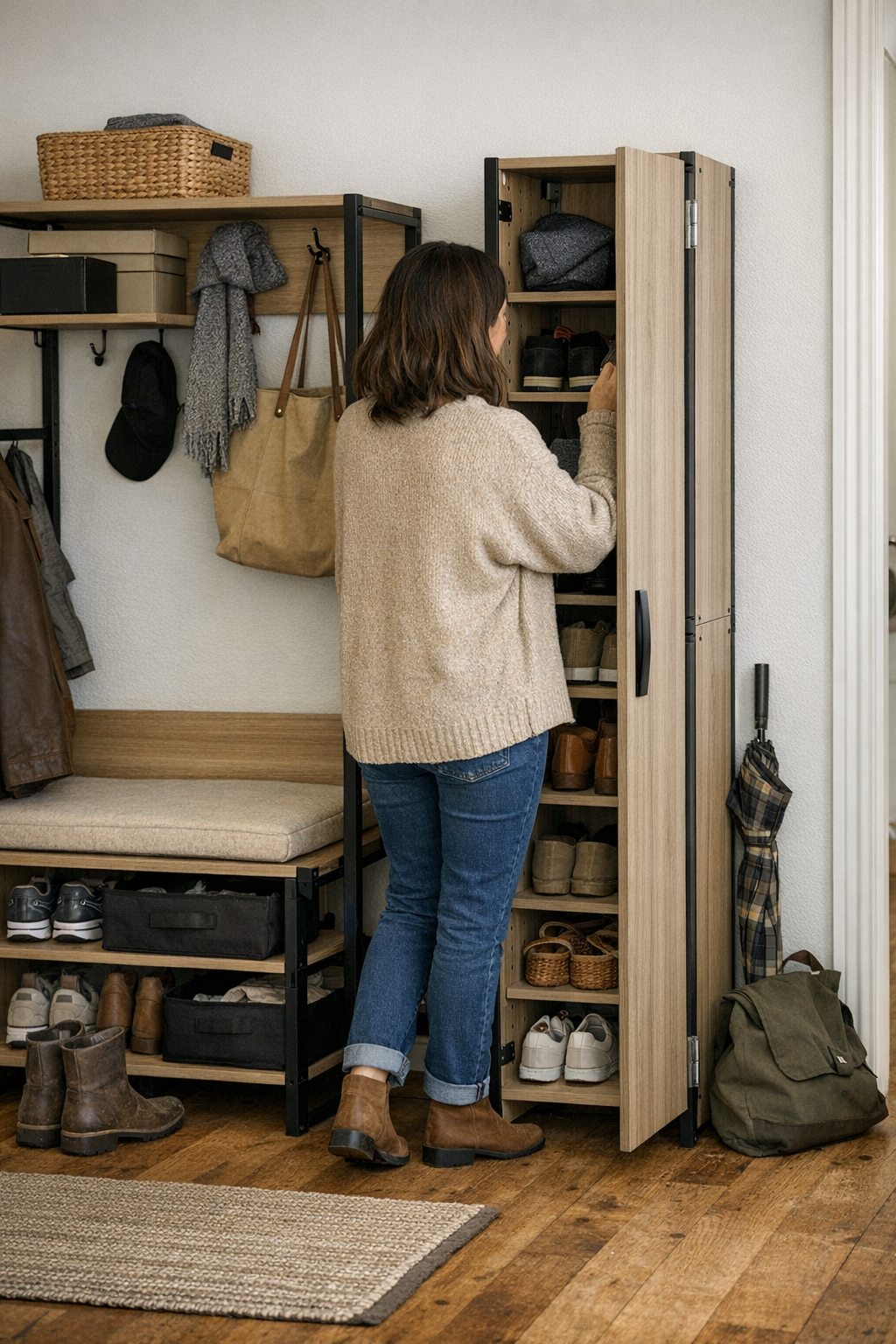
    Switching from a wide-swing to a slim, wall-hugging vertical cabinet resets the threshold for real. With a swing limited to about 15 inches, shoes and bags now pile near the door without blocking access. Instead of stopping to clear a landing zone or nudge shoes aside, you open, stash, grab, and step through—no pivot, retreat, or tactical sidestep needed. No one waits in the hall. No one has to step back. Movement stays continuous—even as piles appear and disappear through the day.

    The result is everyday pass-through—not just first-day tidiness. Over a few weeks, the difference is quietly but visibly real: the bench is for sitting, not overflow. Shoes go back on shelves, not back into traffic. Less drama at the threshold, fewer end-of-day resets. Problems don’t vanish, but they stop piling up right in your movement path.

    Does a Narrow Door Limit Storage?

    This is often the big question. In use, vertical units trade extra swing space for height and adjustability. For most mixes—shoes, hats, backpacks, or a rotating set of seasonal gear—capacity holds up if you set the shelves to match your highest-traffic items. Unless you’re parking winter boots for six people or storing large sports equipment, nearly all entryway needs fit. If the area is still crammed, it’s often the overflow of “just-in-case” items, not a storage pattern flaw.

    Points to Watch: Not Every Narrow Door Is Equal

    One repeated headache with narrow doors: weak hardware. Cheap hinges or flimsier doors can’t keep up; they flex, slam, or drift out of alignment after just a few weeks of hurried use. When considering a change, check hinge strength and door stability, or upgrade hardware so the door survives the cycle of slammed, pulled, and leaned-on use it’ll see at real thresholds. A narrow swing only helps if the door stays squared up after 100 daily grabs and drops.

    When and Where Wide-Swing Still Makes Sense

    There are spaces and routines where wide-swing cabinets can work—mainly when you control every variable. If you have a guaranteed clear floor in front (at least two feet, reliably), and your entry routine is smooth, timed, and never involves piles or sudden drop-offs, a wide-swing door won’t punish you. But for most lived-in homes—where entry space shifts from gear landing pad to hurried reset zone—each wide door is an invitation for daily pileups and extra steps.

    One visible rule: If you’re regularly sliding items aside to open your cabinet, the door is eating up your movement zone. Any bag, shoe, or bench edge within about 24–30 inches of the hinge is at risk—and will get swept, blocked, or stranded in daily use.

    The Big Difference: How Entry Storage Shapes Daily Life

    This isn’t about looks or matching covers—it’s about function when things get messy. Every time a pile forms, the wrong door turns a small hassle into a blocked threshold. Wide arcs demand wide lanes and daily vigilance. Slim pivot or sliding setups trim that demand, letting your routine—including the inevitable drift of shoes, bags, and wet things—play out with fewer slowdowns. “More storage” isn’t the answer; storage that respects your real movement is.

    Find transition-space storage that adapts to your routine at Betweenry.