
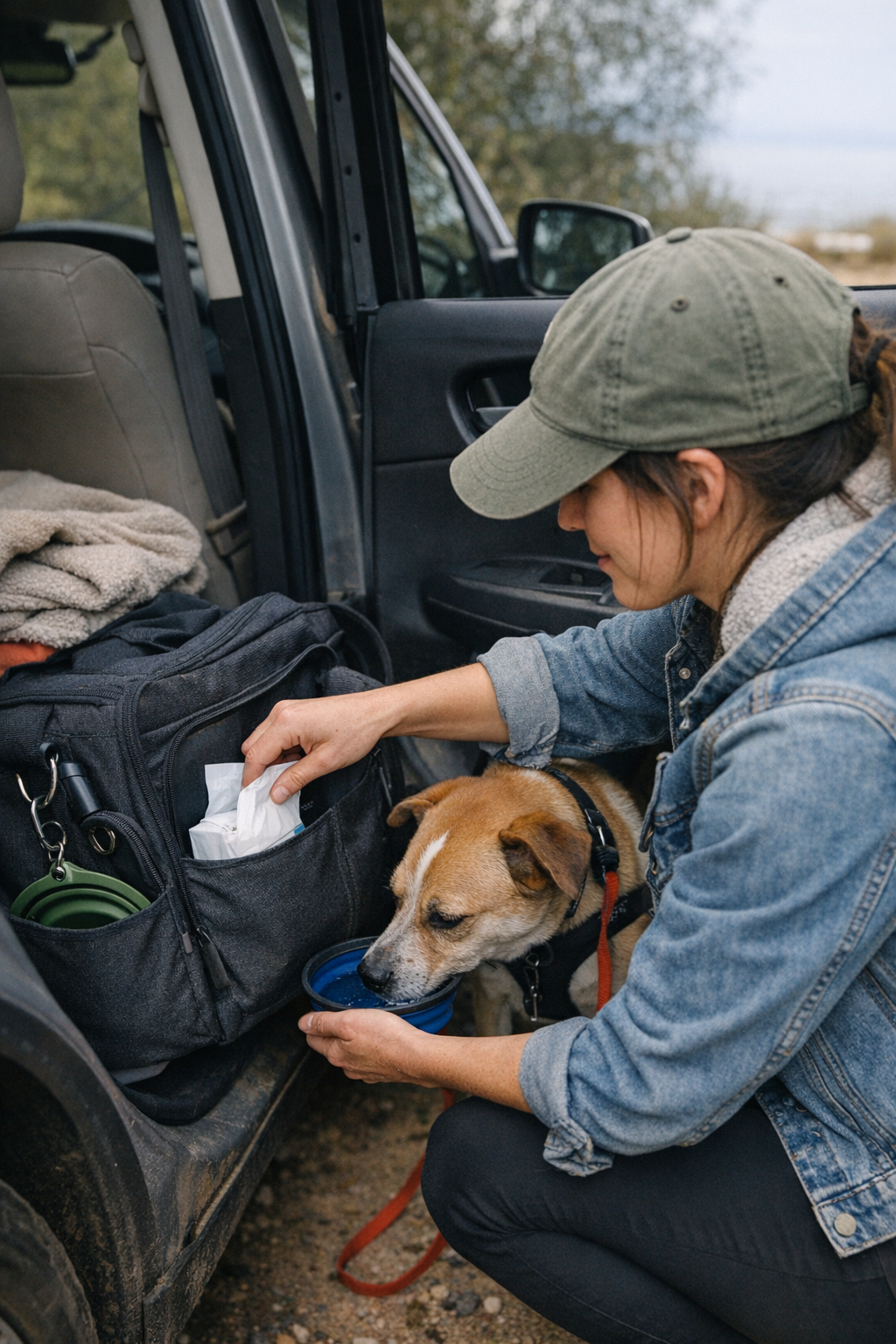
The gap between a bag that looks organized and one that actually works at the curb shows up fast—usually during the first rushed stop with your pet straining at the leash. The travel setup that felt neatly zipped in your driveway quickly turns frustrating the moment real motion starts. If you’ve ever tried to grab a wipe only to find it trapped under tangled blankets, or found your bowl wedged beneath spare clothes while your dog circles impatiently, you know how “organized” can dissolve into a five-minute scramble just to get moving again. That’s where the PawGoTravel world starts—at the point where routine breaks, not just at the packing checklist.
Travel Setups That Look Ready, But Don’t Work Under Pressure
Packing is easy in theory: treats pocketed, bowl collapsed, waste bags tucked, leash rolled, wallet zipped away. But no trip plays out in perfect order. The real test comes when your stop is unplanned—at a rest area, the side of a busy road, a city curb—and your pet’s energy flips your “system” into an instant mess. Suddenly, the leash is tangled in snack pouches, wipes are buried two layers deep, you’re holding back a restless pet with one hand while digging through pockets you can’t see. Every stop starts to feel like a puzzle where you’re always one move behind.
This friction repeats itself. Reach for the leash, and a sweater shifts. Try for wipes, and you knock loose a bowl. What looked like practical prep forces you into constant reshuffling, repacking, and the feeling you’re always restarting the trip instead of moving forward. An “organized” pet travel bag can actually trap you into more stops and longer transitions—and you notice it most with every unscheduled pause.
Where Quick Access Makes or Breaks the Trip
The real difference between a workable setup and a frustrating one isn’t capacity or looks—it’s whether you can grab what you need without searching. On the road, reach matters more than how tidy something stays. Wipes, leash clips, bowls: you need these fast for muddy paws or quick water breaks. If they’re stuffed in the same pocket as backup supplies, even routine stops drag out. Nothing breaks momentum faster than struggling with a bag while your pet pulls or whines.
Instead of one-off hassle, these slowdowns layer up: city errands, road trips with repeated stops, even a day of park runs. Every moment you spend digging adds tension, tests your grip, and strains both your patience and your dog’s calm. Real access—what you can grab immediately, not after reshuffling—draws the line between smooth travel and a loop of small, preventable headaches.
Real-Life Scenes: A Routine Complicated By A Bad Setup
An hour into the drive, your dog gets jittery. You pull over: water break, quick walk. The layout that looked organized now unravels. The bowl is crushed below a hoodie, wipes are stuck in a half-zipped mesh. Holding the leash with one hand, you use the other to fish for whatever’s at the bottom. Meanwhile, leash clips snag on zippers, and your “quick” stop grows noisy and slow. The struggle isn’t rare—by the second or third pause, you start dreading every reach into the bag.
These small breakdowns accumulate. Each time you’re forced to unpack or redo your setup for a basic task, you lose more time than you realize—and your pet’s restlessness spreads. A bag that seemed ready actually becomes the biggest barrier to a calm routine, making every trip feel disjointed, never truly settled, no matter how much you pack in advance.
The Overlapping Spaces Problem
The most common snag: owner and pet items packed into the same main space. Wallet next to leash, phone sliding behind wipes, backup snacks tangled with cleanup packs. At home it seems tidy, but repeat stops expose the flaw—pull for a snack, and you’ll unspool the leash or bury the wipes again. The more items rub together in a single pocket, the more access turns into interruption. You’re not battling mess; you’re battling the way structure works against rhythm.
The real disruption isn’t visual clutter but constant loss of momentum. Even a bag that looks clean on the outside can slow you down if it forces you to pause, fumble, or redo your routine at every reach-point. Order doesn’t help if it ignores the actual pattern of stops, grabs, and restarts that shape travel with a dog.
A Practical Fix: Seat-Side Access for Essentials
The most fixable weak spot? Essentials—collapsible bowl, leash, wipes—must get their own exterior, seat-side compartment. When these items aren’t buried or overlapping, every stop shifts: your hand lands right on what you need, and the scramble disappears. Stopping turns from a mini-crisis to a 30-second reset.
This isn’t about looking more prepared or owning “smarter” gear. It’s about physically changing where critical supplies sit—so that one repeat reach lands on a ready solution instead of a blend of everything. Once a bag’s structure gives you arm-level, seat-facing access to your highest-use items, your trip’s entire pace improves. The moments you spend stuck, digging, or juggling—gone. The routine, for both you and your pet, smooths out without any new tricks to memorize.
What to Look For In a Pet Travel Setup
The bags and organizers that work aren’t necessarily the prettiest or most compartment-heavy. The test is simple: can you get the leash, bowl, and wipes from a single, outer-access pocket, every time, without unpacking half your gear? Avoid any setup where frequent-use items are layered with backups or comfort extras. A smart, clean access sleeve outperforms segmented bags with too many hidden zips. If you’re moving blankets to reach wipes, or sliding your wallet to get a bowl, your setup is failing where it matters most—in motion.
Real support means your bag adapts to your movement, not the other way around. Structure—seat-side, top-of-hand, quick-open pockets—matters more than how it scans at a glance. You’ll feel the improvement not in how it looks in your trunk, but in how little you have to think about it at every stop.
Travel Routines Test Every Setup—Even the “Organized” Ones
Whatever you tolerate at home—extra shuffling, hidden wipes, overlapping pockets—turns into a repeated headache on the road. The more stops you make, the clearer the difference between styled organization and real-world flow. Instead of fighting the same access bottlenecks and repeated slowdowns, swapping in a seat-side, quick-grab setup makes every transition smoother. What matters in practice is not the outer neatness, but whether your bag keeps pace with how you and your pet really travel—stop, access, restart, repeat.