Category: Tools & Workshop

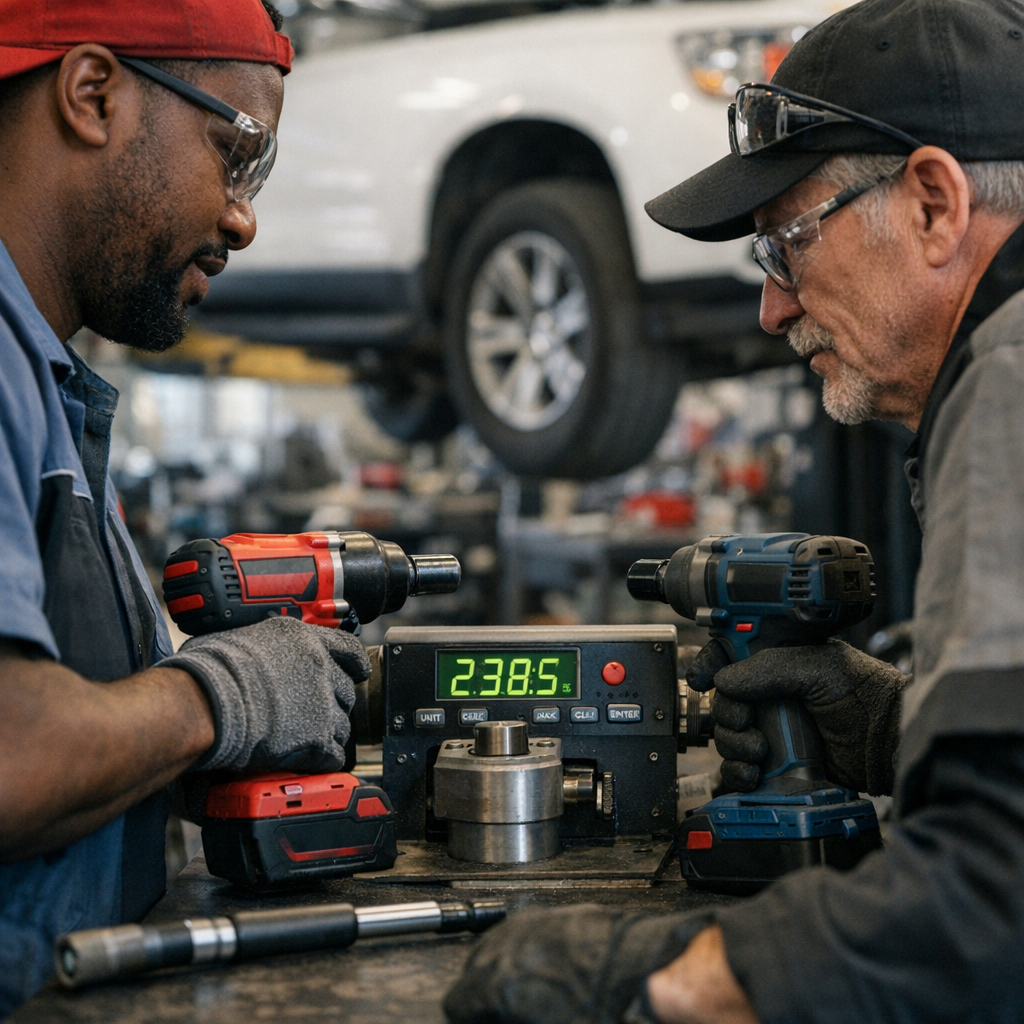
  • Why Regular Impact Wrench Calibration Prevents Costly Assembly Errors

    There’s a unique kind of aggravation in finishing an assembly—only to watch bolts edge loose, seams gap, or complaints return within days. If you’ve ever had to drop tools to re-torque a stubborn seam or track down an annoying rattle, you know those invisible problems that start with your most relied-on wrenches. Tool spec sheets might look almost identical, but day after day—through cut, drill, and fastening runs—the gap between a truly dialed tool and a drifter only grows. You can’t spot calibration drift with bare eyes, but you’ll feel it when your “finished” job circles back with trouble.

    Where The Slippage Starts: Calibration Drift on Real Jobs

    First days with a freshly tuned wrench usually go smooth—aluminum brackets cinch tight, new steel plates align without fuss, and fasteners come up to torque predictably. But real shop time creeps in: painted frame steel fights back, threads hit with corrosion, assemblies happen in cramped, uneven corners. Suddenly, the wrench feels a tad softer, or that final turn of the bolt starts to lack the stop you expect. On a quiet line you might shrug and keep moving—until, days later, the seam reveals a telltale gap or bolts demand a full force retighten.

    This is where the cost gets real. Missing spec by a few ft-lbs might seem minor, but that slip spreads: vibration control gets weaker, fit goes off, and the domino effect rolls on. Instead of pushing your project forward, you’re backtracking—cutting in new edges, sanding down bad joins, and cleaning up the avoidable mess one loose bolt started.

    Where Tool Weakness Hides—And When It Finally Shows

    Run through a rack of plastic anchors or softer alloys and the wrench might seem flawless; you won’t notice calibration fade through routine repetition. But shift to tougher scenes—fastening into painted flanges, overhead bracing, or popping decades-old rusted bolts—and that missing edge becomes obvious. The little things start dragging: bits that don’t bite, screws that spin just shy of flush, or blades that veer off true, forcing correction passes or “just good enough” fixes nobody likes to admit.

    Drift Doesn’t Announce Itself: Recognize the Tells

    An out-of-calibration wrench doesn’t scream for help. It’ll sound nearly the same, vibrate just a touch off rhythm—you might only catch it in the fatigue of late shifts or when the consistency in your work drops. Real warning signs show up after the job: seams that don’t sit right, bolts that back off after a first shake, or recurring calls for rework. If you hear your crew mutter “didn’t hold like last time,” invisible drift is already hurting your workflow.

    Scenes from the Floor: How Drift Eats Into Your Day

    Imagine pushing through a series of wheel swaps. By lug number twenty, a sliver of looseness sneaks in—not enough to halt you, but enough to question. A torque stick reveals you’re almost a dozen ft-lbs under. That slip is all it takes for bolts to walk out and for callbacks to pile up over the week. It’s not just the fix; it’s shuffling schedules, doubling back on jobs you already crossed off, and the fatigue that stacks when you’re chasing mistake after mistake down dusty shop aisles.

    The Fatigue Factor: How Calibration Drift Wears You Down

    No one uses tools in showroom conditions. Grease gums up trigger pulls, old paint chips work into moving parts, vibration bleeds output, and awkward jobs—up ladders, in cramped bays, across battered benches—take a toll. Over time, performance slips quietly; a drill grinds a little slower, a sander leaves uneven scratch patterns, a once-precise cut now frays at the edge. Each small miss compounds, swapping control and efficiency for extra labor and mounting mistakes.

    Make Calibration Routine, Not a Panic Response

    If you’ve been burned by mysterious loose bolts or shifty joints, calibration isn’t a formal box to check—it’s survival. Setting a calibration schedule—every six to eight weeks for tools in constant rotation—re-centers your workflow. Tightness in assembly, dust reduction from fewer sanding fixes, and smooth, predictable blade and bit performance show up fast when wrenches hit true spec every time.

    • Bolts hold tension even after machines run hot and vibrate for hours.
    • Seams stay true, saving re-torque headaches and last-minute sanding fixes.
    • Torque readings hover where they should, not scattered across a dozen ft-lbs—making every follow-up check a formality, not a scramble.

    Whether it’s an assembly line or a scattered home garage, keeping calibration routine translates into fewer surprise callbacks, smoother builds, and less time choking out fires set by fading precision.

    Don’t Wait for Warning Lights—When to Calibrate in Real Work

    Lock in calibration checks every six to eight weeks whenever a tool is in daily grind. Don’t let a stubborn job or tool “just feeling off” slide—run a check immediately if anything seems wrong. Pay attention to not just loose bolts and gapped seams, but also the subtler hits: fasteners that don’t bite first time, cuts that wander, or a wrench that needs more squeeze for every output. If a tool drops more than 10 ft-lbs from baseline, recalibration jumps to the top of the action list. Otherwise, those lost hours and do-overs keep stacking—stealing progress from even the best crew.

    Real Payoff: Consistency That Saves Your Energy

    Routine calibration isn’t a box-tick—it’s the backbone of reliable work. Sharper torque, surer control, and fewer repeat jobs mean faster builds and fewer afternoons lost to avoidable fixes. From fast repairs to weeklong builds in noisy, debris-choked garages, it’s that small, consistent advantage that prevents the spiral of touch-ups and fatigue. Make calibration a habit: keep your tools trustworthy, your output tight, and your projects finished—once, not twice.

    Gumboll: For the tools that make the difference

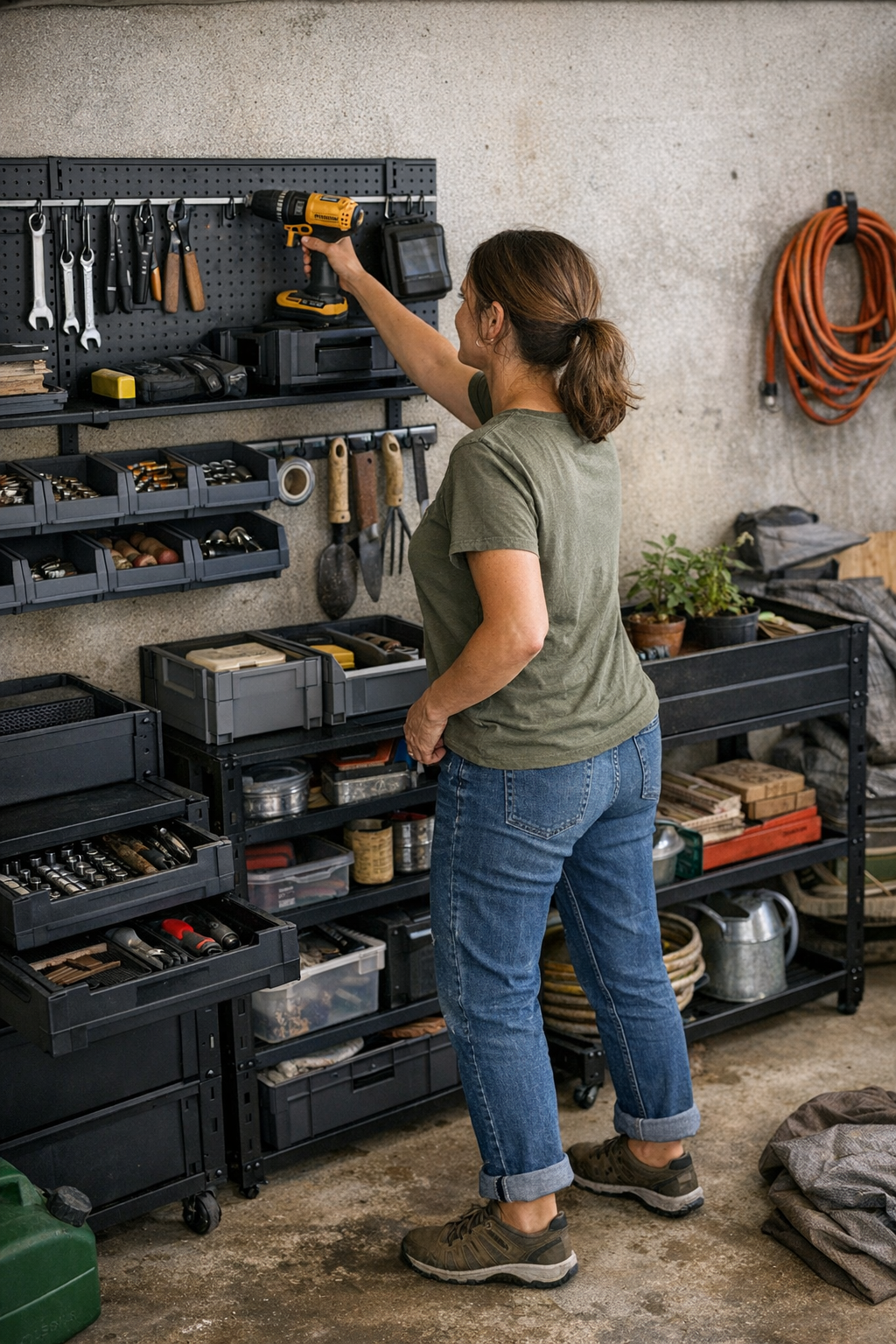
  • Why Defining Home Spots Stops Clutter Drift in Your Workspace

    The first week after installing modular shelving and wall rails, it feels like you’ve finally cracked the garage. Everything has its row, the bins are still crisp with labels, all that old clutter cleared away. But anyone who actually uses their workspace—day after day—knows this honeymoon vanishes fast. By month’s end, the bins drift, the daily tools land on any available surface, overflow collects at the edges, and the generous aisle you planned for becomes a one-foot squeeze. Resetting the space is less clean-up, more rearranging the same obstacles. The hidden failing isn’t broken hardware—it’s missing “home spots” for the staples you handle every single day.

    When “Looking Organized” Stops Being Enough

    It’s easy to mistake shelf symmetry for a real solution. Freshly organized cubes and wall grids promise an end to hunting for gear. In practice, those tidy rows start slipping apart with each round of projects. Daily friction builds almost invisibly: a tape measure always left teetering on the edge, garden shears propped on the freezer, extension cords tangling with tools in the catch-all bin.

    The real trouble creeps in: Without firm, intuitive landing spots tied to your actual routines, even premium modular setups quietly unravel. The things you grab most never get a dedicated home—so they pile up, circulate, or squat “temporarily” in the nearest open spot. Gradually, your shiny setup turns into an obstacle course of half-empty bins and crowded corners.

    How the System Blinds You to the Actual Problem

    Consider the real flow: every week, you find yourself shifting a rolling cart yet again, just to get at the saw you actually need. You reach behind a stack of bins—meant to be accessible, now blocking their own shelf. Hooks and cubbies look neat until their layout doesn’t match the way you move. Suddenly those wall rails start collecting “just for now” piles instead of organizing your tools.

    Rigid sorting (all hand tools here, all garden gear there) barely survives real life. The cordless drill never sits quite right beside the long-handled rake. Heavy loppers bend the bin meant for light clippers. Overflow containers, meant as backup, wedge their way to the door—forcing you to loop around every time you carry supplies in or out. You start noticing “dead corners” that only exist to collect what doesn’t fit anywhere else.

    Why Real “Home Spots” Change Everything

    More bins won’t solve it. The fix is logic that fits your routine: give every high-rotation tool or supply a specific, visible landing place. Don’t over-complicate and label everything—zero in on the gear that travels between hand and shelf almost daily. The ratchet set, the utility knife, those gloves that never stay put—each needs a dedicated, clearly marked home instead of a vague shelf or generic bin.

    One example: a garage owner quit chasing screwdrivers by blocking out a corner of the top shelf, labeling it with tape and color, and making it the only legal landing zone. Now screwdrivers actually return to their spot, not the paint shelf, not the counter, not lost to the clutter-jungle. Another win: mounting a small rail at eye level—just for two kinds of gardening shears—meant resets became automatic. They never vanished into the bin of spare cords. End-of-day cleanup got faster because you stopped hunting and stopped moving bins just to carve out space.

    What Makes a “Home Spot” Stick

    • Visibility: You see it without digging or guessing.
    • Access: Nothing else blocks or hides it—not even the easy stuff.
    • Precision: It’s sized for the item—enough space, not sprawling empty space.
    • Personal marker: Tape, label, color—whatever jumps out so there’s no pause.

    When high-touch items land in their exact place every time, your hands remember. Resetting becomes automatic. Search and shuffle disappear.

    What Modular Shelving Nails—and What It Misses

    Modular means flexibility—a rolling cart that actually moves to your work zone, rails that can go up or down when spring projects replace winter ones. That’s real-world advantage over fixed systems. But “flexible” isn’t enough without intention: you need to decide which tool lands where, and see those decisions reinforced in the layout. If you keep hesitating or double-checking where an item belongs, something’s off.

    If one wall is bursting and the other is always empty, or if certain spots always collect “floaters”—stray drills, bags of screws, always-out battery packs—you’re seeing clues. The organized look fades the moment your daily flow (grab, move, return) doesn’t match your storage map. You start sidestepping carts, reaching around bins, stepping over backup crates that block your path out the door.

    Why Clutter Sneaks Back

    No matter how clean you make it, spaces without true home spots revert. A level perches on the garden bench for a week. Zip ties scatter into whatever bin is closest. Even right after a major reset, by Friday you find yourself moving two boxes to reach your drill—again. Blocked aisles, out-of-place tools, awkward piles: these aren’t rare accidents, they’re signals the system isn’t working with your actual behaviors.

    Is Your Storage System Actually Working?

    • Is your “mobile” cart mostly blocking your only walkway?
    • Do you reach past bins constantly just to get what you need?
    • Does one zone always fill up, while shelves elsewhere gather dust?
    • Is there a corner that quietly becomes overflow central, week after week?
    • Do resets take longer with each round—more shuffling, less true cleanup?

    These are your cues. Not that you need more storage, but that you need clearer, smarter home spots for the tools and supplies you use every cycle.

    Real Clarity Isn’t More Bins—It’s Better Flow

    Here’s the test: At the end of a day, can you reset the core zone in under a minute, without stopping to think? Or are you still negotiating with your setup—babysitting bins, making awkward Tetris moves?

    Spaces that work in reality make resets second nature. Every go-to tool or supply returns to a familiar, easy spot. Walkways don’t disappear behind backup boxes. Daily motion is clear and unblocked. The storage expands when the project changes, without turning every clean-up into a mini-move. You forget about your system—because it fits your habits.

    The payoff isn’t a showroom. It’s that on a random weekday, you can step in, grab what you need, and put it back without breaking stride. Setup stops being a project of its own and just works—the way you actually work.

    Find modular storage that adapts as your real habits shift at StackNest.

  • How Thoughtful Closet Design Reduces Daily Clutter and Saves Time

    Every closet has that brief, hopeful moment—right after the big clean—when folded piles stand straight, baskets line up, and hangers point the same direction. It looks organized. You feel in control. But then, regular life sneaks back in. You dig out shoes hidden behind sweaters. A basket gets dragged out just to reach your work bag. By Thursday morning, the shirt stack collapses after one hurried grab, and that tidy feeling dissolves into quiet frustration. What looked organized doesn’t stay easy. In just a week, it’s obvious: the difference between “put away” and “works every day” is all in the design.

    Where Storage Starts Failing—Subtle, Repeated Frictions

    Real-use storage isn’t about perfect stacks—it’s about avoiding the need to touch, nudge, and restack just to get to something routine. When shelves hold more than one type of item, or family members share the same closet, friction multiplies fast. If you reach for a scarf and send two hats tumbling, or you have to drag out a bin and sift through mismatched socks, the system is wearing thin. These moments slow you down more than you realize—and signal what isn’t working.

    Clutter on the shelf’s edge, corners that always seem “busy,” and piles that melt into each other aren’t just daily annoyances. They’re proof the setup needs a rethink, not just another round of tidying.

    How Disorder Grows, One Grab at a Time

    Mess rarely erupts in a single afternoon. Take a hallway closet doing double-duty: towels folded on one side, boots and gloves jammed on the other. Week one, it’s fine. By week two, the boots have muscled towels into corners, stacks slide inward, and midday grabs leave mittens on the floor. That shelf isn’t “messy”—it just demands fixing itself, constantly, for basic use.

    Bedroom closets fall apart the same way. First, shelves fill too fast. Then, grabbing a T-shirt sends sweaters slumping forward. Suddenly, bins are mystery boxes—one mix of slippers, scarves, and last year’s pool float. The change is slow, but the friction is daily. These aren’t failures; they’re the lived-in proof that looks fade under real habits.

    Resetting Shouldn’t Be a Project

    If you need a two-step process to get to what you want—slide this, re-stack that—or find yourself folding towels just to make boots fit again, something’s wrong. The true red flag: when each “quick tidy-up” turns into a mini chore, and every grab requires a workaround. That’s not a sustainable system; that’s barely controlled chaos.

    Every Category Needs Its Own Track

    The most resilient closets don’t rely on stacks staying perfect. They rely on categories staying separate—with boundaries that survive through dozens of busy mornings. A system works when a quick toss or a single pull doesn’t blur the lines or tip the balance. But when shoes migrate into towel territory, or that “winter bin” absorbs whatever won’t fit elsewhere, the closet’s letting you down.

    Sometimes, one divider makes the difference. Install a vertical panel between towels and boots: suddenly, pushing shoes in doesn’t squash folded linens, and towels stay upright through daily grabs. No more reshuffling. Resetting drops from five steps to one. The space stops asking for attention and just works—even when you’re in a hurry.

    Spotting Warning Signs Before It All Collapses

    Most storage headaches announce themselves early:

    • Stacks toppling or oozing across shelf edges
    • Categories blending every week until it’s just “stuff”
    • Digging or reshuffling just to grab a single thing
    • Baskets or bins filling up but not clarifying what’s inside
    • Shelves running out of space, faster than the actual volume of your stuff

    These aren’t personal defeats—they’re signals you need clearer inner boundaries or better-fitted tools. Often all it takes is a right-sized bin or a simple shelf divider to reroute chaos into a routine that sticks.

    Small Adjustments, Big Improvement

    There’s no one-size fix, but a few targeted changes overhaul most closets:

    • Simple Dividers: Stop boots from bulldozing towels, keep bags from toppling sweaters. A vertical panel keeps items in their zone—even after a clumsy grab.
    • Purpose-Built Bins: Assign bins to a single item type and keep them that way. If a bin eats shoes, hats, and old receipts, it won’t sort anything—it’ll just hide the mess.
    • Hooks for Habitual Grabs: Scarves, handbags, and jackets tossed on hooks are instantly accessible—and don’t topple anything else when you reach for them.

    Even a minor shift—raising a shelf to use dead vertical space, or designating a defined drop-zone for shoes—can deliver a smoother morning. You shouldn’t have to “prepare” your closet every week for it to work; when categories keep their lane and daily use runs smoothly, the storage pays you back every time.

    The Real Test: Living with the System

    Looking organized isn’t the same as living organized. Closets prove their worth by surviving daily habits—not just surviving the first cleanup photo. The space that lets you reach, return, and reset with one motion is a keeper. The system that asks for constant correction isn’t offering clarity; it’s just performing order.

    Don’t settle for storage that holds, but doesn’t help. A closet that makes you adjust, re-stack, or search with every use falls short—no matter how tidy it once looked. The real upgrade is when fixes fade into the background and routines get faster, even on the busiest mornings.

    For storage solutions designed to work with how you actually live—dividers, fitted bins, smarter shelves, and simple hooks—find options at ClosetWorks.

  • Choosing Jig Saw Blades That Resist Heat for Cleaner Continuous Cuts

    The drag hits fast. One minute your jig saw is gliding through MDF, plywood, or laminate—then suddenly every inch feels slow, rough, and heavier in the hand. It’s the classic shop scenario: What started as easy work through soft pine turns into a grind as soon as you hit denser stock or start racking up more cuts. Clean lines and quick progress slip away, replaced by burning edges, wandering blades, and the extra passes that steal your afternoon.

    When Standard Blades Rapidly Fall Behind

    On light cuts or soft scrap, most jig saw blades seem fine. For small projects or occasional use, standard blades follow the line and get through the job. Nothing feels off—at first. But get into a real build, where the cut list stretches and every board seems to get thicker, and the limits snap into focus. Routine work exposes “good enough” blades for what they are—the weak link that slows you down and chews up your finish.

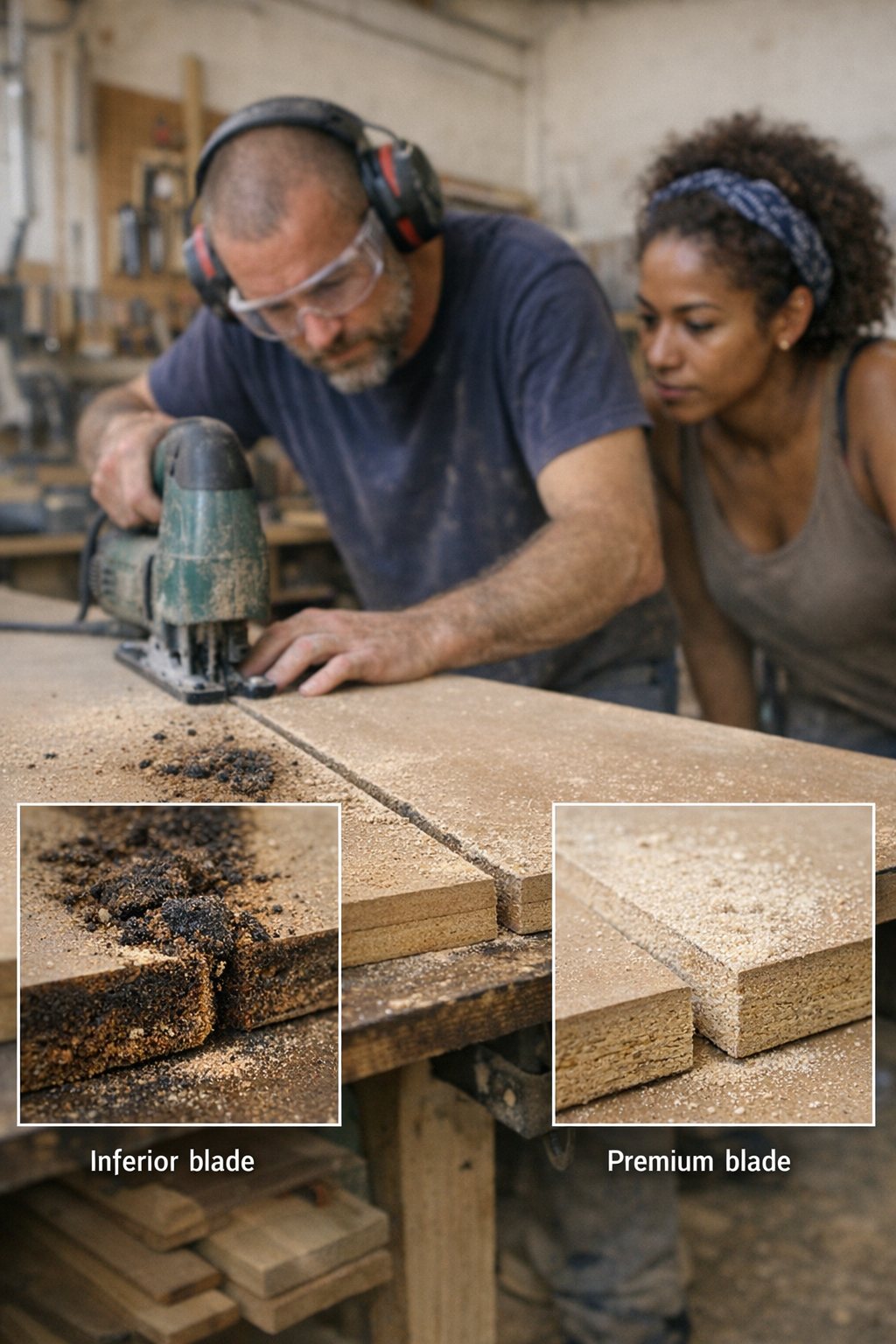
    Heat creeps in. Edges splinter. Each fresh pass demands more muscle and attention, while the saw bucks harder and your accuracy suffers. You end up wasting energy reworking mistakes, replacing cheap blades, and sanding out messes you didn’t expect to make. The hit isn’t only to your speed—it’s the cramped grip, the burned scrap pile, and the creeping frustration when your tools can’t keep up with real workflow.

    How Trouble Builds, One Cut at a Time

    Picture a workbench strewn with sheet goods, afternoon sun bleeding heat through a garage door. The first few runs are crisp, no problem. By strip number four, the story changes: The blade lags, you grip tighter, the saw protests with a harsher sound, and that distinct scent—hot glue and charred wood—rises from the cutline. Now, every board feels like you’re working uphill.

    • Overheated edges: That telltale shine along the cut, or scorch marks that resist even firm sanding.
    • Gummed-up teeth: Sawdust clinging in sticky lumps, stalling your blade partway through a rip.
    • More effort, worse cuts: Needing two hands to keep straight, and still sanding out ragged lines later.
    • Wandering and chip-out: The blade flexes out of line, leaving uneven laminate or chewed MDF edges.

    Every fresh board, the fight grows. By the time a pro or serious hobbyist is halfway through their stack, the cost of “convenient” blades is fully obvious. What’s meant to save a buck ends up costing time, energy, and results.

    What Actually Sets Premium Blades Apart

    Marketing promises “fast, clean” cuts, but real difference comes down to the details: sharper geometry, friction-cutting coatings, and tougher alloys built to survive more than a couple of passes. A premium blade bites cleaner, ejects dust instead of melting it, and resists the clog-and-drag that torpedoes jobsite efficiency. You’ll hear it in steadier motor tone, see it in dust that stays pale—signs of a blade that’s staying cool under pressure.

    The improvement isn’t just the first cut. A genuinely high-quality blade stays sharp after a dozen sheets, not just a couple. It holds its precision, resists buildup, and won’t punish your forearms or finishing time. Less mid-job stress, less blade fiddling, and fewer touch-ups—those savings add up fast in a real shop workflow.

    Real-World Example: Cabinet Cuts Without the Stall-Out

    Let’s say you’re busting down a full 18mm MDF sheet for cabinets. Standard blade? The first cuts are fine. Then you’re using more pressure to stay on line, blade wobble creeps in, and you’re grinding through awkward heat-blued edges. Now you’re scraping off char or recutting splintered sides—a recipe for lost momentum and wasted stock.

    Swap to a quality, coated blade with smart tooth design and suddenly the feed rate stays constant, the saw feels lighter, and the blade runs cooler. Cuts track straight, and you’re not fighting flex or trying to sand out char. After a while, you realize you’re not tensing your wrist or stopping to yank out stuck debris. That’s what premium actually looks like: smoother workflow you can feel, not just see.

    How to Spot Blade Problems Before You Lose Quality

    The real warning signs aren’t on the packaging. They show up when you’ve been working over and over, especially on denser materials in real heat:

    • Cutting produces smoke, not just dust, midway into the sheet.
    • The saw edges off the line or jumps hard enough to make you slow way down.
    • Hand fatigue climbs fast and cuts start to look rushed or jagged after just a few passes.

    Catch these before your project unravels. These aren’t small annoyances—they’re your cue to put down the bargain blade before you double back for fixes or even need to recut finished panels.

    Quick Tactics That Save Finishes (and Strain)

    A tip you won’t see on the label: If the cut starts feeling tougher or you see burnt debris, stop. Clear dust from the teeth, let the blade cool off, and resist “muscling through”—it rarely ends well. If it keeps giving off heat or binds again, switch out to a quality blade. The extra few bucks you spend will show up as smoother edges, less sanding, and a lot less strain on you and your tools.

    Choosing Blades That Keep the Work Moving

    Real shop flow—especially when you’re bouncing between the garage, jobsite, and home—depends on tools that can last more than a handful of cuts. A good blade means you maintain control, cut fatigue, and keep your focus on progress, not frustration. Smoother cuts. Less cleanup. Fewer “redo” moments when everything feels like it’s sticking or burning out early.

    If you’re running panels back-to-back or just sick of fighting slow-tool syndrome, check the blade you’re using before that first line. The true value of a premium blade doesn’t always show up until the tenth (or twentieth) pass—but by then, every extra bit of smoothness, straight tracking, and saved effort pays real dividends on your time and results.

    Shop power tools, blades, and real performance accessories at Gumboll

  • Creating Wall Storage That Matches Daily Use and Reduces Clutter

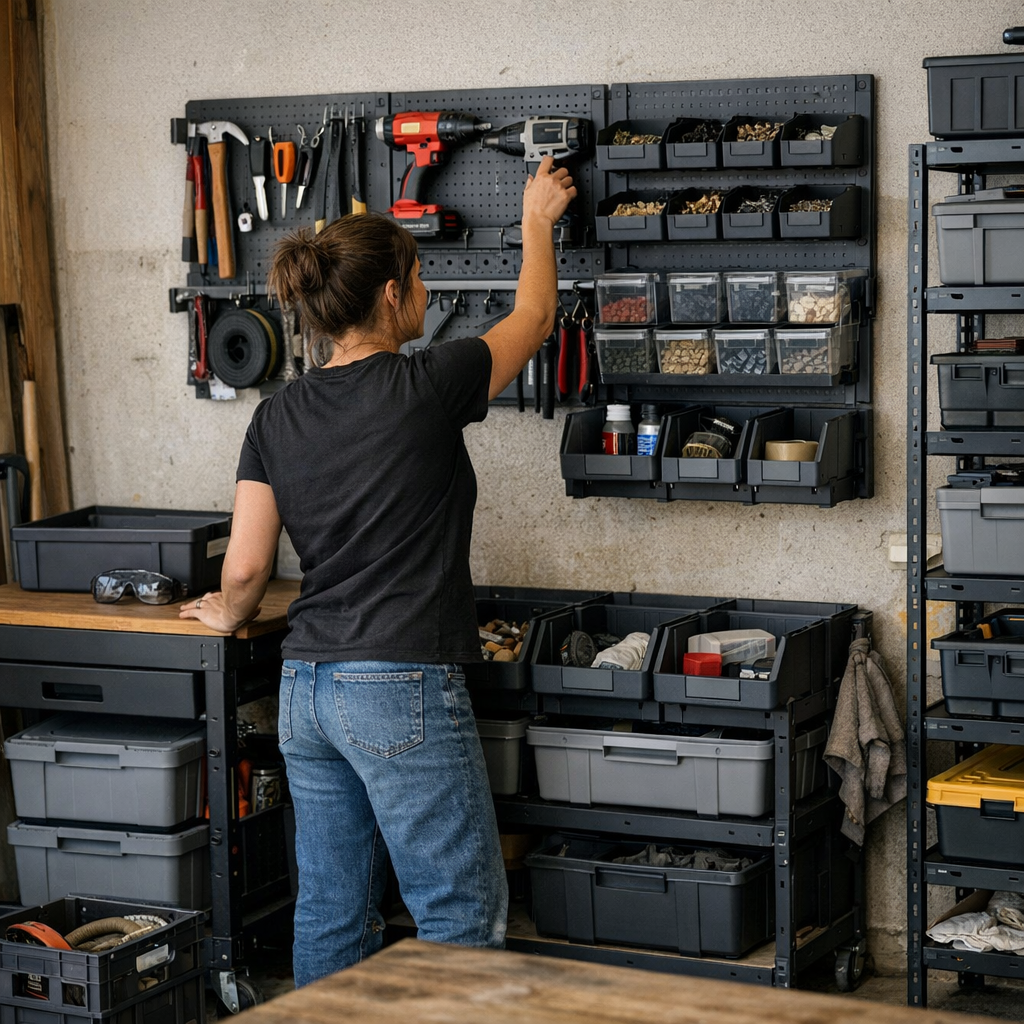
    That rush of satisfaction when you first set up wall storage in your garage or workshop is real—and a bit deceptive. Shelves are lined up. Tools and parts stand at attention in labeled bins. The floor feels open for the first time in months. But then, as you dig into actual work—one project, maybe two—the system you just installed begins to press back. Your wall looks organized, but your hands and habits say otherwise.

    When “Organized” Stops Fitting Your Routine

    The typical wall storage layout—stacked bins, crisp pegboards, modular tracks—gives the illusion of readiness. But walk through a few real jobs and the compromise becomes obvious. Each grab for a tool changes the flow: reaching past awkward edges, skirting around a rolling cart parked in the only open gap, shifting one bin just to get to another. The setup that’s supposed to streamline your area quietly slows you down, project by project.

    Maybe the fastener box you need is two rows up, just out of reach, and you stand on tiptoe—again. Or you’re always bumping the cabinet door because the handles crowd each other. For all the visible order, the routines beneath keep stutter-stepping, collecting little piles of “return later” on every available surface. The floor might stay clear, but your effort is getting rerouted by your own storage system.

    The Misleading Calm of a Clean Wall

    Don’t trust that tidy look at a glance. Sure, a flush row of bins looks neat, but if pulling out one means unstacking two, or if a pegboard jammed with tools means handles get hooked together, the surface calm is masking daily friction. The real cost is measured in small, repeated disruptions—each time you have to shuffle boxes to get a single drill bit, or circle around a rolling cart parked out of ‘temporary’ necessity.

    Ask anyone with a loaded garage wall: Over time, your top-use tools wander. Bins double-stack, or land on the floor “just for now.” You start tracking which bins gather dust because it’s too annoying to return things properly. A handsome wall becomes a maze of micro-adjustments, minor blockages, and the slow creep of overflow into your freshly reclaimed floor space.

    Everyday Clues That the Wall Isn’t Pulling Its Weight

    Real life exposes what the neat install hides. Picture a Monday—your drill lives in prime territory, but by Thursday, pliers and screwdrivers have migrated to the workbench after repeated stretching or acrobatics just to hang them back. Three bottlenecks crop up again and again:

    • Overlapping pegs: It takes a wrist twist to fit a screwdriver back without shifting a wrench or knocking off your measuring tape.
    • Bland, packed bins: Rows of small hardware bins blur into one, so you resort to rummaging every time you need a washer, and “returning” items is just as tedious.
    • The “default drop zone”: Bins lower on the wall gradually claim all the busy tools, because returning them up high is just awkward enough that you stop bothering. Suddenly, overflow hardware mixes with daily drivers—a habitat for clutter.

    Now the smooth return after a project is replaced by improvisation: a favorite tool perched on the edge of a shelf, an extension cord coiled in an empty cart, the whole area slowly drifting off-script. Containment beats chaos but never quite delivers a frictionless flow—you’re maintaining appearances, not momentum.

    Pushing Past Looks: The Impact of Real-World Tweaks

    Improvement isn’t about adding another label or ordering more bins. It’s about shaping the system to meet your actual moves, not just mimic the showroom. Try this:

    • Center your most-used tools at chest height, spaced apart so you can grab and replace each one with a single, blind reach—no dodging neighboring handles.
    • Dedicate lower shelves to bulk hardware or overflow, where you expect to dig, not reset quickly.
    • Divide the wall by function. Make one section for hand tools, another for fasteners, a third for safety gear—rather than mixing everything on one crowded board.
    • Look at how you actually approach the wall. If you’re always reaching above eye-level or leaning sideways, lower the busiest zone by a foot. That 12-inch tweak can kill off a daily annoyance for good, shrinking the awkward footprint and making resets automatic again.

    The effect? Those gaps where clutter collected disappear. You stop inventing workarounds and start trusting the wall to support, not interrupt, your projects. Suddenly, you’re not thinking about storage mid-job—it just keeps pace with you.

    Can You Feel the Friction? Here’s How to Notice

    The evidence is right in front of you: tools start living on carts, benchtops, or even the floor. If every cleanup uncovers a pile of “I’ll put that away later,” it’s not laziness—it’s the wall getting in your way. And the classic mistake? Trying to fix it by adding bins, which only spreads the mess unless the zones match real tasks.

    Watch for dead corners—sections of wall you never use because the angle’s wrong or reaching around a cabinet edge is always awkward. These spots pull in random leftovers and quickly become clutter magnets. True efficiency comes from resisting the urge to fill every inch and instead making every zone a natural “home” for something you use—no shuffling needed.

    Immediate Fixes That Actually Work

    • If returning a tool requires moving (or risking) another, rework that area so each tool’s path is direct and single-step.
    • If one wall is jammed while another stays empty, cut the guesswork: set obvious roles for each zone so you’re never “just putting it somewhere.”
    • If cleanup time lags behind the work itself, change zone height, rethink traffic paths, or let go of the urge to over-stack for looks. The time you reclaim is the proof it’s working.

    The Difference You Actually Feel: Movement, Not Just Order

    A wall setup that truly helps doesn’t just look sharp—it erases the small stalls that slow you down. Resetting after a rush job stops being a chore. You reach, use, and return tools on autopilot, without second-guessing where things live. The floor stays open because the wall absorbs routine clutter—no clogged corners, no accidental drop zones.

    The real mark of an effective setup isn’t the first-day reveal but how easy movement stays, week after week. When you’re not tracing the same awkward footprints or pausing to untangle a storage pileup, you know the system fits your flow. In the end, it’s about matching visible order to lived-in clarity—a shift from staging a space to actually owning it, day by day.

    Find modular wall setups, rolling carts, and storage systems designed to flow with your real routines at StackNest.

  • Choosing Between Wire Shelf Baskets and Dividers for Lasting Closet Order

    Closet shelves never stay fixed for long—no matter how perfect they look on reset day, real life exposes every flaw fast. Maybe you fight through a tangle of bags every morning, or dig for a sweater buried beneath a toppled stack. You spend time reorganizing, but within a couple busy days, shelf order crumbles. Categories blur, grab-and-go is gone, and you’re back to reshuffling. That’s where the choice between wire shelf baskets and dividers really matters—not in how they look on day one, but in how they hold up against your actual, imperfect routines.

    The Recurring Messes That Break Most Closet Setups

    Closets fail right at the stress points: reaching behind a pile for your favorite shirt, pulling out towels from underneath a teetering heap, shoving a purse back into a crowded corner. Even after a full reset, stacks lose shape fast. Shirts slump, jeans squash lighter items, and anything not perfectly folded migrates. By midweek, the clean rows you created melt together, and the “sections” you defined are lost.

    The core problem is reliability: Can you keep categories separate—and reach what you want—without a nightly reset or constant frustration? Both wire shelf baskets and shelf dividers claim to solve this, but their limits surface the moment you need speed or make less-than-careful moves.

    Shelf Dividers: Order That Works—Until It Doesn’t

    With shelf dividers, there’s an immediate visual payoff. Folded shirts, stacks of jeans, even towels look tidy and split into clean, logical zones. You feel like you’ve carved out permanent space for every type of clothing. Lines are crisp, boundaries obvious—a snapshot of organization.

    How Dividers Let Clutter Creep Back

    But the first busy morning usually wipes out the photo-ready look. Pull a shirt from the middle? The stack slouches and spreads beyond its allotted lane. Grab jeans in a rush, and the pile next door shifts. Dividers can’t stop stacks from changing shape or clothes from losing definition. If your family shares the closet, a careless reach multiplies disruption. By the end of the week, “divided” shelves look like a bad Jenga game—lots of vague, overflowing piles to rescue yet again.

    The Everyday Scenarios

    Picture the top shelf in a busy entry closet: scarves, hats, towels, all positioned between clear dividers. It works until someone’s looking for their missing beanie, or digging for guest sheets at the back. In seconds, dividers are bypassed as items fall over, forcing new stacks into old spaces. Dividers are at their best only when everything stays stackable and nobody’s in a hurry—but real closets rarely run that way.

    Wire Shelf Baskets: Containment with a Side of Inconvenience

    Wire baskets transform messy shelves by drawing firm lines: odd-shaped bags, slippery knits, and all the loose accessories finally have a corral. Baskets stop items from drifting or spilling into each other, even after a week of use. The difference is visible—categories stay put, and you don’t spend your evenings herding sweaters back into their zone.

    The Catch: Retrieval Isn’t Always Instant

    But baskets come with their own quirks. Looking for the clutch at the bottom? You’ll need to lift or unpack what’s on top, or pull out the basket entirely. This works for items you use occasionally, but if you’re reaching in each day, it slows you down. Baskets reduce shelf chaos, but they trade the luxury of fast, at-a-glance access for the discipline of stronger containment.

    Everyday Basket Realities

    Envision a laundry shelf lined with baskets: socks, dryer sheets, stray cleaning cloths all packed together. Items never wander off, but “grab and go” becomes “root around and repack.” It’s neater—your shelves don’t dissolve during the week—but now you introduce a mini sort-out ritual whenever you use them. The mess is contained, but your routine includes new steps.

    Mixing Baskets and Dividers: Building Real Resilience

    Closets rarely stick to one category per shelf—most have oddball mixes: stacks of jeans beside loose workout gear, guest linens next to bags. No single system can cope with this shifting terrain. Dividers keep shirts and pants from sprawling—but can’t cage loose or hard-to-fold items. Baskets handle the wild cards, but slow down access to everyday pieces.

    The most durable setups blend both: Line up shirts or pants between dividers for quick scanning and pulling—reserve baskets for soft, lumpy, or slippery items that rebel against stacking. This not only keeps roles and categories clear but also absorbs the inevitable chaos of rushed mornings, sharing with family, or odd-shaped belongings. The result? Your shelves function, even when your routine doesn’t stay flawless.

    Simple Storage Tweaks That Actually Help

    • Put baskets where things creep: Place them in overflow zones—where extra purses, scarves, or workout gear tend to invade neighboring stacks.
    • Use dividers where stacking works: Reserve them for shallow shelves or rows meant for like-sized items—shirts, towels, jeans—where all you want to prevent is sideways spread, not total separation.
    • Leave breathing room on your shelves: Resist the temptation to pack every inch. Giving each storage zone just a bit of slack cuts down on knocking things over and means less frequent major resets.

    From “Organized” to Actually Easy

    Overstuffed shelves aren’t fixed with a single product or a single reset. Real organization lives in the day-to-day: reaching for what you need without reshuffling half a closet, sections holding their meaning, and clutter staying where it belongs. It’s not showroom perfection—it’s a system that gets knocked around all week and still works.

    Wire shelf baskets and dividers each target different storage headaches. Neither is a miracle on its own—but the right mix, grounded in the reality of your routines, gives you a closet that stays useful after the photos are taken. The best setups aren’t about impressing guests, but about making the morning rush less frantic and reset duty a quick task—not a chore that eats up your Sunday night.

    Shop ClosetWorks closet organization systems, baskets, and dividers

  • Protect Your Home Exterior with Safe Pressure Washer Techniques

    The warning signs rarely announce themselves until it’s too late: a waver in the spray pattern, the sudden buzz of vibration in your hand, the pitch of water shifting as it hits paint instead of siding. One careless pass with a pressure washer can turn a satisfying cleanup day into a fresh problem—scratched finishes, sodden wood, and headaches that you won’t spot until the next job, or the next rainstorm.

    Pressure Washing: Where Routine Maintenance Goes Off the Rails

    Pulled from the corner of the shop, a pressure washer offers that elusive promise—make the battered work site look new, without hours of scrubbing. But beneath that raw speed is a choice: every squeeze of the trigger is a split-second decision about how much you’re risking the surfaces you meant to protect. The urge to move fast, to cut through that grime and dust, is real. So is the creeping regret when you realize a dirty deck has become a fuzzed-out patchwork, or trim is left with missing flecks of paint you swear were solid an hour ago.

    The fallout rarely appears as spray hits siding or rail. Instead, it sneaks up a day or week later—streaks across wood grain, warped boards, water ghosting underneath siding panels. There’s no dramatic blowout. There’s just that moment, standing with a sander or a caulk tube, wishing you’d run a different tip or eased off the trigger a few minutes sooner.

    Why Tool and Surface Mismatch Always Finds You

    Most pressure washers and their kits look near identical on the hardware aisle—plastic cases, curly hoses, nozzles impossible to keep sorted. That sameness hides crucial differences. Maybe you’re running a cleanup after a day of cutting new bench timbers, flying through dust and chips. The sprayer glides smooth across PVC or composite: quick, controlled, no resistance in the grip. But wheel around to a weathered back shed—the one with the paint already thinning from last winter—and suddenly that smoothness turns into a grating feedback through your wrist, spray marks blooming in the spots you can’t unsee.

    The minute you pair a wrong tip or push the PSI too high, you’re no longer cleaning—you’re creating your next repair list. Fine fibers lift off old planks, paint edges curl, and anywhere the spray lingers at the wrong angle, you’re one pass away from patches you’ll need to resand and coat. Most jobs don’t show the issue while you’re still working. The real cost lands later, in uneven textures, peeling surfaces, and wasted materials.

    On the Clock: A Scene from the Jobsite

    It’s the start of the season. Tools are scattered everywhere—plunge saws cooling off, a stack of drill batteries still charging, and you just wrapped up a run with the pressure washer on a grimy slab. It should be a quick reset: blast mildew off lower siding, touch up the window trim, sweep pollen off upper sills. But you don’t re-check the tip—still set up for concrete grit—and you go at soft paint and old wood at full tilt.

    The first loop feels efficient. The second? Paint flecks swirl in the runoff, the smooth grip buzzes oddly in your hand, and now you see you’ve overdone it. The real sting comes hours later, when dried streaks pop out or the surface fuzzes where you lingered too long. Now, instead of a finished job, you’re prepping boards for sanding and awkward touch-ups you didn’t budget for.

    Adapt or Repeat: Lessons in Tool Adjustment

    Too many callbacks and minor disasters—grain razed, smooth siding left pitted, edges of trim feathered out—finally pushed a change. I ditched the turbo nozzle and started every wood or painted job with a 40-degree tip and low pressure. The immediate effect? The sprayer ran smooth, no feedback jolting through the handle, and the water rolled off evenly instead of eating into the finish.

    There’s no wizardry here. When the job meant washing close to vents or gaps, I widened the spray and doubled my distance. It wasn’t just about surface protection—it also meant less debris flung in the shop, fewer mystery drips behind trim, and, crucially, no surprise moisture showing up under window casings later that week. Cleanup sped up. The cycle of resanding, painting, and fixing faded. Surfaces actually lasted, so I wasn’t running the sander or paint tray every season just to hide last year’s mistakes.

    Three Classic Pressure Washer Mistakes That Haunt Real Projects

    Trusting the Default Setup

    If you’re always using whatever tip or pressure setting the tool had last—especially in the scramble to knock out tasks—you’re asking for micro-damage. Even a half-step too much turns a maintenance wash into a subtle destroyer, roughening wood, piping water precisely where it shouldn’t go, and erasing finish in ways that don’t show up until you’re back on the ladder for repairs.

    Bigger Isn’t Better: Overpowering Sensitive Surfaces

    That urge to blitz through soft pine, trim, or painted wood with a tight jet? It feels effective until you catch yourself gently sanding out scars or hauling out tubs of filler for all the spots you “cleaned” a bit too hard. If you’re repainting after every wash, your setup is all wrong.

    Spraying Blind around Edges and Gaps

    Too much confidence near seams, vents, or window edges with the narrow spray? That’s an invitation for inside leaks, trapped grit, and late-season mold. Experience means noticing how water pools, how edges feel under spray, and stepping back—literally—when those clues add up.

    Quick Shifts That Pay Off Down the Line

    • Begin with the widest spray angle and only narrow if absolutely necessary. Wider coverage means less risk of instant damage.
    • Lower the PSI until surfaces show zero color shift, fiber rise, or roughness. If the spray “sounds” different on contact, you’re too aggressive.
    • Double your standoff distance near joints and openings. It’s a small slowdown for you, but caps off a parade of future repairs and pristine pawprints from debris that never gets a chance to scatter.

    The Feel and Feedback: Knowing When to Change Course

    Don’t just watch—listen and feel. If the grip vibrates oddly, if runoff leaves standing pools rather than sheets clean, or if the spray’s tone roughens mid-pass, those are all red lights. If you’re routinely sanding the same boards after each wash, that’s the tool talking back: you’re wasting time and creating work you don’t bill for.

    Skilled users don’t wait for disaster. Mid-job, they tweak the angle, switch the tip, step back. Those quick pivots aren’t interruptions—they’re basic shop sense, and they’re what make efficient work actually last.

    Keep the Cleanup off Your Punch List

    Pressure washing should end work, not create it. Use a 25- to 40-degree tip for wood and painted surfaces; reserve the pinpoint jets for the spots that truly demand it—bare concrete, brick, or caked-on trouble. If a section feels off, stop. Change the setup before fixing another mess.

    Every time you reach for the pressure washer, you’re deciding what gets cleaned—and what’s going back on the fix-it list. Make the right tweak, and the finish you want is the finish you get, not just until the next rain, but all season.

    http://gumboll.myshopify.com

  • Why Your Organized Cabinets Fail During Real Daily Use and How to Fix It

    The Neat Setup That Doesn’t Last

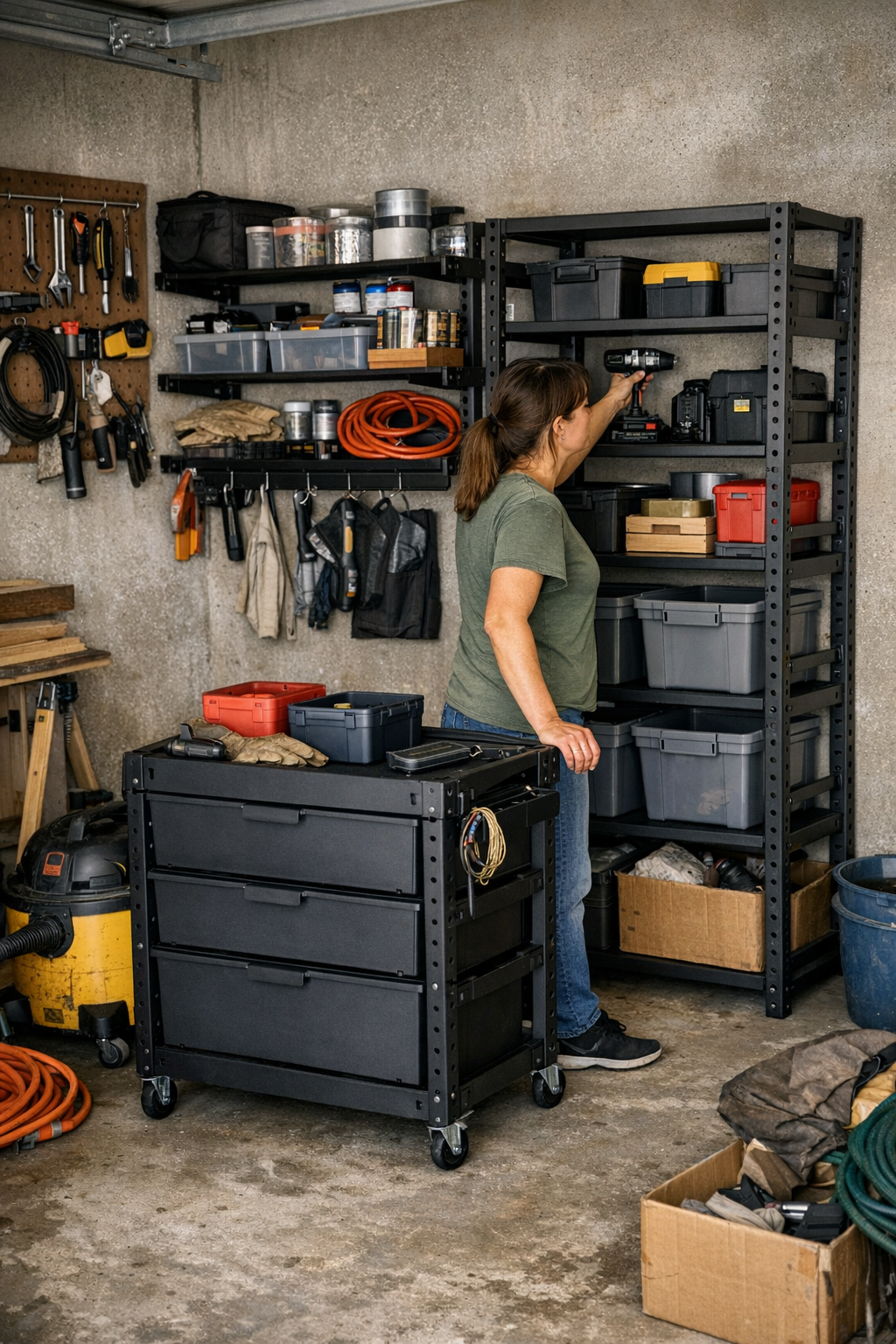
    Anyone who’s ever lined up a set of cabinets or snapped together a modular shelf knows the momentary satisfaction of a picture-perfect setup. For a day or two, every bin and tray sits in the right spot. But as routines kick in, friction pops up fast—cart wheels catch, tools float from assigned spots, narrow pathways become obstacle courses, and corners meant for “overflow just for now” turn into permanent dumping grounds. The truth is, setups that look finished on Saturday crumble by Wednesday under the pressure of real use.

    When “Storage” Only Looks Organized

    The real test isn’t more space—it’s smoother movement. There’s a quiet difference between stashing things away and building a setup that keeps pace with you. Cabinets and racks promise order on install day, but repeatedly shifting carts just to clear an aisle, sliding a door around a bin you didn’t plan for, or lifting three trays to reach one screw—that’s where cracks appear. Day by day, these micro-obstacles slow you down and pull energy out of every routine. Organized storage that interrupts your flow is just another form of clutter.

    Seven Days In: The Real Scene

    Picture your garage or utility shed after a week of everyday projects. The shelf that started spotless now hosts “temporary” piles—garden gloves over toolboxes, a bag of fertilizer wedged behind painting supplies. The rolling cart looks parked and perfect, but every time you bring in the mower you’re forced to shuffle it back and forth just to pass. Need a box of screws? You’ll be restacking bins again, because the “logical order” from day one never survives five hurried returns.

    Tools start living on the workbench because the wall-mounted rack forces you to thread past protruding hooks or other bins just to hang them up. The one awkward corner—too small for real storage—collects everything with no home until it becomes a mini-landfill. No single moment is dramatic, yet each missed return, each detour or workaround, chips away at the tidy illusion.

    Where Setup Friction Sneaks In

    If you recognize these signs, the system is underperforming:

    • Paths that shrink as carts, bins, or doors jut into the aisle
    • Stacks or piles left “for the weekend” that quietly settle in
    • Flat surfaces buried under tools in limbo between use and put-away
    • Drawers and cabinets swinging open more often than closed, because it’s a hassle to use them
    • Feeling boxed in—moving sideways instead of striding through the space
    • Return routines getting longer, not sharper, week by week

    These triggers reveal a system that stores, but doesn’t serve. Setup pressure exposes where theory falls short of lived reality.

    Looks Organized…but Blocks You All Week

    Walk through any setup that’s supposed to be “done.” Row after row of cabinets may look sharp but force you to inch along a narrow chute, especially when both sides eat up the aisle. Stacking trays sound smart until “retrieving one” becomes solving a small puzzle. Wall racks—great in the blueprint—often end up as logjams, demanding an awkward reach every time. With each day of real use, pathways close in, piles emerge, and minor hassles quietly turn into the new routine. Visual order can mask a setup that’s actively slowing you down.

    Small Layout Tweaks, Big Everyday Payoff

    Most real fixes are about inches, not overhauls. One simple shift—moving adjustable, open-access shelves to a single wall—freed enough aisle width that carts could park without trapping you in. Suddenly, bins went back in place without shifting neighboring trays. Redesigning for open movement (not maximum storage) pried those lost inches back and made everyday resets snappier. Who needs another cabinet if you unclog the path you already use?

    Take stock after a week of normal churn: Is your main route still open? Can you reset tools fast? Or does every return risk triggering a pile-up “just for now”? Minor changes—grouping high-use items in arm’s reach, repositioning carts closer to the door, leaving one wall spare—create setups that bend to your real routine, not just your layout plan.

    Return Flow Is the Real Barometer

    The best setups almost disappear during use—you move, grab, and return without breaking stride. If you catch yourself detouring, ducking around corners, or mentally putting off the reset (“I’ll put this away later”), the system is leaking. Test yourself: Late in the week, walk your most common paths. Where do you detour, reach, or get jammed up? Adjust one element—a shelf height, a cart position, a bin location—and watch the space open up. Sustainable order comes from how easy it is to maintain, not from a quick install-day snapshot.

    Build Storage Around Routine, Not Just Floor Plan

    The right solution depends as much on habits as on square footage. Wall-mounted organizers are gold in tight corners—if nothing nearby blocks the approach. Open shelves beat deep cabinets if you’re always rotating large gear. There’s no single answer, but setups that follow your rhythms—not just the room’s geometry—hold up week after week. Pay attention to where you pause, pile up, or hesitate: that’s where friction quietly builds.

    What Actually Works, Week After Week

    The true mark of a solid system is not how much it stores or how “finished” it looks, but whether it holds together under routine pressure. Most of the time, improvement means making common zones easier to reach and resets simpler—not adding more places for overflow to hide. Smooth-functioning setups reveal themselves in how little you think about them—and how rarely things start piling up for “later.” Clarity and movement outlast neatness every time.

    Find modular storage systems, cabinets, mobile units, and workshop organization that actually work under real-world conditions at StackNest.

  • Choosing Shelf Dividers That Keep Deep Closet Shelves Organized Over Time

    The deep shelf in your closet promises more space—but in real life, it rarely lives up to that hope for long. At first, bigger shelves seem like the answer. You line up fresh dividers, maybe set some bins, and pile in your sweaters, sheets, or off-season clothes. But a few weeks later, you’re right back to frustrated digging. Stacks slump and spread, categories dissolve, and the simple act of grabbing a t-shirt can send an entire row sliding forward. The real challenge isn’t finding “storage solutions”—it’s creating a setup that actually keeps up with the chaos of daily living, rushed mornings, and the constant coming and going of real stuff, not showroom props.

    The Trouble With Deep Shelves: Space That Hides More Than It Helps

    On paper, deep shelves mean you never run out of room. In practice, they encourage overpacking and forgetting. Every extra inch lets piles stretch—and that’s when clothes start spilling over or drifting backward into the darkness. Need the towels you stuffed in the back? Prepare to unstack half the shelf to reach them. Reach for a single pullover and three more come along for the ride. If you’ve ever found a month-old sweater hidden behind a wobbly row, you know how quickly generous space turns into a black hole.

    Most deep shelf layouts ignore how we actually use our closets. Even with dividers, the wrong setup crowds things so you’re constantly shifting stacks, chasing runaway piles, or straightening after every “just one thing.” What started as a fix becomes a recurring annoyance—and most products only half-solve the problem.

    Why Most Shelf Dividers Stall (Or Fail) in the Real World

    Try a few types and the differences reveal themselves within a week. Acrylic dividers make the shelf look neat, but if you stuff soft sweaters next to those hard edges, the stacks turn curved, and grabbing one piece often bumps the rest out of shape. Wire frames flex—great for jumbled towels or bags—but their give means jeans or heavier piles sag and spill, and the boundaries you set start to blur. Bins group things nicely for the first day, but become clutter collectors with hidden socks, tangled scarves, or forgotten accessories buried below. You trade visible clutter for invisible overflow.

    Over a typical month, here’s what happens: categories merge, stacks tip or blend, and what used to be “grab and go” now means digging, restacking, and quietly cursing that one divider that shifts every other day. Routines slow down. You spend more time resetting the shelf than actually using it. Daily storage is constant friction, not the streamlined experience you hoped for.

    The Real-Life Test: Where Dividers Work (And Don’t)

    Imagine you’re late, reaching for that one shirt behind a high pile. The acrylic divider keeps its line, but as you tug, the whole stack wobbles—now you’re smoothing everything just to close the door again. With wire dividers, the rows look fine on Sunday, but by Friday, T-shirts and jeans have drifted over the lines, and you’re mushing piles together “just for today.” Bins organize on day one, but by day three you’re hauling down entire boxes to find a single pair of gloves, making the closet feel more like a puzzle than a tool. Each fix handles one issue but brings a new wrinkle into play.

    Small Changes That Make a Real Difference

    Big improvement doesn’t necessarily require a total overhaul—or another long afternoon spent reorganizing. Sometimes, switching from three narrow dividers to just two wider, sturdier ones makes your stacks resist sideways drift. A well-notched, grippy acrylic divider planted two inches behind the front edge creates easier grab zones—folded shirts stay upright and you can scan what’s there without re-stacking. Spacing is crucial: cramming too many dividers blocks access, but too few let things lean and blend.

    One practical shift: Instead of packing in dividers, aim for about 18-inch zones. This forces you to limit each section to what actually fits, keeps piles stable, and means resets after a hectic morning are as simple as nudging things back into place—rather than re-doing an entire system.

    Bins: When They Work, When They Don’t

    Bins seem like the ultimate shortcut—they tidy up stray items in one move. But unless the bin fits the shelf’s depth and your actual items, problems show up quickly. Small things sink out of sight or slide under larger pieces, and over time, the “grouped” system turns into a hidden jumble. Bins help manage seasonal gear, but for everyday essentials, they can make things harder to see and slower to grab—especially when you need something at the bottom or back. Instead of solving clutter, the wrong bin just changes where the mess collects.

    Wire Dividers: Flexible Friends With Short Memories

    Wire dividers flex for bulky or odd-shaped items—think floppy duffel bags, extra linens—but that very flexibility is their downfall for anything heavy or stacked tall. A few days in, heavy jeans start to bow the wires, sections blend, and your quickly folded “separate” piles become indistinct. Wire is forgiving, but not strong enough to hold the line where you need reliable zones most.

    How Anchoring and Spacing Beat Shelf Drift

    Whether you choose acrylic, wire, or another style, the key is how securely each piece stays put under daily stress. Locking, slip-resistant bases anchor dividers so you’re not finding them halfway down the shelf by Friday. Consistent spacing—enough that clothes breathe, but not so much they tip—keeps the system from unraveling into “miscellaneous” by the end of the week. And even the best divider can’t defeat overstuffing; once you try to force in “just one more,” lines disappear and disorder creeps in again.

    Routine tip: After restocking laundry or switching out seasons, take ten seconds to check divider positions—and resist cramming in extras “just until next time.” That short pause keeps everything aligned longer and prevents the slow slide back to chaos.

    Looks Organized? Or Feels Organized?

    There’s a difference between a shelf that looks sorted after setup and one that makes sense in the thick of your week. It might photograph well on Sunday night, but if by Wednesday you’re straightening stacks or repacking bins, the system isn’t working for your real routine. Functional storage means each section stays tidy with quick, imperfect resets—no shuffling, no silent collapse when you grab that last T-shirt before work.

    The point isn’t showroom perfection. It’s lasting clarity—visible categories, fewer disrupted stacks, and a closet you can trust when you’re in a hurry. You know it’s working when you can grab what you need and return it without fuss. Anchored dividers, thoughtful spacing, and realistic limits help your shelf support life as it actually happens, not how you wish it would go.

    Solve the deep-shelf shuffle for good—see daily-use storage options at ClosetWorks.

  • Choosing the Right Jig Saw Blade for Flawless Laminated Board Cuts

    The first few cuts almost lull you into confidence. You clamp down a sheet of melamine, snap your go-to jigsaw blade into place, and the cut feels smooth. The edge looks decent—no glaring chips, no tear-out. You lay out a second panel for shelves or closet inserts, and again the kerf seems tidy. The trap is right there: the belief that your “standard” wood blade is all you need. But that easy start rarely holds. Soon enough, the flaws creep in—invisible at first, then impossible to ignore as the project drags on, panel after panel.

    Misleading Beginnings—When Trouble Starts

    Anyone shaping a batch of laminated boards knows the pattern. The first cut feels fine, maybe the second. But by the third, the shallow confidence wears off. Small chips appear along the laminate face. Corners look uneven, and the cuts stop lining up flush. A project that started clean is now a patchwork of sanding, manual alignment, and masking mistakes. That “good enough” blade quickly becomes the root of a pile of small, time-sapping headaches—glue lines that flake apart, edges that no longer match, and visible flaws along what should be a crisp finish.

    Why Standard Wood Blades Fall Short

    It’s easy to think any blade labeled “fine finish” will handle sheet goods—after all, wood is wood, right? But if you’ve ever watched a jigsaw hesitate or snag through melamine, you know better. A general-purpose wood blade, even when sharp, bites too aggressively into hard laminate. Instead of slicing, it chews: you feel the jigsaw fighting your hands, teeth rattling and wandering. The cutline gets ragged, vibration travels up your arm, and you’re forced to steer harder just to keep a straight path. Each pass sounds harsher, sometimes even burning or melting plastic at the edge. Suddenly, you need to spend extra minutes sanding or stash the panel somewhere the damage won’t show.

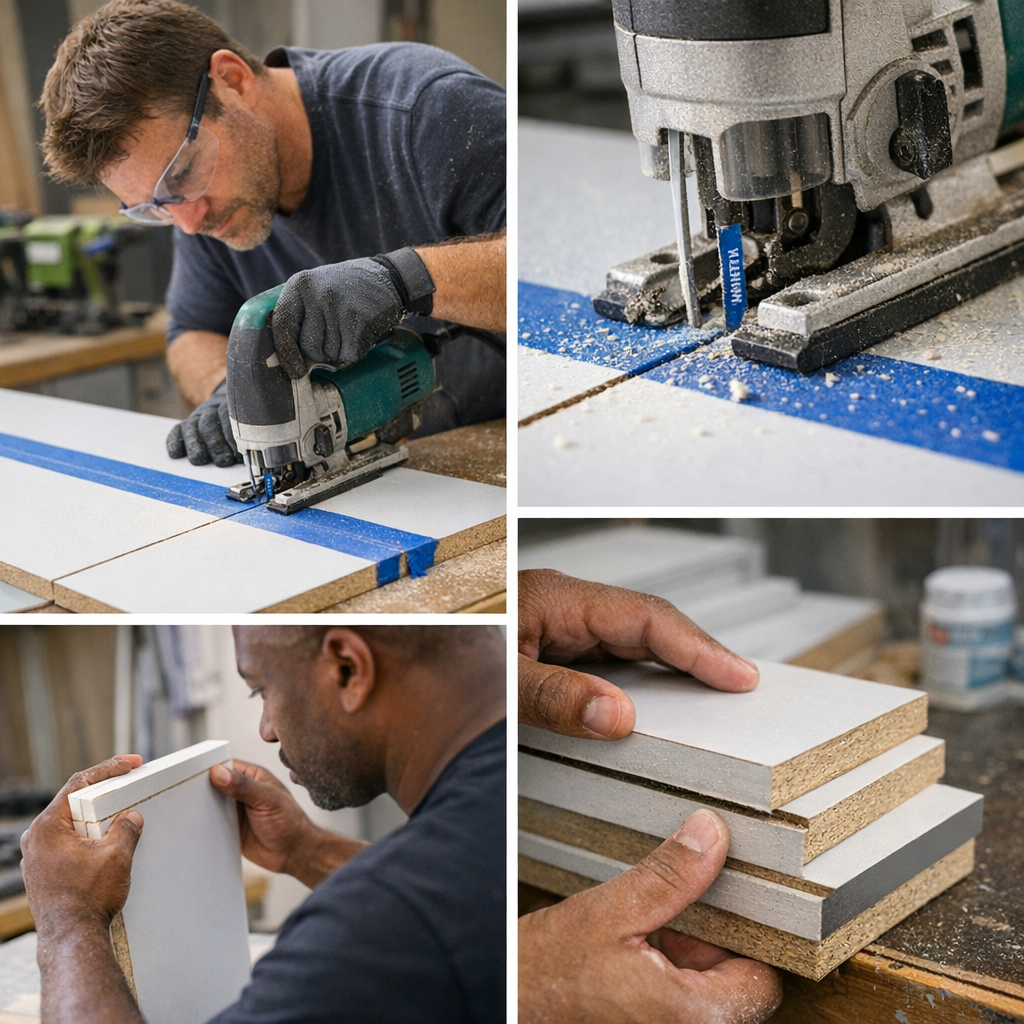
    Switch to a purpose-built laminate blade—think upward-facing teeth, 10+ teeth per inch, marked for sheet goods—and those flaws fade fast. The blade slides through the face layer, not under it. The jigsaw hums at a steady pitch. You finish a board and move right to the next, not bogged down by cleanup. The difference is in the feel: less resistance, more consistent control, and a near-complete end to edge crumbling. It isn’t a miracle, but it’s a very real shift in the quality of every cut.

    The Stack Test—Where Consistency Falls Apart

    Where blade choice matters isn’t in that first satisfying slice—it’s in repeatability. Imagine trimming a run of eight white melamine panels for a home office build: the difference really shows on cuts four, five, and six. With a standard wood blade, heat builds, the teeth dull, and you’re fighting to keep the jigsaw straight. Each successive board has a little more chip-out than the last. Stack the finished pieces and edge alignment goes off—the tight, square shelf corner you had in mind shifts into a gap you’ll be filling with caulk or wood putty later.

    All of this chips away at more than just the results. Fatigue sets in. Hands tense up against vibration, wrists absorb the jigsaw’s kickback, and concentration drifts after wrestling through uneven resistance. By the end of even a short batch, you end up chasing blade errors across every downstream task—filing, gluing, compensating for inconsistent kerf, or re-marking panels that should have just fit in the first place.

    The Mid-Project Blade Swap

    No one wants to stop mid-job, reach for the blade case, or break their stride. But if you’re honest, there’s always a moment—usually after the third disappointing cut—where you know a change would save you far more time in the long run. Replacing a worn general blade with a dedicated T-shank laminate blade (10 TPI or higher, reverse-tooth if possible) isn’t just a fix. It’s a reset. Suddenly, cuts regain that first-pass quality, the jigsaw follows the line, and the edge holds up even after you’ve run a dozen boards. Post-cut sanding turns into a two-swipe routine, not a major production. And you get clear, predictable results the whole way through—no need for confidence checks after every panel.

    Field trick to keep in your pocket: For especially slick or high-gloss laminates, lay down a strip of painter’s tape over your cut line. You’ll see chip-out drop even more. Blade and tape together, you can hold edge fraying under a millimeter—enough to avoid fillers or paint touch-up, even on show faces.

    Recognizing Cut Quality—And When to Intervene

    Laminates rarely scream disaster after a single cut. But when you find yourself reaching for the sanding block after every board, or nudging corners to fake a flush fit, stop blaming the tool or the board. The culprit is almost always the blade. If cut speed slows, vibration ticks upward, or edge damage shows—even in the slightest—treat it as your end-of-blade warning sign. These moments are clues: blade fatigue creeps in slow, then ruins three panels in a row before you catch it. Changing blades or bits isn’t wasted time—it’s prevention, trading thirty seconds now for hours saved correcting flaws later.

    The lesson holds for drilling, sanding, even driving screws into particleboard: when results start slipping, don’t just push through with more force or faith. Trust your senses. If an accessory feels off, intervene before the mistake repeats across your entire batch.

    Consistency Beats Perfection

    What proves a tool setup isn’t the beauty of a single cut—it’s what happens when you work through the eighth, the tenth, or your tired, last panel of the day. Repeatable, controlled results stack up into real progress. The right jig saw blade, made for laminates, keeps projects moving predictably. Clean edges mean fewer repairs later. Less vibration means energy in your hands, not lost to the tool. Instead of wrestling for every good board, you’re lining up panels that fit, simply and reliably. No magic, just the difference between fighting your material or letting your tools help you win.

    Small changes—like swapping blades before issues build—don’t just upgrade your cut lines. They improve every phase of the job, from first layout to final install. When cut quality matters, switch early. You’ll spend less time fixing, more time building, and every panel will prove the payoff in your hands—not just in the sales pitch.

    Visit Gumboll for tools, accessories, and upgrades for the jobsite and workshop.