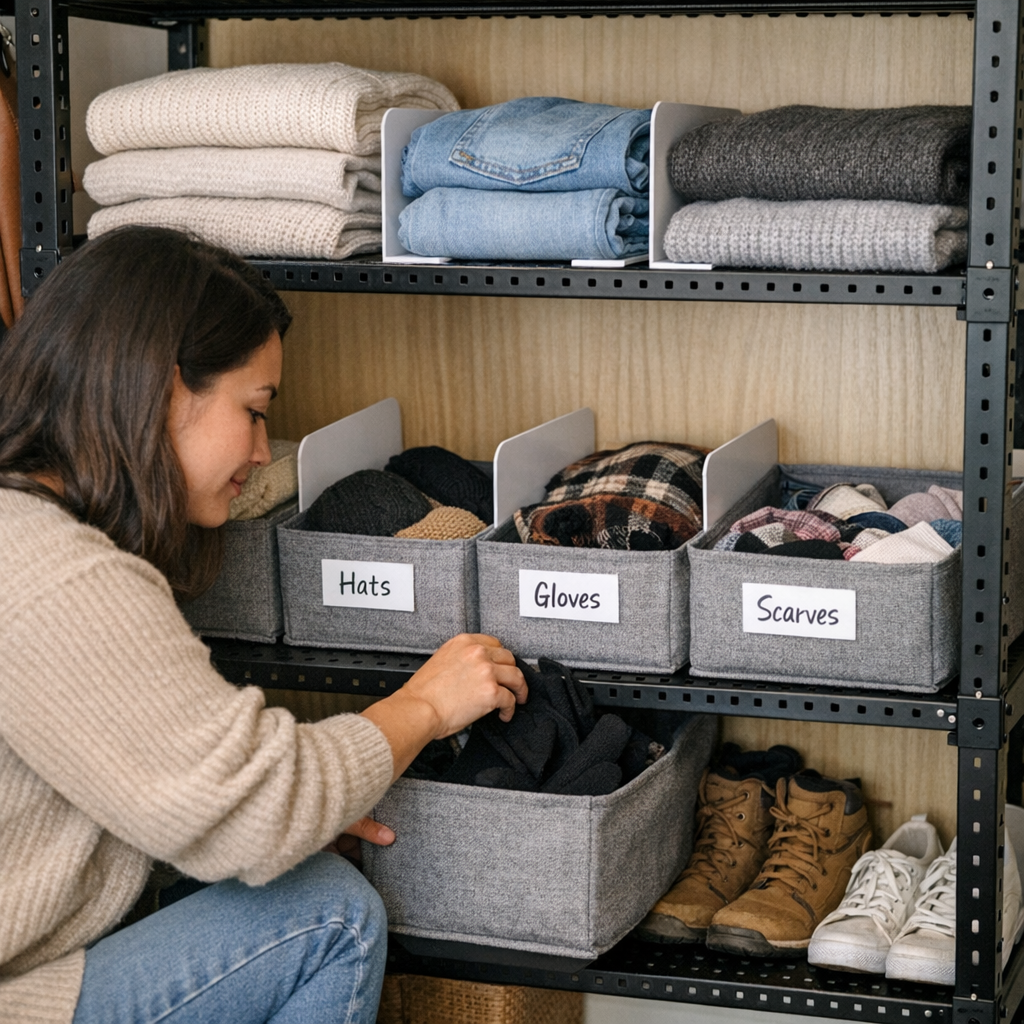
After a weekend closet overhaul, shelf dividers and storage bins can make any space look impressively in order. But as soon as the weekday rush kicks in, the real test begins. Shirts migrate, stacks sink, and small items multiply in the shadows—a familiar cycle for anyone juggling tight mornings and shared spaces. The question isn’t how organized your shelves look on day one, but whether that order survives the daily stampede for jackets, jeans, or a single missing glove. The way you separate stacks and contain loose things decides if calm stays or if clutter crowds back in by Wednesday.
Shelf Dividers: Clear Boundaries, Quick Grab—Until Things Shift
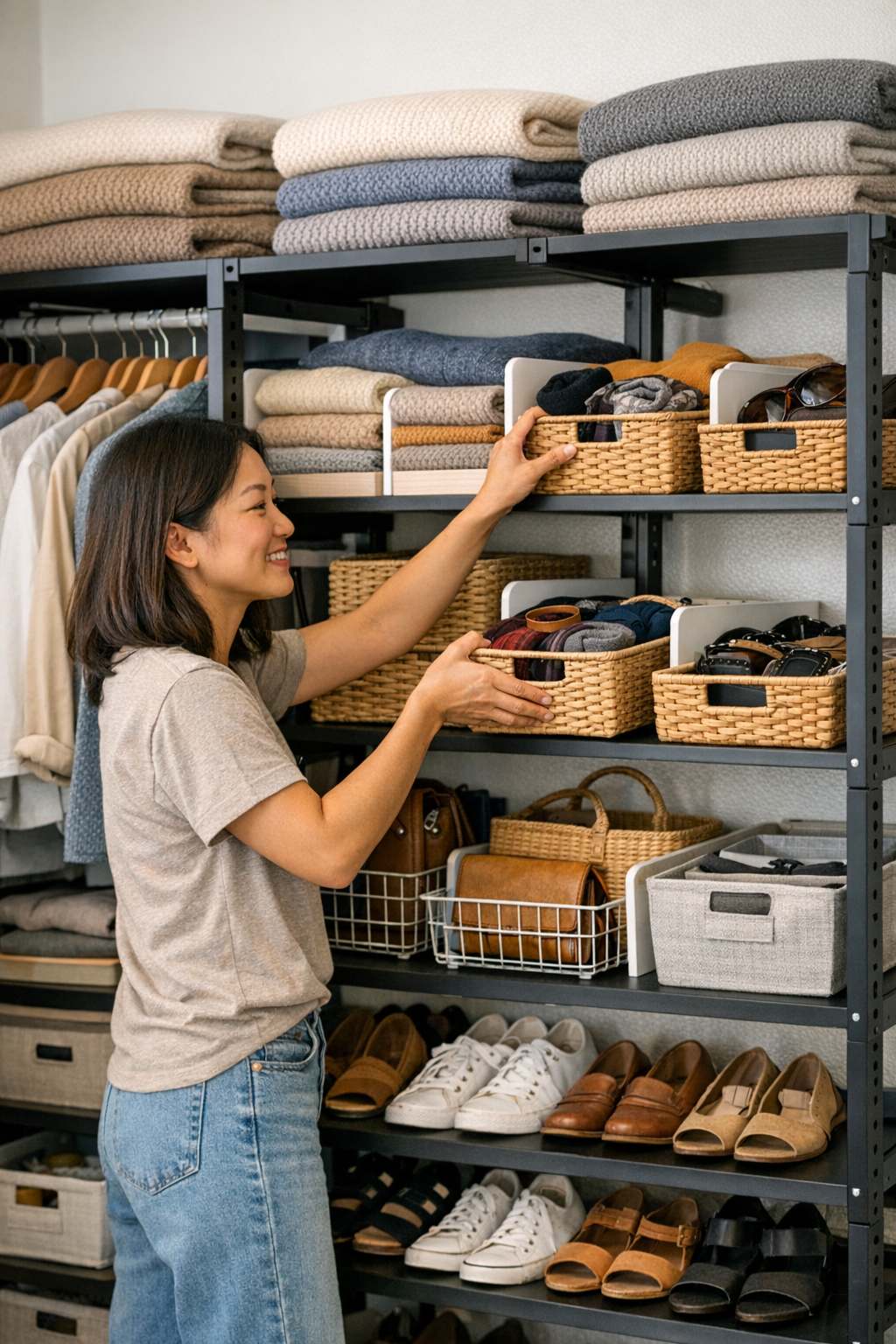
Step into your closet right after a fresh sort. Shelf dividers give folded sweaters and jeans their own lanes. Nothing topples, nothing blends. It’s immediately easier to pull a favorite shirt—instead of triggering an avalanche, you slide it out and move on. Vertical lines keep categories honest, especially in a closet touched by more than one set of hands. This system sings when items are stable, stacks stay short, and you’re not mixing big and small pieces together.
But it only takes one rushed morning to spot the cracks: a stray beanie tossed on top, kids digging for hoodies, or a partner reaching back for a shirt and squashing two piles. Dividers stop sweaters from creeping sideways—they don’t prevent gloves from vanishing under stacks or loose socks perching wherever there’s room. By midweek, category lines blur; what started crisp now begs a reset, just to hold the chaos back.
Storage Bins: Taming the Small Stuff, Hiding the Mess
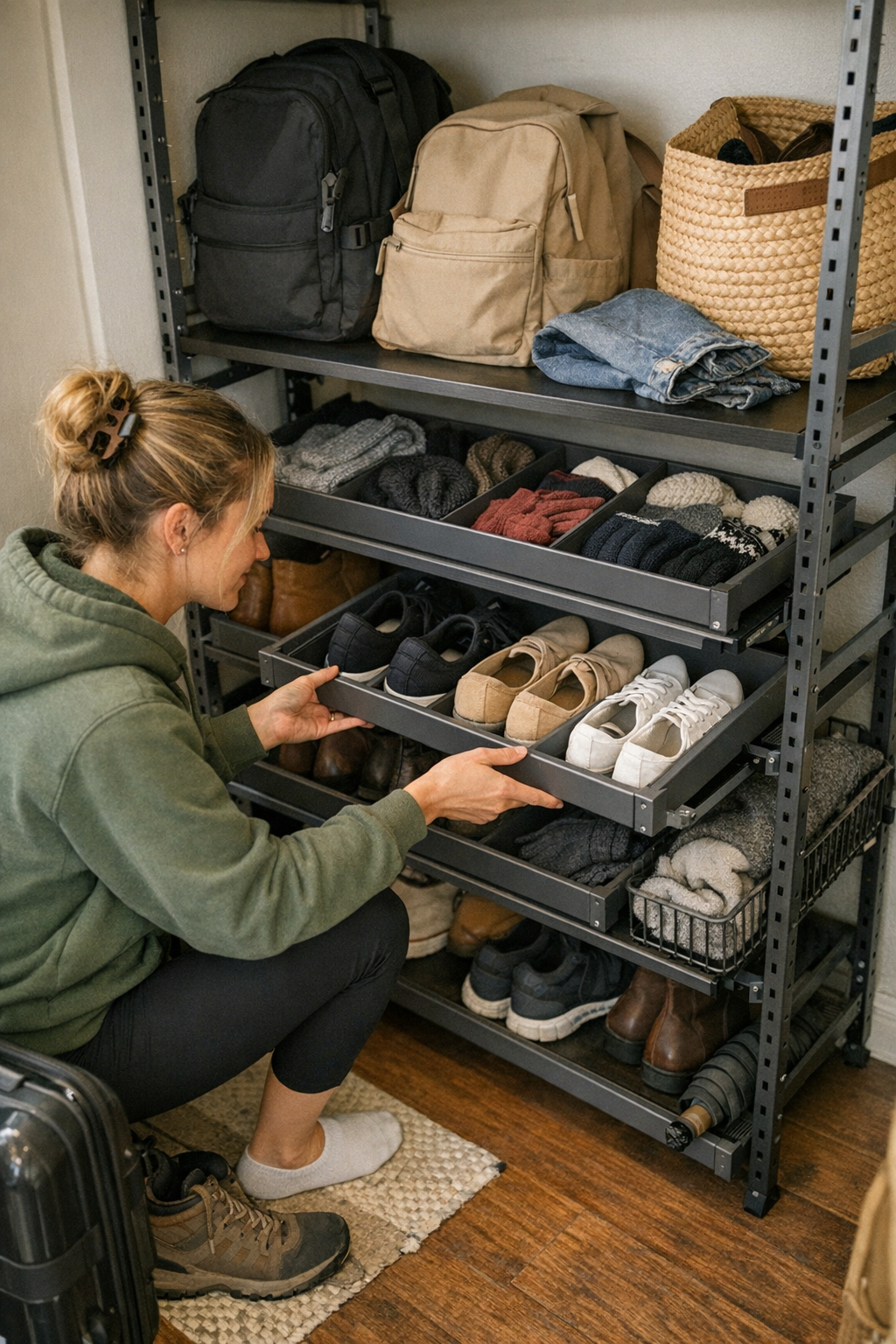
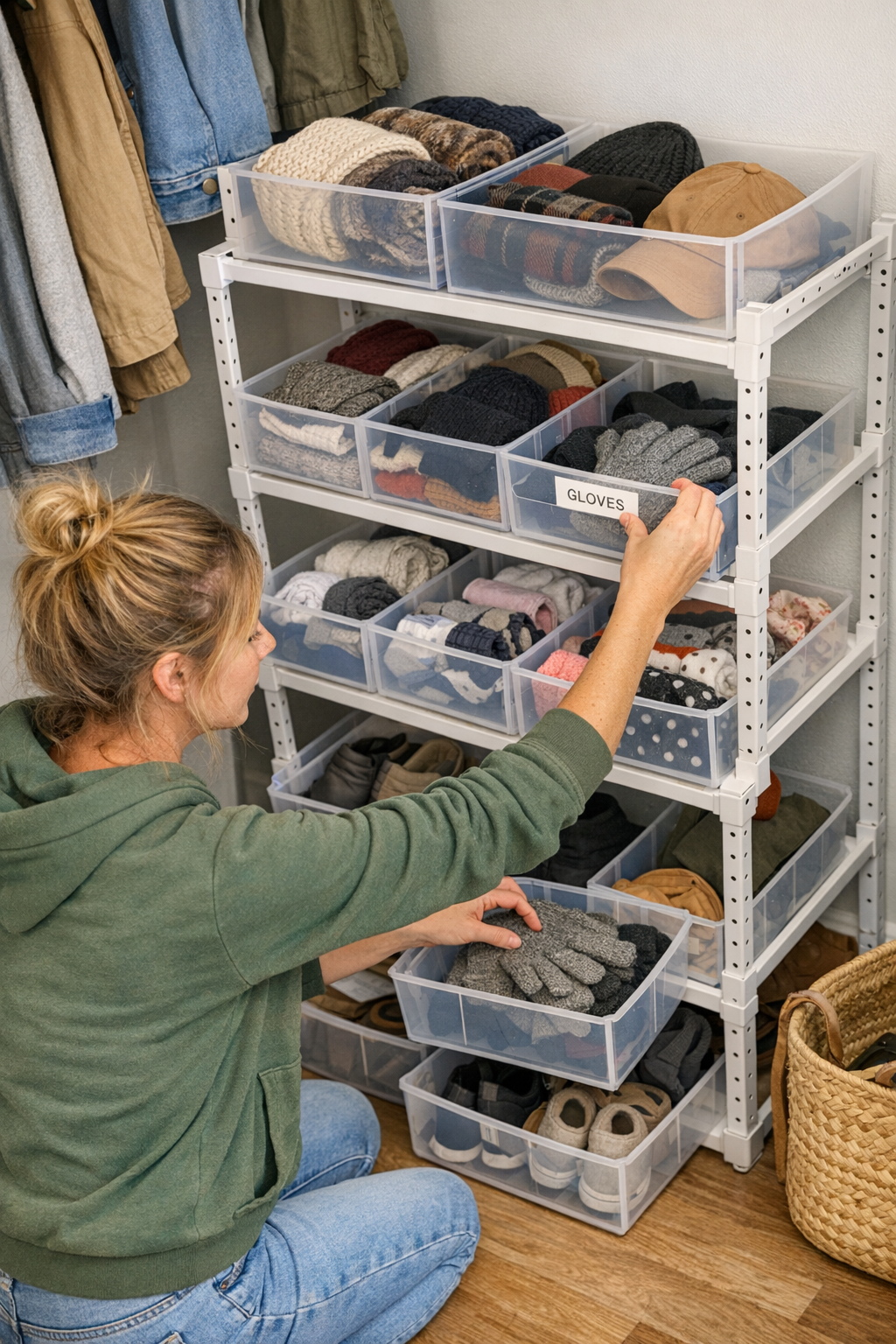
Where dividers corral big items, bins fence in the little things. Hats, scarves, belts—anything too risky to stack—disappear into bins and, at least for a day, everything looks managed. The clutter is hidden, the shelf looks cleaner, and you can sweep in spare socks or backup mittens without overthinking.
The trouble comes when you’re late and need that one glove. Bins are deep, dark, and deceptively mixed. Search for a scarf, and you pull out hats, a mismatched set of mittens, and maybe last season’s sunscreen. Bins keep strays off the floor, but inside, categories tangle with every hasty grab. And if the shelves are deep, it’s a fishing expedition—everything falls to the bottom, and you’re left sifting blind to locate what you need.
When Shelves Stop Making Sense
Most closets start with ambitions: jeans here, gym shorts there, each shelf with a role. But a fast morning throws all that out. Stacks tip. A single oversized hoodie sits halfway across two zones. Categories blend, especially if you’re always dropping last-minute additions wherever there’s space. A shirt sliding to the floor or a hat wedged in the entryway means your system is starting to fray.
Dividers that once separated adult and kids’ clothes now can’t stop socks from sneaking in. Unlabeled bins turn from “hats only” to “whatever fits,” assembling a patchwork of odds and ends. Soon, hallway benches and closet corners become general dumping grounds, no longer even pretending to streamline daily traffic. The roles you set begin to dissolve into general storage limbo.
What Daily Use Really Looks Like
Picture 7:10 am on a Thursday. Dividers at eye level still hold the line for sweaters and folded shirts, but down by your feet, bins hide a scramble of gloves and scarves. Reach up for a jacket buried in the middle of the pile—now two stacks lean, and a beanie drifts down a shelf. The next person in needs matching mittens and flips through the nearest bin, tangling socks in the process. By Friday, that initial order is a memory, and cleanup is already overdue.
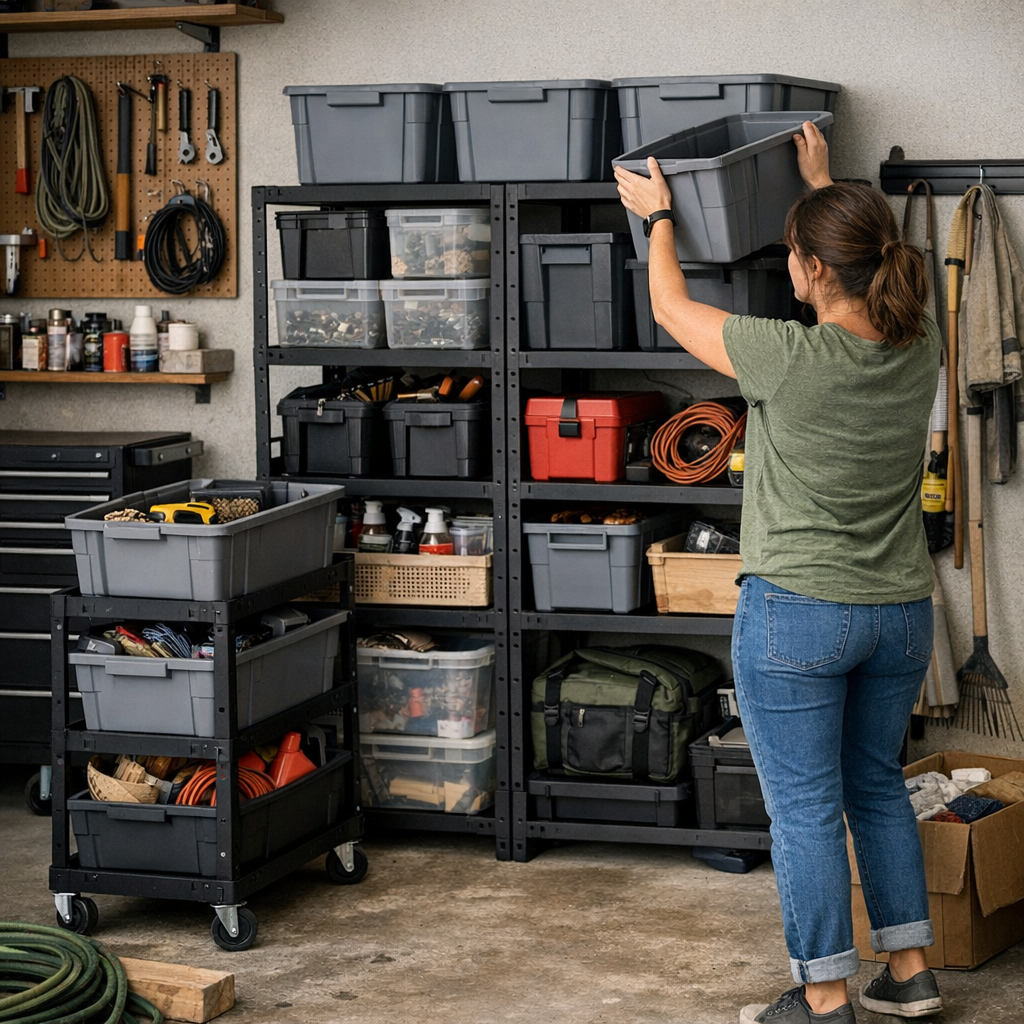
Move to the laundry area—dividers keep towels upright, until a single washcloth strays or an extra bath mat gets wedged wherever it fits. Utility shelves lined with bins start their week categorized, but by the time chores roll around, batteries share space with sponges and the original plan is lost. The problem isn’t effort—it’s how fragile most set-ups prove the moment you start using them for real.
How Combining Dividers and Bins Finally Sticks
Systems last when they match the mess—not just the mood after a big clean. The game changer: Dividers keep folded piles neat and upright (think: jeans, shirts, towels), while sturdy, clearly labeled bins catch everything loose and unstackable (gloves, scarves, belts). Give each bin one job, tape on a label (“winter scarves,” “kiddo hats”), and stick to it. That small clarity is what prevents the daily reshuffling and keeps your categories from turning into catch-alls.
With bins locked into clear roles and stacks held in place by dividers, your closet can take a beating: after a busy week, everything resets in minutes. No more shelf space being hijacked by a flood of socks or wrestling a mountain of mixed-up accessories. The vertical space finally gets used without inviting a mess back in.
Small Tweaks for Better-Lasting Order
Don’t skip labels: even scrawling “sweaters” in marker on a divider or “mittens” on a bin prevents items from bouncing between zones. If your shelves are extra wide, try bins behind and open divided stacks in front—everyday jeans up close, off-season extras corralled behind.
Don’t let bins and stacks overlap into one sprawling holding pen. The closer your setup matches your grab-and-go routine—the less you’re shuffling piles or emptying bins for single items—the longer your order holds up. If 90% of your closet is folded, stick with dividers; if drift and scatter haunt your shelves, give loose things their own homes. And embrace quick resets: five minutes at the end of the week is how order beats chaos, round after round.
Real Results: Faster Resets, Less Daily Friction
The best test for any closet isn’t the before-and-after photo—it’s how fast you get things back in place on an average night. A strong setup means minimum reshuffling and maximum clarity, even as things move. Dividers stabilize what’s steady, bins round up the wild cards, and the setup flexes with daily use. Watch as you go: Where do stacks always tip? What bin just becomes a black hole? Tweak, re-label, and watch your closet become a system you don’t dread resetting. That’s organization that finally keeps up with real life.