Category: Tools & Workshop

  • How Modular Workshop Storage Can Improve Workflow and Reduce Clutter

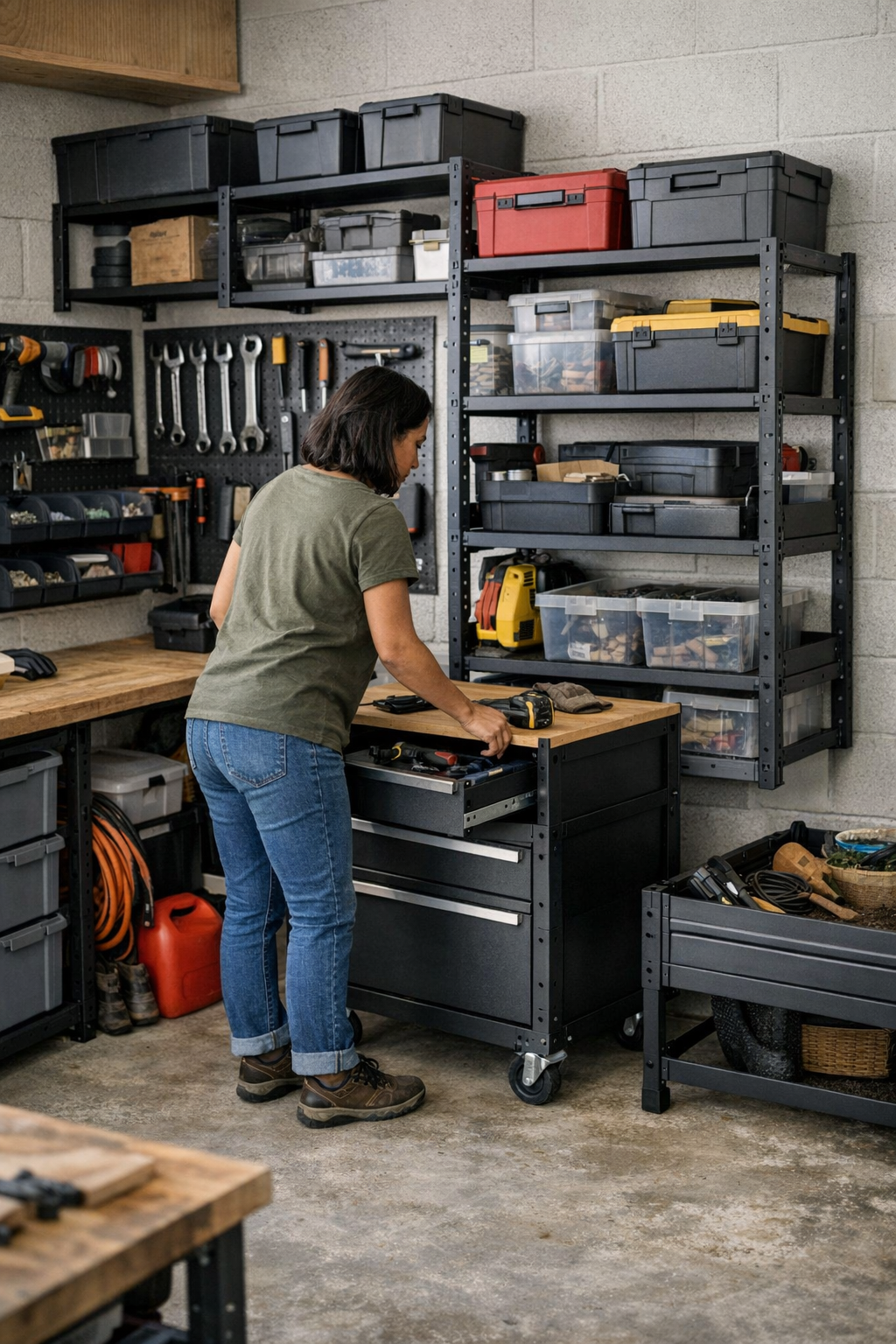
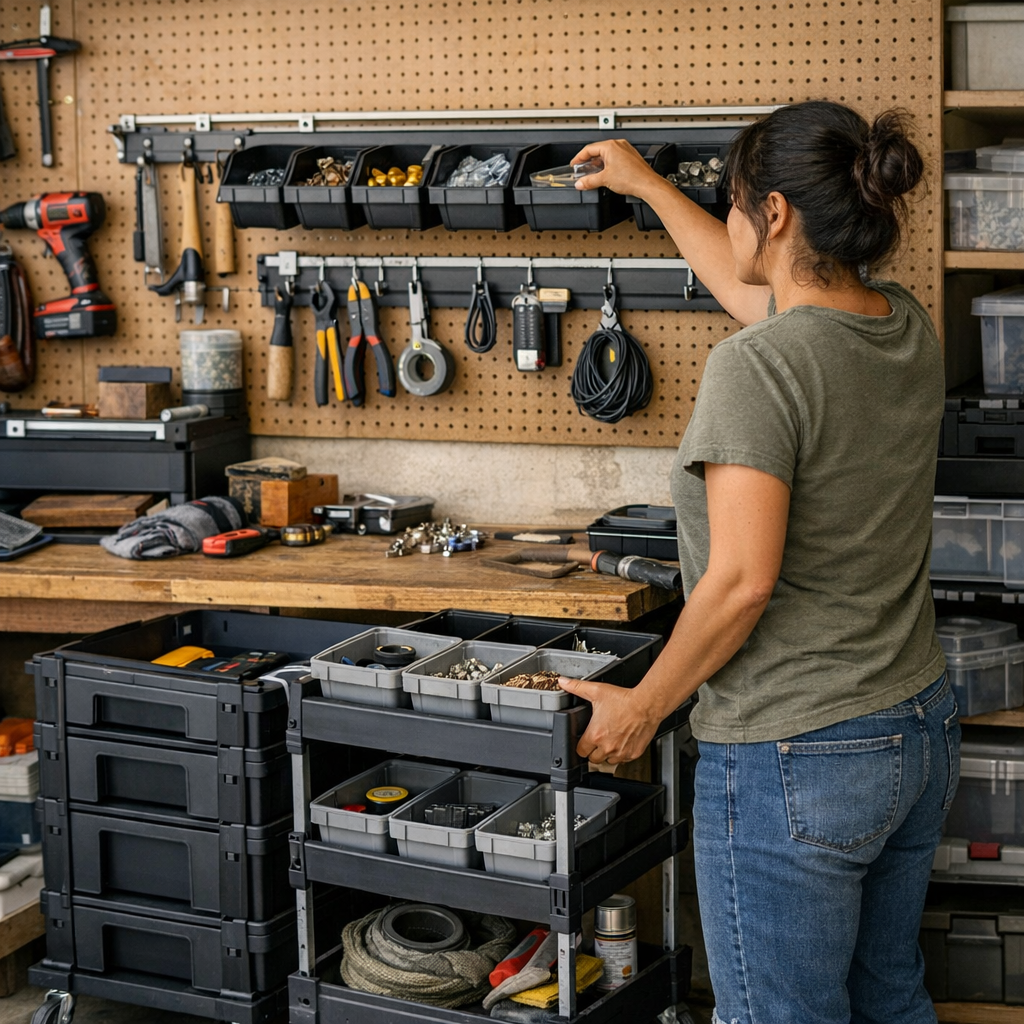
    There’s a satisfying moment after reorganizing a workshop: new bins snapped into place, rails mounted, every tool sorted and labeled. Everything looks sharp, uncluttered—a grid of order ready for real projects. But beneath that first-glance neatness, true usability gets tested the moment routine work returns. Within days, the gap between a wall that looks organized and a setup that actually works starts getting wider, and the friction seeps back into every session.

    How “Organized” Falls Apart Once Work Begins

    On install day, hanging up rails and stacking modular bins feels like a meaningful upgrade. Each tool is visible, fasteners are easy to spot, and the worktable finally breathes. Yet after several evenings of real work—fixing a mower, starting a half-finished build, or just tackling small repairs—the weaknesses that weren’t obvious up front start to show themselves.

    Flat carts and open shelves tempt you to use any free spot as a drop zone. It becomes second nature to lay down a wrench on whatever surface is closest, especially when bins get crammed or hooks fill up. Overflow creeps in: a pile on the corner, stray screws in an empty cup, clamps parked in new, less-logical places. Soon, you’re moving last night’s pile before you even start, and those extra steps eat time and motivation. Organization lives on the surface, but workflow starts to lag underneath.

    One Evening, a Dozen Interruptions

    Imagine it’s 8:30 PM and you’re halfway through swapping hardware on a bench. The mobile cart, meant for convenience, now blocks the aisle because everything temporarily lands there during frantic moments. Hooks on the wall hold what’s in progress, but start to cluster, hiding must-have tools under layers of what’s “mid-project.” By cleanup, the once-clear bench is a patchwork: drill here, pliers there, tape measure across the bins, and a slow, backward puzzle to figure out where each piece belongs. Most “modular” layouts fail at this stage—not because of lack of storage, but because every open surface or oversized bin quietly attracts overflow and breaks the rhythm of return.

    Surface Order vs. Return Flow: Where Friction Lives

    Every storage system looks good in the after-photo. But setting something down and getting it back in the right spot without pausing the flow—that’s the real test. A setup that interrupts routine will show its cracks fast: you shuffle parts from bench to cart, then from cart to shelf, always one small step away from a reset that drags out longer than planned.

    You feel a weak return flow as extra steps and slow movement: digging behind taller bins to find a driver, shifting piles on a flat cart, bending around rolled cabinets that now serve as rerouted paths. Space gets used, but not in ways that speed up work. Instead, you’re reshuffling or sidestepping to recover pieces buried under yesterday’s overflow—and your “organized” wall fades into a static backdrop while the chaos shifts from surface to surface.

    Early Warning Signs of Bottleneck Zones

    Bottlenecks rarely announce themselves. A cleared workbench becomes an ad hoc tray for every misplaced screw. A run of bins along the wall looks busy, but if only three or four keep getting used, the rest turn into ignored storage or places where old hardware simply disappears. The isolated corner with an untouched basket—or worse, a catchall of scraps and half-empty tubes—absorbs more odds and ends than actual projects, gradually slowing you down every time you pass.

    That “just this week” overflow pile is really a recurring symptom. Any surface that isn’t defined with intent turns into the room’s memory hole. Slow invisible buildup leads to regular frustration and increasingly sluggish resets.

    What Real Tweaks Make Immediately Better

    One practical fix: mount shallow, open bins directly above the bench at eye level. This fundamentally changes cleanup and return movements. Instead of “just setting it down for now”—which becomes “finding it tomorrow”—putting away frequently used bits, pliers, or screws is a single, direct motion. The friction of circling the bench or detouring past a blocky cart disappears. Defined, purpose-built sections make destruction of flat, ambiguous surfaces possible—your bench doesn’t become a holding zone for every stray item anymore.

    Signs It’s Time to Tune Up Your Setup

    • You push or reroute the cart several times just to get across the space.
    • Piles overlap, and tools drift from assigned bins to stacked layers without clear lines.
    • Your bin wall still makes you dance around obstacles or hunt for essentials hidden in visual noise.
    • Open areas keep attracting a daily mess—resetting takes longer every night.
    • Corners and bottom shelves never get touched for actual projects but bristle with unused or forgotten gear you’re reluctant to move.

    None of these issues are dramatic on day one. They compound over time, as the system collides with real, repetitive use. What works isn’t pristine perfection, but practical design—one that channels your actual habits and lets returns feel like a step in your working rhythm, not a “clean for the weekend” ritual.

    Finding the Right Mix: Open, Closed, and Accessible

    Closed bins keep small hardware from wandering, but only work when you can open, reach, and stow in one fluid step. For tools grabbed constantly, open hooks and rails along the active wall win every time—they cut the cycle into seconds, not minutes. Strong setups blend both: closed for the loose stuff, open for the daily drivers, and everything sorted small and clear. Oversized bins or catchall baskets? They’re just future junk drawers in disguise. Dividing the wall into clear, labeled, bite-sized homes means no searching, less stacking, and nearly automatic cleanup with each pass.

    Tuning for Daily Use, Not Just a Clean Photo

    Decluttering is barely half of the work. Any open table or shelf that’s not broken up will pull in overflow and slow resets, every single session. Segmenting surfaces, tightening “return” paths, and reserving open zones for only what cycles in and out daily removes endless minor annoyances, whether it’s a one-car garage or a backyard work shed.

    Status-check after two weeks by watching the patterns: Which spots get dumped on, which bins go untouched, which corners block easy movement, and which surfaces force you to pick up the same batch of pieces more than once per project? Fix these with tighter modular zones, refined bin sizes, properly spaced hooks, and carts that don’t double as holding pens. The true win isn’t a wall that photographs as tidy, but one that resets itself, session after session, without dragging you back to zero each time.


    Shop modular storage and workspace solutions at StackNest

  • Choosing the Right Air Cleaning Nozzle for Varied Surfaces

    Spend an hour with an air tool, and you’ll feel what most never see: the real difference between “good enough” and clean, efficient work isn’t raw power—it’s the nozzle on the end. Straight out of the box, fan heads and pinpoint tips look like minor variations. But the illusion lasts only as long as you stick to the easiest surface. Sweep a wide shop bench after sanding, and sure, any nozzle gives you results. Move on to rough concrete edges, coarse pavers, or brick seams—suddenly dust comes back, stubborn grit clings in lines, and what felt simple becomes a repetitive grind. Every missed patch is another squeeze of the trigger, and every pass is another minute lost.

    The Hidden Cost of Settling for “Close Enough”

    Here’s how it plays out on an ordinary cleanup: You start with a fan nozzle, clearing the bench after a sanding marathon. Sweep the floor, flick away wood shavings, everything looks on track. But as soon as you hit the textured brick base of a wall, the nozzle glides uselessly over ridges. Dust settles into grooves, dark streaks snake along low spots, and you end up chasing scraps from under tool racks. You push harder, but nothing budges. Frustration comes quietly—hands tiring, mental focus slipping, and the finish getting patchier with every extra pass.

    This isn’t just a workshop quirk—the same headache turns up in garages, onsite corners, and gritty walkways outside any job trailer. When the wrong nozzle faces the wrong surface, energy drains fast. The problem isn’t lack of effort. It’s a tool that’s just outmatched by the demands of the job—the flat sweeps are fine, but messy edges ruin the end result.

    Why Nozzle Type Matters, Every Single Time

    Put the accessories side-by-side and you’ll see three clear personalities:

    • Fan nozzles: Ideal for fast, even coverage across big, flat decks or shop floors. Perfect… until you run into inconsistencies—grooves, ridges, or anything below the surface. They float, but don’t dig.
    • Pinpoint nozzles: Precision jets for narrow seams, cracks, and rough texturing. They dig out old joint dust and packed grime, but covering a full slab with one is like trimming a lawn with scissors—tedious and fatiguing.
    • Turbo heads: Pure force for caked mud, stuck shavings, or post-construction grit. Too much on soft woods will scar the surface—the brute strength solution where subtlety fails.

    One pass with the “right” tool can save five with the wrong. But the catch is, most people grab whatever’s close and stick with it—so grit piles up in joints, pressure marks scar soft material, and what should be a five-minute blast drags into twenty. That’s not just lost time. It’s repetitive work, growing fatigue, and a finish that never quite looks professional.

    Where the Frustration Builds: The Mid-Job Reality

    Problems don’t show up in the first sweep—they sneak in after fatigue sets in. The classic example: you’re doing annual shop cleanup, moving quick with a fan nozzle over the bench. The visible dust clears, boards shine. But you roll over to the concrete base and find grimy lines stubbornly hanging on. Multiple passes, stubborn dirt, and suddenly your “almost done” turns into “what am I missing?”

    This is where you realize: the problem is the surface, not your skill. The fix isn’t more pressure or more passes. It’s knowing it’s time to swap nozzles for the surface—not just out of routine, but when the work throws up resistance.

    Quick-Swap: The Move That Saves You

    The single biggest workflow change? Keep both a fan and pinpoint nozzle handy—and switch the second you feel progress stall. As soon as you start seeing streaks, or as soon as corners stay dirty after a pass, pause and swap. Don’t gut it out or wait for frustration to peak. Clicking over at the first sign of drag means you don’t double your effort or spend the rest of the job fighting with the tool.

    Does the Right Nozzle Really Save Time and Energy?

    Reality check from long shop days: sticking with a fan nozzle on pitted or dirty surfaces can cost you roughly a third more backtracking compared to simply grabbing the pinpoint. For anyone moving between surfaces—a bench here, concrete there—that’s the difference between finishing today or dragging the job out. Quick nozzle swaps aren’t about speed—they’re about consistency and not running hands and wrists into the ground.

    How to Tell You Need to Change Nozzles

    It’s subtle at first, but these are the red flags:

    • Dust lines standing out after the first cleaning sweep
    • Grit tucked deep in seams or brick joints, resisting pass after pass
    • Swirl marks or minor scarring after heavy use of turbo heads
    • Your hand aching after “just a few more tries” in the same spot

    If cleanup doesn’t get easier with repetition, or if you hear the slap of air change pitch over rougher zones, that’s your cue. Swap early, not at the end.

    Real-World Use: Shop Routine to Dusty Brick

    Picture this: after re-sawing lumber and blasting joinery, your workspace floor is a patchwork of fine dust, odd corners, and brick baseboard. The fan nozzle makes quick work of the main drag in the open—but as you hit the edge bricks, dust stacks up. More pressure just numbs your hand and barely shifts the mess. Swap in a pinpoint tip, and suddenly the grooves clear, with less squeezing and less repetition.

    Miss this moment, and you waste energy chasing stubborn debris. That extra strain doesn’t just slow you down—over time, it breaks your rhythm, adds drag to every workflow, and leaves a jobsite that never quite looks finished.

    One Change: Keep Your Nozzles Ready

    Don’t bury your alternates at the back of the bench. Clip a fan and pinpoint nozzle to your tool belt, apron, or utility pouch every time you start a mixed-surface job. The extra prep pays off the second the surface changes. Think of swapping nozzles like using the right bit or blade for the material—yes, there’s a pause, but the work is smoother, cleaner, and a lot less punishing over hours or days.

    The Work Pays You Back

    Real productivity isn’t in piling up accessories—it’s in noticing when the work slows and adapting, fast. A nozzle swap can’t polish a floor or fix bad prep, but it can cut wasted effort and keep results consistent. Next time dust starts to streak, or you sense fatigue ratcheting up, switch that tip. Your body, your schedule, and every job after will run smoother for it.

    Shop tools and accessories at Gumboll

  • How Soft-Close Drawers Transform Everyday Closet Organization and Efficiency

    It starts small—the first week after your so-called “closet reset,” everything looks perfect. But by day three, the familiar drift returns: stacks of shirts slide sideways, that sock you always reach for vanishes behind a pile of shorts, and closing a drawer requires an awkward double-push. The dull thud and screech become background noise, but the friction never really fades. Rushed mornings have you tugging at a stuck drawer, and at night, every bang feels twice as loud as you tiptoe past sleeping family. What seemed organized in the showroom starts feeling like a constant maintenance project at home. That’s when you notice what standard drawers truly miss—and where soft-close starts to matter.

    Daily Storage: Where “Organized” Starts to Fall Apart

    A closet can hide its frustration well. Doors close, surfaces align, and at a glance, you’re “together.” But reach for anything not on top—a shirt under a stack, socks from the back—and you get friction. With standard drawers, you live with:

    • Shirts slouching sideways from a single rough close
    • Underwear and socks migrating into corners, practically disappearing
    • Piles losing their shape by midweek, forcing a slow-motion re-stack
    • That nagging sense that one careless tug sets you back two days of tidying

    The cost is small but constant: pausing to realign piles, slow-gliding drawers to dodge noise, and quietly hoping nothing slides out of sight. Especially in a space shared with someone else, the energy you spend just keeping things “good enough” adds up—faster than you think.

    When Drawer Friction Becomes a Daily Grind

    Drawer mechanics might sound trivial until you live with the flaws. If you rely on quick, predictable access, clutter-free resets, and peace in shared spaces, weak drawers can be your worst enemy. Real-life storage struggles surface in moments like:

    • Morning chaos—digging under shuffled shirts for what you actually want, with stacks losing their hold
    • The late-night shuffle, tiptoeing as every drawer echoes through the house
    • Shared bedrooms, where one careless close shakes someone else’s sleep
    • Laundry day, watching newly folded piles collapse with the first use

    Soft-close drawers answer with control: a smooth, unhurried glide that ends in a gentle, silent close. No drama, no jolt—just a space that stays ready for next time.

    Why Standard Drawers Quickly Wear You Down

    Identical at a glance, worlds apart when stress-tested. Standard drawers age poorly—tracks wear grooves, drawers misalign, the rails start to drag, and gentle organization dissolves with every slam. It goes well beyond aesthetics:

    • Grinding rails sabotage any quiet-hour routine
    • Repeated force leads to tiny cracks, nicks, and long-term wobble
    • The same five shirts in rotation—because digging for the rest is too much frustration
    • Tidy bins quickly blend as items migrate, losing all order

    Multiply this friction across the week, and even a well-designed closet can feel like it’s working against you. Appearance fades fast when daily use means repeated resets and searching for lost basics.

    How Small Hassles Add Up—And Wear You Down

    The reality is constant: you open, tug, and the contents lurch; close the drawer, and feel everything shift. Even simple routines—like grabbing gym socks or finding a tee—turn into micro-battles. At night, you dread the crash that undoes your careful organizing; in the morning, you shuffle piles to make room for what should be an easy grab. The promise of “organized” fades into the grind of reshuffling every other day. The real dividing line is how the closet supports routine—not just how it looks after a Sunday reset.

    The Shift: Real-Life Joy of Soft-Close Drawers

    Upgrading isn’t about luxury—it’s about losing those daily setbacks. Soft-close brings small, repeatable wins: you pull, you find, you nudge, you move on. The quiet closing means:

    • You don’t inch the drawer shut to keep peace—just one push, every time
    • Stacks stay upright for days, making what you need instantly visible
    • Clutter can’t migrate to corners; what you set stays put
    • Even with multiple uses in a hectic morning, nothing falls out of order

    Across weeks, it’s real time and energy saved—no more constant re-sorting, no stealth tidying in the dark, no lost basics. It’s not showroom perfection, but now, your organization isn’t undone by a simple drawer close.

    The Realistic Payoff

    Be clear: soft-close drawers won’t prevent every stray sock or collapsing pile. But they do lift the daily baseline—less shifting, fewer resets, and a closet that’s easier to put back together, even if you occasionally slip. If you’re worn down by little battles, and the gap between “looks organized” and “actually is” drives you nuts, this one upgrade bridges that gap more than a new set of bins or another round of Sunday folding.

    What Real Closet Owners Ask

    Will soft-close actually help in a shared space? In bedrooms—especially with kids, partners, or roommates—soft-close drawers keep routines gentle. No more accidental wake-ups or apologetic noise.

    Can you add soft-close to what you already have? Sometimes. It depends on your hardware and the shape of your drawers—some cases call for new runners, others benefit more from a full swap. Check the drawer’s construction before making the call.

    Is the difference obvious from the start? Only after real use. The payoff surfaces after a week of rushes and resets—when you realize what hasn’t slipped, shifted, or vanished since laundry day. Long-term, the improvement is felt more than shown.

    Closet Storage That Stops Slipping Behind

    A closet isn’t just about initial order—it’s about how well it holds up on your busiest days. The divide between “full” and “functional” is defined by these details. Soft-close drawers won’t turn you into a minimalist, but they do keep energy focused on what matters—getting dressed, coming home, moving on—not fighting another round of silent closet triage. It’s one upgrade that works overtime, even when you don’t notice it—until you finally realize things are still where you left them.

    Shop ClosetWorks storage solutions

  • Why Upgrading Tool Storage Beats Buying New Tools Every Time

    There’s a reason “organized” doesn’t always feel organized—especially after a week in the workshop or garage. The setup is crisp on day one: wall racks lined up, bins labeled, the new rolling cabinet snapped into the perfect showcase spot. It’s the moment everything looks under control. Fast forward a few days, and the illusion starts to crack. That cabinet’s now wedged in, narrowing your path every time you squeeze by. The rolling cart gets nudged around to clear space—then sits awkwardly, half in the walkway, until your next project. Bins fill unevenly: “Sockets” spills over, while Phillips screwdrivers end up loose somewhere closer, because you just need them more. The gap between “looks organized” and “actually works, every day” becomes impossible to ignore.

    When Storage Structure Steals Your Flow

    It’s easy to blame clutter on a lack of bins or fancy cabinets, but most of the real friction comes from the bones of your layout. Maybe your wall panel sits six inches too high—the top hooks go unused, or worse, demand a stepstool for anything you put there. A floor cabinet might keep gear hidden, but suddenly its open drawer blocks your route whenever you need the drill. The visible order fades as new habits take hold. Instead, what remains is a network of small, consistent annoyances: the aisle that could be clear if only that rolling cart had somewhere better to live; the back corner that gets used as a dumping ground for awkward-size clamps because nothing else fits; the regular trek back and forth after realizing your most-used tool never made it home last time.

    The ‘Wall or Floor?’ Trap (and Why Both Can Fail)

    Wall-mounted systems sell the dream: gear off the floor, everything one glance away. But three projects later, you’re reaching over a tangle of hooks for that hex key, sliding aside a ladder to grab the garden shears shoved behind. It’s “sorted,” but not seamless. Meanwhile, floor storage promises flexibility—until your rolling cabinet lands right in the lane where you actually walk, and starts catching overflow: half-used glue bottles, random hardware, the one tool you couldn’t quite find a spot for. What’s supposed to flex ends up blocking you in, movement-by-movement.

    If your setup collects friction faster than it collects tools, it’s not working. Each awkward shuffle—dragging a mobile cart, digging through a low, shadowed shelf, stretching for a tool because the hooks are just out of reach—chips away at the promise of an effortlessly ordered space. The friction isn’t dramatic, but it builds up daily until your own routine is shaped around all these little workarounds.

    Why ‘Everything in Its Place’ Isn’t Enough

    The surface-level fix is tempting: bins labeled, shelving dialed in, pegboard hooks filled to capacity. For a moment, it really does look sharp. But then, a rolling cart meant for one task slips into dead space and becomes a catch-all. Wall storage jams up when retrieving a tape measure means shifting two drill bits and a flashlight first. Soon, one shelf or bench attracts everything that doesn’t really “belong.” Corners don’t become open—they become permanent limbo for bulky saws or that garden rake with nowhere else to go.

    Visual tidiness collapses under routine use if the system ignores real movement. If returning a tool means awkwardly working around a bottleneck—or if project overflow piles up on whatever’s closest—system breakdown is only a matter of time. As routines settle in, resets get slower, and the neat look you started with becomes harder and harder to reclaim.

    Micro-Frustrations Signal Larger Problems

    • Shuffling a rolling cart out of the way—every time you need to move long lumber or an armful of supplies.
    • Edging around a cabinet corner, because it’s always half-blocking your path to the power tools.
    • Wall space technically used, but the top hooks stretch the limits of what’s practical—so they stay empty, or gather only items you rarely need.
    • The same shelf perpetually collects overflow: half the gear lands there, the rest scattered wherever there’s open surface.
    • Dead zones where odd-shaped gear gathers dust, undisturbed, because reaching there means moving three other things first.

    Fixing Flow: Why Smarter Beats Bigger

    Real organization isn’t about adding more places to stash tools—it’s about fitting storage to your movement, not the other way around. Swapping a chunky deep cabinet for a narrow wall-mounted rail (even if it “stores less”) can turn a cramped shuffle into an open stroll. Rethinking by task—putting your go-to tools at natural standing height, storing heavy or seasonal stuff just below—means you don’t end up with piles on the floor. The entire reset routine shrinks: less zig-zag, more straight-line return. Suddenly, cleaning up feels almost automatic.

    The real test? How simple is it to put things back, every single day.

    If it takes even a couple of extra steps, or a detour around an ill-placed cabinet, you’re likely to skip it—resulting in mess that accumulates faster than you realize. Aligning storage with the way you work, not just what you have, shifts the entire feel of the space. Strong systems separate high-frequency from occasional use—not just by type, but by how and where you move. Sometimes, the biggest win is as small as moving a single shelf or cart to free up a pathway that always gets clogged.

    Quick Fix: When Overflow Doesn’t Stop

    If one zone keeps spilling over, it’s not for lack of containers—it’s a sign your workspace is fighting your routine. Before buying another organizer, ask yourself: is your gardening gear stranded across the garage from the back door? Is that cordless drill forever on the bench because it’s annoying to put away? Relocating storage even just a bit—closer to the real action—can reduce reset friction, more than any new bin or flashy label ever could.

    How Real Improvement Shows Itself

    An effective setup doesn’t just look tidy—it lets you clear and reset the area with hardly a second thought. The true difference comes after several rounds of heavy use: floors are open, tools find their way back home, and you’re not trapped in a loop of shifting carts or making “temporary” piles. Zones hold firm because they match how you move, not just how you imagined they might be used.

    If, after a full week, you’re still reshuffling, detouring around awkward corners, or babysitting tools back to their “homes,” the setup is still fighting you. The right storage makes the entire routine feel lighter, not heavier. Pay attention to how your space holds up after daily use—not just how it shines for a photo.

    For storage that makes your workshop or garage actually work—through weeks, not just moments—check out StackNest.

  • Mastering Sander Choices for Flawless Wood Surface Preparation

    It’s always at the finish line—when you’re convinced the sanding is perfect—that reality hits. You wipe on stain or clear coat, and suddenly every careless track or tight swirl leaps out. At this point, there’s no patch or quick fix; correcting the mistake means retracing your steps, sanding again, burning more time, and sometimes scrapping material. It’s one of the most common, maddening stalls in any real shop or garage: overlooked sanding flaws, coming back to haunt you when it’s too late to hide them.

    Why Sander Choice Isn’t Just a Detail—It Decides the Outcome

    In the grind of the workshop, tool choice is about control, fatigue, and how each sander shapes real wood under pressure. Grabbing the first sander within reach often feels like the fastest move—but “fast” is meaningless if the tool leaves deep grooves and vibration scars you’ll only see later, under angled light. The gap between “good enough” and truly clean prep is where most projects go sideways, and it’s almost always decided by which sander you use, when, and how long you stick with it.

    One mistake—like pushing a belt sander too deep into late-stage prep—presses permanent tracks into the wood. These marks won’t vanish no matter how much you blend with lighter sanders. Add in a tired sanding pad or a machine that rattles after a long session, and those tiny surface ripples multiply. Each unnoticed scar is a setback waiting to be discovered with the first swipe of finish.

    How Sanders Really Differ When It Matters

    Orbital, random orbital, belt—they’re not just names. Each sander has a noticeable personality that only shows up in real use. Think of flattening a warped maple countertop: a belt sander makes fast work of high spots, but a moment’s hesitation in one spot and you’ve got troughs etched so deep they haunt the finished piece. At this stage, speed is a double-edged sword—every extra second risks irreversible grooves.

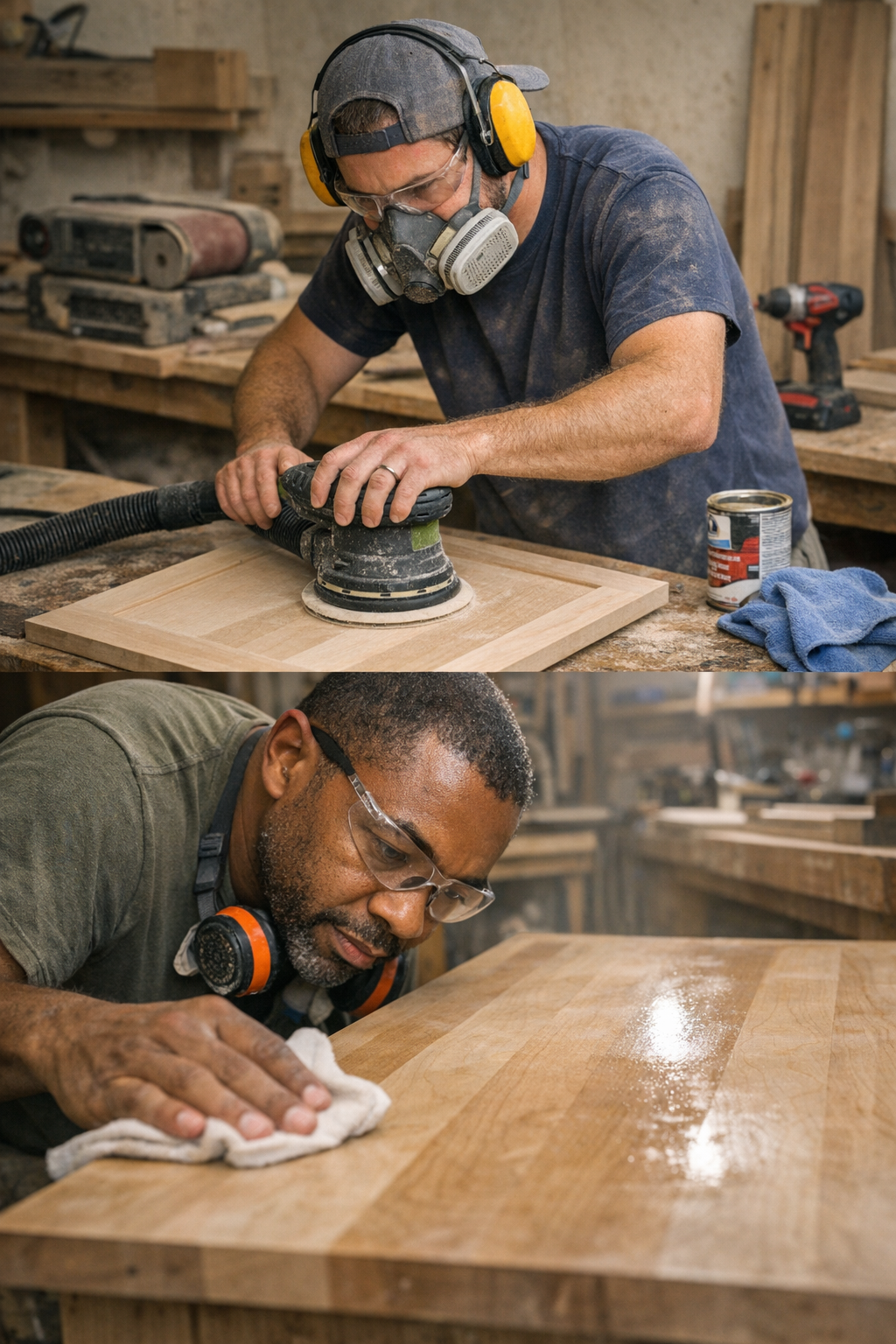
    Switching to an orbital sander tones down the risk. The flat, circular motion is safer on sharp edges and curves, but it’s not flawless—it leaves those fine, repeating swirls that only become visible under shop lights or in morning sun through a window. Then there’s the random orbital: more aggressive than an orbital, but less risky than belt, it scatters scratch patterns and clears dust faster. The difference becomes obvious over hours of work. With a random orbital, blending is forgiving, and the surface feels truly uniform to the touch—while orbital-only sanding leaves unwanted smudges and haze that show up every time the light changes.

    Scene: Maple Cabinet Doors—Living with the Chatter

    Say you’re prepping a set of maple cabinet doors, chasing that consistent satin sheen. You try to stretch the orbital through every step. By the third door, the sander’s subtle vibration starts working against you—grain direction changes, chatter sets in, and faint cross-hatching appears. They look minor until finish goes on, and then every defect lines up in the glare, multiplying your frustration. If you recognize this—finding your “quick finish” dragging into a whole extra sanding session—you know how precise sander choice matters at the smallest scale.

    The Sequence That Avoids Regret

    Better results don’t come from just buying a fancier tool—they come from matching the sander and grit to each stage, then switching at the right moment. The classic routine: start rough, progress in stages, end with finesse. For leveling warped panels or removing glue, fire up the belt sander with 80-grit—fast and relentless, but step away before it starts to “dig in.” Immediately move to random orbital with 120-grit: focus here on blending grooves and harmonizing the grain. When it’s time for delicate edge transitions or curved rails, don’t force a full-size sander—grab an orbital or, for tight spots, a sanding block. End the process with a random orbital and 180-grit, but never drag out this final stage—no more than a few minutes per square meter, or you risk compressing the fibers and ruining stain uptake.

    Trying too hard for “invisible” perfection late in the process is its own trap. Over-sanding at high grit leads to dead, patchy spots—a mistake most learn after the first ruined finish coat. Recognize that sweet spot: smooth, ready for finish, but still alive and open to stain.

    Catch Mistakes Before They’re Sealed in Place

    Stop trusting your eyes alone. A rapid wipe-down with mineral spirits darkens the grain and spotlights every leftover mark: subtle belt sander ridges, orbital swirls, compressed areas that don’t match the rest. Under this temporary spotlight, fixes are possible and quick—before finish makes the errors permanent. A few extra minutes with the right sander and just enough pressure saves hours of rework, and sometimes the cost of new material.

    Don’t Ignore Dust—It Bites Back

    Every swirl of sanding dust not only clouds the air, but clogs pads, reduces sanding power, and creates invisible scratches that reappear at the worst time. If your sander’s dust system isn’t pulling its weight, you’re grinding spent grit back into the surface. A shop vac connected to the sander, or even a quality dust bag, keeps work predictable and cuts down on backtracking through grits. Less dust means less time wasted, cleaner results, and a smoother workflow—especially on big pieces or batch runs.

    Dial In Smarter Sanding Habits

    The difference between a pro-looking surface and a painful redo comes from daily habits—not just the gear. Watch for signals: a sander that suddenly feels “sticky” or starts to catch probably needs a grit change, not more pressure. Keep a sanding block on hand for inside corners and tight moldings—forcing a power sander where it doesn’t belong guarantees rounded edges and wonky reveals. Cutting corners to save time here is what actually wastes it later.

    There’s a flow to good sanding. Watching a seasoned pro, you’ll see them swap sanders, check grain in raking light, and pause to feel the surface with bare hands. They don’t chase textbook steps; they chase consistency, saving themselves the headache of post-finish surprises. In the end, effective surface prep is about precision, control, and learning to stop before pushing the wood past its best. Sanding isn’t about achieving perfection. It’s about knowing when good is truly good—and having the tools and process to back that up, project after project.

    Visit Gumboll for practical tools and gear built for jobsite performance.

  • Why Drawer Design Shapes Your Daily Storage Efficiency and Routine

    Drawers or open shelves: both look tidy at first glance, but the real test comes at 7:23 on a rushed Thursday morning. That’s when you’re elbow-deep in a drawer, searching for the socks you know you put there, and you realize—your storage solution isn’t actually helping you. It just looked good for a day or two. The difference between a closet that photographs well and one that keeps up with real, everyday routines comes down to less visible details: friction, category drift, and how smoothly you can reset at the end of a busy week.

    Drawers: Neat on the Surface, Chaos Beneath

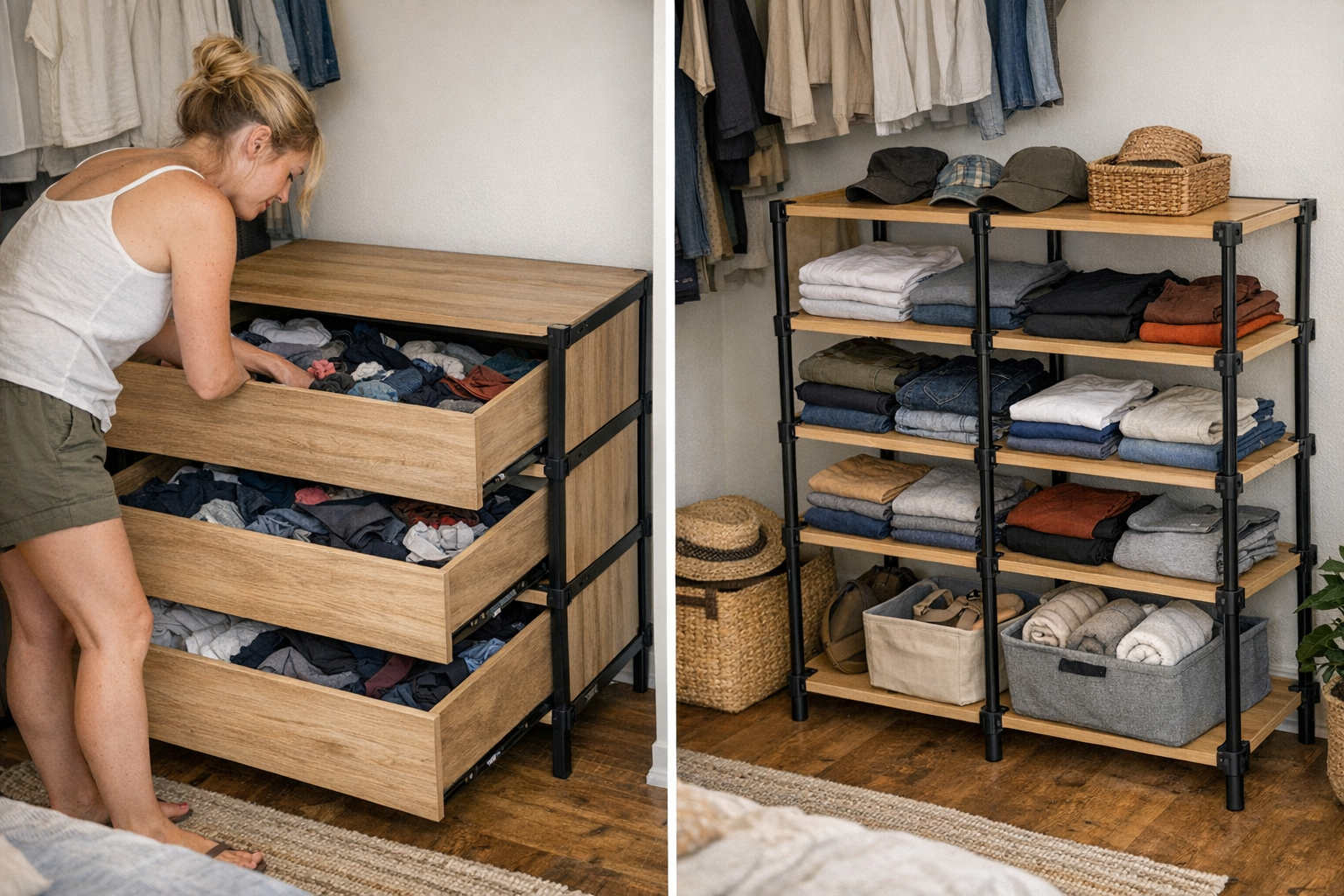
    Imagine the lower half of your closet lined with deep drawers—everything sorted, folded, hidden from view after a weekend reset. By midweek, though, that illusion starts to slip. You can’t put your hands on what you need without disrupting layers: socks disappear under t-shirts, sports bras slide to the back, athletic tops get lost. The sense of order you worked for quietly comes undone, one hurried grab at a time.

    Deep drawers make it far too easy for categories to blur with each rush. They swallow poorly folded stacks, and items shift and topple before you notice. What starts as minimalist calm turns into a churned-up mix just below the surface.

    The Drag of Reaching, Shuffling, and Searching

    This friction adds up in the routine details. Every morning, reaching for one specific shirt means touching—if not actively moving—three others. Socks stuck at the bottom force a half-unfold of everything on top. Untangling a pile to find a single missing gym short slows you down and leaves folded stacks looking punched-in. Drawer resets take longer each time, and what once felt efficient slips into maintenance mode—constant process, barely keeping pace.

    The trouble is mostly hidden. Drawers fool you with surface order, but every repeated reach disturbs the balance. Eventually, it’s easier to stop resetting entirely and just live with low-level chaos.

    Shelves: Full Visibility, Fast Access, Real Limits

    Shelves, by contrast, refuse to let items hide. Every piece—pants, towels, folded knits—competes for visible space. With no deep layers, you pull what you need without dislodging the rest. Each category is exposed, so mixing is obvious and retrieving is quick. You lose less time to searching or reshuffling. Shelves tell on you: overstuff them or neglect a row, and chaos is instantly on display.

    But shelves can crowd up fast. Too many stacks become hard to control, and soft items spill into each other nearly overnight. One oversized sweater can push an entire row toward collapse. The neat line up front quietly grows into a jumble when no one’s looking. Still, you always know where things are—and if you use bins or baskets, they force you to define what goes where, at least until overflow starts again.

    Scene: Mudroom Entryway Shelves in Practice

    Picture the honesty of a mudroom shelf lined with baskets. There’s a tray for keys, a bin for hats, boots set out in their spot. Categories stay clear because each is visible and easy to access. But if shoes start landing outside their bin, or baskets overflow, clutter spreads instantly from shelf surface to floor. Even then, finding the right scarf or gloves is a glance and grab—fast, but risking visual clutter and the need for constant pulse-checks.

    Dividers: Small Fix, Big Relief

    Back to the bedroom closet: add removable dividers and watch the tone shift. Each divider becomes a miniature boundary—shirts here, leggings there, socks corralled to one side. Suddenly, the drawer you’d grown to dread opens to clear, persistent zones. The scramble for a specific item is gone; instead, you can nab what you want with a single reach. Stacks hold shape. Crumpling slows down. The difference isn’t always dramatic, but it’s real—you’ll feel it when resets become near automatic instead of a weekend project.

    Dividers quietly prevent category sprawl and reduce the subtle mess that builds from little misplacements. Implementation is simple, but the payoff comes in every rushed morning and low-stress reset.

    Quick Check: How Deep Is Too Deep?

    If grabbing your favorite workout tee means moving two or more layers, your drawer is working against you. Too much vertical space invites chaos. Shallow drawers or strategic dividers force a single layer—everything visible, nothing buried, so mornings flow and clean-up is fast.

    Reset Anxiety: Signs Your Storage Isn’t Working

    When storage works, even hectic routines don’t unravel it. If you’re hesitating to reset a space because it seems overwhelming, your system needs tweaking—not just more discipline. Drawers devolve without boundaries. Shelves overflow without limits. True storage success shows not just in how easily you can tidy up, but in how little there is to fix each evening or weekend.

    The best setups don’t rely on constant vigilance—they quietly keep things organized day after day. Whether that means confining socks to a single slot or making towels easy to grab off a shelf, the difference is functional, not just visual.

    Beyond the Closet: Where Storage Friction Sneaks In

    This tension shows up in every high-use zone:

    • Kitchen drawers without flatware dividers devolve into utensil grab-bags.
    • Bathroom cabinets with deep baskets let bottles vanish at the back and half-used products multiply.
    • Garage workbenches lose all order when one tool gets wedged behind another inside a deep drawer.

    The cycle is the same: each time you have to move the wrong thing to find the right one, friction accumulates. Each small fix—dividers, bins, clear visibility—reduces the reset grind and keeps daily routines smoother.

    What Works: Everyday Storage Tactics

    If you find yourself wasting time searching or resetting, try this:

    • Root out hidden layers—deep drawers and bins love to hide clutter. Add dividers or split a single deep drawer into two shallow ones if possible.
    • Track how often you have to move one thing to get what you really want. If it’s frequent, reorganize for single-layer or single-category access.
    • For shelves or busy drawers, reduce categories: one type of thing per shelf (or per bin) lets you see when clutter is creeping in.
    • Move your most-used items to open storage or top-access spots—control friction, then customize boundaries where chaos appears most often.

    The lowest-friction storage setups are the ones you barely have to think about. Small changes like a simple divider or a swap to open shelving can transform how a space functions in real, messy, repeatable life. If your system feels like it’s always on the edge of chaos, it isn’t you—it’s the setup. Good storage adapts to your rhythm and helps declutter as you live, not just after a big reset.

    Discover practical options and smarter routines at ClosetWorks.

  • How Entryway Storage Can Transform Daily Routines and Reduce Clutter

    Entryway storage always flatters to deceive—until real life sets in. On day one, everything feels under control: hooks in neat formation, cubbies perfectly squared, shelves lining up like architectural plans. You stand there, picturing every shoe, bag, and coat in its place, convinced you’ve finally closed the gap between chaos and calm. Then routines hit. The careful symmetry crumbles—shoes block the walkway, jackets pile three to a hook, and baskets overflow with whatever didn’t fit elsewhere. Within a week, the entry looks less like a system and more like a lived-in scramble, proving yet again that first impressions fade fast once actual habits collide with even the best-laid setups.

    When Setup Meets the Pace of Real Life

    This is where most storage systems reveal their true colors: not on setup day, but during back-to-back mornings and unpredictable evenings. The difference between a space that quietly resets itself and one that slips into disarray comes down to what happens as people move through it—bags grabbed in a rush, muddy boots dumped in the nearest gap, groceries suspended on whatever surface is open for half a second.

    Photo-ready order holds together for about three days—until you’re wrestling a backpack from under two coats or twisting sideways just to wedge boots onto a shelf that looked spacious enough only in the catalog. When bins are awkward, hooks too high, or shelves crammed too tight to reach, the cleanup routine becomes a workout. If your storage doesn’t fit the reality of your movements, you fall into workarounds: shuffling bins to clear a path, negotiating space with someone else, or simply stacking one thing awkwardly atop another and telling yourself you’ll fix it on Saturday. Most setups don’t fail all at once. They fail in all the little ways that force you to constantly make up for what the layout won’t let you do naturally.

    Tracing the Slow Breakdown

    What does it really look like when a setup stops working? Shoes start clustering in the wrong places—with piles creeping closer to doorways and traffic lanes. Hooks disappear under three jackets, so anything new gets draped over a bench, or lands on the nearest basket. Items without obvious homes—hats, sports gear, pet leashes—migrate to what should be clear corners, slowly becoming obstacles for anyone stepping inside. Every pass through the area is an improvisation: nudge the rolling cart again, sidestep the chest that never fits quite right, or reroute entirely because one cabinet blocks half the flow.

    You know the system’s failing not by the volume of stuff, but by how often you find yourself moving things just to move yourself. Categories blend out of frustration, not necessity—a shelf meant for shoes now shares duty with mail and the odd umbrella, simply out of reach-based convenience. Instead of helping you get in and out, the setup becomes another source of negotiation—and the difference is measurable in every sigh, slowdown, and missed morning exit.

    Everyday Friction Points You Can’t Ignore

    Picture getting home at 6 PM with two grocery bags and soggy boots. The hook closest to the door? Already smothered by winter coats, demanding an awkward stretch if you want yours to fit. You try the cubby, but the angle’s too tight—why twist awkwardly when it takes half the time to just leave shoes by the wall? Within days, that shortcut becomes routine, and soon everyone’s stepping over a sprawl of shoes. That’s where gridlock starts: one small inconvenience creates a chain reaction of clutter.

    For smaller entries, those problems only grow. A cabinet door that blocks passage every time it swings open, a corner that’s never quite empty but always full of “for now” gear—these little design misfires draw a direct line between storage on paper and the real-life shuffle and sidestep. Storage isn’t just a numbers game; the shape, reach, and footprint of every piece determines whether movement flows or constantly faces micro-obstacles. It doesn’t matter how many bins you squeeze in if you’re reshuffling contents or paths every single day.

    Reshuffling: The Invisible Time Drain

    You rarely notice just how much time and energy you waste until the entry forces your hand. That rolling cart isn’t just in the way once—it has to be shifted two, maybe three times, just so you can sit on the bench. The wall lined with identical hooks never adapts—so when Saturday soccer starts, there’s nowhere to put the extra bag except by wedging it onto the nearest available spot. Overflow becomes a way of life, not an exception. What started as “enough storage” pivots into a daily chore that chips away at the utility the setup should have provided.

    Small Fixes with Outsize Impact

    Tiny layout changes often pay off the most. Swap one long row of hooks for staggered pegs at two different heights and suddenly the congestion vanishes—no more wrestling a jacket off the lower hook just to reach a kid’s backpack. It’s a five-minute adjustment that buys back time, space, and convenience.

    Move a shoe shelf six inches clear of the main path—now there’s no need to squeeze sideways or leave shoes heaped by the door. The open pathway signals where things should land, making clutter instantly visible and easier to resolve. These aren’t splashy remodels, just subtle realignments that quietly eliminate friction. Return flow—actually putting things back—feels natural, so the area resets without even having to think about it. Weekends stop being reserved for an entryway comeback.

    Setup Tactics That Withstand the Mess

    The best setups aren’t the ones that look the sharpest on delivery day—they’re the ones that can absorb mess and routine pressure, then still snap back. Day-to-day usability matters more than total storage capacity, with setups either smoothing your routines or making you fight for access every time.

    • Break the straight line. Don’t force every hook and shelf into a tidy row—stagger heights and mix wall with floor-level storage. A bench below hooks, or bins overlapping hook zones, lets you organize vertically without creating bottlenecks.
    • Keep wall and floor systems distinct but complementary. Separate jobs mean less pile-up—so carts and cabinets don’t choke the same corner, and mobile units aren’t nailed down at the expense of flow. Rolling storage should move out of the way (not just look like it can), and modular bins should let you reclaim or repurpose dead space as your needs shift.
    • Treat repeat overflow as a flashing light. If one corner keeps capturing stray gear, solve for easier access there—or redefine what belongs to that spot. Don’t just add another layer; rethink the zone.
    • Use awkward wall spans and corners as adaptable zones, not abandoned ones. Modular systems can slide, expand, or contract. Done right, they make even the least convenient nooks carry their weight—so no spot’s a permanent backlog.

    Audit Your Reset Routine

    Once a week, pause. Watch how things circle back to their “spots,” if they circle back at all. If a bin or hook is always skipped, or if you ever catch yourself cutting corners because a shelf is awkward to reach, it’s a cue: something about the layout isn’t matching your flow. Real organization isn’t about visual order; it’s about a system that quietly resets itself during real movement—not as a chore to be done after the fact.

    Why Looks Aren’t Enough: Lasting Setup vs. Surface Order

    An entryway only earns its keep if it stands up to repeated, daily use. It’s not enough for storage to be present; it needs to keep clear movement routes, distinct categories, and a naturally resetting flow. If every pass means sidestepping, double-stacking, or improvising with overflow piles, the setup just adds to your work. The win is a space that does its job while your routine stays uninterrupted—not picture-perfect, but always ready for the next round.

    Discover modular storage systems built for real, repeated use at StackNest.

  • Choosing Laser Levels That Stay Visible in Harsh Outdoor Conditions

    You know the sinking feeling: middle of the job, sunburn already settling in, and your laser level line has all but vanished. This morning, laying out formwork or marking fence posts, the beam was razor-sharp. Now—midday glare, dust hanging in the air, heat rising off the slab—you’re crouched down, straining to catch the ghost of a line you depend on for straightness and square. Every wasted minute crawling, wiping concrete, or guessing distances is budget leaking out, and accuracy flipping a coin. Out here, beam performance is the difference between knocking out the rest of your layout—or doubling back in frustration to re-check everything by eye.

    Why Most Lasers Go Missing Outdoors

    It’s easy to think all laser levels are equal, at least until you hit a real jobsite. In a shaded trailer or your garage, everything looks bright—until dust, sunlight, or a pale work surface chews up the beam. Out on exposed concrete or pale deck boards, weaker models just dissolve. Missed lines aren’t just a small nuisance: they breed subtle mistakes that creep through every step, whether you’re setting anchor bolts or stretching string for a fence line. By the time you spot a crooked run or an offset hole, it’s already hours or hardware wasted.

    Sun, Dust, and Tool Realities in the Field

    Real-world pace means you’re drilling anchor points, fastening bracket lines, and moving stakes—often solo, often with dust and glare fighting you every step. By late morning, even a laser that seemed fine inside can turn unreliable. After a round of hammer drilling or sawing, dust hangs over your workspace and the line weakens into a blur. You end up bending, shifting your plywood just to pick up the beam, or checking a measurement with a tape for the third time. This isn’t just annoying—it breaks your momentum, burns time, and racks up fatigue. No one wants to second-guess every cut or hole under the pressure of a tight schedule.

    What Makes a Laser Level Actually Jobsite-Ready?

    The disconnect happens because spec sheets rarely match jobsite reality. You want numbers to promise clarity, but the fine print buries the difference between a tool that carries its weight and one that falls apart as conditions change. Out here, beam strength, diode quality, and smart optical tech mean everything. These are the factors that keep your layouts tight and your workflow steady as the site goes from early cool to baking chaos.

    Specs That Pay Off—Not Just on Paper

    A high-output green diode (think class 3R, 5mW or more) is a start. In full sun on dusty OSB, these outshine basic red by an order of magnitude. But even a strong beam reaches its limit: that’s when pulse mode paired with a receiver becomes essential. When the naked eye can’t catch that line—across ten meters of sun-scoured concrete or through a haze of drywall powder—a good receiver finds it every time. With this setup, you keep working at full speed and precision, attacking each task with the confidence that your marks are trustworthy, not up for debate.

    Where Line Visibility Makes or Breaks Workflow

    Imagine this reality: You’re lining up posts across uneven terrain. After the third round of drilling, the site is dusted white, and afternoon glare is merciless. Your “inside-bright” laser is a memory—now it’s a matter of stooping, re-aiming, or just guessing. Workflow stalls. By day’s end, you’re mentally worn, physical accuracy drops, and every measurement feels like a gamble.

    Contrast that with a purpose-built outdoor tool. The line stays crisp, even stretching across dull slabs, mottled cut marks, or shadowed boards. No need to “hunt” for your line—you see it, trust it, and move fast. The job runs smoother, your accuracy holds, and the risk of error shrinks. After hours in the field, you realize how many slowdowns you’ve dodged—not through luck, but through gear that’s actually up to the conditions.

    Tiny Slips, Big Consequences

    Every pro knows minor slip-ups add up—especially with invisible layout lines. You catch yourself “eyeballing” where you should be exacting. It’s the same frustration as a worn drill bit chewing through hardware or a blade that bogs in OSB. It adds invisible costs: rework, remeasuring, and—eventually—redrilling holes or recutting studs, just to reclaim lost accuracy. It’s real-world drag that basic tools never account for.

    Upgrades That Actually Matter in the Field

    “Overkill” isn’t the point—workable margin is. Jumping from 12 to 27 meters of visible range can mean the difference between hustling through a perimeter check or wandering around with a tape measure, muttering. More than that, the right receiver lets you work blind to the beam—firing lines through sun-glare, around corners, or over gritty rebar mats—without a pause. That’s control that cuts out the guesswork, keeps your head up, and actually lets you work, not chase fading lines.

    Real-World Tips: Keep Your Layout Moving

    Stash backup batteries within reach. High-output lasers burn through juice when temperatures climb and outputs are running at full. The last thing you need is a power-out mid-layout—especially with a site full of partial stakes and unsettled marks.

    Clean your lens as routinely as you sweep your slab. No beam, however bold, can punch through a dusty film. Quick lens wipes between measurements are the cheapest insurance against lost visibility.

    Jobsite Questions—No-Nonsense Answers

    Why does my laser vanish outside but stay bright indoors?
    Most budget lasers lack the muscle—weak diodes and no outdoor mode—so sunlight wipes them out. Outdoor-grade models are engineered to throw stronger beams and sync with detectors that pick up what you can’t see, keeping you consistent under any conditions.

    Is green automatically better than red outside?
    Green is easier for the eye to spot, but it’s only as good as the power behind it. Output and detector compatibility matter more than the color itself. Even high-viz green can turn ghostly on a bad slab if the internals aren’t up to snuff.

    Do I really need a receiver for site work?
    Anything over a few meters in the open, especially on bright slabs or bare ground, becomes guesswork without a receiver. Detectors read what’s invisible, meaning you keep moving with pace and precision—instead of stopping to squint and hope.

    Don’t Let the Line Disappear—Or Your Momentum

    The lines that fade mid-job drag down the whole day: slower drilling, less sure cutting, constant rechecking, and mounting fatigue. Better visibility isn’t a magic bullet, but it is the difference between staying on pace and fighting your tools every step. Out here, the right laser means less crawling, more control, and confidence that the line you trust at 8 a.m. is still working for you by 3 p.m. Get the gear that earns back those lost minutes—and keeps every stake and saw cut on track, start to finish.

    Find your next outdoor-ready laser level and practical jobsite essentials at Gumboll.

  • How Fixed Drawer Dividers Transform Daily Home Organization and Calm

    The Calm Drawer Illusion: When Setup-Day Order Disappears

    The first day you set up new drawer dividers, everything looks like a photo shoot. Socks perfectly folded, utensils lined up, hair ties in their own spot. But the real truth comes later—when you’re scrambling on a Wednesday morning or tossing things into drawers after a late night. That’s when you hit the same old friction: stacks losing shape, categories bleeding together, and those organizers that felt so crisp at first now quietly failing the test of real life. The illusion isn’t what you see right after setup. It’s believing that look will stick without changing how things move and shift when you actually live with them.

    The Friction That Sneaks Up—And Spreads Fast

    Drawers don’t shout when your system slips—they quietly let things unravel. That’s how you wind up moving three things to get what you need. A sock slithers over a flimsy divider. Hair ties end up tangled around a comb. Utensils bunch together until the slim spatula goes missing under a pile. You don’t always notice it the first time, but after a few rushed days, those clean lines are history. Suddenly, grabbing one thing means sifting through clutter that barely even looks like a system anymore.

    When Organized Stops Saving You Time

    It’s usually not the messiest drawers that slow you down. It’s the “pretty organized” ones where categories keep slipping. An open tray looks fine at first, but by Thursday makeup brushes are mixed with floss and earrings, and getting one thing means shuffling four. The more a drawer gets used—bathrooms, kitchen tools, a catchall drop-zone—the more obvious the weak points become. If you catch yourself dreading a reset or spending those extra seconds fixing the dividers “just so,” your system is mostly for show, not for speed.

    The Daily Test: Where Your Setup Really Breaks Down

    Picture your bathroom during the real morning scramble. You reach for toothpaste and instead dig through lip balm, moisturizer, travel shampoo, and a rogue bracelet. By bedtime, the situation repeats—brushes and bottles have drifted into each other’s lanes, and anything small is lost under something bulky. Those little misplacements add up, making every grab slower and every reset less satisfying.

    By the end of the week, it’s not outright chaos, but the promise of easy access is gone. Suddenly you’re pausing to readjust stacks, rescue items buried at the back, or just shove things aside. It’s not that you don’t have organizers—it’s that your organizers don’t hold the line when real life pushes back.

    Entryways and Utility Drawers: Where Order Collapses Fast

    Take the entryway. Keys, sunglasses, mail, earbuds—they have designated spots, but only in theory. The first few days with a new tray feel structured until mail covers the keys, sunglasses bury under a scarf, and soon it’s a catch-all. Busy areas demand boundaries that hold, or you end up searching for essentials every single time you leave the house.

    The Silent Workload of Weak Storage

    Every time you hunt for something lost, or restack piles just to find a basic item, your storage is working against you. If one quick hand, or one child’s grab, is all it takes for categories to collapse, the daily friction multiplies. Kitchen drawers are classic here: a place for ladles and tongs on paper, but by the weekend you’re wading through loose chip clips and random corkscrews. You might reset it all Sunday afternoon, but after three rushed meals, it’s the same old shuffle.

    Closets and dressers have their own version: tall stacks that crumble after two days, deep bins where socks, shirts, and underwear blur together, and sections meant for “just pants” that quietly collect extra odds and ends. If you’re moving piles just to get to the item you wear most, you know your organization is all surface and no backbone.

    Strong Boundaries, Fewer Resets: Storage That Stays Useful

    The solution isn’t buying more containers—it’s picking the right ones for the job. Choose shallow, dedicated bins or trays that match what you actually use and how you reach for it. In the bathroom, a tray for hair ties that’s too narrow for brushes will keep them separate by default. Assign each daily-use bottle or tube its own defined space—no piles, no ambiguity.

    Utility drawers shape up with bins sized for the task: a snug container for batteries, a divided tray for rubber bands, a box for screwdrivers (not tools and tape and loose lightbulbs all in one). In the closet, pick bins just tall enough for T-shirts, not so deep you lose the bottom row. The goal: you return things without thinking about it, and the system quietly resets itself through everyday use, not just a big once-a-week effort.

    Practical Rule: Don’t Let Bins Become Black Holes

    Deep bins tempt you to toss in anything extra. Resist. When bins have a real physical boundary for each category—and they aren’t overloaded—the inevitable mess can’t sneak in and take over. Leave a little space between bins, so things can’t hop boundaries with one clumsy reach. With smaller, clearer zones, it takes only a five-second sweep to keep things in check instead of an exhausting overhaul every weekend.

    Does Your System Hold Up—Or Just Look Good?

    A real storage system stands up to your busiest days, not just your motivation to tidy. Ask yourself with every drawer or shelf:

    • After several days of use, can you still find and grab each item instantly?
    • Are quick returns truly quick—or do you have to rearrange, re-stack, or push things aside?
    • Is “resetting” getting faster over time, or do you keep fighting the same small mess?
    • When you’re in a rush, do boundaries hold—or does chaos always creep back in?

    If your answer is “sometimes, but not really,” you don’t have a failing system—you just have the wrong boundaries in place.

    The Subtle Payoff: Calm That Spreads Room by Room

    Real calm isn’t about a flawless showpiece drawer—it’s about a setup that shrugs off the blur of normal life. Choosing bins and organizers that hold clear, realistic category lines shrinks the invisible work of organization. It means less time spent reshuffling, and more time just using your stuff. When your drawer resets itself almost by accident, you notice other things get easier, too—the entryway doesn’t bottleneck, the kitchen drawer stays friendly, and last-minute searches simply vanish.

    Browse storage and drawer solutions at ClosetWorks

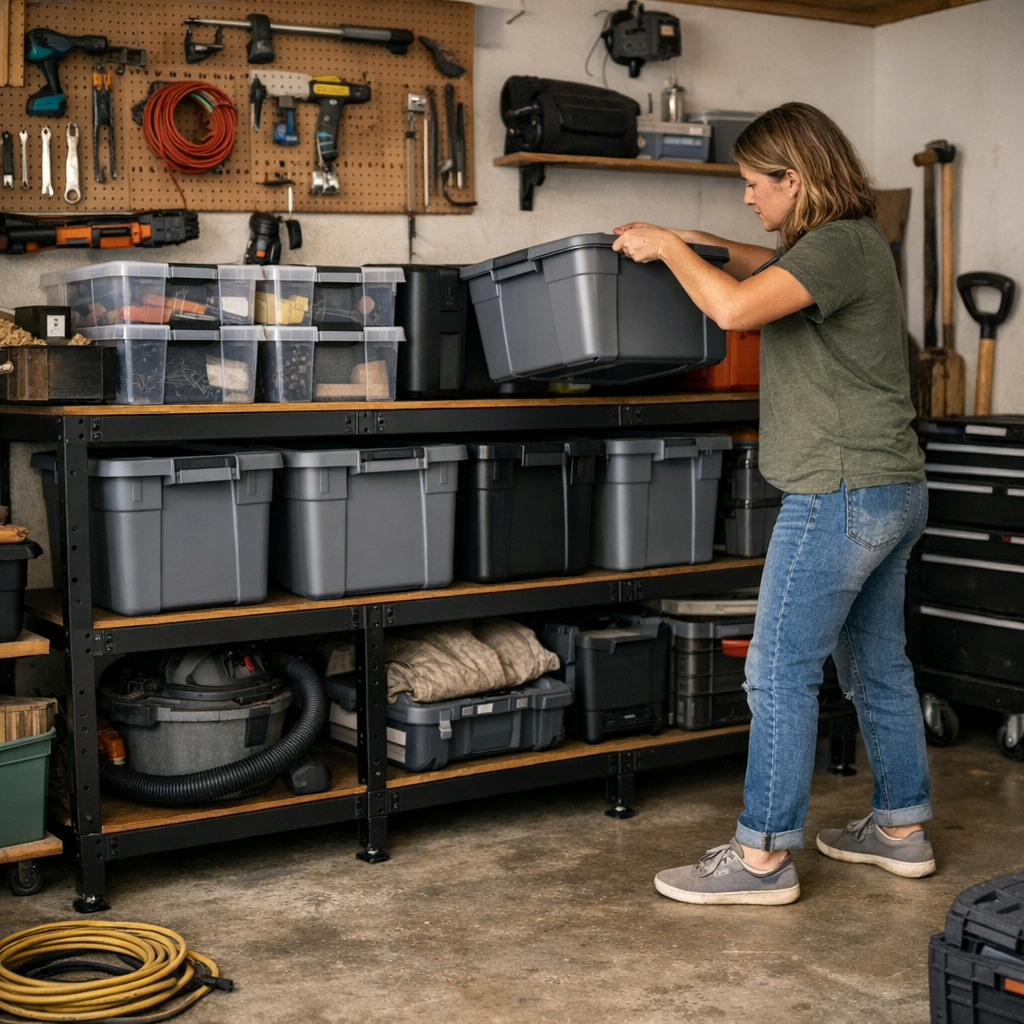
  • Why Ground-Level Storage Slows Your Workflow and How to Fix It

    The comfort of floor storage is always temporary. At first glance, the bins along your garage wall or the crates at the edge of the workshop look deliberate—labels crisp, floors swept, everything lined up for action. It’s a transformation you notice immediately. But by Wednesday, those same neat lines force a slow shuffle: bending for the lower bin, shoving a stack aside to reach the bucket underneath, inching a cart just to clear a path. That sense of control unravels every time you hunt for a tool or make space for the next project. The system that’s supposed to keep you moving quietly becomes what stalls you mid-routine.

    Order That Only Holds on the Surface

    There’s a crucial gap between storage that fits the room and storage that fits the way you actually use the room. Floor-based rows of bins deliver a sharp first impression—until repeated grabbing, returning, and shifting churns that order into a daily obstacle course. The slip is so subtle you hardly notice it at first: ducking beneath a low shelf, sliding a bin a few inches, leaving one out “for now” because the next job is coming up fast. But these small detours pile up fast. Before you know it, the bin by the door is always askew, and your main pathway is a zigzag around another stack growing in the corner. What looked efficiently stored now shapes how—sometimes even whether—you get the job done.

    The Cumulative Drag of Repeated Moves

    Picture unloading new supplies midweek. The intention: quick, easy access. The reality: bins edge-to-edge, barely enough room to wedge in another container. An open box half-blocks the entrance. Your first project is now a slow step-and-shift routine—buckets moved, bins nudged, hunting for a part that’s buried under last project’s leftovers. Each week, categories blur as labels land on the wrong bin, and the top layer becomes a precarious stack that dares you to pull from the bottom. Over time, “organized” becomes an endurance test of stacking, restacking, and working around your own system.

    Blocked Paths, Dead Corners, and the Hidden Cost

    The breakdown happens quietly, away from that first-day order. It’s not a pileup overnight—it’s a space that loses its flow, task by task. The cart doesn’t go back where it belongs because bins block the route. Wall space below knee level fills with storage, but above it, nothing is usable; gear overflows into empty corners that were supposed to stay clear. Floor bins—once a tidy grid—become a real-life Tetris: bump one, and the others shift off-mark. Now the space isn’t flexible, it’s stuck—forcing improvised piles, awkward detours, and a pattern of always working around clutter instead of clearing it.

    Everyday Friction, In Practice

    • You try to grab a drill at the back—but two bins and a cart are blocking access, so you pull out half the row, only to put them all back minutes later.
    • Resetting for the next project means balancing stacks, hoping the lid stays on. An accidental shove and it all slides off-mark—again.
    • That simple evening repair takes longer; the path you cleared last weekend is now blocked by an overflow bin from Monday.
    • You realize you’re carving out more time managing storage than working on the project itself.

    Why Real Routines Outpace Floor Storage

    If your bins store holiday décor or untouched archives, floor setups work for a time. But day-in, day-out use—gardening, repairs, the workbench routine—reveals the friction fast. More bending to dig beneath the last stack. More detours when a cart or hose blocks the “main” route. Tools and parts never quite make it back to their slot, so categories blur; overflow bins migrate from one zone to another, turning spatial order into a moving target. In setups with any real rotation, the footprint that looks organized on Sunday becomes the slow-down you dodge all week long.

    When Visual Order Becomes Practical Disorder

    You don’t notice efficiency slipping away until it’s gone. Suddenly, every retrieval has its own obstacle course: stepping over the end of a bin line, twisting around an out-of-place cart, bending and re-stacking more often than actually using what’s stored. The path is “clear” only if you’re willing to rework it—so you start avoiding certain supplies, or stacking odds and ends elsewhere “just for now.” What was meant to speed up projects now eats up whole afternoons with routine shuffling just to restore that illusion of order.

    The Game-Changer: Lifting Storage Off the Floor

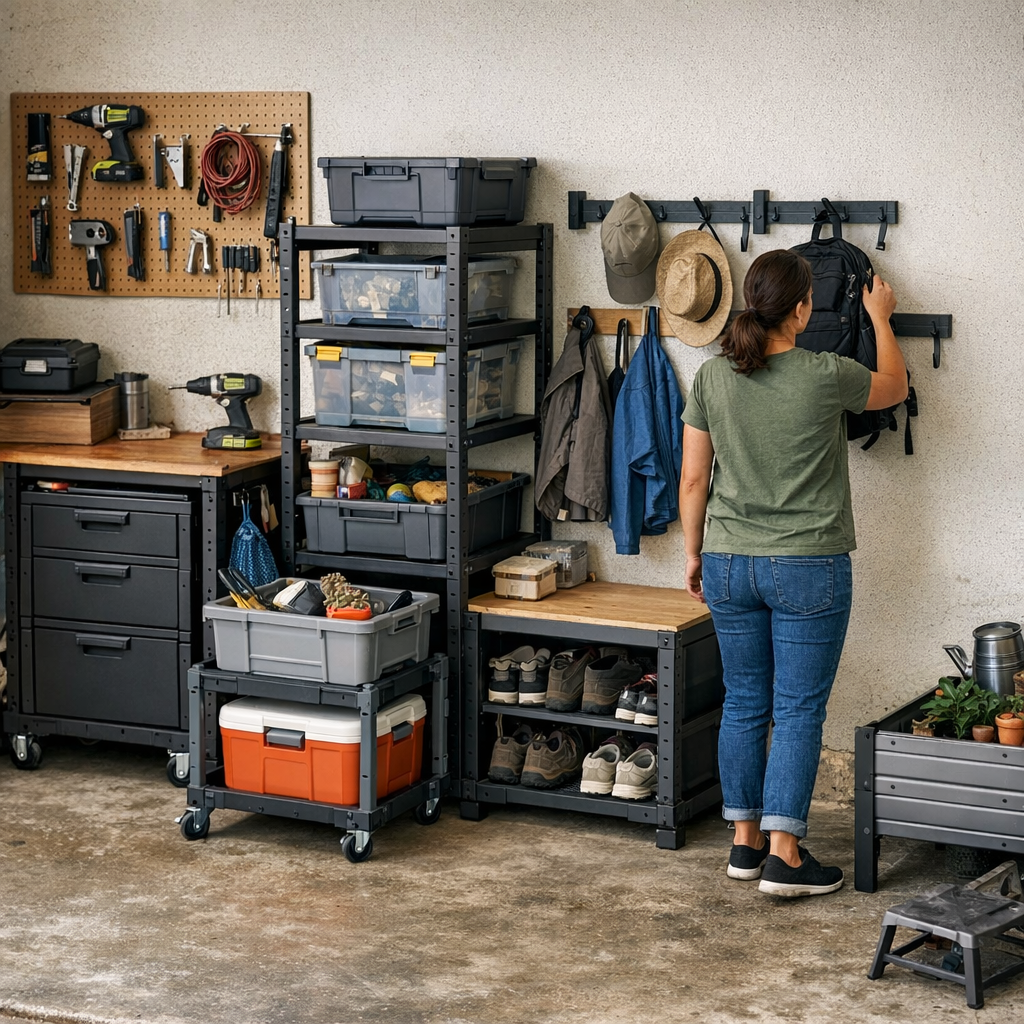
    In one garage, the breakthrough came not from buying more bins, but from lifting storage a modest six inches off the floor. Suddenly the daily bends, shuffles, and stumbles faded. Carts rolled cleanly underneath, aisles stayed open, and bins became easy to access—no toppling, no triple-stack, no detours needed. Without adding a single square foot, the difference in everyday movement was immediate: the setup actually encouraged order to last, not unravel.

    This isn’t magic—just a smarter use of space. No more sliding boxes to get the one you need. No more dead spots in the corners. Cleaning up stopped being a full-on production; it became a two-minute reset. You could finally see and reach everything in one step. The whole footprint performed more like an active workspace—and less like a storage unit you dreaded sorting.

    Four Ways to Quiet the Daily Friction

    • Break the stack habit: Store bins in a single layer. Toppling, digging, restacking—it all disappears. Need something? One move. Done.
    • Lift with intention: A low platform or modular shelf means rollers fit beneath, bins pull out fast, and you’ll stop using open floor as overflow parking.
    • Spot the overtime signals: If you’re bending, shoving, or re-sorting bins more often, your setup’s overdue for a rethink. The moment it slows you down, change it.
    • Test your reset: Returning things to place shouldn’t feel like a chore. If it does, your system isn’t built for repeat use—fix the pain before it becomes baked into your routine.

    Let the Workspace Move With You

    No setup eliminates all effort. But the right one keeps friction low, even when projects, tools, and routines change. Floor storage might look decisive, but if every return to your garage, workshop, or shed brings a new obstacle or detour—even a small one—the organization is only skin-deep.

    Refining your layout doesn’t demand a total overhaul. Just raising storage, rethinking the footprint, or swapping stacks for modular shelves can flip the routine: no more sidesteps, no more daily blockages, and no more abandoning projects because it’s not worth the reach. If resets feel like a chore or your “organized” area leaves you reshuffling, don’t blame yourself—pivot the setup. Protect your pathways, keep your best gear within arm’s reach, and build a space that actually works with you, not against you.

    Find modular storage solutions built for real-world use at StackNest.