Category: Tools & Workshop

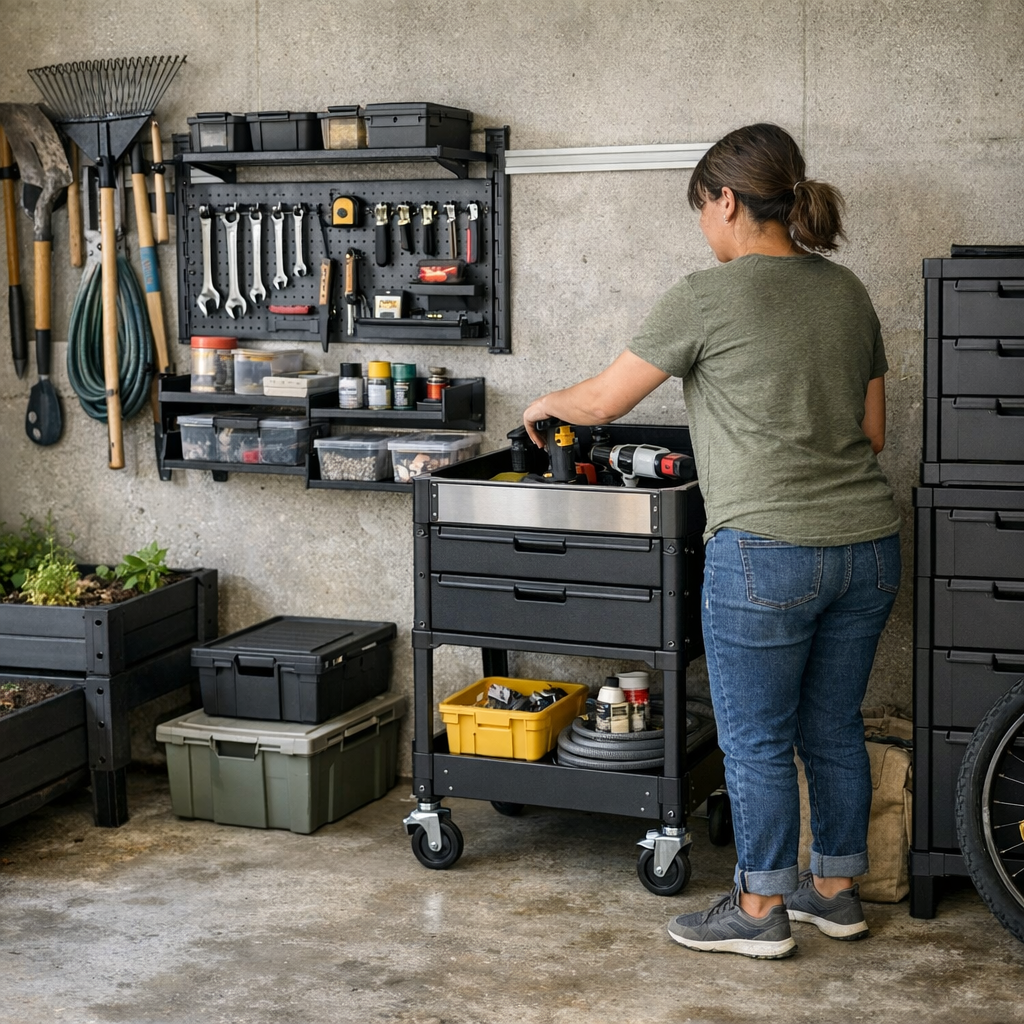
  • How Modular Wall Systems Transform Workshop Flow and Efficiency

    Spaces don’t fall apart overnight. The slow disaster in most garages, workshops, or catchall utility corners happens in plain sight—creeping in, not in a single event, but through routines that quietly bend and crowd the area week after week. Day one, everything feels ordered: gear on wall panels, shelves loaded, tool carts docked, overflow hidden inside cabinets. Then the cracks appear. Carts migrate into footpaths. Tools go missing in their own home. The line between “it fits” and “it flows” becomes clearer with every blocked step and every project you put off just to clear space.

    Why Clutter Isn’t the Real Villain—It’s Friction That Kills Productivity

    It’s easy to judge a setup by its storage capacity, or how peaceful it looks behind closed doors. But in practice, utility isn’t about hiding. It’s about movement—can you reach what you need without a detour, and put it back in seconds without debate? Every extra sidestep adds up. Each time a tool lands “just for now” on the nearest cart or bench, that’s a sign: the system isn’t supporting your routine, it’s subtly getting in the way.

    The friction sneaks up. The once-clear aisle now requires bumping a cart aside just to grab a wrench. Cabinets, originally flush to the wall, block off flow when their doors open into narrow walkways. Simple retrievals become slow dances around corners and obstacles, and resets stretch further out because each return is another mini-task, not a smooth motion.

    When Order on Paper Breaks Down in Real Life

    Blueprints give you “a place for everything.” In daily use, you meet the compromises head-on. Maybe the garden cart “fits” between the mower and the shelving—until you try weaving through with bags of soil, stepping awkwardly or shifting the cart out of the way each time. What should be a passing thought (“I’ll move this later”) turns into a cycle: more items pile up in mismatched zones because putting things back is always slightly more involved than it should be.

    Those micro-hesitations and daily workarounds are signals from your setup. Every time you pause—move a bin, consider where to stash a tool, or let something rest in a “temporary” spot—it’s your system adding resistance. Over time, those small problems lead to a major slowdown. Returning tools becomes a chore, and you catch yourself working around your own layout instead of with it.

    Cabinets, Carts, and Wall Racks—Why Looks Aren’t the Same as Usability

    Closed cabinets and storage chests give that tidy, uniform finish—at a cost. The process to retrieve a tool becomes: walk over, open the door, remember which drawer, dodge around spilled-over carts, and reverse the whole thing just to put it back. It feels functional, but those extra movements eat away at momentum. If every cabinet arc or drawer pull blocks part of your only walkway, the space isn’t working for you.

    Open wall racks and modular panels look messier but tell a different story if they’re tuned right. When hooks actually match your grab-and-go tools, resets shrink to near-zero. Glance up, tools at eye level—done. But overload the panel or ignore your real rhythms, and you’ve just pushed the mess where everyone can see, compounding friction and making resets even trickier.

    Small Shifts That Reshape the Space

    Most improvements aren’t sweeping overhauls—they’re tight, specific moves. Raising a utility rail by 10 inches can clear a crowded bench and put your go-to tools where you naturally reach. Replace low shelves with a single horizontal panel, and suddenly your cart glides through clean space that isn’t blocked by bins or corners. The shift feels physical: no more shuffling, no pausing to reroute. The difference? Resetting the space nearly disappears from your mind because nothing interrupts the flow.

    Keep an eye on dead corners—if a certain spot always collects stray items, it’s likely serving the wrong purpose. Mount a basket or drop in a slim bin right there, and overflow vanishes without fanfare. The best tweaks are subtle, but their effect on daily friction is immediate and ongoing.

    When Routine Struggles Signal a Layout Problem

    You feel it before you see it: tight corridors, carts squeezed out of alignment, that “one spot” where everything lingers on its way elsewhere. Reaching for a tool and finding a stack blocking access is not just a minor hassle—it’s a red flag that the arrangement is piling on extra steps. If you hesitate—or regularly wage small battles to get at what you need—it’s time for a reset, not just more storage.

    Ask yourself: Was yesterday’s clean-up a smooth glide, or a multi-step puzzle? Were you caught moving three things to put away one? If your process is a constant reshuffling act, the system is leaking efficiency and inviting new clutter with every use.

    What Actually Makes a Setup Work—Not Just “Appear” Organized

    Strong setups erase decision fatigue. There’s no sorting, no debate—just reach, use, and put away on autopilot. This isn’t about hiding every tool, but about actually aligning high-use items with open paths, keeping doors and corners clear, and tucking rarely-used supplies into deep-storage zones that don’t disrupt your rhythm. Resets get so quick you stop noticing them.

    Pay attention the next time you’re working—are you thinking about the project, or are you strategizing how to maneuver through the space? The less mental effort spent managing storage, the more productive (and less stressful) your routine becomes.

    Quick Setup Stress Tests and Practical Zone Fixes

    • Reset Timer: Wrap up a regular job and clock how long it takes to return everything. If it’s over a couple minutes or involves repeated shifting, focus on that zone’s layout.
    • Walkway Audit: Stand in the main path—can you cross it without sideways steps or stops? Even a foot-wide cleared lane, gained via wall-mounts, opens the whole space up.
    • Overflow Hotspots: Notice where piles always reappear. Add a grab bin or customized rack right there, so overflow lands where it makes sense rather than choking other areas.
    • Favor Habit Over Hype: Tailor setups around what you actually reach for, not just what looks sharp in a catalog. If the system can’t flex with your routines, no amount of sleekness will fix the friction.

    Forget aiming for a space that’s just “organized.” Focus on a setup where moving, grabbing, and putting things back is frictionless—where nothing blocks your rhythm and overflow stops piling up in dead corners. The reward isn’t just a cleaner look; it’s reclaiming the time and mental bandwidth lost to constant rearranging and reset delays.

    Explore modular storage and organization solutions at StackNest
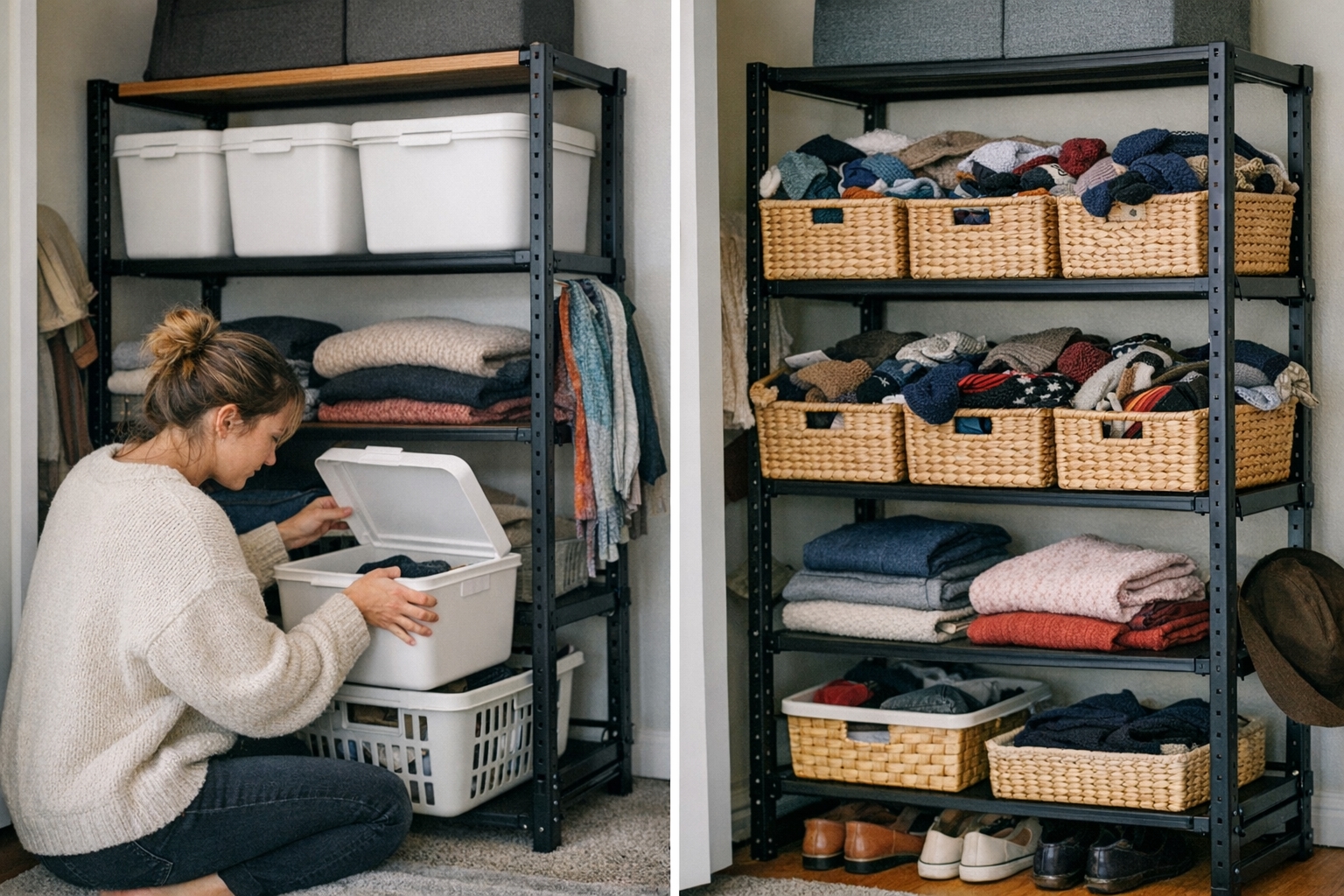
  • Choosing Between Bins and Baskets for Closet Shelving Efficiency

    That moment you open the closet in a rush—missing glove, vanishing scarf, socks buried under yesterday’s T-shirts—the frustration isn’t a lack of containers. It’s the daily shuffle: reaching, rummaging, moving piles just to get one thing. Bins and baskets promise order, but the mess reappears—just in new disguises. The right container isn’t about matching labels; it’s about stopping the morning hunt before it starts.

    At First, Everything Looks Tidy—Then Real Life Moves In

    The day you line up bins or baskets, your closet looks transformed: straight rows, clean corners, a sense of new possibility. Maybe for a week, the surface stays calm. But the routines—the pre-work scramble, kids running late, laundry day resets—reveal the weak spots no catalog photo shows. One shelf turns crowded, items spill between zones, and you’re back to digging for what you need.

    Bins: Tidy Facade, Hidden Headaches

    Beneath the smooth surface, bins turn every small retrieval into a hassle. Lids off, bins stacked, categories blurred—half your morning goes to searching for that one short-sleeved shirt or pair of gloves. Smaller items drown at the bottom, while new laundry gets squashed on top “just for now.” Trying to pull one thing means reshuffling the rest. Shelves look organized, but inside chaos quietly spreads. The more you try to “contain” the mess, the more you lose track of what’s buried where.

    The Repeated Scene: Dig, Dump, Delay

    Imagine school drop-off in ten minutes. You reach for the labeled “winter gear” bin, but everything you need is at the bottom. Scarves and hats blend together; yesterday’s lost mitten surfaces only after two layers come out. Soon, lids stay off and new piles form in front, defeating the original system. Look closely, and you’ll see: the more you hide for neatness, the more you end up repeating the same search every week.

    Baskets: Quick Access, Category Creep

    Baskets make grabbing what you see easier, but they can’t keep boundaries in place when the week takes over. You spot socks or sunscreen instantly, avoiding the full-bin search. But baskets with open sides or no dividers let items migrate—scarves slide over, toys mix with shoes, sunglasses get lost under hats. Use the shelf a few times, and your careful categories start merging in plain view.

    The Pile-Up: When Boundaries Disappear

    That basket meant for belts? A week later, pacifiers, headbands, and old receipts are mixed in. Every open-top solution starts as a shortcut, but the shortcut quickly collapses into a heap when life gets busy. Sure, nothing is hidden—but now the shelf always looks like it’s mid-cleanup, never finished.

    What Happens When It’s Time to Reset?

    The difference between a workable system and wasted shelf space shows during real resets, when you actually have to put things away—fast. If you find yourself sighing at the idea of restacking, opening lids, or separating jumbled items after laundry or a late-night cleanup, the container isn’t helping. Bins can create “dead zones”—places you never reach for because it’s too much work. Baskets can become overflow traps, with small items breaking the system’s boundaries. Both stall progress for one reason: access is never as easy as it looks.

    How Long Does “Put Away” Take in Your Closet?

    A closet only works if resets fit real-life energy levels. After switching to mid-sized, solid-sided baskets—nothing too high, nothing too open—reset time changed from multi-step chore to one motion: grab, drop, done. No more hunting for lost pairs, no more refolding. One decision—better basket shape—cuts the constant cycle of fix, mess, repeat. You start trusting the shelf to keep its role, instead of treating it like a zone of constant repair.

    Kids, Categories, and the Chain Reaction

    Let kids loose with baskets, and you’ll watch their cleanup habits unravel after a single sleepover—matchbox cars in with hats, Legos hiding under books. Bins, on the other hand, turn into black holes where no one—adult or child—remembers what went where. Either way, the “organized” look falls apart as soon as busy life intervenes. Rushed weeks, last-minute packing, seasons changing—all multiply the drift away from the system you set up.

    Where Do Items Drift During the Week?

    Yesterday’s clean pile becomes today’s mixed stack. Towels blend with T-shirts, accessories scatter into new territory. If your shelves aren’t guiding you—if you find yourself always “fixing” categories or digging out missing things—your container choice is working against your routines, not with them. And the busier the schedule, the faster the shelf dissolves into disorder.

    Spotting Where the Real Friction Lives

    This isn’t about bins versus baskets—it’s about finding out where storage breaks down for your family. Is the frustration hiding in things you can’t see, or in the categories that won’t stay put? Do you avoid tidying up because it takes too many steps, or because your shelves don’t actually hold boundaries? The repeat pain point signals the true fix—not a label, but a gentle change in structure that matches your habits.

    Try this: Swap one cluttered shelf for mid-height, solid-sided baskets—just for a week. Track how fast you put items away and how often you have to dig or redo a category. If the reset gets easier—and the shelf stays orderly with less fuss—you’ve found the right fit. If not, shift again. Storage is never “done.” It’s about making what’s visible stay useful, not just neat on day one.

    Don’t Just Store—Set Up Shelves You Can Live With

    Your closet is a living space, not a frozen photo. Every shelf is a test of your real habits—how fast you can reach, reset, and keep like with like, even on messy days. Bins can turn shelves into lost & founds. Baskets can turn into pile zones. The best system is the one you barely notice each day, because it matches how you actually move, reach, and reset. Watch the friction points—then don’t be afraid to try an upgrade, even if it’s just one basket at a time. A closet that works is about less hunting, less fixing, and more space actually working quietly in your real life.

    http://closetworks.myshopify.com

  • Preventing Nail Blowout in Softwood by Adjusting Nail Size and Pressure

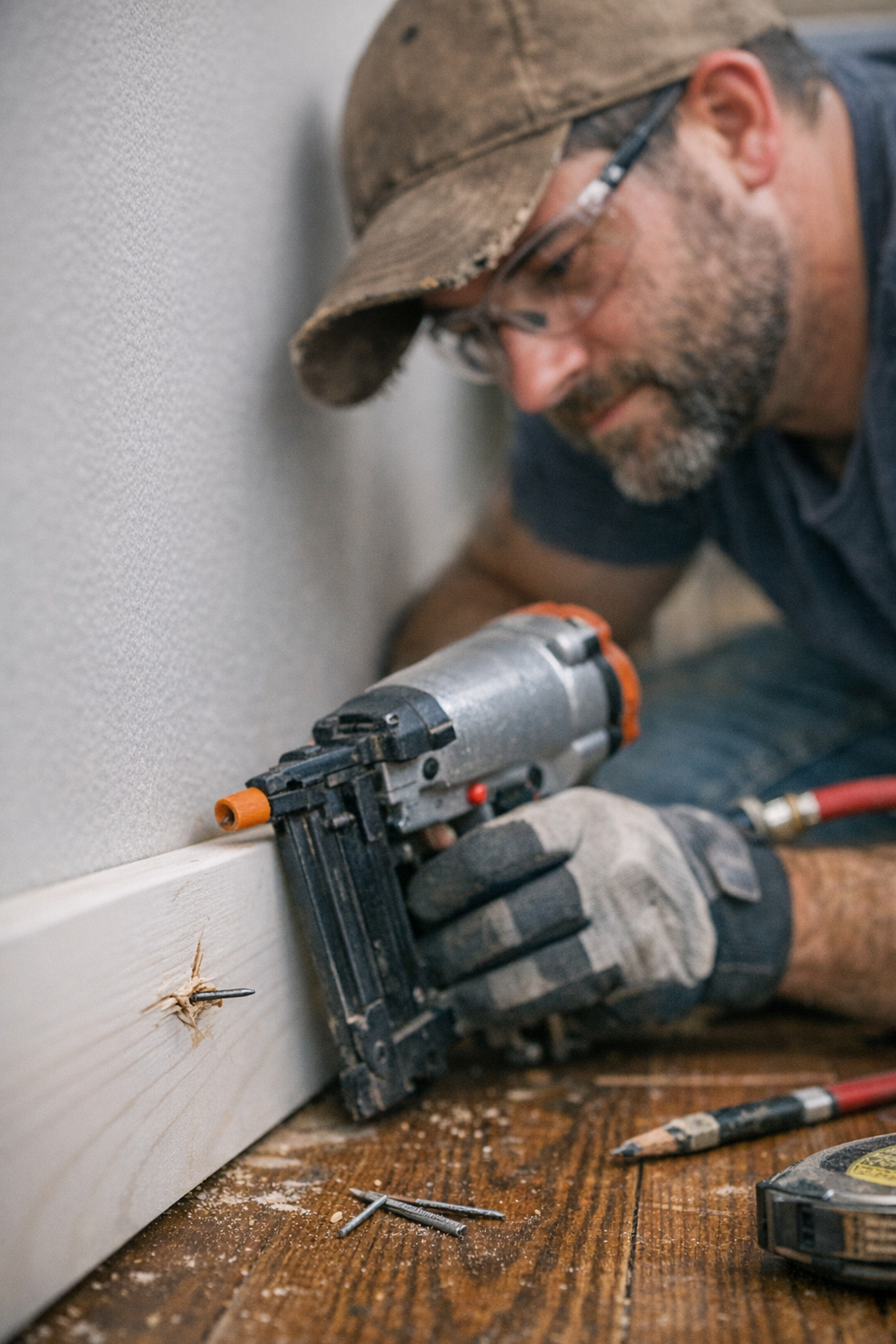
    You rarely hear nail blowout coming—it’s the kind of trouble that sneaks up in the blur of a real job. One minute, every fastener is landing flush and hidden; the next, your finger brushes a hairline split, or a nail head winks out from a stretch of pine baseboard that’s supposed to look finished. These aren’t catastrophic misses—they’re the slow leaks that drain time and patience, especially when the day’s goal is to get the trim installed and move on.

    The warning signs are almost invisible at first: a slight vibration through the glove, a little more resistance on the trigger, or a surface that suddenly doesn’t feel as smooth under your hand. But push through, try to keep pace, and it adds up fast—cracked casing, wandering fasteners, and a patchwork of filler spots you’ll end up chasing long after the nailer’s been put down. That’s the softwood fight every pro and weekend remodeler recognizes: a rhythm interrupted by tool drift and the unforgiving nature of pine and poplar, where soft grains amplify every small slip.

    Why Nail Blowout Happens—And Why Softwood Fights Back

    Most nailers impress during the first careful passes. Sink a 16-gauge nail into clean, straight pine, and you’ll get a satisfying bite—so long as you’re slow. But real work isn’t slow. It’s pushing through awkward corners, reaching across stair treads, working around furniture that should’ve been moved first. What you chose—a brad or finish nail, a 16-gauge or lighter 18—suddenly matters when your arms are tired and you’re firing to keep the day moving.

    The real enemy isn’t the wood, it’s the gradual mismatch between what the tool is doing and what the material needs. Every bump of the nosepiece, every unnoticed notch on the depth dial, every hour your grip wears out—all these shift you closer to a missed seat or an ugly split. And the softer the wood, the more those imperfections grow.

    Tool Settings and Fastener Choice: The Errors That Sneak Up

    Jobs rarely get wrecked by big mistakes. Instead, it’s a rolling series of small mismatches that creep in. Nailer settings drift. Pressure jumps five PSI high after a compressor cycle. The fastener feels “right enough” until it isn’t—too thick, too long, or just a hair too aggressive for thin trim or patchy pine.

    Production speed only makes the problem worse. What started as perfect becomes a spatter of repair zones—filled holes and feathered cracks—halfway through the wall before you even notice. And by then, the only options are sanding, patching, or retracing your steps row by row.

    Real-World Example: Where the Weak Link Shows First

    Picture the end of a long day: you’re knocking out baseboards in a cold mudroom, last light slipping through the window, compressor kicking underfoot. The boards start crisp. By the twelfth panel, your grip’s off, the tool’s heavier, and surface resistance flickers in your wrist. You work ahead of your own inspection. It’s not until a hand-sweep at the end that you notice the raised seams—evidence of tiny blowouts that snuck past in the push for speed.

    The fix wasn’t changing brands or models. It was dialing back pressure, swapping a 16-gauge for an 18, rechecking angle and approach, and—just as crucial—building in quick checks. With the right tweaks, repair time drops. The workflow evens out. You keep momentum, because you’re no longer stopping to fix what you just finished.

    Nail Blowout Anatomy: Technique Versus Tool Limits

    Most blowouts trace back to where method and material lose sync. The usual suspects:

    • Nails too thick for the board’s give
    • Fasteners fired too close to the edge or directly along grain lines
    • Depth or pressure cranked too high, sending nails through instead of seating flush

    Working faster only piles on error. Skip one flush check, and the small mistakes multiply. The end result: the last board needs twice the patching as the first.

    Smart Course Corrections in Real Time

    Softwoods are unpredictable. Two pine boards, same batch, can behave differently. The setting that’s perfect on the left wall can blow right through on the right. A quick check every handful of boards—feel the surface, inspect the seat—pays back an hour you’d lose to fixing missed blowouts. Pausing isn’t wasted time when it dodges a bigger fix later.

    Angles, Grain Direction, and How Blowouts Happen Anyway

    Firing straight in is easier, but it’s also how splits happen—especially on edge or with cheap trim. Tipping the tool, even a little, lets the nail ride the grain, not fight it. And when you cross knots or hit denser streaks, watch for deflection—a previously invisible brad can veer off, ruin a face, or pop out the side before you even see it coming. Staying alert, switching your approach, and never relying solely on muscle memory keeps the repair pile down.

    Work tip worth repeating: If your nailer kicks or the trigger feels odd mid-run, don’t just press ahead. Stop and look at what just happened. That’s often all the warning you get before a pattern of splits starts, either from a drifting setting or a subtle change in the material.

    Stopping Patchwork Before It Starts: Routine, Not Perfection

    Most blowouts can be contained—if you spot the pattern fast enough. It’s when tiny failures start multiplying up and down the run that sanding and filler take over your evening. Build small habits into your workflow: drag a palm along each stretch of new trim, rest your eye on the seam, and reset before minor issues get out of hand.

    You’re not aiming for showroom perfection on every board. The real win is steady progress and catching tool drift before it becomes another hour lost to patching. When your settings, nail choice, and angle align with the wood in front of you, you finish faster and with less waste—and the job stands up when someone inevitably runs a finger along that seam months down the line.

    For more work-tested tools and accessories that keep daily fastening, sanding, and cutting on track (even when the job throws you curves), visit Gumboll.

  • Streamlining Small Workspaces: How Fewer Storage Zones Boost Efficiency

    A garage, shed, or crowded backyard corner can look perfectly dialed in—hooks loaded, rails filled, bins lined up like a catalog photo—and still throw you off every time you try to actually get something done. The initial setup lures you in with false confidence: tools have a slot, nothing is underfoot, and best of all, every system claims it’ll flex to your workflow. But that “everything in its place” feeling never lasts long. The real test isn’t on setup day—it’s in the grind of a normal week, when setups get stressed, paths fill up, and routines hit friction you never planned for.

    When “All-in” Storage Grinds Your Workflow

    The impulse is universal—if there’s empty wall or floor, fill it. Mount another rack. Add a rolling cart. Hang another row of hooks. Pretty soon, every foot of space gets drafted into storage duty and things still feel organized—until you’re mid-project and need to return the drill, but the shelf is blocked by a bin you have to move first. Or you go for a screwdriver, only to play a five-second search game because the right one is hidden among tools you use once a year.

    • Paths that started open fill with the awkward drift of carts and bins
    • Grabbing a box of screws means tugging out three other containers first
    • “Flexible” carts set in the perfect spot… until you need to squeeze past them every half-hour

    What looks maximally organized is often maximally inconvenient when you’re in the middle of a normal work loop.

    Access Erodes, Movement Slows

    This breakdown is slow, but unmistakable. Suddenly, returning tools just means choreographing a series of nudges, slides, and shuffles. The rolling cart—supposed to be mobile—camped out for days because it has nowhere else to live. That “handy” back corner? It’s an overflow graveyard—not from laziness, but because there’s no painless way to put anything there, so things pile up instead. Wall hooks become a jumble, their promise of visibility and quick access replaced by a tangle of odd-angle clamps, rarely used hardware, and the things you actually need buried in between.

    For most people, the friction shows up like this:

    • Reshuffling bins one more time, just to finish a small task
    • Walking an awkward loop around a cabinet corner—again—to put away a tool
    • Giving up and leaving things out instead of forcing another round of rearrangement

    It doesn’t feel like outright clutter. Instead, it’s constant interruption—a setup that organizes everything, but never quite lets your routine move freely.

    Clearing the Logjam: Fewer, Focused Zones

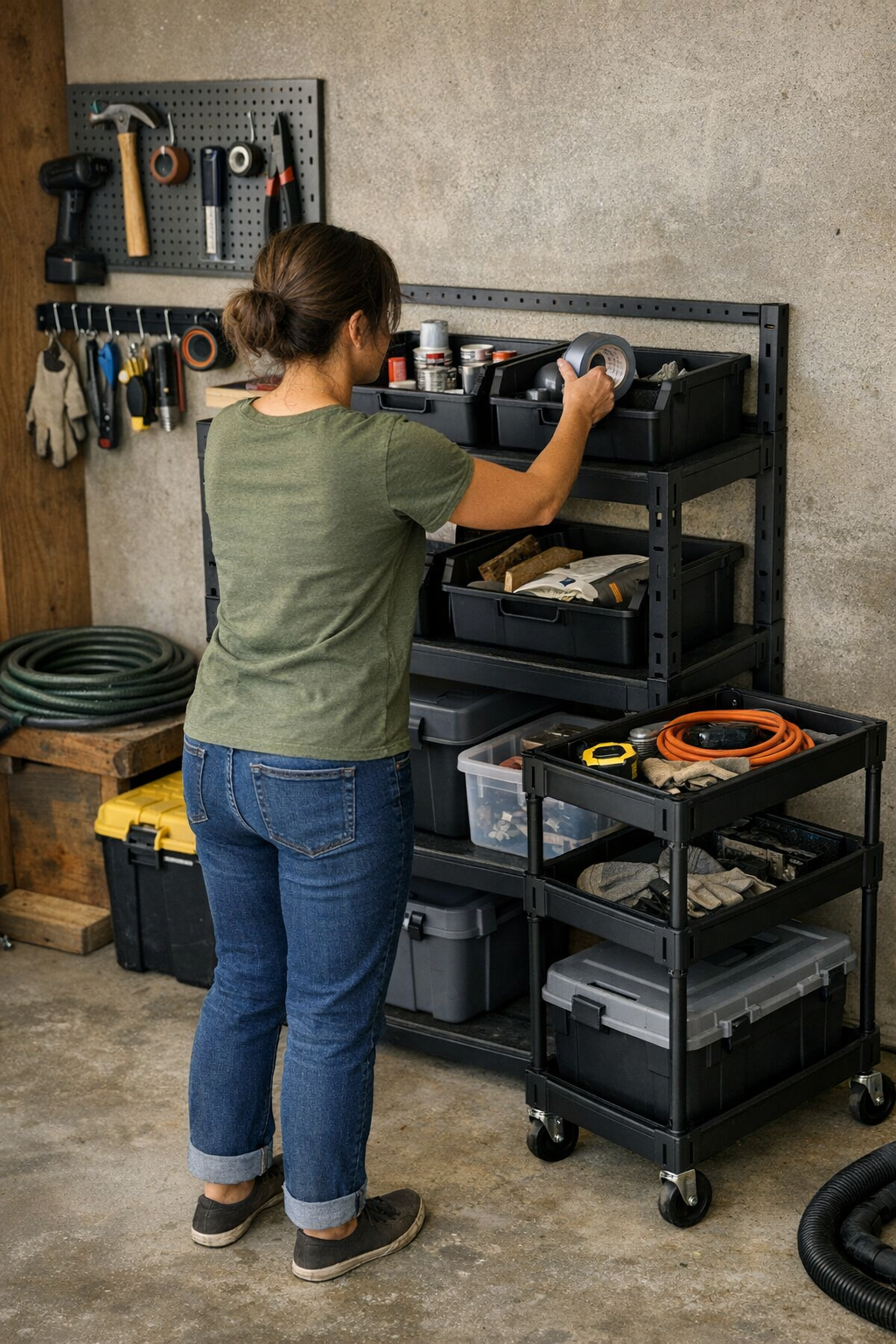
    The fix isn’t minimalism for its own sake—it’s finding the minimum number of storage zones that truly support how you use the space. In one real-world trial, three modular shelves and a rolling cart became just two shelves, with the cart pulled in only for big, messy projects.

    • The previously blocked bottom shelf was open and ready to use every day
    • Tool returns stopped feeling like a traffic puzzle
    • That narrow corridor across the floor stayed wholly walkable—even at the week’s end

    This isn’t about stripping down for the optics. It’s about matching the setup to the actual rhythm of grabbing, using, and returning your most-used gear—so resets happen fast, and regular movement stays smooth. The difference is clear: instead of fighting to get things back “in place,” the system falls away. That kind of frictionless reset never shows up in before-and-after snapshots, but it’s instantly felt during a real run of projects.

    Warning Signs: When “Organized” Tips Into Overbuilt

    How can you tell if you’ve crossed the line from plenty to too much? Look for these friction points:

    • You pause, eyeing a shelf, anticipating a shuffle before you can put anything away
    • Your hand automatically moves the same cart—over and over—just to grab basics
    • Corners accumulate half-finished returns because you skipped the return entirely
    • Walkways shrink a little more each cycle, feeling tighter by the week

    When setups start creating these small hurdles, they’re making routines harder, not smoother. The best test isn’t a tidy shelf right after a cleanup, but the speed and ease of a reset at the messiest point between tasks.

    Choosing Wall vs. Floor: How Access Eats Storage Space

    Wall-mounted systems score points in theory—freeing up floor, “putting vertical space to work.” But overload the rail and every retrieval becomes a tangle: you unhook four tools to get the fifth. On the floor, big chests and carts give you instant stowaway spots—but in cramped aisles and busy shops, they swallow up movement space and park themselves right in your way. Leaner wall zones and one truly functional chest routinely beat a landscape of carts and tacked-on bins.

    The Real Cost of “Just in Case” Add-Ons

    We all justify the extra tray (for rare hardware), the bonus bin (for off-season stuff), or the wall hook ready “just in case.” Problem is, those add-ons guarantee fresh clutter. Soon enough, the question isn’t “where did I put that?” but “where can I even put this?” The workspace you perfected in the opening stretch quietly drifts back to blocked aisles, overflow corners, and a permanent game of storage Tetris.

    Resetting Without the Strain: Clarity, Not Just Containment

    What actually works isn’t maximizing storage—it’s minimizing the struggle. The strongest setups make it easy to return, grab, and reset—no matter how many projects cycle through in a week. Over time, friction shrinks: you move without steering carts, dodging corners, or playing musical chairs with bins. The gold standard is almost invisible: your storage disappears into the routine, barely noticed, because it never slows you down.

    Real-World Tip: Build in a Buffer Zone

    Every functional shop—big or small—needs a soft landing for projects in progress, sudden influxes, or stuff you’re not ready to put away yet. Reserve a single open shelf, a dedicated tray, or room for a small cart that isn’t always active—just fills up when needed. That buffer becomes controlled chaos, keeping your primary zones unblocked and your daily routine flowing. No more endless reshuffling; just one sweep and you’re back to clear movement.

    “Perfect” Isn’t the Point: Function Outlasts First Impressions

    The setup that wins isn’t the one that looks flawless in a photo. After days of busy, repetitive use, only the systems tuned to real work patterns survive without drifting into chaos. The difference isn’t in how packed your storage looks—but in how quickly you can reclaim order and keep tools in motion. In the end, an organized space shouldn’t get in the way. It should all but disappear behind the rhythm of your routine—leaving you free to get things done, again and again, without restarting from scratch.

    Visit StackNest for practical storage systems that make real spaces easier to use.

  • Choosing Between Shelf Dividers and Storage Bins for Closet Order

    Nothing drags down a bedroom routine faster than stumbling through your own closet. A row of sweaters sliding into chaos, stacks collapsing by Wednesday, bins packed with who-knows-what—it’s these daily micro-frustrations that quietly decide whether your closet is a real help or a hidden stress. Sure, shelf dividers and storage bins both promise an “organized” look on day one. But the real proof comes after seven days of rushed mornings, reused jeans, and laundry piles that never quite reset the same way twice. This isn’t just about tidiness—it’s how your closet holds up to constant, unpredictable use.

    Closet Order That Survives: Why Setup Is Everything

    At first, any shelf can look tidy. But after a few hectic mornings—when you’re reaching past one shirt for another or tugging at the stack for your go-to sweater—neat lines slide and mixes creep in. Shelf dividers and bins both claim to bring order, yet each brings its own headaches. Their weak spots don’t show until you’re actually living with the system, not just admiring it post-organize.

    Shelf dividers promise clarity: jeans start here, knits belong there, dress shirts have their own turf. But as soon as someone grabs from the middle or shoves in a fresh pile without care, those zones blur. Stacks flatten or tip sideways, the boundary fades, and suddenly you’re hunting for socks in a slope of T-shirts. Dividers slow down the chaos, but unless you refold like a machine, stacks will stray.

    Bins contain, but at a price. They hide mess out of sight—for a while. Accessories, keepsakes, and off-season hats stay put, but finding one thing means digging through all of it. Bins absorb clutter, yet make it easy to lose track of what’s inside. Each hurried search upends yesterday’s careful sorting, and soon you’re stacking odds and ends on top “just for now.”

    Where Closets Fall Apart: Daily Friction Points

    Shelf Dividers: The Lean, the Drift, the Disappearing Zones

    Picture laundry day. Stacks return, each within its divider’s slot. By midweek, reality hits: you’re in a hurry, reaching for something at the bottom. Stacks shift, sleeves sneak into neighboring piles, and by the time you need that favorite top, the divider’s just marking where order once was. When shelves are too crowded, every tug threatens the whole row—dividers become little more than speed bumps.

    Bins: Where “Sorted” Turns Into “Somewhere in There”

    Move up a shelf—neat, matching bins look like control. But after a few days, the search begins: gloves, scarves, belts, memorabilia, all in one bin. Pulling out what you need means upending everything above it. Bins that once created calm now become landfills for whatever doesn’t have a home. If you’re forced to unstack bins or rearrange two just to access the third, the process starts to feel less like storing and more like shuffling.

    The danger? Overflow migrates fast—when it’s easier to dump than to dig, the “temporary” piles grow on dressers, floors, any surface nearby until your closet’s chaos seeps into the whole room.

    The Core Tradeoff: Access Versus Containment

    What do you need more: quick visibility or tight control? Shelf dividers are perfect for clothing you use daily and want to see at a glance—think shirts or jeans you grab from the front. When you only pick from the top, dividers usually hold the system together. But with slippery knits or bulging sweatshirts, stacks never keep their shape for long, and every reach disrupts the equilibrium.

    Bins, on the other hand, conquer sprawl—nothing falls off the shelf and the mess stays disguised. But every time you need something specific, you’re slowing yourself down: pull out the bin, rummage, repack, and play Tetris to fit everything back in. The more a bin is used, the more its contents tangle. Suddenly “organized” just means “out of sight.”

    The real solution is smarter mixing: use dividers for high-frequency clothing you reach for most, with a little breathing room between each section. Turn to bins for the items you pull less often—off-season gear, mementos, spare accessories—and keep those bins higher up or out of the main traffic lane. This way, essentials remain open and easy, while only the real “clutter catchers” get sealed away.

    Storage in Action: A Week Inside Your Closet

    Morning Rush: The Hidden Costs of “Almost Organized”

    Rushed weekday mornings have no patience for a fragile system. You’re reaching for a specific shirt—blocked by a leaning heap. Forced to restack, you mutter about whoever last shoved things back carelessly. Within days, what started as “work shirts here, weekend shirts there” devolves into a single mess stuffed wherever space appears. Instead of saving time, the dividers now mean an extra step to access anything buried in the back.

    Laundry Day: The Make-or-Break Reset

    Come laundry night, the trap of mystery bins is clear. Bins labeled “accessories” turn out to be a medley: gloves, spare hangers, a mismatched sock, that winter hat you forgot you owned. The quick reset you wanted becomes half an hour of sorting—and a temptation to just toss everything back and hope for the best, knowing you’ll dig for it later anyway.

    Small Shifts, Real Results: How to Keep Order Alive

    Build in slack—not just separation. Give two inches (or more) between stacks under each divider. Crowding kills organization fast; just a little space lets you grab what you need without wrecking the row.

    Keep daily clothing in open territory. Stash bins up high or in deeper shelves, but let the items you use all the time stay visible and in reach. Label bins, or pick clear ones, so you know what’s lost inside before you dig.

    Never treat bins and dividers as rivals—combine them on purpose. Dividers corral your everyday wear, while bins capture what you only touch occasionally. Always leave a gap between the two systems on each shelf. The boundary is what makes category separation stick, and what saves you from “re-sorting” the same things week after week.

    What True Closet Organization Actually Looks Like

    Anyone can make a closet look neat for a day. But true progress shows itself in the messy moments: when you grab what you need without shifting everything; when resetting after laundry is a five-minute job, not an hour-long slog; when dresser tops and bedroom corners stop collecting the items your closet should handle. The real victory isn’t how your closet photographs, but how much smoother your daily routine feels.

    No system fits everyone the same. The right balance of dividers and bins depends on your habits, your space, and whether you want to spend your evenings organizing or actually living. If you find yourself reshuffling the same stacks, or fishing through bins for things you can’t see, don’t be afraid to tweak—sometimes a little more space, or one bin swapped for an open slot, is the difference between ongoing frustration and a closet that finally works for you.

    Shop ClosetWorks for practical storage solutions that fit your daily routines.

  • How Nailer Airflow Design Impacts Precision and Job Efficiency

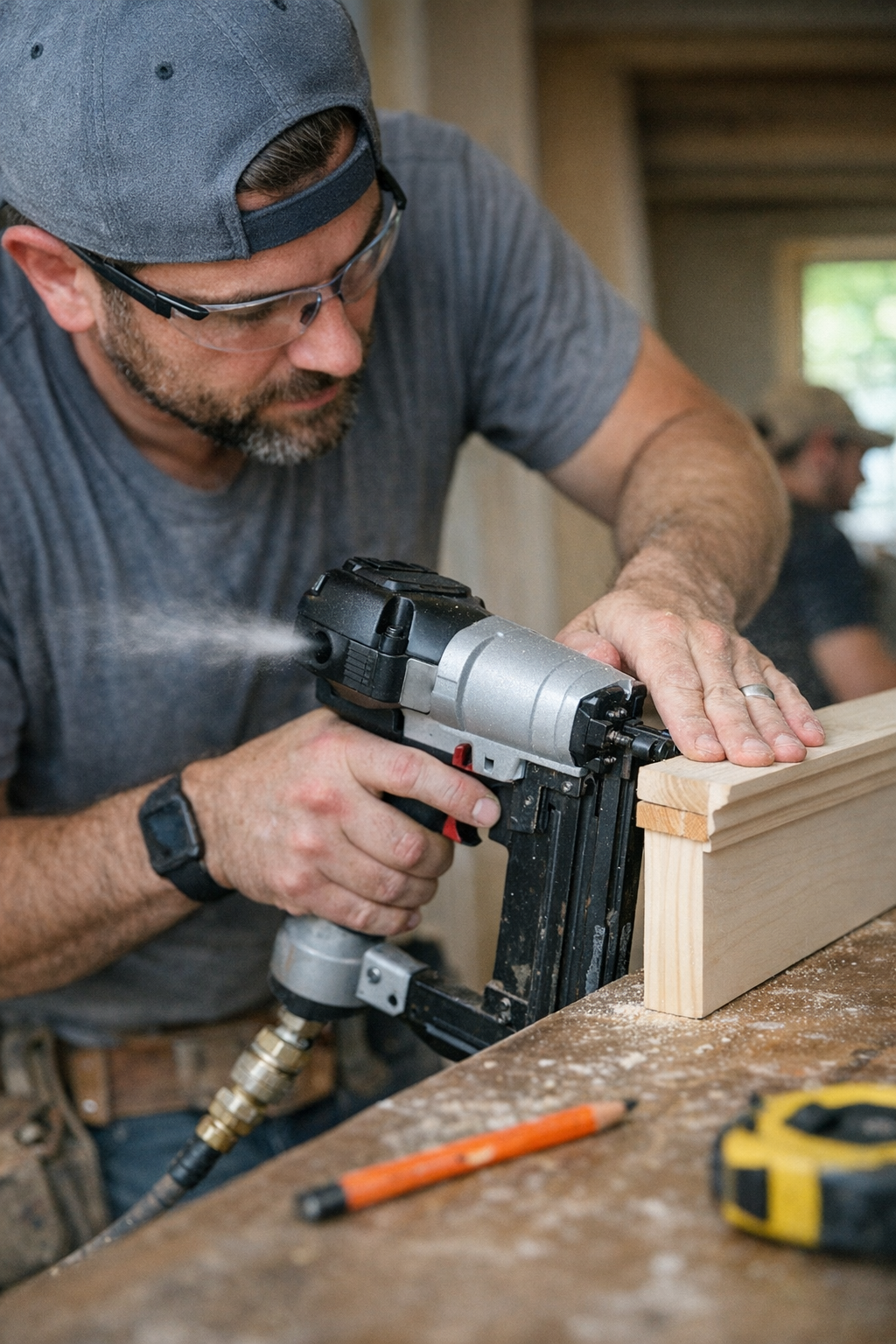
    The first dozen nails never tell the truth. Most pneumatic nailers feel solid for a handful of test shots. Stand at the bench, take your time, everything lines up—no dust, no distractions, crisp trigger, flush nails. But the real test starts when you move from careful samples to a roomful of trim or a string of finish work. Suddenly, every shortcut in the nailer’s airflow design comes back to bite. Dust starts drifting over your marks, every clap of exhaust chips at your focus, and that smooth rhythm gets interrupted as you wipe down your board or squint for lost lines. Tool power and grip only get you so far. In the thick of a job, it’s airflow—the way exhaust moves, where it shoots debris—that separates a tool you trust from one you battle.

    Airflow Missteps: The Slow Build of Friction

    Anyone who’s paused mid-baseboard—wiping away crud, hunting for a buried line—knows airflow design isn’t just engineer trivia. A side exhaust looks harmless on the spec sheet, but real use tells a different story. After fifty quick shots, you’re left with trails of dust peppering your working edge, scratches marring what should have been a clean reveal, a layer of debris clouding the one spot you need clear. Each misplaced blow of air sets off a new chain reaction: more sanding, more touch-ups, more time spent coaxing heads flush instead of moving on to the next room.

    This is the cost that doesn’t show in the specs—the repeated interruption, the minutes lost picking grit out of seams, the creeping frustration as a would-be-efficient nailer becomes one more thing to manage. Even a strong tool, if it spews exhaust in the wrong direction, turns fast finishing into backtracking and edge cleanup.

    Design Over Specs: Where Nailers Actually Differ

    On a shelf, every pneumatic nailer feels like a safe bet. Similar weight, magazine, trigger—nothing obviously wrong. But take them into a real job—where fast repetition and tight grain matter, where flush matters more than fast—and you spot the difference that work crews always notice first. It isn’t the logo or the feel, but how the tool manages what you don’t see: heat, pressure, swirling exhaust.

    Consistency Slips When the Air Blows Wrong

    Try running a side-exhaust nailer through prepped maple trim. The first few nails are fine. By the time you hit the fiftieth, fine dust is clouding every guide mark, bouncing into wet finish, and pushing you to tilt or twist the tool just to see what you’re doing. Each “click” leaves a mess you have to clear before you trust the alignment again. Sometimes proud nail heads creep in, even if your technique hasn’t changed. By late afternoon, you’re not just nailing—you’re cleaning up after the tool itself.

    Swap in a rear-exhaust nailer and the equation changes. Exhaust air shoots behind you, away from the board, your hand, and the finish. The difference? Critical seams stay visible. Flush nails become routine, not a coin toss. You spend less time correcting and more getting clean, repeatable results across the entire run.

    On-Site: Where Bad Airflow Really Costs You

    Picture a long afternoon cut-up with trim and corner joints. By job number seven, you’re juggling precision, fatigue, and a swirl of loose dust. A side-vent nailer guarantees a pattern:

    • Every shot sprays debris onto your marking lines
    • Sections cloud over, pushing you to re-mark as you go
    • You feel the extra heat as exhaust runs down your grip
    • Proud nail heads force extra sanding just to keep up

    Each flaw only takes a second to fix—but they add up. A moment’s wipe, a retouch here, a quick sand there. Before you know it, the momentum of your routine is broken. The line blurs, finish work slows, and what should be a smooth pass turns into a series of tiny cleanups. Not catastrophic, but never as clean as it could be—and never as fast.

    Small Tweaks, Tangible Results

    Retrofitting an exhaust or switching to a rear-vented model isn’t a theory. On a real job—58 nails into 40x10mm maple trim—just shifting the exhaust dropped surface splits to zero and meant every nail set flush on the first try. The grip ran cooler, eyestrain dropped, and cleanup at the end of the day felt almost like skipping a chore. Fewer sanding passes. No mid-job stops to mark over lines lost to dust. Instead of fixing errors, you’re stringing together clean join after clean join. Over a week, those minutes roll up into whole hours reclaimed.

    No miracle—just a series of skipped frustrations and less wasted energy. Veteran crews don’t see this as a luxury; for stacked jobs or detail work, it’s what keeps the work tight even as tiredness closes in.

    Watch for These Airflow Red Flags

    Some signs that airflow is holding you back aren’t loud, but they’re painfully consistent:

    • Tool vibration creeps up every hour you run
    • Nail set becomes unpredictable, especially as the day runs long or the stock gets harder
    • The housing warms up—noticeably—well before the shift ends

    These “little” issues cost you more every time they repeat. What seems like a minor hassle becomes a grind of re-work, repeated fixes, early fatigue. Don’t treat airflow as a brochure buzzword. In the field, it’s the quiet factor that decides whether a nailer helps you finish strong or leaves you sanding out flaws until dinner.

    Endurance on the Line: Why Airflow Rules in the Long Haul

    Magazine size and trigger feel matter, but once the job stretches into hours, airflow becomes the silent differentiator. One nailer stays reliable, each pass just as clean as the first. The other asks more of you with every reload—more pauses, more sanding, more lost focus. On busy floors and jobsite corners, these are the differences that stick—especially when the margin for error vanishes and “close enough” won’t impress anyone at the walk-through.

    Keep it practical: After any hint of surface vibration, uneven nail depth, or excessive body heat from the tool, stop. Clean the vents, test the exhaust direction. That five-minute tune-up is a smarter investment than forty minutes chasing second-rate results with sandpaper and filler.

    Find pneumatic nailers and jobsite tools built for real work at Gumboll.

  • How Standardized Modular Bins Transform Garage Organization and Efficiency

    The truth about “organized” garages is that most never quite work as planned. You haul out every dusty bin, stack them with care, wedge a rolling cart into a corner, and line up shelves like dominoes—sure, it looks tidy on Sunday afternoon. But by Thursday? The cracks show. The ladder is blocked again. Retrieving garden shears means shifting two containers and balancing one lid against your knee so it doesn’t slam shut. Every “grab and go” turns into a cautious shuffle, detouring around a cart that never stays put. The feeling isn’t disaster, but it’s not seamless either. The order you created takes daily hits—adding slow friction that multiplies the more you use the space.

    When tidy falls apart: Where routine meets real-life

    You stand back, see everything “put away,” and call it a win. But a garage that looks organized isn’t the same as one that lets you move freely. The first frustration usually comes fast—a shelf blocks half of the only real walkway, forcing you to squeeze sideways, shoulder to the wall. Bins of different heights don’t nest, so you wind up building awkward stacks in random spots. Every time you need the extension cord from the bottom of the pile, there’s that old routine: stoop, unstack, pull, restack, curse. Feel familiar?

    The daily setup becomes a game of avoidance. That rolling rack you originally parked inside the door now migrates, wedge-like, near the workbench, scraping over uneven concrete. One move always triggers three more: slide the cart, nudge the shelf, shift the scattered bin—just to clear a path. The supposed system starts to feel like a slow-moving obstacle course.

    The slow breakdown of mixed storage

    The rookie move: set up bins, a couple different shelves, a cart for heavy tools, and call it organized. At first, each type of storage promises a purpose—the hardware bin here, painting gear there. But the seams don’t hold. Bins won’t tuck flush against shelves, casters hit cracks and refuse to budge, deep containers hide behind others. Soon, every edge—the dead zone by the back wall, the strip under the window—catches oddball overflow that won’t quite fit anywhere else.

    Every time you return something, you size up the mess. Does this bin fit in the gap beside the rolling rack, or do you wedge it by the freezer, half-blocking the path? Each decision means a little shuffle, a nudge, a small compromise. The “one-time setup” turns into a hundred micro-adjustments that bog you down and blur your original zones into chaos.

    Weekend reality: The garage after real use

    Picture Saturday after a rushed repair or dig in the garden. You’ve pulled out the bin of hand tools, spilled a box of screws on the counter, hauled the rolling cart out to reach your favorite shovel. Now—time to tidy up:

    • The extra-large bin slides just far enough to block an outlet and jams small containers into the margin. Plugging anything in requires a foot-long reach-around.
    • The cart only fits back in its spot if you turn it diagonally, eating up a third of your walkway.
    • You’re sidestepping around tight corners, hip-checking a shelf, steadying your armful of tools, all to make it through without a spill.

    Each “reset” takes longer than last time. Storage creeps into every usable strip of floor, but with each cleanup, things settle just a little further from where they belong. By week’s end, it’s hard to tell where one zone stops and the next begins.

    Uniform bins rewrite the routine

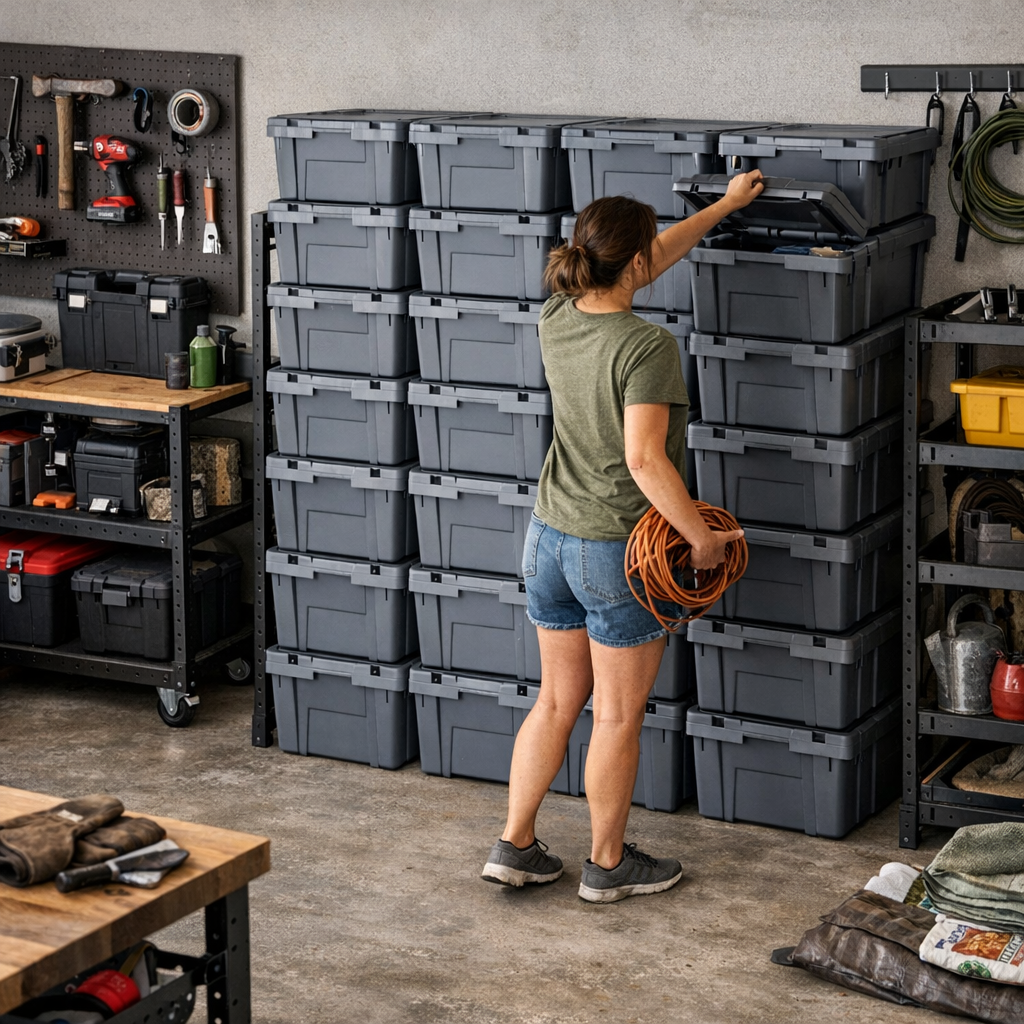
    The shift isn’t about owning less—it’s about bins that fit together, every time. Move to a single size of modular, stackable container and the space starts to cooperate. Bins line up neatly, lids don’t hang up or require unstacking, and there’s finally a straight edge along the wall, not a series of jutting corners inhaling all the floor space. That six-inch strip by the door? It becomes usable: slide a bin in—done.

    Uniformity creates a kind of muscle memory. Need the drill? You know exactly which bin, exactly how to lift the lid—no guessing, no creative rearranging just to get under one box. The wall stays clear, walkways go back to actual walking, and the dreaded “reshuffling” disappears. You see instantly when something’s out of place, instead of wondering if you left it somewhere in the back corner last week.

    Giving up variety? Or gaining usable space?

    This isn’t about stuffing the awkwardly sized garden rake into a bin that’s too small—it’s about choosing a set of containers whose footprint matches your gear and your patterns. Oversized bins eat corners and block walkways, so get real about your most-used pathways. The reward for matching your system to your routines? Clear floor paths that stay clear. Resetting after a project actually feels as quick as it should, and zones don’t spill out of bounds with every use.

    The price of ignoring the mismatch

    Stick with a piecemeal setup, and the penalties add up. Walkways narrow as bins slide crooked; corners collect random overflow; wall edges fill, but never usefully. A quick reset grows into a mini-move—track down the right lid, realign the cart, squeeze the toolbox in wherever it fits. It’s never catastrophic, but it’s always slow. Each little hurdle chips away at the space’s promise of effortless use, turning routines that should take seconds into small projects of their own.

    Keeping the flow: Habits that stop the slide

    Even uniform bins aren’t magic unless you work with them. Take a few minutes every couple weeks to scan for spots where loose gear is gathering (high shelves, back corners, wherever the system feels “fuzzy”). Tweak the layout before a dead zone grows. If your routines change—a new tool, a new hobby—adapt where needed. When the system follows the way you actually use the space, resets go back to simple. Tidying up after a project doesn’t feel like a negotiation, just another part of the rhythm.

    And you notice the difference fast. Gear goes back without detours. You spend less time hunting or shifting and more time actually working. The garage finally moves at your pace—not the other way around.

    The real test of organization isn’t the first impression after a deep clean—it’s how smoothly the space handles your fourth, tenth, or fiftieth project. A unified storage system isn’t about perfection; it’s about supporting your routines without interruptions. The right containers become less about storage, more about removing the friction between you and the work you want to do.

    Visit StackNest for systems that stay in line with real use.

  • Why Your Storage System Fails to Stop Clutter on Surfaces Every Day

    You add another shelf or bring home new bins, confident this is the moment the kitchen counter or bedroom dresser will finally stay clear. But by midweek, the same island of mail, stray receipts, and tomorrow’s gym clothes gathers again. It’s not a lack of storage—it’s the missing place for items you’re not finished with. And until those “in-between” things have a clear home, the daily reset stays just out of reach.

    When More Shelves Only Hide the Problem

    It’s easy to believe that another row of shelves, or a fresh stack of bins, brings order. At first, surfaces look emptier. Gloves and umbrellas have new homes. The bathroom shelf lines up with extra toothpaste. But real routines ignore these boundaries. Suddenly, today’s permission slip, a phone charger in regular rotation, returns to the counter. The book you’re halfway through refuses to disappear into storage. By Friday, “just for now” things sprawl again.

    The friction isn’t in what you’ve stored—it’s what you can’t quite put away yet. The open return, keys you’ll need once more before bed, or sunglasses waiting for the weekend outing—they leapfrog from table to shelf to dresser without a destination. Each day, a little stack builds. Resets become slower. Order blurs into rearrangement.

    The Missing Middle: Where Storage Systems Break Down

    Walk into two closets with identical shelving and bins. Both start with folded tees, labeled baskets, shoes in their cubes. One remains steady as routines pulse through it—the other, by Wednesday, has gym clothes draping the chair, a purse flopped against a bin, and documents “for later” perched on top. The difference? A real, recognizable place for the unfinished, not-yet-filed, not-done items that always exist in real life.

    In systems that skip this step, you end up reshuffling. The “waiting” stack goes from nightstand to chair. The new pair of jeans hovers on the closet ledge, not quite introduced to a permanent space. Each time you tidy, you move the same things over and over. The system isn’t broken by chaos—it’s undone by real, imperfect routines that need a buffer zone for the in-between.

    Looking Organized vs. Living Organized

    It’s simple to admire a storage nook after a deep clean—the lines stay neat, shelves show every object in its spot, baskets labeled and lids closed. But unless there’s a holding zone for messy middle stages, that clarity won’t last. As soon as the pace of life returns, bags for tomorrow’s errands, dry cleaning tags, or open envelopes land wherever there’s space. The hooks and bins work for what’s finished; the “in use” things spill and mix, making each reset feel frustratingly familiar.

    Everyday Evidence: How Unfinished Stuff Takes Over

    Think of a family entryway table. Monday looks clear after a good rearrange. But by Thursday, a formation grows: unsorted mail, a bus pass, house keys, tomorrow’s chess club snack. None have a permanent place, but none can disappear yet. The logic of “put it all away” is no match for the real-life churn of items you’re actively using.

    The bedroom dresser tells the same story. Fresh bins win the aesthetic war—until you need tomorrow’s workout gear or the book you dip into nightly. The top of the dresser fills with a lineup of “current” things, crowding the space. The organization below is untouched, but everything you actually touch each day hovers in this awkward middle ground and slowly erases the sense of order the moment life gets busy.

    Why Storage Without a Middle Ground Falls Short

    Adding another container, shelf, or drawer doesn’t fix this churn. When storage is only “for good” or “for gone,” but never “for now,” surfaces morph back into landing zones. It’s not that you need endless shelving—it’s that you need a waystation. As a result, piles return not from lack of storage, but from the absence of a flexible, designed limbo for what isn’t finished but can’t disappear.

    The Real Performance Test: Reset Speed, Not Looks

    An effective storage setup isn’t only about first impressions; it’s about the speed and clarity of the reset. If clearing the room at the end of the day means moving mail from kitchen counter to living room ottoman, or sliding today’s project from desk to nightstand, the system is only shifting the burden, not clearing it. Over time, these little migrations slow resets and slowly make the most “organized” rooms feel like they’re always one busy afternoon away from sliding backward.

    The Simple Fix: Introducing the “For Now” Basket

    One hallway transformed with a single handled basket slid under the entry table. Not a decorative bin meant to “hide” clutter, but a basket big enough for phone chargers, unread mail, ongoing paperwork—anything in motion. Each evening, instead of redistributing clutter, the day’s in-process items collect in one spot, visible but contained. By Sunday, a quick clearout empties the basket in minutes, restoring surfaces and keeping permanent storage intact.

    That’s the real unlock: create a visible, purposely labeled basket, tray, or bin at the friction point—not tucked away in a closet, but front and center, where “unfinished” things naturally cluster. This is for today’s reading, the jacket in rotation, the returns you’ll deal with tomorrow. Once a week (or more often if you like), scan and reset just this single spot. Suddenly, your surfaces stay open for living, and the reset stops feeling like an endless game of musical stacks.

    Does Your Storage Embrace the “In Use” Zone?

    Even with well-built organizers and fresh bins, lingering project folders, tools, or library books claim enough table space to break your system’s rhythm if you skip this middle-ground zone. Surface clutter almost always signals a system that organizes what’s “done” but leaves daily work-in-progress homeless.

    Build a habit and a small home for those daily drifters, and you’ll see the transformation: faster resets, clearer surfaces, less shuffling, and systems that actually keep up. The boost isn’t in showroom perfection—it’s in how your space recovers and flexes around your routines, no matter how many unfinished items move in and out every week.

    Visit ClosetWorks for practical storage systems built for daily living.

  • Balancing Sanding Speed and Finish Quality for Consistent Results

    Sanding a dozen panels in a row is when reality hits: the faster you push, the uglier the surface gets—and every streak or swirl you leave behind just piles on more rework down the line. The temptation is obvious: crank the sander up, rip through the old finish, and get on to the next project. But after your third or fourth piece, it’s clear speed comes with a cost—stray marks, rising heat, variegated grain, and a tool that feels harder to steer each round. Every pass starts feeling like payback for chasing a shortcut that never quite pans out. Anyone with a deadline and a stack of real-world work knows this struggle. Electric sanders deliver muscle, but overlook the balance between speed and control, and you’re stuck fixing the byproducts rather than moving forward.

    Speed Feels Efficient—Until It Isn’t

    First panels off the stack, you want to believe fast is better. Working through a batch of cabinet faces or prepping table tops, high sander speed strips finish in seconds. Jobsite urgency makes it feel right. But after you pull off that first mask and brush away the dust, reality shows up: deep scratch trails run across the grain, tiny swirls catch in the light, and outside edges feel just a touch sharp. The work you “saved” time on now needs another round.

    The real headache with high-speed sanding is delayed. What looks like progress ends with you burning through extra sandpaper and dragging the tool back over problem spots. Shop dust starts escaping the vacuum, the pad gets hot, and you end up pressing harder, not smarter. If you’ve ever stopped to swap a new pad before finishing a single surface, you know the cycle: muscle through one flaw, introduce another, and the task keeps growing by inches.

    Batch Work Exposes Every Flaw

    Where speed truly falls apart: repetitive, high-detail work. Prepping a long run of shelves, rows of doors, or panels needing a consistent touch brings out every shortcut. That “just blast it flat” mentality works for rough stripping, but as soon as you need a presentable finish, every hasty pass leaves its record. A cabinet front burnished at high speed might look fine dry, but try laying down stain—uneven absorption and ghosted swirl marks refuse to hide.

    And when fatigue settles in, your hand slips with subtle but deadly pressure. The pad skips at a corner, abandons a dull smear, or carves a line that won’t fade. Drop to slower speed and finer grit, and the feeling improves—if uneven sanding hasn’t already sealed the mistake in too deep. Most of the time, it’s not a dramatic disaster—it’s the slow grind of fixing what quick passes left behind, deciding if this piece “makes the cut” or joins the redo pile when you’re already counting panels left to go.

    Small Warnings—Big Failures

    Most sanding trouble starts quietly. At first, it’s just a bit more tingle in your palm, or the sander sounding off-key as the pad hums across plywood. The dust that escapes your vacuum system is finer, thicker, and hangs longer in the air. You take longer breaks, shake your hand out, or start noticing that the tool’s harder to guide. Slip once, and you’ll chip an edge. Drag a finger across the grain, and you notice a faint ridge that won’t smooth. These signals—buzzing hands, micro-ridges, lost collection—mean you’re running too hot, too fast, or fighting the tool more than working with it.

    Dial, Don’t Muscle—How Speed Actually Feels

    That numbered dial on every sander isn’t there for show. Turn it up and the tool’s whole sound changes: the pitch climbs, the vibration gets sharp, and your arms tense just to steady the ride. At lower speeds, the pitch drops back and you hit a sweet spot—smooth pad contact, better dust pickup, and a finish that feels almost natural under your hand. After an hour, you remember what control is. Instead of wrestling the tool, you start steering it—edge to edge, with fewer corrections and a cleaner line at every panel seam.

    Even among tools with similar specs, this difference in feel is real. An orbital sander racing at full tilt (10,000 OPM) can wipe a pine board bare with force, but you’ll watch it leave micro-holograms everywhere. Ease off to 7,000 OPM and you trade a few seconds per pass for repeatable, level results that feel the same at 4 PM as they did before lunch—without the palm strain or extra clean-up.

    Cabinet Install Scene: Rush Costs More Than Time

    Walk onto a site with a stack of empty cabinets needing custom shelves. First instinct: run the finishing passes wide open, dust flying, machine howling—the first three shelves jump off the bench. But then you notice the edges are raw, scuffs are showing despite fresh sandpaper, and every shelf needs more work by hand. Next batch, you drop the sander a speed or two, focus on deliberate overlaps, and let the tool move—not push. Suddenly the edges blend, the dust clears easier, and a palm check reveals a surface ready for topcoat, not redo. The promise of speed? It only pays if quality survives. Most times, it’s just setting yourself up to sand the same spots twice.

    Tweaking Your Process—Where Results Actually Change

    Small speed shifts make the difference. For sections where finish matters—cabinet faces, trial fit panels, pre-stain prepping—bring the sander down to around 7,000 OPM. Go easy on the grip, let the tool float, and notice how pad changes last longer and your hands don’t buzz post-shift. Across ten panels, this pace actually speeds you up: fewer stalls, less heat, and rarely a missed swirl to patch. By the end, your hands and materials both thank you for not trying to muscle through every inch.

    Between finishing coats, especially before applying clear or paint, run a fine grit at a steady, mid-speed pace (7,000–8,000 OPM). The extra minute here pays double when the final topcoat hits glass-smooth, with hidden marks staying hidden—even in sunlight or under LEDs.

    Four Telltale Signs You’re Sanding Too Fast

    • The pad’s vibration sharpens and the machine howls against the work.
    • Fine dust regularly escapes past collection, hanging in the air.
    • The sander stutters on edges, or you’re left reworking corners and seams.
    • Subtle scratches reappear even after wiping clean.

    If you spot these, back down the speed, lighten your grip, and let the sander work at its pace—not yours. It’s almost always faster overall.

    The Work Doesn’t Lie: Consistency Outlasts Speed

    At Gumboll, our shop tools are built for the daily grind—projects where “good enough” isn’t, and panels need to match from first run to last touch. After dozens of runs, the lesson’s clear: using raw speed to “finish fast” means you revisit the same mistakes later. The time saved in initial passes drains away to rework, pad changes, or the quiet moment you realize a fine swirl is suddenly visible across half the job.

    It’s steady, controlled sanding—sometimes a click or two below full power—that keeps results consistent, tools running cool, hands ready for the next task, and shop deadlines from turning into long nights bent over the same project.

    See more practical tools and jobsite supplies at Gumboll.

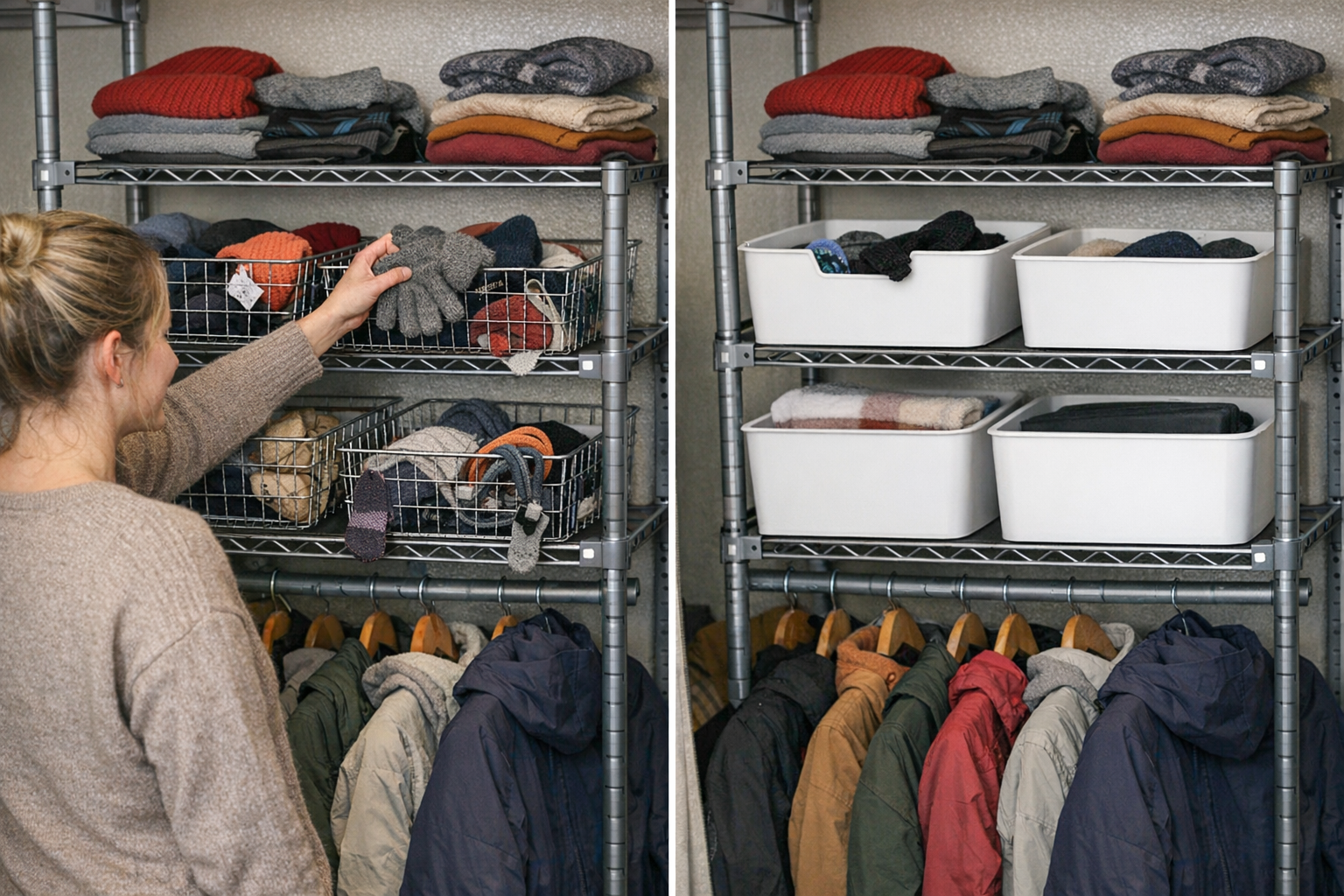
  • Choosing Between Wire Shelf Baskets and Solid Bins for Closet Organization

    There are two closet moments that tell you everything: grabbing something in a rush, and putting it back later—half paying attention, half balancing groceries, coats, or bags. That’s when your storage setup reveals its true character. If every reach is smooth, if every return is obvious, you barely notice the shelves. But when your bins and baskets fight your habits—items tipping, piles collapsing, odd socks slipping out of sight—order unravels fast. The choice between wire shelf baskets and solid shelf bins doesn’t just shape visual neatness; it shapes whether your routine flows or silently grinds to a halt.

    When Routines Collide with Storage Reality

    Most bins and baskets look fine the first day. You sort, stack, and close the door on tidy lines. But daily life has other plans: you reach for gloves on a freezing morning, toss hat and scarf after school, dig for a missing charger in a rush. This is where small frustrations stack up. Wire baskets start to sag with socks poking through or belts slipping out the side. Solid bins stack high, and suddenly you’re lifting out two just to get to the third. The test isn’t how it looks after a reset—it’s whether you can maintain that order through unplanned grabs, returns, and family traffic.

    Wire baskets make everything visible and aired out—until smaller pieces refuse to stay put. Bagged snacks, kids’ mittens, or hairbands drift through the gaps or wedge in odd corners. It’s workable if you only store big, steady items—towels, extra linens, chunky sweaters—but the moment your setup faces real-life clutter, things start showing up in the wrong place. Resetting that shelf means a hunt: socks hiding behind frames, scarves tangled through the wires, category boundaries blurring every busy morning.

    Solid Bins: Tidiness That Can Cost You Time

    Solid bins promise containment. No gaps for clutter to escape, just a lineup of matching calm. Everything looks in control. But what’s hidden is also easy to forget. You label, maybe, but after a week you’re guessing: which bin has extra shopping bags? Where did those winter hats end up? Each retrieval becomes trial-and-error—lifting two bins, then a third, until you finally find the right roll of tape or the lost glove, while stacking and restacking the rest.

    As bins multiply, access slows down. In a jam-packed entryway closet, suddenly it’s not mess you see, but time slipping away. Getting out the door means moving bins just to get to the one you need. The surface stays neat—but the routine underneath quietly bogs down. If every small access requires a reshuffle, you’ll eventually start skipping resets. Soon, towels and gym gear start mixing, and yesterday’s order erodes from the inside.

    Scenes from a Closet: The Repetition Trap

    Picture a hallway closet built for everything: reusable bags, hats, baseball mitts, soccer socks. On a Monday, both bin and basket arrangements seem workable. By Friday, the story is different. Wire baskets reveal a trail of gloves, singles peeking through railings, one sock wedged behind where it’s fallen out. Solid bins, meanwhile, protect order—until you need the bottom bin and wind up pulling out most of the stack, arms full, items landing in new piles each time. Every restack jumbles categories, and by the end of the week, you’re rerouting the same stray items, never quite sure where they belong.

    That’s how “organizing” falls apart: not from one big mess, but from a dozen tiny misalignments between containers and daily routine. Suddenly you’re reshuffling—stacking, restacking, finding homes for things that drift—and the irritation quietly builds. The system stops serving you and starts needing service.

    A Smarter Mix: Using Both to Match Real Life

    The real answer isn’t a single solution—it’s recognizing what actually gets used, and how. Swap out deep, solid bins for shallow, open-top bins in your most-used spots: gloves, hats, scarves now live in easy-to-grab trays. Instead of digging, you see and snag. Wire baskets? Limit them to what behaves: spare towels, clean jerseys, or any item that won’t slip through or tangle. The point isn’t showroom perfection, but realistic speed. Your closet looks maintained because it’s easy to reset—not because you obsessively restack after every rush hour.

    Small Tip:

    Don’t just trust memory. Label bins, or use translucent options—a one-second glance cuts five steps of trial-and-error. No more pulling out bins only to find them empty or off-track. This tiny habit slows future chaos before it starts.

    Stacking Up: Shelf Space and Sustainable Order

    Solid bins stack sturdily—reclaiming vertical real estate on packed shelves. But as the column grows, so does the access cost. Digging through three bins for the bottom item means more disruption, and with overloaded bins, shifts get heavier and sloppier. Wire baskets can’t really stack: tiered, they shed small items or leave unstable gaps. Yet a wire basket at the top—holding light, rarely-used items—makes use of airspace without inviting daily wrestling matches.

    Ask yourself honestly: Will you actually restack three bins each time? If not, one layer of bins—even if it means sacrificing some vertical capacity—delivers speed and repeatable order. Convenience isn’t just saving space; it’s saving your routine from slowing down.

    Category Discipline: How You Assign Space Is Everything

    Don’t let any container—wire or solid—turn into a random catch-all. When every basket and bin has a single job, your closet answers back fast: hats are here, scarves there, sports gear gets its own home. The more you mix or overfill (half hats, half socks, emergency odds-and-ends), the messier the shelf resets get—and soon, the old cycle of lost time returns. Sharp categories, not just sharp-looking bins, are what actually save you minutes every week.

    Real-World Tip:

    If you’re shuffling extras between bins or watching categories migrate, it’s time to split them. Two purpose-specific bins will always be easier—and faster—than one overstuffed “miscellaneous” bin you keep avoiding.

    Beyond Looks: How Small Storage Swaps Reshape Everyday Flow

    No bin or basket redesigns your habits on its own. But matching container choice to your real categories—depth, visibility, how often you reach—quietly shifts a closet from staged “after” photo to a system that holds up week after week. The true test? Whether you can reset your closet in seconds after a chaotic morning, or whether every reset just adds to your resistance. A shallower bin at eye level here, a wire basket for gym towels there—these barely-noticed tweaks are what keep order alive in busy homes long after the first organizing spree fades.

    Looks might fool you, but function never does. The system that survives five busy Mondays is the one you’ll trust, use, and repeat. That’s how storage becomes background calm, not a source of daily tension.

    http://closetworks.myshopify.com